Attractions & Things to Do in Regensburg
Regensburg, Germany, lies at the most northerly point in the course of the Danube River in the heart of Bavaria. It's here that the Danube, Europe's second longest river, is joined by the River Regen and navigable all the way to the Black Sea.
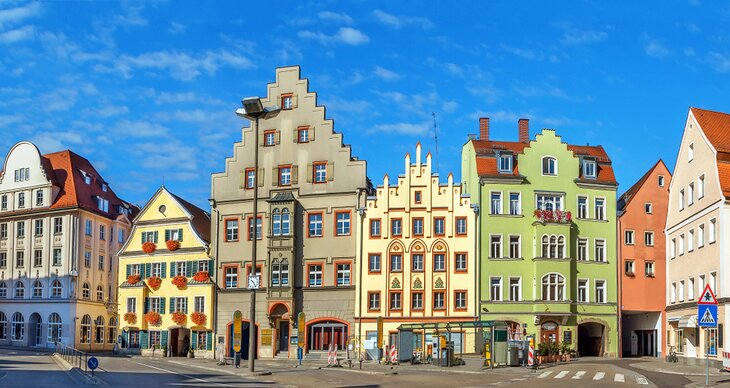
Long an important trade and cultural center, Regensburg's medieval Old Town is now a UNESCO World Heritage Site and is made up of historic places to visit, including lovely old churches and fine aristocratic houses from the 13th and 14th centuries.
For those who enjoy exploring a city on foot, you can visit Regensburg's many old streets and fine historic buildings as part of a self-guided walking tour, or one led by a professional tour guide. Details of both options can be found in the city's tourist information centers.
Regensburg is also a popular river cruise destination. Visitors are also drawn to this historic city for its wonderful cathedral, its Roman remains, its superb shopping, and its location at the doorstep of the Black Forest and other top tourist attractions in southern Germany.
Whether you're visiting this beautiful corner of Bavaria for a few days or are simply passing through as part of a fun day trip from the nearby city of Munich, just an hour's drive away, explore the best parts of this historic destination with our list of the top attractions and fun things to do in Regensburg, Germany.
- Take a Guided Tour of Regensburg Cathedral
- Cross the Old Stone Bridge for the Best Views of Regensburg
- Explore the Old Cornmarket and Old Town Hall
- St. Emmeram's Abbey: Schloss Thurn und Taxis
- See the Scots Monastery
- Explore the Museum of Bavarian History
- Take a Slow Boat to Walhalla, Donaustauf
- Visit the Hall of Liberation, Kelheim
- Enter the Old Chapel (Alten Kapelle)
- Explore Bavaria's Seafaring Past in the Regensburg Museum of Danube Shipping
- Art Forum East German Gallery & St. Ulrich
- Enjoy a Walk in the Park: Herzogspark
- Explore the Past at Regensburg Museum of History
- Visit The New Parish Church: Neupfarrkirche
- Dig Through History at Document Niedermünster
Take a Guided Tour of Regensburg Cathedral
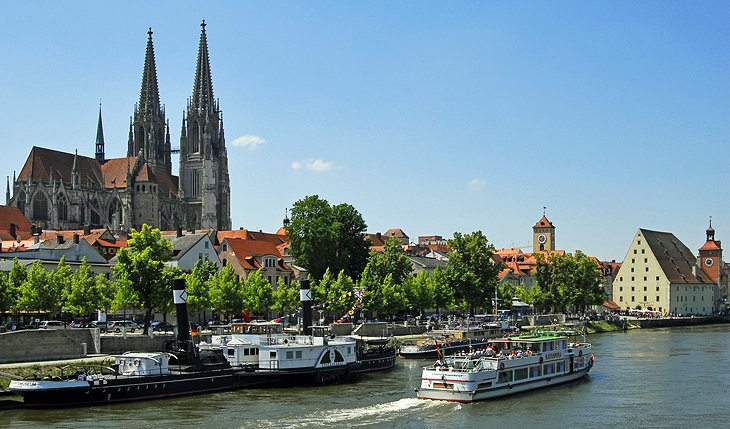
You'll find the Domplatz, or Cathedral Square, located near the famous Stone Bridge (Steinerne Brücke) in Regensburg's medieval Old Town center (Alte Stadt). For centuries the hub of the city, it's here you'll find the 13th-century Cathedral of St. Peter (Dom St. Peter).
More commonly known as Regensburg Cathedral (Regensburger Dom), this impressively preserved church is notable for its two 105-meter-high spires. Along with its magnificent west front dating from 1395-1440, these features have led to its being labeled as the finest Gothic church in all of Bavaria.
The cathedral's spacious interior is of great beauty, its most notable features being its superb 13th- and 14th-century stained glass and the figures of the Annunciation from 1280 on the two western piers of the crossing. Adjoining the beautiful 14th-century cloister is the Romanesque All Saints Chapel with its wonderful wall paintings, and on the north side is St. Stephen's Chapel, which dates back to 800 CE.
The cathedral is also famous for its boys' choir, the Domspatzen, as well as for its "hanging" organ, the largest of its kind in the world. A highlight of any visit is having the opportunity to hear either source of music in action.
Also of note is the Cathedral Treasury (Domschatz Regensburg) with its impressive displays of gold and textiles from the 11th to the 20th century. Visitors are also welcome to attend mass here, and guided tours are available.
Address: Domplatz 1, 93047 Regensburg
Cross the Old Stone Bridge for the Best Views of Regensburg
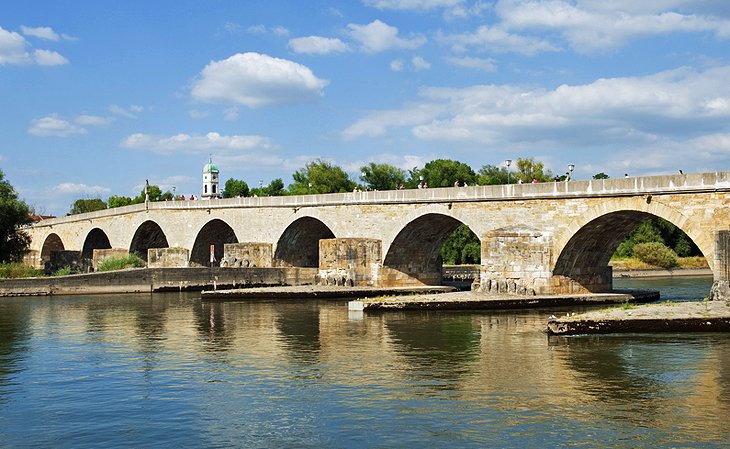
The best views of Regensburg are from the 310-meter-long Old Stone Bridge (Steinerne Brücke). This impressive 12th-century structure has straddled the Danube for more than 900 years and is a masterpiece of medieval engineering. The oldest of its kind in Europe, the bridge is now used only for pedestrian traffic and offers great views of the Danube and the many tourist and pleasure vessels that pass below.
Be sure to visit the Bridge Tower Museum (Brückturm-Museum). Reputedly the city's smallest museum, you'll find this fascinating museum in the Brückturm, the last surviving of the bridge's three towers. Highlights include artifacts and documents relating to the construction of the bridge, as well as its 17th-century tower clock, whose dependable timepiece has been keeping time since 1652. Superb views of the city and bridge can be enjoyed from the top of the tower.
Be sure to also search out the town's oldest tower, Porta Praetoria. Built in 179 CE by the Romans, it's still connected to a section of the old town walls from this era. Two other buildings worth checking out near the bridge: the Sausage Kitchen (Wurstkuch), which has reputedly sold its excellent treats here since the 12th century; and the historic Salt Warehouse (Salzstadel) built in 1620, now fully restored and used for community events.
Address: Steinerne Brücke, 93059 Regensburg
Explore the Old Cornmarket and Old Town Hall
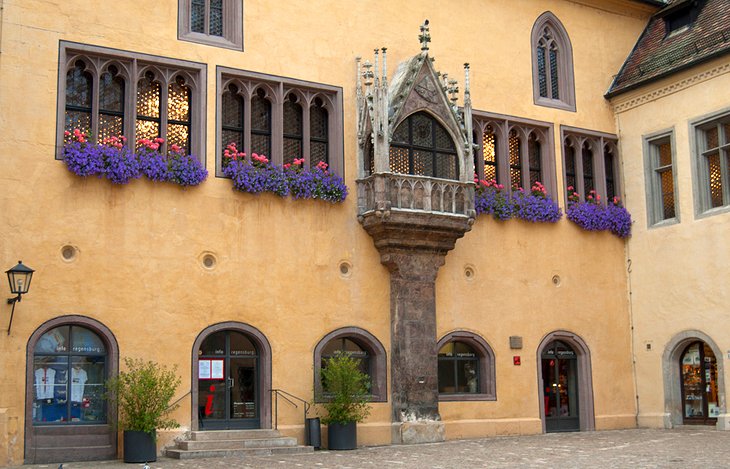
Once you've got your bearings, head to the heart of Regensburg's wonderful UNESCO-World-Heritage-status Old Town: the Alter Kornmarkt, or Old Cornmarket. It's here you'll see the oldest surviving part of the town, the Roman Tower dating from the 2nd century, and the Herzogshof, a residence of the Dukes of Bavaria first mentioned in 988 CE.
On the south side of the square stands the Old Chapel (Alte Kapelle). Dating from 1002, it's notable for its sumptuous Rococo interior, as well as the 17th-century Baroque Carmelite Church.
Other highlights to explore include the Regensburg Museum of History (Regensburg Historische Museum), located in an old monastery with its fine displays of Roman and medieval artifacts; and Kepler House (Kepler Gedächtnishaus), where astronomer Johannes Kepler died in 1630. Kepler's old home now serves as a museum with displays of original instruments and documents.
It's also here you'll find the Old Town Hall (Altes Rathaus). Dating from the 14th to 18th centuries, this building is worth a visit for its historical apartments, medieval courtroom, art collection, and antiquities. The building's superb Imperial Hall (Reichssaal) is the famous meeting place of the first German parliament from 1663 to 1806.
The Old Cornmarket is also where you'll find other highlights, including the Fragstatt. It was here that criminals were "questioned," or rather, tortured and imprisoned. You should also visit Document Reichstag with its displays and details of important events in the city's history.
Address: Rathausplatz 4, D-93047 Regensburg
St. Emmeram's Abbey: Schloss Thurn und Taxis
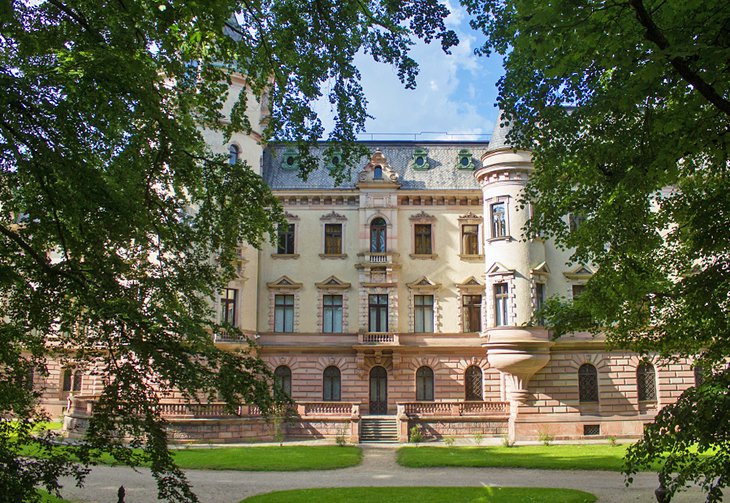
The area around the former Benedictine monastery of St. Emmeram has in recent years become an important tourist destination. The big draw here has been the renovation of the Palais Thurn und Taxis, of which it's a part.
Founded in the 7th century on the site of an old Roman building, this historic church and abbey feature a Romanesque porch from 1170 and an exquisite doorway with three 11th-century limestone reliefs. Its sumptuous Baroque interior is also worth seeing. Added in 1733, it contains a number of magnificent tombs from the 12th to 15th centuries, as well as three crypts.
Constructed in 1739 and totally rebuilt after the destruction of WWII, Schloss Thurn und Taxis is today home to a number of excellent museums, including the palatial Princely State Rooms. This collection of Neo-Renaissance-styled rooms includes a huge, sweeping marble staircase near the large Baroque ballroom, the exquisite Blue Cabinet and Silver Salon, and a delightful conservatory added in the 19th century.
Other notable features are the Carriage Museum located in the stables and adjoining riding hall, with its collection of unique carriages and sleighs, and the Princely Treasure Chamber, which houses a wide array of furniture, porcelain, and weaponry.
Regular concerts and theatrical performances are held here, along with a traditional German Christmas market.
Address: Emmeramspl. 5, 93047 Regensburg
See the Scots Monastery
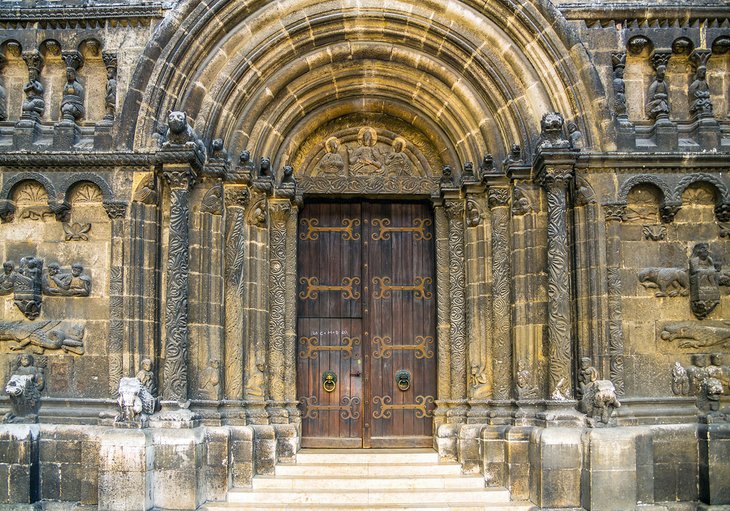
At the west end of the Old Town of Regensburg, in Jakobstrasse, stands the Schottenkirche. Also known as the Scottish Church or Scots Monastery, this impressive building was constructed in 1150 by Irish monks. This former Benedictine monastery, originally named Jakobskirche or St. James Abbey, was eventually renamed after the numerous Scottish monks and missionaries who called it home from 1560 to 1860.
A highlight of a visit is the spectacularly ornate north doorway. Known as the Scottish Doorway (Schottenportal), this ornate structure has resulted in the church being named one of Germany's most important Romanesque ecclesiastical buildings.
Also of importance is nearby St. Ulrich's Church (Dompfarrei St. Ulrich), an Early Gothic church dating from 1025 that's home to the Diocesan Museum (Diözesanmuseum) with its sacred art from the 11th century onwards.
Address: Jakobstraße 3, 93047 Regensburg
Explore the Museum of Bavarian History
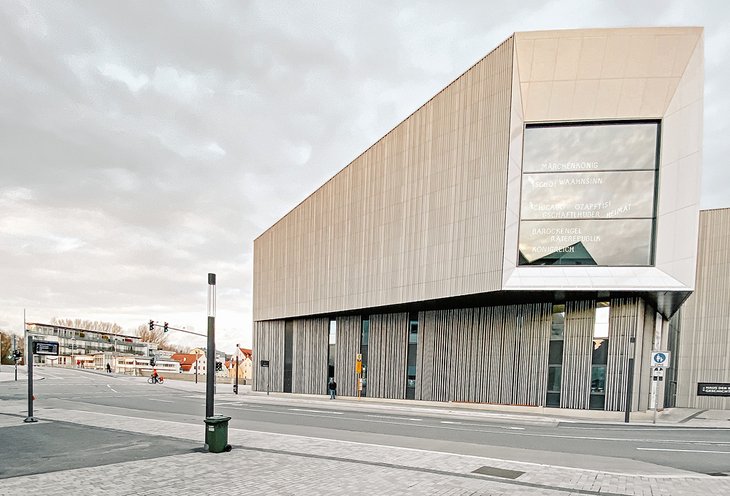
Built to commemorate the centenary of the Bavarian Free State as well as the 200th anniversary of the state's constitution, the Museum of Bavarian History (Haus der Bayerischen Geschichte) is one of the most important new major attractions in Germany.
Situated on the banks of the Danube, this museum traces Bavaria's history from the 1800s to more modern times. Highlights include state-of-the-art multimedia experiences telling the story of generations of Bavarians during this period, along with displays of artifacts and documents related to culture, language, and sports. An emphasis is placed on educational activities and learning, including workshops and lectures.
Also of interest is the Natural History Museum Eastern Bavaria (Ostbayern). Established in 1961 in the early 19th-century Herzogspalais, exhibitions concentrate on the region's geological history. Highlights include viewing its many antique natural history collections and books, stuffed animal specimens, as well as a fun nature trail. Regular concerts and temporary exhibits are also available.
Address: Donaumarkt 1, 93047 Regensburg
Take a Slow Boat to Walhalla, Donaustauf
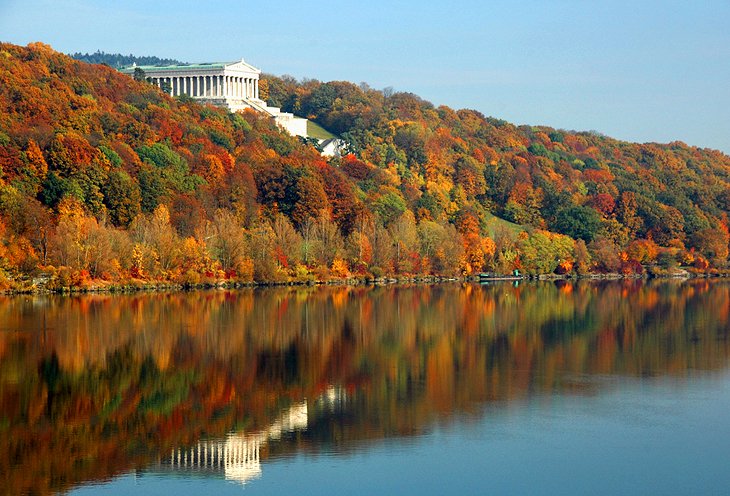
At Donaustauf, just 11 kilometers east of Regensburg, is spectacular Walhalla, the famous German Temple of Fame. Built to resemble the Parthenon in Athens, this impressive structure stands 96 meters above the Danube and boasts amazing views of the surrounding area.
Built by Leo von Klenze from 1830-42 during the reign of Ludwig I, it was designed as a place to honor famous German speakers from history.
This huge Neoclassical monument, named after the Valhalla of Norse legend, boasts more than 65 plaques and 130 marble busts covering some 2,000 years of German history. To this day, a new bust is added every five or so years.
A pleasant half-day trip involves taking a tour boat from Regensburg to Walhalla along the Danube. This scenic round trip takes approximately four hours and includes a tour of the building.
Address: Walhalla Verwaltung, Walhalla Strasse 48, Donaustauf
Visit the Hall of Liberation, Kelheim
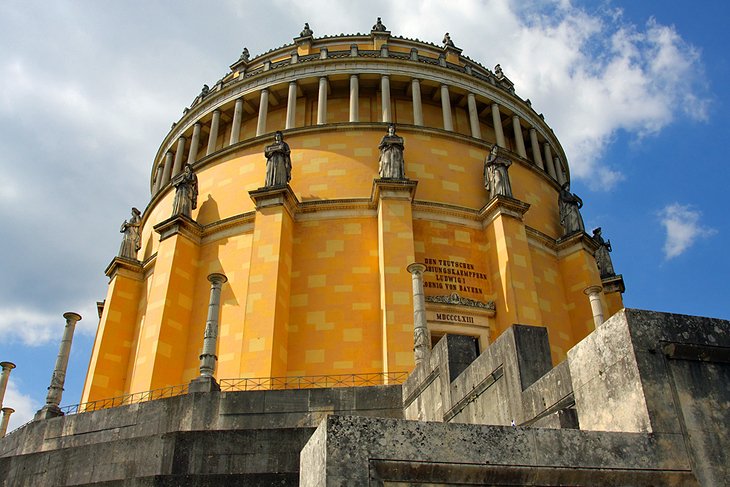
Another excellent Bavarian attraction that's easily accessible via the Danube can be found at Kelheim, 26 kilometers southwest of Regensburg. Here, high above the Danube on the Michaelsberg, is the Hall of Liberation (Befreiungshalle). This towering 59-meter-high edifice was built in 1863 in a style similar to that of buildings once found in ancient Rome.
Constructed in the form of a large rotunda, this inspiring structure commemorates the wars of German liberation of 1813-15. Inside, 34 goddesses of victory can be seen, as well as important inscriptions from Ludwig I, while the facade's buttresses are adorned with 18 statues commemorating the 18 German tribes.
English language audio tours are available for a small fee.
Address: Befreiungshallestraße 3, 93309 Kelheim
Enter the Old Chapel (Alten Kapelle)
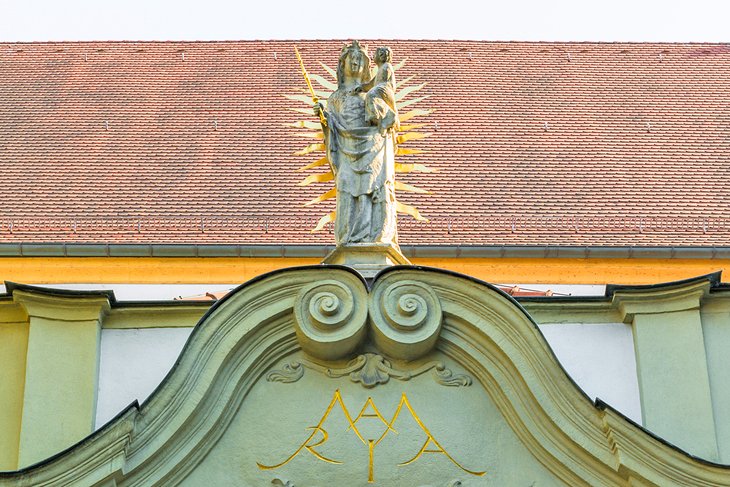
Also of interest to those who appreciate stunning architecture is the Basilica of the Nativity of Our Lady (Basilika Unserer Lieben Frau Zur Alten Kapelle).
Most often referred to simply as the "Old Chapel" (Alten Kapelle), it's Bavaria's oldest Roman Catholic Church, with parts of it dating as far back as 1002 CE. One of the most important of the city's many churches, it's well worth including on your Regensburg travel itinerary.
Much of the magnificent Baroque structure you see here today is the result of a major rebuild in the 1700s, with many delightful Rococo flourishes in the interior adding to the overall effect, most notably in the stunning gold ornamentation of the ceilings.
The church organ, added in 2006, has the unique distinction of being the only such musical instrument to have ever been blessed by the Vatican when Pope Benedict XVI visited the church that year.
Address: Schwarze-Bären-Straße 7, 93047 Regensburg
Explore Bavaria's Seafaring Past in the Regensburg Museum of Danube Shipping
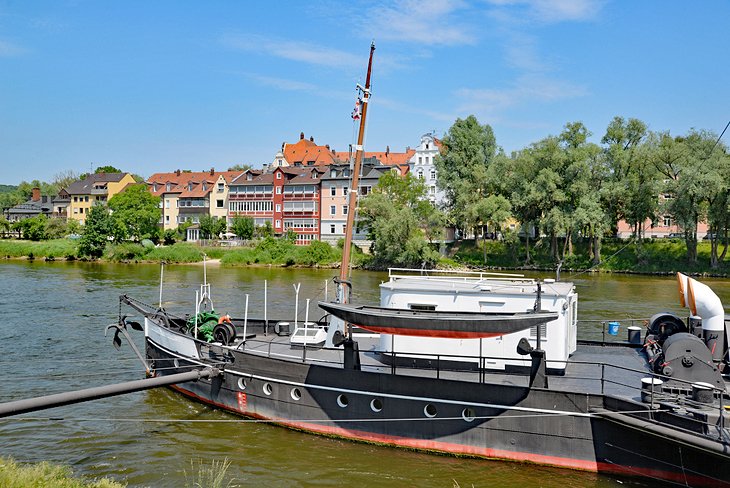
Wander past the Iron Bridge in Regensburg you'll see a couple of old vessels moored on the banks of the Danube. These are the museum ships Ruthof/Ersekcsanad, an old paddle steamer built here in 1923, and the diesel tugboat, Freudenau. These two well-preserved historic vessels together are the main attractions of the Regensburg Museum of Danube Shipping (Donau-Schiffahrts-Museum Regensburg).
You can explore the many exhibits set up in both vessels, along with recreations of the crew's living quarters. Other highlights include displays of artifacts and materials related to the history of shipping in Bavaria, including the lives of the people that navigated these rivers.
And if golf is your thing, be sure to head to the nearby Regensburg Golf Museum (Golfmuseum Regensburg). This small yet interesting museum features a collection of paraphernalia and artifacts relating to the sport's history.
Address: Thundorfer Straße, 93047 Regensburg
Art Forum East German Gallery & St. Ulrich
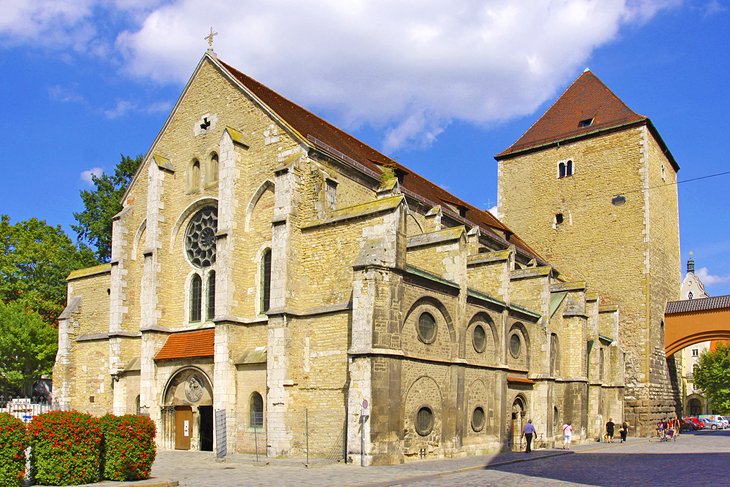
Dedicated to modern art, the Art Forum East German Gallery (Kunstforum Ostdeutsche Galerie) showcases the work of artists from the many German-influenced cultural regions of Eastern Europe.
Consisting of an impressive collection of more than 2,000 paintings, some 500 sculptures, sketches, and drawings spread across 15 unique galleries, the museum is a must-see for art fans.
Address: Dr. Johann-Maier-Straße 5, 93049 Regensburg
Enjoy a Walk in the Park: Herzogspark
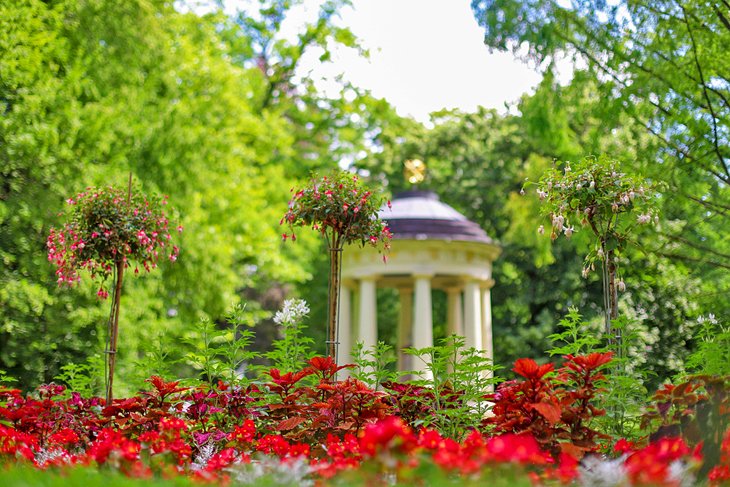
Situated on the banks of the Danube, the four-acre Herzogspark is a pleasant, tranquil place to visit. Dating back to 1293, highlights of this old public park include a botanical garden; the medieval Prebrunnturm, a tower built at the same time as the garden; as well as the remains of the town's former moat.
Of special interest is the lovely alpine garden with its carnations, primroses, and rhododendrons, as well as the rose garden. Also worth seeing is the newer Renaissance Garden, laid out in a style common to that period.
Afterward, pay a visit to the neighboring Württembergisches Palais, home of the Natural History Museum of Eastern Bavaria.
Address: Württembergstraße 8, 93049 Regensburg
Explore the Past at Regensburg Museum of History
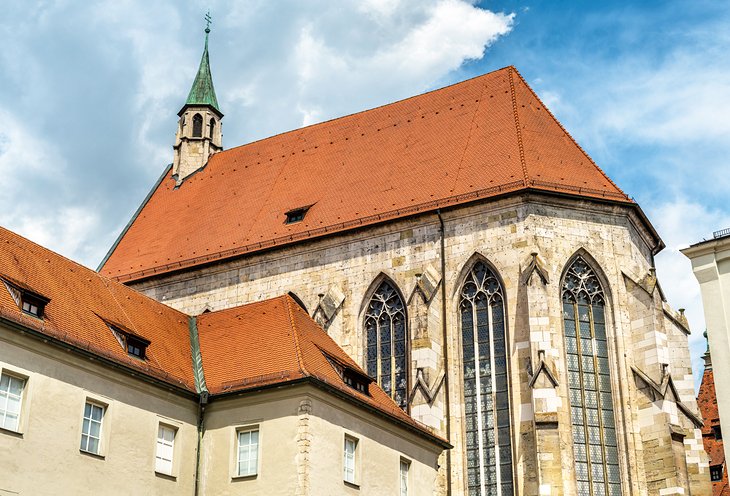
The Regensburg Museum of History (Regensburg Historische Museum), in the old 13th-century St. Salvator monastery, is well worth a visit. This museum has a particular emphasis on the city's artistic and cultural heritage. Of its many fascinating exhibits, some of the best deal with the Stone Age and Roman periods, with numerous rare artifacts on display.
Of special interest are the many Roman relics discovered during the excavation of the nearby Temple of Mercury, ranging from ancient weaponry to pottery and coins. Other highlights include a large area dedicated to the Middle Ages, numerous medieval weapons including swords and cannons, as well a large art collection including paintings and sculptures.
Address: Dachaupl. 2-4, 93047 Regensburg
Visit The New Parish Church: Neupfarrkirche
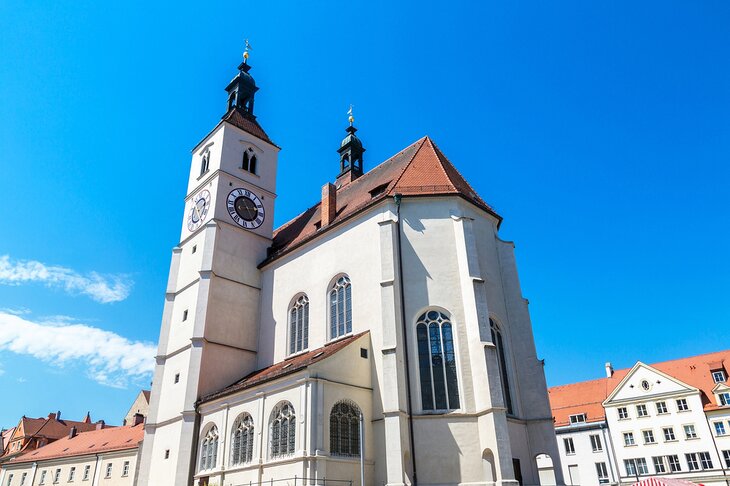
Also of interest to those who enjoy visiting historic places of worship is the Neupfarrkirche, or New Parish Church. This attractive Protestant–Lutheran church was built in 1519 and contains an interesting museum about the city's Jewish history; the church was built on the site of the old Jewish Quarter.
St. Blasius' Dominican Church St. Blasius (Dominikanerkirche St. Blasius), an early Gothic Dominican Church, is also worth visiting. Dating from the 13th century, this is one of the biggest and oldest surviving Gothic churches in Germany. Highlights of a visit include seeing its many lovely murals and tombs, as well as a late Gothic Virgin of Mercy.
You'll also see a 15th-century desk in the same room where St. Albertus Magnus, one of Europe's leading scholars, once taught.
Address: Neupfarrpl. 1, 93047 Regensburg
Dig Through History at Document Niedermünster
Adjoining the Bishop's Palace in the cathedral complex is the Niedermünster Church, a former abbey, which is home to a number of important 12th-century frescoes. But it's downstairs where the real interest lies here: Document Niedermünster.
Established in 2011, this unique attraction provides visitors with a fascinating look into the long history of Regensburg, using finds from a massive architectural dig of the ground beneath the church.
Among the many finds, some of which date back more than 1,000 years, were many artifacts relating to an old Roman legionary camp, as well as remnants of the city's first civilian settlement dating from the Middle Ages.
Also of interest are the many tombs and graves found during the dig. Guided tours are available.
Address: Stift Niedermünster, 93047 Regensburg
More Related Articles on PlanetWare.com
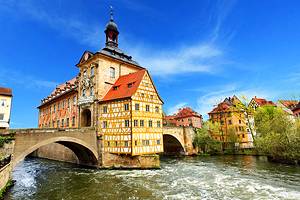
Easy Day Trips: A pleasant (and fast) one-hour train ride away from Regenssburg, Nuremberg is undoubtedly one of the most attractive medieval cities in Germany. Here, you'll find two of the most important tourist attractions in the country: the sprawling Nuremberg Castle, one of the most important surviving medieval castles in Germany; and the National Germanic Museum, the country's largest museum focusing on Germanic culture. The historic city of Bamberg is also worth visiting, if only to see its Old Town Hall (Altes Rathaus). This photogenic medieval building straddles the fast-flowing Regnitz river and makes for a stunning selfie backdrop.
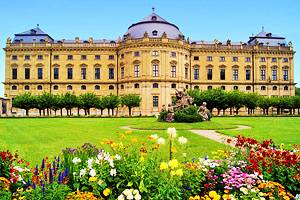
The Romantic Road: Some of Germany's most iconic scenery can be seen along the spectacular 350-kilometer-long Romantic Road. Starting in the attractive city of Würzburg, popular for its location on the Main River and its magnificent Residenz, the palace of the region's Prince Bishops, the road heads south through countless quaint towns and villages before arriving at Rothenburg ob der Tauber, widely considered the most beautiful (and well-preserved) town in all of Europe. Farther south still are the attractions of Augsburg, the third largest city in Bavaria and a great place for those who enjoy walking tours.
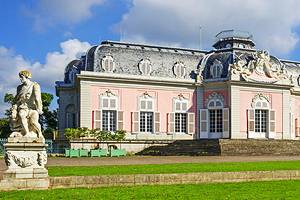
Germany Vacation Ideas: Germany's largest cities are a great source of fun things to see and do for those who enjoy exploring historic downtown areas on foot. In Berlin, the country's capital, you can easily experience five of the country's top museums simply by visiting Museum Island. And in Frankfurt, the former imperial city on the Main River, you can visit the huge Römerberg, one of the country's largest public squares, where it's easy to spend hours wandering the many old shop-lined streets that seem to lead off in all directions. And in Düsseldorf, visitors flock to the Königsallee, said to be Germany's most elegant avenue and a rival to Avenue Montaigne in Paris.