

The 11 Best Paris, France Tourist Attractions And Places You Can't Miss
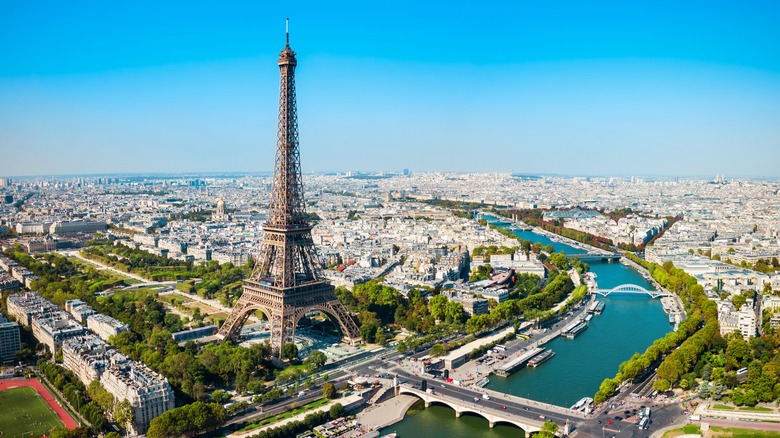
Whether you're a honeymooner looking to marvel at the City of Love or an art fanatic who wants to see masterpieces like the Mona Lisa and the Venus de Milo in person, there's a good chance Paris is on your bucket list — and you wouldn't be the only one. Nearly 50 million people visited Paris in 2024, further proving that the French capital is one of the top places you need to visit in your lifetime. From taking in the Eiffel Tower, one of the most famous landmarks on the planet, to sampling some of the city's finest cuisine — which has inspired chefs across the globe — hitting up some of the best museums to visit on a trip to Paris, and exploring architectural marvels like the Notre-Dame Cathedral and the Arc de Triomphe, there's no shortage of things to do during your trip.
That said, with so much to do in this mystical city, you'll likely find it much harder to trim your itinerary than to put it together. Thankfully, we did it for you, determining the best Paris sites that are considered must-visit destinations for any traveler. To do so, we evaluated which tourist attractions are the most well-known, which are the most wow-worthy, and which have garnered the acclaim of visitors just like you on sites such as TripAdvisor and Google. Ready to start dreaming about your Parisian escape? Let's take a look at the 11 best tourist attractions you can't skip on your visit to Paris.
Arc de Triomphe
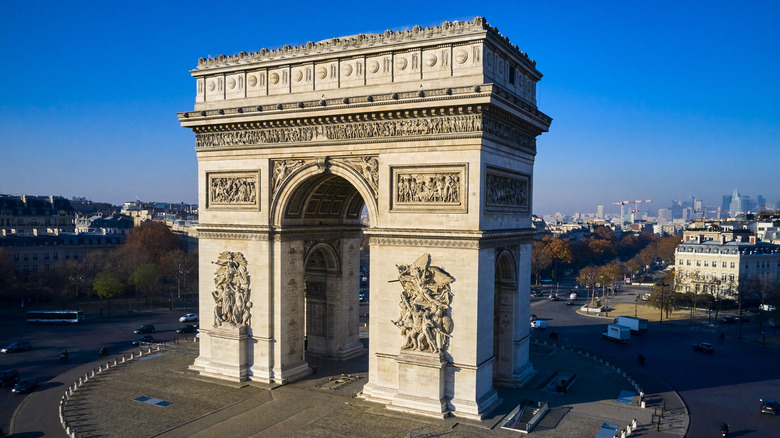
Stretching 164 feet up in the air, the Arc de Triomphe is a proud symbol of Paris that features ornate, neoclassical-style architecture and a domineering spirit. That's no accident. The landmark was orchestrated by Napoleon Bonaparte to celebrate the French army's 1805 win in the Battle of Austerlitz, following his words: "You will return home through arches of triumph."
Three decades later, the structure, designed by Jean-François-Thérèse Chalgrin, and inspired by the Roman Arch of Titus, was finally completed with statues and the engraved names of generals. Since then, it's remained a symbol of French military victories, with soldiers marching past it after several conflicts. A biplane was even flown through it in 1919 to celebrate the end of World War I. To further celebrate those who paid the price in the fight for France, the Tomb of the Unknown Soldier, with an eternal flame, is also at the monument.
Located on the Avenue des Champs-Élysées at the center of Place Charles de Gaulle — and surrounded by whizzing cars — the Arc is a remarkable symbol of French pride, both past and present. Besides just looking at it from the sidewalk, tourists can climb to the top and enjoy stunning views of both the Eiffel Tower and the Paris skyline from the observation deck. They'll have to work for it, though, as it's 284 steps to the top — some which can only be tackled via foot, rather than elevator.
Avenue des Champs-Élysées
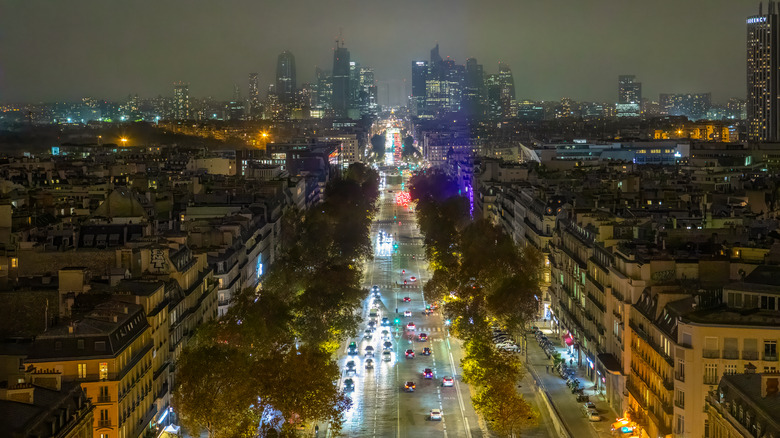
You could call Avenue des Champs-Élysées Paris' main street, but that wouldn't do this road — which has been called the most beautiful in the world — much justice. Stretching over a mile, this Parisian avenue is jam-packed with magnificence, ranging from iconic French landmarks to luxury stores and other cultural destinations. Even its name is grand: Champs-Élysées translates to "Elysian Fields," a utopia in Greek mythology. Nowadays, roughly 300,000 daily visitors stroll under the shade of its elm and linden trees, all the way from the Place de la Concorde to the Arc de Triomphe.
If you want to take a break from sightseeing to do some window shopping, check out the avenue's high-end stores like Cartier, Mauboussin, Guerlain, and Louis Vuitton, which houses its flagship store on the street. Alternatively, settle in for a meal at one if its Michelin-starred restaurants, including Ledoyen, Copenhague, or L'Atelier Étoile. Other must-see spots just off the avenue include the Petit Palais art museum and the Grand Palais museum and exhibition hall.
Movie buffs should also make some time to catch a flick, since there are more movie theaters on this street than any other in the city. Ranging from arthouse theaters to those dating back nearly a century, it's a must for cinephiles. The street itself stretches back much longer, though, as it opened in the 17th century thanks to Maria de' Medici, before being further embellished by King Louis XIV.
Catacombs of Paris

During the late 1700s, city officials realized that Paris had one big, morbid problem: The ground that the city's cemeteries sat upon was less than unyielding, and bodies were seeping out. So, they got creative. Despite the church's distaste for the plan, they used abandoned limestone mining tunnels located roughly five stories underneath the city to store the bones of millions of people. The bones were meticulously arranged over time, and by 1809, people could visit them. The last bones were deposited there in 1860.
For decades, the Catacombs of Paris have been a macabre source of lore. They've served as a bomb shelter and meeting place for the French Resistance during World War II, hosted raves, and even inspired horror films like "As Above, So Below." The catacombs have also been visited by notable figures, like King Charles X, the emperor of Austria, and Napoleon III. All of this intrigue has made them one of the best dark tourism destinations around the world.
Today, international tourists can visit them, too — as long as they're willing to wait in the sometimes very long lines. More than a half-million people visit the catacombs annually, yet only 200 people are allowed in at a time. Once inside, guests have access to nearly a mile of tunnels, which can take about an hour or so to explore. We recommend you bring a jacket, as the catacombs remain a crisp 57 degrees Fahrenheit year-round.
Eiffel Tower
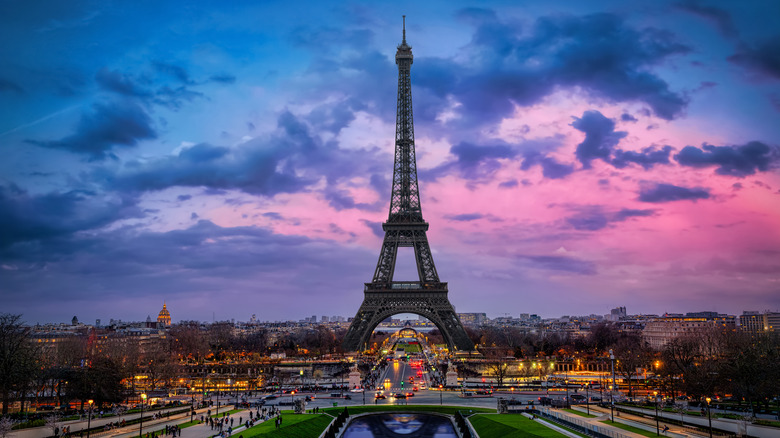
One of the most iconic sites in Paris, the Eiffel Tower is also one of the most iconic — and most visited — monuments on the planet, attracting over seven million people every year. But it was never intended as such. When it was completed in 1889 by engineer Gustav Eiffel for that year's World's Fair, it was only supposed to last for 20 years. However, the Tower's popularity overhauled that plan, and the monument — which was the tallest on the planet until 1930 — ended up being a Paris staple.
Today, tourists can climb to the top and enjoy the full experience of its prowess by checking out the views from one of its three floors, or by dining at one of its restaurants. This includes staples like Madame Brasserie — which boasts views of the Seine River from the tower's first floor — and Jules Verne, a Michelin-starred eatery located on the second floor.
If wow-worthy views are your priority, head to the second floor. Towering above the city, it features a large deck with sweeping views of Paris. Alternatively, head up to the intimate third floor, which also offers Paris views, as well as Gustav Eiffel's former office. No matter what you plan on doing at the tower, make sure you book your tickets well in advance.
Jardin des Tuileries
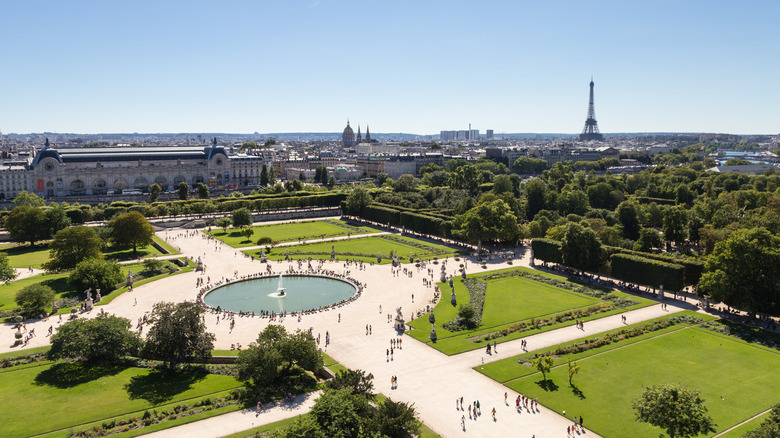
With its manicured lawns, flower beds, sculptures, and serene ponds, the Jardin des Tuileries looks like a park fit for royalty — and it is. This Italian-inspired park was Queen Catherine de Medici's private garden, located next to Tuileries Palace, which she had built in 1564. The palace and park were both named for the tile factories, or tuileries, which were formerly on the property. Even after the garden was overhauled by King Louis XIV a century later, it was still only a garden for nobility. That all changed in 1871, when the space opened to the public.
These days, the Jardin des Tuileries remains a popular destination for residents and tourists alike. Located between the Louvre and the Place de la Concorde, it's common to see people strolling, relaxing on benches, and children playing. Unfortunately, you won't spot the palace here, as it was destroyed during the Paris Commune.
A UNESCO World Heritage Site listed as part of the "Banks of the Seine," this 69-acre park has plenty more to see beyond its vast green lawns and colorful florals. Stunning statues dot the landscape, and miniature toy sailboats are also available for rent so children can play — a tradition that's been enjoyed for over 150 years. Throughout the year, this free-entrance park is also the setting for events like a Christmas fair with vendors and carnival rides, Paris Fashion Week, and an art fair.
The Louvre
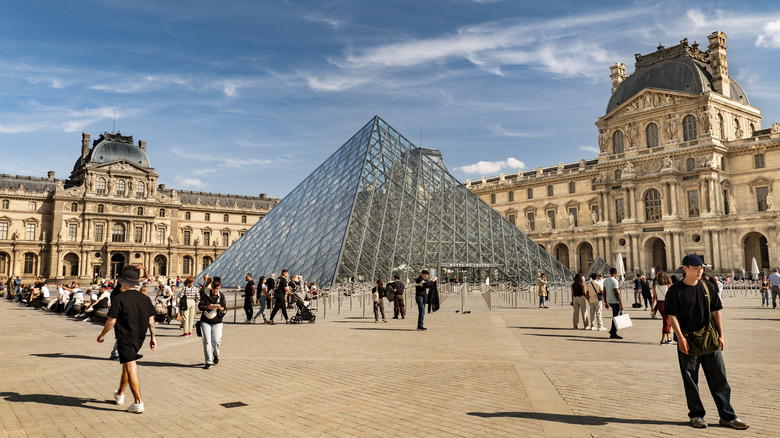
Paris is an arts epicenter, with museums, galleries, and architectural marvels around every corner. But all of the city's arts prowess culminates in The Louvre — the biggest, most significant, and most-visited art museum on the planet. Welcoming nearly 9 million annual visitors and 60,000 guests at any given moment, it's definitely popular. Covering a whopping 768,000 square feet, The Louvre boasts 35,000 pieces of art on display. This includes the Mona Lisa, which is arguably the museum's most famous resident, as well as the most famous painting on the planet.
Some of the other must-see works in this legendary museum include the Greek sculpture "Winged Victory of Samothrace," which dates back to 190 B.C., as well as Italian sculpture "Psyche Revived by Cupid's Kiss," and Delacroix's iconic "Liberty Leading the People." You'll also notice, with the museum's grand French Baroque architecture, that the Louvre doesn't look much like your typical art museum. That's because this complex, which dates back to the 12th century, was built as a fort before being converted into a French palace for nobility.
Finally, it was transformed into an art museum during the 18th century, and became home to everything from Egyptian antiquities to Islamic art to paintings and drawings, as well as the biggest collection of Impressionist and Post-Impressionist art. That said, with so must to see and do — and with it being such a popular attraction — it's recommended to buy your Louvre tickets well in advance, as lines can stretch up to three hours.
Montmartre
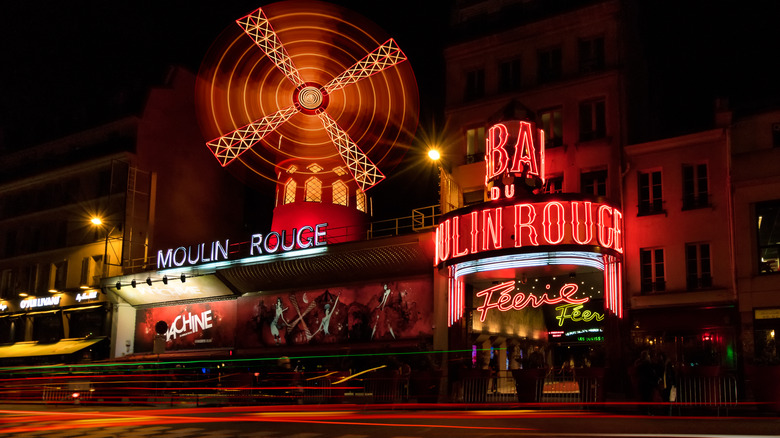
Paris is a stately city that can often feel like it's only for the most glamorous people. But its district of Montmartre, located in the 18th arrondissement, is an artsy, bohemian breath of fresh air that became part of the city in the late 1800s. Home to famous sites like the Moulin Rouge, the most well-known cabaret show in the world, as well as the opulent Basilique du Sacré-Coeur, it's well-worth a trip off the beaten path to this Paris neighborhood.
The Moulin Rouge, where the French Cancan was first performed, is a must-visit in Montmartre — even if it's just to take a photo of its iconic windmill. Beyond that, world-renowned artists like Van Gogh, Renoir, and Picasso also found inspiration in this beautiful area, and visitors can see where they lived and worked. Picasso's studio and Parisian apartment can be viewed from the outside at 49 Rue Gabrielle, while Van Gogh's apartment can also be seen at 54 Rue Lepic.
For views of all of Montmartre and Paris, trek to the top of the Basilique du Sacré-Coeur, a Romano Byzantine-style white church that finished construction in the early 1900s. It's filled with stunning mosaics and has been featured in popular pieces of media, including "Amelie" and "Emily in Paris." After visiting the church, head to the nearby Place du Tertre, one of the most prominent squares in the city. Expert portrait artists surround the square, bringing the district's artsy history to life even in modern times.
Musée d'Orsay
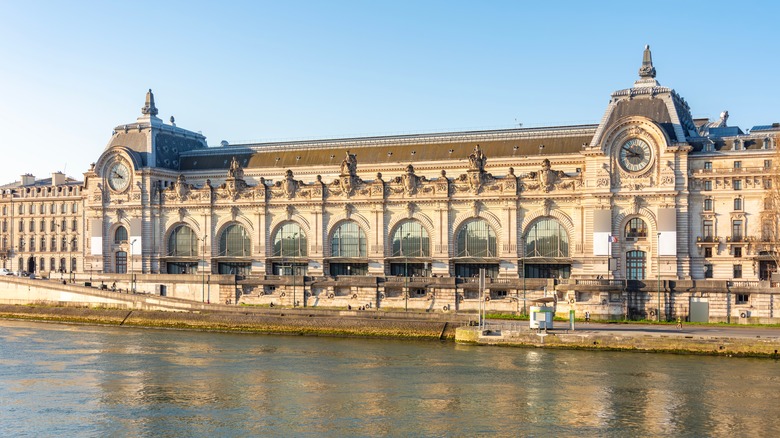
The Louvre might have the world's largest art collection, but its neighbor, the Musee d'Orsay, is said to have the best collection of Impressionist and post-Impressionist art, as well as Art Nouveau-style furniture, in the world. In this museum — housed inside former train station Gare d'Orsay — visitors can look in awe at masterpieces like Van Gogh's "Starry Night Over the Rhône," Monet's "Poppy Field," and Cezanne's "Apples and Oranges." Plus, with its stunning glass ceilings, the museum's 80 galleries and artworks are uniquely illuminated.
A popular style during the late 1800s and early 1900s, Art Nouveau furniture comes to life at Musée d'Orsay via works by artists like Alexandre Charpentier and Louis Tiffany. Located on the ground and second floors of the museum, these pieces — ranging from chairs to cabinets — were sourced from various French museums.
About 3 million people visit Musée d'Orsay's 220,000 square feet every year to check out its beautiful collection of French art. But the museum's collection goes beyond its painting and sculpture, as the building also houses some unexpected artworks. The former Belle Époque-style train station's massive clock, for example, is still here. Visitors can gaze at Paris through its face on the fifth floor for a one-of-a-kind photo that makes it one of the best spots in the city for unforgettable views.
Notre-Dame de Paris
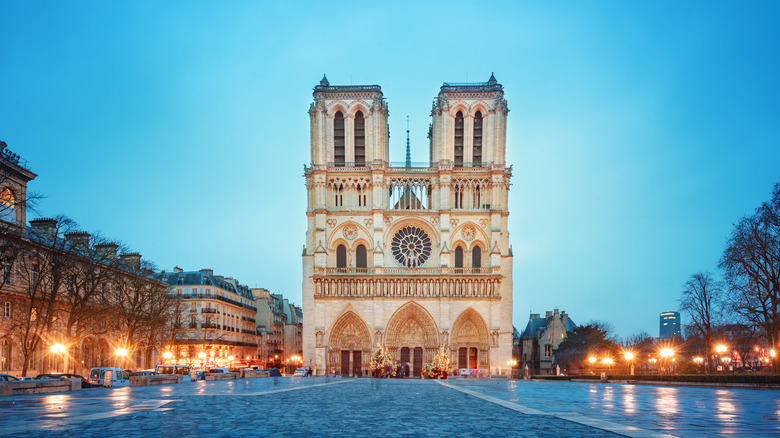
Notre-Dame means "Our Lady" in French, and refers to the Virgin Mary. As such, France is filled with Notre-Dame cathedrals. However, none are as iconic as Paris' Cathédrale Notre-Dame de Paris. Completed in the 13th century, its awe-inspiring Gothic architecture makes it one of the best destinations to visit if you only have one day in Paris.
Prior to its construction, three other religious buildings called the site home. That said, most of them are easily forgotten now that visitors have the Notre-Dame Cathedral to admire. With its famous colorful stained glass windows — which were novelties when the church was built — as well as its distinctive gargoyles looming over the city, the cathedral is a masterpiece.
Art fans will also appreciate the cathedral's 14th century sculpture of the Virgin Mary, as well as The Mays — which are the church's massive paintings that depict The Acts of the Apostles. In fact, the paintings are so legendary that the pieces not displayed in the cathedral are housed in The Louvre. Additionally, if you time your visit correctly — specifically, on the first Friday of every month — you can catch a glimpse of the crown of thorns that was believed to be placed on Jesus Christ while he was crucified. While here, make sure you also hike to the top of one of the towers for an all-encompassing view of Paris.
Palais Garnier
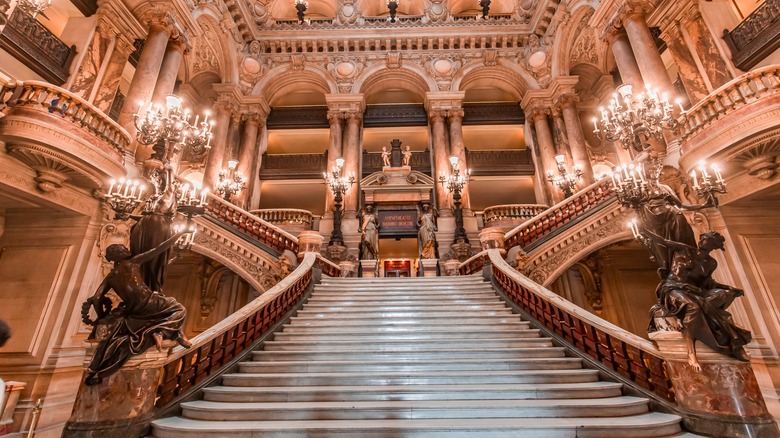
If you want to see the Belle Époque era's lavishness in person, look no further than Palais Garnier. An opera house embellished in every square inch of its nearly 2,000 seats, it was designed by its namesake Charles Garnier. A masterpiece of opulence, the building features a six-ton chandelier, copper dome, white marble staircase, frescoes, and a 59-foot-high foyer that's reminiscent of the Palace of Versailles' Hall of Mirrors.
That grand, opulent look is exactly what Napoleon III intended for it when he commissioned the creation of the opera house in 1861. Although it took 14 years to complete, Garnier did so by combining Baroque, Palladio, and Renaissance styles, as well as 17 different types of materials on the outside alone.
Within the horseshoe-shaped auditorium that makes every seat in the house a good one, the greats including Mozart, Wagner, and Verdi have performed. In fact, the auditorium is so iconic that it even inspired "Phantom of the Opera," Gaston Leroux's Gothic novel. Inside, visitors can even see the famous No. 5 box seat that's mentioned in the book. Over the auditorium's massive chandelier — which did fall once, as described in the story — guests can also admire a colorful mural featuring legendary Parisian sites like the Eiffel Tower.
Pantheon
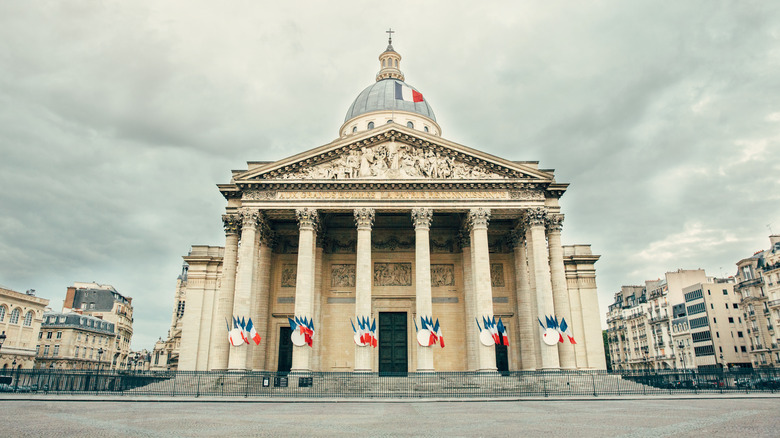
When you think of the Pantheon, it's likely that the Roman temple comes to mind. However, Paris has its own Pantheon inspired by its Italian counterpart. However, the French version stands apart from its inspiration thanks to a giant dome and ornate sculptures, designed by architect Jacques-Germain Soufflot. Located on the site of a former church, the Pantheon was commissioned by King Louis XV during the 1700s as a memorial for St. Genevieve, the patron saint of Paris, who supposedly saved the city.
However, by the time the neoclassical-style building was completed much later than it was supposed to, it was instead used to lay to rest France's most important figures. Despite its delayed timeline, though, the building's dome was still the biggest in the world when it was finished.
These days, more than 70 notable French figures are housed inside the Pantheon — including writer Victor Hugo, chemist Marie Curie (the first woman buried here), writer Voltaire, and philosopher Jean-Jacques Rousseau. Visitors can visit their tombs in the Pantheon's crypt as they explore the structure's interior. Beyond that, the interior is adorned by frescoes by Eugène Delacroix, as well as Foucault's Pendulum — which showcases Earth's rotation. Once you've explored the main floor, climb to the building's top along a narrow 270-step staircase for a great view of the city.
Methodology

As one of the most-visited cities on the planet, it's no surprise that Paris has a long list of must-do activities. Ranging from The Louvre — considered the most significant art museum in the world — to the Eiffel Tower, one of the most popular monuments on earth, one thing's for sure: there's no shortage of incredible experiences. However, it's also no secret that such a long list of destinations can make any trip to Paris an overwhelming one. So, how do you fit so much to do into one short stint — all while getting the chance to experience Paris like a Parisian?
To help you narrow your options, we rounded up the sites that you actually need to fit into your itinerary. First, we determined which were the most well-known destinations in the city — from world-class museums to historic landmarks, charming neighborhoods, and even modern pop culture hotspots. From there, we carefully evaluated which sites had the best (and the most) reviews on reputable travel sites such as TripAdvisor. That way, we could be sure that previous visitors approved of these spots just as much as we do. Finally, we considered which Paris landmarks were sure to stun, and leave you itching to tell your friends about.