

Düsseldorf, Germany's 10 Best Sights And Attractions For Tourists To Explore
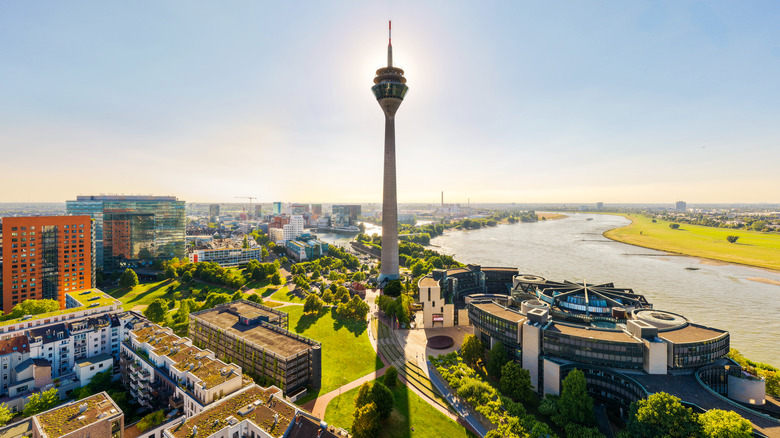
Germany is home to many cities that offer historic beauty, and Düsseldorf is decidedly near the top of that list. As one of the major cities in Germany alongside Berlin, Munich, and Hamburg, Düsseldorf is a stylish, cosmopolitan destination that merges elegance and riverfront culture into a must-visit destination for travelers from around the globe. Known for its art and music scene, gorgeous architecture (both historic and contemporary), and luxury shopping, the city offers a little bit of everything. Whether you're looking to add haute couture to your closet or have a leisurely lunch along the Rhine River, you'll find it here. The neighborhood-by-neighborhood variety in Düsseldorf is arguably one of its best features. Tourists can enjoy traditional German culture and the country's most fashionable, cosmopolitan side without ever leaving the city.
In this guide, we'll explore 10 of Düsseldorf's best sights and attractions. Most of the locations you'll read about here sit squarely on the traditional tourist track, so you won't have to worry about missing any iconic landmarks. However, we'll also check out a couple of stops that are slightly off the beaten path for travelers who thrive on visiting lesser-known gems. Whether you're drawn to amazing art, world-class architecture, European markets, or you just want to tick off one of Germany's best vacation destinations from your list, Düsseldorf delivers a diverse range of experiences — and these ten spots are the perfect introduction.
The Altstadt (Old Town)
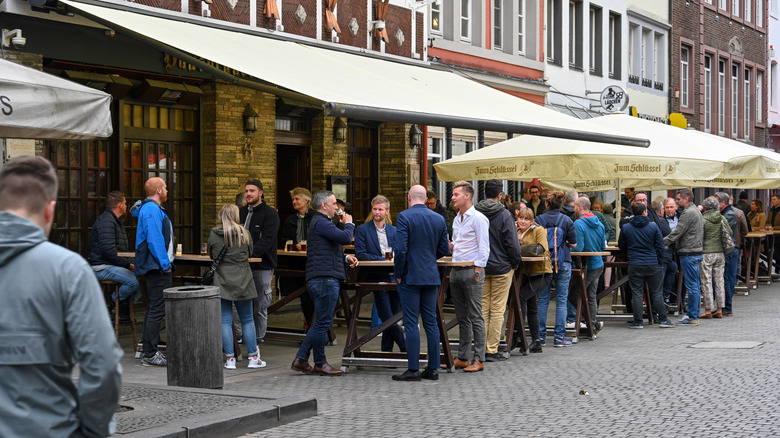
Düsseldorf has been recognized as a city since 1288, so it has a long and colorful history, as most 700-year-old cities do. The Altstadt, the city's Old Town district, allows travelers to step back in time with cobblestone streets, centuries-old buildings, and a lively bar culture that come together to create a quintessential European Old Town experience.
The oldest surviving building in the Altstadt is the Sankt Lambertus Basilika, or the Basilica of St. Lambertus. This Gothic church was founded in the late 13th century, but has undergone multiple renovations and restorations over the years. Its latest major update occurred in the 1950s. Today, St. Lambertus has an active congregation with a variety of regular events — including community caroling during the holiday season and a weekly Latin High Mass. The Old Town Hall is another important location that has served as a civic building in one capacity or another since the 1500s. It is an exceptional example of Renaissance architecture.
While the basilica and the historic town hall are must-see landmarks, one of the biggest reasons tourists come to the Altstadt is its bar and brewery scene. Nicknamed the "longest bar in the world," Düsseldorf's Altstadt is home to roughly 260 traditional German breweries and restaurants, many of which serve Düsseldorf's famous dark altbier directly from wooden barrels. If you're looking for a traditional German experience, stop by Uerige Brauhaus, Brauerei Schumacher, and Brauerei Zum Schiffchen on your pub crawl. For international brews, Holy Craft Beer Bar is known for having dozens of rotating options available at any given time. Whether you're exploring the Ceramics Museum and Maritime Museum early in the day or spending a night out bar hopping, the Altstadt is the perfect neighborhood in which to begin any Düsseldorf trip.
Rheinuferpromenade (Rhine Embankment Promenade)
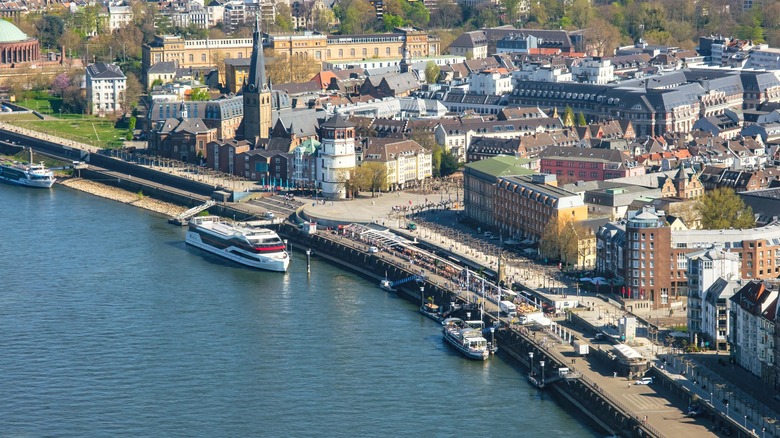
As one of the most enchanting places for a winter river cruise, the Rhine River is stunning any time of year. However, the Rheinuferpromenade, Düsseldorf's Rhine Embankment Promenade, is especially lively during the warmer months, when cyclists, rollerbladers, walkers, and families come out to enjoy the outdoors. Intentionally designed with open spaces and pedestrians in mind, this riverfront walkway connects to the Altstadt district, so it's a perfect place to relax after spending the morning sightseeing there. The Rheinuferpromenade has been featured in several European television series — including British comedy-drama "Auf Wiedersehen, Pet!" and German favorite "Verbotene Liebe," or "Forbidden Love", which aired for 20 years.
One of the most relaxing things to do here is dine or have coffee at one of the many local restaurants and cafes near the promenade. Anouki La Cantine Et Brasserie, for instance, offers gourmet-inspired dishes with a Mediterranean twist. Then, there's Zicke, which many Tripadvisor reviewers praise for its cinema-inspired decor and artsy crowd.
Throughout the year, the Rheinuferpromenade hosts a variety of special events and festivals. Among the most popular are the Düsseldorfer Frankreichfest — a celebration of French culture and food that is heaven for Francophiles — and the Düsseldorf Rheinkirmes, a pop-up fair that offers carnival rides, food, and fun for the entire family.
Königsallee (The Kö)
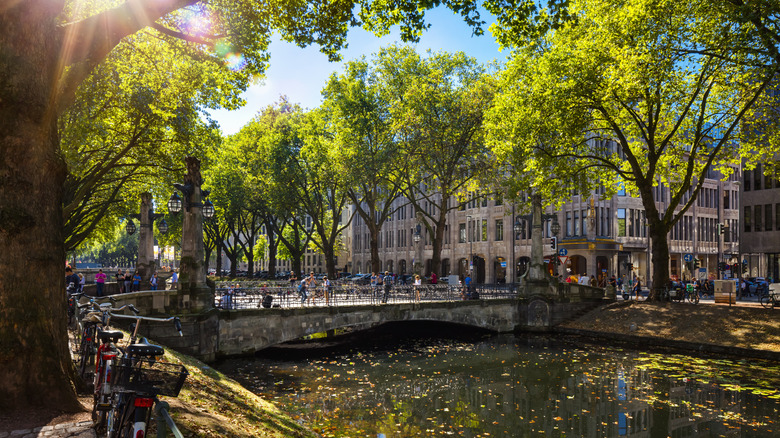
Königsallee, known simply as "the Kö," is Düsseldorf's most glamorous boulevard, as well as one of the world's premier luxury shopping destinations. It rivals both Paris — where travelers can find one of the world's oldest department stores — and the many luxury shops on Rodeo Drive in Beverly Hills. No matter the season, the Kö genuinely embodies Düsseldorf's stylish reputation. Home to numerous designer flagships, shoppers will find names like Chanel, Dior, Balenciaga, Prada, and Valentino lining this street. The Kö-Graben, a lovely canal, runs down the center of this upscale avenue, adding to the overall atmosphere and making the Kö a great spot to stroll — even for those who aren't looking to shop till they drop.
Fashion lovers will, of course, love the boutiques here. Meanwhile, those who enjoy architecture will want to soak in the beautiful exteriors that make Königsallee feel so high-end. The Kö-Galerie, for example, is a multi-story luxury mall with a marble facade that contrasts beautifully with its sleek glass rotunda. For travelers who want the Königsallee to serve as their home base during their Düsseldorf vacations, several sophisticated hotels are available. Five-star options include the relatively intimate 129-room Steigenberger Icon Parkhotel and the Breidenbacher Hof, which has been hosting guests since 1812. In regard to dining, the options along the Kö live up to its ritzy reputation. The Duchy, recommended by the Michelin Guide, is one of the best choices on this elegant avenue. Offering classy yet quirky gallery walls and a wide-ranging menu, it serves everything from ravioli to sashimi to a popular seafood raw bar.
MedienHafen (Media Harbor)
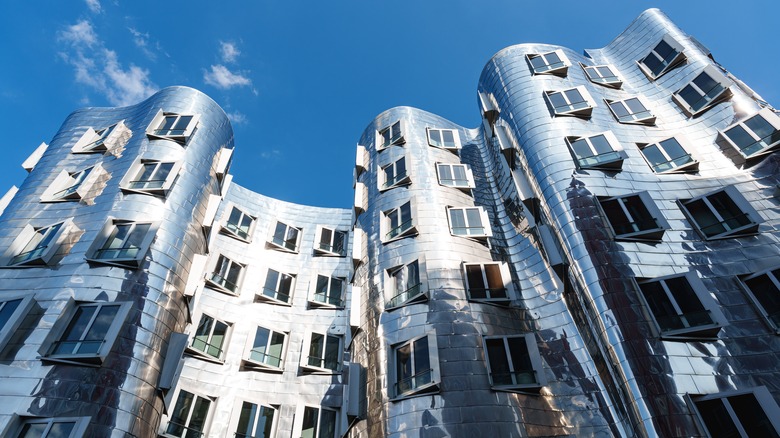
The MedienHafen, or Media Harbor, is Düsseldorf's contemporary showpiece. A major transformation from its days as a neglected shipping yard, modern architecture and creative brands that aren't afraid to be bold have made this area one of the most visually striking sections of Düsseldorf. Online travel company, Trivago, for example, has a six-story HQ here that features everything from an on-site cinema to jogging paths to a "Culture Kitchen." Private-equity group, The Stepstone Group, is also based in MedienHafen. Their sleek office boasts a fitness center and a full coffee shop, among other perks. The district's most famous structures, though, are the Neuer Zollhof buildings designed by the late, great architect Frank Gehry. Gehry's passing at age 96 in December 2025 sparked a renewed interest in his work, including these sculptural designs that almost appear to tilt and wave as the sunlight hits them.
Unsurprisingly, MedienHafen is a dream location for photography enthusiasts. Every angle of this sleek neighborhood — which also features designs by architect David Chipperfield — offers unique shapes, colors, and architectural features. In addition to architecture, the district is known for its trendy dining scene. Among the best spots for a memorable meal are the ultra-luxe Meerbar and moody steakhouse Rocca 800°C. Michelin-listed Lido Hafen can also be found here. This slick spot is ideal for a business lunch, or for enjoying a nightcap with views of the waterfront. For travelers who enjoy modern urban landscapes, MedienHafen is a must-see area of Düsseldorf that offers an excellent contrast to the city's more historic districts.
Rheinturm (Rhine Tower)
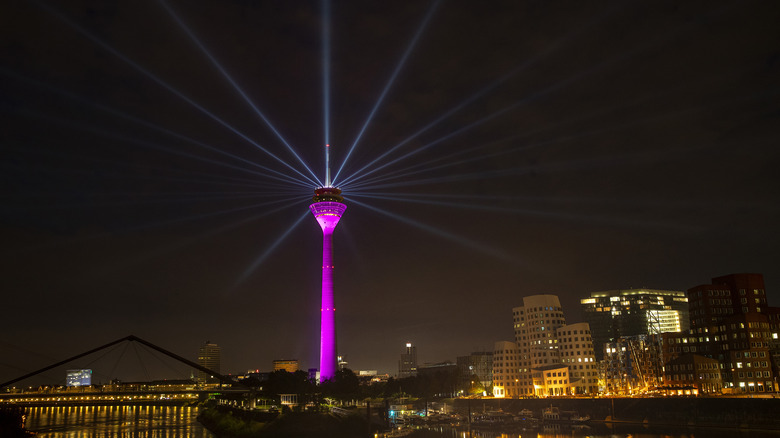
The Rheinturm is among Düsseldorf's most recognizable landmarks. Construction began on this telecommunications tower, still the tallest structure in the city, in 1979. Today, the Rhine Tower's observation deck is located over 550 feet above the ground, offering an incredible vantage point for travelers who want to see everything that makes Düsseldorf, well, Düsseldorf — from the historic Altstadt district to the ultramodern MedienHafen to the Rhine River, visitors here can see it all.
One of the highlights of the Rheinturm is Qomo, its revolving restaurant. The menu offers a unique blend of Japanese and European cuisine, which, combined with the setting, makes for an unforgettable meal. Before or after their Qomo experience, travelers should also check out the tower's Bar M168, which gets its name from the fact that it is located 168 meters (or about 551 feet) above the ground.
The observation deck and M168 are open every day from 10:00 a.m. to midnight, while Qomo is open from 6 p.m. to midnight daily. The latter also has special Sunday lunch hours from noon to 4 p.m. Note that some parts of the tower may be closed for private events, like corporate functions and weddings, on certain dates throughout the year. There are also periodic ticketed events, including a New Year's Eve party and specialty gin tastings. Whether you're visiting for brunch or taking in the city lights after dark, the Rheinturm is sure to be a highlight of any Düsseldorf itinerary. It is absolutely a must-see stop for first-time visitors.
Kunstsammlung Nordrhein-Westfalen (K20, K21, and F3)
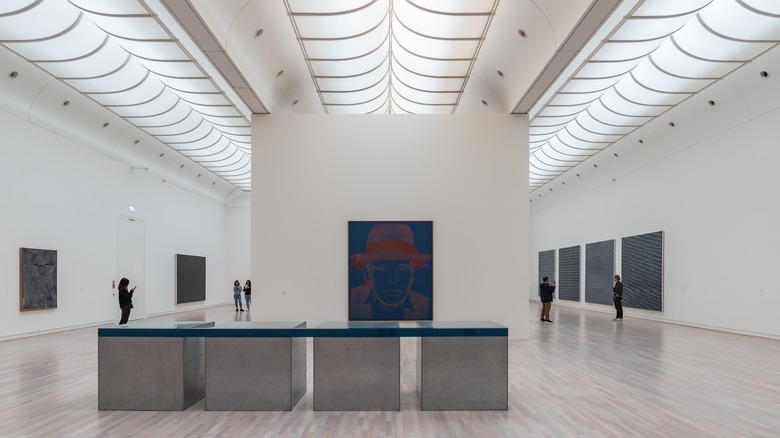
Given the city's penchant for arts and culture, it is unsurprising that Düsseldorf is home to a trio of world-class art institutions. Together, K20, K21, and F3 (also known as the Schmela Haus) form the Kunstsammlung Nordrhein-Westfalen. This museum network showcases the city's passion for modern and contemporary art, offering one of Germany's most impressive collections. These galleries are sure to be favorites for first-time visitors who love culture, design, and innovative creative spaces. K20's collection centers around 20th-century artists, with an extraordinary lineup of permanent works by Picasso, Matisse, Klee, Warhol, and other key figures who shaped the Modernism and Abstract Expressionism movements. One of K20's most notable pieces is Jackson Pollock's "Number 32, 1950." The space also hosts some rotating exhibitions, such as a collection of Marc Chagall pieces.
K21, meanwhile, is focused on showcasing the most cutting-edge artists and exhibitions of the 21st century. In this museum, located in the former German parliament building, visitors will find installations by leading contemporary artists like Kader Attia, Isaac Julien, and Bunny Rogers, among others. One of the museum's coolest (and most Instagrammable) permanent exhibits is Tomás Saraceno's "in orbit." This net walkway allows visitors to feel as if they're walking on air 65 feet above K21's atrium, offering amazing photo ops. Finally, F3 now serves primarily as an event space and sometimes hosts experimental art performances. It does, however, have a fascinating past as the first gallery in West Germany prior to the fall of the Berlin Wall.
Schloss Benrath (Benrath Palace)

Schloss Benrath, Germany's pink palace, is a wildly underrated destination. Not only is this 18th-century residence of Elector Karl Theodor ( or Karl Theodor von der Pfalz) an excellent example of Baroque architecture, but it is also home to gorgeous gardens and several museums: the Museum Corps de Logis, the Museum of Garden Art, and the Museum of Natural History. The Corps de Logis — situated in beautifully decorated rooms — hosts regular concerts, called Wandelkonzerte, that allow visitors to enjoy music from the era in which the palace was built. Meanwhile, the Museum of Garden Art takes travelers on a journey through roughly 2,500 years of European landscaping history. Finally, the Museum of Natural History focuses on showcasing biodiversity in the Düsseldorf area.
The palace grounds and gardens are a highlight of Schloss Benrath. The Palace Park is a 150-acre area with several distinct sections, including the Elector's "private garden," which features North American flora, and the meditative Reflecting Pond. A special annual highlight at the palace is the Schloss Benrath Christmas Market. During this time, tourists and locals alike can enjoy a traditional Christkindlmarkt with wooden stalls, popular decorations (like paper stars) for sale, and twinkling lights at every turn. The market is open Friday, Saturday, and Sunday throughout the Advent season every year. Additionally, there's also the yearly summer Light Festival, which takes place in July. This ticketed event features a performance by the Düsseldorf Symphony Orchestra and a water-and-light show in the courtyard. All in all, Schloss Benrath offers modern travelers a break from the traditional tourist trail — making it the perfect stop for those who enjoy elegant estates and regal surroundings.
Carlsplatz Market
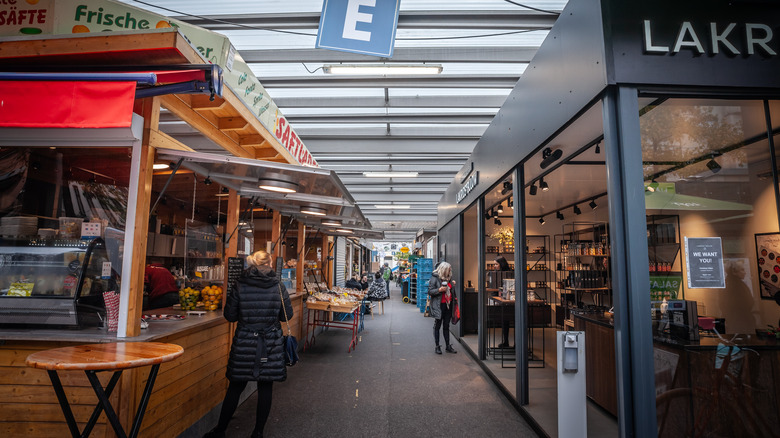
Carlsplatz Market is one of Düsseldorf's most locally immersive experiences. This is where everyday Düsseldorfans shop for and sell fresh produce, meat, artisanal foods, and much more. It's also a great place for first-time tourists to pick up unique souvenirs. While the marketplace is open six days a week, it wasn't always a daily affair. An annual market was held in Carlsplatz Square beginning in 1804, followed by a weekly event in 1910. Today, shoppers can peruse the Rhineland's best every day but Sunday.
For food lovers, there are a few must-visit stalls. Dave's Marktlokal — owned by TV presenter and chef, Dave Haensel — is, as its name suggests, a seasonal farm-fresh stop. Meanwhile, Steakschmiede is a great spot for meat lovers, offering freshly grilled steaks. And Düsseldorfer Gulaschkanone Dauser serves German specialties like pea soup and hearty stews that the Dauser family has been making since 1947.
Carlsplatz is also home to vendors selling a multitude of international cuisines — from French to Indian, Italian, Asian, and more. Lil' Bao Bao, for example, serves Asian bao dumplings filled with traditional ingredients like meat and tofu. Then, there's Casa Cortilla, which has been delighting diners with authentic Italian fare, like tiramisu and homemade pasta, since 1998. Lots of Carlsplatz's shop owners offer free samples of their food, so feel free to taste-test before you buy! With its blend of tradition and a modern, urban atmosphere, Carlsplatz Market is a lively and authentic destination that belongs on any first-timer's Düsseldorf itinerary.
Kaiserswerth

Kaiserswerth is among Düsseldorf's oldest and most atmospheric neighborhoods. Similar to the Altstadt in that it offers historical immersion, Kaiserswerth tends to be less crowded than its more popular, well-known counterpart. In fact, many of the people who come to this part of town are Düsseldorf residents, so it's a great place to truly integrate oneself into local culture for a day. Situated in the northern part of the city along the Rhine River, people have lived in what is now Kaiserswerth since ancient times. The neighborhood's main attraction for tourists is the ruins of the Kaiserpfalz, a fortress-like residence built for Holy Roman Emperor Frederick I Barbarossa in the 12th century.
There is much more to Kaiserswerth than its famous ruins, though. Since it's more frequented by locals than travelers, it's a great place to shop and dine away from Düsseldorf's most tourist-heavy sections. Michelin-starred restaurant Im Schiffchen can be found here, serving French dishes in a perfectly Baroque setting. Savor is another great choice with separate lunch and dinner menus, both offering Italian-inspired classics. The dinner menu, in particular, offers delectable options like truffle risotto and sea bream fillets with capers. Ultimately, Kaiserswerth is a wonderful addition to any Düsseldorf trip.
Aquazoo Löbbecke Museum
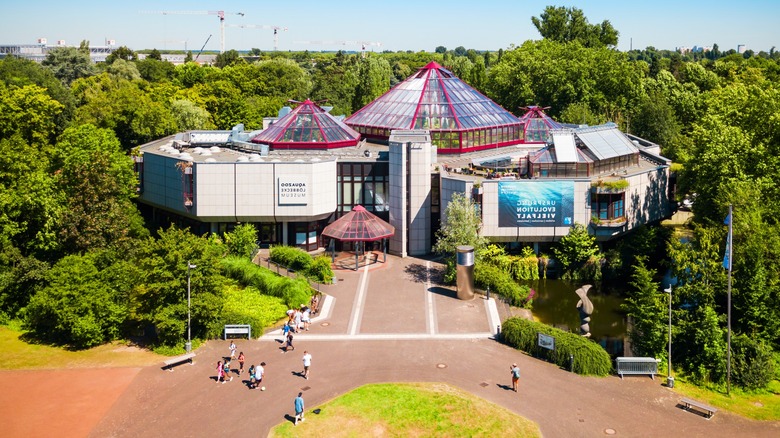
The Aquazoo Löbbecke Museum is the perfect choice for families and nature lovers visiting Düsseldorf for the first time. This aquarium–museum hybrid offers a range of exhibits that span 25 themed rooms, including a sperm whale skeleton and live crocodiles alongside halls that explain marine biodiversity. The result is an educational experience that is both fun and immersive for all ages. Children, in particular, love the variety here — from colorful fish tanks to reptile enclosures and hands-on learning centers. All of these experiences offer a break from more traditional sightseeing. The facility takes visitors on a journey through both aquatic habitats and land habitats, with highlights like a shark aquarium, a desert biome, and a penguin environment.
Guests at the Aquazoo Löbbecke Museum can also enjoy periodic special events. This includes happenings like talks on animal adaptations, teacher training sessions about rainforests, an animal photography workshop, and an informational booth about the history of zoos in Düsseldorf. No matter what guests engage in during their time here, the Aquazoo is a refreshing change of pace from historic districts and architectural landmarks. It is an especially perfect fit for parents looking to keep younger children entertained while still enjoying a meaningful cultural experience.
Methodology
For this guide, we relied on multiple official tourism websites, including VisitDusseldorf.de, Dusseldorf.com, and Germany's official tourism site. We also utilized several high-authority travel and cultural websites and blogs like Google Arts & Culture, Airial Travel, Visit a City, Mindtrip, Selected, and Globaleur. For the more minute details, we turned to the official websites for certain sites like the Rheinturm, Schloss Benrath, and the Aquazoo Löbbecke Museum. Finally, we occasionally filled in with information from travel blogs and magazines, such as 2 Dads With Baggage, Stephen Travels, Gypsy With a Day Job, and "National Geographic." All of these sources helped us put together a carefully curated list of the top 10 spots in Düsseldorf that travelers simply can't skip.