

Frankfurt, Germany's Top 11 Tourist Attractions You Can't Miss
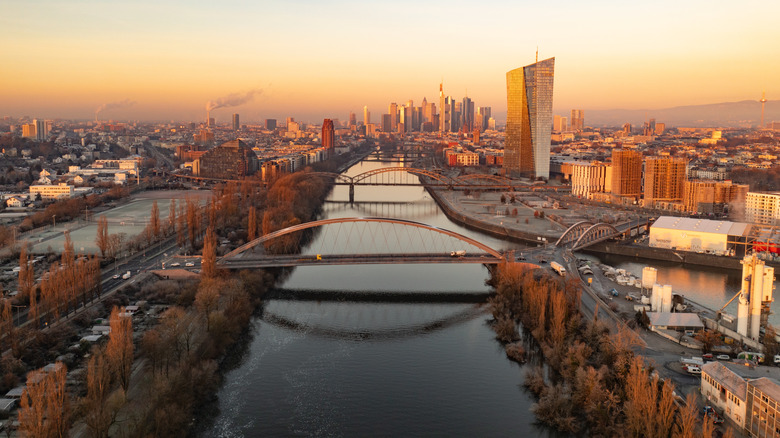
As a frequent European traveler, I've technically stepped foot in Frankfurt many times. The city is home to one of the biggest airports on the continent, after all — as well as the most stressful in all of Europe, I might add — and I've spent many a layover there. But, as it turns out, this German destination is well-worth venturing outside the airport for, despite what its many photos of run-of-the-mill skyscrapers will have you believe. One of the airports with the best public transportation options, Frankfurt International Airport is just a 12-minute train ride away from the city center — which is packed with must-see sites like one of the most important buildings of the Holy Roman Empire, world-class art museums, and stunning botanical gardens.
That's why we've rounded up the best sites to visit on your trip to Frankfurt — whether you've got a few hours to kill on your layover or you've chosen to give this historically- and culturally-packed city the time it deserves. To do so, we evaluated which tourist attractions were the most well-known, which ones had the highest and best reviews on TripAdvisor, and all of the attractions that stood out from others in their categories in regards to fame, size, or age.
The Alte Oper
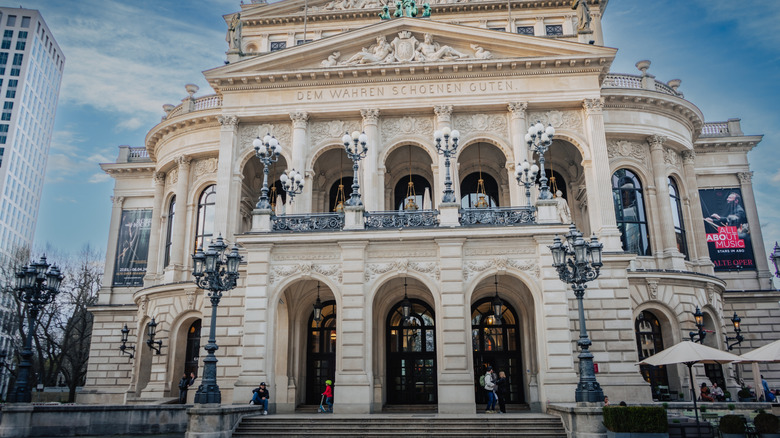
Completed in 1880 after seven years of labor, the Opernhaus was the cultural epicenter of Frankfurt. With 2,000 seats and what was known as the Imperial Staircase, the Renaissance-style opera house is one of the most iconic in Germany, hosting renowned performances like Carl Orff's "Carmina Burana." Unfortunately, that tenure came to a temporary end in March 1944 during World War II, when the Opernhaus sustained significant damage.
After locals banded together to save the historic structure from being replaced with offices, the Frankfurt Opernhaus was re-imagined as the Alte Oper for its current use as a concert hall. It now hosts more than 300 events annually, including jazz and pop concerts, musicals, and festivals.
The Alte Oper's most impressive spaces include the mahogany-adorned 2,450-seat Grand Hall and the 720-seat Mozart Hall — which, these days, attract more than just music. Businesses and other organizations frequently hold events here, from galas to anniversaries. Even if you can't snag a ticket for an event here, the Alte Oper hosts both public and private guided architectural and historic tours that last an hour and a half. If you're short on time, the exterior alone is breathtaking — positioned prominently in an expansive square where a gorgeous fountain serves as the centerpiece. It's the kind of architecture that stops visitors in their tracks.
Eschenheimer Tower
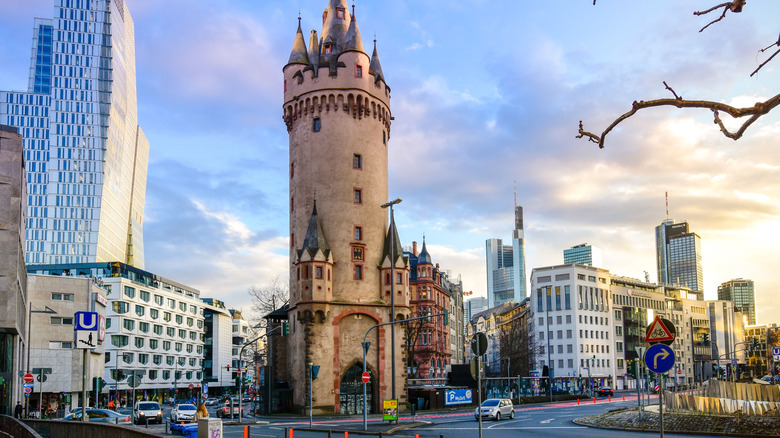
Frankfurt was once home to 60 foreboding, fairy tale-like towers. That came to an end in the early 1800s, when the former walls of Frankfurt were demolished. Today, one still stands: the Eschenheimer Tower, a 154-foot-tall Gothic tower that looks like a blast from the past, as it's surrounded by modern office buildings and busy streets. That's thanks to the support of French ambassador Count d'Hédouville, who fought to save the tower, built in the early 15th century, as well as two others. Today, the Eschenheimer Tower remains as Frankfurt's most historic and intact building in the city center.
Located in the bustling square of Eschenheimer Tor, the tower features eight floors, two attics, four turrets, and even a home for a live-in guard. Although no guard has lived here since 1956, the public can now utilize the tower, as its base floor was converted into a restaurant and bar equipped with a fireplace, exposed beams, and wood details for a medieval feel. Plus, visitors can also climb to the top for all-encompassing views of the chic neighborhood and beyond. Offering a striking contrast to the surrounding high-rises, the outdoor terrace is a great spot for people-watching while grabbing a bite to eat.
St. Bartholomew Cathedral

Since 680, four places of worship have called the spot where St. Bartholomew Cathedral now sits home. But perhaps none have been as impressive as the site's current resident, which features a Gothic design dating back to the 1200s, red sandstone exterior, stained glass windows, detailed sculptures, and 328 steps to reach the top. The latter is why the building is dubbed "Frankfurt's first skyscraper," which many people hike up to see unmatched Frankfurt views of St Paul's Church, the Römerberg, and more from April through October.
However, St. Bartholomew Cathedral is more than just a pretty view. The building is also home to notable artifacts, like St. Bartholomew's skull. Plus, it's also the site of significant historical events: Royal elections took place here for more than two centuries in the Elector's Chapel, and German-Roman emperors were once crowned here, too.
One historic event that didn't take place here, however, is a bishop's designation. So, technically, St. Bartholomew Cathedral isn't really a cathedral. That said, it is a sort of phoenix, as the church was heavily marred by fire in 1867 before its restoration began in 1948. These days, it also features a Baroque altar depicting Mary's Assumption, red tones in the nave, and an atrium surrounded by stone.
Frankfurt Zoo

Dating back to 1858, when it was founded by local businesspeople, the Frankfurt Zoo is one of the oldest zoos in the country. Like many other Frankfurt institutions, it was decimated during World War II, but it later saw new life and is now home to more than 4,500 animals from more than 400 species. That includes lions, seals, tigers, penguins, snakes, and more.
Better yet, your visit to the Frankfurt Zoo doesn't have to be reserved for a sunny day — or any specific day, for that matter — since the zoo is open 365 days a year. Plus, since many animals are housed inside buildings, you and your family will have plenty to see, even when the sometimes-gloomy German weather rolls in. However, you may want to time your visit around certain times of the day. For example, seals and penguins are fed daily at 11 a.m., while giraffes are fed at 3 p.m. on Saturdays and Sundays. Recommended for families with children, it's a refreshing change of pace on your visit to Frankfurt, and a great way to keep the kids (and yourself) happy and entertained for a few hours.
Jewish Museum
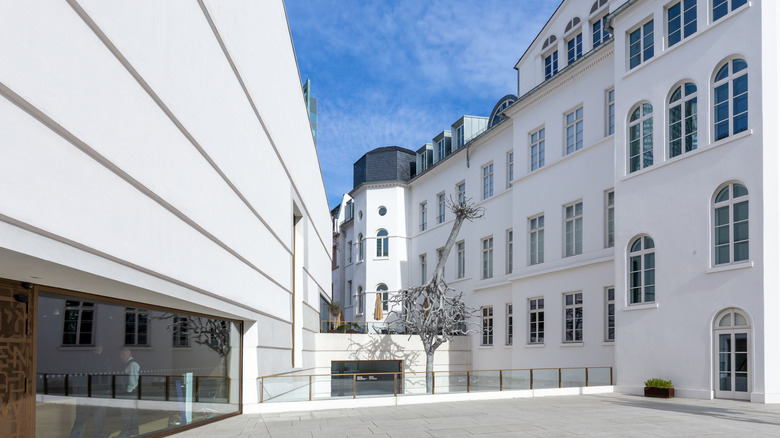
Despite the tragic history of Judaism in Germany, Frankfurt was once one of the most vital Jewish communities in Europe — as well as the biggest in the country. As such, it makes sense that, with two Frankfurt locations, the Jewish Museum has been telling the eight-century-old history of Judaism in Europe since 1988, when it became the first of its kind in the country.
At Museum Judengasse, regular Jewish life in the ruins of the city's former Jewish ghetto is examined, as well as the art that was created by the residents. Meanwhile, in the attached learning center, the ghetto's murdered and deported Jews are memorialized.
At the museum's other location in the renovated Rothschild Palais, visitors can explore three floors comprising 14,000 square feet of exhibits showcasing Jewish life from the 1800s until today. Visitors can also expect to marvel at Henri Matisse's art, Felix Horovitz's workshop materials, Anne Frank's family's former possessions, and more. Meanwhile, the neighboring Lichtbau building houses a spacious entrance area, a Jewish bookstore, kosher restaurant, the Frank Family Center archives, and additional exhibition rooms. Featuring permanent and temporary exhibits, visitors can also join guided tours of the facilities for an even deeper dive into the city's Jewish history.
Kleinmarkthalle
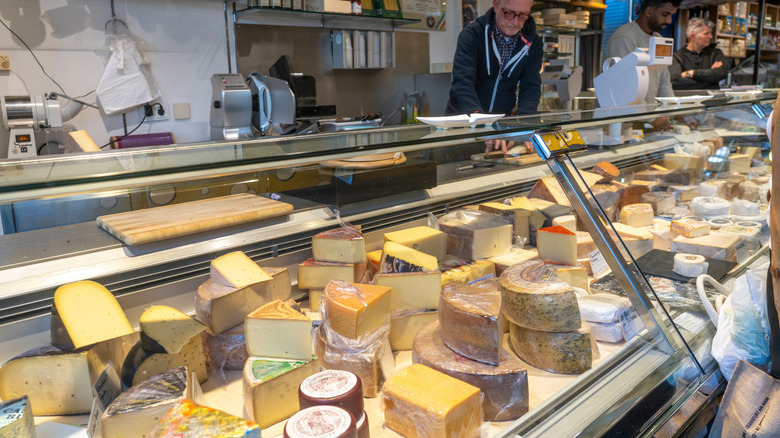
If you've been itching to try German specialty foods like gruene sosse (an herb sauce made with sour cream, eggs, and spices) — or if you're craving your favorite Asian or Persian dish — you've come to the right place at Kleinmarkthalle. One of the best food markets in Europe, this international food hall houses more than 60 long-running food vendors from around the world, as well as exotic butchers, fishmongers, cheesemakers, bakers, and more. Specifically, this includes vendors like cidermaker Cider Gallery Frankfurt, Spanish tapas shop Arkade Cafe & Shop, and French bakery Bakery Huck. Along with shopping for ingredients, visitors can also enjoy fare or drinks to eat onsite at Kleinmarkthalle's wine bar, or at Markt Stubb German restaurant.
Kleinmarkthalle has been a staple of the city since the 1890s, when the New Renaissance-style building was established as Frankfurt's go-to food market, before it too was ruined during World War II. About a decade later, it was rebuilt to the delight of foodies everywhere. But make sure you time your visit carefully, as Kleinmarkthalle is only open until 6 p.m. on weekdays, 4 p.m. on Saturdays, and remains closed on Sundays. You'll also want to keep an eye on your belongings while walking around, as Germany is one of the top European countries where you're most likely to get pickpocketed.
Main Tower
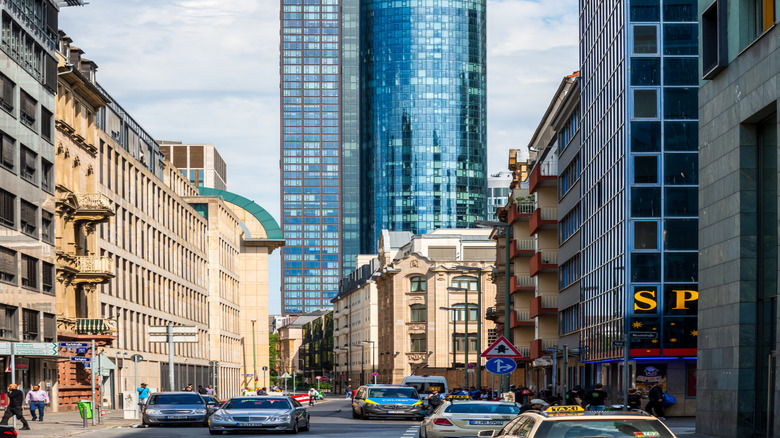
There's no better place to see Frankfurt from high up than the Main Tower, a 56-story building with the tallest terrace in Frankfurt. It's a 1,090-step walk to the terrace at 614 feet up; alternatively, you can hop on the Main Tower's elevator, which is the fastest in the country. Climbing nearly 23 feet per second, it'll zoom you to the top for an all-encompassing view from the ultra-modern skyscraper — the first one on the continent with a fully-glazed exterior. From here, you'll be able to see the Main River, Romerberg, the German Stock Exchange, and more, as well as pose for the perfect sky-high photo op with the city sprawling behind you.
To visit, buy a terrace access ticket before 7 p.m. on weekdays and 9 p.m. weekends during colder months, or 9 p.m. weekdays and 11 p.m. weekends during warmer months. You can also enjoy your view with a bite — or a drink — at the fine dining eatery Main Tower Restaurant & Lounge Bar, which sits three floors down from the top. While meandering through the building, don't miss out on seeing Stephan Huber's mosaic and "The World of Appearances" by Bill Viola in the halls. More works in the Main Tower can be found in the Hessische Landesbank art collection.
Palmengarten

Smack in the middle of the modern concrete jungle that is Frankfurt, there is another jungle of a different type. The city is home to Palmengarten, which — spanning 54 acres and housing 13,000 plant species — is one of the biggest botanical gardens in the country. When it first opened in 1871, a visit to Palmengarten was reserved for the wealthy. These days, the public is invited to explore the six houses that make up Palmengarten, and that they do.
Visitors will start their green-thumbed journey through Palmengarten at the Entrance Display House, which is home to carnivorous plants as well as tillandsias. A historic and architecturally significant building with a massive glass dome, it's worth taking time to appreciate the architecture itself and not just the plants inside. Then, head to the newest addition of Palmengarten: the Flower and Butterfly House. This space, which also hosts interactive activities and exhibitions, is where exotic butterflies and other types of bugs are kept.
Next, visitors can check out the small-but-mighty Subantarctic House. One of just two greenhouses displaying plants from the Antarctic on the planet, visitors can get up close and personal with alpine water ferns, bamboo, Chilean bellflowers, and more, all hailing from areas like Patagonia, Tierra del Fuego, the Falkland Islands, and New Zealand's South Island. Finally, wrap up your journey with a visit to the Alpine Houses, Tropicarium, and the Palm House.
Romerberg
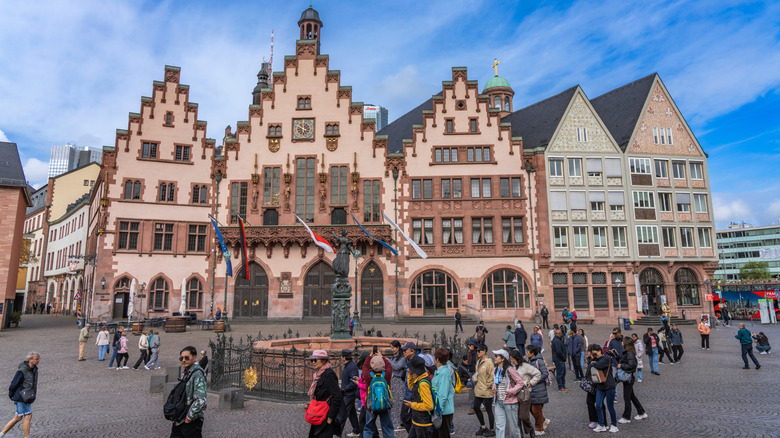
As a modern city filled with skyscrapers and industry, it's easy to argue that Frankfurt lacks the charm and quaintness European travelers often crave. However, they'll likely find it at Romerberg — Frankfurt's historic square that dates back to the ninth century. A must-visit during your trip, Romerberg was considered the most stunning square of the Holy Roman Empire of the German Nation during the 1500s. Wintertime visitors will be happy to learn that the square becomes even more magical at Christmastime, when one of the oldest and largest markets takes over.
Within this Old Town square, visitors can also see several of the city's major sites. This includes Romer, Frankfurt's city hall, which also happens to be one of the most photographed spots in the city, and where local government has been conducted since the 1400s. History is also alive in Romerberg's Fountain of Justice statue, which was the first fountain in the city and features the goddess Justitia. For even more history, check out the square's Historical Museum Frankfurt, which houses artifacts and exhibits exploring the city's complete history.
Also in the square is Old St. Nicholas Church, with its red sandstone exterior, where you can take in stunning views of the city from the top. That said, make sure you also spend some time just exploring Romerberg. Don't miss the Ostzeile, a row of six reconstructed half-timbered houses with distinctive names — Great Angel, Golden Griffon, Wild Man, Small Badger Hill, Great and Small Lauberberg, and Black Star — where you'll find charming shops and restaurants.
Senckenberg Nature Museum
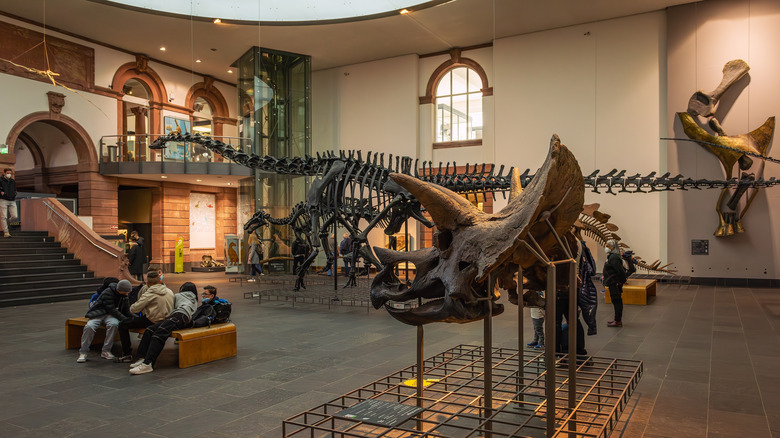
Frankfurt might not seem like an obvious place for a natural history museum, but since 1821, when the city's public natural history cabinet was founded, it sure has been. The city is home to the Senckenberg Nature Museum, a nearly 65,000-square-foot destination that's known as one of the best natural history museums on the continent. Here, everyone from kids to adults will be wowed by the extensive dinosaur collection — one of the biggest in Europe — as well as interactive exhibits showcasing everything from evolution to the Big Bang. Other notable exhibits also include one of the planet's largest bird collections, as well as unique specimens that can't be found anywhere else.
A few other standout exhibits that visitors can expect at the Senckenberg Nature Museum include a diorama of an Indo-Pacific coral reef; a reconstruction of a dodo bird made by an esteemed taxidermist; and 48 million-year-old findings from the Messel Pit, a UNESCO World Heritage Site. To make sure you see it all, book a guided tour. Starting from roughly $50 plus the museum's entrance fee, which will set you back around $7 to $14 (as of writing), you'll get a comprehensive tour for groups of one to 10 people. Tickets are available every day, with late hours on Wednesdays.
Städel Museum
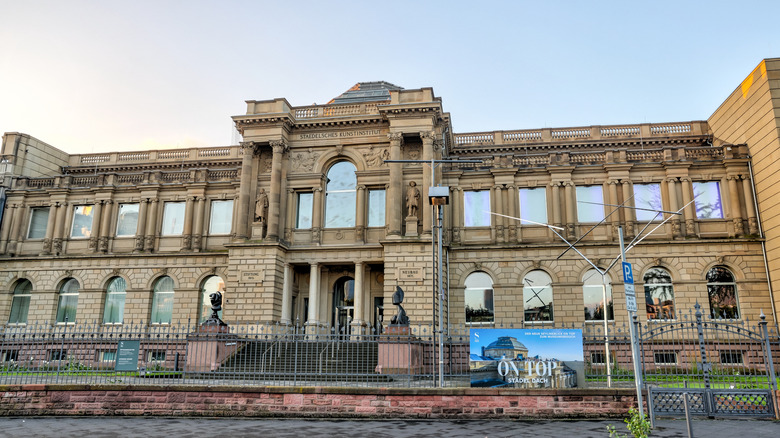
Frankfurt is a rich cultural epicenter, and nowhere is that more apparent than at the Städel Museum, which houses seven centuries of priceless artwork — including pieces by legends like Pablo Picasso, Claude Monet, Rembrandt Harmenszoon van Rijn, and Sandro Botticelli. The museum opened its doors in 1815 after its founder, Johann Friedrich Städel — a spice tradesman, banker, and avid collector of art — stipulated for it to be established in his will.
Today, his mission is alive and well, and the Städel Museum still seeks to bring art to the masses by displaying paintings, sculptures, photography, drawings, and prints throughout nearly 162,000 square feet. Open Tuesday through Sunday, children under 12 are welcome to visit for free, while adult tickets cost around $20 at the time of writing.
A few of the standout pieces to check out at the Städel Museum include: "Idealised Portrait of a Lady" by Botticelli, "Portrait of Fernande Olivier" by Picasso, and "The Luncheon" by Monet. For a different type of beautiful view, head to the rooftop — accessible via a staircase from the Old Masters gallery on the second floor. Once there, you'll be rewarded with a view of the Main River and Frankfurt cityscape.
Methodology

With so much to see in Germany, Frankfurt usually gets overlooked as a mere layover destination, especially considering the airport's reputation as a major international hub (and its distinction of having some of the coolest amenities, too). However, skipping Frankfurt means missing out on its cutting-edge cultural institutions and historic must-see sites. That's why rounded up the best spots worth leaving the airport for.
To land on these picks, we first determined which destinations had the highest and most reviews on reviewing sites like TripAdvisor and Google. That way, you can rest assured that travelers just like you thought these places were more than worth the trip. Then, we evaluated which of these stood out far above the rest in both Frankfurt and beyond — including attractions like Palmengarten, which is the biggest botanical garden in Germany, and Romerberg, which is one of the most photographed places in Frankfurt. Finally, we also considered which spots were the most unique, as well as experiences worth talking about long after your plane takes off.