Attractions & Things to Do in Stuttgart
Stuttgart is one of Germany's most appealing cities for tourists. A pair of outstanding art museums, two state-of-the-art automobile museums, one of Europe's top zoos, and sumptuous palaces draw visitors year-round.
The city is at its best in the summer when the public gardens are in full bloom and the surrounding hills are a carpet of green. Winter can also be a great time to visit, especially if you are visiting around the holidays when one of Europe's best Christmas markets springs to life. Any time of year, you can enjoy the architectural attractions representing Baroque, Art Nouveau, Modernist, and contemporary styles.
Stuttgart's main attractions are close to one another and easily walkable. For those located a bit further out, the S-Bahn train system makes getting around effortless, and it also connects the city center to the airport.
Discover the interesting places to visit with our list of the top tourist attractions and things to do in and around Stuttgart.
Schlossplatz

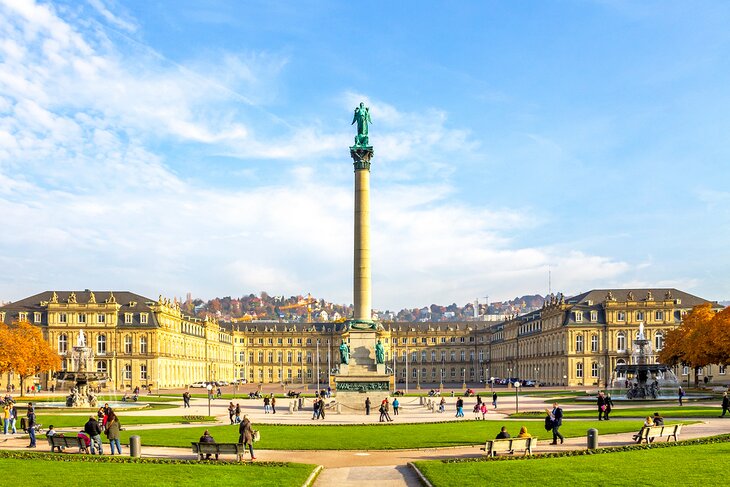
The easiest way to start your exploration of Stuttgart is to begin at the Schlossplatz. This wonderful public square features the towering mid-19th-century Jubilee Column and the Neues Schloss or New Palace (once home to former kings, it's now used by the state government). You'll also find you'll find a cast-iron bandstand (1871); a fountain; and pieces of modern sculpture.
Beautiful public gardens spring to life each summer. Come late November; the column is lit with Christmas lights, and a giant Ferris Wheel is erected in front of the palace when the Christmas Market begins.
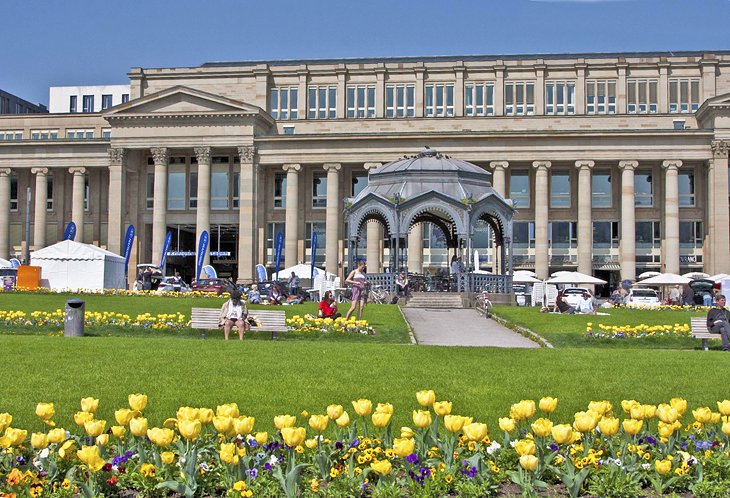
The area around the Schlossplatz is filled with restaurants, shops, and museums, making it a pleasant place to stroll about with no particular destination in mind. Walk past the Neues Schloss to the northeast to find the expansive Oberer SchloBgarten with a large pond and towering trees. You'll also find the Staatstheater, which dates from the early 20th century.
To the northwest is Königstrasse, a 1.2-kilometer-long pedestrian-only street full of European brand-name stores. This is one of Germany's longest and best shopping districts.

For the best view of the Schlossplatz, try this local's secret: walk into the Kunstmuseum and take the elevator to the top floor, the same level as the CUBE restaurant. Walk to the floor-to-ceiling windows for incredible views, or even better, pop in for an espresso or light lunch at the restaurant, one of Stuttgart's more popular dining venues.
The Schlossplatz has its own metro stop and is easy to reach.
Mercedes-Benz Museum

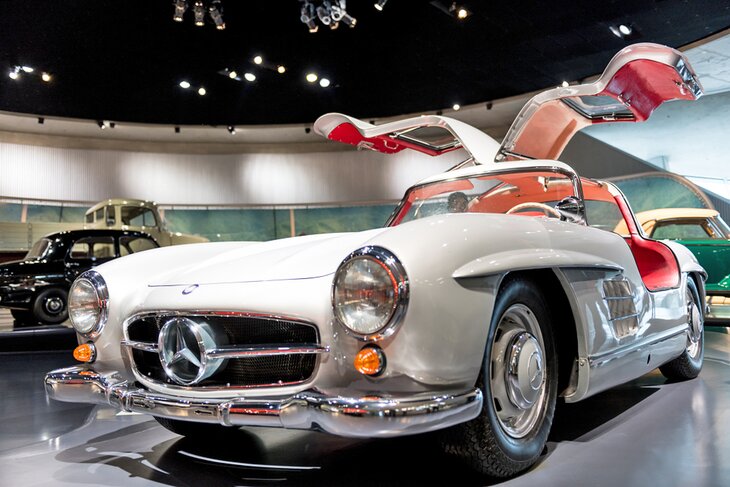
The Mercedes-Benz Museum is more than a museum dedicated to vehicles, it details the birth of the automobile itself. This vast museum (over 180,000 square feet) covers 130 years of automobile history and changes in society and world events, including both world wars. Cars, buses, and even the Popemobile and the SUV used in the movie Jurassic Park are on display, along with race cars and airplane engines.
The building itself is an attraction, an architectural marvel in the form of a double helix. As you walk up the long staircase to the entrance, you can't help but be awed by how the eight-story-high circular wraparound design stands in stark contrast to the surrounding square and utilitarian buildings.

Start your tour by taking the elevator to the 8th floor and then walking down the wide circular walkway with displays on each floor. Along the way, exhibits trace the development of the automobile engine from its humble beginnings when Karl Benz and Gottlieb Daimler first created it, right through to the 20th century. The museum is also forward-looking as it provides commentary and exhibits on the next evolution of automobiles.
If you are looking for that perfect photo to post on your social media, wait until you reach the ground floor and shoot upwards past the cars on pedestals. If you're looking to grab a bite after your tour, Bertha's restaurant on the ground floor is excellent.

One thing to note about a visit here is that the museum is located a fair distance from the train station (Neckarpark (Mercedes-Benz) S-Bahn station. The route is well-marked, but allow for about a 15-minute walk. Free lockers (with somewhat complicated locks) are provided, and they are located to the far right of the main entrance.
Address: Mercedesstraße 100, Stuttgart
Porsche Museum

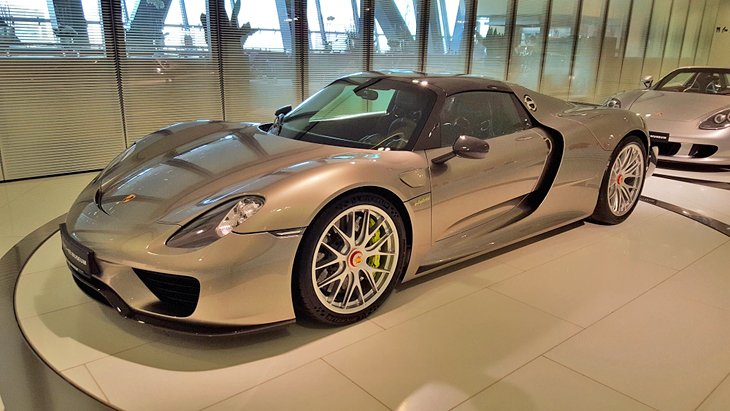
Porsche's vehicles, with their sexy lines and powerful engines, have been aspirational cars for generations. If you want your own dose of inspiration, head to the Porsche Museum, where the company's history, rich racing history, and cars are on display at this world-class museum.
Take the long elevator ride up to the museum floor and be prepared to be awed. The dynamic architecture of the building Delugan Meissl designed for the Porsche Museum, supported by a trio of V-shaped columns, is intended to portray the nature of the brand itself.
Just follow the arrows and wind your way upwards through the museum from the earliest models to the most current production vehicle. Displays are informative and, in some cases, interactive. Audio guides in English highlight themes, such as the "Porsche DNA" that lives on in every model since the first.

The most popular part of the museum, even for those with little interest in automobiles and racing, is the interactive 12-meter Porsche Touchwall, where you can use touch frames to browse through more than 3,000 drawings, photos, posters, and advertisements from the vast historical archive.
In the interactive Porsche in the Mix sound installation, unique in the world, you can play the sounds of engines, horns, and brakes of various models throughout the years and mix them into an original music track. After composing your own piece of Porsche music, you can send it to yourself via email.
You can sit in some of the vehicles to experience the feeling of being in the driver's seat of these expensive vehicles. In fact, you can have your photo taken in one of the cars on display. Photos are printed off and are free for you to take with you.
The museum is easily accessible with its own train station just steps from the main entrance.


Address: Porscheplatz 1, Stuttgart-Zuffenhausen
Day Trip to Esslingen

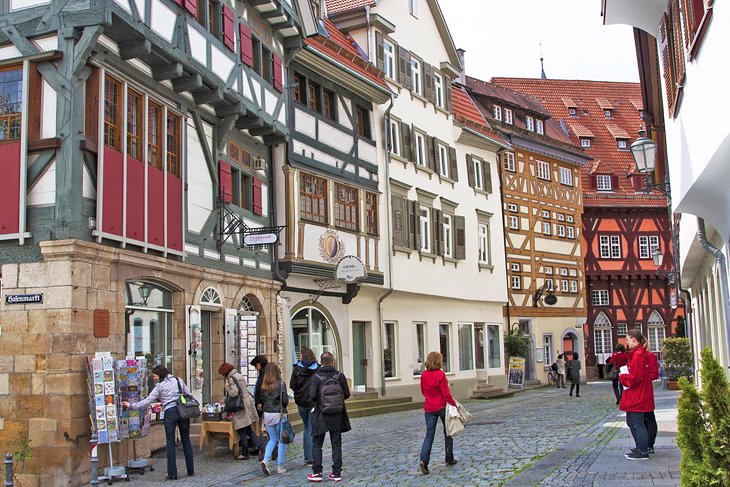
Located only a fifteen to twenty-minute train ride from downtown Stuttgart, Esslingen is an easy trip and well worth the effort. The city has a medieval village area with a fairy tale feeling about it. The largest collection of connected half-timbered houses in Germany dates from the 13th to the 16th centuries. Sloping streets, massive gothic churches, and the Town Hall with its glockenspiel (a clock where moving figures perform) are all part of the attraction. The Burg, a castle on the hill, is worth exploring for its impressive views of the vine-draped hills and the Neckar River.
As you wander through the cobblestone streets, be sure to take a break and grab a bite at one of the town's numerous restaurants famous for the local Swabian cuisine featuring unique dishes, including Maultaschen and Spätzle.

Esslingen is also home to one of Germany's most unique, and some say best, medieval Christmas markets. Instead of standard Christmas market booths, the Esslingen version requires that all the vendors create booths using items only available at that time and that the vendors dress in period costumes. The whole scene is like stepping back 700 years in time, drawing you into a festive, yesteryear atmosphere.
Finding the medieval town center is easy; exit the train station and walk straight until you come to the pedestrian-only street, take a right, and then an immediate left on Bahnhofstrasse street.
A trip here can easily be combined with a stop-in at the Mercedes-Benz Museum, they are on the same transit line, S1.
Ludwigsburg Palace

Ludwigsburg Palace is the perfect place to start if you've never been to a Baroque Palace. Duke Carl Eugen of Wurttemburg had a bit of a chip on his shoulder about keeping up with his peers and went on a quest to turn a former hunting lodge into a grand palace. Along the way, he hired the best artists, painters, masons, and other tradesmen to create one of Germany's largest and loveliest palaces.
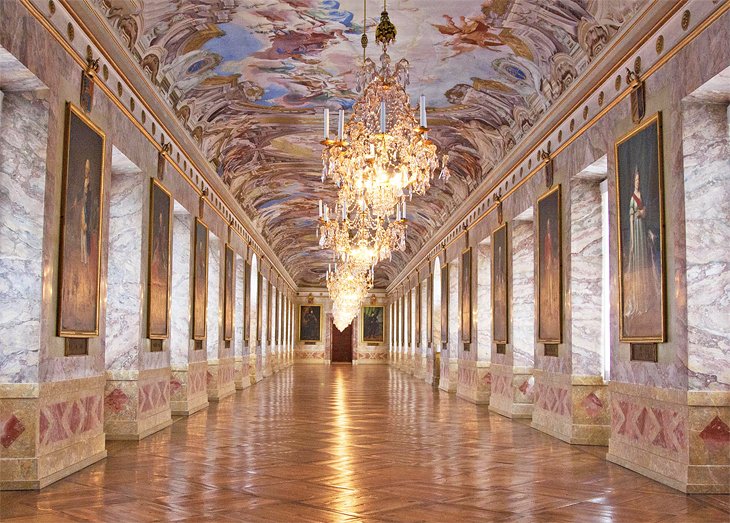
Highlights include the grand Marble Hall, with magnificent chandeliers and ceiling frescoes by Matthaus Gunter of clouds against blue, giving the impression of an open sky; and the oldest preserved palace theater in Europe. This lovely small theater contains fully functioning stage machinery and sets dating from the 18th and 19th centuries.
The palace grounds are also impressive, with well-tended Blühendes Barock gardens (separate admission) and the smaller but more ornate Schloss Favorite Palace located on a hill nearby (separate admission).
Note that the palace can only be visited on a one-hour guided tour, and English tours are only at specific times.
Be sure to take a short stroll from the palace to the town of Ludwigsburg, one of the best small towns in Germany. The historical city center is a delightful example of a well-preserved city center and full of interesting shops and restaurants. From late November until just before Christmas, this is the scene of a Baroque Christmas Market, and in the autumn, the palace grounds host a popular Pumpkin Festival.
Ludwigsburg is North of Stuttgart, and the palace is about a 20-minute walk from the train station through the center of the city. Alternatively, just hop on bus 421 and get off at the Ludwigsburg Residenzschloss, about a six-minute ride. If you take a taxi from the train station, be sure to tell or show them the Residenzschloss entry or you may end up at the gardens and be faced with a long walk around to the main entrance.
Address: Schlossstraße 30, Ludwigsburg
Altes Schloss and the Wurttemberg State Museum (Landesmuseum)

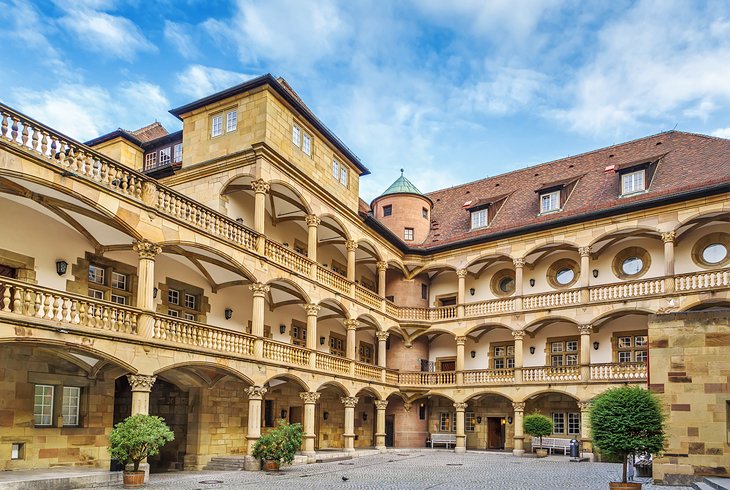
Overlooking one side of Schlossplatz is the massive Altes Schloss or Old Castle, which houses the impressive Wurttemberg State Museum. This is a worthy diversion even if you aren't a big fan of museums. Compact and easily toured, the museum has some interesting displays that tend to impress rather than overwhelm.
One of the museum's highlights is the historical artifacts from the dawn of mankind. Looking at these ancient works makes you pause and wonder what our generation will leave behind that will be equally as impressive in its own way. Especially interesting are rare artifacts tracing prehistoric inhabitants of the caves in the Swabian mountains, including the world's oldest human artworks

Another highlight is the famous Württemberg treasure of the Crown Jewels of the Kingdom of Württemberg, along with gold and silver and rare medieval artwork. This area of Europe has been fought over, conquered, and reconquered over the ages, and it's fascinating to think that the Romans were once in charge here.
The modern glass collection is among the best in Europe, and a superb costume and textile collection focuses on 18th-century European decorative fabrics and textiles from the Art Nouveau period. In the south wing is the 16th-century palace church, with tombs of famous former residents and royalty.
The museum has a large, airy, and bright seating area perfect for a rest, even if you don't tour the facility.
Address: Schillerplatz 6, Stuttgart
Read More: Castles in Germany
Christmas Markets

Stuttgart is one of the best places to enjoy Christmas Markets in Germany. When the days get short and the temperatures drop, locals and tourists head to the city's historical center and surrounding areas to enjoy the lights and festivities of these special places.
In Stuttgart, nearly 300 vendors line the narrow streets off the Schlossplatz selling all manner of Christmas ornaments, crafts, one-of-a-kind gifts, food, and hot drinks. Vendors display an eye-boggling assortment of beautiful handmade gifts — wooden toys, pottery, intricate ceramic houses, embroidery, puppets, knitted mittens and socks, felted hats, and holiday decorations of all sorts.
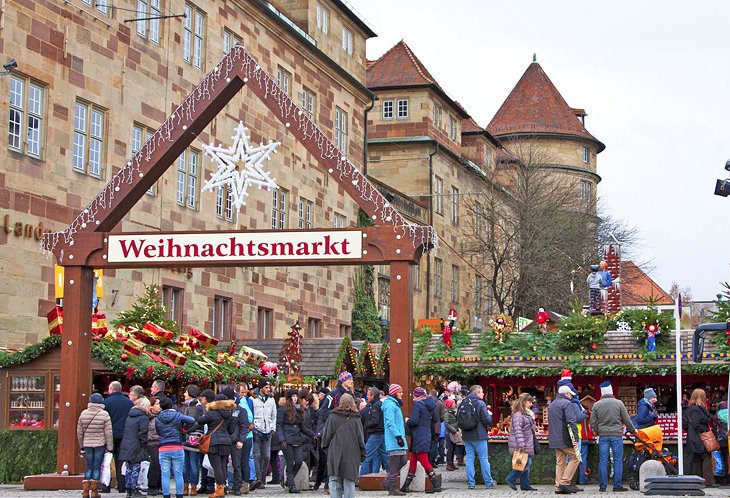
The market has been operating in some sort of form in this location for over 300 years. Today, it's still a popular gathering spot for friends and families out for a stroll past the wonderfully decorated cabins. To make the most of your visit, grab a hot beverage from one stall, a sausage on a bun from another, and cap it off with a chocolate treat from another. It's best not to have any particular destination in mind; go with the flow and see where your feet take you.
Most of the market is down the side streets and in the Marktplatz and Schillerplatz, but a portion is located right on the Schlossplatz. Here, you'll find a roller-skating rink, rides for the children, and a giant Ferris Wheel by the Jubilee Column. To get the best free view of the scene, take the elevator up to the 4th floor of the Kunstmuseum (the one that looks like a glass box). The elevator is to your right, near the gift shop.
Locals suggest strolling the entire market, but afterwards set yourself up in the Schillerplatz with a hot drink and a bite to eat. This compact area is packed with some of the best food and drink vendors and has the most tables (a rarity!), a very festive atmosphere, and is surrounded by historical buildings.
The Stuttgart Christmas Market starts around the 27th of November each year and runs until December 23rd.
Esslingen Christmas Market

There are many Christmas markets in and around Stuttgart, but the most unique one is in Esslingen. The market is located in the old town center of Esslingen and is different from other markets in the area. You'll find 180 booths in two separate areas, a traditional section similar to Stuttgart or Ludwigsburg, and a medieval section where everything is designed to look like it's from the Middle Ages.
The medieval section is an absolute must-see, filled with booths made from materials commonly used during that era. The booths boast timbered structures and canvas tops, while the booth keepers are dressed in period costumes. As you wander through the market, you'll hear minstrels playing 700-year-old tunes and encounter multiple stages offering performances by magicians, theater groups, and eclectic entertainers, including fire eaters. You'll also have the opportunity to witness traditional crafts like blacksmithing, glass blowing, felting, and woodworking being demonstrated, with their wares available for purchase.

At night, torches provide an eerie sort of festive feel to the place, and it's not difficult to imagine yourself back in time. The market is a delight to photograph and experience.
The Esslingen Christmas Market runs from the 3rd week of November to December 21st.
Ludwigsburg's Christmas market

Ludwigsburg's Christmas Market has a Baroque theme, just like the rest of the Old Town and the nearby palaces. Set in the main square, this compact and orderly market is easy to navigate and perfect for those looking for a smaller, less crowded event.
Over 160 booths sell Christmas decorations, glove puppets, music boxes, and other treasures. Warm drinks are on offer along with traditional market food, but what sets Ludwigsburg apart from other markets is the local cuisine of Holzofendinnede - a German take on tarte flambé cooked in a wood-fired oven, and Schupfnuden (potato noodles). For those with a sweet tooth, the gingerbread served hot from the oven is the perfect snack on a cold December night
The Ludwigsburg Christmas market runs from the 3rd week of November until December 22nd.
Read More:
Wilhelma Zoological and Botanical Garden
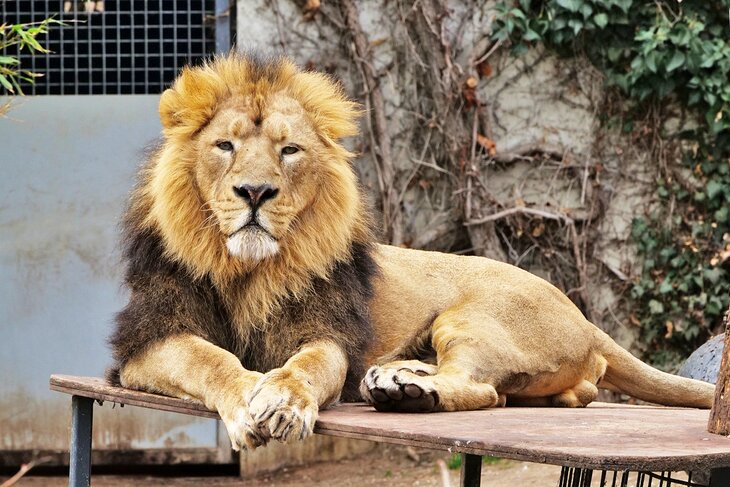
Although this is one of Europe's largest zoological parks, visitors from North America could be forgiven for thinking that it feels small, and compared to what you find in San Diego or other major centers, it is. What is most impressive is the Neo-Moorish architecture, a good selection of unique animals, and stunning botanical gardens.
The zoological park is a fantastic family outing. Be sure to catch one of the animal feedings and keeper talks that take place roughly every hour. Something that's always a hit with the kids is the elephant bathing; times change frequently, so check out the schedule at the elephant house.
The African Apes complex is also worth a visit; home to gorillas and bonobos, this facility is one of the best in Europe. Other highlights include areas devoted to the tropics, South America, and Animals of prey.
Each December, the zoo comes alive at night with festive decorations, light shows, fiery water features, and booths selling warm drinks, savory favorites, and sugary treats guaranteed to send your kids into the stratosphere.


The Wilhelma Zoological and Botanic Garden was created as a private royal retreat for the Swabian King Wilhelm I. Among the many things that make this zoo and botanic garden so outstanding is the way the fanciful historic buildings have been repurposed as the setting for animals and plants — and how these two have been integrated. For example, the Moorish Villa is now home to a combined animal and plant house, and a pavilion that was once the king's vantage point overlooking the Neckar River is now the Main Entrance.
The Wilhelma Zoological and Botanical Garden is easily accessible with its own train stop.
Address: Wilhelma 13, Stuttgart
Stuttgart Fernsehturm (Stuttgart TV Tower)
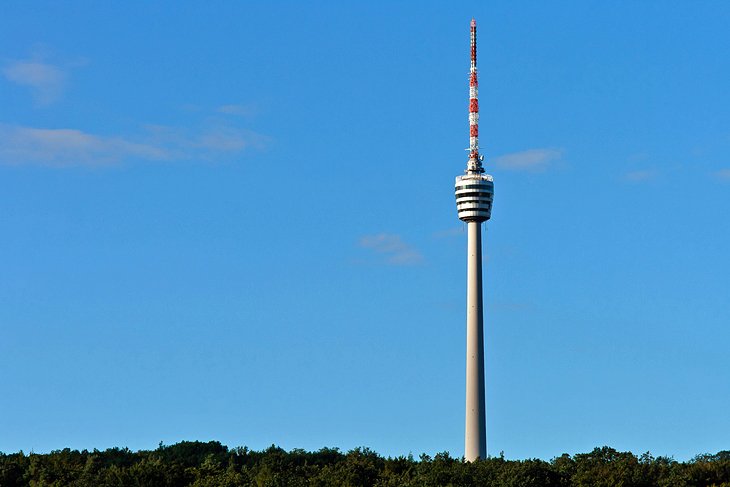
The world's first concrete television tower would be interesting enough, but the 217-meter-tall ((710 ft)) Fernsehturm Stuttgart has the added attraction of observation decks and a restaurant, with sweeping views that reach across the city and Neckar Valley into the Swabian countryside, as far as the Black Forest and the Odenwald.
This attraction can be a fun diversion for families, but appeals to everyone. Ride the elevator to the top and enjoy the 360-degree views from one or both observation decks. See if you can spot Stuttgart's historical city center with the Neues Schloss or the Black Forest off in the distance.

The tower opened in 1956 and soon became a prototype for such structures as far away as Johannesburg and Wuhan, China. Stuttgart engineer Fritz Leonhardt proposed the innovative concrete construction, with the suggestion that it could become a tourist attraction, as well as a transmission tower, and it quickly became one of the city's most visited spots.
A café serves light lunches, coffee, and other beverages.

The grounds around the Fernsehturm are forested and crisscrossed with walking trails. For the kids, several play structures are located near the tower's base.
Getting to the tower is also half the fun; take the U15 train for a scenic ride up the hill through some of Stuttgart's less-visited neighborhoods. You can also take the U-7 or U-8 subway line or the #70 bus to the Ruhbank stop.
Address: Jahnstraße 120, Stuttgart
Stuttgart Market Hall (Markthalle)

Existing in some form in this location since 1300, Stuttgart Market Hall is the place in the city to get the best fruit, vegetables, spices, breads, meats, and cheeses. The Markthalle is renowned for its international offerings, with numerous stalls selling delicacies from around the world, including Italian, Spanish, Greek, Turkish, Asian, and other cuisines.
Housed in a wonderfully restored 20th-century building complete with a stunning glass ceiling, the market bustles with shoppers searching for tasty treats.
Some locals claim the market has the best bakery in the city. It's best if you check it out yourself! On the second floor, the wonderful Italian restaurant serves authentic dishes. Try to get a table on the terrace overlooking the market.
The market is located behind the Old Castle; pop in here after visiting the Wurttemberg State Museum.


Staatsgalerie Stuttgart
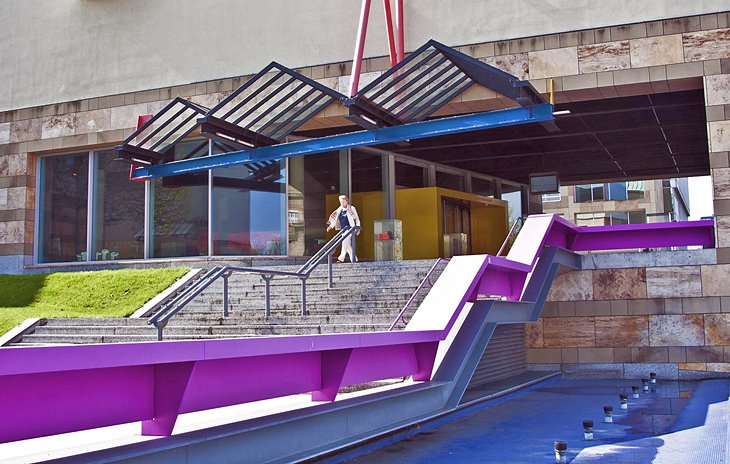
From one look at the colorful exterior of Stuttgart's State Gallery, you know it's not another stodgy museum. The 1984 opening of the new building, the Neue Staatsgalerie, designed by James Stirling and itself a masterpiece of contemporary architecture, marked the transformation of the museum into one of the finest art collections in Europe - and one of Germany's most visited museums.
Although it has an excellent representation of German Renaissance art, as well as Dutch and Italian masters from the 14th to 19th centuries, the Staatsgalerie is best known for its outstanding collection of 20th-century paintings.
With a special focus on the Classical Modern period from 1900 to 1980, the collections include significant works by Henri Matisse, Paul Klee, Marc Chagall, Joan Miró, Max Beckmann, Salvador Dalí, Franz Marc, Wassily Kandinsky, and Pablo Picasso, among others.
Address: Konrad-Adenauer-Strasse 30-32, Stuttgart
The Grabkapelle on Württemberg Hill
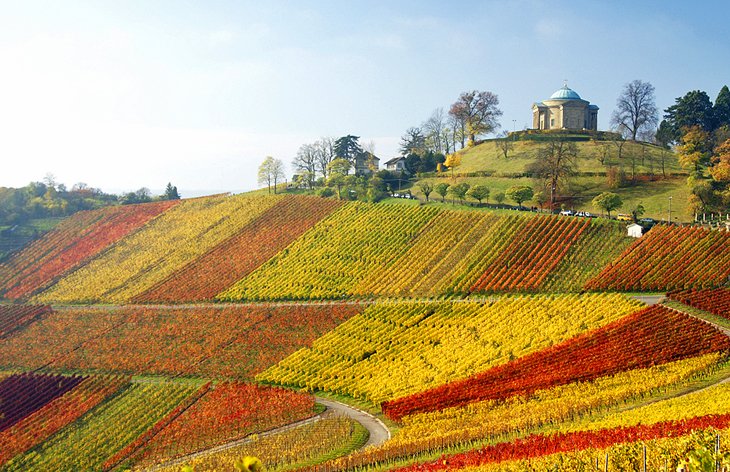
Perched high upon the Württemberg overlooking Stuttgart and the Neckar valley is the Grabkapelle, the burial chapel of Queen Katharina, erected by King Wilhelm I as a monument to his beloved wife after her premature death in 1819.
Built between 1820 and 1824, this beautiful structure consists of a domed rotunda in Neoclassical style inspired by the Pantheon in Rome (it's also where Wilhelm himself is buried).
It is considered the most romantic spot in Stuttgart, in part because of its beautiful setting, but mainly because of Wilhelm's inscription above the entrance to the chapel, "Love never dies," in memory of his lost queen.
Address: Württembergstraße 340, Stuttgart
Schloss Solitude
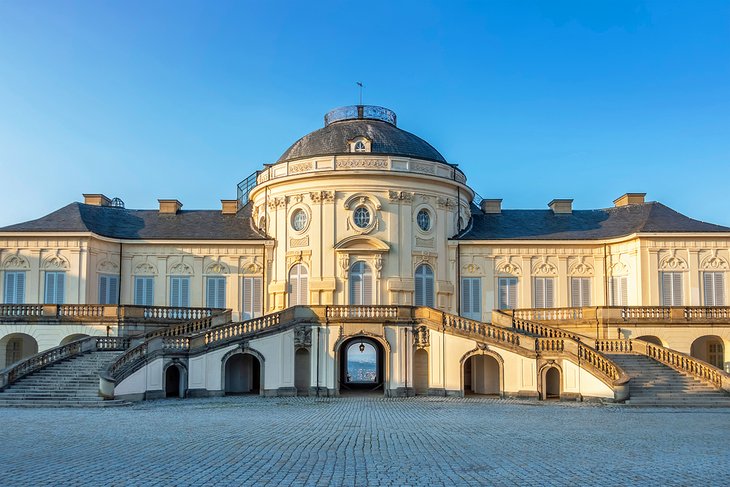
Located on a scenic vantage point a few miles outside of Stuttgart's city center, Schloss Solitude (Solitude Palace) was built for Duke Karl Eugen in 1763 as a hunting lodge and summer residence.
Designed in the late Rococo and early Neoclassical styles, the most sumptuously decorated rooms are in the central pavilion. Its highlight is the radiant Weisse Saal (White Hall) with its lovely domed roof, intricate decorative goldwork, and frescoed ceiling.
Outside, you can stroll through the manicured grounds and along the Solitude Allee, a broad tree-lined avenue commissioned by Duke Carl Eugen, which extends for more than 13 kilometers between Solitude Palace and the Palace at Ludwigsburg.
Address: Solitude 1, Stuttgart
Schillerplatz and Stiftskirche
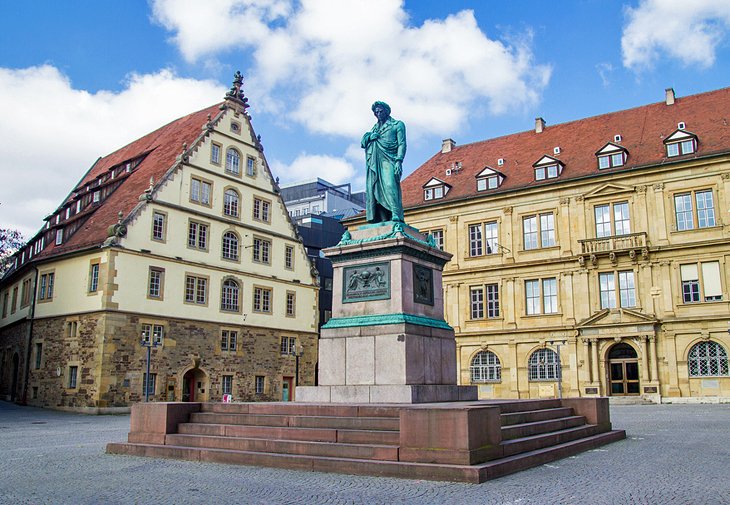
Flanking the Old Palace is Schillerplatz, an old town square with a monument to Friedrich Schiller, poet, philosopher, historian, and dramatist - one of Germany's most famous cultural giants. The square is the site of a flower market on Tuesday, Thursday, and Saturday mornings, and in December joins the Schlossplatz and Marktplatz, on either side of Schillerplatz, as home to the Christmas Market.
One side of the square is formed by the Alte Kanzlei (Old Chancellery), and on the southwest side is the old Fruchtkasten (Granary) dating from 1390, and adjoining it, the choir of the Stiftskirche.
The two unmatched spires of the Stiftskirche, the Collegiate Church, tower above the small remnant of Stuttgart's Old Town. Founded in the 12th century on the site of an older 10th-century church, Stiftskirche was rebuilt in Late Gothic style in the 15th century and reconstructed in 1958 after heavy damage in World War II. Highlights include a magnificent series of 16th-century Renaissance figures of the Counts of Württemberg, as well as its 17th-century burial vaults.
Kunstmuseum Stuttgart

The bold design of the Kunstmuseum Stuttgart's large glass cube stands in sharp contrast to the palaces and other buildings overlooking the Schlossplatz. But its glass exterior and white limestone interior walls are an appropriate home for an outstanding collection of contemporary and modern art.
The lean, clean lines; open spaces; and subtle, indirect lighting of the exhibition galleries highlight the bold images and striking colors of Modernist works on display in its 5,000 square meters of exhibition space.

Highlights of the museum's extensive collection include some of the most important works by German artists Dieter Roth and Willi Baumeister, as well as the largest collection of important works by Otto Dix. His satirical paintings portray German high society during the post-World War I era, and interpretive signage identifies the actual subjects, who include celebrities of the 1920s.
Special exhibits highlight particular movements and artists' groups, such as the Swabian Impressionists.
The museum has a well-regarded restaurant on its top floor called CUBE with floor-to-ceiling windows providing amazing views out over the Schlossplatz.
Address: Kleiner Schloßplatz 1, Stuttgart
Drive the Black Forest High Road
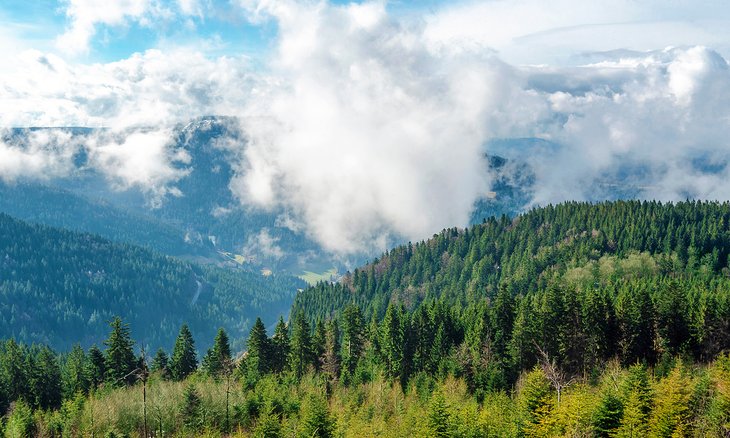
One of the most beautiful drives in Germany is along the 70-kilometer (44-mile) Schwarzwaldhochstrasse, Black Forest High Road. The route is well-named, for it climbs along the ridge of the Baden-Baden mountain range, ascending to more than 1,164 meters (3,820 feet) for spectacular views of the Black Forest valleys and over the Rhine valley and the Vosges mountains in France.
The High Road begins in Baden-Baden, a 1.25-hour drive from Stuttgart, and follows Rte. B500 south to Freudenstadt. Several highlights along the route invite stops. At the glacial Lake Mummelsee, you can follow the path around the lake or rent pedalos to explore it from the water.
A wilderness path on the Bühlerhöhe is a popular thing to do for hikers, and the Lothar Path is a fascinating look at how nature recovers from a devastating hurricane. In 1999, Hurricane "Lothar" felled 40,000 hectares (99,000 acres) of forests in Baden-Württemberg. The Lothar Trail takes visitors through the area on boardwalks, ladders, stairs, and bridges through and above the damaged woodlands, showing how the forests are regenerating without intervention.
Along the route are stopping points and restaurants serving traditional Black Forest dishes. You can return on the same road for a different perspective of the views, or you can choose a route through the eastern part of the Black Forest, through a series of charming half-timbered towns.
Killesberg Park and Tower
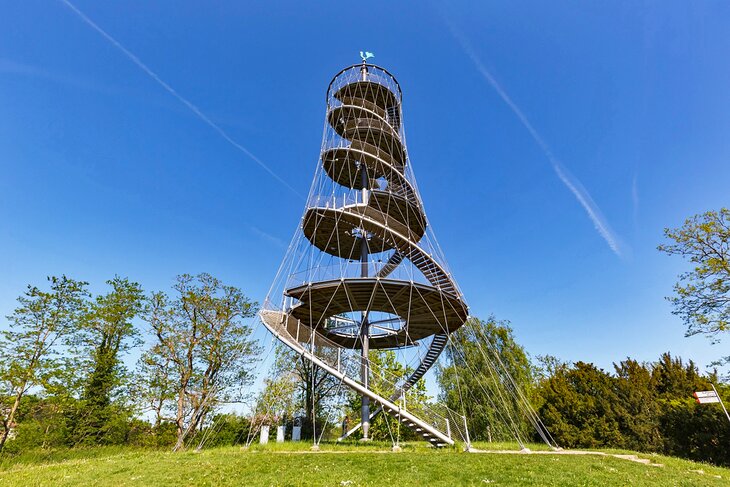
Originally laid out in 1939 as part of a major horticultural show, Killesberg Park is a lovely 123-acre open space offering visitors several things to do. Many of its structures date back to its opening and are still used for flower shows and events, but the most recent attraction is the unusual Killesberg Tower.
This 40-meter-tall cone-shaped observation tower is made of metal stairs that spiral upwards on steel cables. Its open-air construction can be a bit unnerving, as can the slight swaying feeling on the uppermost of the observation platforms.
For a closer-to-the-ground experience, tour the park on the narrow-gauge Killesberg railway; both diesel and steam locomotives pull cars through the grounds - departures are frequent, so you can wait for a steam run. A modest fee is charged for a ride.
If you are traveling with children, the park features a small animal enclosure and a petting zoo (free admission) as well as a popular flamingo pool. A children's play area is also in the park, along with an outdoor swimming pool.
If you are visiting Stuttgart in July, be sure to visit Lichterfest Stuttgart, a festival during which thousands of lanterns decorate the park.
Address: Stresemannstraße, 70191 Stuttgart
Climb to Eugensplatz
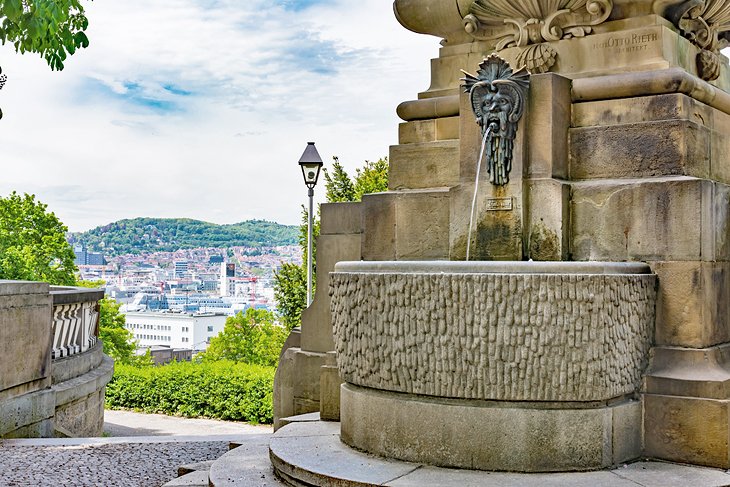
It's a long climb up the Eugenstaffel, the broad flight of steps that begins beside the State Art Museum and leads to the lovely park and scenic overlooks of Eugensplatz. Or you can save the climb by taking bus #42 up Alexanderstrasse from Charlottenplatz. Below are wide walkways leading down through a hillside of greenery and across the center of a stair-stepped waterfall that splashes its way through the park.
At the top stands a statue of Galatea, a figure from Greek mythology, dating from 1890. The park is one of the locals' favorite places to visit in the summer for its cool breezes, its views of the city, and the ice-cream shop, Pinguin, just across the street.
Schweinemuseum (Pig Museum)
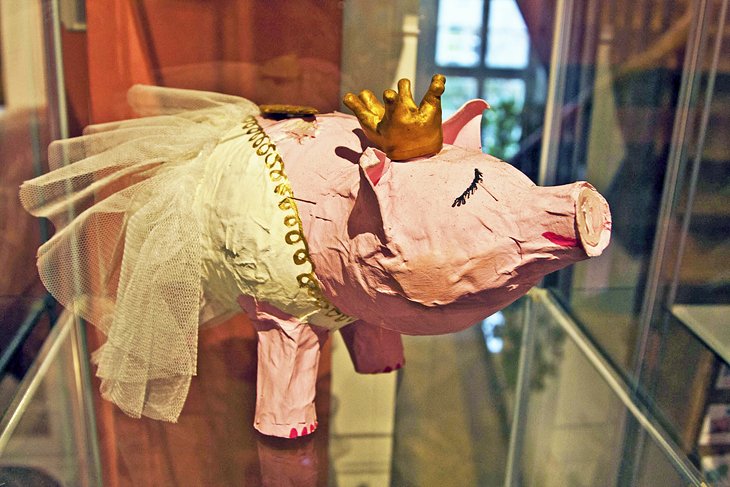
Certainly one of the most unusual things to do in Stuttgart — or in any German city — is a visit to the Pig Museum. If there is any form of art that depicts a pig, you'll find it here, from finely worked sculptures and masterly pastoral paintings to china knick-knacks and a pink papier-mâché pig princess in a tulle tutu.
The more than 50,000 pigs from all over the world are displayed creatively and with a sense of humor, filling 27 themed rooms. An entire room is devoted to piggy banks, another to stuffed toys, and an attic-like room is devoted to larger pieces of folk art. Exhibits with signs in English and German explore everything from pig history and science to mythology.
The Guinness Book of World Records included it as "The Largest Pig Museum of the World," and after seeing it, you won't doubt it. The museum is a bit out of the center, but easy to reach on the U-9 tram or Bus #56.
Address: Schlachthofstraße 2A, 70182 Stuttgart
The Weissenhof Estate
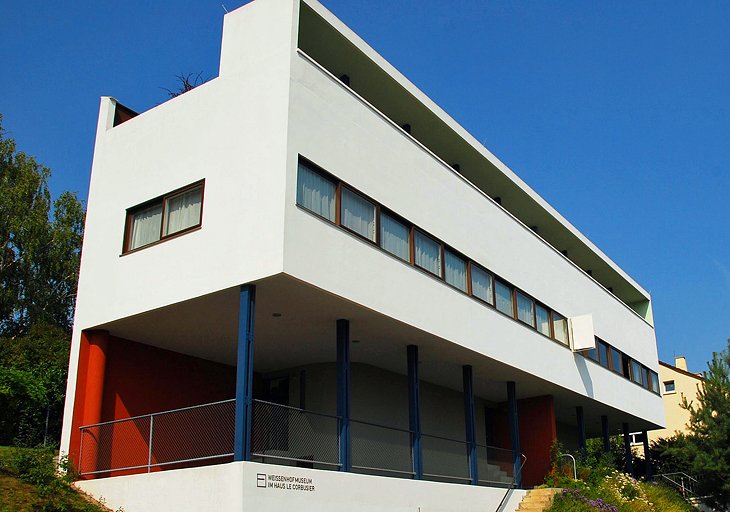
Above the northern part of Stuttgart near the Academy of Fine Arts, the Weissenhof Estate (Weißenhofsiedlung) is a UNESCO World Heritage-listed pioneering and influential housing development built in 1927 for an exhibition by the Werkbund.
This group of leading international architects, which included Le Corbusier, Mies van der Rohe, and Walter Gropius, threw off the flowing decorative forms of the Art Nouveau movement and became leaders of the Modernists by embracing functional geometric building designs with little or no ornament.
The semi-detached housing units used new construction methods as well, with steel frames and prefabricated elements. Eleven of the project's 21 original buildings survive, and you can see and learn about them in exhibits at the Weissenhof Museum, located in one of Le Corbusier's buildings.
Address: Rathenaustrasse 1- 3, Stuttgart
Stay and Play at Monrepos Palace
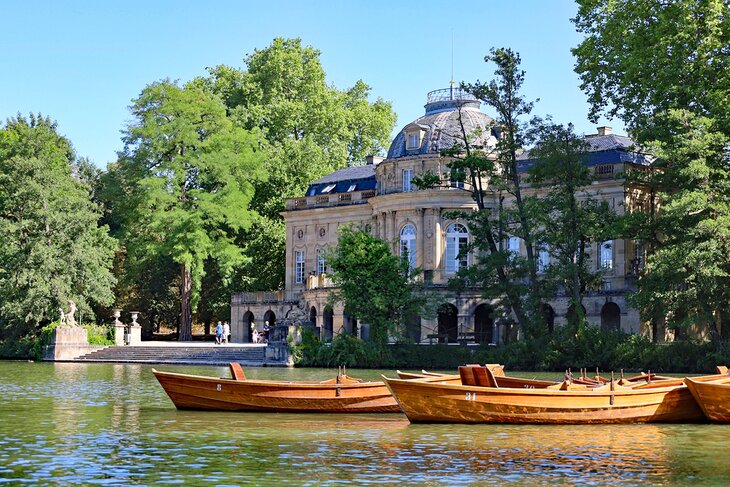
Just under an hour's drive or train ride from Stuttgart, Monrepos Palace (Seeschloss Monrepos) is well worth the trip. When you see this stunning Rococo building, it may be difficult to remember that it was built as a hunting lodge. Completed in 1768 for Duke Carl Eugen, it sits overlooking a small lake with two tiny wooded islands and is surrounded by a walking path.
Although no tours are offered of the interior, the grounds and lakeside park surrounding the palace are open to the public and free of charge. To fully enjoy the experience, rent a rowboat and admire the grandeur of this beautiful spot, then enjoy a picnic in the park's gardens.
If you are up for a stroll, you can walk the 1.6-mile Seeschlossallee to visit the estate's second "lodge," Schloss Favorite (Favorite Palace). Although much smaller than its sibling, this lovely Baroque palace is open for tours. While you're in the area, you can easily walk to the nearby Residenzschloss Ludwigsburg (Residential Palace), for a tour of its grand halls and theater.
While you can enjoy the property's general ambience as a day guest, an overnight or two at Schlosshotel Monrepos gives you the chance to really live like royalty.
Address: Monrepos 19, 71634 Ludwigsburg, Germany
How to Use Your Time Effectively in Stuttgart
Stuttgart has a lot to offer to its visitors, and deciding what to see and when can be a bit overwhelming. If you only have a day to spend, you might want to start by exploring the central city with its beautiful plazas and parks. For lunch, you could try the Market Hall, and in the afternoon, you could visit either the Porsche or Mercedes-Benz museums.
Not interested in cars? No problem, you can skip the auto museums and go shopping along Konigstrasse, or check out the high-end stores near the Markthalle. In the evening, you can have dinner at a local restaurant that serves delicious Swabian cuisine.
If you've got two days, do all the above, then layer on a day trip to the medieval town of Esslingen with a stop at the Mercedes-Benz Museum on the way. Three days allow you to do everything and then add on a trip out to the palaces of Ludwigsburg with a lunch in the Old Town, followed by a visit to Stuttgart's Wilhelma Zoological and Botanical Garden in the afternoon.
No matter what you choose to do, getting around on public train transport is easy and inexpensive.
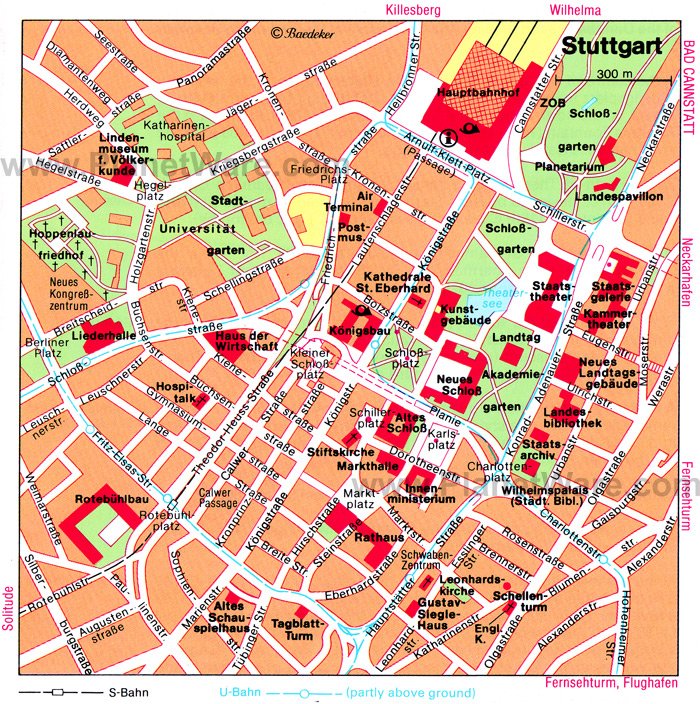
Map of Attractions & Things to Do in Stuttgart
More Related Articles on PlanetWare.com
Places to Visit near Stuttgart: Stuttgart sits at the northern edge of Baden-Württemberg's beautiful Black Forest region. Also at the edge of the Black Forest, in the Rhine River Valley, is the spa town of Baden-Baden.
Discovering More of Germany: A short train ride to the north of Stuttgart is historic Heidelberg, and the same train line continues north to Frankfurt. Our page on day trips from Frankfurt will give you lots of ideas for the best places to visit from here.