

Lake Constance, Germany's Top 12 Tourist Hot Spots To Explore Nearby
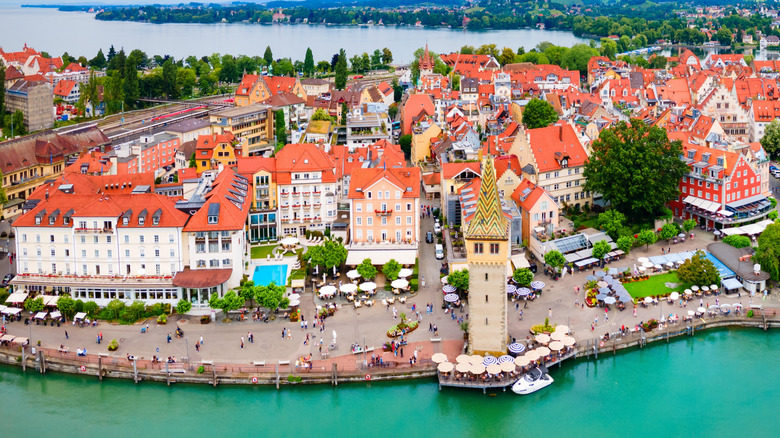
Well deserving of a spot on any list of the best lakes in the world, Lake Constance — known as Bodensee in German — is renowned for its glistening turquoise waters, charming and historic communities, and picturesque harbors. The lake is bordered by three countries — Germany, Austria, and Switzerland — so it may come as little surprise that, in terms of atmosphere, Lake Constance is certainly not lacking. Here, you'll find stunning views of the Alps, island towns like Lindau that feature postcard-worthy marinas, stunning wildflower displays on the so-called "flower island" of Mainau in spring, and unique seasonal experiences around this timeless body of water spanning 209 square miles.
Lake Constance is an oasis for nature lovers, photographers, history enthusiasts, cyclists, and those seeking a relaxing escape. The majority of its shoreline sits within Germany, but it's easy to make your way around. From hiking trails to gardens, beautiful estates, alpine architecture, stunning views, and more, here are 12 Lake Constance hot spots you just can't miss.
Wander through Konstanz's Old Town
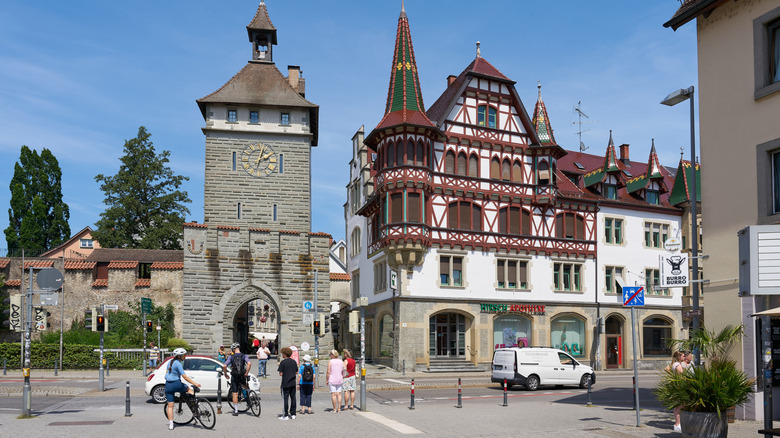
Konstanz — sometimes referred to as Constance — is a jewel on Lake Constance's German shoreline. Not only is it a marvelous place to wander thanks to the charming, winding streets of its historic old town, but it's also the lake's largest city — making it a hub for local culture and a great base for exploring other towns and attractions.
The soaring Constance Cathedral is a highlight for fans of ecclesiastical architecture, with its story starting in the sixth century. Originally conceived as a Romanesque church, construction continued well into the 19th century and included major Gothic-style renovations carried out between 1420 and 1520. The cathedral — and Konstanz itself — also played a pivotal role in ending what's known in Roman Catholic history as the Western Schism, during which rival popes sought to claim power. The Council of Constance, held here between 1414 and 1418, ultimately restored unity to the church.
Wander along cobblestone streets lined with medieval half-timber buildings and take in views over Lake Constance and the Rhine River on the Old Rhine Bridge. This is where the river heads westward from the lake, and you'll also find an easily accessible pedestrian and bike path. On the southern bank of the river, don't miss the Rheintorturm, a defensive tower with an immediately recognizable pyramid-shaped roof dating to the Middle Ages. On the northern bank, grab a glass of local wine, beer, or an order of schnitzel with a view over the river at Constanzer Wirtshaus.
Enjoy stunning gardens on Flower Island
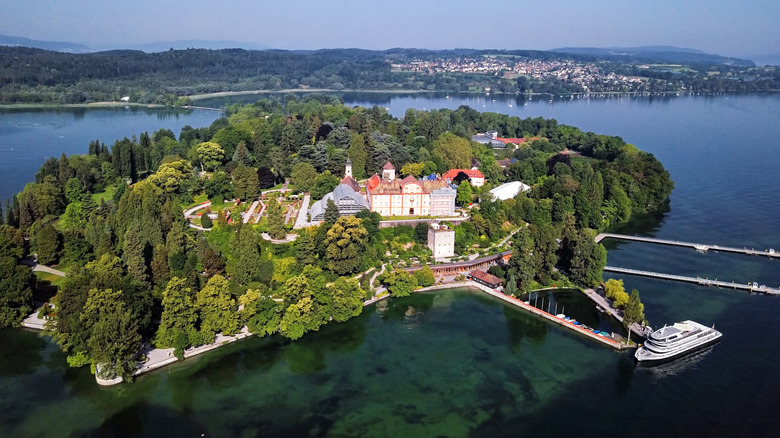
Just north of Konstanz sits the botanical haven of Mainau Island, often referred to as "Flower Island." Open year-round, the island is a little more than 110 acres in size, and every corner invites visitors to dive into a beautiful connection with nature and history. Its arboretum, for one, is home to a wide variety of trees — including oaks, cedars, and giant sequoias, which have been cultivated here for more than 150 years. Additionally, hundreds of thousands of blooms, from tulips to rhododendrons to roses, bloom throughout the sprawling gardens. In all, you'll find more than 700 plant varieties in the perennial garden. Inside the Palm House, a variety of species of palm and citrus trees add a subtropical feel; plus, it's also where the annual orchid show exhibits thousands of exotic blooms.
But Mainau's beauty goes beyond its flowers. The Butterfly House showcases dozens of Lepidoptera species in a tropical environment, while Mainau Farm is home to a range of animals like alpacas, Shetland ponies, Valais Blacknose sheep, and goats — the latter of which visitors can visit up-close.
And there's something for the architecture enthusiasts, too. The mid-18th-century palace creates a beautiful backdrop for photos, as does the palace church, St. Marien, with its elaborate Baroque interior. Tickets include access to the gardens, Palm and Butterfly Houses, seasonal exhibitions at the palace, and, of course, restaurants and shops. In the summer, a combination ticket includes a boat transfer to the island; during the winter, some services are more limited.
Explore Wollmatinger Ried Untersee-Gnadensee
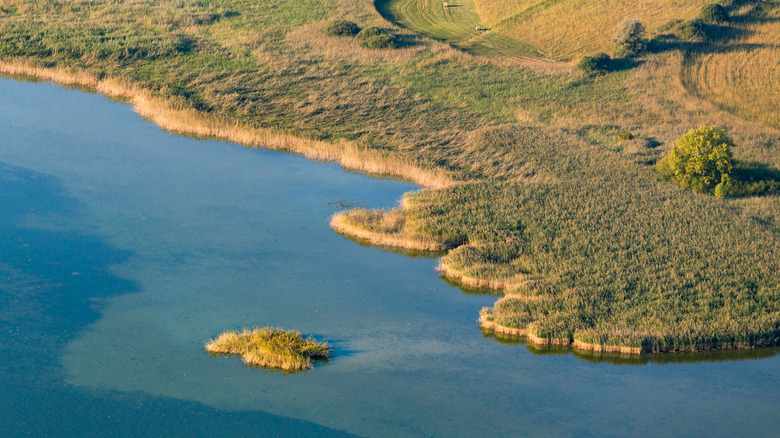
On the east end of Lake Constance, the great Rhine River enters near Bregenz before flowing out again at Konstanz. Where these bodies of water meet, delicate ecosystems home to a wide variety of plants, fish, and migrating birds have formed. That's where nature preserves like the Wollmatinger Ried-Untersee-Gnadensee have an important role to play in conserving wetland habitats. At more than 1,900 acres, Wollmatinger Ried is the largest protected area on the German side of the lake, ensuring that vulnerable botanicals and birds find safe haven. However, the best part is that the reserve is actually open to the public.
Every first Saturday of the month — with additional dates during the warmer months between April and September — visitors can join a guided walk around Wollmatinger Ried nature preserve to learn about some of the 600-or-so types of plants, nearly 300 bird species, and numerous other animals that call this area home. Alternatively, you can also head out on the trails to experience the park at your own pace. If you're visiting with kids, plan for a stop by the NABU Nature Center to borrow an explorer's backpack full of tools and prompts for exploring and learning more about the area.
Take in the views from Lindau harbor
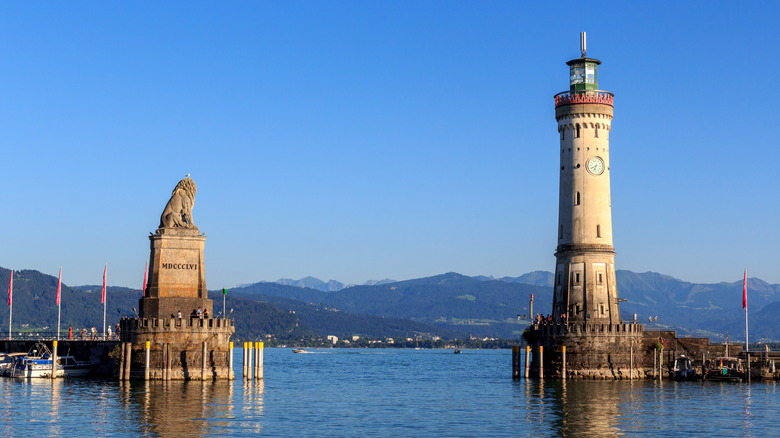
Situated on the northeastern shore of Lake Constance, Lindau is a perfect opportunity to savor local culture and waterfront relaxation in an enchanting German town. For those looking for a quick weekend escape from the city — no car required — Lindau is easy to get to by rail from both Zurich and Munich. Six direct trains run daily, also connecting to Bregenz, St. Gallen, and Winterthur. Bordering Austria to the east, Lindau offers easy access to plenty of other spots in the region.
Famous for its walkable cobbled streets, quaint cafes, great places to stay, and postcard-worthy views from its harbor, one of Lindau's main attractions is its old town, which sits on an island connected by both rail and road. In the center, visitors will find the remarkable Altes Rathaus, or Old City Hall, which dates to 1422. Its facade is coated in gorgeous murals painted in 1930, the work of an artist named Wilhelm Nida-Rümelin, which stirred controversy due to his depiction of a battle between Heaven and Earth.
You also won't want to miss one of the city's most well-known attractions: its harbor. Watched over by the Mangturm, a medieval tower, this area hums with activity on sunny days. Catch a ferry or a boat cruise, grab a drink with a view at one of numerous cafes, rent a bicycle from Unger or Ronny's Bikeshop, and take in the iconic view of the 20-foot-tall Bavarian Lion and the lighthouse over the water.
Visit the uplands area of Allgäu
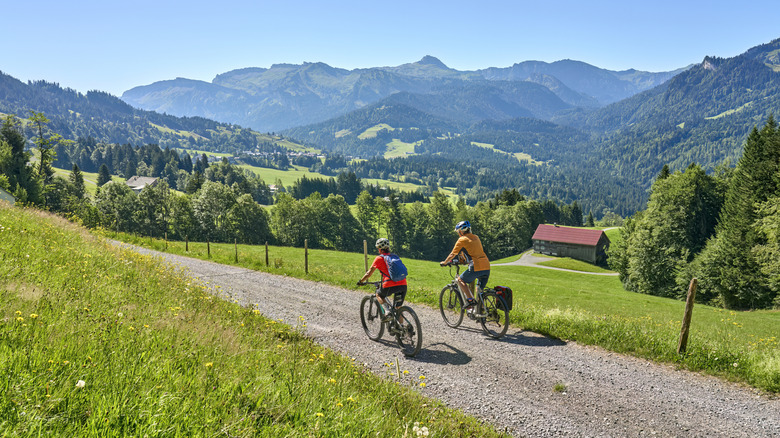
Just east of the lake is a beautiful, mountainous region of Germany called Allgäu. It's located in Bavaria — home to numerous must-see castles during your trip to Germany — where scenic vistas abound no matter what time of year you visit. If you have a car, start your journey along the Deutsche Alpenstrasse, or German Alpine Road, which meanders about 300 miles from Lindau to Schönau am Königssee, a charming mountain town on the shore of Lake Königssee. Departing from Lindau, you also won't be far from the iconic Neuschwanstein Castle, Europe's grandest fairytale castle that inspired Walt Disney, which is only about a 1.5-hour drive east.
Along with sightseeing by car, the Allgäu Alps are also ideal for hikers, thanks to its picturesque range of woods, meadows, Alpine lakes, and dramatic peaks. Not surprisingly, however, the most rewarding hikes are also the hardest — often requiring a few thousand feet of elevation gain in order to get spectacular views. One favorite is a challenging out-and-back route from Reichenbach to Rubihorn, covering 7.4 miles and offering gorgeous views of lakes and waterfalls. There's also a popular program of walks known as the Allgäu Hiking Trilogy. With a trail to suit different skill levels or styles — the Meadow Walker Route, Water Strider Route, and Skywalker Route — visitors can try all three for a range of perspectives from which to take in this beautiful region.
Discover the thrill of zeppelins
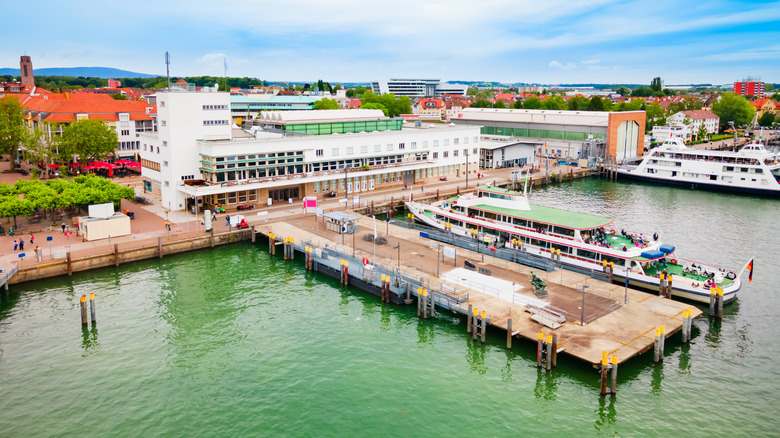
Experience an aeronautic marvel and its history at the Zeppelin Museum, located in Friedrichshafen. A multifaceted museum that combines science and engineering with art and history, visitors will learn about how zeppelins are designed, built, and operated. Plus, they'll also have the opportunity to walk into a partial replica of the progressive (yet ill-fated) airship known as the LZ 129 Hindenburg, famous for having catastrophically crashed in 1937 in New Jersey. The museum also features rotating special exhibitions alongside a significant permanent display that questions the provenance of its own art collection.
During the Third Reich, Lake Constance was a popular holiday destination for Nazi powerbrokers and art dealers. An extraordinary amount of art was looted or destroyed during World War II, and organizations like the German Lost Art Foundation maintain databases of lost or stolen art. The Zeppelin Museum addresses this conversation by delving into the murky origins of its collection and placing it within the post-war context of art collecting in Europe.
While in Friedrichshafen, don't miss the opportunity to cruise over Lake Constance in a real zeppelin! A variety of different flight routes, which depart from the Zeppelin NT hangar, offer fantastic views from just about 1,000 feet in the air. This gentle, gliding ride allows you to move around freely inside the cabin, taking in the view at a relatively low altitude so you can easily see the towns and shoreline below.
Explore Reichenau, the lake's largest island
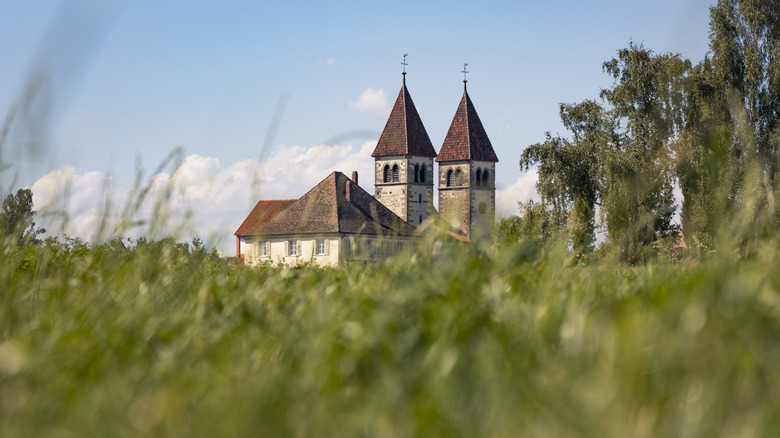
The island of Reichenau, home to a UNESCO World Heritage Site, is especially notable for its Benedictine monastery. The founding of the monastery dates all the way back to 724, when a monk named Pirmin selected the island for its location, climate, and fertile soil — everything one would need to establish a small, self-sustaining religious community. The name Reichenau is even derived from the phrase "Reiche Au," or "rich meadow." And if you take a gentle hike around this pleasant island — the largest in Lake Constance — you'll still be greeted by the quietude of cultivated fields and greenhouses.
The stars of the show on Reichenau, however, are its three Romanesque churches. First, you've got St. George, which was built in the ninth century and is particularly revered for its well-preserved wall paintings that are more than 1,000 years old. Then, there's the church of St. Peter and St. Paul, which was consecrated at the turn of the ninth century and boasts beautiful paintings from the 12th century. Finally, in keeping with the theme of agricultural abundance, you'll also find the oldest formal herb garden in Germany adjacent to the third church, St. Mary and St. Mark Minster.
Stroll through the gardens at Salem Monastery and Palace
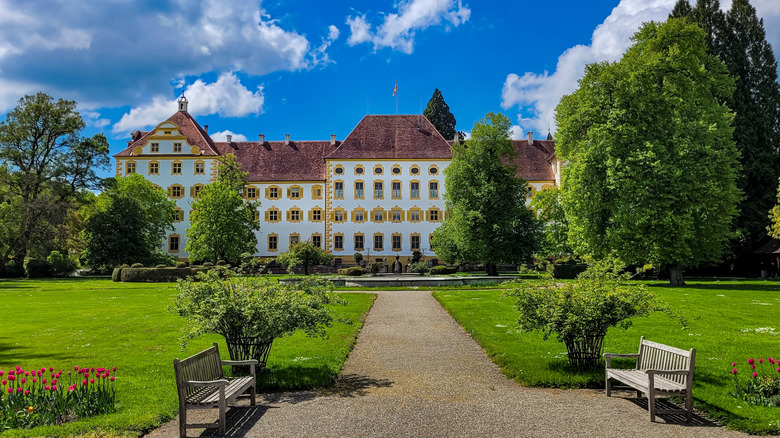
Salem, Germany, is a fantastic destination for impressive gardens, Gothic architecture, and resplendent Baroque style. The town is located just north of Lake Constance, about a 12-minute drive from Meersburg, or roughly 30 minutes from Konstanz. The primary draw here is the Salem Monastery and Palace, which features glorious formal landscaping around a former Cistercian abbey. Salem Minster is the third-largest church in Germany's Baden-Württemberg region, with its foundations dating back to 1285.
Across from the convent buildings, the Prelature — historically home to the abbot — is a distinct highlight. While its exterior mirrors the monastery complex, the interior reveals an opulent residence. This includes the elaborately designed Imperial Hall, which historically hosted dignitaries for extravagant events. The monastery is open all year round for visitors to explore, including its museum. A wintertime tour given on Sundays also provides access to the Prayer Hall, cloister, and minster — the latter of which is otherwise closed in the winter, along with the interior of the Prelature.
Hike or ride along the Lake Constance Trail
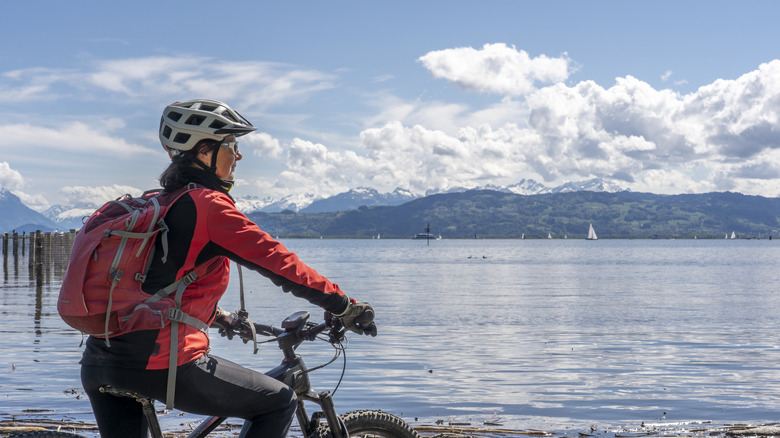
Stretching for 170 miles in a picturesque loop through three countries, the Lake Constance Trail is a marvelous way to hike or bike around the area. For those who like a bit of a challenge and a longer ride, it's a great excuse to plan for a few days' worth of cycling to experience different parts of the lake. Alternatively, you can also take on a mile or a few at a time, depending on how you approach it.
The route formally begins and ends in Konstanz, but you can pick it up from wherever is easiest for you. The path, known as Bodensee Radweg in German, passes through the islands of Reichenau and Mainau, as well as through Lindau and Meersburg — home to the oldest inhabited castle in Germany (more on that later).
For cyclists especially, the path is organized into eight sections for easy planning. This, because the average time cyclists take to complete the loop is about that many days, factoring in time for detours and stops at some of the many cultural and historical attractions. That said, the route can also technically be completed in two to three days if the cycling itself is the main focus. While some visitors choose to ride around in a continuous stretch, booking different accommodation each night, there's also the option to book a hotel or guest house in Konstanz for the length of your stay. That way, you can take so-called "star tours" from there, hopping on boats to connect different stages of the ride. A comprehensive guide to planning a star tour is available on the official website.
Get prehistoric at the German Stilt House Museum
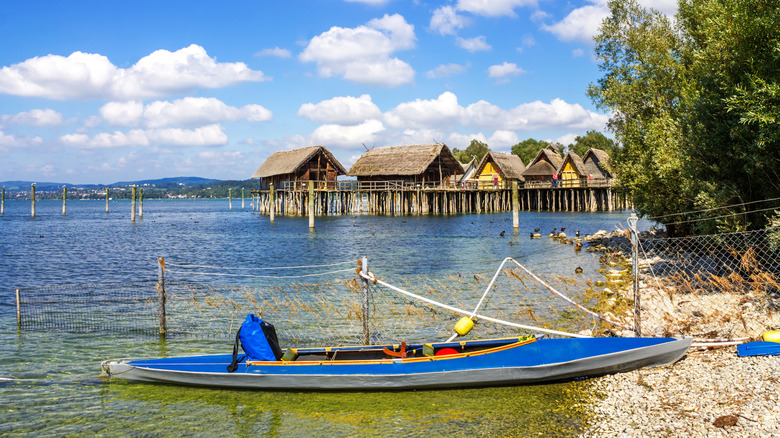
Here's one for fans of long-ago history — or prehistory, in fact. The German Stilt House Museum (Pfahlbaumuseum Unteruhldingen) might well be Europe's most underrated ancient marvel. A prehistoric treasure hidden in the Alps, this unique open-air museum details what life was like for dwellers on Lake Constance's shores 3,000 to 6,000 years ago, with timber houses and fascinating causeways raised on stilts right over the water. The pile dwellings that archaeologists have discovered around Lake Constance comprise nine of 111 similar sites designated as UNESCO World Heritage Sites in different parts of Europe.
By studying the preserved remains of original timbers in the muddy layers of the lake, scientists have been able to glean how the structures may have been built. Today, you can visit a reconstruction to experience what life was like for ancient people here. Start at the New Museum, a modern experience with exhibits that highlight artifacts and information about the area. Then, explore reconstructed villages that represent different time periods — including the Bronze Age settlements of Bad Buchau and Uhldingen-Stollenwiesen, and the Stone Age village of Sipplingen.
See mountain views at Hohentwiel Castle Ruins
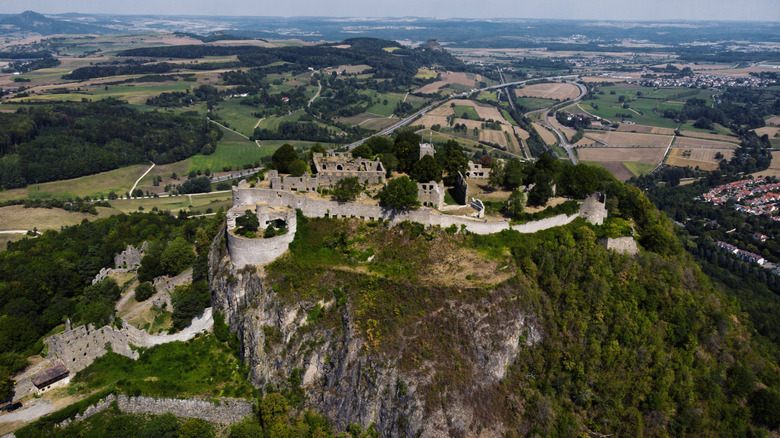
Built upon strategically lofty and difficult-to-breach mountaintops, historic fortresses like Hohentwiel are also — lucky for us — spectacular places to take in panoramic views of the surrounding landscape. The ruins of Hohentwiel Castle sit above the community of Singen and are spread across about 22 acres, making it the largest of its kind in Germany. Its history dates back to 914, when the first castle was built on the high volcanic formation. After changing hands during the subsequent centuries, it was expanded into a substantial citadel during the 16th century.
In the 18th century, Hohentwiel was repurposed as a prison. However, in 1801, Napoleon ordered that the castle be leveled. Today, the ruins are open to visitors year-round; adult admission, as of this writing, costs about $6. From the outcrop, make sure to look across Lake Constance and toward the soaring Alps in the distance for some truly spectacular sights. To complete the experience, stay close to the castle at Hotel-Restaurant Hohentwiel. With a dining terrace for unobstructed views over the hills and wine from its own high-altitude vineyards, the experience can't be missed.
Get your castle fix in Meersburg
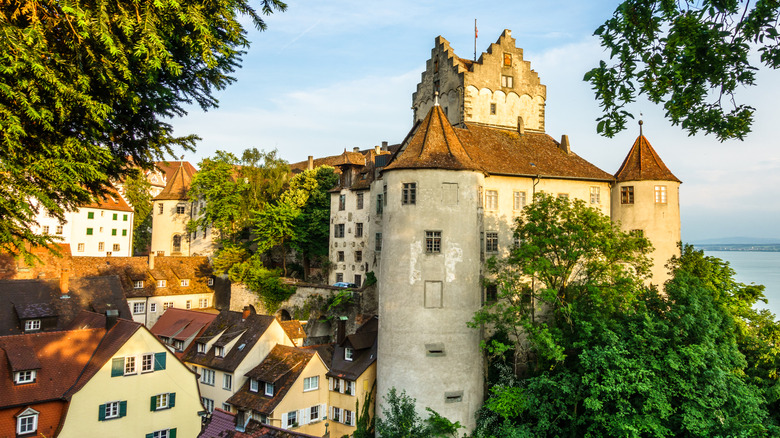
Nestled in the hillside of Meersburg, on the northern shoreline of Lake Constance, is the town's beautiful namesake medieval castle. The castle is still inhabited, although the public are welcome to take self-led tours through 35 rooms to experience what life has been like here over the centuries. To delve even deeper into its storied past, QR codes in the rooms can be scanned with your own phone, providing insights into each area's uses and history. On select weekends throughout the year, Meersburg Castle comes alive for a program called "Animated Castle," during which costumed interpreters bring the kitchen, forge, and other areas to life through performances and demonstrations. As such, it's no wonder Meersburg Castle counts among the best destinations you can't miss on a trip to Germany, according to locals.
Once you've toured the premises, grab a souvenir from the shop — or, better yet, grab a table at the Café in the Castle for unparalleled views over Lake Constance from the terrace. These are especially breathtaking on a bright, sunny day. Although a ticket isn't required to visit the restaurant, you will need to stop by the admission desk for a "mini-ticket," which costs around $3 as of this writing. That amount will then be refunded to you at the café. On the other hand, standard adult admission to the museum is about $15 and the space is open all year.
Methodology
To narrow down the 12 tourist hot spots to enjoy around Lake Constance, we consulted regional tourism sites like Bodensee.eu, Germany.travel, PlacesofGermany.de, Visit-BW.com, Lindau.de, and Allgau.de. For specific information about opening times, admission rates, and historical context, we focused on official websites for attractions like NABU-Bodenseezentrum.de, Salem.de, Zeppelin-Museum.de, Bodensee-Radweg.de, Festungsruine-Hohentwiel.de, and Burg-Meersburg.de.
Additionally, we researched the area's natural and cultural heritage via official sources like UNESCO, the Convention on the Conservation of European Wildlife and Natural Habitats, Britannica.com, and Explorial.com. Finally, to make sure we're sharing top-notch attractions, we kept in mind reviews and ratings from visitors on TripAdvisor, AllTrails, and Google.