

Nuremberg, Germany's 11 Major Tourist Attractions To Add To Your Itinerary
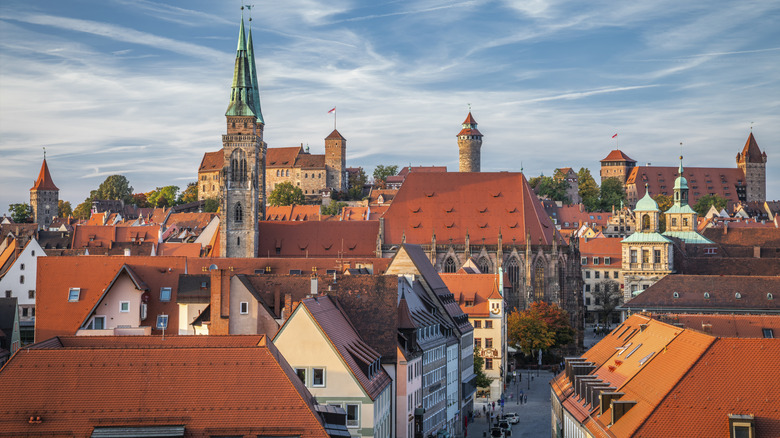
Since the Middle Ages, Nuremberg has thrived as a hub for shopping and culture. Nestled in Bavaria, the medieval architecture and cobbled streets of this charming old town are home to plenty of famous landmarks. A university city known for grand palaces and churches, Nuremberg has something for everyone — from world class art and history museums to atmospheric old town passageways. Beyond that, the city is also a fantastic destination for the whole family, where attractions like the Nuremberg Zoo and Children's Museum get kids' wheels turning. During the holiday season, Nuremberg even counts among the top European cities with incredible Christmas markets you should visit. And for fans of traditional German goods, there's even a museum dedicated solely to bratwurst!
That said, Nuremberg's quaint remnants of its centuries-old past coexist alongside a darker legacy as a locus of Nazi rallies in the 1930s and, ultimately, the infamous Nuremberg Trials — which prosecuted major war criminals between 1945 and 1949. Brimming with history and complexity, the city doesn't shy away from the more troubling facets of its past; instead, preserving the Nazi Party Rally Grounds as a museum that spotlights how propaganda and theatrics played a central role in Adolf Hitler's Third Reich.
Located roughly 100 miles north of Munich by car, and about 140 miles southeast of Frankfurt am Main, Nuremberg is easily accessible from various major cities in Germany, making it an ideal stop for travelers exploring Bavaria and beyond. Below, discover 11 attractions around this storied city that you'll want to make sure are on your itinerary.
Explore the Imperial Castle of Nuremberg
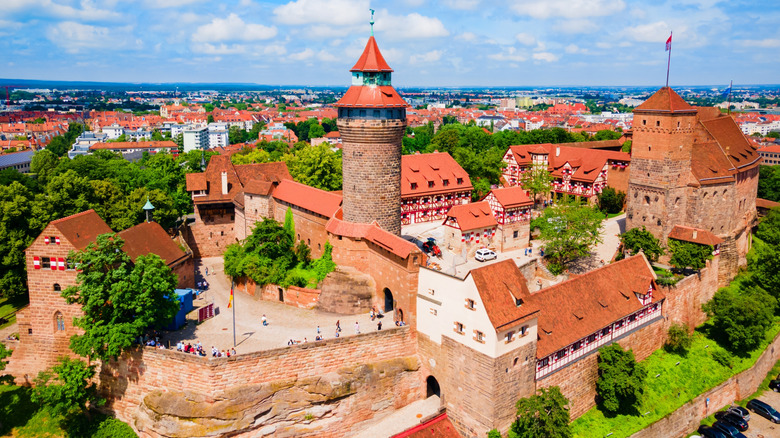
The Imperial Castle of Nuremberg, a fortification that has stood in the city since the Middle Ages, is a must-see castle to visit on your next trip to Germany. Although its exact origins are murky, ever since its construction, the castle has been a centerpiece of the city with its stone towers, steep gables, and half-timber details. By the mid-11th century, the building was known to have already become a distinguished palace, as early records show that Holy Roman Emperors stayed there on and off between 1050 and 1071.
Open year-round — with the exception of a few holidays — tickets to visit the castle can only be purchased in-person at the official ticket desk located in the outer courtyard. Many areas can be explored on a self-guided tour, including the Palas exhibition space and the Bower, home to the Imperial Castle Museum. For visitors who want to explore further, a guided tour is required to access the Deep Well and the iconic Sinwell Tower. As of this writing, admission to the castle is set at around $10.50. Alternatively, visitors can pay $16 for a combination ticket that also grants access to another noble residence, Cadolzburg Castle, which sits about 12.5 miles outside of Nuremberg and is well worth a visit if you want to get out of the city for an afternoon.
For an interesting detour into more recent World War II history, head below the castle to explore the art bunker, where priceless art treasures were protected from air raids during the war. Guided tours provided by Nürnberger Unterwelten head into former beer cellars dug into the hill below the castle. The company also offers tours to a number of other subterranean bunkers, passageways, and medieval dungeons.
Shop at the Hauptmarkt
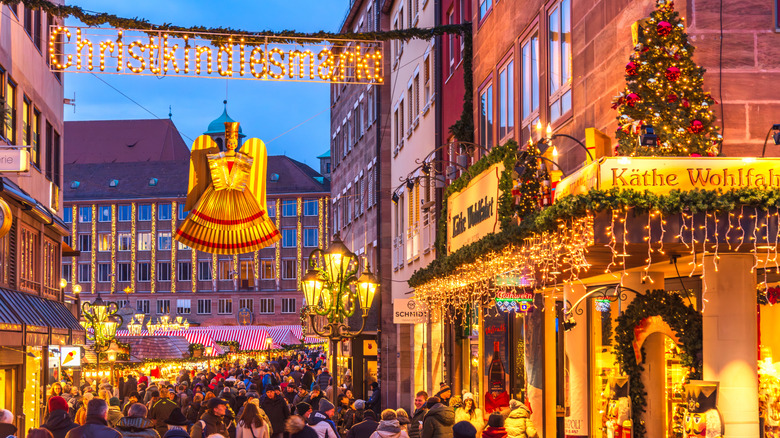
Nuremberg's main square, Hauptmarkt, lives up to its name as the home of a fresh farmer's market on weekdays — brimming with stalls that sell produce, flowers, bakery, and gifts. The plaza is watched over by the impressively Gothic Frauenkirche, or the Church of Our Lady. The opulent building is one of three historic churches — along with St. Lawrence and St. Sebald — that Nuremberg is known for. On the theme of Gothic landmarks, look out for the Schöner Brunnen, or Beautiful Fountain, located on the corner of Hauptmarkt near the Town Hall. An opulent tower-shaped water feature built more than a century ago, the current structure is a replica of one originally constructed in the 14th century.
Come November, Nuremberg's Hauptmarkt is flooded with red-and-white striped wooden stalls and illuminated with some of the most enchanting Christmas light displays in the world during its annual holiday market. The city's annual event is always launched by the so-called Christmas Angel, who stands on a balcony of the adjacent Frauenkirche and recites a poetic prologue. This is also where you'll find the traditional Rauschgoldengel, or "tinsel angel," a gold-foil holiday decoration with roots in Nuremberg dating back to the 16th century.
Stroll along the Old City Walls
Around 90% of Nuremberg's old town was destroyed in January 1945, a devastating blow that demolished historic buildings and led to thousands of casualties months before the end of World War II. Fortunately, some structures were partially spared — like Nuremberg Castle, the Frauenkirche, and the Rathaus. All of which needed significant repairs and restoration, but still retain some of their original details today.
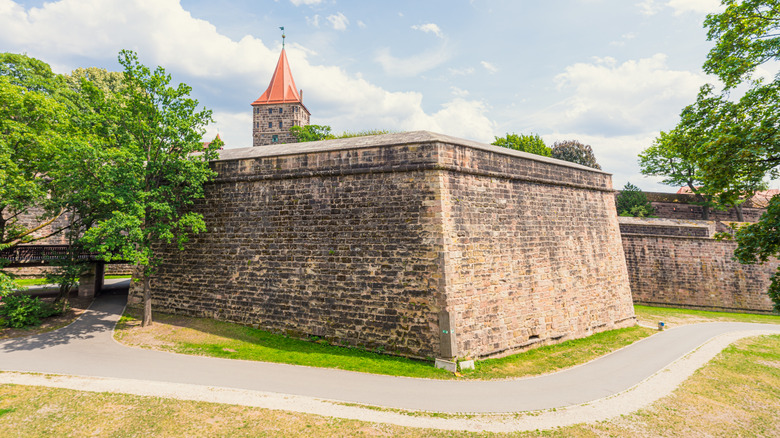
One of the most heavily bombed cities in Germany, second only to Dresden — a once-thriving city that was nearly wiped out but is now a beloved destination — in scale, Nuremberg blends a mix of new and old architecture. Its strategic city walls, which date to the Middle Ages, are a prime example of this. Mostly spared during the war — although some parts had to be rebuilt afterward — a wander around their perimeter offers a pleasant way to explore the city center.
What was originally intended as a moat is now a picturesque path lined with trees and benches, and the area is punctuated with gates and towers — of which 71 out of the original 183 remain. In some places, the walls reach up to 16 feet thick, which made the city nearly impervious to attack. Walking around this unique landmark, it's not hard to see why Nuremberg was home to so many preserved medieval buildings until 1945's systematic bombings.
Travel through time at the Germanic National Museum
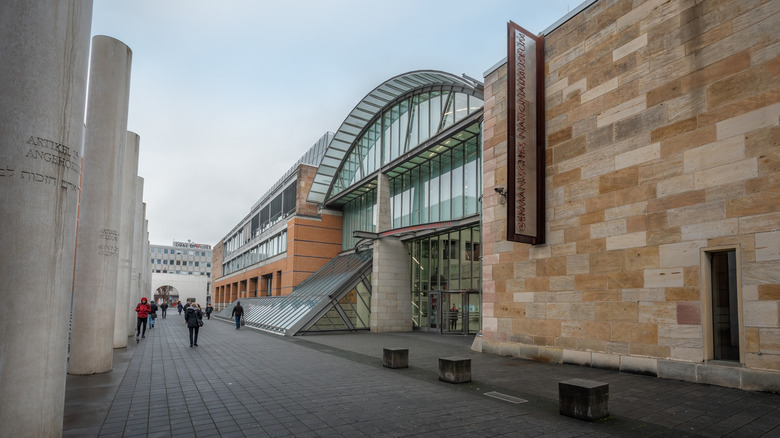
Founded in the 19th century, the comprehensive Germanic National Museum showcases art and culture in areas where the German language has been spoken. Home to well over one million objects — around 25,000 of which are currently on public display — the architecture itself is a blend of time periods. A former Carthusian monastery served as its earliest building, and was then extensively expanded over the decades. Today, its contemporary-meets-historic complex is a salient reminder of the 600,000 years of art and history the museum preserves. Plus, it's also a great way to spend an afternoon.
One of the museum's most iconic pieces is the world's oldest globe, known as the Behaim Globe. Created in 1492 just months before Christopher Columbus landed in North America and changed Europeans' understanding of the world thereafter, it offers a glimpse into the late 15th-century worldview before America was put on the map — literally. Other significant items include artworks ranging from prehistory to the 20th century, plus collections of scientific implements, musical instruments, toys, crafts, weaponry, and more. Beyond that, a rotating program of special exhibitions provides unique insights into historic Nuremberg, Germany, and beyond.
The Germanic National Museum is open from 10 a.m. to 6 p.m. every day of the week except Monday. On Wednesdays, the museum stays open until 8:30 p.m. Adult admission, as of this writing, is around $12, while kids and students pay just $7.
Gaze up at St. Lawrence Church
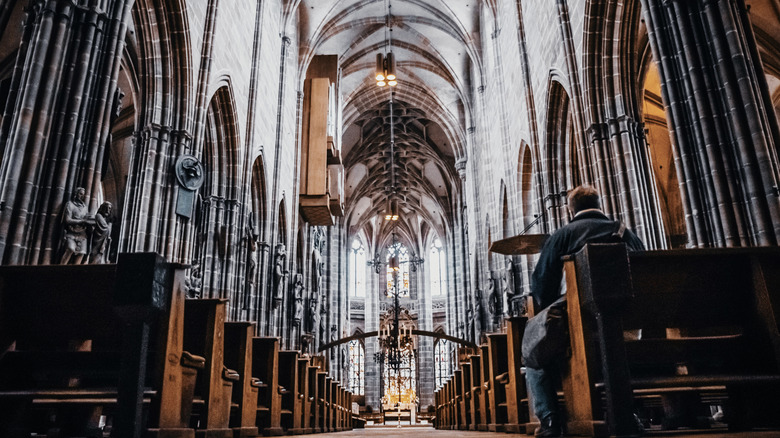
St. Lawrence Church, or Lorenzkirche in German, was originally constructed in the 13th century and features amazing Gothic details. Like many structures in Nuremberg, the building sustained major damage during World War II. Thankfully, its priceless tabernacle was protected behind a huge concrete wall, and its moveable treasures were kept safe in various locations — including the art bunker beneath the castle. In 1943, St. Lawrence was hit with several bombs and was heavily damaged once again during air raids in 1945. As such, its restoration and preservation remain ongoing efforts to this day.
The pipe organ in St. Lawrence Church is one of the world's most impressive, boasting a mind-boggling 12,000 pipes and more than 160 registers. To experience it in all its glory, join a service on Sunday at 10 a.m. Alternatively, you can also take a self-guided tour between 9 a.m. to 5:30 p.m. Monday through Saturday, or between 1 p.m. and 3:30 p.m. on Sunday, to fully appreciate its grandeur.
Outside the church, wander around St. Lawrence Square to see the elegant "Fountain of the Virtues" and the impressive medieval Nassauer Haus — a rare example of a surviving fortified residence in central Nuremberg. A short walk away, Katharinenruine, or the ruins of St. Catherine's Church, serves as potent reminder of the desolation of World War II. Finding new life today as a performance venue, the space showcases how Bavaria's beautiful second city has everything a traveler could want.
Visit the Church of Our Lady
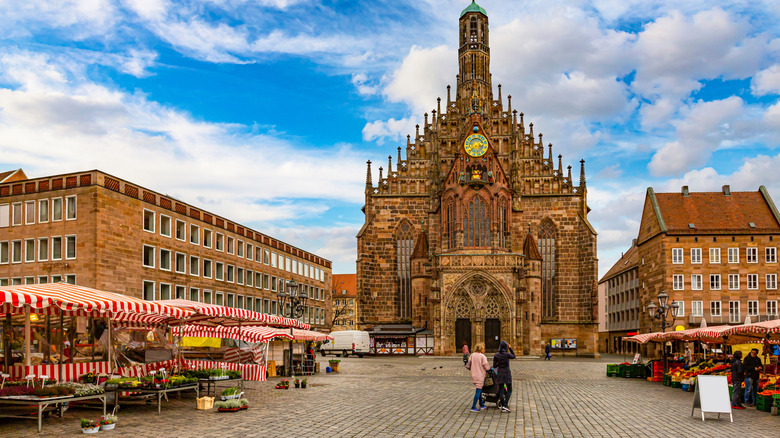
Known as Frauenkirche in German, the Church of Our Lady is an unmistakable landmark of Hauptmarkt. Inside, soaring vaulted ceilings inspire awe as they rise above sculptures and paintings. The altar, known as the Tucher altar, was created around 1445 and is a masterpiece of German panel painting. Beyond this, the church also houses the city's oldest stained glass windows.
Outside, the building's iconic gabled facade is a treasure of masonry. It features numerous decorative tiers and a Renaissance glockenspiel — called "Männleinlaufen" — that dates to 1509 and was saved from destruction by being stored the art bunker below Nuremberg Castle. Every day at noon, an animated tableau of seven electors — German princes who had the privilege of selecting the Holy Roman Emperor — play homage to the 1356 Golden Bull decree by Emperor Charles IV, which granted them the sole authority to choose the next ruler.
The Church of Our Lady is open daily for public visits, and admission is free. You can also opt to join a volunteer-run guided tour, which usually starts at 12:15 p.m. after the glockenspiel routine on Monday, Wednesday, Saturday, and Sunday. The tour is also free — although donations are welcome — and there's no need to book ahead. Finally, private tours can also be arranged in advance to explore certain themes or areas, or be presented in different languages.
Reflect at St. Sebald's Church

The third of Nuremberg's three most significant churches, St. Sebald's Church, is the city's oldest — dating back to the early 13th century. The patron saint of Nuremberg, St. Sebald was traditionally believed to be an Anglo-Saxon missionary who is thought to have traveled to the area in the 9th or 10th century. Living as a hermit, he is also believed to have preached in Nuremberg. Once inside, look for the elaborate bronze reliquary that's said to hold his bones.
Nestled within in the Sebald district of Altstadt, its exterior — with its dual towers — is a highlight of the Nuremberg skyline. Like the city's other historic structures, St. Sebald's Church suffered a lot of damage at the end of World War II. However, it was substantially rebuilt over the next three decades. Nearby, the rectory boasts one of Nuremberg's oldest medieval courtyards, offering a glimpse into the city's storied past.
The church is open for public visits every day, with the option to book a guided tower tour between April and December for panoramic views of the city. At the time of writing, adult admission costs around $8 for adults and just over $2 for children — just be prepared to climb 234 steps! At the top of the South Tower, the climb will definitely have been worthwhile for stunning views of Nuremberg Castle. It's a great way to take in the sunset in the autumn.
Get artsy at Albrecht Dürer's House
Arguably Germany's most famous historical artist, Albrecht Dürer was a pioneering painter and printmaker during the Renaissance. Born in Nuremberg — a vibrant center of humanist intellectualism during the late 15th and early 16th centuries — Dürer was surrounded by innovation. This included the early days of book printing, which was embraced by local publishers around 1470.
By the 1490s, when Dürer had begun making works on paper, a group of local artists and publishers produced the remarkable "Nuremberg Chronicle" — a lavishly illustrated history of the world that's considered one of the most important books of the century. This meant Dürer was truly in the right place at the right time to experiment with printmaking. Today, his house and studio are both well-preserved, which means you're also in the right place to learn more about the artist, and see where he lived and worked for nearly two decades.
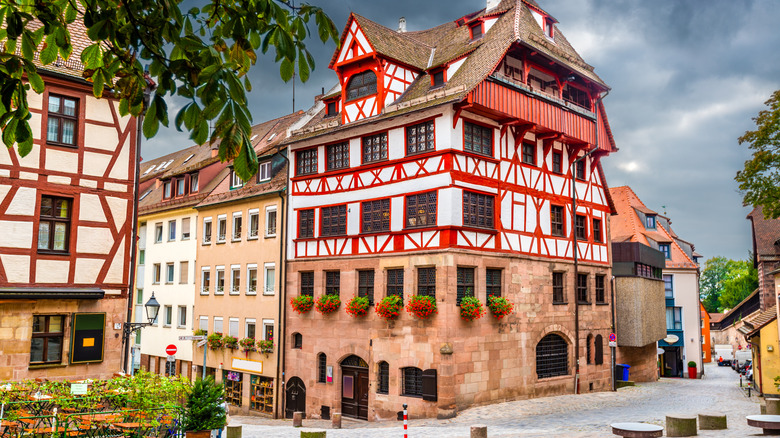
Dürer's well-to-do half-timber house, also known as a burgher house, is one of the few to have survived the bombings at the end of World War II. A memorial site since 1828, it has been carefully conserved over time, and guests can visit rotating exhibitions or take a guided tour led by a costumed interpreter. Additionally, a highlight of the visit includes watching printing demonstrations by a local artist who works with what's known as a high-pressure press built based on one of Dürer's sketches.
Visit the Documentation Center Nazi Party Rally Grounds
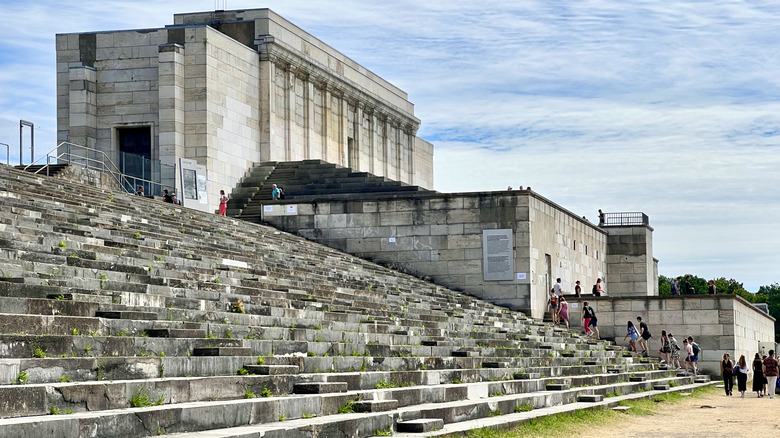
For all of its incredible medieval and Renaissance history, Nuremberg is also inextricably entwined with the story of World War II, which forever changed the city. Systematic bombing missions by British and American allied forces in 1943, 1944, and 1945 nearly leveled the city. This was due in large part to its symbolic status for the Nazi Party, which gathered in Nuremberg for huge, carefully choreographed rallies between 1933 and 1938. Here, the Nazis built colossal propagandistic structures and stages home to events that sometimes lasted up to eight days, designed to fuel their cause and stir national sentiment.
The Documentation Center Nazi Party Rally Grounds is one of the country's most important museums when it comes to understanding the era of the Third Reich. The rally grounds originally spanned about 1.5 square miles and contained myriad areas designed by architect Albert Speer. He and Adolf Hitler, the latter of whom also studied art and mused about becoming an architect, both understood that architecture could be used as a political tool — a representation of status and might.
Today, visitors can walk around the grounds and read interpretation boards that explain how specific areas were used. A major revamp of the permanent exhibition is expected to conclude in late 2026, but a smaller interim exhibition walks visitors through the significance of the site in the meantime.
See great art at the Neues Museum
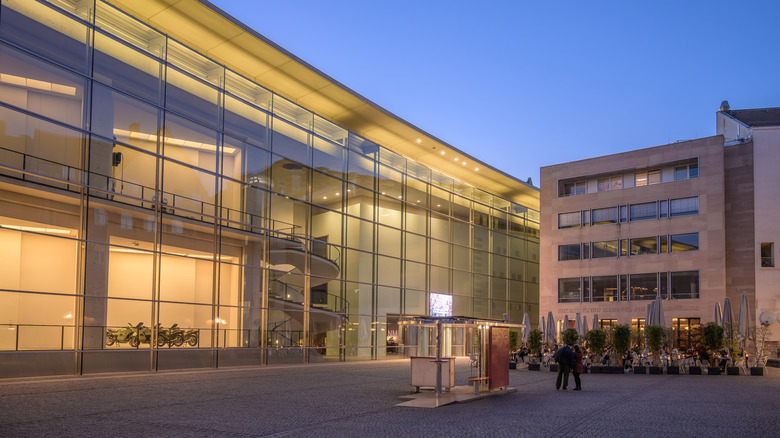
The Neues Museum is a perfect spot for art enthusiasts visiting Nuremberg — especially those who love modern and contemporary art and design. Before you even step foot inside, you'll get a glimpse at a more modern side of Nuremberg with the museum's curved glass facade. Designed with sleek lines and a minimalist aesthetic, the building offers a striking contrast to the city's medieval core.
Inside, a program of rotating exhibitions by international artists runs alongside a collection of nearly 1,500 artworks and design objects, all with an emphasis on paintings, photography, sculpture, and applied arts made between the 1950s post-war period and today.
Beyond its more than 32,000 square feet of interior exhibition space, visitors can also explore an outdoor sculpture garden featuring works by Hiromi Akiyama, Johannes Brus, Bernd Klötzer, and more. Neues Museum is open Tuesday through Sunday from 10 a.m. to 6 p.m., with extended hours until 8 p.m. on Thursday.
Spend an afternoon at Schloss Neunhof
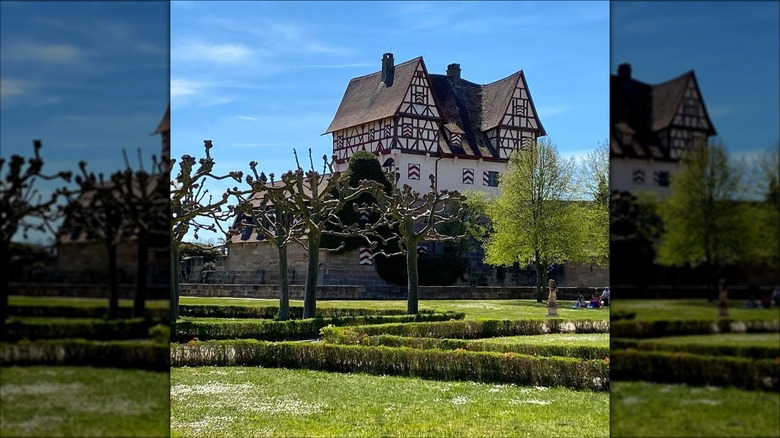
A defensive manor house dating back to the 1400s, Schloss Neunhof offers a unique glimpse into affluent life during the Renaissance. Located just outside of central Nuremberg, its early history is a bit unclear. However, records indicate that the castle we see today was rebuilt in the 15th century following its destruction during a conflict known as the First Margrave War around 1450.
The tidy, suburban estate once belonged to the affluent Kress family, and features a moat with drawbridge, stables, gardens, and more. In 1960, the house entered the stewardship of the Germanic National Museum, soon after which the gardens were redesigned based on historic plans.
A visit to Schloss Neunhof reveals a unique layout available only to the wealthy in the form of two kitchens — one of which was functional and another that was intended purely for display. At the time of writing, the castle is undergoing comprehensive renovations and is closed for visits until further notice. Nonetheless, the gardens and stunning exterior views can still be visited daily from 10 a.m. to 9 p.m. between April and October.
Methodology

In order to round up 11 must-see attractions in and around Nuremberg, we relied on general guidance from tourism sites like Tourismus.Nuernberg.de and Quartiere-Nuernberg.de, which provided introductory information about specific destinations. For particulars related to admission fees, opening times, location, and some historical context, we researched official websites like Kaiserburg-Nuernberg.de, GNM.de, Lorenzkirche.de, Frauenkirche-Nuernberg.de, Sebalduskirche.de, Museums.Nuernberg.de, NMN.de, and Schloss-Neunhof.de.
Additionally, we also relied on sites like HistoryHit.com, History.com, RickSteves.com, Catholic.org, the Art Institute of Chicago, and WW2Days.com for contextual and historical information about specific events and figures related to Nuremberg's cultural and wartime past. Finally, to ensure we're highlighting the best attractions, no matter the season or the type of trip, we consulted reviews and ratings published by visitors on TripAdvisor, Wanderlog, and Google.