16 Top-Rated Attractions & Things to Do in Baden-Baden
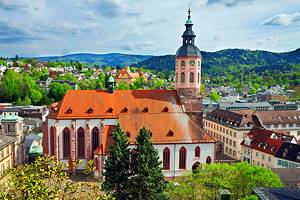
Thanks to its mild climate and hot springs, Baden-Baden is one of the world's best-known spa towns and one of the most popular places to visit in Germany. The mineral-rich spas that make it famous have been used since Roman times, and you can visit the remains of their baths, as well as enjoy the spa experiences first-hand at the 19th-century Friedrichsbad and the modern Caracalla Baths.
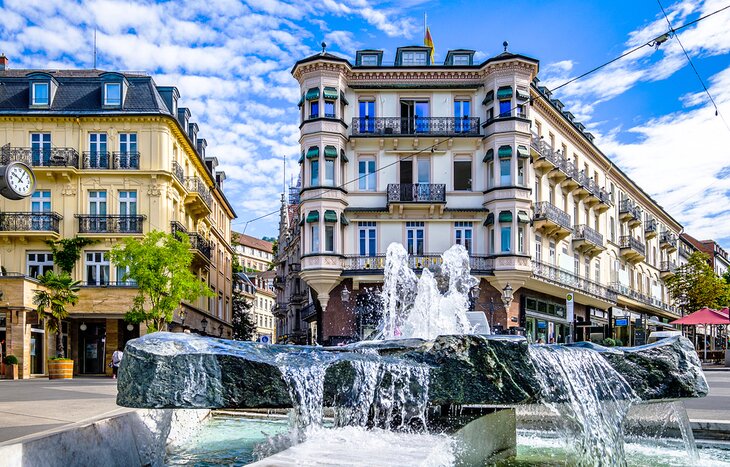
Baden-Baden is also a popular destination for sports enthusiasts, with many golf and tennis clubs, as well as equestrian sports such as horse racing. In summer, you can hike trails through the forests, and in winter, you can ski on the Nordic trails. Between these active sports, the spas, and the beautiful gardens, you'll find plenty of things to do here.
The Schwarzwald-Hochstrasse tourist route skirts the town's extensive forests, making it a perfect base for exploring the beautiful Black Forest. Many of the region's highlights and most beautiful medieval towns are an easy day trip from Baden-Baden.
Whether you are traveling with your family or on a getaway for two in this romantic Baroque town, you'll find the best places to go with this list of the top attractions and things to do in Baden-Baden.
See also: Where to Stay in Baden-Baden
- 1. Luxuriate at the Friedrichsbad and Caracalla Baths
- 2. Stroll along the Lichtentaler Allee
- 3. Ride the Merkur Bergbahn (Merkur Mountain Railway)
- 4. Admire the Art at the Museum Frieder Burda
- 5. Take in the Views from Altes Schloss Hohenbaden
- 6. Walk to the Geroldsau Waterfall
- 7. Trinkhalle (Pump Room)
- 8. Schloss Rastatt
- 9. Schloss Favorite
- 10. Fabergé Museum
- 11. Stroll through the Baroque Old Town
- 12. Revel in Music at the Opera House (Festspielhaus)
- 13. Roman Bath Ruins
- 14. The Paradies Cascade
- 15. Brahms House
- 16. Join a Festival in the Kurgarten (Spa Garden)
- Where to Stay in Baden-Baden for Sightseeing
- Map of Attractions & Things to Do in Baden-Baden
1. Luxuriate at the Friedrichsbad and Caracalla Baths
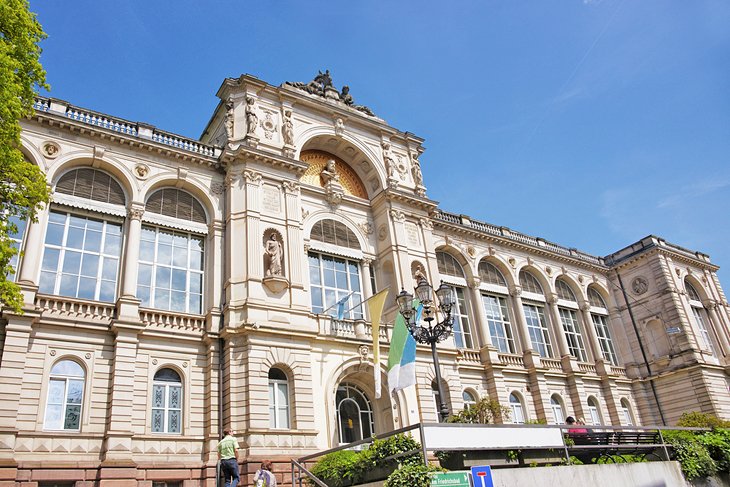
More than 2,000 years ago, the Romans took advantage of the healing properties in the dozen thermal springs that bubble from beneath the earth, and today 800,000 liters of water a day feed the sleek modern Caracalla Spa. The earlier Friedrichsbad, the adjacent Roman-Irish Bath, offers a luxurious 17-step spa treatment program in a beautiful 130-year-old Roman-style setting.
The 4,000-square-meter bathing and therapy center at the Caracalla Spa includes two circular pools and a large central fountain, plus hot and cold rock grottos, whirlpools, swimming pools, saunas, a current channel and water jets, all fed by the springs, from which water rises at temperatures of 69 degrees Celsius.
The elaborate frescoes and impressive dome of the 19th-century Friedrichsbad are quite a contrast to the glass-enclosed baths of Caracalla Spa, and the 17 steps of its spa experience include varying baths at different temperatures of the thermal waters, combined with Irish hot-air baths and concluding with a soap and brush massage.
Address: Römerplatz 1, 76530 Baden-Baden
2. Stroll along the Lichtentaler Allee
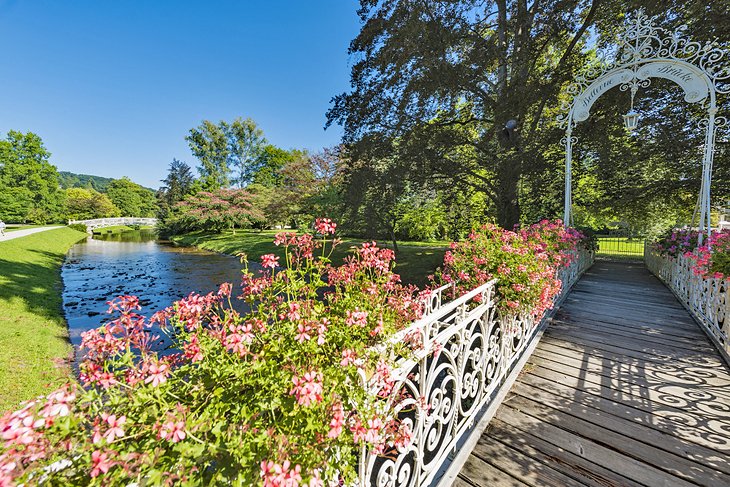
Lovely Lichtentaler Allee, a park and arboretum in the heart of Baden-Baden, is one of the prettiest places in a very pretty city. Nearly two and a half kilometers long, the avenue on the west bank of the Oos River follows an old footpath dating back to the mid-17th century.
It's a delightful place for a stroll, among more than 300 varieties of trees such as chestnuts, magnolias, limes, oaks, and maples. A highlight is the Gönneranlage, a lovely Art Nouveau garden with more than 400 different types of roses.
In addition to some of the top tourist attractions described on this page, you'll find many other interesting places to visit along the Lichtentaler Allee, including the Cistercian Abbey of Lichtental, founded in 1245 and home to the Princes' Chapel, and the interesting Museum of 19th Century Art and Technology with exhibits focusing on the life of Berlin painter Lesser Ury.
Address: Ludwig-Wilhelm-Straße, 76530 Baden-Baden
3. Ride the Merkur Bergbahn (Merkur Mountain Railway)
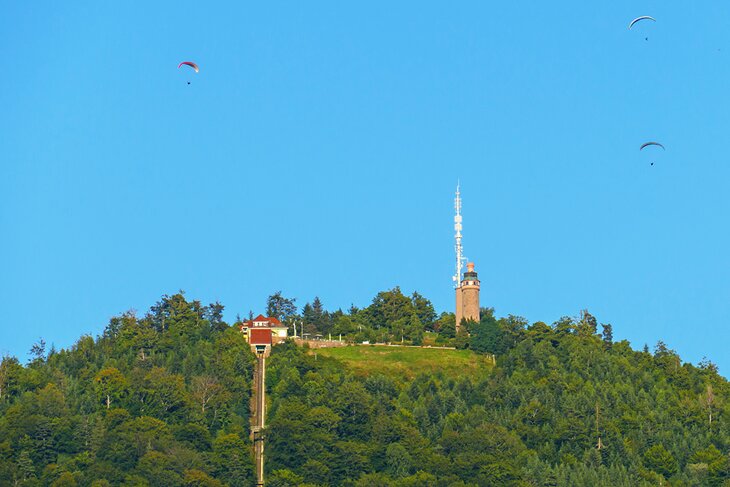
Germany's longest and steepest funicular railway carries tourists to the summit of 2,191-foot Merkur Mountain, reaching inclines as great as 54 percent. For an even more wide-ranging view, once at the top, you can ride a free lift to the viewing platform of the stone Merkur Tower, from which vantage you can see a panorama that includes the upper Rhine, the mountains of the Black Forest, the city of Karlsruhe and as far as Strasbourg in France.
At the summit, you'll find a restaurant, along with a children's playground, plenty of grass for sunbathing, and signposted footpaths lead to more viewing points and into a wildlife reserve.
Either bus 204 or 205 will take you from the town center to the railway's base station (you can buy a combined ticket on the bus). You will have lots of company there on weekends, as Merkur is a popular place to visit for locals.
Address: Talstation: Merkuriusberg 2, Baden-Baden
4. Admire the Art at the Museum Frieder Burda
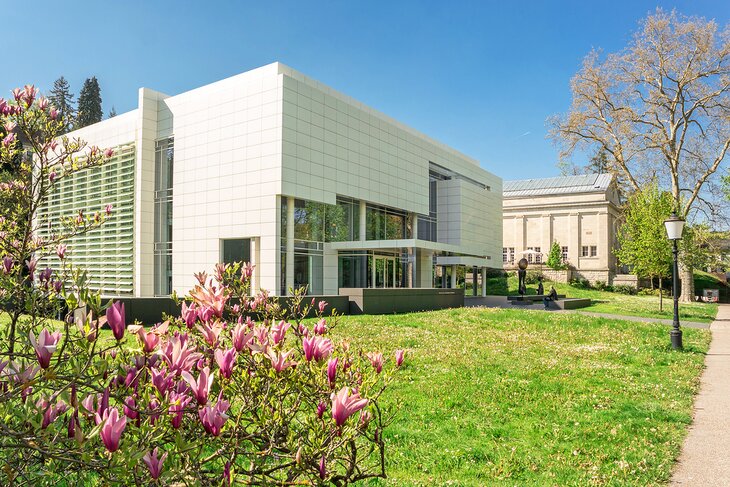
Dedicated exclusively to twentieth- and twenty-first-century art, the Museum Frieder Burda concentrates on Classical Modernism and contemporary art with a collection of about 1,000 paintings, sculptures, photographs, and works on paper.
The striking building was designed by architect Richard Meier to represent the spirit of the collection itself, to maximize the effects of changing natural light on the art displayed here, and to fit into the landscape of the Lichtentaler Allee Park. The collection itself is a very personal one inspired by Frieder Burda's fascination for color and the emotional, expressive qualities of painting.
How German Expressionism revolutionized painting is explored through works by Max Beckmann, August Macke, and others. Works by American Abstract Expressionists Jackson Pollock, Willem de Kooning, and Mark Rothko in the mid-1940s and early 1950s continue the story as they developed new concepts that evolved from European traditions. Later works by Andy Warhol continue to catalog the development of Abstract Expressionism and a collection of German art after 1960 follows.
Perhaps the museum's best-known feature is Germany's premier collection of the later works of Pablo Picasso and its collection of important sculptures by artists such as Picasso who are mainly famed for their paintings.
Another museum worth a stop for some background on the local area is the Baden-Baden Museum (Stadtmuseum), whose exhibits span from the Roman era through to the 19th century. It's also home to a fine collection of antique toys and games.
Address: Lichtentaler Allee 10, 76530 Baden-Baden
5. Take in the Views from Altes Schloss Hohenbaden
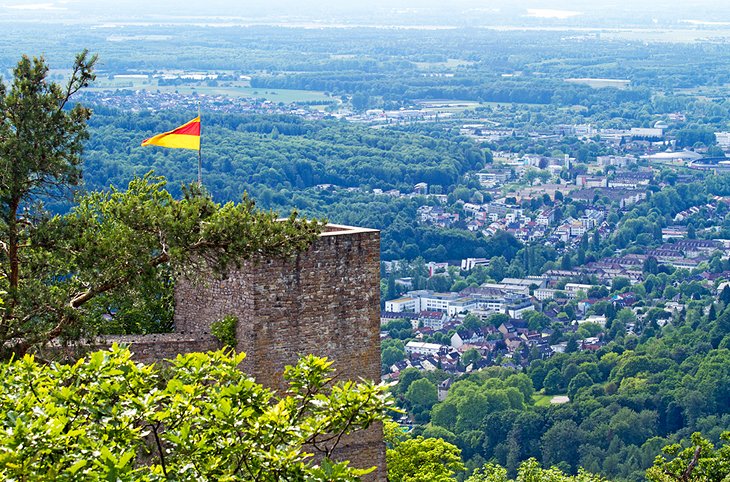
Built in 1102, Hohenbaden Castle - often called Altes Schloss, or the Old Castle - offers commanding views over Baden-Baden and the surrounding countryside. Built by the Margraves of Limburg (later called Margraves of Baden-Baden) in the early 12th century, the oldest part of the castle is the upper Hermannsbau, while the Gothic lower castle was built in the early 1400s.
At its height in the late 1400s, there were more than 100 rooms, but the castle lay in ruins for centuries before its stabilization and remains a romantic ruin today.
You can see decorative details, for example on the ground floor a pillar shows a coat of arms carried by angels, and you can visit the dungeons and climb the tower for panoramic views over the Black Forest and the Rhine Valley. An interesting modern feature is the four-meter wind harp in the former Knights' Hall, built in 1999 by harp maker Rüdiger Oppermann. Its nylon strings are activated when the breeze is strong enough.
Address: Alter Schloßweg 10, 76530 Baden-Baden
6. Walk to the Geroldsau Waterfall
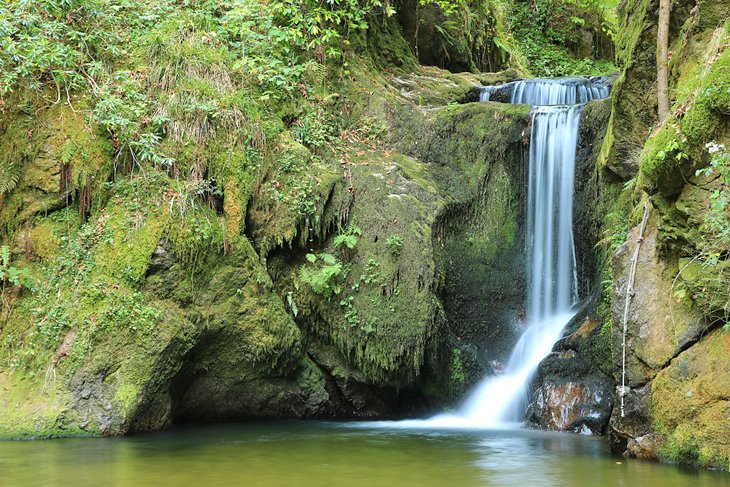
The six-meter-high waterfall on the Grobbach, in Baden-Baden's Geroldsau neighborhood, plunges picturesquely into a rocky pool surrounded by rhododendrons. (The best time to visit Baden-Baden to see the rhododendrons in bloom here and elsewhere in town is between late April and early June.)
The painter Gustave Courbet and the composer Johannes Brahms, a native of Baden-Baden, both found inspiration in this quiet, scenic spot, which you can reach by a short walk on a path alongside the Grobbach. The waterfall is the starting point for several woodland rambles following well-marked trails.
Address: Wasserfallstraße, Baden-Baden
7. Trinkhalle (Pump Room)
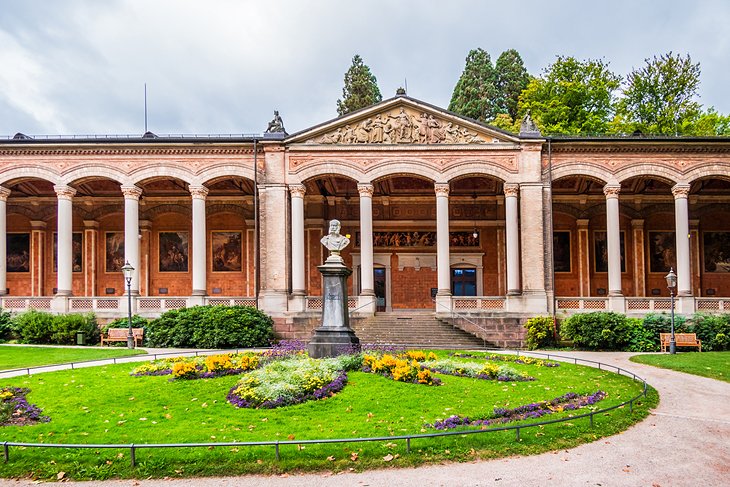
The impressive colonnade next to the Kurhaus was built as the Pump Room, where spa-goers could drink the curative waters. You can stroll along the front, beneath the 16 Corinthian columns, to admire 14 mural paintings by artist Jakob Götzenberger, which decorate the 90-meter arcade.
These paintings show various scenes of the region and depict myths and legends. The Trinkhalle was built by Heinrich Hübsch between 1839 and 1842, to complement the columned façade of the Kurhaus, which was the main building of the spa.
Address: Kaiserallee 3, Baden-Baden
8. Schloss Rastatt
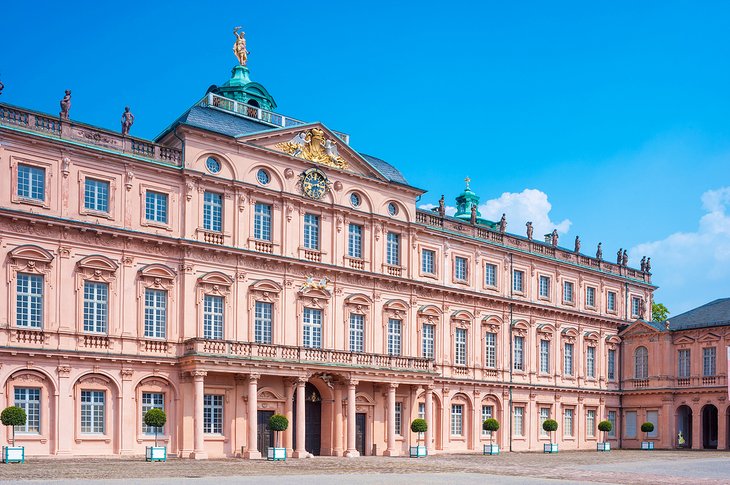
A short drive or train ride north of Baden-Baden, Rastatt is home to two Baroque palaces, each set in gardens of the same period. Schloss Rastatt was built in the beginning of the 18th century as the official residence palace of Margrave Louis William of Baden-Baden
Highlights are the impressive Ancestral Hall with its painted ceiling and the ornate stucco work and oval gallery above the grand staircase. In the apartments of the Margrave and Margravine, the frescoed ceilings are early examples of Italian illusionistic murals in Germany; this tromp l'oeil style became very popular in Baroque palaces throughout the country.
Although it's hard to take your eyes off the elaborate stucco work in all the ceilings, don't forget to look at the intricate parquet floors throughout the palace. The extensive gardens are laid out in formal Italian parterre style.
Address: Herrenstraße 18-20, Rastatt, Germany
9. Schloss Favorite
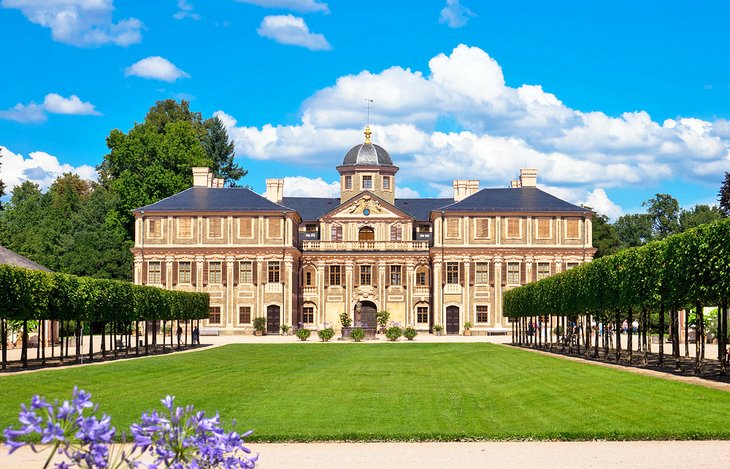
The pleasure palace of Margravine Sibylla Augusta von Baden-Baden, Schloss Favorite was a place for more informal and relaxed entertaining than was possible in the official residence. Unlike the residence, whose architect was Italian, the pleasure palace designs were French.
Several of the Margravine's collections are displayed here, as they were in her time. One of the largest collections of early Meissen porcelain, as well as German porcelain is displayed in the Open Kitchen, an unusual feature of the time. This is not a kitchen designed for cooking, but as a showplace for an astonishing array of cooking, serving, and decorative items.
Throughout the palace, other collections feature unusual Florentine lapidary art, hand-painted tiles, textiles, and lacquerware. The Baroque gardens feature an orangery where Mediterranean plants such as pomegranates, lemons, and oranges were kept in the winter. In the summer, these became additional spaces for social events.
Address: Am Schloß Favorite 5, Rastatt, Germany
10. Fabergé Museum
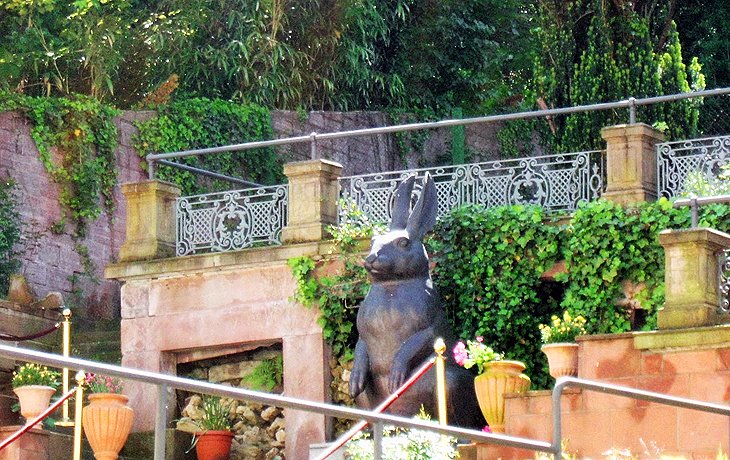
Opened in 2009, the Fabergé Museum is devoted to the famous Russian jeweler, Carl Peter Fabergé. A highlight of the collection of more than 700 pieces is the Rothschild Fabergé Egg, made in 1902 and estimated to be worth in excess of $11 million. Other items of note include the very last Fabergé Egg ever produced and the 1917 Karelian Birch Egg, made of birch wood and gold and encrusted with diamonds.
It may surprise you to see the wide variety of items created by the Fabergé workshop. In addition to the fabled Easter Eggs and jewelry, Fabergé created boxes, candelabras, clocks, bowls, and even tiny faux Bonsai trees. In 1913, when the Romanov dynasty celebrated 300 years of rule, Fabergé created jewelry for the occasion; the Fabergé Museum displays more than 20 gold brooches designed for that tercentenary.
Address: Sophienstraße 30, 76530 Baden-Baden
11. Stroll through the Baroque Old Town

Wandering the alleys and lanes of Baden-Baden's tightly packed Old Town is a perfect way to explore its Baroque-influenced architecture, as well as to visit the many small jewelry and antique shops, galleries, and cafés that make up its considerable charms. It's easy to see why Baden Baden is a very popular shopping destination.
Other highlights include the Gothic Stiftskirche containing a sandstone crucifix dating from 1467, and the tomb of Margrave Ludwig Wilhelm, known as Türkenlouis, who died here in 1707.
The 17th-century Convent of the Holy Sepulchre is also worth visiting, especially for its elaborate grid separating the Nuns' Gallery and the carved botanical designs on the pulpit.
12. Revel in Music at the Opera House (Festspielhaus)
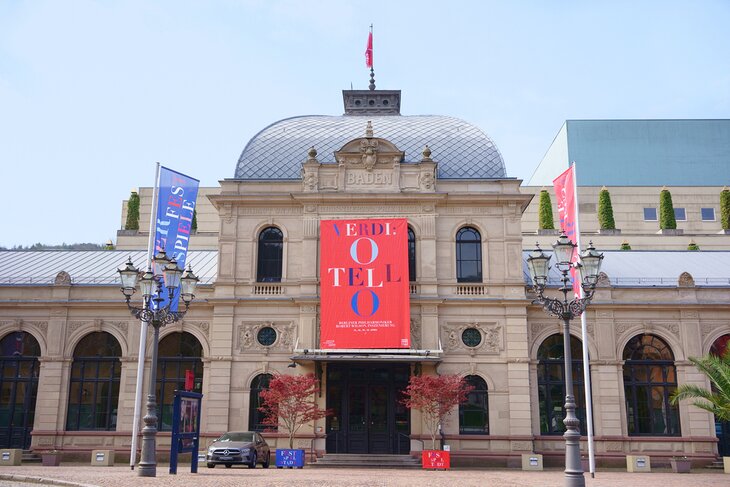
Festspielhaus Baden-Baden is widely known throughout Germany, not just for its size — at 2,500 seats, it's the country's largest opera house — but for its eclectic programming. Built in 1998, this well-designed concert hall hosts numerous performances from September through July, including world premieres of operas.
A regular stop for the best-known European orchestras, such as the Vienna Philharmonic and the Berlin Philharmonic, Baden-Baden's opera house also hosts the top orchestras from Britain and North America and top-name operatic stars such as Renée Fleming.
Known as one of the best opera houses and performance venues in Europe (and often selling out performances), the Festspielhaus makes Baden Baden one of the top places to go for music lovers. If you plan to attend a concert here, be sure to reserve seats well in advance.
Address: Beim Alten Bahnhof 2, D-76530 Baden-Baden
13. Roman Bath Ruins
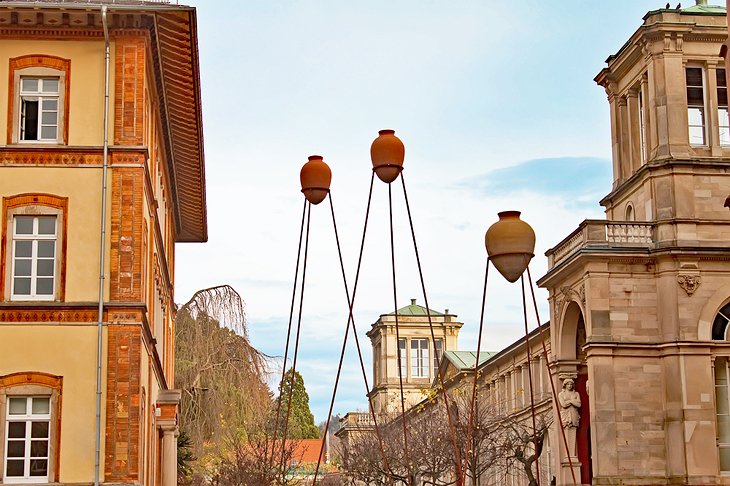
Baden-Baden — once known as Aquae Aureliae — has been a popular spa destination for more than 2,000 years, and much evidence of the Roman presence can still be seen at the well-preserved Roman Bath Ruins. You can easily spot the entrance by the three Roman amphorae suspended above it.
The best example is the Soldiers' Bath under the present day Friedrichsbad spa with its ancient floor and wall heating systems. Another highlight is the two-meter-high Roman wall. Guided tours of the facility and audio tours are available.
Address: Römerplatz 1, 76530 Baden-Baden
14. The Paradies Cascade
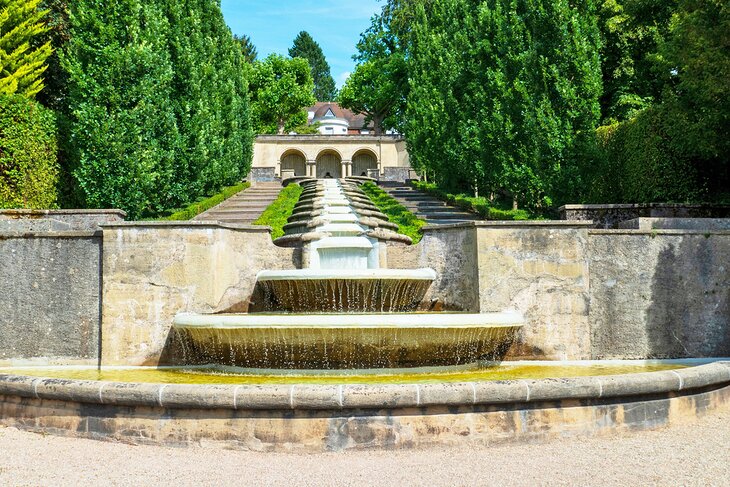
The Paradies in Baden-Baden's old town is a complex of fountains and cascades constructed in 1925 and thought to be one of Germany's very first such projects. A highlight of the Paradies is its lovely ornamental garden encompassing a large section of the town's bigger homes and mansions.
The cascade itself is served by an underground spring, its waters falling an impressive 40 meters. Accessible by foot or public transport from the town center, the cascade affords fine views of Baden-Baden and the surrounding countryside.
15. Brahms House

Brahms House in Baden-Baden is where Johannes Brahms spent his summer months between 1865 and 1874. The highlight of this historic house at number eight Lichtental is the Blue Room, a living room left just as it would have been in the composer's time and where he wrote many of his most famous arrangements, including parts of his first and second symphonies and A German Requiem.
The Baden-Baden Brahms Society, which rescued the house from demolition, sponsors a Brahms Days festival every other year, featuring performances and events at various locations around town.
Address: Maximilianstraße 85, 76530 Baden-Baden
16. Join a Festival in the Kurgarten (Spa Garden)
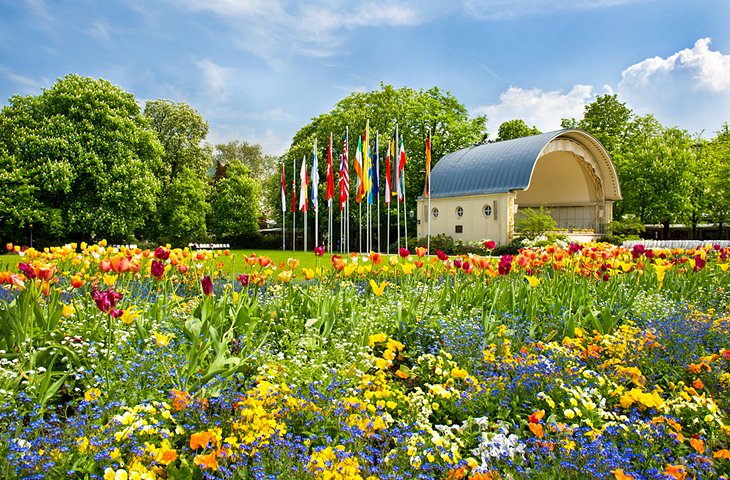
Alongside the Kurhaus, the Kurgarten (Spa Garden) is the hub of the town's cultural and social life. From spring through autumn, its flower beds change with the seasons. Surrounded by many of Baden-Baden's best attractions, as well as numerous boutiques, galleries, cafés, and restaurants, it's the scene of many events and festivals, including Badener Sommernächte (Summer Nights) and summer concerts held in the Bandshell.
One of the best things to do in Baden-Baden in December is shop at one of Germany's loveliest Christmas markets, filled with fine handicrafts and traditional baked goods and decorations. Facing the Kurpark is the stately façade of the Kurhaus, a lavishly decorated casino that hosts glittering social events.
Address: Kaiserallee 1, 76530 Baden-Baden
Where to Stay in Baden-Baden for Sightseeing
The narrow streets of Baden-Baden's Old Town and its elegant parks are designed for leisurely strolls, and most of the top tourist attractions are relatively close. Hotels in all price ranges are scattered throughout this central area and along the main artery leading to the train station, which is quite a distance from the old center. These highly rated hotels in Baden-Baden are all conveniently located for sightseeing:
Luxury Hotels:
- A showpiece of Baden-Baden, Brenners Park-Hotel & Spa is an old-world, grand hotel, with superior service, a pool, and classic rooms overlooking a park.
- Equally well-located near the Kurhaus and park, Maison Messmer has a pool and a small spa with a sauna and steam room.
- Set in its own garden in the heart of the old town, Hotel Belle Epoque exudes charm and includes breakfast and afternoon tea.
Mid-Range Hotels:
- On a quiet street near the Caracalla Baths, Aqua Aurelia Suitenhotel has spacious suites and convenient parking, a five-minute walk from the pedestrian district.
- Heliopark Bad Hotel zum Hirsch is near Kurgarten park, with well-furnished rooms, thermal waters in the bathtubs, and complimentary breakfast.
- Right in the center, opposite the Kurhaus, Atlantic Parkhotel is a traditional hotel with spacious, modern rooms; balconies; free breakfast; and a café overlooking the river.
Budget Hotels:
- Near the Festival Hall on the main route into town, a 10-minute walk from the center, Holiday Inn Express Baden-Baden offers parking and free breakfast.
- Hotel Laterne has smallish comfortable rooms in an elegant little building with a sidewalk café, in the pedestrian area of Baden-Baden's historic center.
Map of Attractions & Things to Do in Baden-Baden
More Related Articles on PlanetWare.com
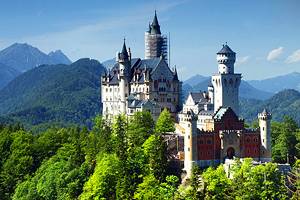
Places to Visit near Baden-Baden: Located at the western edge of Germany, Baden-Baden is a good base for day trips into Germany's Black Forest Region, as well as to visit the tourist attractions of Strasbourg, just across the Rhine River in France. These are just two of the interesting places to visit in the Rhine Valley.
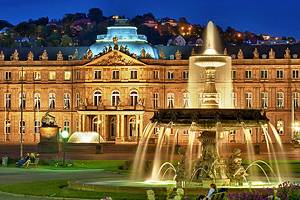
Where to Go Next: Less than an hour north of Baden-Baden is the university town of Heidelberg, and even closer you'll want to explore the art museums and other top attractions of Stuttgart.