
Cologne, Germany's Top 12 Tourist Attractions To Add To Your Itinerary
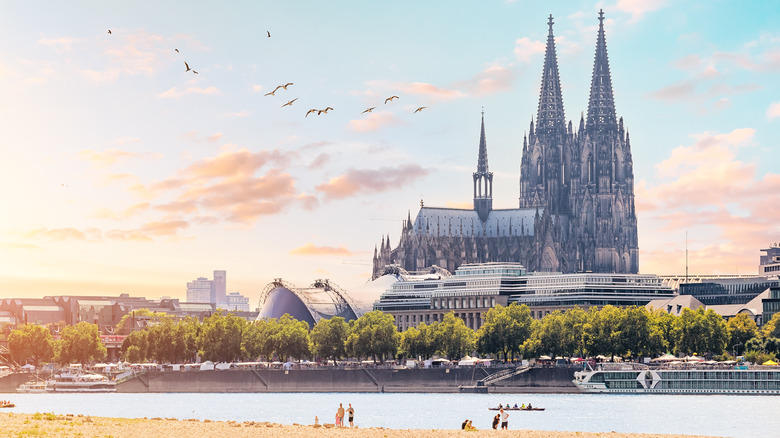
Whether you hear "cologne" and think of a city or a fragrance, history points you to the same place: Köln. The city sits about a 40-minute drive south of Düsseldorf and a little less than an hour north of Bonn. Known commonly as Cologne — the French name derived from its Roman roots caught on over time — this Rhineland city happens to be the birthplace of a particular type of fragrance known as Eau de Cologne, or "Water of Cologne," which contains a characteristically low quantity of scented oils compared to other fragrances. You can still visit its historic storefront — more on that later! — along with numerous other places in the city that transport you back in time. This energetic cultural hub is also one of the world's best cities for millennials. Home to around 1.15 million people, you'll find phenomenal architecture, great art, layers of history, wonderful food and beer, charmingly walkable streets, and so much more.
Cologne is famous for 12 Romanesque churches situated in a loose crescent shape. In late winter, the city comes alive for Carnival in the week leading up to Ash Wednesday. And at Christmas, the city hosts numerous seasonal, celebratory experiences and traditional markets, like those that appear near the cathedral, at Cologne Harbour, in Stadtgarten, and more. Experience great shopping, beautiful gardens, the largest literary festival in Europe, and phenomenal street art murals. Whether you're in the city for a day or two to catch an event or you're planning a longer visit, read on for 12 of the best tourist attractions in Cologne.
Experience Kölner Dom (Cologne Cathedral)
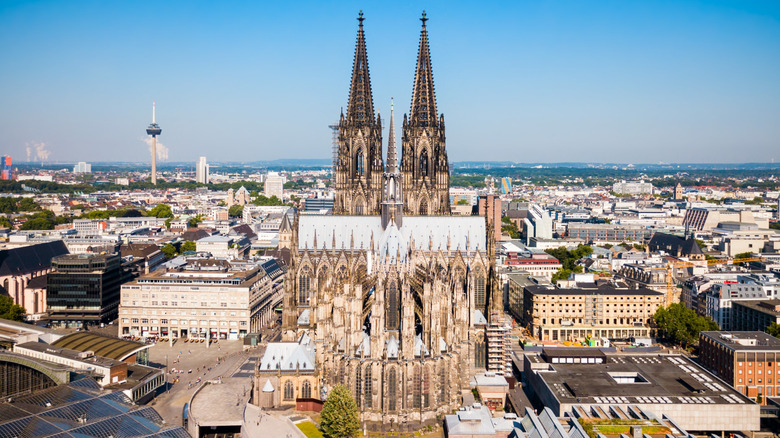
No survey of medieval world architecture would be complete without a mention of Cologne Cathedral, a masterpiece of High Gothic style and one of the largest cathedrals in Europe you have to see to believe. Construction started in 1248 and carried on for nearly six-and-a-half centuries, finally reaching completion in 1880. Its 19th-century details blend seamlessly with its original concept, making a wander through its five aisles, transepts, choir, altar, and ambulatory an awe-inspiring experience. Unsurprisingly, it's a UNESCO World Heritage Site, recognized for its continuity of style, the astonishing feat of its scale, and the dedication of its builders. It also houses contemporary marvels like acclaimed German artist Gerard Richter's massive stained glass artwork titled "Cologne Cathedral Window." Installed in the south transept in 2007, the design consists of around 11,500 colorful squares.
Visits to the cathedral include the chance to climb the tower — just check in advance to make sure it's open, as the attraction is closed during some holidays, like Carnival. Adult admission, as of this writing, is €8. A combination ticket that includes a visit to the tower and the Cathedral Treasury will run €12. Kids are half price and there's a special rate for families. Alternatively, if you'd like to attend Mass here, that costs nothing.
Wander around Old Town Cologne
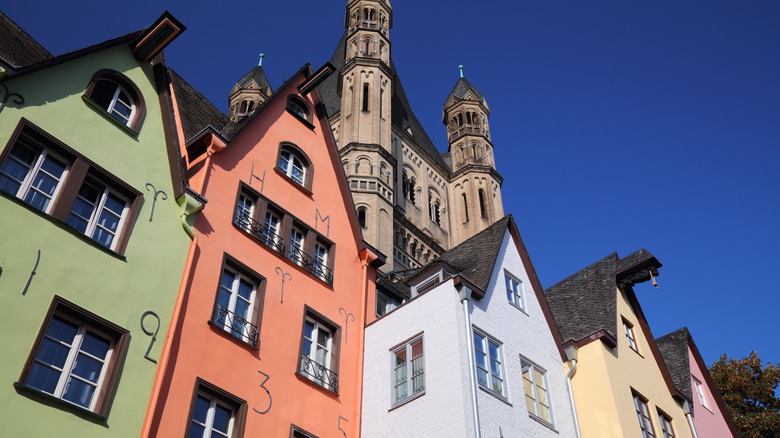
Down narrow alleys, through charming squares, and along rows of historic gabled houses, a wander in Old Town Cologne is a special treat. Referred to locally as Altstadt, Cologne's Old Town sits along the picturesque Rhine River and has cobblestone streets and buildings that date back to the Middle Ages. Heumarkt is home to a Christmas market, and nearby Alter Markt is a charming destination for cafes, colorful architecture, and the sense of being in Cologne's central hub. Step into a classic beer hall to try locally brewed Kölsch — a crisp and refreshing cross between an ale and a lager — like Brauhaus Sünner im Walfisch, which strikes an atmospheric note in its stunning, 17th-century, steep-gabled building.
Great St. Martin Church, or Groß St. Martin, is also located in Old Town. One of the city's iconic 12 Romanesque churches, it forms an unmistakable feature of the skyline, and it's built on foundations that can be traced back to the ancient Romans. The first-century site beneath the church is thought to have been a sporting facility of some kind, featuring a large sunken basin, which is unique in this region. History buffs won't want to miss a visit to the archaeology site below St. Martin, where you can still see the remnants of the second-century Roman warehouses that replaced the basin.
Take a Rhine River cruise
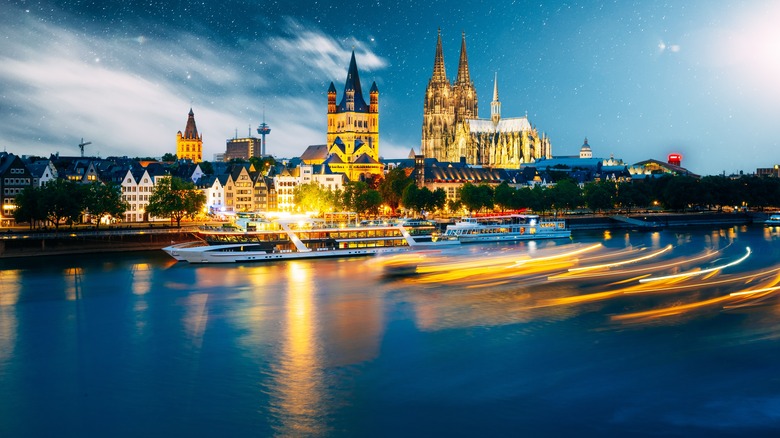
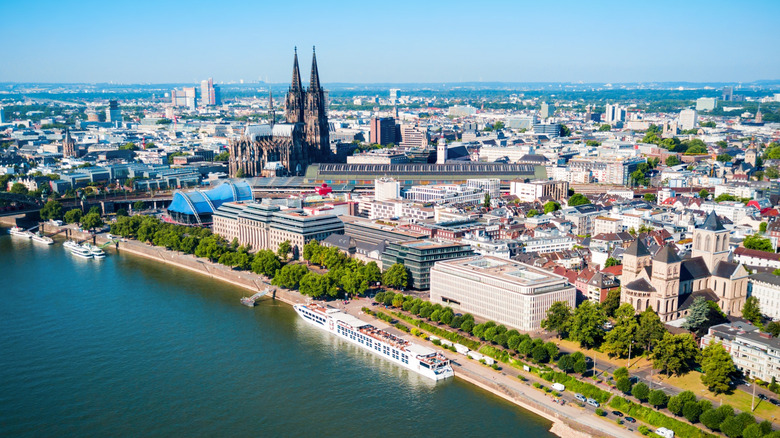
The Rhine is one of the most historic rivers in Germany, and it's an eminently popular route for international river cruises like Viking, Avalon Waterways, and others. Your travel style and what you like to see can help you choose the best time of year to book a cruise on this popular European river. But if you're in town for a few days and just want to see the sights from the water — always a unique way to experience a place — there are several quick trips that take between one and three hours and introduce you to Cologne's distinctive skyline. Experience a city where the past meets present and centuries-old buildings abut bold, contemporary structures.
A "Top Sights" cruise via Get Your Guide, for example, provides an audio experience so you can learn more about the city as you cruise past its landmarks. Another longer, popular option is a three-hour tour to Cologne's many harbors, from the impressive logistical feats of the Niehl shipping container port to the Rheinau, Deutz, and Mülheim Harbors, all of which brim with uniquely layered histories. One visitor who enjoyed the harbor cruise in September 2025 wrote on a Get Your Guide review: "The information didn't come from a recording, but was spoken live, which we liked a lot, and the service was friendly — an all-round successful excursion!"
See great art in world-class museums
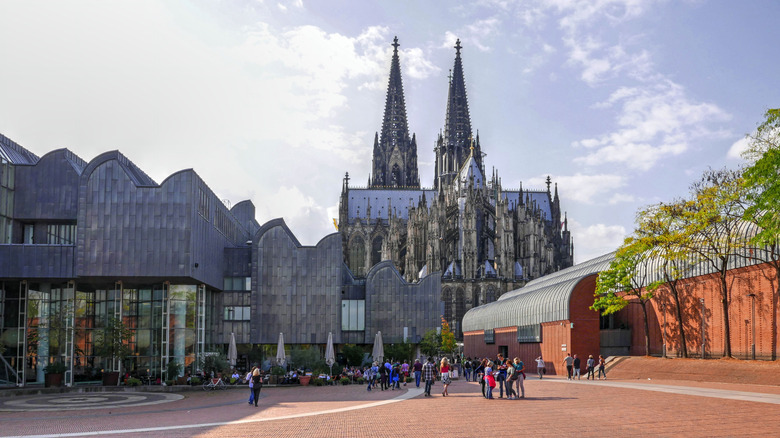
Cologne is an art-lover's dream with amazing public collections. The Wallraf–Richartz Museum is Cologne's first major museum, which was formed in the mid-1800s after the city inherited an expansive private estate of paintings, altarpieces, coins, and other valuable collectibles. Today, it houses a fantastic trove of art history, with a special emphasis on medieval painting. One of its key masterpieces is a 15th-century work by Stefan Lochner titled "The Madonna of the Rose Bower." You'll also see wonderful works by the likes of Rembrandt, da Vinci, Rodin, and many more.
For the modernists, make sure Museum Ludwig is on your itinerary. Right next to Cologne Cathedral, this collection is a veritable treasure trove of Pop Art, German Expressionism, and photography, including a large collection of works by Pablo Picasso and a dynamic program of rotating exhibitions featuring art historical titans and emerging contemporary artists alike. The permanent collection is home to remarkable pieces by international artists like Mark Rothko, Jackson Pollock, Andy Warhol, Robert Rauschenberg, and many, many more.
Another unique art museum in Cologne is Kolumba, a stunningly contemporary take on religious art. The institution, connected to the Archdiocese of Cologne, highlights religious art from antiquity to today — including an extensive archive of medieval illuminated manuscripts — with a guiding mission of collecting works that exemplify artistic proportion and beauty.
Get wild at Cologne Zoological Gardens
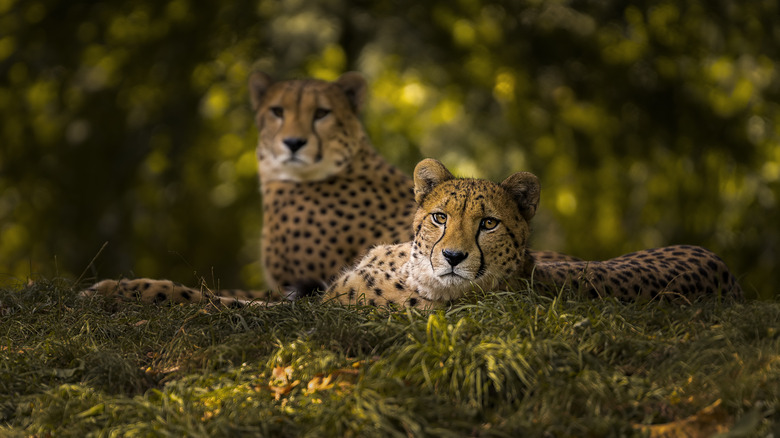
One of the largest zoos in Germany is the Kölner Zoo, or Cologne Zoological Garden, a vast sanctuary for more than 10,000 animals. Committed to wildlife conservation and education, the zoo is involved in well over a dozen initiatives worldwide that strive to preserve biodiversity. Organized by continent, you can see Asian elephants wandering around an area of almost five acres; take in hippos, snakes, and crocodiles in the African area; and walk along an elevated path in the Arnulf and Elizabeth Reichert House, which highlights native South and Central American creatures like sloths, ocelots, and toucans.
Kölner Zoo features occasional special exhibits like Dinoworld — on view through autumn 2026 — and still has a few remaining hints of its mid-19th-century architecture, holdovers from when it first opened in 1860. It's open every day of the year, with only slightly abbreviated hours during the winter (November through February). Adult admission is €23, and kids get in for €11. The website posts feeding times for different animals throughout the day, so you can plan your visit to different enclosures to see animals delight in getting treats. And between mid-December and early February, check out the China Light Festival, which transforms the park into an immersive, illuminated wonderland.
Delve into history at the Romano-Germanic Museum
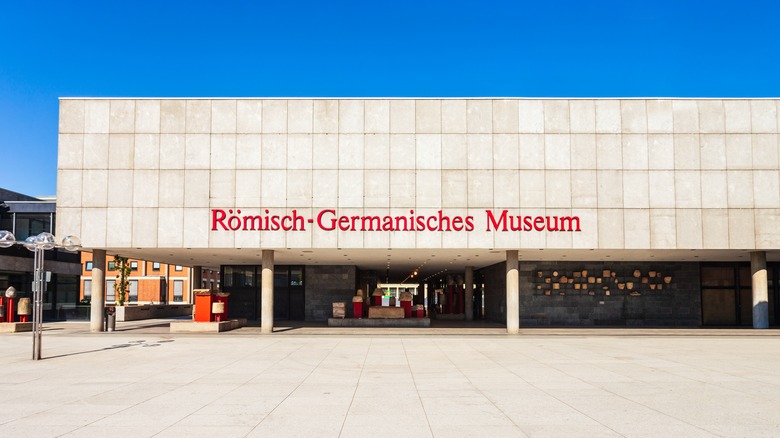
Back in 39 B.C.E., Cologne was known as Colonia Claudia Ara Agrippinensium, founded as a strategic point on the Rhine River. The settlement, on land that had been home to Germanic tribes, was brought under the control of the Romans as part of what they called Germania Inferior, with Cologne's earliest iteration as its capital. Today, you can still find remnants of the Roman occupation hidden around the city, like the Roman City Wall, a phenomenal chamber grave in Cologne-Weiden, and the Ubier Monument. The latter is open monthly on every first Thursday for a three-hour period from 2 to 5 p.m., with free admission.
Archaeology enthusiasts will want to make sure there's time for a visit to Cologne's Romano-Germanic Museum to see artifacts of the city's ancient past. The institution itself is situated on the former site of an ancient villa, and its collection highlights artifacts from the Rhineland that span 100 millennia of human presence in the region. From time immemorial to the Middle Ages, artwork and historical objects illustrate the richly layered cultural heritage of the city and its surrounding area. It's worth noting that the Romano-Germanic Museum is undergoing major renovation work, and its usual location in Roncalliplatz is closed for an extended period. Meanwhile, you can visit the temporary home of the collection in The Belgian House on Cäcilienstraße, about a 15-minute walk southwest of Roncalliplatz. Building progress updates are regularly added to the museum's website.
Go green at the Flora and Botanical Garden
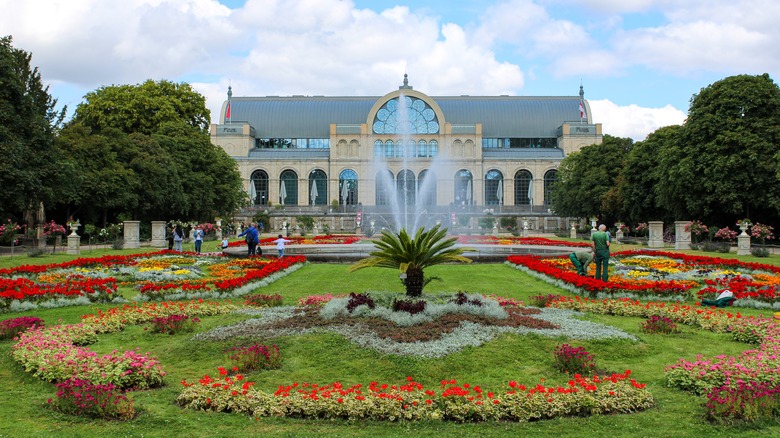
Perhaps you're wondering why you should visit a botanical garden on your next vacation? Get a taste of the 19th-century flair for gardens and grand architecture at Cologne's Flora and Botanical Garden, a relaxing park where you can experience formal plantings and visit the beautiful orangery, or "glass palace," which took inspiration from famous examples in England and France. Historic gardens are complemented by later additions and expansions, like water features and additional greenhouses, to build up a showcase of around 12,000 plants from all over the world.
One of the highlights of the park is the Flora, a sprawling greenhouse and events space that boasts a well-known camellia collection and is also a great place to grab a bite to eat. The entire garden is sometimes also referred to simply as the Flora, a combination of an original 1864 design by landscape architect Peter-Joseph Lenné and a teaching garden established in 1914. For more than 100 years, the two have been combined into a park that spans more than 28 acres altogether. And the best part is that admission is free.
Spend a day in Brühl and its palaces
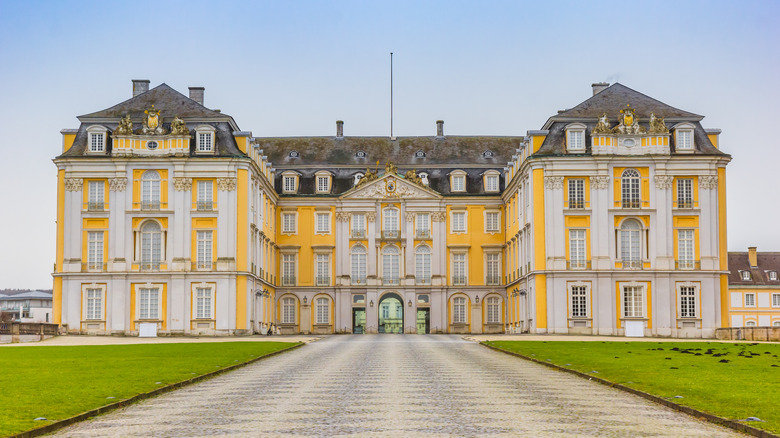
If you have time for a little day trip from Cologne, don't miss a chance to head to Brühl, where you'll find one of Europe's top amusement parks with record-breaking rides. The city is also home to the incredible Rococo confections that make up Schlösser Brühl, or the Brühl Palaces. At only a half-hour drive south of Cologne's city center, Brühl is an easy jaunt from the big city for a taste of royal history and relaxing strolls around the grounds.
The heritage area consists of the grand Augustusburg Palace, built in the mid-1700s with about as much panache as possible. And only a 1.5-mile walk down the road, a hunting lodge known as Falkenlust is another Rococo treasure on a much smaller scale, which was used for leisurely sporting events and large dinners. During the warmer months, the formal gardens erupt with colorful blooms. Visits to the main attraction, Augustusburg Palace, require joining a guided tour. These last 60 to 90 minutes, depending on which you choose — the longer option includes a bonus visit to an area called the Yellow Apartment in addition to the central staircase, the Large New Apartment, and the Summer Apartment. Falkenlust Palace can be visited on your own.
Visit St. Gereon's Basilica
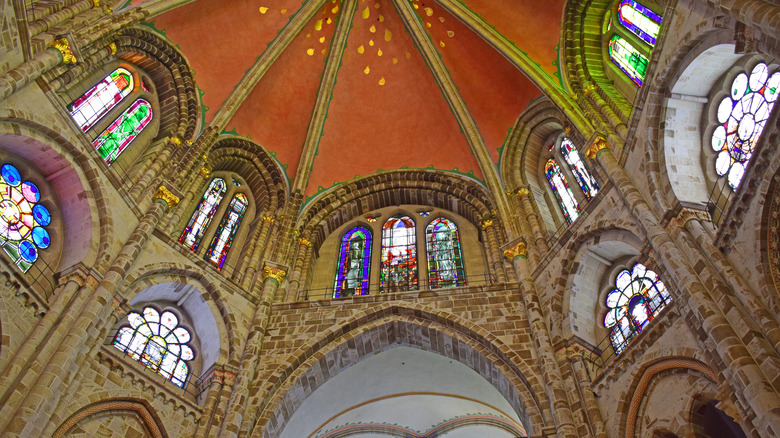
If you're looking for some of the most breathtaking hidden gem churches across Europe, you're in for a treat in Cologne. Famous for its gigantic dome, a ten-sided polygonal structure that spans nearly 69 feet wide and 113 feet at its highest, St. Gereon's Basilica earns its place as one of the most impressive of the 12 famous Romanesque churches of Cologne. It got its start in the fourth century C.E., when construction began over a former Roman burial site, but most of what we see today dates back to the 11th century and after. North of the entrance is a unique, ancient relic known as the Blutsaüle, or Blood Column, on which the blood of the martyred St. Gereon — a Roman soldier and one of the patron saints of Cologne — is said to have splattered. Visit numerous small chapels, gaze up at the glowing red interior of the dome, see a well-preserved Romanesque mosaic floor, and take in historic murals.
Get a taste of the Chocolate Museum
You may have heard of German chocolate cake, but did you know it's not even German? It was an American innovation named for the 19th-century maker of a sweet chocolate used for baking. So what makes chocolate German? The answer may lie in its international ties. Perhaps Ritter Sport bars come to mind, or Milka, which is technically Swiss but produced in Germany. Then there's Kinder, which was developed by Italian brand Ferrero for a broad European market, its name meaning "children" in German.
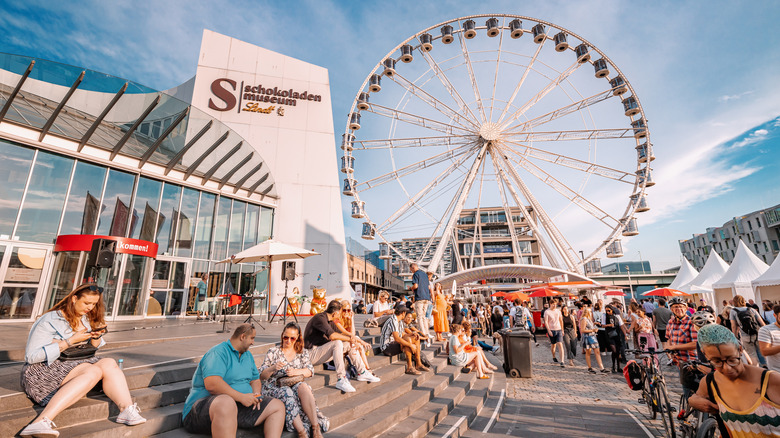
On a visit to Cologne's Old Town, you're in luck with numerous amazing international chocolatiers like Chocolaterie Jan von Werthand Cortez Schokoladen, plus other specialty European imports like Neuhaus and Läderach. But on top of those shops, you have the opportunity to dive into an entire museum called the Chocolate Museum (Schokoladenmuseum Köln) to not only taste the confection but also learn how it's made and even make some yourself! There's something for everyone here, no matter how you prefer to experience a visit: tastings, classes, guided tours, or choosing from a huge selection of desserts in the Chocolat Grand Café.
The museum is an immersive experience that takes visitors through five millennia of chocolate history around the globe. Delve into the making of chocolate from start to finish, including viewing all of the equipment in the chocolate factory. You can also watch master chocolatiers making hollow figures — think Easter bunnies and similarly cute treats. Stop into the shop to take handmade delicacies home with you... or maybe just for an extra treat when you return to your hotel room later on.
Take in views from the KölnTriangle
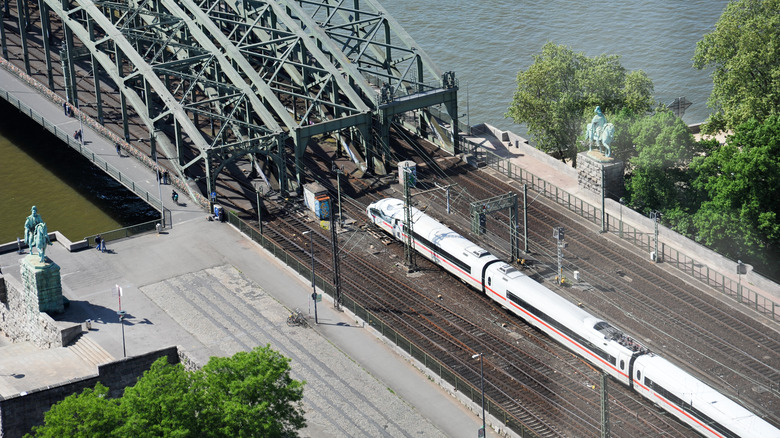
With a skyline dotted with church towers, historic gabled roofs, bridges, and more, Cologne is worth seeing from on high. Head to the KölnTriangle for panoramic views of the city and into the countryside beyond. The modern, glass-fronted skyscraper is a counterpoint to much of the city's older architecture. From here, you can take in Cologne Cathedral's distinctive towers, the triple-arched Hohenzollern Bridge, the Rhine, and even Düsseldorf in the distance — if the day is clear enough.
"Splendid vantage point particularly for rail enthusiasts who are able to study the locomotive movement from an unrivalled position," observed one visitor in a Tripadvisor review. The observation deck is on the building's rooftop, or the 29th floor, giving you a spectacular view from 338 feet off the ground. Admission to KölnTriangle is €5 for adults and free for children 12 years old and under.
Scent the scene at House of Farina
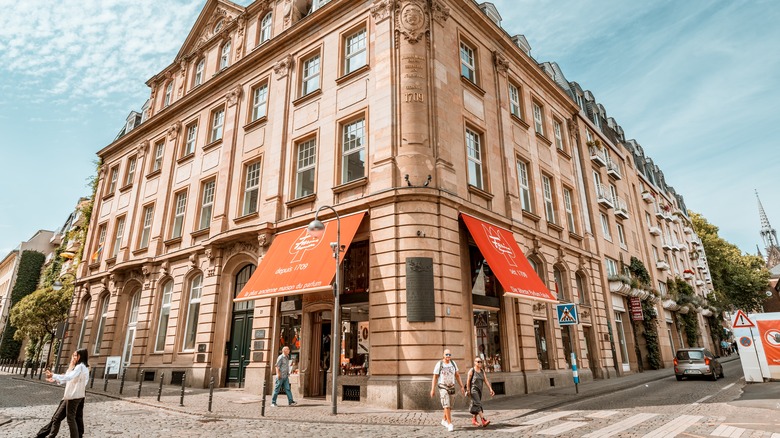
You'll have certainly heard of Eau de Cologne, but what is it exactly? How does it differ from other fragrances? For one, it has a relatively low concentration of scented oils and essences like citrus and florals, which are mixed with alcohol and water. It's light, refreshing, and it just so happens to have been invented in — you guessed it — Cologne. ("Cologne" without the "eau de" is often used to describe a wide range of masculine fragrances, but Eau de Cologne is its own specific variety.) The first-ever concoction was the work of Giovanni (Johann) Maria Farina, an Italian perfumer who was inspired by his memories of home and created a brand new type of fragrance in 1709. His recipe was a hit with the rich and famous around Europe, and it came with a hefty price tag. Today, the House of Farina factory and museum, located in the Altstadt, is a trip through the history of a perfume that spans more than three centuries.
A visit to the museum invites you to experience over 300 years of Eau de Cologne history, including historic archives, furniture, family photos, and more. There are a couple of different ways to experience a tour, too, including a standard guided experience offered on weekdays that lasts about 45 minutes. There's also a special weekend tour (plus Thursday afternoons) that takes you on a journey through history, complete with a docent dressed as an 18th-century Farina perfumer. As a bonus, tours include a little scented gift. It's recommended to book in advance, especially on weekends.
Methodology
To round up 12 top tourist destinations in Cologne that are a must for your itinerary, we relied on information from tourism websites like Germany.travel and Cologne-Tourism.com. We researched the majority of specific facts and visitor information from official websites for destinations like Koelner-Dom.de, KoelnerZoo.de, Museum-Ludwig.de, Farina.org, Schokoladenmuseum.de, and others, plus further heritage data and context from UNESCO, RickSteves.com, and Sacred-Destinations.com. We also relied on ratings and reviews from visitors who shared their experiences on Get Your Guide, Quora, Reddit, Tripadvisor, Yelp, and Google.