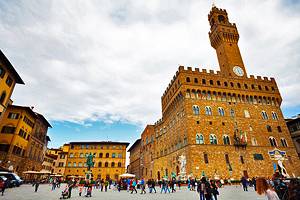
Must-See Tourist Attractions in Tuscany
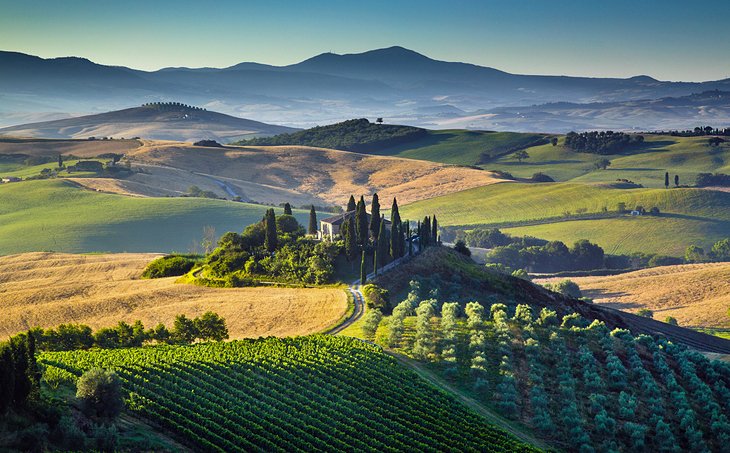
Unquestionably the best known region of Italy among foreign travelers, Tuscany conjures up romantic images of idyllic hill towns bristling with medieval towers, flowing green landscapes of low hills, and fields of sunflowers. It's a tough reputation to live up to, but Tuscany does it with ease.
This landscape is studded with some of Italy's best-loved cities and attractions: Florence, the Leaning Tower of Pisa, Siena, and lovely little Lucca. Add the island of Elba and a clutch of hill towns, each with its own distinct character and history, and consider that this was the cradle of one of the greatest artistic and philosophical revolutions in Europe's history - the Renaissance.
It's no wonder everyone wants to visit Tuscany. Entire books have been written cataloging its many tourist attractions, villages to visit, and things to do in the Tuscan countryside, but here, you'll find the cream - those top places you won't want to miss.
Piazza del Duomo and Renaissance Florence
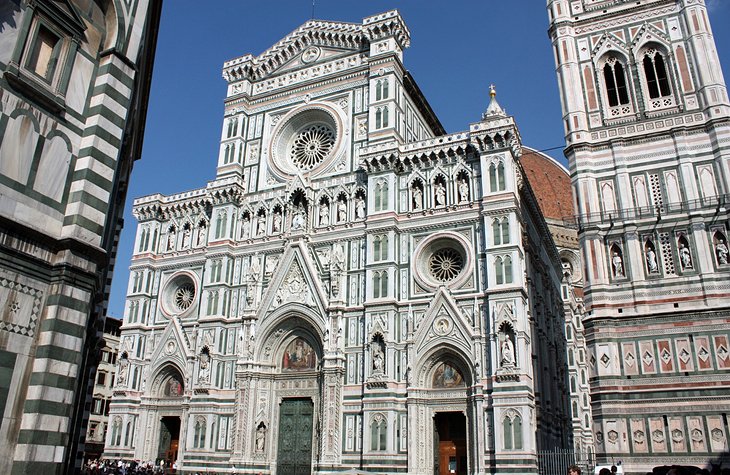
No place on Earth can you take deeper into the heart and soul of the Renaissance than Florence, where it all began. This city - its humanist thinkers, painters, sculptors, craftsmen, architects, and the aristocracy whose patronage supported and nurtured the artistic genius and gave it the freedom to create - pulled Italy and subsequently Europe out of the Dark Ages and into the Age of Enlightenment.
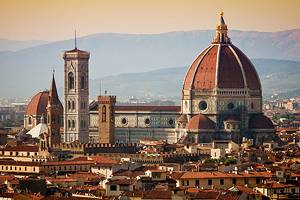
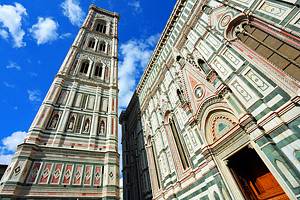
Everywhere you look, you'll find the very best examples of this exciting rebirth, but the highest single concentration is in and around Piazza del Duomo. Dominating the skyline is Brunelleschi's great dome. Rising beside it is Giotto's marble-faced tower. Below is the baptistery with Ghiberti's masterpieces, the incomparable bronze doors of the Gates of Paradise.
Inside each of these are more treasures, and those that no longer fit or have been removed to protect them from the weather are displayed in the adjacent Museo del Duomo, where you'll find works by Michelangelo, Donatello, and the other great names in Renaissance art.
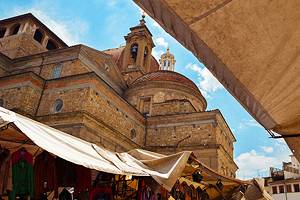
If this isn't enough, walk a few steps to the church of San Lorenzo and Michelangelo's Medici Tombs. San Lorenzo is only one of many churches in Florence that are filled with the works of Renaissance masters. Santa Croce houses the incomparable crucifix by Cimabue, and Santa Maria Novella has works by Giotto, Ghiberti, and Brunelleschi.
- Read More: Tourist Attractions in Florence
Uffizi Gallery, Florence
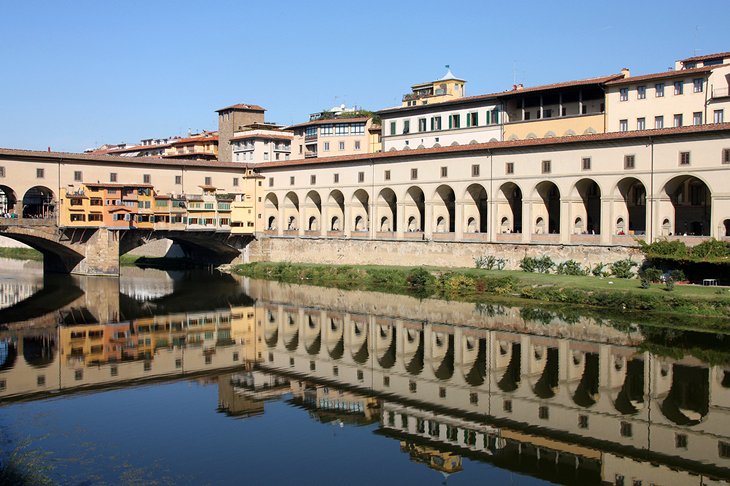
Nowhere in the world is there a finer assemblage of Italian Renaissance paintings than in the Uffizi, a former Medici palace between Piazza della Signoria and the Ponte Vecchio. Not only is the size and scope of the collection almost overwhelming, but it also gives a comprehensive picture of how Renaissance Florence sparked a revolution in Western art.
You'll see works by all the great artists of 14th- to 16th-century Florence, as well as prior works that illustrate the evolution in styles and subjects. Best known among the works here is Botticelli's Birth of Venus, but you'll see others that are familiar. It also now houses a collection of self-portraits by famous artists that include Leonardo da Vinci, Michelangelo, Raphael, and Rembrandt.
In the first set of galleries, works are hung chronologically, so you can see the changes in order. For example, Cimabue's rather static Madonna Enthroned is compared with a later painting of the same subject by Giotto, showing a more realistic style of the Renaissance painters. There's a lot more here than Renaissance paintings, and an art lover could spend a full day here admiring them all.
Pisa's Leaning Tower and Campo dei Miracoli
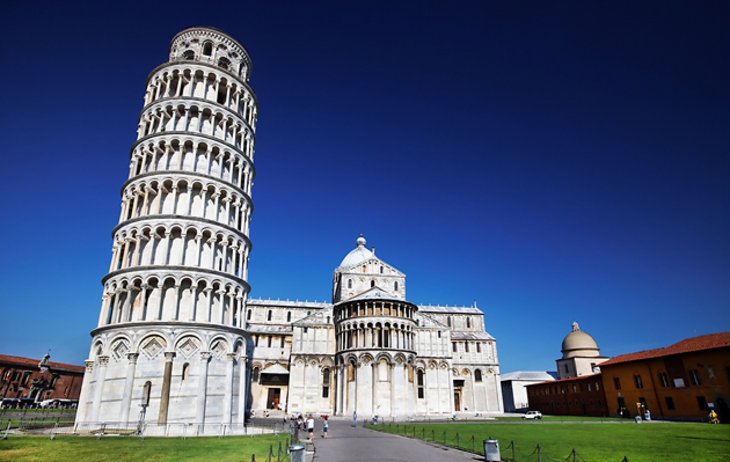
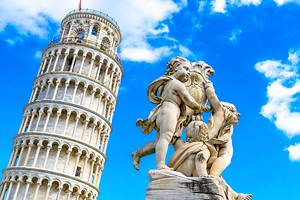
An icon of Italy, the famed Torre Pendente - Leaning Tower - stands askew beside the duomo (cathedral) and baptistery in an open space known as the Campo dei Miracoli, the field of miracles. The buildings are indeed a miraculous combination of artistic talents, and the delicate marble arcades of Pisa's 12th-century bell tower would have made it one of Italy's great landmarks even if it stood perfectly straight.
But it doesn't, and few tourists can resist the somewhat unnerving thrill of climbing the 294 steps to its tilting top. In combination with the campanile comprising a UNESCO World Heritage site, are the Cathedral of Santa Maria Assunta, the definitive example of the Pisan architectural style, with its splendid façade, bronze doors, and pulpit by Giovanni Pisano. Another marble pulpit, a 1260 masterpiece by Nicola Pisano in the adjacent baptistery, is one of the great masterpieces of Romanesque sculpture.
The Campo Santo is thought to be filled with shiploads of earth from Golgotha, brought back by Crusaders so that Pisans could be buried in sacred soil. Completing this remarkable complex and holding some of its most exquisite treasures is the Museo dell'Opera del Duomo. Along with priceless silver masterpieces, stunning embroideries, tombs, sculpture, and paintings, the museum offers by far the best close-up view of the Leaning Tower.
- Read More: Tourist Attractions in Pisa
Ponte Vecchio, Florence
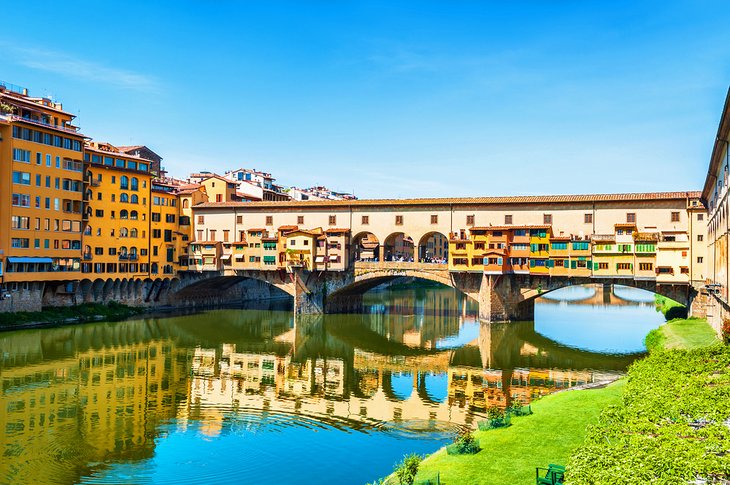
No other image says "Florence," or even "Italy," more clearly than the familiar arches of the Ponte Vecchio reflected in the waters of the Arno. Almost no one leaves Florence without at least one photo of it.
Traditionally the home of the city's goldsmith shops, it is still lined with upscale jewelry shops. But above the shoppers' heads is a historic upper story, a passageway commissioned by the Medici to take them between their offices in the Uffizi and their home at Pitti Palace across the river. Designed by architect Giorgio Vasari, who also designed the tomb of Michelangelo in the Basilica of Santa Croce, it is known as the Vasari Corridor.
The corridor is a one-way historical path with ancient sculptures, Roman inscriptions, and panoramic windows offering unique views of the Arno and Florence. The route connects the Uffizi to the Boboli Gardens and Pitti Palace.
Cathedral of Santa Maria Assunta in Siena
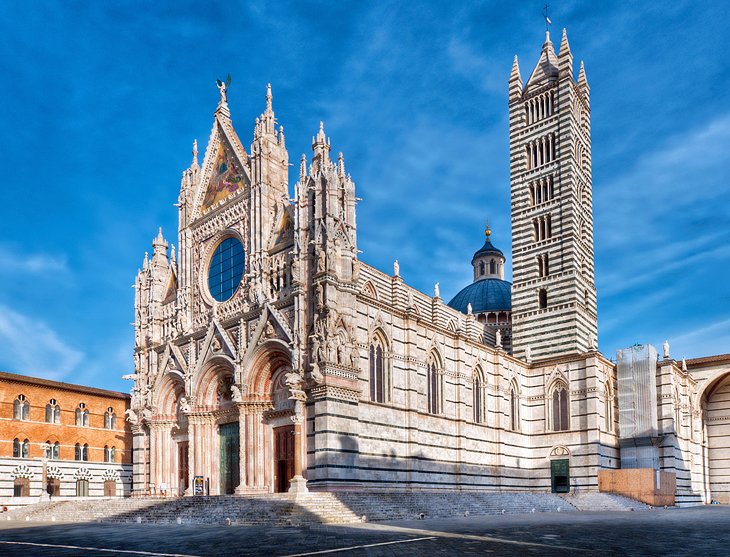
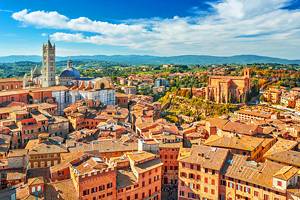
Among Italy's finest churches, Sienna's magnificent cathedral is a work of art inside and out. The stunning façade created by Giovanni Pisano is faced in patterns of white, green, and red marble, decorated with sculptures, Venetian mosaics above the doorways, and a beautiful rose window. It is one of the finest works of Italian Gothic.
The alternating bands of black and white marble are carried into the interior, surmounted by a ceiling of gold stars on a blue field. The floor is paved in marble mosaic panels of biblical scenes.
Highlights of this art-packed interior are the exquisitely carved marble pulpit by Nicola Pisano, the Cappella Chigi (Chigi Chapel) designed by the great Baroque architect Giovanni Lorenzo Bernini containing two of his statues, and the Cappella San Giovanni Battista (Chapel of St. John the Baptist) in the left transept containing a statue by Donatello and frescoes by Pinturicchio.
More colorful Pinturicchio frescoes are in the Piccolómini Library, off the left aisle, where sumptuously illuminated 15th-century musical manuscripts are displayed. You'll find more treasures in the presbytery, the sacristy, the crypt, and the vaulted baptistery.
Not far from the Duomo is Siena's Piazza del Campo, a spacious, scallop-shaped square considered one of Italy's most beautiful and the scene of the famous horse race, the Palio.
Lucca's Walls and Centro Storico (Historic Center)
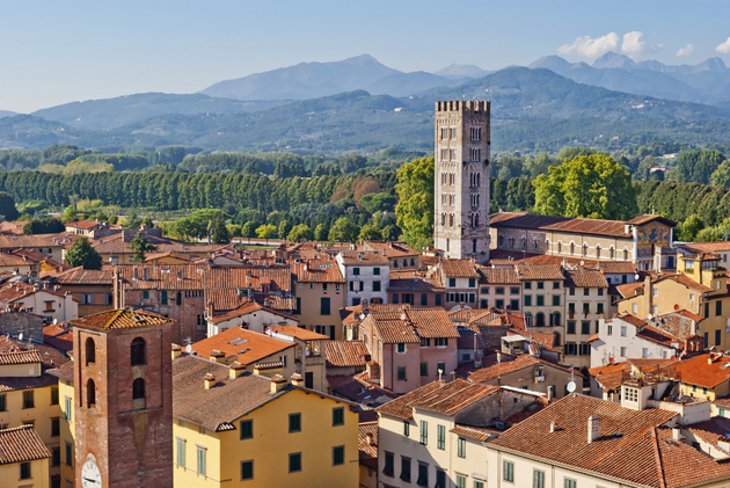
Lucca is a beautiful city that holds a significant place in the history of architecture from as far back as the Lombard period. Its early medieval churches, partly constructed from Roman and earlier stones, were updated later in the Middle Ages, leaving some of Tuscany's most beautiful examples of Romanesque architecture.
The portico of the cathedral was decorated in the mid-13th century with fine sculpture, including works of Nicola Pisano, and San Michele in Foro preserves its Romanesque character highlighted by outstanding examples of works by Andrea della Robbia and Filippo Lippi.
One of the most appealing attractions of Lucca is that along with the must-see sights - the churches, art, and museums - Lucca is filled with enjoyable experiences: climbing to the tree-shaded top of the Guinigi Tower, strolling or cycling along the wide tree-lined walls that encircle the city, and browsing in market stalls inside an enclosed oval piazza that was once a Roman amphitheater.
These are the memories you will cherish from this likable and friendly little Tuscan city.
The Towers of San Gimignano
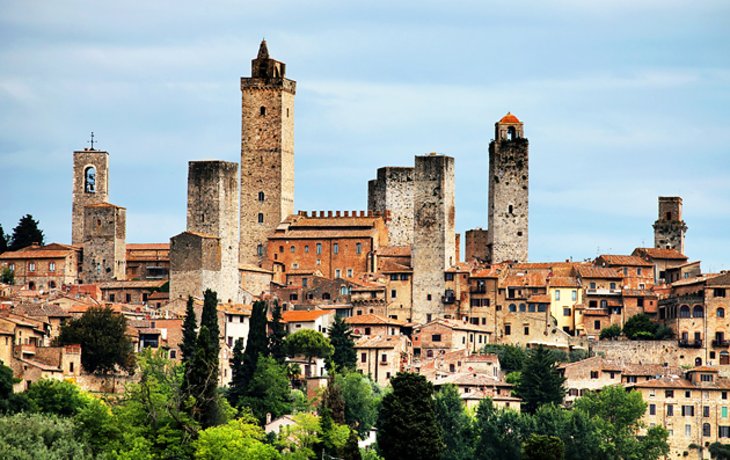
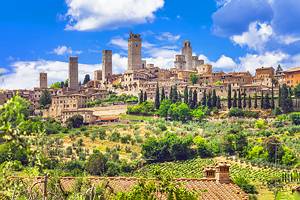
To see what Tuscany looked like in the Middle Ages, choose the almost pristine medieval town of San Gimignano. It was a stop on the Via Francigena, the main route to Rome for pilgrims and tradespeople, and when that route declined in the late Middle Ages, new building stopped, and this hilltop town was left to itself.
When UNESCO began promoting its restoration, it still retained 13 of its original 70 towers, giving San Gimignano its unmistakable skyline. Even though building stopped before the Renaissance, artists from this period came to decorate the interiors of San Gimignano's churches, so you'll discover works by Domenico Ghirlandaio, Benozzo Gozzoli, and Benedetto da Maiano.
But mostly, you'll enjoy strolling its narrow, winding streets and walking its largely intact 13th-century walls to admire the towers that were as much status symbols for the rival families that built them as they were fortified homes.
Delve further into the Middle Ages at the 14th-century Herb Pharmacy and Herbarium, and at the little Romanesque Church of San Iácopo, built by the Knights Templars on their return from the First Crusade.
Piazzale Michelangiolo and San Miniato in Florence
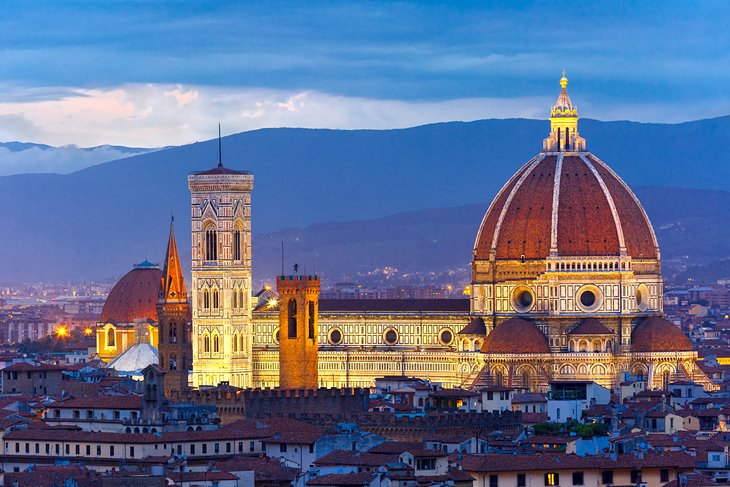
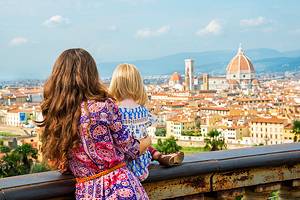
The iconic view of Florence, Brunelleschi's magnificent dome towering over its historic center, is from an overlook across the Arno, in Piazzale Michelangiolo (most often misspelled as Michelangelo). In the center of the terrace stands Michelangelo's statue of David. You can climb there from the Boboli Gardens or take a bus from the center.
The terrace is crowded with tour buses and people during the day, but at sunset and as evening falls, it is magic, with the great dome and Giotto's tower bathed in floodlights.
Go in the daytime, however, to see inside the lovely church of San Miniato, a little higher up behind the piazzale. Behind its striking striped façade of green and white marble is a Tuscan Romanesque interior of mosaics, inlaid marble floors, painted wood, frescoes, and glazed terra cotta. The highlight, however, is in the Sacristy, where the walls are covered in 14th-century painted wood panels.
Address: Via delle Porte Sante, 34, Florence
Val d'Orcia and Pienza
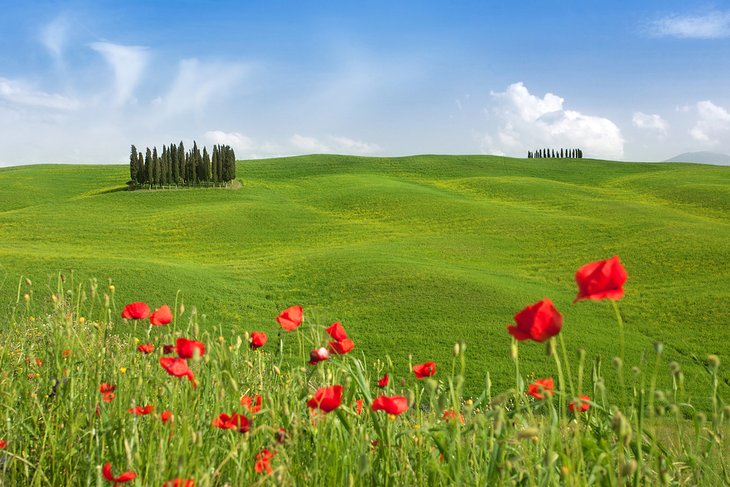
South of Siena, the beautiful Val d'Orcia is an idyllic landscape of gently rolling hills and farmlands clad in olive groves and fields of grain, punctuated by tall cypresses that seem to have been placed specifically to enhance the vistas.
The valley is perfect for driving tours, with stops for picnics on local products, and time to explore the Tuscan hill towns. Primary among these is the UNESCO World Heritage town of Pienza, birthplace and summer home of Enea Silvio Piccolomini, who later became Pope Pius II.
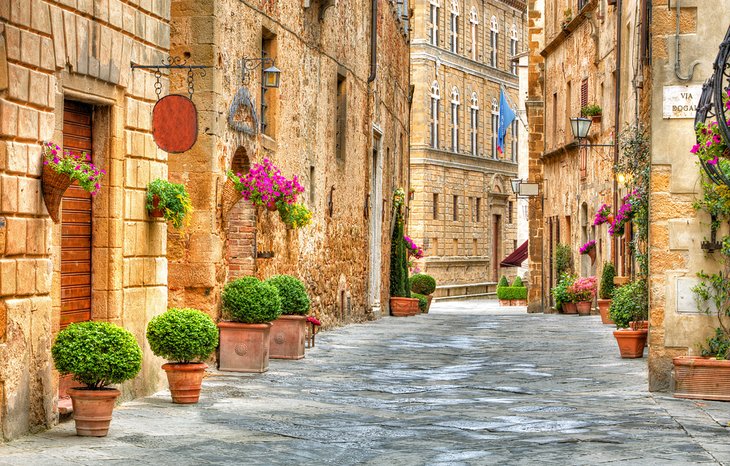
The Piccolomini Palace, completed in 1459, embodies the ideals of Renaissance architecture and is shown as it was left by his descendants in the 1960s, complete with original furnishings. Even it you don't stop long enough to tour the palace, take time to admire the views in all directions from this hilltop town
Other hill towns worth a stop in the Val d'Orcia are Montalcino and Castiglione d'Orcia, both with hilltop fortresses.
Etruscan and Roman Volterra
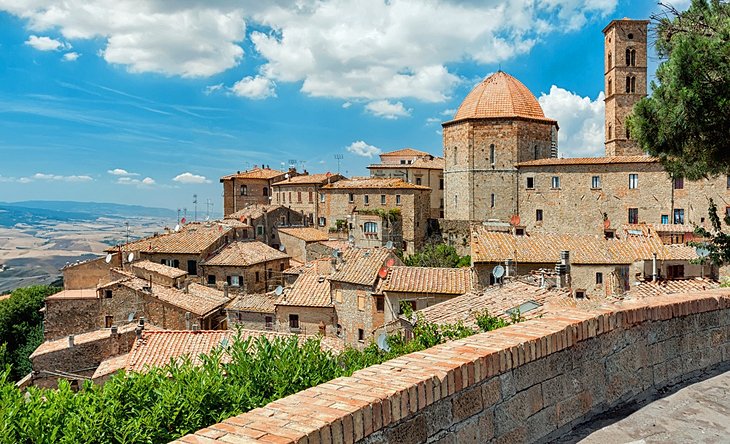
While you might think that when you've seen one Tuscan hill town, you've seen them all, they are in reality very different, each with its own character and specialties. Volterra's are its rich Etruscan and Roman legacies, along with some Medieval highlights.
Already an important center for alabaster quarrying and artistry in Etruscan times, Volterra was among the twelve cities of the Etruscan League and was trading throughout the peninsula long before it became a Roman city.
The entire area is dotted by archaeological sites, and the finds from excavations enrich the outstanding collections in the Etruscan Museum, which is equally strong in prehistoric and Roman eras. But nothing beats seeing these sites themselves, which you can do easily at the Etruscan Arch and walls.
At the Parco Archeologico, you'll find remains of an ancient acropolis with two temple foundations from the second century BC and other remains showing layers of Etruscan, Roman, and medieval buildings.
At the large Vallebuona archaeological area is a first-century Roman theater with seating, the orchestra pit, and parts of the stage intact, along with later thermal baths.
Jump to medieval times in its historic center, where you'll find several medieval tower houses from the 12th and 13th centuries. Unique among the hill towns are the working museum of alabaster and Palazzo Viti, filled with priceless collections of alabaster art.
- Read More: Tourist Attractions in Volterra
Accademia Gallery
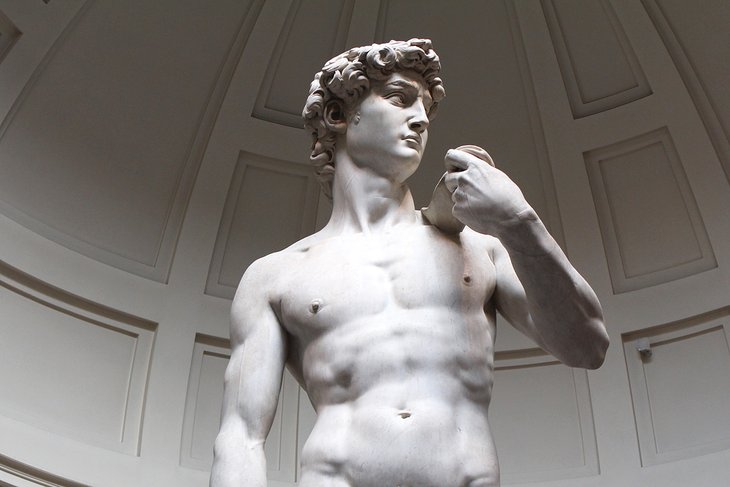
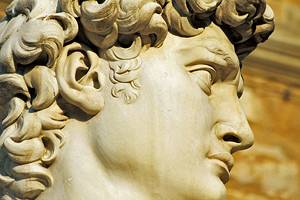
After a visit to the Uffizi Gallery, you may feel as though you'd seen enough Renaissance art. But that would be to miss some of Michelangelo's most iconic works, most notably, David. Yes, you may have already seen the copies in the Piazza della Signoria and on Piazzale Michelangelo, but nothing compares to the impact of the original marble statue, so lifelike that it seems to be about to step off the pedestal.
To appreciate Michelangelo's technique, look for his four unfinished sculptures of slaves, which, instead of appearing to be carved from the marble, seem to have been there all along, just now being released from it by the artist.
You will want to reserve a ticket in advance or book a skip-the-line tour.
Arezzo
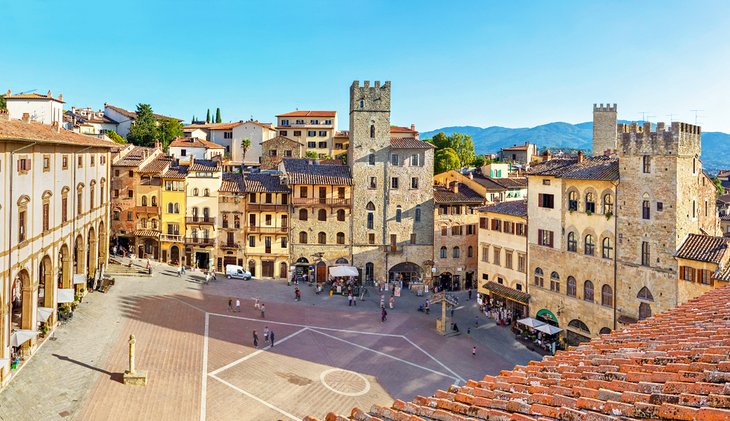
From Roman times through the Renaissance, the small hilltop town of Arezzo attracted artists and poets, and the works they left to enrich its churches and palaces form Arezzo's main tourist attractions today. The great architect and artist Vasari lived here, and you can tour his small palazzo, Casa del Vasari, to compare his almost flamboyant domestic frescoes with his work for churches and public buildings in Florence and elsewhere.
In Arezzo, you'll discover his graceful colonnade of Palazzo delle Logge, along with a magnificent 13th-century Crucifix by Cimabue in San Domenico and windows by the French master of stained-glass, Fra Guillaume de Marcillat, in the duomo.
Works of others - Andrea della Robbia, Piero della Francesca, and Nicola Pisano - enhance its churches. The Parish Church, Pieve di Santa Maria, is eastern Tuscany's finest example of Pisan Romanesque architecture. Arezzo is a good place to visit to see the works of several masters in a small town and a traveler-friendly setting.
Piazza del Campo, Siena
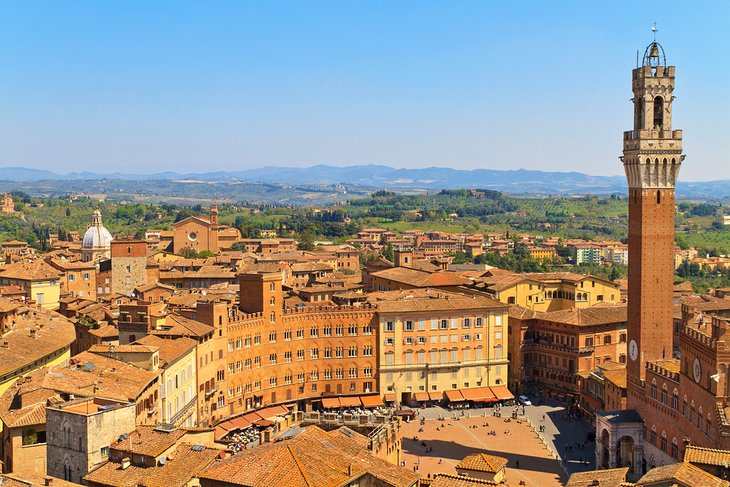
To the people of Siena, Piazza del Campo is their shared front lawn. On bright spring days, people may be stretched out on its sloping pavement to catch some sun; at almost any time of year, the cafés under the curved porticoes of the surrounding palaces will be busy.
It is not only one of the largest, but one of the most harmonious of all Italy's public squares, bounded on one side by the elegant Palazzo Púbblico (Town Hall) and its tall, slender tower. At the upper end, the Palazzo Sansedoni, completed in the early 1300s, is beside the beautifully carved fountain, the Fonte Gaia.
The placid Piazza del Campo takes on an entirely different persona for the two days each summer when it is the venue for the Palio. This madcap horse race fills the piazza to overflowing with excited spectators, as the 10 horses and their bareback riders race around its perimeter.
Elba
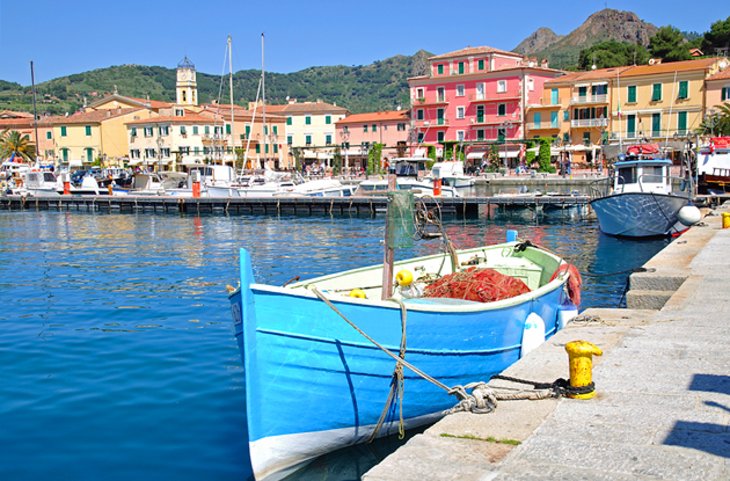
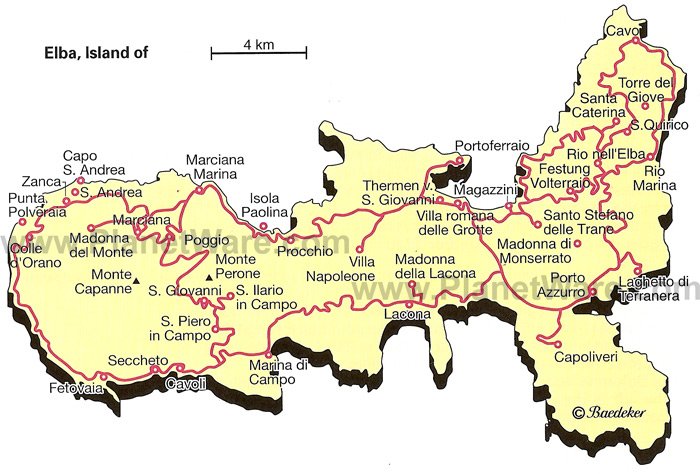
The largest of the islands off Tuscany, Elba is a 10-kilometer ferry trip from the mainland port of Piombino. Its mild climate, scenic beauty, historical attractions, and excellent scuba diving off its cliff-lined coast have made it increasingly popular with tourists.
Its past reflects that of many other Mediterranean islands, with periods of control by Pisa; Genoa; Lucca; Spain; and, after his defeat in 1814, by Napoleon, who was granted full sovereign rights over the island. Reminders of him are everywhere: Piazza Napoleone, Via Napoleone, his official residence of Villa dei Molini in the main town of Portoferraio, and his summer retreat of Villa Napoleone on the slopes of the wooded Monte San Martino.
Seaside resorts of Procchio and Marciana Marina are west of Portoferraio, and inland is the fort of Poggio and the village of Marciana, with a ruined castle. You can ride a cable car to the top of the island's highest peak, Monte Capanne, for views or walk up Monte Perone from Poggio in about an hour. Porto Azzurro is a picturesque little fishing port that was fortified by the Spaniards in the 17th century.
Montepulciano
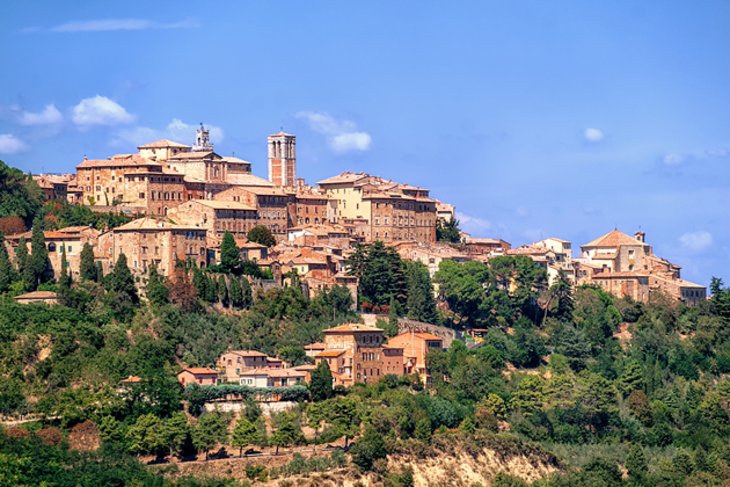
Important noble families in this hilltop town kept their power and fortunes longer than those in other Tuscan cities, attracting top Renaissance artists from Florence and Siena, so it is filled with fine buildings from that period. Some of the best palazzi surround the main square, Piazza Grande, but almost anywhere you wander in this picturesque village, you'll find photo-worthy architecture.
The beautifully proportioned church of San Biagio, built of golden travertine, is considered one of the finest buildings of the Renaissance. Although this and other churches are filled with art treasures, it is the picture of the town itself, crowning its hilltop and tumbling down the slopes to the scenic valley below, that will linger in your mind as one of the most beautiful villages in Tuscany.
Medici Villas and Gardens
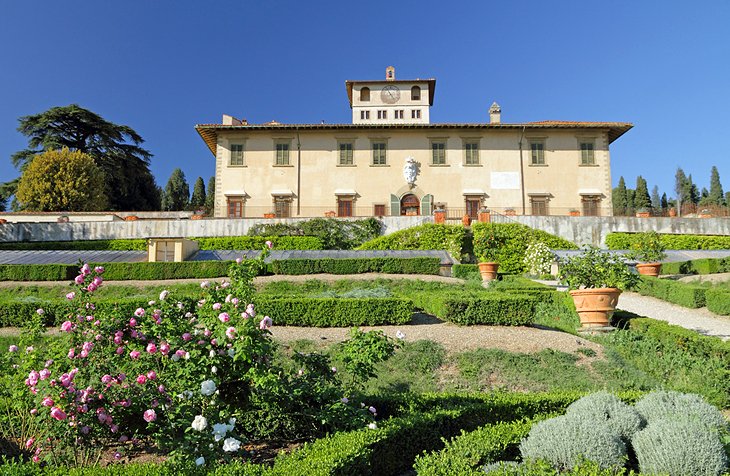
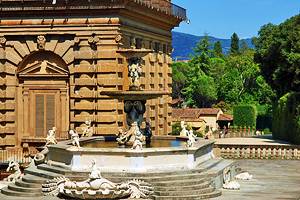
While the Medici dynasty centered its business and artistic patronage in Florence, in the summer, many of them decamped to the breezier hills surrounding the city. Here, they built villas surrounded by acres of carefully tended gardens and hunting parks, where they hired the same artists, sculptors, and architects to create fantasy worlds for their seasonal pleasure.
Considered the most splendid of these Medici summer residences is Villa di Poggio a Caiano, between Florence and Pistoia, but many others are well worth a day trip from Florence. Villa la Petraia, which became a summer residence for the Italian royal family, is set in particularly beautiful grounds with terraced gardens and views of Florence. The neighboring Villa di Castello has outstanding gardens filled with fountains, grottos, and statues.
Viareggio's Carnevale (Carnival)
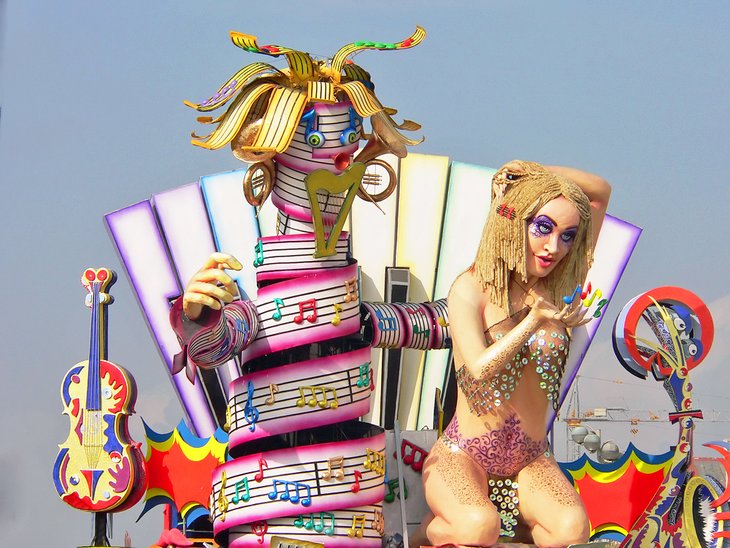
Although Italy's most famous - and crowded - carnival is in Venice, Viareggio's is every bit as fun-filled and crazy, and a lot less expensive to join in. Like Venice, the streets of this beach town north of Pisa are thronged night and day with costumed revelers. A round of social events, including masked balls at the hotels, continues throughout most of February.
The highlights are the gala parades of giant papier-mâché figures created from recycled newspapers, molded by hand, over clay models. The brightly painted giants depict mythological and allegorical figures, and often caricatures of well-known people, especially political leaders.
Carnevale di Viareggio dates back to 1873, when the first parade was held, and twice weekly, these figures move among the crowds that stroll La Passeggiata, Viareggio's seaside boardwalk. Some of these figures tower as high as 21 meters (70 feet) above the spectators, and the parade is accompanied by bands, local folklore groups, and other entertainers.
On summer evenings, La Passeggiata is almost as busy as beachgoers stroll the promenade that stretches between the wide sands and the row of Art Nouveau hotels.
Official site: https://viareggio.ilcarnevale.com/en
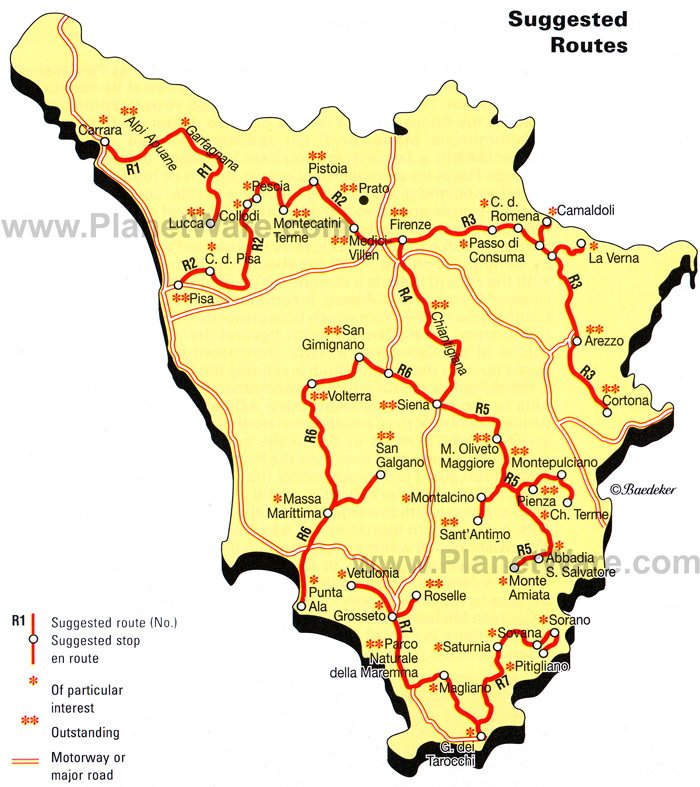
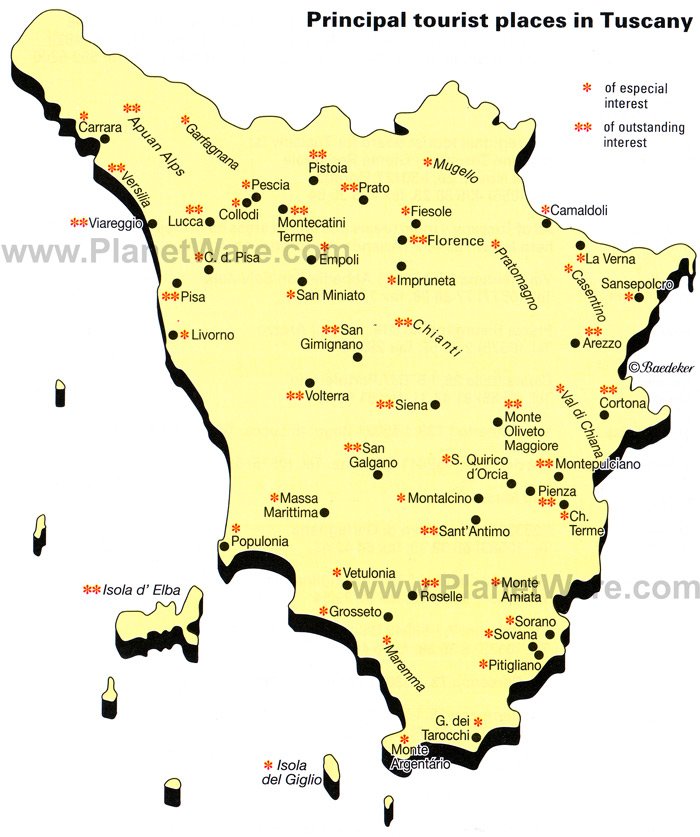
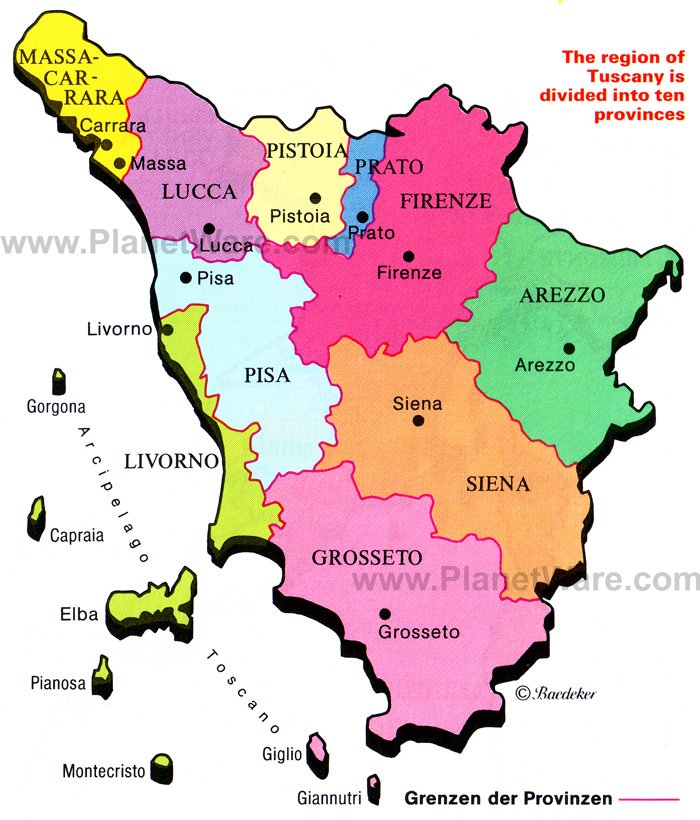
Map of Tourist Attractions in Tuscany