

Italy's Top 12 Attractions And Destinations For Tourists
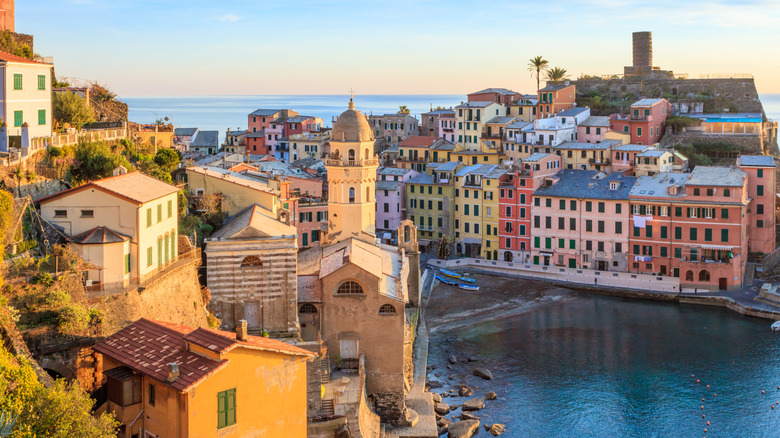
Of UNESCO's 1,248 designated world heritage sites as of 2025, Italy is home to a whopping 61 — the most of any country. Deeply historic city centers — and in some cases entire cities — are recognized alongside ancient monuments, churches, vineyards, coastal enclaves, petroglyphs, and more. It's a readymade bucket list. And because there are so many incredible places of both natural and cultural importance throughout Italy, the choices can easily become overwhelming. Thankfully, there's no wrong place to start.
Whether traversing an ancient stone road, taking in the sea breeze from an iconic coastal town, or gazing up at a High Renaissance masterpiece, one thing that pretty much every place on this list has in common is that they're made for exploring on foot. Rome might be a bustling, car-filled metropolis today, but to experience the Forum, Colosseum, or the Pantheon, you'll be glad you wore your comfiest sneakers. In some cases, you might even want to pack your hiking boots! Below you'll find 12 attractions and destinations across Italy that are simply not to be missed.
The Roman Forum and Colosseum, Rome
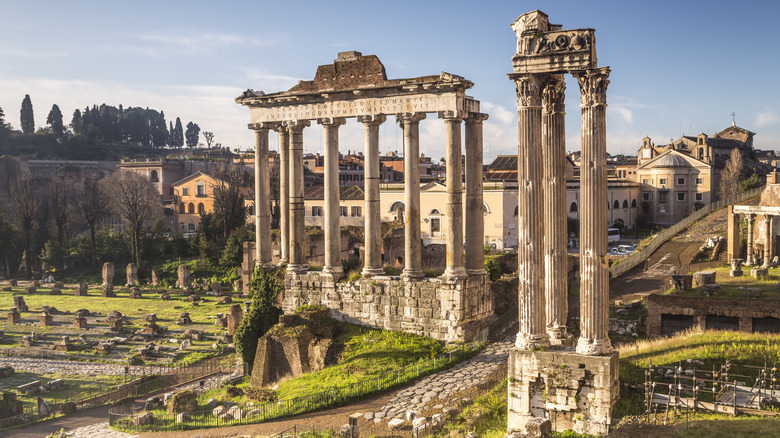
We might as well start by jumping right into the epicenter of ancient Roman civilization: the Forum. Situated between Piazza Venezia and the Colosseum, the Roman Forum was the heart of society more than 2,000 years ago. Explore remarkable ruins like the Temple of Antoninus and Faustina, or the 50-room House of the Vestals — which once housed the Vestal Virgins tasked with keeping the sacred flame of Rome alight. Rome is also home to countless stray cats, so you might even find one napping on the remains of the Temple of Caesar, or the foundations of Casa Romuli, the home of Rome's founder.
Combi tickets to the Colosseum Archaeological Park provide access to the Forum, the Colosseum, and Palatine Hill. The latter is the most central of Rome's renowned seven hills, rising 130 feet above the Forum, where it was home to numerous high status individuals and one of the first botanical gardens known to have been built in Europe. On the northwest end of the Forum, hike up another famous hill, the Capitoline, for exceptional views and the opportunity to see ancient treasures and High Renaissance masterpieces alike at the Capitoline Museums. Opposite the Capitoline, you won't miss the towering Colosseum, considered one of the New Seven Wonders of the World, and the largest ancient amphitheater ever built. The Colosseum Archaeological Park offers numerous ticket options to choose from depending on what parts of the building you'd like to visit. As of this writing, tickets range from around $21 to $28 per person.
Pompeii and Herculaneum
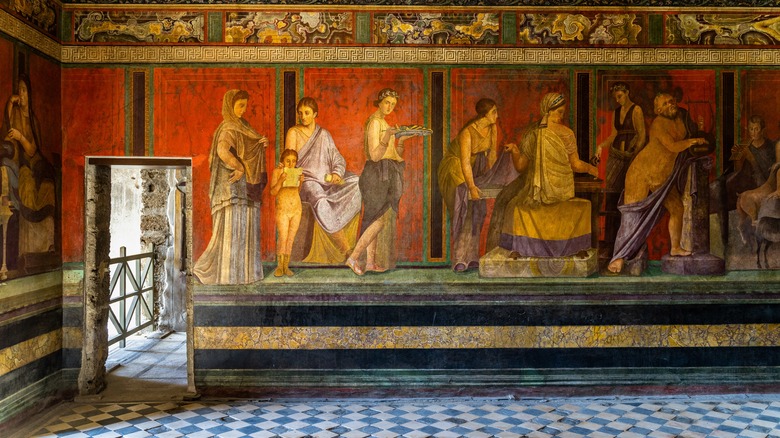
When Mount Vesuvius erupted in 79 A.D. , it rapidly buried the resort town of Pompeii, and nearby Herculaneum, in more than 9 feet of ash and pumice. No one saw it coming, and the town didn't evacuate. Thousands of people lost their lives as buildings caved in around them, and intensely hot gasses also proved deadly. It wasn't until the mid-1700s when excavations began at Pompeii — revealing an extraordinarily well-preserved Greco-Roman city beneath the ancient volcanic rubble. Today, excavations at the Archaeological Park of Pompeii continue to uncover fashionable villas filled with frescoes, elaborate gardens, and well-worn roads. Tickets include options to see suburban villas or just the central ancient city, with a three-day pass available that includes archaeological sites in the Pompeiian suburbs, like Boscoreale, Oplontis, and more.
Herculeaneum Archaeological Park is significantly smaller than Pompeii. That said, you may have more luck beating the crowds at this historically significant site that's only about a 20-minute drive away on the Gulf of Naples coast. Explore ancient passageways, courtyards, thermal baths, and villas of the city's wealthy residents. Alternatively, book a personalized two-hour walking tour from Herculaneum Tours that skips the line and leads you on a journey through ancient history. Before you go, however, make sure you head to Naples for a stop at the National Archaeological Museum of Naples to see its "Secret Room," which Rick Steves says no trip to Pompeii is complete without.
The Sistine Chapel and Vatican City

From the 14th to 17th centuries, an incredibly innovative period for art, science, and the humanities evolved in Italy, eventually spreading outward to other European regions. During the High Renaissance — which we typically regard as the period between the 1490s and 1527 — artists like Leonardo da Vinci, Raphael, and Michelangelo, and architect Donato Bramante were supported by wealthy benefactors known as patrons, which facilitated the creation of some of Europe's most remarkable and enduring masterpieces. Today, you can visit art historical treasures like Raphael's "The Annunciation," a tempera painting made between 1502 and 1504, and Caravaggio's "Deposition," a Late Renaissance tour de force, in the Vatican Museums in Vatican City — a sovereign nation-state within Rome.
Book a tour with a company like Through Eternity to see St. Peter's Basilica and the Sistine Chapel, which sits within the Apostolic Palace, where another masterwork of High Renaissance painting awaits 69 feet above. Michelangelo began working on the unbelievably elaborate ceiling fresco in 1508 at the behest of Pope Julius II, and it took the artist four years to complete the monumental composition. Today, the Sistine Chapel is still where the papal conclave meets when deciding on a new pope. Remember to adhere to Vatican City's dress code, making sure your knees and shoulders are covered. Photos of the ceiling are unfortunately not permitted, but at least you'll always have an unobstructed view when you look up!
Leaning Tower of Pisa

The Leaning Tower of Pisa often gets a bad rap for being a tourist trap. Is there a more playful, timeless photo op than standing with the tower in the background, posing with your arm up so that it looks like you're keeping it from falling over? Sure, that's a great reason to visit Pisa — but then what? It's easy to think of what Rick Steves calls the "tipsy tower" as a one-trick pony. However, yes — Pisa is still visit-worthy, even if you skip the Leaning Tower. Its iconic engineering problem is just the start. Visitors can also climb to the top of the tower — you'll need a timed entry ticket, as admission is limited to 50 people per 15 minutes — for spectacular views.
Beyond that, your entry fee also covers admission to other sights within what's known as the Square of Miracles. This includes the confection-like cathedral built between the 11th and 12th centuries — for which the Leaning Tower is actually the bell tower — and the boldly striped interior of the Baptistry. Afterward, head into the city center to the medieval Borgo Stretto for shopping and great food, visit Palazzo Blu to get your art fix, or soak up some rays on the beach.
The Pantheon and Trevi Fountain, Rome

Back in Rome, the Pantheon has been attracting visitors eager to take in its spectacular architecture, engineering, and excellent state of preservation. Currently operated as a church, the building is a sacred pilgrimage site, archaeological treasure, and tourist attraction rolled into one. The Pantheon is famous for its oculus, or round opening at the apex of its huge dome, which means that gorgeous beams of sunlight move around the space throughout the day. And when it happens to rain, there's a solution: Although you may not feel it, the floor was ingeniously constructed at a slight slope with drains on the edges, so rainwater is whisked efficiently away. Another of the building's highlights is the elaborate tomb of Renaissance artist Raphael, who was the first artist granted that type of honor.
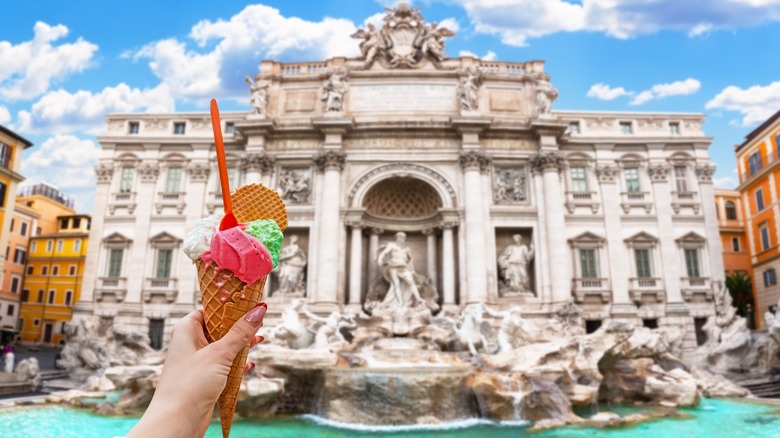
Until 2023, entrance to the Pantheon was free. However, tickets are now required for admission. As of this writing, a standard ticket with an audioguide costs roughly $17, and entry with a guided tour presented in either English, Italian, or Spanish is about $30. After you grab a caffé or gelato from one of the many spots nearby, take a 10-minute walk northeast to the Trevi Fountain. There, you can revel in the elaborate 18th-century design of the city's largest fountain, keeping in mind strict rules to know before visiting. For good luck, stand with your back to the water and use your right hand to throw a coin in over your left shoulder.
Duomo di Milano
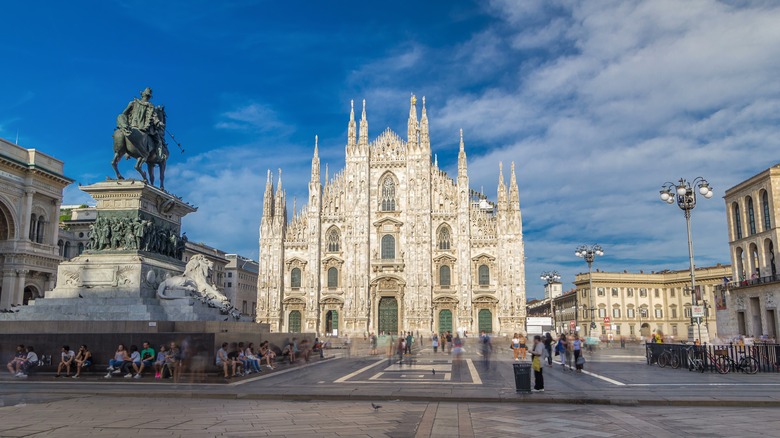
Construction of the incredible Duomo di Milano cathedral probably commenced in 1386, but it took several centuries to finish the amazing building we see today. The Duomo contains an impressive 5 naves with an ornate facade that was begun in the late 1500s. At the top, visitors can spot a gilded statue known as the Madonnina, considered the central symbol of Milan. Additionally, you can also visit the Duomo Museum's collection of artifacts and relics gathered from within the cathedral or admire the largest organ in Italy.
To make the most of your visit, book a private tour of the cathedral, archaeological area, and rooftop terraces for around $68 per person, or join a scheduled guided tour of all three areas, or just the terraces, ranging from one to two hours. To truly immerse yourself in the history of this gem, let a licensed tour guide lead you on the Duomo Smart Experience. This augmented reality tour combines information about the physical setting and its history, along with five immersive digital experiences that will take you back in time to the Duomo's earliest days.
St. Mark's Square and Rialto Bridge, Venice
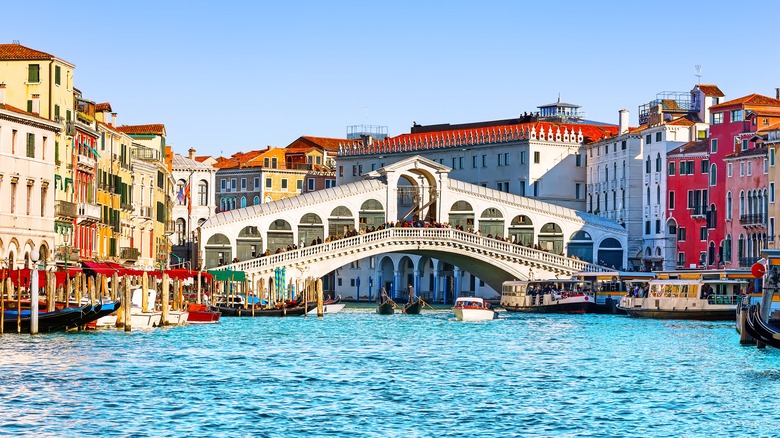
Venice is a city like no other thanks to its famous "floating" architecture that's split across 118 islands in an Adriatic lagoon. Its winding, postcard-worthy canals are crossed by more than 400 bridges, making this city easiest to explore either on foot or via the water. Aside from walking, you can also hop aboard a vaporetto, or water bus, and there's nothing more romantic than a gondola ride. Prices for these are standardized — a 90-minute cruise will set you back between $93 and $105 — and cover the cost of the entire gondola, like a taxi. So, if you have a few more in your party — there's a maximum of five passengers — you'll definitely get the most bang for your buck.
One of the most iconic areas of Venice is Piazza San Marco, which centers around St. Mark's Basilica. This spectacular architectural treasure is home to a mind-boggling 86,000 square feet of mosaics. The piazza famously floods occasionally in a phenomenon known as Acqua Alta, when the tides rise high enough to spill into squares and buildings. This most often happens in the winter, but it shouldn't deter you! Simply use the passarelle, or elevated walkways, to take in the unique sight. Then, stroll just about 10 minutes north to the Grand Canal, where you can cross the iconic Rialto Bridge and take in views of the busy maritime thoroughfare.
Lake Como
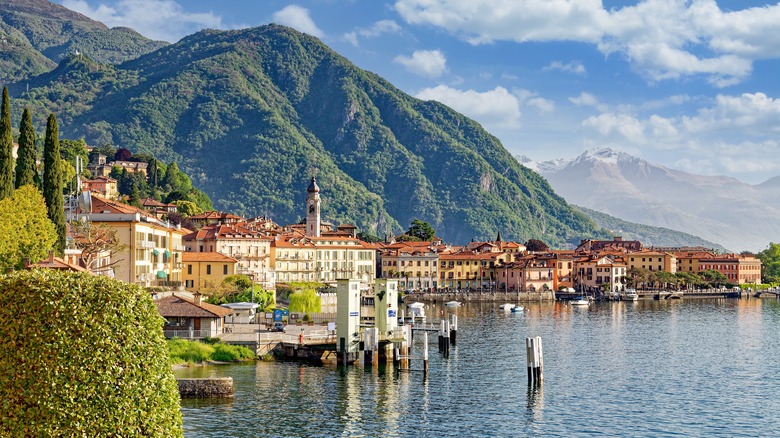
Surrounded by mountains with picturesque houses cascading down to the water's edge, Lake Como is a destination not to be missed in the Lombardy region, just about an hour-and-a-half drive north of Milan. Visit the lake's eponymous town, or stop by others like Varenna and Bellagio — yep, the namesake of Las Vegas' iconic casino-hotel — for postcard-worthy views. Near Varenna, don't miss the village of Fiumelatte, where its river only runs from March to September, and you can take in the beautiful lake and Bellagio across the way. Nearby, in Bellano, a charming town near a stunning gorge, make some time to marvel at the canyon at Orrido di Bellano.
One of the best ways to appreciate the beauty of Lake Como is via boat tour. These are typically offered by both private companies, like Como Classic Boats or Lake Como Experience, or via the more budget-friendly public ferry service, Navigazione Laghi. Private tours offer the benefit of riding in a stylish Italian boat, while ferry tours are perfect for a quicker journey that still connects to all of the major points of interest. You also won't want to miss a visit to at least one historic villa during your stay. In the summer, check for classical music concerts and guided tours at hot spots like Villa Balbianello and Villa Carlotta in Tremezzina, or Villa Monastero in Varenna.
The Amalfi Coast
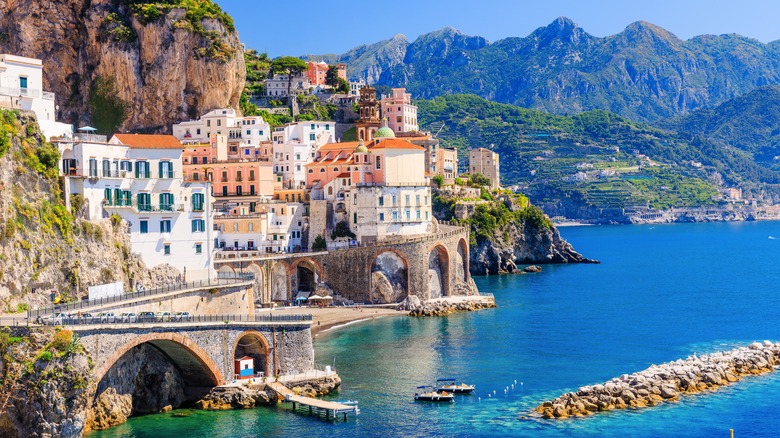
Italy is home to some epic drives — which may come as no surprise, considering the country is home to renowned car companies like Ferrari, Lamborghini, Alfa Romeo, and more. The Amalfi Coast's famously harrowing Amalfi Drive, a winding road between Sorrento and Salerno, is among the most iconic in the world. To make it easier to traverse these narrow roads, renting a scooter might be the best way to get around that will save you time and money. Of course, getting around is only half the fun. The Amalfi Coast is also famous for its beaches and amazingly steep hillsides that cascade with colorful houses. Some top spots to highlight include Fornillo and Arienzo Beach Club in Positano, which is a fantastic place for a sunny holiday, sea views, and luxury stays.
The breathtaking coastal landscape of this region is best viewed from either the water or on footpaths above the towns. Book a boat tour — some of which include options for snorkeling — or gain some elevation on dry land via the Path of the Gods. Known locally as Il Sentiero degli Dei, this popular route is 4.34 miles long and usually takes between three to five hours to complete if you're tackling the entire walk between Agerola and Positano. Considered moderately challenging for its somewhat rugged terrain and stairs, it's great exercise, and the views are sublime.
Renaissance art and architecture in Florence
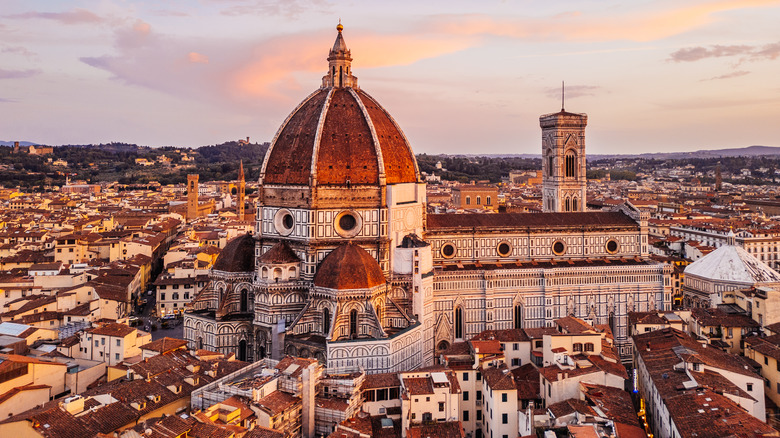
While we often think of Rome as the beating heart of Italian society and history, during the Renaissance, this distinction went squarely to Florence. It was a hub of technological, artistic, and intellectual discourse, where renowned Italian artists like Lorenzo Ghiberti, Donatello, Filippo Brunelleschi, and, of course, Leonardo da Vinci, made their mark. Today, the Cathedral of Santa Maria del Fiore continues as one of the largest in the world, with Brunelleschi's famous dome an immediately recognizable icon of the Florentine skyline. While you're there, make sure to check out Ghiberti's "Gates of Paradise," a pair of colossal, gilded bronze doors on the east side of the Baptistery of San Giovanni.
Florence is awash in art, with museums you could spend days in. Make your way to the Uffizi Gallery, Galleria dell'Accademia, and Palazzo Pitti — just to start! The Uffizi is home to myriad renowned works, including Botticelli's "Birth of Venus." And at Galleria dell'Accademia, you won't be able to miss Michelangelo's striking "David." Just remember to book ahead, especially during the busy summer months, as queues to get inside can be impressive. As a bonus, if you have a car, head out into the rolling Tuscan countryside for glorious scenery and more choices of wineries to visit than you'll know what to do with.
Cinque Terre, Liguria
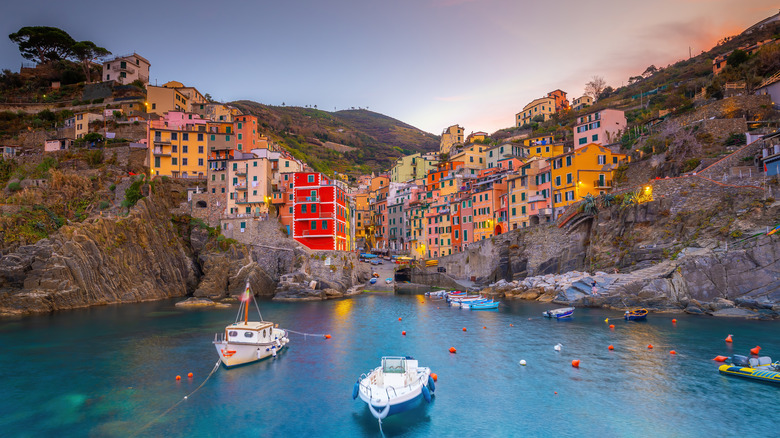
Meaning literally "five lands," or in this case, "five towns," Cinque Terre is exactly what it sounds like — and so much more. Comprising the five ancient fishing villages of Monterosso, Vernazza, Corniglia, Manarola, and Riomaggiore (listed north-to-south), this coastal paradise has something for everyone. Hike among olive trees and vineyards with glorious views of the sea along a network of trails connecting all of the towns. A pass is required to access these paths, known as the Cinque Terre Card, which provides access to 48 trails that cover around 75 miles in total. There's also an option for a pass that includes unlimited train travel on the Cinque Terre Express.
Cinque Terre can get crowded during the day, but these small towns are made for relaxing and enjoying the simpler — and finer — things in life. Catch the sunset over Riomaggiore's charming harbor, snap photos of the pastel-colored houses in Manarola, take a dip at one of two beaches in Vernazza, visit historic churches, and get your fill of fresh seafood at a number of local restaurants, like Ventottoposti, in Monterosso.
Valley of the Temples, Sicily
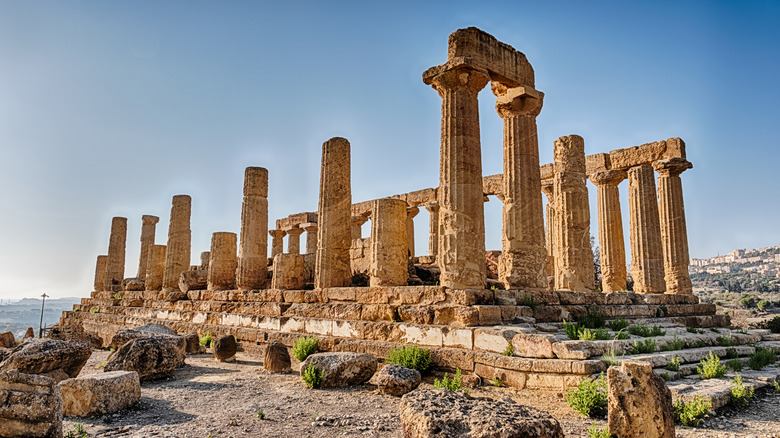
Get ready to go really far back in time on the southern coast of Sicily, a buzzing, colorful island with some of the best food in Italy, near the modern town of Agrigento. Established in 2000, the Archaeological and Landscape Park of the Valley of the Temples may be a relatively new official destination, but the Greek community that was founded here can be traced back more than 2,500 years. At its height, the city was home to 300,000 inhabitants, and today, the temples are some of the best-preserved outside of Greece. If you're based in Palermo, private tours to the archaeological park are available via Guides of Italia, allowing you to explore its numerous sacred buildings, a Greco-Roman necropolis, and other foundations and monuments.
If you can't get enough archaeology, head to the Pietro Griffo Regional Archaeology Museum, in the center of Agrigento, where you can feast your eyes on a fantastic collection of Greek vases, sculptures, architectural elements, and other artifacts. Finally, if you have some time to spend in Agrigento, don't miss a formal Sicilian meal to remember at Sal8. Alternatively, for something in more of a rustic setting, head over to Cozzitorto Osteria Del Capitano.
Methodology
Italy is home to an astonishing concentration of art, architecture, history, natural landscapes, and cultural hubs. In this far-from-definitive list, we chose must-see destinations that visitors should keep in mind — especially when planning their first trip to the country. These are the kinds of places where opportunities to explore and learn go on and on.
To find specific information about attractions and experiences, we researched official destination websites like Colosseo.it, Ercolana.Cultura.gov, PompeiiSites.org, TheSistineChapel.org, OPAPisa.it, PantheonRoma.com, CinqueTerre.eu.com, VisitSicily.info, and more. Additionally, we also looked into information provided by UNESCO, as all of these destinations are, or include, UNESCO World Heritage Sites. The author also relied on personal experience visiting several sites, and consulted reviews and experiences with high-average ratings from visitors on TripAdvisor, Google, Reddit, and AllTrails.