12 Top-Rated Tourist Attractions in Ferrara
Everything in Ferrara seems to have the stamp of the all-powerful Este family on it. Their moated ducal castle dominates the town center, and almost every museum and tourist attraction is housed in a palace built by some member of this eccentric dynasty that ruled this part of the Po Valley throughout the Renaissance.
UNESCO named Ferrara's old center, which includes the magnificent Castello Estense and the 12th-century Duomo, a World Heritage Site as "...a fine example of a town planned in the Renaissance that has managed to retain the integrity of its historic centre."
As you stroll its streets and look inside its palaces, you can almost imagine yourself transported back to the era when medieval was giving way to Renaissance Italy. Because so many Este palaces were surrounded by gardens that have survived as parks, Ferrara is one of Italy's greenest cities.
Its location in the fertile Po Valley, close to Bologna - considered by many to be Italy's culinary capital - means that you can expect to find excellent restaurants serving local products. You can find the best places to visit during your stay with this handy list of the top attractions in Ferrara.
See also: Where to Stay in Ferrara
- 1. Castello Estense (Este Castle)
- 2. Piazza Trento e Trieste and the Centro Storico
- 3. Museo Archeologico Nazionale (Archaeological Museum)
- 4. Cattedrale di San Giorgio (Cathedral of Saint George)
- 5. Palazzo dei Diamanti Art Galleries
- 6. Via delle Volte
- 7. Mura di Ferrara (City Walls)
- 8. Monastero di S. Antonio in Polesine
- 9. Museo della Cattedrale (Cathedral Museum)
- 10. Palazzina Marfisa d'Este (Villa of Marfisa d'Este)
- 11. Museo del Risorgimento e della Resistenza (Resistance Museum)
- 12. Day Trip to Comacchio
- Where to Stay in Ferrara for Sightseeing
- Map of Tourist Attractions in Ferrara
- More Things to See and Do
1. Castello Estense (Este Castle)
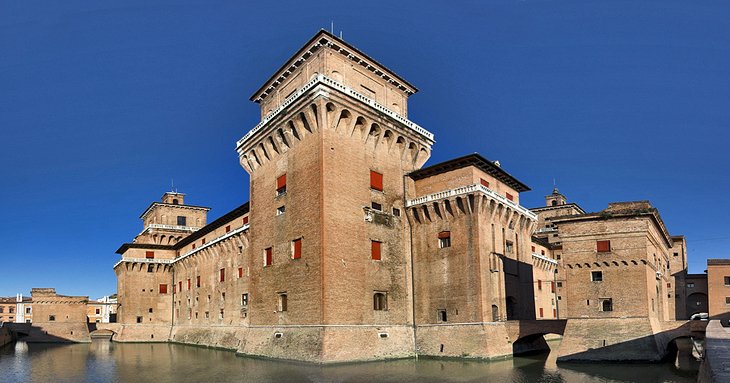
A revolt by citizens of Ferrara in 1385 struck enough fear in the ruling Este duke that he constructed this massive brick fortress to protect himself and his family. The castle's walls and towers behind their moat look less forbidding today, and its immense courtyard is often filled with colorful banners and booths of a local fair or festival.
Pick up a tour brochure in English to learn about its history and art as you explore the castle's apartments, halls, marble balconies, passageways, and rooftop terraces. Not every room may be open, but the highlights are the magnificent painted ceilings of the ducal apartments, the Golden Room, and The Duchesses' Camerino. The latter is a jewel box of a room, lined in painted panels that show the Estes' sophisticated tastes and the talents of Renaissance artists.
Address: Largo Castello, Ferrara
2. Piazza Trento e Trieste and the Centro Storico
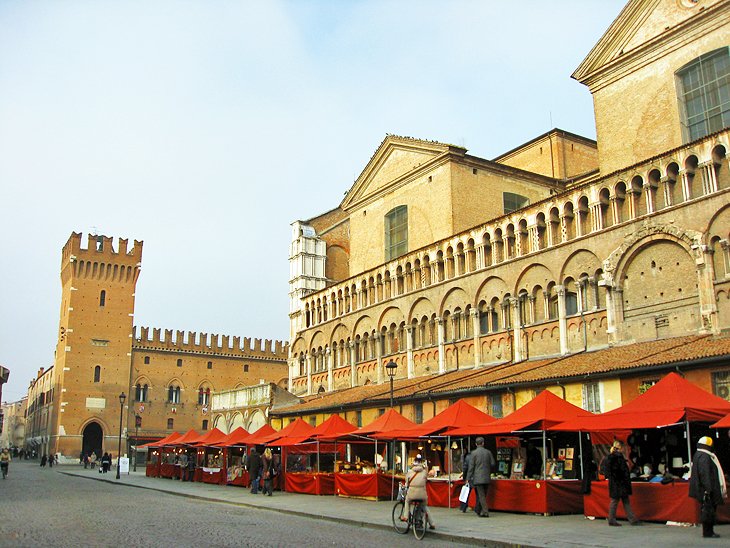
Most of the popular attractions and things to do in Ferrara are located in the Centro Storico, the historic center that was enclosed by the old town walls. At the heart of this is the long Piazza Trento e Trieste, with the castle at one end and the cathedral forming one entire side.
That side of the cathedral, known as the Loggia dei Merciai (Loggia of the Merchants), is an arcade with little shops hidden underneath. The square is traffic free and often filled with market tents. The square dates to the Middle Ages, when it was truly the seat of power for the entire region dominated by the Este family. Here, were all three sources of power: the ducal palace of the Este lords; the palace of the bishops; and the Palazzo della Ragione, seat of the civil authorities.
3. Museo Archeologico Nazionale (Archaeological Museum)
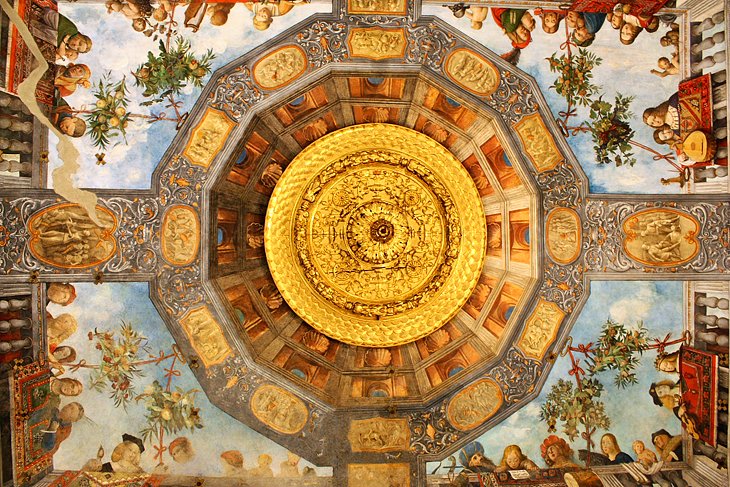
Don't be confused by the various names you'll see for the palace housing this museum. Although most often called Palazzo di Ludovico il Moro, it was actually commissioned by nobleman, Antonio Costabili, so it is also known as Palazzo Costabili. By any name it is a beautiful 15th-century Renaissance palace with a courtyard and frescoes that are early examples of trompe-l'oeil ("fool the eye") painting.
Its splendid collections are mostly finds from burial sites at the nearby Greek-Etruscan city of Spina. An important and wealthy trading center, Spina flourished from the 6th to the 3rd century BC and was later submerged by waters of the Po Delta and lost until the early 20th century, when excavations unearthed of thousands of graves.
Perfectly preserved Etruscan vases show scenes of daily life, and oil jars take the shape of animals. In the Sala degli Ori (Jewelry Room) is an extraordinary collection of gold, silver, amber, and glass personal ornaments by both Greek and Etruscan artists, and in the fresco-decorated Sala del Tesoro (Treasure Room) are two boats from Spina's late Roman period.
Address: Via XX Settembre 122, Ferrara
4. Cattedrale di San Giorgio (Cathedral of Saint George)
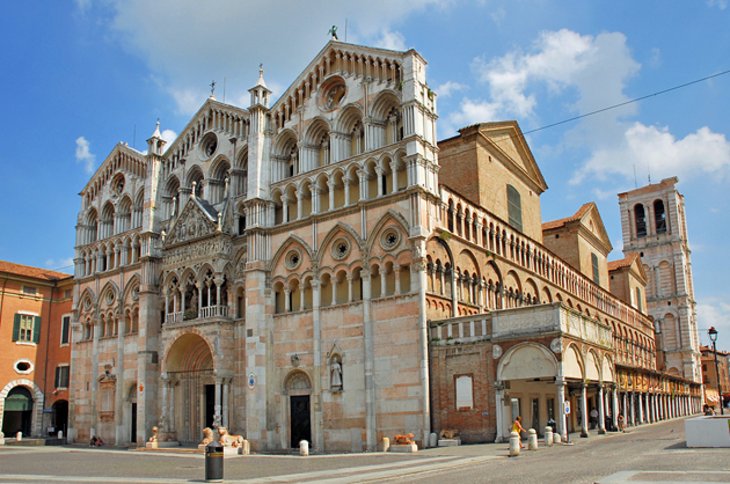
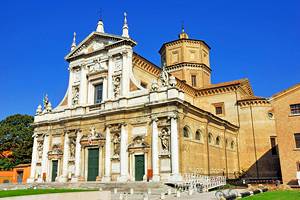
Close to the castle and also included in the UNESCO site, Ferrara Cathedral is an architectural image of the city's history. Its façade moves from a Romanesque lower tier, built in the early 1100s, upward to a beautiful early Gothic loggia from the 1500s.
The imposing pink-and-white-marble bell tower is in the Renaissance style. Along the side facing Piazza Trento e Trieste, the Loggia of the Merchants has housed shops since medieval times, and above it are two colonnaded galleries.
Stop for a close look at the extraordinary Last Judgment carved in stone above the façade's central loggia. Righteous souls, gowned and crowned, march off to paradise, while the naked damned are shoved into a boiling cauldron or into the mouth of a monster by a gleeful devil. The work's imaginative sculptor remains unknown.
Address: Piazza della Cattedrale, Ferrara
5. Palazzo dei Diamanti Art Galleries
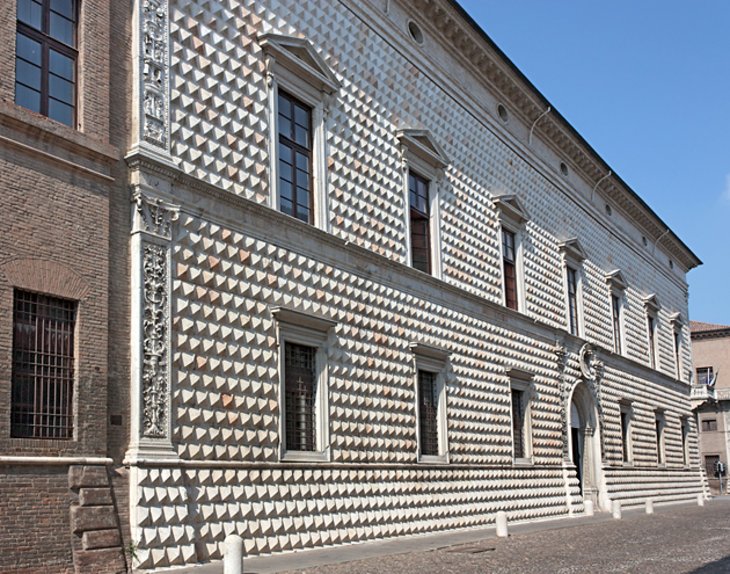
The Palazzo dei Diamanti is hard to miss, with its entire exterior covered in more than 8,500 faceted marble blocks. This unusual (and famous) example of early Renaissance architecture was, like the palace of Ludovico il Moro, part of Duke Ercole I d'Este's Addizione Erculea (Herculean Addition), a plan to remake Ferrara in the late 1400s.
Today, the palace contains the Pinacoteca Nazionale (National Gallery), with works by 13th- to 17th-century painters of the Ferrara school, and on the upper floor, changing exhibitions in the Gallerie d'Arte Moderna e Contemporanea feature major works by impressionists, post impressionists, and other later artists.
Address: Corso Ercole I d'Este 21, Ferrara
Official site: www.palazzodiamanti.it
6. Via delle Volte
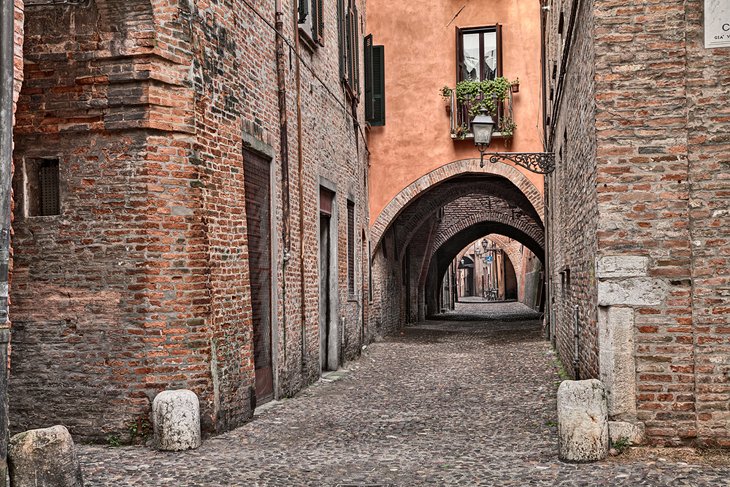
One of the most appealing things about Ferrara is the grace with which it moves between the medieval and Renaissance eras. To feel as though you've stepped back into the Middle Ages, stroll down the long Via delle Volte.
Under foot are rounded cobblestones, and overhead are rooms and passageways between buildings that form a series of arched tunnels. Unlike many such picturesque medieval streets, this one has not become a line of shops, although you will find several places to eat in the old buildings that line it.
7. Mura di Ferrara (City Walls)
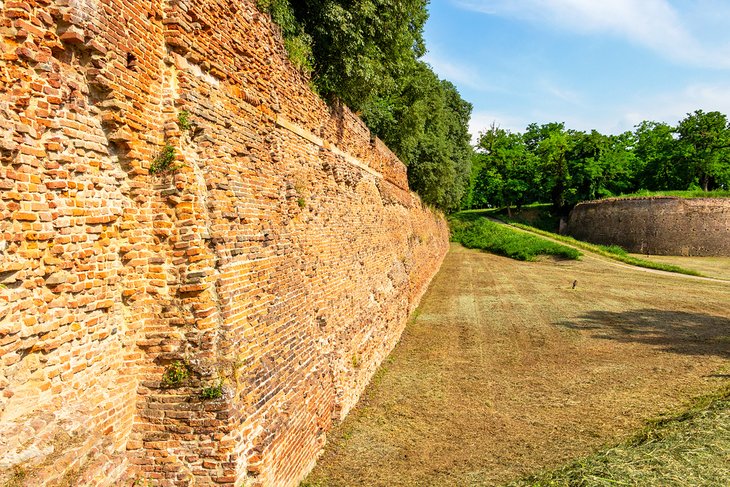
The eight kilometers of brick walls that surround Ferrara's historic center are among the oldest and most complete medieval/Renaissance defensive systems in Italy. You can see here all the elements cities used to defend themselves in those uncertain times, including earthworks, moats, city gates, bastions, towers, and slots for archers.
Today, their use has been reversed; instead of repelling people, the walls attract them, and the area is a favorite place to walk, cycle, and meet friends. For tourists, they provide the attraction of a great vantage point for views of the city and countryside. Several parks adjoin the walls and moat.
8. Monastero di S. Antonio in Polesine
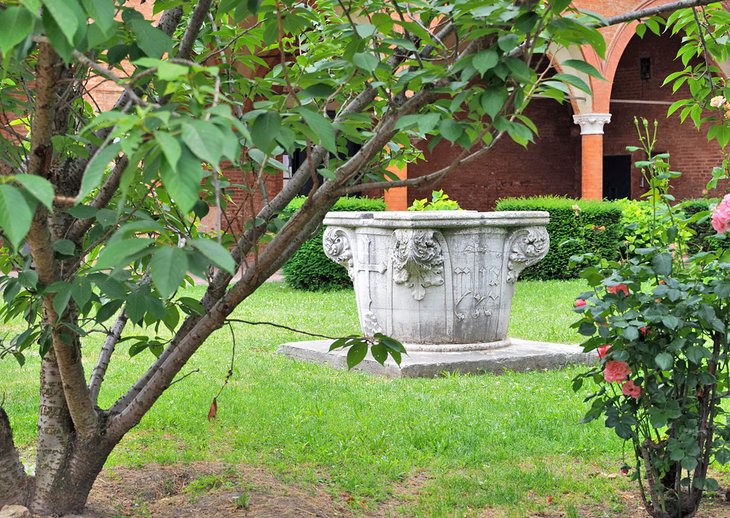
It's worth looking for this tranquil monastery just to wander through the tangle of medieval streets in the oldest part of Ferrara. It's quite a contrast from the grand avenues, parks, and palaces of the newer Renaissance city.
The convent, whose decoration was lavishly supported by the Este family, has a chapel open to the public, with a beautiful 17th-century frescoed ceiling. The church inside, which a nun will show you if you ring the bell during the posted hours, has three chapels that are decorated in extraordinary early 14th-century frescoes, some by followers of Giotto.
The carved and gilded wood altar and silent cloister are worth seeing as well. During services, the nuns sing, accompanied by antique musical instruments - a rare and beautiful experience that's not easily found elsewhere. If you go there early in your visit, you can check that day's schedule and return.
Address: Vicolo del Gambone, Ferrara
9. Museo della Cattedrale (Cathedral Museum)
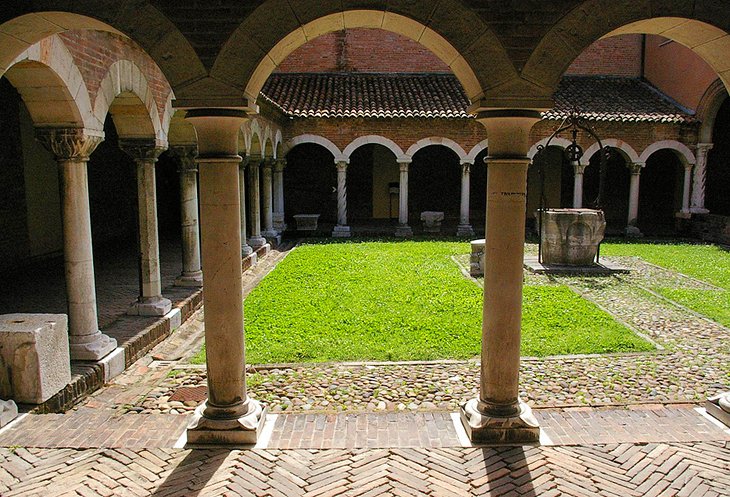
Over the centuries, the cathedral has undergone a number of renovations, some to protect its artistic treasures (especially exterior stone carvings that had begun to show signs of environmental damage) and others to update it to current tastes of each era.
Some of the precious works that have been replaced are housed nearby in the former church of San Romano, along with other works owned by the church, some dating back as far as the Middle Ages. Unless you're a great fan of ecclesiastical art, the museum's main attraction is that it is arranged to give a good picture of Renaissance Ferrara's splendor.
Especially beautiful are the early-13th-century tiles, a set of 15th-century anthem books illuminated by Jacopo Filippo Medici and other artists, and the extraordinary organ shutters showing Saint George and the Dragon and the Annunciation.
Address: Via San Romano, Ferrara
10. Palazzina Marfisa d'Este (Villa of Marfisa d'Este)
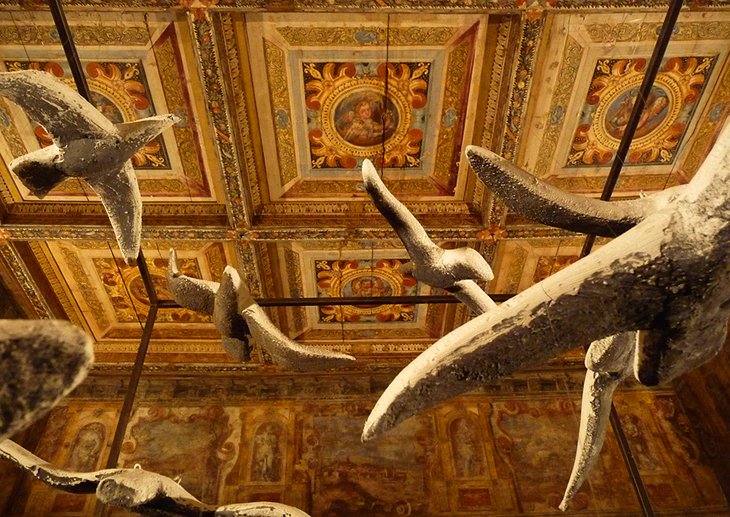
Built later than the grander Este palaces, princess Marfisa d'Este's villa is a lovely example of a 16th-century patrician home. The ceilings of many of the rooms are decorated by mythological scenes, and the furniture, although not original to the villa, is correct to the period.
Extensive gardens once surrounded the villa, but today there's only a small garden with a fountain, bordered by a loggia. Its ceilings are painted to imitate a bower, with grape vines and animals peering through the foliage.
Address: Corso Giovecca 170, Ferrara
11. Museo del Risorgimento e della Resistenza (Resistance Museum)
Those interested in World War II should be sure to visit this museum to see its collections relating to the Fascist regime and their actions, including the attack on the synagogue and the murder of local priests.
Documents, newspapers, photos, uniforms, weapons, and artifacts relate to the war and the liberation, with emphasis on the local resistance movement. Other exhibits date from the Risorgimento period of Italian unification in the 19th century. The museum is a five-minute walk from the Este castle.
Address: Corso Ercole I d'Este 19, Ferrara
12. Day Trip to Comacchio
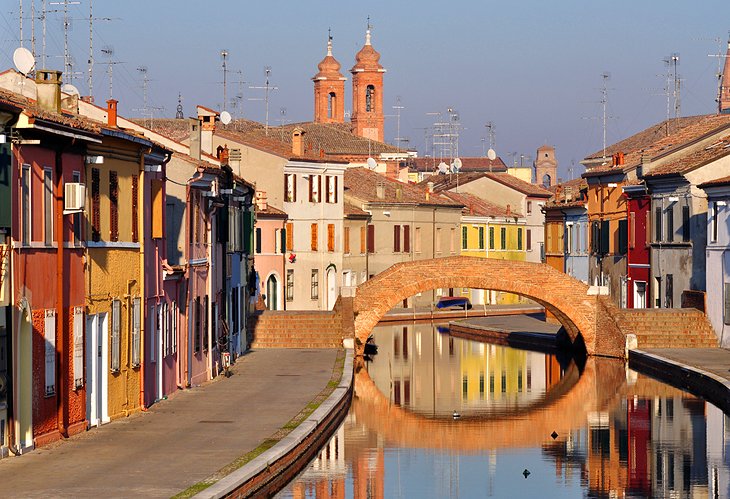
About 56 kilometers southeast of Ferrara, the small town of Comacchio is set on 13 islands connected by bridges that span the channels between them. The boats, bridges, and waterways between its buildings make it a great place for photographers.
North of the town is the Abbazia Santa Maria di Pomposa, an abbey founded in the 7th century and abandoned by the 17th century. The complex includes a 9th-century church with frescoes and a mosaic floor, a 48-meter campanile tower, and a chapter house with more well-preserved frescoes.
Where to Stay in Ferrara for Sightseeing
We recommend these centrally located hotels in Ferrara, near the castle, cathedral, and other top tourist attractions:
- Luxury/Mid-Range Hotels: A five-minute walk from the castle and even closer to restaurants, Maxxim Hotel has family-sized rooms and an elevator; breakfast is included.
The 4-star boutique Hotel Annunziata, opposite the castle, offers a bountiful breakfast and free use of bikes.
On a peaceful side street, the family-run Hotel de Prati was once home to artists, writers, and actors; guests enjoy the exhibits of contemporary art in the public areas.
Breakfast at the romantic B&B Dolcemela includes a wide assortment of pastries; it is a five-minute walk from the important landmarks and even less to restaurants.
- Budget Hotels: Set in a 16th-century villa, the ornately furnished Duchess Isabella Hotel offers old-world luxury, as well as a spa and sauna, at modest rates.
Convenient for those arriving by car, and surrounded by a park, Ai Frutti di una Volta gives the feeling of staying in the countryside, but only seven minutes from the center of Ferrara. Guests can use the hotel's free bicycles to explore. Parking is included, as is breakfast.
Surrounded by restaurants and less than a five-minute walk from the cathedral, Hotel Carlton pampers guests with luxury details like heated bathroom floors and towel racks; breakfast is included.
Map of Tourist Attractions in Ferrara
More Things to See and Do
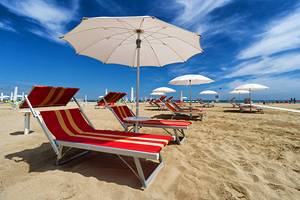
Where to Go near Ferrara: Fewer than 50 kilometers from Ferrara is the art-filled city of Bologna, known as one of the culinary centers of all Italy. A bit farther away to the southeast, along the Adriatic coast, is Ravenna, with its brilliant Byzantine mosaics, and beyond it is Rimini, with Roman sites and some of Italy's most popular beaches.
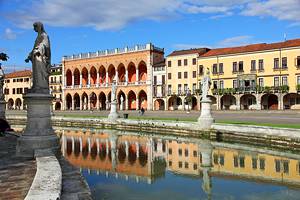
Places to Go from Ferrara: An Autostrada leads almost straight to Padua, with the Basilica of St. Anthony and the Scrovegni Chapel, with the best-preserved frescoes of Giotto. From here, it's only a short way to beautiful Venice. Or you can travel west from Padua to savor the attractions of romantic Verona, one of the most popular places to visit in northern Italy.