Attractions & Places to Visit in Montepulciano
Today, the walled Tuscan town of Montepulciano looks very much as it did in the late 1500s, a comfortable blend of medieval architecture with Renaissance updates. Some fine Baroque touches decorate the churches, but the architecture is surprisingly unified. It is probably of Etruscan origin, and at its medieval height, it was alternately allied with, or subject to, either Siena or Florence.
Leading artists and architects were attracted to the town by the noble families who retained their influence here longer than in other Tuscan cities, accounting for its fine Renaissance buildings. Perched picturesquely on a hill, the town itself is perhaps its greatest tourist attraction. Plan your visit with our list of top attractions and things to do in Montepulciano.
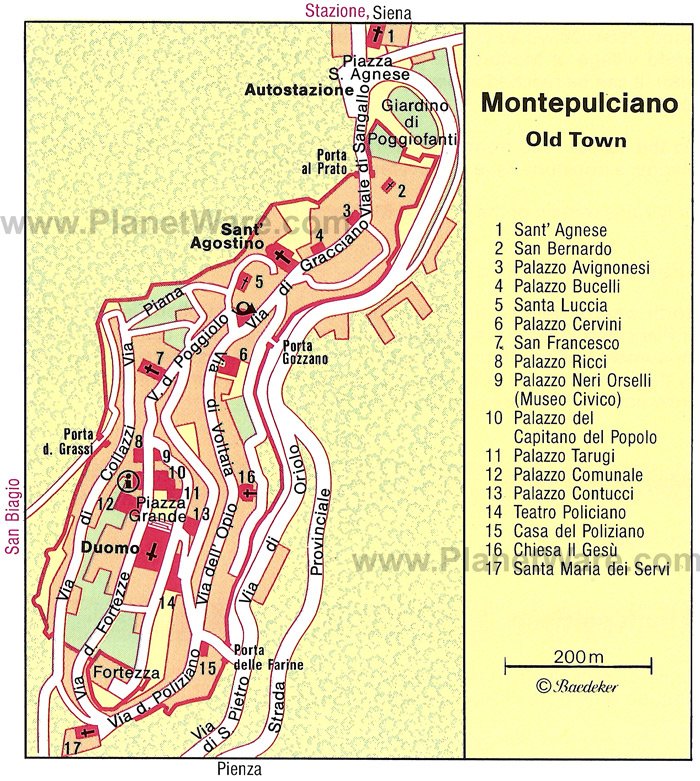
Piazza Grande
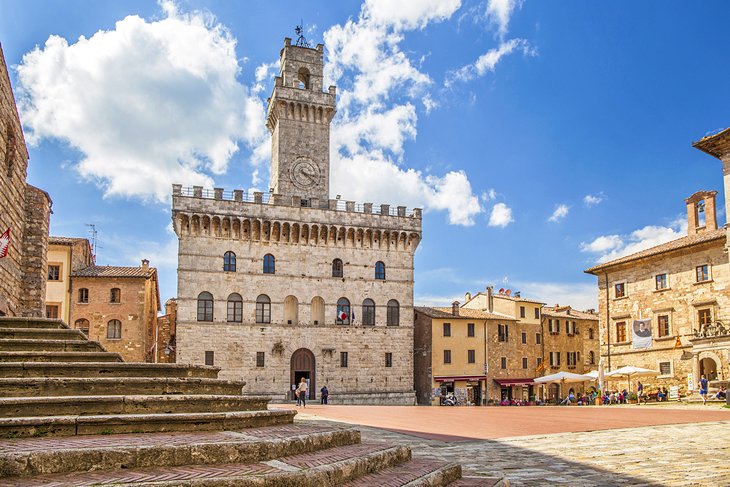
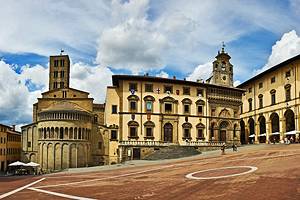
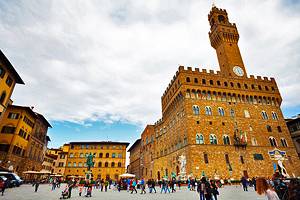
Montepulciano's main square is officially named Piazza Vittorio Emanuele, but everyone calls it Piazza Grande. Some of the town's most important buildings surround it. The austere Palazzo Comunale commands the west side of the piazza, begun at the end of the 14th century and given its present form in 1424 by the Florentine Renaissance architect Michelozzo.
The plain facade with its battlemented top and the shape of the tower are reminiscent of the Palazzo Vecchio in Florence, although this one is more symmetrical. From the top of the tower, which you can climb, are panoramic views of the Tuscan countryside.
Palazzo Contucci, opposite, was the work of Antonio da Sangallo the Elder in the 16th century and contains frescoes by Andrea Pozzo. Massive Palazzo Tarugi has an open loggia on the ground floor, and adjoining the palazzo is a fountain erected in 1520, incorporating two Etruscan columns and topped by two lions bearing the Médici coat of arms.
Address: Piazza Grande, Montepulciano
Duomo (Cathedral)
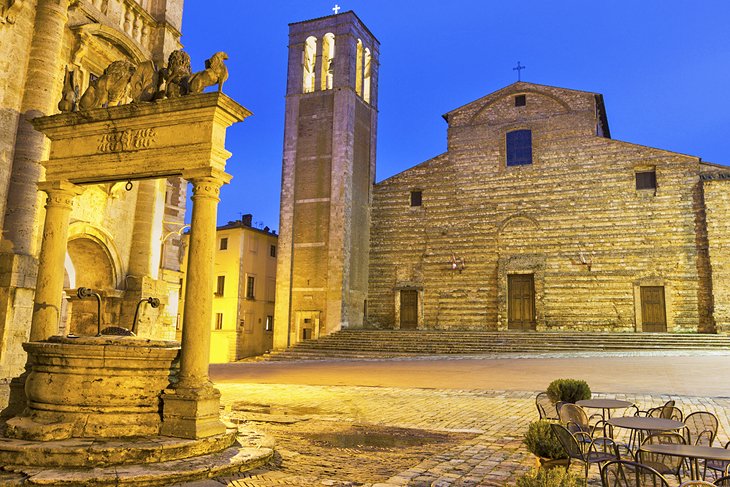
The present duomo, designed by Ippolito Scalza, was erected between 1592 and 1630 on the site of an earlier parish church, of which the campanile is the only relic. The façade's rough stonework, intended to support a more decorative piece, was left unfinished.
Inside, to the left of the main doorway, is the Early Renaissance figure of Bartolomeo Aragazzi, Secretary to Pope Martin V, by Michelozzo di Bartolommeo. The tomb was taken to pieces, and you'll find other fragments elsewhere in the cathedral.
Behind the high altar is a fine 15th-century triptych of the Assumption by Taddeo di Bártolo. Sano di Pietro's Madonna of the Pillar is a small but beautiful panel painting of Mary with a chubby redheaded Jesus holding a little bird.
Address: Piazza Grande, Montepulciano
San Biagio
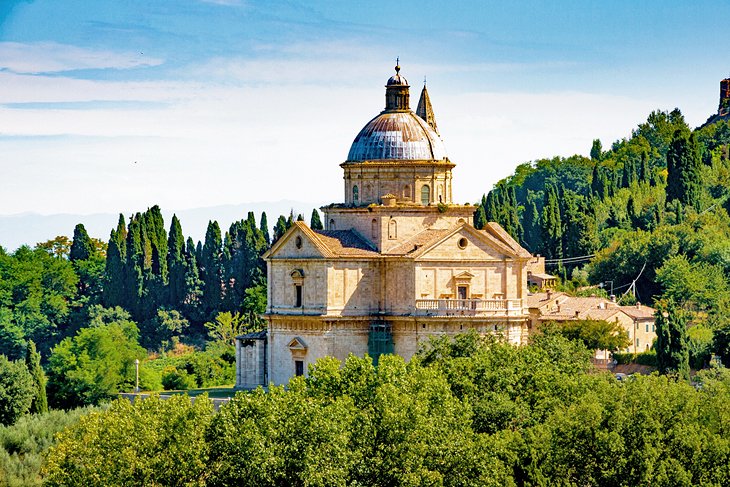
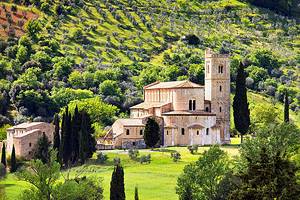
Below the town walls at the end of a long cypresses-lined avenue, the church of San Biagio was built from 1518 to 1545 by Antonio da Sangallo the Elder but shows the influence of Bramante. Built of gold-colored travertine to house a much-venerated image of the Madonna, it is considered one of the finest buildings of the Renaissance.
Its open and splendidly proportioned interior is on a Greek cross plan, with four arms of equal length and a high dome supported on a drum. Of the two free-standing campaniles, the one on the right is unfinished. The presbytery has 16th-century frescoes depicting the Death, Assumption, and Coronation of the Virgin, believed to be by the Zúccari brothers.
On the reredos of the high altar from the same period are four figures of saints. The nearby canónica (priest's house) and its fountain were designed by Sangallo but built after his death. It now houses a small museum devoted to St. Blaise (San Biagio). The late afternoon sun turns the church a golden color, a beautiful sight among the trees.
Museo Cívico (Municipal Museum)
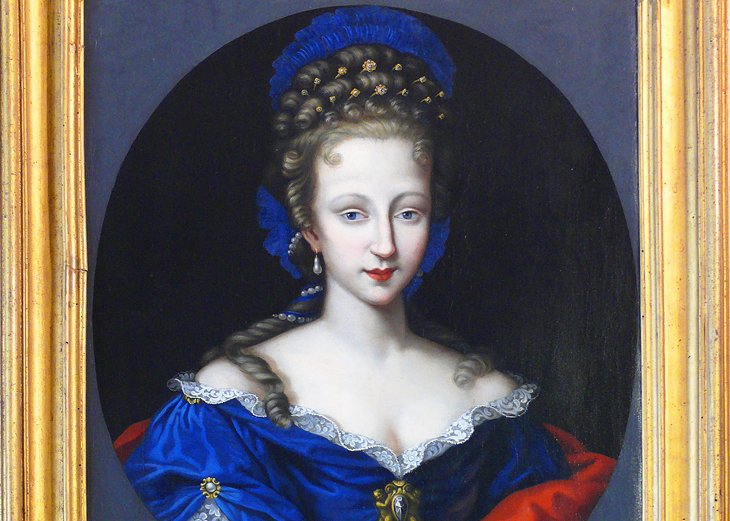
Housed in the 14th-century Palazzo Neri Orselli, the Museo Cívico is devoted to archaeological finds, paintings of the medieval and Renaissance periods, and a number of fine terra-cottas by Andrea della Robbia. You'll come to the archaeology section first, with Etruscan and Roman artifacts discovered nearby at Acquaviva di Montepulciano.
The Etruscan funerary urns and the bronze candelabra and focula - a type of bracelet - are not only beautiful and precious for their artistry but are evidence of the importance of the region in ancient times.
The della Robbia collection is largely from deconsecrated churches and convents, and includes a Madonna and Child, commissioned in 1484 for the Palazzo del Capitano. Palazzo Neri Orselli is a rare example in Montepulciano of 14th-century Sienese public architecture, featuring a beautiful courtyard with a loggia and well.
Address: Via Ricci 11, Montepulciano
Sant'Agostino
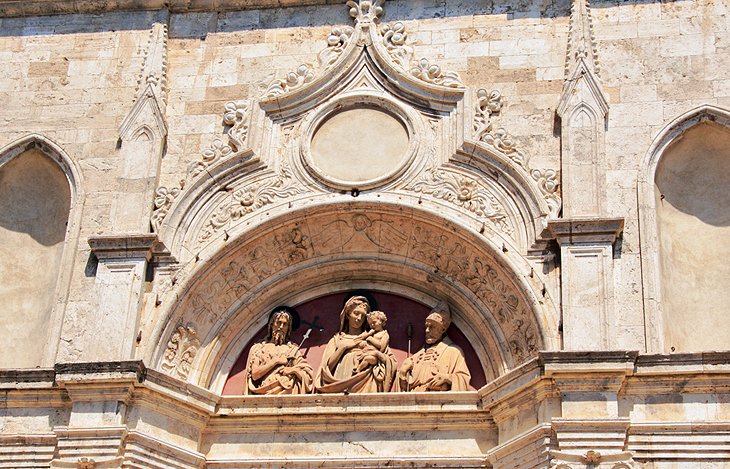
The church's handsome Renaissance façade, along with the terra-cotta relief in the tympanum above the door, is by Michelozzo di Bartolommeo, who collaborated with the pre-eminent Florentine architect Brunelleschi and was a follower of the sculptor Donatello. However, the church is from several centuries earlier.
It was begun in 1285 and is the oldest remaining church building in Montepulciano. Michelozzo's restorations in the late 1700s changed the interior considerably, removing the previous aisles. Look on the high altar for the wooden crucifix attributed to Donatello.
Address: Piazza Michelozzo, Montepulciano
Day Trip to Chiusi
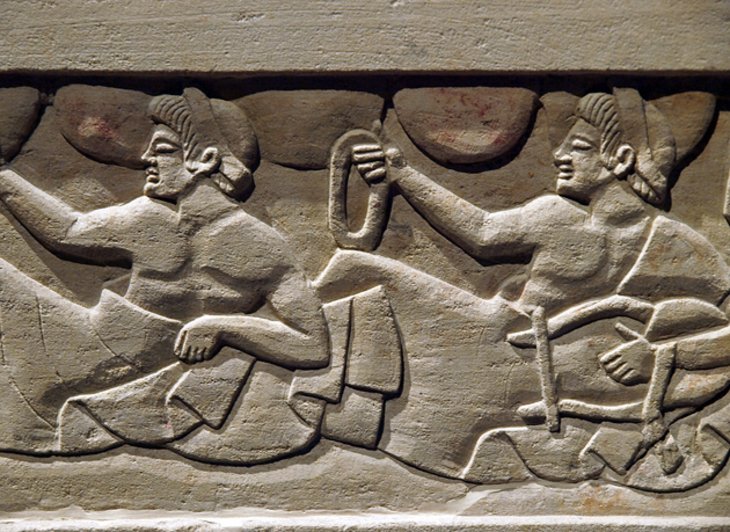
In the Val di Chiana, about 20 kilometers southeast of Montepulciano, Chiusi was, by the sixth century BC, an important Etruscan city, and later, a Roman one. The Museo Nazionale Etrusco (National Etruscan Museum) has a rich collection of Etruscan material and Greek pottery recovered from excavations in the Chiusi area.
You'll see ash-urns, sarcophagi, bronze and pottery masks, tombstones, amphorae, and Canopic jars. The museum offers an excellent insight into the life of the Etruscans, their cult of the dead, craftsmanship, and artistic sensibility.
Ask at the museum for information on visiting some of the Etruscan tombs in the area. Some of these are open and contain wall paintings, urns, and sarcophagi.
Address: Via Porsenna 2, Chiusi
Torre del Pulcinella and Via Gracciano nel Corso
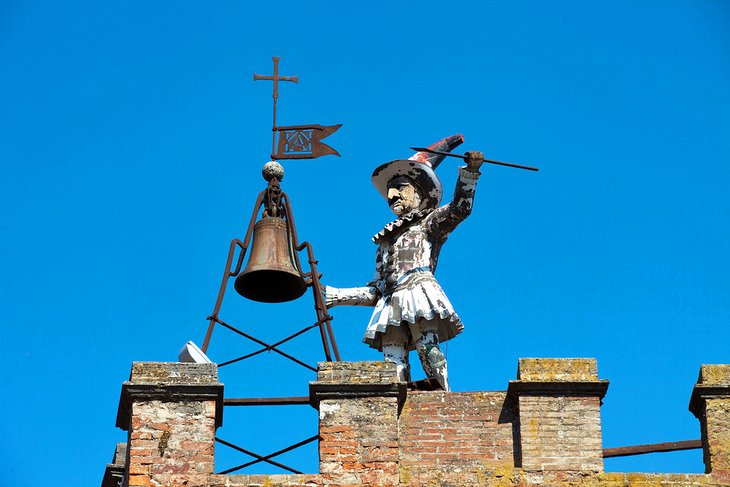
The bell tower in front of the church of St. Agostino is topped by an unusual bell - and bell-ringer. A large Pucinella, a well-known character that originated in 16th-century Italian commedia dell'arte, wields a long stick, with which he strikes the bell. Dressed in a white skirt and tall hat, this character is well known in Italy and a popular feature of Neapolitan puppetry, and later in the traditional Punch and Judy shows.
Why this figure was chosen for the bell tower is only speculated, but one theory is that it was either brought by or inspired by a priest from Naples. Whatever its origins, this comical figure atop the tower of a sedate church is a popular with tourists and locals, who pause to watch Pucinella strike his bell on the hour.
You may miss the figure on the tower as you walk uphill on Via Gracciano nel Corso, the main street through the historic center. The street begins at the Porta al Prato and rises gently for about a kilometer to the Piazza Grande; for the best view of Pulcinella, continue past the tower and look back from the uphill side.
Address: Piazza Michelozzo, Montepulciano
Museo della Tortura
If your taste runs to looking at beds of nails, racks, thumb screws, Catherine wheels, iron maidens, Inquisition chairs, guillotines, and various other gruesome instruments designed to inflict intense pain and the eventual death of fellow human beings, this extensive collection in the Palazzo Bellarmino is the place to go in Montepulciano.
Displayed in appropriately dark galleries, the exhibits are further illustrated by contemporary depictions, and the artifacts date from medieval times through the Inquisition and into the 18th century.
Address: Via San Donato 12, Montepulciano
Santa Maria dei Servi
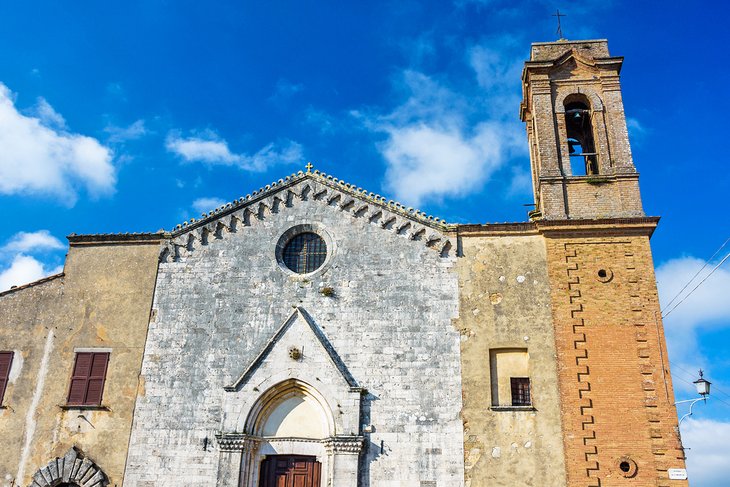
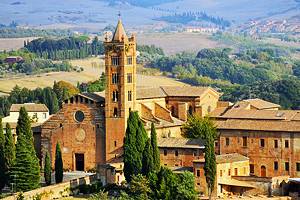
The Church of Santa Maria dei Servi stands just outside the town walls. Built in the 14th century, its exterior is in Gothic style, but the elegant Baroque interior was the work of Andrea Pozzo in the late 17th century.
Inside, look for a 14th-century fresco of the Madonna della Santoreggia from the Sienese school; a 14th-century painted panel of the Madonna and Child inside a larger fresco attributed to a follower of Duccio di Buoninsegna; and a fresco of the crucifixion, also from the 1300s.
Address: Via di Collazzi, 78, Montepulciano
Sant'Agnese
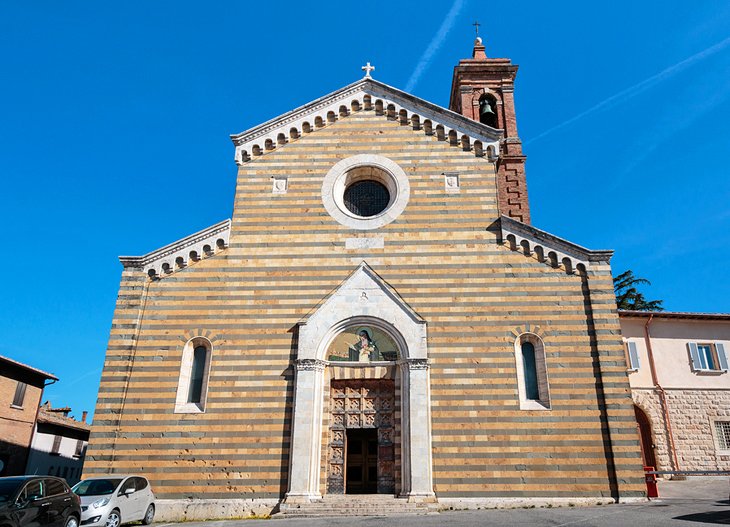
Outside the walls at the north end of town is the church of Sant'Agnese, dedicated to St. Agnes of Montepulciano, a Dominican prioress who died in 1317 and is the town's patron saint. It stands on the site of the earlier church of Santa Maria Novella, which was built by St. Agnes herself.
Although the façade was rebuilt, it retains the Gothic portal. In the first chapel on the right is a fresco of the Madonna, of the school of Simone Martini; on the high altar is the Saint's reliquary, dating from the 17th century. Adjoining the church is a cloister with frescoes.
Address: Porta al Prato, Montepulciano
Palazzo Avignonesi
The Palazzo Avignonesi is thought to have been designed by Giácomo da Vignola, whose real name was Giácomo Barozzi, in the 16th century. The Late Renaissance facade has rusticated masonry on the ground floor and windows on the upper floors with alternate triangular and curving pediments.
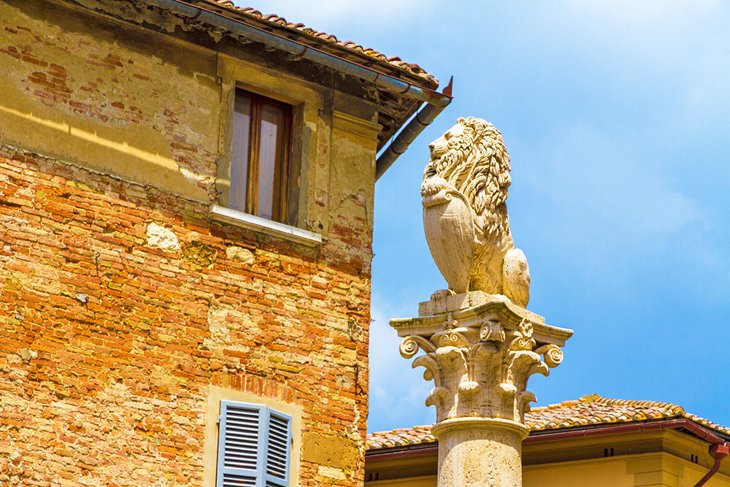
In the piazza in front of the palace is a column with the Marzocco, a lion that was the symbol of Florence's and the Medici's authority. The lion is the work of the sculptor, Sarrocchi.
Address: Via di Gracciano 99, Montepulciano
More Related Articles on PlanetWare.com
Tuscany's Hill Towns: Exploring the hill towns is one of the most popular things to do in the region. Best known of the several medieval hilltop towns is San Gimignano, with its dozen tall tower houses. Other nearby towns to discover are the former Etruscan town of Volterra, and lovely Arezzo.
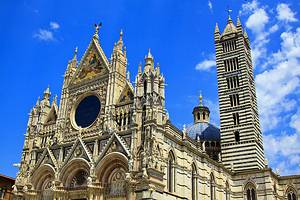
More of Tuscany: If you have time to explore more of Tuscany, use our handy articles, Tourist Attractions in Siena and Exploring Siena's Cathedral of Santa Maria Assunta: A Visitor's Guide to learn more about this beautiful city, then travel on to discover the magnificent churches of Florence. You'll find more Renaissance art in the splendid palaces of Florence.