14 Top-Rated Tourist Attractions in Arezzo
Even when Arezzo was a Roman military outpost, the city was known as a center for poets, and throughout the Middle Ages and into the Renaissance, it remained a place where the arts flourished. Its tourist attractions include sites from all these ages, and in its excellent Archaeological Museum, you'll find artifacts dating as far back as Etruscan times.
You'll also find works here by some of the great names: the architect/artist Vasari lived here; Cimabue worked here; and the great poet Petrarch, father of humanism, was born in Arezzo. Works of others — Andrea della Robbia, Piero della Francesca, Nicola Pisano, and the French stained-glass master Guillaume de Marcillat — fill its churches.
Arezzo is close enough to Florence, only about 80 kilometers away, that it's easy to add to an Italy itinerary. Discover more about this city and surroundings with our list of the top attractions in Arezzo.
See also: Where to Stay in Arezzo
- 1. Piazza Grande
- 2. Duomo (Cathedral)
- 3. Santa Maria della Pieve
- 4. Basilica di San Francesco
- 5. San Domenico
- 6. Casa del Vasari (Vasari House)
- 7. National Archaeological Museum and Roman Amphitheater
- 8. Shop for Antiques
- 9. Medici Fortress
- 10. Museum of Medieval and Modern Art
- 11. Ivan Bruschi House & Museum
- 12. Palazzo delle Logge and Palazzo Pretorio
- 13. Day Trip to Camáldoli
- 14. Day Trip to Monte San Savino
- Where to Stay in Arezzo for Sightseeing
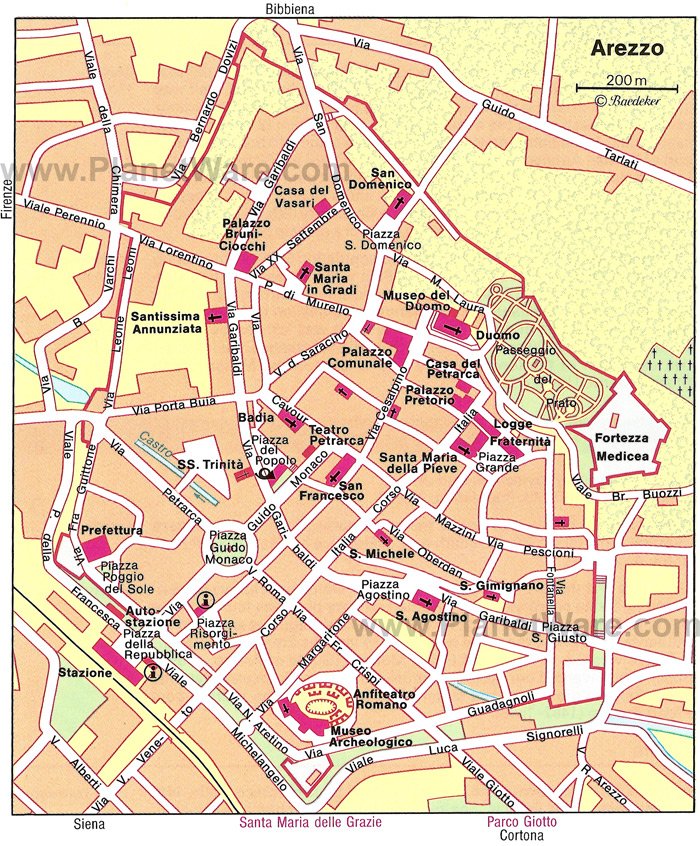
- Map of Attractions & Things to Do in Arezzo
1. Piazza Grande
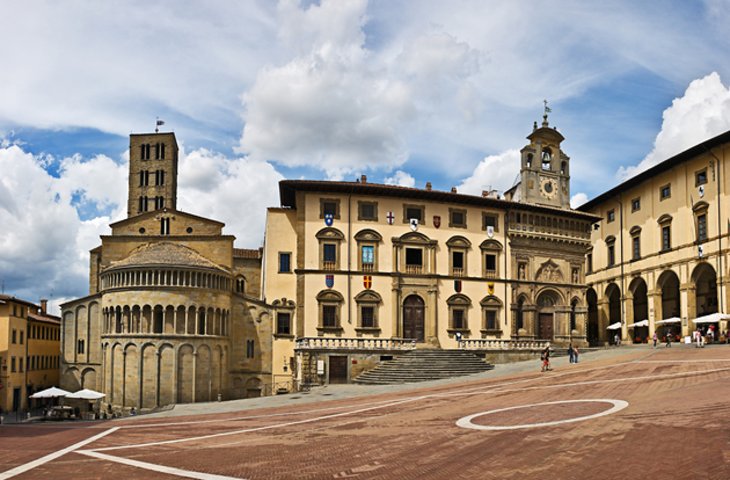
If the sloping Piazza Grande looks familiar, it's because it served as a setting for Roberto Benigni's film, Life is Beautiful. The square itself is beautiful, surrounded by elegant palaces. The entire north side is formed by Vasari's graceful colonnade on Palazzo delle Logge, and the rounded apse of Santa Maria della Pieve extends into the western corner beside the 14th-century Palazzo della Faternitaå dei Laici.
Its striking facade was begun in Gothic style by Baldino di Cino in 1375, continued in Renaissance style by Bernardo Rossellino in 1433, and completed in 1460. The bell tower was added by Giorgio Vasari in the 16th century, and in it is one of Italy's oldest working clocks, dating from 1552. Piazza Grande is the scene of the Giostra del Saracino, a medieval joust performed on the first Sunday in September, and an antiques fair the first full weekend of each month.
2. Duomo (Cathedral)
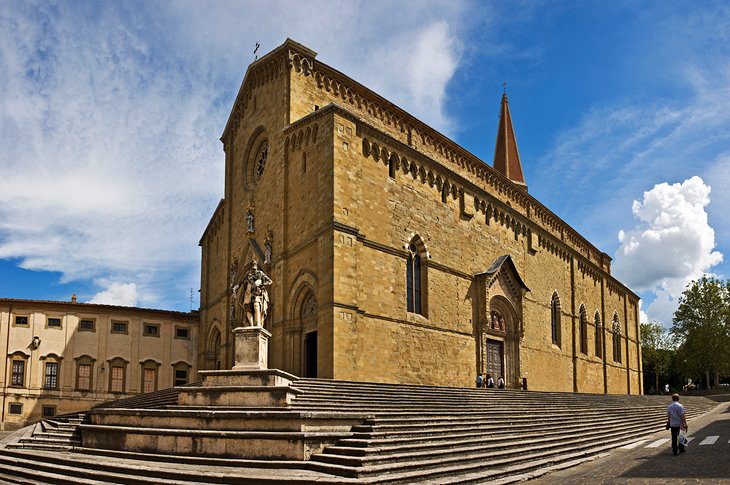
Nearly 700 hundred years in the making, the cathedral in Arezzo is best known for the stained-glass windows by Fra Guillaume de Marcillat and for the Tomb of Pope Gregory X. The church was begun in 1277, continued in 1313 and 1510, but not completed until the beginning of the 20th century. The campanile was built in 1857-60, and the façade, with its three doorways and large rose-window, added between 1900 and 1914.
The French stained-glass artist Guillaume de Marcillat worked almost exclusively in Italy, and four of his windows are in the right-hand aisle, where you'll also find the 14th-century tomb of Pope Gregory X. At the high altar is the late Gothic tomb and relics of St. Donatus, Bishop of Arezzo, who was martyred in the time of Diocletian. The tomb has marble reliefs of scenes from the Saint's life.
The chapel to the left of the presbytery has another stained-glass window by Marcillat, and the sacristy has fine frescoes and terra-cottas. In the left-hand aisle is the fresco The Magdalene by Piero della Francesca (1459) and the tomb of 14th-century Bishop Guido Tarlati, with 16 fine bas-reliefs.
The organ gallery by Giorgio Vasari was completed in 1535. From this aisle, you can reach the baptistery and the Chapel of the Madonna del Conforto from the 18th to 19th centuries, partly in Neo-Gothic and partly in Classical style.
The former sacristy is now a cathedral museum, with priceless altar paintings, gold work, and an early 11th-century Romanesque crucifix. The most notable piece is the 15th-century Flemish Pace di Siena, made of gold, enamel, pearl, and precious stones.
Address: Via Ricasoli, Arezzo
3. Santa Maria della Pieve
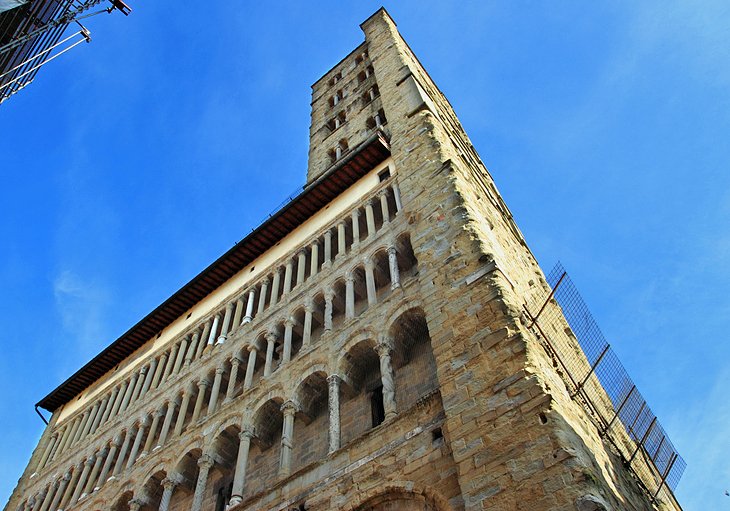
The Parish Church of St. Mary, known simply as the Pieve, is the town's oldest surviving church and its most important Romanesque building. The 12th-century church was destroyed and then rebuilt in the 13th century and subsequently reconstructed, altered, and restored in the 15th-, 16th-, and 17th centuries and again in 1863. But it remains as the finest example of Pisan Romanesque in eastern Tuscany.
The four-story facade on the Corso d'Italia is set in front of an earlier facade in the 13th century. The galleries above the doors have 12 columns on the second level, 24 on the third, and 32 on the fourth, creating the effect of a tapered structure. To the right of the facade is the 60-meter-high Romanesque campanile, with five rows of double windows.
Above the central doorway are two early 13th-century figures of the Virgin, and the right-hand doorway shows the Baptism of Christ. The columns and their outstanding capitals are unusually varied in decoration. A timber dome caps the almost severe interior, and below the raised presbytery - the oldest part of the church - is the crypt.
The baptistery chapel has a beautiful font with three reliefs by Agostino di Giovanni of scenes from the life of John the Baptist, sculpted sometime before 1345.
Address: Corso Italia, Arezzo
4. Basilica di San Francesco
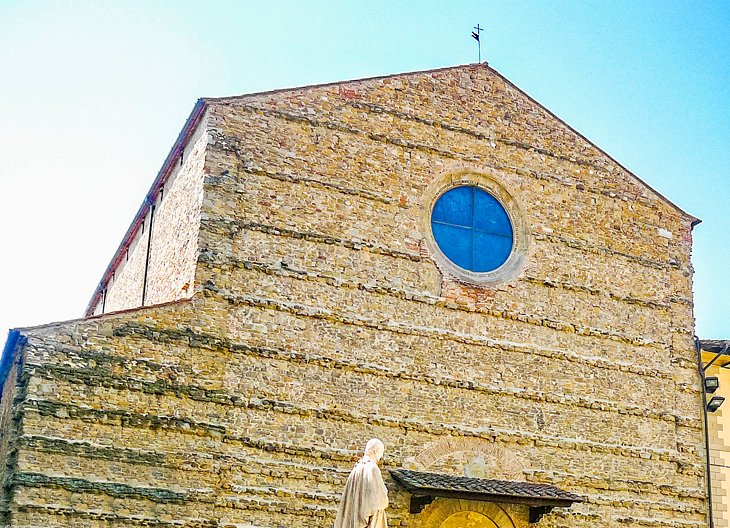
In the center of Arezzo, the Basilica of San Francesco was begun in 1290, but various rebuildings and extensions continued to the 20th century. The chapels on the left-hand side of the church were added in the 15th century. Above the doorway is a circular window by Guillaume de Marcillat, Pope Honorius III Approving the Rule of St. Francis.
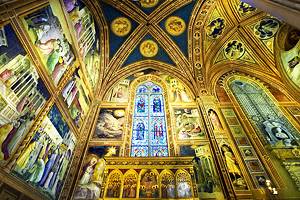
The church stands out for its celebrated frescoes, brought to light again in the early 20th century. The most outstanding of these are in the main choir chapel, a cycle telling the story of the cross painted by the leading master of the Early Italian Renaissance, Piero della Francesca.
They rank among the most expressive works in the whole of Italian painting, with solemn figures set against a background of landscapes, flowers, and stately apartments in compositions of extraordinary skill, almost radiant in their depiction of character and events. The late 13th-century painted Crucifix, which formerly hung in this chapel, is now in a lateral chapel on the left.
Address: Piazza San Francesco, Arezzo
5. San Domenico
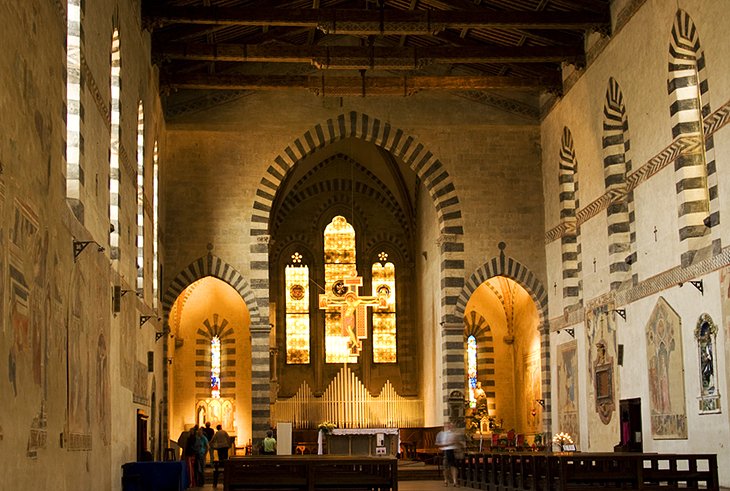
North of the cathedral, this aisleless church with its plain facade is one of the most impressive of the Mendicant Orders' 13th-century churches. It was founded in 1275 and thought to have been designed by Nicola Pisano.
The original campanile contains two 14th-century bells. Inside are the excellent 14th- and 15th-century frescoes, The Virgin with Saints John, Dominic, and Nicholas by Parri di Spinello and Saints Philip and James by Spinello Aretino.
On the right-hand side of the nave is a Gothic tabernacle known as the Altare Dragondelli done about 1350 by Giovanni di Francesco. On the high altar is a Cimabue Crucifix painted between 1260 and 1270.
Address: Piazza San Doménico, Arezzo
6. Casa del Vasari (Vasari House)
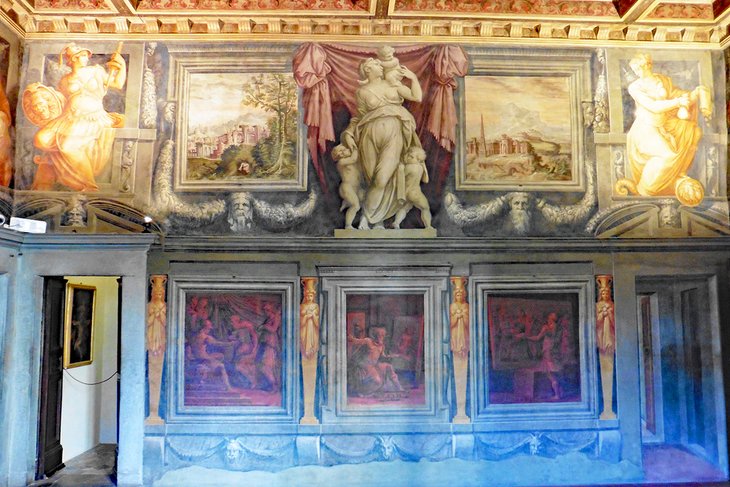
If you've seen the works of the architect/artist Giorgio Vasari at the Palazzo Vecchio and elsewhere in Florence, you can imagine what his own home might look like, where he could indulge all his artistic whims and talents.
He acquired this two-story house in 1540, and between that year and 1548, he decorated it with a series of magnificent frescoes; those in the Cámera d'Apollo are particularly outstanding. Colors are more intense than in most frescoed residences, adding to the drama created by the deeply coffered ceilings.
Address: Via XX Settembre 55, Arezzo
7. National Archaeological Museum and Roman Amphitheater
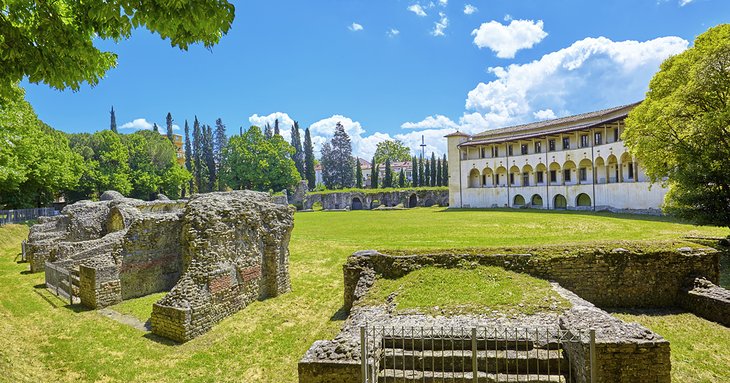
The Gaius Cilnius Maecenas National Archaeological Museum occupies the 14th-century former Monastery of St. Bernard, built over the remains of a second-century AD Roman amphitheater. Highlighting its more than 20 galleries is an extraordinary collection of sealed Arezzo ware, a form of pottery dating to Roman times and discovered during excavations.
Also outstanding is the jewelry recovered from the nearby Poggio del Sole Etruscan necropolis and a large multi-colored stone panel of battle scenes, from the pediment of a temple. Roman artifacts include mosaics and an exceptionally rare example of gold-on-glass work.
The ruins of a Roman amphitheater, which was constructed in the second century (probably during the reign of the Emperor Hadrian), are adjacent to the archaeological museum. You can see that the former Monastery of St. Bernard follows the curve of its outer walls.
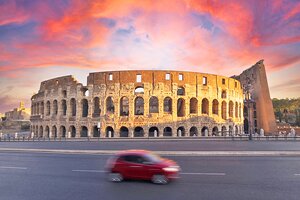
The floor of the arena measured only slightly smaller than that of the Colosseum in Rome, but it was not nearly as tall — about 22 meters —and seated only 13,000 spectators, a little more than one fourth of the Colosseum's capacity.
Address: Via Margaritone 10, Arezzo
8. Shop for Antiques
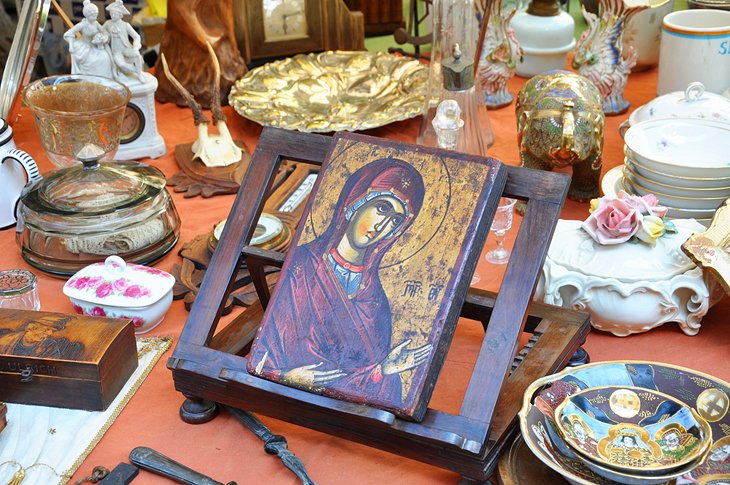
The first full weekend of each month, Piazza Grande is filled with antiques dealers, whose discplays spill over into all the surrounding streets. Artworks hang from walls of buildings alongside the narrow streets, goods are displayed on tables and spread on rugs on the street.
Antiques range from beautiful Italian silver work and imposing 19th-century furniture to Art Deco lamps; you simply never know what will turn up here. Bargaining is expected, but will not always result in a discount.
In addition to the fair, and open between fair weekends, as well as during the shows, are more than 20 antiques shops. Most of the items you'll find here are Italian, but there are works from other places as well. Ivan Bruschi, a 20th-century antiques dealer and collector, founded the show in 1968 and it has since become the most famous in Italy.
The monthly antiques fair and the number of shops that line its narrow streets make antiques shopping one of the most popular things to do in Arezzo; it's also known for its gold and silver jewelry.
9. Medici Fortress
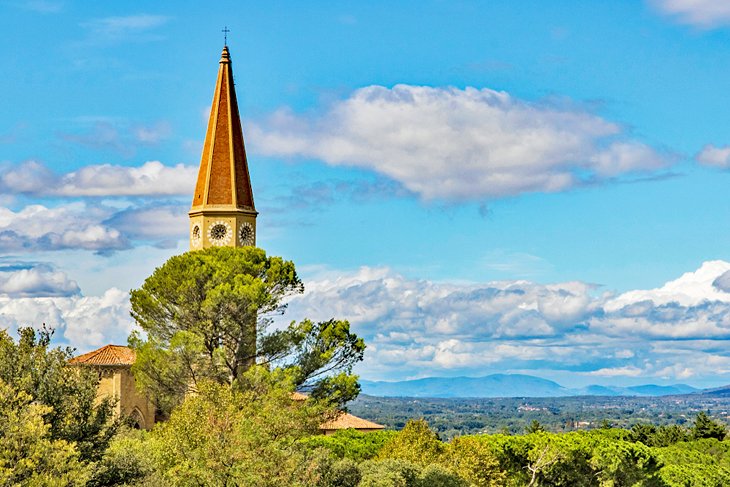
Built in 1538 at the direction of Cosimo I de Medici to strengthen the defensive system of the Medici holdings, the fortress was constructed over buildings dating from as early as the 3rd-2nd century BC. It is in the shape of a five-pointed star, a popular plan at the time.
Disarmed and largely dismantled by the French in 1800, it was restored in the 1860s and at the end of that century given to the town to be used as a public space. In disrepair, the citadel was closed for many years until it was excavated and again restored for opening in 2016. Much of it, including the lower portions of the walls, had been buried in earth and rubble, so this was the first look the public had of what lay inside.
Archeological work had also unearthed the remains of a Roman dwelling dating from the late 1st century BC or early AD, and the 11th-century church of San Donato in Cremona with an exceptionally well-preserved crypt. The ramparts have been restored, and you can walk the walls for views into the town and across the valley. Under the walls is a public park; admission is free, and the gallery inside is used for art and other exhibitions.
10. Museum of Medieval and Modern Art
The outstanding collection in the Museo Nazionale d'Arte Medievale e Moderna represents the history of art in Tuscany, from ancient sculptures and Etruscan pottery to the Renaissance artists to contemporary works. Prominent are works by the Arezzo native, architect/artist Giorgio Vasari, and beautiful ceramic works by Della Robbia. There are also works by Luca Signorelli, best known for his magnificent frescoes in the Orvieto Cathedral.
The art and artifacts are well displayed over three stories of the elegant Renaissance palace of the Bruni family. The galleries surround a courtyard with a columned arcade, and there is a Renaissance garden. Admission to the museum is free.
Address: Via San Lorentino 8, Arezzo, Italy
11. Ivan Bruschi House & Museum
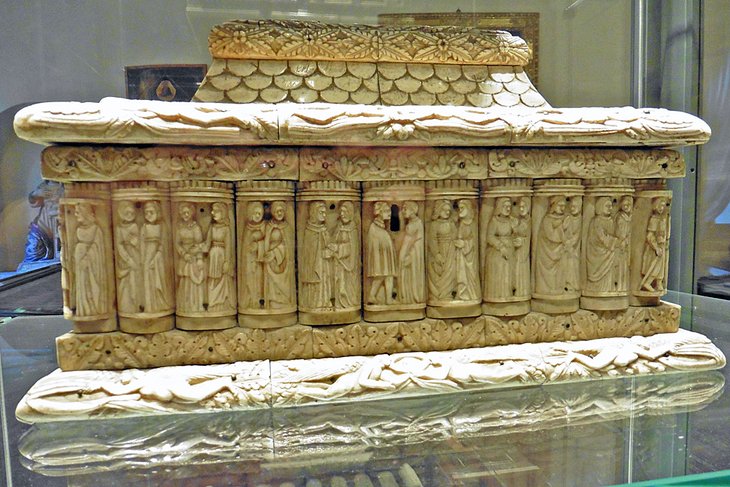
Like many who make their living buying and selling antiques, the 20th-century antique dealer Ivan Bruschi was also a discriminating collector. Over the course of his long career, his collections filled his home in Arezzo, and at his death, both the house and its contents were left as a museum.
The house itself is the medieval Palazzo del Capitano del Popolo, and Bruschi's collections furnish it much as he lived in it. What makes the home of a passionate collector stand out from a historic house museum is that a collector has chosen each piece separately, in this case from a lifetime of buying and selling estates and collections. Pieces from all over the world range from furniture, art, and decorative items to ancient artifacts and an outstanding ceramics collection.
Address: Corso Italia 14, Arezzo
12. Palazzo delle Logge and Palazzo Pretorio
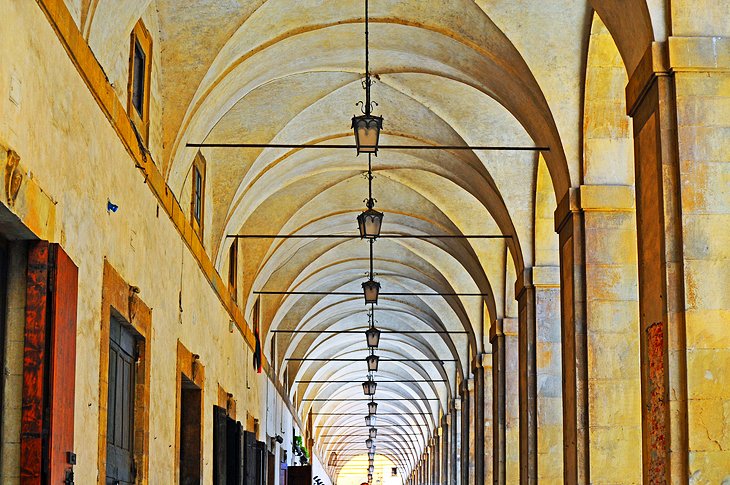
The Palazzo delle Logge fills the entire northeast side of Piazza Grande, creating an elegant border for the square. Built between 1573 and 1581 to the design of Giorgio Vasari, it takes its name from the wide loggias of unadorned vaulting opening on to the square. In front of the palazzo is a reproduction of a pillory where those who had committed crimes were displayed for public ridicule.
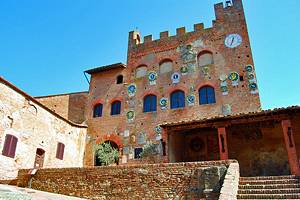
Facing the end of the Logge, on Via dei Pileati, the impressive Palazzo Pretorio was originally built in 1322, but it was altered significantly in the 17th century. The facade, with two orders of windows, is decorated with a number of coats of arms carved in stone relief.
These are the symbols of the podestà (local representatives) and the commissari (Florentine governors) who governed Arezzo from the 15th century onwards. From 1404 to 1926, the palazzo also served as a prison; it now houses a municipal library.
Address: Piazza Grande, Arezzo
13. Day Trip to Camáldoli
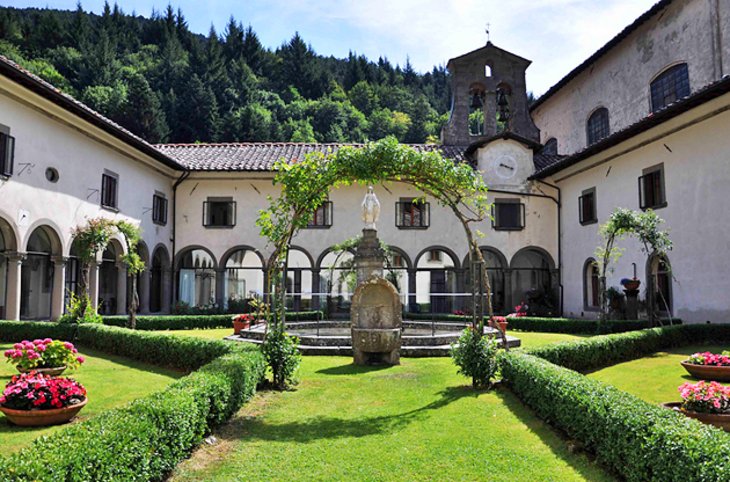
The Abbey of Camáldoli, still the center of the Camaldolese Order, lies in the densely wooded hills of northeast Tuscany, about 50 kilometers north of Arezzo, as it has since its founding in 1012. The church was rebuilt at the beginning of the 16th century and was given its present Baroque form and large ceiling fresco in the late 18th century.
In the 16th century, Giorgio Vasari painted a number of pictures for the church, including Descent from the Cross, Virgin and Child with Saints, and Saints Donatus and Hilarianus. The charming cloister was built in 1543, as was the pharmacy at the entrance to the monastery, which still contains its original cabinetry.
14. Day Trip to Monte San Savino
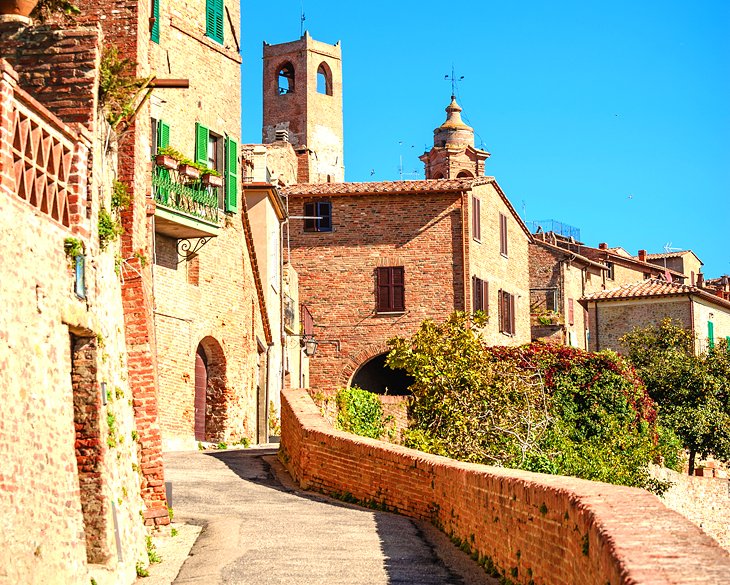
An important center of culture in the Middle Ages, the town of Monte San Savino sits atop a hill, surrounded by satellite hilltop villages. The early-14th-century Convent of Sant'Agostino and its slightly later cloister were renovated early in the 16th century by Andrea Sansovino, a native of Monte San Savino who became one of the leading Renaissance architects.
In the church, look for Giorgio Vasari's painting, The Assumption. Also worth seeing in Monte San Savino are the columned Logge dei Mercanti and the Palazzo di Monte, with its open atrium.
Where to Stay in Arezzo for Sightseeing
We recommend these charming hotels in Arezzo with easy access to the old town and most popular places to visit in Arezzo:
- Luxury Bella di Ceciliano is a 17th-century villa, set on a hilltop amid large gardens, a short drive to town. Rooms have exposed beams, and guests can enjoy the Jacuzzi.
- The mid-range Hotel Continentale is in a great location close to the attractions, with a rooftop terrace and hot tub.
- The affordable Minerva Hotel is near the old town, with modern décor in the air-conditioned guest rooms. The staff is especially helpful, and parking is free.
- In the old town, the budget-priced Bed & Breakfast Antiche Mura occupies a 13th-century building, but has attractive rooms in a modern décor; some are family-sized.
Map of Attractions & Things to Do in Arezzo
More Related Articles on PlanetWare.com
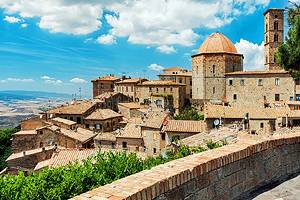
Discovering Tuscan Hill Towns: From Arezzo it's easy to visit more of the small medieval towns that are among the top-rated tourist attractions in Tuscany. The closest is Cortona, where you'll find more Etruscan remains. Or visit San Gimignano, famed for its dozen medieval towers, or lovely Montepulciano; farther to the west, you can see the former Etruscan town of Volterra.
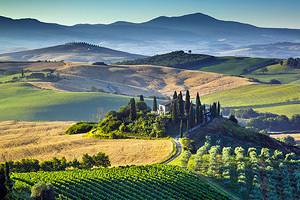
Exploring More of Tuscany: Not far from Volterra is one of the best places to visit in Italy: Pisa and its famous Leaning Tower. Florence is not far away from Arezzo, with its magnificent Cathedral of Santa Maria del Fiori and the Renaissance treasures of the Uffizi Gallery. Our pages on the Top-Rated Tourist Attractions in Siena and Exploring Siena's Cathedral of Santa Maria Assunta can help you find the best places to see in Siena.