12 Top-Rated Tourist Attractions in Pistoia
The influences of both of Pistoia's neighboring cities - Florence and Pisa - are evident in the architecture and decoration of its medieval churches, and it is these artistic delights that are the main attraction for tourists.
You may be surprised to see so many fine buildings in a relatively small town, but this is a good example of the vigorous spirit of enterprise and artistry throughout northern Tuscany during the medieval period, when Pistoia was the home of several noted artists. That legacy has lasted into modern times. Both artist Marino Marini (1901-1980) and architect Giovanni Michelucci (1891-1990) were born in Pistoia, and documentation centers here spotlight their works.
Michelucci, who designed the Santa Maria Novella railway station in Florence, is considered one of the greatest contemporary Italian architects and town planners. Pistoia is one of the best places to visit in Tuscany to see the continuing importance of the arts here from the early Middle Ages to the current day. Plan your sightseeing with our list of the top tourist attractions and things to do in Pistoia.
- 1. Cathedral of St. Zeno
- 2. Baptistery
- 3. The Church of Sant'Andrea
- 4. Giardino Zoologico di Pistoia (Zoo)
- 5. Ospedale del Ceppo & Pistoia Sotterranea
- 6. San Giovanni Fuorcivitas
- 7. San Bartolomeo in Pantano
- 8. Palazzo Fabroni (Contemporary Art Center)
- 9. Piazza della Sala
- 10. Museo Capitolare (Cathedral Treasury)
- 11. Palazzo del Comune (Municipal Museum)
- 12. Day Trip to Montecatini
- Where to Stay in Pistoia for Sightseeing
- Getting to Pistoia from Florence
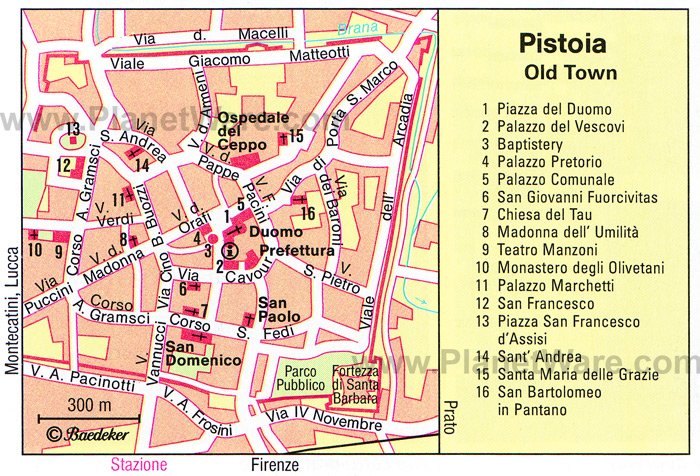
- Map of Attractions & Things to Do in Pistoia
1. Cathedral of St. Zeno
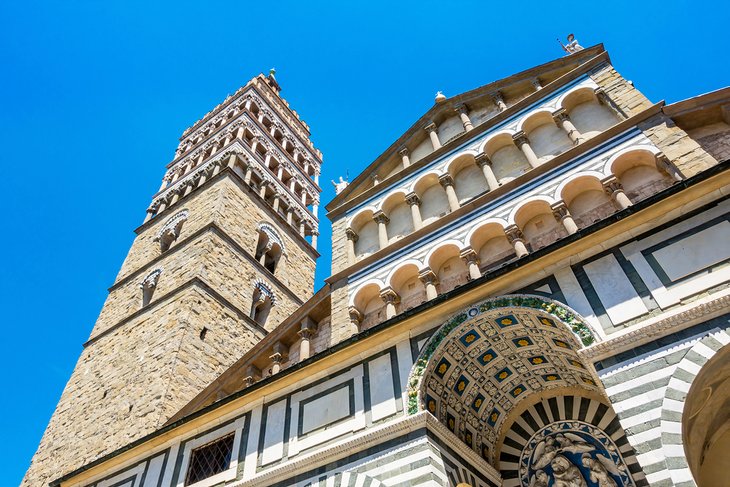
The Cattedrale di San Zeno, built in the 12th to 13th century on the site of a fifth-century church, has enough artistic quality to make it alone worth a visit to Pistoia. The facade, with its seven-arched portico and three doorways, was completed in 1311. The vaulting behind the larger central arch is decorated with panels of majolica, and the lunette over the central doorway has a glazed terra-cotta relief, Virgin and Child with Two Angels by Andrea della Robbia (1505).
Above the arcades are marble figures of the church's patrons, the saints James and Zeno. At the left end stands a massive campanile, 67 meters high, the base of which may have been a Lombard watch-tower.
The campanile has become the emblem of Pistoia. The cathedral's spacious interior has pillars and columns with richly carved capitals, and just inside the right-hand doorway is the Tomb of Cino da Pistoia, a Sienese work from about 1337.
A doorway in the south aisle leads into the Cappella di San Iácopo, with a silver altar that is a masterpiece of silversmithing, created in stages between 1287 and 1456, and thus showing a succession of different styles from Early Gothic to Renaissance.
On the front are 15 New Testament scenes by Andrea di Jácopo d'Ognabene (1316); on the right-hand end, nine Old Testament scenes by Francesco di Niccolò and Leonardo di Giovanni (1361-64); and on the left-hand end, nine scenes from the life of St. James by Leonardo di Giovanni (1376-71). The two figures of prophets on the left-hand side of the upper part are attributed to Brunelleschi (1377-1446).
Address: Piazza del Duomo, Pistoia
2. Baptistery
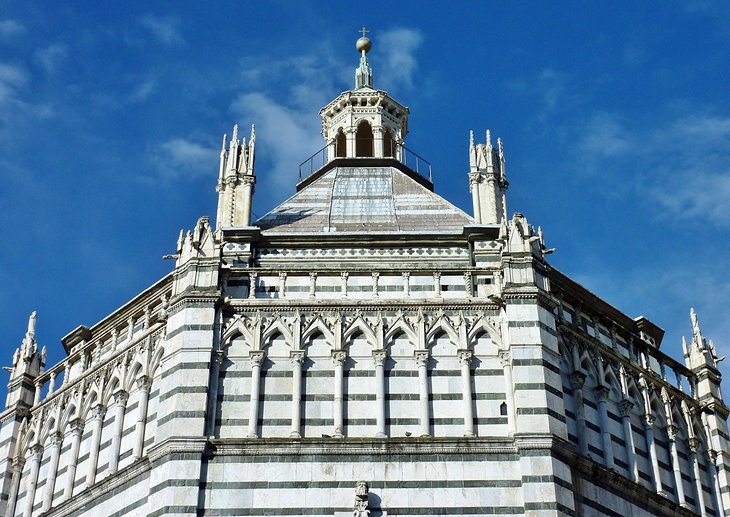
Opposite the west end of the cathedral is the baptistery, built between 1338 and 1359 by Cellino di Nese to the designs of Andrea Pisano. The striking building is faced with alternating bands of white and green marble, and in the tympanum of the main doorway is a figure of the Madonna.
Above the doorway, a pediment contains a small rose-window, and below this, on the lintel are scenes from the life of John the Baptist. At either side of the doorway are figures of St. John the Baptist and St. Peter, and immediately to the right of the doorway stands a small external pulpit. The baptistery also has a 13th-century font by Lanfranco da Como.
Address: Piazza del Duomo, Pistoia
3. The Church of Sant'Andrea
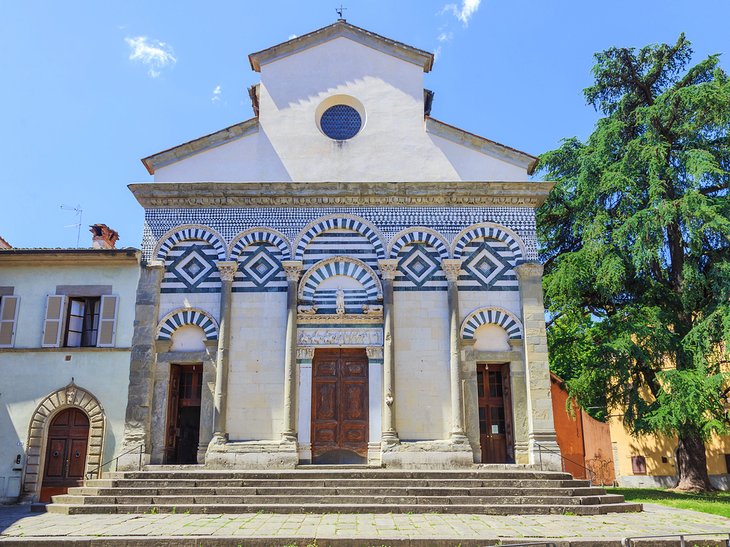
The origins of the Church of Sant'Andrea go back to the eighth century, with work continuing into the 12th century, but the church remained unfinished. The facade has blind arcading of white and green marble, and in the main doorway are two lions flanking a statue of St. Andrew in the manner of Giovanni Pisano.
On the architrave, a relief depicts the Three Kings before Herod and in Bethlehem by Gruamonte and Adeodato (1166), and the capitals of the pillars framing the doorway are also richly carved. The impressive nave is tall and narrow, with a timber roof structure.
The pulpit is one of Giovanni Pisano's finest works (1298-1301), similar to the one in the Cathedral of Pisa. It rests on seven porphyry columns; two supported on lions, one on a bent human figure, and the central one on a lion and an eagle.
The relief panels round the pulpit depict the Annunciation, the Nativity, the Adoration of the Kings, Joseph's Dream, the Slaughter of the Innocents, the Crucifixion, and the Last Judgment. Between the panels are Old and New Testament figures. Giovanni Pisano was also responsible for the wooden crucifix on the tabernacle in the third chapel on the left.
4. Giardino Zoologico di Pistoia (Zoo)
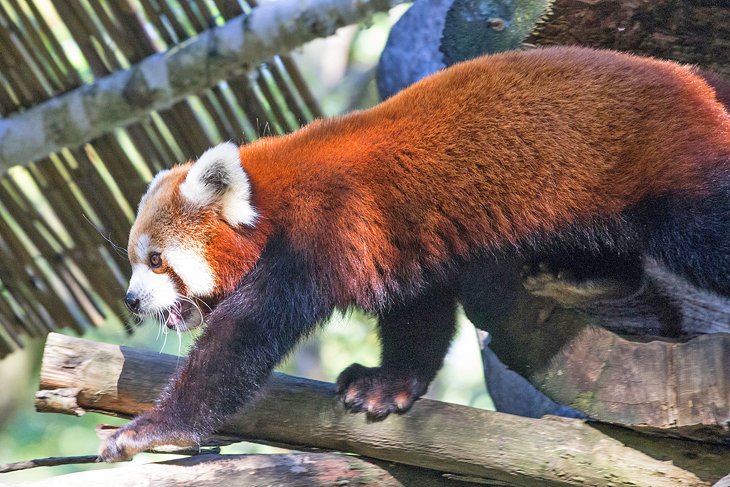
A surprising variety of exotic and European animals live in the ample enclosures of this zoo about 15 minutes outside of central Pistoia. The shaded grounds are pleasant to stroll, even in the summer, and you'll see tigers, Indian elephants, brown bears, giraffes, zebras, lesser pandas, lynx, pigmy hippos, wolves, alligators, crocodiles, pelicans, penguins, tropical birds, flamingoes, and smaller animals among the 400 inhabitants.
Children can feed some of the animals, including the friendly goats, and the daily penguin shows are a big hit. The animals, the genial staff, and the large playground make this zoo one of the best things to do with children in Pistoia.
Address: Via Pieve a Celle Nuova 160/A, 51100 Pistoia
Official site: https://www.zoodipistoia.it/en/
5. Ospedale del Ceppo & Pistoia Sotterranea
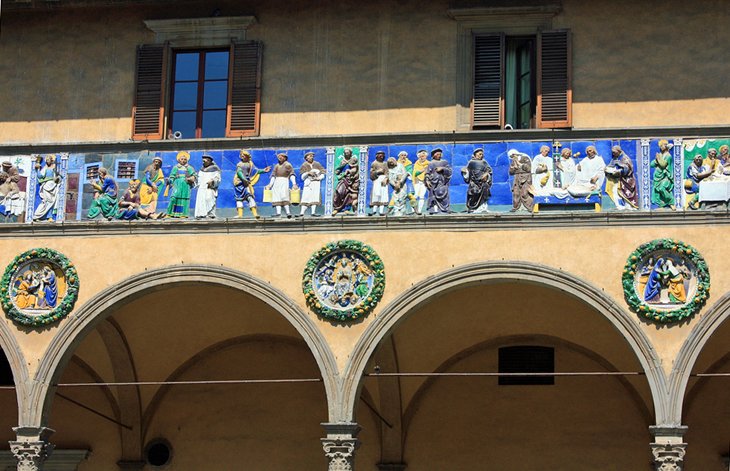
The Ospedale del Ceppo, a medieval hospital to the north of the Palazzo del Comune, was founded in the 13th or 14th century and takes its name from the offering-box (ceppo) in which alms for the poor and sick were collected. At the beginning of the 16th century, it became a dependency of the Ospedale di Santa Maria Nuova in Florence, and following the Florentine pattern, a portico was built in front of the facade.
The splendid polychrome majolica frieze was the work of artists from the studio of the della Robbias (in particular Santi Buglioni and Giovanni della Robbia). It depicts the Seven Works of Mercy alternating with the Cardinal and Theological Virtues. In medallions below the frieze are scenes from the life of the Virgin.
A newly opened feature is the recently excavated Pistoia Sotterranea, an underground segment of the original hospital dating back to 1100. The one-hour underground tour explores the tunnels, foundations, and watercourses over which the hospital was built, as well as one of Italy's oldest surgical amphitheaters where 15th-century medical students learned anatomy from the dissection of cadavers.
You'll learn about early attempts at keeping hospitals sanitary, as well as how Pistoia responded to the Plague. If you're not there when a tour is offered in English, there is good written material to fill in the details. Note that the ground may be wet and uneven, and that this is not a good tour for those who are claustrophobic.
Address: Piazza Giovanni XXIII, Pistoia
6. San Giovanni Fuorcivitas
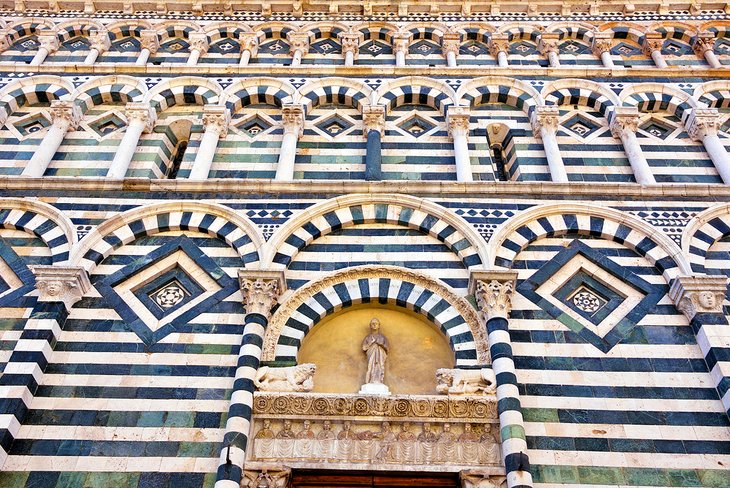
The building of this church (whose name translates to St. John outside the town), at the time beyond the town walls, began in the mid-12th century but was completed in the 14th century. Although the west front is in plain brick, the south side of the church is faced with bands of white and green marble, with detailed carved decoration on its arcading.
On the lintel of the doorway is a relief, The Last Supper by Gruamonte (c. 1160), and in the tympanum above this is a figure of John the Baptist flanked by two lions, done in Pisan style in the 14th century. The most notable feature in the interior of this aisleless church is the 1270 pulpit by Fra Guglielmo da Pisa, which has reliefs of the Annunciation, the Adoration of the Kings, and several others relating to the life of Christ.
The holy water stoup has representations of the four Cardinal Virtues, an early work by Giovanni Pisano. To the left of the high altar is a polyptych by Taddeo Gaddi done in 1353-55, and on the left- hand side altar, a terra-cotta from the workshop of the della Robbias.
Address: Via Francesco Crispi 2, Pistoia
7. San Bartolomeo in Pantano
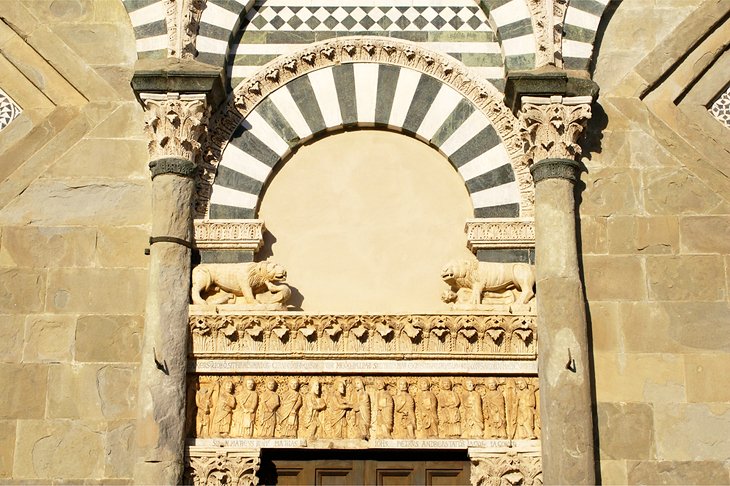
A few minutes' walk from the Duomo, San Bartolomeo was founded in the 700s but rebuilt in its present Romanesque style in the middle of the 12th century. There have been a number of alterations over the centuries, but a 20th-century restoration revealed many of the original Romanesque features.
The façade features the traditional Tuscan alternating bands of dark and light marble. Two carved stone lions flank the architrave, which depicts Christ and the 12 apostles, dating from 1167. Inside, look for the sculpted marble pulpit, created in the 13th century by the master stone-carver, Guido da Como. Note also the wooden crucifix on the high altar and the remaining early frescoes.
Address: Piazza San Bartolomeo, Pistoia
8. Palazzo Fabroni (Contemporary Art Center)
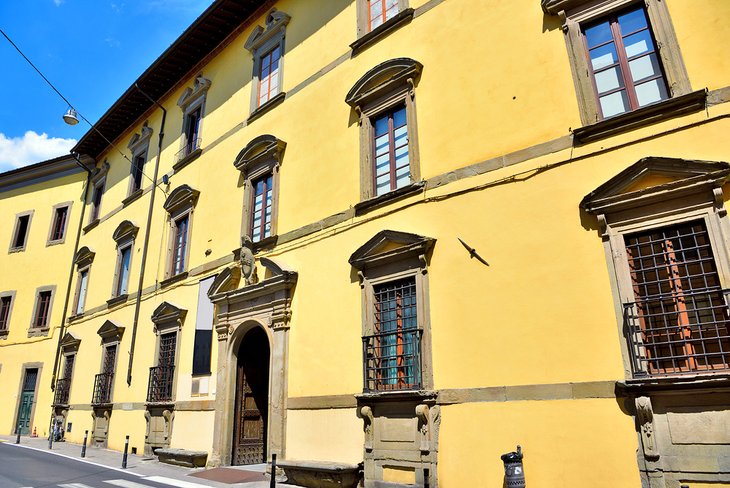
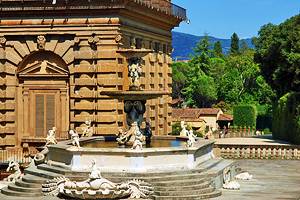
The 17th-century palace of the Fabroni family has been restored to house the Centro Arti Visive Contemporanee, an exhibition space dedicated to local and famous international artists and an important center for collections of modern art.
From the impressive central hall, you can visit rooms each devoted to the works of a single artist: Mario Nigro, Fernando Melani, Gualtiero Nativi, and Agenore Fabbri. Subsequent galleries house collections donated by other contemporary artists whose work has been shown here. Upstairs galleries are devoted to changing displays of contemporary art, including Poor Art, Conceptual Art, and Visual Poetry.
Address: Via di S. Andrea, Pistoia
9. Piazza della Sala
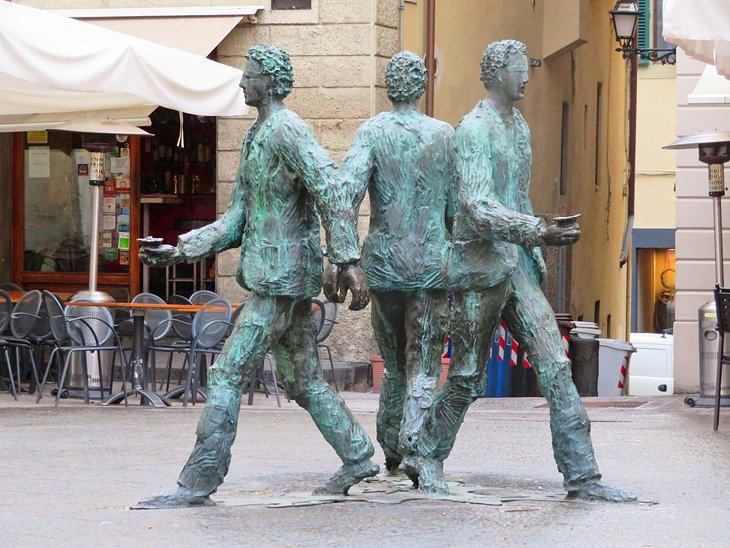
Piazza del Duomo may be the historical and architectural heart of Pistoia, but Piazza della Sala is its commercial and social center. It is one of the city's oldest squares and the scene of Pistoia's market since at least the 11th century.
The daily open-air food market here buzzes with activity in the morning while women do their shopping for the day's meals. It's quiet in the afternoon, then activity picks up after work as people congregate for the evening in the cafes and trattorias. The bronze sculpture, "Il Giro del Sole" by Roberto Barni is a more recent landmark.
10. Museo Capitolare (Cathedral Treasury)
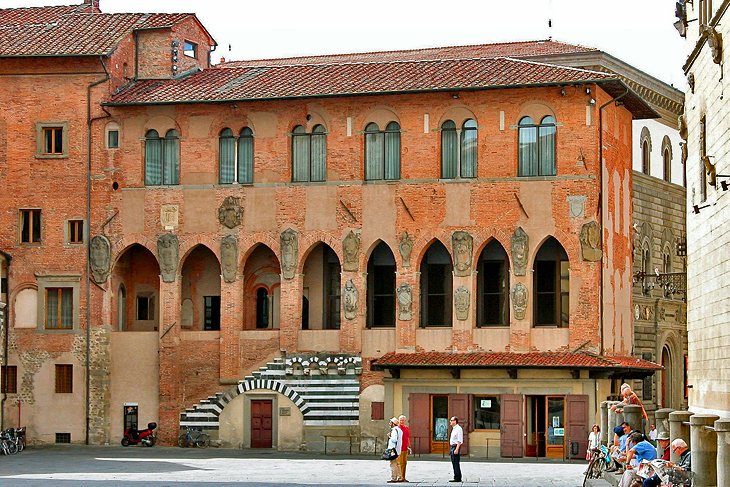
The sacristy leads into the Museo Capitolare, with the Cathedral Treasury, so filled with riches that it is referred to by Dante in the Divine Comedy. Inside, you'll find the reliquary of St. Zeno and Lorenzo Ghiberti's exquisite reliquary of St. James, done in 1407. Also notable are the illuminated manuscripts, a 15th-century terra-cotta Madonna by Pollaiuolo, and a bronze candelabrum (1440) by Maso di Bartolomeo.
The list of priceless works here includes the Cross of St. Atto, done in a Venetian workshop around 1280, and the chalice and chasuble of St. Atto. In the chapel to the left of the altar are a painting, Madonna Enthroned (1485) by Verrocchio and Lorenzo di Credi, and a stele with the figure of Bishop Donato de' Médici by Antonio Rossellino (1475).
The monument of Cardinal Niccolò Forteguerri (1419-73) is probably by Verrocchio and his students, and between the north and central doorways is a font designed by Benedetto da Maiano.
A room in the palace displays a cycle of dry plaster paintings done for a local villa by Ferrara artist Giovanni Boldini, and the collection of more than 40 works is considered one of the world's most important for studying 17th-century Florentine painting.
Address: Piazza del Duomo, Pistoia
11. Palazzo del Comune (Municipal Museum)
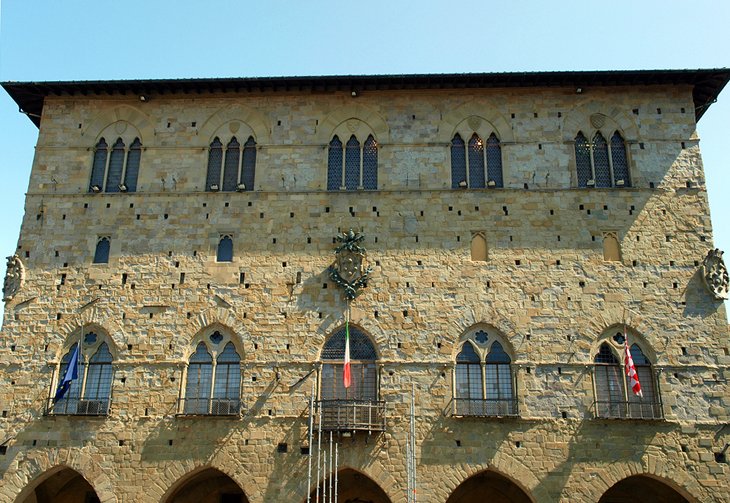
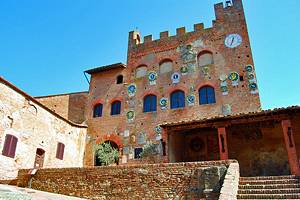
To the left of the cathedral, at the far end of the Piazza del Duomo, is the Palazzo del Comune, begun in 1294 during the rule of a Florentine governor who ruled the city fairly and well, but thereafter work came to a halt and it was not completed until 1385.
In the center of the facade is a large Médici coat of arms, and to the left of the central window is a black marble head, the significance of which is unknown. Inside the palazzo is the Municipal Museum with painted panels, frescoes, and pictures from the 13th to 18th centuries, much of it from churches that have been closed.
The two monumental rooms on the main floor house the oldest paintings on wood, from the 13th to the 16th centuries, and on the upper floor are 17th- to 19th-century canvases.
Address: Palazzo del Comune, Piazza del Duomo 1, Pistoia
12. Day Trip to Montecatini
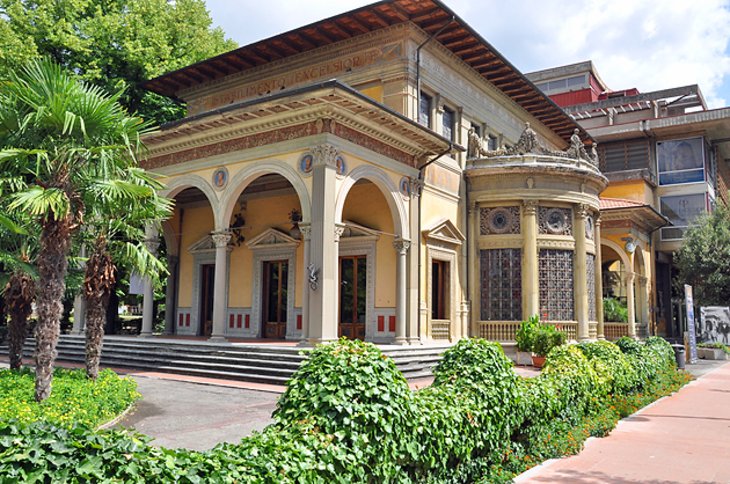
Montecatini Terme, one of Europe's leading spas, is 15 kilometers west of Pistoia and was used by the Romans and perhaps by earlier inhabitants for the healing power of its springs. It rose to its present appearance and importance in the late 18th century, when the various bathing houses were built. Montecatini is now the largest spa in Italy, its waters thought beneficial for treating liver, gallbladder, and intestinal disorders.
From the central Piazza del Popolo, with the Neoclassical church of Santa Maria Assunta, the wide Viale Verdi runs to the spa center. Along the edge of the large park are a series of elegant thermal baths, including the Neoclassical Terme Leopoldine and the 1927 Stabilimento Tettuccio, an imposing Neo-Renaissance-style pavilion with colonnades.
Opposite the Stabilimento Regina is the Accademia d'Arte, with a small museum. At the northeast corner of the park is the station for the funicular to the higher village of Montecatini Alto.
Official site: http://www.termemontecatini.it/en/
Where to Stay in Pistoia for Sightseeing
Below are recommended lodgings close to the historic and artistic attractions in Pistoia, and all are in the moderate price range.
- Battistero Residenza d'Epoca: Right in the Piazza del Duomo, this hotel has rooms looking straight out at the baptistery. It was opened in 2017 after local restaurant owners renovated three adjoining buildings into a lovely boutique hotel. Rooms are very modern, with air-conditioning and beautiful bathrooms. Enjoy sweeping views from the rooftop terrace.
- Locanda dei Fiori: Also in the historic center, with tastefully decorated and spacious, high-ceilinged rooms, this hotel has a cozy feeling throughout. The included breakfast is served on a terrace overlooking the church of St. Bartolomeo; air conditioning, free parking, and a pool are welcome additions.
- Hotel Patria: In the old town near San Giovanni Fuorcivitas, the traditional three-star hotel has updated rooms with breakfast, air-conditioning, a pool, and free parking.
- Hotel Villa Cappugi: About two kilometers north of town in the low foothills, the beautifully restored villa is best known for its excellent restaurant, but those who stay overnight appreciate the luxurious air-conditioned rooms, tennis courts, and pool.
Getting to Pistoia from Florence
Only about 45 kilometers away, Pistoia is a popular day or overnight trip for tourists using Florence as a base. Alternatively, as hotel rates are much lower in Pistoia, many tourists choose to use the smaller city as a base and take the train to see the attractions of Florence on day trips. There are three ways to get between the two cities:
By Train: This is the fastest and easiest, although not the least expensive way. Depending on the train chosen, the travel time is between 35 and 55 minutes, and trains run at least hourly, usually twice an hour. Board the Trenitalia train for Pistoia at Firenze Santa Maria Novella Station (S.M.N. on schedules) or at the Rifredi station; advance booking is recommended, and you can purchase tickets online or at the station. Remember that weekend and holiday schedules include fewer departures.
By Bus: This is the cheapest way to travel, but it can take about 1.25 hours and may require a change midway. Buses depart twice an hour from Porte Nuove, but the small saving on tickets may not be worth the added time.
By Car: Depending on the traffic, it will take you between 30 and 45 minutes to drive to Pistoia. The A-11 is the shortest route, but heavy local traffic often makes it faster to take SS-67 as far as Pontignale and the A-1 autostrada north to the A-11 intersection, then continue west on A-11 to Pistoia. Once here, you will need to park at one of the two free parking lots outside the historic center and take the regular shuttle buses into the historic center. When considering time, remember to add this extra step.
Map of Attractions & Things to Do in Pistoia
More Related Articles on PlanetWare.com
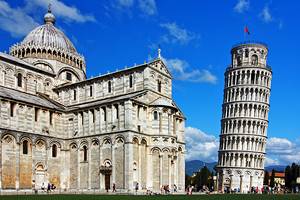
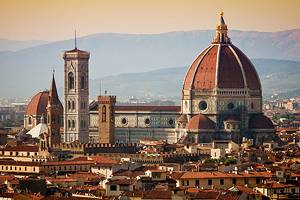
Places to Visit near Pistoia: The region around Pistoia is filled with some of the most popular places to visit in Tuscany. The city of Florence, with its magnificent Cathedral of Santa Maria del Fiore and glittering Renaissance palaces, is less than an hour away. To the west lies the lovely walled city of Lucca and just beyond is the famous Leaning Tower of Pisa with its cathedral and baptistery.
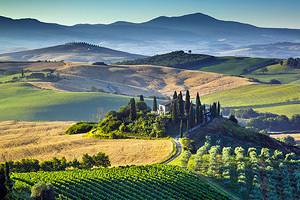
Exploring More of Tuscany: South of Florence is Siena, where you can see fabulous works of art with the help of our Visitor's Guide to the Cathedral of Santa Maria Assunta. Nearby, San Gimignano is one of the small medieval towns that crown hilltops throughout Tuscany, or you can visit the Etruscan sights of ancient Volterra.