20 Top Attractions & Things to Do in Potsdam
Potsdam, the capital of the German state of Brandenburg, lies just 40 kilometers southwest of Berlin in a beautiful area of woodlands and lakes. This former residence of the Prussian rulers is a city of palaces and gardens in a style that's even been given its own name: Potsdam Rococo.
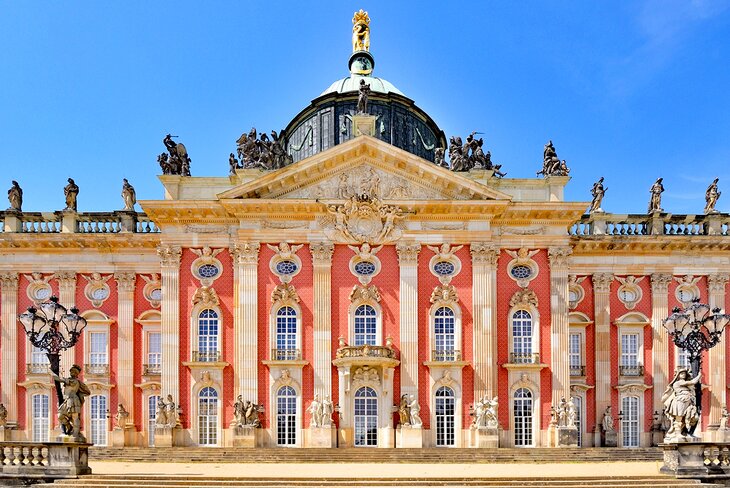
Today, much of this beautiful historic German city is protected under the UNESCO Palaces and Parks of Berlin and Potsdam World Heritage Site status.
With so many great things to do in this beautiful city, it can be somewhat challenging to know where to start. If all you can spare is one day in Potsdam, make sure the magnificent Sanssouci Palace and Park top your list. And have your camera ready: it's for good reason that this splendid palace and its grounds are regarded as one of the best places to photograph in Germany.
The city also hosts a number of exciting festivals, including the Music Festival Potsdam Sanssouci (Musikfestspiele Potsdam Sanssouci), which focuses mostly on classical music, as well as one of the country's largest and most popular Christmas markets.
Find out more about the best places to visit and things to do with our list of the top attractions in Potsdam, Germany.
See also: Where to Stay in Potsdam
- 1. Visit the Historic Home of Germany's Royals: Sanssouci Palace
- 2. Take a Walk in Sanssouci Park
- 3. Tour the New Palace at Sanssouci
- 4. See the Old Masters at Museum Barberini
- 5. Visit the Potsdam Museum at the Old Town Hall
- 6. Explore the Dutch Quarter (Holländisches Viertel)
- 7. Cecilienhof Country House, Neuer Garten
- 8. Explore New Garden and Marmorpalais
- 9. See the Chinese House in Sanssouci Park
- 10. The Church of Peace, Sanssouci Park
- 11. St. Nicholas Church
- 12. Learn about German Film-making at Filmmuseum Potsdam
- 13. Enjoy Movie-Themed Rides at Filmpark Babelsberg
- 14. Charlottenhof Palace
- 15. Biosphäre Potsdam
- 16. Take a Tour of the Steam Pump House, Sanssouci
- 17. View the Observatory at Einstein Tower
- 18. Russische Kolonie Alexandrowka
- 19. The Birthplace of the Movies: Babelsberg
- 20. Experience the Chilling KGB Prison (Memorial Leistikowstraße)
- Where to Stay in Potsdam for Sightseeing
- Tips and Tactics: How to Make the Most of Your Visit to Potsdam
- Map of Attractions & Things to Do in Potsdam
1. Visit the Historic Home of Germany's Royals: Sanssouci Palace
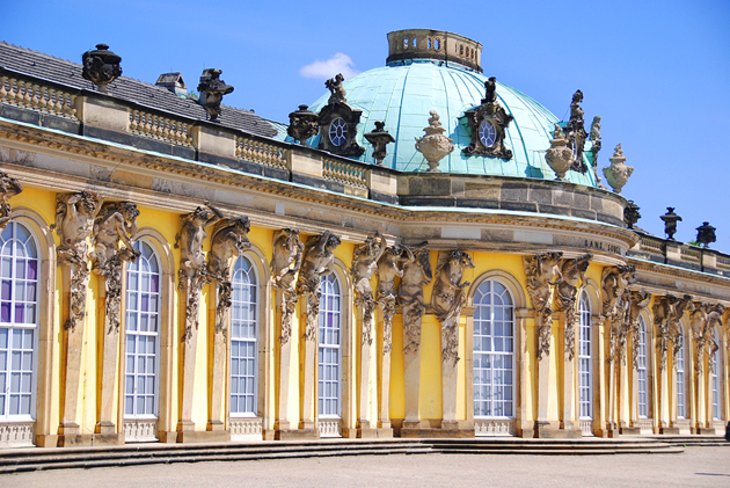
Widely considered one of the top tourist attractions in Germany, Sanssouci Palace (Schloss Sanssouci) was built in 1745 based on sketches by Frederick the Great. The result, a splendid single-story Rococo building with an elliptical dome in the center and circular rooms at each end, is simply spectacular. The garden front has rich plaster decorations, while on the rear is the Grand Courtyard, enclosed by colonnades of Corinthian columns.
The most notable interior features of Sansouci Palace are the oval Marble Hall, with its double Corinthian columns; the Little Gallery, with its elaborate decorations; the Concert Room with its large murals; the Bedroom and Study; the Library, with many antique busts; and the Voltaire Room.
Also worth checking out are the splendid New Rooms, or Neue Kammern. Built in 1747 as an orangery and later converted into a gardener's house, its interior is richly decorated. English-language audio guides are available for self-guided tours lasting approximately 40 minutes.
A fun time to visit is during the popular Night of the Palaces. This unique two-day event is held in June and sees Sanssouci Palace and Park open to the public after dark.
If you're visiting from Berlin and want to cram as much of this spectacular palace and its grounds into your itinerary as it will handle, you may want to consider joining an organized tour. The Potsdam half-day sightseeing tour from Berlin includes Sanssouci Palace and its beautiful gardens, as well as the Dutch Quarter and New Palace, all while avoiding line-ups. This fun four-hour guided tour also includes transport from a central location in Berlin.
Address: Maulbeerallee, 14469 Potsdam, Germany
Read More: Top-Rated Day Trips from Berlin
2. Take a Walk in Sanssouci Park
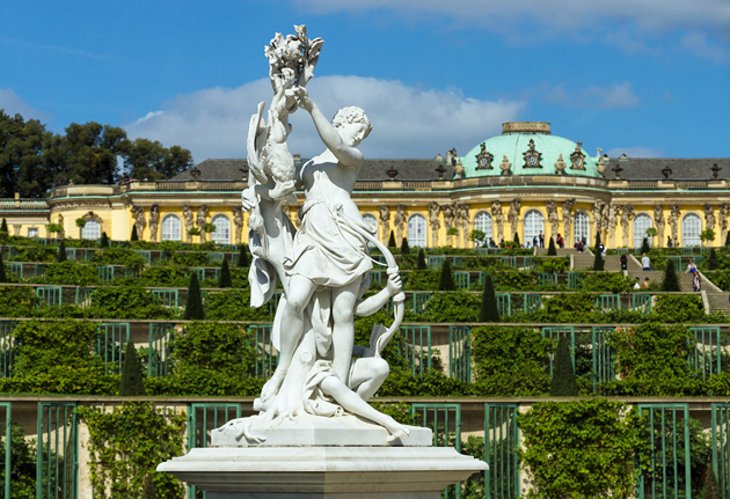
Sanssouci Park is the site of many beautiful gardens, buildings, and works of art. It's a pleasure to walk around, and makes a great starting place for a Potsdam cultural experience. The oldest part of the park dates back to 1744 and, along with its abundance of buildings and works of art, is considered the best example of Potsdam Rococo, reflecting as it does the influence of Frederick the Great.
The park entrance lies at the east end of Hauptallee, the property's main avenue. It's easy enough to find: just look for the tall obelisk near the main gate.
Once you're in you'll enjoy highlights including the lovely Neptune's Grotto, one of a series of roundels in the park, this one with the busts of four Moors. Look out for the splendid Picture Gallery at the Orange Roundel, too. Here you'll see many excellent 17th-century paintings, including works by Rubens, van Dyck, and Caravaggio.
Also worth seeing here is the Great Fountain with its representations of the four elements and of mythological figures. Have your camera at the ready!
Address: Zur Historischen Mühle 1, 14469 Potsdam
3. Tour the New Palace at Sanssouci
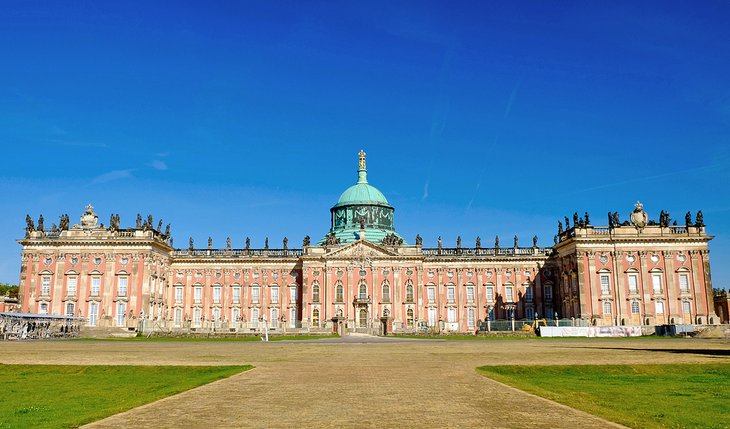
The New Palace (Neues Palais) was built between 1763-69 in red brick relieved by sandstone, with a copper dome. The palace's interior is sumptuously decorated, particularly in the Marble Hall, the Upper and Lower State Apartments, the Marble Gallery, and Theater.
You'll also see some of the palace's most valuable furniture, pictures, porcelain, and works of art. If you've got time, the New Palace is best viewed as part of an extended English-language guided tour that visits the King's Apartment.
While walking around New Palace, head to the rear of the building. Here you'll find the Communs, or Domestic Offices, two brick buildings in Baroque style with columned porticoes and curving external staircases. Between the two buildings are Corinthian colonnades and a triumphal arch.
In front of the New Palace are a number of other important structures, including the Ancient Temple and the Temple of Friendship built on the basis of sketches by Frederick the Great.
Address: Sanssouci, Am Neuen Palais, 14469 Potsdam
4. See the Old Masters at Museum Barberini
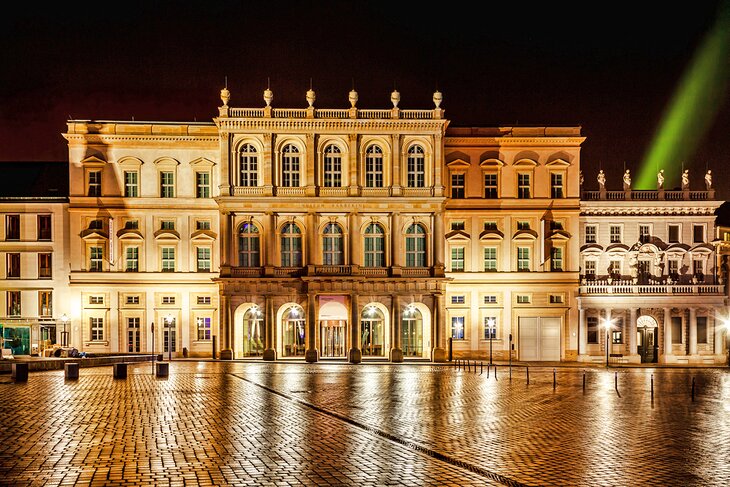
One of the newest attractions in this extremely old city, Museum Barberini opened in 2017 on the Old Market Square site once occupied by the former Barberini Palace, a building which was destroyed during a WWII bombing raid.
Already regarded as one of the top art museums in Germany, the facility's bright, modern galleries are home to a large collection of works from the country's leading painters, stretching from the time of the Old Masters to contemporary art.
Notable Impressionist artists whose work is featured include the likes of Monet and Rodin, as well as Edvard Munch. Regular temporary exhibits are also worth looking into and feature international collections of repute.
Daily English-language guided tours are available, as are audio guides. There's also a shop and a restaurant located on-site; weather permitting, opt for courtyard seating.
Address: Humboldtstraße 5-6, 14467 Potsdam
5. Visit the Potsdam Museum at the Old Town Hall
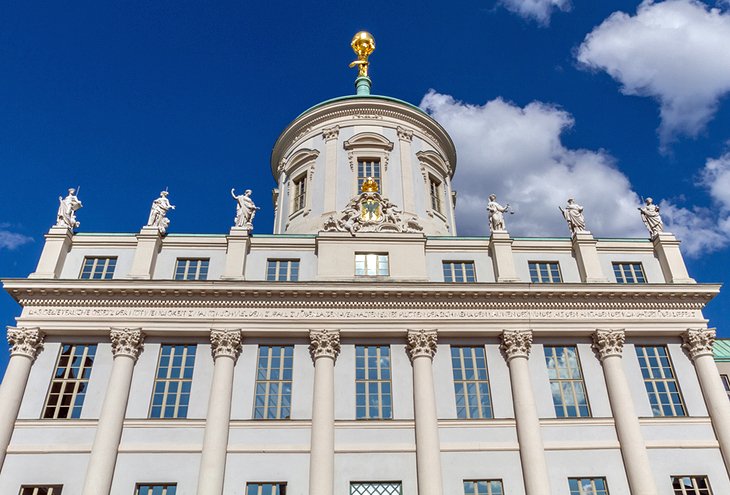
In Potsdam's Alter Markt, the Old Market Square, stands the former Town Hall, or Altes Rathaus. Now better known as a center for cultural events and activities, this splendid Baroque building was built in 1753 with three-quarter-length Corinthian columns and a tower with a stepped dome.
Be sure to look for the gilded figure of Atlas with the world on his back, the one original feature to survive the vagaries of weather and war. Extensively rebuilt after WWII, the building is used for exhibitions and concerts and houses the Potsdam Museum. It's worth visiting for its fine collections related to local art, culture, and the city's 1,000-plus-year history.
The Old Town Hall is linked by an intervening wing to the Baroque Knobelsdorff-Haus dating from 1750, also used for cultural programs.
Address: Am Alten Markt 9, 14467 Potsdam
6. Explore the Dutch Quarter (Holländisches Viertel)
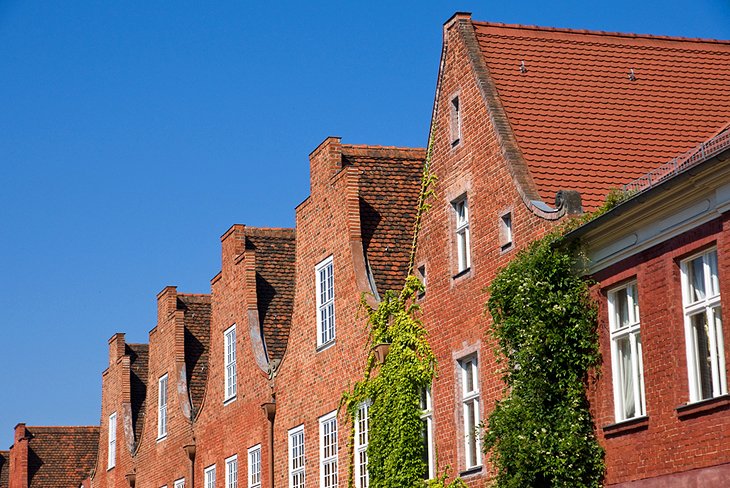
To the north of Bassinplatz lies the famous Dutch Quarter, the Holländisches Viertel. Notable for its 134 charming red brick houses graced by shuttered windows, gables, and white trim, the neighborhood was built between 1737 and 1742 by Dutch craftsmen. Today, this charming community is the largest collection of Dutch-style homes outside the Netherlands.
Covering four city blocks, it's as popular a place to visit for tourists as it is with locals, who flock here for its numerous boutique shops, quaint cafés, and first-rate restaurants. Anticipate spending a few hours exploring the area on foot, especially if you take in Johann Boumann House, a museum dedicated to the architect who led this remarkable 18th-century building project.
An easy stroll leads to the Brandenburger Strasse pedestrian zone with its houses built between 1733-39 for the billeting of troops.
Address: Holländisches Viertel 1, 14467 Potsdam
7. Cecilienhof Country House, Neuer Garten
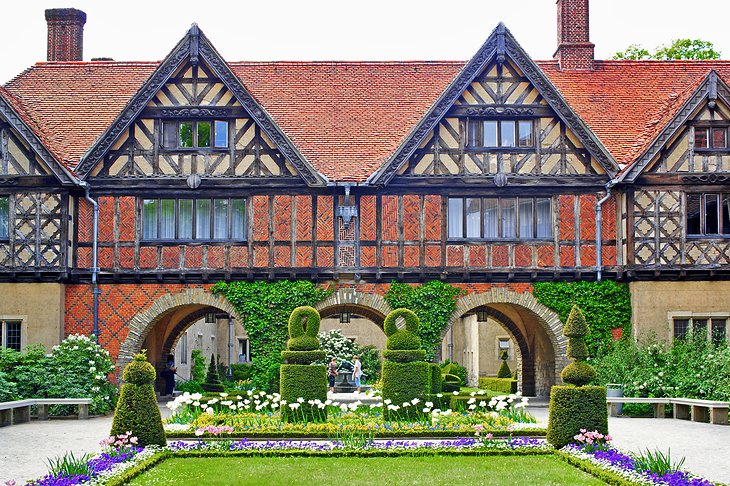
One of the more interesting of the many other buildings found in Neuer Garten is Cecilienhof Country House (Schloss Cecilienhof). Built between 1914-17 in the style of an English Tudor country house, Cecilienhof is most famous as the meeting place of the Potsdam Conference of July-August, 1945, between the US (Truman), the UK (Churchill), and the USSR (Stalin) at the end of WWII.
Now set up as a museum, the building is wonderfully preserved in the state it was in during the conference, including the main conference room itself. Many original artifacts remain in place, along with displays detailing the event and its significance. Other highlights include the obelisk in the courtyard and the property's lovely gardens.
Address: Im Neuen Garten, D-14469 Potsdam
8. Explore New Garden and Marmorpalais
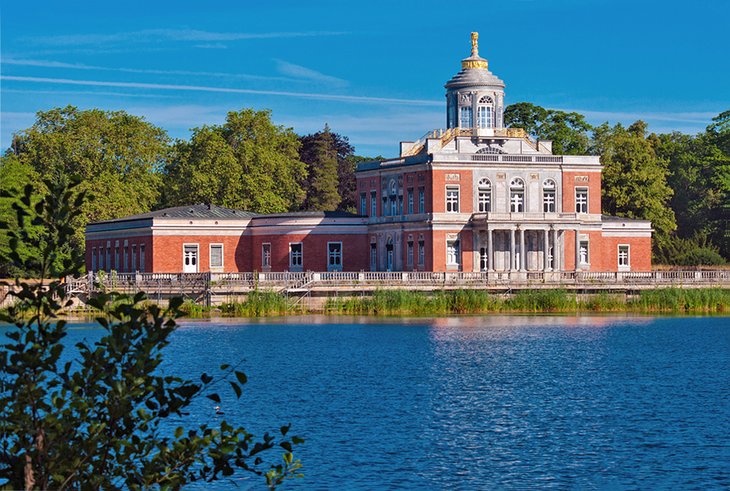
Potsdam's other large park, the New Garden (Neuer Garten) lies on the shores of the Heiliger See and covers an area of 253 acres. Splendidly landscaped in the sentimental style of the late 18th century and laid out in 1789, it was meant to reflect the style of a rural English country estate. The gardens are now a little more formal, but certainly retain their original splendor.
A highlight of your visit should be the lovely Marble Palace (Marmorpalais), a Neoclassical brick building constructed between 1787-91. Notable features are its columned portico on the lake side, as well as a unique, pyramid-shaped cold-storage room or icehouse. A pleasant café is located in the garden's original Orangery.
Address: Am Neuen Garten, 14467 Potsdam
9. See the Chinese House in Sanssouci Park
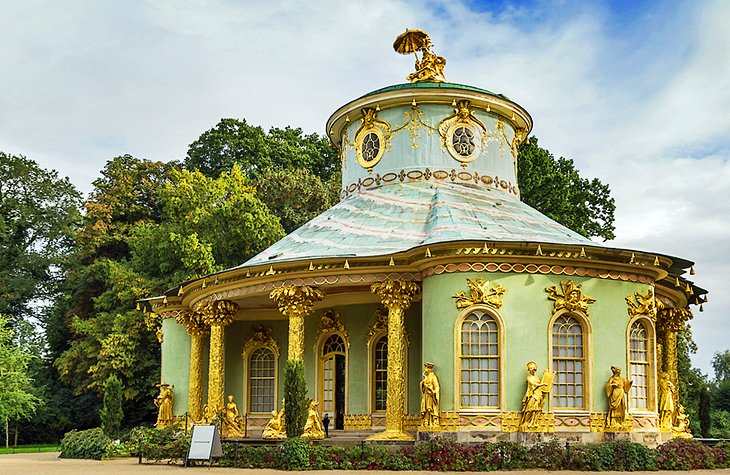
A highlight of a visit to Sanssouci Park is the elegant Chinese House (Chinesisches Haus), sometimes also referred to as the Chinese Teahouse. Although listed as a garden pavilion, it's a description that really doesn't do this sumptuously decorated building justice.
Completed for Frederick the Great in 1763 as a focal point of his extensive flower and vegetable gardens, it encompasses many elements associated with Asian design so popular at the time, with a sprinkling of Rococo influences.
Its interior contains many interesting features, from its stucco marble walls to its musical monkeys and fine collections of porcelain and murals. Also of note are the nearby Chinese Kitchen and Dragon House, the Orangery with its Raphael Room containing copies of 47 works by the artist, and the Sicilian Garden with its Mediterranean plants and sculptures.
Address: Am Grünen Gitter, 14469 Potsdam
10. The Church of Peace, Sanssouci Park
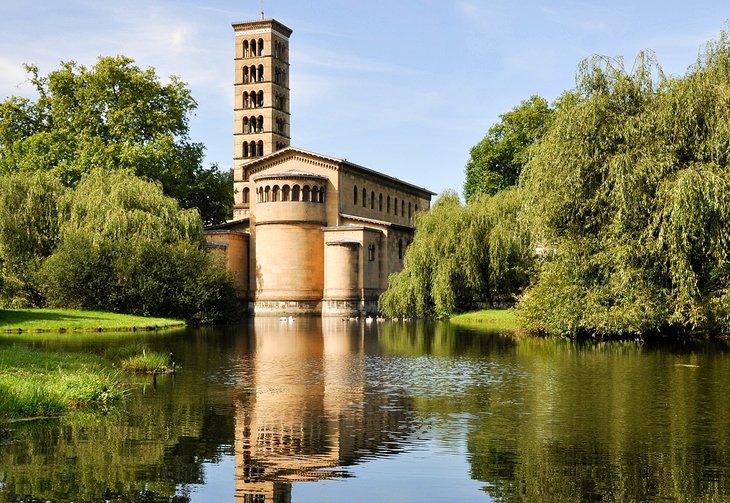
At the east end of Sanssouci Park stands the Church of Peace, or Friedenskirche. Built in 1844, it was modeled on the Early Christian basilica of San Clemente in Rome. Its greatest treasure is its apse mosaic dating from 1108 from the church of San Cipriano, Murano, purchased and installed here in 1834. Also of importance is the Kaiser Friedrich Mausoleum, added between 1888 and 1890.
Be sure to spend time wandering the park areas surrounding the church, too. Highlights include the aptly named Garden of Peace, a romantic-styled garden notable for its shrubbery and trees, as well as its Pool of Peace. On the avenue leading to the Grünes Gitter, the park's exit, are Villa Illaire, built in 1846, and the Villa Liegnitz dating from 1841, both built in the style of an Italian villa.
Address: Am Grünen Gitter 3, 14469 Potsdam, Germany
11. St. Nicholas Church
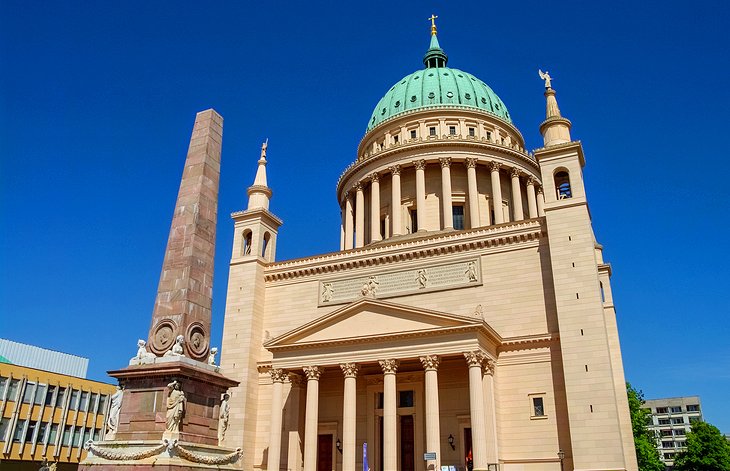
Located opposite the Old Town Hall in Potsdam, St. Nicholas Church (Nikolaikirche) is a beautiful Neoclassical church built between 1830-37 on the city's Old Market Square (Alter Markt). The most outstanding feature of this impressive structure is its 77-meter-high dome, which rises high above most other buildings in the vicinity.
Although not reconsecrated until 1981 due to the rebuilding needed from extensive damage caused during WWII, it's a testament to the city's rich architectural history, a pleasing structure open to visitors for services and sightseeing. In front of the church is an obelisk built in 1753 with the likeness of the principal architects of Potsdam.
Also of note is nearby Friendship Island with its lovely gardens laid out in 1953.
Address: Am Alten Markt, 14467 Potsdam, Germany
12. Learn about German Film-making at Filmmuseum Potsdam
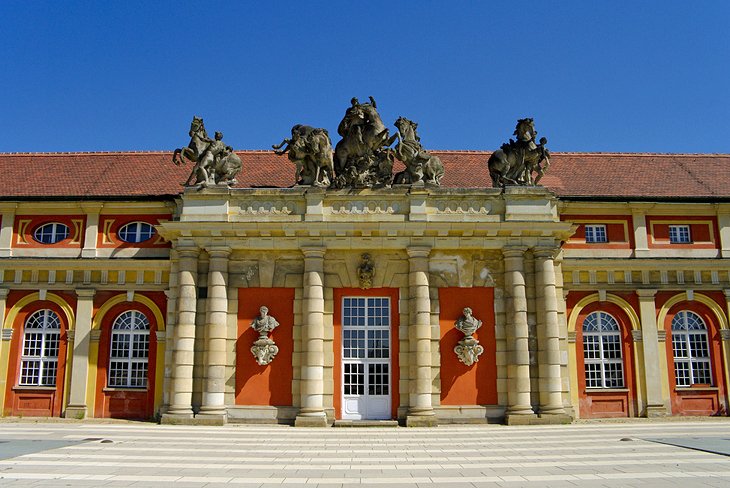
Located in the stunning 17th-century Baroque Marstal, the former Court Stables (Potsdamer Stadtschloss), Filmmuseum Potsdam is an excellent resource of fun facts for film fans. With a worldwide focus, the museum regularly screens international and German movies and has many fascinating exhibits relating to the country's rich cinematic history.
One of the most interesting exhibits focuses on the famed Babelsberg studio, where many of the country's movies have been made over the past 100 years, including such recent classics as Grand Budapest Hotel. A great café is located on the premises, and the museum is easily reached by public transit.
Another nearby attraction is the French Church, a Baroque church remodeled in Neoclassical style in 1833.
Address: Breite Straße 1 A, 14467 Potsdam, Germany
13. Enjoy Movie-Themed Rides at Filmpark Babelsberg

Fun to visit after seeing Potdam's Filmmuseum, Filmpark Babelsberg is the world's oldest film studio and is home to a fun film-based theme park. In addition to the often thrilling rides, guests can enjoy tours of historic film sets, props, and costumes.
It's very much still a working film studio, and you can often also see domestic and international stars in action, or simply passing by on the way to the next big shoot. Fascinating behind-the-scenes tours are available in English and other languages, and include hands-on experiences that allow you to sit behind a news or weather desk in a TV studio.
There's also a 4D cinema showing the latest Hollywood blockbusters and other shows, plus movie-themed dining options. Special experiences are also available for children, including seeing the filming of popular kids' TV shows.
Address: Großbeerenstraße 200, 14482 Potsdam
14. Charlottenhof Palace
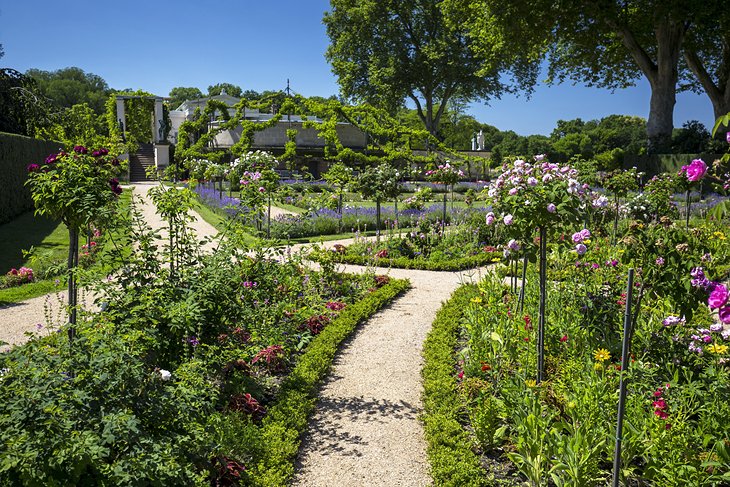
Although much smaller than its neighbor, the Sanssouci Palace, the Neoclassical Charlottenhof Palace (Schloss Charlottenhof) is certainly worth including on your Potsdam itinerary. Often referred to as Charlottenhof Manor, it can, in fact, be included on a tour of Sanssouci Palace.
Built on grounds given by King Frederick William III of Prussia to his son, the Crown Prince, in 1825 as a Christmas gift, it's a pretty property to explore for its parklike setting and its many charming outbuildings. Much of the ensuing summer palace was in fact designed by the Crown Prince himself, evidence of which can still be seen in the interior design flourishes in the 10 rooms that are open to the public.
Highlights of a tour include the original elegant furniture and the famous "tent room," a colorful room said to be modeled after a royal tent from Roman times and once used as a guest room. As you tour the garden, you'll no doubt be impressed by its English styling, including its fountains and porticos, the creation of landscape designer Peter Joseph Lenné.
Address: Geschwister-Scholl-Straße 34A, 14471 Potsdam
15. Biosphäre Potsdam
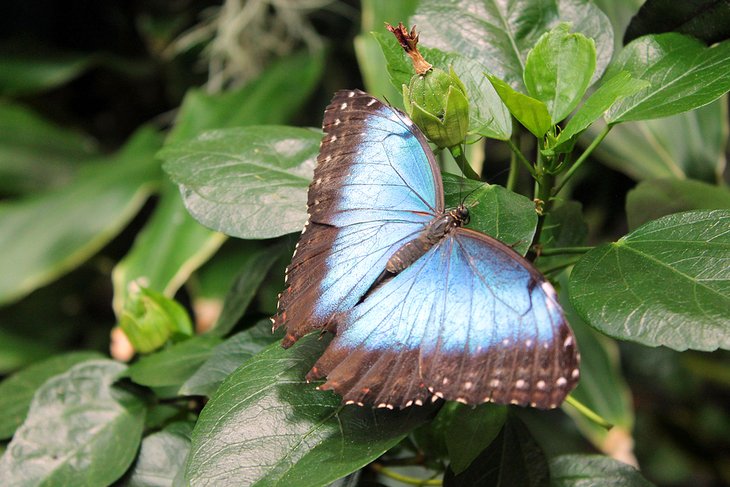
If you're able to squeeze in another garden attraction on your already busy Potsdam itinerary, make sure it's Biosphäre Potsdam. This huge indoor tropical garden, found in Volkspark Potsdam near Sanssouci Park, is home to more than 350 species including some 20,000 individual plants.
Among its collections are beautiful orchids, a palm grove, a mangrove swamp, and tropical wildlife including snakes, lizards, butterflies, and spiders.
Address: Georg-Hermann-Allee 99, 14469 Potsdam
16. Take a Tour of the Steam Pump House, Sanssouci
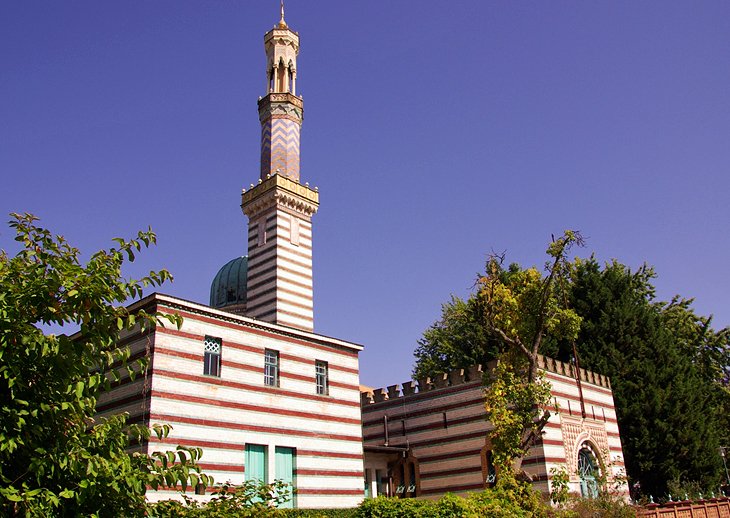
Built in 1841 to provide water for the numerous fountains in Sanssouci Park, the Steam Pump House, or Dampfmaschinenhaus, resembles a Moorish-style mosque with its chimney cleverly disguised as a minaret. Prior to its construction, Frederick the Great's plans for his fountains couldn't be realized.
Located on the edge of the Neustädter Havelbucht, today you can explore the facility during the warmer months via guided tours. These fascinating behind-the-scenes experiences take in the old steam machinery, permanent exhibits on the facility's history, as well as its architecture.
Address: Breite Straße 28, 14467 Potsdam
17. View the Observatory at Einstein Tower
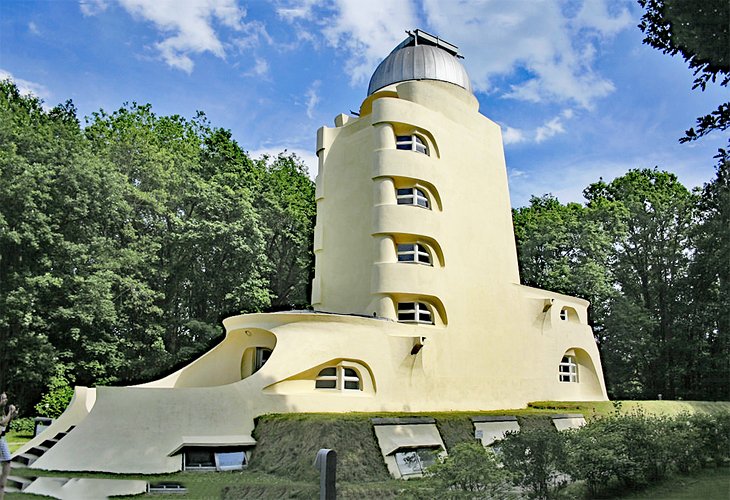
Those interested in science won't be disappointed with a visit to the Einstein Tower (Einsteinturm). Located in the Albert Einstein Science Park, the tower was built in 1924 and is in fact an important astrophysical observatory built to hold a large solar telescope.
The telescope itself was designed to prove Einstein's theory of relativity through observations and experiments and is still in operation as a solar laboratory, housed in its basement.
The brick and stucco building's unusual Expressionistic design reflects the great scientist's theories, rather euphemistically (and somewhat generously) described by Einstein as "organic."
Highlights of a visit include a rare pre-war sculpture that had evaded detection (the Nazi government would have destroyed them), and the curious, small bronze brain sculpture that references the theories of German scientist Ernst Poppel.
Address: Albert-Einstein-Straße, 14473 Potsdam
18. Russische Kolonie Alexandrowka
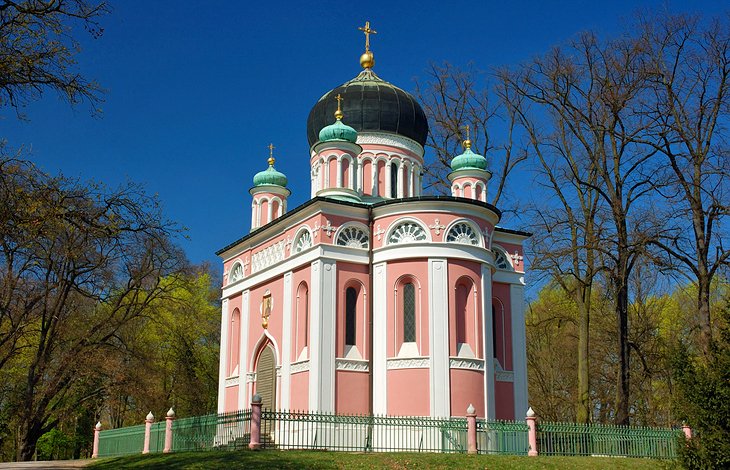
The houses in the little settlement of Alexandrowka in Potsdam were built to demonstrate the close friendship that existed between the rulers of Germany and Russia, Frederick William III, and the Czar Alexander. The houses were based on Russian models, and the settlement was laid out in the form of a St. Andrew's cross.
Other highlights of this quaint community include the Alexander Nevsky Church, a Russian Orthodox church built in 1829, with rich furnishings from St. Petersburg, as well as the Jewish cemetery started in 1743.
Address: Russische Kolonie 2, 14469 Potsdam
19. The Birthplace of the Movies: Babelsberg
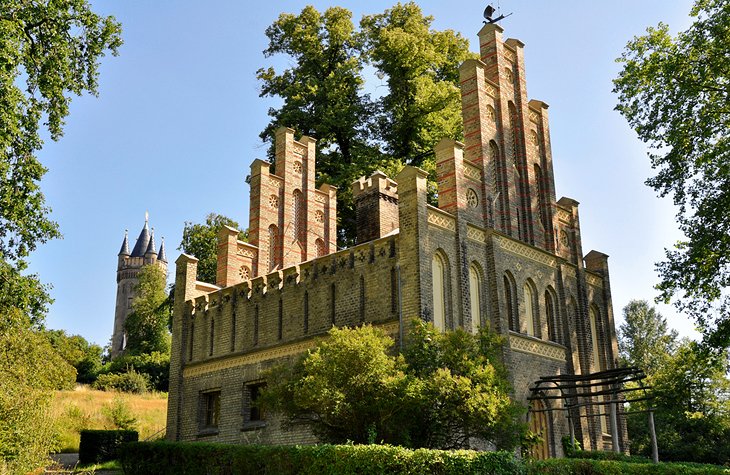
The district of Babelsberg, the largest area of Potsdam, was famous in the early days of cinema as the home of UFA film studios. Originally developed around Nowawes, an old colony of spinners and weavers, the district's heritage can still be detected near the church on Weberplatz, a modest building constructed in 1753.
Other highlights of this delightful area include Babelsberg Park. The third-largest public green space in Potsdam, it was laid out in 1832 and enlarged from 1843 onwards. You'll also want to take a look at Schloss Babelsber, or Babelsburg Palace, a Neo-Gothic English-style palace built in 1834.
Address: Park Babelsberg 10, D-14482 Potsdam-Babelsberg
20. Experience the Chilling KGB Prison (Memorial Leistikowstraße)
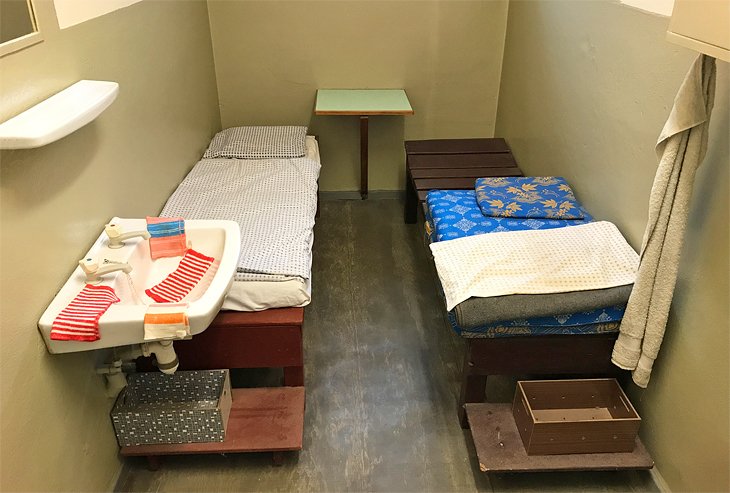
For a fascinating yet chilling look at the often tough life in East Germany, pay a visit to the KGB Prison (Memorial Leistikowstraße). Operated by SMERSH, the Soviet counter-intelligence organization, this former detention center started off, ironically, as the offices of a Christian charitable group.
The prison also served the adjacent military camp and German KGB headquarters and was notorious for holding both German and Russian prisoners suspected of being spies or collaborators throughout the 1950s right up until the 1980s.
Now a memorial to those who were held and tortured here, you'll get to tour the former prison cells, some still with prisoner graffiti scratched into their walls. You'll also see the notorious detention room. There's also a permanent exhibit relating to its terrible history. Free audio guides are included with the cost of admission.
Address: Leistikowstraße 1, 14469 Potsdam
Where to Stay in Potsdam for Sightseeing
Luxury Hotels:
- A great choice of luxury accommodation in this important cultural city is the Hotel Brandenburger Tor Potsdam. Named after the beautiful Brandenburg Gate Potsdam, which it's close to, this luxe hotel is popular for its classy rooms and apartments.
- The Potsdam Hotel Am Jägertor is situated across from another historic city gate, the Jägertor, and offers a variety of chic rooms and suites with great city or courtyard views.
Mid-Range Hotels:
- The centrally-located Maxx Hotel Sanssouci Potsdam offers affordable four-star hotel quality along with friendly staff, a fun classic movie theme, and a variety of spa services, including a Finnish sauna.
- Other good mid-range accommodation options include NH Potsdam, popular for its great-value rates, its fabulous location near the city's top restaurants and shops, and its excellent breakfast; and the elegant Hotel Villa Monte Vino, a charming, family-owned boutique hotel set in a historic building within easy walking distance of Sanssouci Palace.
Budget Hotels:
- A high-quality big-brand hotel offering, the Mercure Hotel Potsdam City offers surprisingly affordable, budget-friendly rates with modern rooms in a convenient location. A great breakfast is also included.
- Other great accommodations offering affordable stays include the Seminaris SeeHotel Potsdam; though located a little farther from the main sites, it's worth considering for its lovely lake views. Also worth checking into is the Wyndham Garden Potsdam, offering straightforward, clean rooms within an easy walk of the city's top attractions.
Tips and Tactics: How to Make the Most of Your Visit to Potsdam
Take a Bike:
- Given its high density of top historic attractions, Potsdam is a great place to tour on two wheels. A great option for day-trippers arriving via Berlin, the fun 4.5-hour guided Potsdam Day Bike Tour takes in such important tourist attractions as Sansoucci Palace, the historic Dutch Quarter, and the famous Cecilienhof Palace (audio-guide provided), scene of the famous Potsdam Conference at the end of WWII. In addition to return rail fares from Berlin, insurance, bike rentals, and helmets are included (suitable ages 12 and up).
Take a Hike:
- If you prefer foot-power to pedal-power, there are also a variety of great walking tours of Potsdam worth shelling out for. One of the best is the Potsdam Half-Day Walking Tour. Highlights of this six-hour walk around one of the most pedestrian-friendly cities in Germany, if not Europe, include the exquisite Sanssouci Palace and Gardens, plus Cecilienhof Palace. Along the way, you'll see the Marble Palace, the Dutch quarter, and the city's Babelsberg castle, as well as enjoy a lunch break (the latter at your own expense).
This particular walking tour experience starts in Berlin (meet up at the Hackescher Markt train station) where you'll be greeted by your guide before embarking on the short ride to Potsdam. And if you need more time to see additional sites, you can carry on touring afterwards at your own pace (your guide will provide you with maps and tips). A note regarding rail tickets: the handy Berlin Transport ABC Zone Day Pass will also get you all the way to Potsdam.
Map of Attractions & Things to Do in Potsdam
More Related Articles on PlanetWare.com
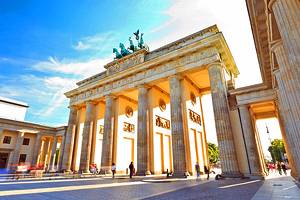
The Nation's Capital, Berlin: Less than a 30-minute train ride northwest of Potsdam, Berlin is also worth visiting for its many fine cultural attractions. Of particular interest are its many museums and art galleries, some of the best of which can be found on its famous Museum Island. It's also possible to enjoy some great day trips from Berlin, too, including to beautiful Peacock Island, and the lovely Spree and Havel rivers.
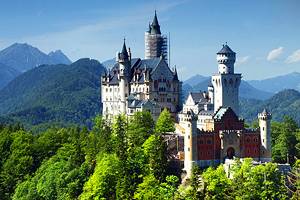
Germany's Best Castles: Germany has done a magnificent job of preserving (or, in some cases, rebuilding) its many old castles. Some of the best places to view these majestic fortresses, some of which date back to medieval times, include the lovely Rhine Valley, including Marksburg Castle and more than 20 others, and the Mosel Valley, home to the imposing Etz Castle. One of the most impressive old fortresses, though, is Nuremberg Castle, the home of German kings since the early 11th century, and one of the top attractions in Nuremberg.
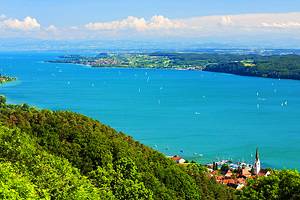
Top Vacation Spots in Germany: One of the largest countries in Europe, Germany has many great places to spend a vacation. Those seeking a big-city getaway should consider either Munich, famous for its magnificent cathedral and royal palace, and Frankfurt, a great choice for those who enjoy walking pedestrian-friendly streets and market squares. For those seeking a slightly slower, rural pace, head for lovely Lake Constance, home to some of the prettiest scenery in the country.