31 Top-Rated Tourist Attractions in Paris
Whether sunshine is sparkling on the café terraces of Boulevard Saint-Germain, or melancholy mists of the Seine River are shrouding Notre-Dame Cathedral, Paris has a way of romancing visitors. The love affair might begin with a first glimpse of the Eiffel Tower, then continue with strolls along the wide tree-lined avenues and in lavish formal gardens.
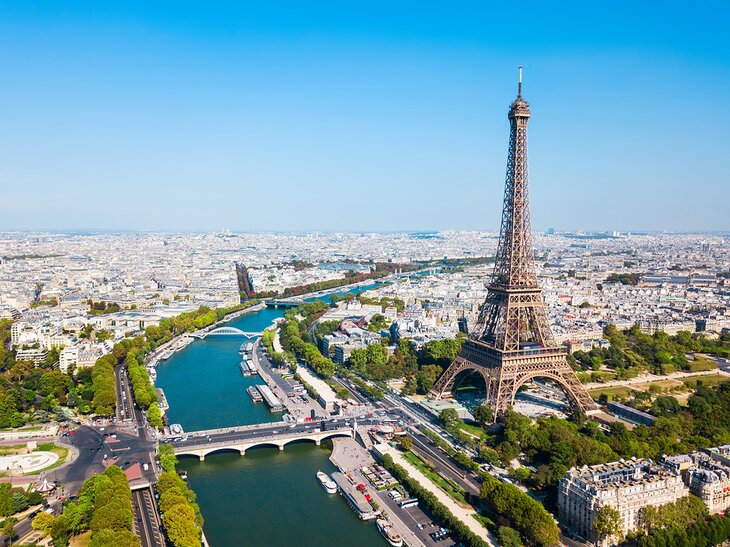
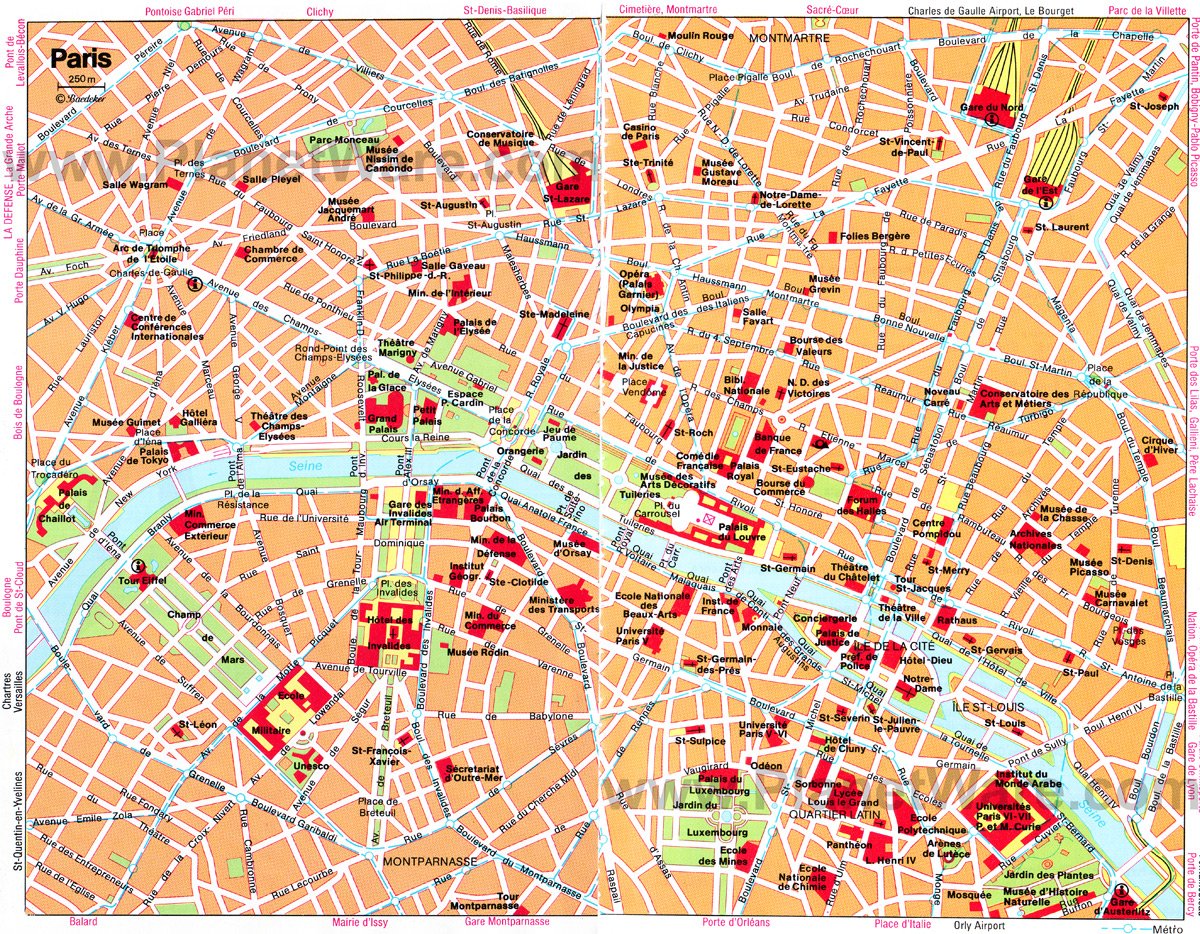
The city is seductively beautiful. Each neighborhood (quartier) reveals its unique personality. The Latin Quarter is a small cluster of pedestrian streets and narrow medieval alleyways where bookshops vie for space with university students' cafés and eateries. The fashionable Champs-Élysées buzzes with energy. Outside the city center, Montmartre still feels like a country village and flaunts its bohemian past.
After seeing the museums and monuments, you will want to seek out the small surprises, like family-run bistros with handwritten menus; cobblestone lanes full of quaint shops; secluded squares adorned with flowing fountains; and elegant tea salons, where dainty jewel-like desserts beckon from glass-covered pastry cases.
In every hidden corner and at all the famous sites, Paris casts a spell of enchantment. One visit may inspire a lifelong passion.
Discover what makes the City of Light so captivating and learn about the best places to explore with our list of the top tourist attractions in Paris.
See also: Where to Stay in Paris
- 1. Eiffel Tower
- 2. Musée du Louvre
- 3. Avenue des Champs-Élysées
- 4. Musée d'Orsay
- 5. Palais Garnier, Opéra National de Paris
- 6. Cathédrale Notre-Dame de Paris
- 7. Place de la Concorde
- 8. Arc de Triomphe
- 9. Hôtel de la Marine
- 10. Jardin des Tuileries
- 11. Seine River Cruises
- 12. Musical Concerts at Sainte-Chapelle
- 13. Bustling Boulevards and Legendary Cafés
- 14. Jardin du Luxembourg
- 15. Sacré-Coeur and Quartier Montmartre
- 16. Panthéon
- 17. Place des Vosges
- 18. Musée Rodin
- 19. Place Vendôme
- 20. Centre Pompidou
- 21. Hôtel National des Invalides
- 22. Domaine National du Palais-Royal
- 23. Place de la Bastille
- 24. Place du Châtelet and Tour Saint-Jacques
- 25. La Conciergerie
- 26. Fondation Louis Vuitton
- 27. Parc de La Villette
- 28. Paris Plages
- 29. Cimetière du Père Lachaise
- 30. Parc des Buttes-Chaumont
- 31. Grande Arche de la Défense
- Where to Stay in Paris for Sightseeing
- Tips and Tours: How to Make the Most of Your Visit to Paris
- Best Time to Visit Paris, France
1. Eiffel Tower
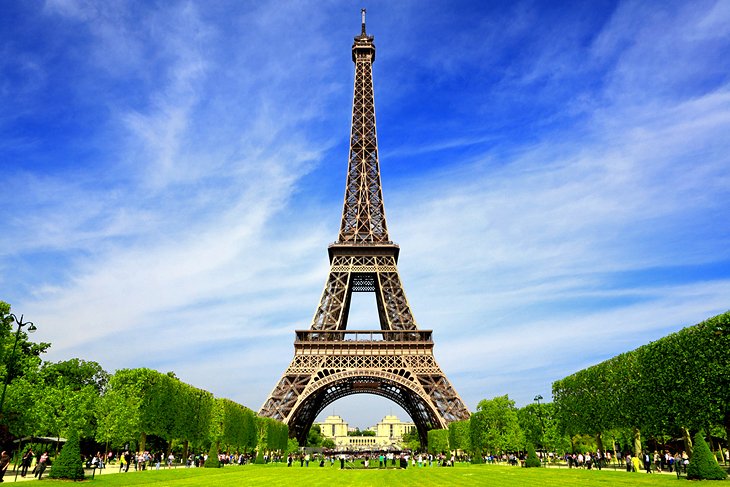
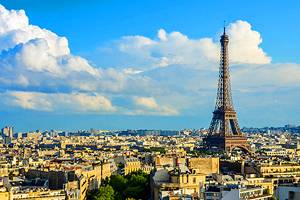
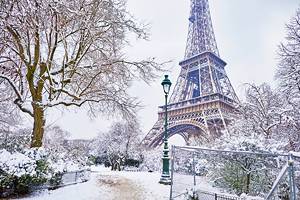
The Eiffel Tower (la Tour Eiffel) ranks high on the list of places to visit in France and is one of the most-visited tourist attractions in the world. So it's hard to believe that the structure was originally dismissed as a monstrosity. The innovative metal structure shocked Victorian-era audiences when it was unveiled by Alexandre-Gustave Eiffel for the Paris Exhibition of 1889.
Whether loved or hated, the Eiffel Tower has always impressed. Reaching a height of 324 meters, the tower is comprised of 18,000 sturdy iron sections held together by 2.5 million rivets. Although no longer the world's tallest building, the Eiffel Tower has achieved the status of an icon.
For first-time visitors, seeing the Eiffel Tower is an unforgettable experience. Upon arrival at the esplanade, the sight of the four massive pillars that support this 10,100-ton monument leaves many awestruck.
Author's Tip: Purchase your tickets to the Eiffel Tower in advance online. You first choose a specific date and during the online process, you will reserve a specific time slot for the visit. (You must arrive on time.) Tickets sell out during high season (July and August), so you should purchase your tickets as far in advance as possible.
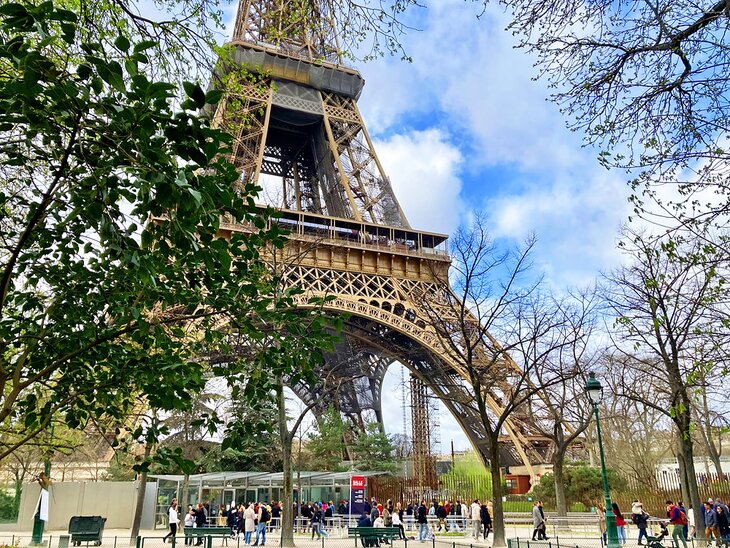
When you arrive at the Eiffel Tower, you will first walk through the esplanade gardens. Then you will look for the correct queue (which will be labeled "Visitors with tickets"). The recently renovated gardens feature leafy trees and pedestrian pathways with close-up views of the Iron Lady.
To arrive at the Eiffel Tower's 1st floor (at 57 meters) requires an elevator ride or a walk up the 360 steps. This level has public restrooms, a gift shop, a cafeteria, a brasserie restaurant, and an open-air terrace space for admiring the views.

The 2nd floor (at 125 meters) of the Eiffel Tower is reached from the 1st floor by a staircase of 344 more steps or an elevator ride. This level has similar amenities as the 1st floor, except the viewing platforms offer a perspective onto more of the Paris monuments (such as the Notre-Dame, the Louvre, and the Basilique du Sacré-Coeur).
A highlight of the 2nd floor, the Michelin-starred Le Jules Verne delivers exceptional haute cuisine in a dreamy setting. The restaurant's dining rooms feature expansive windows, which provide a peak of the Eiffel Tower's structural beams and glimpses of Paris cityscapes. You'll also find a buffet-style cafeteria and the Pierre Hermé macaron boutique.
To arrive at the top floor (276 meters in elevation) requires an exhilarating elevator ride from the 2nd floor. The staircases only go up to the 2nd floor, so climbing up to the top is not an option.
Visiting the top floor of the Eiffel Tower is one of the most thrilling things to do in Paris, but it's not for the faint of heart. When you walk out onto the compact viewing platform at this level, you are overwhelmed by the far-reaching views and strong gusts of wind. Up this high, it feels like another world, and you can no longer hear the noise of street traffic below.
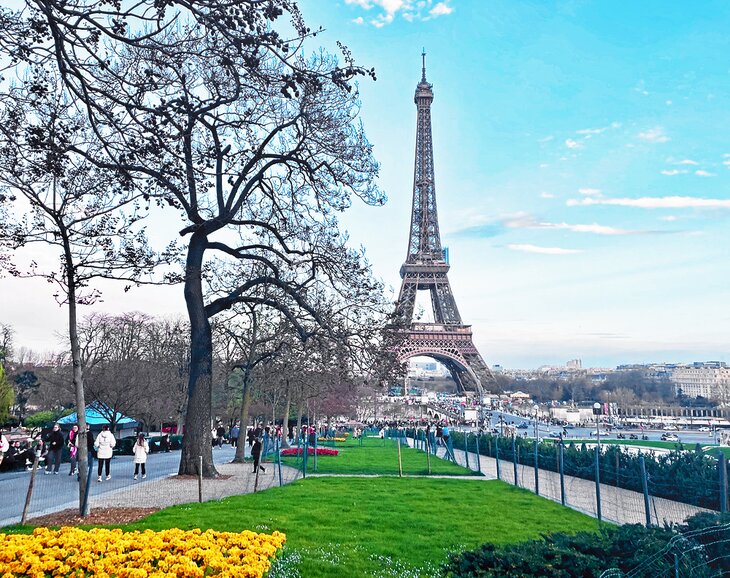
You definitely will want to spend some time taking photos of the Eiffel Tower. From either the Jardins du Trocadéro (a short walk across the Seine River) or the Parc du Champ de Mars (the lawns in front of the tower), there is just the right distance for picture-perfect photo-ops.
Address: La Tour Eiffel, Champ de Mars, 75007 Paris (Métro: Bir-Hakeim, Trocadéro, Iéna, or Passy station)
2. Musée du Louvre
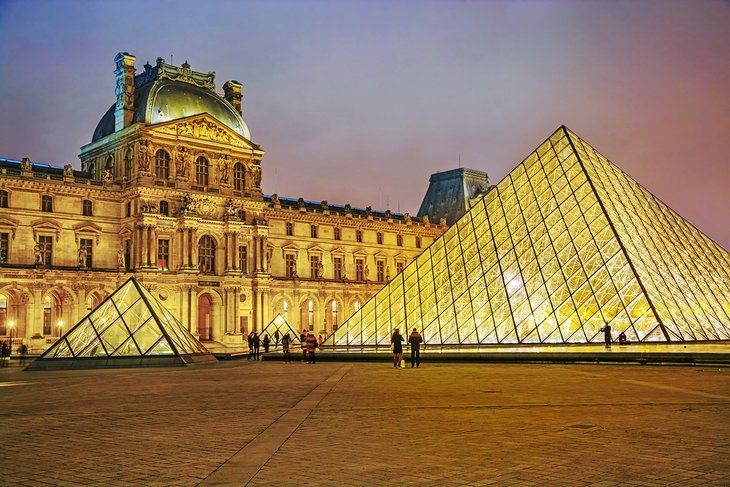
The Louvre is the most prestigious of Paris' museums and the crème de la crème of the city's cultural attractions. Besides its exceptional art collection, the building has a regal past: The Louvre was formerly the residential palace of France's kings.
Today, the Musée du Louvre displays thousands of artworks, many of which are considered masterpieces, from antiquities to European paintings of the 15th to 19th centuries.
It is impossible to see it all in one visit, but you can focus on a particular gallery, such as classical sculpture, Italian Renaissance art, or 17th-century French paintings, or take a self-guided tour to cover the Louvre Museum's highlights.
Of course, you will want to get a look at the Mona Lisa or La Gioconda (or La Joconde in French) painted by Leonardo da Vinci in 1503-1505. Many tourists breeze through the museum just to glance at this one piece, but there are other must-see works of art to admire even if time is limited.
Other masterpieces of the Louvre include the ancient Vénus de Milo sculpture; the monumental Victoire de Samothrace of the Hellenistic period; the immense Wedding Feast at Cana painting by Veronese (1563); Sandro Botticelli's Venus and the Three Graces fresco; and Liberty Leading the People (1831) by Eugène Delacroix, depicting the Parisian uprising of July 1830.
To get the most out of a visit to the Louvre, join a guided tour. The museum offers tours in multiple languages. These focus on the highlights and provide information on the palace.
The Louvre Museum Skip-the-Line Tour is another option that also takes you straight to the museum's most famous artworks, including the Venus de Milo and the Mona Lisa. On this three-hour tour, a guide (who is an art historian) provides in-depth commentary about the masterpieces.
Author's Tips: Most visitors enter the museum in the courtyard of the palace at the Pyramid du Louvre, the glass pyramid designed by Ieoh Ming Pei in 1917. This entrance almost always has long lines. The wait is especially long without a timed entrance ticket. (See tips below for alternative entrances to the museum.)
Avoid the lines of the Pyramid entrance by going to one of the lesser-known entrances. If you already have a Louvre museum ticket or a Paris Museum Pass, head to the Carrousel entrance (99 Rue de Rivoli) where you likely can walk right in without waiting in line. You may save some time at this entrance if you haven't reserved a specific time slot for admission.
Purchase a museum pass: If you plan to visit multiple museums, you can save money and time by purchasing a Paris Museum Pass. The savings depends on how many museums you visit. The advantage is that you don't have to purchase a ticket at each museum. However, you still need to reserve a specific time slot (free of charge) to visit the Louvre, the Musée d'Orsay, and Château de Versailles (otherwise you may have to wait in line).
If you have not already purchased a ticket or Paris Museum Pass, you may use the Porte des Lions entrance on the 4 Quai François Mitterrand.
Address: Musée du Louvre, Rue de Rivoli, 75001 Paris (Métro: Palais-Royal Musée du Louvre or Pyramides station)
3. Avenue des Champs-Élysées
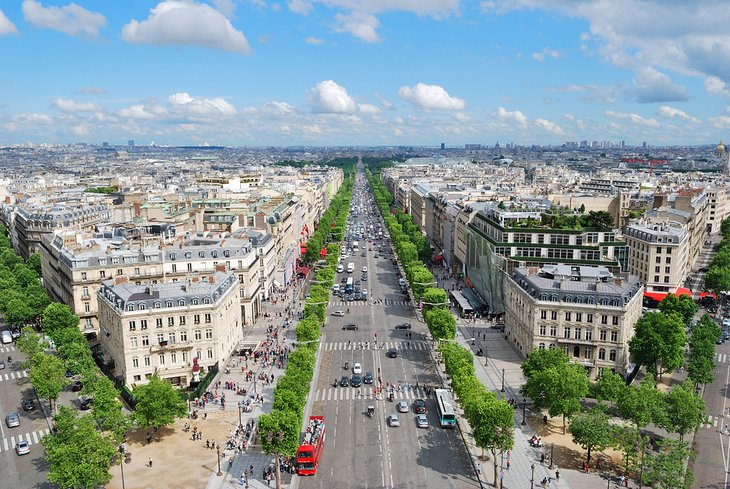
Brimming with fancy boutiques and dining terraces, the Champs-Élysées epitomizes the fashionable panache of Paris.
You'd never guess that the most monumental boulevard in Paris used to be a desolate swamp. The marshland was converted into an avenue by renowned landscape designer André Le Nôtre in the 17th century. Two centuries later, the city planner Baron Georges-Eugène Haussmann added the grey stone Mansard-roofed buildings that give the boulevard its classic Parisian look.
The Champs-Élysées is divided into two parts with the Rond-Point des Champs-Élysées as its intersection.
The lower part of the Champs-Élysées, bordering the Place de la Concorde, includes a spacious park, the Jardins des Champs-Élysées, and the Petit Palais fine arts museum. The upper part, extending to the Arc de Triomphe, is lined by luxury shops, hotels, restaurants, cafés, cinemas, and theaters. This bustling area draws many tourists and is a gathering place for Parisians.
The Champs-Élysées is famous for its prestigious establishments, such as Maison Ladurée (75 Avenue des Champs-Élysées), a pâtisserie boutique and tea salon that offers exquisite French pastries (macarons are the house specialty), and upscale designer boutiques like Tiffany & Co. (62 Avenue des Champs-Élysées), Louis-Vuitton (101 Avenue des Champs-Élysées), and Cartier (154 Avenue des Champs-Élysées).
For fine dining, the top choices are the legendary brasserie Fouquet's (99 Avenue des Champs-Élysées) and the swanky gastronomic restaurant L'Atelier de Joël Robuchon Étoile (133 Avenue des Champs-Élysées), which has one Michelin star.
Although the Champs-Élysées has an image of refinement, there are many affordable places that cater to tourists and students on a budget, such as Starbucks, Quick, Burger King, and McDonald's.
Address: Avenue des Champs-Elysées, 75008 Paris (Métro: Champs-Élysées Clemenceau station to visit the Jardins des Champs-Élysées and Petit Palais, Franklin d. Roosevelt station for Ladurée, George V station for the main shopping area).
4. Musée d'Orsay
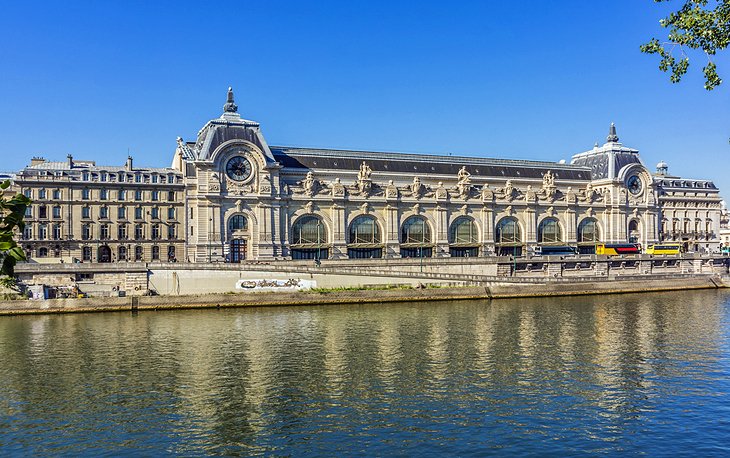
You haven't seen the best of French art until you visit the Musée d'Orsay. The Musée du Louvre may hold the most masterpieces of European painting, but the Musée d'Orsay focuses on works by celebrated French artists including Monet, Renoir, and Degas.
If you love Impressionist art, this is the place to go. The Musée d'Orsay displays a splendid collection of 19th- and 20th-century art (created from 1848 to 1914).
Although the museum's inventory begins with 19th-century Realist paintings and landscape paintings, the highlight of the museum is the Impressionism collection. Also on display are Post-Impressionist works by artists such as Pierre Bonnard, Paul Cézanne, and Vincent van Gogh, and bohemian artists like Henri de Toulouse-Lautrec.
Some of the museum's famous paintings include Claude Monet's The Magpie, Gare Saint-Lazare, Poppy Field, and Luncheon on the Grass; Vincent van Gogh's self-portrait and Starry Night; and Renoir's Dance at Moulin de la Galette, which depicts a festive party scene in Montmartre.
You may rent an audioguide to take a self-guided tour. The commentary (available in English and French) covers over 300 works.
The museum also has a bookstore/gift shop, two casual cafés, and a fine-dining restaurant, which is worth the splurge. Formerly the Hôtel d'Orsay (a luxury hotel within the original Gare d'Orsay) and listed as a Monument Historique, the Musée d'Orsay Restaurant features gilded ceilings and sparkling chandeliers.
On the square in front of the museum, there is a kiosk that sells sandwiches and falafel.
Address: Musée d'Orsay, Esplanade Valéry Giscard d'Estaing 75007 Paris (Métro: Musée d'Orsay, Assemblée Nationale, or Solférino station)
5. Palais Garnier, Opéra National de Paris
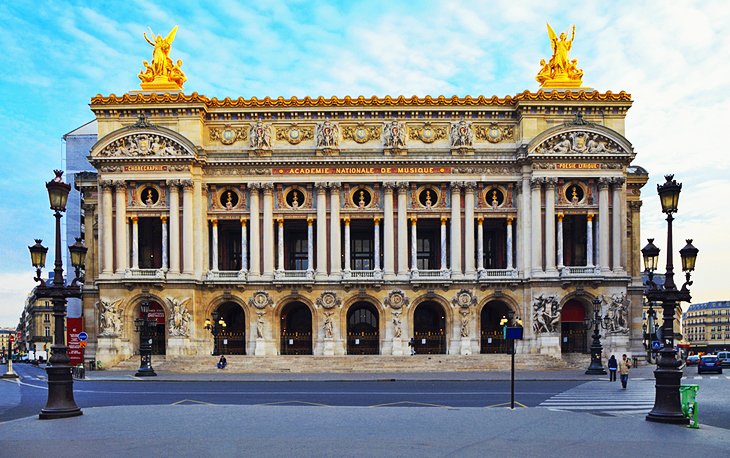
Commissioned by Napoleon III in 1860, the Palais Garnier Opera House was designed by Charles Garnier in an exuberant Baroque style. Garnier worked tirelessly on the project for over a decade, from 1862 to 1875. Today, this show-stopping landmark is a symbol of Napoleon's Imperial regime.
Upon entering the building, you are dazzled by the lavish 11,000-square-meter interior. Much of the building's space is dedicated to the main foyer with its fabulous Grand Escalier, marble entrance staircase, adorned by ornate gilded lamps, and the Salon du Glacier, a sumptuous Belle Époque hall decorated with mirrors, Corinthian columns painted gold, colorful mosaics, and music-themed ceiling paintings.
The horseshoe-shaped auditorium has an intimate feel, although it can accommodate 2,105 people in its plush velvet seats. Gilded balconies, an enormous crystal chandelier, and a Chagall ceiling painting add to the theater's marvelousness, creating the perfect dramatic backdrop for ballet, opera, and music performances.
The Opéra Garnier hosts a prestigious calendar of events in addition to galas. Attending a performance is one of the most exciting things to do in Paris at night. It's a wonderful way to see the building's interior while enjoying a glamorous evening. Another option is to visit (entry ticket required) on a self-guided tour or take a guided tour during the daytime.
Connoisseurs of fine dining will be delighted to discover CoCo, a chic restaurant within the Opera House (entrance is at 1 Place Jacques Rouché) that serves contemporary French cuisine prepared from seasonal ingredients. CoCo offers lunch and dinner daily, as well as weekend brunch (every Saturday and Sunday) featuring musical entertainment. The garden terrace is open Tuesday through Saturday during summertime. Reservations are recommended.
Address: Palais Garnier, Place de l'Opéra, 8 Rue Scribe (at Auber) 75009 Paris (Métro: Opéra, Chaussée d'Antin-La Fayette or Havre-Caumartin station)
6. Cathédrale Notre-Dame de Paris
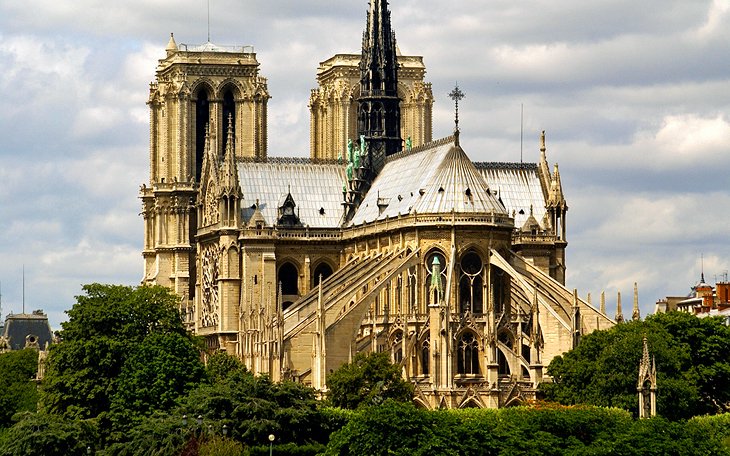
Despite the damage done by the 2019 fire, it is still worth seeing the Notre-Dame Cathedral. This awe-inspiring medieval monument stands at the heart of Paris on the Île-de-la-Cité, an island in the Seine River. To get here from the Latin Quarter, simply cross the Petit Pont bridge.
The Cathédrale Notre-Dame de Paris was founded in 1163 by King Louis IX (Saint Louis) and Bishop Maurice de Sully, and the construction took more than 150 years. The cathedral was first created in the Early Gothic style, while later additions (the west front and the nave) show the transition to High Gothic style.
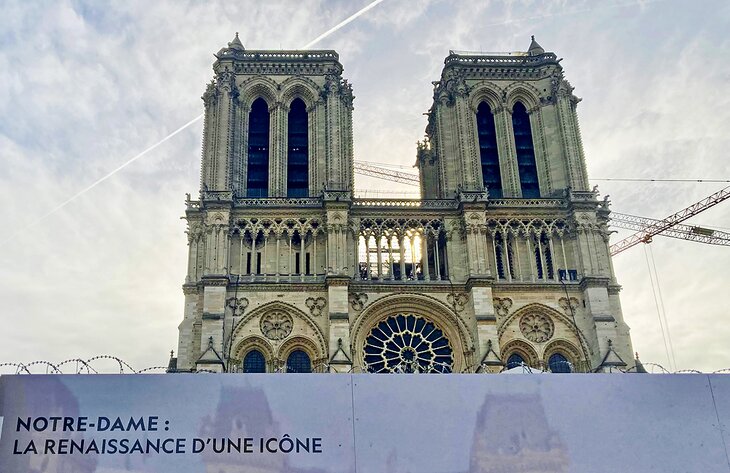
Note: A large fire in April of 2019 caused considerable damage to the cathedral: The medieval roof and the 19th-century spire collapsed. However, the monument was partly saved thanks to the work of hundreds of firefighters.
A project to repair the structure is underway. The city plans to rebuild the cathedral and restore it to its previous state. Restoration work is ongoing.
Currently, the interior of the cathedral (including the towers) and the space immediately in front of the cathedral (on the Parvis Notre-Dame) are closed to the public. A few steps away from the cathedral's facade, a section of the Parvis Notre-Dame (square) is now used for educational exhibits about the cathedral.
The Notre-Dame de Paris Cathedral anticipates reopening in December 2024. A project to redesign the landscaping around the cathedral is scheduled for completion in 2027.
Until the reopening, the Notre-Dame de Paris congregation will celebrate Mass at the Eglise Saint-Germain l'Auxerrois (2 Place du Louvre) in the 1st arrondissement.
Address: Cathédrale Notre-Dame de Paris, 6 Parvis Notre-Dame - Place Jean-Paul II, 75004 Paris (Métro: Cité or Saint-Michel Notre-Dame station)
7. Place de la Concorde

The Place de la Concorde stands at the heart of Paris both literally and figuratively. The square was created in 1772 by the architect of King Louis XV. During the French Revolution, the Place de la Concorde was the scene of state-ordered executions, including Louis XVI and Marie-Antoinette, among other victims of the guillotine. The square was also part of Napoleon's triumphal route.
One of the largest and most central squares in the city, the Place de la Concorde offers a sensational perspective of the city's landmarks. In one direction, you can admire the Arc de Triomphe and in the other, the Louvre, while the Eiffel Tower can be seen in the distance.
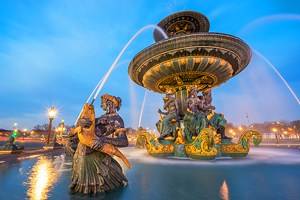
Two ornately decorated fountains and an Egyptian obelisk are found in the middle of the square. However, it's a bit of a hassle to get up close because you have to walk through heavy traffic. The Place de la Concorde is one of the busiest intersections in Paris.
Tip for Pedestrians: You will notice cars circulating the square at high speeds. French drivers don't always pay attention to pedestrians. Make sure to get out of the way of oncoming cars!
During summertime, the Place de la Concorde adopts a fairground ambiance, with a Ferris wheel gracing the square from June through August. The neighboring Jardin des Tuileries also has amusement park rides and fairground treats during summertime.
To arrive at the Place de la Concorde, walk from the Louvre through the Jardin des Tuileries or the Rue de Rivoli, or follow the Quai des Tuileries along the Seine River. Alternatively, you may take the Métro to Concorde station.
8. Arc de Triomphe
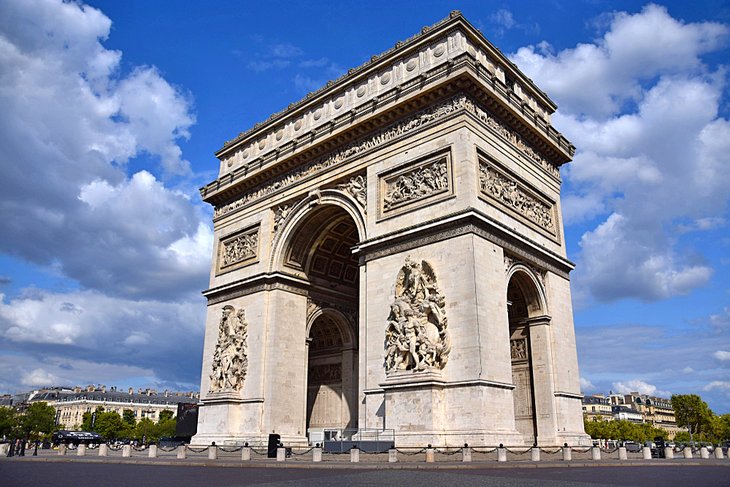
Nothing says capital city grandeur quite like a triumphal arch. Paris' Arc de Triomphe is dedicated to the soldiers who fought in the French armies of the Revolution and the Napoleonic Wars. Napoleon I commissioned the building of this mighty structure in 1806 but did not live to see its completion in 1836.
The monument was modeled after the Arch of Titus in Rome. The massive 50-meter-high arch features bas-reliefs with larger-than-life-size figures, which depict the departure, victories, and glorious return of the French armies.
Particularly noteworthy is the bas-relief by François Rude on the Champs-Elysées-facing side: Departure of the Volunteers of 1792, also known as La Marseillaise, illustrating the troops led by the winged spirit of Liberty. On the inner surface of the arch are the names of more than 660 generals and over a hundred battles.
The Arc de Triomphe stands at the end of the Champs-Élysées, presiding over a circular intersection (the Place de l'Étoile).
From the top of the monument, a viewing terrace affords a panoramic outlook onto the 12 avenues that radiate from the Place de l'Étoile, including the route from the Avenue des Champs-Elysées to the Place de la Concorde and the Louvre. It's also possible to see all the way to La Défense, the hilltop neighborhood of Montmartre, and the Eiffel Tower.
At the foot of the Arc de Triomphe is the Tomb of the Unknown Soldier, dedicated in 1921 as a memorial to an anonymous soldier (symbol of the many other unknown soldiers who valiantly died for their country during World War One without ever receiving recognition).
The Flame of Remembrance was ignited at the Tomb of the Unknown Soldier on November 11th, 1923, and since that date has not ever been extinguished. Every evening at 6:30pm, a ritual takes place to rekindle the memorial flame at the tomb.
Throughout the year, events to honor national holidays are held at the Arc de Triomphe, including the November 11th (anniversary of the Armistice of 1918) ceremony commemorating those who perished in the war; the May 8th Fête de la Victoire (Victory Day) celebrating the end of WWII, and the liberation from Nazi occupation; as well as festivities for July 14th (Bastille Day).
Admission requires an entrance ticket. You may reserve a ticket in advance online. Free admission is included with the Paris Museum Pass (no reservations required). Guided tours are available.
For visitors with reduced mobility and young children, there is an elevator to reach the viewing terrace. Otherwise, you must take the stairs (284 steps).
Address: Arc de Triomphe, Place Charles de Gaulle, 75008 Paris (Métro: Charles de Gaulle-Étoile, Kléber or Argentine station)
9. Hôtel de la Marine
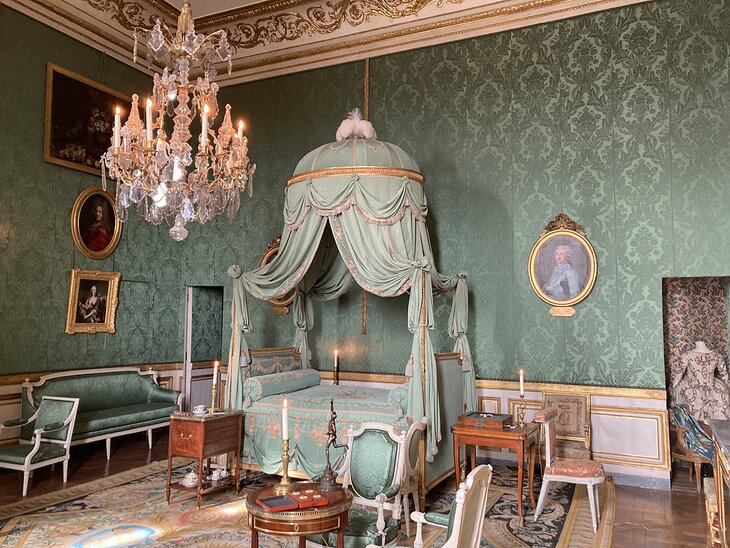
A fascinating glimpse of ancien régime (old regime) splendor awaits you at the Hôtel de la Marine. During the reign of Louis XV, this Neoclassical palace housed the apartments of the Intendants du Garde-Meuble de la Couronne (the King's Furniture Storage Intendants). The intendant had an important job: procuring and maintaining the furnishings for the king's elaborate palaces.
The Hôtel de la Marine opened to the public in 2021 after several years of painstaking restoration work. This monument is one of the newest tourist attractions in Paris.
You enter the Hôtel de la Marine through a cobblestone courtyard off the Place de la Concorde. Then walk up the massive marble staircase and into the reception rooms, where you feel like you have stepped back in time. The interior decor has been restored to a state of perfect preservation.
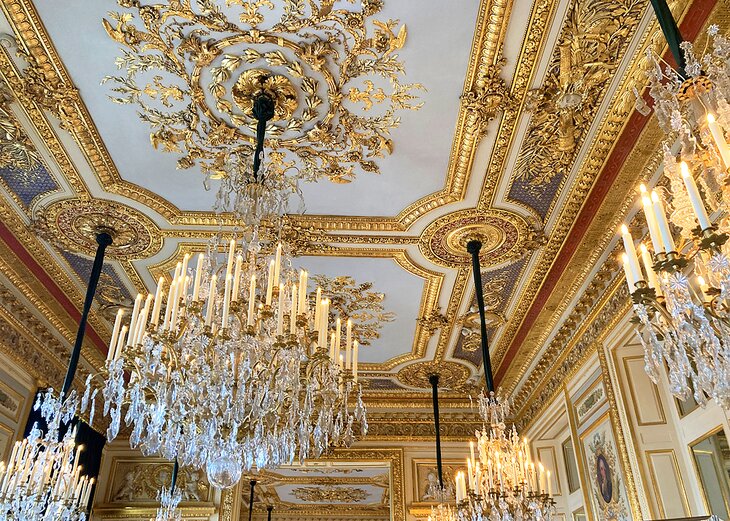
Adorned with gilded moldings and crystal chandeliers, the Salons d'Honneur salons resemble the Hall of Mirrors at Versailles. Other rooms in the Intendant's Apartments reveal the refinement of the Age of Enlightenment.
During this period, aristocratic residences were lavishly decorated with exquisite furnishings, wallpaper, curtains, and paintings. You'll also see precious antiques such as a desk created by Jean-Henri Riesener, a renowned 18th-century cabinetmaker.
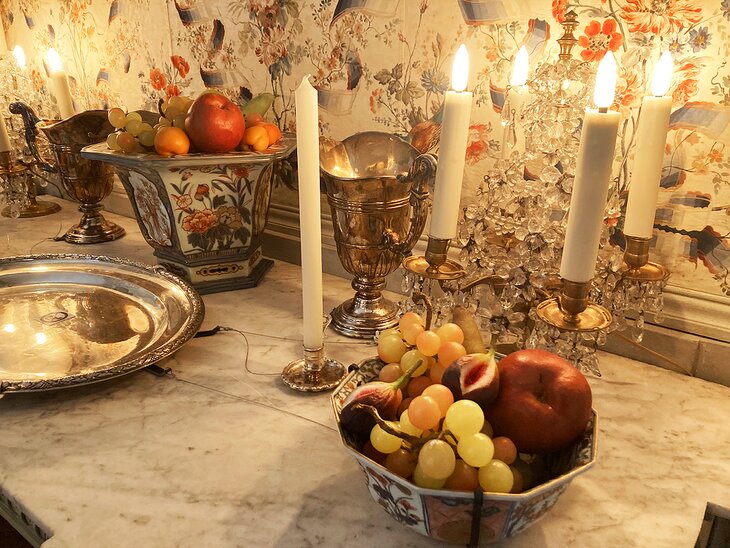
The dining room of the Intendant's Apartments, with its floral-patterned porcelain dinnerware, appears ready to welcome guests. On the guided tour, you will learn that the host placed servings of sugar (a precious commodity at the time) on the table to show off his wealth, along with bread, oysters, and bowls of fresh apricots, grapes, figs, and apples.
Be sure to step out onto the Hôtel de la Marine's Loggia, a colonnaded balcony that overlooks the Place de la Concorde. From this privileged spot, you can admire views of the Eiffel Tower, the gold-domed Hôtel National des Invalides, and the Jardins des Champs-Élysées.
Historical Notes: The Hôtel de la Marine is found on the Place de la Concorde, the square created in 1748 to display an equestrian statue of Louis XV and originally called Place Louis XV. During the French Revolution, the statue of the king was removed and the Crown jewels were stolen from the Hôtel de la Marine. In 1795, the square was renamed the "Place de la Concorde."
10. Jardin des Tuileries
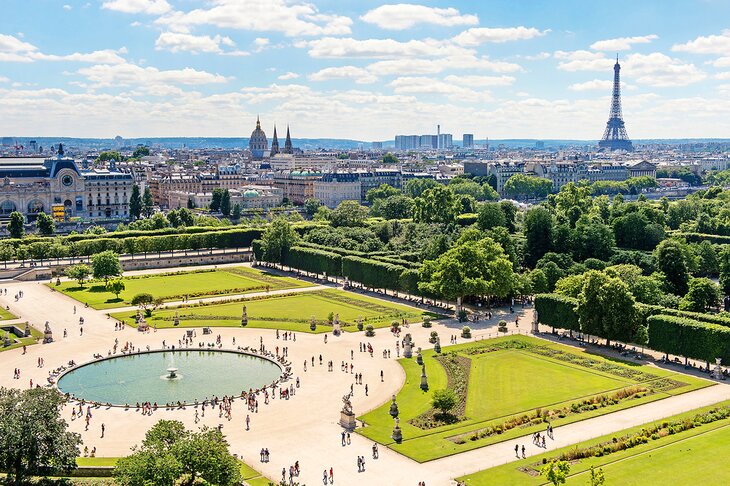
Treat yourself to some time relaxing and wandering the beautiful Jardin des Tuileries. After visiting the Hôtel de la Marine, the Place de la Concorde, or the Louvre Museum, you should spend some time wandering the nearby Jardin des Tuileries. This French formal garden was designed by celebrated landscape architect André Le Nôtre in the 17th century.
Today the garden offers an escape from the hustle and bustle in central Paris, but the ambiance was not always so idyllic. This garden is the site of the Palais des Tuileries where Louis XVI and Marie-Antoinette were essentially imprisoned during the French Revolution. The palace was destroyed by a fire in the 19th century; all that remains is the gorgeous garden.
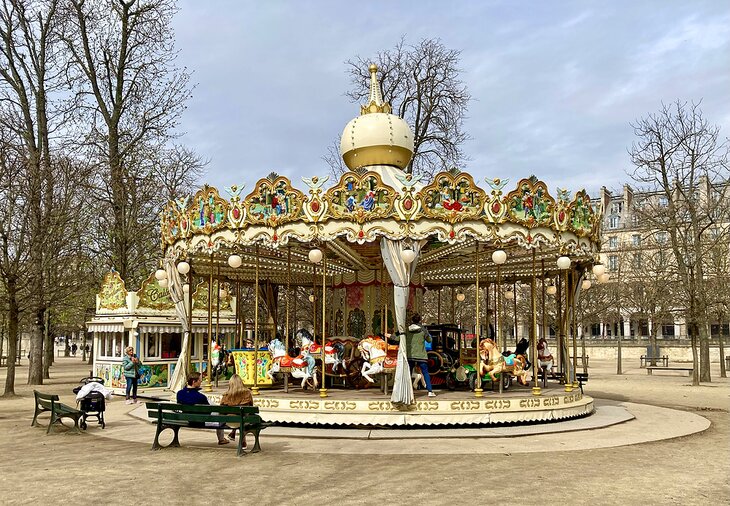
The leafy grounds feature perfectly manicured trees, statues, and pathways. You can relax on the wooden park benches or on individual green chairs which may be moved around. Find the spot that appeals to you and lounge there for a bit, while listening to birds chirp. You'll see locals having a picnic lunch or reading a book in the sunshine.
For snacks and quick meals, head to La Terrasse de Pomone, a kiosk where you can order crepes and sandwiches to-go or for dining at the outdoor tables; the Petit Plisson kiosk that sells quiches and sandwiches for dining at shaded tables; or Petit Farmers, a purveyor of artisanal ice cream.
The park's two café-restaurants, Le Pavillon des Tuileries and the Café des Marronniers offer casual meals in a tranquil setting beneath the leafy chestnut trees.
Tips: Check the opening hours of the café-restaurants and food kiosks as the hours change during different seasons. You will only find the Petit Farmers ice cream truck & stand at the Jardin des Tuileries from April through October.
11. Seine River Cruises
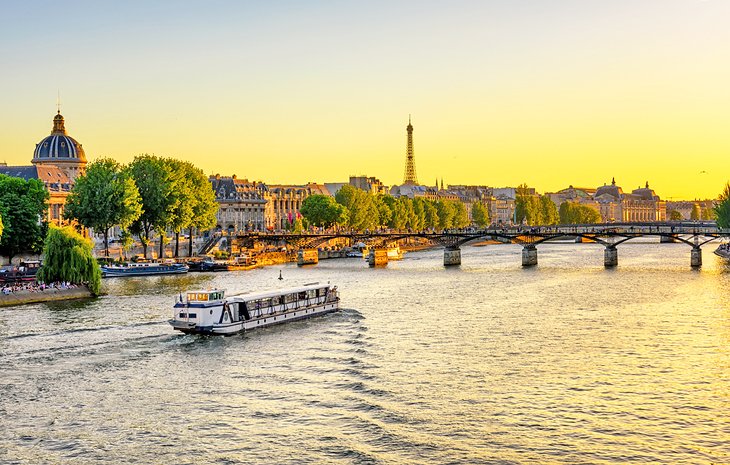
Soak up the scenery of Paris on a Seine River cruise. You'll have a chance to see the sights from a different perspective. The Seine River bridges, the Eiffel Tower, the Notre-Dame Cathedral, and the Louvre Museum look stunning from the viewpoint of a riverboat.
While a daytime cruise allows you to appreciate the glory of the monuments brightened by sunshine, the most romantic experience is an evening cruise. After sunset, the city's landmarks are illuminated, which creates a special effect, and somehow the city seems more magical.
For a cruise that includes dinner, try the Paris Seine River Dinner Cruise with Live Music by Bateaux Mouches. This luxurious riverboat cruise departs at the Pont de l'Alma (a short walk from the Eiffel Tower) and treats you to a romantic four-course meal. If you prefer a more casual boat ride, a good choice is the Seine River Direct Access Guided Cruise by Vedettes de Paris which includes commentary from a knowledgeable guide and breakfast or lunch.
Gourmands will be tempted by the Ducasse sur Seine restaurant boat, which departs from Port Debilly. This dining cruise offers a haute cuisine experience. Options include a lunch (two, three, or four-course meal) or dinner (four or five-course meal). Menus focus on contemporary-style French dishes prepared from seasonal ingredients.
12. Musical Concerts at Sainte-Chapelle
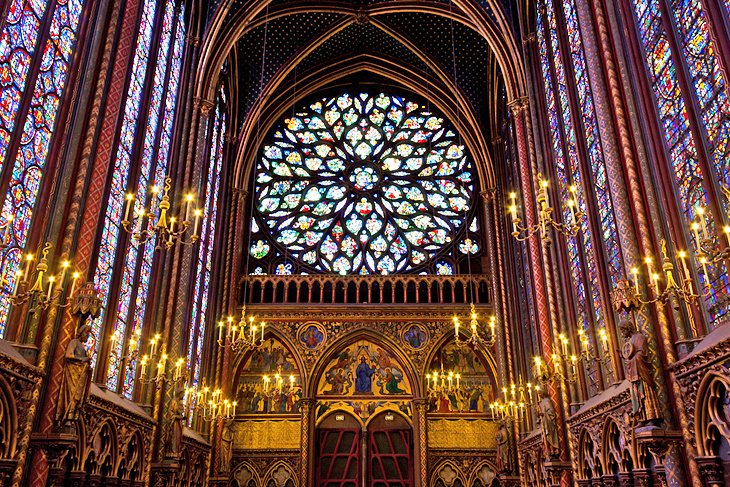
Sainte-Chapelle is considered a rare jewel among medieval houses of worship and is certainly one of the most exquisite churches in Paris. The ravishing 13th-century chapel is tucked away on the Île-de-la-Cité, just a few blocks (about a 10-minute walk) from the Notre-Dame Cathedral.
This masterpiece of Rayonnant Gothic architecture was built from 1242 to 1248 for King Louis IX (Saint Louis) to house the precious relics he had acquired from the Byzantine Emperor. The altar displays a relic of the Crown of Thorns.
An expanse of 13th-century stained-glass windows sets this chapel apart from any other church in the world. The windows' beauty and brilliance are best appreciated on a sunny day and in the morning. If possible, try to schedule your visit accordingly.
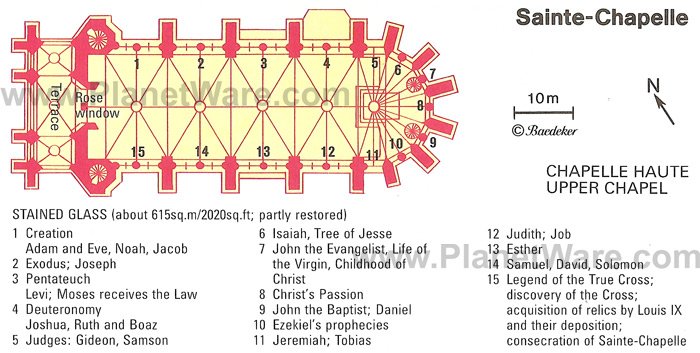
The chapel's over 1,000 stained-glass windows (covering 600 square meters) depict scenes from the bible, both Old Testament and New Testament stories. The colors and light symbolize divinity and the Heavenly Jerusalem.
Only used for church services on rare occasions, Sainte-Chapelle is open to the public as a museum (entrance tickets are required). For an additional fee, audioguides (available in French, English, German, Italian, Spanish, and Japanese) provide one hour of commentary to help visitors appreciate the art, architecture, and history of Sainte-Chapelle.
To truly experience the serene ambiance of Sainte-Chapelle, attend one of the classical music concerts held here. In the iridescent glow of the sanctuary, performances of Baroque chamber music, sacred music, or Vivaldi string quartets have a sublime quality. A regular program of concerts is held at Sainte-Chapelle year-round, with events scheduled several times a week.
Sainte-Chapelle is located in the Palais de la Cité. To find the chapel, enter the iron gate of the Palais de Justice and walk through the inner courtyard.
Another attraction nearby is La Conciergerie (tourists may purchase combined entry tickets), the prison where Marie-Antoinette was detained during the French Revolution.
Address: Sainte-Chapelle, 8 Boulevard du Palais, 75001 Paris (Métro: Cité, Saint-Michel Notre-Dame or Châtelet station)
13. Bustling Boulevards and Legendary Cafés
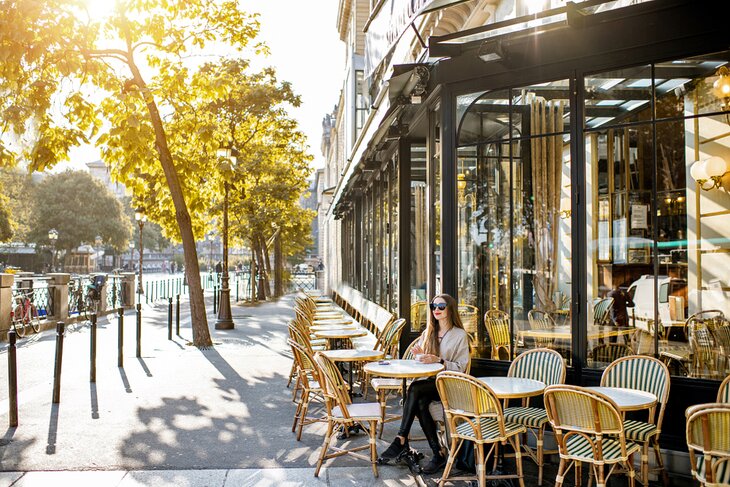
A visit to the City of Light is not complete without spending time on the sidewalk terrace or bustling interior of a famous café. It's the ultimate Parisian people-watching scene and a chance to imagine the historic rendezvous that occurred here.
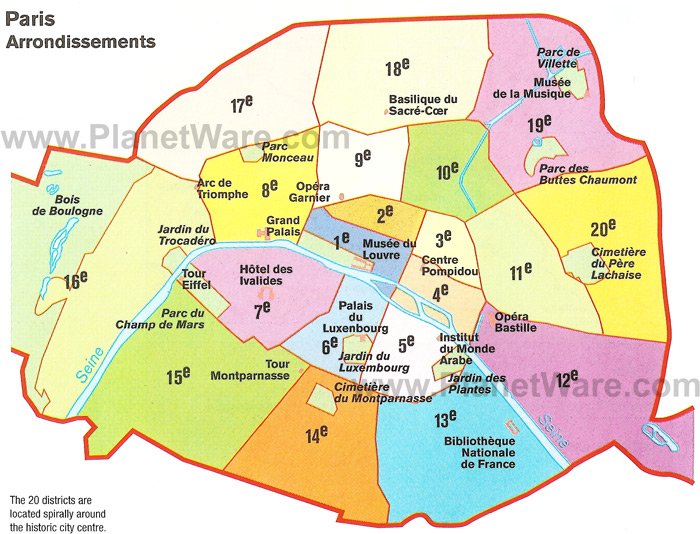
To discover the legendary Paris cafés, the best place to start is the Boulevard Saint-Germain-des-Prés in the 6th arrondissement. This broad tree-lined boulevard features an enticing array of storefronts: designer fashion boutiques, prestigious cafés, and old-fashioned brasseries.
The most celebrated cafés are the Café de Flore (172 Boulevard Saint-Germain-des-Prés), which was the meeting place of Jean-Paul Sartre and Simone de Beauvoir, and Les Deux Magots (6 Place Saint-Germain-des-Prés), once the haunt of poets, authors, and artists, including Arthur Rimbaud, Paul Verlaine, James Joyce, Pablo Picasso, and Ernest Hemingway.
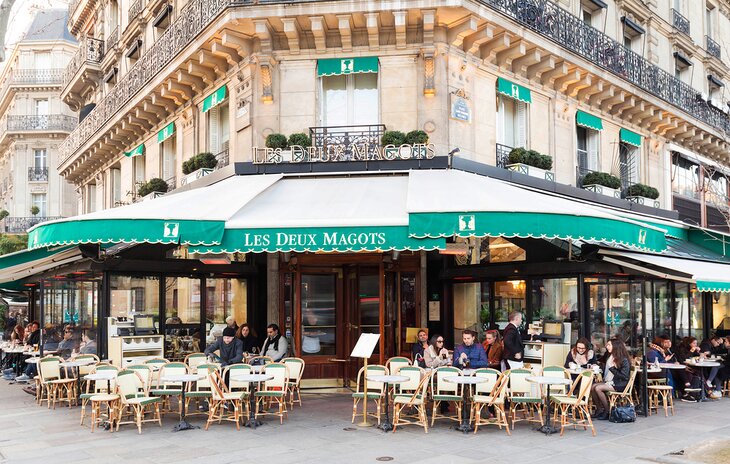
Across from Les Deux Magots is the Eglise Saint-Germain-des-Prés, one of the most important churches in Paris.
At both Café de Flore and Les Deux Magots, you will get the classic Parisian café experience, complete with waiters wearing bow ties. Although the waiters have a reputation for their brusque service, their formality adds to the authentic ambiance.
The Saint-Germain-des-Prés area also has excellent pâtisserie boutiques, boulangeries, and chocolate shops such as the Ladurée tea salon (21 Rue Bonaparte), the Maison Le Roux Chocolatier & Caramélier (1 Rue de Bourbon le Château), and Debauve & Gallais (30 Rue des Saints-Pères), a boutique founded in 1779 that supplied Marie-Antoinette with chocolates.
Join the Paris Sweet Tooth Stroll small-group tour to sample the neighborhood's finest sweet treats.
The brasseries of Boulevard du Montparnasse were also frequented by artists and writers during the early 20th century. Le Dôme in Montparnasse is a Paris institution (108 Boulevard du Montparnasse) that has attracted luminaries including Sartre, Simone de Beauvoir, and Picasso. In its glittering Art Deco dining room, the restaurant serves exceptional seafood.
Another atmospheric French brasserie with a mythical past, La Coupole (102 Boulevard du Montparnasse) has, since the 1920s, been visited by artists such as André Derain, Fernand Léger, Man Ray, Pablo Picasso, and Marc Chagall as well as the novelist Albert Camus and the philosopher Jean-Paul Sartre.
La Rotonde Montparnasse (105 Boulevard du Montparnasse) has been a gathering place for painters and writers since 1911 and still attracts cinematographers and artists today.
14. Jardin du Luxembourg
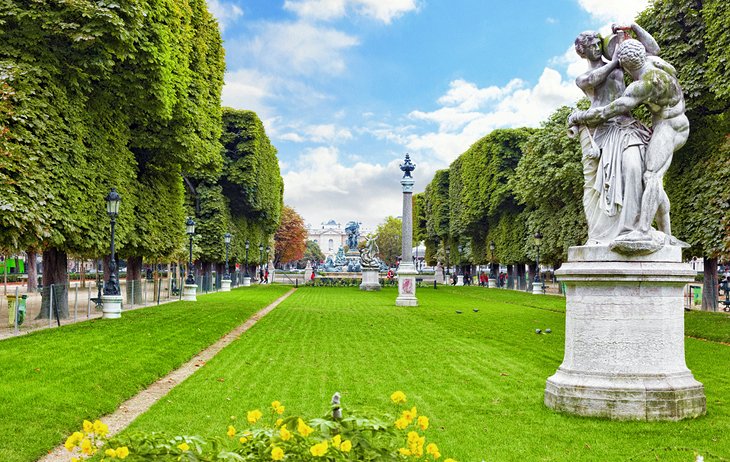
The Jardin du Luxembourg is the best-known park in Paris after the Tuileries. The 25-hectare park features a formal French garden, similar to the Jardin des Tuileries, as well as an English garden with shady groves of overgrown trees.
On a nice day, it's fun to grab a baguette sandwich at a nearby bakery and then find a chair in front of the garden's duck pond. This is the Paris version of going to the beach when the weather is pleasant. You'll notice many local residents taking a lunch break or simply soaking up some sunshine at the park. It's an especially popular spot among students of the Latin Quarter.
You can also visit a rose garden, apiary, Orangerie (orangery), and greenhouses filled with exotic orchids, as well as an orchard where heirloom varieties of apples flourish.
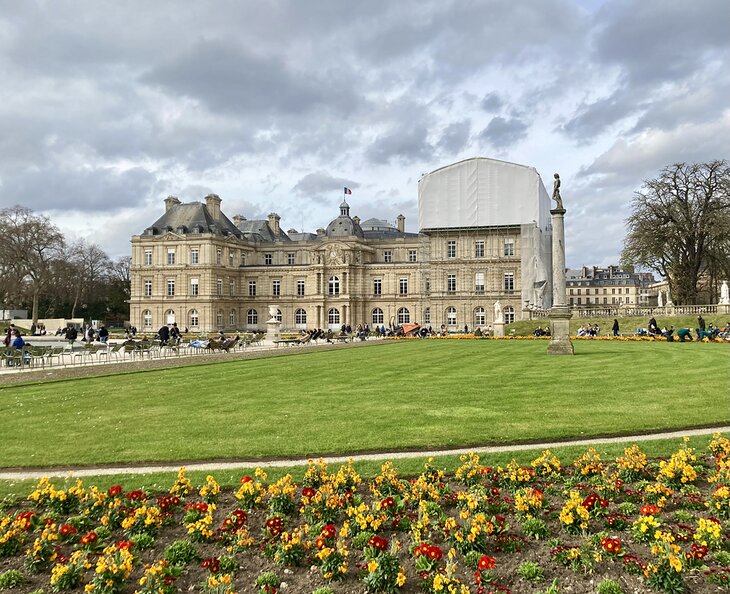
Artistic treasures are found throughout the gardens, such as the picturesque 17th-century Fontaine Médicis, a fountain basin nestled under trees opposite the east front of the Palais du Luxembourg, which today is used by the French state as the seat of the Senate.
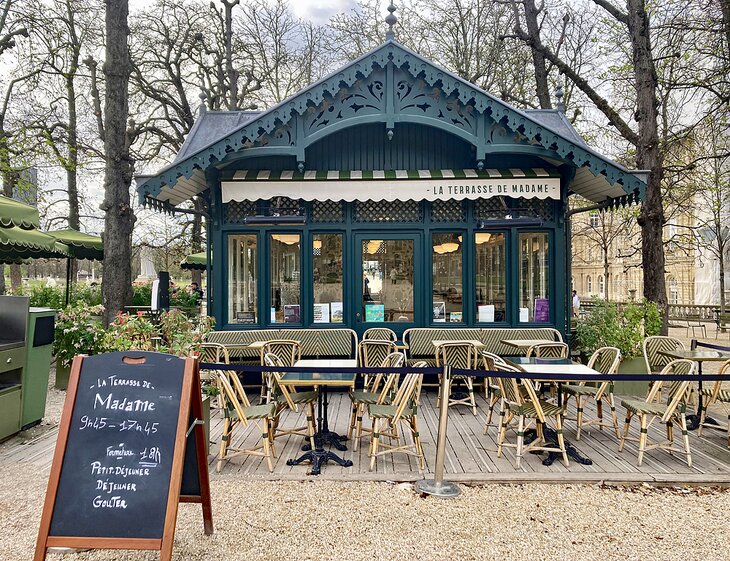
Steps away from the Fontaine Médicis is La Terrasse de Madame, a little café-restaurant in a charming setting. You may dine at outdoor tables beneath the leafy chestnut trees. The menu includes coffee and croissants for breakfast and bistro meals for lunch, such as steak, Croque Monsieur (sandwiches), quiche, grilled fish, charcuterie, and salads. Also on the menu are traditional French desserts like profiteroles and crème brûlée.
Children love the playground, which features swings, slides, a sandpit, a games area, and pony rides. A favorite activity for the youngest visitors at the Jardin du Luxembourg is steering miniature sailboats around in the octagonal pool (the boats can be hired at a kiosk by the pond).
For French-speaking kids, watching a puppet show at the Théâtre des Marionnettes is not to be missed. The Théâtre des Marionnettes is a modern venue, in the southwest area of the park near the tennis courts, that accommodates an audience of up to 275 children and adults (which makes it the largest puppet theater in France).
Address: Jardin du Luxembourg, Rue de Vaugirard/Rue de Médicis, 75006 Paris (Métro: Luxembourg or Odéon station)
15. Sacré-Coeur and Quartier Montmartre
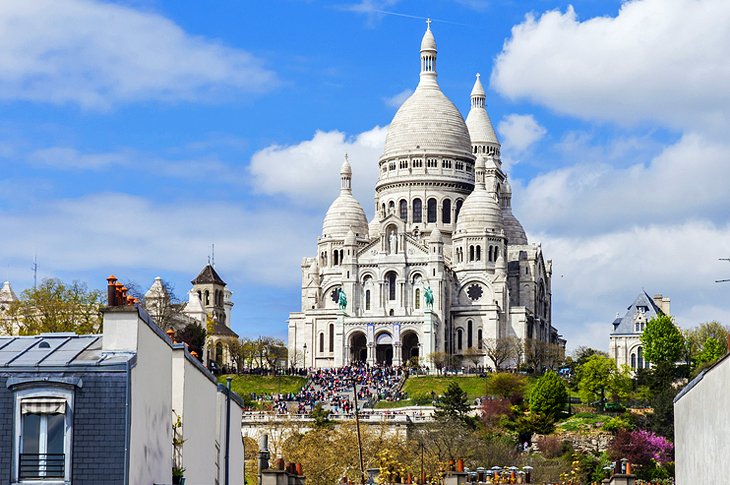
Sitting at the highest point in Paris like an ornamental decoration, the Basilique du Sacré-Coeur de Montmartre has a special aura. Its alabaster facade blends Romanesque and Byzantine styles, and from far away, it looks like a wedding cake (which is its nickname).
If you walk to the Sacré-Coeur Basilica from the Métro station, you must walk up the Esplanade, a staircase of over 200 steps, to arrive at the Basilica.
Inside the Basilica, the striking mosaic of Christ with a flaming heart gives the sanctuary an emotional and spiritual intensity, fitting for a church that was created as a symbol of hope after the Franco-Prussian War. In keeping with the somber ambiance, the Basilica's sanctuary is quite dark except for a plethora of flickering candles.
The atmosphere outside the church is quite a contrast, with Parisian joie de vivre in full swing. Locals like to hang out on the grass lawns of the Esplanade while listening to street musicians. You'll see tourists taking selfies, couples embracing, and kids playing on the grass. Below the Esplanade is an old-fashioned carousel, adding to the sense of festivity.
You can spend time on the terrace in front of the Basilica admiring the views of Paris or climb (300 steps) up to the Basilica's Dome for an even higher perspective with unobstructed panoramas. Admission to the Dome requires an entrance fee, but you may visit the Basilica free of charge.
After visiting the Sacré-Coeur, be sure to explore the enchanting neighborhood of Montmartre. This medieval country village (once considered outside of the city) has been incorporated into the city of Paris as the 18th arrondissement.
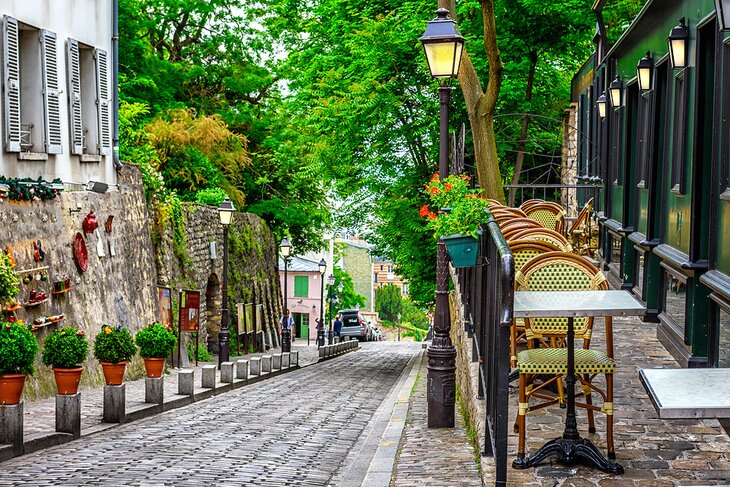
Montmartre exudes old-fashioned charm along with an avant-garde edge. Winding cobblestone streets and pedestrian staircases lead to small locally owned boutiques and restaurants, art galleries that evoke the quarter's bohemian past, and quiet squares filled with outdoor cafés.
During the Belle Époque, the village of Montmartre began to attract artists such as Henri de Toulouse-Lautrec and Edgar Degas. The bohemian creative spirit of Montmartre is still found here, especially around the Place du Tertre and the Carré Roland Dorgelès.
Montmartre has several excellent art museums, where you can admire the creations of artists who resided here in the late 19th and early 20th century (the Belle Époque). During that era, the quarter was famous for its cabarets and artists' studios.
The Musée de Montmartre (12 Rue Cortot) occupies a historic house where Auguste Renoir, Raoul Dufy, Suzanne Valadon, and other artists once lived and worked. Tucked away within the museum's gardens, you'll find the Café Renoir, which features outdoor seating in the delightful space where Renoir painted several masterpieces.
If you are intrigued by Surrealist art, be sure to visit the Dalí Paris museum (11 Rue Poulbot). This innovative museum displays more than 300 works created by Salvador Dalí. The exhibits are presented in a way that reveals the symbols and motifs used in his artworks.
Address: Basilique du Sacré-Coeur, 35 Rue du Chevalier-de-la-Barre, 75018 Paris (Métro: Abbesses)
16. Panthéon
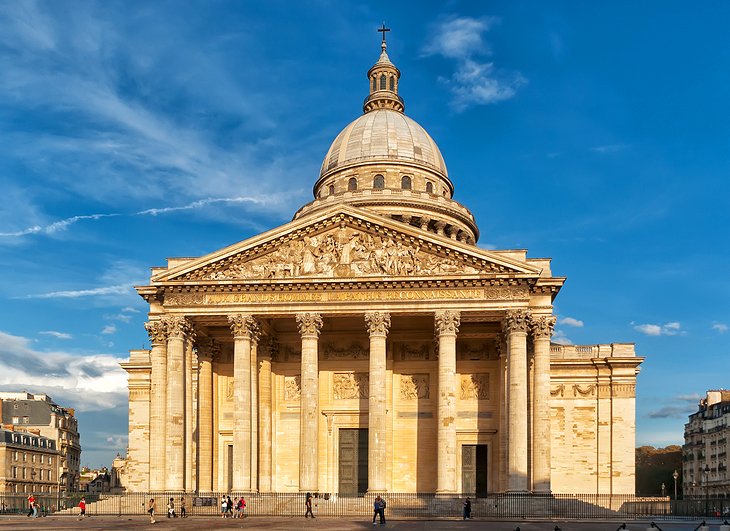
The Panthéon is the national mausoleum of France's greatest citizens. You get a sense of the important heritage just by glancing at this grand monument. The colonnaded facade and enormous dome were modeled after the ancient Pantheon in Rome.
The architecture of the Panthéon marks a clear break from the fanciful Rococo style of the Louis XV era and instead presents a simpler and more somber Neoclassical style. The inscription on the Panthéon's facade reads "Aux Grands Hommes La Patrie Reconnaissante" ("To the Great Men Recognized by Their Country").
Many famous men (75 in total) are buried here, including philosophers Voltaire, Jean-Jacques Rousseau, and René Descartes; and the writers Victor Hugo, Alexandre Dumas, Émile Zola, and André Malraux. Although the monument was originally dedicated exclusively to France's male citizens, this has changed recently.
Since 1995, several of France's most esteemed female citizens have been buried in the Panthéon including the physicist Marie Curie, a two-time winner of the Nobel Prize. Five other women are buried at the Panthéon. In November 2021, Josephine Baker (the famous Black American expatriate dancer and singer) became the sixth woman to receive the honor of being inducted into the Panthéon.
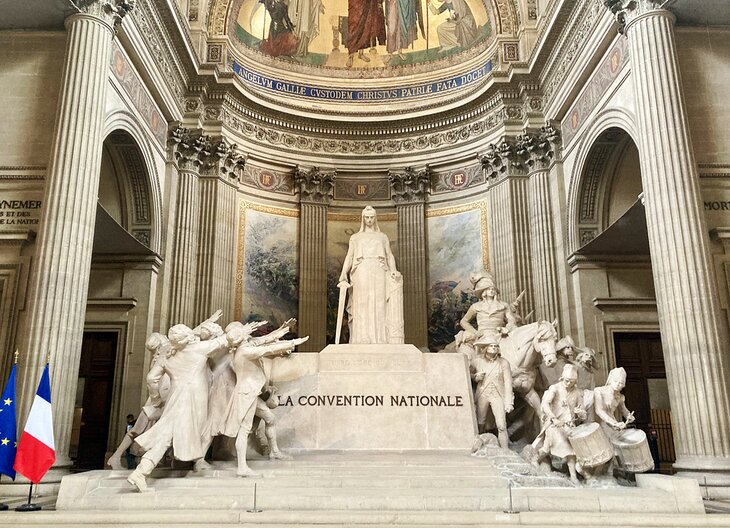
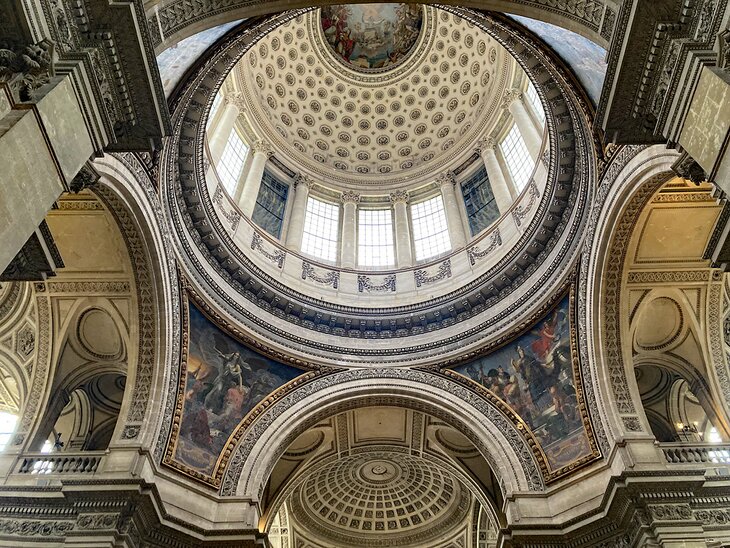
When you step inside the Neoclassical sanctuary, you will be awed by the spacious domed interior, the floor-to-ceiling paintings that depict scenes of Christian saints, and the enormous sculpture that celebrates French Revolution deputies (La Convention Nationale).
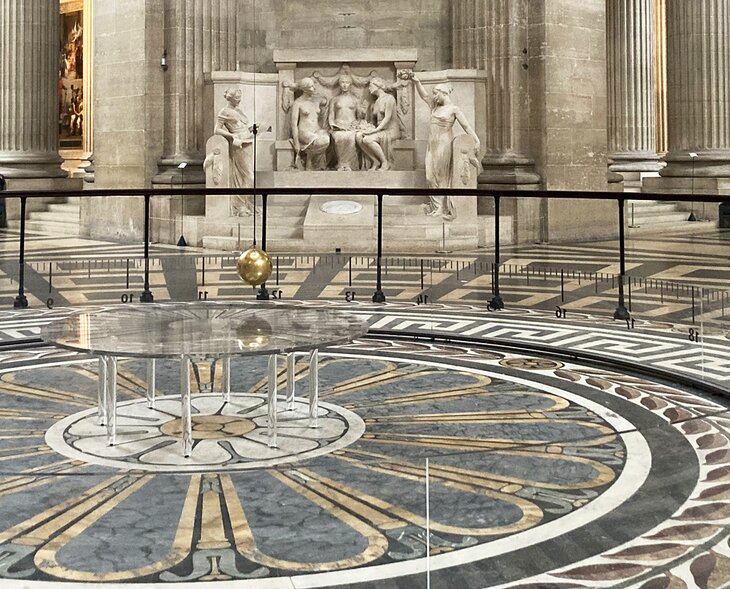
Beneath the monumental rotunda is an unusual centerpiece: a science experiment rather than a work of art. Foucault's pendulum, created by French physicist Léon Foucault, was installed in 1851 to demonstrate his theory that the Earth rotates. The brass pendulum hangs from the dome on a steel wire and constantly oscillates in a circular trajectory.
To find the famous citizen's monuments and tombs, you will need a map (available on-site). The underground crypt is arranged in a geometric fashion, but it is easy to get lost.
Entrance to the Panthéon requires an admission fee, unless you have a Paris Museum Pass and except for the first Sunday of every month from November through March.
From April through September (for an additional entrance fee), you may ascend to the Panthéon's dome, where a colonnaded balcony provides a sensational view of the city's landmarks. You can see the Notre-Dame Cathedral, the Louvre Museum, the Eiffel Tower, and the Sacré-Coeur Basilica in the hilltop neighborhood of Montmartre.
Address: Panthéon, Place du Panthéon, 75005 Paris (Métro: Luxembourg station)
17. Place des Vosges
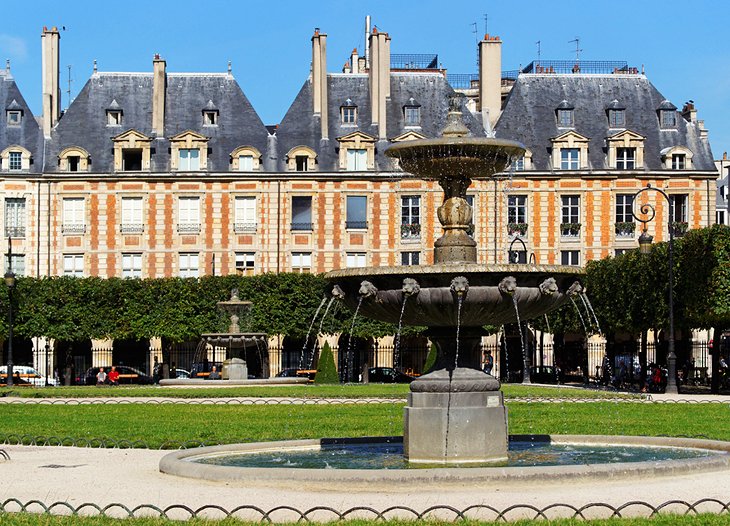
In the charming Marais district, the Place des Vosges is Paris' oldest public square. With its uniform red-brick architecture, this elegant square provided a model for other squares such as Place Vendôme and Place de la Concorde.
The Place des Vosges was constructed between 1605 and 1612 (called Place Royale at the time) for King Henri IV. The buildings originally housed aristocratic residences.
The Place Royale offered a splendid setting for festive occasions in the 17th century, such as tournaments, state receptions, and court weddings. It was also a favorite spot for duels, in spite of Cardinal Richelieu's ban on dueling. The celebrated courtesan of Louis XIII's reign lived at number 11, and the future Madame de Sévigné was born in 1626 at number 1 on the square.
Victor Hugo rented an apartment at number 6 on the Place Royale between 1832 and 1848. Today this apartment is a museum, the Maison de Victor Hugo (6 Place des Vosges) which is devoted to educating visitors about the life and work of Victor Hugo.
The Place des Vosges is at the heart of Le Marais, a medieval quarter with narrow cobblestone streets, grand Renaissance palaces, and hôtels particuliers (mansions) of the 16th and 17th centuries. Several of these stately old buildings have been converted into museums.
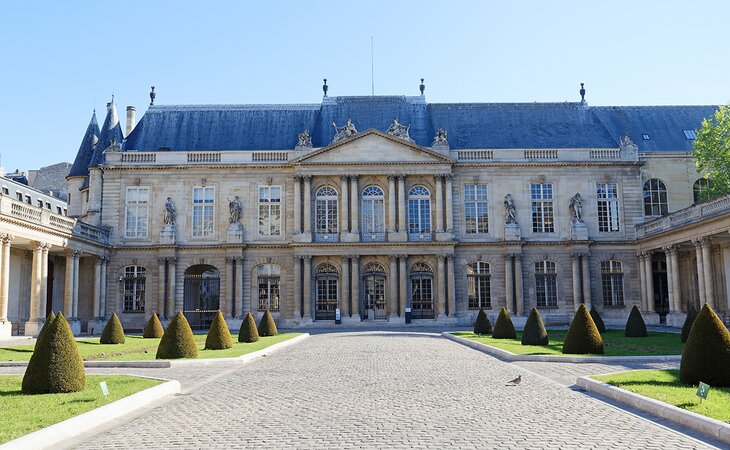
A fascinating glimpse of France's history awaits you at the Musée des Archives Nationales (Museum of the National Archives) in the 17th-century Hôtel de Soubise (60 Rue des Francs-Bourgeois). The museum presents historical exhibits including the Edict of Nantes, French Revolution objects, Marie-Antoinette's last testament, and a letter written to Napoleon.
The most important museum of the quarter is the Musée Carnavalet - Histoire de Paris. This recently renovated museum illustrates the history of Paris from antiquity through the French Revolution and the Belle Époque until the present day.
In the Hôtel Salé (a 17th-century aristocratic mansion), the Musée National Picasso-Paris (5 Rue de Thorigny) wows you with its incredibly extensive collection (over 5,000 pieces) of Picasso's artwork, including some of his most iconic masterpieces.
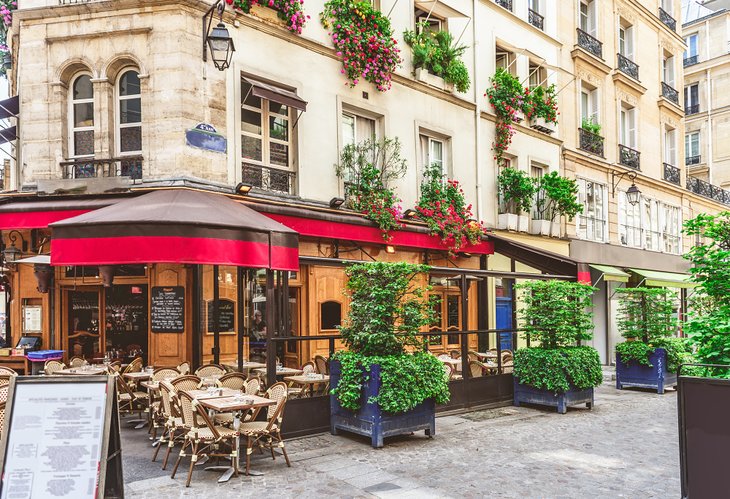
More than just an open-air museum filled with historic monuments, Le Marais has become a trendy quarter full of fashion boutiques, cute cafés, and unique shops. Spend some time wandering the Rue de Sévigné and its cross street, the Rue des Francs Bourgeois. This area brims with youthful energy and is a fun place to visit for a stroll or a coffee break.
Another interesting fact about Le Marais is that it has a significant Jewish community. The Musée d'Art et d'Histoire du Judaïsme (71 Rue du Temple) presents the 2,000-year history of France's Jewish communities, along with educational programs about Jewish culture and exhibitions of artwork by Jewish artists such as Chagall and Modigliani.
Nearby, the Jardin Anne Frank offers the tranquility of a secluded garden. This quiet, leafy green space features benches, shady trees, and an orchard. One of the chestnut trees in the garden was grafted from a tree that Anne Frank could see from the window of the annex where she lived in Amsterdam.
For those in search of a refined Parisian experience, the Mariage Frères (30 Rue du Bourg-Tibourg) is the place to go. This tea salon serves its aromatic tea with savory and sweet delicacies in a French colonial-style dining room; its adjoining shop sells a wide selection of scented teas in distinctive tins.
Many tourists wait in line to try the authentic falafel at L'As du Fallafel (34 Rue des Rosiers), considered one of the best Middle Eastern restaurants in Paris. This area has several kosher restaurants and kosher bakeries.
Tip: Keep in mind that L'As du Fallafel and other Jewish-owned shops in the Marais are closed on Shabbat (Friday evening and Saturday during the daytime).
Address: Place des Vosges, 75004 Paris (Métro: Saint-Paul or Bastille station)
18. Musée Rodin
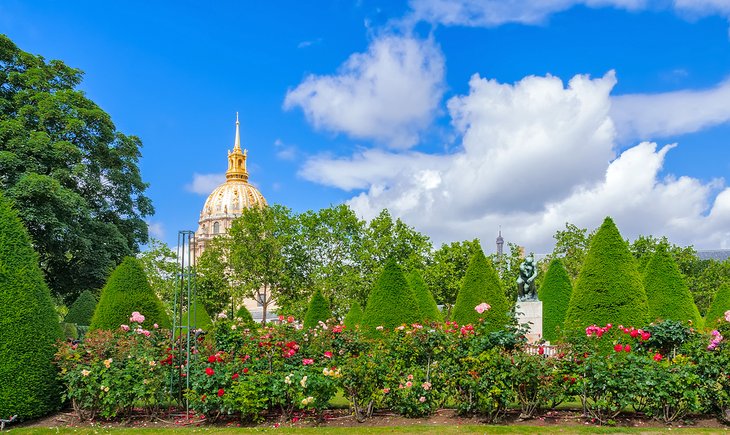
The Musée Rodin is a hidden gem in the posh 7th arrondissement. This peaceful haven of refinement occupies the Hôtel Biron, an 18th-century mansion where sculptor Auguste Rodin lived and worked for many years. The property includes a seven-acre Sculpture Garden that blooms with flowers throughout the year.
In 1908, Auguste Rodin began to rent several rooms on the ground floor of the Hôtel Biron to use as an atelier. Rodin later took over the entire Hôtel Biron, which became his place of residence for the rest of his life. In 1916, Rodin donated his artworks and collection of antiquities to the French state, and the museum was established soon thereafter.
The Musée Rodin displays a remarkable assortment of Rodin's sculptures, as well as the works of Camille Claudel. Rodin masterpieces presented in the Hôtel Biron include Danaïd, an expressive marble sculpture depicting a mythological character (created in 1890); The Age of Bronze (created in 1877); The Cathedral, a stone sculpture of two intertwined hands (created in 1908); and The Kiss, one of Rodin's most sensual works (created around 1882).
Several monumental Rodin sculptures preside over various corners of the Sculpture Garden. The Thinker, Rodin's most iconic work of art, sits on a pedestal overlooking the perfectly manicured formal garden. The expressive Monument to Balzac stands in a shady spot beneath leafy trees, while a bronze statue of Adam is sheltered behind dense shrubbery.
Adding to the romance of the garden are the park benches and the café-restaurant, L'Augustine, where you may relax on an outdoor terrace. The café-restaurant also has a casual indoor dining space. Here you can savor a classic French meal, complete with dessert supplied by the renowned Maison Lenôtre pâtisserie.
19. Place Vendôme
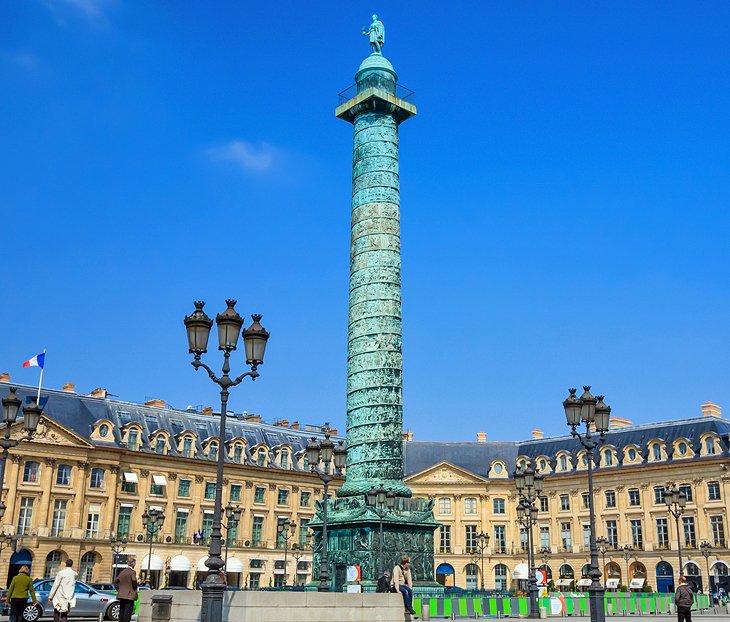
This graceful 17th-century square was designed by Jules Hardouin-Mansart, one of the leading architects of Le Grand Siècle (during the reign of Louis XIV). Originally, the square was called Place Louis le Grand and was intended to house royal establishments.
The charm of the Place Vendôme is that it has retained the consistency of the overall design, which combines regal ostentation with civic simplicity. Following careful restoration in the early '90s, it has been restored in all its splendor.
The square is known for its upscale jewelry boutiques including Boucheron, Chaumet, Van Cleef & Arpels, and Cartier. Another luxury establishment here is the Ritz Hotel, which was frequented by Ernest Hemingway, Scott Fitzgerald, and Gertrude Stein.
Coco Chanel made the Ritz Paris her home for 34 years; she decorated her suite in her signature style with velvet-upholstered sofas, lacquered furniture, and gilded mirrors. The Ritz Paris still has a suite named after Coco Chanel that exemplifies her vision of Parisian chic.
At the center of the Place Vendôme stands a landmark of historic importance, the Colonne de la Grande Armée (replacing a statue of Louis XIV that was removed in 1792). Built between 1806 and 1810, the 42-meter-high column is dedicated to Napoleon and his Grande Armée (army) who fought heroically and victoriously in the Battle of Austerlitz (in December 1805).
The column's facade is crafted from bronze plaques embossed with 108 spiraling bas-relief friezes (similar to Trajan's Column in Rome), which tell the story of the glorious events that took place during Napoleon's campaign of 1805.
Address: Place Vendôme, 75001 Paris (Métro: Tuileries or Opéra station)
20. Centre Pompidou
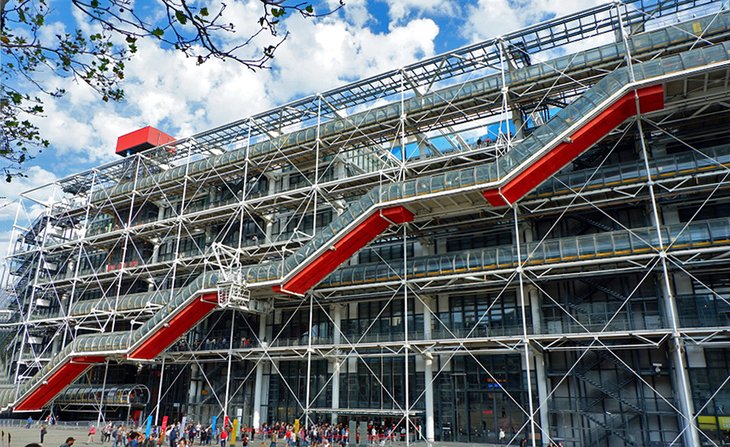
In the charming Le Marais quarter, the Centre Pompidou is a cultural center devoted to modern art. The building itself features shocking modern architecture, sometimes described as an "inside out" design because the architectural details of staircases and elevators appear on the exterior.
The main attraction of the Centre Pompidou is the Musée National d'Art Moderne (National Museum of Modern Art), which displays iconic works of art chosen from an extensive collection of over 100,000 pieces. The collection focuses on contemporary art created from 1905 to the present.
The collection covers all the movements of modern art, beginning with the Post-Impressionist "Fauves" and "Les Nabis" movements (André Derain, Raoul Dufy, Henri Matisse, Pierre Bonnard, and Marc Chagall) and continuing with the famous movement of Cubism (Pablo Picasso, Georges Braque, Fernand Léger, and Robert Delaunay).
Each room highlights a specific time period or artistic movements such as Expressionism, Constructivism (Paul Klee and Piet Mondrian), Surrealism (Salvador Dalí, Max Ernst, René Magritte, and André Masson), Abstract Expressionism (Mark Rothko, Nicolas de Staël, Hans Hartung, and Serge Poliakoff), Informal Art (Jean Dubuffet), New Realism, and Pop Art (Andy Warhol, Claes Oldenburg).
Several masterpieces of the collection are not to be missed: Avec l'Arc Noir by Wassily Kandinsky, Manège de Cochons by Robert Delaunay, Portrait de la Journaliste Sylvia von Harden by Otto Dix, The Frame by Frida Kahlo, Les Mariés de la Tour Eiffel by Marc Chagall, La Blouse Roumaine by Henri Matisse, New York City by Piet Mondrian, and Les Loisirs-Hommage à Louis David by Fernand Léger.
The center has two bookstores, a casual café, and a boutique that sells gift items inspired by contemporary art.
For a special dining experience, head to the Centre Pompidou's restaurant on the museum's top floor. Restaurant Georges features floor-to-ceiling windows with spectacular panoramic views of the Paris cityscape. Tables on the terrace look out directly onto the Notre-Dame Cathedral, the Eiffel Tower, and Montmartre.
Address: Centre Pompidou, Place Georges-Pompidou, 75004 Paris (Métro: Rambuteau, Hôtel de Ville, Châtelet or Rambuteau station)
21. Hôtel National des Invalides
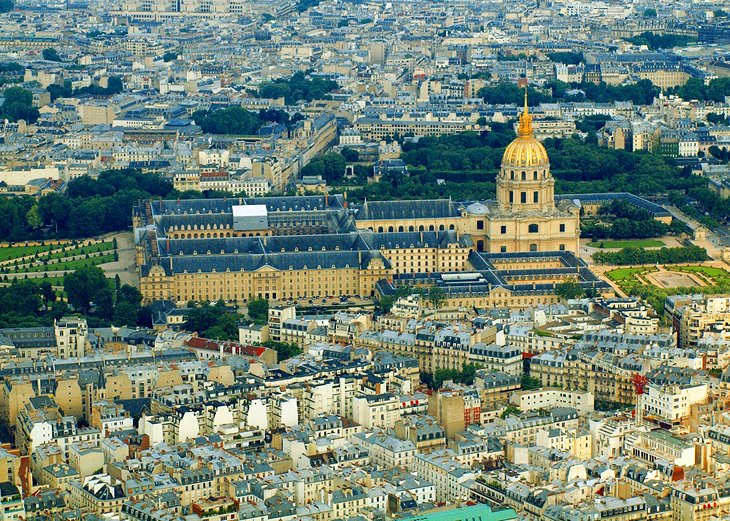
Louis XIV founded the Hôtel Royal des Invalides in the late 17th century as a home for disabled soldiers. The building was constructed between 1671 and 1676 under the direction of the architect Libéral Bruant and centered on the Eglise Saint-Louis-des-Invalides, which was later redesigned by the architect Jules Hardouin-Mansart in 1706.
Today, the Hôtel National des Invalides still has a hospital (Institution Nationale des Invalides) that provides medical care for disabled veterans.
The monument also includes several tourist attractions: three museums and two historic churches. You could easily spend hours here, and luckily the site has excellent amenities: a café-restaurant, the Angelina tearoom (famous for its hot chocolate and pastries) in a tree-shaded courtyard, and a bookstore/gift shop.
Founded in 1794, the Musée de l'Armée (Army Museum) presents a large collection of military equipment and uniforms, weapons, prints, and armor from various historical periods. The museum covers the military history of France from the 13th century (the Crusades) to the 17th century. There are also paintings of Napoleon and well-known generals, as well as maps that depict the French campaigns.
The Musée de l'Ordre de la Libération honors the soldiers who fought for the liberation of France during the Second World War, from 1940 to 1945. This museum also educates visitors about the deportation of Jews from France, the Resistance, and life in France during the war.
The military strategy of the 17th century comes to life at the Musée des Plans-Reliefs (Museum of Relief Maps). The museum displays 97 detailed (1 to 600 scale) relief maps of France's fortified towns (citadels) and fortresses that date from 1668 to 1871. Louis XIV's Minister of War (and later ministers) used the maps for military planning purposes.
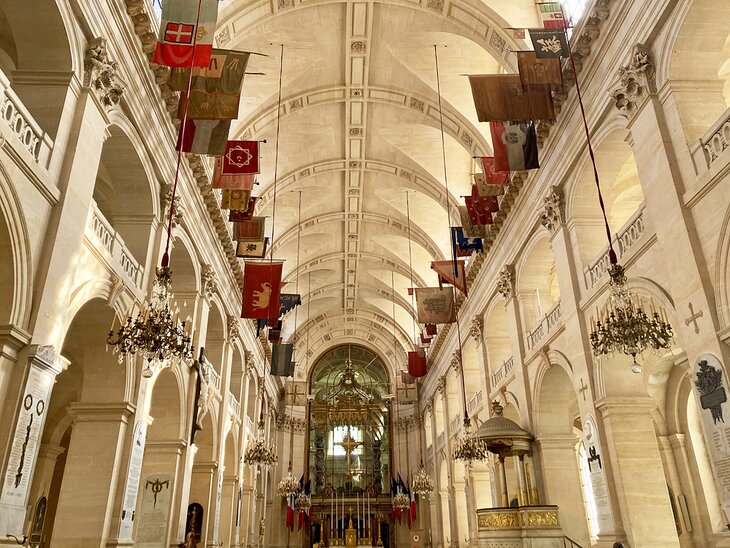
A gold-domed Neoclassical church, the Eglise du Dôme des Invalides was built in 1677 as a royal chapel for Louis XIV but is most famous for being the site of Napoleon's Tomb, installed here in 1861 by the orders of King Louis-Philippe. The imperial tomb stands beneath a magnificent cupola, which was painted by Charles de la Fosse.
Designed for veterans to worship, the Cathédrale Saint-Louis des Invalides (constructed around 1676) connects with the Eglise du Dôme des Invalides. This chapel was built in keeping with the etiquette of the 17th century and has a separate entrance from the Eglise du Dôme. The Eglise Saint-Louis des Invalides still serves as the cathedral for the French army.
Address: Hôtel National des Invalides, Esplanade des Invalides, 129 Rue de Grenelle, 75007 Paris
22. Domaine National du Palais-Royal
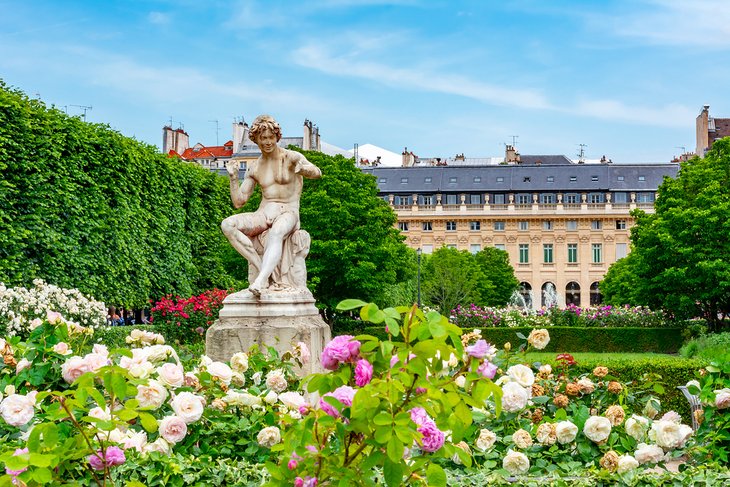
Just steps away from the Louvre Museum, you will find a welcome retreat amid the bustle of Paris' 1st arrondissement. Visiting this secluded spot feels like a secret getaway, even though it's right in the center of the city.
The Palais-Royal was created as a residence for Cardinal Richelieu in 1633, during the reign of Louis XIII. Richelieu later bequeathed the palace to the royal family, and it became the childhood home of Louis XIV.
Exemplifying classical French architecture, the Domaine National du Palais-Royal is made up of 60 pavilions surrounding a courtyard and a garden, the Jardin du Palais-Royal. This peaceful enclosed space has the feeling of being its own little village within the city.
After wandering the busy streets of Paris, you will be delighted by the lush tree-shaded grounds. You might be surprised to see that the courtyard features a contemporary sculpture installation, a striking contrast to the historic architecture.
The buildings are connected by a colonnaded pathway and arcaded galleries (verandas) filled with high-end boutiques. There are fancy cafés with pleasant outdoor terraces and two gastronomic restaurants: the haute-cuisine Palais Royal Restaurant (two Michelin stars); and Le Grand Véfour in an 18th-century dining room featuring ornate "art décoratif" design motifs.
The Palais-Royal area has two theaters: the Théâtre du Palais-Royal (38 Rue de Montpensier), which dates back to 1783 and continues to present theater performances in French; and La Comédie-Française (1 Place Colette), a theater known as the "La Maison de Molière" because it has staged so many of the famous playwright's works. The Comédie-Française was inaugurated in 1790 and is still in use during its theater season.
A lovely place for a stroll, the Domaine National du Palais-Royal is open every day, free of charge. The Centre des Monuments Nationaux offers guided group tours.
Address: Domaine National du Palais-Royal, 8 Rue Montpensier, 75001 Paris (Métro: Palais Royal-Musée du Louvre or Pyramides station)
23. Place de la Bastille
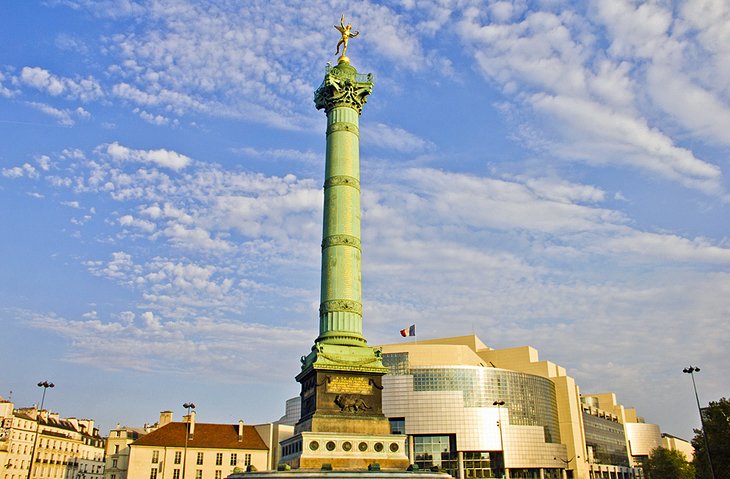
Now, only the name of this square is a reminder that the notorious state prison known as the Bastille, the much-hated symbol of absolutist power, once stood here. After the storming of the Bastille on July 14, 1789, the prison was completely demolished.
In the center of Place de la Bastille is the 51-meter-high Colonne de Juillet, topped by a graceful gilded figure of Liberty (Génie de la Liberté). The monument commemorates the July Revolution of 1830, which overthrew King Charles X and brought Louis-Philippe d'Orléans to power.
Four Gallic cocks and a lion relief on the base of the column symbolize the free people of France. A spiral staircase of 283 steps inside the column leads to a viewing platform.
On the site of the Bastille prison is the new Opera House, the Opéra Bastille, inaugurated by President Mitterrand on July 13, 1989. This immense modern theater has seating for 2,745 people. Both the view of the stage from the auditorium and the acoustics are superb.
The Opéra Bastille presents a calendar of events that includes opera and ballet performances by the Opéra National de Paris and the Corps de Ballet de l'Opéra de Paris.
For a memorable evening in Paris, attend one of the performances at the Opéra Bastille and then dine in the Bastille area. This trendy neighborhood is brimming with quirky boutiques, hip clothing shops, stylish restaurants, and happening cafés.
Address: Place de la Bastille, 75012 Paris (Métro: Bastille)
24. Place du Châtelet and Tour Saint-Jacques
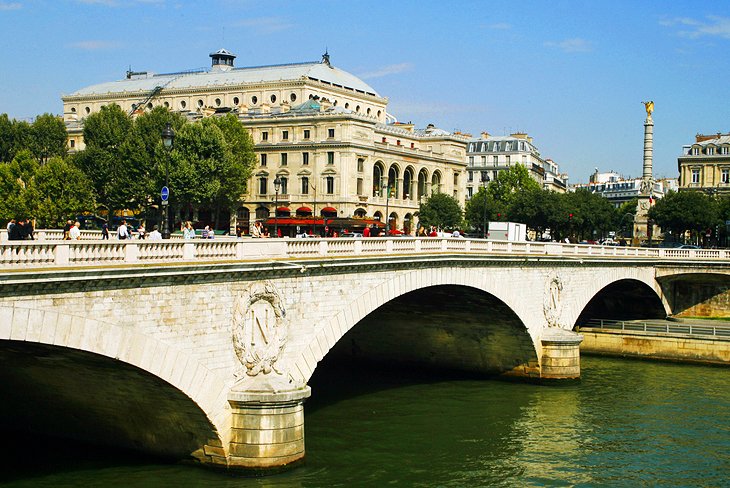
The Place du Châtelet stands at the very center of Paris in the 1st arrondissement, overlooking the Seine River. The Pont au Change (bridge) provides access from the Île de la Cité to the Place du Châtelet.
Tip: It's just a short walk from Sainte-Chapelle and La Conciergerie on the Île-de-la-Cité to the Place du Châtelet, so it would make sense to visit these tourist attractions at the same time.
Two theaters grace the Place du Châtelet. The opulent Second Empire Théâtre du Châtelet (1 Place du Châtelet) presents a wide variety of music concerts, as well as dance and theater performances. A listed Monument Historique where Sarah Bernhardt once directed shows, the Théâtre de la Ville (2 Place du Châtelet) stages a diverse program of dance, music, and theater performances.
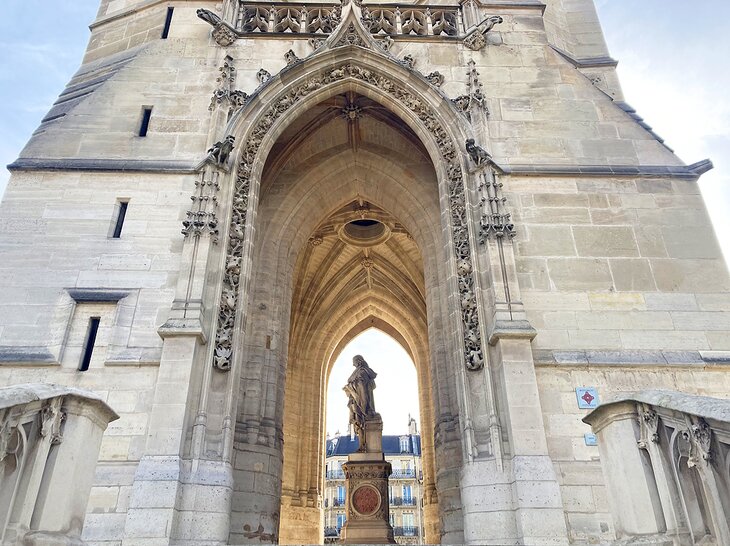
The area around Place du Châtelet is also worth exploring. Continue towards the Rue de Rivoli, past the Boulevard de Sébastopol, and wander through the small park to find the Tour Saint-Jacques. The 16th-century Flamboyant Gothic clock tower is all that remains of the Eglise Saint-Jacques-de-la-Boucherie (the patron saint of butchers), the town's old parish church.
The Saint-Jacques Tower is also famous as the place where Blaise Pascal conducted one of his barometric experiments, which showed the effect of altitude on the height of a column of mercury.
25. La Conciergerie
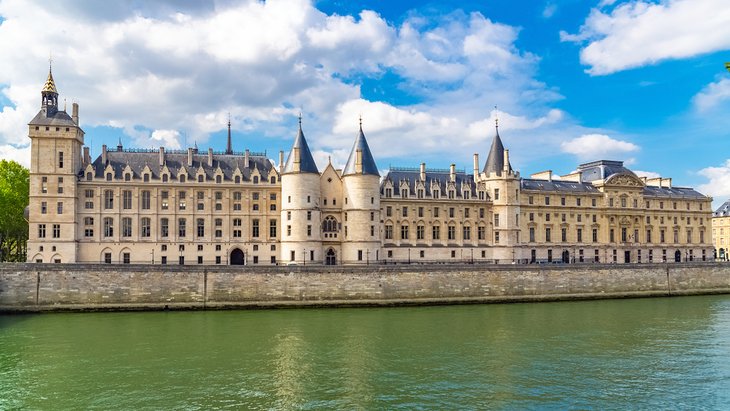
Never mind the inviting name, this imposing medieval fortress was an infamous place of detention and a courthouse (from 1793 to 1795) during the French Revolution. Here, prisoners including Marie-Antoinette and Robespierre were kept in dank cells while awaiting their fate.
The Conciergerie is a remnant of the Palais de la Cité, the royal residence of France's kings in the 13th and 14th centuries until the royal residence was moved to the Louvre. During the Restoration (return of the Bourbon monarchs to the throne), the Conciergerie was no longer used as a prison and Marie-Antoinette's cell was converted into a commemorative chapel.
Today, the Conciergerie is a UNESCO World Heritage Site and is open to the public as a museum. It's possible to purchase a combined entry ticket for the Conciergerie and Sainte-Chapelle. Admission to the Conciergerie is included with a Paris Museum Pass.
During your visit, you will have a chance to walk through the Prisoners' Corridor which includes a replica of French Revolution-era prison cells. An evocative exhibit, the Salle des Noms lists the names of more than 4,000 people who were put on trial by the Revolutionary Tribunal and includes their biographies.
Of course, you must visit the expiatory chapel of Marie-Antoinette (the commemorative chapel). Look for the motif of tears painted on the walls.
Other highlights of the visit include the Salle des Gardes which exhibits artifacts from the bloody Reign of Terror, including a guillotine blade, prison regulations, and a copy of Marie-Antoinette's last letter.
The Salle des Gens d'Armes is a 14th-century vaulted Gothic hall of awesome proportions. In this forbidding room, the condemned prisoners were handed over to the executioner.
For an exceptional view of the building's Neo-Gothic facade, stand on the opposite side of the Seine River on the Quai de la Mégisserie. From this distance, with its three round towers and the Tour de l'Horloge (Clock Tower), the fortress resembles a fairy-tale castle rather than a penitentiary.
Address: 2 Boulevard du Palais, 75001 Paris (Métro: Cité or Saint-Michel Notre-Dame station)
26. Fondation Louis Vuitton
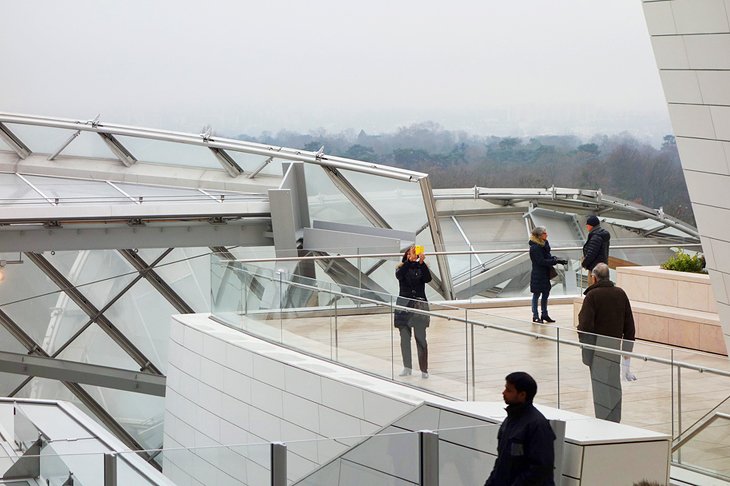
Formerly royal hunting grounds, the Bois de Boulogne is now home to a surprising modern landmark. Opened in 2014, the Fondation Louis Vuitton was commissioned by Bernard Arnault, chairman of the Louis Vuitton Moët Hennessy corporation.
Acclaimed American architect Frank Gehry designed the striking building, using 3,600 glass panels and more steel than the amount in the Eiffel Tower. The museum features 3,500 square meters of exhibition space with 11 different galleries illuminated by natural light.
In keeping with the museum's modern theme, the permanent collection focuses entirely on 20th-century and 21st-century art organized into four different categories: Expressionism, Contemplative Art, Pop Art, and Music & Sound.
The Fondation Louis Vuitton offers a year-round calendar of events and temporary exhibits. Cultural events and music performances are presented in a 1,000-seat auditorium.
Not to be missed are the four outdoor terraces on the rooftop, which afford sweeping views of the Bois de Boulogne, La Défense district, and the Eiffel Tower in the distance. You may also shop at the bookstore and enjoy a snack or meal at Le Frank Restaurant.
A tourist attraction in itself, the 850-hectare Bois de Boulogne has walking paths, gardens, bicycle rentals, picnic areas, and a lake for boating. Three upscale restaurants, including La Grande Cascade, the Auberge du Bonheur, and the three Michelin-starred restaurant Le Pré Catelan, offer traditional French fine dining. At the park's hippodrome used for horse races, La Brasserie Paris Longchamp serves casual sit-down meals.
Within the Bois de Boulogne is the Parc de Bagatelle with picnic tables, a snack bar, and a rose garden. The 18th-century Château de Bagatelle is open on Sundays and for temporary exhibitions. The Orangery of the Parc de Bagatelle hosts a Chopin Festival every year from mid-June until mid-July.
Address: 8 Avenue du Mahatma Gandhi, Bois de Boulogne, 75116 Paris (Métro: Pont de Neuilly or Avenue Foch)
27. Parc de La Villette
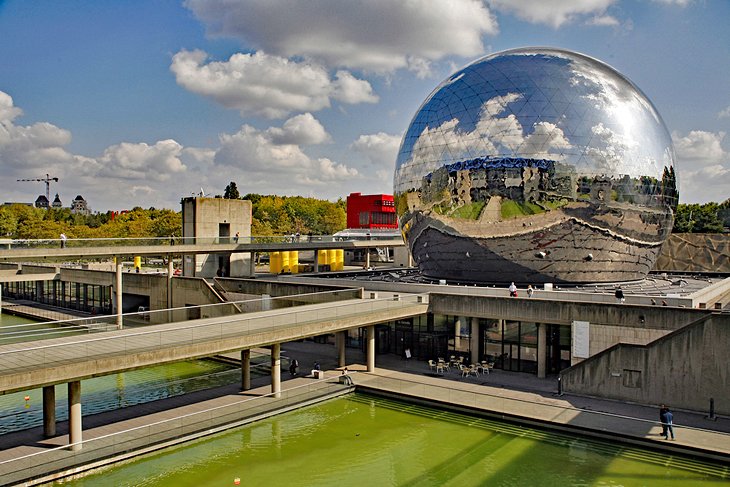
Covering 55 hectares, the Parc de La Villette is the largest landscaped green space in Paris. The park is brimming with attractions, including children's playgrounds and the Cité de la Music.
The park is also home to 400-seat La Géode IMAX theater; the Zénith Paris - La Villette concert hall; the Philharmonie de Paris performance venue; and Le Trabendo, which stages rock, rap, and hip-hop music concerts.
During summertime, Parisians (and a few tourists) enjoy attending cultural events at the Parc de La Villette. For several days at the end of May, the Villette Sonique festival draws huge crowds to outdoor music concerts. Other festivals include Jazz à La Villette held from late August through early September and an outdoor film festival (Cinéma en Plein Air), which takes place in the park from mid-July to mid-August.
The park features a variety of themed gardens with walking paths, footbridges, and bright red architectural "follies" designed by Bernard Tschumi. The area around the Canal de l'Ourcq is embellished with ponds and fountains.
Address: 211 Avenue Jean Jaurès, 75019 Paris (Métro: Porte de la Villette)
28. Paris Plages
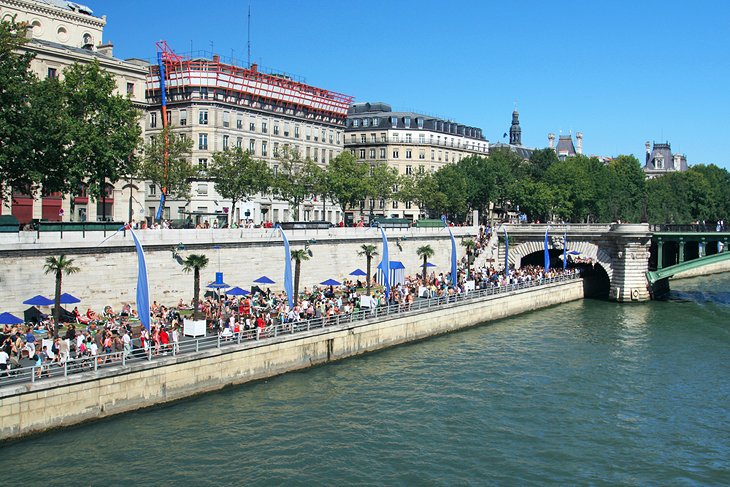
Planning to visit Paris during summertime? Be sure to pack your swimsuit! Even though the city is far from the sea, you can still find "beaches" for sunbathing.
From early July through late August, the Seine River becomes a beach destination. The riverbanks along the Quai de Seine and Quai de Loire are transformed into little resorts, complete with lounge chairs, sun umbrellas, and palm trees. Recreational opportunities include table football, tai chi, and petanque.
Other summertime recreational opportunities (in July and August) include swimming at the Bassin de La Villette, which has three swimming pools with lifeguards, and sports activities at the Jardins du Trocadéro.
29. Cimetière du Père Lachaise
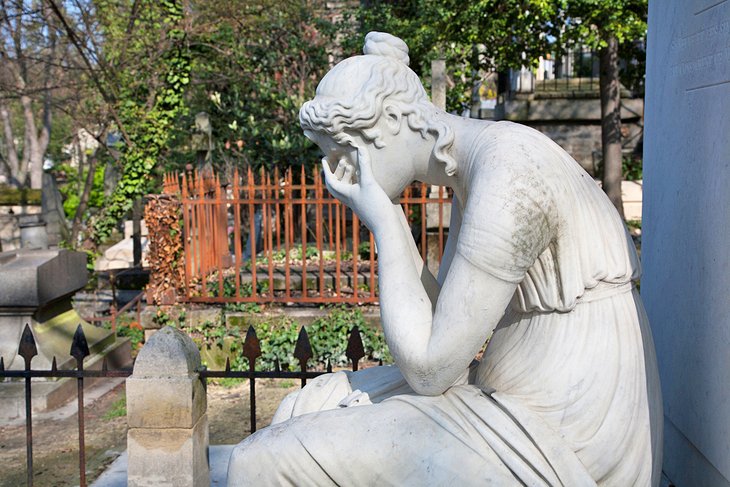
Outside of central Paris, the Père Lachaise Cemetery in the 20th arrondissement is the city's most famous and most visited cemetery. This 44-hectare space is the final resting place of many famous men and women, including Honoré de Balzac, Frédéric Chopin, Edith Piaf, Oscar Wilde, and Jim Morrison.
Some of the tombs and graves of the most admired personalities attract a cult following, with flowers and tributes left by visitors on a daily basis.
Address: Cimetière du Père Lachaise, 21 Boulevard de Ménilmontant, 75020 Paris (Métro: Père Lachaise or Philippe Auguste station)
30. Parc des Buttes-Chaumont
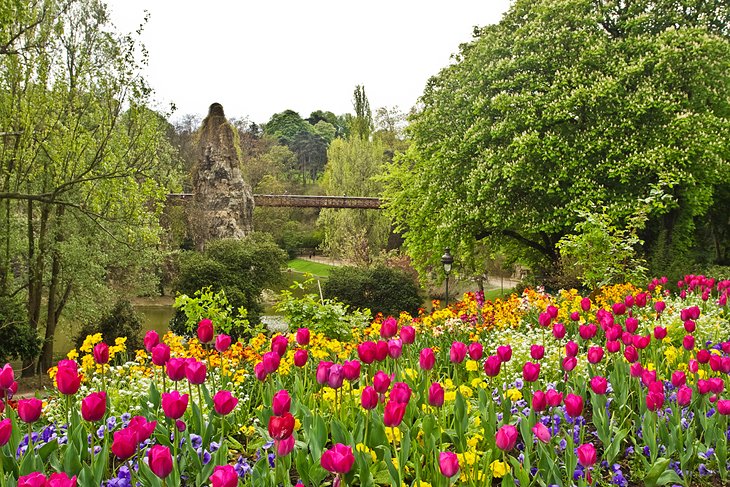
Locals escape to this peaceful oasis when they need a break from urban life. Among Parisians, this park is a favorite place to go for picnics and basking in the sunshine on warm days.
The 25-hectare park has the feeling of an untamed pastoral landscape, in contrast to the typical Parisian formal French gardens, with their orderly rows of flowerbeds and pollarded trees.
This romantic English-style garden features caves, waterfalls, and an artificial lake. Large shady trees and spacious grassy areas invite visitors to pull out a blanket and relax. Some areas of the park offer panoramic city views.
The convivial Rosa Bonheur café serves Mediterranean cuisine on an outdoor terrace. Rosa Bonheur is also known for its musical entertainment and evening dances.
For a gourmet lunch or brunch, Le Pavillon du Lac delights you with its lake views and garden patio. Le Pavillon du Lac is open for lunch and dinner Wednesday through Saturday and for brunch on Sundays.
Address: Parc des Buttes-Chaumont, 1 Rue Botzaris, 75019 Paris
31. Grande Arche de la Défense
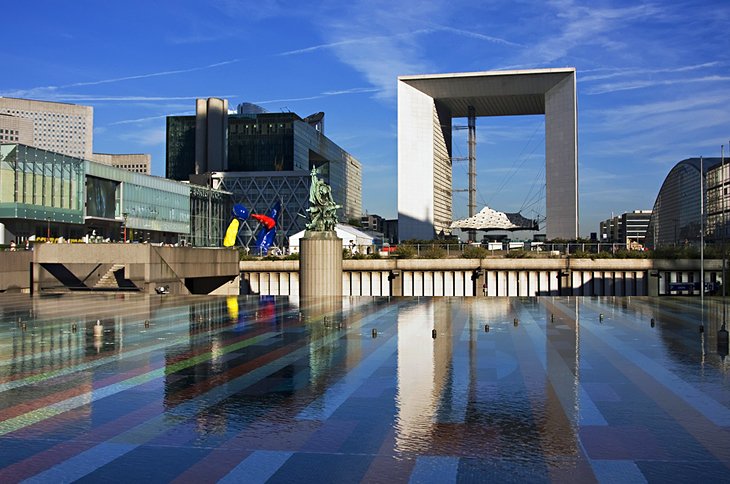
The Grande Arche de la Défense is found in a business district at the end of Avenue Charles-de-Gaulle. This area just outside the city limits of Paris is named La Défense, which recalls the bitter resistance by French forces in this area during the Franco-Prussian War of 1870-1871.
Designed by Johan Otto von Spreckelsen, the Grande Arche makes a striking impression. This huge 110-meter-high rectangular triumphal arch is faced with glass and granite.
The monument was inaugurated in 1989 on the bicentenary of the French Revolution, and the contemporary structure symbolizes France's national value of fraternity. The arch was originally called "La Grande Arche de la Fraternité".
Address: La Grande Arche, 1 Parvis de la Défense, 92040 Paris (Métro: La Défense)
Where to Stay in Paris for Sightseeing
Deciding where to stay in Paris depends on your taste in hotels and travel preferences.
An abundance of quaint small hotels are scattered throughout the 5th, 6th, and 7th arrondissements, which is also known as the Rive Gauche (Left Bank). Tourists appreciate this area for its central location, excellent restaurants, and lively sidewalk cafés.
The Marais quarter (4th arrondissement) on the Right Bank rivals the Left Bank for old-world charm and trendy ambiance. This neighborhood is filled with magnificent historic palaces and mansions, while enticing boutiques, cozy restaurants, cafés, and tea salons line the quarter's cobblestone streets.
Many luxury hotels are found on the boulevards near the Louvre and the Champs-Élysées, in an area of the 8th arrondissement known as the Triangle d'Or (Golden Triangle) because of its designer fashion boutiques and upscale gourmet restaurants.
Montmartre is farther from most tourist attractions but has a special atmosphere thanks to its bohemian heritage, excellent art museums, and atmospheric pedestrian alleyways. Some of the hotels in this hilltop neighborhood offer sweeping city views.
Here are some highly-rated hotels in these areas of Paris:
Luxury Hotels:
- In the fashionable 8th arrondissement near the Jardins des Champs-Élysées is the five-star Le Bristol Paris. This legendary hotel epitomizes Parisian elegance with sumptuous guest rooms featuring Louis XV or Louis XVI furnishings and tailor-made bed linens. Guests enjoy the courtyard garden, spa, rooftop swimming pool, tea time at Café Antonia, and fine dining at the hotel's Michelin-starred gastronomic restaurant or Michelin-starred brasserie.
- La Réserve Paris - Hotel and Spa is another ultra-luxurious accommodation in the 8th arrondissement near the Champs-Élysées. The five-star hotel occupies a palatial 19th-century mansion decorated in a classical style, yet has the intimate ambiance of a private home. Guests appreciate the top-notch amenities: spa, fitness center, indoor swimming pool, and two gourmet restaurants including a dining room with two Michelin stars.
- Art Deco interiors create an inviting feel at the Four Seasons Hotel George V in the 8th arrondissement. This opulent five-star hotel occupies a landmark building that dates to 1928 and has been beautifully maintained. Guests are pampered by the hotel's amenities: an upscale spa, swimming pool, and three fine-dining options including a vegetarian restaurant. The hotel's gastronomic restaurant, Le Cinq, boasts three Michelin stars.
- The Hôtel Plaza Athénée graces the tree-lined Avenue Montaigne, a prestigious boulevard lined with haute couture boutiques. Housed in a stately Haussmann-style building near the Théâtre des Champs-Elysées, this five-star hotel features plush guest rooms with Art Deco furnishings. Amenities include the Dior Spa, and three dining options, including a garden courtyard restaurant and La Galerie, a salon that serves afternoon tea.
Mid-Range Hotels:
- In the Latin Quarter steps away from the Panthéon, the impeccably maintained Hôtel Résidence Henri IV exudes old-fashioned Parisian charm with its traditional interior decor and balconies overlooking the street. The spacious guest rooms have flat-screen televisions and updated bathrooms; the apartments have kitchenettes. This four-star hotel has a hammam and offers spa treatments. The breakfast (available for an additional charge) includes artisanal and organic products.
- The Relais Christine has a quiet and cozy ambiance, which makes it feel like a family home. This five-star hotel in the Saint-Germain-des-Prés neighborhood is surrounded by cafés, bistros, and restaurants. The tastefully adorned guest rooms feature garden, courtyard, or street views and Nespresso coffee machines. Amenities include an upscale spa, fitness center, breakfast for an additional charge, and room service.
- Near the legendary Boulevard Saint-Germain cafés and a short walk to the Jardin du Luxembourg, the boutique three-star Hôtel Left Bank Saint Germain des Prés occupies an 18th-century building on an ancient street where Molière had a residence. The hotel's suite has a living room with windows that look out onto Notre-Dame Cathedral. A continental breakfast with croissants, café au lait, and fresh-squeezed orange juice is available.
- The charming Relais Médicis is tucked away on a quiet street near the Luxembourg Gardens. This four-star hotel is a welcome retreat from the busy streets of the Saint-Germain neighborhood. The guest rooms blend old-fashioned French country decor with modern amenities. Breakfast (available for an additional charge) includes yogurt, cheese, fresh-squeezed orange juice, coffee, tea, and croissants from a neighborhood bakery.
- Montmartre is considered Paris' most enchanting neighborhood, although it is a Métro ride to the main tourist attractions. A few steps away from the Métro station in the heart of the quarter's narrow, winding streets is Hôtel Le Relais Montmartre. This four-star hotel has quaint guest rooms with vintage-inspired decor. The hotel offers a breakfast buffet (generous for the price) that includes croissants, yogurt, charcuterie, cheese, and fruit.
Budget Hotels:
- The Legend Hotel by Elegancia is conveniently located in the Montparnasse district of the 6th arrondissement (Rive Gauche) and about a 10-minute walk to the Luxembourg Gardens. This cozy three-star boutique hotel has chic contemporary-style rooms. The hotel offers a 24-hour front desk, buffet or continental breakfast (for an additional charge), and concierge services.
- In the Latin Quarter (Rive Gauche) near the Panthéon, the family-run Hôtel Diana has stylish modern rooms with renovated bathrooms and courtyard or city views. Considering the central location and 24-hour front reception desk, this hotel provides excellent value for the price. A continental-style breakfast buffet is available for a small charge.
Tips and Tours: How to Make the Most of Your Visit to Paris
Paris Sightseeing Overview:
- For first-time visitors, the Paris Big Bus Hop-on Hop-off Bus Tour is a good choice. You can decide which monuments you would like to see, such as the Louvre Museum, Notre-Dame Cathedral, the Place de la Concorde, the Champs-Élysées, and the Musée d'Orsay. The tour provides commentary while you're on the bus and includes an entrance ticket to the Arc de Triomphe as well as a short Seine River Cruise.
Hop-on Hop-off Seine River Tour:
- The Hop-on Hop-off Seine River Tour covers the city's highlights by cruising down the Seine River. This self-guided tour allows you to stop at eight different places on the Seine River over a one-day or two-day period. You will have a chance to see the Eiffel Tower, the Louvre Museum, the Musee d'Orsay, the legendary Saint-Germain-des-Prés cafés, the Notre-Dame Cathedral, the Place de la Concorde, and the Hôtel National des Invalides.
Visit the Normandy Battlefields:
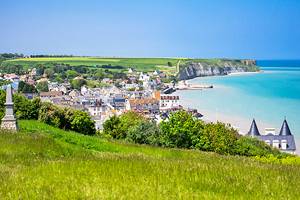
- History buffs will want to see the famous World War II battlefields, about a three-hour drive from Paris. One recommended day trip is the Normandy D-Day Beaches Tour. Accompanied by a knowledgeable guide, tourists will see the Omaha and Juno Beaches, and the American Cemetery. The tour also includes a visit to the Arromanches harbor.
Must-See Sights Outside of Paris:
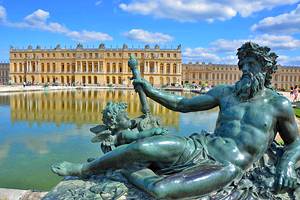
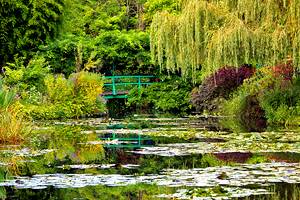
- Another popular outing from Paris is the Versailles and Giverny Day Trip. This full-day excursion explores the vibrant gardens of Giverny, which Monet depicted in many paintings, and the Château de Versailles, Louis XIV's extravagant palace. The tour includes a gourmet lunch at the Moulin de Fourges riverside restaurant, which is housed in an 18th-century mill inspired by Marie-Antoinette's hamlet at Versailles.
Best Time to Visit Paris, France
| Average minimum and maximum temperatures for Paris, France in °C | |||||||||||
| J | F | M | A | M | J | J | A | S | O | N | D |
| 6 1 | 7 1 | 11 3 | 14 6 | 18 9 | 21 12 | 24 14 | 24 14 | 21 11 | 15 8 | 9 4 | 7 2 |
| PlanetWare.com | |||||||||||
| Average minimum and maximum temperatures for Paris, France in °F | |||||||||||
| J | F | M | A | M | J | J | A | S | O | N | D |
| 43 34 | 45 34 | 51 38 | 57 42 | 64 49 | 70 54 | 75 58 | 75 57 | 69 52 | 59 46 | 49 39 | 45 36 |
| PlanetWare.com | |||||||||||
Many seasoned travelers say the best months to visit Paris are in the spring (April, May, June), the summer (especially June and the first half of July), and early autumn (September and October). As a general rule, this is also the best time to visit France.
April is in the off-season, and hotel prices are reduced. The drawback is that the weather is capricious and can be quite chilly or rainy. Average low temperatures are mid-40 degrees Fahrenheit. With some luck, the weather could be refreshingly crisp and sunny. Average highs are low-60 degrees. On the upside, April offers the chance to experience the magic of early spring. Trees begin to bud their first leaves in the parks and lining the avenues. Daffodils and tulips bloom in the gardens.
In May, the weather is still fickle, with a mix of sunny days and chilly or rainy days. The temperature averages range from high 60 degrees to low 50 degrees Fahrenheit. By early May, trees, burgeoning vegetation, and colorful flowers enliven the leafy grounds of the Jardin du Luxembourg, Jardin des Champs-Élysées, Jardin des Plantes, Parc Monceau, Bois de Boulogne, and the Buttes-Chaumont. On warm days, café terraces come back to life.
June is a delightful time to visit Paris because of the balmy weather and long days. Daytime temperatures are comfortable, with high temperature averages in the low 70 degrees. Thanks to Paris' northern latitude, the sun sets at almost 10pm in June. It seems that the entire city is out and about to celebrate the beginning of summer. The sidewalk café scene bustles and there is a sense of joie de vivre in the air.
The first two weeks of July are the most exciting time to visit Paris, with Parisians' anticipation of vacation just around the corner. Plus, the weather starts to feel like summer. The entire month of July is a great time to visit because of warm days with average high temperatures of 70 degrees Fahrenheit.
July and August are the hottest months of the year in Paris. August also has average high temperatures of 70 degrees Fahrenheit. However, travelers should keep in mind that many shops and restaurants close in August when Parisians leave for summer holidays after the Fête Nationale (Bastille Day) on July 14th.
September is a marvelous time to visit Paris because the weather is still pleasant, yet it is in the off-season, so hotels are more affordable, and tourist attractions are less crowded. Similar to the springtime, September promises a mix of weather, with some sunny days and some rain. The average high temperatures are low-70 degrees Fahrenheit and average low temperatures are mid-50 degrees Fahrenheit.
Another good time to visit is October which is in the off-season. October weather can be chilly. The daytime high-temperature averages start to dip into the 60s Fahrenheit and the average low temperature is 48 degrees.
Tips for What to Wear: For a Paris vacation in April, May, September, or October, travelers should pack layers and bring sweaters, a jacket, raincoat, boots, and an umbrella. In June and July, the weather is warm enough for summer dresses and short-sleeve shirts. Packing requirements during the late fall and winter months (November through March) include heavy coats, scarves, wool hats, gloves, warm socks, and boots.
More Related Articles on PlanetWare.com
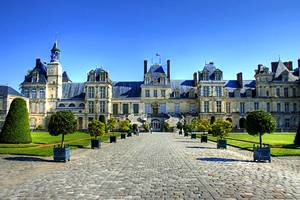
Easy Paris Day Trips: There are many wonderful places to visit within easy reach from Paris. Just outside the Paris metropolitan area is a tranquil rural landscape that is rich in cultural treasures: lovely little villages, historic castles, splendid churches, and interesting medieval towns. A must-see destination is the Château de Versailles, the 17th-century palace of Louis XIV (the "Sun King").
For those who prefer cities to the countryside, several worthwhile destinations are just a one- to two-hour train ride away: the elegant and cultured city of Lille (one hour by TGV train) with its distinct Flemish character, the delightful town of Amiens (about one hour and 30 minutes by train), and Lyon (two hours by TGV train) known as the gastronomic heart of France.
Adored by tourists for its perfectly preserved medieval ambiance, picturesque canals, and enticing chocolate shops, atmospheric Bruges (two hours 30 minutes by train) is simple to visit even though the train crosses the border into Belgium.
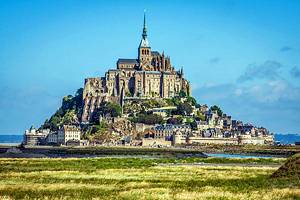
Historic Sites in Normandy: The scenic Normandy region wows visitors with its natural beauty and fascinating history. Along its dramatic coastline are the Landing Beaches of World War Two, and nearby are military cemeteries and memorial museums. One of the top attractions of France and Normandy's most visited site is Mont Saint-Michel, a UNESCO-listed medieval pilgrimage site with a sublime 12th-century abbey church. Tourists will also enjoy discovering the historic town of Rouen, with its marvelous cathedral, handsome half-timbered houses, and abundance of Gothic churches.
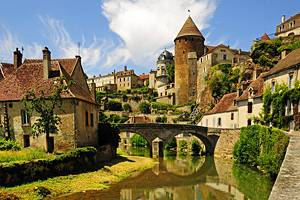
Gorgeous Castles and Pastoral Landscapes: The fairy-tale Loire Valley landscape is home to the most magnificent Renaissance châteaux in France. With a lush natural environment of woodlands and rivers, this enchanting region is designated a UNESCO World Heritage Site. The naturally beautiful region of Brittany boasts a wild, rugged coastline, with many idyllic fishing villages and an unspoiled countryside with medieval castles. The Burgundy region is dotted with historic towns such as Dijon, quaint villages, ancient abbeys, and Romanesque churches.