

Belgium's Top 10 Tourist Attractions For Your First Trip
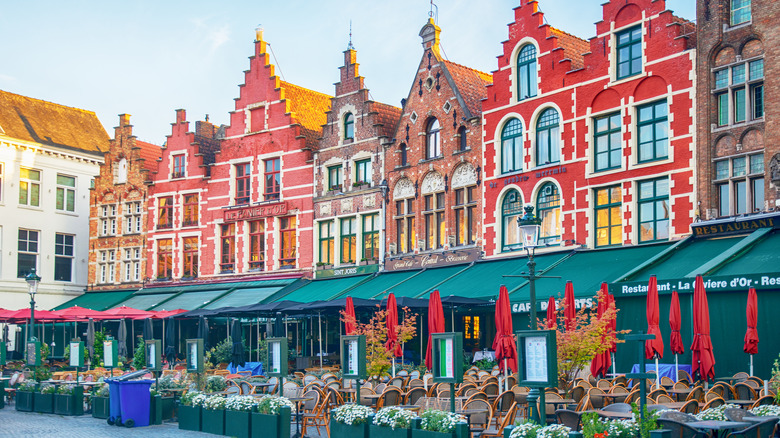
Sandwiched between France, Luxembourg, Germany, and the Netherlands, Belgium is both a unique and distinctive country and a remarkable fusion of European influences. It even has three official languages: French, German, and Dutch. Depending on what region or city you're in, you may hear one more than the other, and signs will often display information in at least a couple languages.
As for its capital, Brussels has a sticky reputation as one of Europe's least-friendly tourist destinations, but the city is large and rather more businesslike than others. In fact, Brussels is a significant political hub, and it's practically the capital of the E.U., as its headquarters are located there. Nonetheless, you'll also find no shortage of pedestrian-friendly plazas, museums, a thriving art scene, great restaurants, and places to stay.
Belgium is famed for its food — think waffles, chocolate, beer, frites, and then some — along with splendidly historic architecture, charming canals, world-class museums, and much more. Rick Steves even believes this underrated country is Europe's "best kept secret," partly because it's a fantastic jumping-off point for seeing other parts of the continent since you're already so close to a number of other countries. Arguably Belgium's most famous destination, Bruges is so rich with history that its old town is a UNESCO World Heritage Site. Then there's Ghent, with its towering medieval castle and picturesque waterways. Ultimately, no matter where you look, Belgium exemplifies the unique ways in which the past meets the present, brimming with heritage and culture. For your first trip, consider the 10 must-see destinations listed below.
Wander around the Grand-Place of Brussels
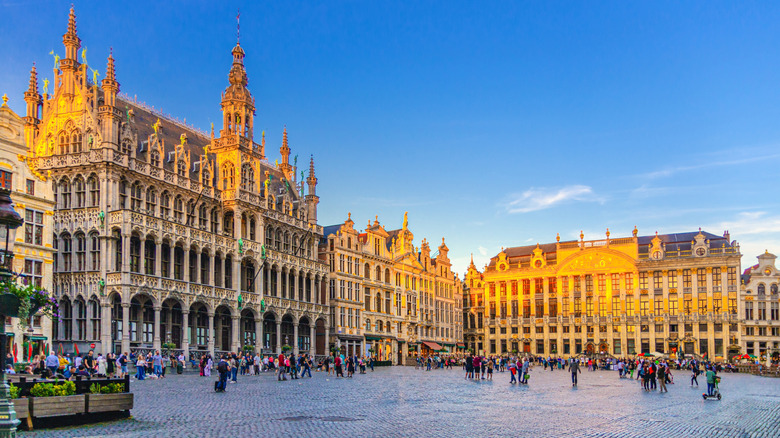
Belgium boasts 16 UNESCO World Heritage sites around the country — from historic city centers to prehistoric flint mines. One of these notable locations is the awe-inspiring Grand-Place of Brussels, designated for its 17th-century architecture around a large, cobblestone square. It's lined with ornate guild houses with distinctive Renaissance and Baroque influences, originally built to house religious, political, and trade guilds. Some of these have even retained much of their original character inside, with 18th-century details still visible. Today, most of the buildings have been transformed into shops and tourist attractions. You also can't miss the towering Hôtel de Ville de Bruxelles, or the Brussels Town Hall, which was constructed in the 15th century in the Gothic style. Visit its sumptuous interior and learn about the building's history in an immersive exhibition, with adult admission running around $17.
A central place to start your exploration of Brussels, the Grand-Place is kind of like the nucleus of the city, where you'll find numerous cultural institutions and attractions within its radius. It's a great place to grab a coffee or lunch — like at the atmospheric Brasserie Le Cerf — or pick out a selection of authentic Belgian chocolate at Mary or Neuhaus. For a unique nightlife experience in the city center perfect for solo travelers who want to meet other people and experience the best brews and bars, join an organized pub crawl around the Grand-Place.
Stroll through the historic center of Bruges
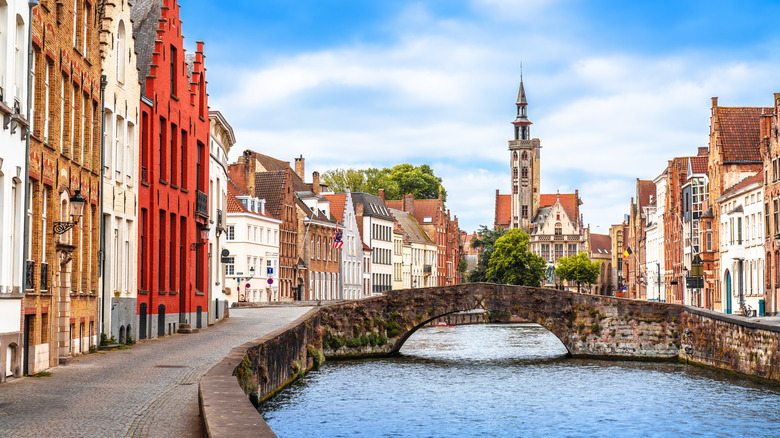
Up for strolling around centuries-old streets, charming old houses, and along photo-worthy canals? Look no further than one of Belgium's most popular tourist destinations, Bruges. As it turns out, Europe's most walkable city is a medieval enclave straight out of a fairy tale, with its UNESCO-designated city center full of well-preserved medieval structures and a highly engineered canal system that continues to draw people to its postcard-worthy walkways. One particularly remarkable cluster of buildings is located around De Burg, an open square surrounded by impressive buildings, which now features cafes and shops to stop by.
Additionally, you'll definitely want to check out the Stadhuis, or City Hall, which was built between the late 14th and early 15th centuries and remains where the city government is based. You also won't want to miss the awe-inspiring Basilica of the Holy Blood, with its ornate facade fascinatingly tucked into a corner of the square. It actually consists of two parts: the Lower Basilica of St. Basil is a preserved Romanesque church, and the upper basilica is an ornate Gothic building from the 15th century. Entrance is free, but if you want to check out the museum and treasury, admission is $6.
To really get a taste of Bruges' heritage, book a stay in a boutique hotel like Boutique Hotel de Castillion, Hotel Van Cleef, a former noble residence, or the utterly postcard-worthy Hotel Relais Bourgondisch Cruyce, which practically defines romance.
Visit the historic battlefields of Flanders
Despite its neutral stance during World War I, geography proved a problem for Belgium because — along with neighboring Luxembourg — Germany planned to cross through on its way to lay siege to France. However, both nations refused to allow the advance. On August 4, Germany invaded Belgium and a crucial war theater developed in Flanders until 1918. Today, the area is often referred to as Flanders Fields, which you may be familiar with through the famous poem by John McCrae titled "In Flanders Fields." A poignant reflection on what's known as the Second Battle of Ypres, which occurred in April 1915, the poem led to the origin of the red poppy as a potent symbol of the war.
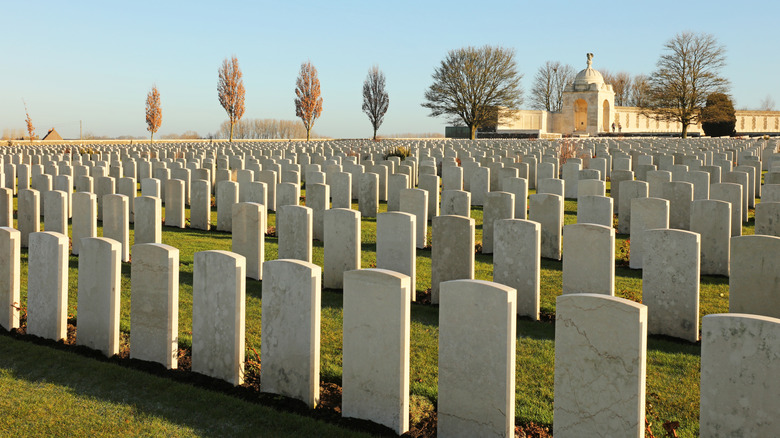
Because the Flanders battlefields are spread out, it's good to plan for at least a couple of days or book a tour with Flanders Battlefield Tours for expert itineraries and bespoke planning. If you only have one day, we recommend you visit the Memorial Museum Passchendaele 1917, which traces the history of the Third Battle of Ypres or Passchendaele — one of the war's most gruesome battles. Passchendaele exemplifies the horrific conditions of trench warfare during a period of 100 days, when around a quarter of a million soldiers died, were injured, or went missing. From the museum you can also walk a route just shy of 2 miles to the sprawling Tyne Cot Cemetery, which contains nearly 12,000 graves. The visitor center also offers panoramic views over the Passchendaele battlefield.
Marvel at Ghent's Gravensteen and Old Town
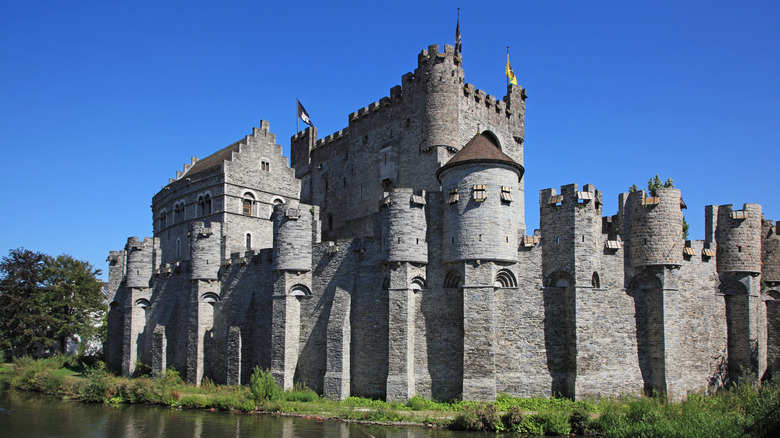
There's something immediately alluring and atmospheric about a well-preserved medieval fortress stealing the spotlight in the middle of a European city. There's Edinburgh Castle, Scotland's famous fortress at the top of its Royal Mile, which Rick Steves suggests is one of the best sightseeing walks in Europe; or perhaps you've peered up at Hohensalzburg Fortress, in Salzburg, Austria's hilltop gem; or maybe you've even wandered through Altenburg Castle, Germany's historic marvel.
However, if you find yourself in Ghent, don't miss a chance to see its remarkable holdover from the Middle Ages: Gravensteen. Also known as the Castle of the Counts, the exterior is just as interesting as its interior: a stone edifice surrounded by walls, complete with watchtowers, with vaulted ceilings and winding staircases inside. The castle is open every day of the year, with the exception of a few holidays, from 10 a.m. to 6 p.m., and adult admission costs $13, which includes an audio guide.
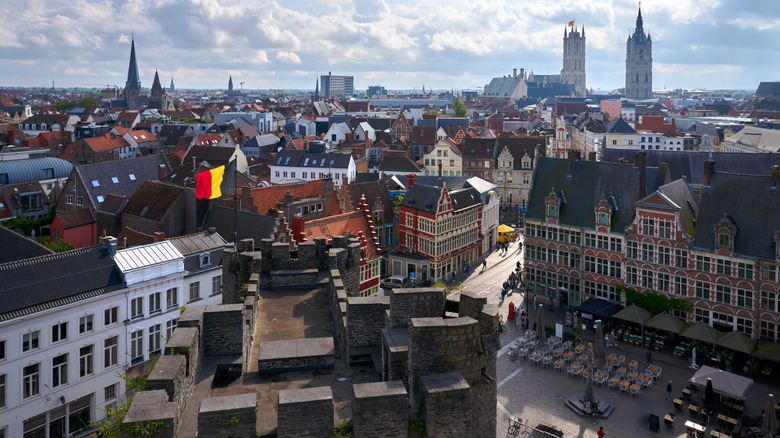
Beyond the fortress, Ghent is charmingly walkable, and its historic city center is not to be missed. No matter where you are in the old town, you'll be able to spot the iconic Ghent Belfry, one of three church towers that characterize the city's skyline. The other two belong to St. Bavo's Cathedral and St. Nicholas' Church. Along with nearly three dozen significant belfries throughout Belgium, Ghent's is recognized as a UNESCO World Heritage Site. Finally, along the banks of the Lys River, you can take in historic house facades, bridges, and cobbled streets. Oh, and don't forget that experiencing the canals by water is also a treat! A number of local companies, like Boat in Ghent, offer picture-perfect cruises.
Explore the Meuse Valley
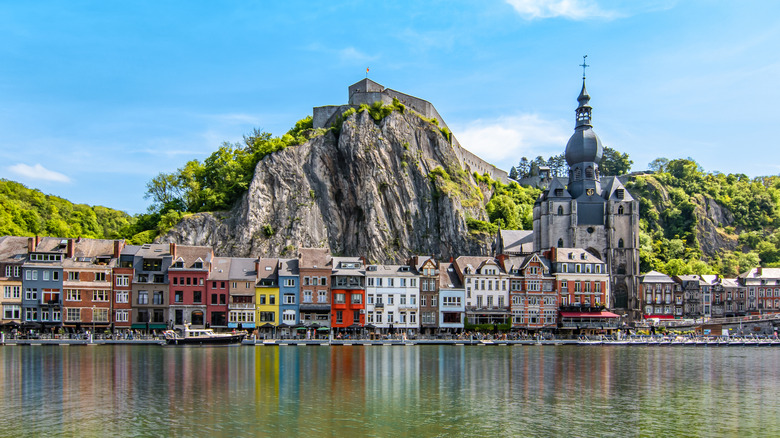
Flowing northward from France into Belgium — where it takes a sharp turn to the east before heading northbound again — the Meuse River eventually ends up in the Netherlands. It flows through the small cities of Namur and Liège, both around an hour or so southeast of Brussels, coursing through a valley that brims with quaint towns, scenic landscapes, and historic landmarks. While Namur and Liège are convenient places to base yourself if you plan on taking the train from Brussels, as a rural escape, the Meuse Valley is best experienced via car.
Towns that should be on your itinerary include Anhée — don't miss the ruins of Poilvache Castle — and Dinant. Just five minutes north of Anhée, botanical enthusiasts will love a stop at the beautiful Jardins d'Eau d'Annevoie, established in 1758, which feature formal plantings and a charming Christmas market in late November.
Roughly 4.5 miles outside of Anhée, Dinant is a postcard-perfect town overlooking the Meuse River and topped with a dramatic medieval citadel on a high cliff. To see it firsthand, ticket options include combinations of visits to the castle, cable car rides, a virtual reality experience, and a river cruise. The citadel also overlooks the stunning Collegiate Church of Notre-Dame and its uniquely bulbous bell tower. Built from local limestone in the Gothic style — with its foundations dating back to a former Romanesque church that stood in its spot in the 10th century — the building we see today is still remarkably preserved from the mid-13th century. Make sure you take in the dramatic, cliff-backed riverfront scene from the Charles de Gaulle Bridge or Avenue Colonel Cadoux across the river.
Travel back in time in Mechelen
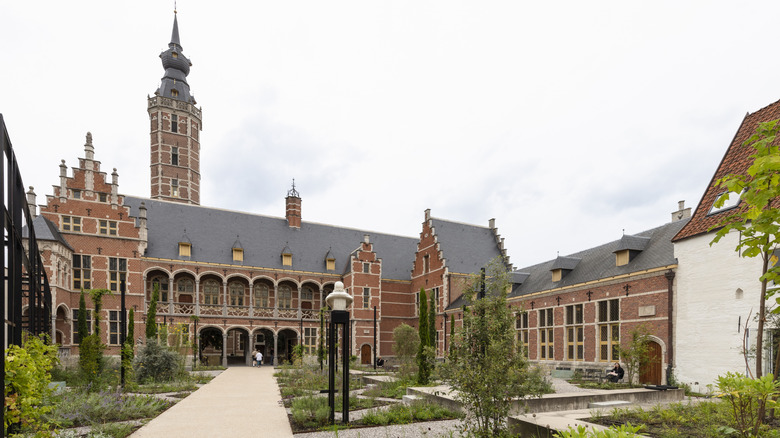
About a half-hour's drive each way between Antwerp and Brussels sits the small city of Mechelen. As a wonderful, easy-to-get-to alternative to Bruges, you'll avoid that popular destination's crowds while making the most of a charming medieval old town with a lot of well-preserved architecture. St. Rumbold's Cathedral, for one, is a masterpiece of 13th-century ecclesiastical style. It also contains notable artworks like Flemish artist Anthony van Dyck's "Christ on the Cross Between the Two Murderers," and a marble high altar conceived by Willem Hesius with sculptures by Lucas Faydherbe, completed in 1666.
Another great stop is the beautiful Burgundian residence, or "city palace," that's now the Museum Hof van Busleyden. Named after the brothers who first lived there at the turn of the 16th century, it's a pleasant place to wander through a series of beautiful formal gardens. In the inner courtyard, which contains one of the gardens, you'll also find yourself in a prime listening location for the palace's carillon, which resonates within the walls. Along with St. Rumbold's, Mechelen is home to six carillons in total, and you can even book a walking tour to experience the city's historic bells.
When you're ready to rest after a full day, check into Martin's Patershof, an incredible church that's now a beautiful hotel. With its neo-Gothic-style windows, you'll stay in the historic former monastery served by a Franciscan order called the Friars Minor.
Scale the Lion's Mound at Waterloo
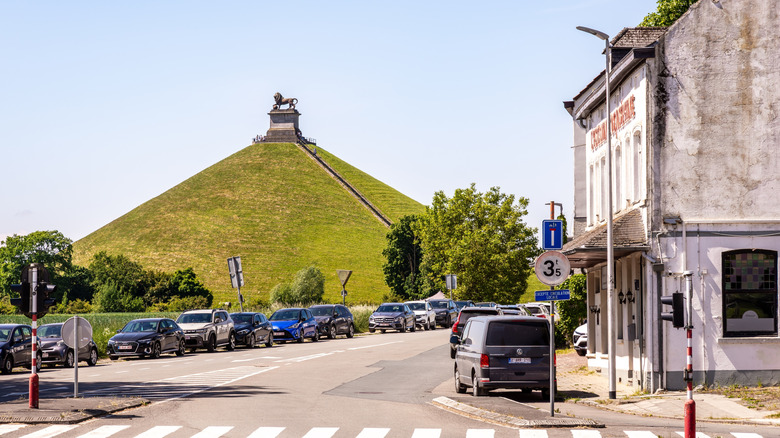
The Battle of Waterloo, a pivotal conflict named for its location near Waterloo, Belgium, took place on June 18, 1815, and marked the conclusion of the Napoleonic Wars, which carried on for 23 years in Napoleon Bonaparte's quest to conquer Europe and bring it under Imperial French control. An opposition coalition led by the Duke of Wellington and Prussian Field Marshal Gebhard von Blücher decisively defeated French forces on the battlefield, and Napoleon abdicated soon after — living out the rest of his life in exile on an Atlantic island called St. Helena. Today, the historic battlefield, which sits about 3 miles south of the town of Waterloo, memorializes the nearly 50,000 soldiers who lost their lives in the fight.
The Lion's Mound is the most prominent feature of this storied landscape. It consists of a 135-foot-tall earthen mound topped with a giant, 28-ton iron statue of Leo Belgicus, or the Belgian Lion. Guests can climb the 227 steps to the top to take in 360-degree views over different areas of the battlefield. The site is open daily, and adult admission costs $23 to $28 depending on the time of year. Tickets grant admission to the Lion's Mound, the Memorial Museum, and a number of farm buildings. Adjacent to the memorial, you'll also find two restaurants: Le Bivouac de l'Empereur and Le Wellington.
Take in great architecture in Antwerp's Grote Markt
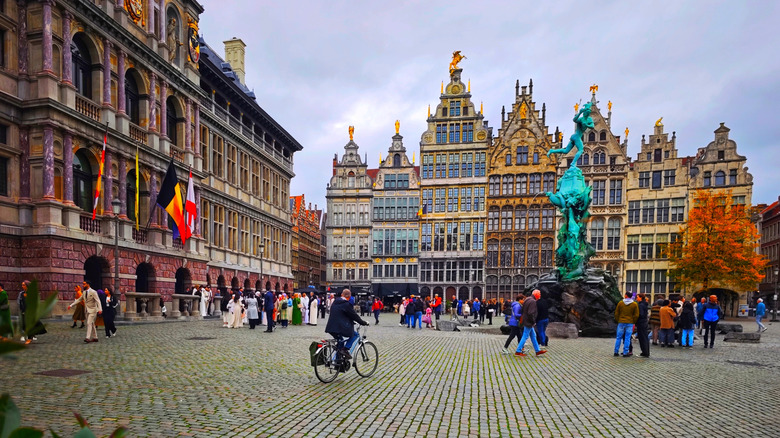
Antwerp's Grote Markt, or Main Square, is a stunning example of a European public plaza. The fashionable city is a fantastic shopping destination famous for a number of renowned designers who lived here in the past — including Dries van Noten and Ann Demeulemeester, among others. It also happens to be an unexpected European city with a higher density of Michelin-starred restaurants than almost anywhere on Earth. Of many great places to grab a bite, check out a restaurant called 't Fornuis, which earned one Michelin star and is located just a five-minute walk south of Grote Markt.
The Grote Markt's focal point is its ornate City Hall, which dates to 1565. The interior features beautiful architectural details like elegant staircases, along with elaborate murals, and a variety of guided tours invite visitors to see its great hall and other areas. Other features of the square are the highly embellished guild houses, not unlike the rows of historic guild homes found in Brussels' Grand-Place. Finally, the loosely triangular, cobbled square is also lined with numerous cafes and shops, making it a perfect place to grab a drink or enjoy some lunch. If you're visiting later in the year, don't miss the festive atmosphere as Grote Markt transforms into a luminous Christmas market in the weeks leading up to the holidays.
Escape the city in Semois Valley National Park
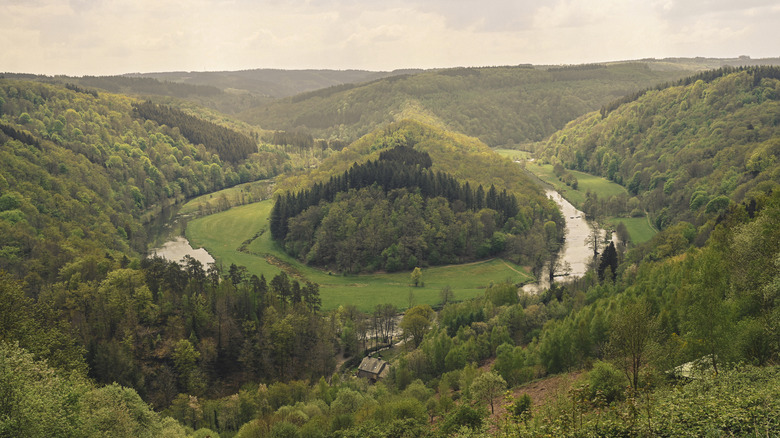
Established in December 2022, Semois Valley National Park may be a relatively young national park, but its winding riverine region is a delightfully timeless combination of history and nature. Spanning more than 71,400 acres of mostly forest and agricultural land, this area in southern Belgium encompasses a number of charming communities — the main ones being Bertrix, Bouillon, Chiny, Florenville, Herbeumont, Paliseul, Tintigny, and Vresse-sur-Semois. As a river ties them all together, it's a perfect spot for paddling a kayak or canoe. If dry land is more to your liking, there are also hiking opportunities aplenty. Better yet, plan your visit in the spring to enjoy a beautiful wildflower season.
The most popular walks offer beautiful views from higher elevations over the river below. One of these is the The Promenade des Échelles, or the Walk of the Ladders, which starts from the village of Rochehaut. At 2.8 miles, the loop is considered challenging for its inclines, which include some stairs and narrow sections. However, the reward comes in the form of beautiful views, which can be enjoyed especially if you take the trail in a counter-clockwise direction.
You'll also find numerous options for quaint places to stay in the Semois Valley. This includes hotels like Le Charme de la Semois in Alle-sur-Semois — its restaurant was awarded a Michelin Bib Gourmand designation — to lovely guesthouses like La Maison Blanche in Florenville.
Climb the Atomium in Brussels
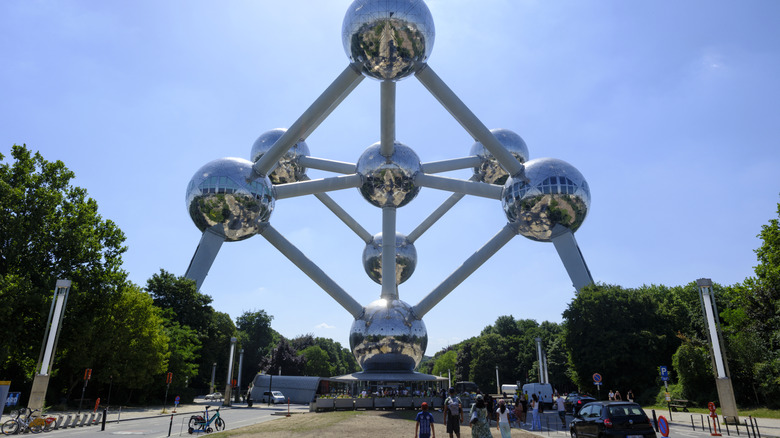
Belgium is brimming with centuries of built heritage, beautiful parks, and unique museums and cultural institutions. A unique departure from churches, central squares, and traditional Christmas markets is the retro-yet-futuristic Atomium, in Brussels. Originally constructed for the Brussels World's Fair in 1958, also known as Expo 58, the building is an unmissable feature of the city's skyline.
Its design was inspired by molecules (composed of bonded atoms) in which nine mirrored spheres at different levels offer visitors panoramic views of Brussels and the surrounding countryside. Ascending through the connectors is otherworldly, similar to walking through a spaceship, with the sphere on Level 7 offering views from 300 feet off the ground. One level down, with a view from a lateral sphere, visitors can take in some of the building's architecture along with expansive views over the city.
For a bite to eat with unparalleled views from the topmost sphere — Level 8 — make a reservation for the Atomium Restaurant. It's worth noting that, although you don't need an Atomium ticket to enter the restaurant, a reservation doesn't include a ticket, which means you'll still need to purchase one if you'd like to experience the rest of the structure during your visit. Adult entry, as of this writing, is $19, and admission includes entry to the Design Museum Brussels, which is only about an 8-minute walk.
Methodology
To compile this list of the top 10 must-visit destinations and attractions around Belgium, we consulted a number of national and regional tourism sites including Visit.Brussels, VisitBruges.be, VisitFlanders.be, ToerismeWesthoek.be, Visit.Gent.be, VISITWallonia.be, and Visit.Antwerpen.be. For information about admission prices, opening times, and historical context, we also researched official websites for specific destinations like CitadelledeDinant.be, Atomium.be, Semois-ParcNational.be, and Waterloo1815.be.
Additional history and data was gathered from ArtinFlanders.be, UNESCO, the Imperial War Museum, the Waterloo Association, Britannica.com, and Frommers.com. Finally, we also made sure to include experiences that visitors have really enjoyed, taking into account the author's personal experiences traveling in Belgium and by paying particular attention to ratings and reviews published on TripAdvisor, Booking.com, AllTrails, and Google.