Visiting Mont Saint-Michel: 5 Top Attractions
Rising out of the sea like a beacon, Mont Saint-Michel is a soul-inspiring sight. The UNESCO-listed Abbaye du Mont Saint-Michel ranks high on the list of top attractions in Normandy and is one of the most fascinating heritage sites in Europe.
This breathtaking monument epitomizes Gothic architecture, with its spire soaring 155 meters above the sea. The abbey stands on the highest point of a tiny island in the Bay of Mont Saint-Michel, while the island's medieval village is surrounded by ancient defense walls.
At high tide, Mont Saint-Michel appears from afar as a mystical island, and to the faithful, represents heaven on earth. At low tide, it is possible to walk to the island from the mainland.
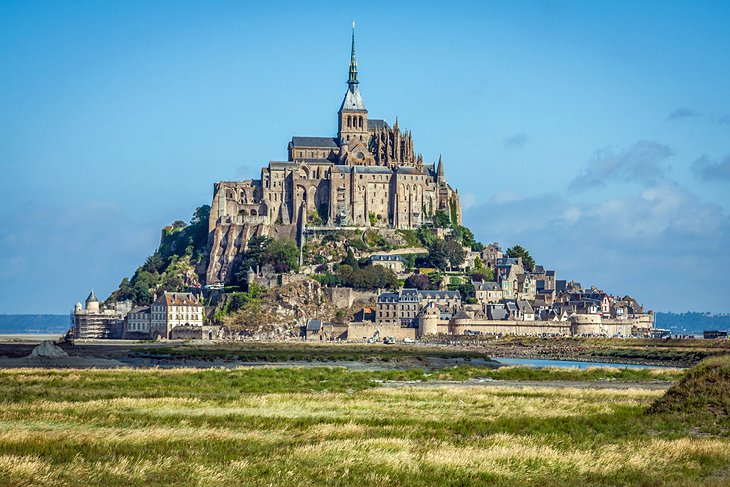
Legend has it that Archbishop Aubert of Avranches founded an abbey here in 708 after the Archangel Michael appeared to him in a vision. Since that moment, the island of Mont Saint-Michel has been a place of pilgrimage.
The Chemin de Saint-Jacques, the medieval pilgrimage route to Santiago de Compostela in Spain, included Mont Saint-Michel on its route. Pilgrims arrived by foot, crossing the Bay of Mont-Michel at low tide, sometimes challenged by unexpected riptides and quicksands.
Although getting to Mont Saint-Michel from Paris may not present the dangers it did during the Middle Ages, however, you can still imagine what it was like then to approach the island by sea.
Thanks to a recent restoration project, Mont Saint-Michel has reclaimed its island character. Previous roads to/from and parking lots on Mont Saint-Michel were removed. Now a single bridge crosses the bay; this bridge includes a walking path and a road that provides access only to shuttles (les Passeurs), buses from Pontorson, and horse-drawn carriages. Parking lots are now in the town of Beauvoir, about three kilometers from Mont Saint-Michel.
The drive takes around 3.5 hours from Paris to Mont Saint-Michel or about the same amount of time by public transportation. For many tourists, it's preferable to join an organized day-trip excursion from Paris.
When planning your visit, allow at least four hours to tour the abbey's cloister, refectory, and ramparts; have lunch; and see the powerful tides shift the landscape between water and sand.
Read our guide to learn more tips for visiting Mont Saint-Michel and to discover the top attractions of this iconic spiritual landmark.
See also: Where to Stay in Mont Saint-Michel
1. Abbaye du Mont Saint-Michel
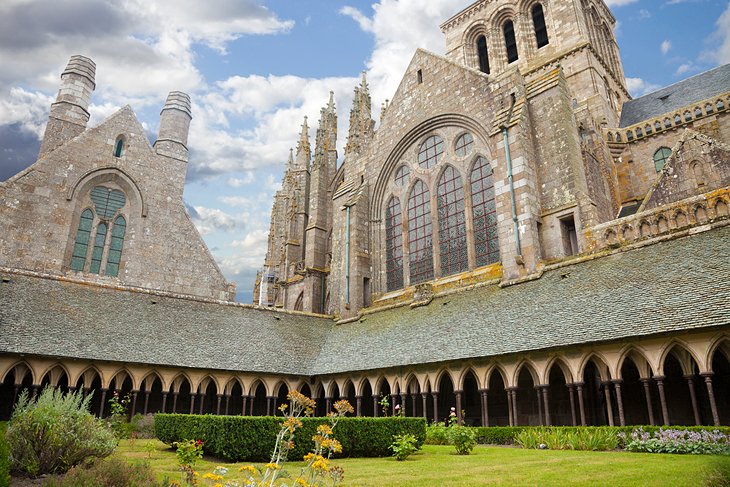
The Abbaye du Mont Saint-Michel represents an amazing feat of construction. In spite of great technical challenges, the abbey was built between the 10th and 16th centuries in various architectural styles.
The Abbey Church, Cloisters, and Refectory are jewels of 13th-century Gothic architecture. This section of the abbey, known as La Merveille, is truly marvelous when you consider the difficulties of bringing building materials across the Bay of Saint-Michel by foot or by boat.
Begun in 1020, the Abbey Church (Eglise Abbatiale) has a majestic Romanesque nave and an ornate 15th-century Flamboyant Gothic chancel. The sanctuary will astonish you with its beauty and serene spiritual ambience.
Affording a sense of tranquility, the Cloisters feature 220 graceful granite columns in double alternating rows. A small garden at the center adds a bucolic element, a hint of paradise.
From the Abbey Church, the Escalier de Dentelle (staircase) leads up to the Grande Terrasse de l'Ouest (West Terrace) which affords panoramic sea views.
To arrive at the abbey, you must begin at the island's historic gates, walk through the village, and ascend 200 meters. Then there are 350 steps up the Grand Degré (Grand Staircase) to reach the entrance of the abbey.
The lowest floor has peaceful gardens and a spacious hall called the Aumônerie, which was a dormitory for pilgrims in the 13th century.
On the middle floor is the vaulted Salle des Chevaliers (Knights' Hall), where noble knights were received, and the Crypte des Gros Piliers (crypt).
The Abbaye of Mont Saint-Michel is home to the Fraternités Monastiques de Jérusalem (Monastic Fraternities of Jerusalem), a small community that supports the spiritual life of the abbey, hosts religious services, and welcomes pilgrims as well as visitors who come for retreats.
2. Ramparts
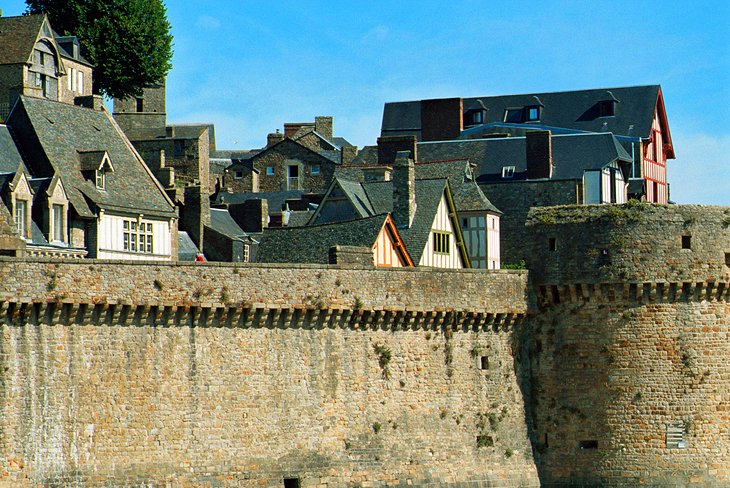
Mont Saint-Michel transports you back in time to the world of the Middle Ages. The entire island is a pedestrian zone, and most of the stone buildings date from the 13th-16th centuries.
Typical of the medieval era, the island is surrounded by ancient walls and bastions that were designed to protect against invasions. In fact, during the Hundred Years' War, the island of Mont Saint-Michel was an impenetrable fortress thanks to the defense walls.
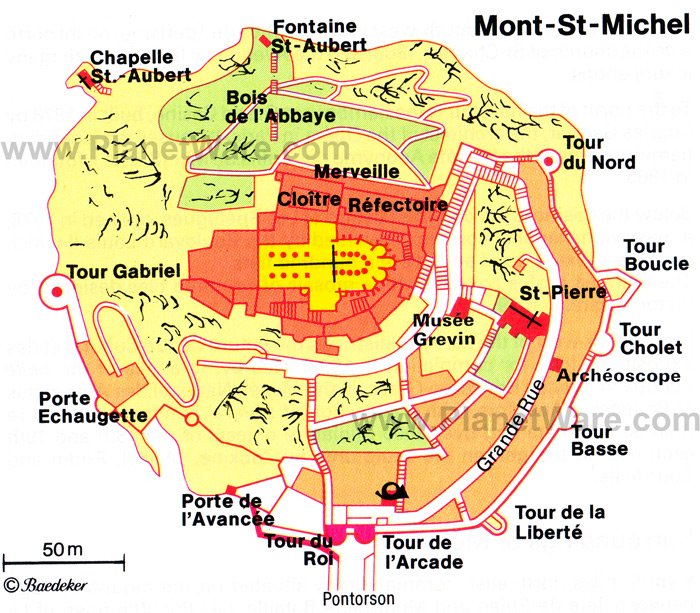
The immense stone Remparts du Mont Saint-Michel (ramparts) circle the edge of the island and feature battlements that were used to fight off invaders. Vantage points along the ramparts afford sweeping panoramas of the Bay of Saint-Michel.
You can walk along the ramparts to enjoy the scenic views as well as to reach the abbey. Seven historic watchtowers are found along the way. The 13th-century Tour du Nord (North Tower) is a good place to watch the tide flow in and out of the Bay of Mont Saint-Michel.
To arrive at the ramparts, enter the first two gates that provide access into the medieval village: the Porte de l'Avancée and the Porte du Boulevard. Then after crossing the Porte du Roy drawbridge, a right turn leads to La Grande Rue and to a path that runs along the outer walls of the ramparts. Follow this path to begin your ramparts walk.
3. La Grande Rue
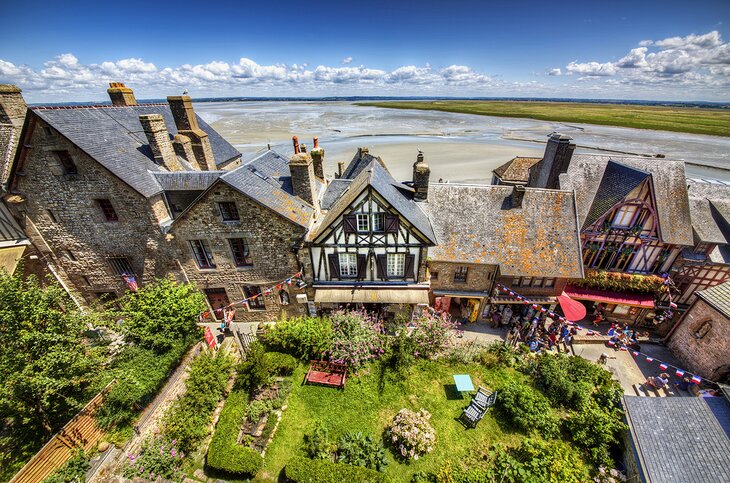
La Grande Rue is the Main Street of Mont Saint-Michel and runs parallel to the ramparts. This cobblestone pedestrian pathway takes you through the medieval village of Mont Saint-Michel.
To arrive here, you enter the village of Mont Saint-Michel through the main entrance gates (Porte de l'Avancée and Porte du Boulevard). Then, walk through the Porte du Roy gate and cross the drawbridge to reach the Grande Rue.
This charming street is lined by tightly packed stone houses of the 15th and 16th centuries, which now are occupied by souvenir shops, snack bars, cafés, restaurants, and hotels, including the Auberge de La Mère Poulard, which is famous for its omelettes and butter cookies.
The Auberge de La Mère Poulard also offers hotel accommodations; some guest rooms have bay views. Other hotels on La Grande Rue include the Auberge Saint-Pierre, with accommodations in a half-timbered building and an old fisherman's house, and the Hôtel Les Terrasses Poulard, in a 15th-century mansion and another historic building with bay views.
Browse the boutiques of the Grande Rue and stroll past the 15th-century Eglise Saint-Pierre. This parish church is still used to celebrate Mass throughout the year. Pilgrims stop here on their way to the abbey.
On a side street behind the church is the Musée Historique (History Museum), which displays a collection of old weapons, paintings, and sculptures that gives insight into the historic prisons and monks' lives of Mont Saint-Michel.
The Musée Maritime educates you about the maritime history and character of Mont Saint-Michel, as well as the environmental aspects of the Bay of Mont Saint-Michel, which has the highest tides in Europe. The museum also displays a collection of historic model boats.
Another tourist attraction along the Grand Rue is the Archéoscope museum, which presents a multimedia show about the construction of Mont Saint-Michel Abbey.
Also worth visiting is the Logis Tiphaine, the 14th-century residence of Bertrand du Guesclin, a knight, and his wife Tiphaine de Raguenel, an astrologer. This well-preserved historic house, with its medieval furniture, offers a fascinating glimpse of the past.
La Grande Rue ends at the Grand Degré, a flight of steps leading up to the entrance of the Saint-Michel Abbey.
4. Mont Saint-Michel Pilgrimages
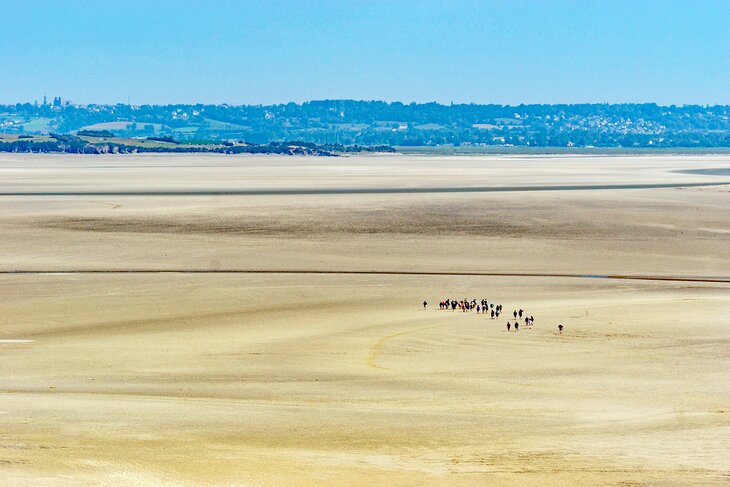
Christian pilgrims have made the arduous journey to Mont Saint-Michel since the Middle Ages. Known as the "Wonder of the West," the Abbey of Mont Saint-Michel continues to be a sacred destination for modern-day pilgrims.
The bay has an extreme tidal range (15 meters). The high tide turns Mont Saint-Michel into an island for about one hour each day. At low tide, it is possible to walk across the bay's sandy basin.
For centuries, pilgrims have completed the final stretch of their pilgrimage, the crossing of the Bay of Mont Saint-Michel, by foot.
Today, you can hire an accredited (licensed) guide to safely lead you across the Bay of Mont Saint-Michel. The Tourism Office of Mont Saint-Michel provides a list of certified guides.
Important Note: It is not advisable to attempt the journey without a guide, for safety reasons. Quicksand can create hazardous conditions for those who are not familiar with the terrain.
Walking across the sandy bay to Mont Saint-Michel takes about two hours. For the experience of medieval pilgrims, walk 13 kilometers from the village of Genêts or the village of Vains to Mont Saint-Michel. Accredited guides are available to lead you on various types of pilgrimage routes.
Many pilgrims make their spiritual journey at the end of September on Saint Michael's Day, which celebrates the Archangel Michael. Several religious events mark the occasion. On the nearest Sunday to Saint Michael's Day, a solemn mass is celebrated in the Abbey Church, and on September 29th (Saint Michael's Day), the Abbey Church holds morning prayers and mass.
5. La Mère Poulard
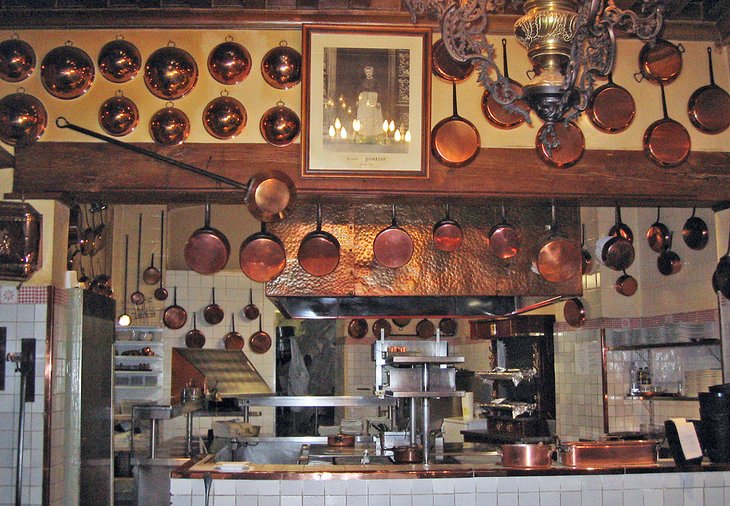
This auberge is a legendary institution on Mont Saint-Michel, begun in 1888 by Annette and Victor Poulard. Annette was only twenty at the time, but she was a good cook and became fondly known as La Mère Poulard (Mom Poulard). The inn welcomed pilgrims as well as visitors who came to sample La Mère Poulard's gourmet meals.
Today, the Auberge de La Mère Poulard includes the historic auberge and restaurant, which have been renovated yet retain the building's traditional ambience and charm. The Restaurant La Mère Poulard serves Mom Poulard's culinary specialty: the omelette, which is made following a recipe that is kept secret to this day.
La Mère Poulard was also well known for its biscuits (butter cookies made with the finest Normandy butter), still produced and sold at the Boutique de La Mère Poulard boutique, which is located next door on the Grande Rue.
Address: 18 Grande Rue, Mont Saint-Michel
Where to Stay in Mont Saint-Michel for Sightseeing
Spending the night on Mont Saint-Michel allows visitors to experience an enchanting medieval realm without the tourist crowds. The sounds of the sea are more audible and the narrow cobblestone streets appear more picturesque in the quiet of morning or evening.
We recommend choosing accommodation within the walled medieval village on the island of Mont Saint-Michel. However, the more affordable accommodations are on the mainland, which is about 2.5 kilometers from Mont Saint-Michel.
Luxury Hotels:
- The famous Auberge de La Mère Poulard is found just outside the Porte du Roy entrance gate on the Grande Rue. Housed in an old stone building, this three-star hotel features contemporary-style rooms that look out onto the bay and the village. The hotel's restaurant is famous for its omelettes.
- Also on the Grande Rue in the village of Mont Saint-Michel, the three-star Auberge Saint-Pierre offers quaint accommodations with classic decor and parquet or tile floors. Some rooms are in a historic half-timbered building and have wood-beamed ceilings and/or walls. An old-fashioned restaurant adds to the charm of staying at this ideally situated hotel.
Mid-Range Hotels:
- The three-star Hôtel Le Mouton Blanc occupies a renovated 14th-century building near the Abbey of Mont Saint-Michel. The cozy guest rooms feature splendid views of the bay, the abbey, and the village. The hotel's casual restaurant serves classic French cuisine. A hearty breakfast buffet is available.
- Right on the Grande Rue, the three-star Hôtel Les Terrasses Poulard offers reasonably priced accommodations in the heart of Mont Saint-Michel village. Guest rooms feature modern decor; some rooms offer views of the bay, while others overlook the village rooftops. Breakfast is served at the Auberge de La Mère Poulard. The hotel also has a small, cozy restaurant (open for lunch and dinner) that serves cuisine of the Normandy region.
- The Hôtel Gabriel is about three kilometers outside the medieval village, near the shuttle that goes to Mont Saint-Michel. This three-star hotel features cheerful contemporary-style guest rooms, a complimentary buffet breakfast, and private parking. There are a few restaurants nearby. You can purchase tickets to the Abbey of Mont Saint-Michel at the hotel.
- The four-star Hôtel Mercure Mont-Saint-Michel is also located about three kilometers outside of the medieval village of Mont Saint-Michel, near the shuttle stop. This modern hotel offers free parking, a restaurant that serves regional dishes and seafood, and spacious guest rooms with garden or park views. A buffet breakfast and room service are available.
Budget Hotels:
- A Parisian family converted their country home into a charming bed-and-breakfast hotel, Les Vieilles Digues, decorated in traditional Breton style and set in lovely gardens. The property is one kilometer from the parking/shuttle stop for Mont Saint-Michel. Accommodations include free parking and a generous petit déjeuner (French breakfast with bread and pastries from a local boulangerie, yogurt, cheese, coffee, and orange juice).
- The ibis Pontorson Baie du Mont-Saint-Michel is located 10 kilometers from Mont Saint-Michel in the town of Saint-Georges-de-Gréhaigne near the Pontorson train station. A shuttle bus runs from Pontorson to Mont Saint-Michel. The three-star accommodations include stylish modern guest rooms, a barbecue restaurant, and a 24-hour snack bar.
How to Make the Most of Your Visit to Mont Saint Michel
Book Tickets in Advance:
- Although tickets are sold at the site, it's a good idea to book ahead due to limited availability. You may purchase tickets for your visit up to one month in advance (and at least one day prior to your visit). Choose from two types of tickets: morning visit (9:30am–12:30pm) or afternoon visit (2pm–5pm). Audioguides are available for an additional fee.
Guided Tours:
- With the entrance ticket to Abbaye du Mont Saint-Michel, a 45-minute guided tour is included. Tours in English are available three times daily, Monday through Friday. You will meet your guide at the Aumonerie near the ticket booth.
- If you would like a more in-depth guided tour of the village and/or abbey of Mont Saint-Michel, there is the option of hiring a local guide. The Mont Saint-Michel Office of Tourism provides a list of knowledgeable local guides who offer guided tours of the medieval village and abbey.
Driving to Mont Saint-Michel:
- The drive from Paris to Mont Saint-Michel takes about four hours. You must park your car in the village of Beauvoir on the mainland, located 3 kilometers from Mont Saint-Michel. From the parking lots in Beauvoir, a shuttle bus (le Passeur) takes you across the Bay of Mont Saint-Michel and to the island of Mont Saint-Michel.
- The shuttle (le Passeur) runs frequently on a daily basis, from 7:30am until midnight, and the drop-off point is 450 meters from the medieval gates that provide entry into the village of Mont Saint-Michel. From the shuttle drop-off point, you can easily walk to the Abbey of Mont Saint-Michel and other tourist attractions on the island.
Tours to Mont Saint-Michel from Paris:
- The four-hour journey from Paris to Mont Saint-Michel by car is tiring for the driver. For a more relaxing trip, try a guided excursion such as the Mont Saint-Michel Day Trip from Paris, which includes a chauffeured ride (round-trip transportation) through the Normandy countryside, a walking tour through the village of Mont Saint-Michel, and an entrance ticket/guided tour of the Abbaye du Mont Saint-Michel.
Accessibility:
- The Abbey of Mont Saint-Michel is not accessible to visitors with impaired mobility. Reaching the abbey requires walking up a 200-meter pedestrian path to the top of the mount and then a staircase of 350 steps.
Attend a Concert:
- You can feel the soul of Mont Saint-Michel when attending a musical concert at this sublime venue. During two evenings in April, the Grandes Marées soirées feature choir concerts at various rooms of the abbey. The Festival Jazz sous les Pommiers presents free jazz concerts at the Eglise Abbatiale (Abbey Church) of Mont Saint-Michel in mid-May (reserve online).
Experience the Abbey at Night:
- In July and August, the abbey presents the "Chronicles of the Mount" night show, which includes sound effects and illuminations, as well as video projections that showcase various aspects of the abbey's history. Under the spell of special effects and lighting, you can truly experience the spiritual ambience of the medieval village and abbey. The shows are held every evening (except Sundays) in July and August from 7pm until midnight.
Plan Ahead for a Pilgrimage:
- Do you aspire to cross the Bay of Mont Saint-Michel by foot, as did medieval pilgrims? If so, plan ahead and book a certified guide to assist you in your journey. Due to the dangers of the quicksand and the quickly changing tides, it is NOT recommended to cross the bay on your own. Also note that walking across the bay is best done in bare feet.
Soak Up the Spirituality of the Abbey:
- You may attend a religious service to discover the spiritual ambience of Mont Saint-Michel. Mass is celebrated in the Abbey Church from Tuesday through Saturday at 12noon and on Sunday at 11:15am. Lauds services are held at 6:50am Tuesday through Friday and 7:50am on Saturdays, Sundays, holidays, and during the month of August. Vespers services take place Tuesday through Saturday at 6:20pm in the crypt of the Abbey Church. Entry to religious services is free of charge.
Celebrate Christmas at Mont Saint-Michel:
- Christmas Week (Semaine de Noël) at Mont Saint-Michel is a special time. The village comes to life with festive lights and Christmas markets.
- Christmas Eve (December 24th) is celebrated with vigils at 10:30pm and a Mass at 11:30pm at the Abbey Church, followed by hot chocolate served in the Refectory. Mass is celebrated twice on Christmas Day (December 25th): at 8am and at 11:30am. A solemn vesper service is held on the evening of Christmas at 6:30pm. Religious celebrations continue each day until December 31st.
Getting to Mont Saint-Michel
- The drive from Paris to Mont Saint-Michel takes about 3.5 hours. Another option is the TGV train (rapid-velocity train) from Paris to Rennes, which takes 1.5 hours, and then a 30-minute taxi ride to Mont Saint-Michel.
- If arriving by car, park in the parking lot which is located on the mainland 3 kilometers from Mont Saint-Michel. From the parking lot, a shuttle bus drops visitors off 450 meters from the entrance gates to the medieval village of Mont Saint-Michel.
- Besides driving, there are several other ways of getting to Mont Saint-Michel by public transportation. Learn about the different options and other practical information in our Best Ways to Get There guide, which discusses the routes from Paris to Mont Saint-Michel.