

France's 13 Most Iconic Tourist Attractions First-Time Visitors Have To See
There's just no getting around the fact that many of the most well-known and beloved attractions in France are located in the capital city of Paris. From world-renowned museums and grand boulevards to historic monuments and charming neighborhoods, Paris offers first-time visitors an unforgettable immersion into French culture. While they tend to attract throngs of visitors, they are still buck-list material and totally worth visiting at least once.
That said, France's appeal extends far beyond the capital. Across the country, countless destinations offer unique glimpses into France's heritage and natural beauty. These sites extend from the great alpine slopes, through valleys of lavender, to coastal vineyards and seaside castles. While sometimes less familiar to travelers, these sites carry the same historical weight, architectural marvels, and cultural resonance as the monuments of Paris.
This travel guide is, therefore, divided in two. The first half of the list includes sites in Paris and the second half are sites outside Paris that are less commonly top of mind, but still iconic in their own right. Without further delay, here are 13 must-see attractions in France for first-time visitors.
Eiffel Tower, Paris
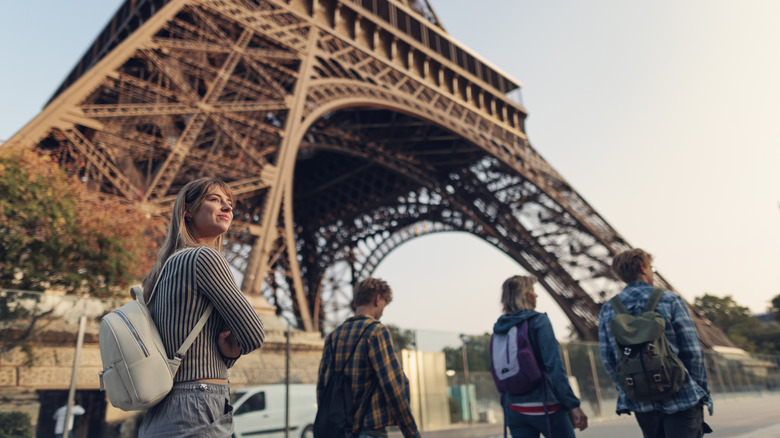
The Eiffel Tower is not just the most iconic attraction in France, but arguably in the world. Built as the entrance of the International Exposition of 1889, it stood as one of the tallest man-made structures at the time, and represented a major feat in engineering. Today, more than 7 million visitors climb this wrought-iron tower every year to enjoy its spectacular views and experience an enduring symbol of modernity for themselves.
It's worth visiting the tower at night and day, if possible. During the day, the majestic architecture and urban planning of the city is on full display, along with the bustling energy of the city's streets. However, the evening is considered the best time of day to visit the Eiffel Tower for views. After sundown, the streets turn into a mesmerizing glow and you'll surely understand why it's nicknamed The City of Lights. The tower itself lights up at nightfall, creating a truly romantic atmosphere. Plus, there are fewer crows at night.
The Iron Lady's architecture is a wonder to behold from the esplanade. From there, you'll need a ticket to take either the stairs or a glass-walled elevator to the tower's three main levels. Each offers spectacular viewing platforms and historical information. It's also home to three restaurants, two bars, and a few stores including a macaron bar, offering authentic Parisian treats served over phenomenal panoramic views.
Notre-Dame Cathedral, Paris
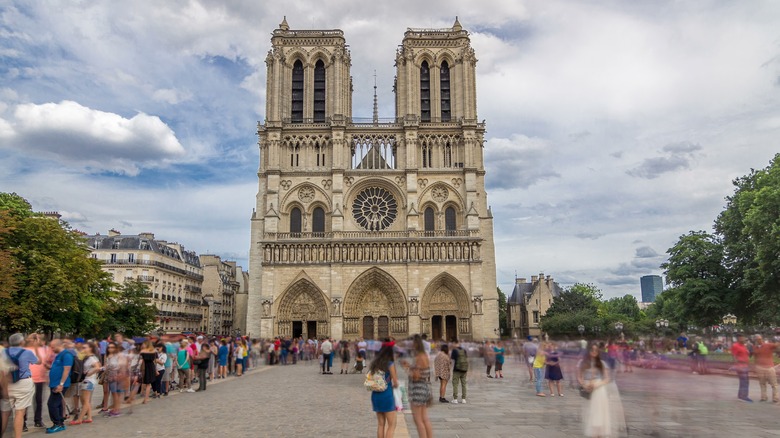
For nearly seven centuries, the timbre of the Notre-Dame Cathedral's 21 bells has echoed along the Seine River, which surrounds the island on which the church was built. Notre Dame Cathedral, or "Our Lady Cathedral," is located in the very center of Paris, as well as at the heart of French history and national identity. During the French Revolution of the 18th century, Notre Dame was seized, looted, and sold by the Jacobins. When Napoleon Bonaparte rose to power in the 19th century, he re-possessed it and used it as the site of his own coronation.
This history, along with its reputation as one of the most masterful examples of gothic architecture, is what makes Notre-Dame Cathedral "Our Lady Cathedral," recognized as part of a UNESCO World Heritage site. After a devastating fire in 2019, great care was taken to restore many of its iconic features, and the public is now invited to visit Paris' reinvigorated Notre Dame Cathedral. People of all faiths flock to its majestic dome to witness the flying buttresses, rose windows, and twin towers. One visitor wrote on TripAdvisor, "You can also still see the Gargoyles...as though they are watching over the city."
It's still an active place of worship, with services offered all year round. However, many visitors note that its popularity as an attraction tends to make it difficult to worship there. Admission is free, and reservations are highly recommended in order to skip long lines.
Montmartre, Paris
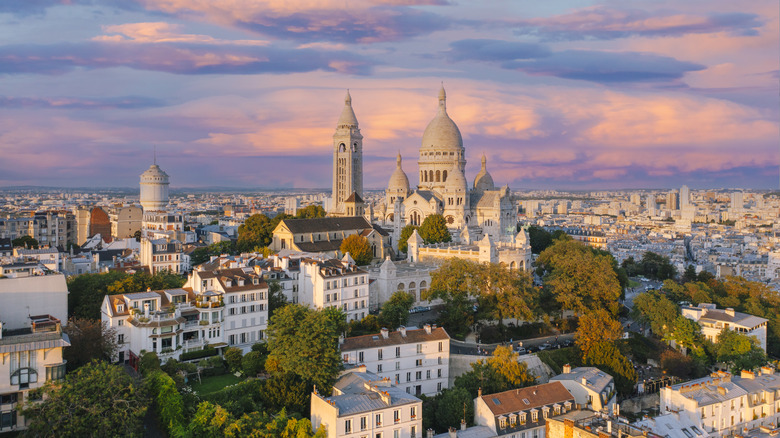
Among Paris' many neighborhoods, few are as iconic as Montmartre, nestled on a hill in the city's 18th district. Historically, the area was a bohemian hub for creative inspiration and experimentation. Some of Europe's most well known artists set up their studios here, including Pablo Picasso, Henri Matisse, Claude Monet, Pierre-Auguste Renoir, and Vincent van Gogh.
The Sacré-Cœur Basilica, built as a monument of reconciliation for the events that transpired during the Paris Commune of 1871, offers sweeping views over Paris. Its gleaming white domes draw millions of visitors each year. Just down the slope, the famous cabaret venue Le Chat Noir still celebrates the bohemian energy that once defined the neighborhood. It was an influential gathering place for painters, performers, and writers that birthed modern cabaret culture.
At the foot of the hill, you'll find Moulin Rouge, another iconic cabaret known for its dazzling performances, vibrant costumes, and the birthplace of the famous can-can dance. Its bright red windmill is a symbol of expression, Parisian nightlife, and pays homage to Montmarte's rural roots.
Louvre, Paris
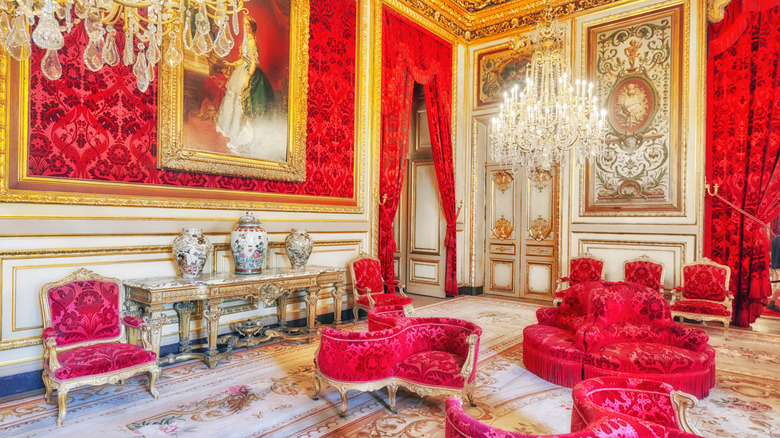
The Louvre is the world's most-visited art museum and home to one of the most extensive collections of paintings in the world. Its architecture is also worthy of admiration, and the backdrop of several Hollywood blockbuster films and pop music videos. The building's iconic glass pyramid is actually part of the underground lobby that provides access to the museum's three main wings. However, the "secret" Le Carrousel du Louvre entrance may have fewer lines, according to Rick Steves.
Of course, go for Leonardo da Vinci's "Mona Lisa," but stay for the extensive collection of mind-boggling treasures from diverse civilizations. These include artifacts from Napoleon's conquests in Egypt, and one of the largest collections of Italian Renaissance paintings outside of Italy. The Louvre was formerly a royal residence built in the 15th and 16th centuries, and visitors can also visit Napoleon III's apartments decorated as they would have been in the late 19th century.
Admission requires timed-entry tickets that can be purchased online, and guided tours are available. Visitors feeling famished after traversing such a vast array of art can take solace in one of a dozen cafes and restaurants located at the museum. Afterwards, take a stroll through the picturesque Carrousel Garden, featuring manicured hedges, flowerbeds, and a lesser-known yet still impressive arc, Arc du Carrousel.
Banks of the Seine River, Paris
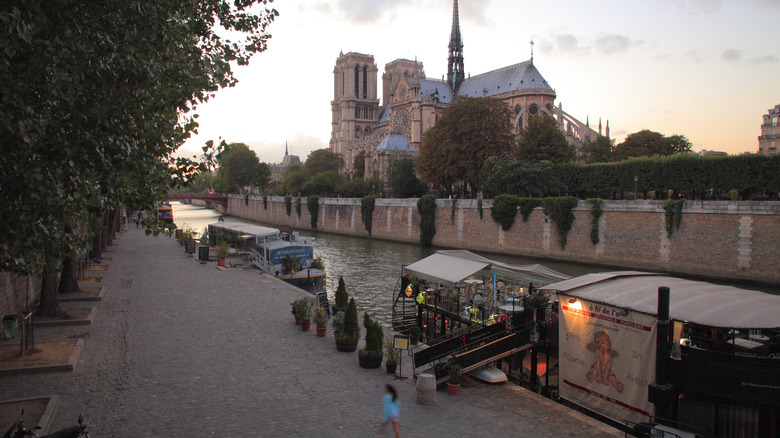
Part of what makes Paris one of the most romantic and picturesque cities in the world is its location along the banks of the Seine River. The river has played a central role in the city's development, and creates the well-known yet unofficial division of the city into the Left Bank (generally thought of as more bohemian) and Right Bank (generally thought of as more stately).
Each of the Seine's many bridges and statues mark different eras of Parisian history. A stroll along the river offers incredible sights: the iconic silhouette of the Eiffel Tower, the ornate architecture of the Louvre, and the stately Place de la Concorde. Wander along the pedestrian-friendly banks, hop on a scenic river cruise to take in the monuments from a new vantage point, or browse the more than 200 "bouquinistes" — the legendary open-air stalls selling vintage books, art prints, and collectibles. And of course, the Seine is lined with charming cafés, floating bars, and parks where you can unwind like a local.
Arc de Triomphe, Paris
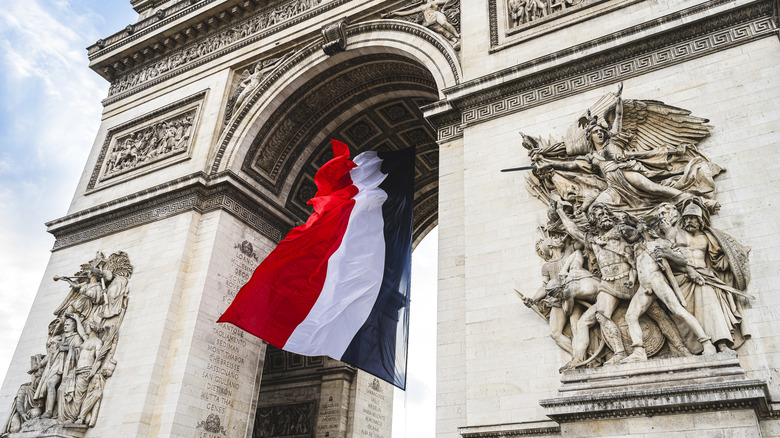
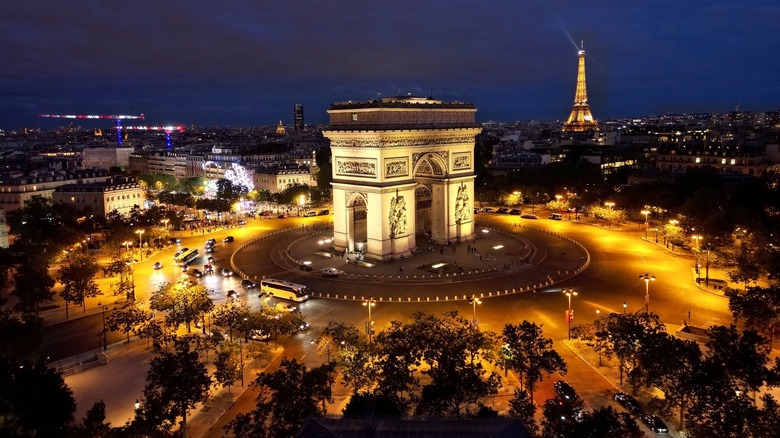
This national monument sits in a massive roundabout called Place Charles de Gaulle. Arc de Triomphe, or "Arc of Triumph," is a political and architectural wonder to behold. It's worth taking in from a variety of angles — at a distance while window shopping among the avant-garde fashion brands on the Champs-Élysées, close up at its base by the Tomb of the Unknown Soldier, and within its walls on a self-guided or lecture tour.
At the bidding of Napoleon I, the audaciously immense archway was designed and erected as a celebration of his empire's glory and that of his soldiers in the early 19th century. However, the monument was not completed until long after the end of his reign, and was inaugurated in 1836. It features four groups of sculptures around its base memorializing different moments in Napoleonic history. Climb the arc's 284 steps to the terrace that offers a 360-degree view of Paris' main boulevards and other landmarks.
Plateau de Valensole, Provence
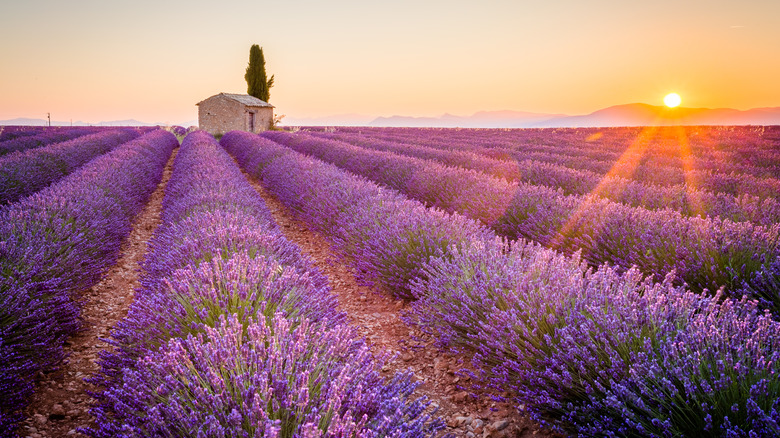
Provence's lavender fields are easily recognizable, and are part of the same region where the global brand L'Occitane en Provence got its start. Within Provence, snuggled up against the foot of the alps, is the lush Plateau de Valensole, which translates to "Valley of the Sun." This is an area especially famous for its endless rows of vibrant purple blooms. As one person writes on TripAdvisor, "No photo can ever describe the spectacle that Plateau de Valensole offers you in the period of lavender flowering."
In summer, the air here is saturated with the calming fragrance of lavender. Farms all around the area offer lavender-infused goods such as essential oils, soaps, honey, and bundles of dried flowers. In July, the annual Lavender Festival brings the medieval village of Valensole to life. Biking and driving through the many towns that comprise the Plateau is a great way to explore. It's worth making a trek to the Museum of Lavender, in the town of Luberon.
The Plateau region also abounds in almonds and truffles. Almond groves offer beautiful white blooms starting in March or April. The Museum of Calisson for almonds offers a history of the nut, complete with a bakery offering almond-based goods in the city of Aix-en-Provence. Truffle season reaches its peak in winter, and you can learn tons more about this special delicacy at The House of the Truffle museum in the village of Aups.
Promenade des Anglais, Nice
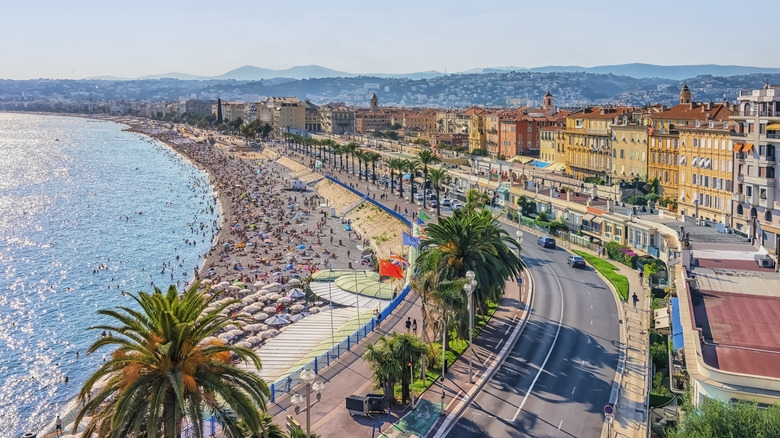
In the south of France, Nice (pronounced "neice") is one of the most visited cities for its magnificent vistas along the French Riviera, also known as Côte d'Azur. The city's boardwalk, the Promenade des Anglais, or "Walkway of the English," is extremely popular and well known as a luxurious place to take in sun and sand. It runs a wide and flat 4.3 miles along the turquoise blue waters of the Mediterranean.
The promenade's name reflects its origins. In the 18th century, English aristocrats would travel to the area for vacations, gradually transforming it from a rugged coastline to an upscale leisure waterfront. The walkway is lined with palm trees, historic Belle Epoque hotels and villas facing the Bay of Angels, and iconic blue chairs that are a symbol of the city. Visitors can take a dip in one of the public beaches that comprise about half of the Bay, and offer public toilets and showers. Or, if you have room to splurge, lounge out at one of the many private beach clubs.
Aiguille du Midi, Mont Blanc
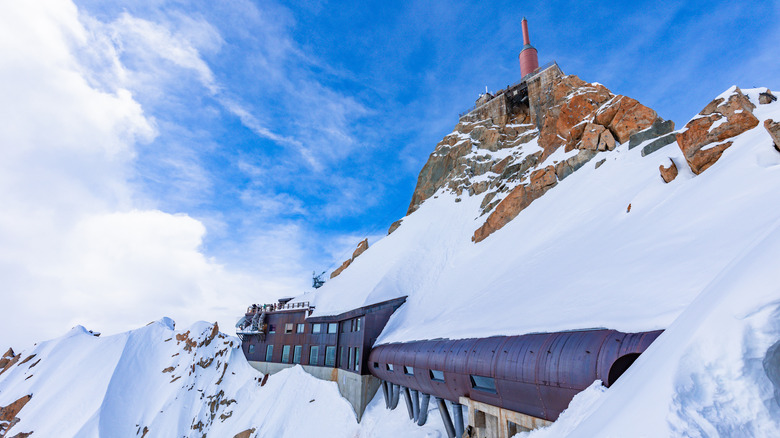
The Aiguille du Midi, which translates to "Needle of Mid-Day," stands as one of France's most iconic attractions in the French Alps. It offers an unparalleled window into the majesty of the Mont Blanc mountain range. At an elevation of nearly 13,000 feet above sea level, this icy granite spire soars above the clouds and looms dramatically over the village of Chamonix. One visitor shared a common sentiment among folks who have made it to the top: "Once in a lifetime trip for me. I'll remember it forever," they wrote on TripAdvisor.
For more experienced adrenaline seekers, it's possible to make the ascent or descent by climbing. Thankfully for casual visitors, getting to the top has been made easy on one of the highest cable cars in the world. The cable car departs from the Chamonix valley floor across to the summit terraces, where you can access viewing platforms in just 20 minutes. The roundtrip journey is quite costly at nearly $100 USD per adult, but according to many, the price is worth it.
At the summit, there are cafés and an exhibition of alpine and mountaineering history. A little bit of altitude sickness is not uncommon, and some visitors report feeling dizzy at this height from the lack of oxygen. Thankfully, staff are on hand to offer assistance if needed.
Basilica Notre Dame de la Garde, Marseille
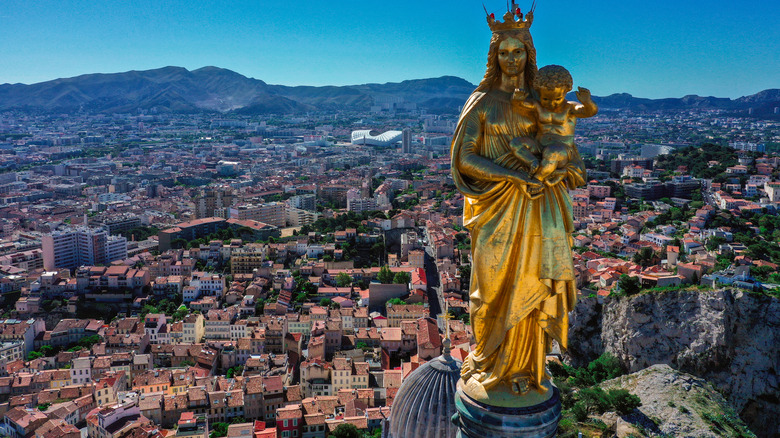
The Basilica Notre-Dame de la Garde, or "Our Lady of the Guard," is perched high above the harbor city of Marseille, like a watchful guardian. Its striking Romano-Byzantine architecture features include distinctive stone stripes, domes, and ornate mosaics. Built in the mid-19th century, the basilica assumes a commanding position in France's oldest city and home to the national anthem, "La Marseillaise."
The journey up the hill is an adventure, whether by foot from the Old Port, by bus, or through scenic winding lanes. Visitors arriving at the basilica are first struck by the sweeping views. From the elevated terraces, one can see Marseille's red-roofed cityscape, the vessels of the Old Port, the islands of the Frioul archipelago, and the vast expanse of the Mediterranean. Once inside, the richly decorated upper church contrasts beautifully with the simpler crypt below. The walls are adorned with colourful mosaics, marbles, and hundreds of ex-votos — offerings left by mariners and citizens. Cafés and viewpoints surrounding the church offer places to linger and absorb the salty air from up high.
Futuroscope
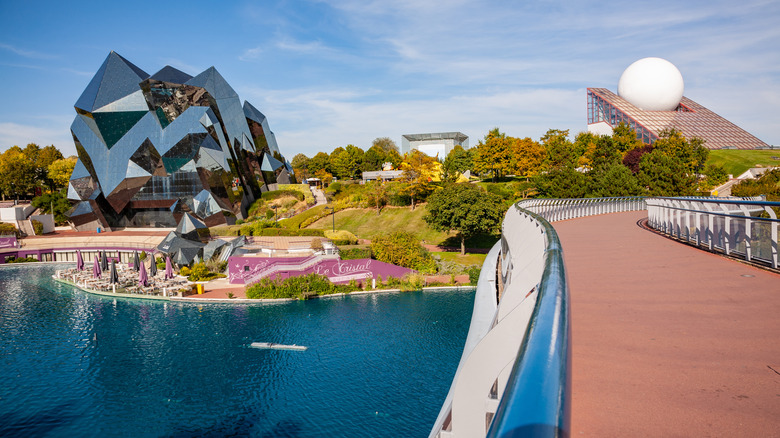
While Disneyland Paris takes the cake in terms of number of visitors, France is home to another of Europe's most famous theme parks that also offers family-oriented entertainment with a twist. Futuroscope, located near Poitiers in the Nouvelle-Aquitaine region, offers immersive, futuristic entertainment for all ages. The park's emphasis is on science and innovation, rather than the traditional attractions of Disneyland.
Each of the stunning, futuristic pavilions boast architecture that makes it feels like you're stepping inside the set of a sci-fi film. The park is packed with 3-D and 4-D cinemas, flying theaters, motion simulators, and projection shows that use state-of-the-art technology. The most recent addition to the park is a massive indoor water park called Aquascope. It offers winding tunnels, high-speed slides, and live shows of lights, images, and sound while you swim.
The themed accommodations on site are well worth an overnight stay. For example, the Cosmos Station Hotel offers space station-themed rooms. As one guest wrote on TripAdvisor, "It seems that you are actually in a moon station."
La Cité du Vins, Bordeaux
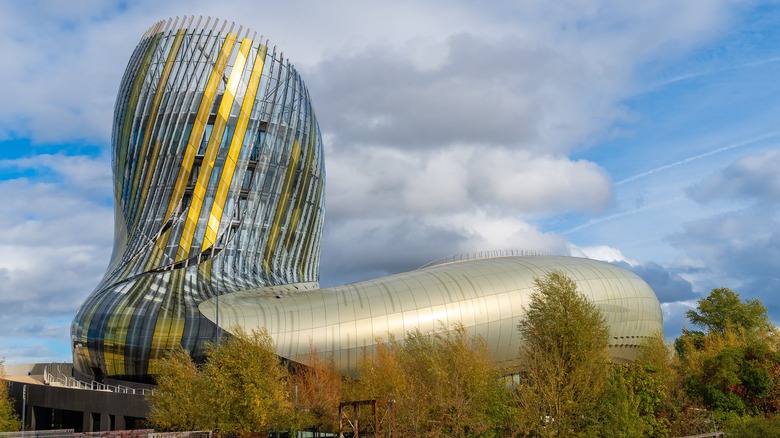
In the heart of Bordeaux lies the world's largest museum dedicated to wine, and it's a must-visit for first-time visitors. La Cité du Vins, which translates to "The City of Wines," is a museum of wine housed within bold and striking contemporary architecture that stands out on the banks of the Garonne River, and embodies the fluidity and richness of wine itself. The architects sought to evoke the shape of wine swirling inside a glass or a gnarled vine in the curvature of the building.
Inside, visitors can explore the permanent exhibition that traces the history of viticulture from ancient traditions to modern innovations across the world. The museum offers interactive displays such as "The Buffet of the Five Senses," a multi-sensory experience that deepens appreciation for all aspects of wine, from its colors and aromas to the "pop" of the cork.
Wine tasting workshops are a core part of the museum experience, and different themes are offered. They allow guests to sample wines from Bordeaux and around the world. The terrace offers panoramic views of the city and surrounding vineyards. These sessions provide hands-on learning puzzles and games about tasting techniques, grape varieties, and pairing principles. It's one of the best ways for first-time visitors to step into the world of French wine. As one visitor wrote on TripAdvisor: "[W]e learned a lot that helped us get more out of our later wine chateau tours."
Mont Saint-Michel, Normandy
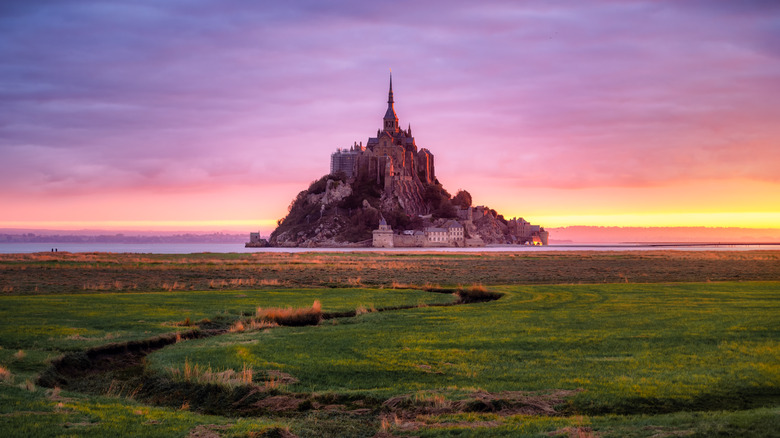
Rising dramatically from the tides off the coast of Normandy, Mont Saint-Michel is one of France's most well-known seaside landmarks. This small island village is crowned by a medieval gothic-style abbey, dedicated to the Archangel Michael. It has drawn pilgrims for more than 1,000 years and is a UNESCO World Heritage Site.
The causeway from the mainland of the bay to the island is notoriously accessible only at low tide, twice a day. And, according to Normandy Tourism, "it is said that the tide comes in at the speed of a galloping horse." It's important to check the tide schedule while planning your visit. You cannot drive your car across the causeway, you must park on the mainland. There is a free shuttle bus, as well as horse drawn carriages and walking or cycling paths.
The abbey itself is a marvel of medieval engineering. It features narrow winding streets, stone staircases, and chapels. Visitors can explore its cloisters, halls, and refectory. The views from the top are breathtaking, offering sweeping panoramas of the surrounding bay and tidal flats. The village offers charming shops and cafés, and a sense of stepping back in time.
Methodology
This list was compiled based on a mix of personal experience and research. I have traveled in France countless times to visit family and friends, including many trips to Paris. My intimate knowledge of tourist attractions in France helped narrow down the list to a few of the most impressive sites that I would recommend to anyone going to visit for the very first time.
This first-hand knowledge was combined together with research and information gathered from multiple sources, including hundreds of reviews of attractions in Paris and France at large from TripAdvisor. Other resources include tourism boards for various cities and regions to determine which attractions are among the most popular. The guide includes a balance of both famous landmarks in Paris and diverse geographic regions that represent a wide breadth of French cultural heritage.