Attractions & Things to Do in Lausanne
A modern city known for commerce and trade fairs, Lausanne isn't just about business. You'll find plenty of things to do in its historic old town and along the shore of Lake Geneva.
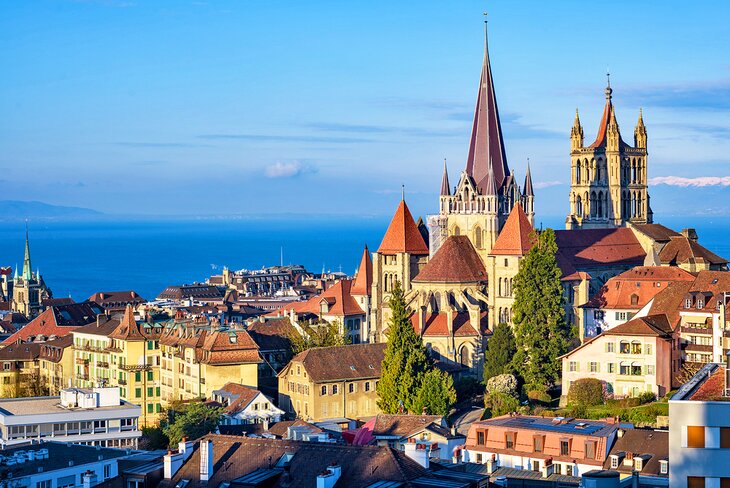
Ride Europe's steepest metro line from the lake to the museums of PLATEFORME 10 and relax in a café as you catch up on the latest from emerging artists in the energetic Flon arts district. Relive Olympic moments at the Olympic Museum and descend the picturesque Escaliers du Marche from the cathedral into Place de la Palud for sightseeing in the winding streets of the old city.
The lake and surrounding mountains will tempt you with more places to visit. Hop a lake steamer to tour Chateau Chillon and ride the Rochers-de-Naye Railway to the precipitous Alpine gardens high above. Spend a day in neighboring Vevey and whet your appetite at the interactive exhibits in the Alimentarium, or get active by cycling along the shore on the Tour du Lac Léman path.
The north shore of Lake Geneva is a great place for weekend getaways or a family vacation, and you'll find plenty of places to visit with this list of the top attractions and things to do in Lausanne
Olympic Museum
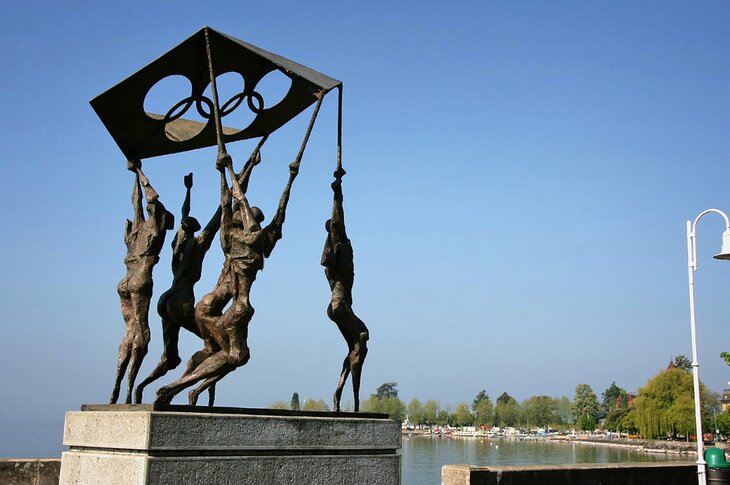
Along with the artifacts and history of the competitions, the Olympic Museum overlooking Lake Geneva focuses on the spirit and values of the Olympics and the qualities that have made them endure. The recently renovated displays span the entire history of the games, from their origins in ancient Greece to the most recent, and include Olympic torches, historic posters, equipment, and clothing worn by Olympians.
You can relive great moments from the Olympic Games through film clips and follow the evolution of sports technology and even fashion design. In addition to the exhibits and interactive experiences in the building, the lakeside campus includes manicured grounds where you can see sculptures and other works of art depicting Olympic themes, as well as the Olympic flame.
Address: Quay d'Ouchy 1, Lausanne
See Lake Geneva (Lac Léman) by Boat
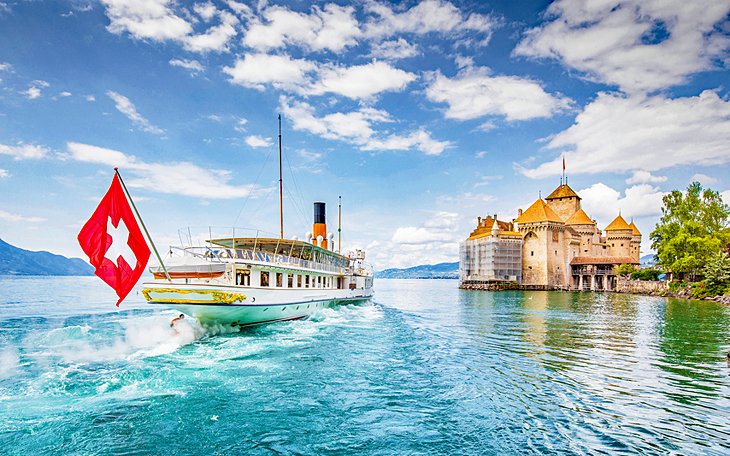
For most of its crescent-shaped length, Lake Geneva separates France and Switzerland, giving Lausanne, on its northern shore, beautiful views of the French Alps with the lake in the foreground. The shore from Lausanne east as far as Montreux is known as the Swiss Riviera, a sun-drenched landscape of terraced plantings dropping to a shoreline of gardens, palm trees, and picturesque villages.
The best way to enjoy the lake — and among the most popular things to do for tourists in Lausanne — is to board one of the lake steamers that stop here and either take a cruise or use it to hop between towns. Ferries shuttle between Lausanne and two French towns across the lake. The most popular of these is the spa town of Évian-les-Bains, a scenic 35-minute ride away.
Equally scenic are the rides to Geneva and Montreux, or you can take a dinner or lunch cruise. The most popular cruises are on the Belle Époque paddle steamers Montreux (1904) and the elegant La Suisse (1910). You can buy day tickets for unlimited CGN boat travel or use a Swiss Railway pass, which is valid on CGN boats.
Cathedral of Notre-Dame
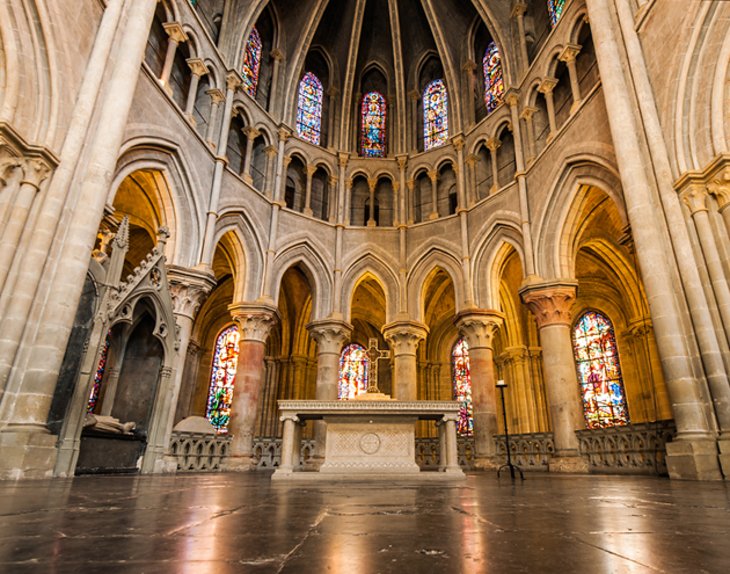
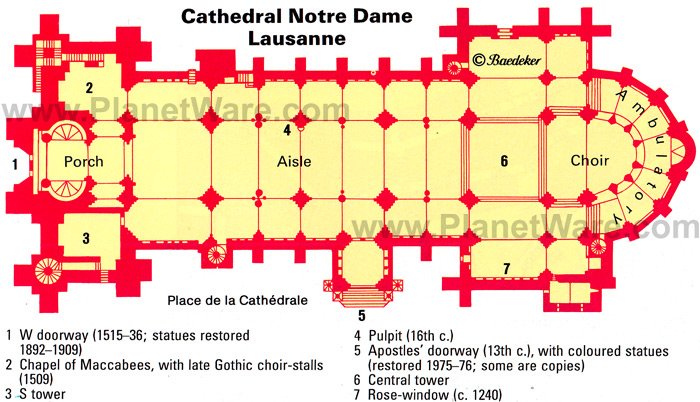
Medieval pilgrims following the Way of St. James to Santiago de Compostela in Spain entered the cathedral through its 13th-century Apostles Doorway, adorned with beautifully painted stone sculptures. Inside, immediately to the right, is the Chapel of St. James, where they prayed and received their tokens.
Beyond, in the south transept, is a glorious rose window with 105 panels of beautiful 13th-century stained glass. Look under the window to see the originals of the stone sculptures from the Apostles Doorway, preserved here. The interior of the cathedral is beautifully proportioned, its focal point an organ of 6,000 pipes. The south aisle has carved choir stalls from 1509, and in the choir are some early Gothic stalls.
In the crypt lie the remains of an eighth-century basilica with tombs. The early Gothic cathedral, which is now Protestant, is a landmark, with its five towers rising above the city from the hilltop. From the 72-meter-high central tower, a night watchman calls out the hours from 10pm until 2am, as one has been doing each night for more than six centuries.
Address: Place de la Cathédrale 4, Lausanne
Château d'Ouchy and Promenade
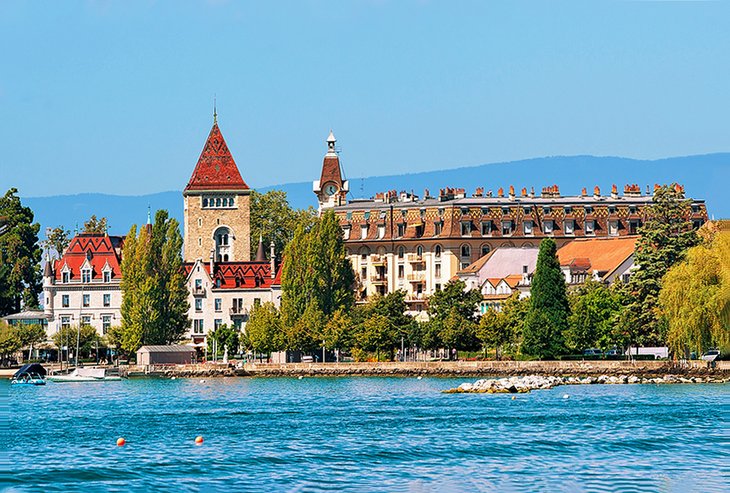
Below the busy center of Lausanne is the lakeside neighborhood of Ouchy, whose elegant Belle Epoch hotels are connected by a flower-lined promenade that stretches between the old and new ports. At the center of this stands a 12th-century castle, the Château d'Ouchy, in which the peace treaty between Turkey, Greece, and the Allies was signed in 1923. The chateau is now a luxury hotel and fine-dining restaurant.
Near the Hôtel de l'Angleterre, across the street from the chateau, a plaque commemorates Lord Byron, who wrote The Prisoner of Chillon here. Several historical treaties were signed in the famous grand hotels along the shore, including the Accord de Lausanne, where European powers agreed to suspend World War I reparations payments, signed at the opulent Beau-Rivage Palace in 1932.
From Lausanne's old harbor at Port d'Ouchy, the lakeside promenade runs one kilometer east to the 1823 Haldimand Tower and the attractive Parc Denantou. There you can see the Thai Pavilion, a gift from Thailand; all along the promenade are views across the lake to the Savoy Alps. Departing regularly from Place de la Navigation are boats that stop at points all along the lake between Geneva and Montreux, and across the lake to the French shore.
If you're energetic, you can rent a bicycle and follow the lakeshore on a segment of the 175-kilometer Tour du Lac Léman, a well-signed cycle route through lakeside villages with stunning lake and mountain views.
Address: Place du Port 2, Lausanne
Collection de l'Art Brut
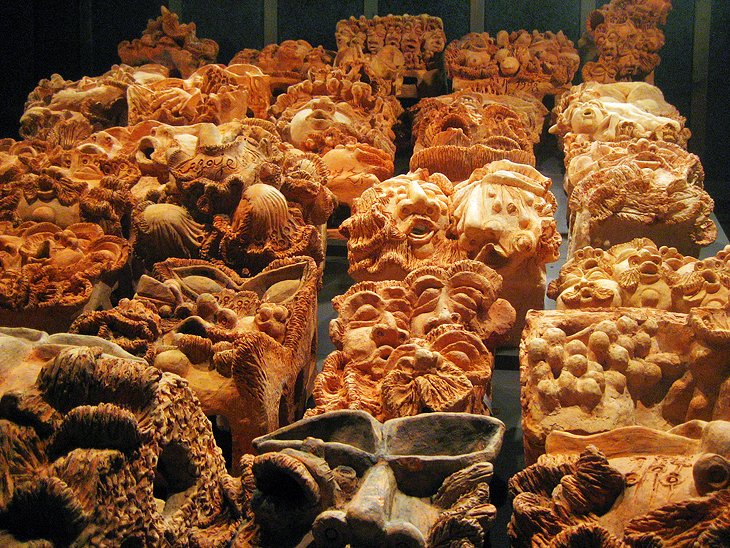
One of the world's leading museums for outsider art, the Collection de l'Art Brut was founded by French artist Jean Dubuffet's contribution of his private collection of works by untrained artists. Works by more than 1,000 artists outside the mainstream creative community make up the collections, which include naïve paintings, sculptures, masks, and works in a wide variety of media.
The exhibitions change, following various themes that interpret the art and explore the creative process. The collections are housed in the splendid Château de Beaulieu, an 18th-century patrician residence in the center of the city.
Address: 11 av des Bergières, Lausanne
Admire the Impressionists at the Hermitage Foundation
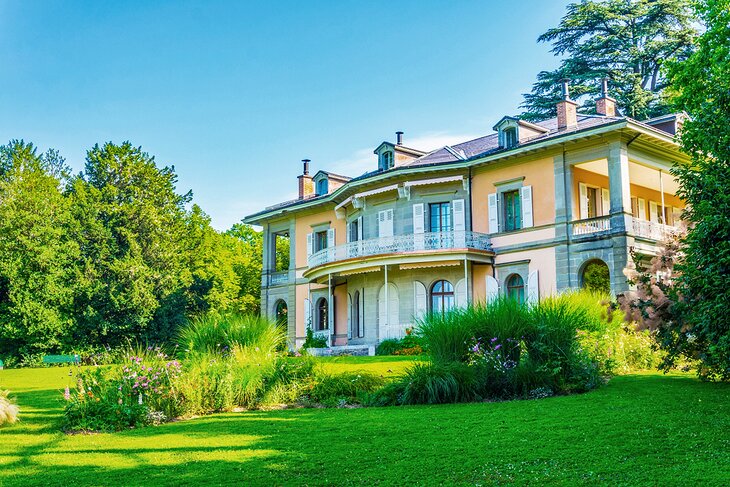
A newcomer, as great art museums go, the Fondation de l'Hermitage collection began in 1984 and has since grown with the donation of several more important private collections. Now more than 650 works represent prominent artists, especially Impressionist and post-Impressionist painters.
Artists represented include Manet, Cézanne, Degas, Monet, Boudin, Van Gogh, Fantin-Latour, Vuillard, and Braque. The museum also exhibits a major collection of works by 20th-century artists of the Vaud region, and special exhibitions bring retrospectives of other Swiss artists, such as the Lucerne-based painter Hans Emmenegger. The foundation is housed in an elegant lakeside house surrounded by gardens.
Address: Route du Signal 2, Lausanne
Watch the Clock in Place de la Palud
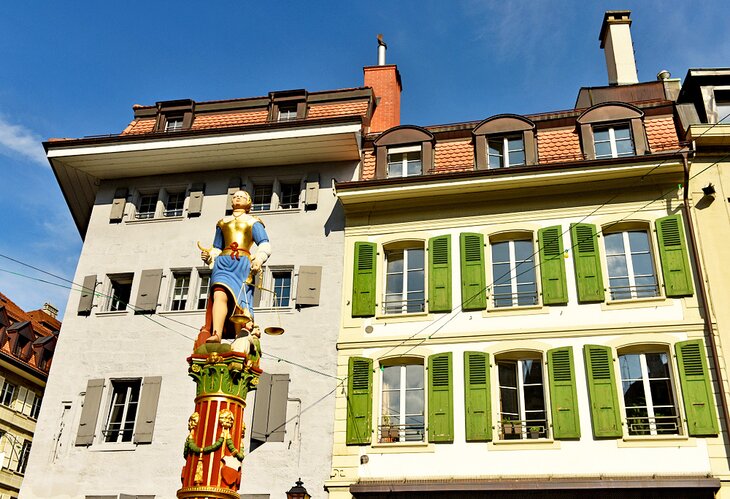
Below the cathedral, the winding streets of the old city are reserved for pedestrians and converge on Place de la Palud, where you'll see Lausanne's oldest fountain, the Fountain of Justice, with Justice represented on its central pillar. On the steps around the fountain, you'll often find people sitting as they await the clock above, which shows animated scenes from local history every hour from 9am to 7pm.
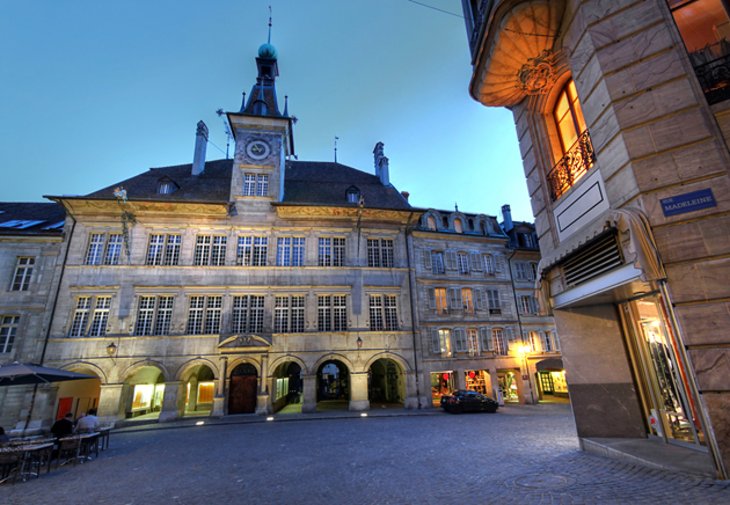
On Wednesday and Saturday mornings, market stalls selling local farm produce fill the square and its radiating streets. Overlooking the square is the Hôtel de Ville, the town hall, built in the 15th century with 16th-century stained glass and 17th-century modifications. It has arcades on the ground level, and on the façade are two copper gargoyles shaped like dragons.
Explore the PLATEFORME 10 Art Museums
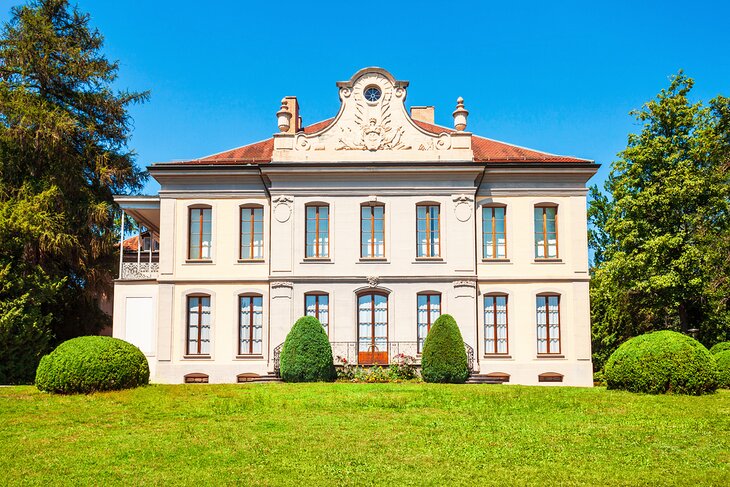
Three of Lausanne's outstanding art museums have joined other cultural institutions in a new purpose-built complex in the heart of the city, near the rail station. PLATEFORME 10 is the nucleus for an expanding arts neighborhood, a one-stop center for arts and culture.
The Musee des Beaux Arts (Fine Art Museum) holds an art collection that although modest in numbers is impressive in the quality of French artists represented. You'll find works by Paul Cézanne, Edgar Degas, Auguste Renoir, Pierre Bonnard, Albert Marquet, Henri Matisse, and Maurice Utrillo here, along with a good collection of graphic works by Swiss artists.
Entirely devoted to photography, Musée de l'Élysée collects the momentous along with the trivial moments as they have been captured on film. Created by some of the great names in the art and by total unknowns, images reflect local and worldwide subjects, early and contemporary subjects, all dedicated to showing the many ways photographs have represented people, places, and events. The museum also tells the story of the medium itself, in examples of early processes, including ambrotypes, albumen paper, and Photochrom.
The Museum of Contemporary Design and Applied Arts began as a collection of decorative arts, but has grown into a forum for the interplay of applied and fine arts, especially in the context of modern design. A program of five or more exhibitions annually gives particular attention to young and emerging designers and their work.
Address: Place de la Gare 16, Lausanne, Switzerland
Climb the Escaliers du Marche
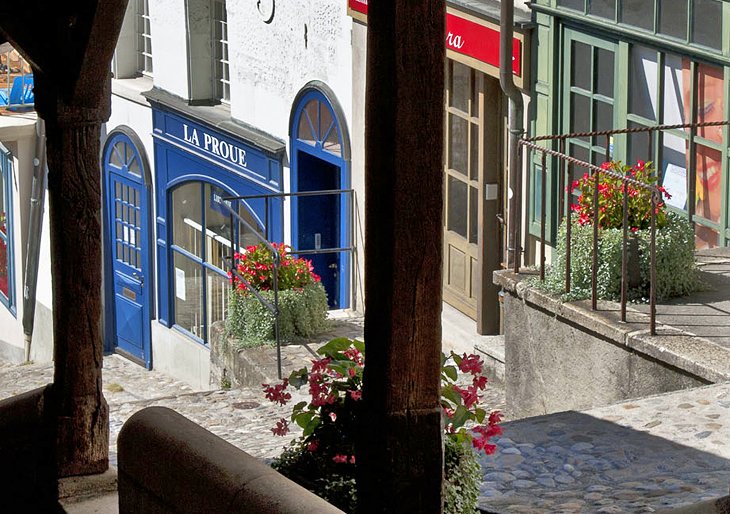
One of the most picturesque sights in Lausanne is the long flight of covered steps leading from just above Place de la Palud to the terrace in front of the main door to the cathedral. Built in the 13th century, it connected the market in Place de la Palud to the one above. It takes its name from the city market that was held in a square next to the staircase until the 14th century.
Beside the steps and rising with them in layers of terraces is a row of buildings that date from the 16th century. If you're climbing up, you can break the climb by stopping at a café on one of the terraces for a coffee or hot chocolate.
Day Trip to Château de Chillon
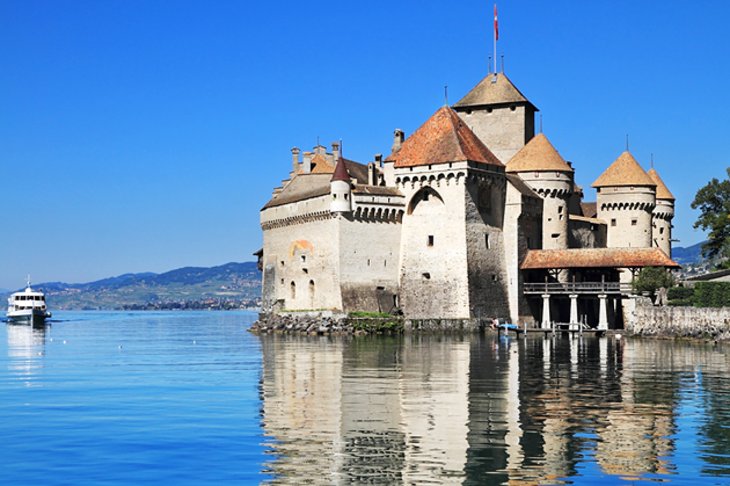
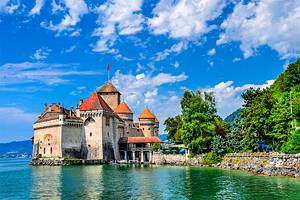
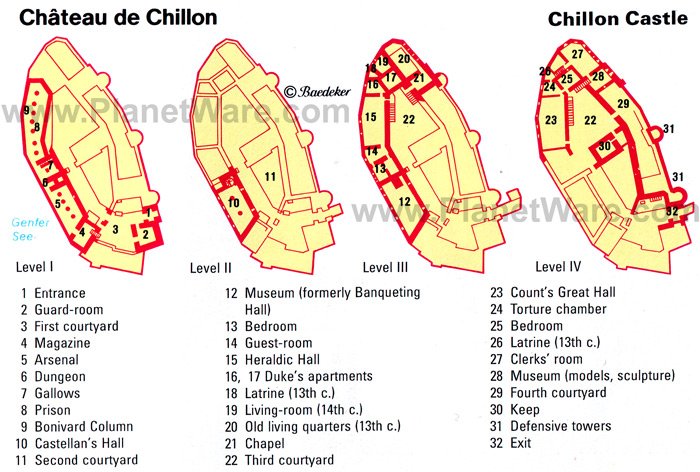
Rising directly out of the lake outside Montreux, Chateau de Chillon dates to the 9th century and is the setting for Byron's The Prisoner of Chillon, based on a true story. The stronghold of the Counts and Dukes of Savoy commanded the road from Burgundy over the Alps into Italy, and was given its present form in the 13th century.
The oldest parts, which you'll see on the well-organized and well-signed route through the castle's 20-plus buildings, are the keep and the Duke's Tower, which are linked by an internal wall, the living quarters, and the square tower above the entrance.
Only the crypt remains of the 10th-century St. Pantaleon Chapel, containing one of the region's first Christian altars. In the underground vaults, massive pillars and Gothic ribbed vaulting are carved out of bedrock, and here you'll see the iron ring that restrained François de Bonivard, the famed prisoner of the Duke of Savoy.
The entire complex is interesting and well interpreted by signage and costumed guides, but especially noteworthy are the large kitchen, the banqueting hall, the adjoining Bernese Room decorated with floral motifs, and the splendid Heraldic Hall. In the old tower are the Duke's apartments, where you can see traces of the rich 13th- and 14th-century decoration with birds and flowers.
The vaulted St. George's Chapel is completely decorated with figures and tendrils. The Count's Great Hall has a 15th-century coffered ceiling and four windows with quatrefoils above two 13th-century Gothic arches.
Address: Avenue de Chillon 21, Veytaux
Gallery Hop in the Flon Quarter
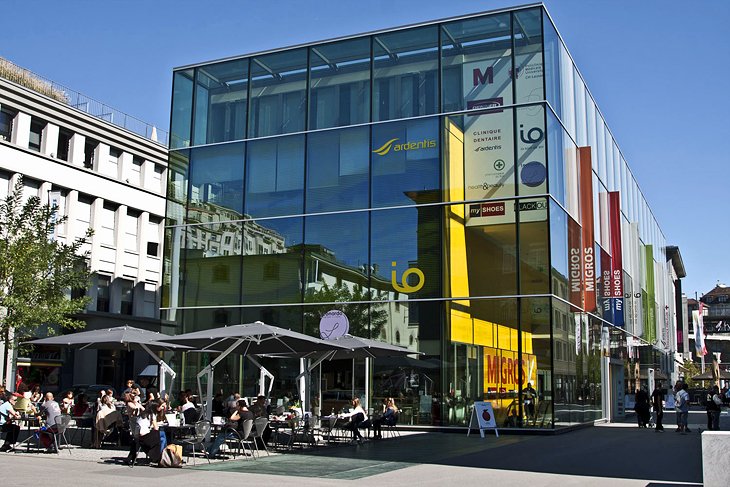
In Lausanne's ultra-contemporary new art and leisure zone, designer-architects have created buildings that are not just 21st-century but border on futuristic. The former area of 19th-century warehouses is now a lively quarter of dramatic and colorful buildings filled with shops, restaurants, business offices, designer galleries, and artists' studio space. Its central avenue opens into plazas where locals gather in good weather in cafés and on benches under a giant abstract tree.
The entire area seems constantly alive: in the winter, an open space becomes a skating rink, and at night, the buildings are dramatically lighted. As if to underscore the quarter's dynamic and forward approach as well as Lausanne's position as one of Europe's greenest cities, Flon metro station has a lush green roof, which you can see best from the footbridge connecting the station to the Lausanne Palace Hotel, above.
Climb the Sauvabelin Tower for the Views
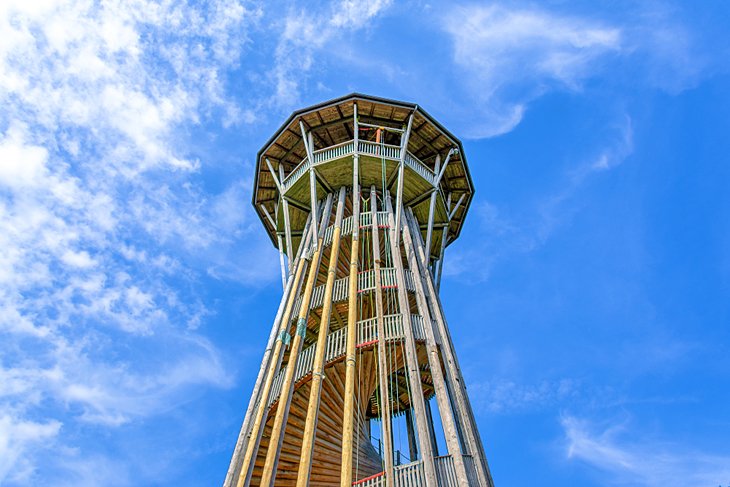
Built to mark the turn of the millennium, the 35-meter Sauvabelin Tower stands in the middle of a forest on a hill above Lausanne. Constructed of locally harvested wood, mainly Douglas fir, this unusual round structure is filled by a wide spiral staircase of 302 steps, leading to an observation deck high above the treetops.
From this vantage point, the 360-degree view encompasses the city of Lausanne, Lake Geneva, the Swiss Alps, and into the Jura region. The tower is built in a park with a small lake, where you can take boat rides, and there is a playground and a small animal park for children. The park and tower are free, and from March through October the tower is open until 9pm. It's a favorite place to watch the sunset.
Address: Sauvabelin, 1018 Lausanne, Switzerland
A Day in Vevey
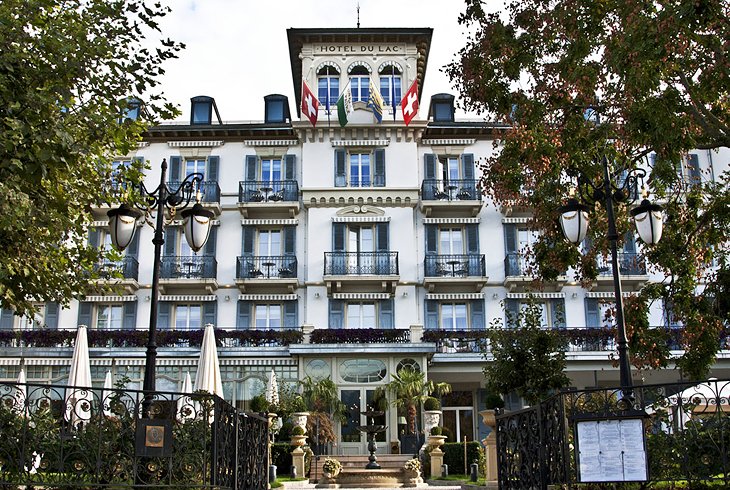
Vevey sits on Lake Geneva's shore beneath Mont Pèlerin and the 1,364-meter Plèiades, and in the 1800s became a major destination for affluent tourists. Its buildings are a harmonious blend of medieval, 19th-century, and Belle Epoch, and its waterfront is still lined by elegant hotels. Foremost among these is the beautiful Hotel du Lac, the setting for the Booker prize-winning novel of that name, which was written there.
The Grand Place, an unusually large market square, is the scene of a market of local produce, flowers, and handiwork on Tuesday and Saturday mornings. Surrounding streets are lined by small shops, boutiques, and galleries of art and works by local craftspeople, a good place to go shopping.
Near the monument to resident Charlie Chaplin is the outstanding Alimentarium, a fascinating interactive museum of the history of food. Its lively exhibits explore the history of cooking, examine food sources and production, consider flavors and what makes foods appealing, and showcase some eccentric food-related collections. Standing out from the lake in front of the museum is a giant metal fork.
Address: Quai Perdonnet 25, Vevey
Lausanne-Vidy Roman Museum
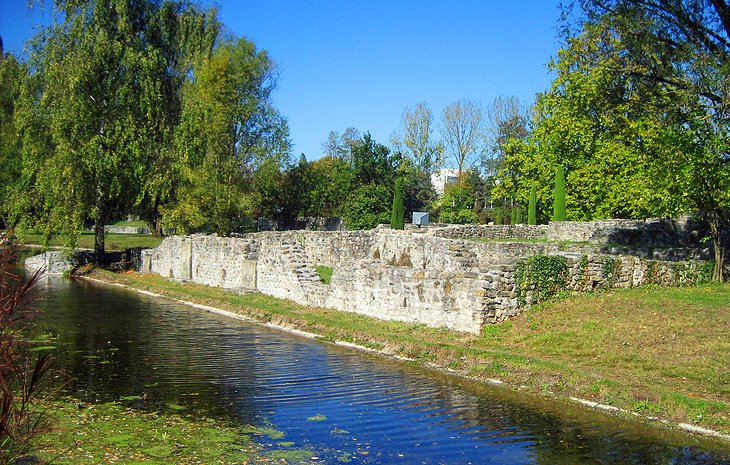
In Roman times, Vidy, west of Ouchy along the lake shore, was the port of Lousonna, an important trading colony at the intersection of routes from the Mediterranean and the Rhine. The city of 1,500 to 2,000 traders, fishermen, and craftspeople thrived from the late first century well into the fourth, and their story is told at the Roman Museum.
Here, you'll see the remains of a wealthy residence, with painted rooms, an atrium, and luxuries such as heated floors. Through exhibits based on the artifacts unearthed here - bronze objects, coins, ceramics, glass, and household implements - you can get an idea of daily life in a Roman outpost two millennia ago. An archaeological walk takes you among the ruins of Lousonna's ancient forum.
Address: Chemin Bois de Vaux 24, Lausanne
Ride the Rochers-de-Naye Railway
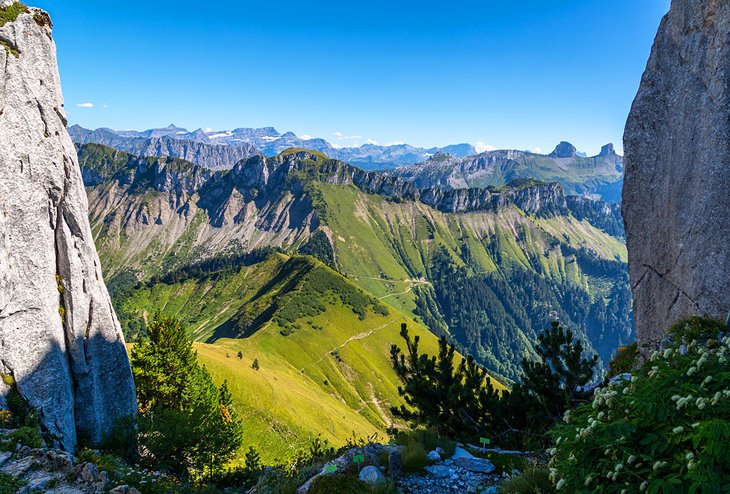
From Montreux, you take the Rochers-de-Naye Railway, an electrically operated rack railway to the mountaintop of the Rochers de Naye. The line operates via the village of Glion, on the mountainside above Montreux, where it connects with the Territet-Glion funicular, which begins close to Chateau Chillon.
At the summit, along with breathtaking views and skiing in the winter, are precipitous Alpine gardens filled with rare flowers and a Marmot house where you can watch and learn about these Alpine mammals. The summit is especially beautiful in May when the daffodils bloom; the café there is a good place to try raclette, an Alpine Swiss specialty.
Above the station in Glion is the opulent Hotel Victoria with a restaurant on its vine-draped terrace high above the lake. You can link to the Rochers-de-Naye Railway through the GoldenPass, a series of rail lines between Bern and Lake Geneva that bring back the 19th-century elegance of rail travel.
Admire the Windows at St. François Church
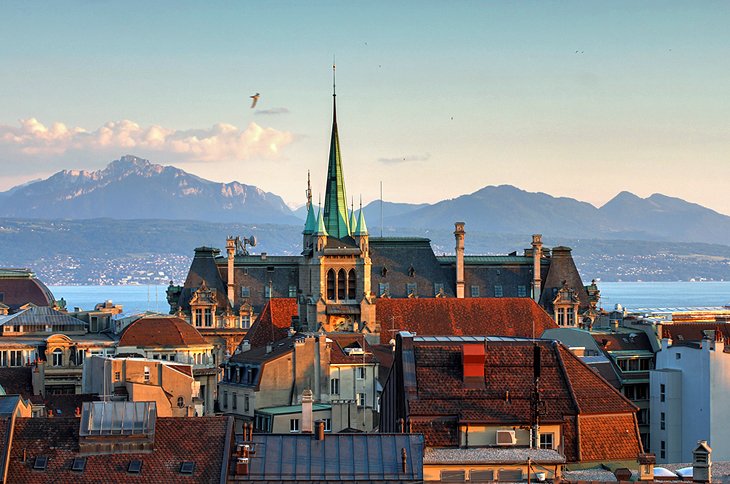
The hub of Lausanne's traffic is the Place St.-François, where you'll find the former Franciscan church of St.-François. The church dates from the 13th and 14th centuries; its tower was built in 1523. Be sure to see the beautiful stained-glass windows in the choir, which date from 1907.
The church was once part of a major Franciscan convent, which was dissolved in the Protestant Reformation, at which time the church interior was stripped of its decorations and imagery. Lausanne's Christmas market is held in the street here.
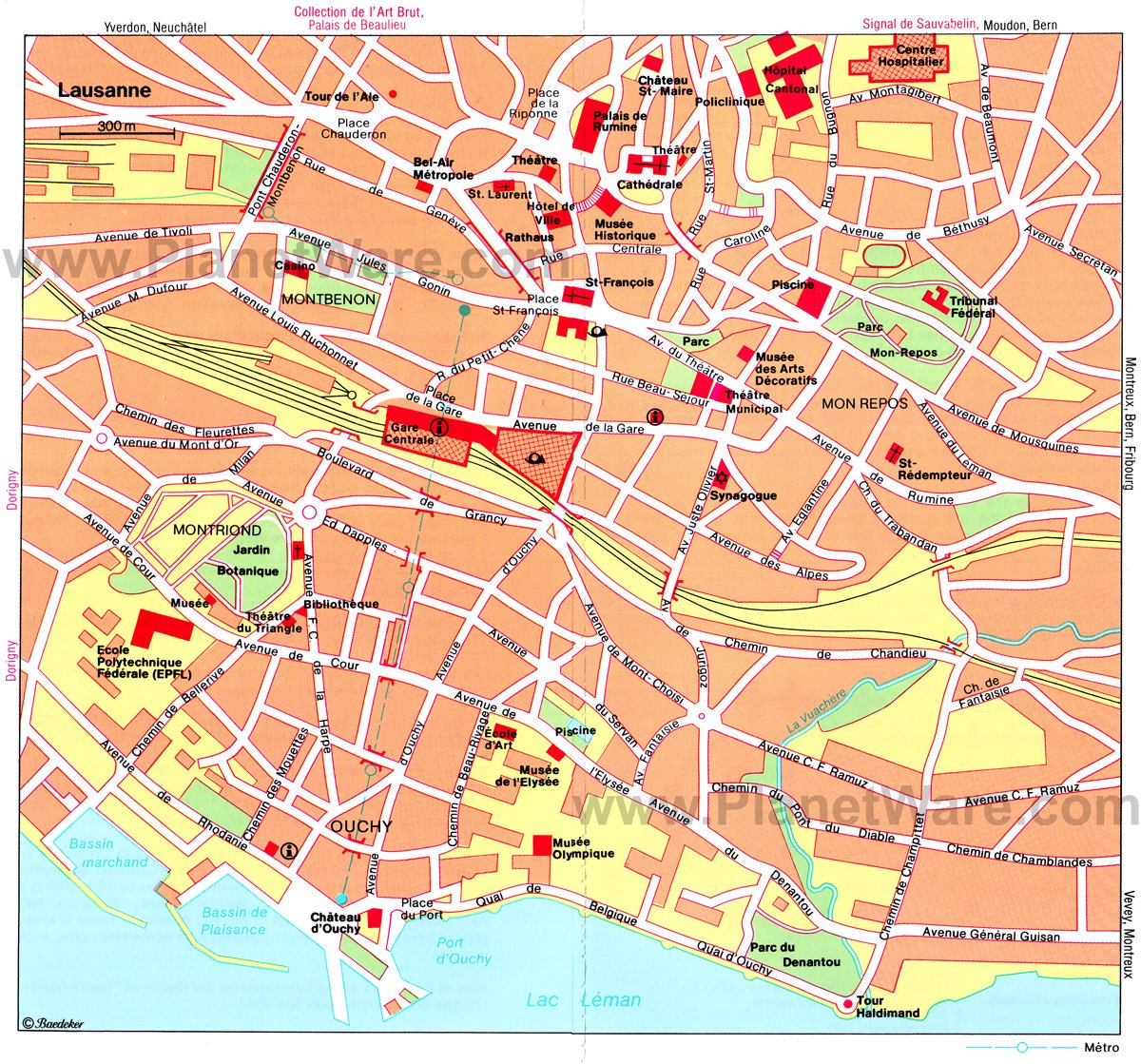
Map of Attractions & Things to Do in Lausanne