17 Top-Rated Attractions & Things to Do in Interlaken
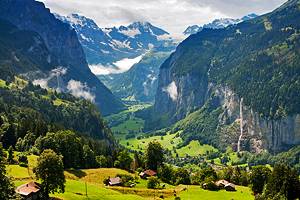
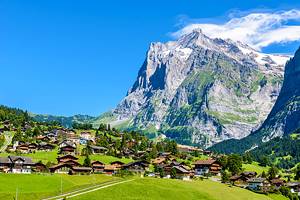
Interlaken is a fantastic base for seeing the best of central Switzerland's magnificent scenery while enjoying the comforts of a chic lakeside resort. Tourist attractions are all around it, with boat tours on Lakes Thun and Brienz at either side of the town and thrilling train and funicular rides to the spectacular surrounding mountain peaks.
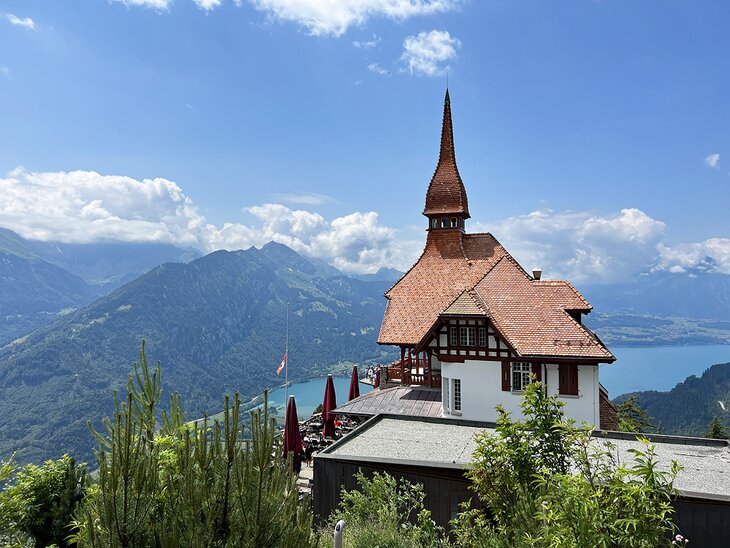
Interlaken is one of the oldest, best known, and most popular summer holiday resorts in Switzerland. The first visitors arrived in the 17th century, and as transport facilities improved with the coming of the railroad, boat services on the lakes, and most recently the expressway, Interlaken became the major tourist center of the Bernese Oberland.
Day or night, you'll find plenty of things to do in and around Interlaken. Along with the almost endless variety of walks, climbs, and outdoor excursions, there are many other sports available for active travelers. On the right bank of the Aare, opposite the Kursaal, is a swimming pool, and visitors will find a golf course in Unterseen, as well as sailing and windsurfing on the lakes, paragliding, horseback riding, and tennis.
Above all, Interlaken is a perfect base for exploring the region and its spectacular mountains. You'll have no trouble finding places to visit using this handy list of the top attractions and things to do in Interlaken.
See also: Where to Stay in Interlaken
- 1. Harder Kulm
- 2. Höhematte Park & the Höheweg
- 3. Hike the Schynige Platte Trails
- 4. Cross the Panoramabrücke Sigriswil (Sigriswil Panorama Bridge)
- 5. St. Beatus Caves and Waterfalls
- 6. Unterseen
- 7. Paragliding
- 8. Swiss Open-Air Museum Ballenberg
- 9. Cruise on Lake Thun
- 10. Kayak on Lake Brienz
- 11. Giessbach Falls
- 12. Niederhorn
- 13. Ride the Historic Brienzer-Rothorn Railway
- 14. Tourismuseum (Museum of Tourism)
- 15. Walk to Unspunnen Castle
- 16. Interlaken Monastery and Castle
- 17. Day Trip to Jungfraujoch (Top of Europe)
- Where to Stay in Interlaken for Sightseeing
- Interlaken, Switzerland - Climate Chart
1. Harder Kulm
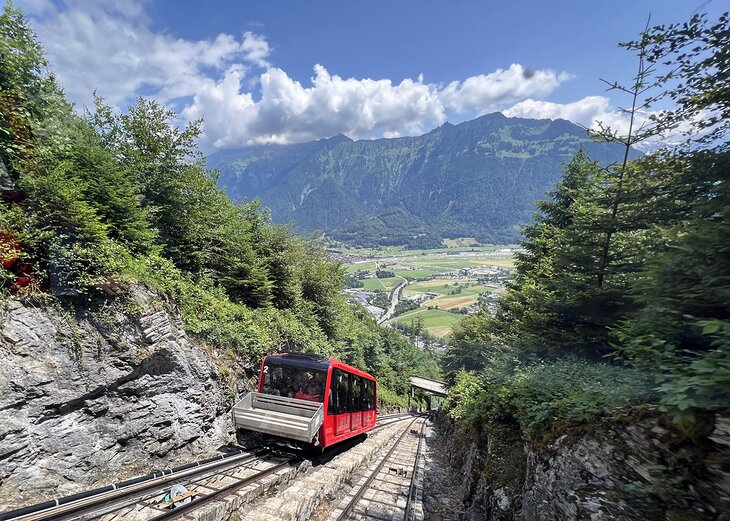
After making the journey to Interlaken, stretch your legs out on the Harder—a 1,322-meter mountain that overlooks the resort town and its sparkling lakes.
It's possible to hike to the summit via a steep path from the Harderbahn station, but unless you're an avid trekker, you might be better off saving your energy and zipping to the Harder Kulm station on a century-old funicular in just 10 minutes. The near-vertical railway incline will make you appreciate you took the ride instead of hoofing up on foot.
From there, you can start your walk on a short, uphill brick path with magnificent views of the scenery. It's hard not to smile when you see the whimsical wooden statues of people yodeling in traditional mountain garb and waving the red-and-white Swiss flags that flank the walkway. Plus, they make postcard-worthy photo subjects.
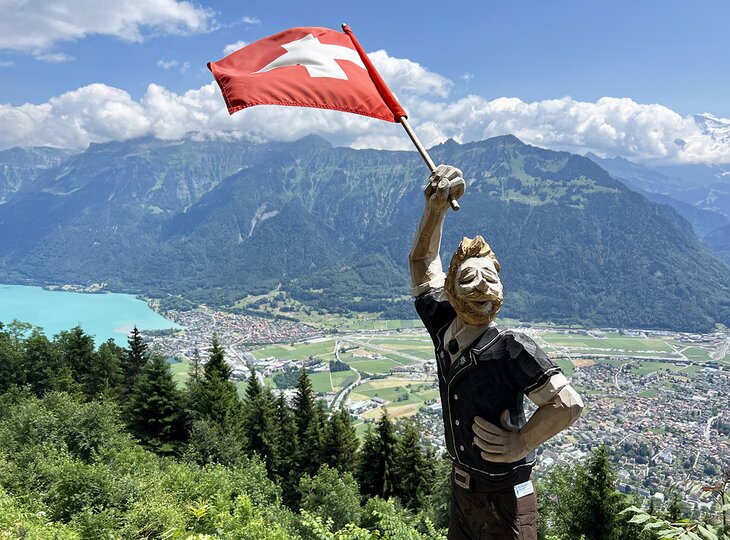
At the end of the brick path, bear right to begin the Harder Kulm Circular Path. The hour-long hike takes you through a shady mountain forest, where morning mist hovering over the moss and leaves creates a dreamy atmosphere. The trail eventually opens up to an expansive panorama of Lake Brienz, Lake Thun, and the Alps, before taking you back to the trailhead. It's the perfect introduction to the "Adventure Capital of Europe."
It's worth taking the hike shortly before lunchtime because the trail drops you off right in front of the castle-like Harder Kulm Panorama Restaurant, where you can fuel up with cheese fondue, potato rosti, grilled meats, and Alpine-style macaroni.
From here, you can also stand atop the Zwei-Seen-Steg (Two Lakes Bridge) viewing platform and snap the perfect Interlaken selfie. Don't just look out, though—look down as well. The glass-bottomed floor will give you another vantage of the lakes below.
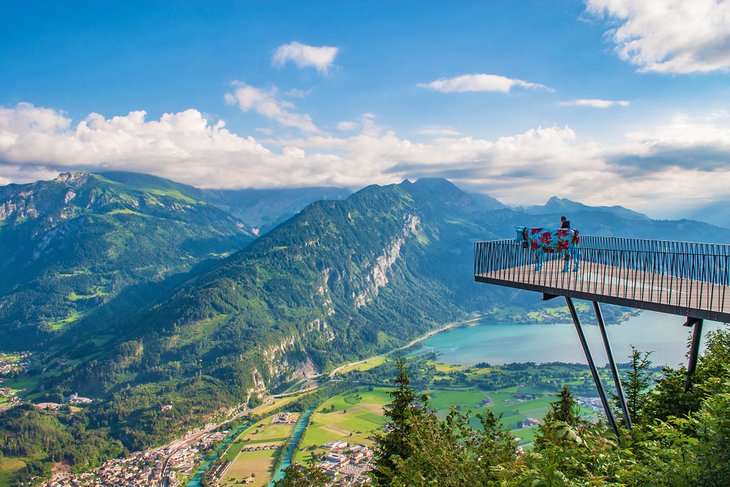
Want to see some of the local animals who make this landscape their home? Swing by the Alpine Wildlife Park near the base of their Harderbahn. The free zoo gives tourists the chance to get up close to stately ibex and fuzzy marmots.
2. Höhematte Park & the Höheweg
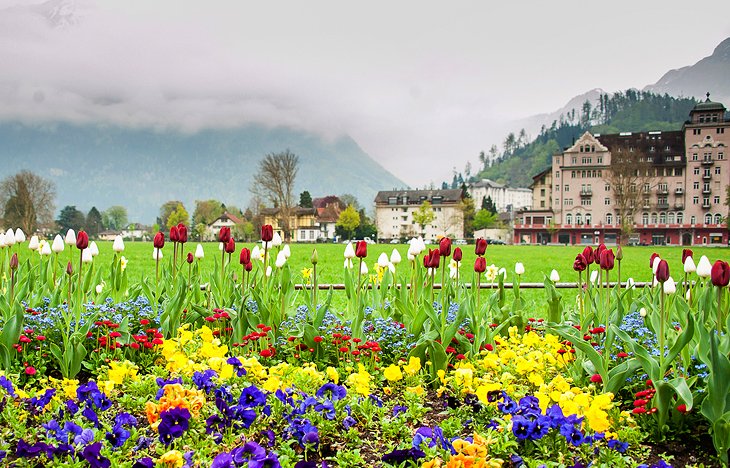
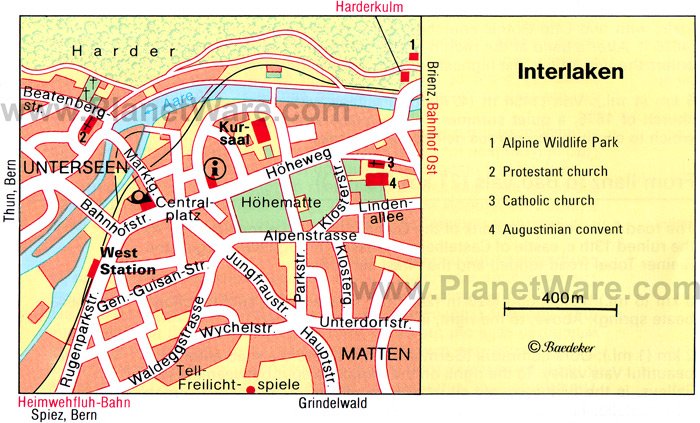
An area of 14 hectares in the heart of Interlaken that belonged to the Augustinian convent was acquired in 1860 by a group of 37 hotel owners and private citizens to be left as an open space, a remarkable example of farseeing town planning.
Through its length runs the Höheweg, a splendid avenue between the east and west rail stations that affords a magnificent view of the Jungfrau, surrounded by hotels and flower beds. Alongside it is the Kursaal, with a theater and a café and beautiful gardens with a flower clock, as well as a number of hotels, including the 150-year-old Victoria Jungfrau Hotel, itself a local landmark.
Next to the Hotel Interlaken, you'll find the small Garden of Friendship, the first Japanese garden in Switzerland, a peaceful spot with flowering plants, water, and koi carp. The garden was a gift from Interlaken's Japanese sister city, Ōtsu.
The park is the preferred landing spot for hang gliders—one of the most popular of the many adventures you can enjoy in Interlaken. For the less adventurous, horse-drawn carriages park along the street in front of the park.
In the winter, the Höhematte transforms into Ice Magic, with five rinks connected by ice ramps. Rinks are for all levels of skater, with an ice-skating rink that's comfortable for beginners, but with plenty of space for faster skaters and a curling rink where you can try your hand at this sport that's very popular in Switzerland.
3. Hike the Schynige Platte Trails
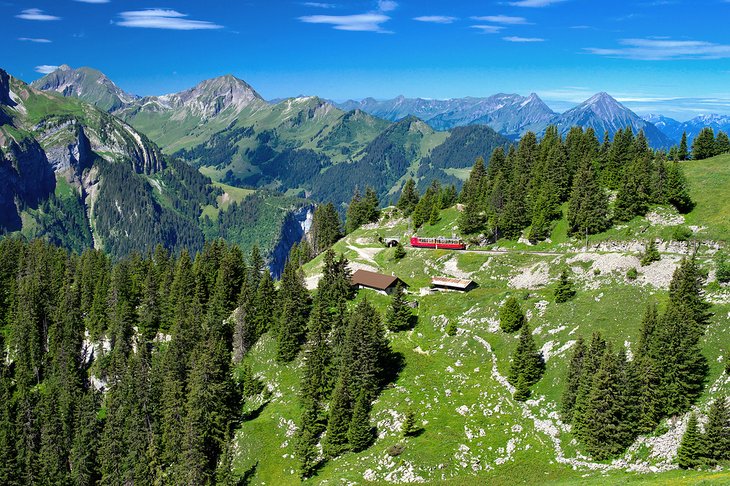
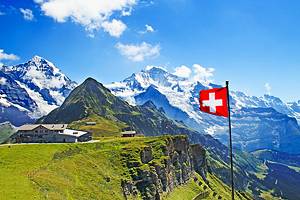
From Wilderswil, a five-minute walk from the Interlaken Ost railway station, you can take a rack-railroad that has been carrying sightseers up to the Schynige Platte—a mountain flank that gets its name from its reflective wall of slate—since it opened in 1893. The hour-long ride is a series of ever-changing Alpine panoramas, and at the top, you'll find one of the finest panoramic views of the Alps, encompassing the Eiger, Mönch, and Jungfrau peaks as well as Lake Thun.
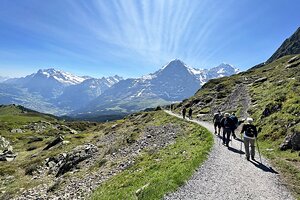
The views get even better from the trails that begin at the top. The easiest of these, with a succession of spectacular views, is the 45-minute hike to the Daube Viewpoint. Lake Thun lies far below, surrounded by snowcapped peaks. Take a picnic and savor the moment before continuing the rest of the loop, bringing you back to the Schynige Platte station.
The Oberburghorn Trail continues from the Daube Viewpoint, making an even longer -- about three-kilometer - loop along a mountain ridge with 360-degree views. This easy-to-moderate trail is fairly level, and the views are even better than the shorter loop. There's a steep wooden staircase to the viewpoint at the very top, well worth the climb. A third loop, the Loucherhorn Trail, adds about three kilometers and more views, circling a bit lower past green Alpine meadows and grazing Brown Swiss cows.
Near the station is a beautiful Alpine Botanic Garden, with 600 species of flowers and other plants that can survive and thrive in this high-altitude environment. It puts 720 individual plants on display in 16 distinct habitats, ranging from lime-free soils and windy corners to little snowy valleys. If you're lucky there may be locals playing traditional Swiss Alphorns at the Schynige Platte station.
4. Cross the Panoramabrücke Sigriswil (Sigriswil Panorama Bridge)
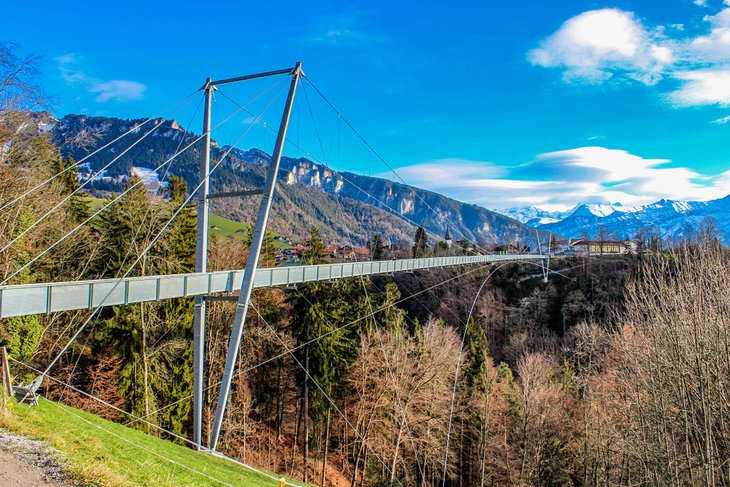
The view down into the Gummischlucht gorge, 182 meters (600 feet) below, as you cross the new suspension footbridge is one you won't forget. The bridge above Lake Thun is 330 meters (more than 1,000 feet) long, and is one of three suspension bridges on the popular Lake Thun Panoramic Circular Trail connecting mountain and shoreline paths around the lake.
Panoramic views from the bridge and trail include the Eiger, Mönch, and Jungfrau, and surrounding peaks of the Bernese Alps. The villages of Sigriswil and Aeschlen, at either end of the suspension bridge, are both charming places to visit, as well.
There's a lovely farm stand just over the bridge in Sigriswil, where you can pick up local snacks and fresh produce for a picnic.
5. St. Beatus Caves and Waterfalls
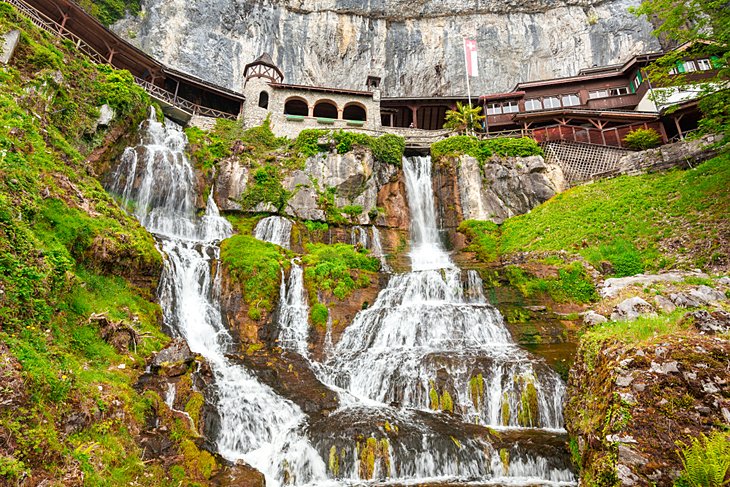
More than one kilometer of walkways lead through the chambers and passageways of the hillside St. Beatus Caves, where legend holds that a dragon took shelter when hunted by the monk, Beatus, whose hermitage was nearby.
But the geology is no legend, and you can tour these underground caverns to see mirror lakes, underground waterfalls, stalactites, and stalagmites accompanied by a guide or at your own speed using a descriptive app. The entire area is quite beautiful, with a series of waterfalls cascading down the cliffs.
You can get here by bus from Interlaken (it's about a 10-minute walk from the bus stop) or by boat from Interlaken West station, but it's quite a steep climb from the lake to the caves.
St. Beatus Caves regularly hosts interesting events, like concerts and candlelit raclette dinners, so check the calendar to see what's coming up during your trip.
Address: Sundlauenen, Interlaken
6. Unterseen
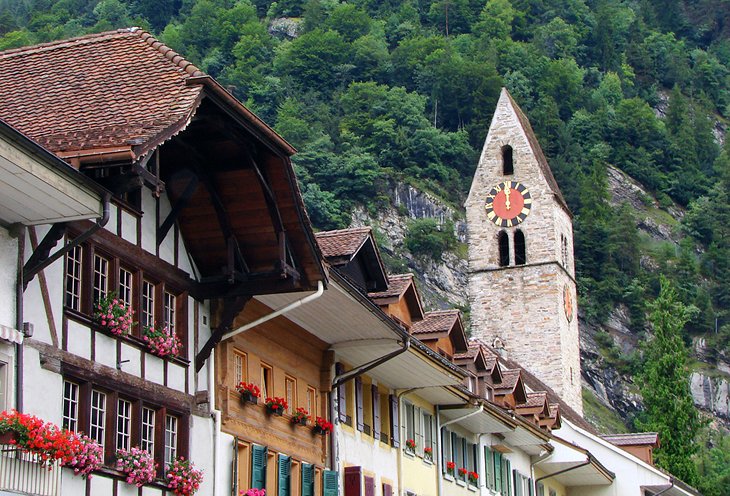
The Marktgasse runs northwest from the Interlaken post office and across the Spielmatten islands and the river to the little hamlet of Unterseen, at the foot of Mt. Harder. This is one of several villages that form Interlaken, and in this old part of town is the 1471 parish church, with a Late Gothic tower.
In this neighborhood, you'll find some beautiful wooden chalets of the kind you'd expect to see in tiny mountain villages, not in a busy resort center like Interlaken. Set in green gardens, these may even have farm animals grazing on the lawns. Small restaurants around the pretty Stadthausplatz serve traditional Swiss dishes.
7. Paragliding
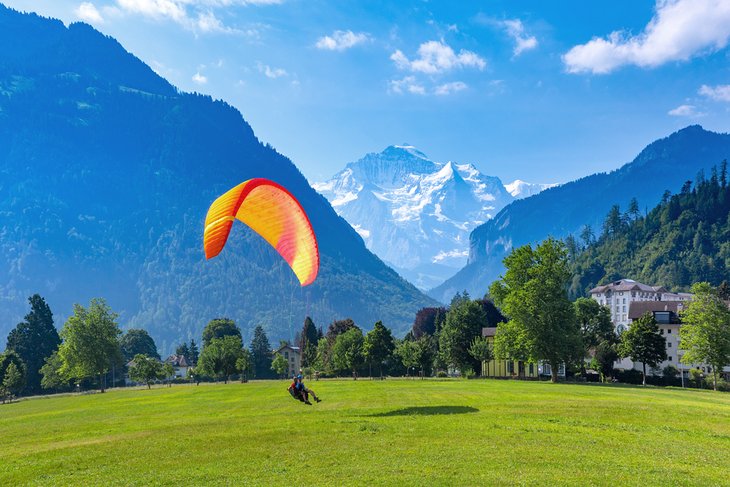
You won't be in Interlaken long before you'll see the bright-colored parachutes of paragliders in the sky or landing in Höhematte Park. Flying through the Alpine air with a 360-degree panorama of the snow-covered Alps above the lakes and lush green meadows is an unforgettable experience. It's no wonder it is one of the most popular things to do in Interlaken.
You'll have your choice of several paragliding outfitters, and if this is your first flight, you will be paired with an experienced guide. Try a Tandem Paragliding Experience from Interlaken. Taking to the air is simple: from a mountainside slope, you simply run downhill until the wind lifts you off the ground. The mountains are all around, and Interlaken stretches below as you glide.
Those who prefer their aerial adventures a little closer to the ground can find thrills at Interlaken Ropes Park, where ziplines, swings, wooden bridges, and rope courses provide fun for families in a forest setting.
8. Swiss Open-Air Museum Ballenberg
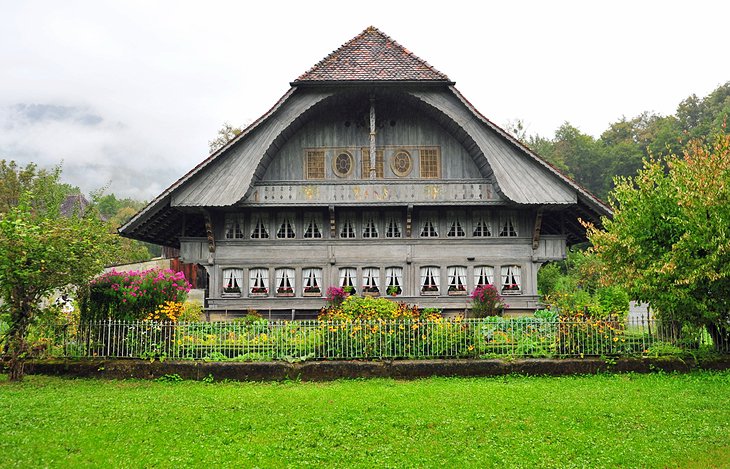
A 20-minute drive or 40-minute train ride from Interlaken is one of Europe's finest living history museums. Ballenberg spreads across 124 acres of alpine countryside in a series of village and farmstead groups representing different Swiss regions and their traditional ways of life.
Historic houses, barns, shops, and other buildings were brought here from their original sites, with their furniture, decorations, utensils, and implements. Old crafts and traditional customs are revived here, and in a visit, you may see everything from woodcarving and cooperage to lace- and cheese-making demonstrations.
The homes represent all styles from the most modest cabins and rustic farmhouses to elegant homes of the well-to-do, but the focus is on how people lived, how they produced their own goods, and how they traded and shared within their communities. Special exhibits may examine one facet of life in detail, such as child labor on farms or a particular craft and its evolution.
You could easily spend an entire day seeing all the buildings and exhibits in this fascinating look back in time. Ask at the Interlaken Tourist Office for information on packages that include boat and bus travel from Interlaken to Ballenberg.
Address: Museumsstrasse 131, Hofstetten bei Brienz
9. Cruise on Lake Thun
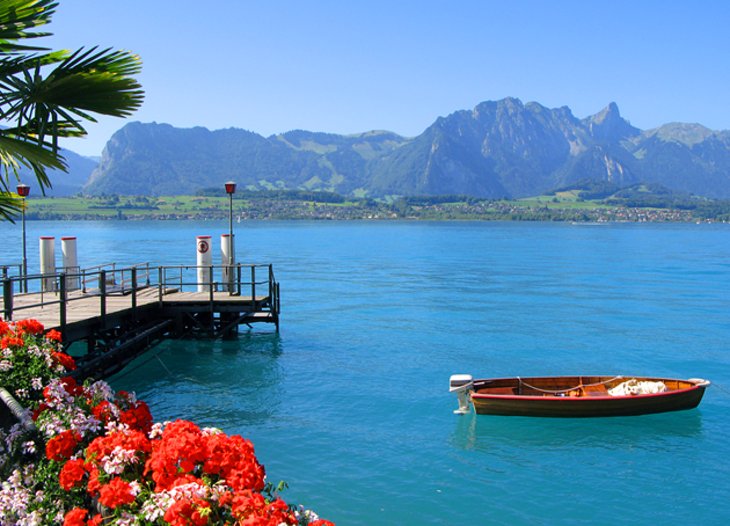
On the west side of Interlaken is Lake Thun, a long, narrow lake surrounded by mountains. The best way to explore the lake is on one of the cruise boats that operate from Interlaken year-round or in the summer on the beautifully restored historic paddle steamer.
At the western end of the lake, you can stop in Thun with its medieval Old Town and lakeside castle with a striking keep that overlooks the lake. It was built in 1191 and enlarged in 1492, and today houses a historical museum with 14th-century arms and armor, tapestries, furniture, and prehistoric and Roman artifacts.
Other castles and several Romanesque churches are in villages that dot the shore of Lake Thun. Schloss Shadau, easy to spot right on the water, is a smaller replica of Chateau Azay-le-Rideau, on the Loire in France.
10. Kayak on Lake Brienz
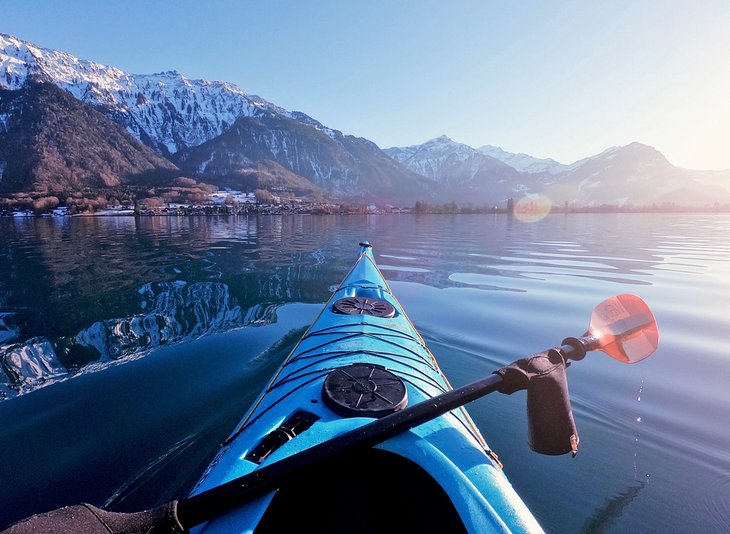
On Interlaken's east side is Lake Brienz, a narrow body of water that's really an enlargement of the valley of the River Aare. Lying between the limestone ridge of the Brienzer Grat and the Faulhorn mountains, it is seven meters higher than Lake Thun, on Interlaken's west side.
Like Lake Thun, Brienz is popular with boaters of all sorts, and you can rent kayaks, row boats, and pedalos to explore the lakes on your own. Or you can see the lake from one of the five boats that connect Interlaken to towns around its wooded shores.
The most atmospheric of these boats is the restored steamer the Lötschberg, built in 1914; other boats offer special dining cruises with Swiss food specialties.
11. Giessbach Falls
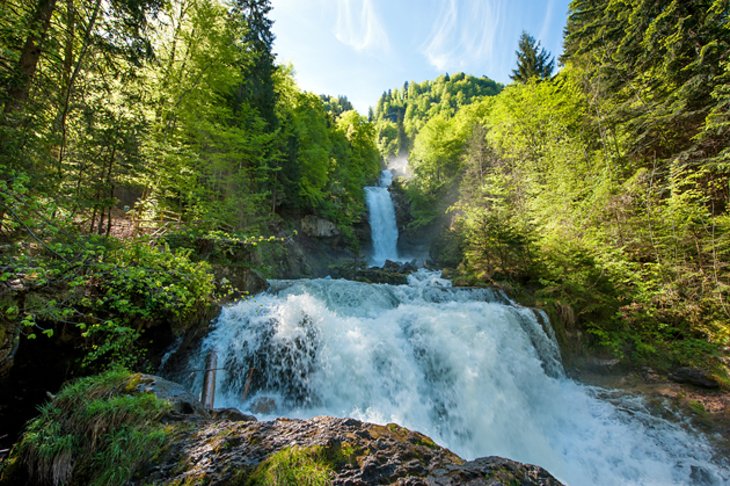
To reach Giessbach Falls, take the Lake Brienz boat to the Giessbach See landing stage and either climb for about 20 minutes or take the oldest funicular railway in Europe. The Giessbach tumbles down the beautifully wooded hillside to the lake from a height of 500 meters, in a series of 14 falls over successive rock ridges.
The best view is from the terrace in front of the historic Grand Hotel Giessbach, about 100 meters above the lake. There are footpaths up both banks to the highest of the three bridges, where the stream emerges from a narrow gorge and plunges into a rock basin 60 meters deep.
12. Niederhorn
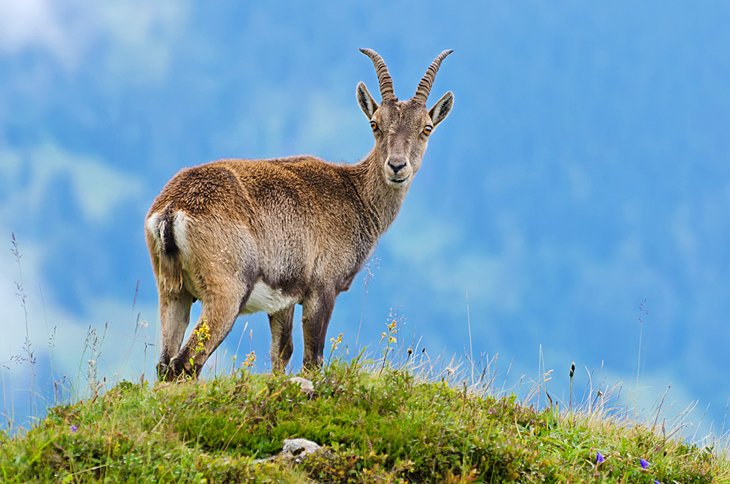
From the town of Beatenberg, a short bus ride from Interlaken, you can reach one of the most spectacular viewpoints in the Bernese Oberland (which has plenty of them to offer). A cable car takes you up to a halfway station, where a funicular continues up the Niederhorn to a restaurant and view across Lake Thun and the Alps.
Along with its scenery, the Niederhorn is known especially for its nature and wildlife. It's home to ibex, marmots, mountain goats, golden eagles, deer, and even the rare cuckoo. Weekly wildlife tours guided by a local wild animal specialist include visiting wild ibex colonies. You can rent unique stand-up scooter-type bicycles for the descent, and the Niederhorn is a favorite place for hang gliding, as well.
13. Ride the Historic Brienzer-Rothorn Railway
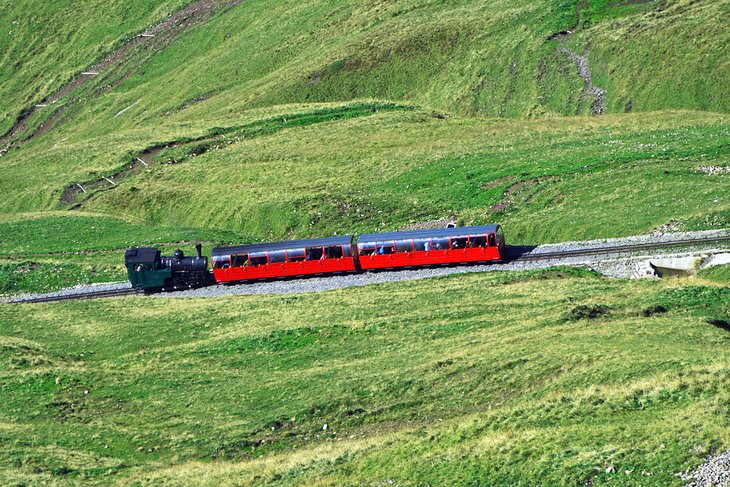
The lakeside town of Brienz is the center of the Oberland craft of woodcarving, examples of which you can see in shops and studios and on houses with beautifully carved friezes on the facades. Above the town rises the 2,350-meter Brienzer Rothorn, reached in about an hour via Switzerland's oldest steam rack railway, the Brienz-Rothorn Railway.
From the top are views of the Appenzell, Uri, Engelberg, Berne, and Valais Alps extending from Säntis to the Diablerets. Wear hiking boots, and you can take a four-hour hike to the Brünig Pass, returning to Brienz by the Brünigbahn. Built in 1888, this is the smallest rack-and-pinion railroad of the Swiss network.
14. Tourismuseum (Museum of Tourism)
The history of tourism in the Jungfrau Region is shown at the Tourismuseum in three floors of exhibits that cover everything from early transport and hotels to travel clothing and skiing. Housed in a lovely restored 17th-century timbered house, the museum includes models of early postal coaches, rack railway locomotives, bicycles, and lake steamers, as well as actual historical carriages and vehicles.
Exhibits also use historical photos and art to show how tiny, often remote villages were able to develop and thrive by attracting tourists to experience their landscapes, folk traditions, geological wonders, and even local flora and fauna. Many of the exhibits are labeled in English.
Address: Obere Gasse 26, Unterseen, Interlaken
15. Walk to Unspunnen Castle
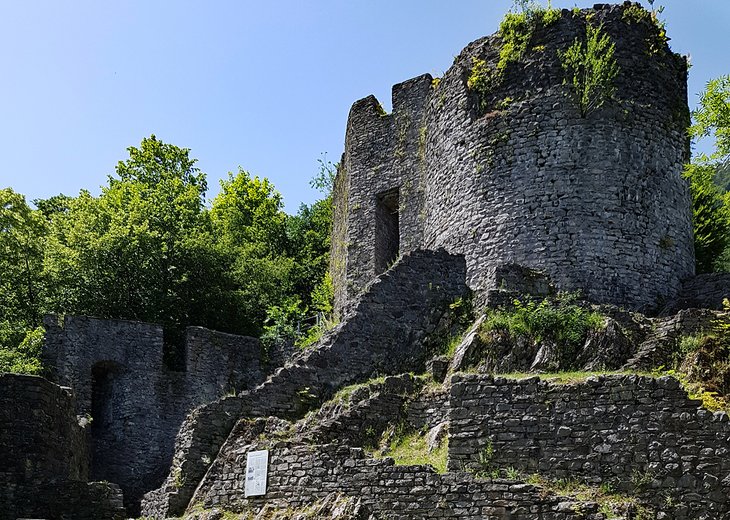
An easy walk of about 1.5 kilometers from Wilderswil train station, and only about three kilometers from central Interlaken, is the romantic ruin of Unspunnen Castle. Its history is recorded back to the early 1200s, and although its builder is unknown, it was the center of a baronial fief in the 13th and 14th centuries.
Along with the nearby Rothenfluh, Unspunnen guarded the medieval Lütschinenbrücke bridge at Gsteig. Some sources hold that these ruins inspired Lord Byron to write his poem Manfred, and it is true that much of it was written during his travels through the Bernese Alps in September of 1816.
You can walk on to Rothenfluh Castle, which was built into the side of a cliff. There is very little left of it, but signboards explaining its history are in English.
16. Interlaken Monastery and Castle
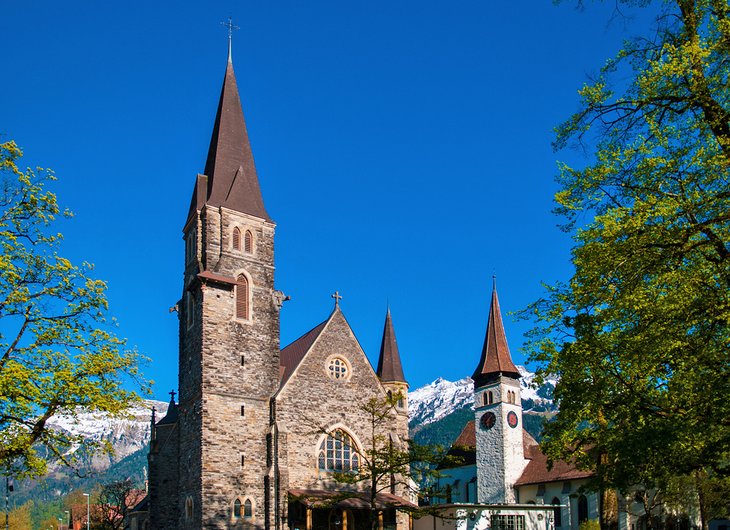
Interlaken's former Augustinian monastery dates to the 12th century. You can see the 14th-century bell tower along with a Gothic cloister and remains of a chapel dating from 1452. Notice especially the variety of window designs in the castle church.
Before the property was turned over to the state in the 16th century during the Protestant Reformation, the monastery was an important hostel for pilgrims headed to the former hermitage of Saint Beatus, believed to have been in the caves above Lake Thun. These caves were a stop for pilgrims on the Way of St. James, known in Switzerland as the Jakobsweg, leading to Santiago de Compostela in Spain.
17. Day Trip to Jungfraujoch (Top of Europe)
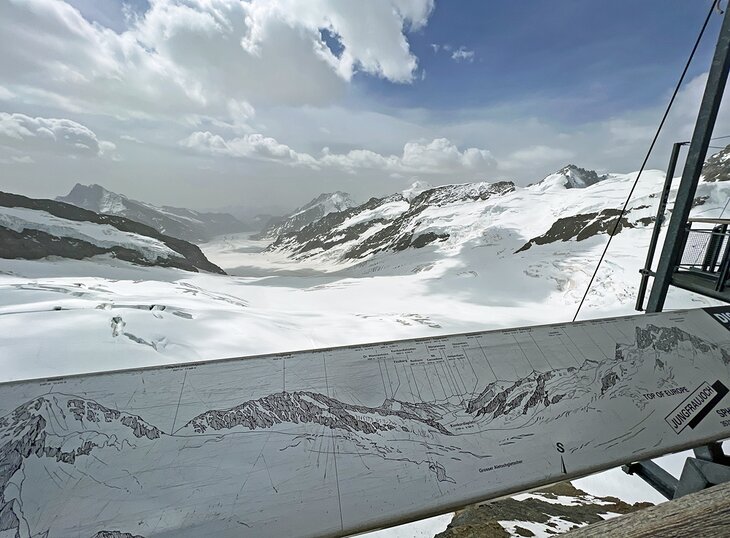
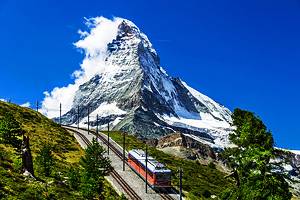
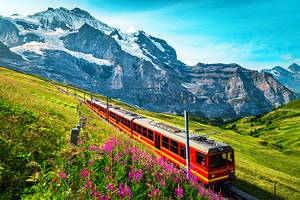
Interlaken is just a short ride away from one of Switzerland's top attractions, Top of Europe (also called Jungfraujoch). Take the 45-minute train ride to Grindelwald (or opt for the Jungfruajoch Top of Europe Day Trip from Interlaken Tour) to hop on the Eiger Express, a highly sustainable tricable gondola that opened in late 2020, to make your way to the highest railway station in Europe.
At the top, you can step out onto a snowy expanse more than 3,450 meters above sea level and gaze out upon the magnificent Swiss Alps and the Aletsch Glacier, just as tourists have done since the railway station opened in 1912.
Between the thin air and the awe-striking vistas, it's a dizzying experience that will stick with you. Don't miss out on other things to do at the Jungfraujoch, including slipping your way through the Ice Palace, which is frozen from floor to ceiling and filled with ice sculptures; and seeing the museum-like exhibitions on how miners built this railway using relatively simple handheld tools more than a century ago.
Where to Stay in Interlaken for Sightseeing
The best place to stay in Interlaken is along the Höheweg, the avenue that runs through expansive green space and connects Interlaken's East and West train stations. Many of the best hotels lie along this lovely stretch, which offers beautiful views of the Jungfrau. Within walking distance of the town of Interlaken, over a bridge across the Aare River, the little village of Unterseen also makes a popular base. Here are some highly-rated hotels in these convenient locations:
Luxury Hotels:
- In a prime position on the beautiful Höheweg and a short walk from Interlaken East train station and the town center, Hotel Royal St. Georges Interlaken - MGallery Collection occupies a beautiful old building.
- A lovingly preserved 1897 villa set in a romantic garden and stylishly decorated with a mix of antique, modern and contemporary furniture and artworks, Maison Bergdorf is a six-minute walk from the Höhematte and several restaurants.
- In Unterseen, a seven-minute walk from Interlaken West train station, Hotel Goldey is known for its friendly staff and lovely setting on the River Aare. Breakfast and parking are included in the rates.
Mid-Range Hotels:
- In the center of town and equidistant from two lake stations Hapimag Resort Interlaken has spacious rooms with large balconies and views of the Alps. Especially good for families traveling with children are the two-room suites, and the pool with water jets and a slide.
- On the Höheweg, the Hotel Interlaken sits a short walk from Interlaken East train station and the town center and offers cozy guest rooms behind its charming green-shuttered facade. Breakfast and parking are included.
Budget Hotels:
- Also on the Höheweg, the Art Nouveau-style Carlton-Europe Hotel is a short stroll away from Interlaken East train station, as well as many restaurants.
- Hotel Chalet Swiss in Unterseen is a few minutes' walk from Interlaken West station and close to several restaurants. Relax in the sauna/hot tub or explore Interlaken on the complimentary bicycles.
- Also in Unterseen, Hotel Roessli has helpful staff and clean, comfortable rooms, as well as complimentary breakfast and parking.
Interlaken, Switzerland - Climate Chart
| Average minimum and maximum temperatures for Interlaken, Switzerland in °C | |||||||||||
| J | F | M | A | M | J | J | A | S | O | N | D |
| 2 -3 | 4 -2 | 9 1 | 12 4 | 18 8 | 21 12 | 24 14 | 24 14 | 20 11 | 14 7 | 7 2 | 3 -1 |
| PlanetWare.com | |||||||||||
| Average minimum and maximum temperatures for Interlaken, Switzerland in °F | |||||||||||
| J | F | M | A | M | J | J | A | S | O | N | D |
| 36 27 | 40 29 | 49 34 | 54 39 | 64 47 | 70 54 | 75 57 | 75 57 | 68 51 | 57 44 | 45 35 | 38 30 |
| PlanetWare.com | |||||||||||