

Zürich, Switzerland's 12 Most Popular Tourist Attractions Worth Visiting
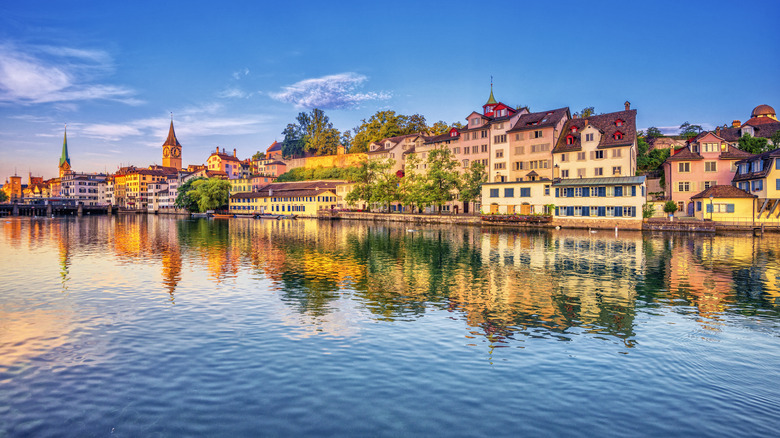
Switzerland brings to mind alpine villages, fresh cheese, dramatic peaks, wooden chalets in flowered meadows, and fluffy cows with old-fashioned bells. Yes, Switzerland has all of these things, but it also has several incredible cosmopolitan cities that hold a candle to any city in Europe, including its dynamic capital, Zurich. Zurich, or Zürich in German, is often dismissed as boring and expensive compared to other European capitals, but that could not be further from the truth. Admittedly, it isn't cheap, but there are ways to mitigate the cost. Zurich is brimming with historic charm, world-class museums, beautiful waterways, excellent cafes, green spaces, and a large selection of free activities. Plus, it provides excellent access to Switzerland's outstanding natural beauty.
Here are 12 of Zurich's most popular attractions that are worth visiting, according to travel experts, Swiss tourism boards, traveler reviews, and personal experience. From Lindt chocolate, to Zurich's own mountain, to lakes and rivers, to architectural marvels, the city has so much to offer. Not only that, Zurich also boasts the world's cleanest air. The city's Zurich Card program allows visitors to access its top attractions and public transportation at a discount, which makes a visit to this incredible city more affordable than you'd expect.
Old Town (Aldstadt)
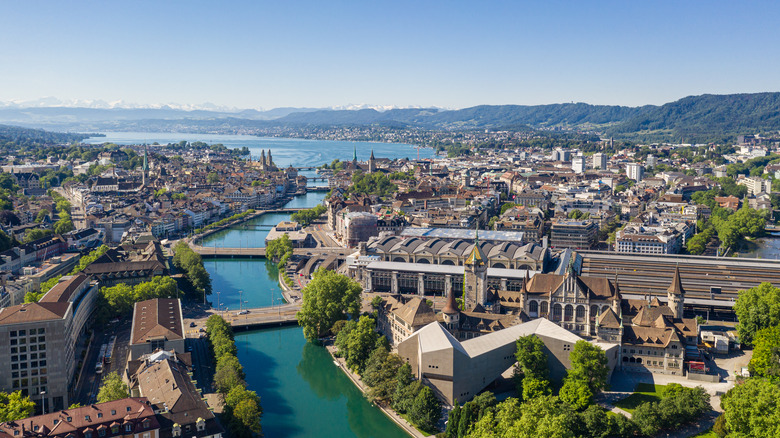
The number one thing to do in Zurich is to get lost in the cobblestoned alleys of the Old Town, or Aldstadt. Zurich is one of Europe's prettiest medieval cities, thanks to its historic district that straddles both banks of the turquoise Limmat River. Several bridges connect the Aldstadt, but the most picturesque is the stone Münsterbrücke bridge, dating back to 1838, when the entire city of Zurich was still essentially the Aldstadt.
Both sides of the river are filled with cobblestoned alleys, historic guild homes, beautiful churches, and plenty of hidden nooks and crannies to explore. On the Limmat's left bank is one of the most charming streets of the city, Augustinergasse, a narrow walkway lined with colorful facades, local boutiques, Swiss restaurants, and cafés serving the best hot chocolate you'll ever have. The right bank is home to the Niederdorf, shortened to Dörfli by locals, where historic charm meets modern Zurich and avant-garde art galleries shake hands with traditional beer cellars. There are several beautiful squares in the Niederdorf for coffee and people-watching, like Hirschenplatz, that also happen to host some of Zurich's best nightlife after the sun goes down.
Historic Churches
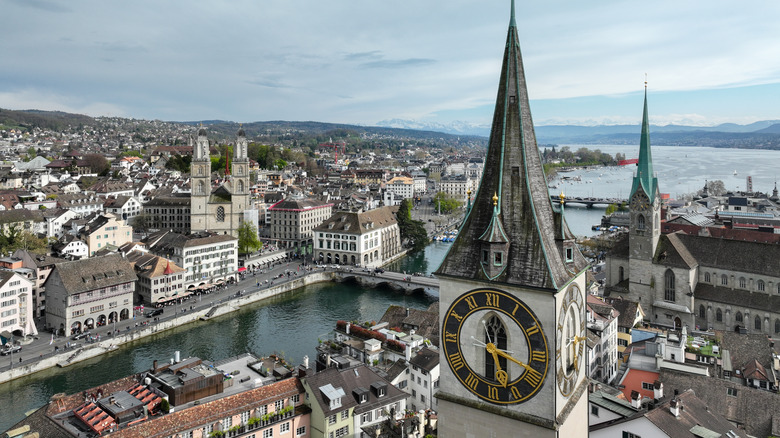
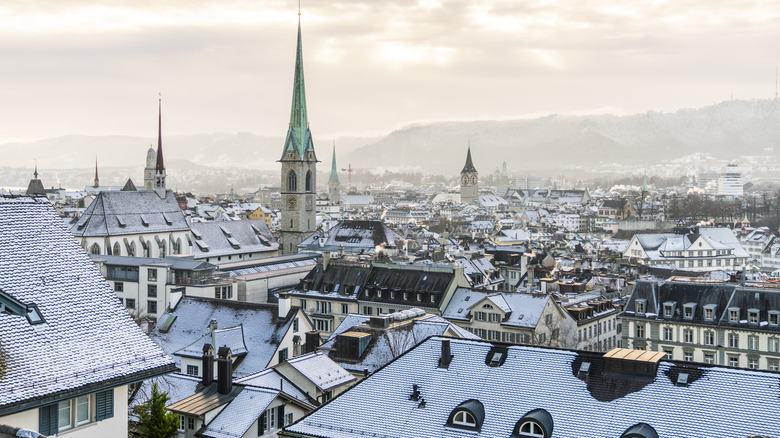
Also of note in Zurich's Old Town are its historic churches. The main four that dominate the skyline are St. Peter's Church, the Grossmünster, the Fraumünster, and Predigerkirche. St. Peter's Church, one of Zurich's oldest churches, was originally built in the 9th century on the site of a former Roman temple dedicated to Jupiter; the ancient foundations are still visible under the altar. St Peter's has the largest clock face in Europe, and its diameter "clocks" in at 25.5 feet. A short walk from St. Peter's on the Limmat's left bank is the medieval Fraumünster, located in the charming Münsterhof square. Originally established as a convent in the year 853, the historic interior is adorned with stained glass windows, designed by famed artist Marc Chagall in the 1960s. The colors change throughout the day depending on the sun's position, but it's best to visit in the morning when the light streams directly through the windows, creating a stunning effect.
Cross the historic Münsterbrücke over the river to what is perhaps Zurich's most recognizable landmark: the twin towers of the 13th-century Grossmünster cathedral. Take note of the ornate bronze doors and stained glass before climbing 187 steps to the top of the tower for amazing panoramas across Zurich. Keep in mind that tickets are required to access the top.
Another distinct feature of Zurich's skyline is the tall and narrow frame of Predigerkirche, or Preacher's Church. The 13th-century church is known for its quaint sundial and its soaring emerald green spire. The church is also a community gathering place that hosts free Sunday lunches and evening concerts.
Lindenhof Hill
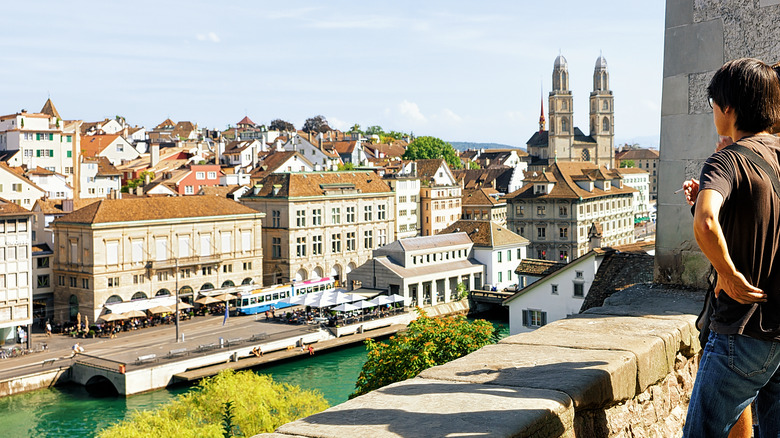
While Zurich's Old Town is one of Switzerland's most iconic destinations, Lindenhof Hill is easily among the most picturesque. Climb up the historic hill for panoramic views of Zurich, as well as the remains of a Roman fort and the ancient city walls. Its location overlooking the city made Lindenhof attractive to Roman forces and, later, medieval rulers. The Hedwigbrunnen, or Hedwig Fountain, was built in honor of a group of local women who, in 1292, donned armor to fool a passing army into thinking that Zurich was well-defended while most men were away fighting. The fountain's water is fresh and drinkable, so feel free to take a sip.
Nowadays, you're more likely to run into tourists wielding selfie-sticks instead of Roman soldiers wielding weapons. But, the views remain incredible — on a clear day, you can see all the way to the Swiss Alps. In addition, the ancient linden trees — where Lindenhof gets its name — have stood in this spot for over 500 years, providing a canopy of shade and greenery. Lindenhof Hill is centrally located in Zurich's Altstadt and is a gentle ascent from bustling Augustinergasse street.
Bahnhofstrasse
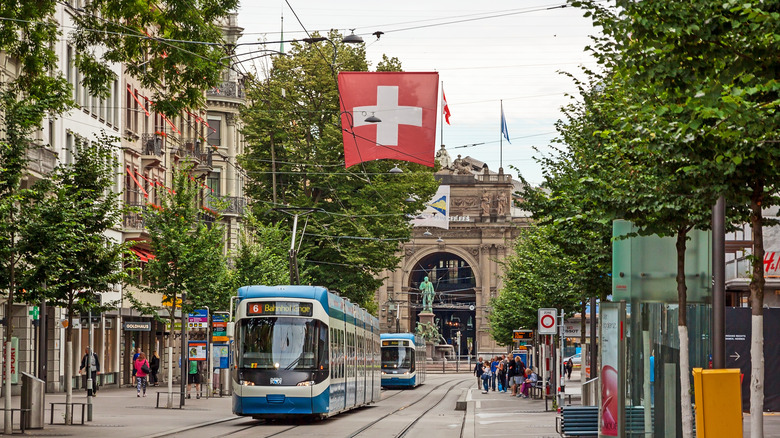
For some luxury (window) shopping, head to Zurich's famous shopping street, the Bahnhofstrasse. The street extends from the lake to the main train station, the Hauptbahnhof or Zurich HB. Given that Zurich was deemed the world's most expensive city in 2025, it's no surprise that Bahnhofstrasse is one of the priciest shopping districts on the planet. However, aside from designer retailers like Rolex and Chanel, there are plenty of shops that are more budget-friendly and beloved by locals. Zurich's trams traverse right down Bahnhofstrasse, and its central location makes it an easy stop to add to your itinerary.
The street is lined with trees, fountains, and beautiful storefront displays, making it a pleasure to wander, even if you don't plan to shop. Milchbar's courtyard provides a welcome respite from all the activity, and the Hiltl Dachterrasse boasts a stunning rooftop patio and a delicious vegetarian buffet. If you happen to be visiting during the holidays, be sure to visit Zurich's largest Christmas market at the nearby train station.
Lake Zurich and the Limmat River
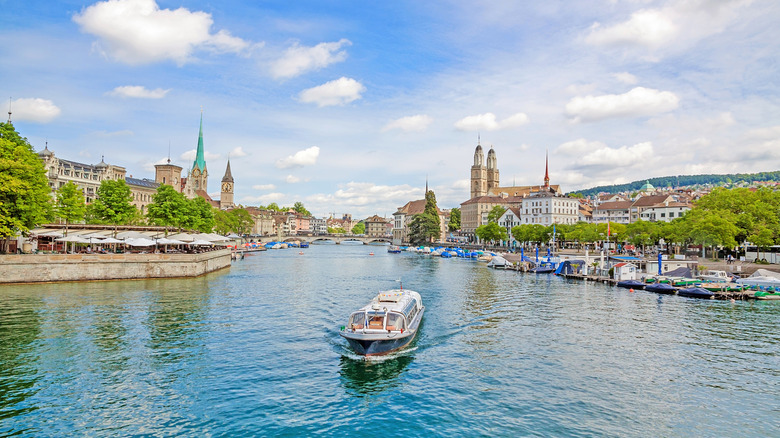
Water is a prominent feature of Zurich. The Limmat River passes through some of the city's most charming neighborhoods before merging with the blue waters of Lake Zurich, or Zürichsee. While you can spend hours wandering the banks of the Limmat and crossing its bridges, the most immersive way to enjoy the water is by boat. Board the glass-roof boat for an hour-long river cruise from the National Museum and glide along the Limmat right through the center of Aldstadt. You'll see the towers of the four famous churches, the ornate 17th-century Town Hall, or Rathaus, and beautiful Lake Zurich.
Lake Zurich is an iconic feature of the city and offers many activities, especially in the summer. Lined with lidos, beaches, bathhouses, and promenades, the massive yet crystal-clear lake is a testament to Zurich's reputation as one of the world's cleanest cities. At the many "badis," or public swimming areas, you'll find changing facilities, patios, and the occasional bar or café.
If you visit in the winter, you can still enjoy the city's waterside parks. Zurichhorn park, near the basin of Lake Zurich, has excellent views in addition to a beer garden and playground. For some of the city's best mountain views, head to Bürkliterrasse, at the end of Bahnhofstrasse. Local cruises and commuter boats traverse the lake year-round, allowing you to hop on and off at your leisure to destinations like the beautiful Rapperswil Castle and its eponymous village, a lakeside winery, and the quaint Ufenau Island.
Sprüngli and Lindt Home of Chocolate Museum
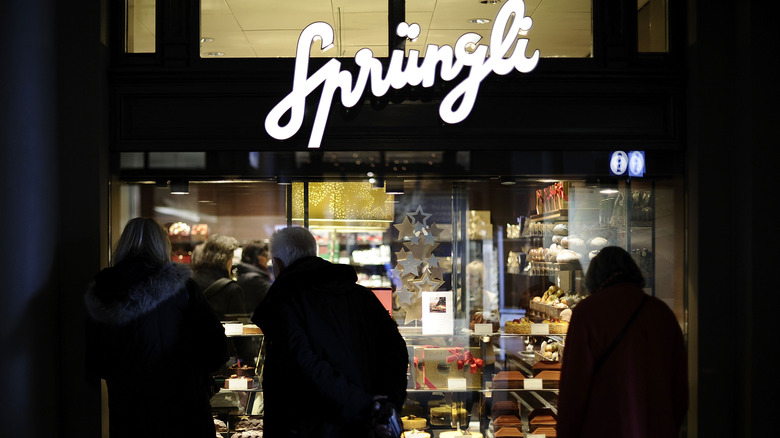
Switzerland is deservedly famous for its chocolate, thanks to its world-class dairy farming practices, and Zurich is an excellent place to sample the best it has to offer, from big-name producers to small-batch chocolatiers. The most famous of them all is Sprüngli, a Swiss chain with shops all over the country. Visit the biggest and most beautiful location on Bahnhofstrasse, with a delectable menu of truffles, Swiss hot chocolate, and plenty of souveniers to take home. There are also many local chocolatiers throughout Zurich, like Honold, one of the oldest in the city and still in its original location, and Max Chocolatier, known for its creative combinations of seasonal flavors.
Another must for chocolate lovers is a visit to Zurich's popular Lindt Home of Chocolate Museum. Here, you'll learn about the history of Swiss chocolate, stare in awe at the Lindt chocolate fountain, see how it's made, and even make your own, all while snacking on the good stuff to your heart's content. The museum is located about 20 minutes outside of Zurich by bus. Tickets must be purchased ahead of time, as tours often fill up quickly.
Swiss National Museum
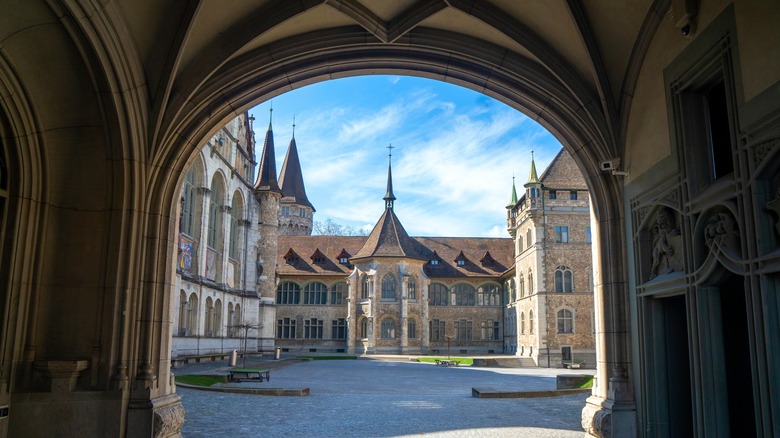
For a deep-dive into Swiss history, archaeology, innovation, and heritage, the Swiss National Museum is the place to visit. At first glance, the Swiss National Museum, or Schweizerisches Landesmuseum, looks more like a grand castle or abbey, with arched windows, elaborate stonework, towers, and turrets. While the late 19th-century building is a sight to behold, the real treasures lie inside. The exhibitions provide a comprehensive overview of Switzerland's history from the Middle Ages to the present. The museum features over 870,000 artifacts, including archaeological objects, religious artwork, traditional Swiss ceramics, medieval weapons, stained glass, armor, and more. Exhibitions such as "Ideas of Switzerland" and "Simply Zurich" focus on modern-day Switzerland, including technological advances, neutrality in war, and Swiss customs.
In addition to its permanent displays, the museum features rotating exhibits on a variety of themes, ranging from visual art, to fashion accessories, and much more. Just outside of the museum is Platzspitz Park, one of Zurich's oldest parks and a peaceful oasis filled with greenery, riverfront walking paths, and cherry blossoms in the spring.
The Polybahn to Polyterrasse
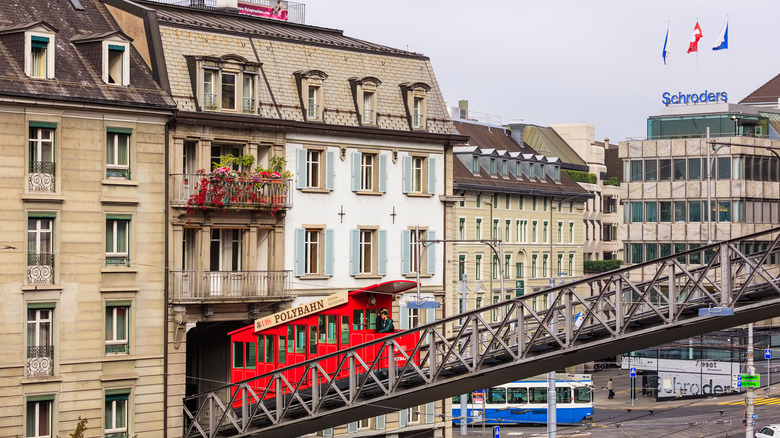
Zurich's historic little red train, called the Polybahn, is a short yet exciting thrill. The funicular, dating back to the 19th century, travels to the Polyterrasse viewpoint in just a few minutes, a must-visit spot with incredible panoramic vistas. The Polybahn has been running for 130 years, from Limmatquai in Aldstadt up to Zurich University and the Swiss Federal Institute of Technology, the same university that Albert Einstein attended.
The little train that could transports over 2 million people each year, and the brief trip is only three minutes long. Stop below the track in Old Town to snap a view of the iconic funicular. Plus, it's free to ride if you have a Zurich Card. At the top, Polyterrasse is an excellent spot for a leisurely walk and to soak up the views of the surrounding architecture, as well as the skyline, lake, and Alps.
Uetliberg Viewpoint and Felsenegg Cable Car
Often described as Zurich's one and only mountain, Uetliberg is an easy trip from Zurich, reachable by train and a very short hike — or, if you're up for it, a much longer hike from the base. If you don't plan to visit the Swiss Alps, Uetliberg is a good compromise, and it's a must for your Zurich itinerary. The Uetilberg mountain hike is one of the best-rated experiences in Switzerland, and be reached in roughly 20 minutes from Zurich's main train station. At the top, you'll disembark for a short walk to the viewpoint, a restaurant, and a small tower. The views are incredible year-round, especially on foggy days when Uetliberg rises majestically above the mist.
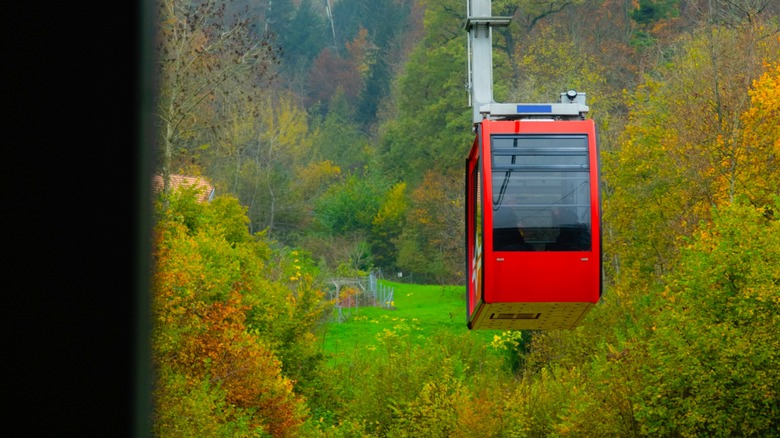
Visitors can also access Uetliberg by hiking on a trail from the beautiful Felsenegg viewpoint. Connecting the two scenic overlooks is the "Planet Trail," a two-hour trip that provides informational plaques about the solar system along the way. The journey to Felseneggbahn is only 20 minutes from Zurich by train, followed by a cable car ride to the top. Felsenegg's charming red cable cars whisk you 2,625 feet to the peak in a matter of minutes, and the trip is included with your Zurich Card. At the summit, you'll find scenic walking paths, a playground, and a quaint restaurant serving local fare, all reached by a quick forest trail from the cable car stop.
Kunsthaus Zurich
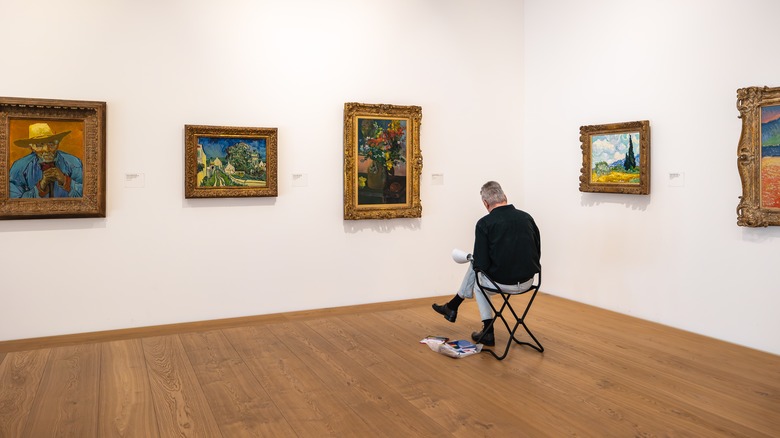
Zurich has a small but mighty collection of world-class museums, and one of the stars of the show is Switzerland's largest art museum, Kunsthaus Zurich. The museum features an astonishing collection of art pieces, with a mix of both Swiss artists and international greats, including Pablo Picasso, Jackson Pollock, Vincent van Gogh, and beyond. Of note is the museum's Edvard Munch collection, the largest in the world outside of his home country, Norway. The museum features a vast and eclectic array of artwork, spanning over 800 years, with art from the Middle Ages alongside contemporary and modern pieces.
Naturally, there's a focus on Swiss artists, with a large selection of pieces by noted Swiss sculptor Alberto Giacometti and rotating exhibits dedicated to the Zurich-founded Dada movement. It even showcases Andy Warhol's signature pop art. The newest wing of the museum provides space for emerging and notable artists of the 21st century, as well as video installations and photography.
Water fountains of Zurich
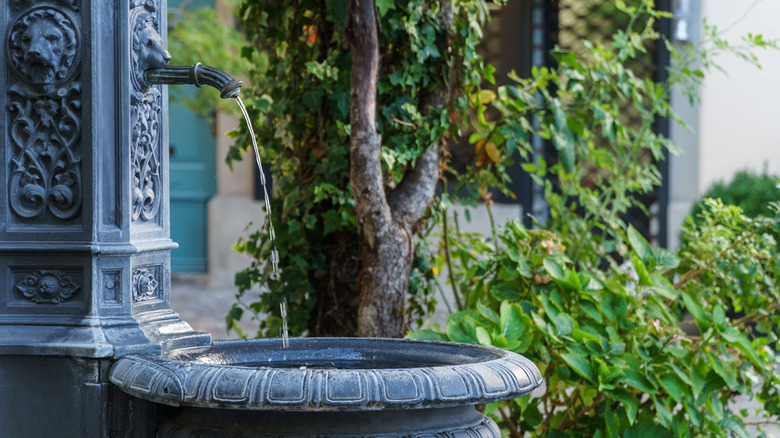
Zurich consistently ranks among the happiest cities in the world, and maybe it's because there's something in the water. All of Switzerland, in fact, has amazing water quality, thanks to the abundant mountain springs. Zurich is home to over 1,200 free drinking fountains throughout the city, so you'll be well hydrated during your visit. Many of these fountains are works of art themselves, so consider going on a thirst-quenching quest to locate as many as possible. It's a great way to explore and sip your way through the city. The fountains are mapped on the Zurich City Guide smartphone app.
To learn more about Zurich's fountains with the aid of a guide, there are several water-themed walking tours that also incorporate facts about the city's surrounding bodies of water. If you happen to be in Zurich during Easter, you're in for a treat — a relatively new tradition, put on by a local church, is to fill multiple fountains in the city with multicolored roses.
Zurich West
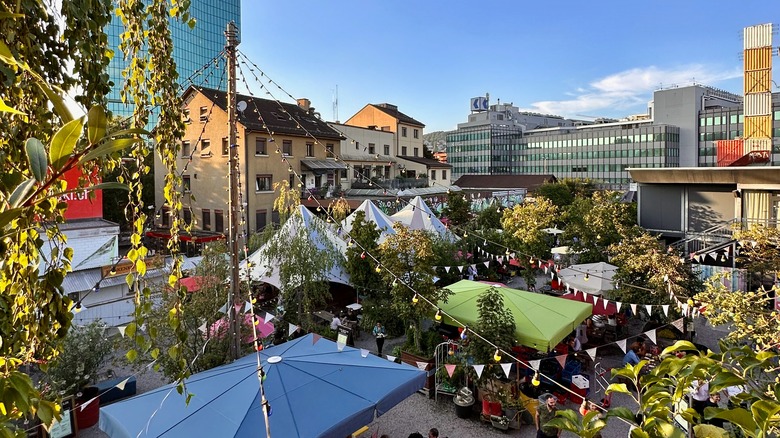
It's easy to spend your whole visit to Zurich exploring its picturesque historic districts, and of course, no one would blame you. But, venture beyond its storied buildings and cobblestone roads, and you'll discover an entirely different side of the city. Zurich West was formerly a run-down industrial area that's since been transformed into an innovative district with an undeniably hip vibe. The railway arches, called Im Viadukt, are the central landmark in Zurich West, and now feature quirky boutiques, cute shops, and the Markthalle, a diverse food market selling everything from sushi to fresh pasta.
Other focal points in Zurich West include the outdoor café in the sprawling Josefwiese park, the Frau Gerolds Garten, and the Freitag store. For those who don't know, Freitag is an innovative Swiss brand that creates bags and accessories from recycled materials, and its flagship store is housed in a climbable tower made of stacked shipping containers, right in the heart of Zurich West. Catch a show at the factory-turned-theater Schiffbau, or immerse yourself in techno music at the renowned Hive nightclub.
Methodology
To create this guide of the most popular attractions in Zurich, we relied on traveler reviews from trusted platforms like TripAdvisor, as well as insights from renowned local travel blogs. We also consulted travel experts, like renowned author Rick Steves, and local tourism boards, such as Zuerich, My Switzerland, and Hello Zurich. For location-specific information about each attraction, such as its current exhibitions, history, and opening hours, we referred to official resources such as the Kunsthaus Zurich and Lindt Home of Chocolate websites. Finally, we drew from personal experience while traveling in Zurich and its surrounding regions to add a touch of first-hand expertise to each destination.