

Interlaken, Switzerland's 13 Must-See Destinations For First-Time Visitors
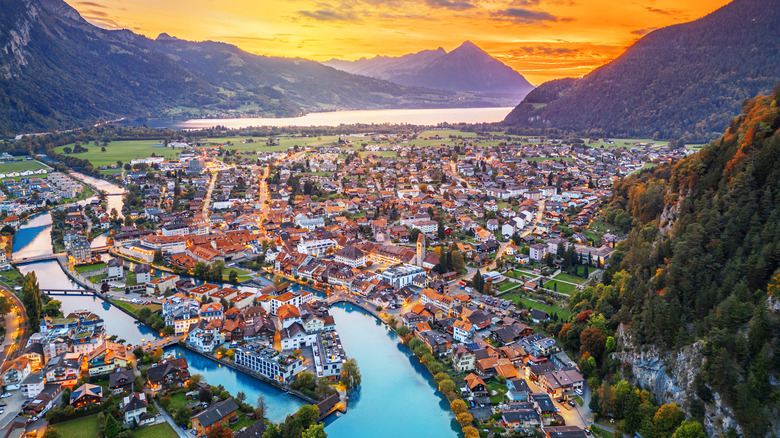
At the foot of the Bernese Alps is the Swiss German village of Interlaken, an ideal hub for travelers searching for alpine adventures and winter sports. In German, "Interlaken" means between lakes. Aptly named, the village sits between the stunning turquoise lakes of Brienz and Thun. It also sits along the longest river in Switzerland, the Aare River. To the south are the three large peaks the region is known for: Jungfrau, Eiger, and Mönch. Together, they form a massive wall of mountains and include the largest glacier in the Alps, which is part of the Swiss Alps Jungfrau-Aletsch UNESCO World Heritage site.
The village of Interlaken itself is lined with chalet resorts designed to offer a home base for folks who want to explore all of its natural beauty. Of course, there are the traditional sports of hiking, kayaking, skiing, and snowboarding — but this region offers much more. It's actually a year-round hot spot for aerial sports like paragliding and hang gliding, as well as other adrenaline-fueled activities such as ziplining and mountain karting.
Interlaken is easy to get to by car or train from the Swiss capital of Bern, only about one hour away. This makes it a perfectly accessible gateway to the scenic countryside and crystal lakes of the Bernese Oberland region, as well as some of Switzerland's most charming villages nestled amongst them. Offering some of the best viewpoints, glacial waterfalls, gorgeous valleys, and cozy villages, the region has something for every season.
Unterseen Old Town
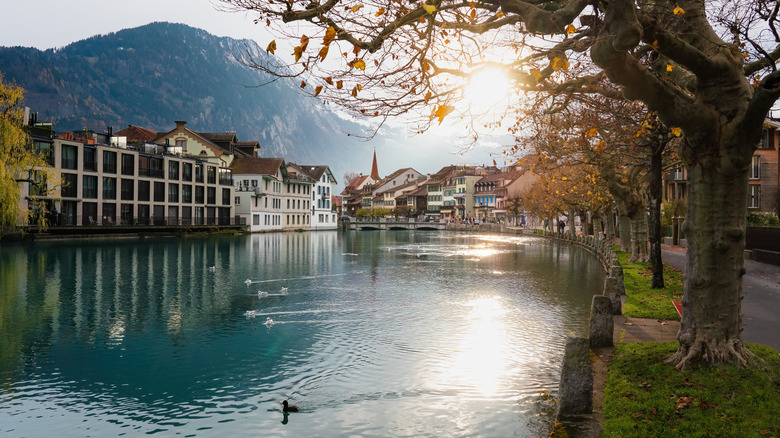
This historic village is super charming (some say more than Interlaken), and is within walking distance of town. At its center is the quaint Old Town square, Stadthausplatz, with impressive medieval architecture and a 13th-century church tower. There, visitors can enjoy vendors, cafes, and shops offering many Swiss goods.
Walk over to the Tourismuseum, the local history museum, to learn about the origins of the region as a destination for Alpine tourism that stretches back more than 500 years. While the objects on display are relatively limited, they do showcase a few old-school sleighs and carriages that transport visitors back to a time before the ease of funiculars to lift tourists up the mountains.
Unterseen is located along the Aare River, which makes it a fantastic place to take in the local atmosphere. If you want a full-immersion experience into Swiss culture, catch a play at the cozy folklore theater, Stadtkeller, where all the shows are in German. Alternatively, make a reservation at the wooden lodge Restaurant Bären, which dates back to 1674. Today, it offers up authentic Swiss cuisine made with fresh, local ingredients. Menu highlights include prime meat cuts, goulash, and fondue. Just be sure to book ahead, since simply showing up without a reservation can be one of the most common mistakes travelers make in Switzerland.
Lakes Brienz and Thun
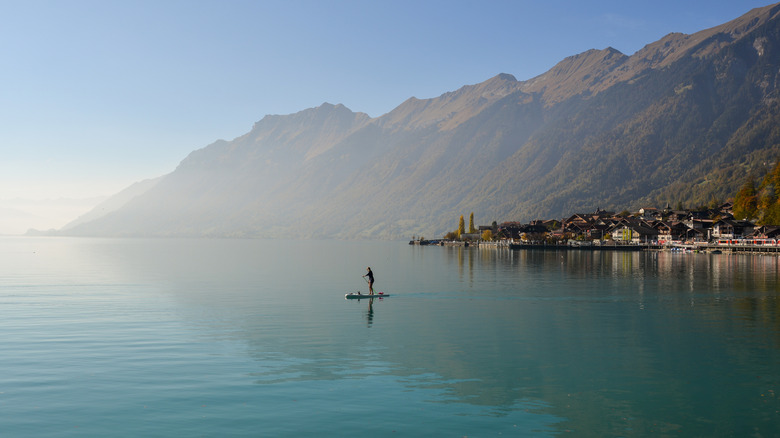
Brienz in the east and Thun to the west are what give this beautiful place its name. Each has its own personality and unique features, and while many folks cross these lakes on their way to other nearby villages, they are worth visiting in their own right. Lake Thun is known more for its proximity to the rugged alpine landscapes, while Lake Brienz is known for its access to small, charming villages.
There are abundant opportunities at both Brienz and Thun for water-based activities. For example, there are a variety of thematic cruises offered across Lake Thun. Some offer culinary excursions that focus on sampling Swiss delicacies, while others have a historical focus, such as the old-fashioned steamboat cruise on the Blümlisalp ship. For the more adventurous types, there are many tours by kayak, including full-day excursions led by experienced guides.
For groups looking for a truly unique experience, climb aboard a hot tub boat at Lake Brienz's Pirate Bay. Submerged in the lake and powered by a small motor, you can drive around as you take in the scenery. The hot tubs are kept at a simmering 100 degrees Fahrenheit and can fit up to 6 people.
Harder Kulm
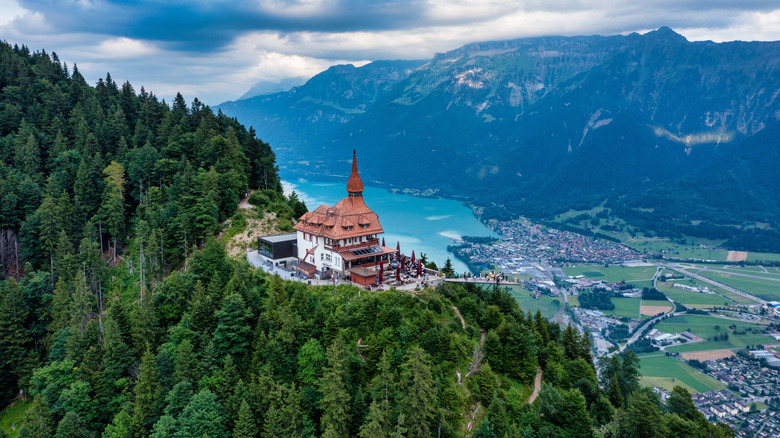
Harder Kulm is the mountain closest to the village of Interlaken. At about 4,300 feet above sea level, it offers phenomenal views of the village, the two lakes, and the surrounding Alpine mountains. The funicular leaves from the base of the mountain, located a 10-minute walk from the center of Interlaken, and takes visitors up to the summit in less than 10 minutes. For expert hikers, there is a challenging full-day hike that departs from the bottom of the valley and climbs to the top before looping back around.
At the top of Harder Kulm, there is a viewing platform jutting out from the mountain, giving visitors the impression of soaring above the valley. This is an ideal spot for taking photos. For those who want to keep the adventure going, there are also several hikes of varying difficulty that depart from the top of the mountain. Finally, visitors highly recommend dining at the summit's castle-like eatery, Panorama Restaurant, where both the food and the views are highly rated.
Alpine Wildlife Park
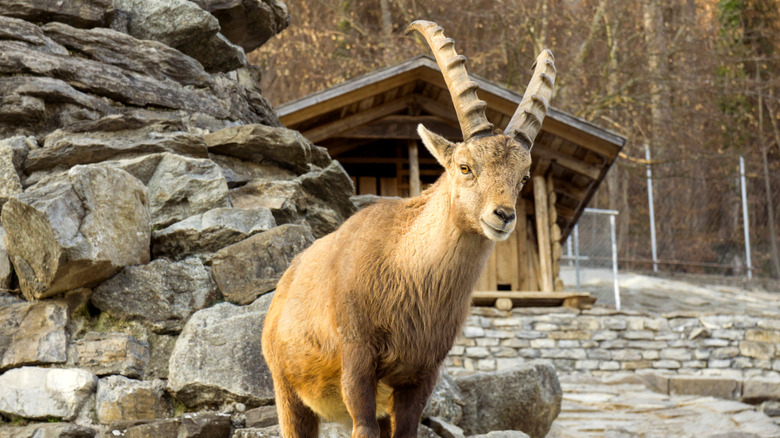
The Alpine Wildlife Park offers visitors the rare chance to observe two iconic creatures that embody life in the Alps: the ibex and the marmot. Once nearly extinct in Switzerland, the ibex has become a powerful symbol of successful wildlife conservation. The species is known for its dramatic curved horns and its ability to navigate steep, rocky cliffs. Meanwhile, the scruffy little marmot is a key inhabitant of high-altitude meadows, living in complex burrow systems and playing an important role in soil aeration. Together, these animals provide a window into the delicate mountain ecosystems and the interdependence of species that thrive there.
What makes this park especially appealing is its quiet, accessible environment and educational focus. The viewing areas help visitors get a close-up look at creatures that may otherwise be difficult to see. The park is also geared toward helping visitors understand how these animals shape alpine biodiversity and how human activity affects their survival. With free admission, it's an easy and welcoming stop for families, hikers, and anyone seeking a fun, quick stop along their route. It sits at the foot of Harder Kulm and is a 15-minute walk from Interlaken's center.
The Three Waterfalls Trail
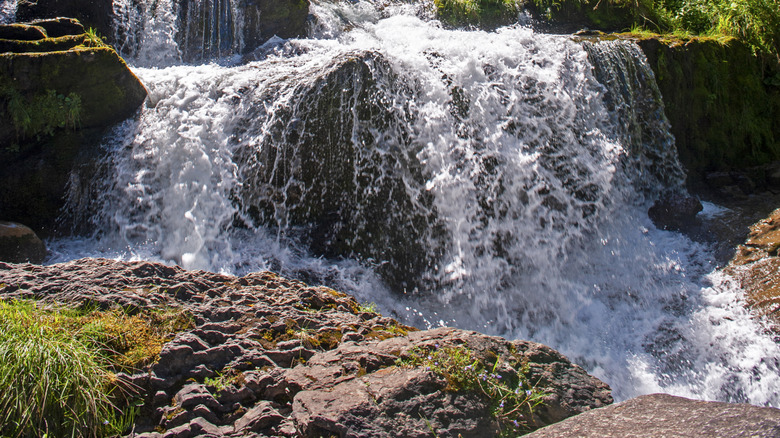
The Interlaken region is known in part for its magnificent waterfalls, and you can get a three-for-one deal on this marvelous hike along the southern shore of Lake Brienz. In total, the hike is about 11 miles long and is mostly flat. More experienced hikers can do it in a single day, while others may want to break it up into smaller bites. Better yet, the trail connects with many other smaller trails and towns, creating opportunities to tailor it to your interests.
From Interlaken, visitors can take a bus to the neighboring town of Bönigen and start their hike there going east. The first waterfall, Erschwandenbach Falls, is perhaps the smallest, and sits only about 20 minutes into the trip. Keep going to be rewarded with the larger Mülibach Falls. The trail dips behind the falls, and the intensity of the rushing water is loud enough to drown out all other sounds, which makes for a pretty remarkable experience.
Finally, the Giessbach Falls impressively cascades over more than a dozen steps into Lake Brienz. Along the route, you'll also pass forested stretches and lakeside viewpoints that show off Lake Brienz's vivid turquoise color.
Jungfraujoch (Top of Europe)
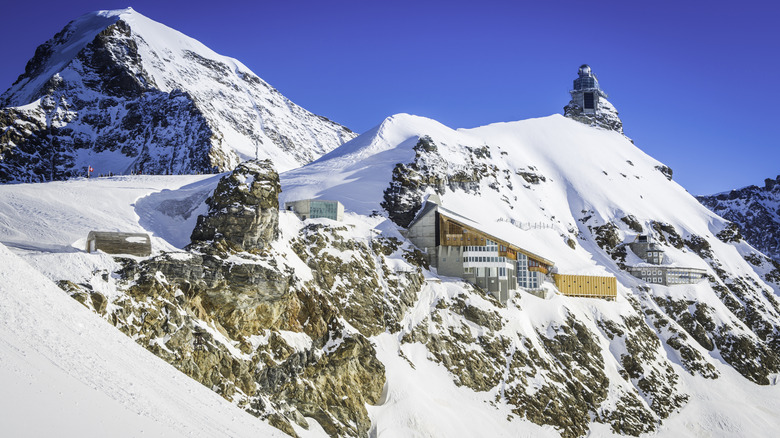
Nestled between the Jungfrau and Mönch mountains, this summit is known as the "Top of Europe," and sits at an altitude of about 11,300 feet. It's the tallest railway station on the European continent, as well as part of a UNESCO World Heritage Site.
Offering an unparalleled, ice-capped view of the Jungfrau massif, it takes roughly 30 minutes to reach the town of Grindelwald from Interlaken. From there, you have two options: taking a cable car or hopping aboard the cogwheel train. The Eiger Express cable car takes visitors to the top with a stop along the way at Eiger Glacier, which features a restaurant and generous ski slopes. Meanwhile, the cogwheel train takes visitors through the original path that railway was built along more than 100 years ago.
The Sphinx Observatory is a gem upon this palatial structure, with floor to ceiling windows perfect for viewing the surroundings. There's also the Ice Palace, where mountain explorers once used pickaxes to carve chambers and hallways out of solid ice in the 1930s. Today, the hall's smooth surfaces reflect faces of total bewilderment. Outside, the Snow Fun Park offers a variety of outdoor activities for visitors of all ages — including sledding, tubing, skiing, snowboarding, and a zipline that sends visitors zooming across the snowy wonderland.
St. Beatus Caves
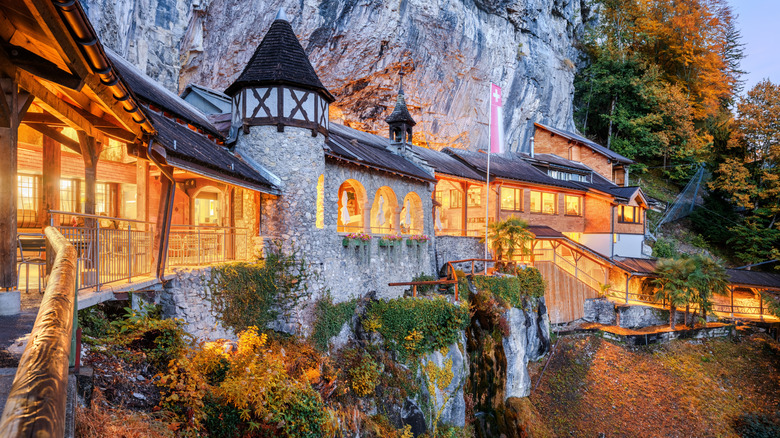
Wander deep inside the belly of the St. Beatus Caves where, legend has it, a dragon once lived a long, long time ago. According to local lore, only a monk named Beatus is said to have successfully chased away the creature. Today, the caves are recognized as one of the 10 biggest cave systems in Switzerland, and are dripping with magic and lore.
Tours are offered along just over a half-mile stretch of underground grottos, chambers, gorges, and waterfalls that form the network of caves. During the trip, visitors will also see stunning stalactite and stalagmite formations lining the cave walls, some of which take millions of years to form. A museum inside the cave shares ongoing research and scientific discoveries with visitors, including a collection of prehistoric artifacts.
There is also a restaurant at the cave entrance, Stein & Sein, where visitors can enjoy a meal overlooking breathtaking views of Lake Thun. A special dinner experience — which includes all-you-can-eat raclette and mulled wine — allows diners to enjoy a meal inside the caves, illuminated by candlelight.
Grindelwald Glacier Gorge
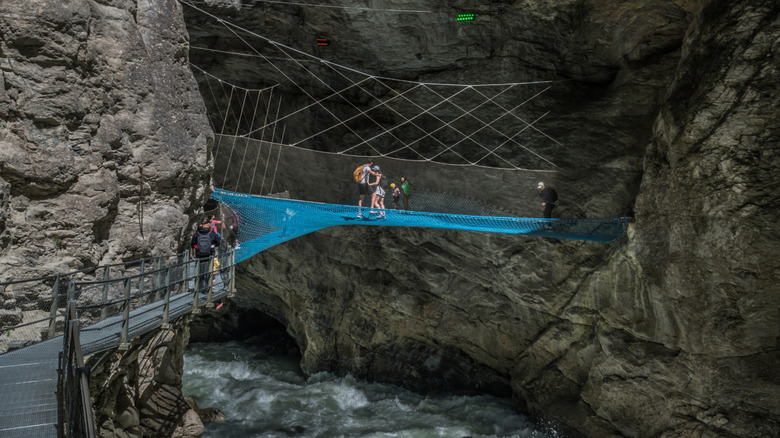
The Grindelwald Glacier Gorge is one of the region's premier sites for outdoor adventure. Created over millennia by retreating glacial ice, it features steep rock walls that rise sharply on either side and a narrow passageway carved by rushing water. Visitors can follow a series of walkways suspended among the cliffs, offering close-up views of the gorge's sculpted topography. Overall, it's a great option for travelers and traveling families who want to incorporate some easy adventuring into their trip without embarking on a full hiking experience.
For thrill-seekers, the gorge is home to some of the area's most adrenaline-pumping activities — including what's billed as "the world's scariest canyon swing." Here, participants leap from a platform into a 295-foot freefall before getting swept into a pendulum arc between the towering rock faces. The surrounding adventure park also offers ziplining, climbing, kayaking, and a ropes course suspended among the treetops. To get there from Interlaken, just hop on a bus to Grindelwald. From there, it's about a 35-minute walk or another short bus ride.
Schloss Spiez (Spiez Castle)
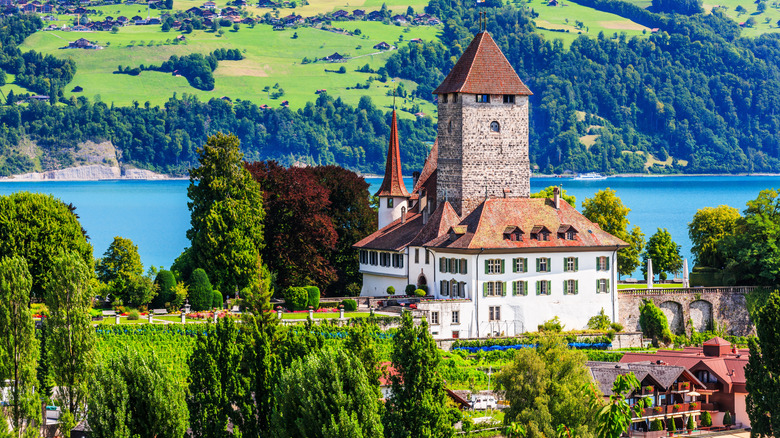
Set on a small peninsula along the shores of Lake Thun, Schloss Spiez is a beautifully preserved medieval castle that offers visitors a window into the region's deep history. Its centuries-old towers and halls once belonged to noble families who shaped the political and cultural landscape of the Bernese Oberland.
Today, the castle's museum showcases an impressive collection of artifacts, including objects from prehistoric settlements that once occupied the area. The interiors feature period furnishings, wood-paneled rooms, and historic artwork. Pro tip: it's worth climbing the stairs to the top of the tower for sweeping panoramic views of the surrounding mountains and lake scenery.
The castle grounds are just as captivating as the history within. A small Romanesque church — one of the oldest in the region — stands quietly beside the castle, offering its own architectural charm. Inside, visitors can admire its serene, intimate atmosphere before taking in wonderful views of the surrounding gardens through its arched windows. Home to carefully tended rose beds, aromatic herb plots, and panoramic terraces, taking a stroll along the paths offers postcard-worthy views of Lake Thun and the surrounding peaks. Best of all, this castle and all its glory are only a 20-minute train ride from Interlaken.
Diemtigtal Nature Park
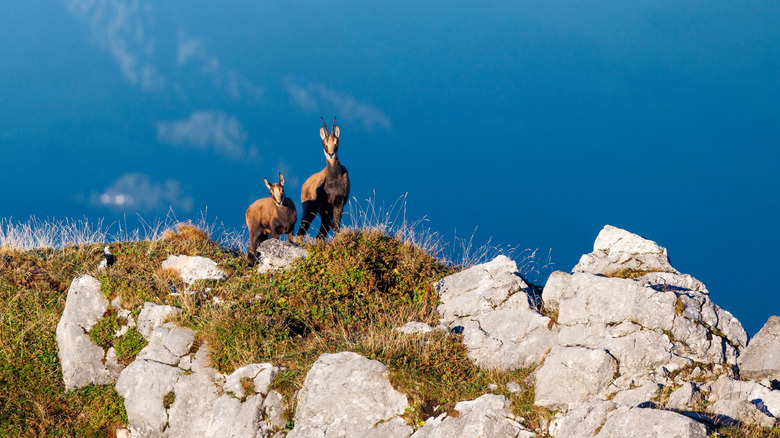
Stretching across 52 square miles of protected landscapes, Diemtigtal Nature Park offers a deep immersion into the wilderness of the region. The park's extensive network of trails winds through lush cow-dotted valleys, steep slopes, and more than 140 traditional alpine farms that have been shaped by centuries of mountain life. Today, over 60 of those farms are dedicated to dairy production.
Hiking is possible year-round, which makes it easier to plan a visit for when you're likely to see fewer crowds and enjoy better weather. Hikers can experience the region's natural flora and fauna up close, as the park is the natural habitat of the mighty Ibex, the ever-adorable roe deer, and the more exotic northern chamois, which is somewhere between a goat and an antelope. Meanwhile, in winter, the park is a great place for cross-country skiing.
Guided tours and themed routes highlight the park's natural, historical, and cultural significance, offering enriching stops along the way. Some itineraries even lead to working dairy farms, where visitors can learn about the area's culinary heritage and longstanding agricultural traditions. Most farmers are happy to share insights into alpine cheese production and butter-making, accompanied by the chance to purchase fresh products directly from the source. From Interlaken, the park is just over a one-hour train ride, with one transfer in Spiez.
Iseltwald
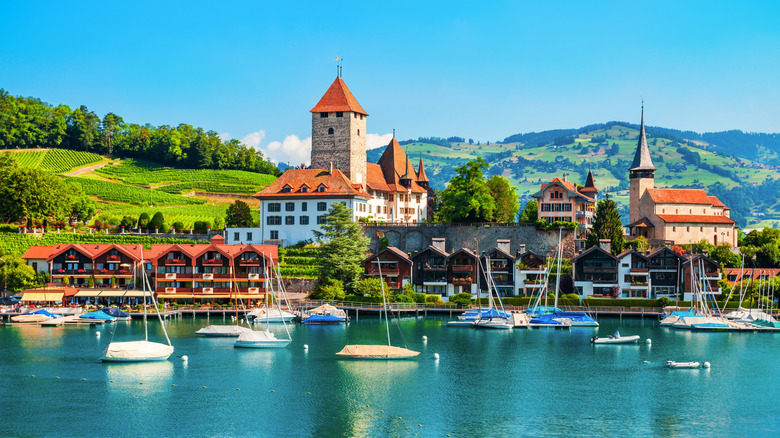
With its iconic castle jutting out from a small peninsula, its proximity to lush waterfalls, and its location at the turquoise waters of Lake Brienz, Iseltwald is a charming village with a storybook-like quality. A serene village that offers travelers all the breathtaking scenery without the crowds, Iseltwald offers visitors a number of beautiful and culturally unique sites. Plus, it's one of the best places to experience Swiss village life up close.
A highlight is Schloss Seeburg (Seeburg Castle), a picturesque lakeside castle with forested slopes rising behind it as the lake stretches out in front. While the castle grounds are privately owned and not fully open to the public, its striking architecture can be admired from nearby viewpoints or by boat. The village also features a historic wooden church and a small harbor that serves as a hub for local life.
From the village, travelers can follow scenic hiking routes like the Iseltwald-Giessbach Trail, which leads along the lakeshore to the dramatic Giessbach Falls. The town is also a fantastic base for water sports on the lake, such as paddleboarding and swimming during warmer months. A handful of cafes and restaurants line the waterfront promenade; otherwise, you can pack a picnic and enjoy the views.
Schynige Platte
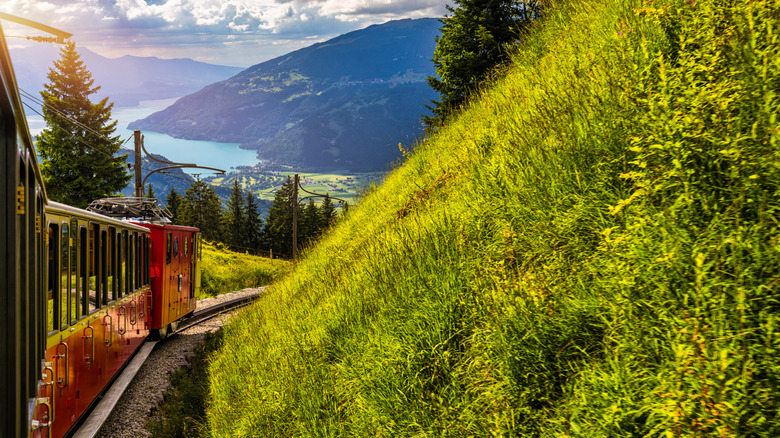
Schynige Platte is a mountain ridge best known for the unforgettable train journey that leads to it. The historic cog railway climbs steadily through lush meadows dotted with wildflowers, offering sweeping views that grow more dramatic with every turn. When the train reaches the plateau at about 6,500 feet, visitors are greeted with a full 360-degree panorama of the region.
Schynige Platte is also home to the Alpine Botanical Garden, where more than 800 native plant species flourish in a carefully curated yet naturalistic setting. The garden provides an immersive look at the region's extraordinary biodiversity, with labeled paths that make it easy for visitors to learn about alpine flora.
There are many hiking trails that depart from Schynige Platte, ranging from easy to moderate, with winding paths running across ridgelines and grassy slopes ideal for a relaxed picnic or an unhurried afternoon stroll. At the top, there are also traditional Swiss alphorn performances every day. On a sunny day, it's an idyllic place to soak in the best of Swiss alpine nature and culture.
Grindelwald First
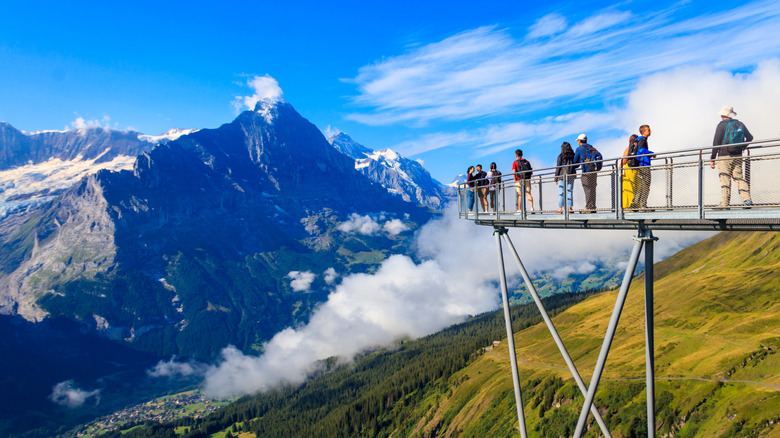
Rising to just over 7,100 feet, Grindelwald First is a popular summit destination for hikers looking for spectacular views and adventure. Visitors begin their journey with an aerial gondola ride that climbs steadily above the valley, revealing an ever-expanding view of snow-capped peaks and glacial terrain. At the top, a network of cliff walks and suspension bridges leads visitors to exhilarating vantage points over the surrounding landscape. With numerous hiking trails branching out from the summit, it's easy to find routes suited to all levels.
For those seeking an adrenaline boost, Grindelwald First delivers. It offers ziplines, mountain karts, and other high-altitude activities designed to transform the rugged terrain into a fun-filled excursion. The summit is also home to Berggasthaus First, a highly reviewed hotel and restaurant known for its hospitality and cozy ski hut, where folks can unwind after a long day on the slopes.
From Interlaken, the town of Grindelwald is reachable by train or car in roughly 30 to 40 minutes. From there, it's a short walk to the First Gondola Cable Car station that takes visitors up to the summit.
Methodology
The list of destinations above focuses on offering first-time visitors a diverse selection of natural features, as well as accessibility via one of the most popular modes of local transport, the Jungfrau Travel Pass. The research process for this article began with consulting several "best of" lists from reputable travel publications. These lists provided a broad overview of consistently recommended sites and experiences. This initial survey made it possible to establish a foundation of popular destinations that would likely be of interest to first-time travelers.
Research also involved a deep dive into travel blogs and regional tourism websites. These offered more detailed, on-the-ground perspectives. In addition, online review platforms such as Google Reviews, Tripadvisor, and AllTrails were used to gauge traveler sentiment and verify which attractions truly resonate with visitors. Reviews helped highlight common themes, strengths, and potential drawbacks mentioned by travelers. This methodology ensured that the final article is comprehensive and aligned with what travelers genuinely find valuable in Interlaken.