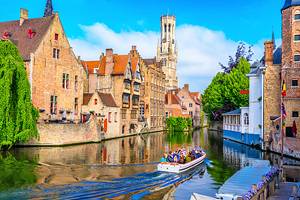
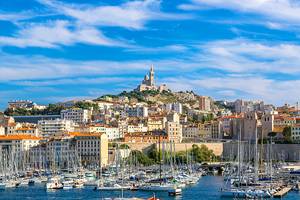
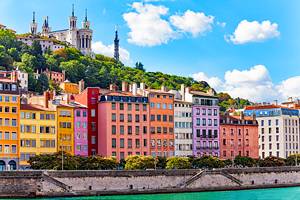
Attractions & Places to Visit in Lyon
France's second-most important city after Paris is surprisingly undiscovered. Although Lyon doesn't always make it onto tourist itineraries, many cultural treasures await those who take the time to explore the city.
With a history dating back to ancient Roman times, Lyon has earned a place on the UNESCO World Heritage list. The city boasts France's oldest ancient ruins, medieval quarters, and handsome Renaissance houses.
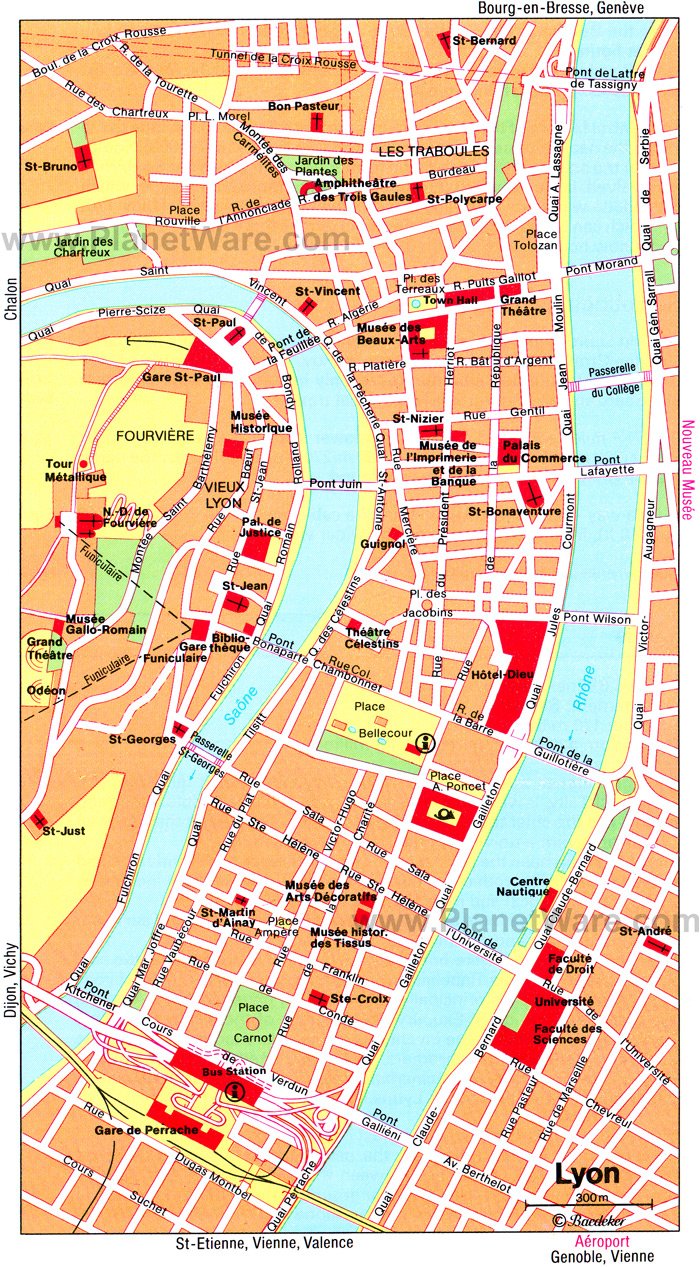
The atmospheric neighborhoods of Vieux Lyon (Old Lyon) found along the Rhône and Saône Rivers reflect the city's rich heritage. The Quartier Saint-Jean and Colline de la Croix-Rousse districts have an enchanting character, while the Presqu'île exemplifies 19th-century elegance. These captivating historic quarters are the best places to visit in Lyon for a taste of the city's old-world charm.
The happiest of all visitors are the ones who journey here to sample the famous cuisine. The celebrated Michelin-starred Auberge du Pont de Collonges, 10 kilometers from Lyon, was helmed by legendary French chef Paul Bocuse for decades and is still a top destination for gourmands. Authentic Lyonnais gastronomy can also be enjoyed all over Lyon at bouchons, small cozy bistros that serve traditional local specialties.
Explore the city with our list of top attractions and things to do in Lyon.
Musée des Beaux Arts
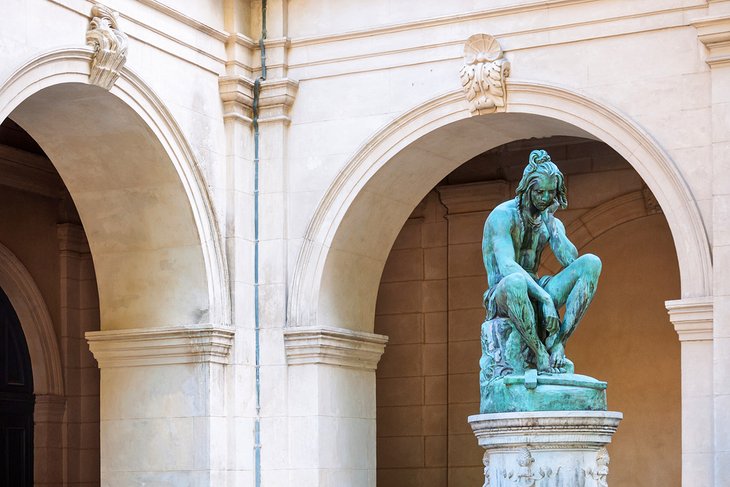
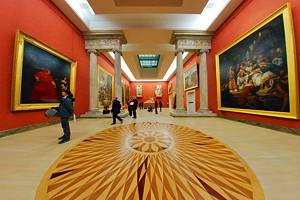
The impressive cultural heritage of Lyon is evidenced in this Musée des Beaux-Arts, considered the next best fine arts museum in France after the Louvre. At the Place des Terreaux near the Hôtel de Ville (Town Hall), the museum occupies the 17th-century Abbaye Royale des Dames de Saint-Pierre (Royal Abbey of the Sisters of Saint-Pierre).
This museum has one of Europe's largest collections of artwork, with an especially impressive assortment of paintings and sculptures from the 14th through the 20th centuries. The antiquities, ancient coins, and graphic arts collections are also noteworthy.
The quality of the collection is exceptional. There are many renowned works by European masters such as Delacroix, Fragonard, Géricault, Rembrandt, Rubens, Poussin, and Véronèse.
The museum displays an excellent collection of Impressionist paintings and modern art. Highlights include works by Claude Monet, Alfred Sisley, Paul Gauguin, Henri Matisse, and Pablo Picasso.
The museum's restaurant and tea salon, Les Terrasses Saint-Pierre, offers a casual dining option for lunch, snacks, coffee, and tea. During summertime, guests may dine al fresco on the terrace in the gardens.
Address: Palais Saint-Pierre, 20 Place des Terreaux, Lyon
Official site: https://www.mba-lyon.fr/en
Quartier Saint-Jean and Quartier Saint-Georges (Old Town)
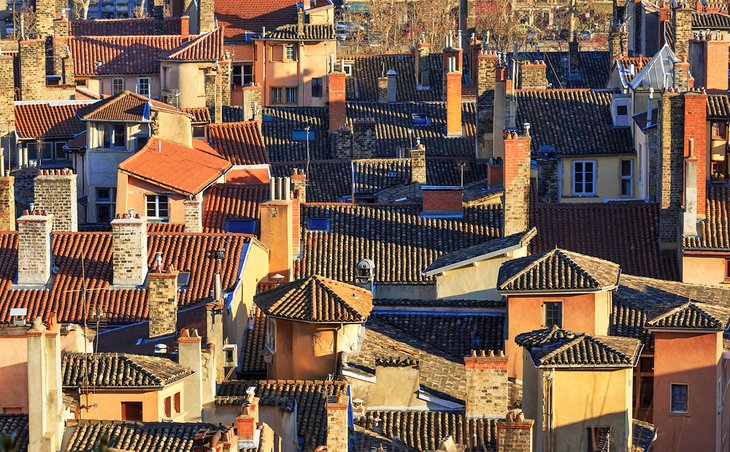
Lyon's atmospheric Quartier Saint-Jean is the place to discover the old-world ambience of Vieux Lyon. This medieval quarter north of the cathedral is filled with narrow cobblestone lanes and quiet little courtyards.
Begin exploring around Rue du Boeuf and the Place Neuve Saint-Jean, a picturesque square filled with traditional restaurants. Then wander around the pedestrian streets of Rue Saint-Jean and Rue des Trois-Maries. There are many inviting shops, crêperies, bouchons, casual restaurants, and cafés along the way.
Continue until reaching the Hôtel de Gadagne at the Place du Petit Collège. This 16th-century mansion houses two excellent museums: The Musée d'Histoire de Lyon (History Museum) illustrates the history of the city-from antiquity through the Middle Ages and Renaissance up to the 20th century. The Musée des Arts de La Marionnette (Puppet Museum) displays marionettes from all over the world.
A short stroll away from the Gadagne museums is Théâtre Le Guignol de Lyon (2 Rue Louis Carrand), where the Compagnie M.A. marionette company performs. Attending a traditional puppet show is one of the most entertaining things to do in Lyon. Performances are in French.
Another place to watch a marionette performance is in the Quartier Saint-Georges, at the Théâtre La Maison de Guignol puppet theater (Place de la Trinité, 2 Montée du Gourguillon). Performances are in French; check the schedule in advance.
La Maison de Guignol theater is a quick walk from the Cathédrale Saint-Jean-Baptiste, and a few steps away is the Café du Soleil (2 Rue Saint-Georges), a great place to enjoy an authentic Lyonnais meal.
Also just steps away from the cathedral is La Maison du Chamarier (37 Rue Saint-Jean). This classified Historical Monument, built between the 13th century and the early 16th century, shows the evolution from Flamboyant Gothic to Renaissance architecture.
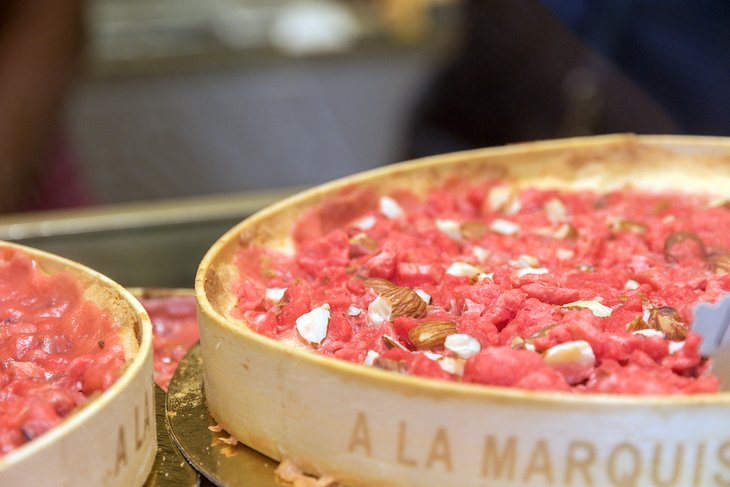
A la Marquise (37 rue Saint Jean at Rue Bombarde), a historic pâtisserie shop with a refined salon de thé (tea room), occupies the ground floor of La Maison du Chamarier. This esteemed boutique prepares classic French pastries and Lyonnaise specialties, such as tarte à la praline (praline tart) and bugnes (beignets). The pâtisserie boutique is open Wednesday through Sunday from 9am until 7:30pm; the tea room serves breakfast, lunch, and afternoon tea.
Musée de la Civilisation Gallo-Romaine
Lyon stands on the site of the ancient Roman city called Lugdunum, founded in 43 BC, which was the capital of Gaul. The Museum of Gallo-Roman Civilization (Museum of Archaeology) displays Gallo-Roman-era objects including vases, gravestones, mosaics, statues, coins, and ceramics.
The antiquities presented in the museum's exhibits are from onsite digs (from the city of Lugdunum) as well as nearby Roman archaeological sites of Saint-Romain-en-Gal and Vienne.
The collection is renowned for its breadth and variety. Highlights include a monumental Hercules sculpture, decorative marble work from ancient baths, and a magnificent 100-square-meter floor mosaic depicting images related to the God of Oceans.
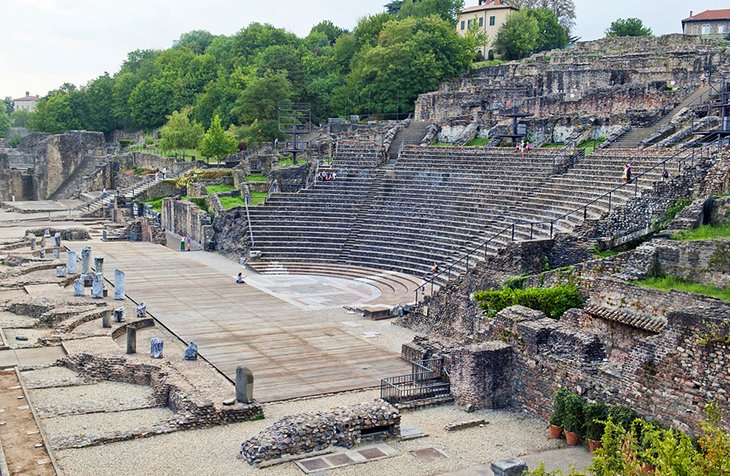
The museum is located next to an archaeology site that boasts the oldest ancient ruins in France, including two Roman theaters. The Grand Théâtre dating back to 15 BC was where tragedies and comedies were performed. The Odéon was the theater for musical performances. There are also the foundations of a temple that was devoted to the Goddess Cybele.
Address: Museum, 17 Rue Cléberg, Lyon; Archaeological Site, 6 Rue de l'Antiquaille, Lyon
Gourmet Restaurants, Culinary Boutiques, and Cooking Classes
Lyon is widely considered the capital of French gastronomy. While visiting Lyon, one should definitely indulge in the famous regional cuisine. The local cooking features hearty dishes such as steak, lamb stew, roast chicken with morels, and poached eggs in red wine sauce. The most unique culinary specialty is something known as "quenelles," a type of dumpling (made with ground fish) in a rich cream sauce.
The best places to visit in Lyon for authentic cuisine are the "Bouchons Lyonnais," friendly family-run bistros that offer simple yet delicious meals. Generally bouchons serve classic regional specialties.
The city has several renowned restaurants created by Paul Bocuse in addition to the Michelin two-starred Restaurant Paul Bocuse outside Lyon. In the Presqu'île district, the Brasserie Le Nord serves Lyonnais specialties in a warm, convivial setting. The Brasserie Le Sud near the Place Bellecour specializes in Mediterranean cuisine. On the Quai du Commerce, the Brasserie L'Ouest offers classic French meals and international dishes in a casual dining room.
For an elegant dining experience, the Grand Café des Négociants (1 Place Francisque Régaud) is an excellent choice in the Presqu'île district. This historic brasserie (dating to 1864) offers traditional Lyonnaise cuisine. Waiters in old-fashioned uniforms serve meals to guests seated at white-linen-covered tables in an opulent Second Empire dining room. The restaurant's name "café des négociants" ("coffee shop of traders") refers to its original purpose as a place where silk merchants and diamond vendors met. The Place Francisque Régaud is still home to many luxury retail boutiques.
Tourists will also have fun shopping for gourmet food products in Lyon. Chocoholics should make a beeline for Palomas boutique (2 Rue du Colonel Chambonnet), an acclaimed chocolatier in Lyon since 1917, and Boutique Voisin (28 Rue de la République and other locations throughput Lyon), a prestigious chocolate shop founded in 1897.
A highly recommended foodstuff shop is Giraudet (2 Rue du Colonel Chambonnet), which sells high-end culinary items; the shop also offers cooking classes. The boutique A L'Olivier (33 Cours Franklin Roosevelt) is a purveyor of the finest olive oils made in France.
Also be sure to visit Les Halles de Lyon - Paul Bocuse (102 Cours Lafayette). This covered marketplace has more than 50 different shops and restaurants that offer regional products, including charcuterie, locally made cheese, fresh bread, quenelles, truffles, fruits, vegetables, pâtisserie, and chocolate bonbons.
Colline de la Croix-Rousse
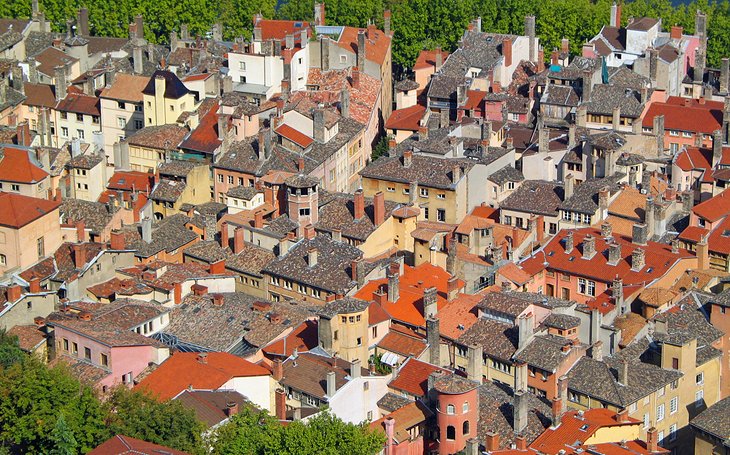
Built on the slopes of the Croix-Rousse hillside, this historic neighborhood was an important center of weaving in the early 19th-century. Because of the high gradient of the streets, there are many charming curves and staircases.
The most unique aspect of the neighborhood is its collection of traboules, covered passageways that run through courtyards, buildings (including private houses), and pedestrian staircases. In the 19th century, these special alleyways were used by silk workers to transport their fabrics. Tourists will have fun wandering around the neighborhood to discover the architectural curiosities of the winding streets and hidden traboules.
There are passageways starting at 9 Place Colbert and continuing to 14 Bis Montée Saint Sébastien; from 20 Rue Imbert Colomès to 55 Rue des Tables Claudiennes; and from 30 Rue Burdeau to 19 Rue René Leynaud (Passage Thiaffait). The traboules are open to the public, but visitors should be quiet, out of respect to the residents.
Another tourist attraction in this area is the Maison des Canuts (House of Silk Workers) at 10/12 Rue d'Ivry. This small museum is dedicated to the art of creating silk. During a visit, tourists can discover the invention of the Jacquard loom and watch hand-weaving demonstrations on traditional looms.
Presqu'île District
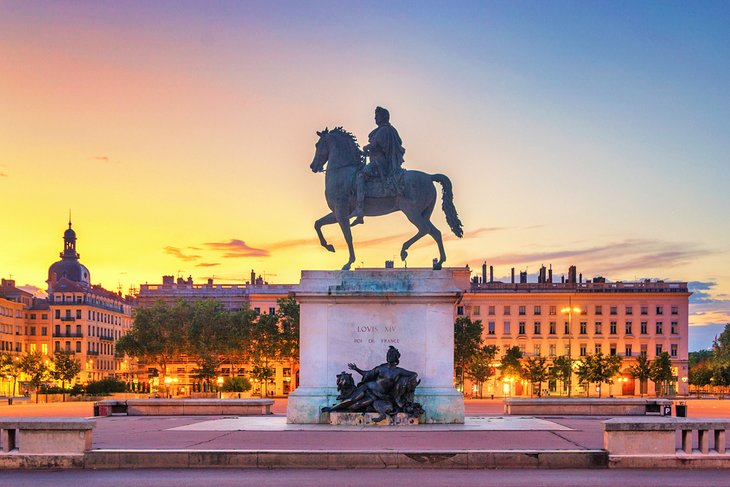
Lyon's Presqu'île district is a piece of land, sort of like an island, within the river. This neighborhood is distinguished by its beautiful architecture and monumental town squares.
The Place des Terreaux is worth visiting just to see the fountain by F.A. Bartholdi. This grandiose work of art depicts the triumphal chariot of the Garonne River. Notice the four marvelously sculpted horses that look very hardworking, they represent the four different rivers that flow into the ocean.
Lyon's Hôtel de Ville (Town Hall) is found on the east side of the square. Originally built between 1646 and 1672, the Hôtel de Ville was rebuilt (after a fire) by Jules Hardouin-Mansart in his signature Baroque style.
Another monumental edifice in this area is the Palais de la Bourse et du Commerce, on Rue de la République. Although the building has a Renaissance architectural style, it was constructed in the 19th century. Continuing south of the Palais de la Bourse, tourists will come across the Eglise Saint-Bonaventure, a former Franciscan church built in the 14th-15th centuries.
Lyon's finest square in the Presqu'île district is Place Bellecour, between the Rhône and Saône Rivers. The square's centerpiece is an equestrian statue of Louis XIV created by the Lyon-native sculptor F. Lemot. Elegant 19th-century buildings line the east and west sides of the square. From the north side of the square, there is a view of the Fourvière hill.
A few steps away from the Place Bellecour is the Hôtel-Dieu de Lyon, a splendid 17th-century building that once served as a hospital. Another lovely square, the Place Carnot, is found by way of Rue Victor-Hugo. This square features an immense monument to the Republic created in 1890.
Musée des Tissus et des Arts Décoratifs
Housed in an 18th-century mansion are two superb museums: the Fabric Museum and the Museum of Decorative Arts. The Musée des Tissus (Fabric Museum) is a unique museum that allows visitors to discover the fascinating history of Lyon's silk trade, dating back to the Renaissance period.
The collection includes rare fragments of clothing from the 13th and 14th centuries, exquisite tapestries from the 18th century, as well as more modern 19th- and 20th-century pieces. Also on display is a splendid silk dress of the Empress Josephine. Among the most precious items in the collection is a pleated tunic from Egypt's 5th Dynasty era, dating to around 2,500 BC.
The Musée des Arts Decoratifs (Museum of Decorative Arts) offers a rich collection of decorative pieces of artwork painted on faïence, paper, wood, and other materials; small religious sculptures; Japanese figurines; Italian majolica pieces; vintage dinnerware; antique furniture; and clocks.
The items are displayed in real-life settings to provide cultural context. Some of the museum's rooms feature lavish decor. Visitors feel as if they are taking a peek into a wealthy family's home of a bygone era.
Note: The museum has been closed since April 2021 for renovation work.
Address: 34 Rue de la Charité, Lyon
Centre d'Histoire de la Résistance et de la Déportation
During the Second World War, Lyon was known as the "Capital of the Resistance" because of the strength of its struggle against the Nazi regime. The Resistance and Deportation History Centre is housed in the building that was used by the Head of the Gestapo in Lyon. This building is now dedicated to the remembrance of the victims who were held in the building's cellars.
The Centre d'Histoire de la Résistance et de la Déportation is open to the public (Tuesday through Sunday) as a museum. The History Center tells the story of the deportees, the hidden children of deportees, members of the resistance, and others who lived through the Second World War. A permanent exhibition outlines the major events of WWII and focuses on the years of occupied France.
The center also screens a documentary film about the trial of Klaus Barbie, the SS officer who was the head of the Gestapo in Lyon. The film features eyewitness accounts and extracts from the court trial of Barbie.
An audio guide helps visitors make sense of the historical information, which is presented in videos, photos, and written documents.
The center aims to honor the citizens in the resistance and pay homage to the memories of the victims of deportation. It is constantly updating its content and continually seeks out WWII eyewitnesses to share their stories.
Address: Espace Berthelot, 14 Avenue Berthelot, Lyon
Basilique Notre-Dame de Fourvière
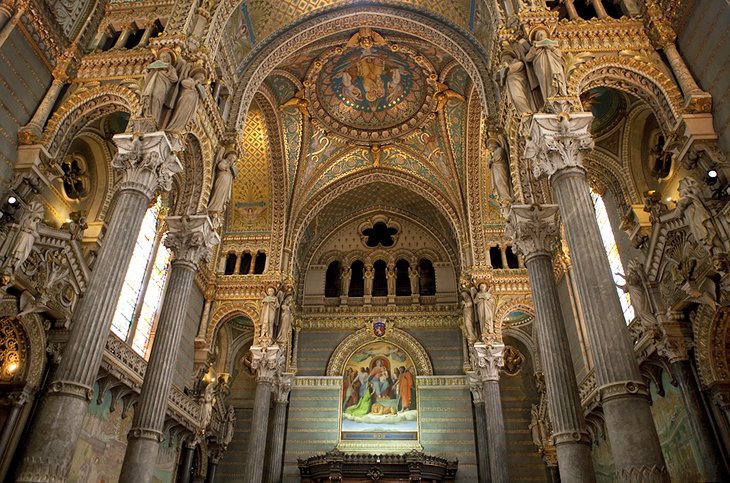
In a majestic location on the Colline de Fourvière (the hill that overlooks Vieux Lyon), the Basilique Notre-Dame de Fourvière rises to a height of 130 meters above the Saône River. The Basilica is accessible by funiculars running up the hill.
This stunning church was built after the Franco-Prussian War (between 1872 and 1884) when the people of Lyon had vowed to create a Marian sanctuary if their city was spared. The Basilica is a blend of Gothic and Byzantine styles with a richly decorated interior.
Spend time in the sanctuary to admire the sumptuous mosaics and paintings. After touring the interior, climb the northeast tower to take in the sensational views of Lyon's cityscape and surrounding areas.
For awe-inspiring panoramas, head to the Esplanade de Fourvière, on the left side of the Basilica, which provides a sweeping outlook onto the city of Lyon. The views extend to the Croix-Rousse and the Terreaux districts, the Quartier Saint-Jean further down the hill, and the Place Bellecour on the right.
Address: Place de Fourvière, Lyon
Cathédrale Saint-Jean Baptiste
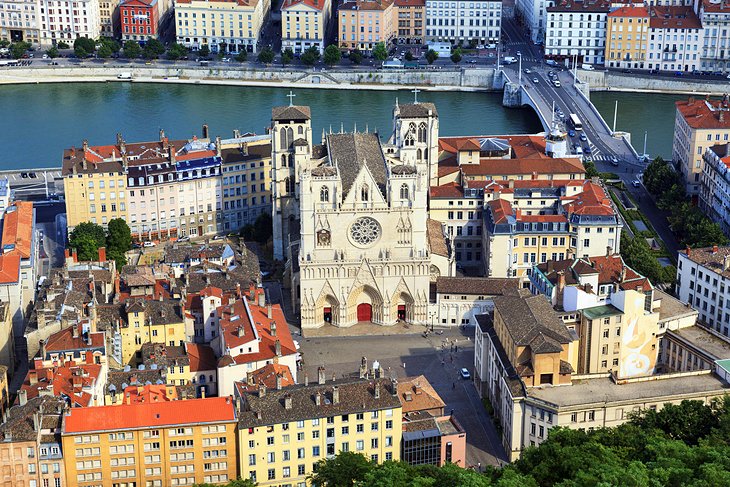
Built in the 12th-century, the magnificent Cathedral of Saint-John is renowned for its 13th- to 14th-century stained-glass windows. The large rose window dating from 1392 allows in a kaleidoscope of colorful light.
The cathedral is mainly Romanesque with a Late Gothic facade. One of the most interesting features is the astronomical clock created by Nicolas Lippius in 1598.
The cathedral also has a remarkable bell (cast in 1622) named "Anne-Marie de la Primatiale" that is one of the largest ever made and is only rung on Catholic feast days.
For a good view of the cathedral from a distance, go to the embankment near the Pont Bonaparte. This perspective allows you to see the soaring twin towers from a distance.
The cathedral is open to the public for prayer and meditation every day. Opening hours on weekdays are from 8:15am until 7:45pm and on weekends from 8am until 7pm.
Mass is celebrated Monday through Saturday at 9am, and additionally on Fridays at 7pm. On Sundays, Mass is held at 8:30am and 10:30am.
Address: Place Saint-Jean, Lyon
Basilique - Abbaye Saint-Martin d'Ainay
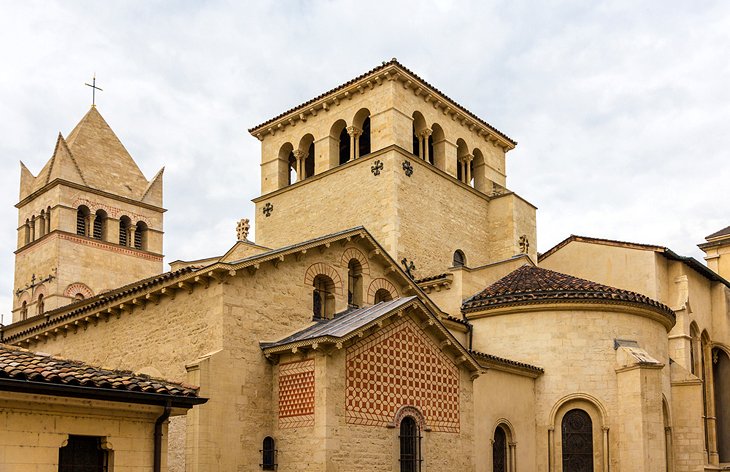
The oldest church in Lyon, the Basilique - Abbaye Saint-Martin d'Ainay was built in the 11th century on the site of a 4th-century Roman temple (which was later replaced by a 9th-century Carolingian church). The basilica originally belonged to a Benedictine abbey founded in the 6th century.
A wonderful example of Romanesque architecture, the church contains four classical columns, a 12th-century mosaic pavement in the choir, and 19th-century gilded paintings by the Lyon artist Hippolyte Flandrin.
Address: Place d'Ainay or 11 Rue Bourgelat, Lyon
Cultural Performances
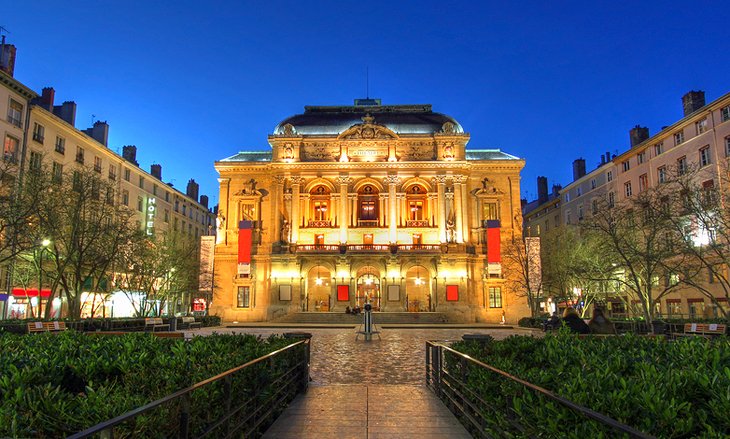
On the Place de la Comédie, the Opéra de Lyon is an opulent 19th-century opera house with a majestic dome. The original theater was renovated by Jean Nouvel, who tripled the size of the building using modern architectural techniques. The Opéra de Lyon presents a wide variety of opera, as well as dance performances and classical music concerts.
Tourists may visit the Opéra de Lyon on guided tours Wednesdays and Saturdays at 1pm and Thursdays at 5:30pm. Guided tours are in French, and tours last for 90 minutes. Tickets for tours must be reserved in advance and may be purchased online, by phone, or at the Opéra de Lyon ticket office. Groups may organize visits Monday through Saturday (at 1pm or 3pm) by contacting the theater ahead of time.
The Théâtre des Célestins (4 Rue Charles Dullin) is a dazzling Neoclassical theater built in 1881. The exquisite Italian-style auditorium is one of the most beautiful in Europe. Guests marvel at the breathtaking ceiling painting and gilded décor while lounging in plush red velvet seats.
The Célestins Theater presents dramatic performances (in French), ranging from classical repertory to contemporary plays. Outside of performances, the theater is only open to the public for guided tours on specific days.
Parc de la Tête d'Or
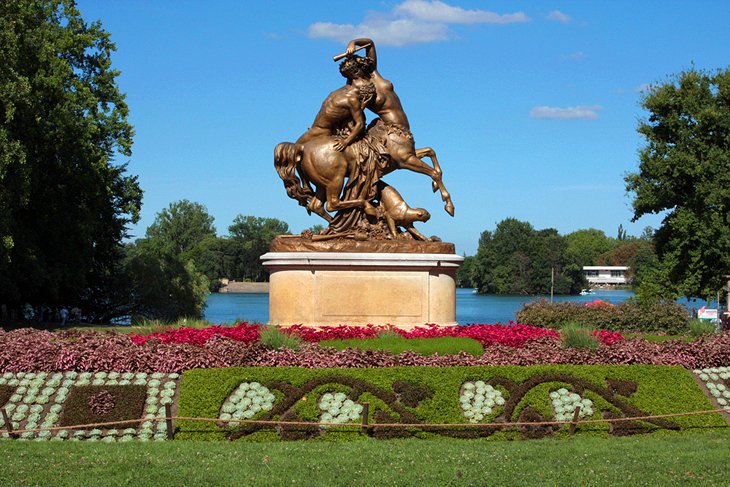
The Parc de la Tête d'Or was named for a golden statue of Christ that, according to legend, was buried here by Crusaders. Nestled on the left bank of the Rhône River, this luxuriant park is a haven of tranquility in the heart of the city.
The park has a zoo, an eight-hectare botanical garden, and a rose garden with heirloom varieties. There is also a lake (L'Embarcadère) where families can rent boats to sail around and admire the scenery.
Highlights of the park for children are Le Grand Carrousel, a delightful merry-go-round created in 1895; the pony rides; the "Petit Lac" ("Little Lake"), with its mini paddleboats designed for little ones; and an old-fashioned choo choo train called "La Dauphinoise" that youngsters adore.
Address: Place du Général Leclerc, Lyon
Official site: http://www.loisirs-parcdelatetedor.com/en/
Musée de l'Imprimerie et de la Communication Graphique
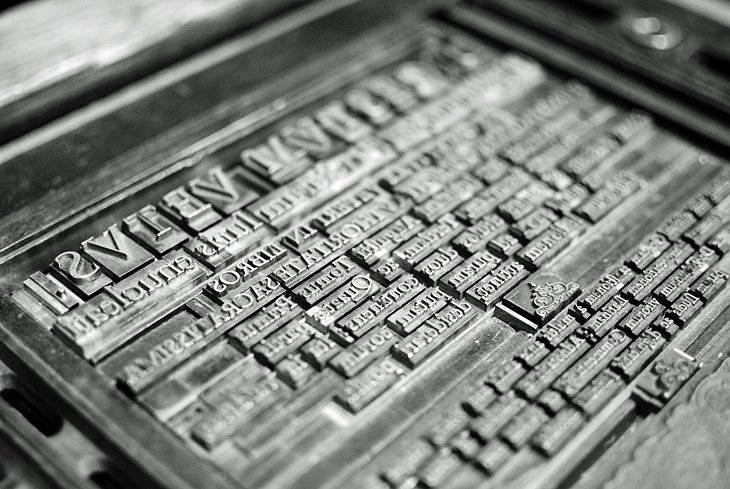
The printing press was a revolutionary technology that changed the world, and Lyon was an important center of bookmaking during the 15th to 16th centuries. The Museum of Printing and Graphic Communication offers an insightful overview of the history. Exhibits explain graphic printing techniques, as well as the cultural effect of printed books.
Address: 13 Rue de la Poulaillerie 69002 Lyon
Mural of Famous People from Lyon
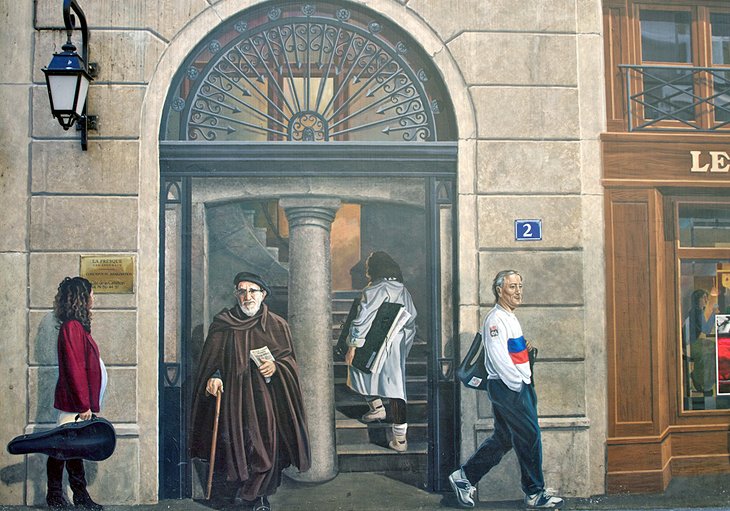
At the Quai Saint Vincent, this 800-square-meter mural features 31 famous people from Lyon, with 25 historical figures and six contemporary figures. The mural was created by the Cité de la Création organization in 1994-1995. Look for Paul Bocuse in front of "Le Pot Beaujolais" restaurant.
Address: 49 Quai Saint Vincent and 2 Rue de la Martinière
Aquarium de Lyon
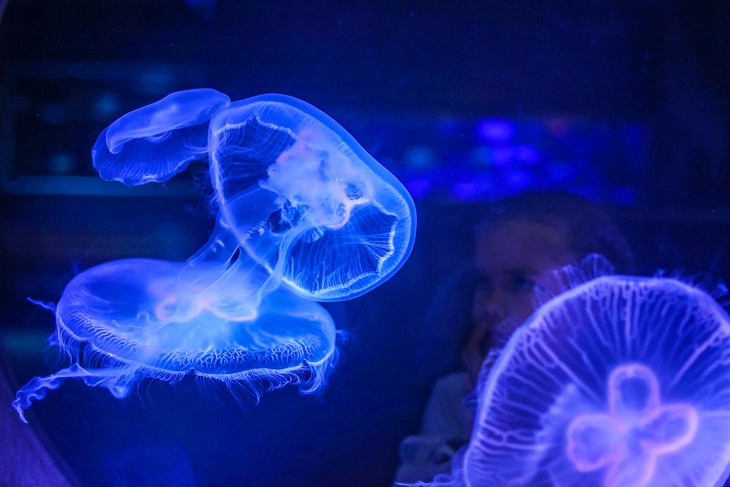
Opened in 2002 and renovated in 2010, the Aquarium of Lyon is dedicated to educating the public about marine ecosystems and environmental issues related to the ocean. Aquarium tanks represent various ocean zones, such as tropical and temperate waters.
Through its exhibits on coral reefs and unique marine species, the Aquarium of Lyon aims to increase public awareness about the importance of protecting biodiversity.
The Aquarium of Lyon is open Wednesday through Sunday from 10:30am until 6:30pm.
Address: 7 Rue Stéphane Déchant, La Mulatière
Official site: https://www.aquariumlyon.fr/en/
Musée des Confluences
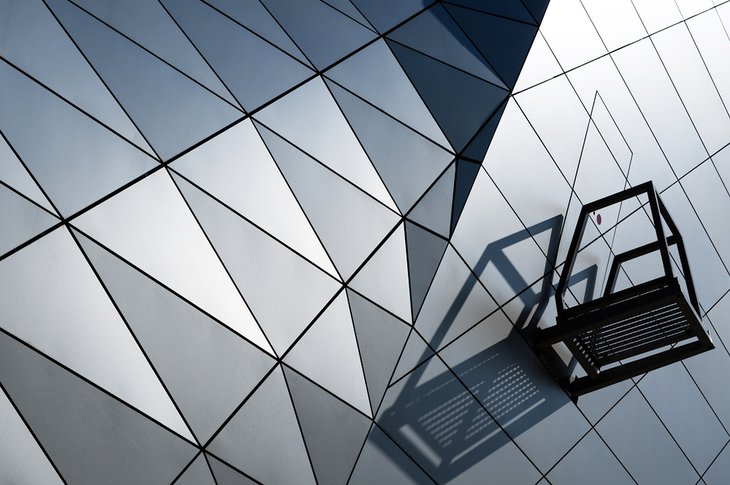
An eye-catching ultra-modern building provides the exhibit space for this comprehensive and cutting-edge museum. The museum displays collections of natural science, natural history, archaeology, and anthropology. The natural science department includes minerals, shells, zoology, and entomology sections. The archaeology department covers paleontology and Egyptology.
Highlights of the museum's collections include the pre-Columbian archaeological objects from Peru, the artifacts from Eastern Siberia, the Chinese religious puppets, an assortment of African headdresses, and the sub-Saharan ceramics.
The museum is open Tuesday through Sunday from 10:30am until 6:30pm. On the first Thursday of every month, the museum stays open until 10pm.
Address: 86 Quai Perrache, Lyon
Lyon, France - Climate Chart
| Average minimum and maximum temperatures for Lyon, France in °C | |||||||||||
| J | F | M | A | M | J | J | A | S | O | N | D |
| 6 1 | 8 1 | 12 3 | 14 6 | 19 10 | 23 14 | 27 16 | 26 16 | 22 12 | 16 8 | 10 4 | 7 2 |
| PlanetWare.com | |||||||||||
| Average monthly precipitation totals for Lyon, France in mm. | |||||||||||
| 43 | 41 | 51 | 61 | 76 | 79 | 66 | 79 | 76 | 86 | 69 | 51 |
| Average minimum and maximum temperatures for Lyon, France in °F | |||||||||||
| J | F | M | A | M | J | J | A | S | O | N | D |
| 42 33 | 46 34 | 53 38 | 58 42 | 67 50 | 73 57 | 80 61 | 79 60 | 72 54 | 61 47 | 50 39 | 44 35 |
| PlanetWare.com | |||||||||||
| Average monthly precipitation totals for Lyon, France in inches. | |||||||||||
| 1.7 | 1.6 | 2.0 | 2.4 | 3.0 | 3.1 | 2.6 | 3.1 | 3.0 | 3.4 | 2.7 | 2.0 |
More Related Articles on PlanetWare.com
Places to Visit by Train from Lyon. Thanks to the country's TGV (high-velocity) train system, Lyon is easily accessible to many of France's top tourist attractions. By TGV train, it takes less than two hours to arrive in Paris, while Avignon, in Provence, with its UNESCO-listed 14th-century Palais de Papes, is just over an hour away.
Highlights of the French Alps and Jura Region: Less than 90 minutes away by car, Grenoble boasts a charming historic center, top-notch cultural attractions, and gorgeous alpine scenery. The quaint alpine village of Chamonix and the mythic Mont-Blanc mountain in the French Alps are a 2.5-hour drive away. The verdant landscape of the Parc Jura Vaudois in the Jura Region is a 2.5-hour drive away.