17 Top-Rated Day Trips from Munich
While there's certainly no shortage of attractions for tourists in Munich, there are also plenty of great things to see and do in the area around Bavaria's largest city. Finding dazzling palaces and castles, charming old villages, and mountain vistas is as easy as jumping in a car, using the region's excellent public transport system, or joining a guided tour.
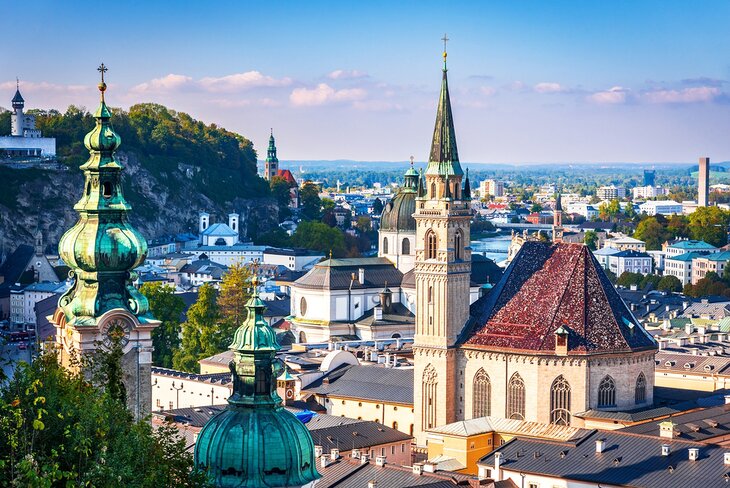
Along with the castles and palaces close to Munich, such as Herrenchiemsee or Schleissheim Palace, it is easy to reach historic Nuremberg and the beautiful half-timbered towns to the north along the Romantic Road. The Bavarian Alps are within easy reach, as are both Salzburg and Innsbruck, in Austria.
Less famous perhaps, but delightful to visit are Bavarian towns like Freising and Ingolstadt, and Passau on the Danube River. You'll find plenty of places to visit and things to do in this list of the best day trips from Munich.
- 1. Neuschwanstein
- 2. Linderhof Palace
- 3. Herrenchiemsee
- 4. Dachau Concentration Camp Memorial Site
- 5. Nuremberg (Nürnberg)
- 6. Berchtesgaden and Eagle's Nest
- 7. Romantic Road and Rothenburg
- 8. Salzburg, Austria
- 9. Passau and the Danube
- 10. Garmisch-Partenkirchen and Zugspitze
- 11. Murnau am Staffelsee
- 12. The Schleissheim Palace Complex
- 13. The Cathedral of St. Mary and St. Korbinian
- 14. Regensburg
- 15. The Old Town of Ingolstadt
- 16. Oberstdorf
- 17. Innsbruck and Swarovski Crystal Worlds
- Map of Day Trips from Munich
1. Neuschwanstein
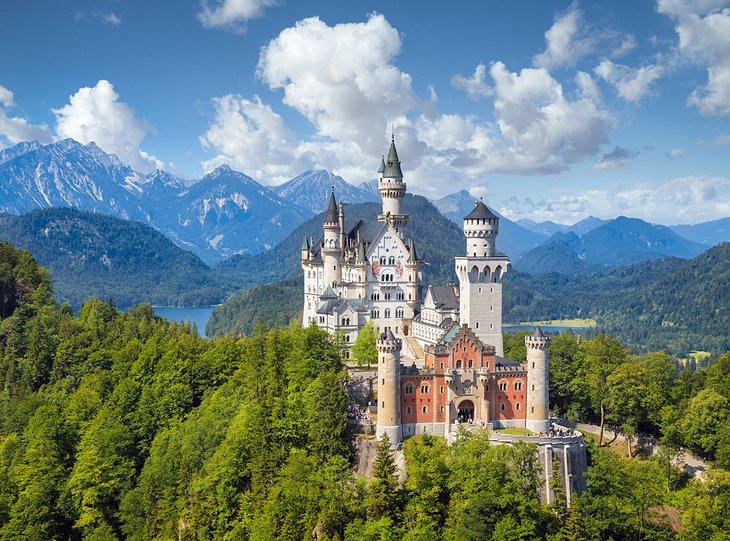
Possibly the most recognized castle in the world — it was the inspiration for Walt Disney's famous theme park castles — Neuschwanstein is a neo-Romanesque fantasy built by Ludwig II of Bavaria in the late 19th century. It fulfills every romantic dream of a castle, with its tall spires and turrets, battlements, and stone walls that rise dramatically on a rocky crag above the lake.
The castle is just as fantastic inside, lavishly decorated in themes from opera and romantic literature. Guided tours of the sumptuous interior include the Throne Room, the Singers' Hall, and some of the country's most spectacular views of the Bavarian Alps, which rise behind it. As you can imagine, this fairy-tale castle is very popular with families with young children.
You can easily combine a visit here with King Ludwig's equally fantastic hunting Lodge, Linderhof (see below), on the 10.5-hour Royal Castles of Neuschwanstein and Linderhof Day Tour from Munich, which also includes a shopping stop in the pretty Bavarian village of Oberammergau.
Address: Neuschwansteinstraße 20, Schwangau
2. Linderhof Palace
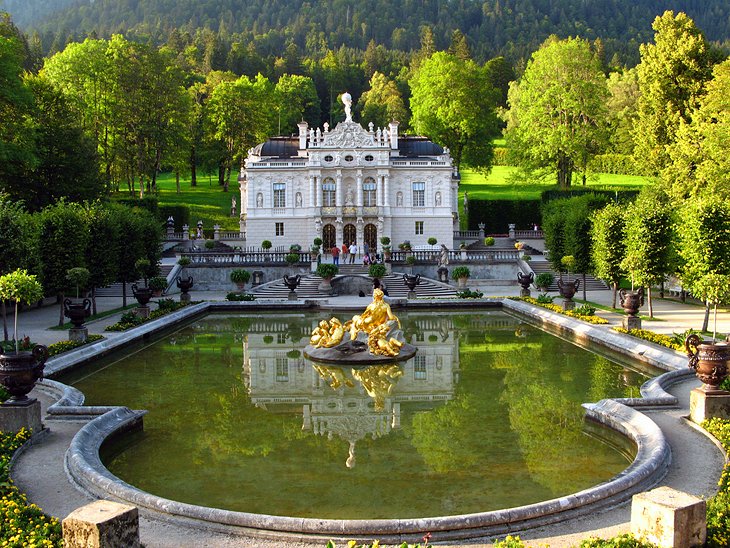
Southwest of Munich near Ettal and the Austrian border, Linderhof Palace was King Ludwig II's favorite, set like a glittering jewel box among wooded hills. Built as a hunting lodge in Rococo style in 1878, its halls and rooms are elegantly furnished.
Highlights of a tour include the Hall of Mirrors, used by the king as a reading room; the Eastern and Western Tapestry Chambers, with their rich wall hangings; the Audience Chamber, used as a study; the King's Bedchamber; and the Dining Room, famous as the place where Ludwig would dine alone and "talk" to imagined guests such as Louis XV.
Explore the park to discover elaborate fountains and features like the Formal and Landscape Gardens; the Moorish Pavilion; and the wonderful Venus Grotto, Ludwig's man-made version of Capri's famous Blue Grotto. (Entrance to the palace and grotto is by guided tour only.)
The Royal Castles of Neuschwanstein and Linderhof Day Tour from Munich combines the two most famous of Ludwig's palaces.
Address: Linderhof 12, 82488 Ettal
3. Herrenchiemsee
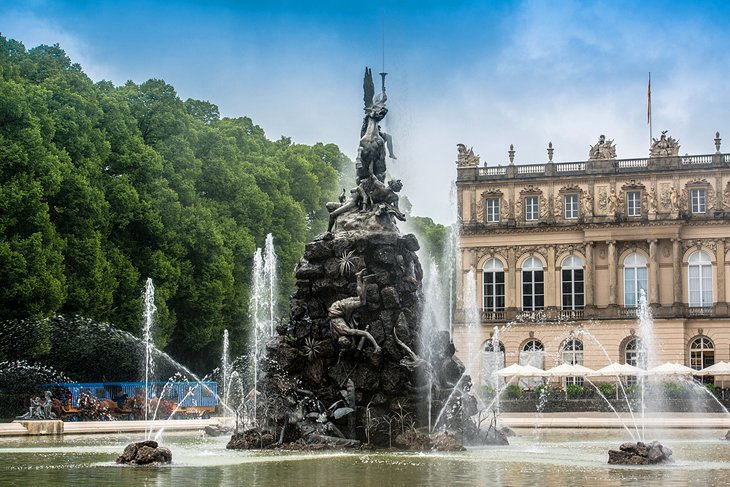
On the island of Herreninsel on the Chiemsee, Bavaria's largest lake, about 60 kilometers southeast of Munich, the stunning palace complex of Herrenchiemsee was started in 1878 by King Ludwig II. He planned it to rival Versailles, but it remained unfinished after he drowned at age 40.
The highlights are the lovely State Staircase, the State Bedroom, and the Great Hall of Mirrors, as well as Ludwig's sumptuous Rococo-style Small Apartment. Important artifacts related to Ludwig's life are included in the ten rooms of the King Ludwig II Museum, including furniture once housed in the Munich Residenz.
The gardens include sculptures and exquisite fountains, one of them a copy of the Bassin de Latone in Versailles. Also on the island is a former Augustinian Monastery, now a museum. You can reach the island by boat from Prien or Stock. You can only visit the palace interior by a guided tour, available in English.
Address: 83209 Herrenchiemsee
4. Dachau Concentration Camp Memorial Site
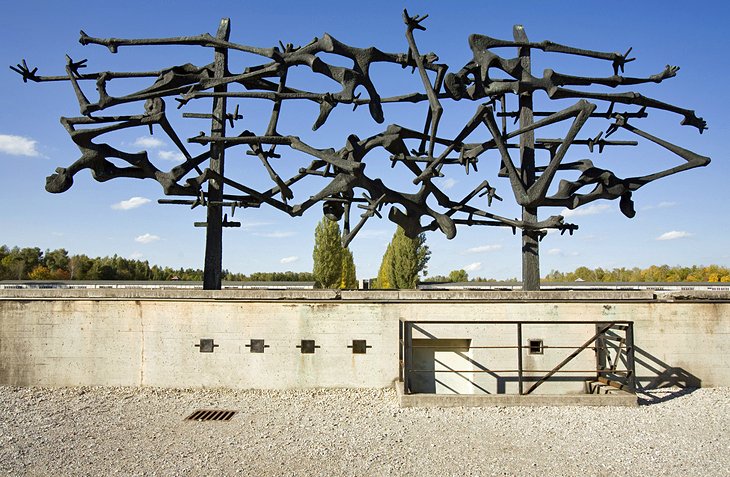
About 17 kilometers northwest of Munich, the town of Dachau is famous for its 18th-century Schloss, and infamous as the location of the notorious Dachau concentration camp, where some 41,000 people died during Nazi rule.
Now a memorial site with the reconstructed barracks and cells, KZ-Gedenkstätte Dachau also houses a museum with artifacts and documents from this dark period in Germany's history. English language tours are available daily at 11am and 1pm, with additional Saturday and Sunday tours at 12:15 from July through September.
Or you can join the Dachau Concentration Camp Memorial Site Tour from Munich by Train to tour the exhibitions and memorials with a guide, who interprets the site with historical details.
Address: Pater-Roth-Str. 2a, D-85221 Dachau
5. Nuremberg (Nürnberg)
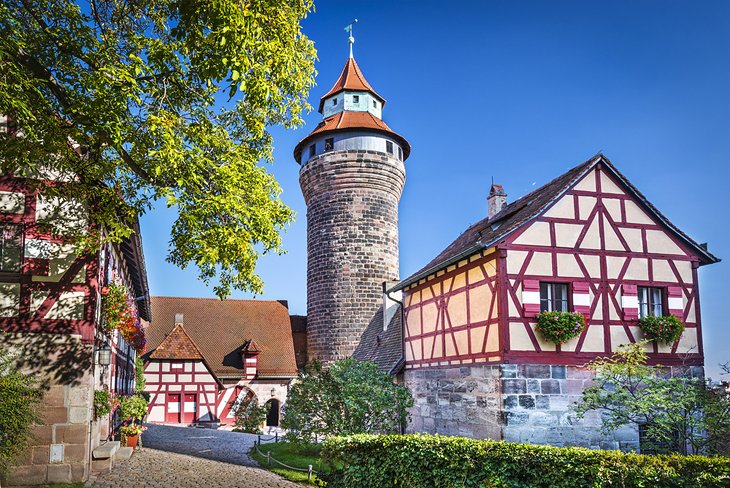
The ancient city of Nuremberg has been an important center for arts and culture since the Middle Ages and has preserved most of the old walls that have encircled it since the 14th and 15th centuries. You can walk along these and explore its gates and towers, as well as the hilltop castle that overlooks the old city center.
Here, you'll find Gothic churches and other buildings that have been carefully restored from damage during World War II bombing. Nuremberg was the site of the Nazi Party Rally Grounds, where Hitler held his propaganda rallies, and you can visit the documentation center for information on the Third Reich and Nazi activities here.
On a 10-hour Nuremberg Day Trip from Munich, you can tour the major sites in the city with a professional guide and have free time to explore further on your own, traveling to Nuremberg and back by train.
6. Berchtesgaden and Eagle's Nest
Among the most popular Bavarian Alps vacation spots, the attractive town of Berchtesgaden is surrounded by mountains. These rise so steeply from the shores of the nearby Königssee, that its scenery is often described as fjord-like. The entire area is part of the Berchtesgaden National Park.
In the town itself, the main attraction is the palace of the Wittelsbach dynasty, formerly a property of the Augustinians and dating from the 1100s. It is now a museum of art, weaponry, furniture, and fine porcelain.
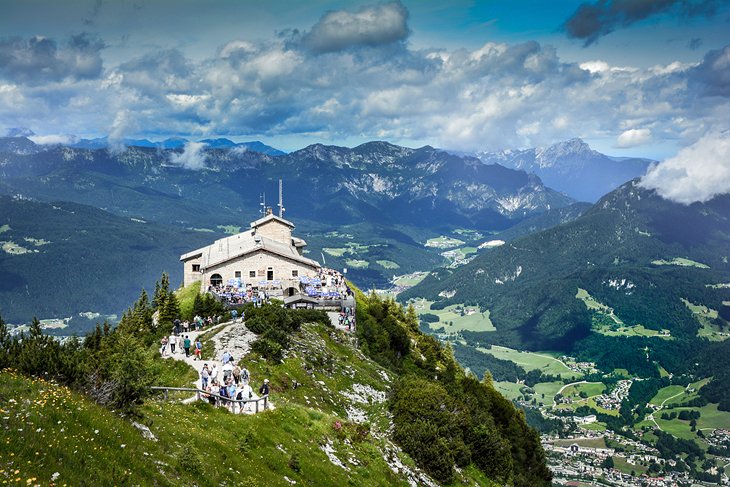
But the main goal of most tourists in Berchtesgaden is the Eagle's Nest, the mountain refuge built by Hitler on Mt. Kehlstein. It is accessed by a 6.5-kilometer private road built for Hitler and by a brass-fitted elevator to the 1,834-meter summit. Along with Hitler's lodge, where you can see original features, such as a mantelpiece presented to Hitler by Mussolini, the summit provides spectacular views of the Bavarian Alps.
The 10.5-hour Berchtesgaden and Eagle's Nest Day Tour from Munich is a good way to visit this historic site with a professional guide and savor the Alpine scenery from an air-conditioned coach.
7. Romantic Road and Rothenburg
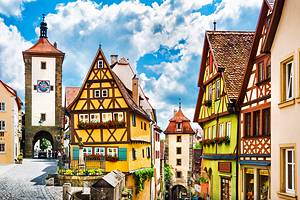
The Romantic Road connects a string of postcard-perfect towns in the provinces of Bavaria and Baden-Württemberg. Along the route are the three medieval walled towns of Rothenburg ob der Tauber, Dinkelsbühl, and Nördlingen, as well as Harburg, with its impressive hilltop castle, one of the oldest in Germany.
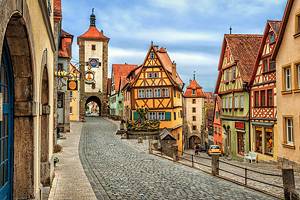
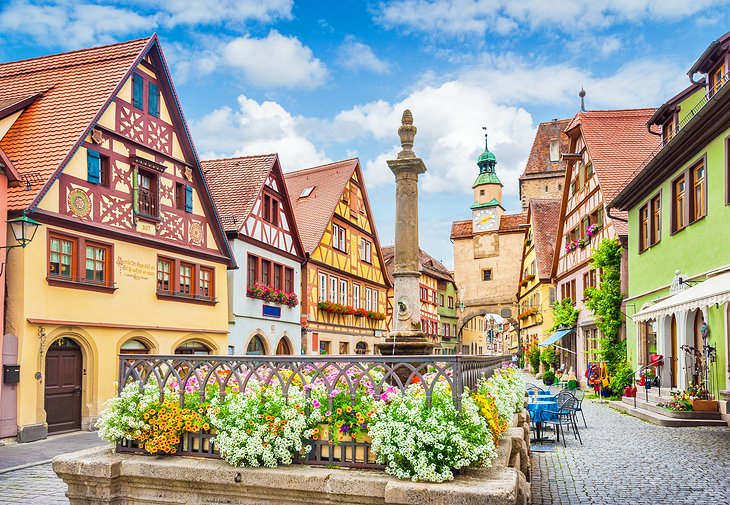
Rothenburg ob der Tauber is one of the best-preserved medieval towns in Europe, its walls and towers rising dramatically on the steep banks of the River Tauber. Its center is filled with half-timbered houses and fine churches, plus a 13th-century town hall.
The 10.5-hour Romantic Road, Rothenburg, and Harburg Day Tour from Munich follows this picturesque route by coach through Bavaria's mountains and forests, stopping at Harburg Castle before arriving in beautifully preserved Rothenburg. There is time to see the top attractions; have lunch; and browse in Käthe Wohlfahrt's Christmas Village, the famous year-round Christmas shop, just off the Market Square.
8. Salzburg, Austria
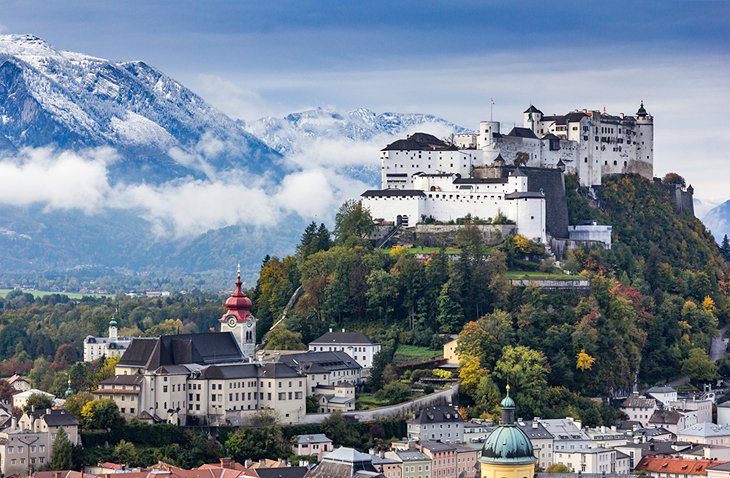
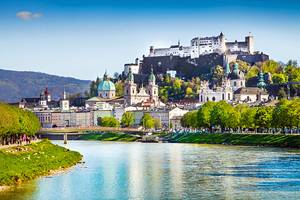
A riverside setting surrounded by snow-capped mountains, a magnificent castle, and a romantic Old Town of well-preserved Baroque buildings combine to make Salzburg one of Europe's most beautiful cities. The birthplace of Wolfgang Amadeus Mozart, Salzburg is a favorite of music lovers, who visit his home and attend the various concerts and festivals dedicated to his work.
Saltzburg's more recent musical fame is as the setting for the film The Sound of Music, and a number of sites in Salzburg will be familiar to fans of that story. Wander through the lovely arcaded courtyards and medieval streets of the Old Town and don't miss the beautiful cathedral and St. Peter's Abbey.
On the Salzburg, and Lake District Day Tour from Munich, you can visit the highlights of Salzburg along with The Sound of Music filming locations at scenic Lake Mondsee and even have time for a boat trip on Lake Wolfgang to admire the surrounding alpine scenery.
9. Passau and the Danube
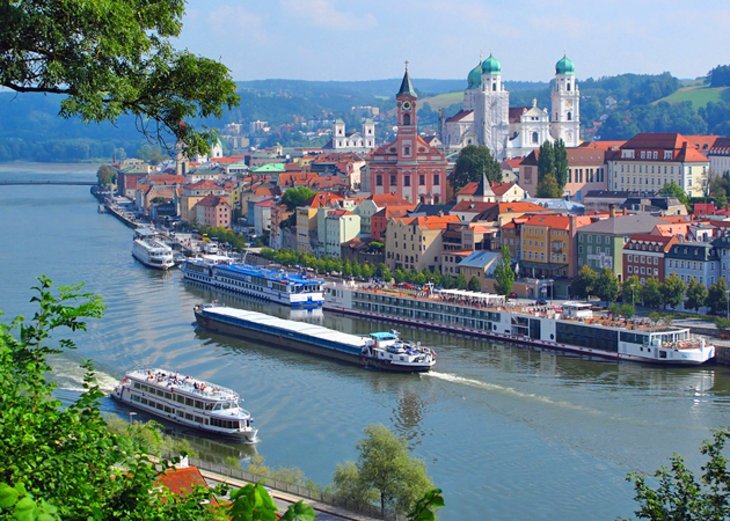
Passau is majestically situated on the Austrian frontier, where the Danube joins with the River Inn. The Oberhaus fortress and the Mariahilf church rise at either side of the Danube, combining with Passau's many Italian-style houses to create a memorable townscape. The old town of Passau lies on a narrow tongue of land between the two rivers, around a hill from which picturesque stepped lanes lead down to the rivers.
Highlights are the Cathedral of St. Stephen; its most notable features are its crowned dome and Baroque nave built between 1668 and 1678. Inside, its sumptuous stucco decoration has an Italian feel, and its organ, added in 1928, is one of the largest in the world with 17,388 pipes and 231 stops.
Other Passau highlights include the pedestrianized Ludwigstrasse, the town's main business and shopping street and home to the Votive Church from 1619, and the Heilig-Geist-Spital, the Hospital of the Holy Ghost, founded in 1358. Also of note is the Residenzplatz, home to the Cathedral Treasury, the Diocesan Museum, and the 18th-century New Bishop's Palace (Neue Residenz). Across the Danube is the 13th-century stronghold of Veste Oberhaus with superb views from its tower.
10. Garmisch-Partenkirchen and Zugspitze
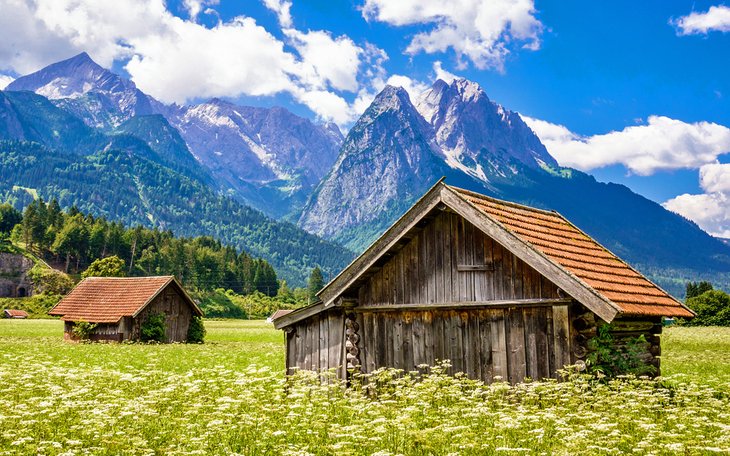
Punctuating the border between Austria and Germany, Zugspitze is Germany's highest mountain, popular with hikers and climbers of all skill levels. But the favorite ways to access its eastern summit are by cable car or the cogwheel train from the station at Eibsee, the Alpine lake at the base of the mountain. From the summit, you can see three glaciers and a 360-degree panorama of mountain peaks in Germany, Austria, Switzerland, and Italy.
The Zugspitze Day Tour from Munich includes both a cable car ride to the summit and a return by the cog railway, as well as stops to admire the colorful painted houses in Garmisch-Partenkirchen and the impressive Ettal Monastery, with its Rococo-painted sacristy, one of Germany's most beautiful.
11. Murnau am Staffelsee
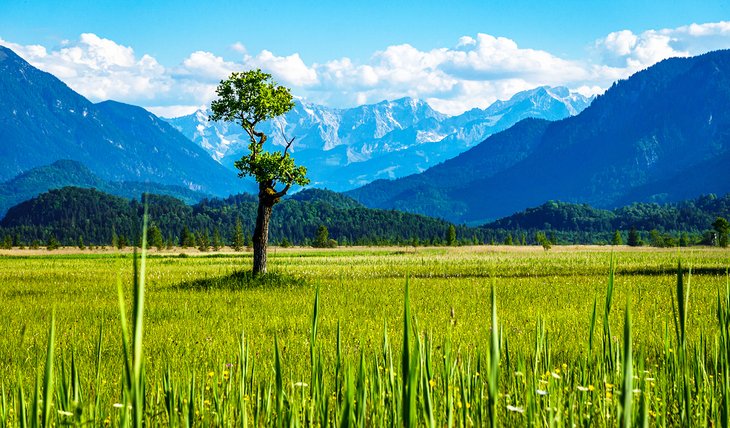
About an hour from Munich by train or car, the attractive town of Murnau am Staffelsee is a top place to visit for art lovers and nature lovers alike.
It was the open landscapes of the nearby Murnauer Moos — the largest marshland in Central Europe — that drew Wassily Kandinsky, Franz Marc, Paul Klee, and expressionist artists to Murnau. Rejecting the rigidity of the Munich art establishment in the early 20th century, these artists called themselves Der Blaue Reiter — Blue Rider — school.
You can visit the home that Kandinsky shared with fellow artist Gabrielle Münter and see more of her works in the art gallery of the Schloßmuseum. Two Baroque churches, Maria, Hilf-Kirche and Pfarrkirche St. Nikolaus, are worth seeing, and the town's main street is decorated with beautiful wrought-iron signs.
Or you can walk or bike some of the network of trails through the richly biodiverse marshlands backed by the Bavarian Alps, to be inspired as the Blue Rider artists were.
12. The Schleissheim Palace Complex
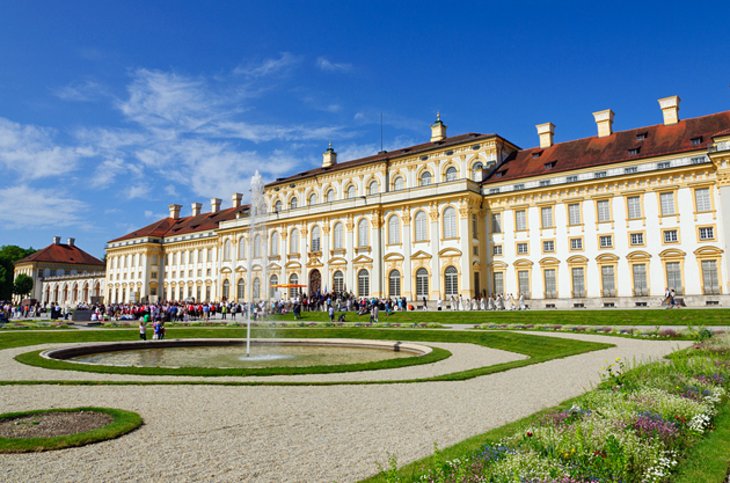
A complex of three fine palaces, the early 18th-century Schleissheim Palace and Park is just 19 kilometers away from Munich's city center and is easily accessible by car and public transport. The New Palace (Neues Schloss) is made up of a 330-meter-long main building with a taller, triple-articulated central section linked by arcades to pavilions at either side.
The charm of the beautifully decorated interior lies in its successful mingling of Italian Late Baroque and Early Rococo styles. Highlights are its murals and stucco work depicting the Turkish wars; the Entrance Hall, with its eight red marble columns and paintings; the grand Staircase Hall; the two-story Great Hall, with its stucco ornaments and large paintings; and the Baroque Great Gallery housing works by Dutch, Flemish, German, and Italian artists. English language audio tours are available.
The older and smaller Schloss Lustheim was built in 1688 in the style of an Italian garden palace and stands on a circular island ringed by a canal. It is best known for its fine ceiling painting celebrating Diana, Goddess of Hunting. The castle houses the Ernst Schneider Foundation's Collection of Meissen Porcelain, one of the finest such collections in Europe.
Schleissheim Park was laid out in 1720 and is one of the few Baroque gardens in Germany to have survived in its original state. Highlights include its two fountains, a cascade, and the canal that runs down the middle of the park, as well as the beautiful avenues of limes bordering its gardens.
Address: 85764 Oberschleißheim
13. The Cathedral of St. Mary and St. Korbinian
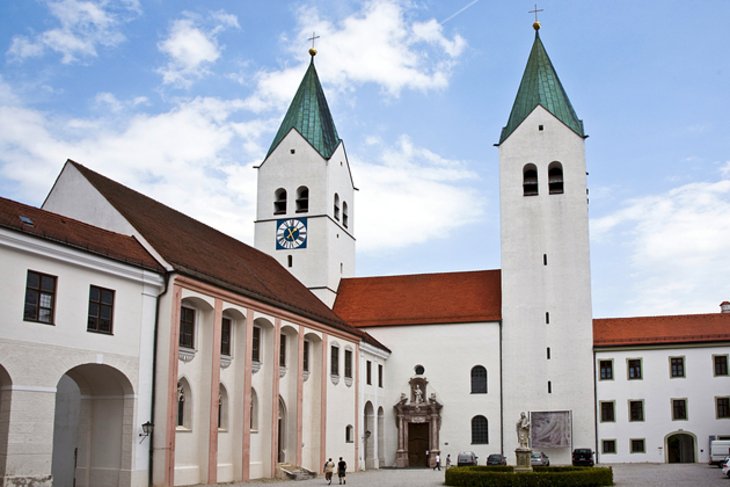
The lovely old Bavarian town of Freising lies on the high left bank of the River Isar just 33 kilometers north of Munich. The town's most outstanding feature is the Romanesque Cathedral of St. Mary and St. Korbinian, a five-aisle 12th-century basilica with a vaulted roof lavishly decorated by the Asam brothers in 1724 with stucco ornament and paintings.
A Gothic porch between the twin towers leads into the cathedral interior where you'll find the Romanesque crypt, one of the oldest of its kind in Germany, with its famous animal column made up of intertwined men and monsters, and the tomb of the church's founder, Bishop Korbinian.
Adorning the high altar is a copy of Rubens' Apocalyptic Women from 1625. Be sure to visit the Diocesan Museum with its comprehensive collection of sacred art, and the famous Lukasbild, a rare relic from Constantinople.
Address: Domberg 27, Freising
14. Regensburg
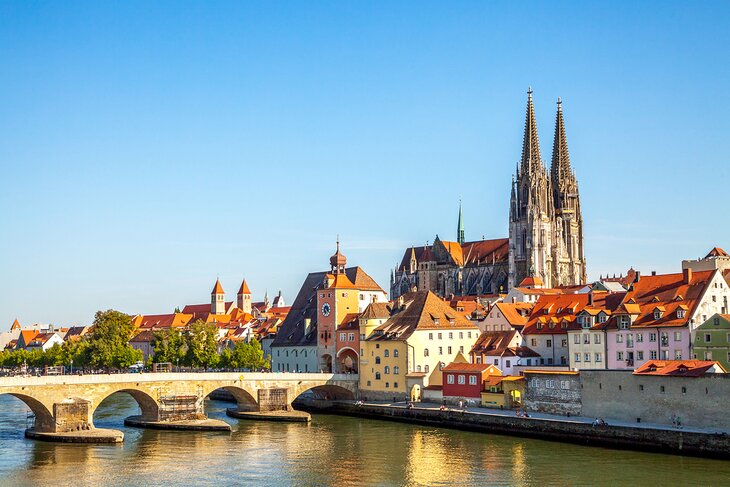
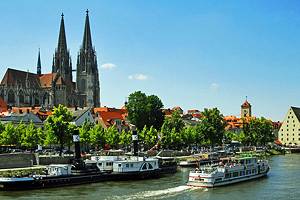
The finest Gothic church in Bavaria and a UNESCO-acclaimed Old Town make Regensburg an appealing day trip from Munich. One of the best-preserved medieval cities in Europe, Regensburg is poised picturesquely alongside the Danube at the river's northernmost navigable point. This makes it a popular starting place for Danube cruises to Vienna, Budapest, and beyond.
The focal point of the Old Town is the soaring Regensburg Cathedral (Regensburger Dom), a 13th-century masterpiece with two 105-meter-high spires and a magnificent Gothic facade. Inside, notice the superb 13th- and 14th-century stained glass, the beautiful cloister, and the paintings on the walls of the Romanesque All Saints Chapel.
In the adjoining Old Town, head for the Alter Kornmarkt to see the second-century Roman Tower and the 11th-century Old Chapel (Alte Kapelle), the oldest Catholic church in Bavaria. The interior was updated to Rococo in the 18th century, creating one of Europe's finest examples of the style.
The Old Town is worth exploring for its romantic passageways and courtyards, and for the Old Town Hall (Altes Rathaus), where you can tour the apartments and medieval courtroom. The compact center is a good place for shopping, with small independent shops along stone-paved streets.
15. The Old Town of Ingolstadt
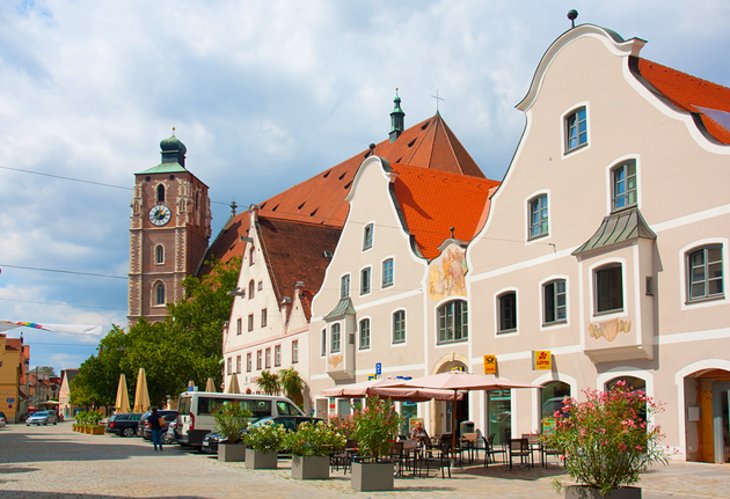
Formerly the residence and stronghold of the Dukes of Bavaria, the pedestrian-friendly old town of Ingolstadt and its many well-preserved heritage buildings are still surrounded by the remains of medieval fortifications. Highlights include the Rathausplatz, with the Old Town Hall (Altes Rathaus), formed by the combination of four Gothic houses in 1882, and the 15th-century Spitalkirche, with its fine wall paintings.
To the north stand St. Maurice's Church (St-Moritz-Kirche) and the Upper Franciscan Church (Obere Franziskanerkirche), both dating from the 14th century. The massive 15th-century Herzogsschloss has one of the finest Gothic secular interiors in Germany, and the massive Kreuztor, with its seven towers and turrets, dates from 1385.
The Minster of Our Lady (Liebfrauenmünster) is a 15th-century Late Gothic church with the largest and finest Renaissance stained glass window in Bavaria, dating from 1527.
Address: Rathausplatz 2, 85049 Ingolstadt
16. Oberstdorf
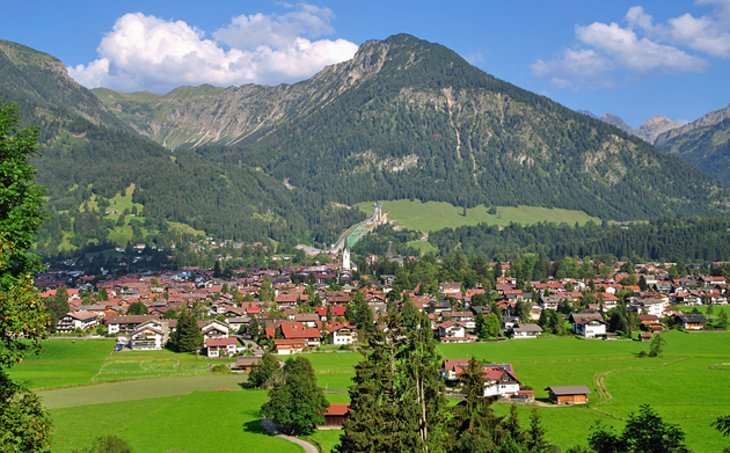
Although more than 160 kilometers from Munich, the substantial market town of Oberstdorf is worth considering for a day trip or an overnight getaway. Three streams — the Trettach, the Stillach, and the Breitach — converge just below the town to form the Iller, whose valley cuts deep into the Allgäu Alps.
This beautiful setting in a ring of towering mountains, coupled with its excellent climate, has made Oberstdorf one of Germany's most popular mountain resorts. A highlight of the town is Kurplatz, with its fine covered promenade and magnificent views of the mountains.
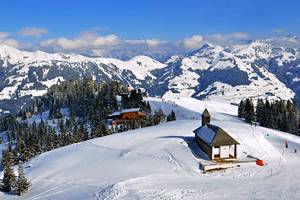
Just outside the town is the Breitachklamm gorge, and walking trails can be found near the Heini Klöpfer Ski-jump in the Stillach Valley. From here, a cable car takes you up the Fellhorn, which at 2,037 meters, is a habitat for beautiful alpine flora. Another hill popular with climbers is the 2,224-meter Nebelhorn, also accessible by cable car.
17. Innsbruck and Swarovski Crystal Worlds
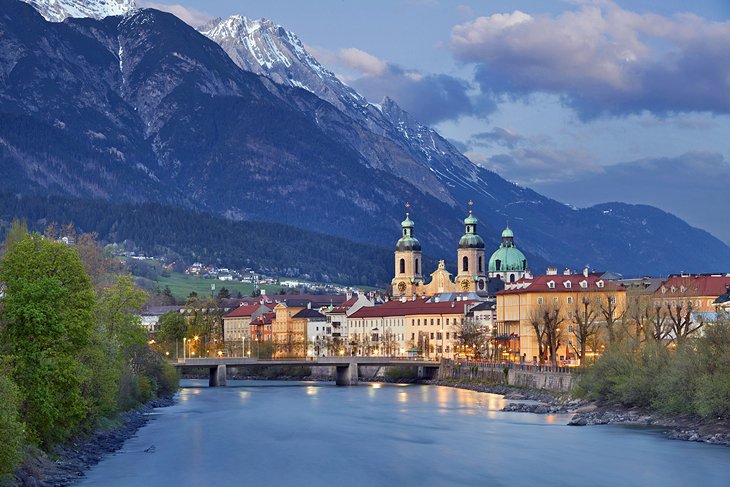
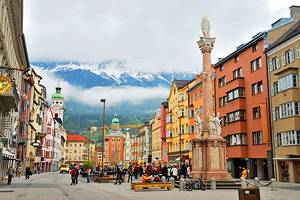
Innsbruck's well-preserved Old Town, a compact center where Late-Gothic-style buildings crowd closely together along narrow, winding streets, has a photo-worthy view at every turn. The Alpine peaks that surround this Austrian city add a scenic backdrop to colorful houses reflected in the River Inn, as well as providing outdoor things to do year-round only a few minutes' cable car ride away.
Highlights of the Old Town are the famed Golden Roof and the beautiful churches, especially the spectacular Hofkirche.
Daily shuttles take visitors from Innsbruck to the nearby Swarovski Crystal Worlds, a fantasyland of art and design in sparkling crystal. In the Chambers of Wonder, internationally known artists and designers have created sparkling original interpretations in crystal, and outside in the 7.5-hectare garden, outdoor sculptures and art installations surround a huge grass-covered giant, from which springs a waterfall.
A visit here is combined with plenty of time to explore the historic Old Town on the 10.5-hour Swarovski Crystal Worlds and Innsbruck Day Trip from Munich tour, which also includes riding through some of Bavaria's most beautiful mountain scenery.
Address: Kristallweltenstrasse 1, Wattens