Tourist Attractions in Pamplona
Thrill-seeking tourists flock to Pamplona to experience the famous Running of the Bulls event, a wild and rowdy spectacle that is part of the San Fermín Festival in July. Pamplona is also a worthwhile destination in itself.
Still partly surrounded by medieval walls, Pamplona's historic center is filled with architectural gems like its Gothic cathedral, 16th-century citadel, and Baroque town hall. The Casco Viejo (Old Town) is a delightful maze of atmospheric narrow streets and spacious squares, where locals gather to socialize with friends and family.
Tourists will enjoy taking a stroll through the Old Town's pedestrian thoroughfares and stopping at inviting outdoor cafés (especially at the Plaza del Castillo), which offer refreshments and a lively ambience. Pamplona is also well known for its restaurant scene, with offers everything from traditional Spanish cuisine and trendy pinchos (tapas) bars to Michelin-starred fine dining.
Discover the best places to visit in this vibrant historic city of Northern Spain with our list of the top attractions and things to do in Pamplona.
Running of the Bulls (Fiesta de San Fermín)
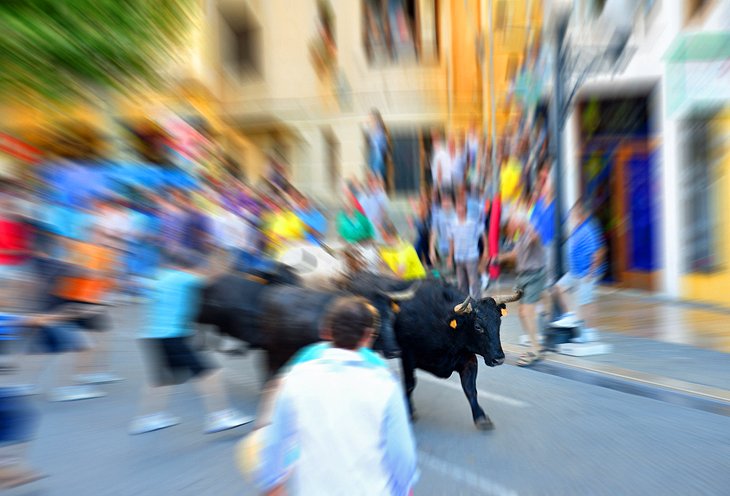
Pamplona is famous for its annual Running of the Bulls (El Encierro), immortalized by Ernest Hemingway in his novel The Sun also Rises. The event is part of the Fiesta de San Fermín, celebrated from July 6 to July 14.
The festival includes folkloric music and other entertainment, bullfights, parades of Gigantes (Giants) and Cabezudos (Bigheads), and a procession in honor of San Fermín (Saint Firmianus) on July 7 beginning with a morning Mass at the Chapel of San Fermín.
Every morning from July 7 through July 14 starting at 8am, bullfighting bulls are driven through the streets, which are closed off for the event by security fences. In a dramatic stampede, crowds of daring young men and women race ahead of the bulls, while being cheered on by thousands of bystanders.
The race winds through the narrow streets of Pamplona's Casco Viejo (historic quarter also called "La Navarrería") in a harrowing course of over 800 meters. However, the race is quick: It's over in just three to four minutes.
Tips: Travelers must keep in mind that this thrilling but dangerous event should only be attempted by runners who are over 18 years and have an advanced level of fitness, quick reflexes, and cool nerves. For those who accept the risk and want to participate in the Running of the Bulls, they must arrive at the Calle de Santo Domingo by 7am.
Spectators should arrive early for good views. A wooden fence lines the route of the race. To ensure a front-row spot behind the fence, it's best to get there by 6am or before 6:30am at the latest.
Some hotels, such as the Gran Hotel La Perla, have balconies that offer views of the race along with a more relaxing ambience. Another option is to rent a balcony from a local resident; visitors can inquire about this at the Pamplona Tourist Information Office on Calle San Saturnino.
Tourists can also watch the Running of the Bulls in a calm atmosphere at various spots in the city (including the Paseo Sarasate, the Avenida Carlos III, the Plaza del Castillo, the Plaza de los Fueros, and the Parque Antoniutti) where the race is broadcast on large screens.
Catedral de Pamplona
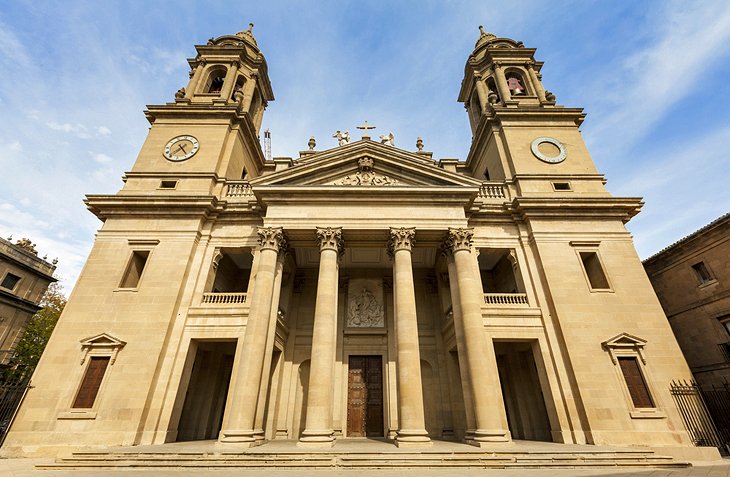
Built over several centuries, the Pamplona Cathedral blends various architectural styles in a surprisingly harmonious way. The monument incorporates the ruins of a 12th-century Romanesque church, which was on the medieval Way of Saint James pilgrimage route to Santiago de Compostela.
The main structure dates back to the 14th and 15th centuries. However, the Neoclassical facade was created in 1799 with twin towers that soar high above the town.
Inside the grandiose Gothic sanctuary is a magnificent choir and the alabaster tomb of Charles III the Noble and his wife Leonora de Trastámara by the Flemish master Jean de Lomme.
The Capilla Mayor displays an exquisite Gothic retablo created in 1507 with fine sculptural details.
In the south aisle, a richly gilded doorway features the 14th-century tympanum Death of the Virgin; the door provides access to the Claustro (Cloister), considered one of the finest medieval Gothic cloisters in Spain.
The cathedral has retained the Romanesque crypt of the original church that stood at this site. Also from the Romanesque era is a precious 12th-century carved figure of the Virgin Mary, which presided over the baptisms and coronations of the Navarre kings.
The Diocesan Museum is housed in rooms opening off the cloister. The lavishly decorated refectory displays a carving of the Maiden and the Unicorn on the lector's pulpit. The other rooms contain the cathedral's treasury, with a 13th-century Gospel book, a French reliquary of the Holy Sepulcher, the Lignum Crucis (believed to be a fragment of the True Cross), sacred art paintings, and sculptures.
Located in the Casco Viejo near the Plaza del Castillo, just inside the ancient town walls, the cathedral is open for cultural visits Monday through Saturday and for worship every morning and on Sundays. It is also possible to go up to the top of the cathedral's bell towers. Guided tours are available in Spanish.
Address: 1 Calle Dormitalería, Pamplona
Official site: http://www.catedraldepamplona.com/en/cathedral/
Museo de Navarra
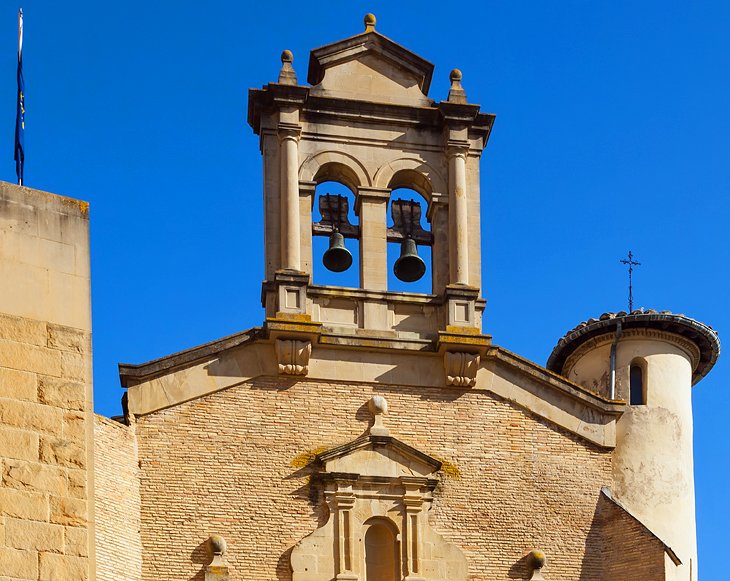
The Museo de Navarra is housed in an old pilgrims' hospital that dates to 1556. The museum's collections reveal the rich heritage of the Navarre region, with exhibits ranging from prehistoric archaeological objects to 19th-century fine arts.
Visitors learn about Pamplona's history by exploring the museum's diverse collections. Among the historical treasures are ancient Roman artifacts, medieval religious paintings and architectural elements, and old Moorish treasures.
Highlights of the antiquities, Romanesque, and Moorish collections are the 1st-century Roman mosaic depicting the Triumph of Bacchus, 13th-century capitals from the cathedral's cloister, and an 11th-century Hispano-Islamic ivory chest.
Not to be missed is the Marqués de San Adrián painting by Francisco Goya. This painting is considered one of Goya's finest portraits, exemplifying the mastery of his artistic techniques in creating light, texture, and realistic emotional expression.
Address: Calle de Santo Domingo, Pamplona
La Ciudadela
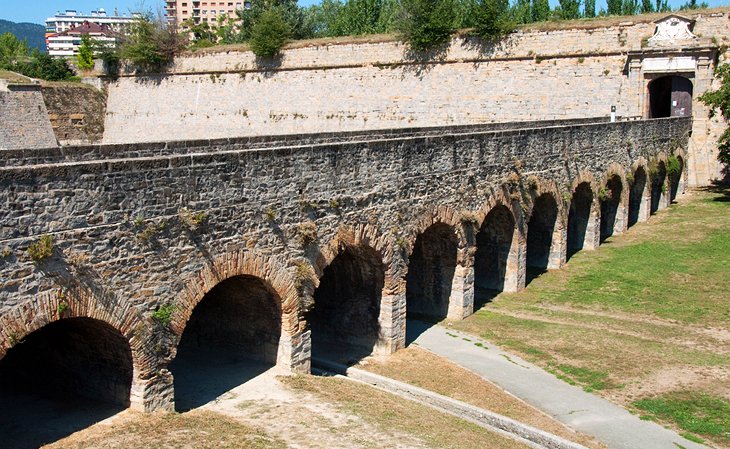
This 16th-century fortress was built during the reign of King Felipe II with the goal of providing defense against invasions by the French army. The pentagonal citadel was designed with defense bastions, although only three have survived.
In the 18th century, the citadel was converted into a prison that housed illustrious figures, including the Count of Floridablanca and the Marquis of Leganés.
Covering 280,000 square meters, the Ciudadela contains moats, pavilions, other buildings, and plenty of green space, surrounded by sturdy fortifications.
The Citadel buildings host cultural events and provide space for art galleries. Surrounding the Citadel, the lush grounds have been converted into a lovely public park called the Vuelta del Castillo, which is sometimes used for outdoor performances.
Visitors will enjoy taking a leisurely walk through the Citadel to admire this superb example of Spanish military architecture of the Renaissance era.
The Citadel is open to the public for visits Tuesday through Saturday and on Sunday mornings. The Vuelta del Castillo park is open to the public everyday.
Address: Avenida del Ejército, Pamplona
Plaza del Castillo
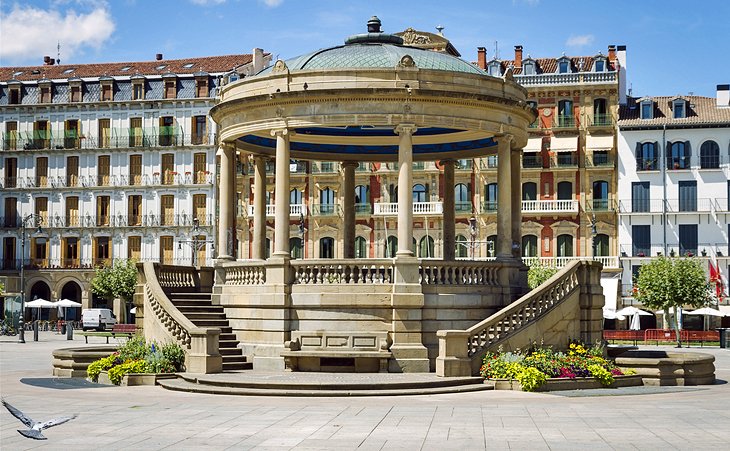
This elegant public square is the central feature of Pamplona, the heart of the Casco Viejo and a hub of social life. The Plaza del Castillo is used for public events, concerts, religious processions, and markets, and until 1844, it was a stage for bullfights.
Beautiful balconied, 18th-century buildings enclose the square, and the ground-level space is filled with shops, sidewalk cafés, and restaurants with outdoor seating.
The Plaza del Castilla is one of the best places to visit in Pamplona to soak up the town's lively ambience. Throughout the day, the square is an animated scene, where children play and all ages get together to socialize. The gazebo at the center of the square is a popular meeting place among locals.
Palacio de Navarra
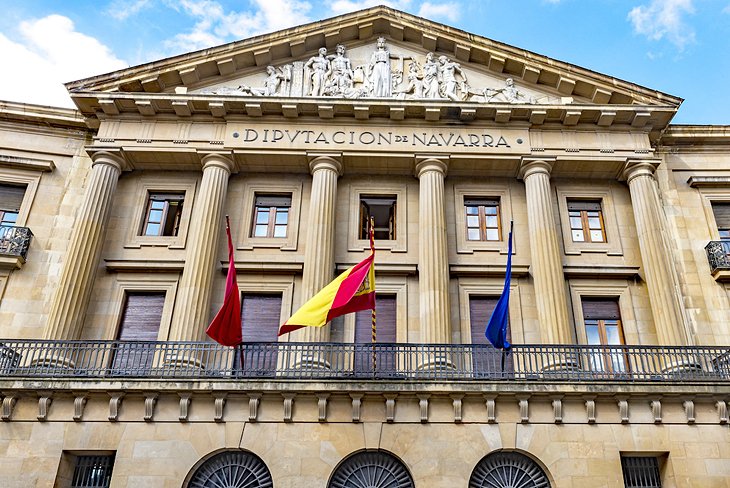
From the Plaza del Castillo, tourists can walk a few steps from the southwest corner of the square to the Palacio de Navarra, which houses the Diputación Foral (Provincial Council), the administrative offices of the regional government.
This splendid 19th-century Neoclassical palace is open to the public for guided tours (Monday through Friday at 3:30pm).
The palace dazzles visitors with its lavishly decorated Salón del Trono (Throne Room) and exceptional works of art, including a portrait of Ferdinand VII by Goya and a 13th-century tapestry depicting the Las Navas de Tolosa battle.
Address: 1 Avenida Carlos III El Noble, Pamplona
Ayuntamiento de Pamplona
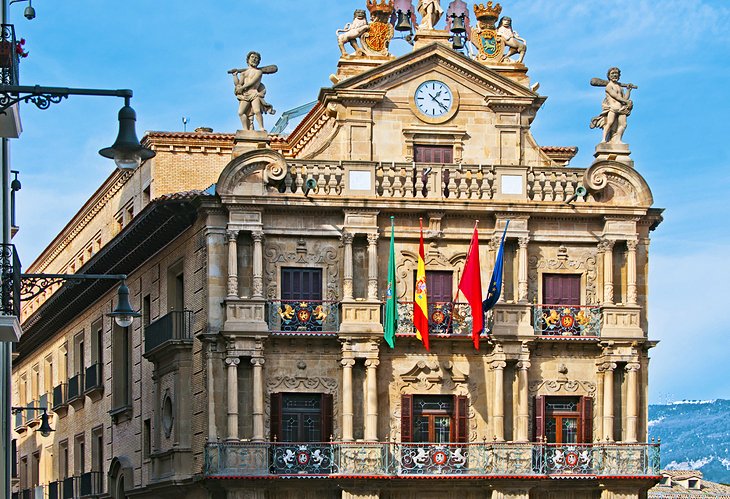
With colorful flags swaying from the facade, the Ayuntamiento is an impressive 17th-century Town Hall building. The Ayuntamiento is found northwest of the Plaza del Castillo on the Plaza Consistorial, a charming small square. The town hall was built on the site of an old moat, where three of the city's defense systems once met.
An emblematic monument of Pamplona, the building has an ornate Baroque facade of ochre sandstone crowned by lions bearing coats of arms and a trumpet-blowing allegorical figure of Fame.
To see the interior, tourists must request a guided tour by appointment.
Address: Plaza Consistorial, Pamplona
Iglesia de San Nicolás
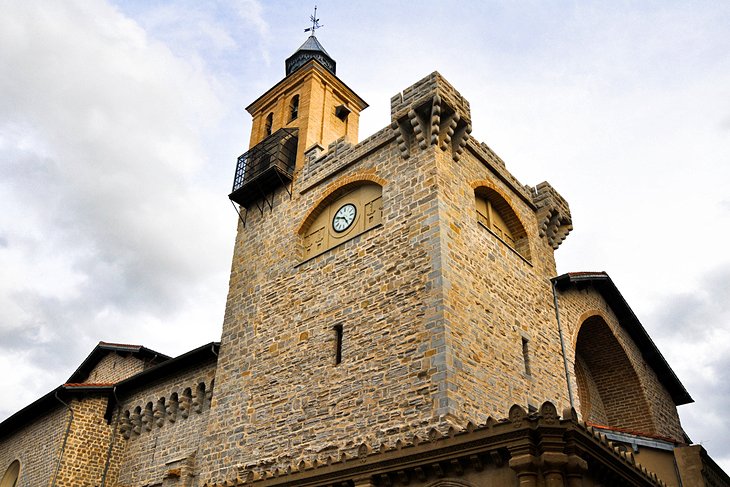
The Iglesia de San Nicolás is found along the Paseo de Sarasate, a broad avenue lined with monumental buildings. Built in the 12th century, the church was originally Romanesque in style. San Nicolás is the only church in Pamplona that has retained its original Romanesque structure (this ancient architecture is mainly seen on the exterior).
The fortress-like church historically served as a stronghold for the San Nicolás quarter but was largely destroyed during a Castilian invasion of the town. Most of the church's interior was renovated in Gothic style, with an inspiring vaulted nave and exquisite stained-glass windows.
The church is open to the public for worship and cultural visits every day. Mass is celebrated here daily.
Every year on February 3rd, the church celebrates the Fiesta de San Blas with a lively street market. At the market, locals and tourists can purchase special regional desserts: roscos, similar to doughnuts; caramelos, caramel candies; and piperropiles, spice cake made with cinnamon and almonds.
Address: 15 Calle de San Miguel, Pamplona
Monumento al Encierro
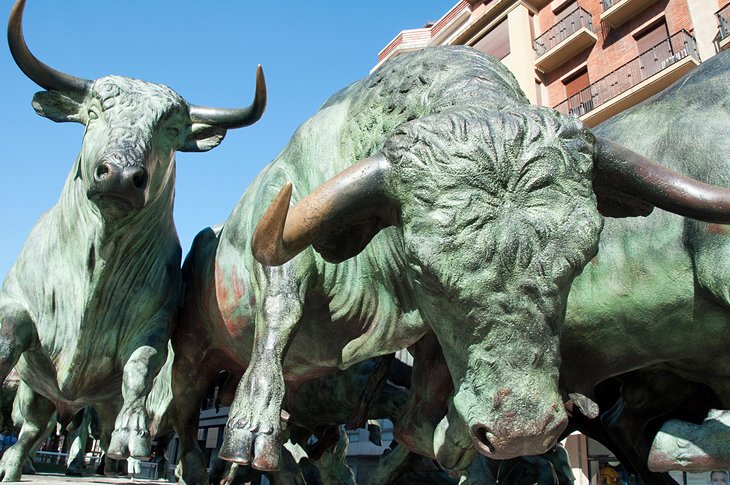
Near the Plaza de Toros is a striking contemporary sculpture called the Monumento al Encierro (Monument of the Bull Run) that illustrates a dramatic bullfight, the emblematic sport of Pamplona. Created by Bilbao sculptor Rafael Huerta Celaya in 1994, the monumental work was crafted from bronze.
The scene of nine bulls and 11 runners seems to magically freeze the moment in time while still capturing motion. Each figure is full of expression and emotion; viewers can easily relate to the anxiety and fear of the courageous runners trying to escape danger.
Address: Avenida Roncesvalles, Pamplona
Plaza de Toros
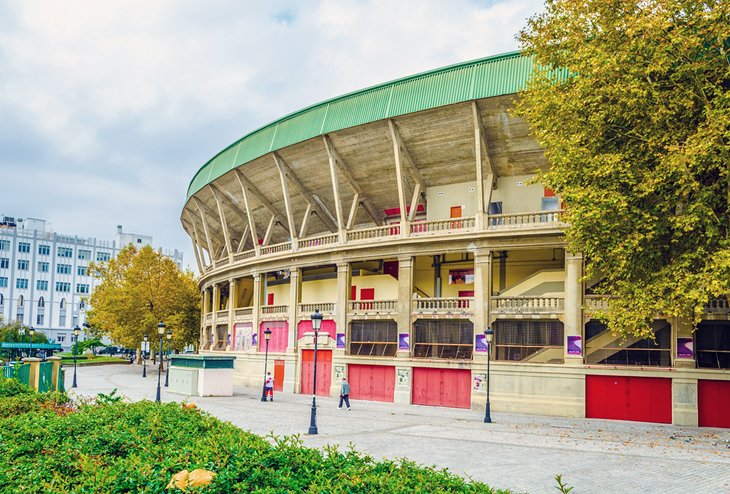
The Plaza de Toros is the Bullring of Pamplona, located on the Paseo de Hemingway, named in honor of Ernest Hemingway, who was a great aficionado of bullfighting. In front of the bullring is a monument that pays tribute to the famous author. Inaugurated in 1922, the Plaza de Toros has a capacity for 20,000 spectators.
During the Fiesta de San Fermín, the Plaza de Toros hosts bullfighting events.
Throughout the year, visitors can take a guided tour of the Plaza de Toros to see the bullfighting area and the corrals. The tour includes video projections of the Running of the Bulls (El Encierro) and the Fiesta de San Fermín. Guided tours are available daily.
Address: Paseo de Hemingway, Pamplona
Iglesia San Saturnino
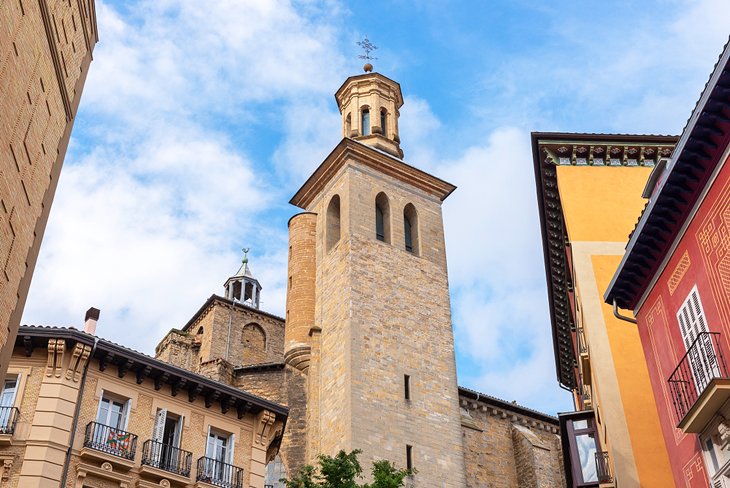
Just steps away from the Plaza Consistorial, this 13th-century monument is one of Pamplona's most noteworthy historic churches. The church towers represent the early Romanesque architecture, while the rest of the church exemplifies Gothic style. On the exterior, the north doorway is especially noteworthy.
The spacious vaulted interior features a marvelous retablo in the baptistery. The clock tower (the southern tower) is topped with a rooster weathervane, and the needles of the clock face mark the start of the Fiesta de San Fermín bull run (at 8am) each morning during the annual festival.
The Iglesia San Saturnino is open to the public for cultural visits and worship every day. Mass is celebrated here several times daily.
Address: 21 Calle Ansoleaga, Pamplona
Baluarte Palacio de Congresos y Auditorio de Navarra
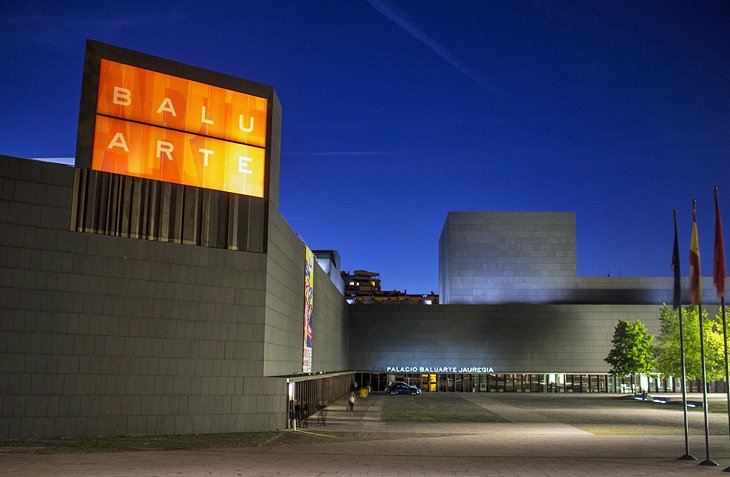
The Baluarte Conference Center and Auditorium is in the heart of Pamplona, between the Citadel and a bustling shopping district. Designed by the architect Patxi Mangado, the sleek, modern, granite-faced building hosts conferences and cultural events throughout the year.
The building has two auditoriums: the Main Auditorium (Symphony Hall), which stages music concerts, dance, classical ballet, opera, and theater performances, and the smaller Chamber Music Hall for smaller-scale events.
Visitors can choose to dine at the haute-cuisine restaurant or grab a more casual meal at the cafeteria with terrace seating on the plaza.
Address: Plaza del Baluarte, Pamplona
Official site: www.baluarte.com/eng/facilities-services/facilities
Jardines de la Taconera
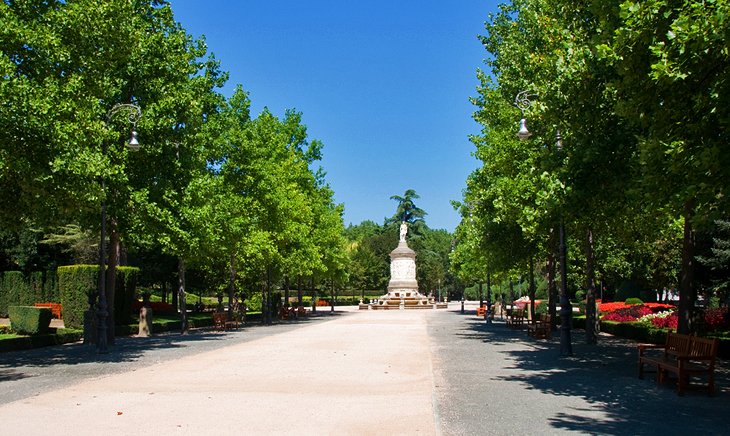
The first public park created in Pamplona (in 1830), the expansive Taconera Gardens cover 90,000 square meters. This beautiful green space near the ancient walls of the Casco Viejo has an old-world ambience.
The landscaping combines Romantic style and formal French elements reminiscent of the gardens at the Château de Versailles in France.
Visitors are delighted by the colorful flowerbeds and pleasant walkways lined by a variety of tall, leafy trees. Scattered throughout the park are nesting boxes for birds. There is also an open-air sculpture museum.
One of the highlights, especially for children, is the Mini Zoo, home to ducks, swans, peacocks, and deer. The ducks and swans glide through waters that fill a former moat.
The park's Café Vienés (Viennese-style café) is a favorite meeting place among local students and artists but also appeals to tourists seeking refreshments such as coffee and cake. This enchanting little café has garden patio seating at shaded tables.
Address: Calle del Bosquecillo, Pamplona
Archivo Real y General de Navarra
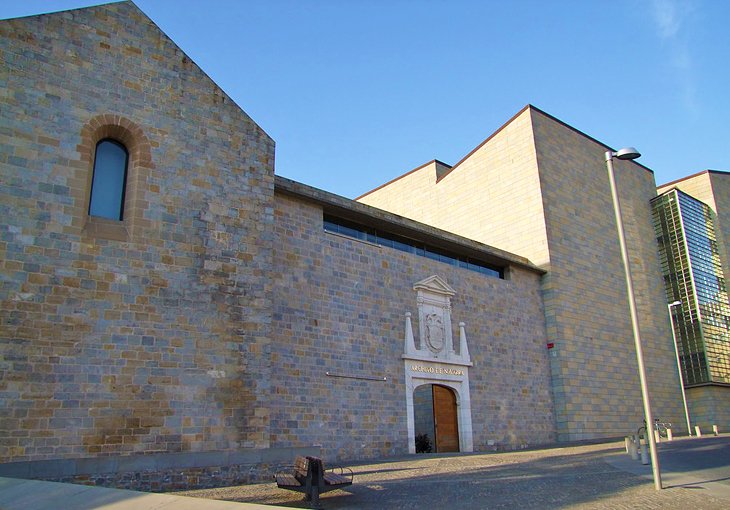
The Royal and General Archive of Navarra is housed on the site of the Palace of the Kings of Navarre where the monarchs lived. Built in the 12th century, the palace is one of the oldest buildings in Pamplona and once hosted illustrious guests, including the bishops of Pamplona.
Modern elements have been incorporated into the ancient building, which has retained its vaulted Gothic hall and a porticoed courtyard garden.
The archive is run by the Administration of Navarra, with the mission to preserve and share the documentary heritage of the region. Many historians and cultural organizations consult the archive for research purposes.
This site is open to the public Tuesday through Friday, as well as for limited hours on Saturday and Sunday. Admission is free. It's worth a look just to see the architecture of the historic palace.
Address: Calle Dos de Mayo, Pamplona
Day Trips from Pamplona
Museo Oteiza in Alzuza
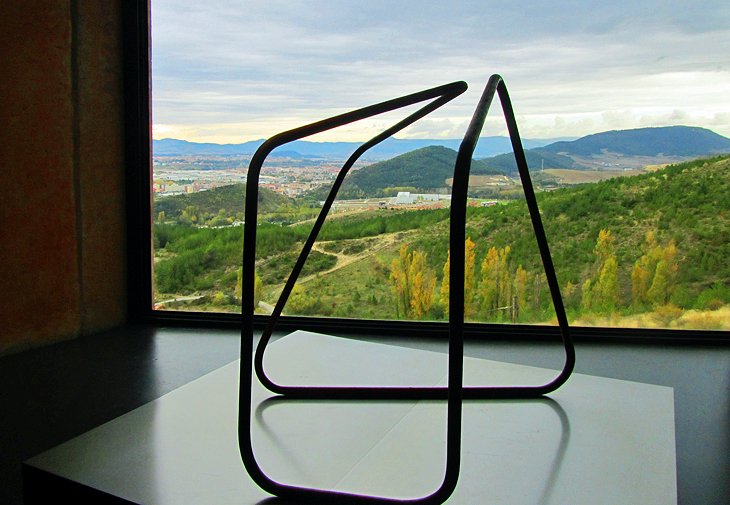
For art lovers, the Oteiza Museum is a worthwhile detour from Pamplona (only 10 kilometers away) in the idyllic rural surroundings of Alzuza. This large, modern exhibition space is dedicated to the renowned Basque sculptor and artist Jorge Oteiza, considered one of the most important sculptors of the 20th century. The collection displays thousands of sculptures, as well as an extensive collection of drawings and collages.
Address: 24 Calle de la Cuesta, Alzuza, Navarra
Monasterio de Leyre: A Serene 11th-Century Monastery
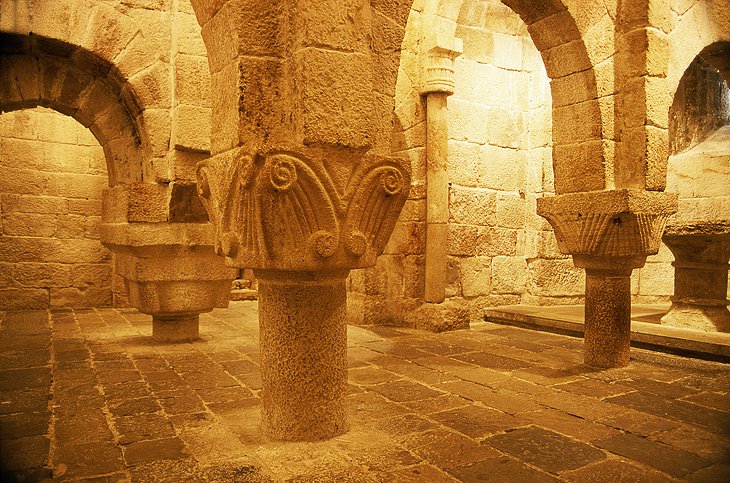
About a 30-minute drive (50 kilometers) from Pamplona, the serene Monastery of Leyre stands on a wooded hilltop of the Sierra de Leyre mountain range with commanding views of the surrounding landscape. Visitors will appreciate the tranquil escape in nature and spiritual inspiration.
The 11th-century monastery features a splendid Abbey Church (listed as a National Monument) with a Romanesque exterior and Gothic interior. The somber, unadorned crypt is the oldest part of the church and was an important burial place of the Kings of Navarre. Most of the monastery's other buildings date from the 17th and 18th centuries.
Guided tours (lasting 45 minutes) allow tourists to see the Abbey Church, learn about the monastery's history, and hear an organ recital. Canto Gregoriano (Gregorian Chants) are recited during the monastery's church services, which are open to the public.
The monastery has a small hotel, the Hospedería de Leyre, with 32 rooms and an excellent restaurant that serves local cuisine made from fresh ingredients.
Location: Monasterio de Leyre, Yesa, Navarra
The Historic Town of Sangüesa in the Countryside
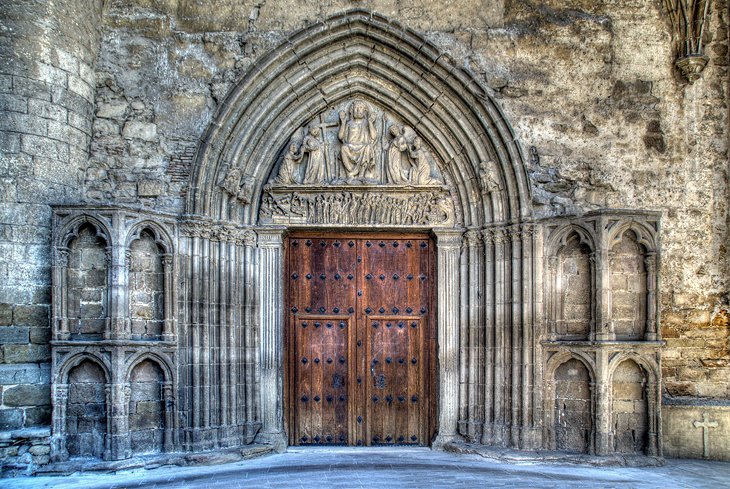
The little town of Sangüesa is nestled in a tranquil rural setting, about 45 kilometers southeast of Pamplona. In the 12th century, Alfonso el Batallador (King Alfonso I of Aragon, the "Battler") fortified the town to ensure its defense against invaders. In the 15th and 16th centuries, many aristocratic families built impressive mansions in the town.
One of the most beautiful mansions in Sangüesa is the 17th-century Palacio de Ongay-Vallesantoro featuring an elaborately detailed Churrigueresque facade. The palace now houses the Casa de Cultura (Cultural Center), which displays art installations.
The town also has an important Romanesque church, the Iglesia de Santiago, that was on the Way of Saint James pilgrimage trail to Santiago de Compostela. Dating to the 13th century, the Church of Santiago in Sangüesa is listed as a Monumento Histórico-Artístico (Historic Artistic Monument).
The Iglesia de Santiago is open to the public for visits (free of charge) daily. Mass is celebrated here every evening, as well as at 12 noon on Sundays.
Roncesvalles along the Way of Saint James Route
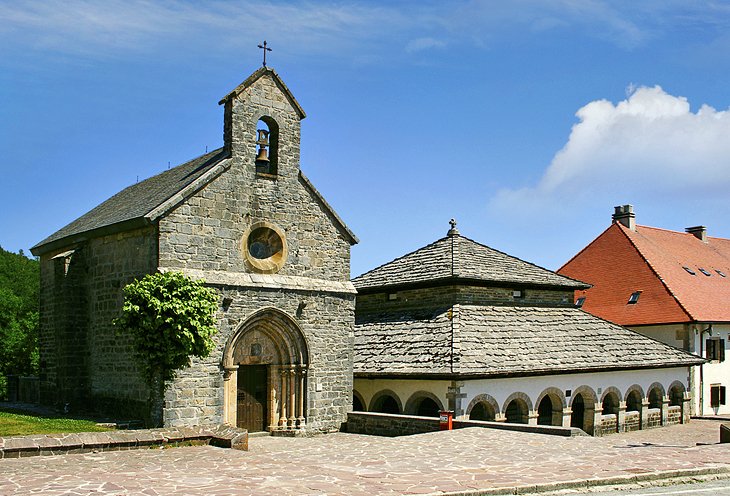
This medieval town was an important stop on the Way of Saint James route to Santiago de Compostela. Roncesvalles, just beyond the pass of the Burguete Valley (47 kilometers from Pamplona), was the most frequently traveled pilgrimage route through the Pyrenees Mountains.
The monastery and hostel of Roncesvalles were established to offer medieval pilgrims hospitality and spiritual sanctuary during their stop. Roncesvalles became one of the most famous establishments on the Camino de Santiago pilgrimage route.
The Pyrenees Mountain Village of Ayerbe
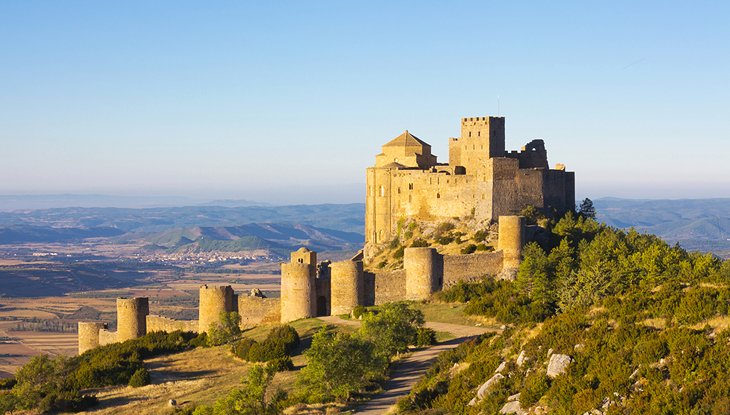
In the foothills of the Pyrenees Mountains, this picturesque little village (about 135 kilometers from Pamplona) offers a peaceful escape in the countryside. The main tourist attractions of this area are the nature sights, especially the Riglos and Agüero rock formations.
Hiking is a popular activity, as well as whitewater rafting on the Gállego River.
Nearby cultural attractions include the 11th-century Castillo de Loarre and the Colegiata de Bolea, a splendid Gothic church built in the 16th century.
Santo Domingo de la Calzada: A Legendary Pilgrims' Town
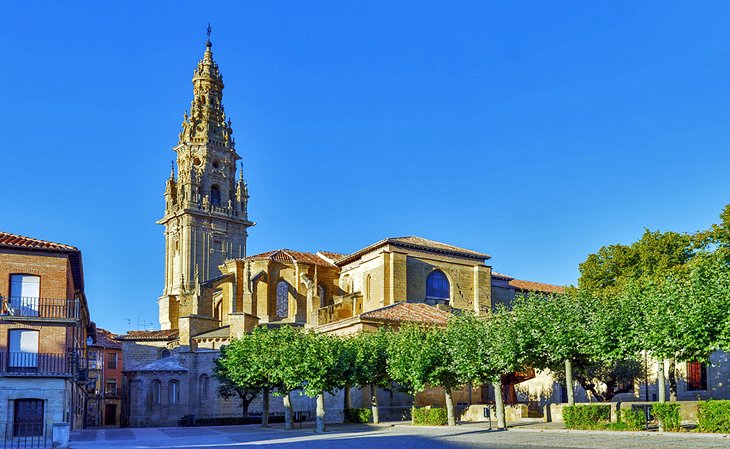
The little medieval town (about 130 kilometers from Pamplona) in the La Rioja region was an important stopping point for pilgrims traveling to Santiago de Compostela on the medieval Way of Saint James pilgrimage route.
Saint Dominique was a deeply spiritual hermit from the nearby village of Viloria who built the town's arched stone bridge, church, and a hostel. The saint also commissioned a stretch of paved road to ease the journey for pilgrims, giving the town its name: Saint Domingo de la Calzada (Saint Dominique of the Causeway).
The town has a magnificent Romanesque-Gothic cathedral, the Catedral de Santo Domingo de la Calzada, constructed in 1180 on the site of an earlier church built by Santo Domingo. The Baroque tower and facade date from the 18th century. While visiting the cathedral, tourists should be sure to see the 14th-century cloister and the 16th-century Plateresque choir stalls.
The cathedral is open to the public for visits every day; an admission fee is charged for entrance, which includes an audio-guide. Tourists can also opt to take a guided tour. Mass is celebrated at the cathedral several times daily, in the morning and in the evening.
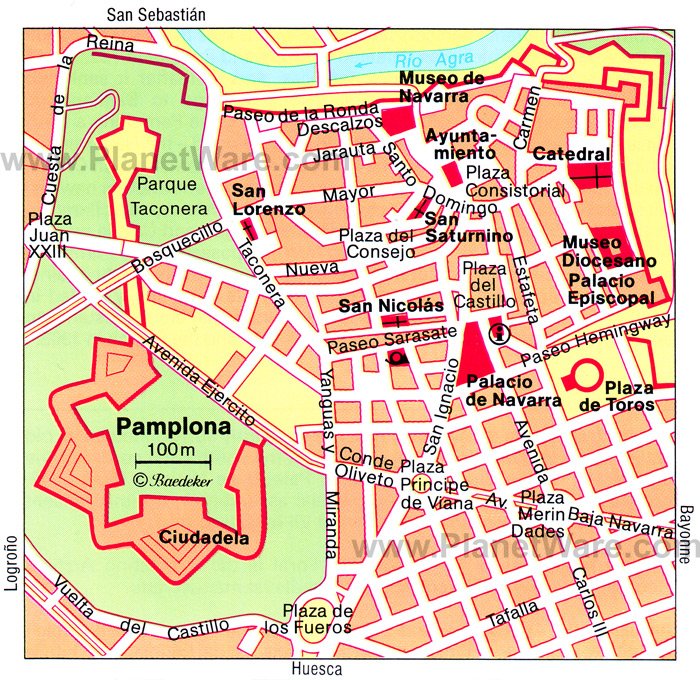
Map of Attractions & Things to Do in Pamplona
More Related Articles on PlanetWare.com
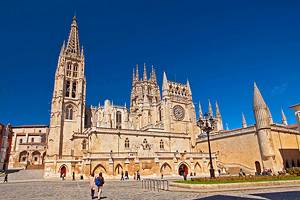
The Camino de Santiago: Capital of the historic kingdom of Navarra (and present-day province), Pamplona is found along the Camino de Santiago medieval pilgrimage route to Santiago de Compostela. Other important stops on this route are Burgos, renowned for its UNESCO-listed Gothic cathedral, and the city of León, which is filled with remarkable monuments of the 11th and 12th centuries.
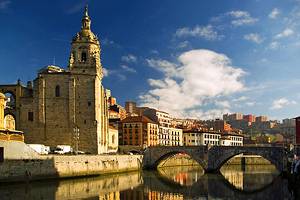
Spanish Basque Country: Favorite destinations in Spain's Basque Country include the seaside resort of San Sebastian (about a 90-minute drive), adored by tourists because of its gorgeous sandy beaches, quaint old town, and excellent tapas restaurants; and the cultured city of Bilbao (about a two-hour drive), home to the renowned Guggenheim Museum and several Michelin-starred gastronomic establishments.