12 Top-Rated Tourist Attractions in Oviedo
Amid the rolling hills of the Picos de Europa mountains, Oviedo lures visitors with its peaceful natural landscape and intriguing pre-Romanesque churches. King Alfonso II founded the city as the capital of the Kingdom of Asturias in the 9th century; he chose this strategic mountain location as a defense against attacks from the Muslim emirate of Córdoba.
In the Old Town, visitors sense Oviedo's special character while wandering the narrow pedestrian streets and atmospheric lanes. Impressive architectural landmarks are found at every turn, reflecting the city's rich heritage.
Oviedo is also known for its gastronomic excellence. The delicious local cuisine features specialties of the Asturias region such as Fabada Asturiana (bean stew), Pitu de Caleya (special free-range chicken), and Cabrales cheese.
Find out more about the best places to visit in this fascinating historic city with our list of the top attractions and things to do in Oviedo.
See also: Where to Stay in Oviedo
- 1. Catedral de San Salvador (Oviedo Cathedral)
- 2. Esculturas de Oviedo (Oviedo's Sculptures)
- 3. Iglesia de Santa María del Naranco
- 4. Museo de Bellas Artes de Asturias
- 5. Museo Arqueológico de Asturias
- 6. Parque de San Francisco
- 7. Iglesia de San Miguel de Lillo
- 8. Iglesia de San Julián de los Prados
- 9. Palacio de los Condes de Toreno
- 10. Iglesia de San Tirso el Real
- 11. Palacio de Camposagrado
- 12. Iglesia de Santa Maria de Bendones
- Where to Stay in Oviedo for Sightseeing
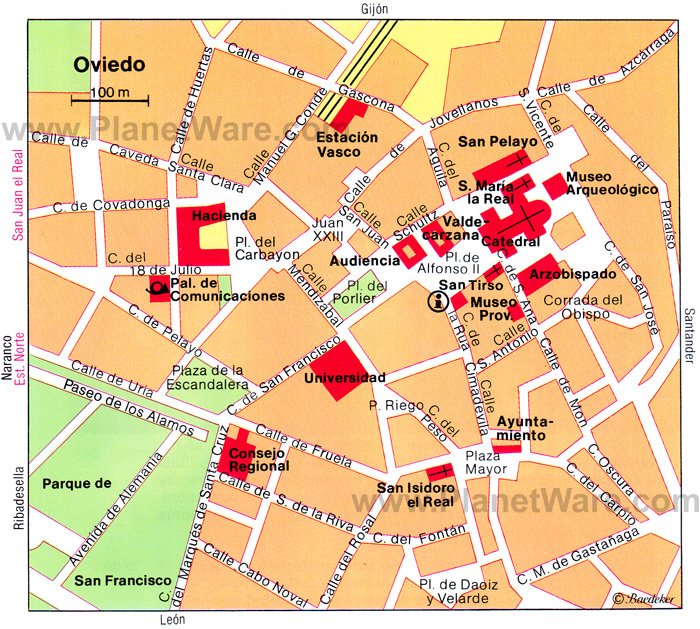
- Map of Attractions & Things to Do in Oviedo
1. Catedral de San Salvador (Oviedo Cathedral)
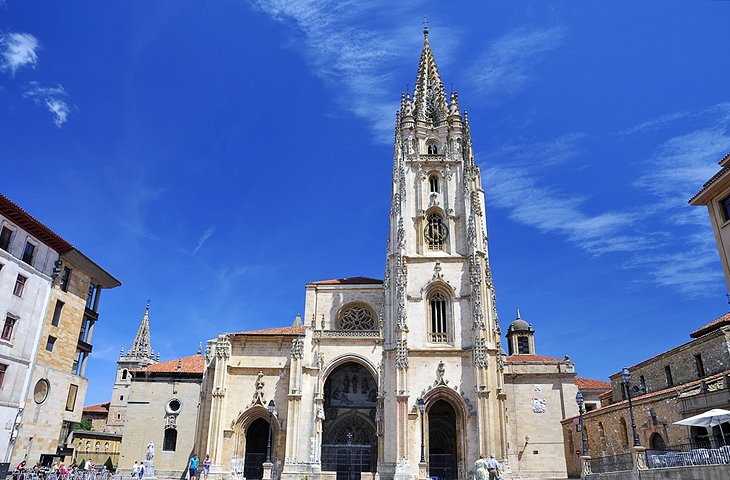
Oviedo's impressive Gothic cathedral was constructed over a period of several centuries (13th - 16th) on the site of an earlier eighth-century church. The facade, renovated later, boasts a lovely Baroque relief of the Transfiguration.
The monument's most striking feature is the 82-meter-high tower, considered one of the finest in Spain. Built in the 15th century, the tower is noteworthy for its decorative integrated spire.
The cathedral's sanctuary features exquisite architecture and masterpieces of art. In the Capilla Mayor is the 16th-century tomb of Archbishop Arias de Villar and a magnificent retablo (main altarpiece) with numerous panels depicting scenes from the life of Christ. A splendid 11th-century silver gilt reliquary is found in the Baroque Capilla de Santa Eulalia.
To find the cathedral's most prized possession, take the flight of steps in the south transept up to the Cámara Santa. This UNESCO-listed chapel contains the Arca Santa (Holy Chest), a precious reliquary brought to Asturias after the Visigothic Kingdom of Toledo fell to the Moors.
The Arca Santa is covered with silver-plated reliefs and contains relics from the Holy Land along with other treasures such as the ninth-century gold-filigree Angels' Cross (Cruz de los Ángeles). Medieval pilgrims traveling to Santiago de Compostela stopped in Oviedo to venerate the reliquary displayed in the Cámara Santa.
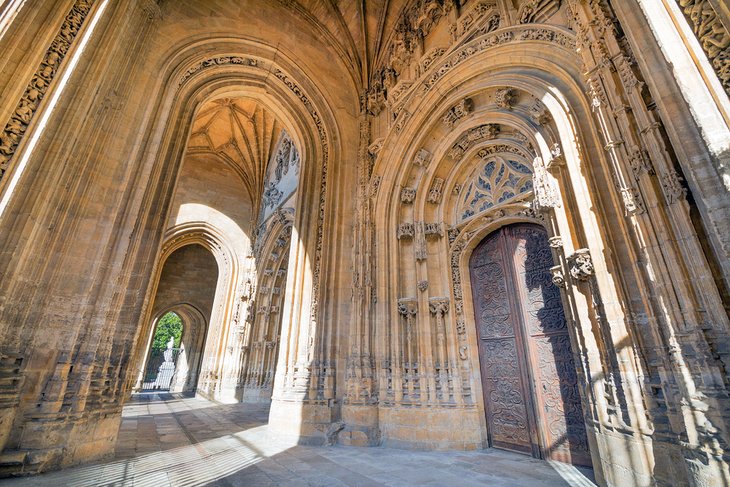
Below the Cámara Santa is the Capilla de Leocadia, which contains 12th-century tombs. The cathedral also has a beautiful cloister from the medieval era.
Within the cathedral's splendid Gothic 14th- to 15th-century cloister is the Archivo Capitular (Archive Room), which contains historic manuscripts. Exploring the cloister further leads upstairs to the 18th-century Museo de la Iglesia (Church Museum), which displays a collection of religious art.
The cathedral is open to the public every day year-round. Visitors should plan to spend at least one hour and a half to see all the sights. Mass is celebrated at the cathedral twice daily and several times on Sundays and holidays.
Address: Calle la Rúa, Oviedo
Official site: http://catedraldeoviedo.com/en/
2. Esculturas de Oviedo (Oviedo's Sculptures)
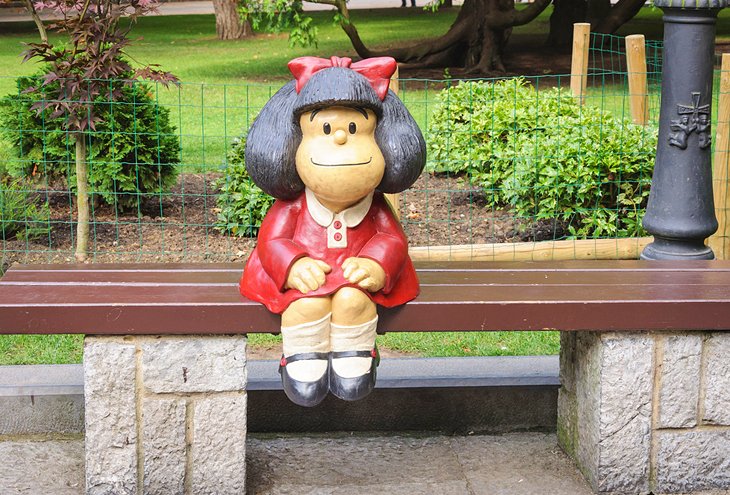
In the past few decades, Oviedo has become known for its increasing number of public sculptures, and the city continues to commission more. The artwork is everywhere, woven into the landscape and installed on sidewalks and pedestrian streets, as if the city were an open-air museum.
Tourists can go on an artistic scavenger hunt to discover the sculptures. The city has a Route of Sculptures (Ruta de las Esculturas), which includes hundreds of artworks, representing a variety of styles and subjects, from historical figures and celebrities to everyday people.
Among the hundreds of sculptures to enjoy, one of the most famous is the "Mafalda" sculpture by Pablo Irrgang depicting a beloved Argentinian cartoon character (Parque de San Francisco), and one especially popular with Americans is the bronze statue of Woody Allen by Vicente Menéndez Santarúa (Calle Milicias Nacionales).
There are also many fictional literary characters like the luggage-laden "The Traveller" by Eduardo Urculo (Calle Eusebio Gonzalez Abascal) and the beautiful "La Regenta" by Mauro Álvarez Fernández (Plaza Alfonso II el Casto), a character from a novel by Leopoldo Alas Clarín.
On the Plaza de la Escandalera are two unique sculptures: "Asturcones," a contemporary equestrian statue by Manuel Valdés Blasco; and the voluminous "La Maternidad" ("Motherhood") sculpture by Fernando Botero, which many locals jokingly call "La Gorda" ("The Fat Lady").
3. Iglesia de Santa María del Naranco
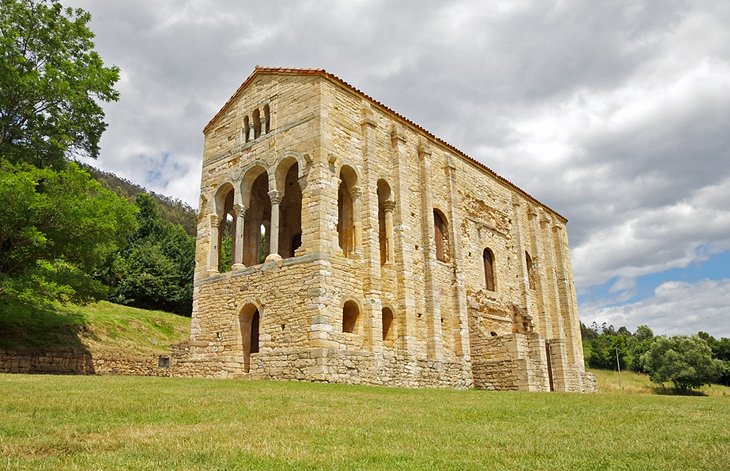
Standing in a grassy area at the foot of the Monte del Naranco, the Iglesia de Santa María del Naranco lies two kilometers outside of Oviedo and offers stunning views of the city. This unassuming little church has UNESCO World Heritage status because of its exceptional historical value.
Originally a royal palace built for King Ramiro I in 848, the building was converted into a church in the 10th and 11th centuries. The church is a wonderful example of pre-Romanesque architecture with its interesting exterior staircase, rectangular floor plan, and barrel-vaulted hall illuminated by arched windows.
The building also features twisted columns, typical of Asturias, on the exterior and interior. The exterior columns have Corinthian capitals, whereas the interior columns are trapezoid capitals. It is rare to find such well-preserved architectural details that predate Romanesque architecture.
The Iglesia de Santa María del Naranco is open to the public for guided visits everyday year-round, except on Mondays when self-guided visits are possible. Guided visits are about 30 minutes. Entrance requires an admission fee.
Location: Monte Naranco, Oviedo
4. Museo de Bellas Artes de Asturias
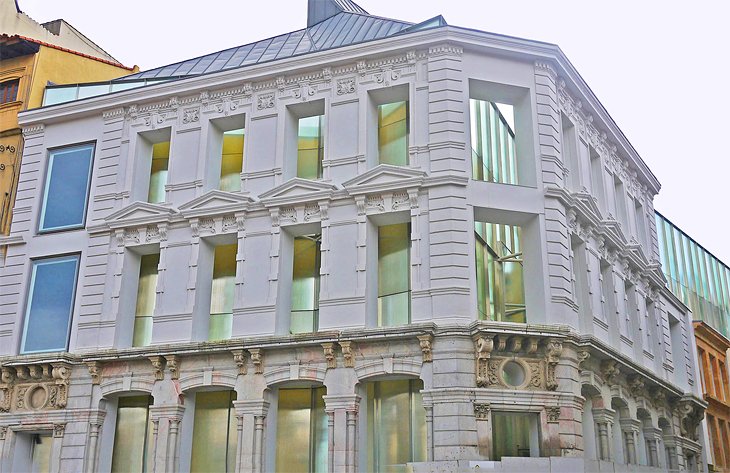
To the south of San Tirso Church on Calle de Santa Ana is the 18th-century Baroque Palacio de Velarde, which now houses the collections of Oviedo's Museum of Fine Art.
Since its inception in 1980, the museum has spread to occupy surrounding buildings, including the Casa de Oviedo-Portal, a 17th-century aristocratic mansion, and the Modern Wing, which was completed in 2015.
The Palacio de Velarde contains a collection of historical paintings (dating from the 14th to 19th centuries) by noteworthy artists like El Greco, Murillo, Goya, Ribera, Zurbarán, Miró, and Picasso. There are also sculptures dating from the Baroque period through the present.
The Casa de Oviedo-Portal displays an assortment of 19th-century artworks. The collection includes Romantic paintings, as well as Realistic works. Not-to-be-missed are the pieces created by local artists of the Asturias region.
The Modern Wing focuses on contemporary art of the 20th and 21st centuries, while the structure itself is a tasteful marriage of the old and the new, incorporating traditional decorative features with updated architectural elements.
Official site: www.museobbaa.com/en/
5. Museo Arqueológico de Asturias
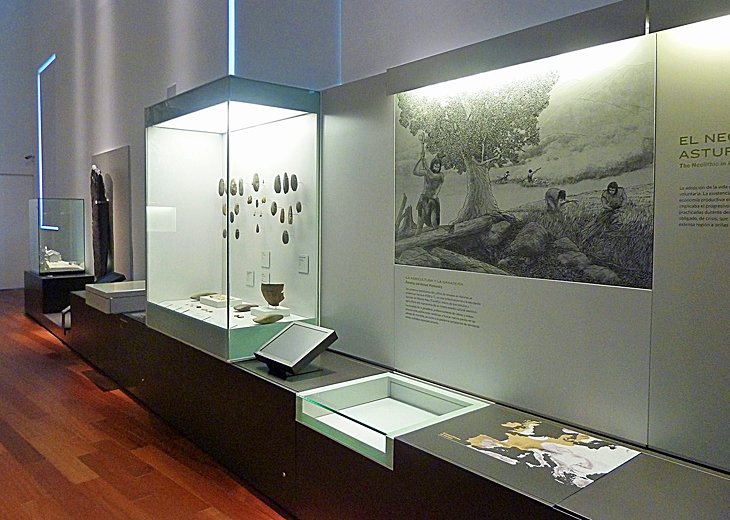
Oviedo's Archeology Museum is found behind the cathedral, in the cloister of the old Convento de San Vicente, which was founded in the 8th century and rebuilt in the 15th. The permanent collection includes various sections: the Neolithic and Metal ages; medieval Asturias; and the ancient Roman era.
The ground floor is devoted to pre-Romanesque and Romanesque art, mainly from the Asturias region. A highlight of this collection is part of the altar of Santa María del Naranco.
The first floor displays ancient Roman coins, sculptures, mosaics, and other artifacts of the Roman era. The second floor presents prehistoric findings discovered in the surrounding areas; many of the objects on display date back to the Stone Age.
Address: 3 - 5 Calle San Vicente, Oviedo
6. Parque de San Francisco
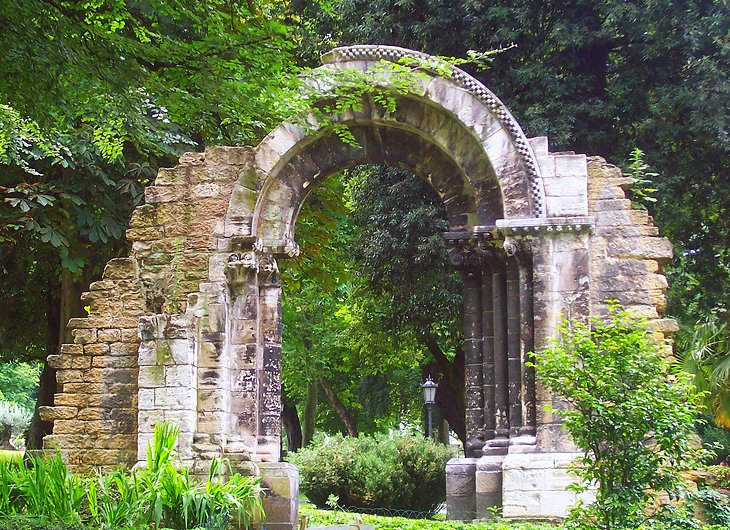
An escape to nature in the heart of Oviedo, this beautiful park covers an expansive area of six hectares. The Parque de San Francisco was once the orchard of the Convent of San Francisco. Lush vegetation, exotic plants, and colorful flowers create a verdant paradise. Banana, oak, elm, and chestnut trees are among the varieties found in the park.
It's a joy to explore the shaded walking paths and tree-lined avenues of this park. Visitors will discover monuments, statues, and arches dotted throughout the premises. It's also possible to spot one of the gorgeous peacocks who make their home here.
7. Iglesia de San Miguel de Lillo
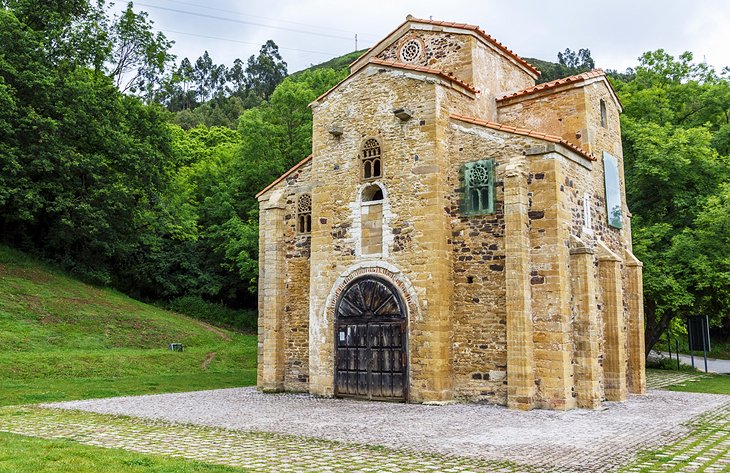
This tiny, ancient chapel is on Monte Naranco (two kilometers outside the city of Oviedo), a little higher up on the hill from the Iglesia de Santa María del Naranco. The Iglesia de San Miguel de Lillo is designated as a UNESCO World Heritage Site because of its extraordinary cultural value.
The church is a marvelous example of pre-Romanesque architecture, featuring typical Asturian columns on the exterior and in the interior. Around one third of the original 9th-century structure has remained intact, including the portico, sections of the nave, and four of the intricately designed stone latticework windows.
The interior is vaulted and features motifs of Visigoth, Byzantine, and North African origin.
Every year on September 29th, the Church of San Miguel de Lillo celebrates the feast day of Saint Michael the Archangel.
Location: Monte Naranco, Oviedo
8. Iglesia de San Julián de los Prados
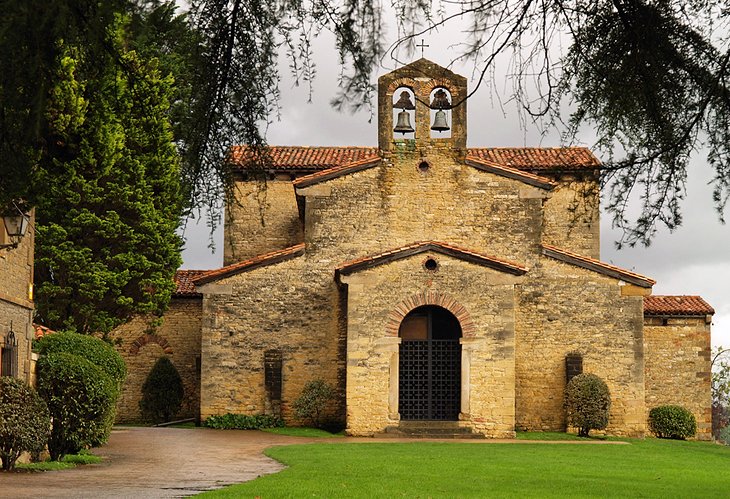
The Church of Saint Julian (also known as "Santullano") stands outside the historic center of Oviedo. The church is a short drive away from the main tourist attractions in a modern suburb (Pumarín) of Oviedo and is unfortunately located at the side of a road. It is still a worthwhile tourist attraction despite its less than picturesque surroundings.
This remarkable UNESCO-listed monument was built during the reign of Alfonso II and is the oldest church in Oviedo. Constructed between 812 and 842, the church was dedicated to Christian martyrs, Julián and Basilisa, a married couple who retreated to monastic life.
San Julián de los Prados is the largest pre-Romanesque church in Spain, measuring 25 meters by 30 meters. Until the 11th century, this was the largest Christian building in Spain.
The architecture is based on a basilica floor plan, including three doorways, a transept, and three naves separated by pillars and arches. One unusual feature is the two-level apse with an altar on the lower level. Especially noteworthy are the detailed and colorful frescoes, full of geometric patterns, symbols, and figures.
The church is open to the public for visits Monday through Saturday year-round. Admission requires an entrance fee, except on Mondays when admission in free. Guided tours of the church are available every 30 minutes.
Address: 1 Calle Selgas, Oviedo
9. Palacio de los Condes de Toreno
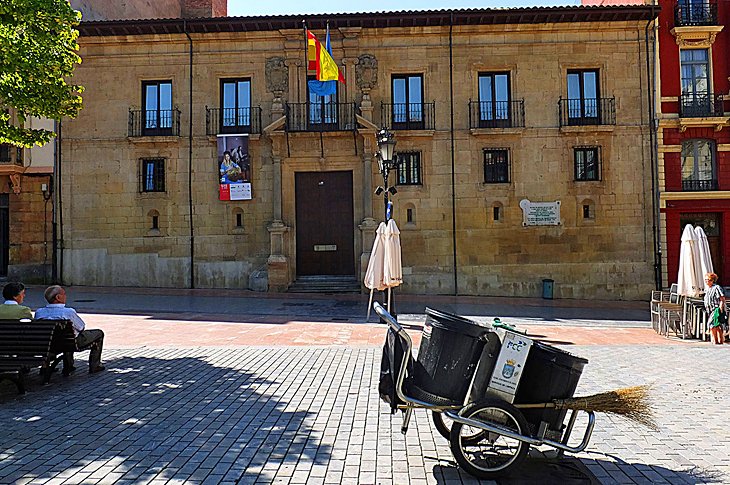
Built in 1675 by Gregorio de la Roza, the Palace of the Count of Toreno is a designated Historic-Artistic Monument. This exquisite Baroque building is considered one of the city's most beautiful historic structures.
The palace has a lovely façade in the Baroque style featuring Tuscan columns framing the entrance doorway. Constructed from ashlar stone, the building is arranged around a central courtyard, with three courtyards and a grand entrance staircase.
The building houses the Royal Institute of Asturian Studies (RIDEA), an organization founded in 1946 to preserve and promote the cultural and artistic heritage of the Asturian principality.
Address: 9 Plaza de Porlier, Oviedo
10. Iglesia de San Tirso el Real
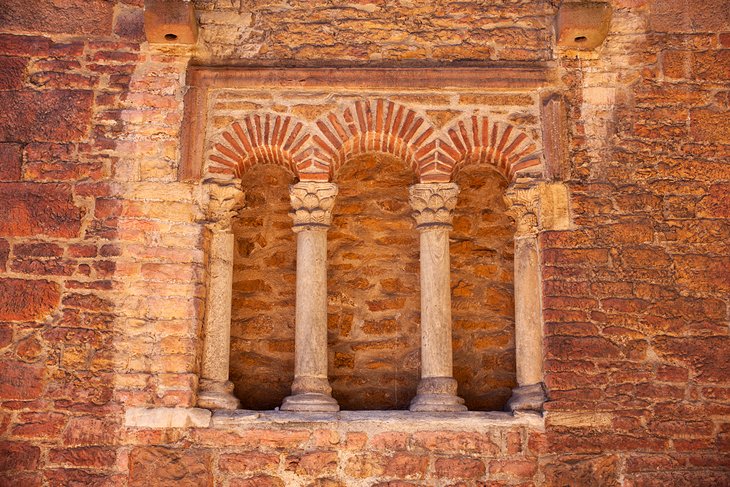
The 9th-century Iglesia de San Tirso el Real was part of an ecclesiastical complex built by Alfonso II. However, the church was remodeled many times throughout the centuries, and only one window of the sanctuary reveals the original pre-Romanesque architecture.
The "Ajimezado Window" is easy to identify. Look for the three semicircular brick arches over marble columns featuring decorative capitals, within a Moorish molding.
Typical of Romanesque architecture, the church interior has three naves separated by square pillars on supporting arches.
The Iglesia de San Tirso el Real is open to the public for visits Monday through Saturday year-round. Admission requires an entrance fee. Guided tours are available.
Address: 4 Plaza del Alfonso II el Casto, Oviedo
11. Palacio de Camposagrado
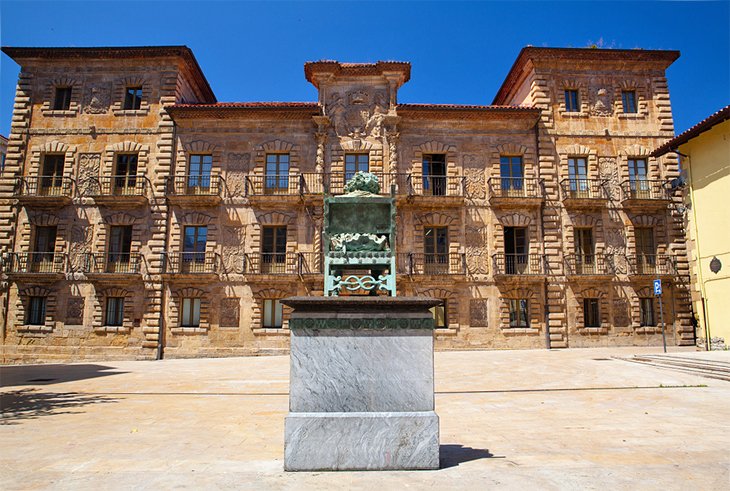
This magnificent 18th-century Baroque palace is a designated Historic-Artistic Monument and now houses the Supreme Court of Asturias. The mansion was built in the 18th century for José Manuel Bernaldo de Quirós, Marquis of Camposagrado.
The palace has two impressive facades: a Rococo facade is on the Plaza de Porlier and a Baroque facade looks out towards the Palace of Valdecarzana.
This monument is not open to the public, but is worth visiting to see the monumental exterior.
Address: Plaza de Porlier, Oviedo
12. Iglesia de Santa Maria de Bendones
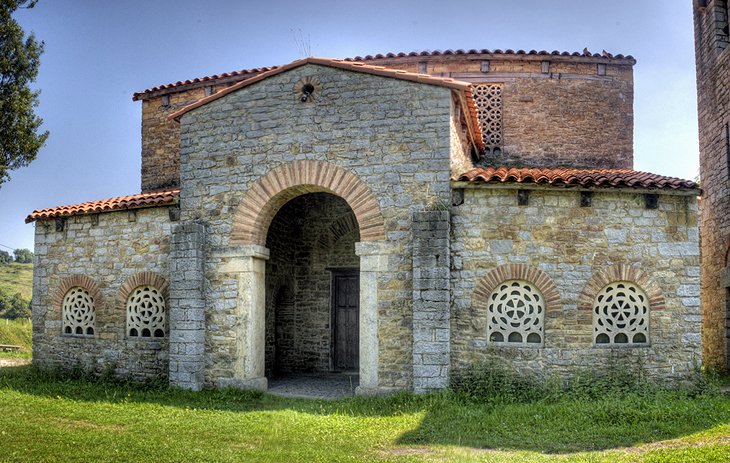
The Iglesia de Santa María de Bendones is a 9th-century pre-Romanesque church that was damaged in the 20th century and rebuilt in 1958. It's classified as a National Monument.
Simple and somber in architectural form, the church reveals an austere design similar to San Julián de los Prados. The only adornments on the exterior are restored lattice work over the windows.
The interior features wood-beamed ceilings and original pre-Romanesque mural paintings (although only a small section on the south side has been preserved).
Visitors should keep in mind that the church has very limited hours of admission. The monument is only open to the public from 10:30am until 11am on Sundays and holidays.
Location: Parroquia de Bendones, Calle de San Lázaro, Oviedo
Where to Stay in Oviedo for Sightseeing
Luxury Hotels:
- Eurostars Hotel de la Reconquista is a five-star hotel near the Parque de San Francisco, as well as close to many shops and restaurants. The hotel occupies a grand historic building classified as a National Monument. Guest rooms offer updated amenities along with old-world charm. Amenities include a concierge, fitness center, breakfast buffet, and a gourmet restaurant that serves Asturian cuisine prepared from local ingredients.
- About a 20-minute drive outside of Oviedo, the five-star Gran Hotel Las Caldas is renowned for its tranquil mountain setting and state-of-the-art wellness clinic. Facilities include the modernized Royal Spa that dates to the 17th century, an indoor pool, hydrotherapy center, fine-dining restaurant, and a lush garden overlooking the UNESCO-listed Las Ubiñas Nature Park.
Mid-Range Hotels:
- Housed in a stunning 20th-century mansion near the Parque de San Francisco, the Barcelo Oviedo Cervantes hotel provides five-star accommodations and service while offering mid-range pricing. Guest rooms are well appointed and tastefully decorated in contemporary style. The hotel has a trendy gastronomic restaurant and a casual tapas bar.
- Located between the Parque de San Francisco and the cathedral, Princesa Munia Hotel & Spa is an excellent four-star hotel. Guest rooms are bright and spacious with sleek minimalistic decor. Amenities include a spa, sauna, hot tub, hydrotherapy pool, and Turkish baths. The hotel also has a casual gourmet restaurant.
Budget Hotels:
- The Hotel Rosal is located within easy walking distance of the Parque de San Francisco and the cathedral. This family-friendly hotel offers basic but clean and comfortable accommodations at reasonable prices. Guest rooms include flat-screen televisions.
- Another affordable hotel in a central location is Aparthotel Campus, which is 500 meters away from the Iglesia de San Julián de los Prados and about a 10-minute walk to the Museo Arqueológico de Asturias. Studios and one-bedroom apartments are available for two or three people, or for four-person families. All accommodations include a small kitchen and a dining area. The hotel provides a continental or buffet breakfast for an additional charge.
Map of Attractions & Things to Do in Oviedo
More Related Articles on PlanetWare.com
Santiago de Compostela: Oviedo sits along a rugged yet beautiful portion of the Camino de Santiago pilgrimage route to Santiago de Compostela. One of the top attractions of northern Spain, Santiago de Compostela is renowned for its medieval cathedral. The entire historic center of the town is designated as a UNESCO World Heritage Site.
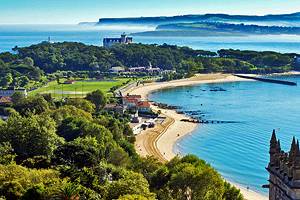
Bilbao & Santander: Also along the Camino de Santiago pilgrimage route are the cities of Santander and Bilbao, two very different destinations, which each have plenty to offer. Bilbao was once a run-down coastal town but it has evolved into a top tourist destination on Spain's northern coast thanks to the iconic Guggenheim Museum. Nearby, laid-back Santander is a top beach destination with golden sand and plenty of sun. Here, you can also find excellent museums, including the Museum of Modern and Contemporary Art.