

Spain's 10 Must-See Tourist Attractions For First-Time Visitors
When I first moved to Galicia, Spain, to teach English in 2018, I was excited about the possibility of exploring a whole new part of the world. I already knew that I was a fan of tapas (hello, cured cheeses!), and was thrilled to try some of the country's famous manchego. Getting myself to Spanish restaurants was easy — but deciding what to see during my stay? Not so much. Spain is brimming with so many historical sites that I didn't know where to start. Luckily, my Spanish colleagues were more than happy to help me out. Over the course of the year I spent in The Land of Cervantes, I visited dozens of monuments, palaces, and markets on their recommendation. And, now, I can confidently declare that I have a few suggestions of my own.
Using both local favorites and my personal travel experiences, I have compiled a list of the best destinations for a first time visitor in Spain. Every spot itemized below hails from my own preferred places to travel, with the exception of two spots I have yet to visit: Mérida's Colosseum and València's famous Mercat Central. These two major destinations made the cut, though, as they came highly recommended to me by several Spaniards, and both currently sit at the top of my personal travel bucket list. That said, don't just take my word for it. Other travelers rave about every single one of the locations on this list, too, reflecting their undeniable appeal.
The Cathedral of Santiago de Compostela, Galicia
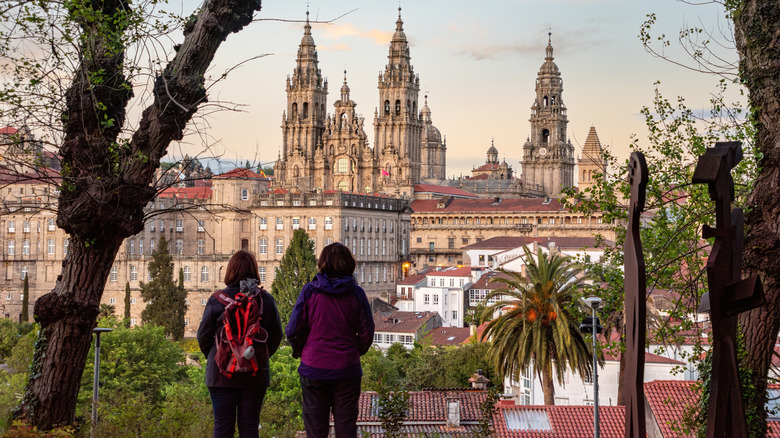
When you picture Spain, what images flood your mind? If you answered "Madrid, Barcelona, and beaches," you aren't alone. That said, each one of the country's 17 autonomous communities has fostered its own unique culture. My home base in Galicia, for example, was known for mussel farming, rainy Sundays, and a white wine called Albariño. And, what do locals consider their region's best touristic attraction? The Cathedral of Santiago de Compostela.
Located in the medieval town of Santiago de Compostela, this cathedral has attracted visitors since it was first built in the 11th century. In fact, pilgrims have long been arriving to the region in droves, as it is said to be St. James' final resting place. These days, Santiago stands among must-visit destinations for avid hikers, thanks to the much-celebrated Camino de Santiago. This collection of 11 different pilgrimage routes converges in Santiago de Compostela, where hundreds of thousands of people still trek annually. At the center, is this stunning Romanesque cathedral — and it's not hard to see why.
When I first stepped into the plaza facing the cathedral's grand entrance, I was struck by the structure's jaw-dropping towers and majestic doors. The beauty of the church was only matched by the buzzing energy of the pilgrims who were celebrating the end of their journeys. The interior was just as beautiful, adorned with high archways and gold. You can even enjoy the art that's displayed in cathedral's museum — a popular site among other travelers.
Templo de Debod, Madrid
There's no doubt that, out of all of Spain's bustling cities and regions, Madrid is one of the most popular places to visit. One of Europe's best-kept secrets, the capital city is the place where the Spanish royal family resides, where Ernest Hemingway once worked, and where film director Pedro Almodóvar shot his cult classics. That said, the capital city also has a knack for being "cara" — or pricey. Despite that, Madrid has plenty going for it. From world-class museums to historic landmarks, it's filled with sights to see — including the ancient Temple of Debod.
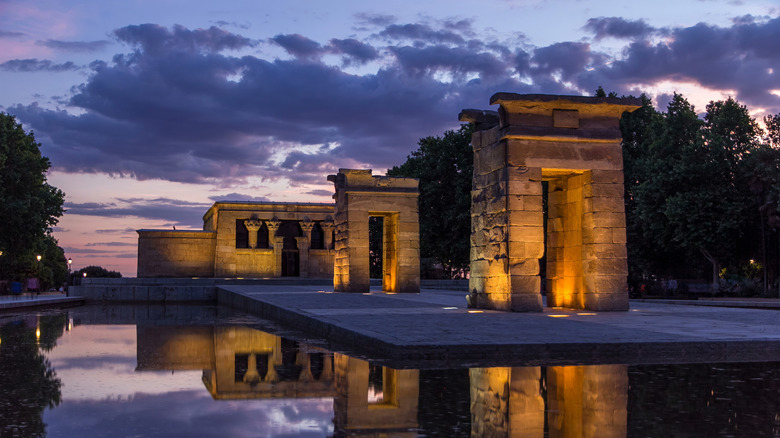
Constructed in Egypt in around 200 B.C., the Temple of Debod is one of the best things to do in Madrid on a budget. This genuine ancient temple was situated on the East Bank of the Nile River until the 1960s. Following a flood, it was transported to Madrid, where it became a public tourist attraction in 1972. Although visiting the site is free, travelers must reserve their tickets online in advance. To arrive, simply walk three minutes (or drive four minutes) from the Príncipe Pío train station.
I planned ahead for my visit, and was very glad I did. From the minute I laid eyes on the palatial stone structure, it beckoned me inside. Its walls were bursting with ancient hieroglyphics, and the structure was supported by pillars that resembled the gates to antiquity. Previous travelers say that the sunset views from the temple are extraordinary. But, even on a dark night, the structure exudes the sensation of historical magic.
Basílica de la Sagrada Familia, Catalunya
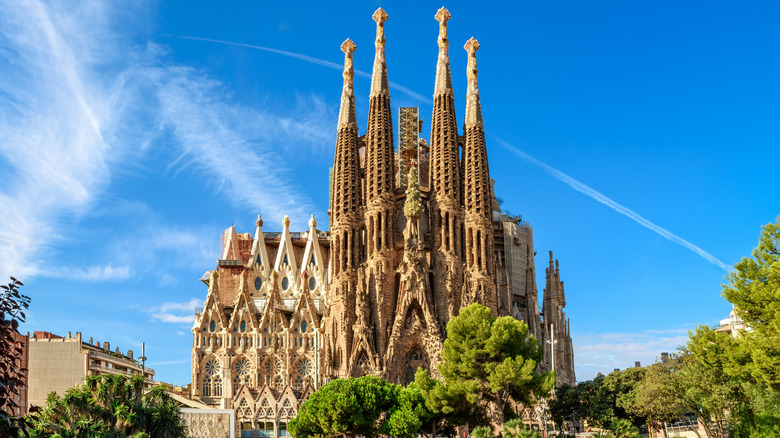
Barcelona is another popular Spanish city that most travelers flock to. And, although there are plenty of free activities to enjoy, one of the best things to do is splurge on a roughly $30 ticket to visit the famous Basílica de la Sagrada Familia. Trust me: the experience was worth every penny.
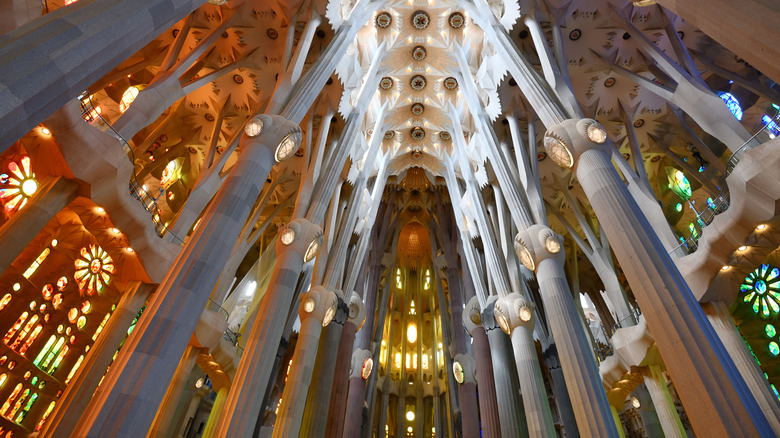
The Sagrada Familia is a structure that calls to you from afar. With its dramatic Gothic towers and Art Nouveau finishings, the building looks like an 18th-century garden grotto come to life. Rocky yet wholly unnatural, the structure resembles a better version of the Earth, one that lingers among us mortals. Inside, the stained glass exudes a soft rainbow glow that somehow escapes words.
The Basílica de la Sagrada Familia is rendered perhaps even more alluring by the fact that is has yet to be completed. The project first broke ground in 1882, but has long outlived its architect, the renowned Antonio Gaudí. As of the publication of this article, the basilica's estimated year of completion is 2026 — although that may still be subject to change. In practice, this means that the cathedral is always evolving, and it has likely transformed quite a bit since my visit in 2018. Even so, more recent travelers continue to admire it. It's definitely one of the most stunning basilica around, so don't hesitate to schedule your trip.
The Alhambra, Andalucía
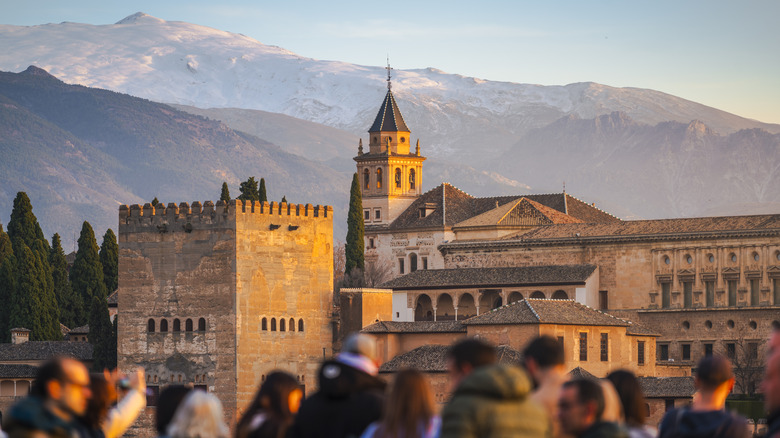
One of Spain's most magnificent architectural treasures, the Alhambra is a 13th-century palace complex that showcases the pinnacle of Islamic art and design in Europe. Located in Granada, in the southern region of Andalucía, this UNESCO World Heritage Site draws millions of visitors every year.
Once the residence of the kings of the Al-Andalus empire, the Alhambra is a vast structure full of dramatic archways, elaborate mosaics, and peaceful courtyards. The sense of luxury recalled Versailles, and it was easy to imagine the royal families of the past lounging among the reflection ponds and fountains.
To view the palace in its entirety, I purchased the roughly $22 tickets that allows visitors into the gardens, the Alcazaba fortress section, and the Nasrid Palaces. The visit takes up most of the day, and you'll be sure to rack up a lot of steps by dinnertime. If that all seems rather intense, you can always purchase a cheaper $12 pass that will let you access limited portions of the destination. Alternatively, you can also buy a special nighttime ticket (for around $12.50) that allows you to wander the palace grounds after dark, which previous travelers describe the experience as otherworldly.
Guggenheim Bilbao, País Vasco
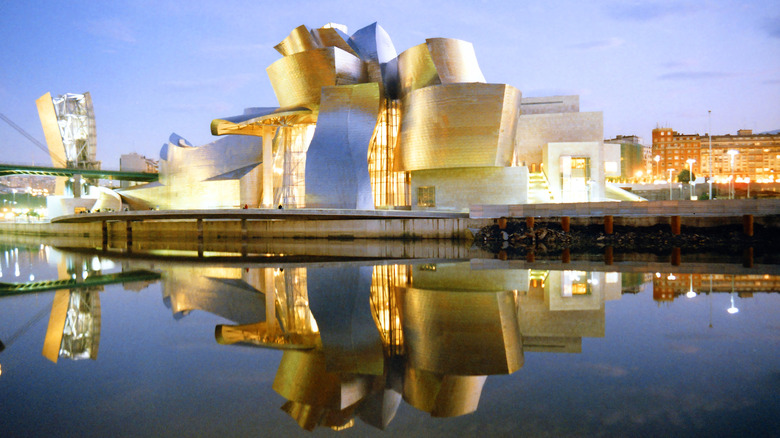
Spain may be known for its underrated historic gems, but that doesn't mean that the country lacks other kinds of offerings. The Guggenheim Museum in Bilbao, País Vasco, looks like it arrived directly from the future. The grand metallic structure emerges from the banks of the Nervión River in an impressive combination of twisted shapes and circular parts. Its architect, Frank Gehry, hoped that the building would complement Bilbao's skyline. In reality, it helped define it.
I first saw this building after a 14-hour train journey from Galicia and quickly deduced that the museum's actual collection couldn't beat its exterior. After all, the looming structure made me feel like I had actually caught a train to another planet. That said, I was quickly proven wrong. Boasting work from internationally acclaimed artists like Louise Bourgeoise, Annish Kapoor, and Eduardo Chillida, the museum specializes in contemporary artwork.
Nonetheless, it's worth noting that you don't have to be an art buff to enjoy the Guggenheim Museum in Bilbao. Walking around the outside of the museum just to appreciate its architectural wonder, as well as to check out the outdoor sculptures that are free to view, is worth the trip alone. Louis Bourgeois' 30-foot-tall spider — titled "Maman" — is especially iconic, and previous travelers say that it's incredible to photograph.
Roman Theater of Mérida, Extremadura
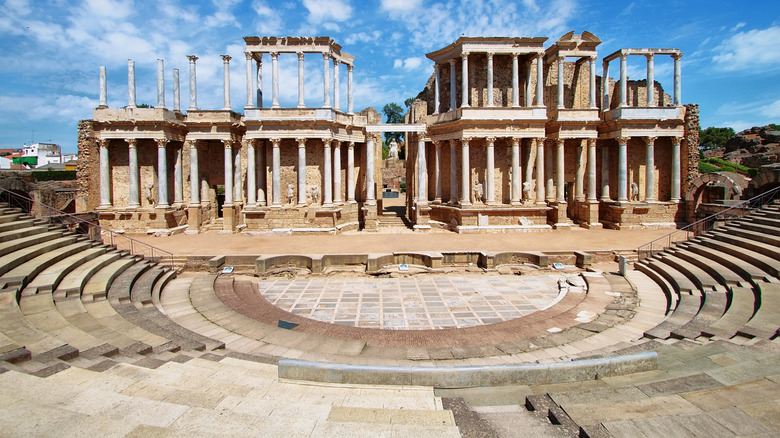
Roman ruins have a reputation for being located in ... well, Rome. But the Italian capital is hardly the only place in Europe where you can wander among the ancient empire's remains. The town of Mérida, in Extremadura, is actually one of the best places to view Roman ruins, as it was once a stronghold for the empire.
The ancient capital of Lusitania — the Roman region that encompasses most of modern Portugal — Mérida once overflowed with Roman infrastructure. These days, the city boasts an enormous Roman theater that resembles a miniature Colosseum. To stroll through the Roman Theater of Mérida and take in the visual impact of this ancient structure, you can purchase a $15 ticket. As for actually getting there, you can opt for a quick 12-minute walk or a 5-minute taxi ride from the local train station.
Previous visitors rave about the marble columns and crumbling statues that still stand on the theater's ancient stage. My workmates also informed me that, depending on the time of year, this destination is a great option for families traveling with kids without any added stress. Indeed, every May, the city of Mérida organizes the Emerita Lvdica Roman fair, which hosts reenactments of the old gladiator battles. The event is incredibly popular among children, offering exciting and educational entertainment for the whole family.
La Rambla, Catalunya
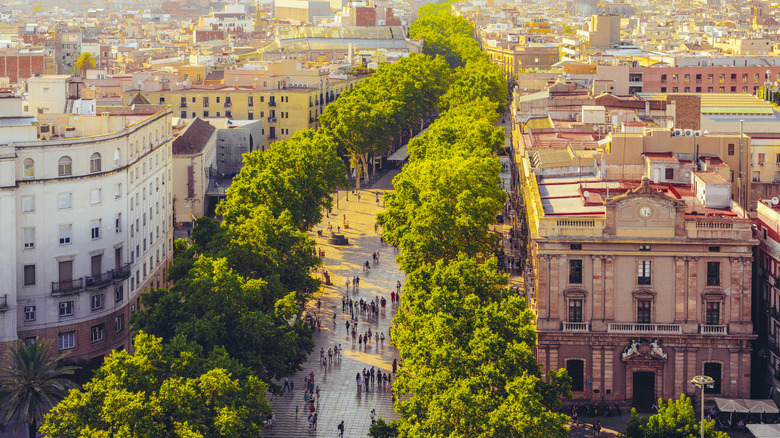
There may be no walkway in Europe quite as famous as Barcelona's La Rambla — a gorgeous, tree-lined street that stretches right through the city center. Because it's a wold-famous tourist attraction, La Rambla is also home to shops and cafés selling everything from freshly-fried churros to post cards to orange juice. Singers, jugglers, and caricaturists all battle to make a name for themselves among hordes of tourists from all over the world, which makes for some pretty phenomenal people-watching.
When I first strolled down La Rambla, I couldn't help but feel overwhelmed by the sheer number of flashy products and scrumptious smells that lined the street. Eventually, I bought a Fanta, which I sipped beneath the trees, as groups of brightly-dressed tourists walked by. My advice: don't be afraid to take your time on La Rambla, and do your best to savor every moment. Grab a newspaper, a coffee, and a spot in the shade, and settle in for a while. Traveling to Spain is an exercise in learning how to go slow, and if you rush down La Rambla, you may miss out on an interesting street performance or a striking cartoon portrait.
That said, it's also worth noting that, due to its popularity, La Rambla can also be a bit of a tourist trap. Higher prices, pickpocketing, and scams aren't uncommon — which means you'll want to keep your eyes and ears peeled for any signs of trouble. Ultimately, the best advice is to approach this beautiful and bustling Spanish street with tranquil caution.
Royal Palace of Madrid, Madrid
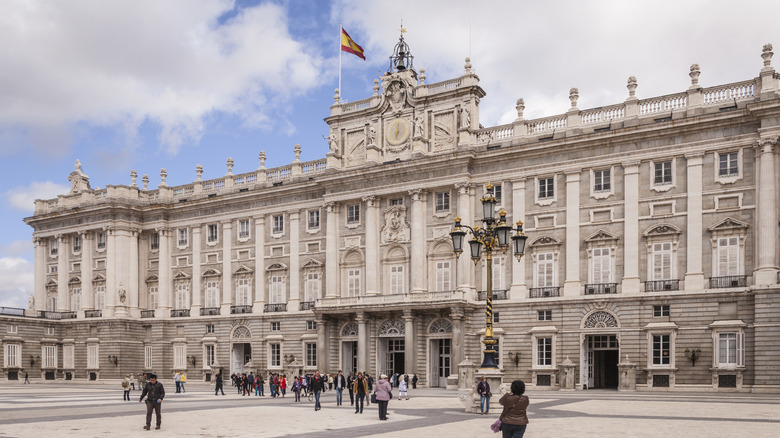
The Royal Palace of Madrid is one of Europe's most opulent royal residences. While the royal family actually resides at the smaller Palacio de Zarzuela, roughly 30 minutes outside of Madrid, the Royal Palace of Madrid is still closely associated with Spanish royalty. Today, this baroque masterpiece, with its 3,418 rooms, hosts elegant galas, diplomatic receptions, and royal events that showcase Spanish tradition. Better yet, it's one of the few official royal buildings open to the public, and visitors can explore lavishly decorated halls to get a taste of the royal lifestyle. As a long-time follower of the Spanish royal family's biggest scandals, I knew I had to visit.
Constructed in the 18th century, the building boasts opulent rooms filled with sparkling chandeliers, precious hand-woven tapestries, and priceless antique furniture. And, while it's not among the real-life castles that inspired Walt Disney, the truth is that any of his princess characters would have felt right at home inside this stunning building.
Visitors can sign up for a guided tour of the castle for around $40, or they can explore it at their own pace with the help of an audio guide for just under $30. Either way, they will be treated to a phenomenal experience that blends royal history with modern magnificence. The palace is just a 14-minute walk or a six-minute taxi ride from the Príncipe Pío train station, making it relatively accessible. It's also located quite near the Temple of Debod, meaning that you can see both sights on the same day.
Mercat Central València, Valencia
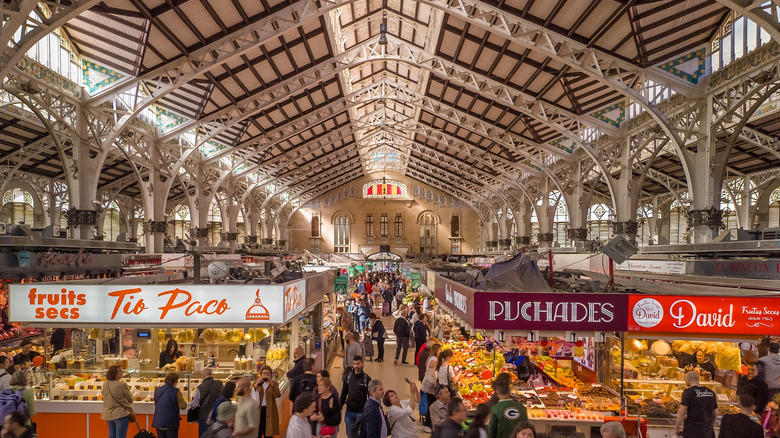
Throughout my time in Spain, numerous people suggested visiting Valencia. "It's a city that has everything," my workmates told me. "You can try surfing, attend a lecture on archeology, and take a cooking class all in the same day!" What's the city's top attraction? "The Mercat Central," was their answer time and time again.
Designed by architects Francisco Guardia Vial and Alejandro Soler March in the style of Antonio Gaudí, this market encapsulates the spirit of the early 20th century. With a modern glass dome, metallic structures, and ornate paintings on the ceiling, the building blends the leisurely feel of a gazebo with the more official markings of a historical palace. Inside lies one of the grandest markets in Europe — not just in size, but also in quality. The food stands offer high-quality eats, and one of them even boasts a chef with a Michelin star.
For someone like me who lives and breathes for tapas, the Mercat Central seems almost too good to be true. One of our local features editors, however, would be quick to assure me that the market is, indeed, real. She recommends this spot for foodies who want to enjoy refreshing drinks or digging into some high-quality paella. Sign me up!
University of Salamanca, Castilla and León
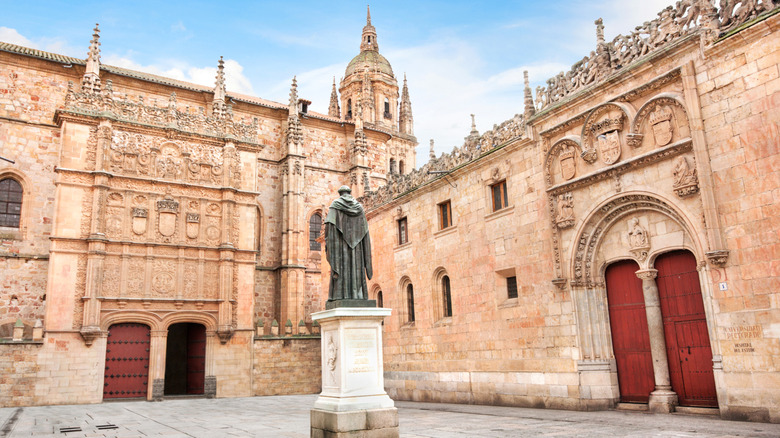
Salamanca's historic city center is awe-inspiring from the moment you lay eyes on it. With its distinctive architecture, this UNESCO World Heritage Site is considered one of Spain's most beautiful university towns — and centuries of academic tradition have helped shaped both the architecture and atmosphere. The crown jewel of this remarkable city is the historic University of Salamanca, whose golden sandstone buildings form the heart of the old quarter.
Created in 1218, the University of Salamanca boasts an illustrious history. As the oldest known institution of higher education in the Spanish-speaking world, this university pioneered the discipline of international law. Centuries ago, its professors and students defended the rights of indigenous people and rallied against the conquest of Christopher Columbus and other self-proclaimed explorers. These days, the school continues to cultivate an active intellectual life, with guest lectures and international performers galore.
During my stay in Salamanca, I was able to attend several campus-wide events that were open to the public — including a violin performance and a play. However, the charms of the university extend beyond its cultural life. A walking tour of the campus reveals mythical libraries, green courtyards, and archways filled with stories. Meanwhile, a stroll through the nearby center will take you to bookshops, cafés, and inexpensive restaurants. All in all, Salamanca is a college town at its finest.
Methodology
This list of the top 10 best destinations for first-time visitors in Spain was curated through a careful process that involved extensive research and a combination of multiple travel resources and first-hand experiences. The final selection process involved recommendations from Spanish locals, travel industry professionals, and Spain-based writers to ensure the most authentic insights about each destination. Additionally, popular review platforms — including Google Reviews, TripAdvisor, and Reddit — were also consulted to ensure that each destination maintains a broad appeal among diverse travelers.
Overall, the final list is a representation of Spain's vast and diverse regions, highlighting both iconic landmarks and cultural gems that showcase the country's rich history and diverse character. From the bustling streets of Madrid and Barcelona to the more laid-back atmosphere of its smaller cities, these destinations offer a peek into Spanish culture and tradition, while still remaining accessible and affordable. All of which makes it the perfect starting point for visitors new to this captivating country.