11 Top-Rated Tourist Attractions in Livorno
Most tourists arrive in Livorno (which the British, for some reason, call Leghorn) by sea, on the many ships that call here as the nearest cruise port to the splendors of Pisa. But despite heavy bombardment in World War II, Livorno has its own attractions for tourists.
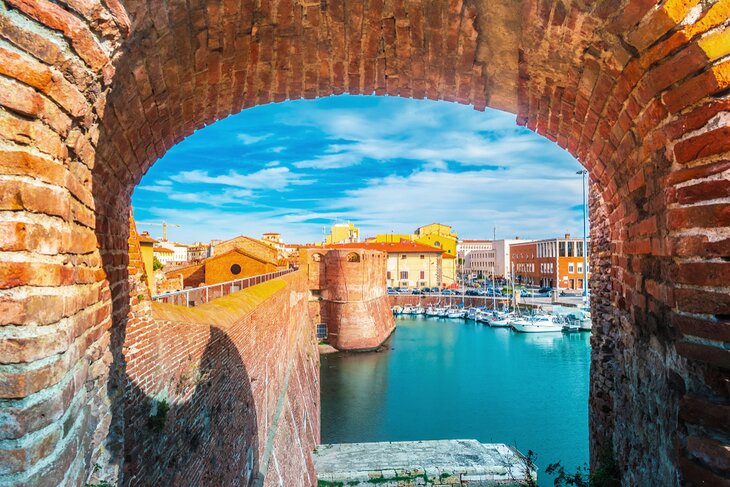
Many of Livorno's top attractions revolve around its history, which parallels that of nearby Pisa in many ways, and its still-active port. As elsewhere in Tuscany, you'll encounter the Medici family, responsible for constructing the fortifications and the new harbor. But art also plays a major role in Livorno's story.
Livorno was the birthplace of the painter Amedeo Modigliani (1844-1920), whose works are exhibited in the city's art museum, and the composer Pietro Mascagni (1863-1945). You can find all the best places to visit and things to do with this list of the top attractions in Livorno.
See also: Where to Stay in Livorno
- 1. Terrazza Mascagni
- 2. The Port
- 3. Nuova Venezia (New Venice)
- 4. Santuario di Montenero
- 5. Mercato Centrale (Central Market)
- 6. Fortezza Vecchia (Old Fortress)
- 7. Livorno's Beaches
- 8. Acquario di Livorno (Aquarium)
- 9. Museo della Città
- 10. Museo Civico Giovanni Fattori
- 11. Via Grande and Monumento dei Quattro Mori
- Where to Stay in Livorno for Sightseeing
- A Shore Excursion from Livorno
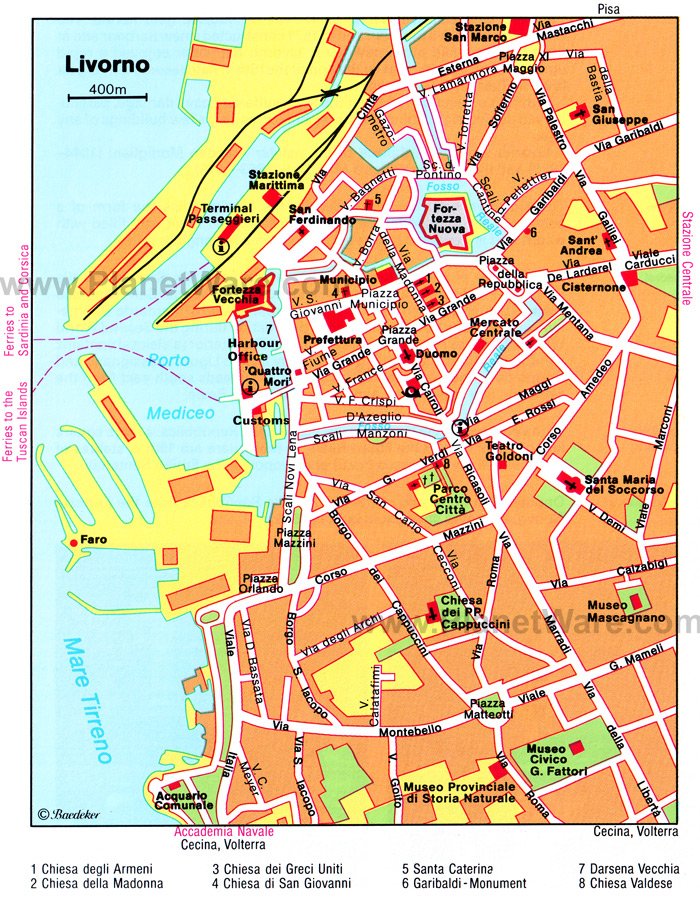
- Map of Tourist Attractions in Livorno
- More Things to See and Do
1. Terrazza Mascagni
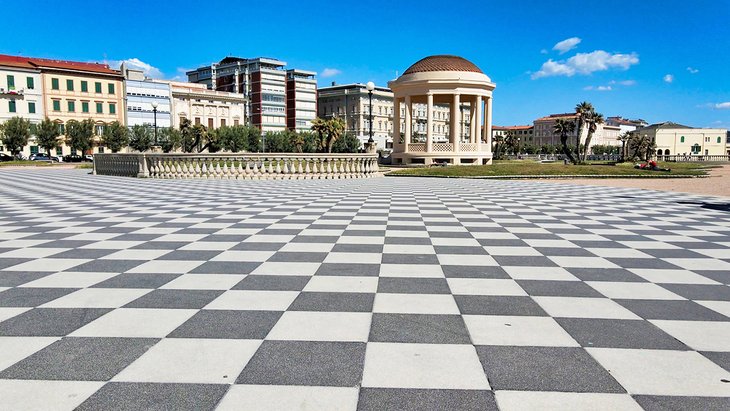
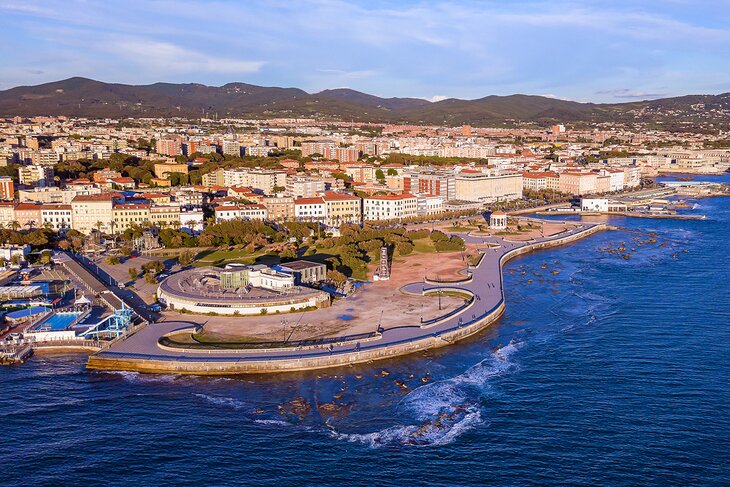
This wide promenade along the waterfront at the southern part of town overlooks the Tyrrhenian Sea and is a favorite spot for locals to stroll and meet in good weather, as well as for joggers and runners.
The 8,700-square-meter terrace is paved in a dramatic chessboard pattern of more than 34,000 black and white tiles, and is separated from the sea by a long balustrade. Even before the terrace was built in the late 1920s, it was a popular local gathering place, with an amusement park and places to swim. The orchestra pavilion is a replica of the original built in the 1930s and destroyed during World War II.
The Acquario di Livorno is on the Terrazza Mascagni, and beyond the aquarium, the seafront promenade passes the Accadémia Navale (Naval Academy).
2. The Port
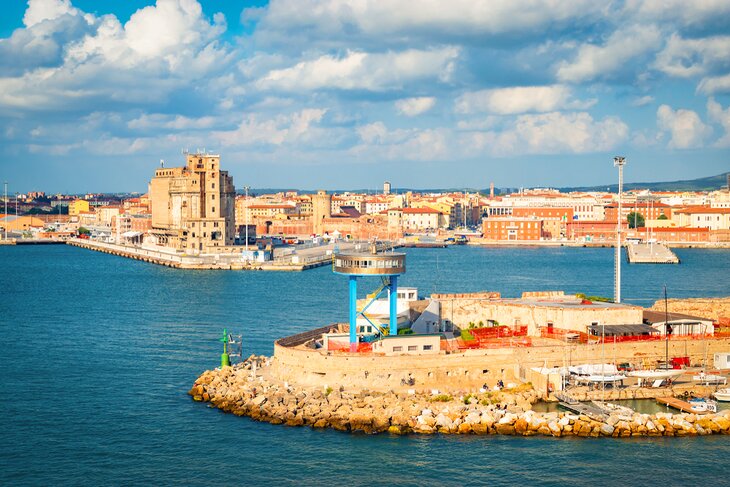
The port, at the west end of the old town, is one of the largest in the Mediterranean and a busy place with a constant stream of shipping coming and going. Along with an active schedule of Mediterranean cruise ships docking and departing, the harbor is active with boat services and car ferries to Elba and other islands in the Arcipélago Toscano (Tuscan Archipelago), as well as to Sardinia and the French island of Corsica.
The old part of the port is known, after its Medici founders, as the Porto Mediceo. Tall-ship fans will notice the masts of the Italian naval training vessel Amerigo Vespucci, whose home port is in Livorno. When it is not on its training cruises, which are usually July through September, you can board the ship for tours.
3. Nuova Venezia (New Venice)
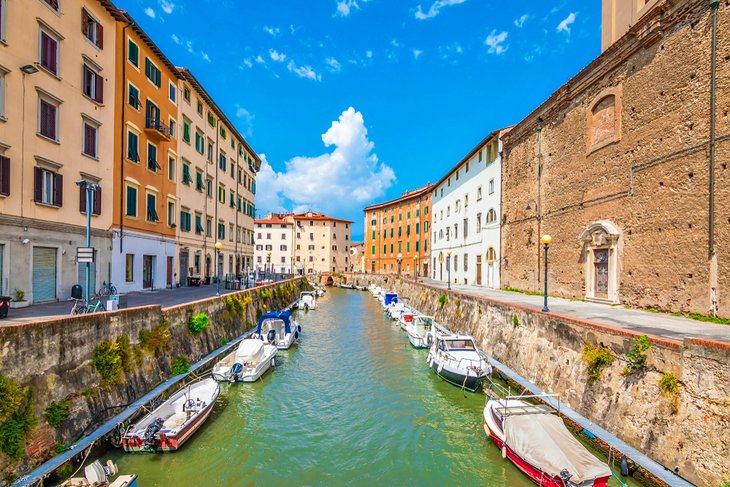
In the 1620s, when Livorno needed to expand to accommodate a growing population, a new district was planned for the area between the old and new fortresses. But the area was laced with moats that had surrounded the old city walls and had since become important waterways to move goods between the port and warehouses alongside them.
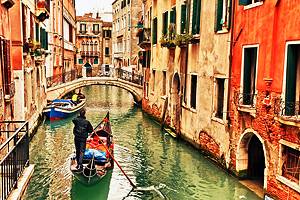
So the architect borrowed building techniques from Venice, leading to this neighborhood's name, meaning new Venice. You can tour this picturesque neighborhood on a boat tour that circles the Fortezza Nuova — the new fort — and follows the canal underneath the Piazza della Repubblica.
Explore on foot to discover the Church of Santa Caterina of Siena, with beautiful early 17th-century wood choir stalls and seven notable side chapels. The dome rises 63 meters, its cupola decorated with 19th-century frescoes of the Evangelists. Look for the large painting, Coronation of the Virgin, by Giorgio Vasari, which once hung in the Vatican. Don't be misled by the plain exterior and the unfinished façade; the interior will be quite a surprise.
4. Santuario di Montenero
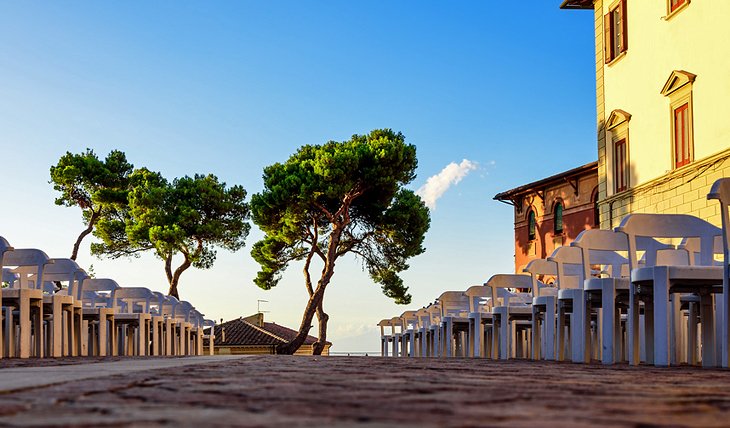
In hills above the shore about a 30-minute drive south of central Livorno, the shrine of Our Lady of Grace venerates a sacred image of the Madonna of Montenero, a 14th-century painting from the Pisan school.
You can ride from the town of Montenero on a century-old funicular to see the sanctuary, which began as a small oratory in the Middle Ages and was enlarged and richly decorated in the 16th and early 17th centuries, becoming a basilica in 1818.
Highlights are the 18th-century Cappella della Vergine, housing the sacred image, and the gallery of ex-votos given in thanks for the intercessions of the Madonna di Montenero. These include paintings, models, and objects in gratitude for deliverance from accidents, shipwrecks, and other disasters.
Arrive late in the afternoon to watch the sunset from the terrace.
Address: Piazza di Montenero 9, Livorno
5. Mercato Centrale (Central Market)

For a slice of local life and color, don't miss Livorno's Central Market, near Piazza Cavour in a late-19th-century building designed by Angiolo Badaloni. Every morning except Sunday, the main food hall is a riot of activity as locals fill their shopping bags with food from more than 200 stalls and shops.
You can sample local cheeses and salamis, and stock up for picnics on the beach. Small stalls inside serve fresh-ground coffee and breakfast pastries. Adjacent to the market is an equally lively and colorful outdoor farmers' market.
Address: Via Buontalenti, Livorno
6. Fortezza Vecchia (Old Fortress)
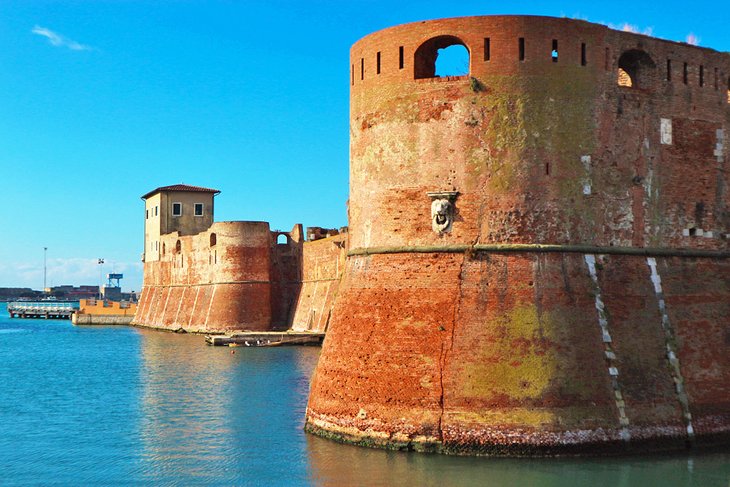
At the north end of the old port area, Fortezza Vecchia was built by Antonio da Sangallo for Cardinal Giulio de' Médici between 1521 and 1534. It is dominated by a round tower known as the Mástio di Matilde, part of an earlier 11th-century castle and Livorno's oldest remaining structure from the early Middle Ages.
The Medici fort also incorporated a crenelated area that was added in the 14th century. The little church of San Francesco inside the fortress was built in 1530.
The fortress is usually open for tours, where you can climb to the top of the Mástio di Matilde for views of the port and city. The fort is close to the cruise port, so for passengers with only a short time ashore, it's one of the easiest things to do in Livorno.
7. Livorno's Beaches
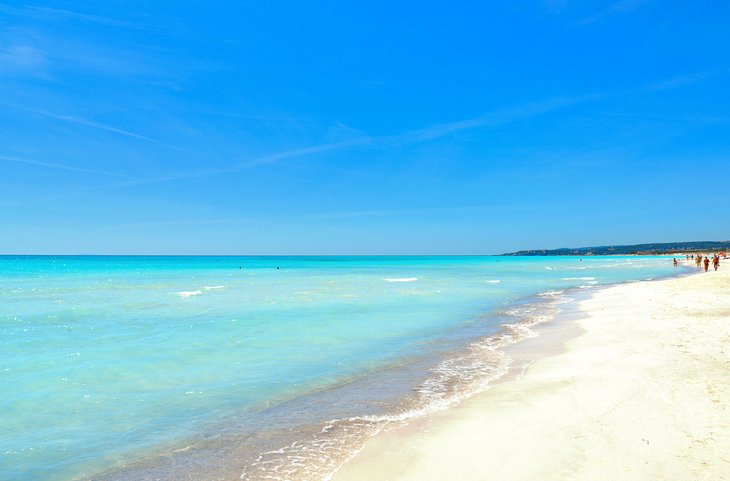
From the end of Livorno's waterfront, the Viale Italia runs south along the coast with a succession of views of the Tyrrhenian Sea. Along it are parks and beautiful beaches, which begin at the outskirts of the city. Walking paths lead to secluded coves and scenic headlands.
Beaches and rocky coves continue down the shore; look for the beautiful Scogli Piatti, a rockbound cove near Antignano, one of the loveliest spots along the Tyrrhenian Sea. South of Antignano is the Costiera di Calafuria, with beaches and clear waters for diving.
Between Livorno and Piombino a route called the Strada del Vino Costa degli Etruschi is not actually a route but a consortium of farms and small artisanal businesses specializing in local delicacies: olive oil, fruits and berries, almonds, as well as fresh-baked Tuscan breads. These are signposted, or you can follow a map to find them. You can visit, sample, and buy, perhaps stopping for a farm-fresh meal in a rustic agritourist osteria as you explore the coast.
8. Acquario di Livorno (Aquarium)
On the Terrazza Mascagni is the Acquario di Livorno, a modern aquarium with beautifully displayed sea life from the Mediterranean and other ocean environments. Highlights are blacktip and zebra sharks, Napoleon fish, sea turtles, seahorses, brilliantly colored Caribbean fish, corals, and an underwater archaeology exhibit.
Although a trip to the aquarium is one of the most popular things to do for families in Livorno, this is not just a place to entertain kids by looking at pretty fish. It's a learning experience for the whole family, with arresting displays and excellent signage that points out fascinating characteristics of the sea life. On the first floor, for example, you can see leaf-cutting ants at work in a real anthill and learn how they use the leaves as fertilizer to grow their own food.
The newest exhibit, added in 2019, is a tank dedicated to the octopus, specifically designed to demonstrate their cognitive capacity and intelligence.
Address: Piazza Mascagni, Livorno
9. Museo della Città
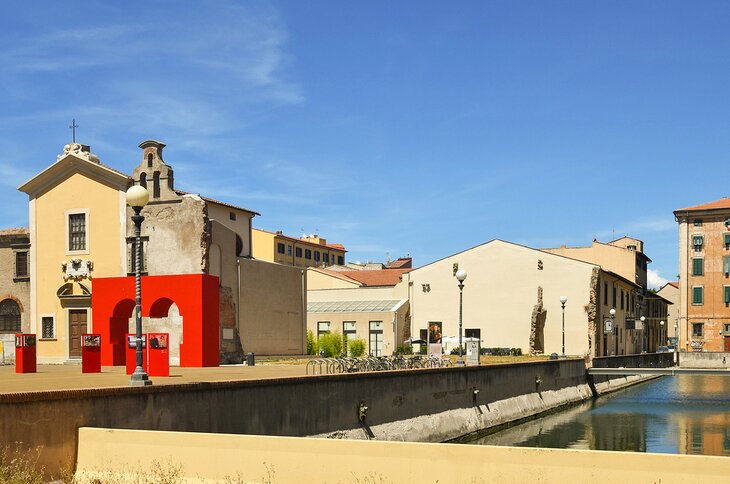
Opened in 2018, the Museo della Citta (Museum of the City) is a thoughtfully curated contemporary museum, chronicling the rich history of this largely overlooked city. Exhibits, which are described and explained in English, begin with the earliest archaeological finds and explore the rise of its shipping and commerce as a free port.
The artifacts are well-chosen and interesting, put into the context of Livorno's history. These range from Roman amphora and 9th-century Etruscan tools to the coat and battle hat worn by Giuseppe Garibaldi and the three fake Modigliani heads sparking the 1984 "Modì prank" that jolted the art world.
This museum is a good place to begin sightseeing in Livorno, as it puts the other places to see in historical perspective.
Address: Piazza del Luogo Pio, Livorno
10. Museo Civico Giovanni Fattori
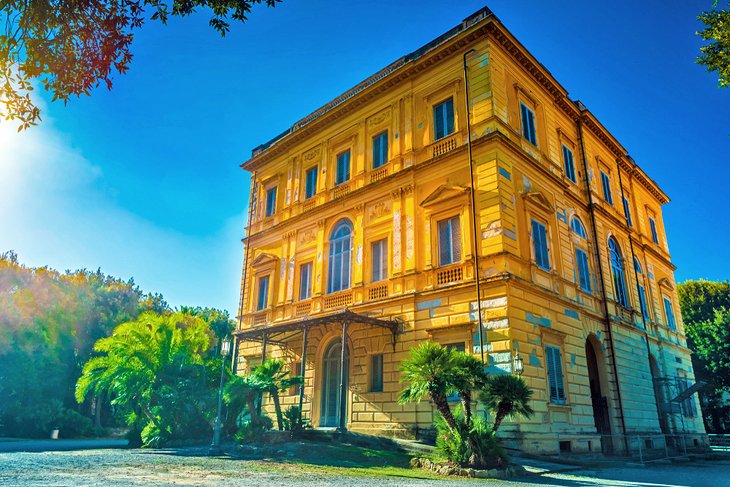
The Museo Civico is in the Villa Mimbelli, in the southern part of the new town, and contains works by the Macchiaioli, a group of Tuscan painters formed in the mid-19th century with the principal aim of overcoming academic restrictions that crimped their more impressionist styles.
This movement was led by Giovanni Fattori, whose paintings hang on the upper floor - look especially for his best-known work, Mandrie Maremmane, featuring white Maremma cattle. Vittorio Corcos portrays Livorno's own composer Pietro Mascagni, and the collection highlight is Stradina Toscana, by Amedeo Modigliani, another Livorno native.
Not the least reason for visiting the museum is to tour the 19th-century Villa Mimbelli itself, with frescoes by Annibale Gatti, a magnificent staircase, and quiet gardens.
Address: Via San Jacopo in Acquaviva 65, Livorno
11. Via Grande and Monumento dei Quattro Mori
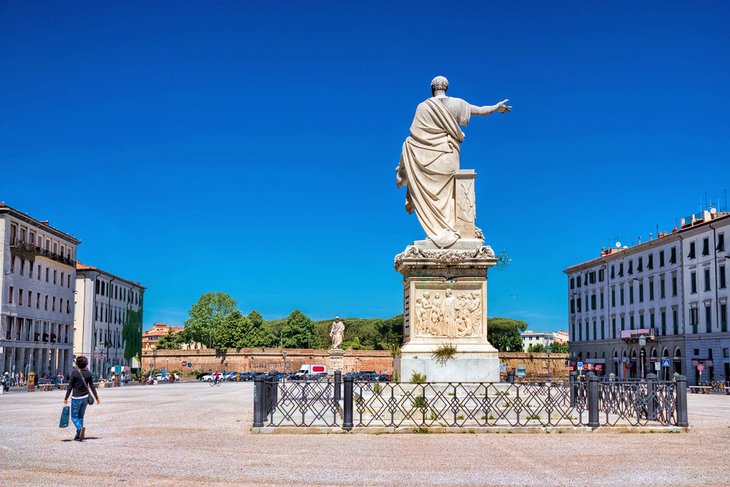
Livorno's main street, Via Grande draws a wide straight line from the harbor, across the Piazza Grande to the broad Piazza della Repubblica, with statues of Ferdinand III (d. 1824) and Leopold II (d. 1870), the last Grand Dukes of Tuscany.
In Piazza Micheli, which opens onto the harbor, is a monument to Grand Duke Ferdinand I (1587-1609). It's popularly known as the Monumento dei Quattro Mori (Monument of the Four Moors) after the four bronze figures on the base.
The central feature of the old town is the long Piazza Grande, where you'll find the cathedral, built between 1594 and 1606 to the design of Bernardo Buontalenti and Alessandro Pieroni. After its destruction during World War II, it was rebuilt in its original form. Inside are ceiling frescoes by Iácopo Ligozzi, Passignano, and Iácopo da Émpoli (all 16th-17th century), as well as a gilded reliquary.
Where to Stay in Livorno for Sightseeing
Because Livorno is not a big center for tourists, it doesn't have the high hotel concentration of most Italian cities. But it is a good choice for visiting the attractions of the more crowded Pisa, a short train ride north, or driving through the beautiful Tuscan hills. Also convenient for touring are the beach resort of Tirrenia or one of the beautiful hill villages to the south. Here are some highly rated hotels in Livorno:
Luxury Hotels:
- On the wide seafront promenade of Terrazza Mascagni, old-fashioned Grand Hotel Palazzo has a pool, free parking, and a breakfast room with sea views.
- Overlooking the harbor, just off Gran Via and close to Fortezza Vecchia and to Fortezza Nuova, attractive, old-style Hotel Gran Duca is especially convenient to Sardinia or Corsica ferries.
- At the beach in Tirrenia and an easy bus ride to both Pisa and Livorno, Grand Hotel Continental has spacious rooms and a pool.
Mid-Range Hotels:
- On Viale Italia, near the civic and natural history museums and aquarium, Hotel Gennarino is an elegant villa with parquet floors, a marble staircase, and large rooms. Parking is free, and the hotel offers an abundant breakfast buffet.
- Boutique Hotel Universal has sea-view rooms in a newly restored villa with a pool and restaurant, a few miles from downtown Livorno on a direct bus line.
- A five-minute walk from the cathedral, Agave in Città has an indoor pool and a fitness center, plus rooms with kitchenettes with full-sized refrigerators.
Budget Hotels:
- The modern Hotel Stazione is opposite the train station and a 25-minute walk from central Livorno.
- With simple rooms; free breakfast; and fast, free internet, Hotel Navy is a short walk from museums, the aquarium, and the Terrazza Mascagni promenade. Offering free bikes and free parking, Arena Alfieri B&B is a good choice for tourists arriving by car. Some rooms have shared baths.
A Shore Excursion from Livorno
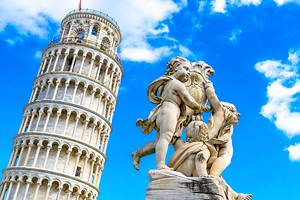
Many cruise passengers take advantage of a day in Livorno to see the Leaning Tower and other attractions in nearby Pisa. But you can see even more with a well-planned guided tour. Specially designed as a shore excursion for cruise passengers, tour operators meets you at the ship and guarantees you'll return on time.
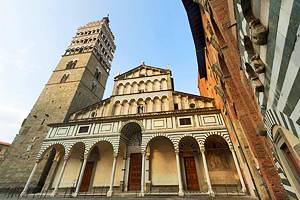
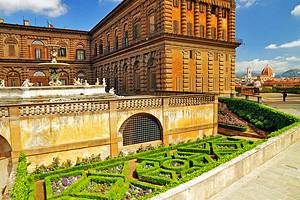
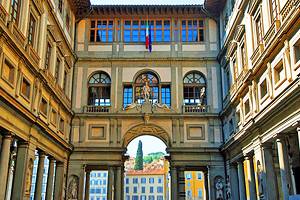
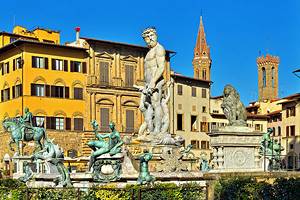
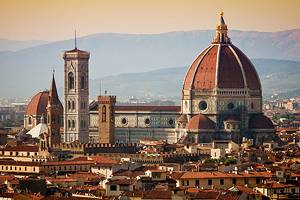
After a stop to see the cathedral, baptistery, and Leaning Tower of Pisa, you'll have a scenic ride through the rolling countryside of Tuscany. Once in Florence there is time to explore sights such as Piazza del Duomo, with the Cathedral of Santa Maria del Fiore and Baptistery, Santa Maria Novella, Piazza della Signoria, and the Palazzo Vecchio.
Map of Tourist Attractions in Livorno
More Things to See and Do
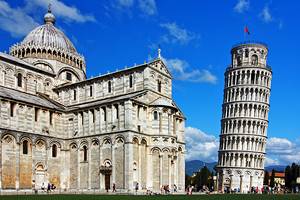
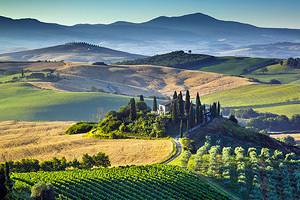
Places to Visit near Livorno: The most popular day trip from Livorno is to the famous Leaning Tower in Pisa, only a half-hour bus or car ride away. Or you can take a train to the lovely town of Lucca, surrounded by walls topped with a tree-shaded promenade. Although Livorno has its own beaches, some of Italy's best beaches are along the coast north of Pisa.
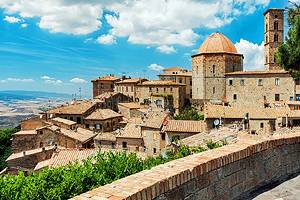
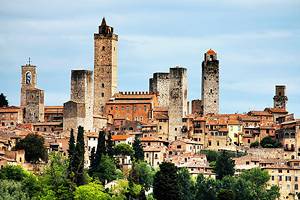
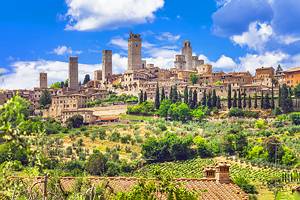
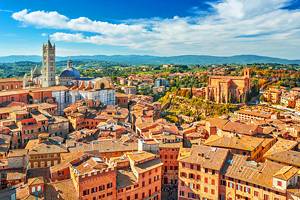
Where to Go from Livorno: As you are touring Tuscany, you won't want to miss Florence or the beautiful medieval city of Siena, with its magnificent cathedral filled with works by some of Italy's most famous artists. On your way, you can stop in some of the fabled Tuscan hill towns: San Gimignano, bristling with tall towers, or Volterra, with its ancient Etruscan and Roman sites.