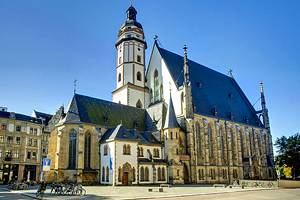
Tourist Attractions in Germany
History, culture, and natural beauty perhaps best describe the essence of vacationing in Germany. With its many historic cities and quaint small towns, along with an abundance of forests and mountains, visitors are spoiled for choice when it comes to choosing unique places to visit in this beautiful part of Europe.
Those wanting to sightsee or experience the arts should head to the larger metropolitan areas such as Munich, Frankfurt, or Hamburg. For those looking for recreational activities, consider a visit to places such as the majestic Bavarian Alps, the Black Forest, or the Rhine Valley.
Lovely old cathedrals and grand palaces are everywhere. And in the smaller towns and villages, some boasting still-intact original medieval Old Towns (Altstadt), many centuries-old traditions are still practiced, including traditional Christmas markets, festivals, and fairs.
At the cultural heart of Germany is the capital, Berlin. Home to many fine museums and galleries, this vibrant city makes for a great base from which to explore the many other delights the country has to offer. And for nature lovers, there's a whole world of possibilities in Germany's great outdoors.
For ideas and recommendations to help plan your travels, be sure to read through our list of tourist attractions in Germany.
Berlin's Brandenburg Gate
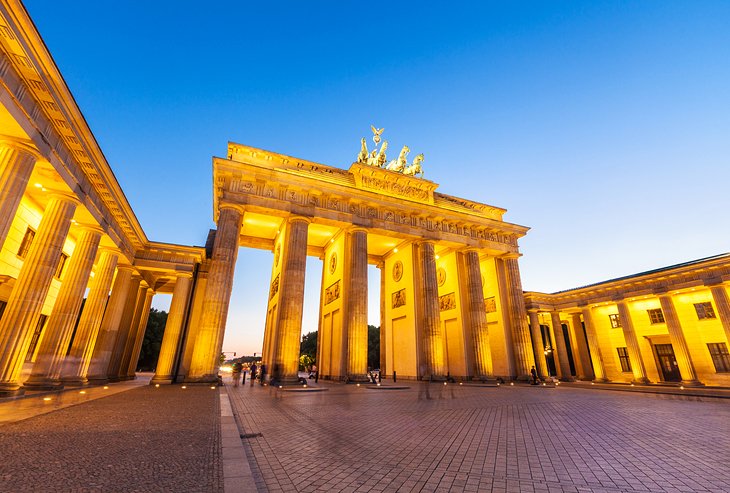
Modeled on the Acropolis in Athens and built for King Frederick William II in 1791, the monumental sandstone Brandenburg Gate in Berlin's Mitte district was the city's first Neoclassical structure. It measures an impressive 26 meters in height, which includes the Quadriga, the spectacular four-horse chariot carrying the goddess of victory perched atop this spectacular building.
Its six huge columns on each side of the structure form five impressive passages: four were used by regular traffic, while the center was reserved for the royal carriages. Huge Doric columns also decorate the two buildings at each side of the Gate, once used by toll-collectors and guards.
Undoubtedly Berlin's most iconic structure, it's hard to believe that the majestic structure you see today was severely damaged during WWII. It was also once part of the infamous Berlin Wall and, for a few decades, was symbolic of the division of Berlin into East and West.
- Read More: Tourist Attractions in Berlin
Cologne Cathedral (Kölner Dom)
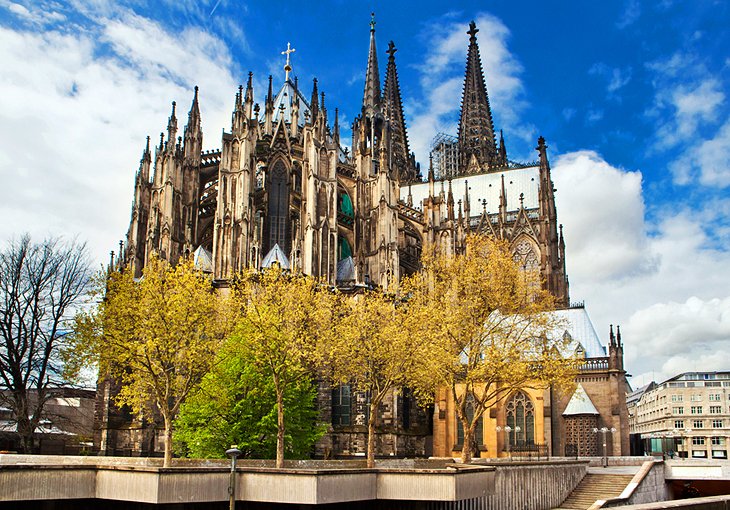
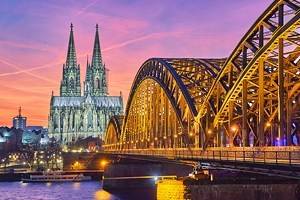
The towering Cologne Cathedral (Kölner Dom), the Cathedral of St. Peter and St. Mary, is located on the banks of the Rhine and is undoubtedly Cologne's most impressive landmark. This masterpiece of High Gothic architecture is one of the largest cathedrals in Europe. Construction on this most ambitious building project of the Middle Ages started in 1248 and reportedly took over 600 years to complete.
As imposing as its façade, the cathedral's magnificent interior covers an area of 6,166 square meters and boasts 56 huge pillars. Above the high altar is the Reliquary of the Three Kings, a 12th-century work of art in gold that was designed by Nicholas of Verdun to house the relics of the Three Kings brought here from Milan.
Other highlights include the panoramic views from the South Towers, the 12th- and 13th-century stained glass in the Three Kings Chapel, and the Treasury with its many precious objects, all of which survived largely intact after WWII. For some of the best vistas over the city and river, climb the 533 steps to the viewing platform in the South Tower. A small entrance fee is required.
- Read More: Things to Do in Cologne
The Black Forest, Baden-Württemberg
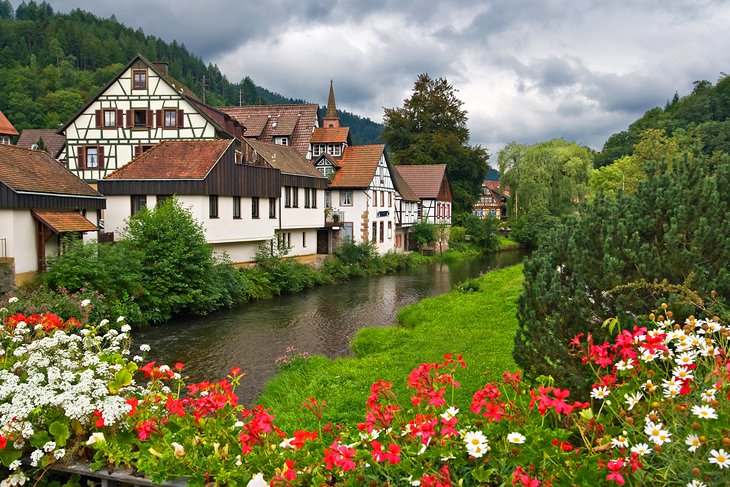
The beautiful Black Forest with its dark, densely-wooded hills is one of the most visited upland regions in all of Europe. Situated in the southwestern corner of Germany and extending 160 kilometers from Pforzheim in the north to Waldshut on the High Rhine in the south, it's a hiker's heaven.
On the west side, the Black Forest descends steeply to the Rhine, crossed by lush valleys, while on the east, it slopes more gently down to the upper Neckar and Danube valleys. Popular spots include Germany's oldest ski area at Todtnau, the magnificent spa facilities of Baden-Baden, and the attractive resort of Bad Liebenzell.
Other highlights include the spectacular Black Forest Railway. It's centered on Triberg with its famous falls, and Triberg itself, home to the Black Forest Open Air Museum.
The best way to catch them all? Grab a map of the Black Forest Panoramic Route, a 70-kilometer driving tour that takes in the very best views over the region, along with its top historic attractions, including stunning castles and numerous medieval towns and villages.
The Ultimate Fairy-Tale Castle: Schloss Neuschwanstein, Bavaria
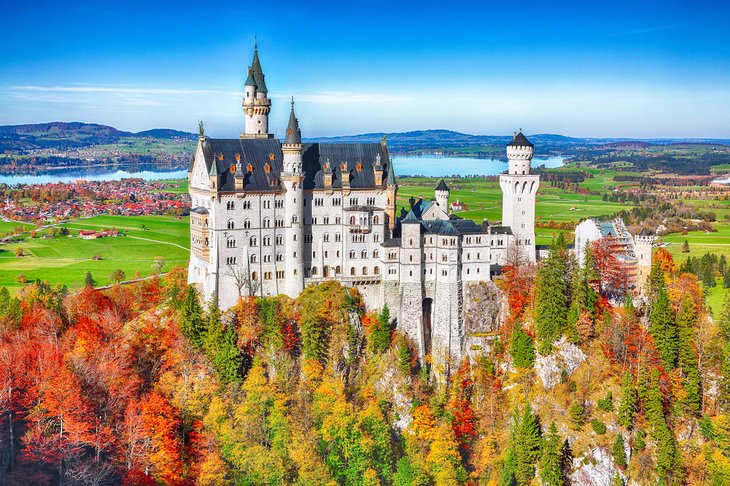
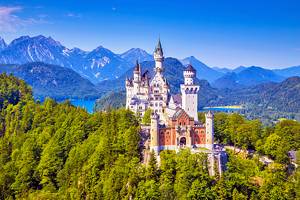
The quaint old town of Füssen, situated between the Ammergau and Allgäu Alps and a popular alpine resort and winter sports center, is a good base from which to explore nearby Neuschwanstein Castle. This spectacular old fortress is widely recognized as one of Europe's most famous and picturesque royal castles.
King Ludwig II of Bavaria built this many-towered and battlement-covered fantasy fortress, famous as the inspiration for Walt Disney's iconic theme park castles, from 1869-86. A variety of tour options are offered, including guided tours of the sumptuous interior taking in the Throne Room, the Singers' Hall – and some of the country's most spectacular views.
Official site: www.neuschwanstein.de/englisch/tourist/index.htm
Miniatur Wunderland and the Historic Port of Hamburg
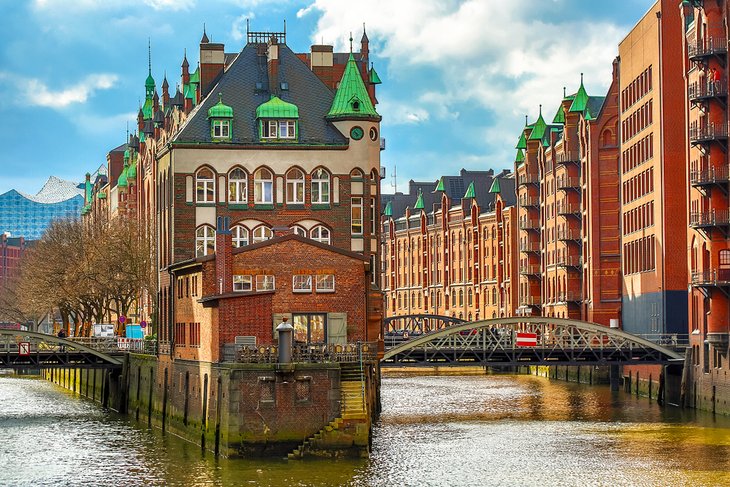
In the heart of the historic Port of Hamburg, the magnificent Miniatur Wunderland, the world's largest model railway, is an attraction that appeals equally to young and old alike. Boasting more than 9.5 miles of model railway track, this massive scale model includes sections dedicated to the USA, England, Scandinavia, as well as Hamburg. It is constantly expanding, but incorporates around 1,300 trains, more than 50,000 microscopic lights, and in excess of 400,000 human figures.
It's not unheard of for guests to spend many hours exploring this fascinating world, with its remarkably detailed miniature airports, complete with planes that actually take off, as well as crowded cities, quaint rural scenes, and bustling harbors. For a memorable experience, book one of the behind-the-scenes tours, an especially fun thing to do at night.
Speaking of harbors, be sure to explore the vast Port of Hamburg while you're here. Covering 100 square kilometers, this huge tidal harbor is home to one of the world's largest cruise ship terminals, and is known as the Gateway to Germany. To make the most of your visit, note that the harbor is best explored by tour boat.
Afterwards, visit the harborside promenade, a lovely pedestrian route, and the Warehouse District. This historic district is famous for its continuous lines of tall brick-built warehouses.
The Rhine Valley
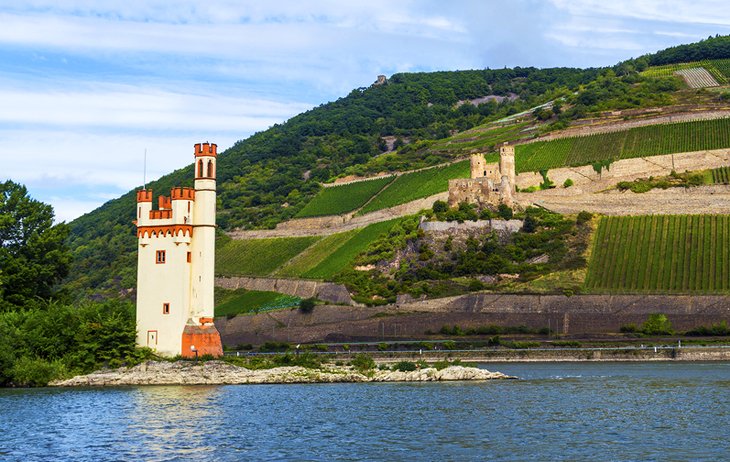
The Rhine is not only Europe's most important waterway, it's also the most beautiful. With a total length of 1,320 kilometers, this magnificent river stretches from Switzerland through Germany all the way to The Netherlands.
While there are many places in Germany to enjoy this majestic river, the lovely Upper Middle Rhine Valley section, designated a UNESCO World heritage Site, is probably the most popular spot for tourists to visit. Here, this often dramatic 65-kilometer stretch of river boasts more than 40 castles and some 60 picturesque medieval towns all just waiting to be explored either by river cruise or by car.
Looking for a great place to begin your Rhine Valley adventure? The historic town of Bingen, where the river cuts through a deep gorge before entering the Bacharach valley, is a good place to start.
- Read More: Tourist Attractions in the Rhine Valley
Berlin's Museum Island
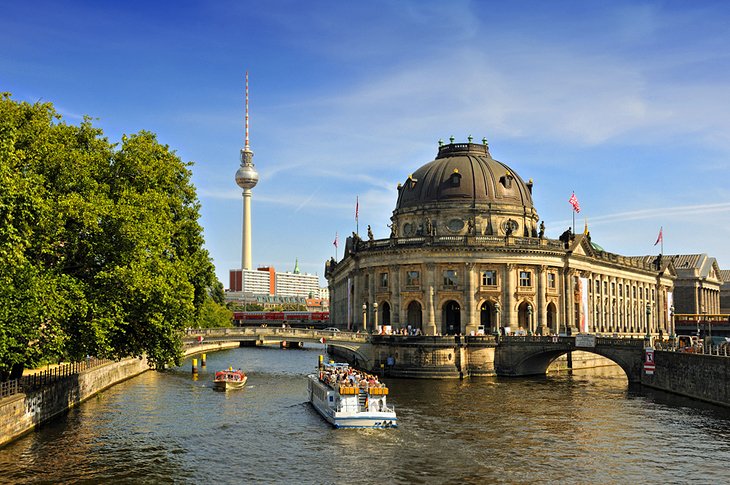
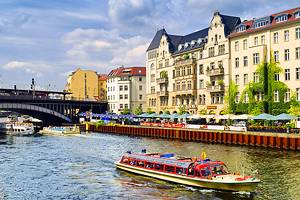
Berlin's world-famous Museumsinsel, or Museum Island, lies between the River Spree and the Kupfergraben, a 400-meter-long canal off the river. This excellent attraction includes many of the city's oldest and most important museums.
The heart of this pedestrian-friendly district is the Old Museum. Constructed in 1830, it was designed specifically to exhibit the royal treasures. Soon after, the land behind the museum was set aside for art and the "knowledge of antiquity."
Between 1843-55 the New Museum took shape, and the National Gallery was added in 1876, along with the Bode Museum, built in 1904 and home to collections of antiquities. Another highlight of a walking tour of these spectacular points of interest is the Pergamon with its recreated historic buildings from the Middle East.
But be warned: there's so much to see among these amazing museums that you can't possibly cram it all into a single day.
Munich's Marienplatz
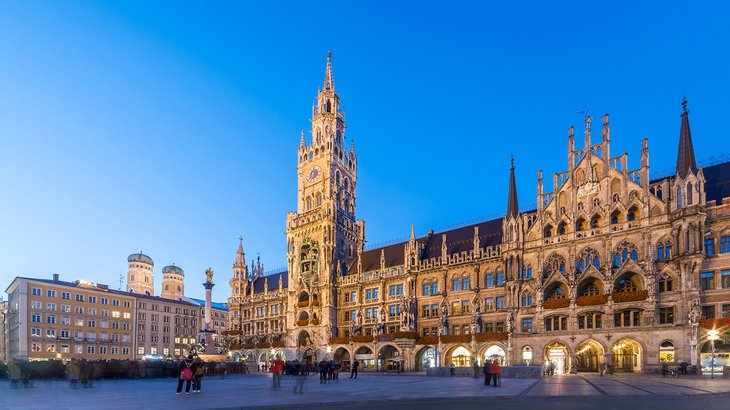
Germany's third biggest city, Munich (or München in German) has plenty to offer the adventurous traveller. The capital city of the state of Bavaria can trace its roots all the way back to the 12th century when a monastery was established here, and quickly grew into the region's most important place of trade and commerce.
Central to this rise was Marienplatz, the large square where traders from across Bavaria would meet to conduct business, and where locals would congregate to shop and watch medieval jousting tournaments. These days, this vast square still draws crowds of people, but for different reasons: they're here for sightseeing or possibly to enjoy a visit to one of square's trendy cafés and restaurants, or to shop in its unique boutique stores.
The points of interest for tourists are plentiful. Here, you'll find both the "new" and "old" town halls, the Neues Rathaus and Altes Rathaus, where much of the city's history was written. Both are attractive and worth a visit. Other landmarks include the tall monument to the Virgin Mary, the Mariensäule built in 1638, as well as the elegant Fischbrunnen, a 19th-century fountain with its bronze figures.
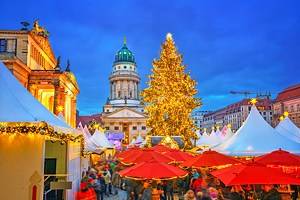
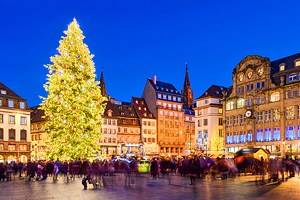
For a truly memorable experience, why not consider a visit in winter? If so, you'll be rewarded with the chance see the Marienplatz come alive with a spectacular display of lights and ornaments during the annual Christmas Market. Other winter festivals are held here, too, including the ancient, month-long Fasching carnival. Held each January to February locals and visitors alike partake in fun dances and events that have been held here for centuries.
Visit Marienplatz at any time of year and you'll still have fun. From March through to October you can witness the Neues Rathaus' famous glockenspiel perform its merry dance, its mechanical figures thrilling viewers thrice daily in a performance that has been enjoyed since 1908.
Location: Marienplatz, 80331 München, Germany
Read More: Tourist Attractions in Munich
Bamberg and the Bürgerstadt, Bavaria

Located in the valley of the Regnitz, where the river divides into two arms, sits Bamberg. This old imperial city is the most important town in Upper Franconia, and is one of the best preserved of Germany's many charming old towns. It's also one of the best to explore on foot.
Your walking tour should begin in its old episcopal quarter, home to the 13th-century cathedral and the old Benedictine abbey of Michaelsberg. It's between the two river branches that you'll find spectacular Bürgerstadt, a small borough of Bamberg that contains the Grüner Markt, an excellent pedestrian zone which is home to the 17th-century Baroque church of St. Martin.
To the north is the New Town Hall, or Neues Rathaus, built in 1736. But perhaps the town's most important structure is the Old Town Hall, built on top of the Obere Brücke (Upper Bridge).
Zugspitze Massif, Bavaria
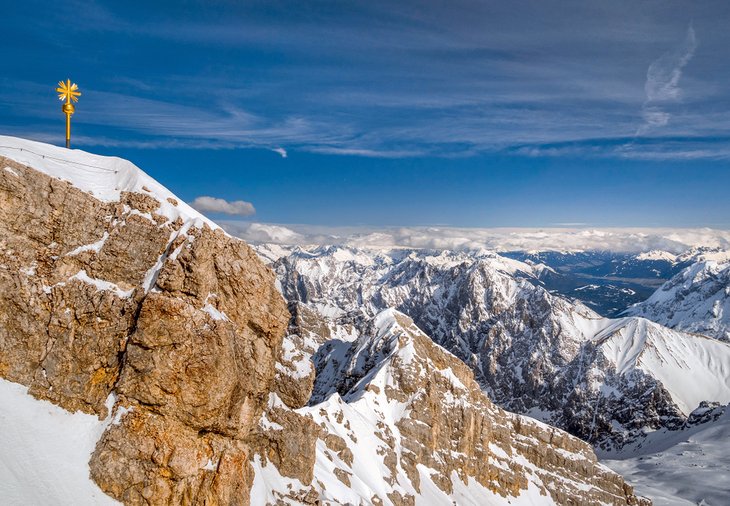
Part of the Wetterstein mountain range, the Zugspitze massif straddles the frontier between Germany and Austria and is surrounded by steep valleys. The eastern summit, at 2,962 meters, is crowned by a gilded cross and can be reached by the Bayerische Zugspitzbahn, a cog railway, or by cable car.
Another great way to enjoy this area of outstanding natural beauty is aboard the Tiroler Zugspitzbahn, a railway that runs to the Zugspitzkamm station at 2,805 meters. From here, the journey can be continued via a cable car to Zugspitz-Westgipfel Station at 2,950 meters. Be sure to sample a meal at the excellent panoramic restaurant located here.
A highlight of the journey is the chance to walk through an 800-meter-long tunnel, complete with viewing windows, to the Schneefernerhaus station at the top of the Bavarian cog railroad. From here, you can ascend the eastern summit with its viewing platforms. And thanks to the many ski resorts located nearby, Zugspitze is a wonderful German destination to visit in winter.
The Island of Rügen, Mecklenburg—Western Pomerania
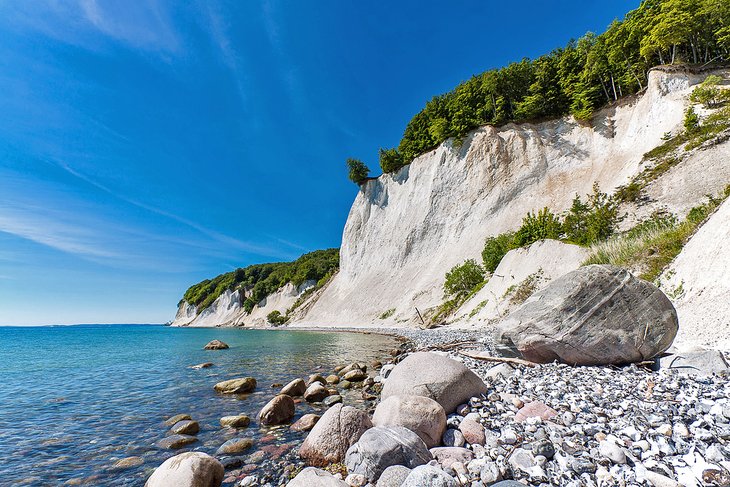
Rügen is the largest and most beautiful of the German Baltic islands. Separated from the rest of Germany by the Strelasund, it's linked to the mainland town of Stralsund by a causeway. The island's beauty stems from its diversity of landscape, including everything from flat farmland and forest-covered hills to expansive sandy beaches, lagoons, and lovely peninsulas.
A fun thing to do here, especially for outdoor enthusiasts, is to pay a visit to the Jasmund Peninsula, which in places reaches heights of 161 meters. Here, you'll find Jasmund National Park, popular among nature lovers for its abundance of wildlife, with notable species found here, including rare white-tailed eagles.
Another draw are the island's beautiful Stubnitz beech forests, part of Königsstuhl National Park. One of the most dramatic parts of the island's scenery can be enjoyed where these dense old forests come to a dramatic end on the Königsstuhl (King's Chair), a sheer chalk cliff plunges down to the sea from a height of 117 meters.
You can enjoy the view from the skywalk platform called Königsblick. This suspended walkway offers views over the cliff and the Blatic Sea.
There's also a great visitor center here, which offers plenty of valuable information regarding all aspects of the island. Another must-see is the little old resort town of Putbus, seat of the Princes of Putbus, and with numerous Neoclassical buildings and parks.
Königssee (King's Lake), Bavaria
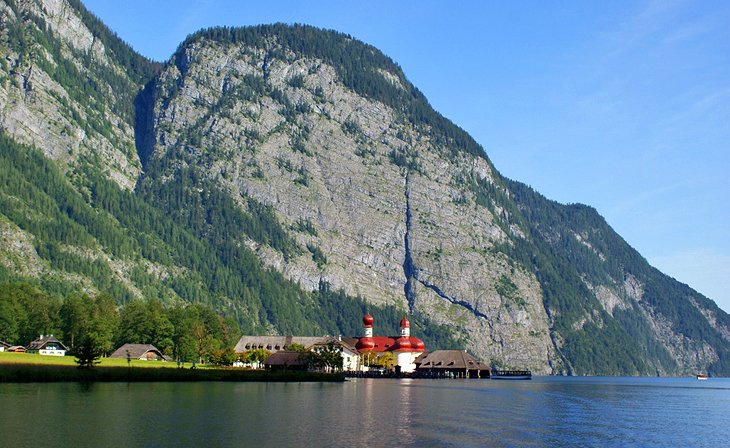
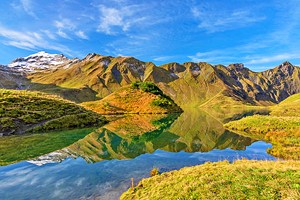
The lovely Bavarian lake of Königssee is one of the great beauty spots of the region of Germany referred to as Berchtesgadener Land. Also known as the King's Lake, this area near Salzburg is a hiking and biking paradise thanks to its vast network of trails.
One of the most popular things to do is follow the attractive footpath located along the east side of the Königssee to the Malerwinkel. Also known as Painters' Corner, it's notable for its superb views over the lake and the surrounding mountains.
Another equally attractive sightseeing option is taking a boat trip to the 17th-century Pilgrimage Chapel of St. Bartholomew, at the south end of the lake, and to walk from here to the Obersee. Berchtesgaden, at the end of the Deutsche Alpenstrasse, is perhaps the best-known tourist town and one of the most popular mountain resorts in the Bavarian Alps.
Also of note here is Berchtesgaden National Park. This place of outstanding natural beauty has, since 1990, been designated a UNESCO Biosphere Reserve.
Rothenburg ob der Tauber, Bavaria
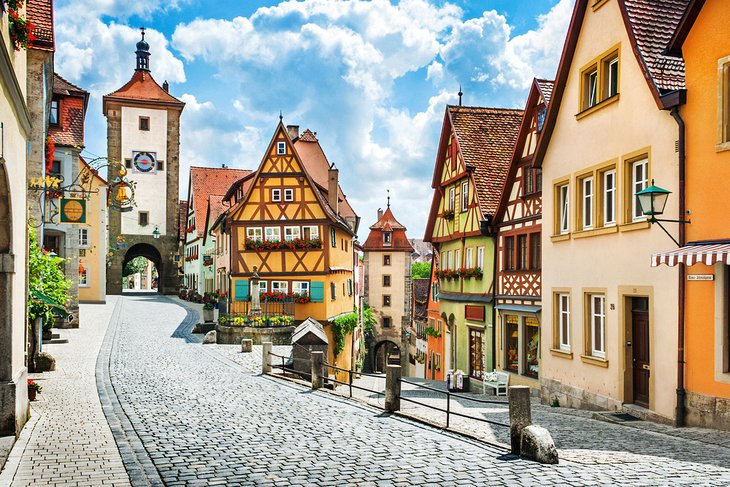
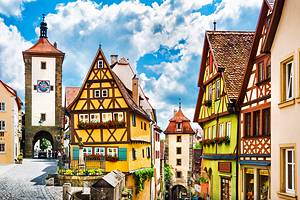
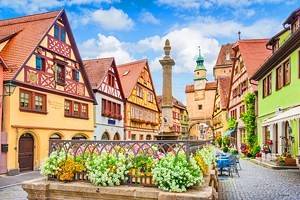
The old Franconian imperial city of Rothenburg is one of the most attractive places to visit on Germany's famous Romantic Road tourist route. Located on the steep banks of the picturesque River Tauber, it's notable for its walls and towers, untouched since the Thirty Years War of 1618.
This completely preserved, picture-perfect medieval town offers endless charm. One of the most popular things to do in Rothenburg ob der Tauber is to join a walking tour. For those who prefer to be their own guide, get started by picking up a map from one of the tourism offices located in the town.
There is no end of opportunities to explore, with individual buildings of note including the imposing 13th-century Town Hall (Rathaus) and the wonderful Ratstrinkstube, or Council Tavern, built in 1466 with its interesting clock. Also worth seeing is St.-Georgs-Brunnen fountain, built in 1608 near the end of Herrngasse; St. James's Church, with its fine high altar dating from 1466; and the Imperial City Museum.
Simply walking the old streets past these beautiful buildings is a timeless experience, especially if it involves the Plönlein, one of the town's most picturesque spots. And after all that adventure, end your visit at one of the many fine restaurants dotted around the town.
If traveling in winter, be sure to include a stop here for the traditional Christmas Market, which draws crowds from across the country and even further afield.
Sanssouci Park and Palace, Potsdam
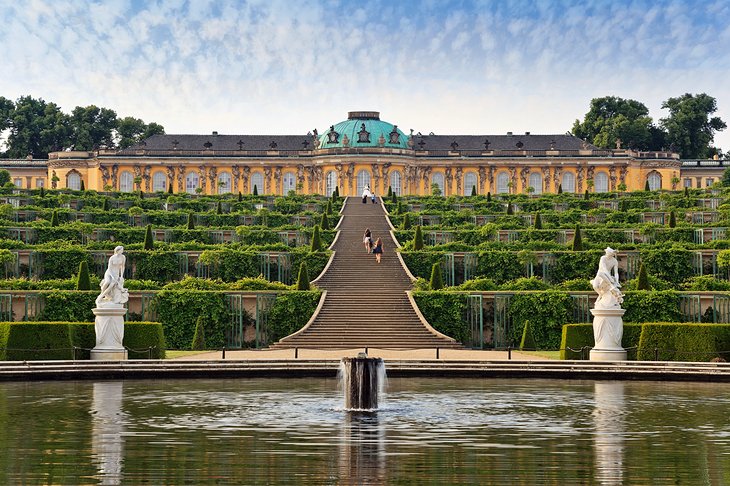
Spectacular Sanssouci Park, laid out between 1744 and 1756, is considered the most celebrated example of Potsdam Rococo. Reflecting the personal influence of Frederick the Great, the park includes a lovely Baroque flower garden, more than 3,000 fruit trees, and numerous greenhouses. It's a pleasure strolling around this huge park, especially the straight-as-an-arrow, two-and-a-half-kilometer-long avenue, shielded on each side by trimmed hedges, perfect lawns, and gorgeous gardens.
A number of park buildings are worth exploring, too, in particular the Picture Gallery with its many works of art. Other must-sees here include the exquisite Chinese House, an extremely elaborate garden pavilion, and the wonderful Roman Baths complex.
Sanssouci Palace itself, a single-story Rococo building with an elliptical dome in the center and a circular room at each end, is notable for its spectacular interior decor. This is especially evident in its large oval Marble Hall and sumptuous apartments.
Insel Mainau: The Flower Island of Lake Constance
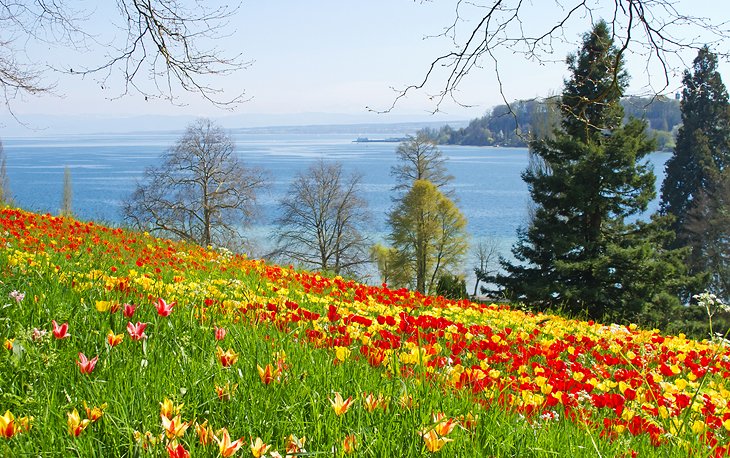
Insel Mainau, the spectacular Flower Island on beautiful Lake Constance, covers an area of 110 acres and attracts many visitors to its beautiful parks and gardens, luxuriant with semitropical and tropical vegetation.
Access to the island is by boat, or via a pedestrian bridge connecting it to the mainland, so be sure to allow a little extra travel time in addition to the two or more hours needed to properly explore this stunning property. Ample public parking is available on the mainland, some with electric vehicle charging stations.
Another highlight is the 18th-century Schloss, notable for its lovely White Hall, the old defensive tower, and the gatehouse.
Official site: www.mainau.de/en/welcome.html
The Berlin Wall
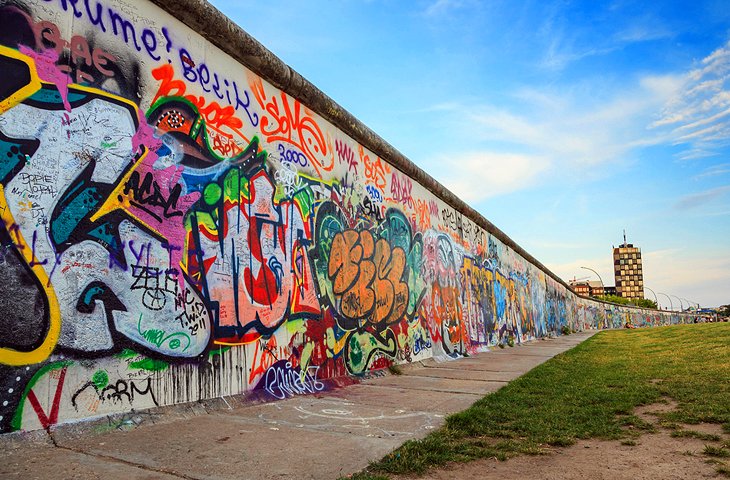
What's left of the Berlin Wall is one of those attractions that any visitor to Berlin simply must see. Built in 1961, the wall was the most visible manifestation of the Cold War mentality that existed after WWII, and by the time it was torn down in 1990, it extended some 155 kilometers.
Thankfully, all that remains of the wall today are small graffiti-covered sections, stark reminders of the more than 70 people who died trying to escape from the East. The East Side Gallery is a 1.3-kilometer-long open-air art gallery, which provides an interesting way to see the Wall.
Sections of preserved wall include a short stretch at infamous Checkpoint Charlie, as well as a section at Humboldthafen opposite the Reichstag Building on which the victims of the wall are listed.
Also of note is the excellent Berlin Wall Exhibition, with its permanent exhibits relating to the Berlin Wall and the Berlin Wall Memorial.
Reichstag Building, Berlin
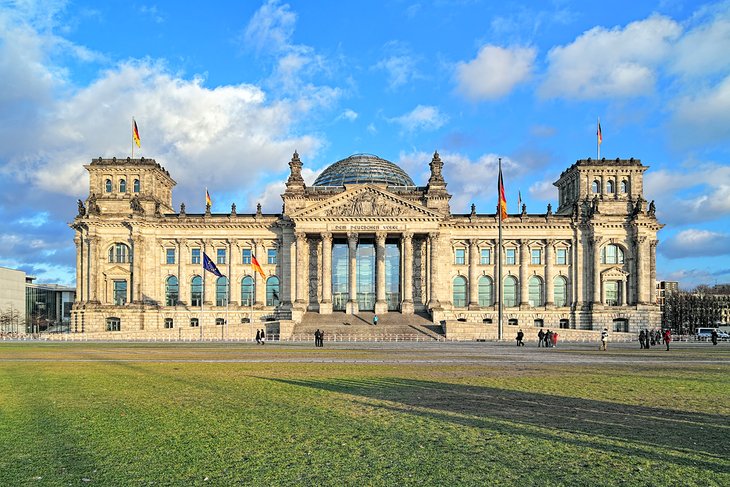
The seat of Germany's government, the Reichstag (Reichstagsgebäude), is once again one of Berlin's most-visited attractions. Constructed in 1894 in Neo-Renaissance style, it infamously burned down in 1933 and remained in ruins until after German reunification, when it was rebuilt in its former glory.
One change that was made was to the building's massive Kuppel, its central dome. Instead of a traditional wood or metal dome, a decision was made to use glass, transforming the space into a major tourist attraction in the process. It's free to access, but you need to register in advance.
From here, visitors can enjoy great city views, which are even more dramatic at night. If planning to enjoy the view in the evening, try to catch a spectacular sunset from the on-site Rooftop Restaurant. The Reichstag also makes for a stunning backdrop for summer concerts and light shows. English language guided tours are also available.
Address: Platz der Republik 1, 11011, Berlin, Germany
Official site: www.bundestag.de/en/visittheBundestag
The Old Town (Altstadt) in Nuremberg
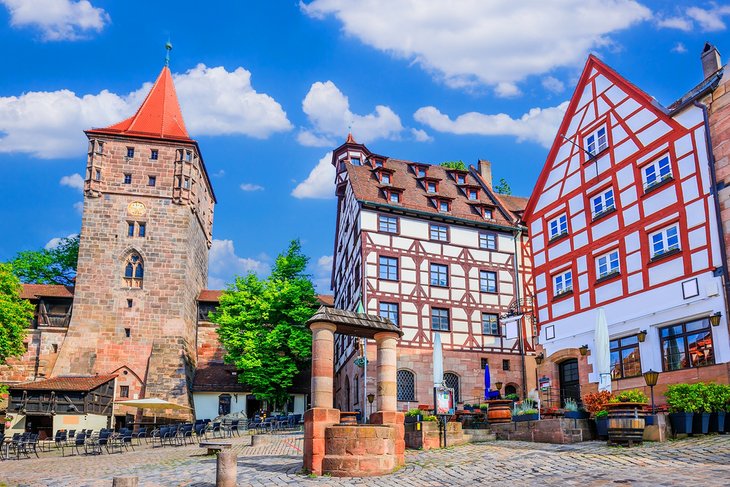
The historic city of Nuremberg (Nürnberg) has long held a reputation as one of Germany's most important, and oldest, cultural, spiritual, and commercial centers. If visiting, you'll want to spend the bulk of your time exploring the city's "Altstadt," or Old Town area.
Although largely destroyed during WWII, the medieval structures were painstakingly rebuilt and look today much as they would when originally constructed. Ringed by five kilometers of city walls, the Altstadt is wonderful to explore on foot, especially if you're able to take the time and let your curiosity lead you.
Highlights include Nuremberg Castle, an imposing medieval stronghold built in the 11th century, which dominates the Old Town. Most impressive are its old towers, the oldest of which, the Pentagonal Tower, was constructed in 1040, and the 13th-century royal quarters.
Other notable features of the Old Town you'll come across include the Hauptmarkt, a centuries-old market square popular for its exquisite old fountain. Also located here are the original town hall, built in the early 1600s, and numerous old merchants' homes.
Dresden Frauenkirche
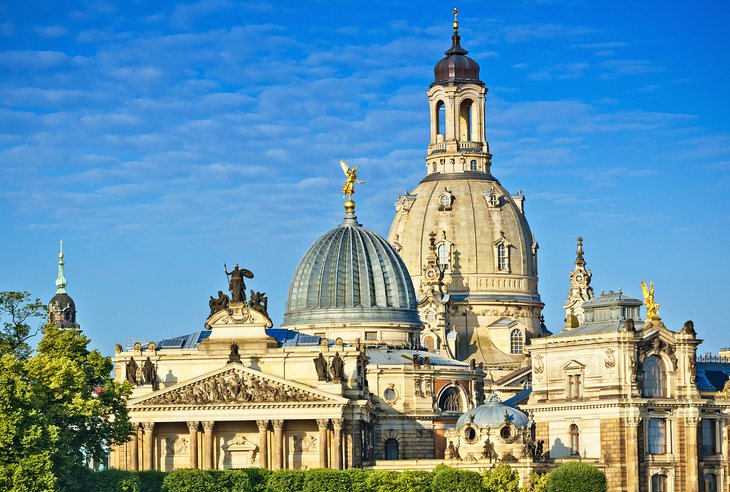
The city of Dresden is home to another remarkable story of reconstruction after the destruction of WWII. Here, in the old city center, you'll find the elegant Frauenkirche, a magnificent church that was, when built in 1743, considered one of the best examples of Baroque architecture in all of Europe.
Looking at it today, it's hard to believe that the church was completely destroyed during the war. But thanks to the hard work and diligence of local city folk, what remained was carefully catalogued and stored until reconstruction began after German reunification.
The fully restored interior is equally impressive, with a particular highlight being the rebuilt high altar, which looks today exactly as it did when the church was originally built. Be sure to also take the opportunity to visit the church dome for its superb city views. Check the attraction's website for details of upcoming concerts and events, as well as for its regular service schedule (visitors are always welcome).
Address: Georg-Treu-Platz 3, 01067 Dresden, Germany
Official site: www.frauenkirche-dresden.de/home
Frankfurt's Main Tower
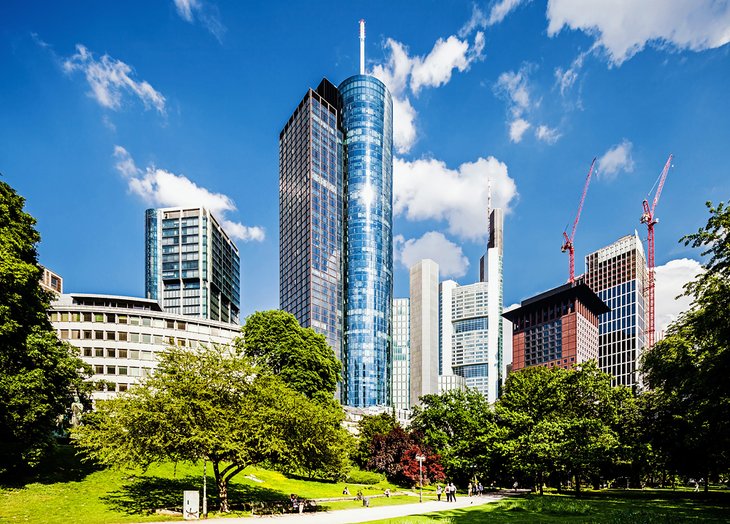
While Germany is especially well-known for its many magnificent historic structures, the country is also making a name for itself in the world of modern-day architecture. One of the best examples can be found in Frankfurt, a former Imperial City that's fast becoming one of the most important financial centers in Europe.
Now known as "Mainhatten," a nod to both its river setting and the many skyscrapers that now grace its skyline, the city's business district feels distinctly North American. By far the most impressive structure, though, is the architecturally pleasing Main Tower. Standing 240 meters tall and with no less than 56 stories, the tower's observation platforms offer unparalleled views over the city and the Main River.
And if a fear of heights isn't a problem, book a table for an evening meal at the Main Tower Restaurant and Lounge for a spectacular sunset view (reservations recommended). Be sure to check out the boutique shops and artworks on the ground level floors of the tower, too.
Address: Neue Mainzer Str. 52-58, 60311 Frankfurt am Main, Germany
Official site: www.maintower.de/en/