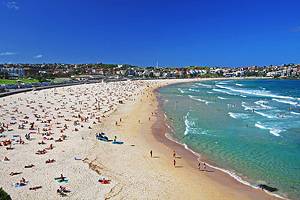
Must-See Tourist Attractions in New Zealand
New Zealand is easily one of the most beautiful countries in the world. From the snow-capped peaks and coastal glaciers to the rain forests, fjords, beaches, and farmland, this country appeals to a wide range of travelers.
On various trips, we have traveled across New Zealand with our tent, camping in parks and doing treks, and stayed in accommodations that have ranged from off-the-grid stays to luxury resorts. Each of these brought different but equally appealing experiences.
The South Island is full of outdoor adventure, adrenaline sports, and endless sightseeing possibilities with its dramatic landscapes, vine-draped fields, and small towns and cities. Hotspots in the central and south portions of the island include Queenstown, Wanaka, Milford Sound, Aoraki/Mount Cook, Christchurch, and the West Coast. In the north end of the South Island, are the beautiful communities of Kaikoura, Blenheim, Nelson, and also Abel Tasman National Park.
The North Island is home to volcanoes, rolling green fields, beautiful stretches of beach, coves and offshore islands, and giant kauri trees. It also has some of the country's big cities and cultural hotspots, like Auckland and Wellington.
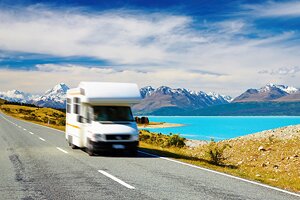
Getting around New Zealand can be half the fun. Many people drive themselves, either renting campervans or staying in small hotels along the way. The North and South Islands are connected by ferry service, and flights service the major towns. If you want to drive yourself and see both islands, consider flying into Auckland and out of Christchurch or vice versa. You can rent a car in either location and drop it at the end of your trip, just be sure to book a ferry well in advance so you don't get stuck.
For more ideas on things to do, read our list of the top attractions in New Zealand.
Queenstown, South Island
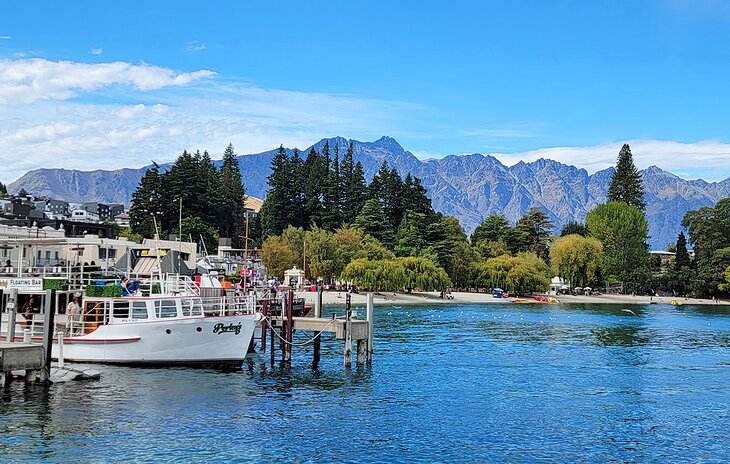
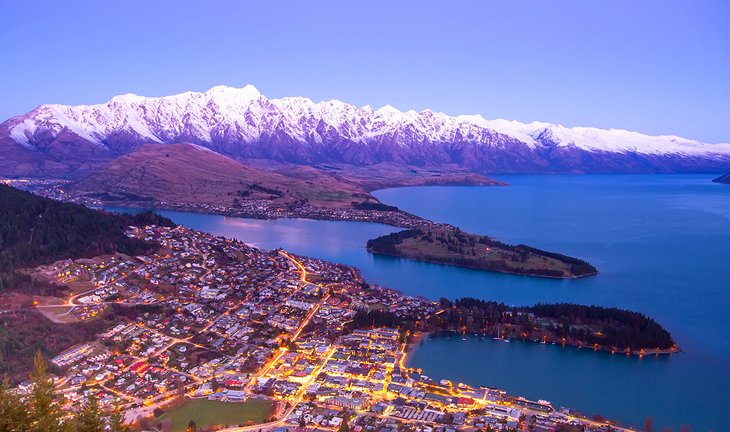
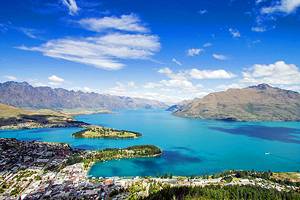
Set between the shores of Lake Wakatipu and the snowy peaks of the Remarkables, Queenstown is New Zealand's adventure capital and one of the country's top destinations for international visitors.
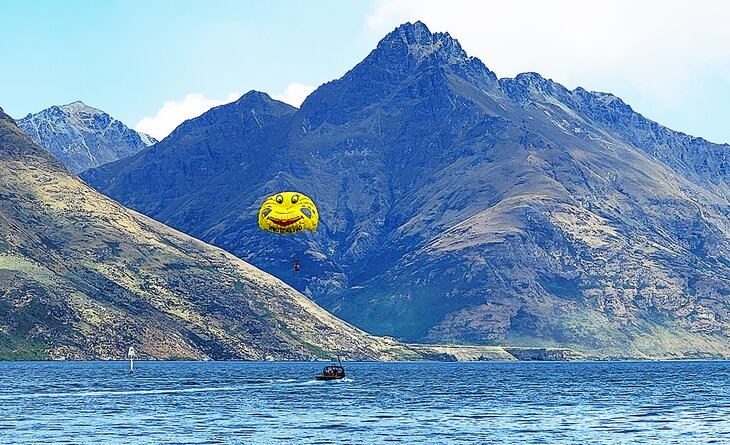
Activities and things to do here include jet boating, a steamship cruise, white water rafting, bungee jumping, paragliding, mountain biking, hiking, rock climbing, and downhill skiing in winter, to name just a few. You can also take the recently expanded and updated Queenstown Gondola, now seating ten people, up to the top of Bob's Peak. The views out over Lake Wakatipu and the Remarkables are truly spectacular.
The waterfront is a beehive of activity, particularly in the summer, with every type of boat tour you can imagine leaving right from the docks. You only need to stroll down the main street to find information and sign up for tours.
Queenstown has a lot to offer besides adventure sports. You can enjoy the creature comforts here with top-notch hotels, spas, restaurants, galleries, and shops. The downtown area has seen significant improvements recently with the addition of a variety of new shops in a pedestrian-only zone.
It's also a great base for sightseeing trips to the Central Otago region, where visitors can explore gold-mining towns like Arrowtown and the Middle Earth scenery from the popular Lord of the Rings movies.
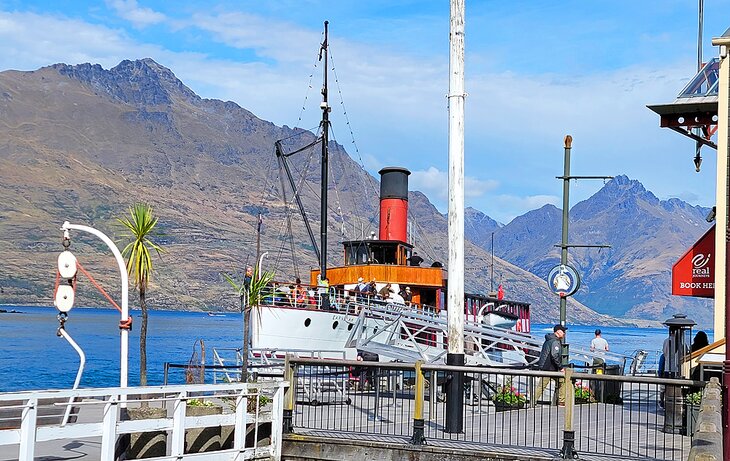
Queenstown is a very tourist-focused destination, particularly when compared to other destinations around the country. This is especially true in summer. It's a fun place to spend a few days, but it doesn't have an authentic New Zealand feel by any stretch.
Read More:
Aoraki/Mount Cook National Park, South Island
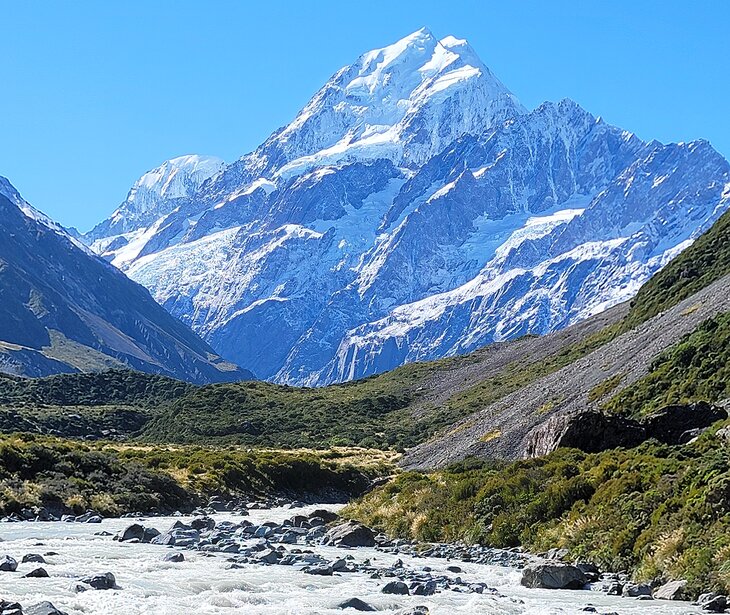
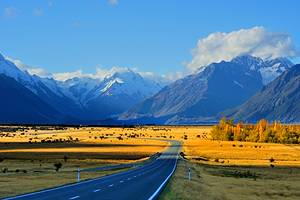
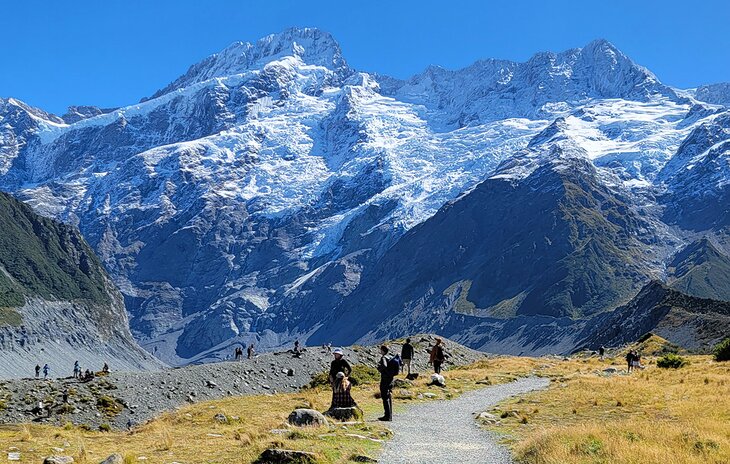
Aoraki/Mount Cook National Park is home to some of New Zealand's most fantastic mountain scenery, and for hikers, this is an absolute must-visit destination on the South Island. As hikers ourselves, this is our favorite destination in New Zealand.
In the heart of the Southern Alps, the park is home to Aoraki/Mount Cook, New Zealand's highest peak, and more than 40 percent of the park is covered in glaciers.
The region boasts one of the most popular hikes in New Zealand, the Hooker Valley Track. The 10-kilometer trail is an easy hike on a gentle path at the base of mountains and stunning hanging glaciers that tower above. You'll walk beside a fast-moving river much of the way until you reach a beautiful alpine lake that offers incredible views of the Hooker Glacier terminus.
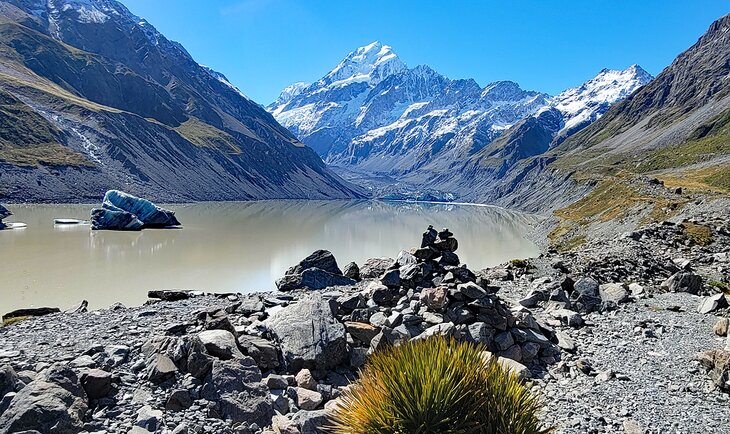
The Tasman Glacier also lies within its borders, making this a top destination for mountaineering. Sir Edmund Hillary trained here for his legendary Mount Everest ascent.
The best way to visit the park is to drive to Aoraki/Mount Cook Village, which is a long drive from anywhere, so it's best to spend at least a night, but two or more if you want to do multiple hikes or other activities. However, the Hooker Valley hike here leaves right from the village and can be easily done in a morning or an afternoon.
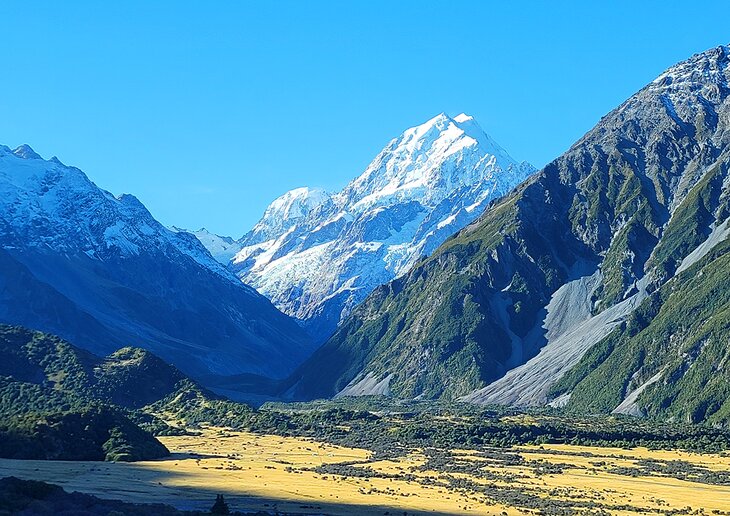
Mount Cook Village is very small but does have some accommodation options. From here you can organize activities such as scenic flights, ski touring, heli-skiing, and hiking. Since this is a dark sky reserve, it's also a wonderful place for stargazing. If your budget allows, spend a night at the Hermitage Hotel and stay in one of the rooms on the uppermost floors for jaw-dropping views.
Author's Tip: Be sure to book in advance to secure a room in Aoraki/Mount Cook Village including the campground. Don't just show up. Weather makes all the difference here, so have a look at the forecast a few days out and consider your options if it's raining. The sunnier the better. Depending on where you are starting from, if it looks like rain, you may want to head to Milford Sound instead.
This hike is often very crowded. If you want to avoid the masses, start early. But that said, if it's sunny, it's better to wait until at least mid-day for the best light on the mountains.
Milford Sound, South Island
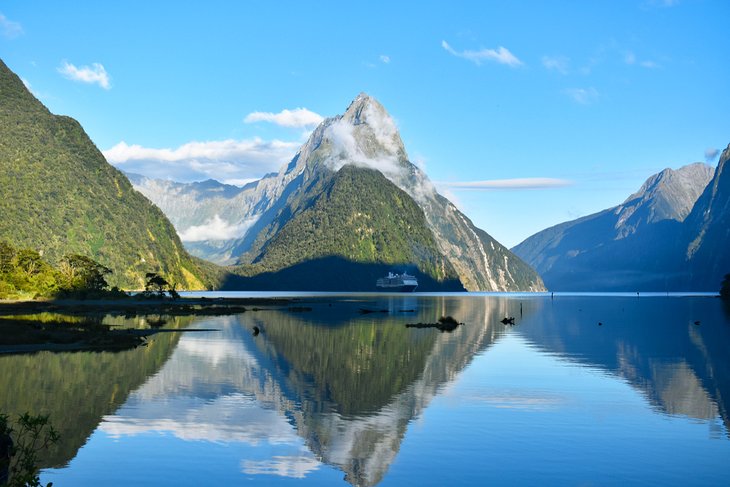
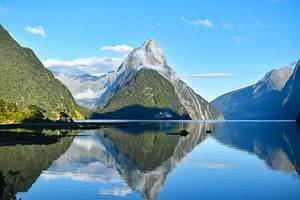
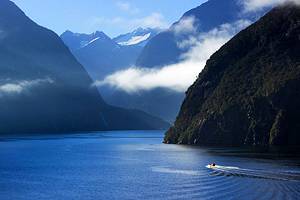
A World Heritage Site, Fiordland National Park protects some of the incredible coastal scenery. Most visitors come here for only a brief visit and do a half-day boat tour through Milford Sound. This is one of the most popular tours in the country. The main highlights are the fjords of Milford Sound, Doubtful Sound, and Dusky Sound.
If you get a calm day you can see the mountains reflecting in the water. If it's raining, which it often is in this part of the country, you will be able to see gushing waterfalls. But the entire area offers a variety of experiences with its offshore islands, virgin rain forests, vast lakes, and craggy mountain peaks. Sea kayaking is also a popular way to explore the fjords, and visitors can also enjoy a scenic flight over the park for a bird's-eye view of its staggering beauty.
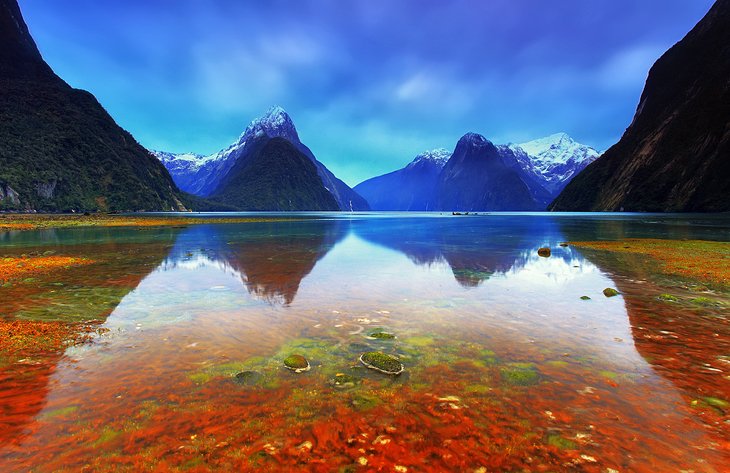
The park is also a haven for hikers with some of the country's best hiking, including the famous Milford Track. The major treks are seasonal and require permits in advance.
Milford Sound is a long way from anywhere. There is some limited and pricy accommodation here, but many people do this as a long day trip from Queenstown, or a shorter day trip from Te Anou or Manapouri. You can arrange a tour to get here or do it yourself if you have a car. If you are doing this yourself be sure to book your boat tour in advance and leave yourself lots of time for the drive. The drive is more challenging and time-consuming than it looks on a map.
Bay of Islands, North Island
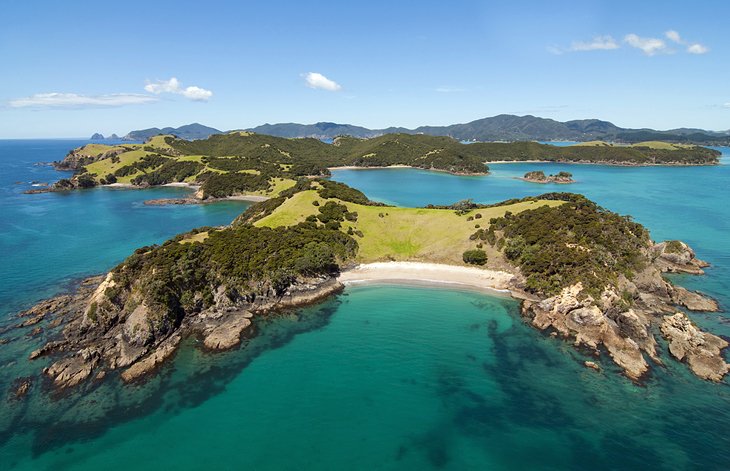
A three-hour drive north of Auckland, the beautiful Bay of Islands is one of the most popular vacation destinations in the country. More than 144 islands dot the glittering bay, making it a haven for sailing and yachting.
Penguins, dolphins, whales, and marlin live in these fertile waters, and the region is a popular sport-fishing spot. Visitors can sea kayak along the coast, hike the many island trails, bask in secluded coves, tour Cape Brett and the famous rock formation called Hole in the Rock, and explore subtropical forests where Kauri trees grow. The quaint towns in the area such as Russell, Opua, Paihia, and Kerikeri are great bases for exploring this scenic bay.
- Read More: Tourist Attractions in the Bay of Islands
Franz Josef Glacier and Fox Glacier, South Island
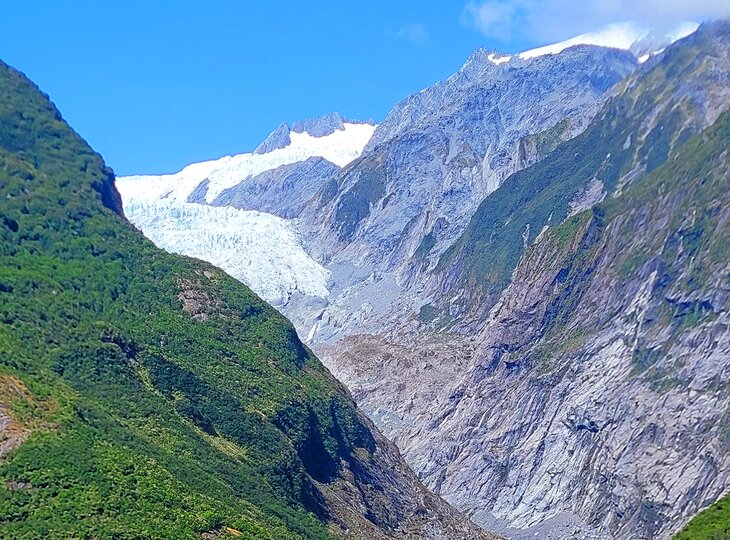
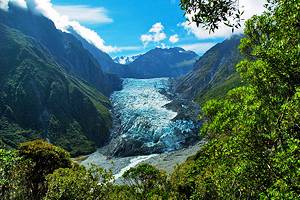
Franz Josef Glacier and Fox Glacier are known for being among the most accessible glaciers in the world, and they are two of the main tourist attractions on the West Coast. Both of these glaciers flow from some of the highest peaks in the Southern Alps right down to near sea level. And this is where you can see them from hiking trails or various scenic driving locations.
In years past, short hikes led to the foot of the glaciers, but these trails now stop several kilometers back due to the glacier's retreat. Although the views are good, they leave you with a feeling of sadness as the effects of global warming are starkly evident. But they also give you a look at the landscape in which these glaciers exist. You walk through the flora of temperate rainforest to see a glacier, which is startling, to say the least.
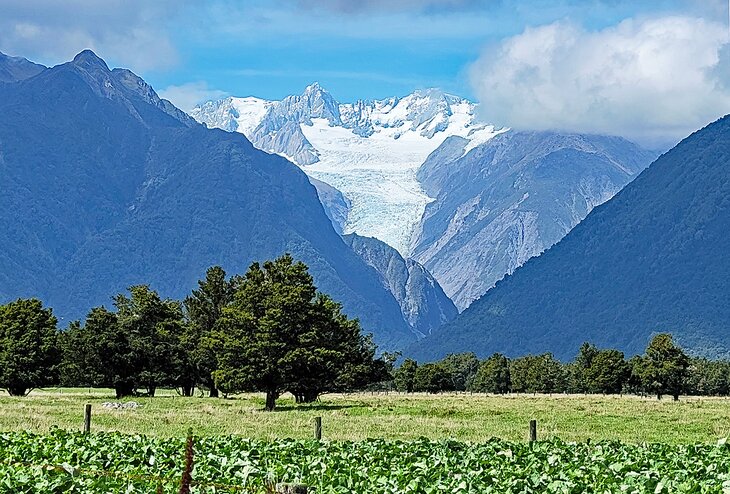
To truly get close to the glaciers nowadays, you'll need to take a small plane or helicopter and fly to the top of these vast tongues of ice where the pilots will land and let you wander around on the frozen landscape. You can arrange tours in the small towns of either Franz Glacier (the most options) or Fox Glacier.
For one of the best views of the Fox Glacier drive out the Cook Flat Road toward Lake Matheson. You have views back along this road of the glacier and there is an excellent viewpoint out here with a large piece of Maori art. It's worth also doing the spectacular Lake Matheson hike for views of the Southern Alps. The mountains reflect in the calm waters of Lake Matheson at viewpoints along this hike.
Lake Taupo and Tongariro National Park, North Island
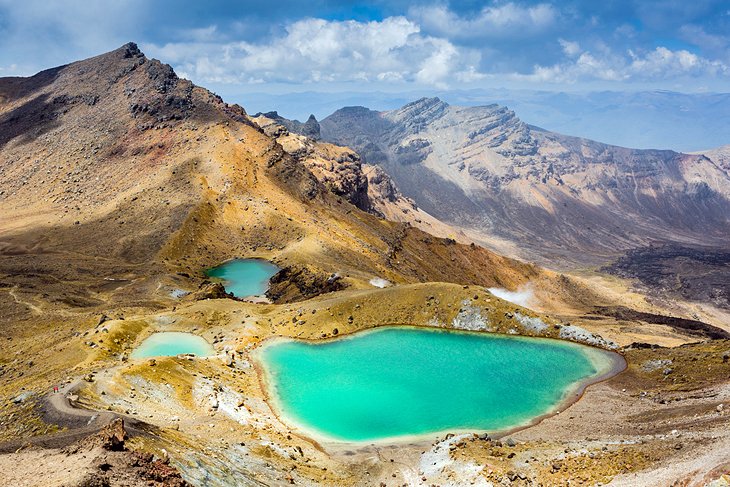
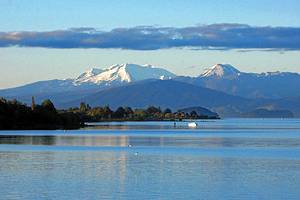
In the center of the North Island and just a few kilometers from glittering Lake Taupo, New Zealand's largest lake, lies Tongariro National Park. The big draw for tourists and backpackers is the epic Tongariro Alpine Crossing hike that runs through the park. This is a long and strenuous hike and is certainly not for everyone.
The park is a dual World Heritage Site due to its volcanic features and its importance to the Maori culture. The volcanic peaks of Tongariro, Ngauruhoe, and part of Ruapehu were gifted by Maori chief Te Heuheu Tukino IV in 1887 to the people of New Zealand to preserve this sacred land.
Tongariro is a land of dramatic beauty, with rugged volcanoes, turquoise lakes, arid plateaus, alpine meadows, and hot springs. If you want to do the Tongariro Alpine Crossing, the NZ Mountain Safety Council has a great video that shows what you can expect on this hike.
- Read More: Tourist Attractions in Taupo
Rotorua, North Island
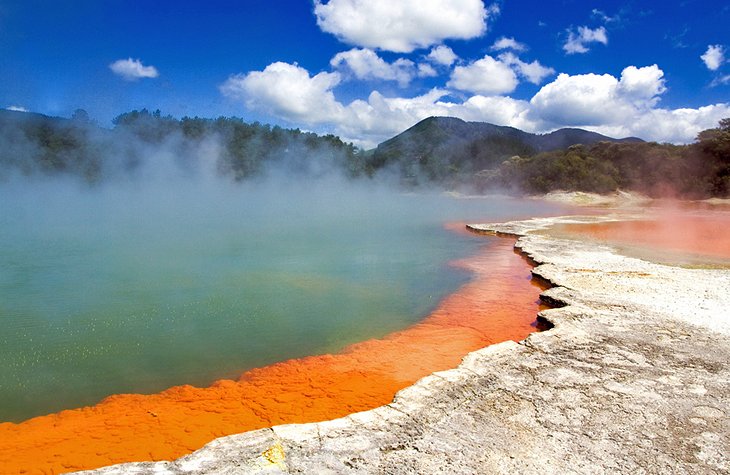
On the tumultuous Pacific Ring of Fire, Rotorua is one of the most active geothermal regions in the world and here it's very easy for visitors to access these wonders.
Boiling mud pools, hissing geysers, volcanic craters, and steaming thermal springs reveal the forces that birthed much of New Zealand's dramatic topography.
You walk through these geothermal wonders and soak in steaming mineral springs while visiting a variety of interesting attractions. It's also an area where you can learn about the region's Maori history and culture.
If you're looking for adventure here, you can go sky-diving, luging, or mountain biking. Trout fishing is also popular, and Rotorua is the gateway to the ski fields of Mt. Ruapehu.
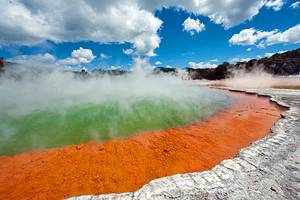
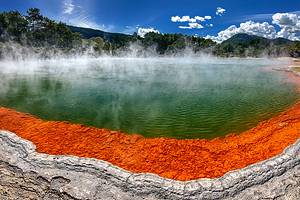
Nearby Wai-O-Tapu is also a popular tourist attraction with colorful hot springs and the famous Champagne Pool and Lady Knox Geyser.
While Rotorua should definitely be on your itinerary, it doesn't necessarily require a lot of time. If you are on a tight schedule, this is one place you can cover in a day or two.
- Read More: Tourist Attractions in Rotorua
Abel Tasman National Park & the Abel Tasman Coast Track, South Island
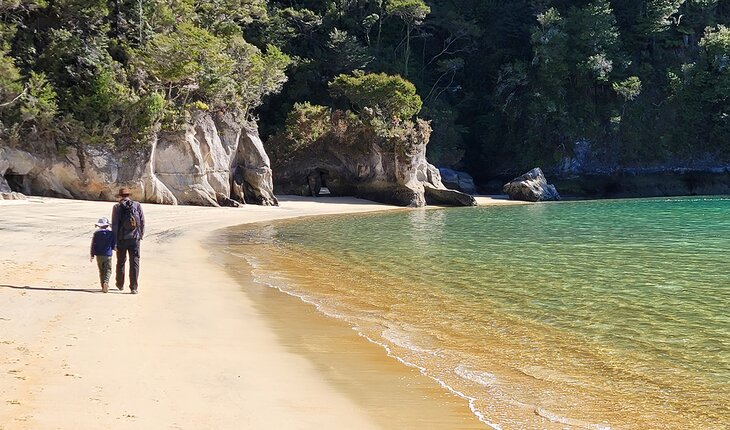
The Abel Tasman Coast Track in Abel Tasman National Park is one of New Zealand's Great Walks. Winding along sparkling Tasman Bay, from Marahau to Separation Point, this scenic 51-kilometer hike lies in one of the sunniest regions of the South Island. But, you don't have to hike this epic trail in its entirety to enjoy the park.
In the past, the primary way to see the best parts of the trail was to hike the entire trail. Now, tour boats run frequently and go to all the highlights.
Base yourself in the tiny village of Kaiterriteri. This little place has some fantastic beaches and stunning scenery, and it's a good place to book a tour and hop on a boat.
Many options are available that allow visitors to snorkel or kayak in secluded coves; enjoy tours that offer the chance to spot fur seals, dolphins, penguins, and a diverse range of birds; hike through cool forests; and enjoy panoramic views from the rugged coastal cliffs.
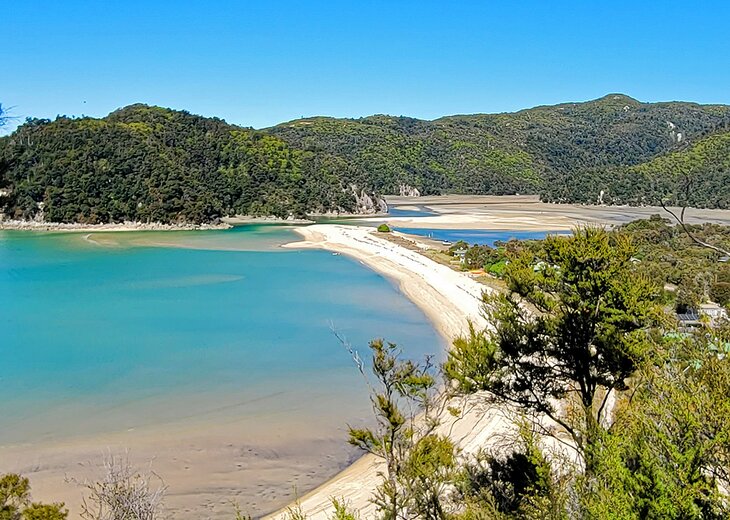
Photographers will also enjoy the many weathered rock formations, especially Split Apple Rock, a giant granite boulder sliced in two.
If you still want to still get out into nature the old-fashioned way, the hike takes around three days, and accommodation ranges from campgrounds to rustic huts, and plush private lodges.
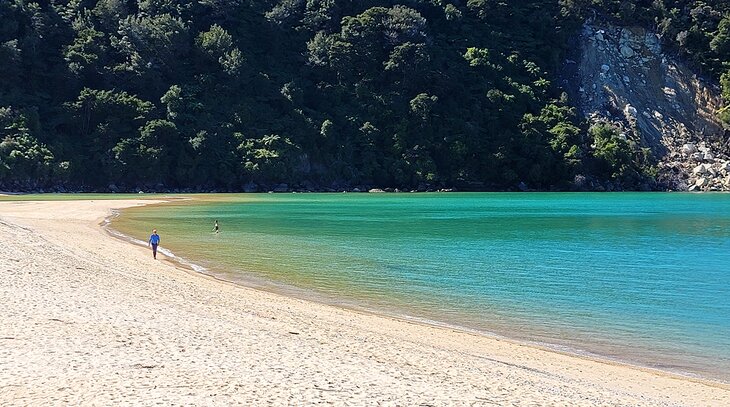
Author's Tip: If you plan on doing the beautiful Torrent Bay to Medlands section of the hike, which is one of the most popular sections, wear shorts, be prepared for mud, and bring water shoes for stream crossings, even at low tide. Otherwise, the hike is considerably longer because you will have to take a trail through the forest rather than cross the coast flats. Also, although the water looks clear and inviting on the spectacular beaches, it is bone-numbingly cold.
Auckland, North Island
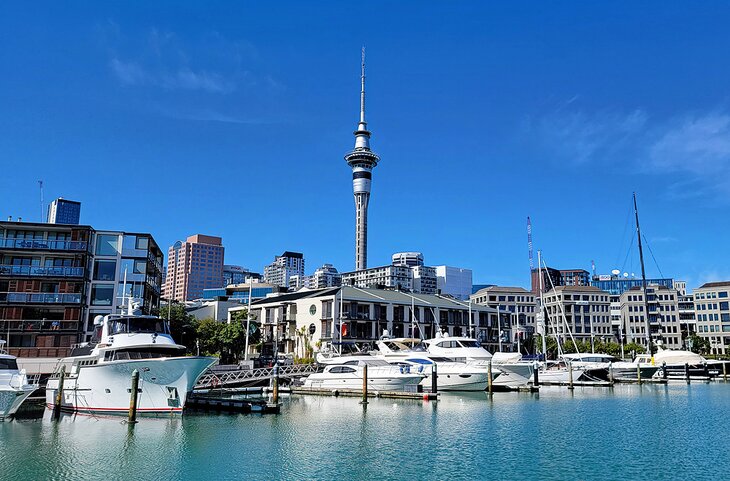
Blessed with two sparkling harbors, Auckland, the "City of Sails," is New Zealand's largest and most dynamic city. It has a population of about 1.5 million people but still feels like a small, easy-to-manage city.
Popular activities for tourists to enjoy in Auckland include taking a leisurely walk around the Viaduct waterfront area full of interesting boutiques and restaurants, checking out museums, and shopping along the pedestrian-friendly Queen Street.
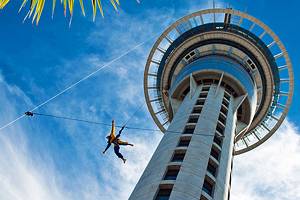
To get a breathtaking view of Auckland and its surroundings, take a ride up the Sky Tower, which stands at an impressive height of 328 meters.
For something different (and cheap!) hop on one of the ferries to visit Devonport, a charming town located by the water with lovely parks, beaches, and a pier.
Auckland is surrounded by natural wonders that include beaches with both blond and black sand, lush rainforest hiking trails, charming coves, islands, and magnificent volcanoes. This makes it an ideal location for embarking on day trips and wilderness adventures.
- Read More: Tourist Attractions in Auckland
Coromandel Peninsula, North Island
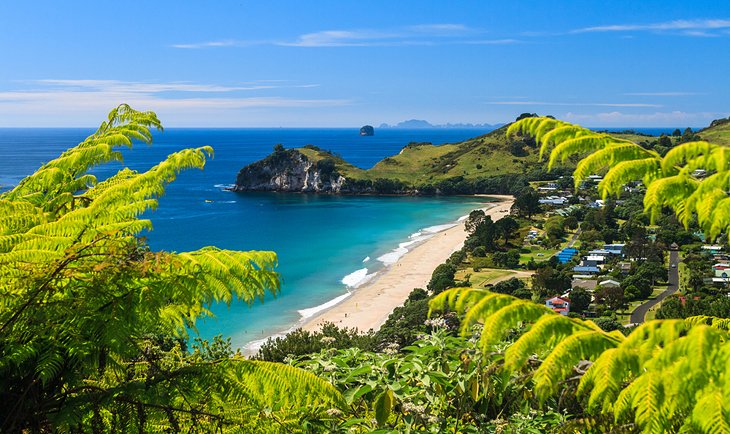
Just across the Hauraki Gulf from Auckland, the rugged Coromandel Peninsula seems a world away from the city's hustle and bustle. Craggy mountains cloaked in native forest form a spine along the peninsula, offering excellent opportunities for hiking and birding.
Other fun things to do for tourists include relaxing on the golden beaches, sea kayaking around the offshore islands, sky diving, and visiting the many galleries and art studios. At Hot Water Beach, a dip in the bubbling hot pools is a great way to end a busy day of sightseeing.
Kaikoura, South Island
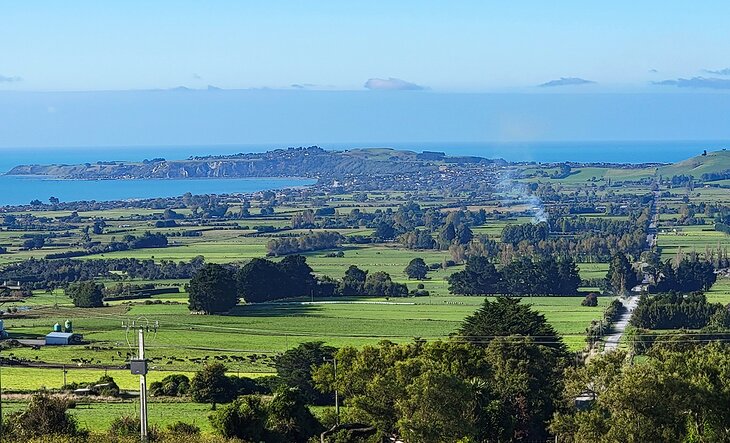
Kaikoura is one of the most beautiful small towns in New Zealand. Mountains, green fields, and the sparkling ocean surround this lovely little community. And birders, wildlife enthusiasts, and seafood aficionados will love this charming coastal village. Tucked between the Seaward Kaikoura Range and the Pacific Ocean, Kaikoura has a rich marine environment and is home to dolphins, seals, whales, and a variety of seabirds.
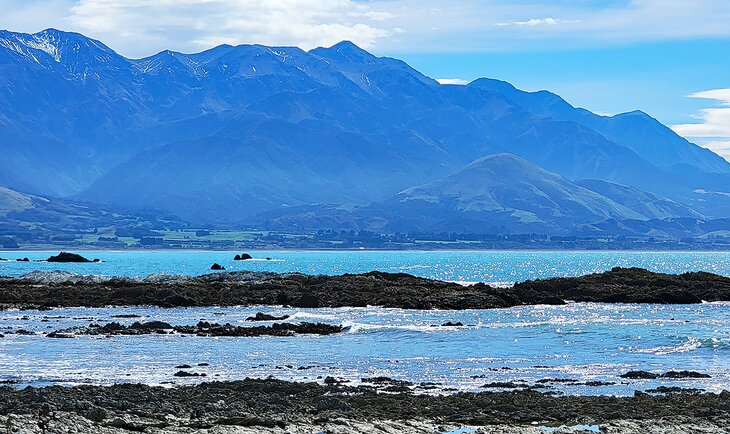
One of the most popular things to do in Kaikoura is to swim with the dolphins. You'll see this advertised frequently. Tour boats take you out to these curious creatures who love to interact with swimmers by swimming up and around the participants.
But, other less intense experiences are also well worth looking into. This includes whale watching, albatross boat trips, and an easy hike to a seal colony.
The unique offshore ocean structure from Kaikoura provides ample food sources that attract whales from around the world. Sperm whales can be seen year-round and Orcas visit from December to March. In the depths of the New Zealand winter (June and July), humpback whales are numerous.
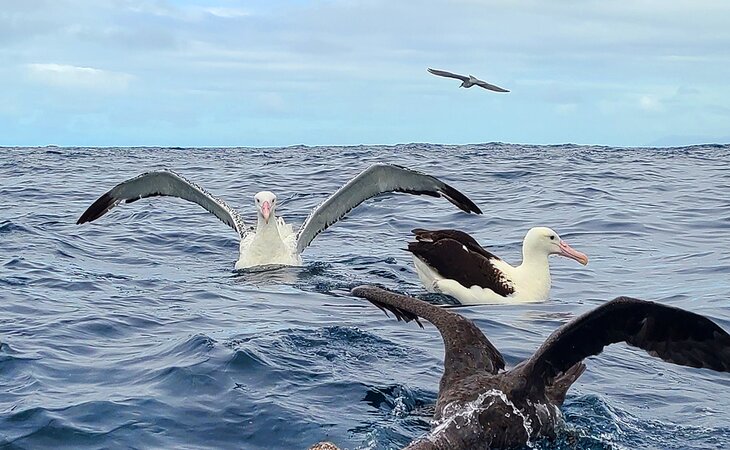
The ample oceanic food also attracts an incredible number of seabirds year-round, including the world's largest – the great albatross. You can reach the albatross with just a 15 to 20-minute boat ride, and you're very likely to see dolphins on this trip as well.
Unlike places like Queenstown or Wanaka which can sometimes feel like they are just there to cater to tourists, Kaikoura has retained a small town, local vibe.
Giant Kauri Trees, North Island
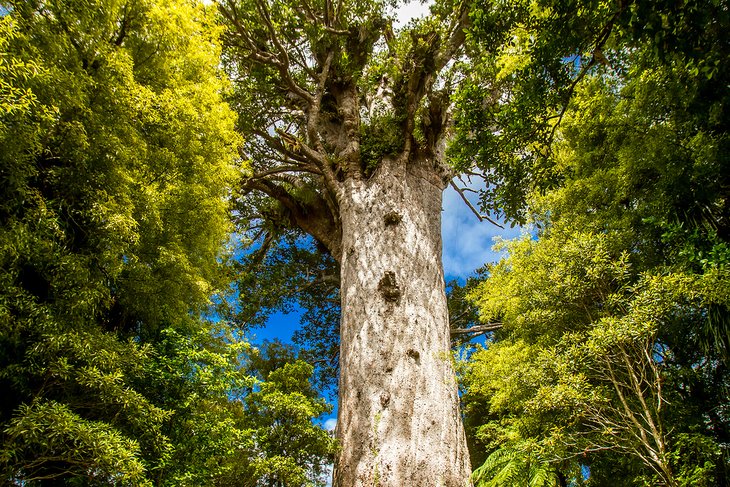
New Zealand has a weird and wonderful assortment of flora and fauna and one of the most extreme examples of this are the giant Kauri trees of the North Island. These towering behemoths are magnificent and awe-inspiring. Massive trunks ascend to the forest canopy and you can't help but feel somewhat insignificant in their presence. And the giant among giants is Tāne Mahuta, translated as Lord of the Forest.
The tree stands at an impressive 177 feet high, but it's the girth of the trunk that truly inspires - 53 feet in circumference. This tree is easily reached by a flat and level 500-foot-long trail located right off Highway 12.
Napier, Hawke's Bay, North Island
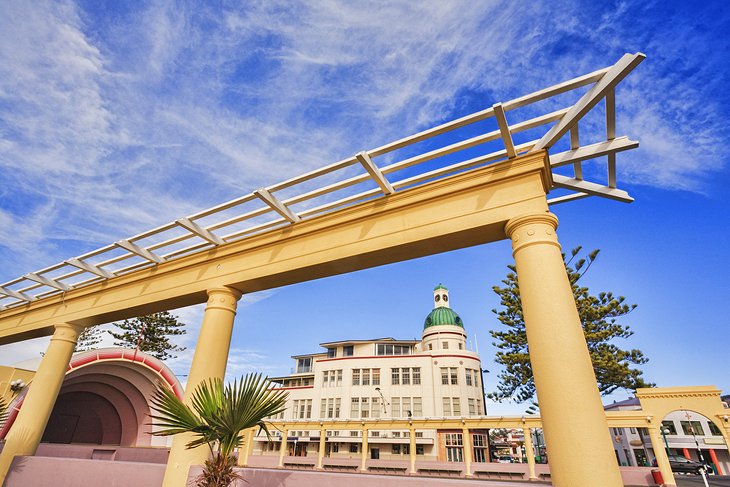
In the sunny region of Hawke's Bay, Napier is famous for its gourmet food and Art Deco architecture. After a powerful earthquake destroyed the town in 1931, it was rebuilt in the Spanish Mission style and Art Deco design for which Miami Beach is also famous.
Today, fun things for visitors to do include taking a self-guided tour to view these buildings, some of which are embellished with Maori motifs, or spending time at Napier Beach.
Along the Marine Parade seafront promenade lies the town's famous statue from Maori mythology, called Pania of the Reef. Napier is also a haven for foodies. Gourmet restaurants here specialize in using fresh produce from the region, and the town plays host to popular farmers' markets. Nearby attractions include hiking trails and the gannet colony at Cape Kidnappers.
Read More: Tourist Attractions in Napier
Arthur's Pass
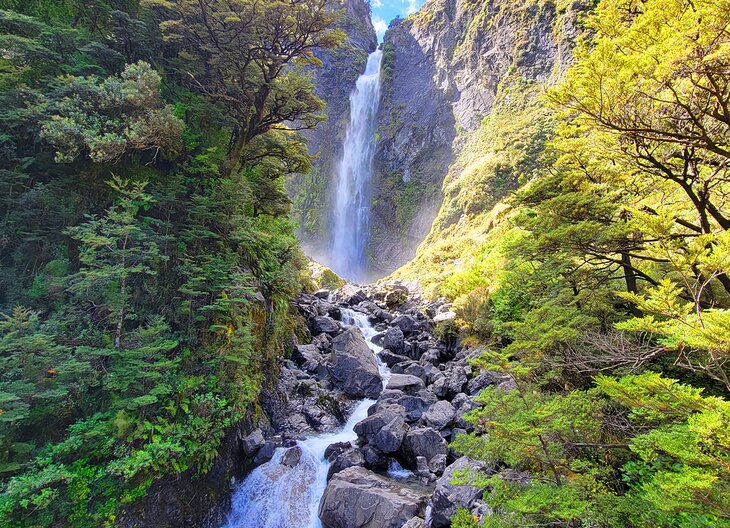
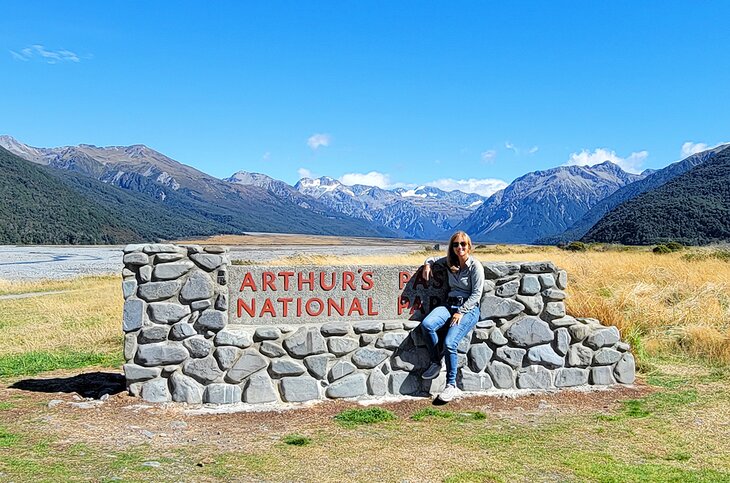
Most people make the drive from the east side of the South Island to the west as part of their explorations. If you are making the journey from Christchurch, a must-see highlight along the way is the alpine wonderland known as Arthur's Pass.
Home to rushing rivers, towering mountains, and thundering waterfalls this natural area is well worth exploring. A few of New Zealand's best hiking trails have trailheads here and range from short (but steep) treks to the Devils Punchbowl waterfall to multi-day backpacking adventures staying in alpine huts like Barker and Carrington.
A popular lookout in the park is a view over the Otira Viaduct, with fantastic views down the valley. Sometimes you can also see kea birds at this stop, but recently, there has been less than in previous years.
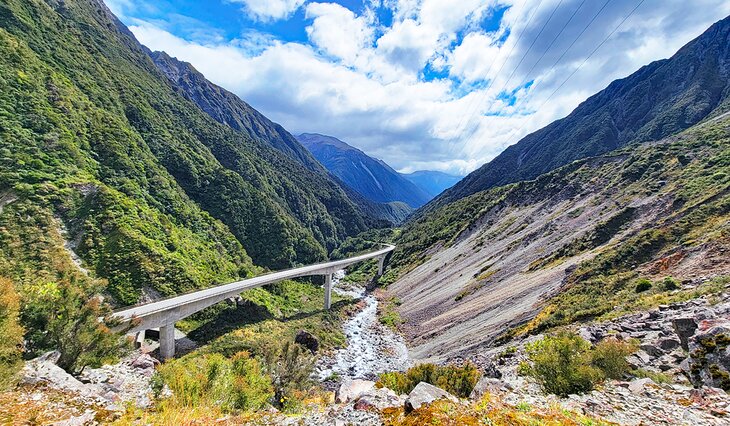
It's not all about nature, the area is also especially historic. It was across this rugged and inhospitable pass that the gold miners had to make their way to the rich fields on the West Coast starting with a road in 1886 and a railway by 1923.
Arthur's Pass is a great place to stop even if you aren't heading out on an adventure. Be sure to stop in at the Crafty Moa restaurant at the Bealey Hotel for a bite to eat on their expansive outdoor patio while soaking up the scenery.
Kura Tawhiti Conservation Area (Castle Hill), South Island
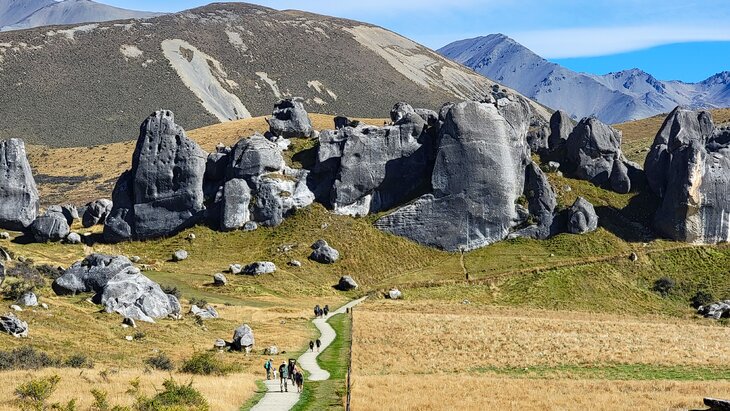
The Kura Tawhiti Conservation Area, also known as Castle Hill, is a must-see highway attraction on the highway heading to Arthur's Pass from Christchurch. Bizarre limestone rocks jut out of the rolling pastureland, and the impulse to walk up to see them is almost irresistible.
Fans of the Chronicles of Narnia movie may find the spot familiar as several scenes were shot here.
Fortunately, an easy-to-follow, wide walkway leads to the base of the rocks and ascends through the forest of giant boulders. Count on a 1.4-kilometer walk, which takes about 20 minutes, but it can be longer if you take one of the secondary trails and walk to the top of one of the rocks for impressive views across the valley.
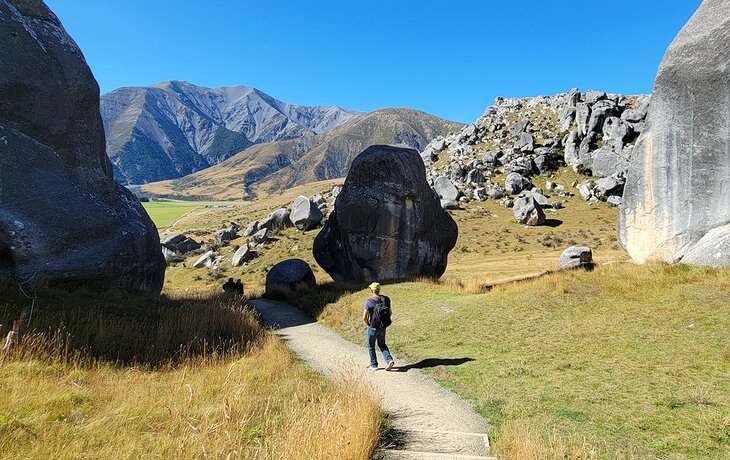
This is a good stop if you are heading from Christchurch to the West Coast. Drive time from Christchurch is about one hour and twenty minutes. It's also a fun place for photos. A large parking area with picnic tables and restrooms also makes this a perfect stopping point for a picnic.
Official Site: https://www.doc.govt.nz/parks-and-recreation/places-to-go/canterbury/places/kura-tawhiti-conservation-area/?tab-id=50578
Ninety Mile Beach and Cape Reinga
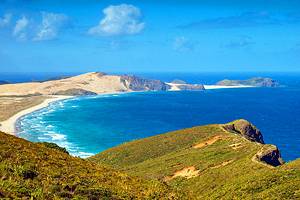
Beach lovers around the world fantasize about endless golden beaches and may wonder if such a thing exists. Well, in New Zealand it does. This wild, windswept beach has no luxury resorts, no jet skis bombing around, no lounge chairs at the water's edge, but what it does have is wide-open spaces, abundant birdlife, and a rich marine environment.
Pick your access point and drive along Ninety Mile Beach (the beach is actually an official highway!) and find a place all to yourself. But, before venturing forth, check the tides, and 4WD vehicles are recommended. No car? No problem, tour companies take giant specially equipped buses out onto the beach. Tours depart from Paihia and Kerikeri.
If you are really fortunate and low tide is in the evening, be sure to be on the beach for sunset. Many people consider the ones up here to be New Zealand's best.
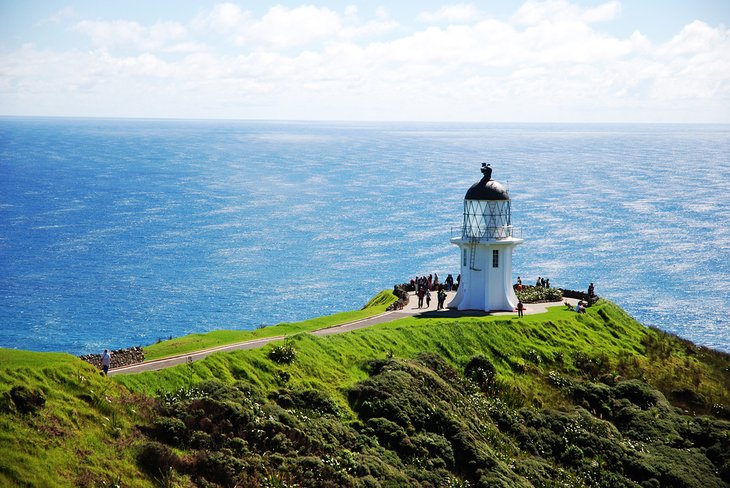
A short jaunt north of 90 Mile Beach is Cape Reinga. The historic lighthouse reached via a short walkway marks the point where two oceans collide. The weather up here is notoriously changeable, be prepared for everything - wind, rain, and sun - all in the span of a few minutes.