Tourist Attractions in the Bay of Islands
The forested slopes, secret white-sand coves, and glittering expanse of blue sea have made New Zealand's Bay of Islands region a yachting haven and a top spot for anyone looking for a slice of seaside bliss. This is a place to kick back for a few days and just enjoy the scenery. Hop on a sightseeing boat tour from Paihia or Russell to soak up the sun and fully experience the undulating coastline and islands offshore.
Once travel batteries are recharged, hit a few of this region's historic sights. The tiny towns of the Bay of Islands may feel like sleepy idylls today, but they were at the very heart of the beginning of New Zealand's colonial era. Learn about the early days of the British colony, with its whaling stations and missionaries in Kerikeri and Russell, and then head to the Waitangi Treaty Grounds near Paihia where New Zealand's modern history officially began.
For more things to do, be sure to check out our full list below of the top tourist attractions in the Bay of Islands.
Bay of Islands Maritime Park
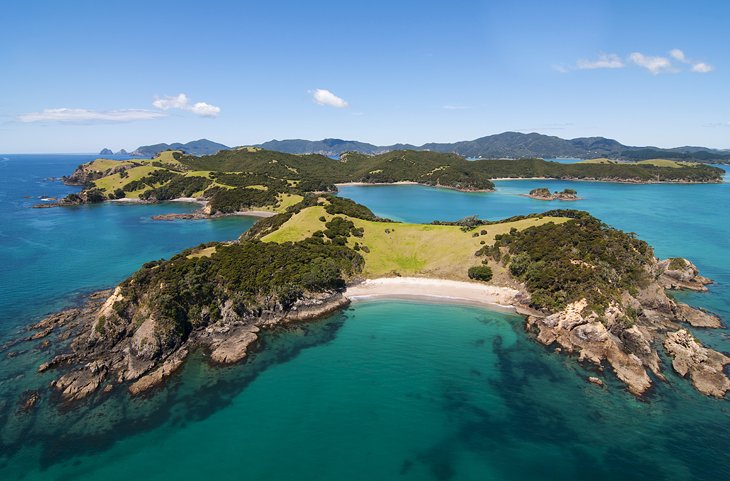
Extending from Whangaruru in the south to Whangaroa in the north, the Bay of Islands Maritime Park is a glittering blue swath of warm coastal waters, scattered with 144 islands and home to dolphins and whales. This sub-tropical watery playground is the main reason travelers head north from Auckland.
Scenic cruises, boat trips, and kayaking tours depart from the Bay of Islands base towns of Russell and Paihia and make various loops around the bay, visiting secluded coves for swimming stops and offering plenty of opportunities to spot sea life.
The highlights of the maritime park are Cape Brett and its lonely lighthouse, sailing through the bay's famed Hole in the Rock formation, and visiting Urupukapuka Island.
Waitangi Treaty Grounds
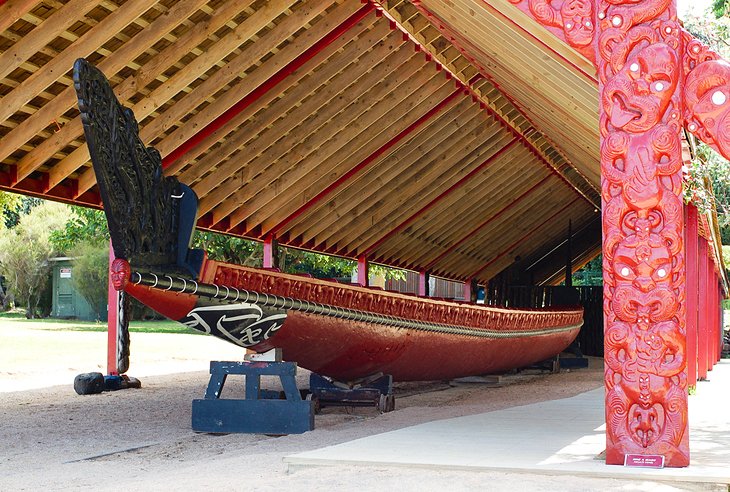
For New Zealanders, the history of their modern nation begins at Waitangi. This is where, in 1840, the founding document of the country known as the Treaty of Waitangi was signed between the chiefs of the Maori tribes and the British crown. Today, the Waitangi Treaty Grounds is New Zealand's most important historic site.
The Treaty House, which was originally built in 1833 as the private residence of James Busby, the British government's representative in the colony, has been beautifully restored and is now a small museum with exhibits on the treaty signing and early colonial life in the northland.
Opposite is Waitangi's Maori Meeting house, erected in 1940 on the centenary of the treaty signing. The meeting house's intricate interior carvings are the work of famous Maori wood-carver Pine Taiapa.
Afterwards, stroll via Hobson Beach to the Waka House, which displays the largest ceremonial war canoe in the world, carved from three kauri trees. Guided tours are available, and if you want to linger longer, there's a good café located on the premises (and a shop). If possible, try to time your visit to coincide with one of the frequent displays of traditional Maori song, dance, and culture.
Address: Tau Henare Drive, Waitangi
Official site: www.waitangi.org.nz
Russell
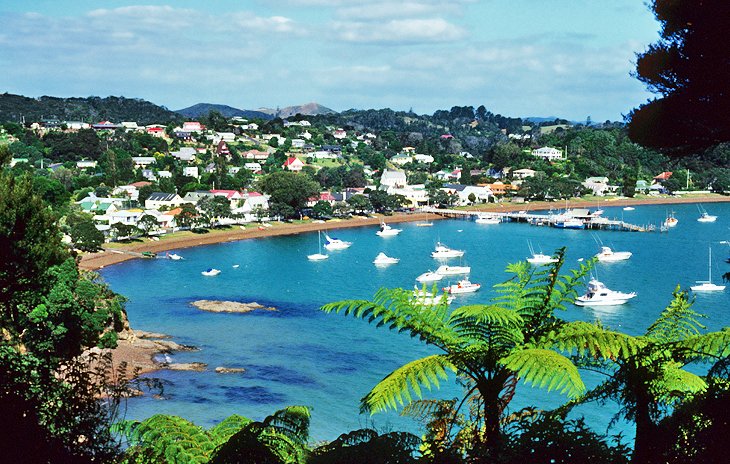
Russell, originally called Kororareka, is one of New Zealand's quaintest towns. Founded in 1843 as a whaling station and trading post, much of its original character preserved. Due to the town's early foundations, it contains some of the country's most historic buildings.
Christ Church, built in 1835, is New Zealand's oldest surviving church, and down at the harbor front is the Old Customs House (now the town's police station) built in 1870. Russell Museum sits on the site of a former Maori pa, a fortified village, and holds exhibits of early life in the Bay of Islands during the colonial era.
Pompallier Mission
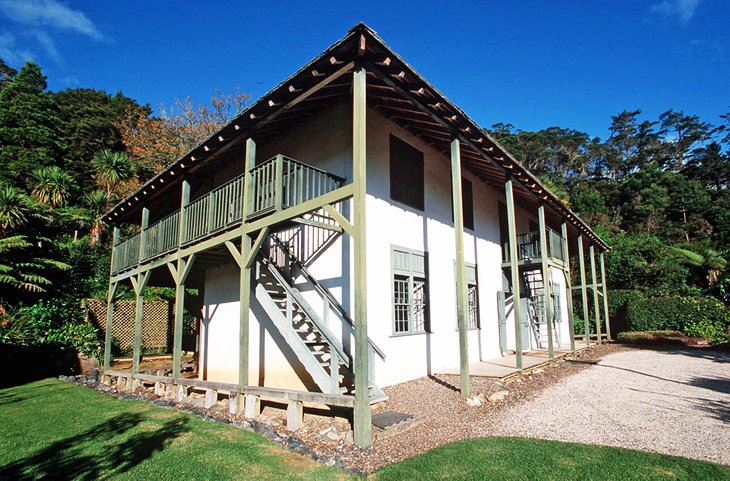
History fans shouldn't miss a visit to the Pompallier Mission when in Russell. This old Roman Catholic mission station was founded in 1842, and the pioneer missionaries used it as their base to translate biblical texts into Maori. Here, they printed and binded the books using the mission's own printing press and tannery.
Guided tours include the preserved printing press and tannery and provide a fascinating glimpse into the early days of New Zealand's European colonisation. The rooms are furnished in period style, and outside, a magnificent heritage garden has wonderful views across the bay.
Location: The Strand, Russell 0202
Official site: www.heritage.org.nz/places/places-to-visit/northland-region/pompallier
Paihia
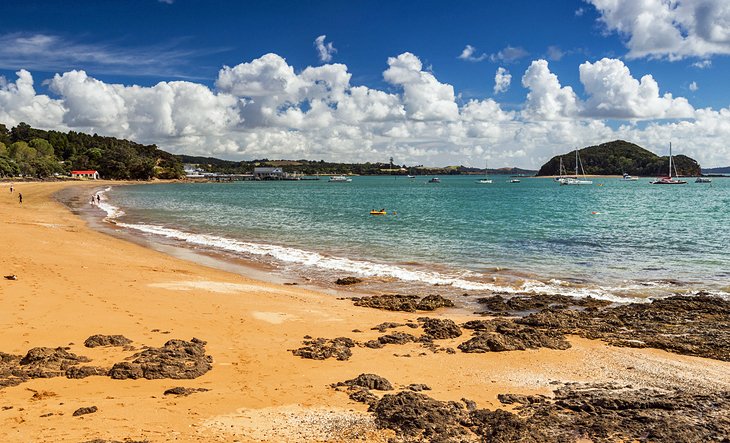
Paihia is the main base-town of the Bay of Islands, offering plenty of opportunities to get out onto the waters of the Bay of Islands Maritime Park, with Paihia wharf the main jumping-off point for dolphin and whale-watching trips and scenic sightseeing cruises around the islands of the bays.
The Waitangi Treaty Grounds are only two kilometers north, and the town itself is a relaxed place full of quirky cafés and restaurants serving up super-fresh seafood, plus a variety of great shops.
Sun-seekers can relax on an excellent strip of sand, and five well-maintained walking trails are in the vicinity for hikers, including a trail that takes in the Waitangi Treaty Grounds and the nearby waterfall of the Haruru Falls.
Giant Kauri Trees of the Waipoua Forest
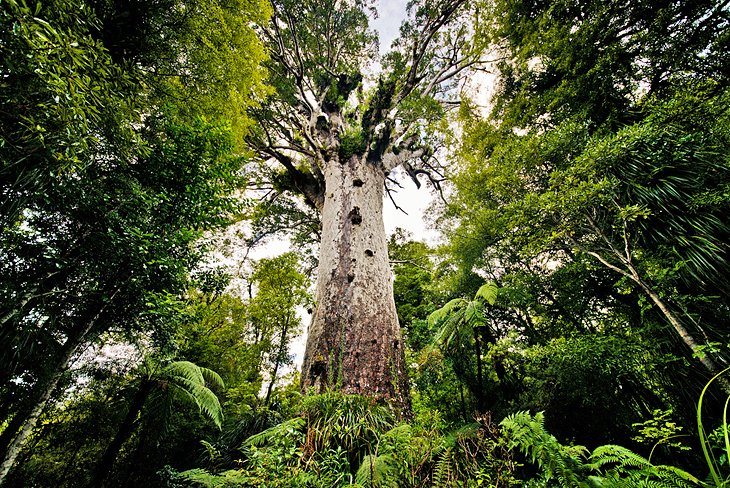
The Waipoua Forest is home to New Zealand's most famous stand of kauri trees. These include the mighty Tane Mahuta kauri-the Lord of the Forest -which is more than 2,000 years old and, at 47 meters tall, is the largest living kauri tree in the country. Also here is the Te Matua Ngahere kauri with its mammoth trunk measuring more than five meters.
Kauri once covered huge tracts of the Northland region, but unfortunately, extensive logging during the early European era wiped most of the kauri forests out. Waipoua Forest is one of the best places to experience walking amid these giant trees.
Address: Waipoua River Road, 101 kilometers west of Paihia
Glow Worms of the Kawiti Caves
Like the more famous cave system of Waitomo, located in the central North Island, the Kawiti Caves are home to New Zealand's tiny endemic glow worms, which spotlight the cave's ceilings and walls with thousands of twinkling lights.
This area is owned by the Kawiti family who have been guiding visitors into their cave system since the 1950s. The limestone caverns are full of stalactites and stalagmite formations, and guided tours of the caves take you deep underground for 200 meters along a wooden walkway to view the glow worms close up.
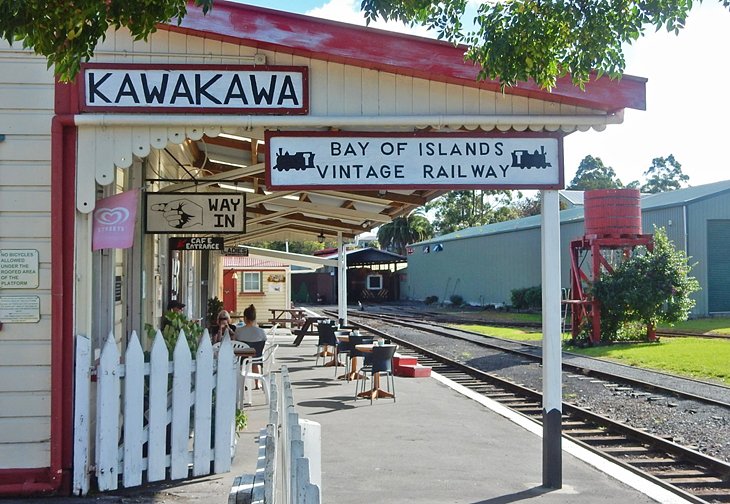
On the way to the caves, you'll pass the Bay of Islands Vintage Railway. Stop here for a ride on one of the attraction's vintage steam trains. Round trips take only 45 minutes and travel along a restored railway line offering plenty of great sightseeing opportunities along the way.
Address: 49 Waiomio Road, Waiomio
Official site: www.kawiticaves.co.nz
Cape Reinga at the Northern Tip of New Zealand
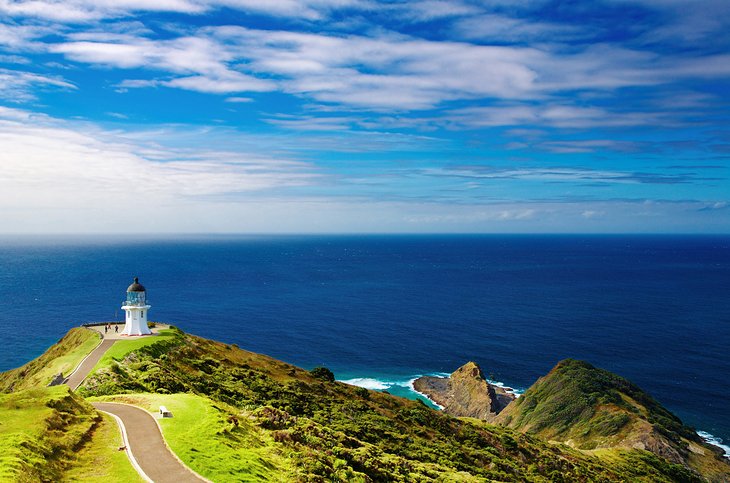
North of the Bay of Islands is the Northland region's other big tourist attraction: the northern tip of New Zealand at Cape Reinga, where the Tasman Sea and Pacific Ocean meet and surge together. This slither of land jutting out into the sea is marked by a lonely lighthouse and a sacred 800-year-old pohutukawa tree. According to Maori legend, the tree is where the spirits of the dead jump off to journey back to the Maori ancestral home of Hawaiki.
Cape Reinga remains a place of deep spiritual significance for the Maori people. The journey to this remote northerly point is one of this region's most spectacular road trips and makes a wonderful day trip from the Bay of Islands. Along the way, you can see attractions such as the magnificent 1,000-year-old trees of Puketi Kauri Forest, the best of Cape Reinga (including the lighthouse), the Te Paki Sand Dunes, and Ninety Mile Beach.
Tall Ship R. Tucker Thompson
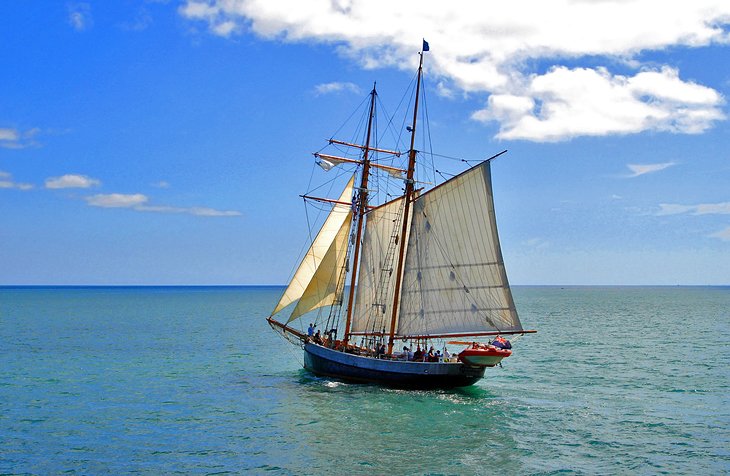
A great way to experience the best of the Bay of Islands is aboard a coastal cruise. One of the most popular such excursions is the first-rate Bay of Islands tall ship sailing experience aboard the R. Tucker Thompson. This exquisite reproduction Northland schooner departs from the Point Russell Information Centre in Russel, and whisks travelers across the waves on a fun-filled, 5.5-hour seafaring adventure, taking in such popular sightseeing spots as Pahia and including a stop for a swim in a secluded bay.
Ninety Mile Beach
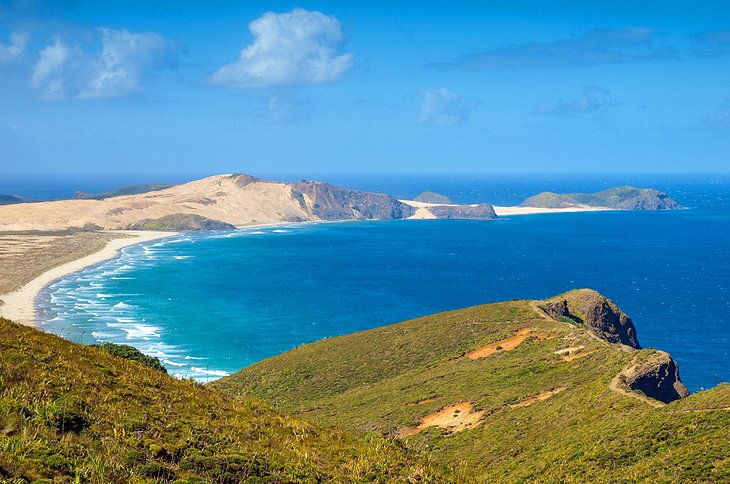
The name is something of a misnomer, as Ninety Mile Beach is actually 55 miles long. However, this fact doesn't stop this vast strip of golden sand, about 170 kilometers north from Paihia, from being one of the most serenely beautiful beaches in the North Island, with large sand dune areas and excellent surfing conditions.
Those using a 4WD vehicle are allowed to drive the length of the beach, which makes a wonderful alternative for traveling to Cape Reinga. However, before doing so, you need to be aware of tides before attempting this, and if you're not experienced at beach driving, it's easier to take one of the Cape Reinga day trip tours from the Bay of Islands, which all travel the beach route.
Kerikeri
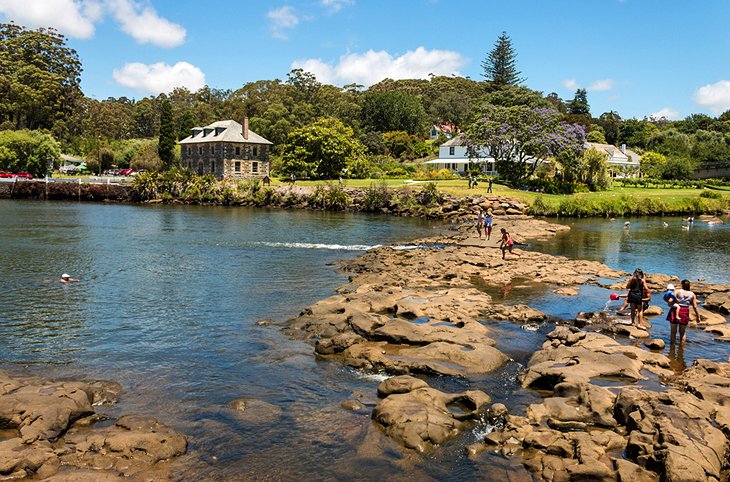
Historic Kerikeri, surrounded by citrus fruit orchards, occupies a beautiful setting at the head of the narrow Kerikeri inlet, which reaches far inland from the Bay of Islands. The town is a favorite residence of artists and well-to-do retired people and has a chic-bohemian ambience, with fun things to do including visiting its many small art galleries, craft boutiques, and artisanal food stores selling local produce.
This was one of New Zealand's earliest missionary settlements, and a couple of historic remnants from this era still remain. The Kerikeri Mission House dates from 1822 and was built for missionary John Butler. Inside, the rooms have been preserved in the style of the 1840s.
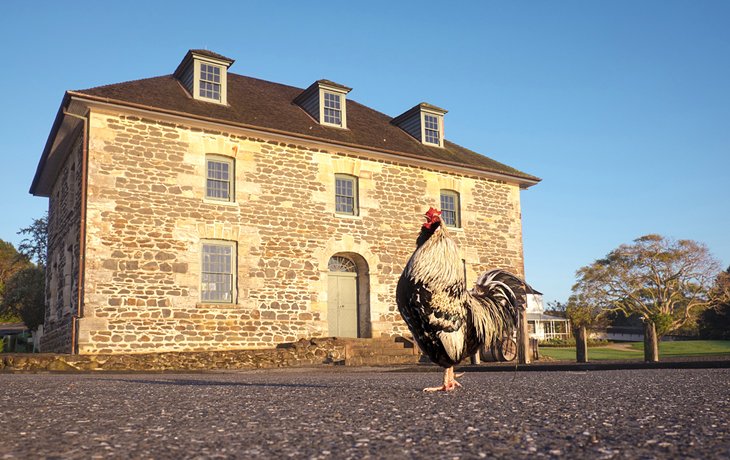
Adjacent to the Mission House is the Mission Stone Store, built in 1832 and the oldest stone building in New Zealand. It now contains a small museum of local history, with material on the early days of the mission station.
Kororipo Pa
Set on the terraced hill above Kerikeri inlet is the fortified Maori village of Kororipo Pa, reached by a marked walking trail from town. This was the base from which Maori chief Hongi Hika set out on raiding missions, thrusting as far afield as Wellington and the East Cape.
In 1814, he met the missionary Samuel Marsden and helped him establish mission stations at Rangihoua and later at Kerikeri itself. Today, only the walls and earth trenches of the pa remain, but the views across the entire Kerikeri basin from here are magnificent.
Address: Landing Road, Kerikeri
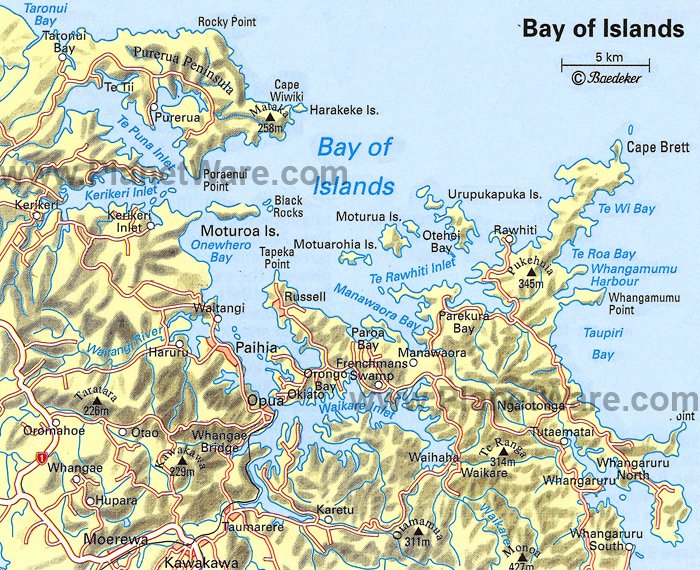
Map of Tourist Attractions in the Bay of Islands
More Related Articles on PlanetWare.com
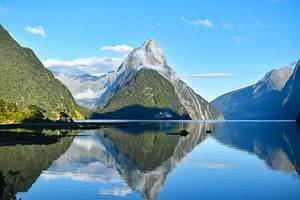
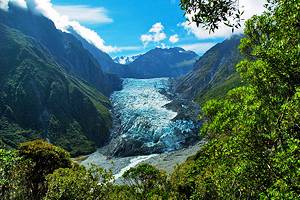
Back to Nature: New Zealand's national parks make for great places to spend vacation time. Our favorites include the spectacular Westland Region, a particularly popular destination where trekkers can hike to the spectacular Franz Josef Glacier. Fiordland National Park is another popular spot for sightseeing adventures, with its dramatic coastal scenery rivaling that of Norway. The town of Rotorua is another must-visit location for its dramatic volcanic scenery, including its many hot springs.
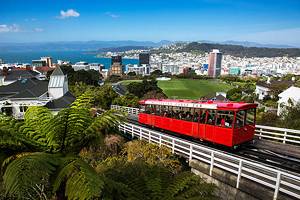
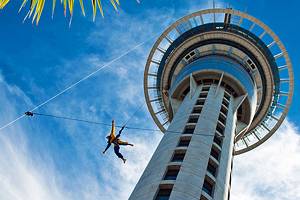
Big (-ish) City Fun: New Zealand's largest city, Auckland offers no-end of fun things to do, from taking in the views from its Sky Tower, to great shopping and restaurant experiences, to exploring its harbors. Known as the country's "adventure capital," Queenstown has a lakeside setting that makes it one of the most attractive vacation destinations in the country, perhaps rivaled only by Wellington, the country's capital; though small, there's plenty to do here, from exploring its galleries and museums to walking and hiking experiences.
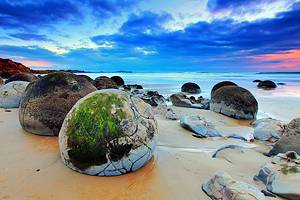
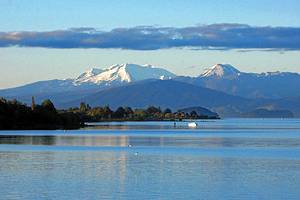
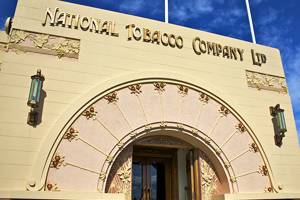
New Zealand Vacation Ideas: The town of Taupo features plenty of reasons to visit, from stunning Maori sculptures to its thermal springs, some of which offer unique bathing and spa experiences. Over in Dunedin, it's the country's colonial past that's celebrated, most notably in the attractive Scotland-inspired Larnach Castle. Also worth visiting is the town of Napier, which was rebuilt in stunning Art Deco style after a devastating earthquake in the 1930s.