Tourist Attractions in Florence, Italy
It would take weeks to see everything Florence has to offer. Almost any one of its dozens of churches would be the prize tourist attraction of a smaller city. Some of its sights are among Italy's best-known icons — Ponte Vecchio, Michelangelo's David, Brunelleschi's Dome — and the entire city is a showcase of the Italian Renaissance, the humanist artistic movement that broke Europe out of the Dark Ages.

But even among such an illustrious collection of palaces, churches, museums, and landmarks, some stand head and shoulders above the rest. As you consider all the things to see and do in Florence and plan your days of sightseeing, you won't want to miss the highlights that have made Florence one of Europe's most popular cities.
And Florence is a city you absolutely must see at night. The buildings flooded in light take on a different look after dark and radiate an ambiance of a much earlier age.
As with many significant tourist attractions in Italy, most ticketed attractions in Florence now have timed entry, so you no longer have to worry about standing in line.
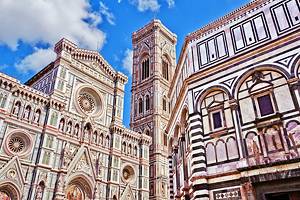
Cathedral of Santa Maria del Fiore and Piazza del Duomo
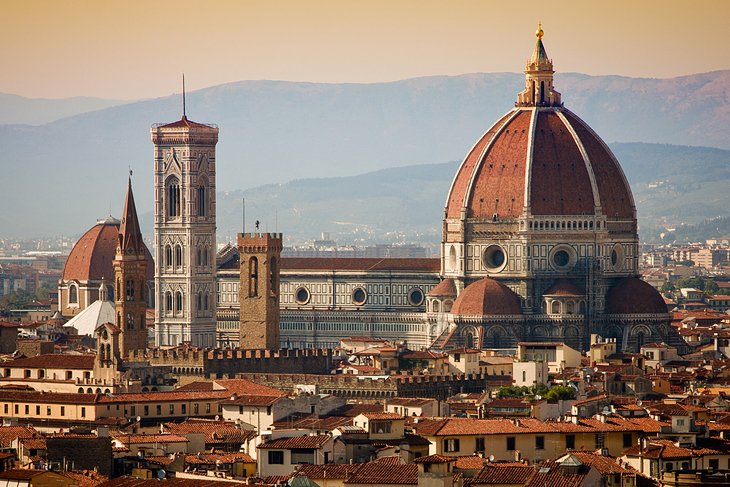
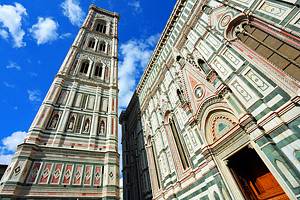
Walking around a corner in Florence and seeing the cathedral and its magnificent dome never fails to impress. One of Italy's most famous attractions, Piazza del Duomo and the group of buildings that form its cathedral complex gather some of Italy's greatest artistic treasures into one relatively small area.
As you tour the baptistery, the bell tower, the cathedral, and its museum, you'll see some of the best-known masterpieces of art and architecture by the greatest artists of the Italian Renaissance -- Ghiberti, Brunelleschi, Donatello, Giotto, and Michelangelo.

Begin by walking around the square to admire the intricate inlaid marble exteriors, then step inside each one to look more closely at the stained-glass works of art that greet you wherever you look.
Although you may be exhausted after a day of walking around the city, it's worth going out to seeg the cathedral after dark, when lights illuminate the facade.
If you want to climb Brunelleschi's Dome, be sure to book this in advance.

Battistero di San Giovanni (Baptistery of St. John)

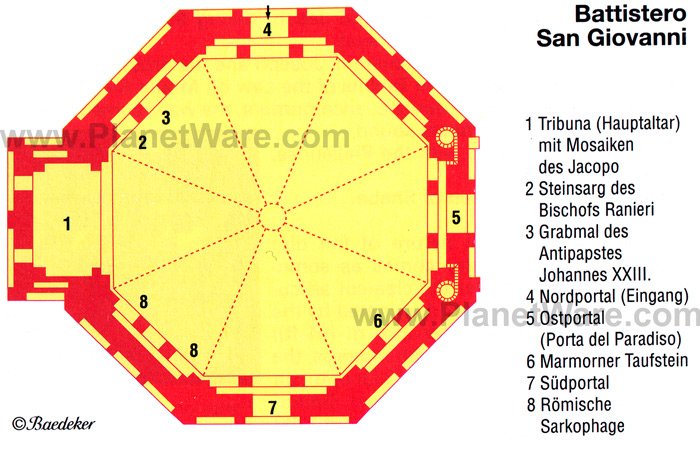
From any angle, inside or out, the 12th-century octagonal baptistery is a consummate work of art. Its marble façade, the intricate mosaics of its interior, and the artworks it holds all merit a place high on your list.
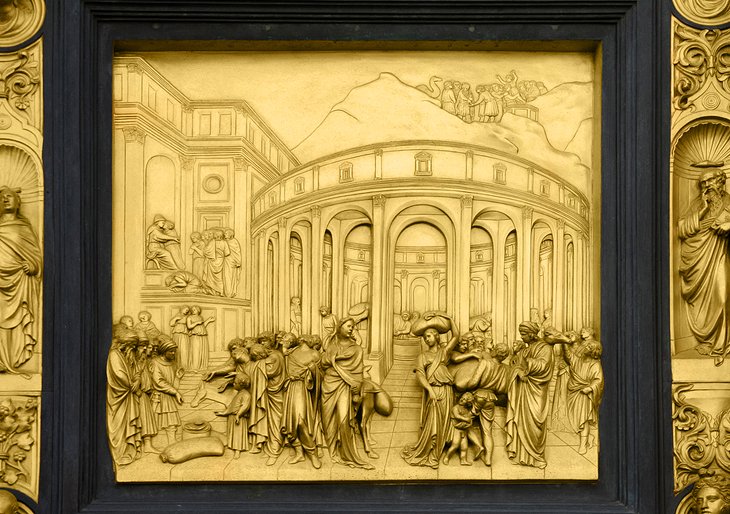
But the magnificent bronze panels that Ghiberti created for the doors facing the cathedral trump them all. Nowhere has bronze been worked with such exquisite expression as in these Gates of Paradise. The doors you actually see today on the Baptistery are modern, expert replicas. For a closer look at the original doors and to see some of the treasures that have been made for the baptistery, visit the Museo dell'Opera del Duomo, the cathedral's museum.
See Florence from Piazzale Michelangiolo

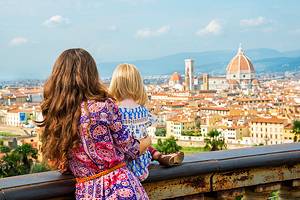
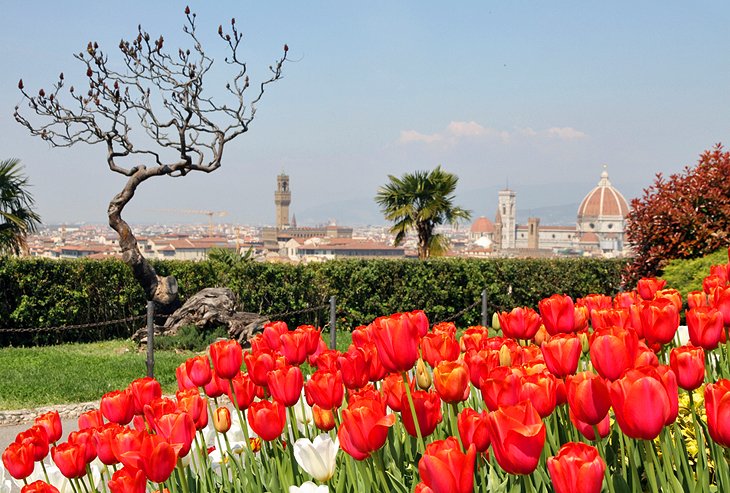
So often misspelled as Piazzale Michelangelo that even city tourism material occasionally slips up, this terrace above the city is an obligatory stop for tour buses, and the spot from which all those postcard shots of the cathedral are taken. During busy tourist seasons, the best time to enjoy it in relative peace is late afternoon or early evening; it's especially lovely at sunset.

Although you can get a 360-degree panorama of Florence from the dome of the cathedral, only from this terrace can you fully appreciate how Brunelleschi's dome dominates the city center. Nor can any other height give you this sweeping city view that encompasses the Ponte Vecchio, Palazzo Vecchio, Santa Croce, and other landmarks.
You can walk here, climbing from the riverbank through the gardens, although the route can be a bit confusing, or take bus 12 or 13. If you're walking, count on 30 minutes from the major attractions in the city center, the last 15 minutes of the walk is an uphill grind.
While you're here, continue up to the church of San Miniato al Monte or stay on the bus to the church and walk back down.
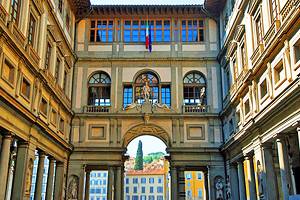
Uffizi Palace and Gallery
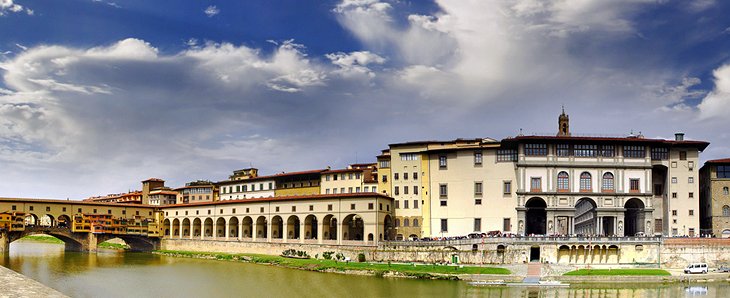
Few would argue the Uffizi's place among the handful of the world's top art museums. Its collections are simply staggering in their diversity and quality, and even if art is not your main interest, you should see the highlights of the paintings here.
You'll come away understanding a lot more of how Florence's 14th- to 16th-century painters changed the face of Western art, as you see the transition from the stilted Byzantine images to the life-like figures and landscapes of the Renaissance artists.

The vast building stretching along the river was one more of the Medici palaces but was intended not as a residence, but to house governmental offices, scientific studies, and part of their growing art collection. One of its loveliest spaces, the octagonal Tribuna, was commissioned especially to display the most prized paintings and jewels of Francesco I de' Medici.
One of the newest attractions to open (technically, to reopen) in Florence is the Corridoio Vasariano, a walkway over the Ponte Vecchio, traditionally used by the Medici family. After eight years of restoration, it opened to the public in 2024. This scenic pathway, offering views over the city and the Arno, begins at the Uffizi Gallery and can only be accessed from the Uffizi (it runs in one direction only), and admission to it is sold as a supplement added on to the price of admission to the gallery.
Piazza della Signoria and the Loggia dei Lanzi

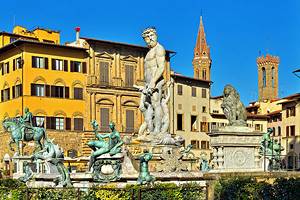
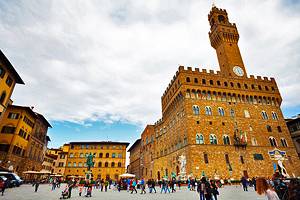
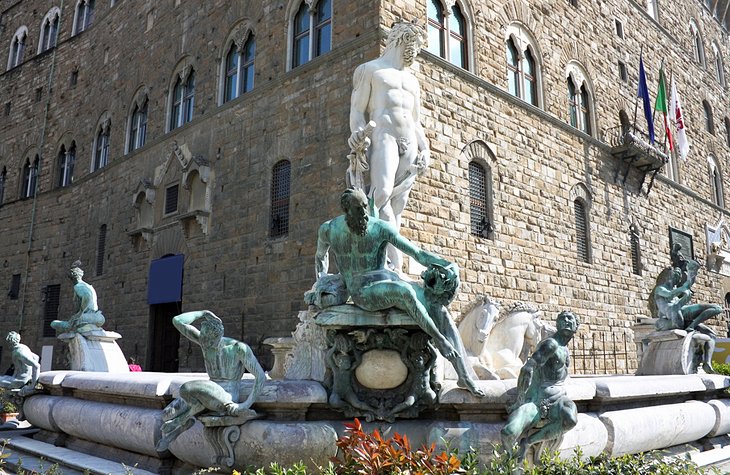
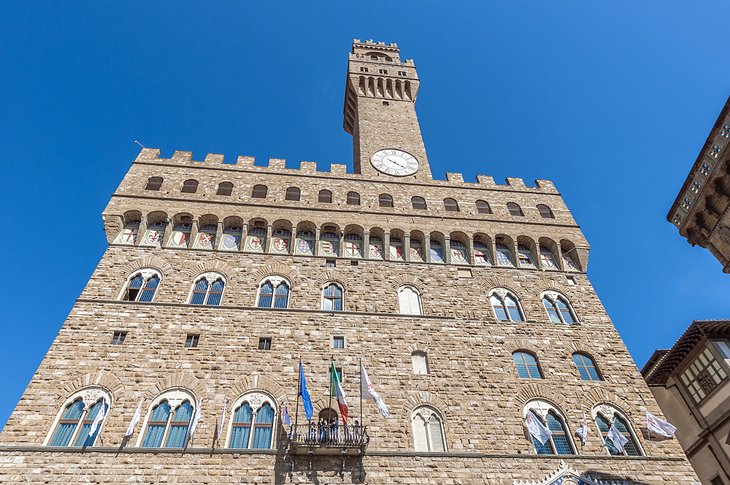
This broad square has been the center of power in Florence since its 14th-century origins - and perhaps even before, as Etruscan and Roman remains have been found below its pavement. Today, it is the social center as well, a favorite meeting place filled with tourists and locals. At its center is the Neptune Fountain, at one side the Palazzo Vecchio, still housing the city's government.
At night, the structure and the fountain are lit up, and this is a pleasant area to enjoy an evening. Across the street from the Palazzo Vecchio is a string of restaurants with lovely outdoor dining areas.

Against the wall of the Uffizi, which forms one end of the piazza, is the Loggia dei Lanzi, an outdoor sculpture gallery with several notable pieces. Most widely recognized of these is Benvenuto Cellini's best-known work, Perseus with the Head of Medusa. In front of the Palazzo Vecchio is a copy of Michelangelo's David.
Galleria dell'Accademia (Academy Gallery)
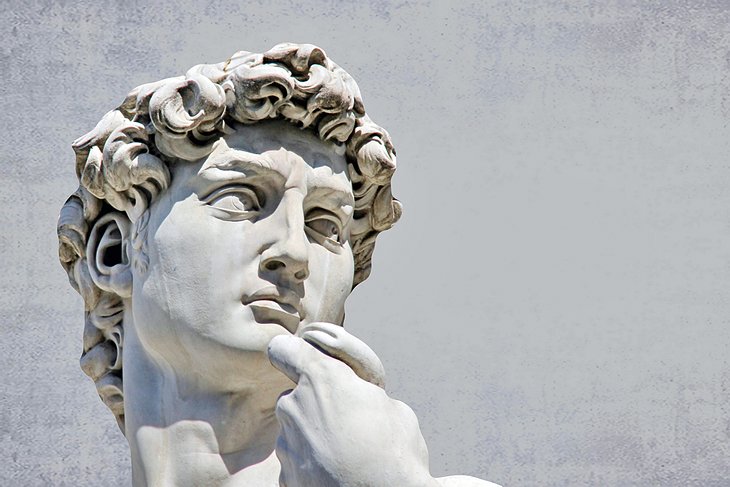
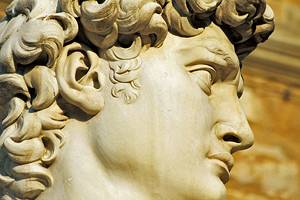
Michelangelo's best-known work, David, is copied all over Florence, but inside this art museum, you'll find the original.
The David isn't the only Michelangelo here, nor is it the only important masterpiece. In the sculptures shown in the same gallery, you can almost watch Michelangelo at work as you see the four unfinished slaves, meant for a tomb in Rome, seemingly in the process of being released from the marble.
Here, also, is his St. Matthew for Florence cathedral, also unfinished. You'll want to look in the other galleries to see highlights by 13th- to 16th-century Florentine artists, especially if you do not plan to see the Uffizi Gallery collections. Sandro Botticelli's Madonna is a highlight.
San Lorenzo and Michelangelo's Medici Tombs
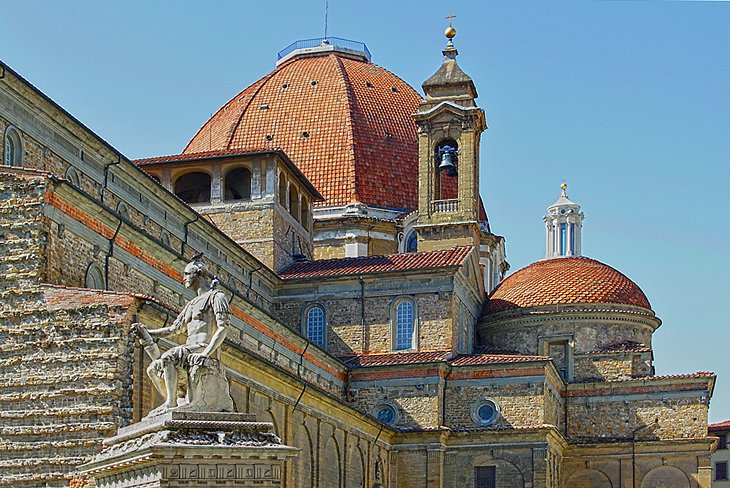
The Medici commissioned the best talent for the family church and burial chapels: Brunelleschi for the church and Michelangelo for the chapel intended to memorialize their most illustrious princes. Both artists died before finishing the work, but Brunelleschi's church was completed according to his plans.
Michelangelo's chapel, called the New Sacristy, was not; in fact, it was never completed at all. But what he did finish is considered one of the world's crowning achievements in marble sculpture. As you tour the church, the Old Sacristy, the New Sacristy, the Princes' Chapel, and the Laurenziana Library, you'll find the works of other Renaissance masters, including Donatello and Lippi.
Palazzo Vecchio (Palazzo della Signoria)

History, art, and power echo in the opulent rooms and grand galleries of this fortress-like palace in the center of Florence. From here, the city/republic was ruled, and its powerful Medici family commissioned the leading artists and architects of the day to design and decorate their offices and apartments.
The Palazzo Vecchio sits on the Piazza della Signoria, and in front of the building is the famous Neptune Fountain, another of the top sights in Florence.

Be sure to sign up early for one of the free tours, so you'll get to see some of the secret passages the Medici used to move among the rooms; return in the evening (save your ticket) to climb to the roof for sunset views of the city.
Santa Croce
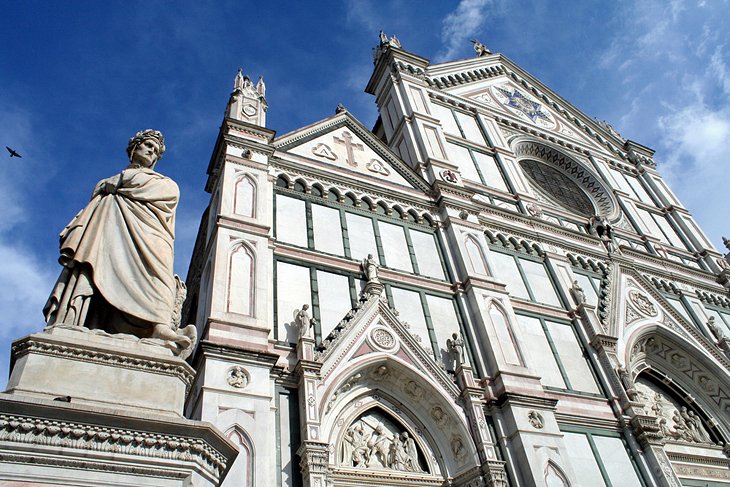
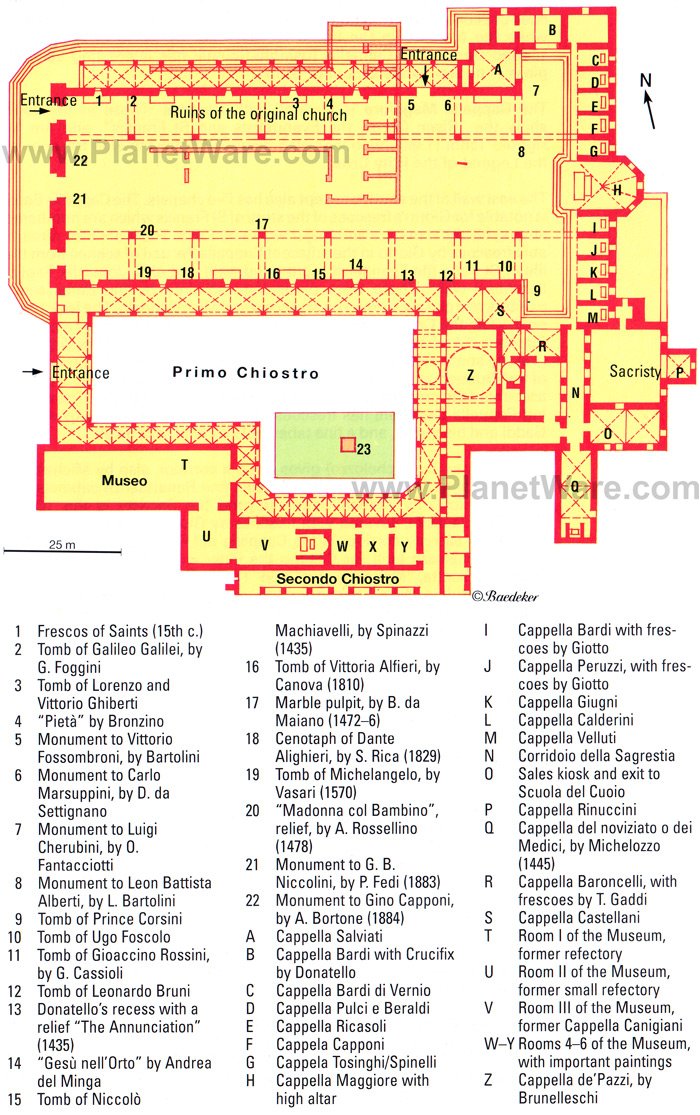
Behind the geometric marble inlay of its typical Tuscan façade, Santa Croce is both an art-filled church and a mausoleum for some of Florence's greatest names. Among its treasures are several landmarks of Renaissance art.

You will want to look especially for Cappella Bardi with some of Giotto's major frescoes, and in the adjacent Cappella Peruzzi, for more of them, which inspired Masaccio and Michelangelo. Donatello's Christ Crucified is considered one of the finest examples of Florentine Renaissance humanism. The frescoes in Cappella Baroncelli are the greatest work of Taddeo Gaddi.
But the most famous is Cimabue's magnificent Crucifix, one of the first to move from stiff Byzantine to naturalistic Renaissance styles, influencing the greatest artists that followed. In the nave, you'll find the tombs of Michelangelo, Galileo, Ghiberti, the composer Gioacchino Rossini, and even Machiavelli.

Ponte Vecchio

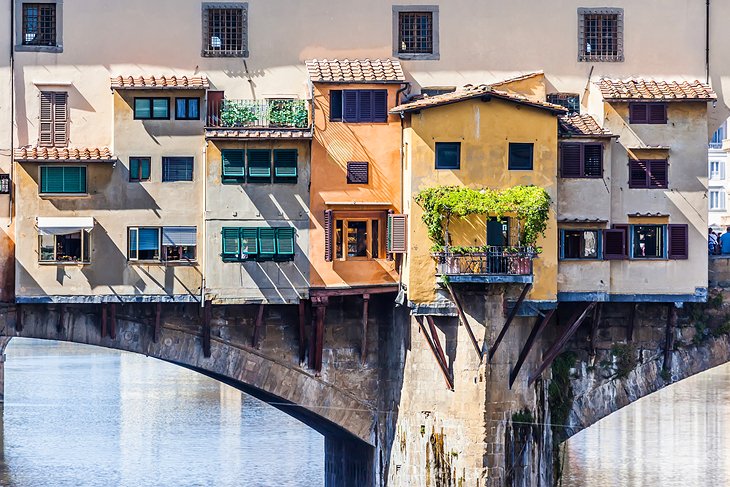
The Ponte Vecchio is another of the widely recognized icons of Florence, and its graceful arches topped by a jumble of shops are most certainly one of the city's prettiest scenes. The bridge has traditionally been the home for the shops of Florence's talented goldsmiths, and a stroll across it still shows a dazzling array of fine jewelry.
Another one of the attractions of the Ponte Vecchio is the Vasari Corridor. The purpose of the bridge, of course, was to link the two sides of the Arno, and the Medici needed to cross frequently between their offices in the Palazzo Vecchio and their apartments in the Pitti Palace. So they commissioned the architect Vasari to build a passageway, officially called the Percorso del Principe (Passageway of the Prince), but now more often known as the Corridoio Vasariano, Vasari Corridor.
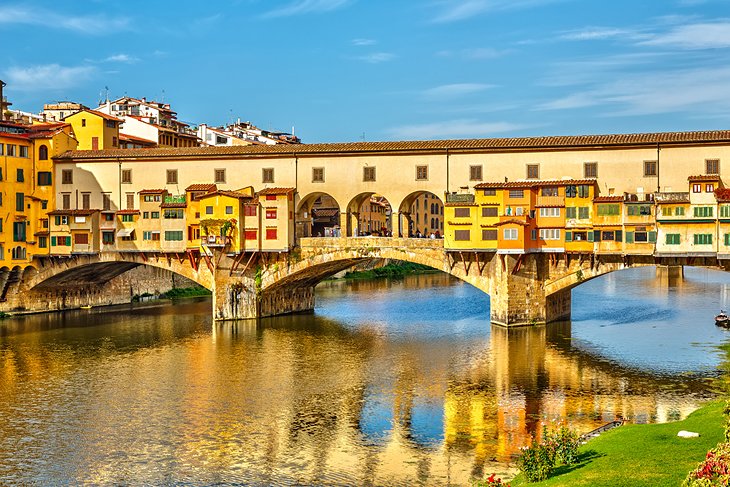
While this was formerly a portrait gallery, the corridor closed in 2016 for renovations and reopened in 2024 as a panoramic walkway, with stunning views over the city and the Arno. It also displays historical memorials and select artworks.
Tickets are required for the Corridoio Vasariano and are purchased as a supplemental fee in combination with the Uffizi Gallery. The walk is one way, from the Uffizi to the Pitti Palace. The main complaint from tourists is the price.

In the center of the bridge are three open archways that allow you to see down the river. In high season, the bridge is packed shoulder to shoulder with tourists crossing, and getting to the side of the bridge to see out can sometimes be challenging. Be prepared to wait for a turn.
Palazzo Pitti (Pitti Palace)
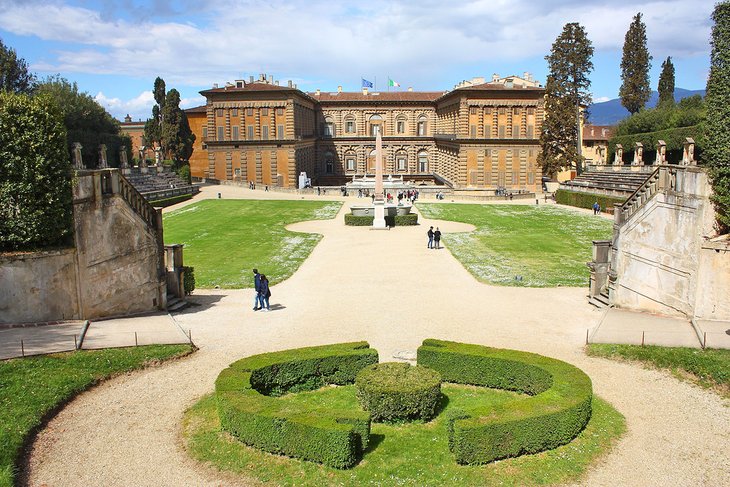
A day at the Pitti Palace complex (and you could spend a day seeing it all) gives you a little taste of the many things Florence has to offer: an outstanding art gallery, a Medici palace, Florentine craftsmanship, museums, history, royal apartments, and one of Italy's premier gardens.
If a day isn't quite what you had in mind, at least tour the palace to see the Royal Apartments and the sumptuous rooms, where you'll find paintings by Raphael, Titian, Rubens, Tintoretto, and other masters - a collection almost rivaling the Uffizi - hanging not in gallery style, but as decoration for rooms designed for entertaining and show.
Santa Maria Novella

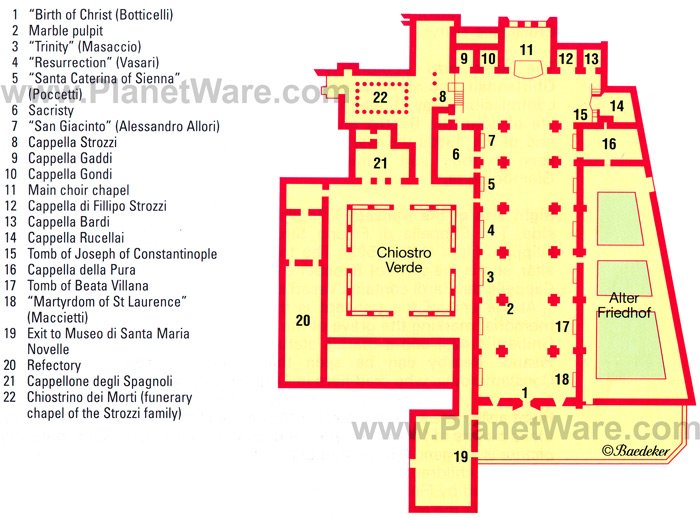
Although this Dominican church has the familiar striped façade of inlaid marble worn by several other churches in Florence, here it has been interpreted quite differently, tracing graceful curving designs, imitating windows, and highlighting rows of arches in the lower story.
The artistry continues inside, with some of the city's finest frescoes by such masters as Masaccio, Giotto, Domenico Ghirlandaio, Lippi, Paolo Uccello. As if that weren't enough, an entire chapel is lined with Andrea di Bonaiuto's frescoes, some of the greatest artworks of 14th-century Italy.
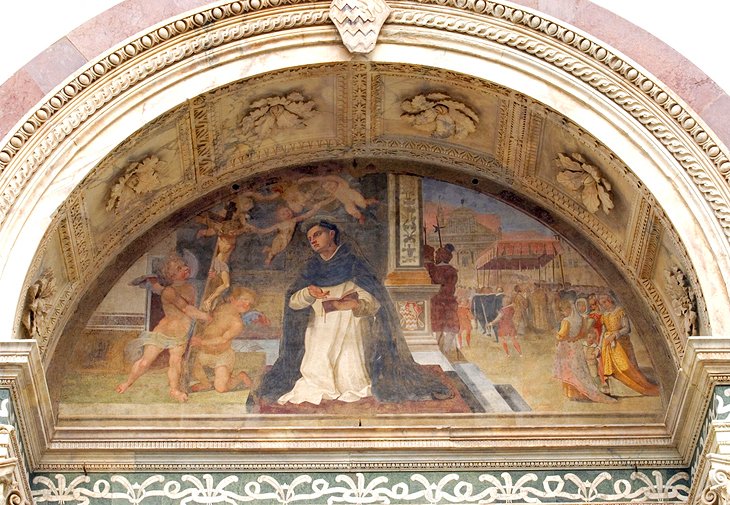
In addition to the frescoes are a marble pulpit designed by Brunelleschi, his wooden crucifix, Vasari's Rosary Madonna, and a bronze by Lorenzo Ghiberti. Stop in at the convent's historic pharmacy, where they sell herbal balms and floral lotions.
San Miniato al Monte
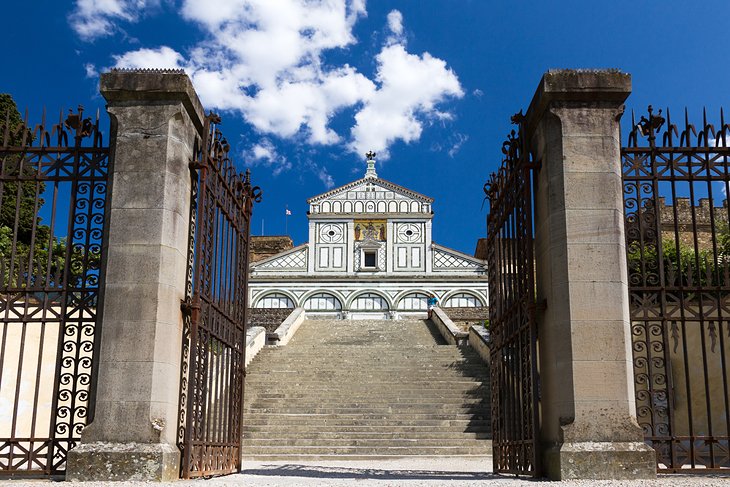
The sight of San Miniato al Monte's inlaid green-and-white marble façade is worth the short climb beyond the favorite viewpoint of Florence, Piazzale Michelangiolo (or you can stay on the bus to ride here).
This was the first time this dramatic effect was used in Florence, where it soon became the most popular façade decoration. But unlike the later facades, this one rises to a large gold mosaic. The portico effect looks back to Classical Roman architecture, and the mosaics are distinctly Byzantine-inspired, both influences that blend into the new Tuscan Romanesque architectural style.
Inside, there's a spacious open nave, with a mosaic floor and painted wooden ceiling, ending at a magnificent Renaissance chapel under a glazed blue-and-white terracotta ceiling. More Byzantine-style mosaics, a 12th-century marble pulpit, and the decorated choir screen are all highlights.
Even more outstanding is the sacristy. Its walls are lined by the vibrant panels of Spinello Aretino's 14th-century masterpiece, Life of St. Benedict. It is among the most splendid rooms in Florence, and equal to those in any palace.
Address: Via delle Porte Sante, 34, Florence
Bargello Palace National Museum
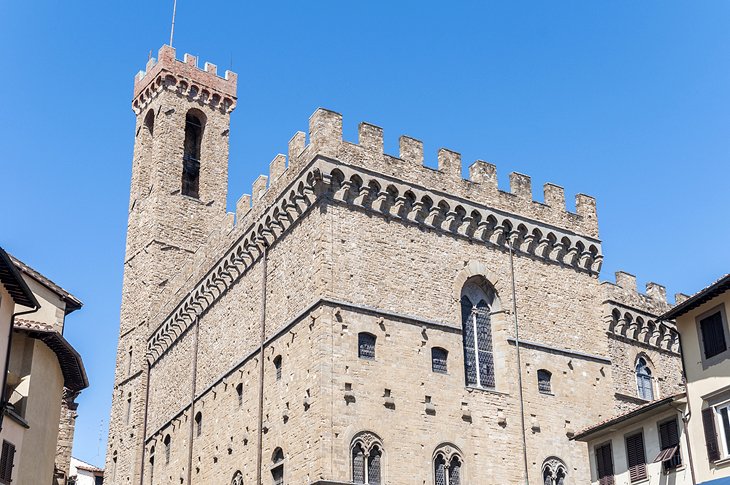
The four Michelangelo masterpieces alone are reason enough to put the Bargello Palace on your list of things to do in Florence. Works by Donatello, the della Robbias, Cellini, Brunelleschi, Ghiberti, and 14th- to 16th-century Tuscan artists fill the palace, along with a room of ivory carvings and a collection of majolica.
An entire room is filled with enamels and gold work, a Florentine specialty during the Renaissance. This emphasis on decorative arts and sculpture sets the Bargello apart from the rest of Florence's art museums.
Address: Via del Proconsolo 4, Florence
Stroll through Boboli Gardens
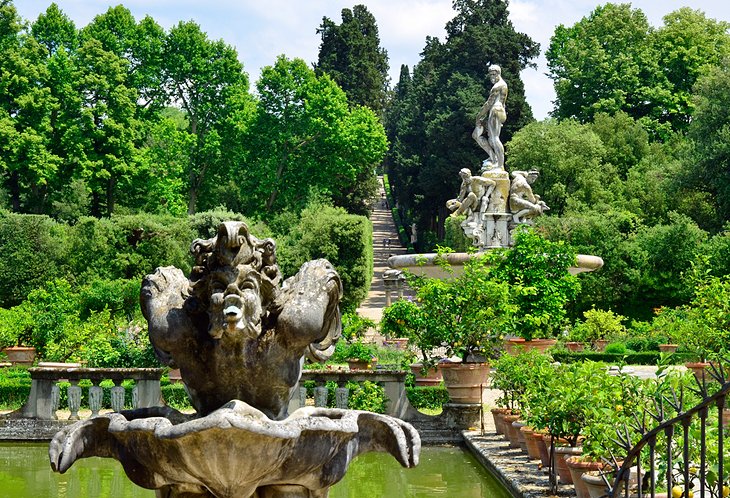
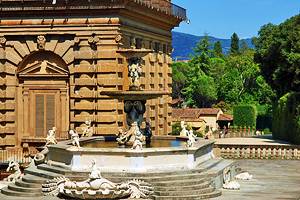
Behind the Pitti Palace, the Medicis' Boboli Gardens rise up the hillside in 111 acres of green terraces. Grand Duke Cosimo I spared no expense in their building, between 1550 and 1560, and the result became the model for royal gardens all over Europe (including Versailles). Still beautifully manicured, the gardens climb to overlooks that reveal increasingly sweeping views over the city.
Throughout are fountains, statuary, and a faux cave complete with stalactites and stalagmites carved into the hillside, the Grotta del Buontalenti.
Other things to see include a maze, formal beds, even an amphitheater in the quarry hole left from removing stone to build the palace. At the highest point is the terrace of the Kaffeehaus, and at the top of the hill overlooking Boboli Gardens, Casino del Cavaliere houses a rich collection of porcelains owned by ruling families, including the Medici and the Savoy.
Explore the Oltrarno and Take a Break in Piazza Santo Spirito
The Oltrarno is worth exploring for its atmospheric lanes and the workshops and studios of Florence's famous artists in wood, silver, and gold work; gilding; miniature mosaics; decorative papers; and leather bookbinding. You're sure to be tempted by the works for sale in the small shops, and there is no better souvenir or gift than a beautifully bound journal or a gilded wooden box.
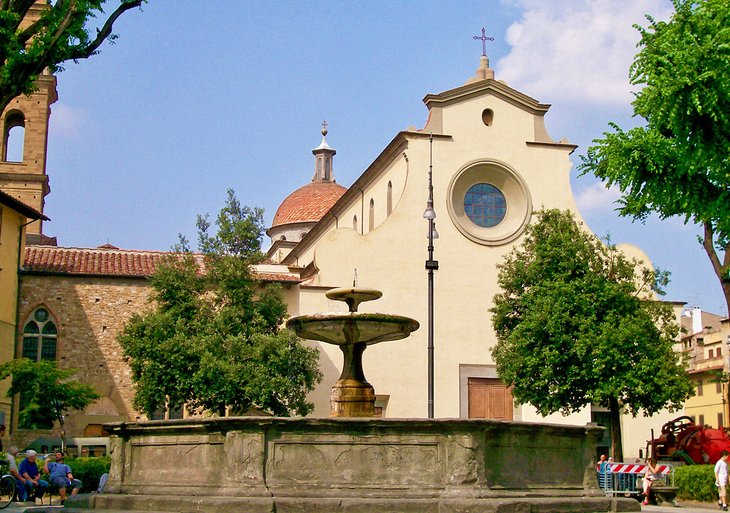
Make your way to Piazza Santo Spirito, a lively square that's more intimate than the grander, busier ones across the river. Find an outdoor table at a café or restaurant and watch shoppers at the morning market or children playing ball after school.
Although it's not one of the best-known churches in Florence, the Basilica of Santo Spirito is one of the purest Renaissance churches and is filled with notable paintings and sculpture, especially in the transept chapels
Palazzo Medici-Riccardi
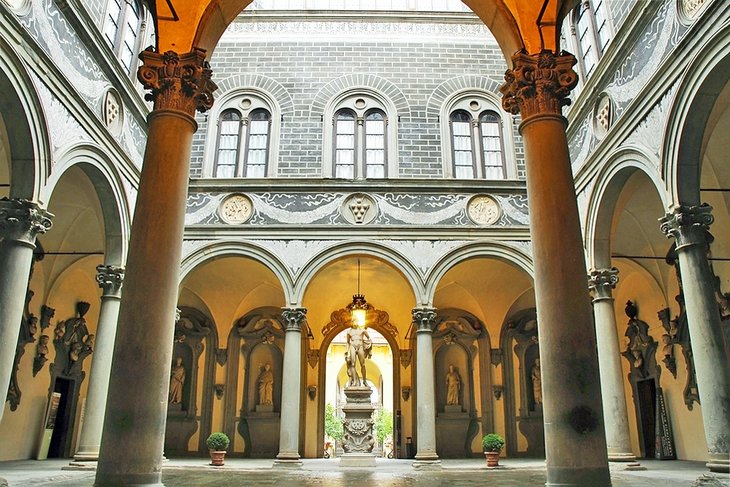
More restrained in its furnishing and décor than the showy palaces of later members of the Medici family, Palazzo Medici-Riccardi is more in line with the earlier dukes, who governed a more democratic society. Completed in 1464, it was the home of the Medicis for nearly a century until Cosimo I moved to the Palazzo Vecchio.
A staircase leads from the courtyard to the Palace Chapel, decorated with well-preserved frescoes by Benozzo Gozzoli that give a good sense of court life in 15th-century Florence.
Although the Riccardi family, which owned the house after the Medicis, made alterations, the Medici Museum on the ground floor retains the original Medici interior. Here, also, is one of Filippo Lippi's most important works, Madonna and Child, painted in1442.
Address: Via Cavour 1 & 3, Florence
Official site: www.palazzo-medici.it
Mercato Centrale: Florence's Food Market
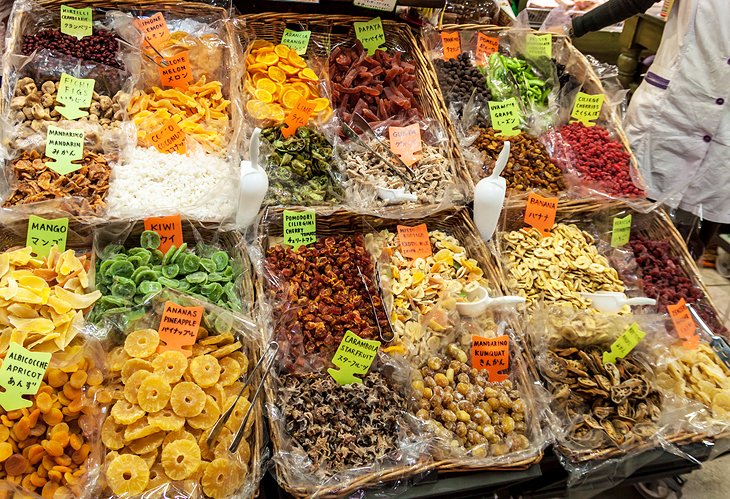
If you have begun to worry that Florence is just one giant open-air museum, it's time to meet some Florentines as they go about their daily routines. There's no better place to find them than in the enormous food market, Mercato Centrale.
To get here, you may have to run a gauntlet of street stalls selling everything from cheap plastics to "authentic Italian crafts" that are mass-produced, mostly in Asia. But once inside and immersed in the fragrance of fresh herbs, flowers, and garden produce, you'll rub elbows with women shopping for ingredients for today's dinner.
Don't overlook this as a source of welcome gifts to take home, including fine Tuscan olive oils, olives, candied fruits, and luscious nougat. On the upper floor, you'll find food courts, a good place to visit for a quick lunch.
Address: Piazza del Mercato, Florence
Bardini Museum and Gardens
In the late 19th century, artist and collector Stefano Bardini bought a group of buildings on a hillside in the Oltrarno, overlooking Florence. From these, which included a chapel and a former palazzo dating from the 14th century, he created a setting for his collections of art and priceless antiquities.
To create this museum, he used architectural features salvaged from demolished medieval and Renaissance buildings. Monumental fireplaces, doors and windows, columns, carved stonework, entire staircases, paneling, carved Venetian woodwork, even entire ceilings have been retrofitted into a highly eccentric home for his equally eccentric collections.
But the resulting palazzo and its magnificent artworks are not the only attraction for tourists. After completing his museum, Bardini bought a neighboring garden overlooking the river and transformed it into an outdoor gallery to display some of his sculpture collections.
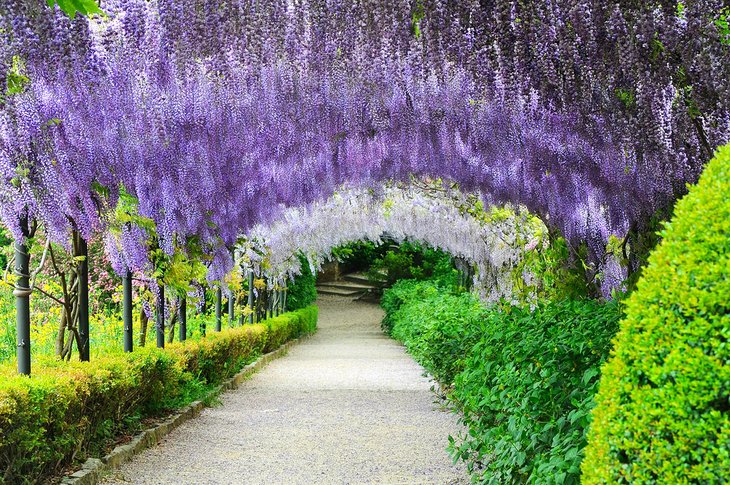
The Bardini Gardens overlook Florence, a lovely place to get away from the crowds and rest your eyes amid the greenery and flowers. The best time is in April, when brilliant purple wisteria covers the pergola and fills the air with fragrance. A long staircase, mosaic fountains, an English garden, and a terrace with a café make it a pleasant place to relax. Entrance to the garden is separate from the museum.
Bardini Gardens
- Costa San Giorgio 2, Florence
Bardini Museum
- Via dei Renai 37, Florence
Brancacci Chapel
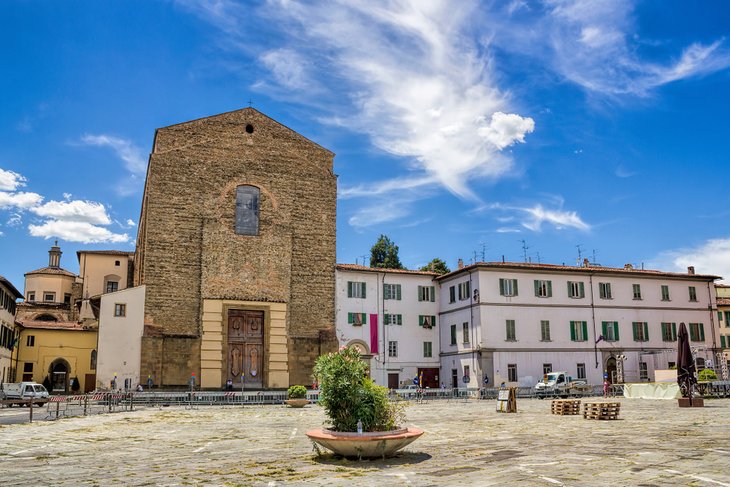
The Brancacci Chapel wrapped up an extensive, multi-year restoration project in 2024, and the visitor experience here is now better than ever.
You would never guess by looking at the plain façade of Santa Maria del Carmine church that inside holds one of the great masterpieces of the 15th century. Frescoes on the walls and ceilings of the chapel depict the life of St. Peter and Old Testament scenes by Masaccio and Masolino, who were well-known artists in the early 1400s, friends of Brunelleschi and Donatello.
The works, especially those of Masaccio, are remarkable for their vivid color and vitality, demonstrating some of the first use of perspective, and showing facial expressions that give life and energy to his figures.
Masaccio is considered the first great Italian painter of the Quattrocento period (15th century) of the Italian Renaissance and the founder of the Early Italian Renaissance. The chapel was left unfinished by the two painters and was completed later in the 1400s by Filippino Lippi. Although the chapel is an important landmark, and a magnificent work of art, it is one of the least known treasures of Florence.
Address: Piazza del Carmine 14, Florence
Museo Galileo
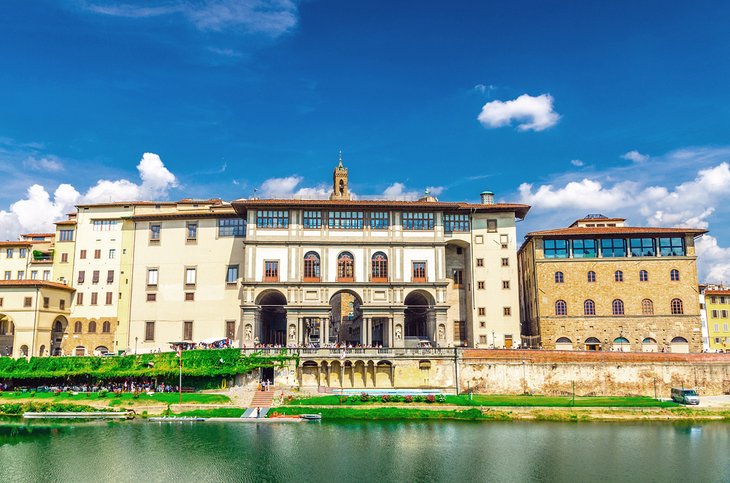
With the abundance of Renaissance painting, sculpture, architecture, and other masterpieces in Florence, it's easy to forget that the Renaissance was about more than art. Science was a major concern of the Humanists as they broke away from the confines of religion to explore their universe. And they saw art and science as connected and inseparable.

The Museo Galileo proves this, with tools of astronomy, navigation, surveying, and exploring that are priceless works of art. You'll see Galileo's own instruments, and the work of some of Florence's foremost artists in metal, wood, gold, and other arts in the collections of compasses, tools, and magnificent world globes.
Address: Piazza dei Giudici 1, Florence
Official site: https://www.museogalileo.it/en/
Shop for Leather at Piazza Santa Croce
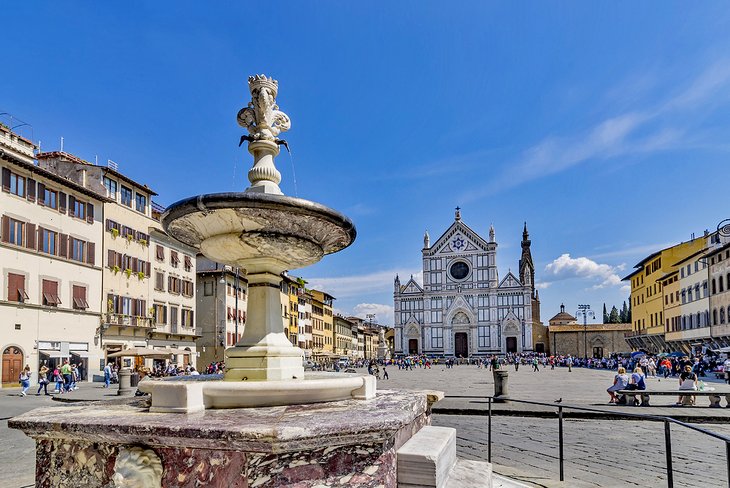
Fine leatherwork has been a tradition in Florence at least since Renaissance times, when leatherworkers had their workshops around Santa Croce, close to the tanneries along the river. That neighborhood is still the best place to shop for Florentine leather goods. To find the best quality, and at fair prices, shop at the leatherwork school or at an artisan's studio shop; some of the other shops, like the street market vendors, sell imported and imitation leather goods.
Inside the cloister of Santa Croce, the Scuola di Cuoio leatherworking school produces fine handmade leather goods, and you can watch the students fashion wallets, boxes, handbags, and leather jackets. There you'll find Francesca Gori's one-off handbags in rare and exotic leathers, designed especially for the school. You'll also find luggage, bound books, belts, jewelry boxes, and leather clothing.
Also on Piazza Santa Croce is Misuri, in a former palazzo covered in frescoes, with equally fine traditional craftsmanship and designs.
Address: Piazza Santa Croce, Florence
Official site: www.scuoladelcuoio.com
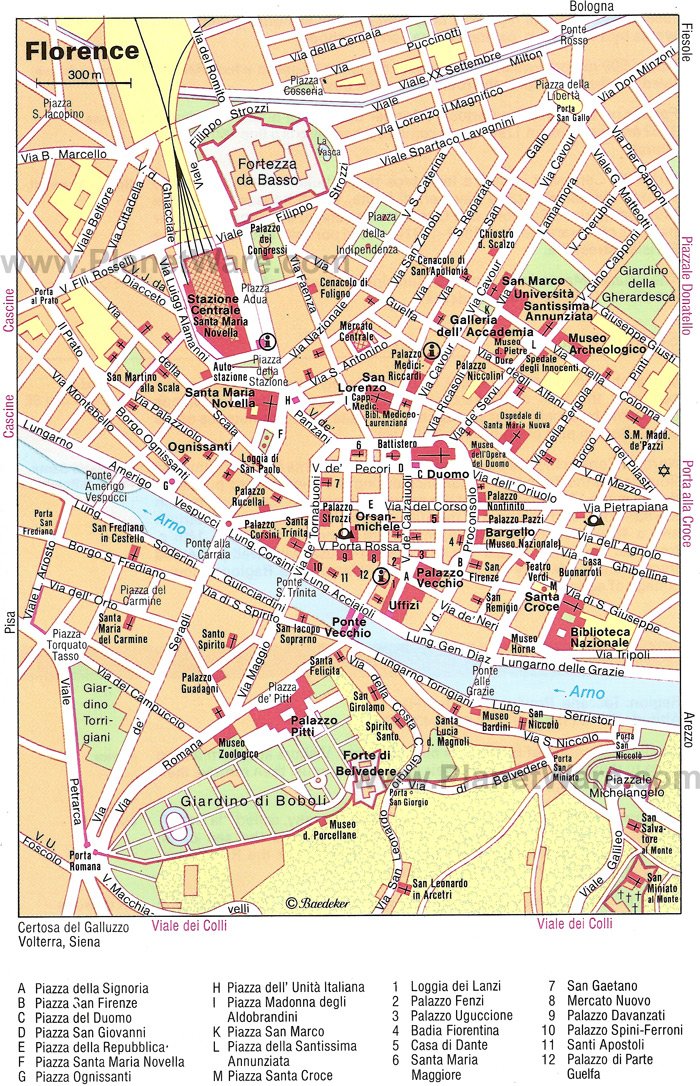
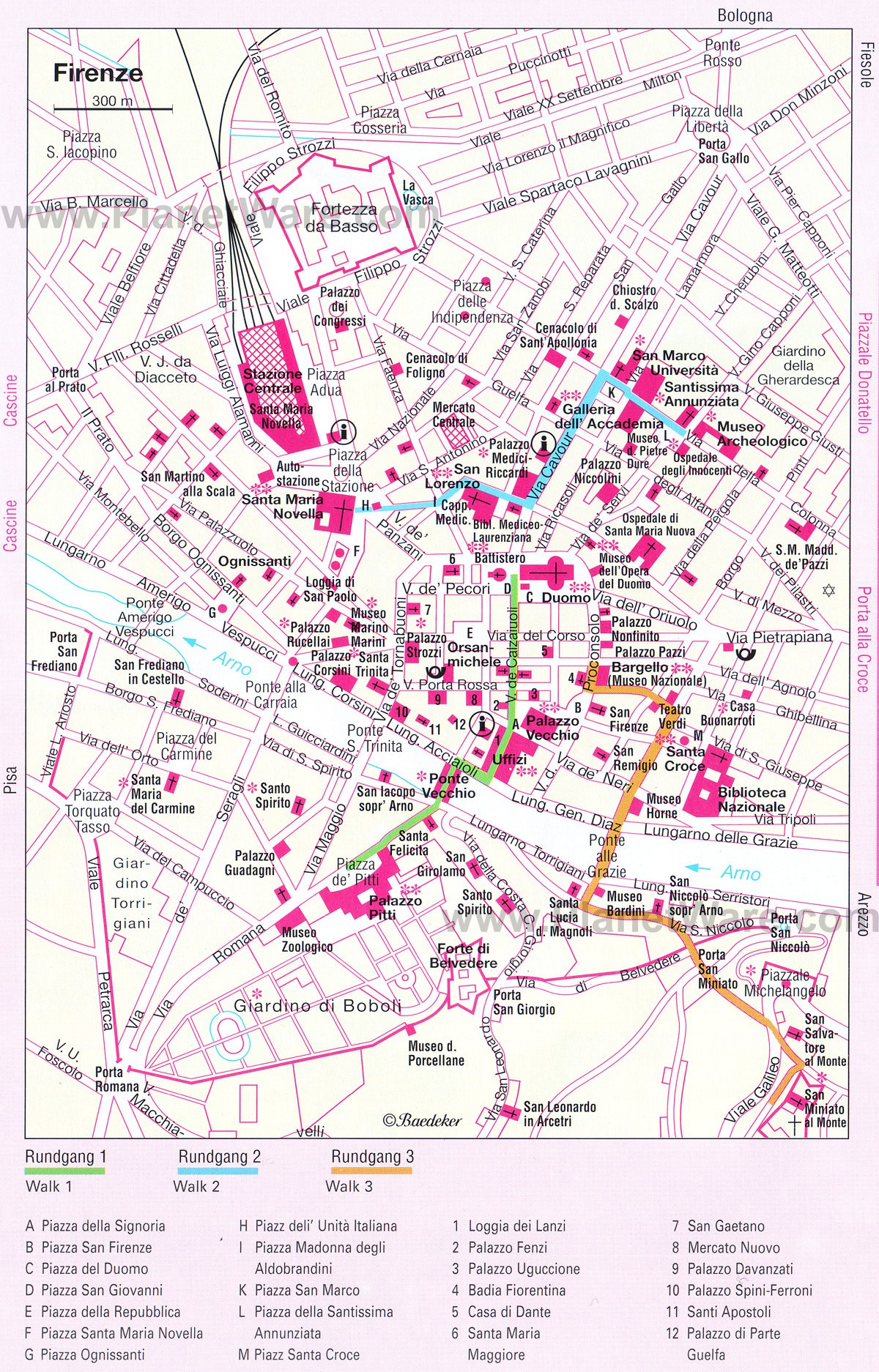
Map of Tourist Attractions in Florence, Italy
Florence, Italy - Climate Chart
| Average minimum and maximum temperatures for Florence, Italy in °F | |||||||||||
| J | F | M | A | M | J | J | A | S | O | N | D |
| 50 34 | 53 37 | 59 40 | 65 45 | 74 52 | 81 58 | 88 63 | 87 62 | 79 57 | 70 50 | 58 41 | 50 36 |
| PlanetWare.com | |||||||||||
| Average monthly precipitation totals for Florence, Italy in inches. | |||||||||||
| 2.9 | 2.7 | 3.2 | 3.1 | 2.9 | 2.2 | 1.6 | 3.0 | 3.1 | 3.5 | 4.4 | 3.6 |
More Things to See and Do
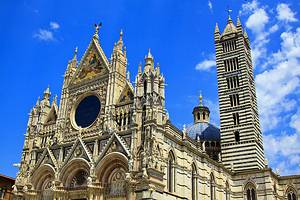
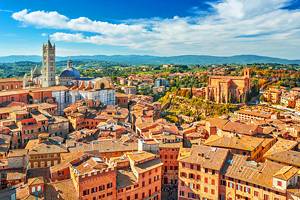
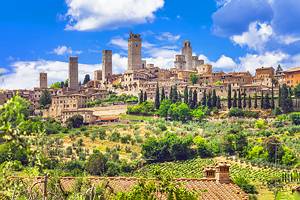
Places to Visit near Florence: Several of the best places to visit in Italy are close to the city. The beautiful medieval city of Siena to the south is crowned by one of Italy's most magnificent - and largest - cathedrals, filled with more art masterpieces than some major museums. This and a string of Medici villas are all easy day trips from Florence.
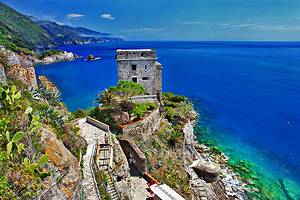
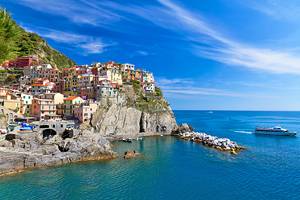
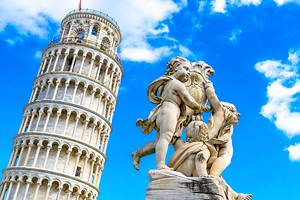
Where to Go from Florence: Pisa's famous Leaning Tower is one of the top tourist attractions in Italy, and only the beginning of beautiful Renaissance monuments and artworks to see there. Less well-known - and less crowded- is the charming, small city of Lucca, surrounded by walls so thick, there's a popular promenade along their tops. Beyond, the Tuscan coast leads into Liguria, with the five villages and magnificent scenery of the Cinque Terre.