Attractions & Places to Visit on the Amalfi Coast
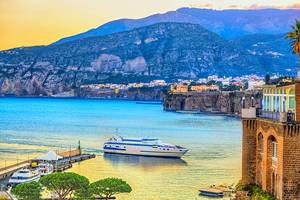
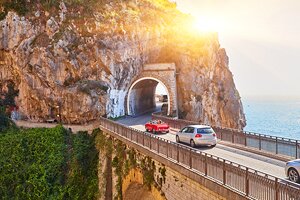
One of the world's most famous roads, the Amalfi Drive (aka SS163) is also arguably the most beautiful 48 kilometers of coastline in Italy, and certainly high on the list of Italy's top tourist attractions.
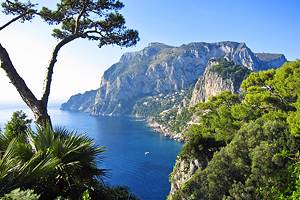
Carved into cliffs that are already cut by deep ravines, the road clings high above the Tyrrhenian Sea in a series of breathtaking views and curves bounded by almost vertical mountains rising on one side and long vertical drops on the other.
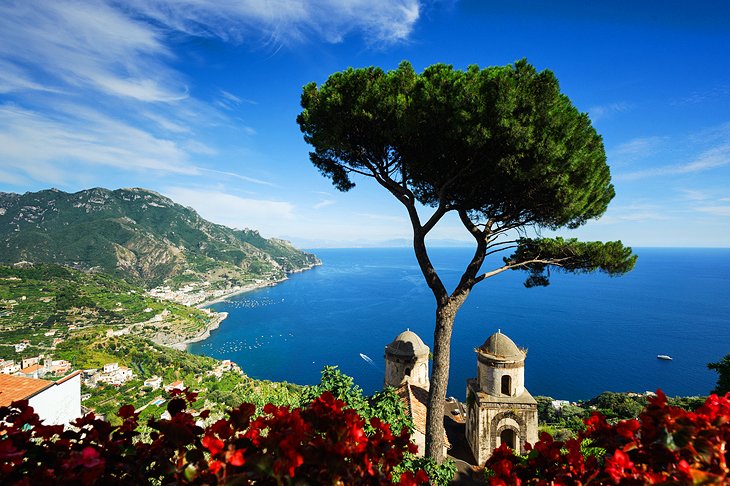
You don't need to drive it yourself, and unless you're used to Italian roads, you probably shouldn't. One thing is sure: if you do drive, you won't see much of the scenery. It's no place to take your eyes off the road, even for a second, and there are very few places to stop.
The alternatives are a tour, the bus, or the ferry. The latter two stop in towns, so you can get off, look around, go for a swim, have a coffee or lunch, and get back on a later one.
SITA buses run frequently, although not always on schedule, so there may be long waits, especially in the summer. Because they are not subject to traffic jams, ferries are more dependable, and you'll get a different perspective of the dramatic scenery from the sea. Ferries stop at all seven of the major Amalfi Coast towns.
One thing to remember: if you go by bus, go west to east, beginning in Sorrento, and try for a window seat on the right side of the bus. If you're driving, go east to west, so you'll be on the inside lane. The town of Amalfi is the favorite stopping point, especially for travelers taking two days for the trip
Plan your travels along this spectacular route with this handy visitors' guide to the top attractions of the Amalfi Coast.
Positano
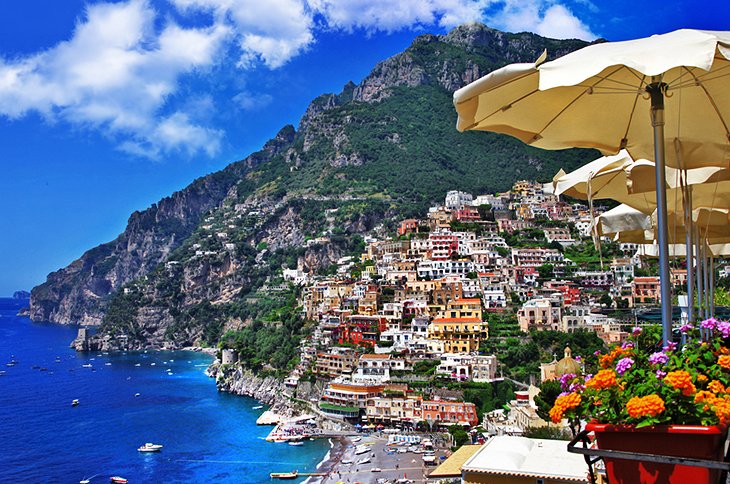
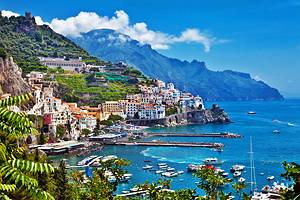
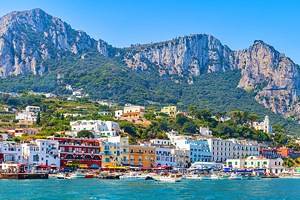
This westernmost town along the Amalfi Coast has clearly been discovered, as you can tell by the chic fashions and yacht-tanned people wearing them. It's easy to understand Positano's attraction when you see its flower-draped pastel houses tumbling down the steep hillside to the beach.
Apart from the 13th-century church of Santa Maria Assunta, with its dome of majolica tiles and Byzantine icon of a black Madonna (brought here by pirates, according to legend), the only things to see are the narrow lanes near the port and possibly celebs sitting in the cafés.
There are more things to do at the beach, the Marina Grande, where you can rent rowboats, paddleboats, sailboats, Zodiacs, and motorboats, or sign on for a cruise along the coast to Capri. But the chief appeal of Positano's Marina Grande is the possibility of spotting a celeb or two.
Your square of sand won't come cheap; to be where the action is you'll need to rent a lounge chair from one of the stabilimento balneare, beach clubs that also furnish umbrellas, changing rooms, and refreshments. These are a fact of life on nearly all Italian beaches.
Not nearly as fashionable or good for spotting anyone important, Positano's long Fornillo Beach can be reached by a path along the shore; it has a free area along with the stabilimento. Just east of Positano is trendy Praiano, also with a tile-domed church, and not far beyond, the road crosses the deep and dramatic gorge of Vallone di Furore, one of the Amalfi Drive's most popular places to visit for a photo op.
Grotta dello Smeraldo (Emerald Cave)
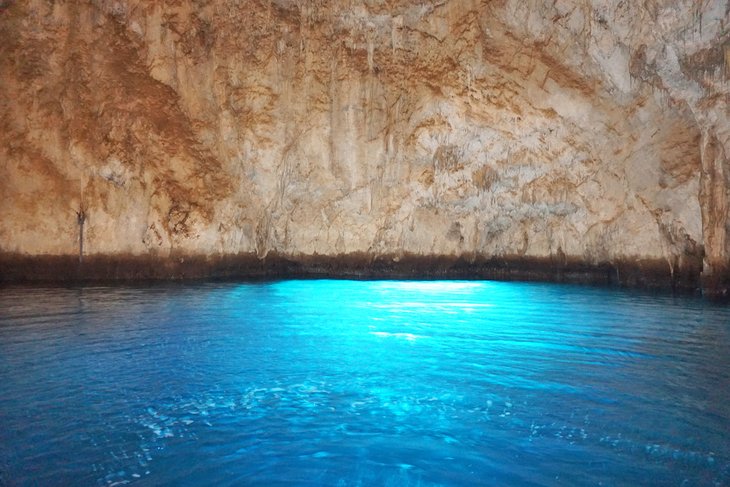
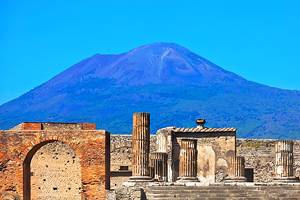
Close to the village of Conca dei Marini, stairs and an elevator descend to a marine cave. You may wonder how a sea cave came to have stalactites, but this one wasn't always at sea level. The cave was formed higher, but the region's volcanic activity (you're not all that far from Vesuvius here) changed the sea and ground levels and put the cave where the sea could wash in.
Like the Blue Grotto in Capri, sunlight shining through the water causes it to look as though it were lit from within, in this case in an emerald-green glow. The water is so clear that it is possible to see through to the bottom.
Boats wait at the cave entrance to take you inside, or you can take a boat to the cave from the beach in Amalfi, about a 15-minute ride.
Address: Route 163, Conca dei Marini, Amalfi
Amalfi
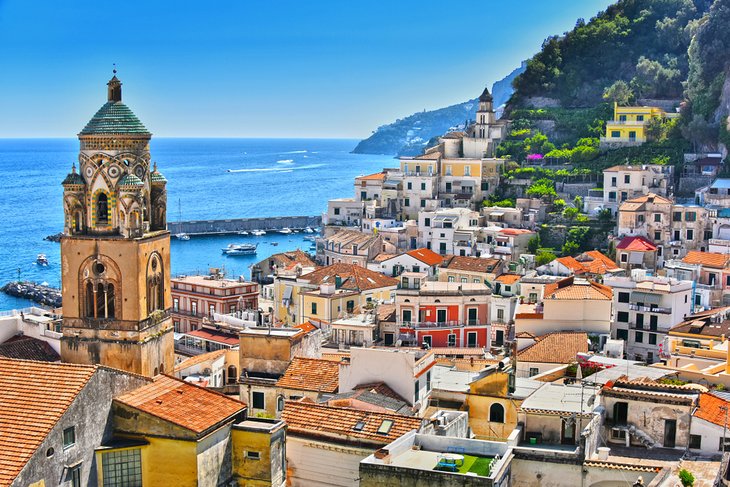
Amalfi's vertiginous streets, belvederes, cascading flowers, and ever-changing views of the blue sea below make Amalfi one of Italy's most delightful places to visit. Almost as trendy as Positano's, Amalfi's Marina Grande has its share of glam, but the 200 meters of sand has a free area at each end for those who don't want to fork out for a space with the smart set. Like Positano's this Marina Grande will be crowded.
Amalfi's cathedral, Duomo di Sant'Andrea, rises majestically at the top of a long staircase (nearly everything in Amalfi is reached by stairs), with a geometric patterned façade, striped columns, and a dome resplendent in Majolica tiles. Climb the stairs to see the magnificent bronze doors; the ornate crypt with its frescoes; and the lovely Chiostro del Paradiso, a cloister with a serene garden.
Continue up the hill to see the fascinating Museo della Carta, where you can learn about Amalfi's centuries-old paper-making industry and make your own paper using medieval methods. This is one of the favorite things to do in Amalfi with children.
Ravello
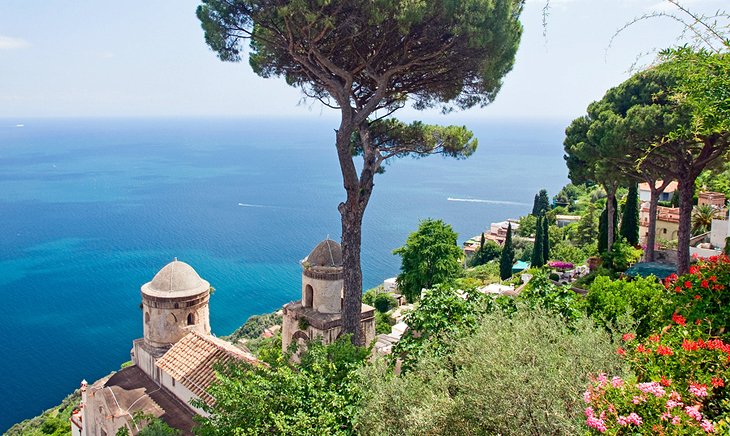
From Atrani, just east of Amalfi, a winding road (SS 373) climbs through orange-groves to Ravello, an old town in a superb site overlooking the sea from the brink of the deep Valle del Dragone (Valley of Dragons). The lush gardens, which once surrounded its villas are now parks, each one with a better viewpoint than the last.
You may wonder at the number of churches in such a small town, but like Amalfi, it was once much larger. In its 13th-century heyday, it had a population of 36,000, with churches, monasteries, villas, and palaces. In the 12th-century church of San Giovanni del Toro, remodeled in Baroque style, is a mosaic pulpit decorated with Persian majolica; in the crypt are frescoes of scenes from the life of Christ.
In the center of the town is the Romanesque Cathedral of San Pantaleone, begun in 1086 and also remodeled in Baroque style, and like the churches in Amalfi and Atrani, its bronze doors were cast in Constantinople. Inside are two outstanding marble pulpits, both intricately inlaid. One has designs of mythical creatures and biblical scenes.
You can walk back down to Amalfi on the Sentiero Atrani, a long steep set of steps that wind through lemon groves and past breathtaking views. Allow at least 90 minutes.
Villa Rufolo
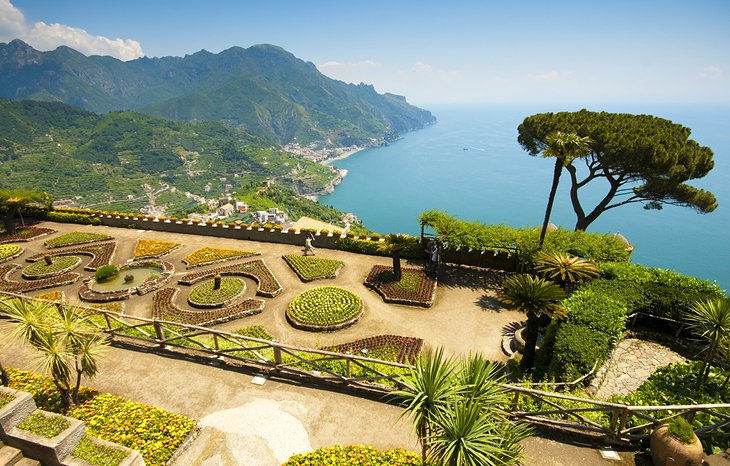
The gray stone tower opposite the cathedral is the gate to a villa whose gardens and terrace views inspired Wagner's magic garden of Klingsor in Parsifal. Villa Rufolo began in the 13th century as a fortified manor house/farm and continued to grow with successive generations until it was reputed to have more than 300 rooms (likely an exaggeration).
The oldest part remaining is the 30-meter stone watchtower. In the 18th century, a Neo-Moorish cloister was added, and in the 19th century, the grounds were made into Romantic gardens. Most of the buildings are now in ruins, which are incorporated as garden features. Restored portions are used for art exhibits, and the grounds are the scene of concerts and an outstanding summer music festival with world-renowned performers and orchestras.
Address: Piazza Duomo, Ravello
Villa Cimbrone Gardens
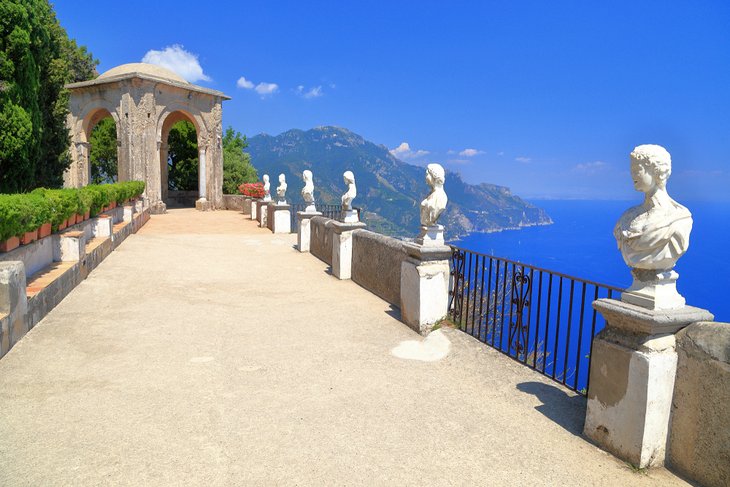
Past the church of San Francesco, which has a Romanesque cloister, and the church of Santa Chiara, you'll find Villa Cimbrone. An avenue runs through its beautiful park to the Belvedere Cimbrone with incomparable views of the Amalfi coast.
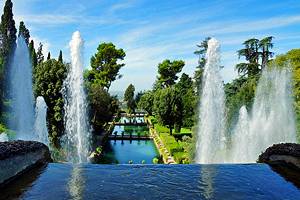
Stray from this promenade to find flower gardens tucked behind walls and a wide-ranging collection of bits and pieces - statues, fountains, columns, temples, well heads, and architectural elements - that were brought here from ruins in this area and beyond. These were collected by the English lord who bought the villa in 1904, and incorporated into the gardens in idiosyncratic ways in the midst of the greenery and flowers.
Address: Via Santa Chiara 26, Ravello
Find the Best Beach
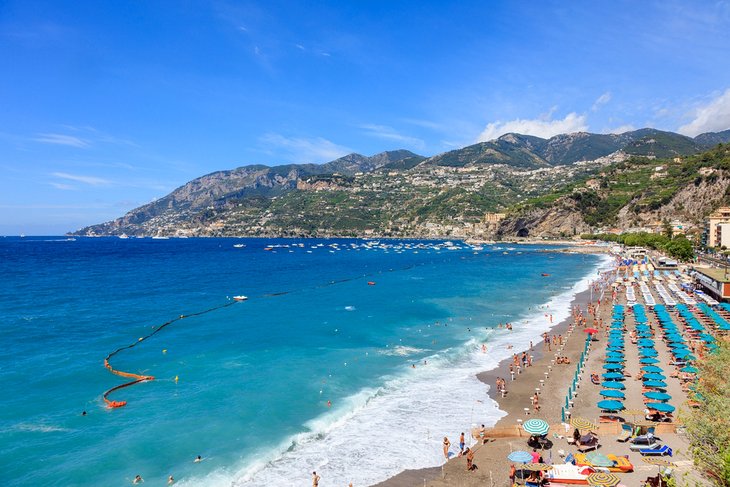
With more than a dozen popular beaches and more hidden in coves that are only accessed by boat, the Amalfi Coast has a wide variety of places to swim and sun. Take advantage of this abundance of riches by finding the beach that's right for you.
If you want to go for the glam, choose the Marina Grande at Positano. Celeb spotting is a favorite pastime here, and you'll feel right at home in that new designer bathing suit. Or you can just sit and watch the parade – through big sunglasses, of course. Not quite as chic, but with the same vibe, rent your lounger at Amalfi's Marina Grande.
Because of the coast's orientation and irregularities, most beaches only get morning sun. For sun in the afternoon, head for Arienzo Beach in Positano or the beaches in Cetara, Maiori or Vietri sul Mare. Families looking for sand and shallow water for kids to play in should choose the long, wide beach at Maiori, one of the few with sand instead of pebbles.
For scenery while you sun, head for Erchie Beach, under a pretty fishing village with a medieval tower. You'll find another postcard-worthy scene at Marina di Cetara, and – especially at sunset – at Gavitella beach, with colorful Positano as a backdrop, and islands rising from the sea at the horizon.
Explore the Amalfi Coast by Boat
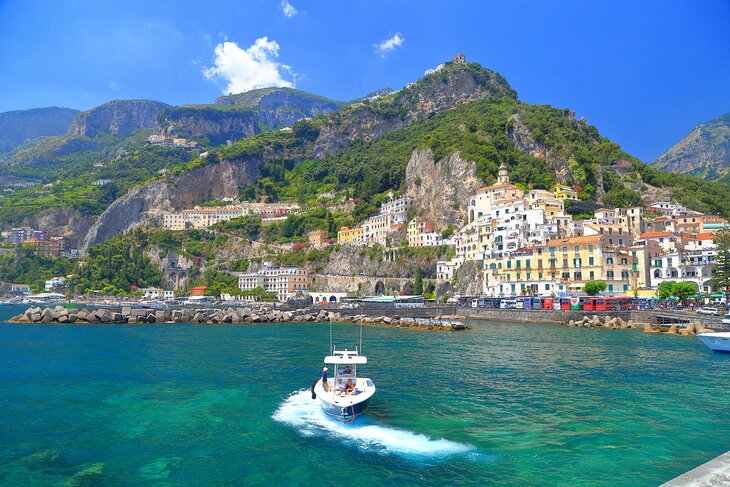
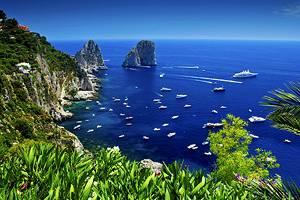
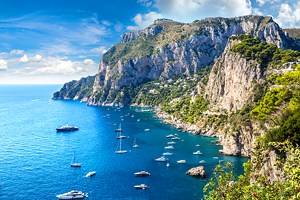
While the views from almost anywhere on the coastal route are breathtaking, you'll get a whole new set of views when you see this craggy coast from the water. Villages seem to hang in mid-air, as though glued to the rocky cliffs. Tiny golden-sand beaches hide between rocky headlands carved with sea caves.
If you take our advice and travel between towns by Travelmar or NLG ferries, you'll get a good look at much of the coast, but there are more ways to explore the tiny beaches and sea caves at close range. Sightseeing cruises beginning in the major towns include sailing and motor boat tours, some with stops for beaches and snorkeling.
At Positano's Marina Grande, you can rent kayaks from Kayak Positano to explore the grottos and beaches at close range and on your own. Or you can join a three-hour guided kayak tour, sunset or sunrise paddling trips, or a full-moon tour at night.
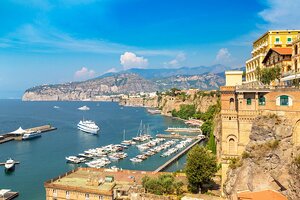
The Amalfi coast is also a good base for day-trip cruises to the island of Capri or to Sorrento, on the opposite side of the Amalfi peninsula.
Vallone delle Ferriere
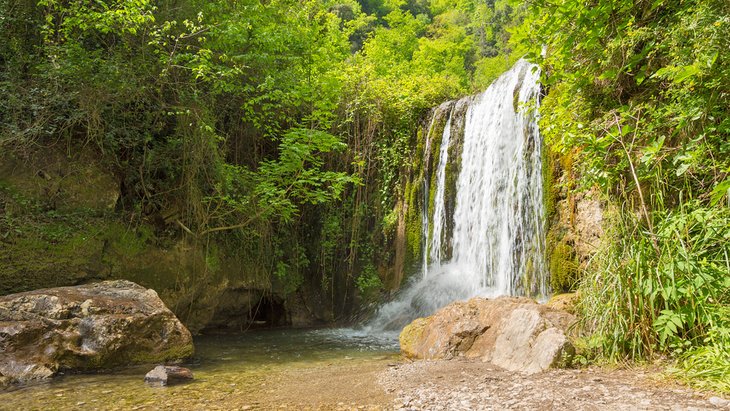
For a break from beaches, one of the unique things to do on the Amalfi coast is to hike through the deep valley named for the medieval foundries, whose ruins you can see here. The trail begins inland in Pontone, off the road to Ravello, and ends six kilometers later in Amalfi. As you approach the town, you'll pass water mills that once powered Amalfi's paper-making industry.
The trail is quite easy, descending through forests of chestnuts and past stands of rare ferns, alongside a stream that drops in several waterfalls. The steep ridges at each side protect the valley from the worst winter winds and from the intense summer heat, creating a temperate and humid microclimate where rare plants flourish, some dating from the pre-glacial era. The central part of the trail runs through a protected nature reserve.
Salerno
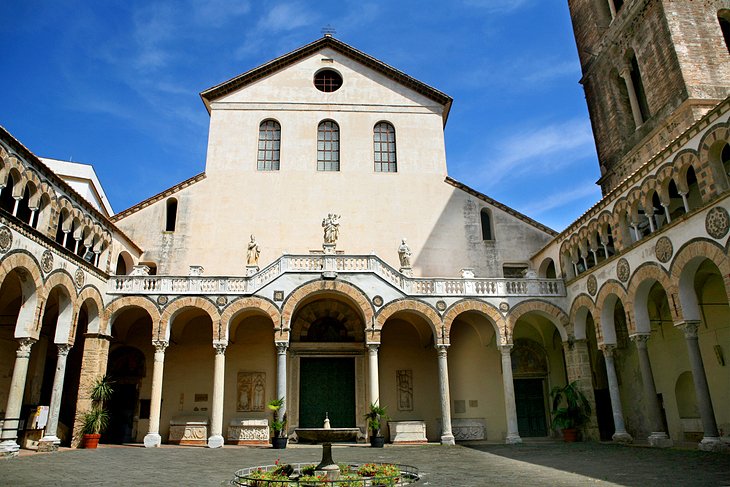
At the eastern end of the Amalfi peninsula where the hills drop steeply into the Gulf of Salerno is the site of the ancient Salernum, now Salerno. Salerno became the seat of the Fascist government during World War II. Subsequent bombing and the Allied invasion in 1943 left only the partially ruined Castello di Arechi on the hill northwest of town; a few arches of a Roman aqueduct; and the cathedral, the only sight of any particular interest to tourists.
Built about 1080 and restored in 1768 and again after 1945, the Cathedral of San Matteo houses the remains of the Evangelist Matthew, brought here from Paestum, and one of Italy's most important holy relics. St. Matthew is pictured in a mosaic above the doorway; the magnificent bronze doors were made in Constantinople in 1099.
A flight of steps leads up to a courtyard with 28 columns from Paestum and 14 sarcophagi, also scavenged from the ancient site. In the nave, be sure to notice the two 12th-century pulpits with detailed mosaic decoration and nearby, an Easter candlestick in a similar style.
At the end of the north aisle is the ornate tomb of Margaret of Anjou (1412), and in the chapel to the right of the high altar is the tomb of Pope Gregory VII, who died in Salerno in 1085. The choir screens and floor are decorated with mosaics. After visiting the cathedral, the Museo Archeologico has some local antiquities worth seeing if you don't plan to travel on to Paestum.
Address: Piazza Alfano I, Salerno
Walking the Sentiero degli Dei
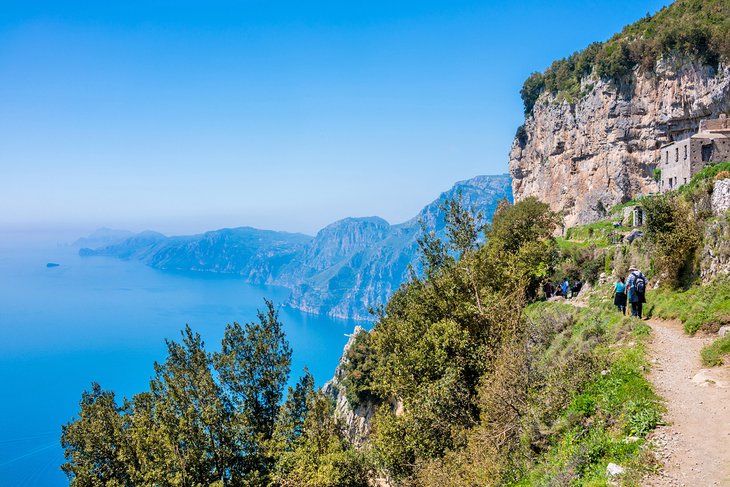
Another way to see this coast, and the best for those in good physical condition who have the time, is on foot or a combination of walking and bus travel. Walking paths, stone stairways, and ancient mule paths wind along the coast, and you'll walk through forests, lemon groves, wildflowers, and tiny villages, with almost constant sea views. At any point, you can stop to take pictures, eat a picnic, or just absorb the view.
The most beautiful section of trail - and that's a tall order here - is the Sentiero degli Dei, Footpath of the Gods, on the western end from Positano. Several outfitters will arrange lodging and luggage transfers for independent walkers, or you can join a week-long group walking tour.
Driving the Amalfi Coast
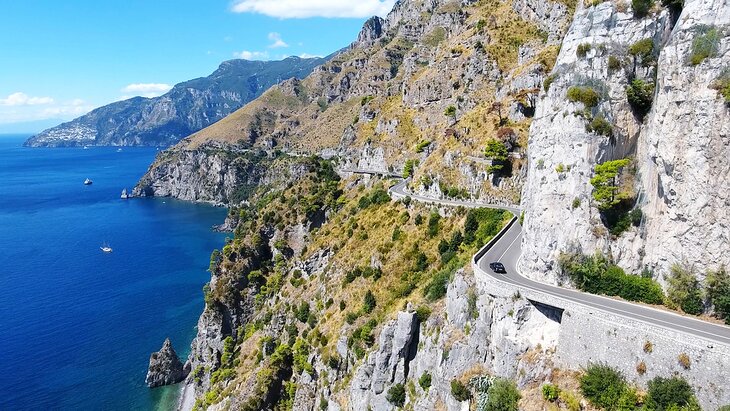
Since 2022, in an effort to relieve the traffic jams that clog the narrow route along the Amalfi coast, an alternate-day ban has been established for all rental cars. During the busiest tourist seasons, cars with a license plate ending in an odd number can only drive Amalfi Coast Drive on even-numbered days, and vice versa.
The regulations are in effect Easter Week, April 24 to May 2, the entire month of August, and weekends from June 15 through September 30. You can drive to and from your hotel (show your registration for a registered lodging) on arrival and departure days, and any day between 6pm and 10am.
Map of Attractions & Places to Visit on the Amalfi Coast
More Related Articles on PlanetWare.com
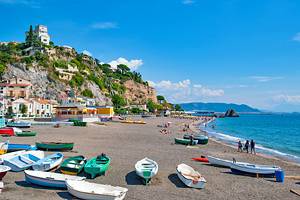
Places to Visit near the Amalfi Coast: The Amalfi coast shares a peninsula with the charming town of Sorrento, which has ample places to stay and makes a good base for exploring this entire area. You can also take day trips to the fabled island of Capri from either Amalfi or Sorrento, or bask on some of the Amalfi Coast's best beaches.
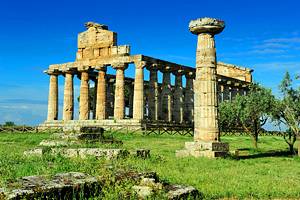
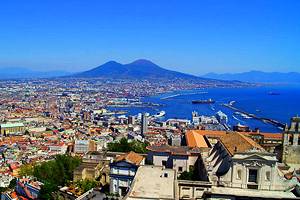
Where to Go Next: Following the coast of the Tyrrhenian Sea south of Salerno are the ancient Greek sites of Paestum. North of the Amalfi Coast, overlooking its bay, is the lively city of Naples, a good base for visiting the ancient cities of Pompeii and Herculaneum.