11 Top-Rated Tourist Attractions in Bari
Although it's a leading commercial and industrial center, the busy port city of Bari has much to charm the tourists who pass through it on their way to Greece or ports on the eastern Adriatic. It was of surprisingly little importance in ancient times, and remained a backwater until it was captured by Robert Guiscard in 1071 and used by the Byzantines as their main base in southern Italy. From 1324, it was an almost independent fief, becoming part of the kingdom of Naples in 1558.
Today, Bari seems almost like two separate towns, with its picturesque old quarter and historic attractions crowded into a maze of narrow streets at the end of a peninsula, and the spacious new town of broad avenues stretching to its south.
Busy Corso Vittorio Emanuele II separates the new town from the old. Among the places to visit around Bari are several Adriatic beaches that are less crowded and less commercialized than those farther to the north, around Rimini.
Discover more things to see and do with our list of the top attractions in Bari.
See also: Where to Stay in Bari
- 1. San Nicola
- 2. Bari Vecchia (Old Town)
- 3. San Sabino
- 4. Castello
- 5. Lungomare Nazario Sauro: A Seafront Promenade
- 6. Borgo Murattiano
- 7. Teatro Petruzzelli
- 8. Piazza Mercantile & Piazza del Ferrarese
- 9. Altamura
- 10. Egnazia
- 11. Pinacoteca Provinciale (Provincial Art Gallery)
- Where to Stay in Bari for Sightseeing
- Bari, Italy - Climate Chart
1. San Nicola
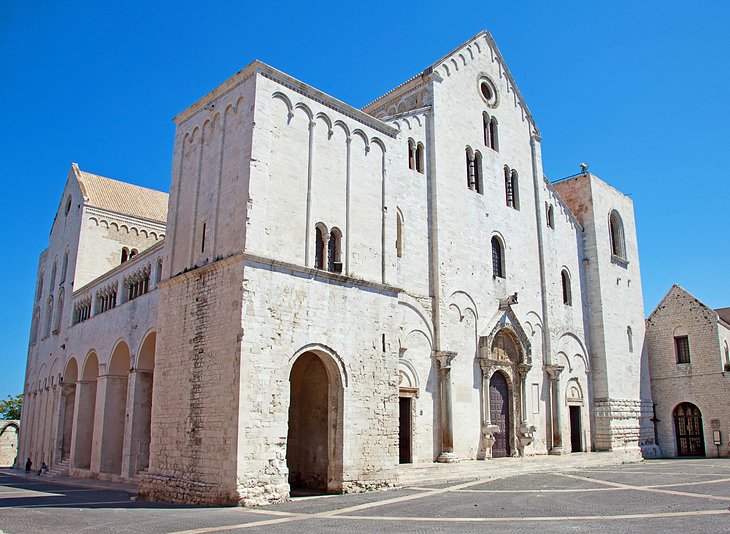
By far the most popular tourist attraction in Bari is the basilica, which was built to house the relics of St. Nicholas. At first look it is plain, massive, and somewhat forbidding, but a closer look reveals endearing details in the carvings around its portals, where stone animals seem to guard the entrances.
The large pilgrimage church was begun in 1087 and completed in 1197, one of the finest achievements of Romanesque architecture in Apulia. Inside, above the high altar, is a 12th-century tabernacle, and to the right of the altar is Madonna with Saints by Vivarini, painted in 1476. In the apse is a marble bishop's throne and the 16th-century tomb of Bona Sforza, wife of King Sigismund II of Poland and last duchess of Bari.
The crypt contains a silver altar from 1684, underneath which is a vault containing the remains of St. Nicholas. The saint's remains came to Bari from their original shrine in Myra, now part of Turkey, when that city fell into Saracen hands. They were stolen, and after much contention by Venice, which also wanted them, they were brought here on the rather flimsy justification that the saint had supposedly chosen Bari as his burial place while on his way to Rome.
Address: Largo Abate Elia 13, Bari
Official site: www.basilicasannicola.it
2. Bari Vecchia (Old Town)
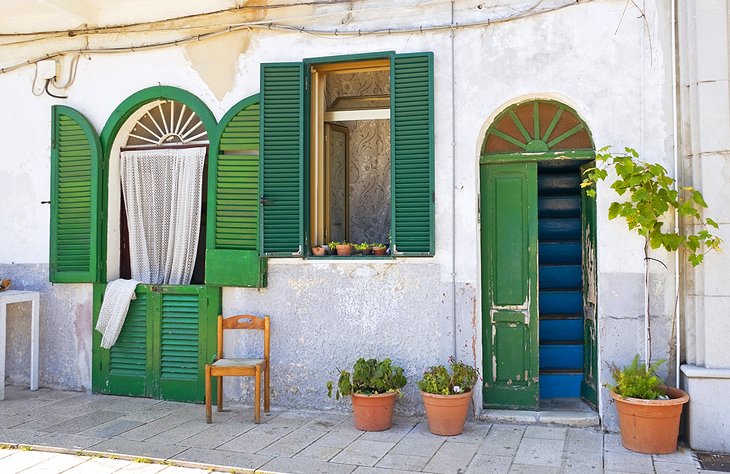
The narrow streets of the old town, some of them more like alleyways, weave into an atmospheric labyrinth as they twist and turn through the narrow peninsula at the northern end of Bari. Among its picturesque old houses are several dozen churches and even more shrines hidden in its walls and tiny squares. It's easy to get lost, but the area is small enough that you're sure to find your way out quickly or come to the cathedral or San Nicola.
One of the favorite things to do in Bari is watching the women make orecchiette in the small Via Arco Basso. Sitting at little tables, they shape tiny pieces of pasta into the traditional "ear" shapes. You can buy them here, along with bags of taralli (delicious small crackers designed for dipping), sun-dried tomatoes, and other local artisanal products. To find this street, ask for the "Strada delle Orecchiette".
3. San Sabino
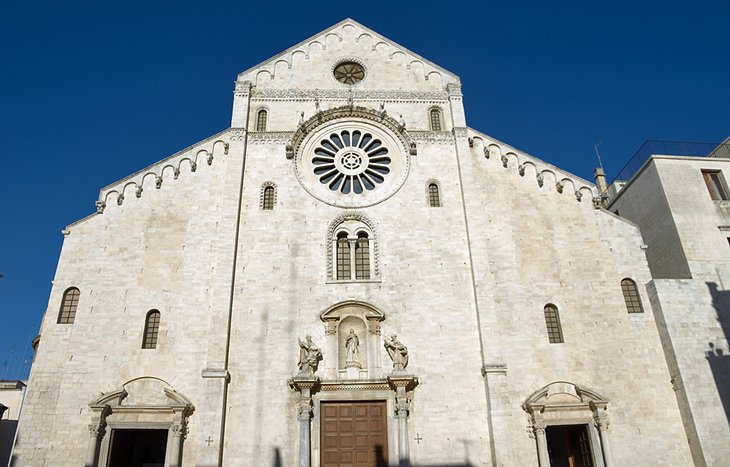
Attracting less attention than the church of San Nicola, but just as interesting, is the cathedral church of San Sabino, which has important remains of Norman ornamentation. Begun after the 11th-century Byzantine cathedral on this site was destroyed by William I of Sicily in 1156, it was completed at the end of the 12th century.
Look for traces of the earlier church's floor in the transept. Much of the interior has been restored to its Apulian Romanesque appearance, removing the Baroque "modernizations" and rebuilding the beautiful pulpit. Inside the church are the remains of Saint Columba and relics of other saints. In the crypt is an elaborately decorated painting of the Madonna and the relics of Saint Sabinus, brought to Bari in 844 from Canosa after its sacking by Saracens.
Adjoining the crypt, and easy to miss if you're not looking for it, is the Succorpo della Cattedrale di Bari, archeological excavations under the cathedral revealing layers of local Greek, Roman, and Byzantine history. Excellent English signage explains the finds, which include a marble slab with Greek inscriptions from the second century BC, and a tiny chapel and altar.
Most outstanding is a paleo-Christian mosaic floor by Timoteo featuring detailed flowers, animals, and sea life. You can easily examine the artistry through the glass floor that covers it. A small section of an original Roman road has also been uncovered.
Address: Piazza dell'Odegitria 1, Bari
4. Castello
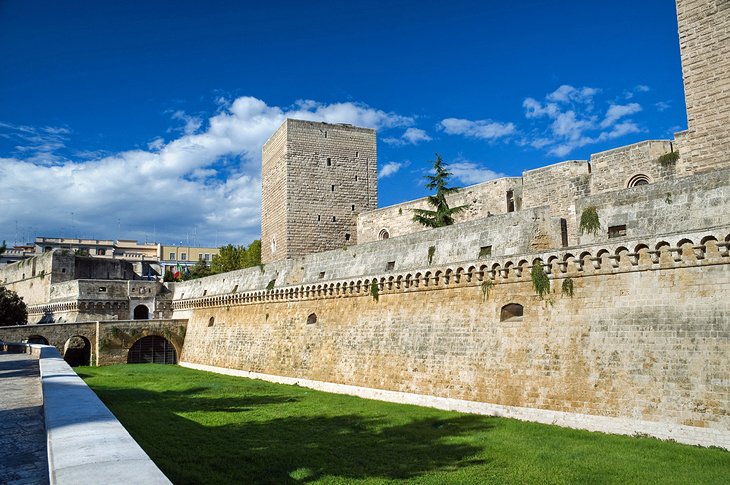
On the west side of the old town is the Castello (castle), originally a Byzantine-Romanesque building, reconstructed by Frederick II in 1233 in Norman-Swabian style. Bona Sforza converted it into a palace in the 16th century, adding the bastions and corner towers above the moat. Later, it was used as a prison and signal station.
Two towers of the Norman structure are still here. The building now houses an interesting museum with copies of Apulian-Norman sculptures and temporary art exhibitions.
Address: Piazza Federico Di Svezia 2, Bari
5. Lungomare Nazario Sauro: A Seafront Promenade
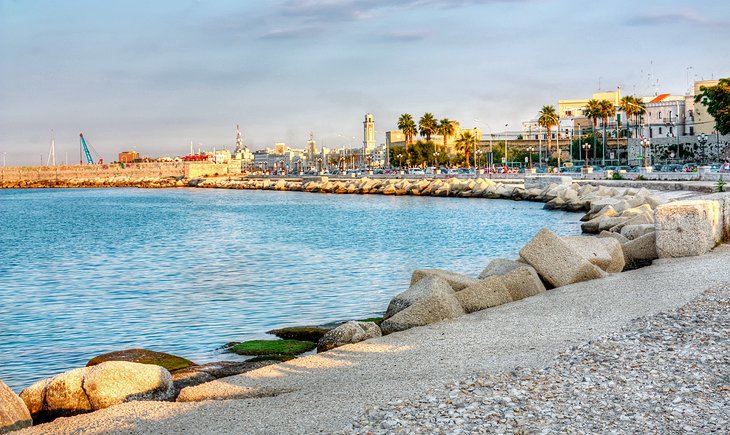
The Lungomare Augusto Imperatore follows the east shore of the old town to the Mole San Antonio, where a small fort has been turned into a gallery for modern art. Beyond this is another shore promenade, Lungomare Nazario Sauro, a magnificent seafront terrace running along the old harbor, the Porto Vecchio.
Although the boats in the harbor are colorful at any time of day, one of the most interesting things to do here is arrive in the morning to see fishermen unload and sell their catch at the pier.
6. Borgo Murattiano
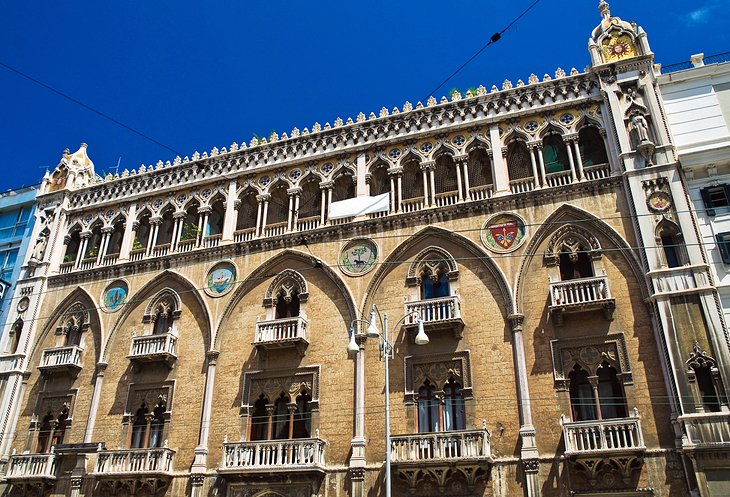
Borgo Murattiano is the business and commercial center of Bari, separated from the old town by the long, broad Corso Vittorio Emanuele II, which was laid out in 1813. Its streets, unlike those in the old quarter, are straight and in an orderly grid, lined by elegant buildings, many of which date to its early 19th-century origins. Others reflect the styles that followed, especially Art Nouveau, called Liberty in Italy, popular at the turn of the 20th century.
At the harbor end of Corso Vittorio Emanuele II is the Liberty-style Margherita Theater; about halfway along at Piazza della Libertà stands the Municipal Theater and the 19th-century Prefecture Palace in Rococo style. Near the far end is the Venetian-Gothic Fizzarotti Palace.
On pedestrianized Via Sparano, a fashionable shopping street, are the Art Nouveau (known as Liberty style in Italy) Mincuzzi Palace and the church of San Ferdinando. Tree-lined Corso Cavour has more Liberty style buildings.
7. Teatro Petruzzelli
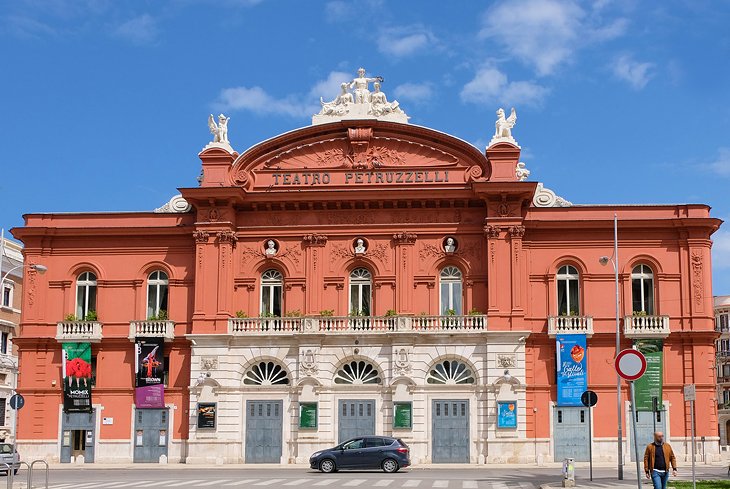
The magnificent theater, the fourth largest in Italy, was completed in 1903 as an opera house and concert hall, and has hosted some of the great Italian and international performing artists, including Luciano Pavarotti, Rudolf Nureyev, Ray Charles, Liza Minnelli, and Frank Sinatra.
In October of 1991, Teatro Petruzzelli was completely destroyed by fire. It was rebuilt exactly as it had looked originally, complete with its five tiers of boxes and their dazzling decorations. It re-opened in 2009 with the Orchestra of the Province of Bari performing Beethoven's Ninth Symphony. Visiting it today, you would never guess that this is not the original 1903 theater.
8. Piazza Mercantile & Piazza del Ferrarese
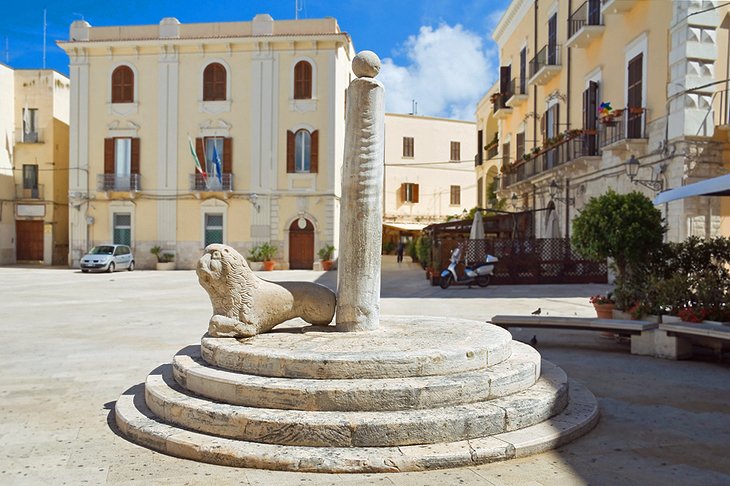
At the edge of Borgo Vecchio is the pleasant Piazza Mercantile, whose plentiful sidewalk cafés and restaurants are popular local meeting places. Not so pleasant was the fate of petty criminals and debtors who in the Middle Ages were tied to the Colonna della Giustizia, a column in the corner of the piazza, for public ridicule. A much-worn stone lion stands beside the column.
Piazza Mercantile blends at one end into Piazza del Ferrarese, a broad space overlooking the marina and the sea. Here, you'll find the triple apse of the Romanesque Vallisa church, one of the city's oldest, and behind it, the remains of the Appia Traiana, a Roman road built in the early second century. Like Piazza Mercantile, Piazza del Ferrarese is a popular gathering space, with cafés and restaurants with outdoor tables.
9. Altamura
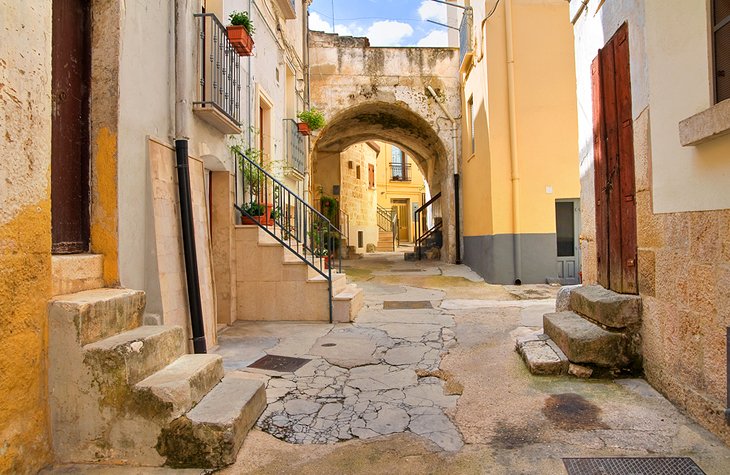
South of Bari across the Murge plateau, the lovely town of Altamura is still partly surrounded by its old walls. The imposing cathedral was built by Frederick II in 1231, with later modifications after an earthquake in the 14th century, and a complete reversal of the interior in the 16th century.
The beautifully carved doorway on the main façade, from the 14th or 15th century, is the cathedral's star attraction. It is the most intricately carved portal in Puglia, and one of the finest in Italy, filled with fine detail, as multiple biblical scenes are represented in a very small space. In the tympanum, the Virgin and Child are shown with two kneeling angels, and below is an unusual Last Supper in infinite detail.
Inside, the beautifully carved choir stalls, bishop's throne, and pulpit are from the 16th century, as is the unusual polychrome stone nativity scene in the setting of a cave. Although the cathedral is well worth the trip to Altamura, the town itself is delightful, with picturesque stone streets and archways.
10. Egnazia
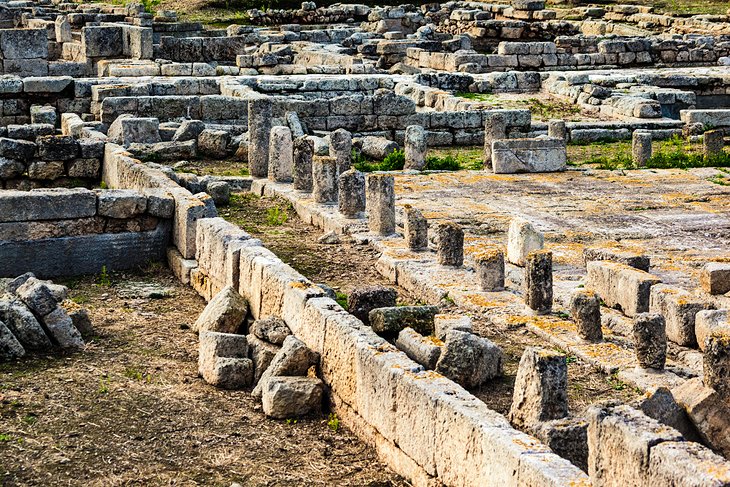
The ancient city of Egnazia, southeast of Bari, dates back to the 13th century BC, when Bronze Age peoples settled here. Like other villages along the Adriatic shore, it was prey to every invader from the east, until it finally became a Roman city at the close of the third century BC. Begin at the excellent museum for an overview; although the text is all in Italian, the historical sequence is clear, and the exhibits include materials found in excavations that bring the site to life.
The archaeological area, where signage is also in English, is in three parts: the city, necropolis, and acropolis. Walls built by the original settlers are still there, as are remnants of ancient Greek and later Roman civilizations.
The Roman period was when the city flourished as an important port on the Traiana Road linking Rome to Brindisi, but it was finally abandoned in the 10th century after successive sacking by Visigoths, Saracens, and Turks. Parts of the Traiana Road, amphitheater, forum, and two Christian basilicas remain from the Roman era.
Address: Strada Provinciale Savelletri Capitolo, Bari
11. Pinacoteca Provinciale (Provincial Art Gallery)
Along the Lungomare Nazario Sauro is the Palazzo della Provincia, which contains the Pinacoteca Provinciale, well-lighted modern galleries showing works from the 11th to the 19th centuries. There is a good collection of paintings by southern Italian and Tuscan artists, mainly from the 19th-century, including works of the Macchiaioli school of Italian impressionists.
Also in the collections are Venetian paintings from the 15th and 16th centuries and medieval statuary from Apulian churches that have been closed. You'll find works by Paolo Veronese; Tintoretto; and Giovanni Bellini, whose Martyrdom of St. Peter is one of the museum's highlights.
Address: Via Spalato 19, I-70100, Bari
Where to Stay in Bari for Sightseeing
Although you could see a few of the highlights during one day in Bari, you should stay at least one night to savor the lively old town at its best. We recommend these charming hotels and guesthouses, within easy reach of the main tourist attractions:
Hotels in Bari:
- For four-star luxury only steps from the old town, IH Hotels Bari Oriente has a lovely roof garden and internal courtyard, and serves a complimentary breakfast.
- Also close to the old town, the Palace Hotel has affordable rates, and rooms overlooking San Nicola Basilica and the castle.
- On a quiet street adjacent to the old town, the lovely Palazzo Calo has a rooftop terrace.
- Not as close to attractions (it's about a half-hour walk to the Old Town), but convenient for those arriving by car because it has inexpensive secure parking, is the Mercure Villa Romanazzi Carducci. The hotel has an outdoor pool, a spa, and an in-house restaurant.
B&Bs in Bari:
- La Muraglia B&B, in the Old Town, just off the seafront promenade and close to the main attractions, has large apartments with balconies and a lovely rooftop terrace for guests.
- At Il Trespolo Degli Angeli, hidden among the winding lanes in the heart of the Old Town, you can have breakfast on the terrace overlooking views of Bari.
Bari, Italy - Climate Chart
| Average minimum and maximum temperatures for Bari, Italy in °C | |||||||||||
| J | F | M | A | M | J | J | A | S | O | N | D |
| 12 5 | 13 5 | 15 7 | 18 9 | 22 13 | 26 17 | 28 19 | 28 19 | 25 17 | 21 13 | 17 9 | 14 6 |
| PlanetWare.com | |||||||||||
| Average monthly precipitation totals for Bari, Italy in mm. | |||||||||||
| 51 | 58 | 53 | 48 | 36 | 33 | 28 | 38 | 61 | 64 | 53 | 64 |
| Average minimum and maximum temperatures for Bari, Italy in °F | |||||||||||
| J | F | M | A | M | J | J | A | S | O | N | D |
| 54 41 | 55 42 | 59 44 | 64 48 | 72 55 | 78 62 | 83 66 | 83 66 | 78 62 | 70 55 | 63 48 | 56 44 |
| PlanetWare.com | |||||||||||
| Average monthly precipitation totals for Bari, Italy in inches. | |||||||||||
| 2.0 | 2.3 | 2.1 | 1.9 | 1.4 | 1.3 | 1.1 | 1.5 | 2.4 | 2.5 | 2.1 | 2.5 |
More Related Articles on PlanetWare.com
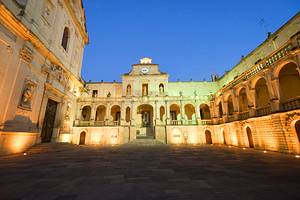
Discovering Puglia: After seeing Bari, you may want to see the attractions of Lecce, Puglia's other major city. And don't forget that Puglia's Adriatic coast is one of the top beach destinations in Italy. In fact, it is one of the hottest European summer resort destinations.
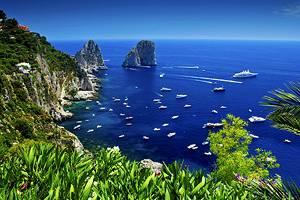
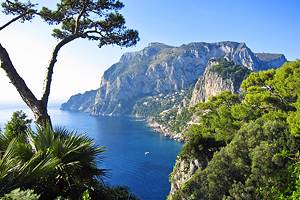
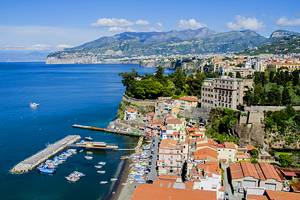
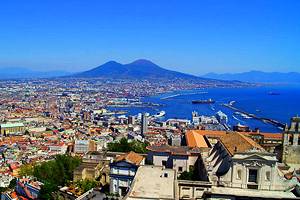
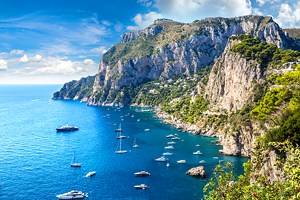
Exploring More of Southern Italy: From Bari, it's about 3.5 hours by train to Naples, where our guides to Pompeii and Sorrento will help you plan day trips. It's well worth planning on spending a few nights in this area. From here, you can also see the highlights of the Amalfi coast or take a boat excursion to the beautiful island of Capri.