

10 Naples, Italy Attractions And Destinations To Visit For A Fun Day Trip
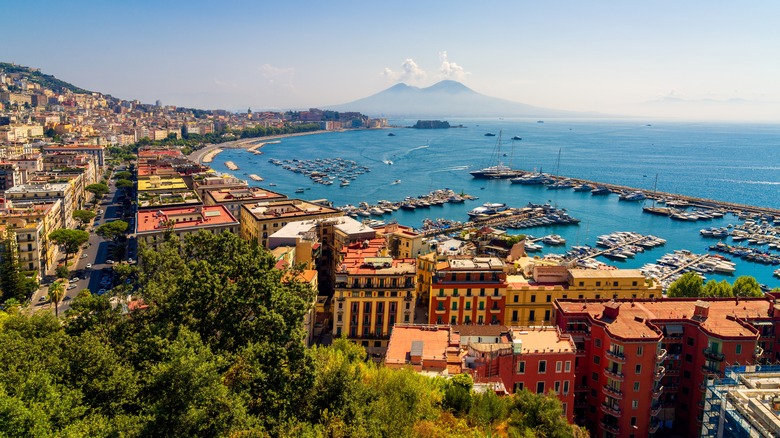
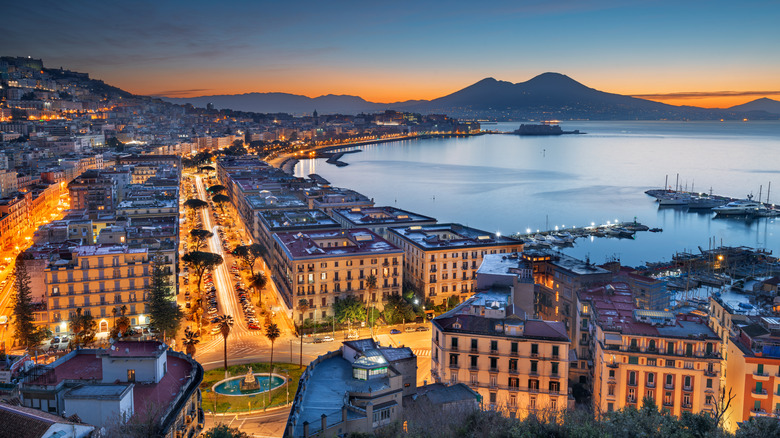
Naples, Italy — despite TikTok's attempt to portray it as dirty and dangerous — is a rare city where centuries of history, lively street culture, and stunning coastal scenery exist mere steps from one another. It's a place where travelers can spend the morning exploring ancient ruins, the afternoon sipping espresso at Bar Gianni, and the evening chowing down on what many consider the best pizza on Earth.
In this guide, we'll introduce you to 10 incredible local attractions and day trip destinations that can keep you busy from morning until night — whether you want to explore Naples proper or take advantage of other sites in Southern Italy. Some of these wildly impressive experiences are literally under your feet in Naples (you'll understand by the time you're done reading, we promise), while others invite you to visit nearby islands and archeological wonders.
In fact, within an hour or two of your hotel or apartment rental, you can reach world-famous villages, royal palaces, volcanic parks, and glamorous Italian resort towns — all within easy reach. As such, this round-up was specifically designed to help you shape the perfect day trip from Naples, whether you want to check out internationally famous icons or hit up the off-the-beaten-path spots.
Pompeii, Herculaneum, and Mount Vesuvius
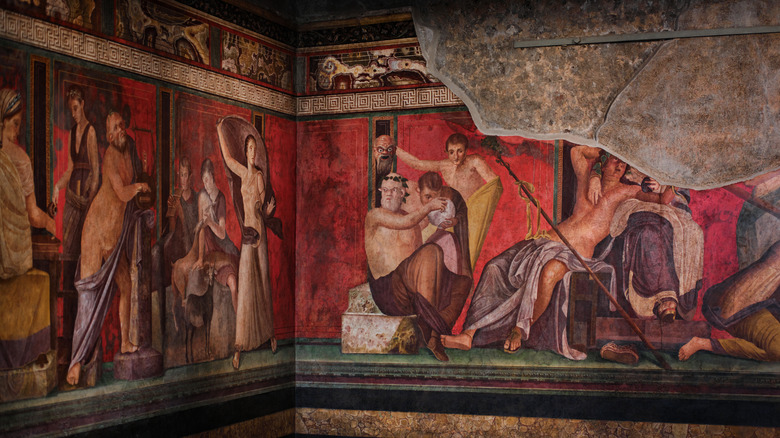
For travelers fascinated by history, Pompeii, Herculaneum, and Mount Vesuvius are a notable trifecta. Under 30 minutes from Naples by car, Pompeii offers a shockingly well-preserved look at daily life in 79 AD, on the actual day Mount Vesuvius erupted, no less. During the infamous August eruption that ultimately took the lives of about 16,000 people, the wind was blowing in an unusual southeastern direction, which sent volcanic ash directly into Pompeii. This ash basically "flash froze" the city, if you will; as local residents suffocated under the influx of volcanic ash, their bodies were preserved in exact positions, resulting in its now-legendary body casts.
Meanwhile, in nearby Herculaneum — from which most residents fled Vesuvius — visitors should check out the House of the Wooden Partition, along with various residential frescoes and murals that are still incredibly vibrant. Much of the detail of Herculaneum's architecture survived thanks to the way the pyroclastic surge engulfed the town.
Then, end your day trip at Mount Vesuvius itself. Just about half an hour from both famous towns, this is the volcano responsible for their collective destruction. The geology of Mount Vesuvius, which is currently in a state of "active rest," is fascinating. Hike to the crater to get an idea of how Mount Somma and Mount Vesuvius melded to create the volcano's current form. If time allows, the Vesuvius National Park museum offers a look at additional volcanic memorabilia. Visitors will discover details about native flora and fauna and information about how the volcano, which last erupted in 1944, has changed over time.
Amalfi Coast Drive
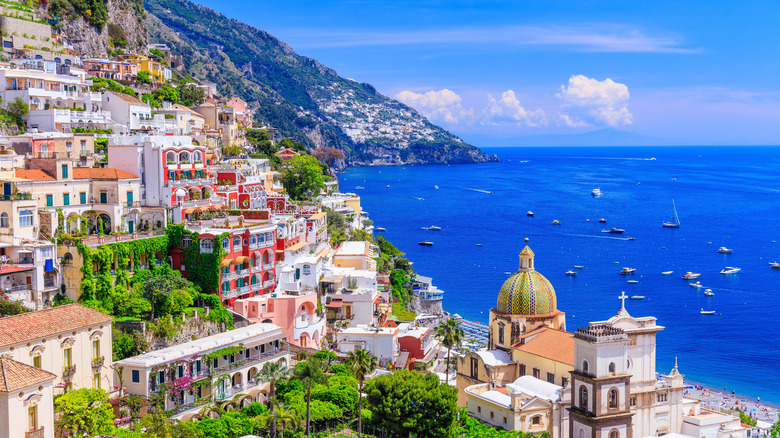
Few day trips from Naples are as cinematic as Italy's Amalfi Coast. The drive alone will make you feel like you're starring in your own classic film: dramatic cliffs, stunning hillside towns, and the sparkling Mediterranean come together for an amazing experience. To add a luxurious touch to your excursion, rent a vintage car for the day — think Grace Kelly and Cary Grant on the French Riviera in Hitchcock's "To Catch a Thief."
Positano, arguably this area's most well-known town, is the perfect first stop for your day on the Amalfi Coast. While you could spend the whole day just taking in the picture-perfect views here, it's also worth checking out local shops like Casa Mastro and Absolute Positano, or, if time allows, renting a luxury boat for a few hours. The coast's namesake, the town of Amalfi, is another must-see. Here, stop by the Piazza Duomo, constructed in the 13th century, to take photos and soak up local history. This plaza has grown and changed with every century: 1760 saw the addition of its famous fountain, while the cathedral's Romanesque exterior was finished in 1891. And, as recently as 2020, the Town Hall underwent a major renovation. Stop by Michelin-starred Sensi for lunch before heading to your third town.
In Ravello, the one thing you must do is visit a limoncello producer. Cello, a popular manufacturer, has a proprietary distilling method that they've kept secret for more than two decades. Alternatively, Limoncello Factory Mansi Daniele, located in an unassuming alley, is another great option. This decadent day trip from Naples should take eight to nine hours. If you choose not to drive yourself in a vintage Fiat, there are also private drivers available for the exact route we've outlined.
Capri Island

For many travelers, Capri isn't just a day trip, but the day trip when staying in Naples. The island has long been glamorized, particularly during the 1970s when famed photographer Slim Aarons shot a series of iconic images there. However, even before that, it was a hotspot for mid-century celebrities like Sophia Loren and Audrey Hepburn. Today, the easiest way to get from Naples to Capri is to book a 35- to 40-minute ferry ride. Once on the island, the classic first stop is the Blue Grotto — a sea cave famous for its glowing blue light. It is important to note that this experience sometimes gets mixed reviews because of the wait time, as it is not uncommon to wait for an hour to get five minutes inside. Those who brave the wait, however, are in for a visually arresting experience.
Whether or not you visit the Blue Grotto, there are plenty of other things to do during your glitzy day on Capri. If you want to do some exploring, check out the local hiking trails or visit the Gardens of Augustus, where you can pay a minimal entry fee to enjoy the best views of the famous Faraglioni rocks. In addition to stunning views, you'll also get to explore the terraced gardens themselves.
If you're less interested in wandering Capri and more interested in living like a celebrity, book a daybed at one of the island's storied beach clubs — like Hotel La Palma's Da Gioia or Torre Saracena — which have been catering to discerning travelers since 1906. Note that making reservations in advance for these clubs is advisable. Capri is also known for its dining scene. Among the top players are Conca Del Sogno, Fontelina, and Ristorante Da Paolino.
Procida Island
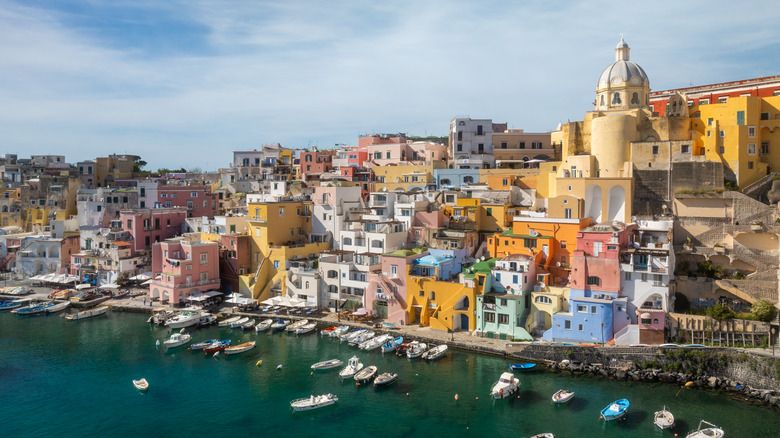
For travelers who want to experience the Italian version of island life without the high-society pressure that comes with visiting crowded Capri, Procida is the perfect escape. Like its glam counterpart, it's also an easy ferry ride from Naples — making it an ideal option for a relaxing day trip. Depending on which ferry you choose, you'll spend between 45 minutes to an hour onboard.
Once you reach this island of about 10,000 residents, head directly to one of its beautiful beaches. Chiaiolella Beach, sometimes referred to as Ciracciello Beach, is a great place to spend a day checking out local beach bars in between swims. Meanwhile, Pozzo Vecchio — often called the "Postman's Beach" thanks to its appearance in the popular Italian film "Il Postino" — is surrounded by postcard-worthy cliffs. The beach is also home to a restaurant called Anna Maria, where beachgoers can grab a bite.
One of the biggest draws for Procida day-trippers is its food, and travelers should make a point of having a seafood lunch before heading back to Naples. Voted Italy's Capital of Culture in 2022, Procida is known for its strong fishing industry. This means you can always find the catch of the day on menus throughout the island: think linguini with clams, grilled fish, and lemon-influenced dishes that directly tie into Procida's citrus groves. According to TripAdvisor, Portobello Restaurant, Re Ferdinando, and Da Mariano are among the top-rated restaurants on the island.
Napoli Sotterranea (Naples Underground)
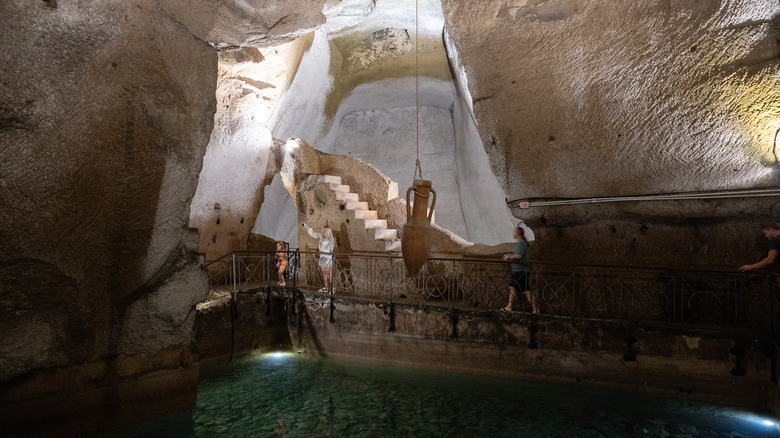
As mentioned in the intro to this guide, one of Naples's most intriguing adventures takes place below your feet. Just beneath the city's existing streets, the Naples Underground (Napoli Sotterranea) offers travelers the opportunity to explore a veritable maze of historic tunnels and caverns. Over a period of 2,400 years, these passageways have served a wide range of purposes — from functioning as aqueducts during the Roman Empire's reign to acting as World War II bomb shelters during Allied strikes. For a truly immersive experience, book a guided tour where you will discover layers of history you simply can't experience above ground — a must-see for anyone who enjoys archaeology and historical connections between eras.
Although exploring the underground network itself is typically a one- to two-hour excursion, it pairs perfectly with another major Naples attraction: the National Archaeological Museum of Naples. This museum houses an important collection of mosaics, sculptures, and artifacts from Pompeii and Herculaneum, as well as an impressive Egyptian area. Highlights include the "Hercules at Rest" sculpture, the "Zootopia Mosaics," which feature animals from pigs to Nile crocodiles, and a wide variety of everyday objects that will help you understand how Southern Italians lived in the first century before Mount Vesuvius erupted. If you are a history buff, you can easily fill a day with these two fascinating archaeological sites.
The Royal Palace of Caserta (Reggia di Caserta)
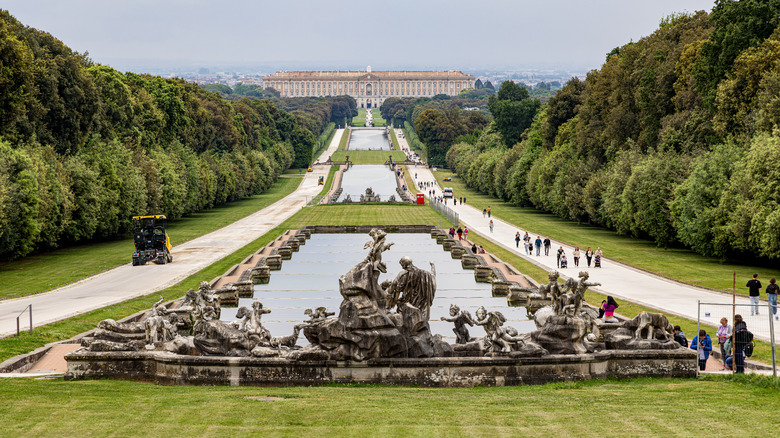
About 40 minutes outside Naples, Reggia di Caserta is one of Europe's most breathtaking palaces — yet it is often missed by travelers, especially when compared to more iconic destinations like Buckingham or Versailles. Often compared to the latter for its massive size and opulent interiors — it's actually more than three times as wide as Versailles — Caserta is a must-see for travelers looking to live like royalty for a day during their Naples getaways. And, as another bonus, in addition to being bigger than rival Versailles, it also tends to be much less crowded.
There are several ticket options available, including self-directed audio tours and tours led by a guide. If you choose a guided tour of the palace, you'll visit rooms like the Court Theatre, the Palatine Library, and the Throne Room with a historical expert at the helm. The most immersive way to experience the Royal Palace of Caserta, however, is to book a private tour. Though this is the most expensive option, you will get extra time in each room and additional insight into the Bourbon dynasty at the height of their power. It would make a great gift for history lovers.
After you're done exploring the Baroque interiors, venture to the grounds of the palace during your daylong excursion. Spread out across roughly 11 acres, guests can check out expansive reflecting pools, secluded woodland areas, and beautiful fountains scattered throughout. Don't miss the wildly popular English Garden, a romantic, ornate affair commissioned by Marie Antoinette's sister and Caserta's own Queen Maria Carolina. Because the palace is connected to Naples by a direct local train, it's an easy day trip to plan.
Sorrento

Just across the gulf from Naples, Sorrento offers a relaxing respite for day trippers. Decidedly less metropolitan than Naples, the atmosphere here will remind you that you're on vacation. One of the best places to start is the Marina Grande (Large Marina) area, which is ironically smaller than its more bustling counterpart, Marina Piccolo (Small Marina). If you want to grab breakfast with a view of the marina's boatyard when you arrive, consider Ristorante Bagli Delfino, which boasts stunning views through plate glass windows. For travelers hoping to spend time sunbathing or swimming in one of Italy's best beach hideaways, note that Spiaggia Publicca, the only free public beach in Sorrento, is conveniently situated between the two marinas. Private luxury beach clubs like the Maya Beach Experience and Lorelei Beach Club are available, however.
Then, check out the city's historic center, known for its beautiful winding alleys and artisan workshops like Luigi Landolfi, where craftsmen make the inlaid wood wares for which Sorrento is known. Via San Cesareo is one of the historic district's must-see streets, with dozens of authentic shops and restaurants, including plenty of limoncello tastings.
In fact, one of the highlights of spending a day in Sorrento is visiting a lemon grove. Villa Beatrice Sorrento offers an excellent tour that educates visitors, while also allowing them to do multiple limoncello tastings. Something many tourists don't initially realize is that the feminiello di Sorrento lemon is unique from the Amalfi Coast's famous sfusato variety. While Amalfi's lemons are longer and more aromatic, Sorrento's are rounder and more acidic.
Spaccanapoli District
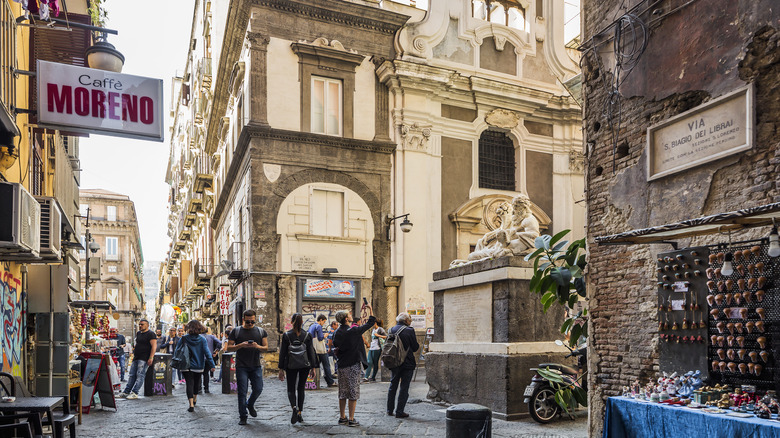
While there are certain neighborhoods in Naples tourists should avoid, Spaccanapoli certainly isn't among them. One of the most popular districts in the city, it's easy to spend an entire day meandering around and taking in everything the neighborhood has to offer. This vibrant thoroughfare — which literally means "Naples Splitter" — divides the city into two halves. Travelers will find a little bit of everything here, from food to crafts to centuries-old churches. There's even a story about a local puppetmaker who hangs his wares from a tree in Spaccanapoli, adding to the area's unique charm.
To start your day, grab a coffee from Palazzo Venezia Napoli — a lovely cafe housed in a former palace from the 1400s — before wandering to the nearby Via San Gregorio Armeno. There, you can shop for famous Neapolitan wood nativity scenes and other local treasures. For lunch, grab a classic margherita pizza or a plate of pasta from Trattoria Pizzeria Spaccanapoli. Alternatively, check out Spiedo D'Oro, which is known for its authentic Neapolitan menu.
Before heading back to your hotel, round out your day in Spaccanapoli by visiting Baroque churches like Chiesa del Gesù Nuovo and the Santa Chiara Monastery complex, known for the stunning, tropical-colored tilework on its columns. San Domenico Maggiore, an example of Gothic architecture, is another notable stop in the area. It holds numerous artistic treasures, including pieces by Caravaggio, Raffaello, Tiziano, and Andrea Vaccaro.
Ischia Island and Thermal Springs
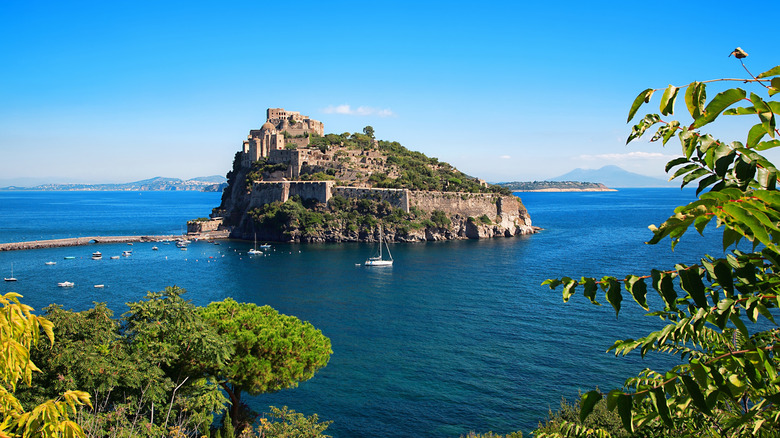
For travelers who want a day trip that feels simultaneously restorative and distinctly Southern Italian, Ischia Island — clocking in at a mere 18 square miles — is an excellent choice. Lusher and significantly less-traveled than Capri, this volcanic isle is known for its natural hot springs. Better yet, Ischia is only about an hour ferry ride from Naples, but the environment here is a far cry from the busy city streets.
One of the most popular destinations for tourists is Poseidon Gardens, a massive wellness center that offers nearly two dozen thermal and saltwater pools, 1,600 feet of shoreline, and a trio of on-site restaurants. The facility, originally founded in 1959, carries on thousands of years of hot springs tradition and became globally known in the 1970s after a major renovation. For a full-day experience, consider booking one of Poseidon's VIP terraces for your travel party.
Those who prefer exploration to rest and relaxation should head to Ischia Ponte, the island's oldest village, and traverse the stone footbridge to reach Castello Aragonese. With a history dating to the fifth century, this former fortress has been open to the public since the 1990s. Guided group and individual tours lasting about 90 minutes are available, but be aware that those who use wheelchairs may be unable to access certain sections of Castello Aragonese. Before you take your ferry back to Naples, grab lunch or dinner at one of the Castello's two restaurants — the Terrace Bar, which serves small plates and beverages, or the Monastery Cafeteria, which offers an expanded menu — or head back to town for Michelin-starred daní maison.
Paestum's Ancient Greek Temples

If you're ready for a change of pace from the Roman history that largely defines Italy, Paestum provides an extraordinary glimpse into the Greek culture that once flourished in Southern Italy, then known as "Greater Greece". Less than two hours south of Naples by car, this archaeological park is considered Italy's most well-preserved example of Greek architecture.
The anchors of the site are three monumental Doric temples that honor Hera and Athena. The Temple of Hera I is divided by two columns, leading historians to surmise that it may have originally been dedicated to both Hera and her husband, Zeus. Meanwhile, there is speculation that the builder of the Temple of Hera II may have collaborated with the architect who designed Zeus's temple at Olympia due to their structural similarities. The third temple, Athena's, is the smallest of the trio, but sits the highest on the hill.
In addition to exploring the temples, visitors to Paestum — once a major Greek hub on the Italian peninsula — can also see examples of still-colorful frescoes in the Tomb of the Diver and walk through the ancient city's amphitheater. Also quite well-preserved, the theater was built in the Roman style, but was on the smaller side, even at its pinnacle. The National Archaeological Museum of Paestum offers an immersive glimpse at daily life in the ancient city, with a collection of everyday items like pots and decor, as well as funeral artifacts.
Methodology
For this guide, we relied on official destination and attraction websites for factual information about various destinations, such as Mount Vesuvius Museum, Reggia di Caserta, Napoli Sotterranea, and Poseidon Gardens. Along with this, we also consulted various high-authority travel blogs and review platforms — such as TripAdvisor and local tour companies — that have extensive experience with day trips to the destinations featured here from Naples.
In terms of planning resources and expert recommendations, sources like Walks of Italy, Byways of Italy, Cultured Voyages, Exoticca, and Paul Passing Through all contributed valuable insights during our research to help readers confidently plan their perfect one-day excursions.