Tourist Attractions in Munich
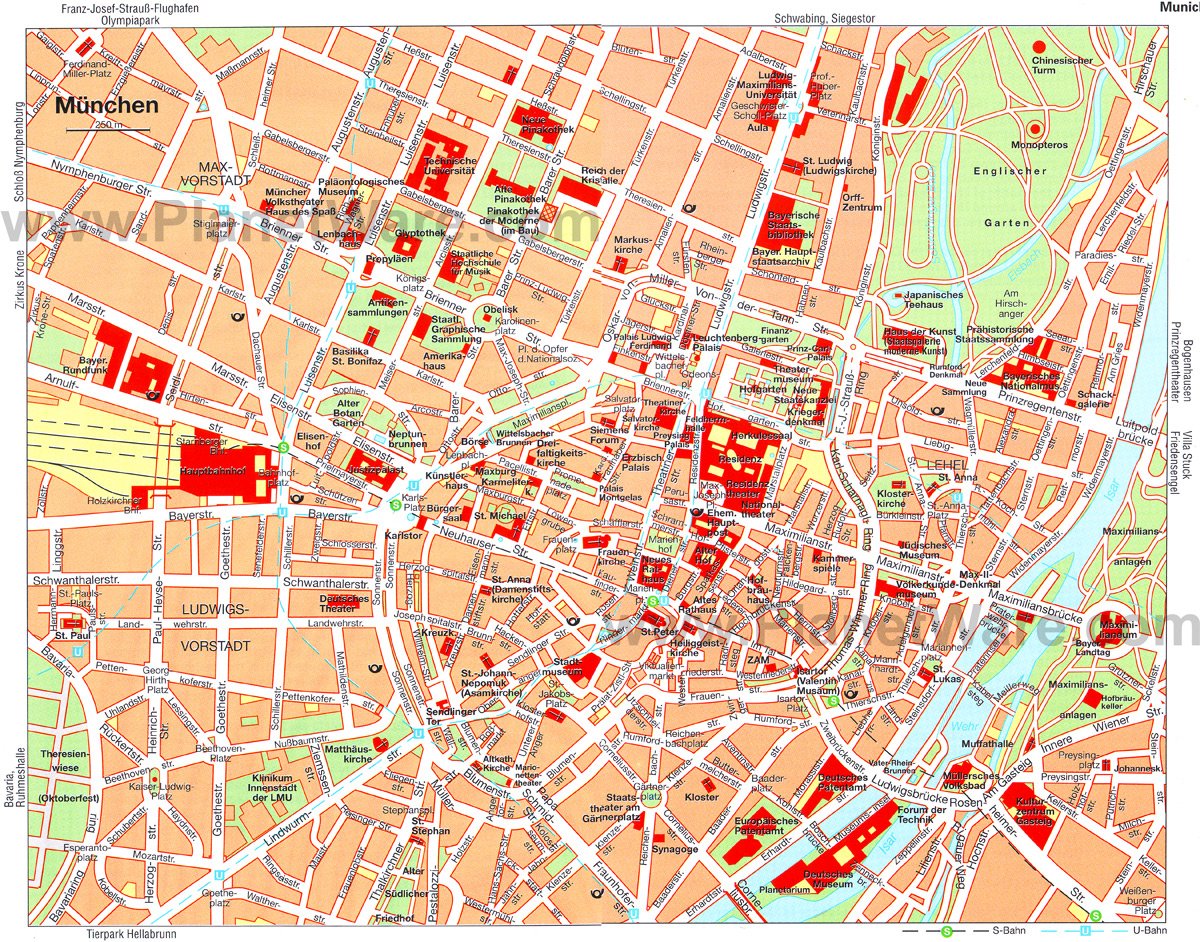
Munich, the capital of Bavaria and the third largest city in Germany, lies on the River Isar on the fringes of the Bavarian Alps. It began as a monastery, growing into a settlement when the Duke of Bavaria allowed the monks to establish a market at the crossing of the route from Salzburg and the river.
You can still follow the lines of Munich's medieval walls in a ring of curving streets and see three of its impressive old city gates. The focal point of Munich's historic inner city is the large, open square, the Marienplatz, where visitors and locals pause to watch the animated clock play out its legend two or three times daily.
Munich is a fun-loving city, known for its seasonal festivals and rich cultural calendar, so along with visiting the beautiful churches and outstanding museums and palaces, you should spend some time enjoying life with the locals at a festival, a colorful market, or over a slice of one of Munich's famous cakes in a konditorei.
Munich residents also enjoy their many public parks and gardens, in particular, the lovely 900-acre English Garden (Englischer Garten). Spend at least a few days exploring the city, planning your time with the help of this handy list of tourist attractions and things to do in Munich
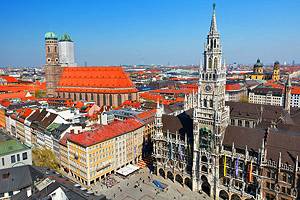
Marienplatz and the Neues Rathaus
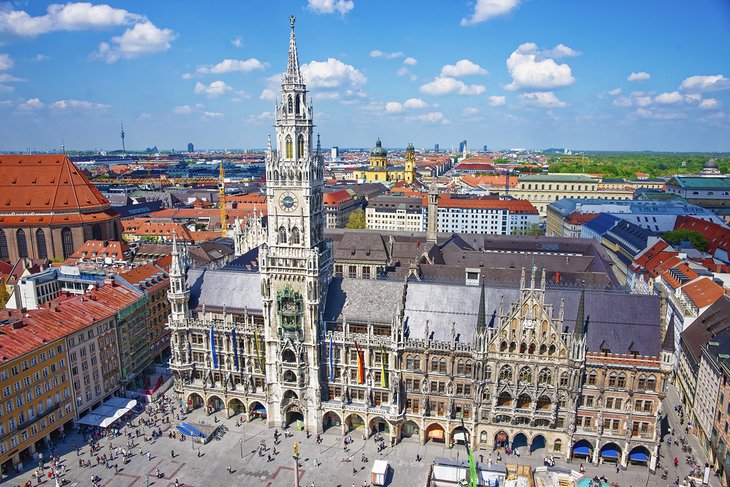
Marienplatz has been Munich's central square since the city's foundation; the site of medieval jousting tournaments; and until 1807, where markets were held. In addition to the massive Neues Rathaus (New City Hall) that fills one entire side of the square, you'll find the Altes Rathaus (Old Town Hall) forming a gate at the far end.
In the large open square are the Mariensäule, a tall column to the Virgin Mary erected in 1638, and the Fischbrunnen, a newer fountain that includes bronze figures rescued from an earlier 19th-century fountain. Popular with shoppers for its stores, boutiques, and restaurants, Marienplatz is the focus of festivals and the scene of a large Christmas Market, one of several in the city. During the Fasching carnival, the Tanz der Marktfrauen (Dance of the Market Women) is performed in the square.
Daily at 11am and noon, and at 5pm from March through October, everyone stops to watch the famous Glockenspiel on the front of the Neues Rathaus, as its mechanical figures dine, joust, and dance. It's one of the city's best-loved traditions, and something you shouldn't miss. Take some time to appreciate the intricate stonework on the Neo-Gothic façade.
To escape the crowds during the performance, try the benches by the Fischbrunnen fountain for an elevated view. For a unique perspective, go to the top of St. Peter's Church tower to see the figurines and the entire square.
It's hard to remember that this building dates only from the late 19th century, primarily completed in 1892 and finally finished in the early 20th century. You can ride the elevator to the middle gallery of the building's 85-meter tower for views over the city. The Tourist Information Center is in the Rathaus. Seek out the delightful and quiet inner courtyard, complete with a restaurant serving traditional Bavarian dishes.
Address: Marienplatz, 80331 München
Walk or Bike in the Englischer Garten (English Garden)
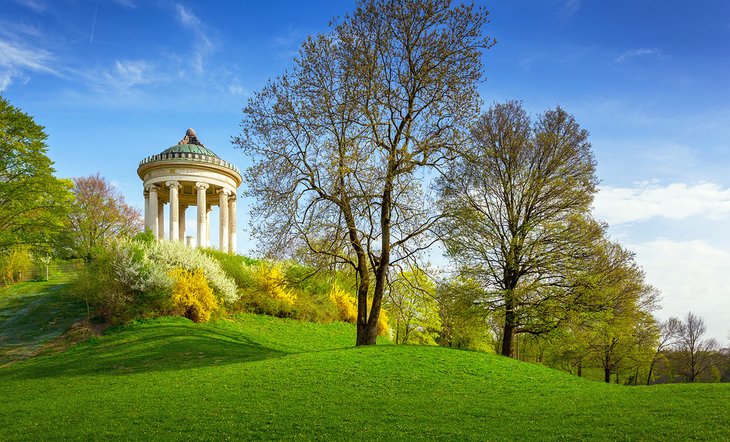
Munich's English Garden is not only the largest city park in Germany - it covers an area of 900 acres - it's also one of the most beautiful. Naturally arranged groups of trees and plants offer ever-changing vistas, and nine kilometers of winding streams and an artificial lake complete the impression of a natural landscape.
Designed in 1785 as a military garden, the English Garden attracts walkers, joggers, and cyclists to its 78 kilometers of pathways and bridle paths. It's also a pleasant place to sunbathe and picnic, and you can stop for a snack or drink at the Chinesischen Turm (Chinese Tower), a 25-meter-tall pagoda.
In 1972, a Japanese garden was created on an island at the southern end of the garden to house an authentic teahouse, a gift in honor of the 1772 Olympics. Adjacent to the park is the Bavarian National Museum, with its fine collection of medieval German sculptures and tapestries, and the Bavarian State Archaeological Collection, which displays local prehistoric artifacts.
A curiosity in the park is the Eisbachwelle, a wave created by the emergence of the Eisbach river from its underground course. Crowds gather to watch surfers' stunts, expertise, and of course, wipe-outs.
Nymphenburg Palace and Gardens
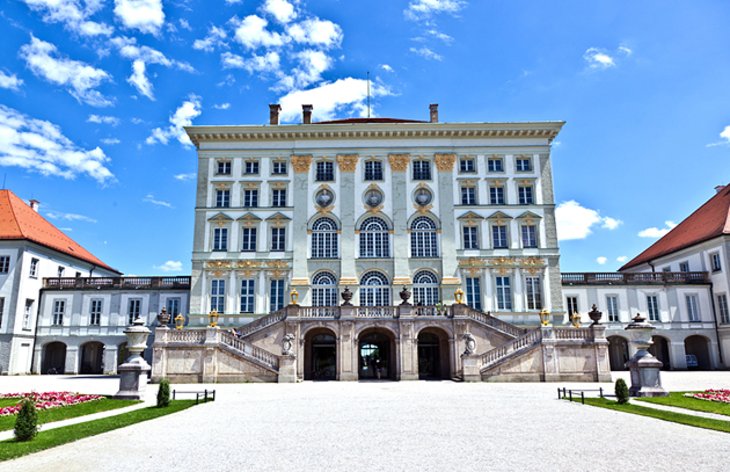
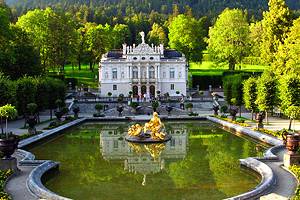
The large Baroque palace of Nymphenburg, in the northwest outskirts of the city, was originally the summer residence of the Wittelsbach Electors in the 17th century. Extending more than 600 meters from wing to wing, this vast palace is surrounded on each side by the Nymphenburg Canal, which splits as it passes around the main buildings before reuniting again in a fountain-adorned pool in front of the main façade.
Your first stop should be the Central Pavilion, a cube-shaped palace in the style of an Italian villa, completed in 1674 and home to the lavishly decorated three-story Stone Hall (Steinerner Saal) and a number of private chambers with fine furnishings and artwork. In the Palace Chapel, notice the expressive ceiling painting illustrating the life of Mary Magdalene. Beside the palace in the former Court Stables, the Marstallmuseum displays a collection of beautiful state coaches.
In the magnificent 17th-century gardens of Nymphenburg Park stands the Amalienburg, a palatial hunting lodge known for its famous Hall of Mirrors. Elsewhere in the gardens is the Heckentheater (Hedge Theater); marble statues of Greek gods; a large fountain; and a number of hothouses, including the Palm House.
From late March to October, gondola rides are offered on the central canal in front of the palace.
Note that the gardens and grounds are free, but a fee is charged to enter the palace.
Address: Schloss Nymphenburg 1, 80638 München
Official site: www.schloss-nymphenburg.de/englisch/palace/
Munich Residenz
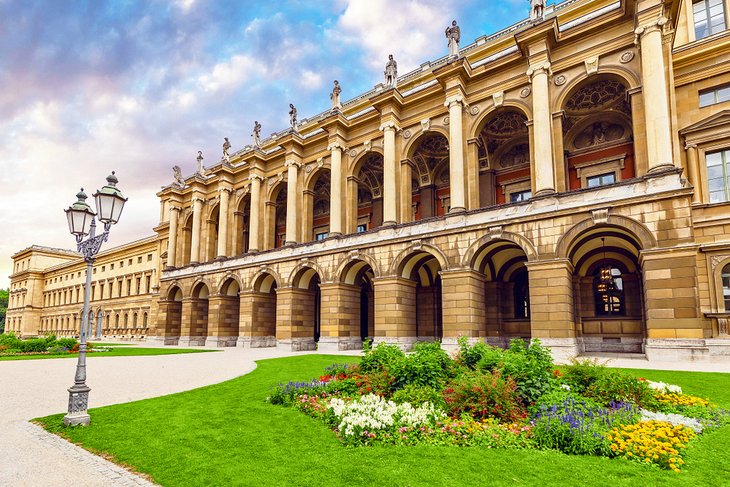
For centuries, the seat of the dukes, electors, and kings of Bavaria, the Munich Residenz is one of Europe's most spectacular palaces. Laid out around seven large courts, the vast Residenz complex comprises three main sections: the Königsbau, fronting onto Max-Joseph-Platz; the Alte Residenz, facing Residenzstrasse; and the Festsaalbau (Banqueting Hall), overlooking the Hofgarten.
The earliest section of this huge complex was the magnificent Antiquarium, built in 1579 and now part of the outstanding Residenz Museum. The Alte Residenz, a masterpiece of the late Renaissance and testimony to the growing power of Bavaria, followed soon after, and the final components - the Neoclassical Königsbau, the Festsaalbau, and the Court Church - were completed in 1848.
Today, the Residenz houses a number of monuments and museums, including the Residenz Museum, the Treasury, the Court Church of All Saints (Allerheiligen-Hofkirche), and Cuvilliés-Theater. Be sure to explore the palace grounds, too, with its many wonderful old courtyards and arcades.
Address: Residenzstrasse 1, 80333 München
Official site: www.residenz-muenchen.de/englisch/residence/
The Olympic Park
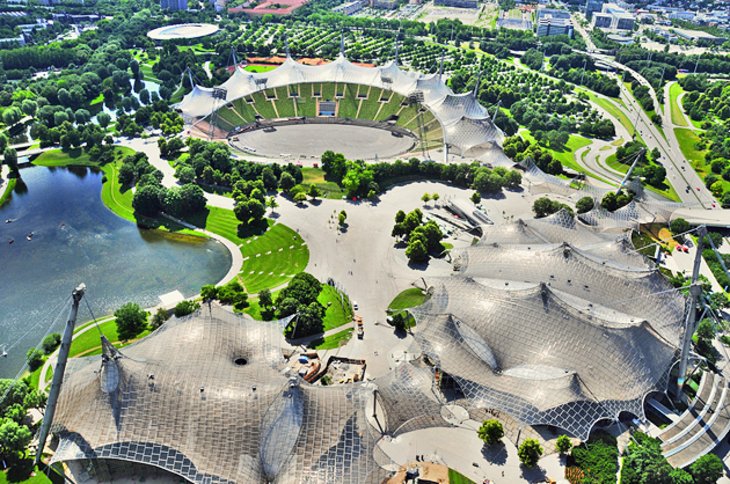
Home to the 1972 Summer Olympics, Munich's spectacular Olympic Park covers an area of some 2.7 million square meters on the Oberwiesenfeld, a former training ground for the Royal Bavarian army. Now a major recreational center, this huge facility hosts a variety of major concerts and events, including the summer Tollwood Festival (the winter Tollwood is held at Theresienhöhe, home of the Oktoberfest).
A number of family activities have been added since the Olympics, so you'll find plenty of things to do here. These include a stadium roof climb, ziplining, and behind-the-scenes tours showcasing the facility's splendid architecture and design. The Olympic Tower, a 290-meter-high television tower built in 1968 that was renamed in honor of the games, has viewing platforms in the Aussichtskorb offering breathtaking views over the city.
Address: Spiridon-Louis-Ring 21, 80809 Munich
Official site: https://www.olympiapark.de/en/
BMW Museum
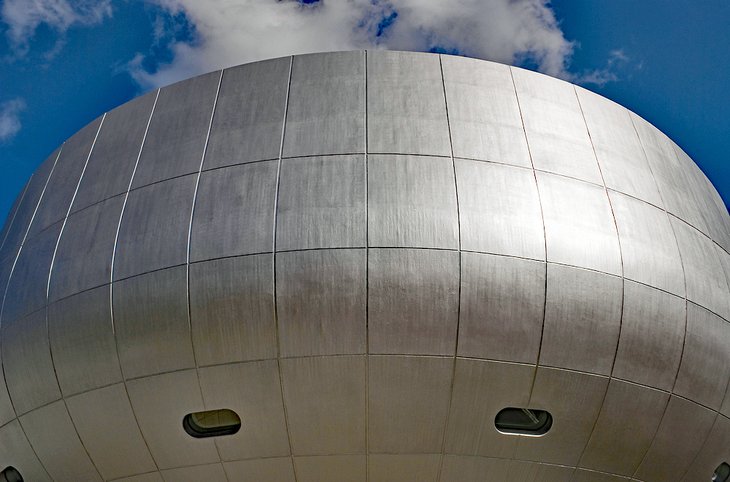
Next to BMW's soaring headquarters and factories at the Olympic Park is a round contemporary building with a metal shell, housing BMW's museum. Here, car fans will find examples of nearly all the models the company has made, including sports cars, racing models, and motorcycles.
You can see current models and learn about the technology of modern automobile construction, as well as get glimpses of future propulsion technologies and designs the company is exploring. Those who think cars are just for getting from point A to point B might want to skip this one, but for fans of things automotive, it's a must.
Address: Am Olympiapark 2, 80809 München
Official site: https://www.bmw-welt.com/en/index.html
BMW Welt
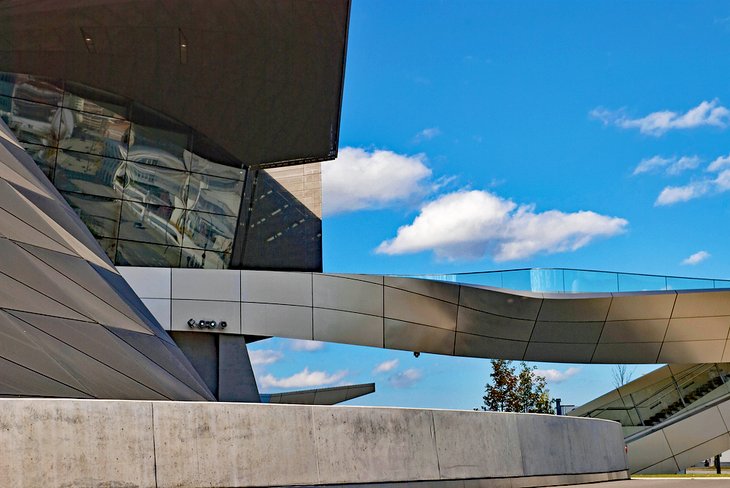
Not to be confused with the BMW Museum (above), although it's on the same huge manufacturing complex near the Olympic Park, BMW Welt is a gigantic showroom. Here, you can see every vehicle the company makes, sit inside them, and learn what the future cars and motorcycles may look like.
Whereas the BMW Museum is more about past models and history, the Welt is all about now, with an exhibition area and a three-dimensional media façade with immersive visions of the future of mobility. Interactive exhibits consider sustainability and offer insights into the design process. You can take tours of the BMW Group Plant to see the production process.
Opened in 2007, the BMW Welt is the most visited tourist attraction in Bavaria. The building's futuristic steel-and-glass architecture is part of the allure, plus the fact that admission is free.
Address: Am Olympiapark, München
Official site: https://www.bmw-welt.com/en.html
Viktualienmarkt
In 1807, when the farmers market outgrew Marienplatz, it was moved to the nearby square, where it thrived and expanded, until today it covers 22,000 square meters and includes a butchers' hall, bakery, fish hall, and flower market in addition to its fruit and vegetable vendors.
It's not just a place for locals to buy items for the night's dinner. Fresh breads and pastries, wheels of cheese, and cured meats are good picnic makings, and tables and benches provide a place for shoppers and visitors to sit while they eat sizzling sausages, hot pretzels, and other foods prepared in mobile kitchens. Come on a Tuesday, Friday, or Saturday morning to experience the market at its liveliest.
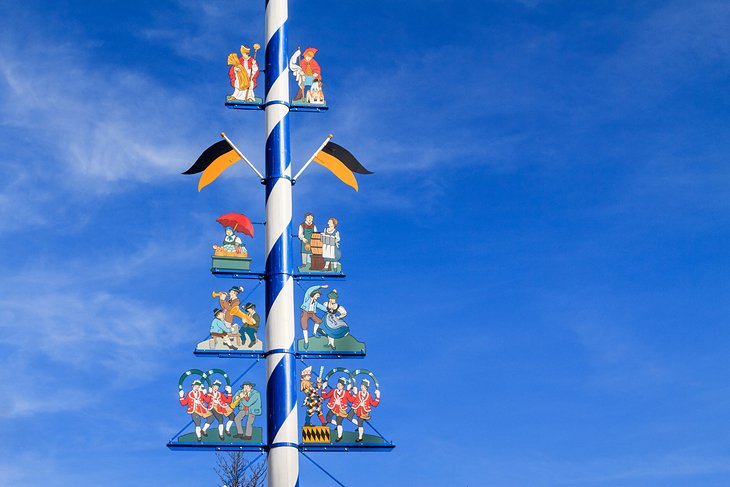
Above the market stands a colorful maypole, with traditionally dressed figures representing the various crafts and trades that were practiced in this part of town.
Tierpark Hellabrunn (Hellabrunn Zoo)
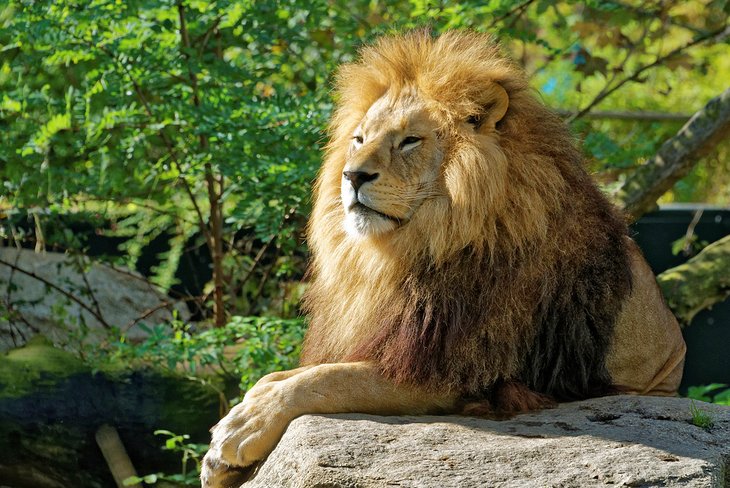
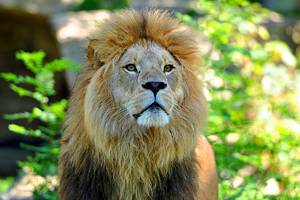
Spread across 89 acres, Hellabrunn Zoo is consistently ranked among the best zoos in Europe. Laid out in 1911, it was the first zoo in the world to have animals grouped according to where they came from.
Today, more than 19,000 animals from 757 species are held in open enclosures meant to replicate the conditions of the wild, with animals that normally share habitats kept together wherever possible.
Popular features include the Elephant House (now a listed building), the enormous 5,000-square-meter free-flight aviary, the Polarium, and ape houses. Located adjacent to the Isar River in a designated conservation area, the zoo has many delightful footpaths, playgrounds, and picnic spots.
Address: Tierparkstrasse 30, 81543 München
Shop at Christmas Markets (Christkindlmarkts)
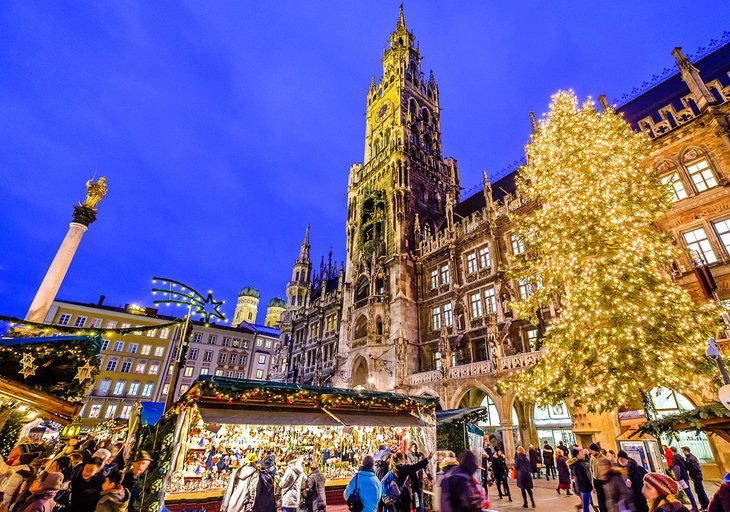
From the last week in November until December 24, the parks and squares of Munich turn into a colorful, sparkling Christmas extravaganza of colored lights, evergreen boughs, and holiday music. Colorful frosted gingerbread hearts decorate little cabins filled with candies, cookies, wooden toys, Christmas tree ornaments, and holiday baubles, as well as local handcrafts in all mediums.
The largest market is in Marienplatz, where local chorales serenade shoppers with Christmas music. Two blocks away, at the Rindermarkt, the market is filled with figures and accessories for crèche scenes. Miniature shepherds, wisemen, angels, animals, and the holy family are in every imaginable media: delicate Alpine woodcarvings from nearby Oberammergau, ceramic, terra-cotta pottery, wax, and plastic.
One of the most charming is the Christmas village inside the courtyard of the Residenz, where a children's theater and bakers turning out hot treats add to the appeal. Not far away, an entire square turns into a Medieval Marketplace, where artisans and craftspeople dressed in costumes of the Middle Ages demonstrate and sell authentic period goods.
Wherever you go, you will find traditional lebkuchen (gingerbread) from Nuremberg - sold at Munich's first Christmas markets in the 1600s and still a favorite today.
Read More: Christmas Markets in Germany
Art Museums in the Kunstareal District
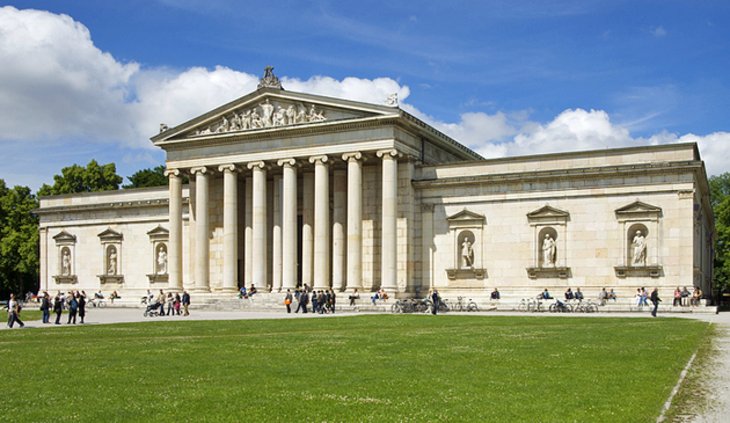
Königsplatz was laid out in Neoclassical style in 1862, and in the art district around it, you'll find one of the finest groups of art museums anywhere in Europe. First are the two Pinakothek art galleries: the Old Picture Gallery (Alte Pinakothek), with its fine collections of Dutch, Flemish, Italian, French, German, Spanish, and medieval paintings; and the State Gallery of Modern Art (Pinakothek der Moderne), which includes works by Picasso and Warhol.
Other museums of note are the Glyptothek and the State Antiquities Collection (Staatliche Antikensammlung), with their large compilations of ancient sculptures and antiquities.
The latest addition to this treasury of art is Lenbachhaus, an Italianate villa that was the home and studio of artist Franz von Lenbach. The villa and its new extension house the world's foremost collection of works by the Blue Rider movement, a group of Expressionist painters led by Wassily Kandinsky and Franz Marc.
Admission to the state-run museums is only €1 on Sundays.
Address: Königsplatz 1, 80333 München
Peterskirche (St. Peter's Church)
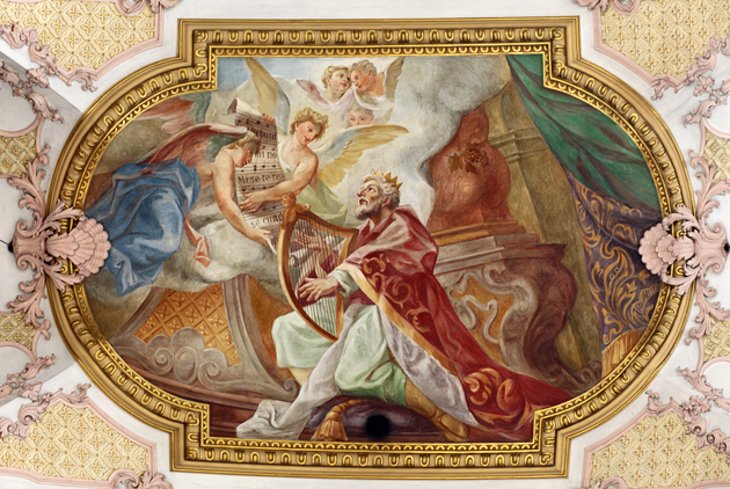
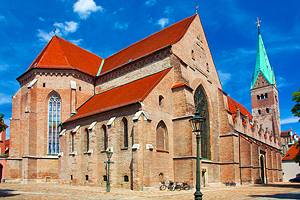
Known affectionately as Old Peter, St. Peter's Church (Peterskirche) is Munich's oldest parish church and stands on Petersberg, a small hill originally settled by monks. Built in Gothic style in 1386, the church was altered with the addition of a Baroque choir with three apses in 1636, while the tower was given a lantern dome in place of its earlier Gothic spires.
Interior highlights include the font by Hans Krumper, the red marble monuments by Erasmus Grasser, and the 15th-century Schrenk Altar with its sculptures of the Crucifixion and the Last Judgment. Also of note is the 20-meter-tall 18th-century high altar with its figures of the Four Fathers of the Church and St. Peter.
For those with a taste for the macabre, look for the jewelled skeleton in a glass case; you'll find it located in the side altar. It is the relic of St. Munditia, believed to be a Roman martyr.
The panel-paintings on the choir walls by Jan Polack are also worth seeing, as is the highly regarded Altar of the Virgin of Mercy (Mariahilf-Altar) from 1756. Finally, the tower - famous for its eight clock faces matched by eight bells - reaches a height of 91 meters and offers panoramic views as far as the Alps for those with the stamina to climb the 306 steps.
Address: Rindermarkt 1, 80331 München
Hofgarten
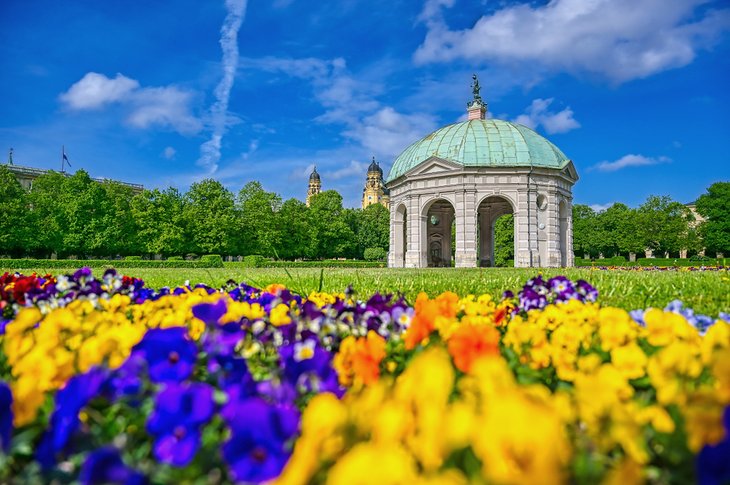
In the center of Munich, just off Odeonsplatz, the Hofgarten (Court Garden) was built between 1613 and 1617, adjoining the Residenz and for the sole use of the court. It remained a private preserve for more than 160 years, opening to the public in 1780.
Since then this peaceful sanctuary with its intersecting paths, fountains, beds of bright flowers, and shaded arcades have been a favorite place for locals and visitors to stroll and relax. The focal point is the central pavilion, featuring eight arches, with paths radiating from each one to form beds for lawns and flowers. Fountains mark the points where the paths intersect.
Modeled on Italian Renaissance gardens when it was designed, the Hofgarten became more like the then-popular landscape gardens during the 19th century. After its destruction in World War II, it was rebuilt to more closely resemble the original.
Deutsches Museum
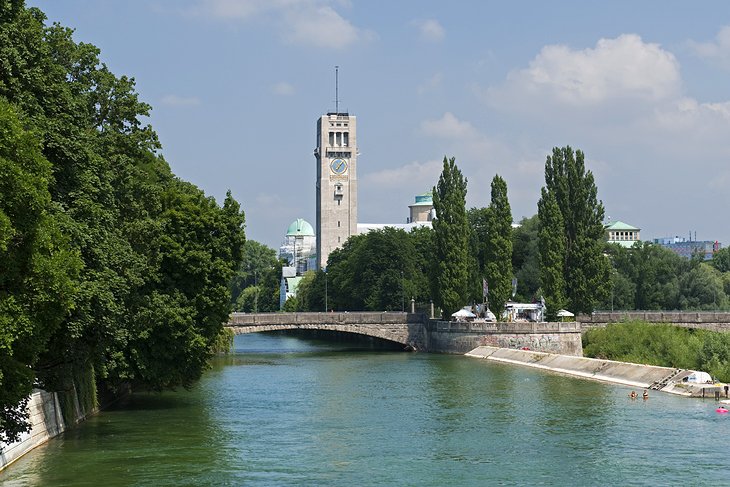
The Deutsches Museum is the world's largest museum of technology, and its 17,000 artifacts illustrate exhibits that range from the polished wood and brass of early astronomical instruments to the latest science on global warming. The museum is a constant time travel between early tech and high tech, as you follow the development of each scientific and technical discipline from its beginnings to the present.
The extensive collections relating to transport are astonishing, covering trains, aircraft, shipping, cars, and even bicycles. You can see a replica of the Red Baron's biplane from the First World War, examine a Venetian gondola up close, and look inside a 19th-century wooden fishing boat. There's always something happening, from dramatic demonstrations of electricity to concerts showing how musical instruments work.
Kids' Kingdom is filled with clever hands-on activities designed for children ages three through eight, exploring light, music, ships, computers, water, sound, astronomy, and more. It is Germany's most popular museum and a favorite place to visit for families.
Address: Museumsinsel 1, 80538 München
Official site: www.deutsches-museum.de/en
Asamkirche (Asam Church)
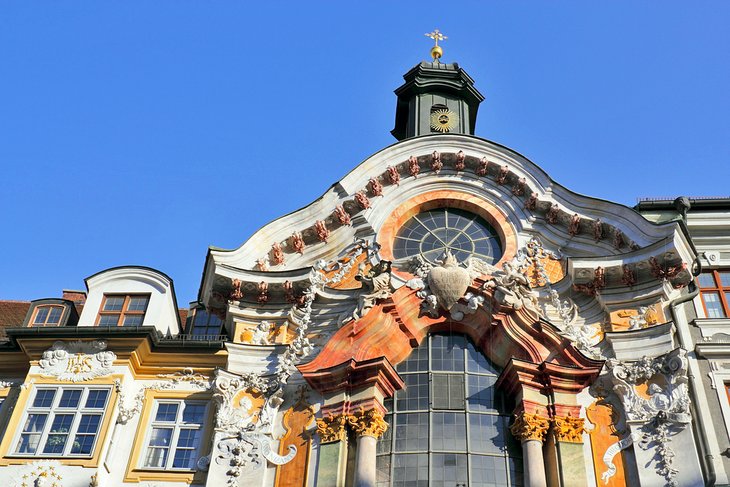
The beautiful Rococo Asam Church, dedicated to St. John of Nepomuk, was completed in 1746 by brothers Cosmas and Egid Asam and is richly decorated with stucco figures, frescoes, and oil paintings. While its exterior is impressive enough, particularly the large doorway flanked by massive columns and crowned by a figure of St. John kneeling in prayer, it's the interior that's most memorable.
Highlights include a wrought-iron grille from 1776 that separates the stucco figures of the saints from the long nave with its galleries. On the projecting cornice under the ceiling is a magnificent fresco depicting the life of St. John. The most notable feature of the interior, though, is the high altar, enclosed by four twisted columns and on which sits a glass shrine containing a relic of the church's patron saint.
Address: Sendlinger Straße 32, 80331 München
Frauenkirche
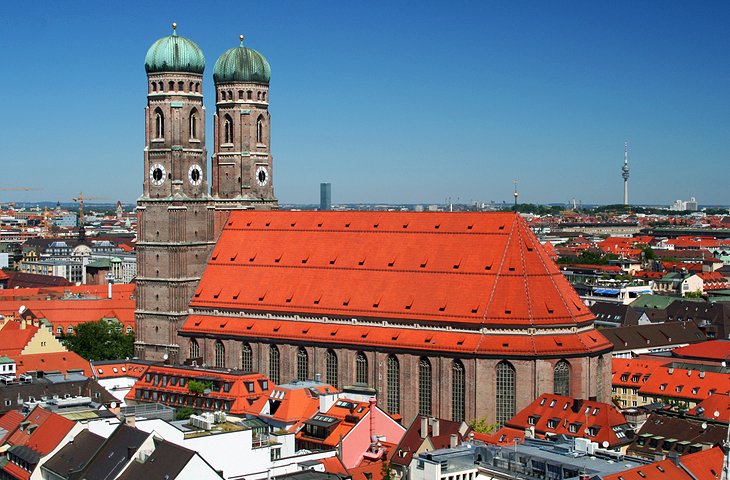
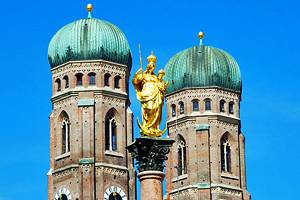
Munich's huge brick Frauenkirche - the Cathedral Church of Our Lady - was completed in 1488, a Late Gothic church that owes its impact to its great size. Massive twin 100-meter-tall towers, with their characteristic Renaissance domes, tower over a high building 109 meters long by 40 meters wide.
Highlights inside the cathedral include the 1622 Tomb of the Emperor Ludwig the Bavarian in black marble with bronze figures, a 1620 altarpiece of the Assumption by Peter Candid, and the Baroque red marble font in the Baptistery with its early 14th-century Sorrowing Christ.
A popular curiosity is the strange footprint in the floor of the porch, said to have been left by the devil after he came to inspect the church. So delighted was he that the windows seemed to have been forgotten (the row of columns hides them when the church is viewed from the entrance), he stamped his foot, leaving the footprint that can still be seen today.
The twin towers of Frauenkirche are a good landmark for orientation, visible from all over the city. You can climb to the top for views across the city to the Bavarian Alps.
Address: Frauenplatz 12, 80331 München
Michaelskirche (St. Michael's Church)
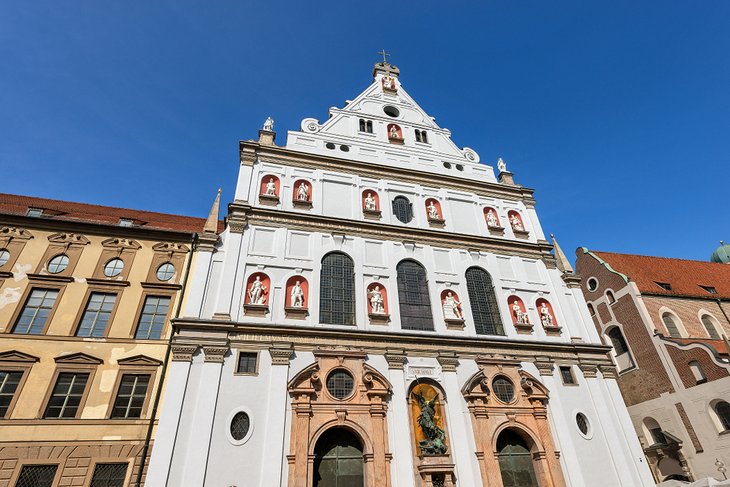
The largest Renaissance church north of the Alps, St. Michael's, was completed in 1597, with a high barrel-vaulted roof in the nave. The pattern of the triumphal arch at the entrance to the choir is continued in the arches of the transepts, side chapels, and galleries. The three-story-high altar has an altarpiece, St. Michael Fighting the Devil, from 1587.
The four bronze reliefs dating from 1595 were intended for the tomb of Duke William V, while in the side chapels are some fine paintings and a precious reliquary of Saints Cosmas and Damian from around 1400.
The church's historical importance is in the Royal Crypt (Fürstengruft) underneath the choir, where 41 members of the House of Wittelsbach - among them Duke Wilhelm V, the church's patron; Elector Maximilian I; and King Ludwig II - are buried.
Address: Neuhauser Straße 6, 80333 München
Cuvilliés Theater
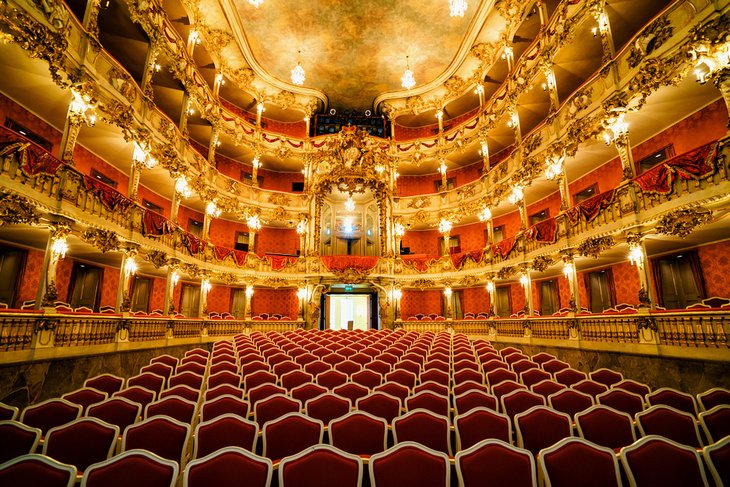
On the east side of the Residenz in Munich, the Cuvilliés Theater was built in 1755 and is the finest example of a Rococo theater with tiered boxes in Germany. The magnificent carved woodwork of the auditorium, with its four tiers of boxes, including one built especially for the electors, was safely stored away during WWII, thus allowing its reconstruction in 1958.
Architecturally stunning, the rare elegance and rich hues of its intimate Rococo interior make it a truly unique setting for operas such as Mozart's Idomeneo, which premiered here in 1781, and which, along with many other Late Baroque period operas, is still performed on occasion. You can visit the theater separately or on a combined ticket with the Residenz and its museums.
Address: Residenzstraße 1, 80539 München
Official site: https://www.residenz-muenchen.de/englisch/cuv/index.htm
The Theatine Church of St. Cajetan
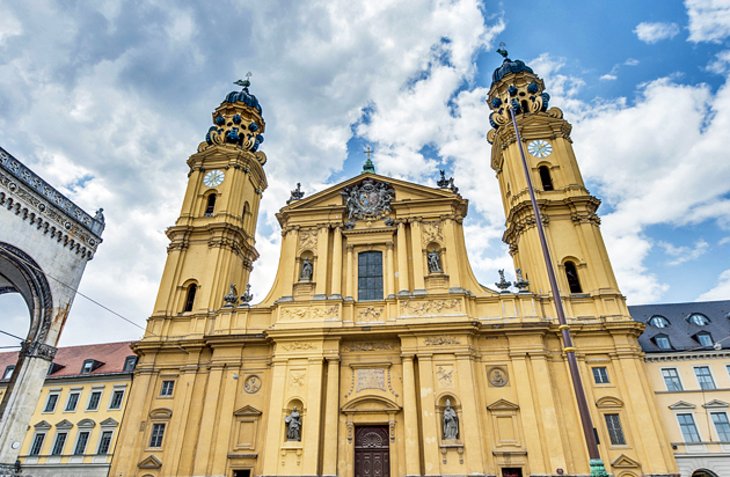
The Theatine Church of St. Cajetan (Theatinerkirche St. Kajetan), a basilica built in the style of the Italian High Baroque, was completed in 1690, with a stunning façade, twin towers, a massive 71-meter-high dome, and a richly decorated interior. Exterior highlights include numerous marble statues of saints and the lantern with a lion weathervane atop the dome.
The interior, dominated by the tall round-headed arches of the barrel vaulting and the dome over the crossing, is washed in white, with rich stucco ornamentation. Other interior highlights include the high altar, with its picture of The Virgin Enthroned with Angels from 1646 by Caspar de Crayer (a pupil of Rubens), and the Altar of the Virgin, with a painting of the Holy Kinship from 1676. In the Ducal Burial Vault, you'll see the tombs of members of the House of Wittelsbach, long-time rulers of Bavaria.
Address: Salvatorplatz 2a, 80333 München
Munich, Germany - Climate Chart
| Average minimum and maximum temperatures for Munich, Germany in °C | |||||||||||
| J | F | M | A | M | J | J | A | S | O | N | D |
| 1 -5 | 4 -4 | 8 0 | 13 3 | 18 7 | 21 10 | 23 12 | 23 12 | 19 9 | 14 5 | 7 0 | 2 -4 |
| PlanetWare.com | |||||||||||
| Average monthly precipitation totals for Munich, Germany in mm. | |||||||||||
| 46 | 43 | 48 | 56 | 89 | 109 | 99 | 99 | 69 | 48 | 56 | 48 |
| Average minimum and maximum temperatures for Munich, Germany in °F | |||||||||||
| J | F | M | A | M | J | J | A | S | O | N | D |
| 34 23 | 38 25 | 47 32 | 55 37 | 64 44 | 70 50 | 73 53 | 73 53 | 66 47 | 56 40 | 43 32 | 36 25 |
| PlanetWare.com | |||||||||||
| Average monthly precipitation totals for Munich, Germany in inches. | |||||||||||
| 1.8 | 1.7 | 1.9 | 2.2 | 3.5 | 4.3 | 3.9 | 3.9 | 2.7 | 1.9 | 2.2 | 1.9 |