Things to Do in Greenwich, London
The banks of the eastern section of the River Thames are home to some of London's most interesting areas. It's here, on the river's south bank, that you'll find the historic London borough of Greenwich. Just six miles upstream from Tower Bridge and the Tower of London, it has long been the traditional London base of the Royal Navy.
Today, this beautiful corner of bustling London is home to the largest expanses of preserved historic architecture and parkland in all of England. In addition to the four major attractions you can explore under the Royal Museums Greenwich umbrella, including the famous Cutty Sark, you'll also want to dedicate at least a few hours to properly explore vast Greenwich Park itself.
Part of the fun of exploring this area of London is getting here. While it's easy to get to via the Underground (or "Tube," as it's known), you should certainly consider taking one of the frequent ferries and pleasure cruises that connect it to the City of London and Westminster. Alternatively, you can cross from the north bank of the Thames via the Victorian-era Greenwich Foot Tunnel or an ultra-modern scenic cable car.
However you intend on getting here, plan your visit to this vibrant area with our list of the top attractions and fun things to do in historic Greenwich, London.
- Climb aboard the Majestic Cutty Sark
- Explore the Old Royal Naval College
- Take a Tour of Queen's House
- Sail the Seas in the National Maritime Museum
- Wander around Greenwich Park
- Where Time Begins: The Royal Observatory
- Shop at Greenwich Market
- Cross Under the Thames via the Greenwich Foot Tunnel
- Cross Over the Thames aboard the Emirates Air Line Experience
- Visit the Museum of London Docklands
- London's Mega Project: The Thames Flood Barrier
- Attend a Concert at The O2
- Take the Thames Clipper to The Tower and St. Katharine Docks
- Admire the Views of Greenwich from Canary Wharf
- See London's Highest Church Clock at St. Anne's Limehouse
- Explore the Museum of the Home
- Eltham Palace
- Whitechapel Art Gallery
- Map of Things to Do in Greenwich, London
Climb aboard the Majestic Cutty Sark
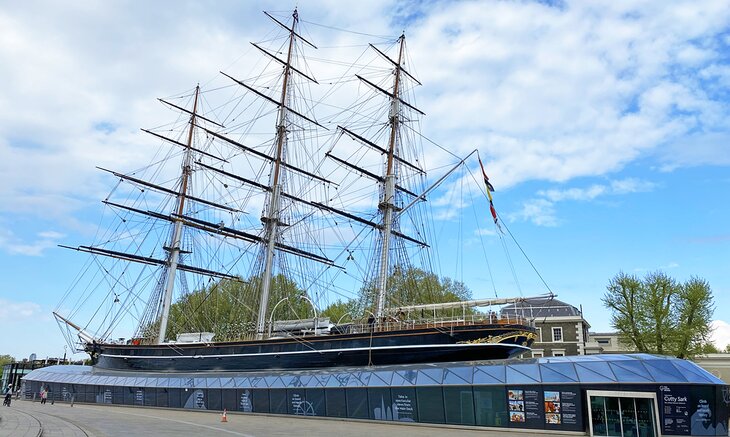
The majestic Cutty Sark, the last of the 19th-century tea clippers that once sailed between Britain and China, was built in 1869 and was considered the finest and, at 17 knots in full sail, the fastest ship of its day. Laid up in Greenwich in 1956, this impressive 85-meter-long ship is now part of a superb museum that includes an interesting collection of old ships' figureheads, prints and drawings, as well as mementos of its many voyages.
A new component of this tourist attraction is an all-weather glass dome that surrounds the vessel, allowing visitors to walk underneath the ship for a fascinating barnacle's view of its magnificent hull. The ship's interior is equally interesting, with your all-access visitor's pass allowing you to see everything from the crew's quarters to its storage holds.
A new addition is the opportunity to climb high up the ship's rigging (safety gear and guidance provided). If you've got the time afterwards, consider booking the great afternoon tea experience on offer here. You can replenish your energy levels while staring up at the ship's hull.
Address: King William Walk, Greenwich Peninsula, London
Official site: www.rmg.co.uk/cutty-sark
Explore the Old Royal Naval College
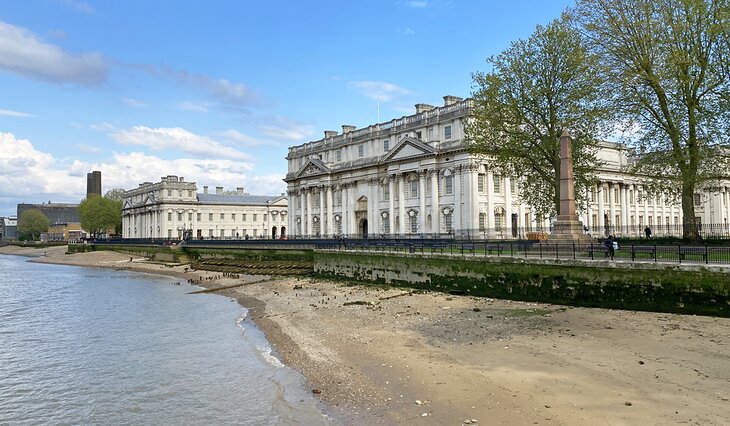
No visit to Greenwich should omit the Old Royal Naval College. Set overlooking the Thames and the first buildings you see if arriving by boat, the College stands on ground once occupied by a palace that belonged to Edward I and later Henry VII. It was here that Henry VIII was born, married Catherine of Aragon and Anne of Cleves, and later signed the death warrant of Anne Boleyn.
A new palace was completed by Wren in 1696 for Charles II and soon after became a hospital for disabled seamen. Notable features of the Chapel are the altarpiece, titled St. Paul's Shipwreck, by Benjamin West and the round pulpit, lectern, and font, made of wood from the old dockyard at Deptford.
Another highlight is the stunning Painted Hall. Considered one of the best Baroque interiors in Britain, it took English artist James Thornhill 19 years to complete. Covering around 40,000 square feet of the hall's walls and ceilings, this important work has come to be known as "Britain's Sistine Chapel." Self-guided tours are available.
It's also where you'll find the Discover Greenwich Visitor Centre, with its exhibits showcasing over 500 years of maritime history.
Address: King William Walk, Greenwich Peninsula, London
Official site: www.ornc.org
Take a Tour of Queen's House
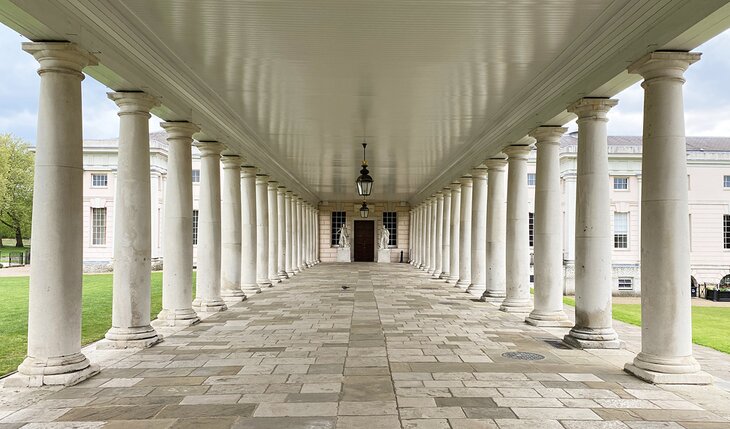
A Palladian mansion designed by Inigo Jones, Queen's House is a masterpiece of Classical architecture. It's perhaps most notable for its symmetrical proportions and fine marble floors, as well as its wrought-iron balustrades and carved and painted ceilings.
Begun in 1617, the house had been commissioned by James I but wasn't completed until 1629. With Greenwich Park as its garden, Queen's House epitomizes the entire art form of royal residences and is considered the first Renaissance building in England.
Today, visitors can also enjoy the property's superb collection of fine art, as well as frequent visiting art exhibits. Excellent guided tours are also available. Those traveling in winter between November and early January will want to rent a pair of skates for use on the Queen's House Ice Rink.
Address: Romney Road, Greenwich, London
Official site: www.rmg.co.uk/queens-house
Sail the Seas in the National Maritime Museum
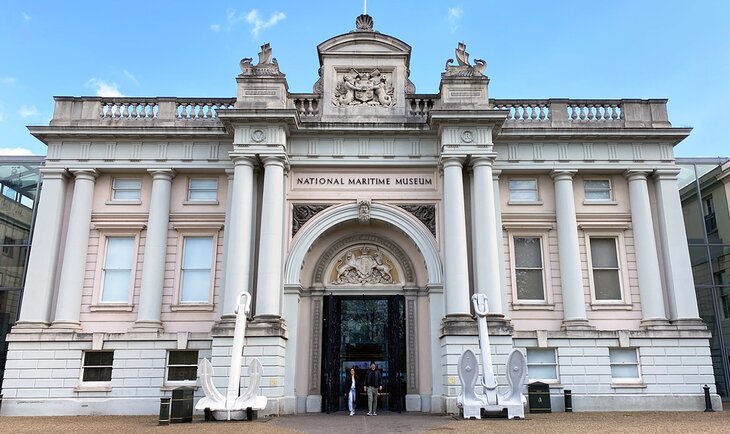
The impressive collection of the National Maritime Museum (NMM) illustrates the history of the Royal Navy from Tudor and Stuart times through to the Napoleonic Wars and up to more recent times. The largest attraction of its kind in the world, this vast museum was opened in 1937 and today attracts upwards of two million visitors a year.
Pride of place is the museum's large collection of scale models of some of history's most important vessels. The world's largest such collection, it includes early trans-Atlantic steamers to mighty ironclad warships, as well as a model of Nelson's HMS Victory in what must be the world's biggest "ship in a bottle." A number of important full-size small vessels are actually housed in the museum's galleries, including royal barges and record-breaking speedboats.
The museum's impressive art collection contains superb seascapes by William Turner, as well as portraits of famous seamen by Joshua Reynolds and Thomas Gainsborough. A large number of ship-related artworks are also on display, as are regular visiting exhibits of related works.
Of special interest to kids is the huge interactive world map used to display details of some of the most famous events in naval history. Other highlights include displays related to the Arctic convoys of WWII, Lord Nelson, and the East India Company. Guided tours and educational programs are worth looking into, too.
Address: Romney Road, Greenwich, London
Official site: www.rmg.co.uk/national-maritime-museum
Wander around Greenwich Park
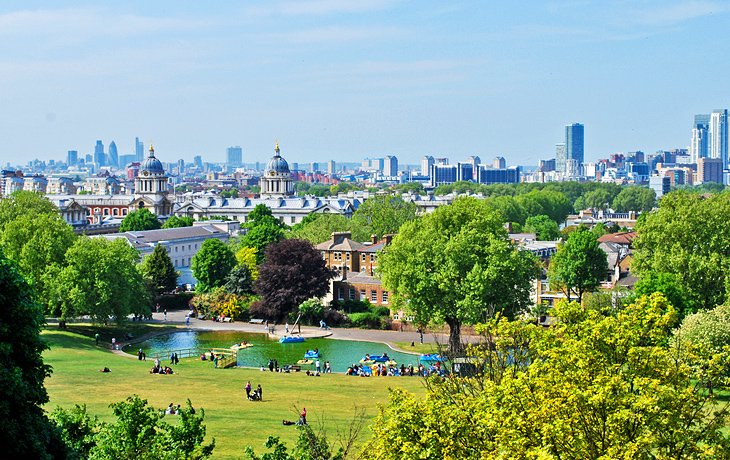
When you're done exploring the museums, head away from the River Thames to Greenwich Park. Spread across 183 acres, this beautifully landscaped parkland started off as a royal hunting ground before being turned over for the enjoyment of the public.
While it's a bit of a climb, the views from the top adjacent to the Statue of James Wolfe are simply spectacular and likely the best you'll experience in London. You'll see the commercial towers of The City of London and Canary Wharf in one direction, and the iconic tent-like O2 venue in the other, while in between stands the Queen's House.
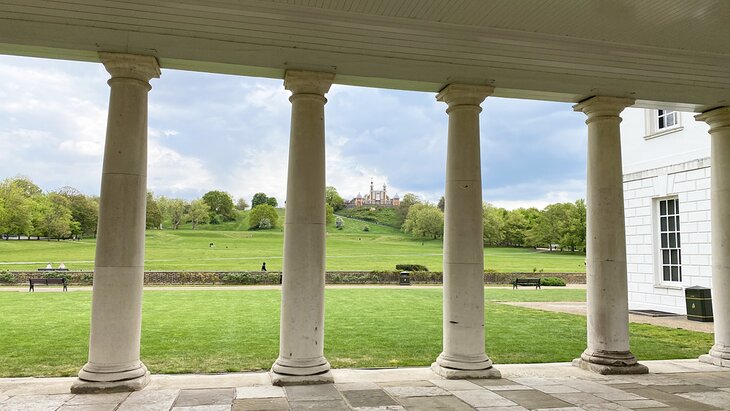
For those wanting to linger awhile, grab a snack and a drink from the Pavillion Cafe and head to the picnic tables at the back. The views are every bit as good from here. If you can arrive a little later in the day, the views are especially memorable at sunset. If visiting at dusk, don't be in a hurry to leave after the public address system announces the park's closure. Instead, take your time, and take the longest route back down to the river.
At the park's south end, farthest from the river, is the Ranger's House. This lovely red brick manor house stands adjacent to the park's Rose Garden and is home to the Wernher Collection with its displays of jewelry, glassware, antique silverware, and paintings. If you can linger a little longer, there's also a pleasant café on-site.
Official site: www.royalparks.org.uk/parks/greenwich-park
Where Time Begins: The Royal Observatory
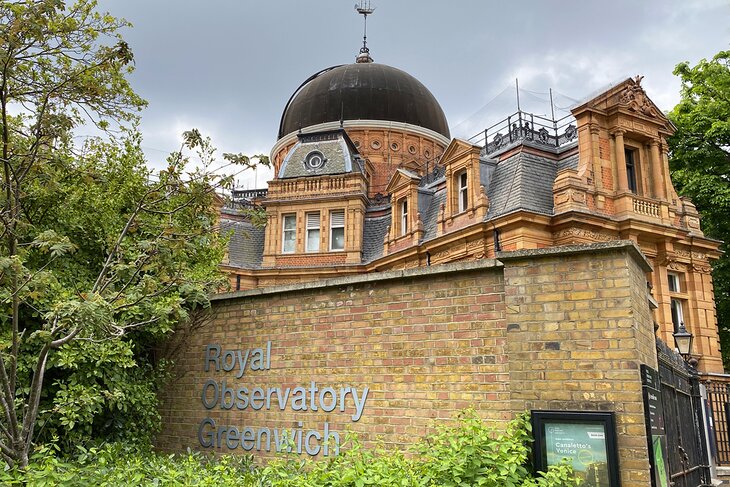
The Royal Observatory was founded in 1675 by Charles II to promote safer navigation. It was originally housed in Flamsteed House, which was designed specifically for the purpose by Sir Christopher Wren. After the Royal Observatory moved to Herstmonceux near Hastings in Sussex in the 1950s, Flamsteed House has been used to showcase a collection of old astronomical instruments in what's now known as the Astronomy Centre.
On a mast topping one of the building's towers is a red time ball that drops at 1pm every day, a device originally intended to enable vessels in the river to regulate their chronometers. The zero meridian of longitude, dividing the world into eastern and western halves, runs through the Meridian Building, and is marked by a steel rod in the floor.
A huge dome dominates the Equatorial Building, which houses Britain's largest telescope and the excellent Peter Harrison Planetarium.
Address: Blackheath Ave, London
Official site: www.rmg.co.uk/royal-observatory
Shop at Greenwich Market
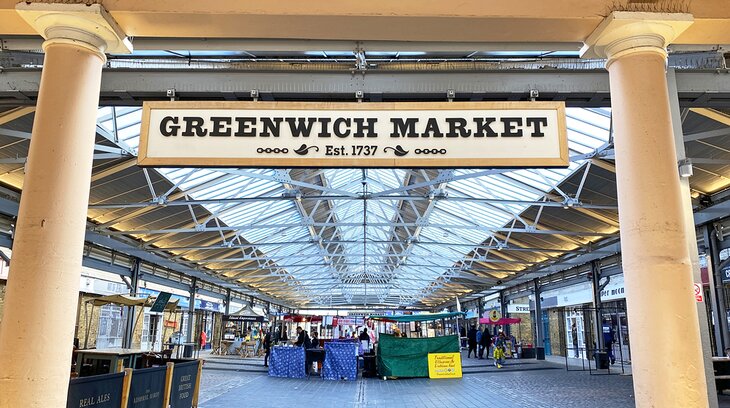
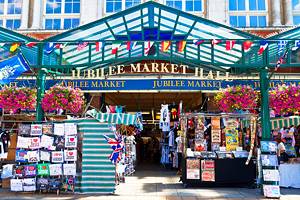
Greenwich Market is a vibrant arts and crafts market dating to the 1830s. While once just a produce market, it now also houses over 120 stalls selling a range of goods, including antiques, arts and crafts, collectibles, as well as food stalls. If you're feeling peckish, pop into Crosstown Donuts for a tasty treat and an espresso.
This pleasant covered market also hosts an occasional farmers market, and many cafés and restaurants can be found close by. Open seven days a week, it's a fun way to spend a little time (and money).
Address: 5B Greenwich Market, East Greenwich, London
Official site: www.greenwichmarketlondon.com
Cross Under the Thames via the Greenwich Foot Tunnel
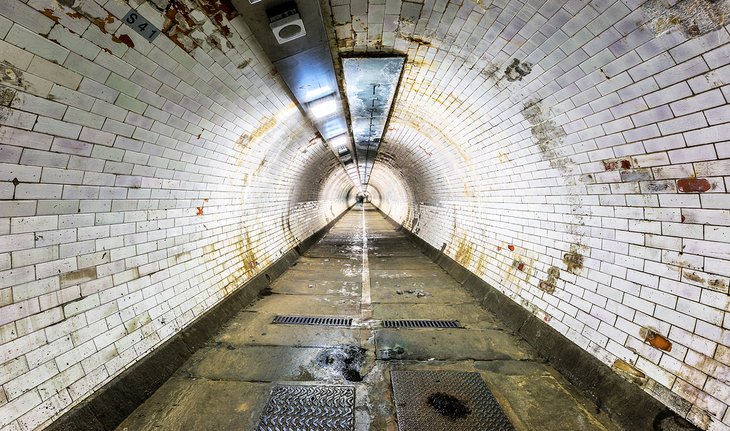
Both sides of the Thames in East London are well worth exploring. In fact, one of the best ways to do so is on foot, taking time to enjoy the many parks and green spaces you'll encounter while exploring the area's numerous excellent art galleries and museums. In fact, if walking is your thing, one of the top free things to do in London is take the historic Greenwich Foot Tunnel.
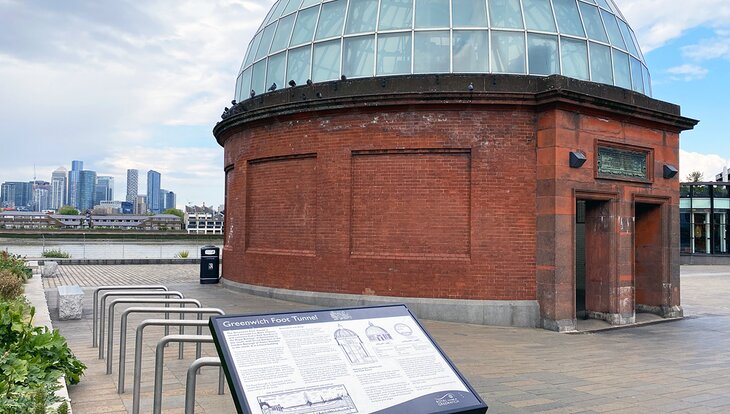
Connecting the Isle of Dogs area on the north bank of the Thames to Greenwich, this remarkable feat of engineering was built in 1902 and is a fun and fascinating way to cross (under!) the river. The Greenwich entrance to the tunnel is impossible to miss. Looking not unlike a mini-version of London's famous Albert Hall, it's located right next to the Cutty Sark.
If you have the time (and energy), you can in fact make a pleasant loop tour by heading back to the north bank of the Thames via the Woolwich Foot Tunnel located east of Greenwich.
Cross Over the Thames aboard the Emirates Air Line Experience
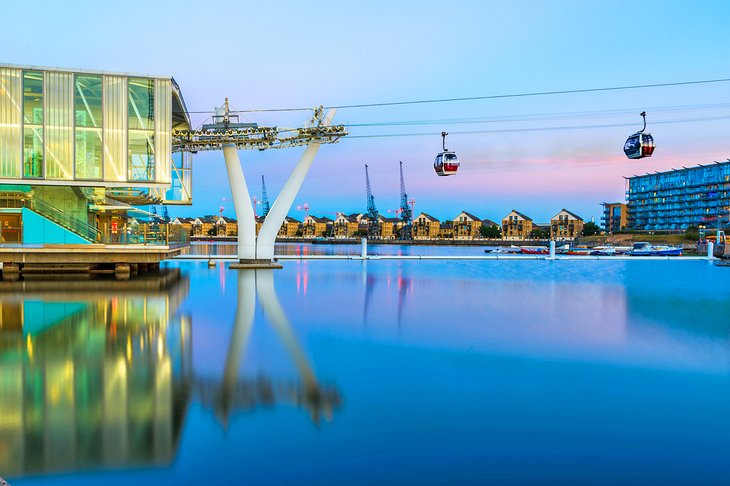
Another way to complete your Thames crossing "loop" is aboard the Emirates Air Line Experience. This fun cable car attraction has been providing visitors with spectacular London views since it opened in 2012.
Connecting Greenwich to Royal Victoria Dock in the Docklands area, the one-kilometer journey only takes a few minutes, but offers incredible selfie and memorable photo opportunities along the way. The cable cars operate until 11am each night, and offer equally spectacular evening views of London's skyline when it's lit up after dark.
Address: Unit 1, 2, 3 & 4 Emirates Cable Car Terminal, Edmund Halley Way, London
Official site: https://tfl.gov.uk/modes/emirates-air-line/?cid=emiratesairline
Visit the Museum of London Docklands
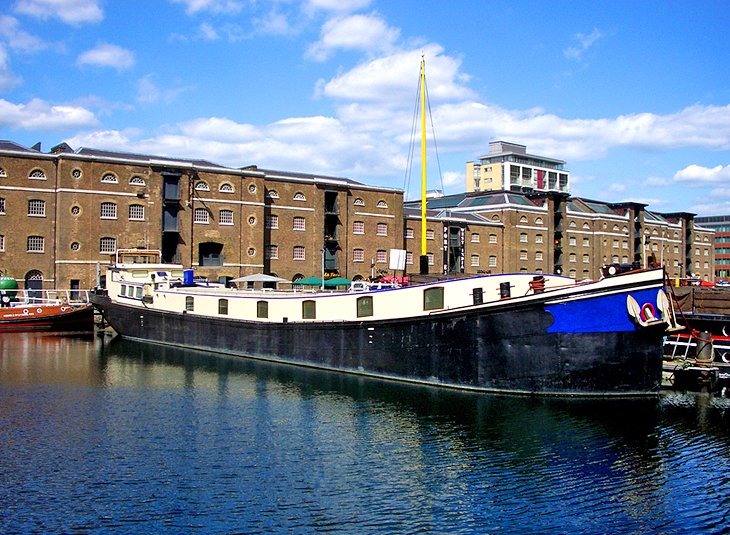
Located just across the river on the northern banks of the Thames is the revitalized Docklands. Easily accessible from central London by the excellent Docklands Light Railway, this historic area was once bustling with ships traveling to and from the far-flung corners of the British Empire.
These days, it's a very different kind of trading that goes on. Today, the Docklands area has been transformed into an international place of business, finance, and sightseeing, with modern business premises, hotels, recreation areas, and housing.
The best place to learn more about the area's rich history is by paying a visit to the Museum of London Docklands. It's located in the old Georgian warehouses on the north wharf of West India Docks, the Isle of Dog's last surviving multi-story warehouses from that period.
The museum explores the story of London's river, port, and people from Roman times to the recent regeneration of the Docklands. Many of its galleries feature fun, hands-on displays targeted at children.
Address: No1 Warehouse, West India Quay, London
Official site: www.museumoflondon.org.uk/museum-london-docklands
London's Mega Project: The Thames Flood Barrier
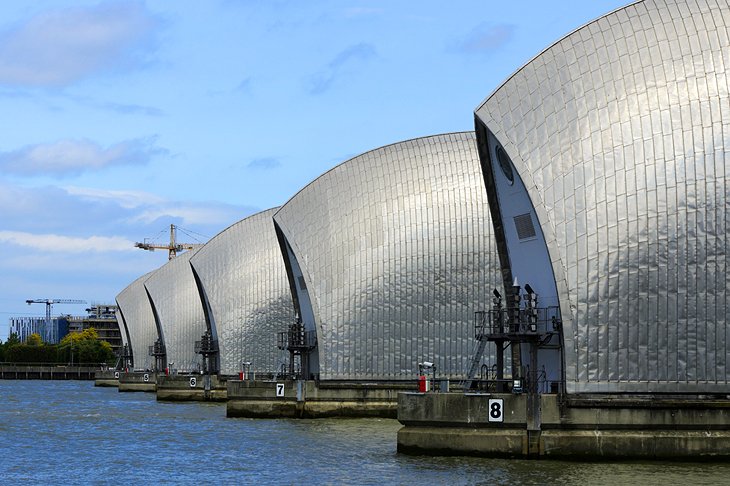
The Thames Barrier was constructed across the river near Woolwich, just a few miles downriver of Greenwich, in 1984 to prevent flooding upstream. This technical masterpiece, 569 yards wide, is the world's second largest movable flood barrier and sits atop huge piers supporting the steel gates that keep floodwaters out.
While visits to the actual barrier aren't permitted, there are good views from a riverside walk, and the visitor center has interesting displays concerning the construction and functioning of the barrier.
Official site: www.gov.uk/guidance/the-thames-barrier
Attend a Concert at The O2
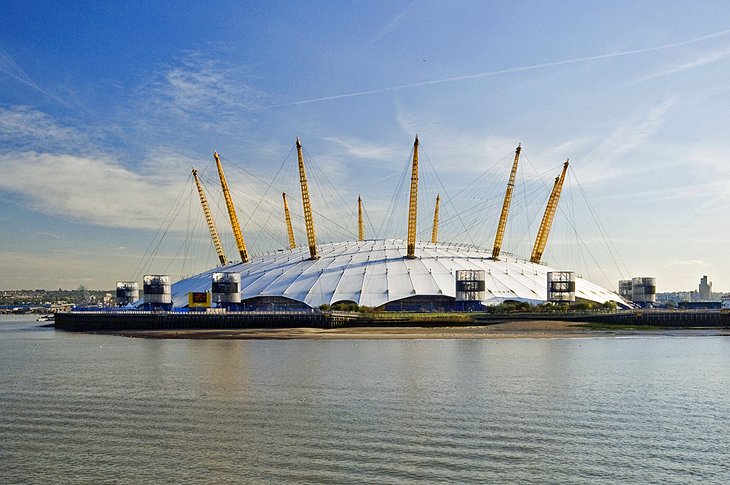
Formerly known as the Millennium Dome and constructed as a celebration of the year 2000, the O2 has since evolved into one of London's top entertainment and concert venues.
Today, the massive dome-shaped structure incorporates a music club (indigO2), the world's busiest concert hall (the O2 Arena), 11 movie screens, exhibition space (the O2 bubble), cafés and restaurants, as well as excellent views of Greenwich and both banks of the Thames.
The best views are from the superb Up at The O2 attraction, a thrilling 624-foot walkway stretching across the building's roof and with a spectacular viewing platform halfway along.
Location: Peninsula Square, London
Official site: www.theo2.co.uk
Take the Thames Clipper to The Tower and St. Katharine Docks
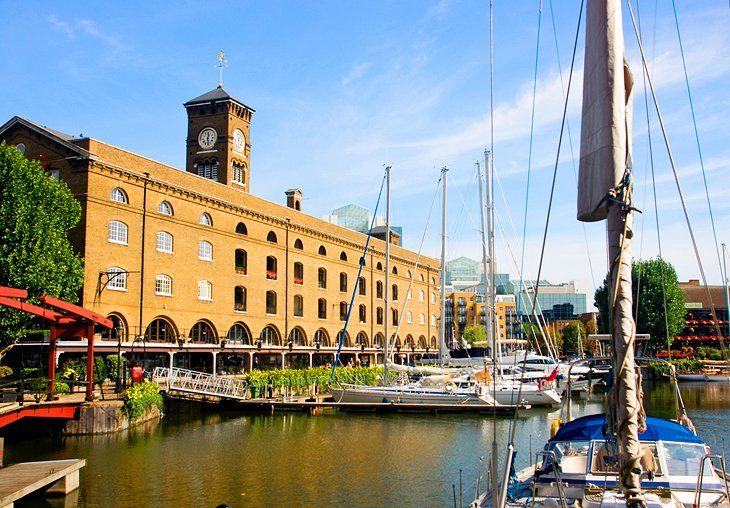
St. Katharine Docks, once considered a slum, is now one of the hippest areas of London's revitalized East End and has managed to keep much of its original character. It's easily reached by the Thames Clipper ferry service from Greenwich.
Many of the old warehouses here have been converted to dwellings. However, a number of important buildings, including the Dock Master's residence, the Dickens' Inn (1800), and the Ivory House (originally a store for ivory constructed in an Italian style) have all been carefully renovated. While a number of new buildings were also added, these were cleverly concealed behind old facades, and a newer addition, a food market, has also proven popular.
St. Katharine Docks is located handily beside Tower Bridge, the Tower of London, and Tobacco Dock, and makes a perfect place to get away from the crowds as you explore this historic riverside attraction.
Official site: www.skdocks.co.uk
Admire the Views of Greenwich from Canary Wharf
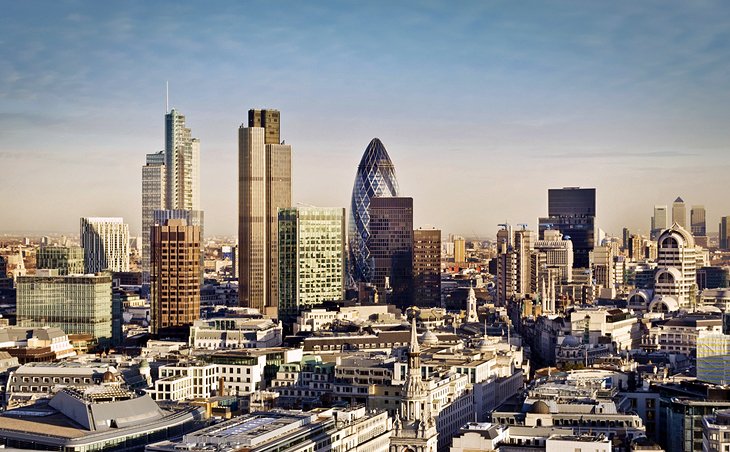
The highlight of Isle of Dogs is Canary Wharf, the most ambitious development in the Docklands. Also easily accessible from Greenwich, this self-contained mini-city covers 69 acres and consists of a multitude of towers housing international financial institutions, with Canary Wharf Tower being the tallest.
The area is interesting to stroll around and contains many cafés and restaurants, as well as Island Gardens Park, a pleasant three-acre waterfront green space. The views of the Cutty Sark, the National Maritime Museum, along with Greenwich Park are phenomenal, and from here, you can walk the Greenwich Foot Tunnel under the Thames to Greenwich and its many attractions on the south bank of the Thames.
Official site: http://canarywharf.com/
See London's Highest Church Clock at St. Anne's Limehouse
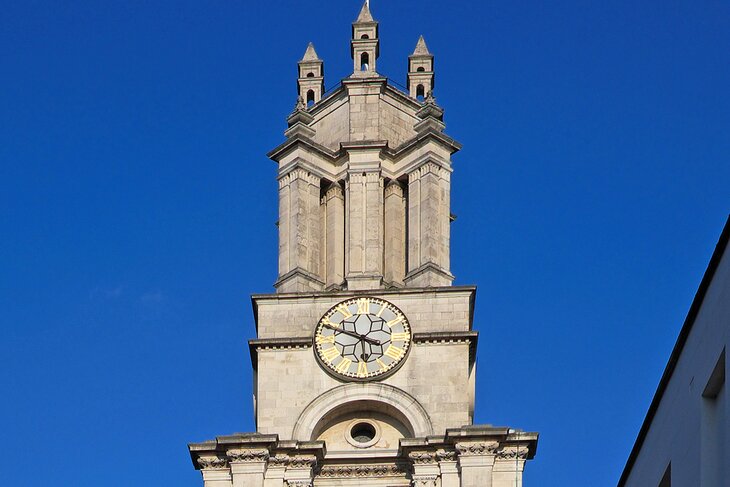
St. Anne's Limehouse, built between 1712 and 1724, is the principal church of the Docks of London. Located midway between St. Katherine Docks and Canary Wharf, it was the creation of Nicholas Hawksmoor, a student of Christopher Wren, and was restored in the mid 1800s.
Today, it remains one of the landmark attractions in Limehouse thanks largely to its clocktower, the highest church clock in London.
Address: Commercial Rd E14, London
Official site: www.stanneslimehouse.org
Explore the Museum of the Home
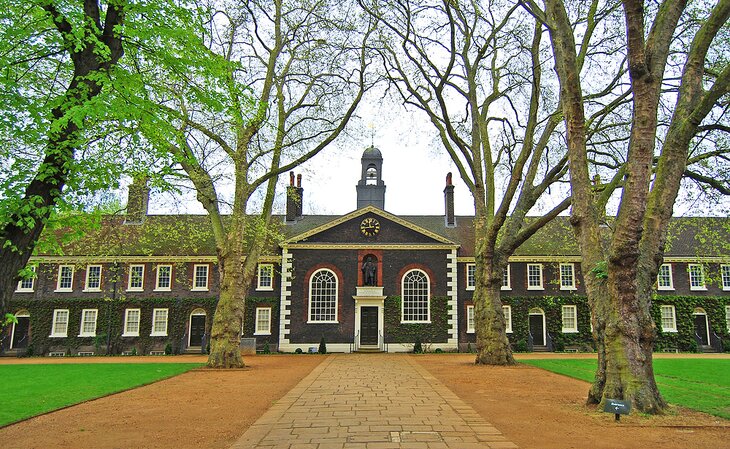
The Museum of the Home presents furniture and household objects from the 17th to 20th centuries in the former poorhouses of the Ironmongers' Company. Each room is furnished to represent different English styles from middle class homes, complete with furniture, textiles, paintings, decorative arts, and other household items.
There are also period gardens and an excellent walled herb garden. The museum's Learning and Education Centre contains a library on relevant subject matters and also presents a variety of programs and workshops.
Address: Kingsland Road, London
Official site: www.museumofthehome.org.uk
Eltham Palace
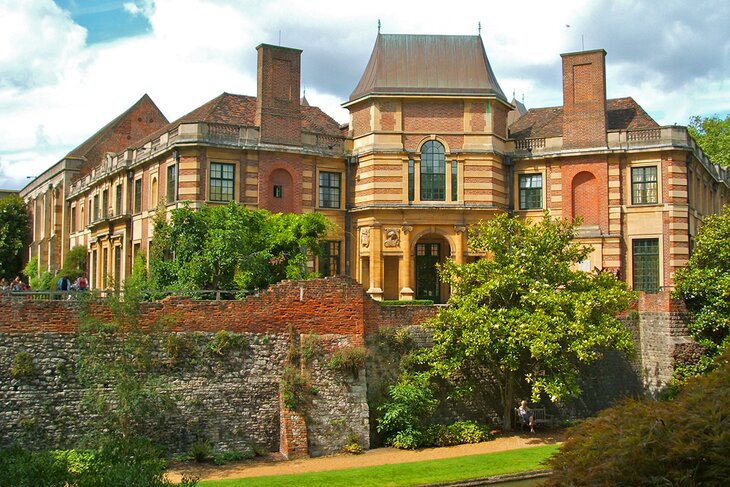
Eltham Palace is one of England's most stylish 1930s country houses and is built on the site of a former 14th-century palace inhabited by Edward IV and Henry VIII. Along with its superb Art Deco interior are the extraordinary gardens around the palace, as well as a moat planted with water lilies.
Nearby Sutton House is also worth a visit and is a rare example of a Tudor red brick house. Built in 1535, its many early details are on display in rooms like the Linenfold Parlour, with its Tudor oak-paneled walls carved to mimic cloth. There's also a fun adventure playground for kids, as well as a café and shop.
Address: Court Yard, Eltham, Greenwich, London
Official site: www.english-heritage.org.uk/visit/places/eltham-palace-and-gardens/
Whitechapel Art Gallery
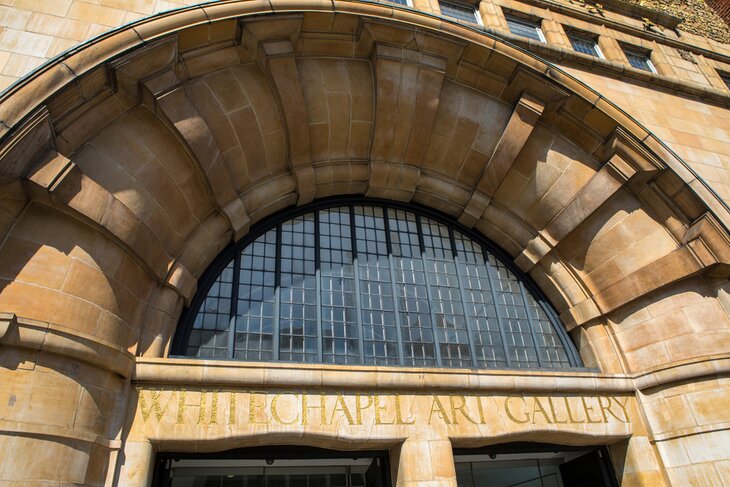
A great selection of modern and contemporary art is on display at the Whitechapel Art Gallery. Designed by Charles Harrison Townsend and opened in 1901, it has since developed an international reputation as one of the key galleries of modern art and is famous for having premiered world-class artists such as Pablo Picasso and Jackson Pollock.
In addition to its stunning art exhibits, it also hosts many lectures and films. For a fun experience, check into one of the regular late night "after hours" gallery openings.
Address: 77-82 Whitechapel High Street, London
Official site: www.whitechapelgallery.org
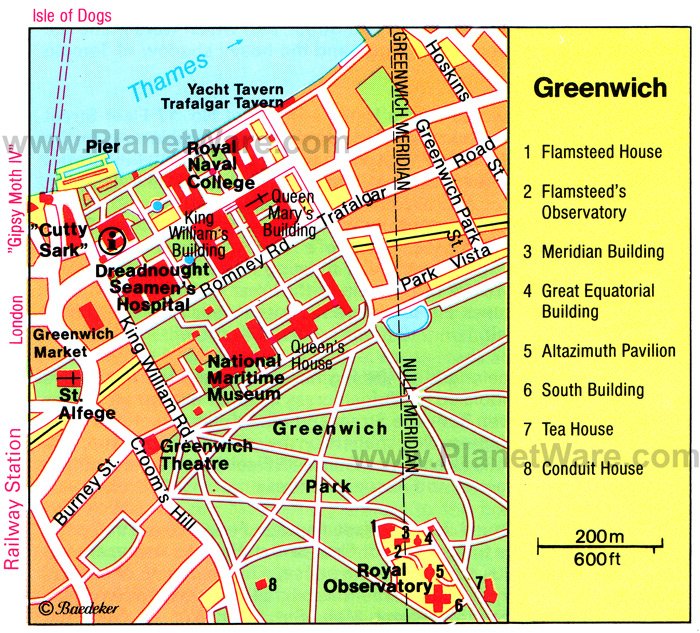
Map of Things to Do in Greenwich, London
More Related Articles on PlanetWare.com
Take the Tube: The city's fantastic Underground system, or "the Tube" as it's more commonly referred to, makes exploring London's top attractions and things to do extremely easy and affordable. Easy-to-get-to-by-Tube points of interest include magnificent Buckingham Palace (nearest Tube: Westminster or Hyde Park), the historic Tower of London (nearest Tube: Tower Hill), and iconic Trafalgar Square (nearest tube: Charing Cross), to name but a few.
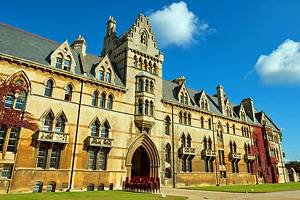
Fun Day Trips from London: Britain's rail network is also extremely efficient and can whisk you away to explorations of London's surrounding attractions. Popular choices include Hampton Court and Windsor Castle, fun-to-visit royal palaces on London's outskirts, and the university towns of Oxford and Cambridge, each an easy rail ride away.
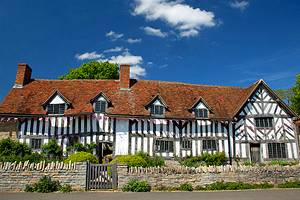
UK Vacation Ideas: Few places to visit on the planet exude the same romantic charm as the Somerset town of Bath, famous for its Roman baths and exquisite Georgian architecture, and widely considered one of the country's most attractive urban vacation destinations. Other great vacation ideas include Canterbury in Kent, famous for its medieval cathedral and old city center, and attractive Stratford-upon-Avon, Shakespeare's birthplace and one of the country's best-preserved Elizabethan market towns.