Visiting Windsor Castle: 10 Top Attractions
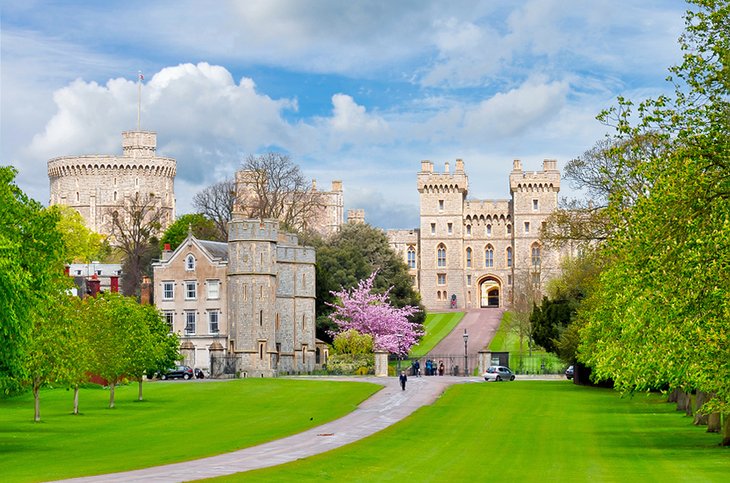
Spectacular Windsor Castle has long been the summer residence of British Royals. Ever since William the Conqueror built the first castle here in 1078, royal families have stayed for extended periods, many leaving their own unique stamp on the property.
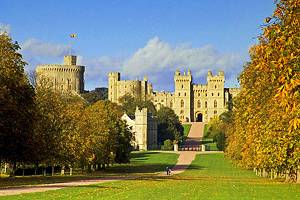
Windsor Castle is the longest occupied royal residence in Europe. Much of it is open to the public, and it is one of England's major tourist attractions. It's designated as one of the official residences of Queen Elizabeth II, and it's actually pretty easy to tell if the monarch is at home. When visiting, take a peek up at the castle's Round Tower; if the Royal Standard is flying, the Queen's at home.
As a general rule of thumb, the Queen spends most weekends here, and extends that for a whole month over Easter (hence the castle being known as "Easter Court" during this time). She also hangs out here for a week in June during Royal Ascot, as well as attending the annual Order of the Garter service at St. George's Chapel.
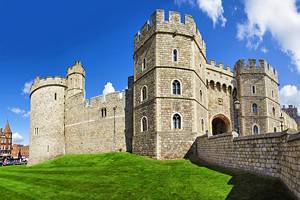
There's certainly a great deal to see here, and the best part of a day could be spent exploring the castle and its grounds. In fact, Windsor Castle is built around two courtyards: the Upper Ward and the Lower Ward, with entrance through the monumental Henry VIII's Gate, erected in 1511.
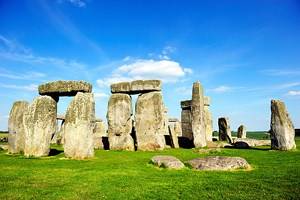
Windsor Castle is easy to combine with other nearby attractions, such as Stonehenge, on a day trip from London. To help you make the most of your visit, check out our list of the top attractions of Windsor Castle, along with tips and tours.
- 1. St. George's Chapel
- 2. Albert Memorial Chapel
- 3. The State Apartments
- 4. The Semi-State Rooms
- 5. Queen Mary's Dolls' House
- 6. Changing the Guard
- 7. The Horseshoe Cloisters
- 8. Windsor Castle Gardens
- 9. The Towers
- 10. Home Park and Great Park
- Tips and Tours: How to Make the Most of Your Visit to Windsor Castle
- Where to Stay near Windsor Castle for Sightseeing
- Map of Windsor Castle: Top Attractions
1. St. George's Chapel
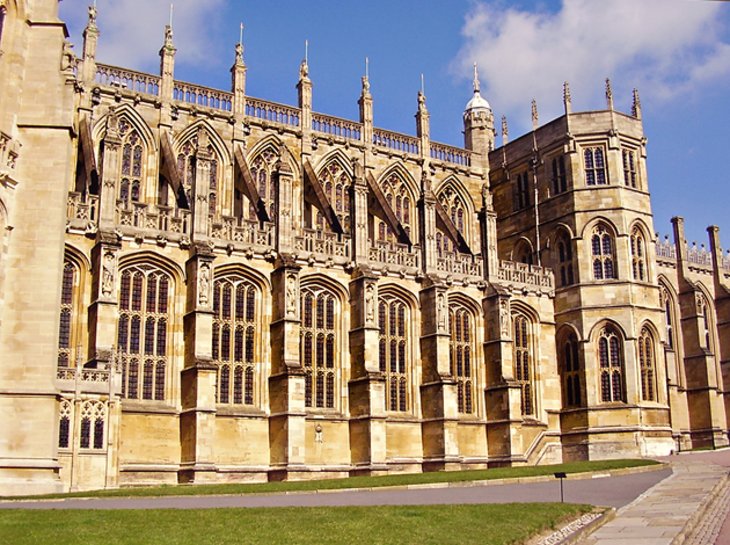
The chapel of The Knights of the Order of the Garter, considered among the finest examples of the English Perpendicular Gothic style, is dedicated to St. George and was begun by Edward IV in 1474.
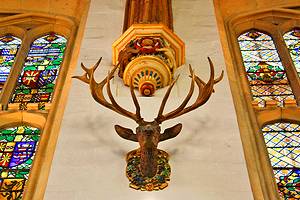
The facades are decorated with heraldic emblems of the ruling houses of Lancaster and York - in the north are the deer, bulls, falcons, and black dragons of the Yorks, and in the south are the unicorns, lions, swans, and red dragons of the Lancasters.
The fan vaulting in the nave and choir is impressive, as is the stained glass west window (1503). Behind and above the stalls are the coats of arms, banners, and decorative plumes of 700 Knights of the Order.
The chapel has several royal tombs, including those of George V and Queen Mary, parents of Queen Elizabeth II. Henry VIII and Charles I are interred in the vault beneath the choir, while Henry VI, Edward IV, and Edward VII are buried in the sacristy. St. George's Chapel is the traditional home of the 26 Knights and Ladies of The Most Noble Order of the Garter - Britain's highest order, established in 1348 by Edward III.
More recently, the Queen's husband, Prince Philip, was interred here after his death at age 99 in April, 2021. He was the Royal Family's 25th member to be interred in St. George Chapel's Royal Vault.
While the Royal Vault is not open to the public, the chapel is open to all every day except Sunday.
2. Albert Memorial Chapel
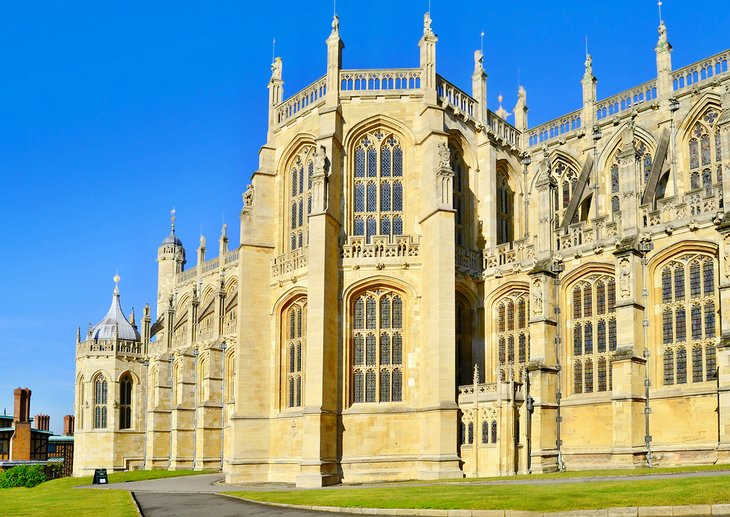
Originally known as the Lady Chapel and built in 1500 to contain Henry VII's tomb (he was buried instead at Westminster Abbey), the Albert Memorial Chapel was dedicated to the memory of Queen Victoria's husband, Prince Albert, after his death in 1861.
The interior is elaborately decorated with colored marble, mosaics, and sculptures, and contains the sarcophagus of the Duke of Clarence (1864-1892), the eldest son of Edward VII. The marble figure on the west door depicts the Duke of Albany (d. 1884) in Scottish finery. The chapel is accessed through a passage at the east end of St. George's Chapel.
3. The State Apartments
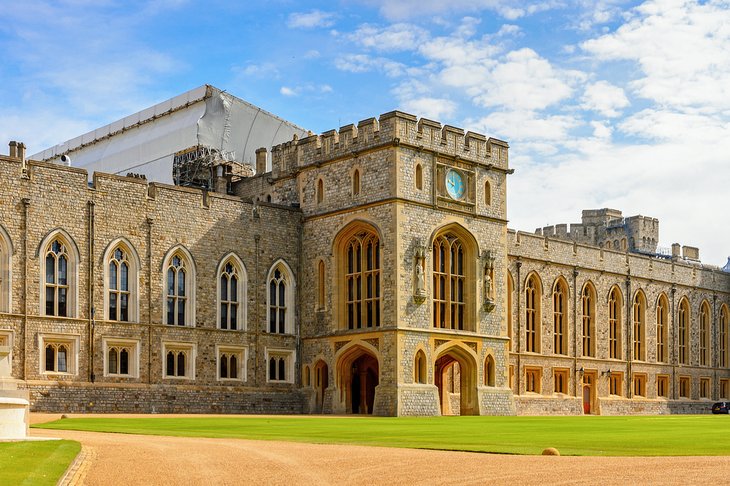
Only open when the Queen isn't in residence (check whether the royal flag is flying above the castle - if so, she's home), Windsor Castle's State Apartments have changed throughout their history to reflect the current monarch's tastes. The major renovations were made in the 17th century by Charles II (who wanted his palace to rival Versailles) and in the 19th century by George IV.
A devastating fire at Windsor Castle in 1992 destroyed much of the southern part of the State Apartments, which have since been restored to their original splendor. Extensive restorations to Windsor Castle were completed in 2019, when the Inner Hall was opened to the public for the first time since the reign of Queen Victoria.
The most notable rooms are the Queen's Gallery and the Dining Hall, each with a magnificently painted ceiling and woodcarvings. Art treasures include a large collection featuring works by Leonardo da Vinci, Michelangelo, Rubens, Canaletto, and Rembrandt, along with period furniture, armor, weapons, and even the bullet that killed Lord Nelson at the Battle of Trafalgar.
4. The Semi-State Rooms
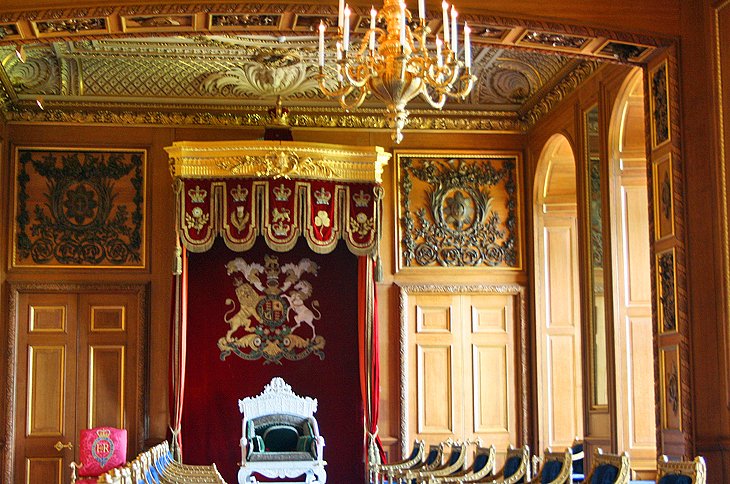
Like the State Apartments, the equally opulent private apartments created for George IV are open to visitors between September and March, when they are not in use for official entertaining. These are among the most richly decorated interiors in the castle and are used by the Queen for official entertaining.
The most opulent of this new suite of apartments is the magnificent Crimson Drawing Room, with its damask walls and gold-leafed furnishings. This part of the castle was severely damaged in the fire of 1992, but luckily the valuable art and decorations had been moved elsewhere when the fire struck. The rooms have been fully restored according to the original plans.
5. Queen Mary's Dolls' House
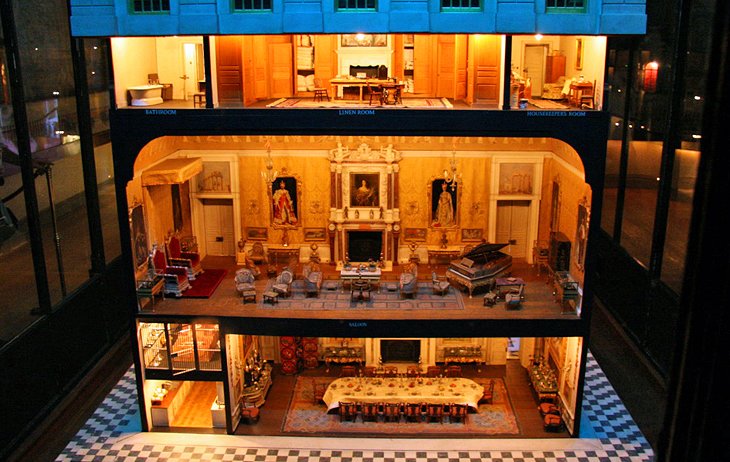
One of the most popular things to see in Windsor Castle is Queen Mary's Dolls' House, a masterpiece of craftsmanship presented to Queen Mary in 1924. Designed by the leading architect of the day, Sir Edwin Lutyens, it is furnished in working miniatures created by some of the era's preeminent artists, designers, and craftspeople.
A perfect replica in miniature of an aristocratic home, it's filled with thousands of objects, many of which actually work - drawers open, cars in the garage have engines that run, running water flows from the tiny faucets, the linens are monogrammed, and the library is filled with miniature books, all in 1/12 scale. Queen Mary used it as a display to raise funds for charities.
6. Changing the Guard
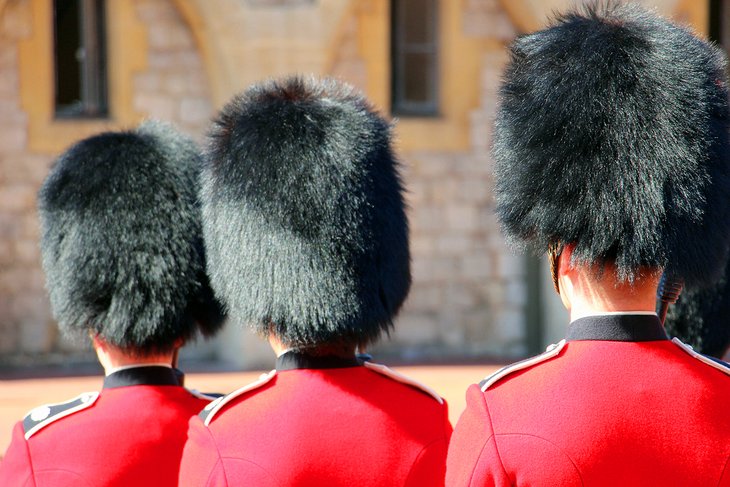
No visit to Windsor Castle would be complete without witnessing the Changing the Guard ceremony. The ceremony is similar to the daily guard changing at Buckingham Palace.
This traditional bit of British pageantry takes place in the Castle Precincts Monday through Saturday mornings at 11am, from April through July. The rest of the year, it occurs on alternate days, weather permitting. The entire ceremony takes about half an hour.
If you are on the palace grounds, plan to be in the parade ground by the main exit, in front of St. George's Chapel, to watch the ceremony. Although you cannot see the actual ceremony from outside the grounds, the band marches through the town first, passing the Guildhall and Queen Victoria's statue near the palace gate.
7. The Horseshoe Cloisters
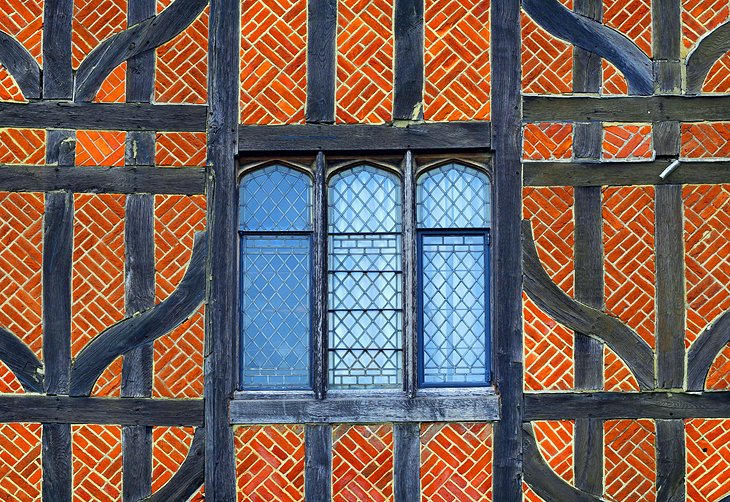
On the south side of the Lower Ward are the houses of the Military Knights of Windsor, also members of The Most Noble Order of the Garter. Known as the Horseshoe Cloisters, they were built in 1479 to house clergy. The building is constructed of brick and timber frame, with unusual curving timbers and diagonal brickwork.
The Dean's Cloisters and Canons' Cloisters, former homes of the dean and the canons that were originally built by Edward III, are also highly picturesque and worth taking a look at.
8. Windsor Castle Gardens
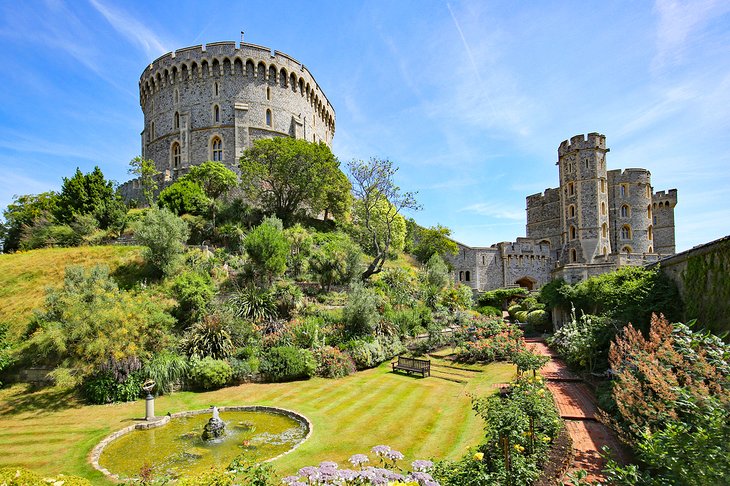
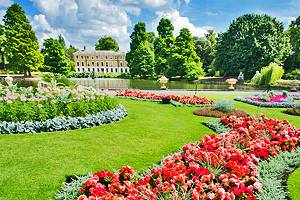
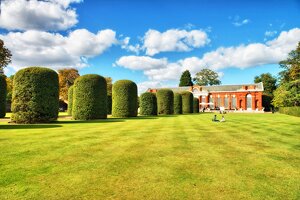
Because of the castle's hilltop setting, its gardens are relatively small and lie in terraces that extend east from the Upper Ward.
From late July through late September, when the North Terrace is open to visitors, you can get a good view over the East Terrace Garden.
9. The Towers
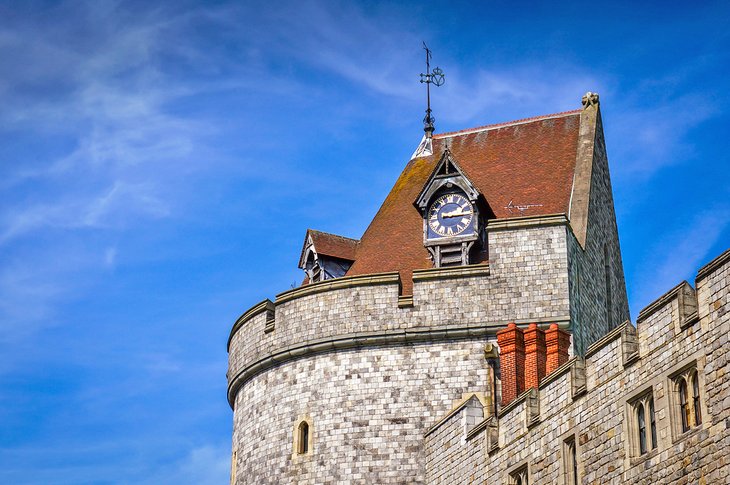
Built in 1227 and among the Lower Ward's oldest surviving buildings, the Curfew Tower incorporates some of the oldest masonry in Windsor Castle. Within the tower is part of a 13th-century dungeon, with the beginning of an escape tunnel that was thwarted by the thickness of the walls. The cone-shaped tower was added in the 1800s.
The Round Tower (from which the Royal Standard is flown) is surrounded on three sides by a deep moat, was built by Henry II. A guided tour called "Conquer the Tower" takes visitors inside to climb the 200 steps to a view from 65.5 meters above the Thames River.
From here, you can see the vast magnitude of the castle complex, along with its parklands and the five-kilometer Long Walk, created by Charles II. Views extend farther, along the Thames Valley to the London skyline.
10. Home Park and Great Park
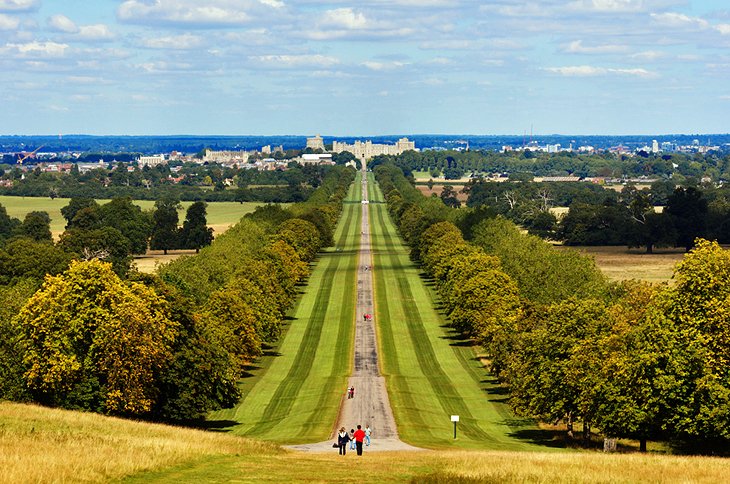
Great Park extends along the south side of the castle for nearly six miles and has an impressive herd of red deer. Home Park is used as a sports area for archery, rugby, cricket, and tennis, and this is also where you'll find some of the best views of Windsor Castle, especially at night.
Inside the park are Frogmore House, where various royals have lived throughout the centuries, and the Mausoleum in which Queen Victoria and Prince Albert are buried. In the gardens are several buildings, including a folly in the form of a Gothic ruin.
Frogmore House and Gardens are occasionally open to visitors: three charity days are scheduled annually and in August it is open to pre-booked groups.
Tips and Tours: How to Make the Most of Your Visit to Windsor Castle
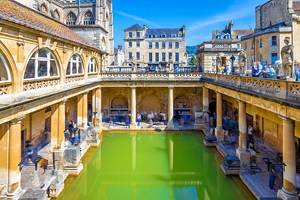
- Tours of Windsor Castle: A great way to visit Windsor Castle from London and see its highlights is to combine it with two other major attractions of southern England on an 11-hour Stonehenge, Windsor Castle, and Bath Day Trip from London. Your day will be packed with fun things to do. On this full-day tour, you'll visit the lavish State Apartments and see St. George's Chapel with your guide, and possibly also see the Changing of the Guard. Instead of Bath, you can visit Oxford on a 9.5-hour Windsor Castle, Stonehenge, and Oxford Custom Day Trip, also leaving from London. Inside the castle, you can get free audio tours.
- For Your Comfort: Wear good walking shoes, as there's a lot of wandering, with steps and a hill. You can leave packs and coats in the cloakroom.
- What's On: Throughout the year, Windsor Castle hosts many events and exhibitions, so be sure to visit the events section of their website before your arrival.
- Getting There: Trains to Windsor run regularly from London's Victoria and Paddington stations, and Green Line buses depart from Victoria Coach Station. For those who plan to visit Windsor Castle and Hampton Court Palace in the same day, a shuttle service connects them, allowing time to spend half a day at each. Check out From London to Windsor Castle: 5 Best Ways to Get There for more ideas and info.
Address: Windsor Castle, Windsor, Berkshire
Official site: https://www.royalcollection.org.uk/visit/windsorcastle
Where to Stay near Windsor Castle for Sightseeing
Windsor is a compact town, and it's easy to get around on foot. It is close to Heathrow Airport and a good first stop on a trip, with easy train and bus connections from here to London. Those traveling by car should be prepared for very high parking rates in Windsor, making those lodgings with included parking highly desirable. The river separates Windsor from Eton, but hotels there are a short walk from the castle, which sits right alongside the Thames.
These are highly rated hotels close to Windsor Castle, shopping, and other tourist attractions.
Luxury Hotels:
- A two-minute walk from the gates of Windsor Castle, Macdonald Windsor Hotel is also right in the center of the shopping streets, with several restaurants within a five-minute walk. Known for its personal service and luxury touches, the hotel has its own brasserie and room service.
- For a quintessential British experience, choose Oakley Court, an elegant country house that's been the setting of many films and has its own polo team. Although not right in the town center, the location is lovely, with river views and amenities — a pool, sauna, and steam room; tennis courts; parking; and free bicycles — unavailable in an in-town setting.
- Also in a rural setting and perfect for families, the chalets at Willow Court Farm have built-in bunks for children along with luxurious king-sized beds. Kids love gathering their own breakfast eggs in the morning and meeting the various animals on this mini-farm.
Mid-Range Hotels:
- Traditionally decorated or chic modern rooms at the Castle Hotel Windsor MGallery Collection have mini-bars and free internet access. This 4-star hotel is located in Windsor, close to the main gates of Windsor Castle and on the main shopping street, but double-glazed windows keep guest rooms quiet.
- The George Inn is a traditional English inn with eight guest rooms, and guests enjoy a full English breakfast (included in the rate). Most have views of the castle, a five-minute walk just across the river.
- In a charming half-timbered house, The Old Farmhouse carries its period style throughout the interior, with exposed timber framing and beams in the guest rooms and furnishings for rustic elegance. Some rooms have window seats, and both breakfast and Wi-Fi are included, as is parking. The hotel is family-friendly and close to a selection of restaurants.
Budget Hotels:
- A short distance from the Queen Victoria Statue at the entrance to the castle, Travelodge Windsor Central Hotel is a two-minute walk from the train station, handy for those arriving by train from London. The functional rooms have paid internet.
- The Crown and Cushion is a traditional pub hotel that's been in operation since 1753 on Eton High Street, only minutes from Windsor Castle. Its eight guest rooms include two kings and six doubles, and roll-away beds can be added at no extra cost. Note that these historic hotels usually have upstairs rooms, so ask when booking.
- Another traditional public house inn, The Windsor Trooper is on a street leading up to the castle, with lots of nearby restaurant choices. No breakfast is served, but all rooms have kettles with complimentary tea and coffee. Rooms have been recently renovated and updated.
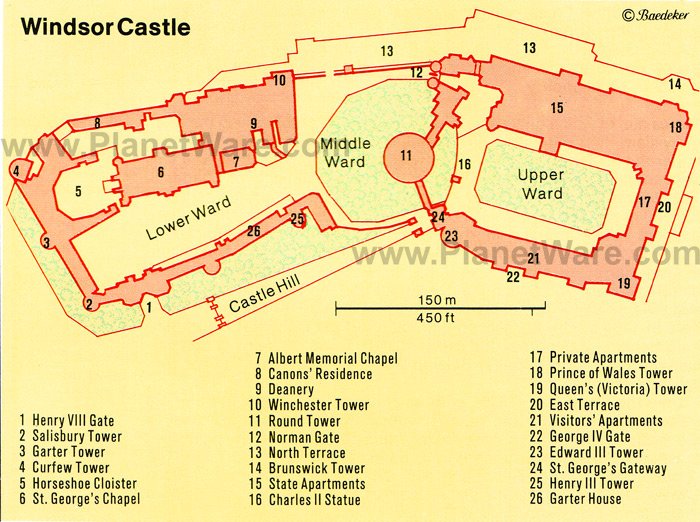
Map of Windsor Castle: Top Attractions
More Related Articles on PlanetWare.com
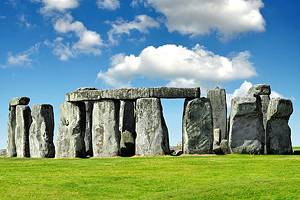
Places to Visit near Windsor Castle: After visiting the other attractions of Windsor, you will want to see nearby Stonehenge, one of the top tourist attractions in England.
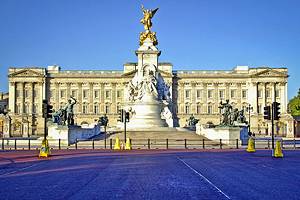
Other Royal Castles and Palaces to Visit: While in London you can visit Buckingham Palace, and King Henry VIII's Hampton Court Palace is only 16 miles from Windsor. Or you can travel to Edinburgh to tour the Queen's Scotland residence, Holyrood Palace, and the historic highlights of Edinburgh Castle.