15 Top-Rated Attractions & Places to Visit in Oxford
Oxford is one of the oldest and most celebrated university towns in Europe, and for centuries has rivaled Cambridge for academic pre-eminence in England. Its untrammeled spirit of exploration, numerous delightful gardens, courtyards, and university parks - together with the hectic bustle of its pedestrian zone and excellent cultural facilities - all help create a very special atmosphere.
Oxford has plenty of tourist attractions, including Carfax Tower, offering superb views over the city, and the historic Covered Market with its excellent shopping. For a truly unique vacation experience, some university colleges now offer accommodation options, including bed and breakfast.
Harry Potter fans may be interested to learn that various Oxford landmarks appeared in the movies, including Christ Church College, where the dining room was closely copied for the Hogwarts Great Hall. And for something a little quirkier, check out the (in)famous Headington Shark, a shark sculpture stuck headfirst in the roof of a humble terraced house.
To learn more about these and other great places to visit in this lovely part of England, be sure to read through our list of the top attractions and things to do in Oxford.
See also: Where to Stay in Oxford
- 1. Explore Historic Oxford City Center
- 2. Visit the University Church of St. Mary the Virgin
- 3. Christ Church Cathedral
- 4. Christ Church College
- 5. Magdalen College
- 6. Radcliffe Square & the Bodleian Library
- 7. Sheldonian Theatre
- 8. Visit England's Oldest Museum: The Ashmolean Museum
- 9. History of Science Museum
- 10. Martyrs' Memorial
- 11. Shopping in Cornmarket Street
- 12. Oxford Castle & Prison
- 13. Oxford University Museum of Natural History
- 14. Take a Trip to Blenheim Palace
- 15. Enjoy a Drive to Abingdon-on-Thames
- Where to Stay in Oxford for Sightseeing
- Map of Attractions & Things to Do in Oxford
1. Explore Historic Oxford City Center
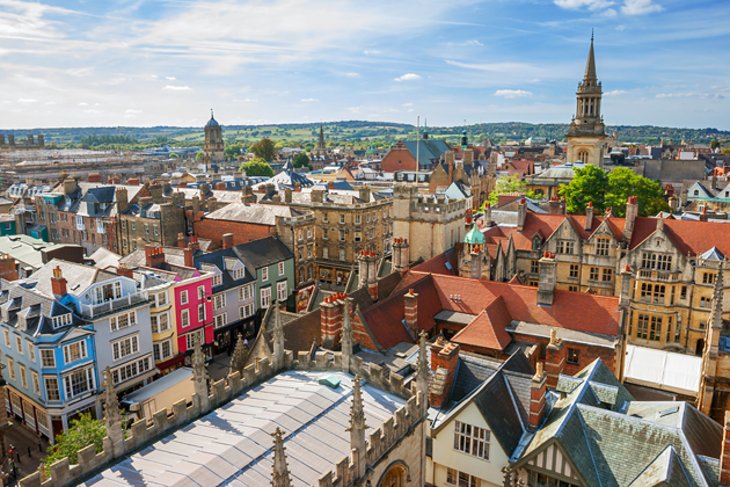
Although the center of Oxford is not large, plenty of time should be allowed for a visit since there are so many things to do here. The city's four principal streets meet at the intersection known as Carfax, a good starting point for your exploration. Here, you'll find the 14th-century Carfax Tower, a relic of St. Martin's Church (now destroyed), which has great views over the city.
Also worth visiting are the Town Hall, St. Aldate's Church (1318), and Pembroke College, founded in 1624 but with origins dating back to 1446. The nearby Modern Art Oxford, a visual art gallery focusing on exhibitions of modern and contemporary art, regularly offers talks, music, and movies.
Oxford's splendid High Street is lined with numerous magnificent buildings, including many of the colleges the city is so famous for. In fact, it's so pretty, it was famously described by American writer Nathaniel Hawthorne as "the finest street in England."
Address: High Street, Oxford
2. Visit the University Church of St. Mary the Virgin
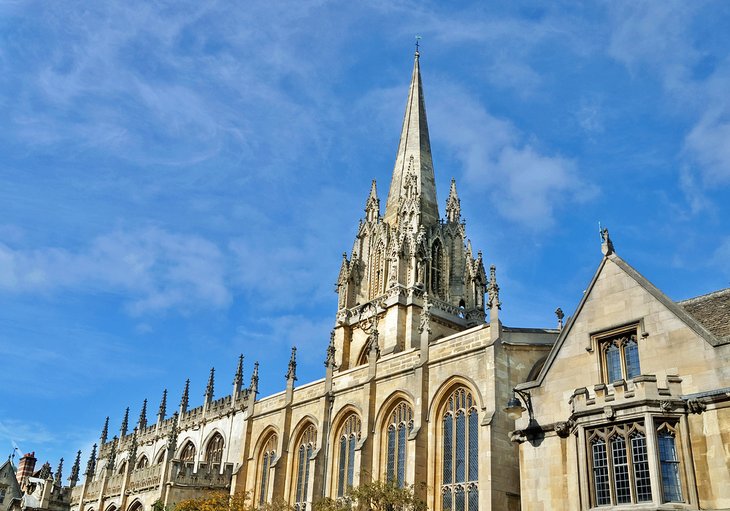
While sightseeing in the city center, be sure to include the University Church – the University Church of St. Mary the Virgin (or simply St. Mary's) – on your Oxford itinerary. A highlight of your visit should be climbing its finely decorated tower. Built around 1280, this vantage point offers excellent views of the city and the surrounding countryside.
Also of interest is the choir. Rebuilt in 1462, it faces the nave and Lady Chapel, dating from 1490, and the stalls, dating from 1466. Another notable feature is the porch you will have walked through when entering the church. Look carefully, and you'll still see marks made by bullets from the guns of Oliver Cromwell's troops during the English Civil War.
Address: High Street, Oxford
Official site: www.universitychurch.ox.ac.uk
3. Christ Church Cathedral
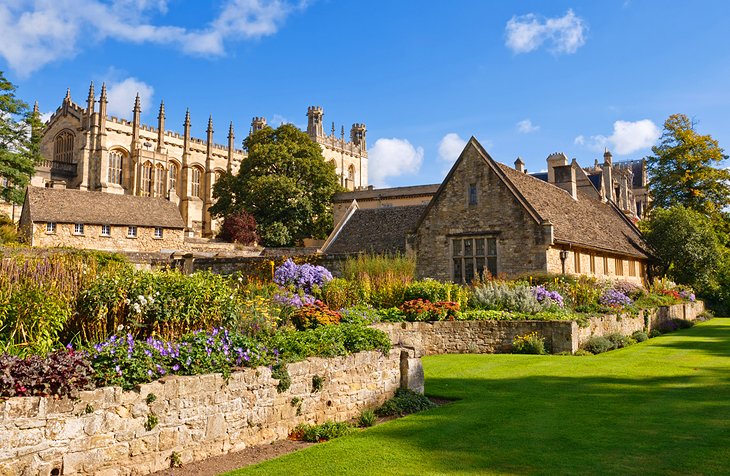
Although the present building dates from the 12th century, Christ Church acquired cathedral status in 1546. The most striking feature in the interior is the double arcading of the nave, creating an impression of much greater height.
In the 14th century, the church was extended to the north, and the choir was created in 1500 with fan vaulting overhanging keystones. In the south transept is the Thomas Becket window (1320) and five glass windows designed by Edward Burne-Jones and made by William Morris in 1871.
Also of note are the St. Frideswide window (1858) and three 14th-century tombs of Lady Montacute, Prior Sutton, and John de Nowers, as well as the remains of the Frideswide's shrine (1289). The grave of philosopher George Berkeley (1681-1735), who gave his name to the town of Berkeley in California, is also located at the cathedral.
Location: St. Aldates, Oxford
Official site: www.chch.ox.ac.uk/cathedral
4. Christ Church College
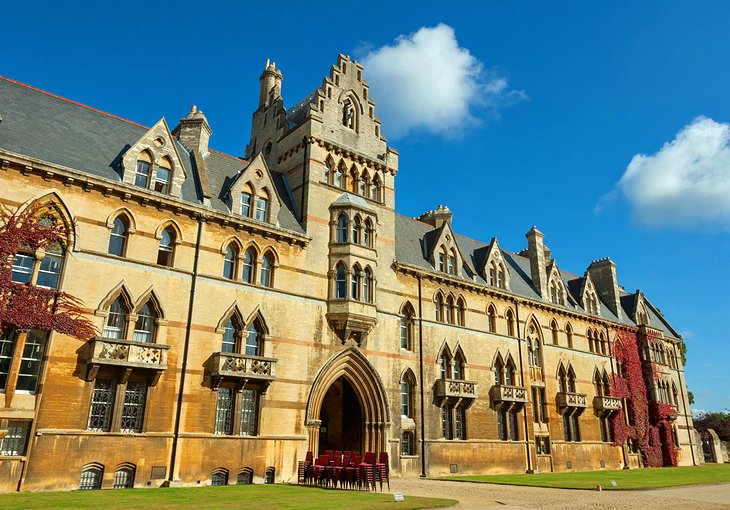
Christ Church, one of the largest of Oxford's colleges, was founded in 1525 by Cardinal Wolsey and re-founded after his fall by Henry VIII. Tom Tower, added by Christopher Wren in 1682, contains a huge seven-ton bell known as Great Tom, which peals 101 times every evening at 9:05pm (once for each member of the original college).
The main quadrangle, with its charming fountain, is known as Tom Quad and is the largest courtyard in Oxford. The lower tower, with its fine staircase and fan vaulting, leads up to the hall, an elegant dining room with a magnificent wooden ceiling completed in 1529. Portraits of Henry VIII and distinguished members of the college – including William Penn, founder of Pennsylvania – adorn the walls.
Beyond the Deanery, where Charles I lived from 1642 to 1646, is Kill-Canon, a passage so chilly that it was feared canons would catch their death of cold. Kill-Canon leads to Peckwater Quad, with its library containing drawings and mementos of Cardinal Wolsey.
Art lovers will also want to visit Christ Church Picture Gallery. This fine gallery is home to an important collection of 300 Old Masters and 2,000 drawings.
Location: St. Aldate's, Oxford
Official site: www.chch.ox.ac.uk
5. Magdalen College
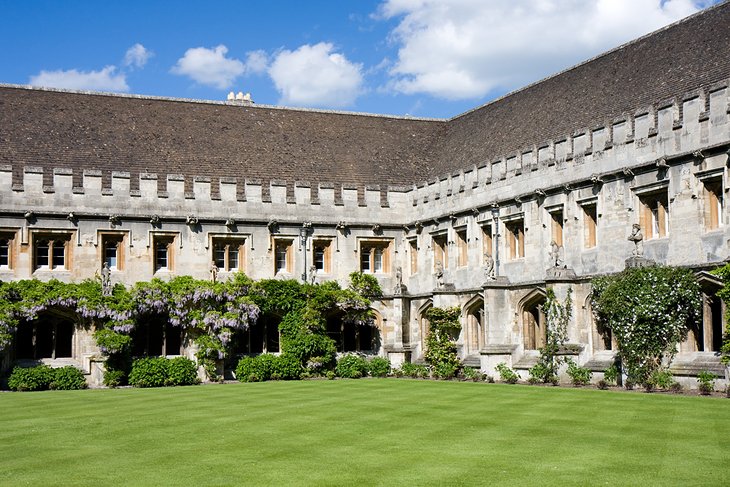
Magdalen College was founded in 1458 on a site outside the town walls. Its lovely Magdalen Tower was built in 1482, while the Muniment Tower is the entrance to the chapel where evensong is sung by the college's renowned choir.
There are state apartments with early-16th-century tapestries in the Founder's Tower, and underneath, a passage leads into the cloisters with grotesque figures known as "hieroglyphs." Magdalen College also offers bed-and-breakfast accommodation when rooms are available.
Beyond the college stretches a deer park called the Grove and a bridge leading over the River Cherwell into the Water Walks. Opposite the entrance to the college is the University of Oxford Botanic Garden, founded in 1621 and one of the oldest in England.
Plants from all over the world can be found here, including the Magdalen Rose Garden. This attractive garden was a gift from the Albert and Mary Lasker Foundation of New York to commemorate the development of penicillin, in which Oxford played a considerable part. Also worth a visit is the satellite Harcourt Arboretum.
Address: Rose Lane, Oxford
Official site: www.magd.ox.ac.uk
6. Radcliffe Square & the Bodleian Library
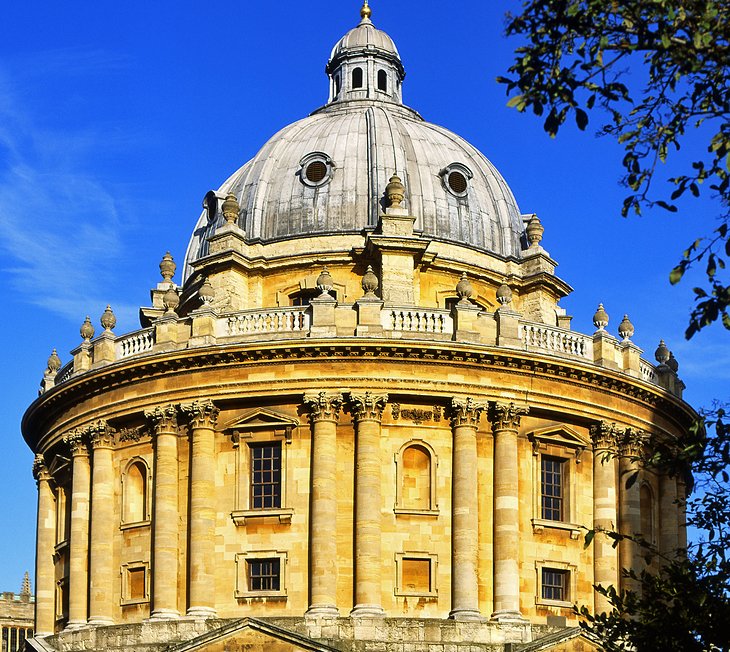
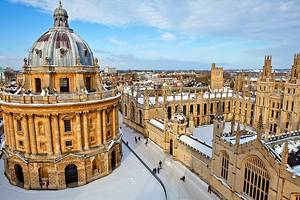
Located in the city center, Radcliffe Square is home to many of the city's most important college buildings. Here, you'll find the Old Schools Quadrangle (1613) and the Radcliffe Camera (1737), a rotunda that originally housed the Radcliffe Library.
The 16-sided room on the ground floor is now a reading room for the Bodleian Library, the university library and the country's first public library, founded in 1598. A copy of every book published in Britain is deposited here, including some two million volumes and 40,000 manuscripts. From the library, you can also explore the magnificent Divinity School.
Address: Broad Street, Oxford
Official site: www.bodleian.ox.ac.uk
7. Sheldonian Theatre
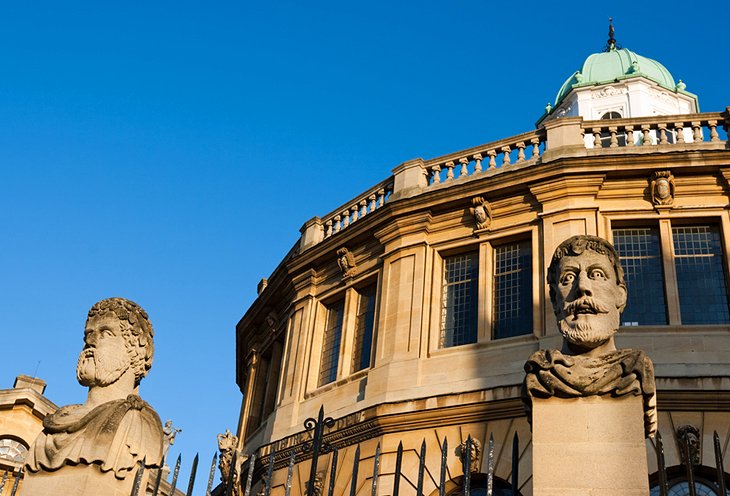
Constructed in 1664, the Sheldonian Theatre was Sir Christopher Wren's second major building. Of special interest here is the historic venue's spectacular ceiling fresco. Restored in 2008, the fresco – which depicts "Truth" removing "Ignorance" from the University – consists of 32 panels originally painted in the 1600s. Guided tours (as well as self-guided tours) are available.
In addition to being used for concerts and lectures – as well as the occasional theatrical performance – it's still used for the university's annual Commemoration.
Address: Broad Street, Oxford
Official site: www.sheldonian.ox.ac.uk
8. Visit England's Oldest Museum: The Ashmolean Museum
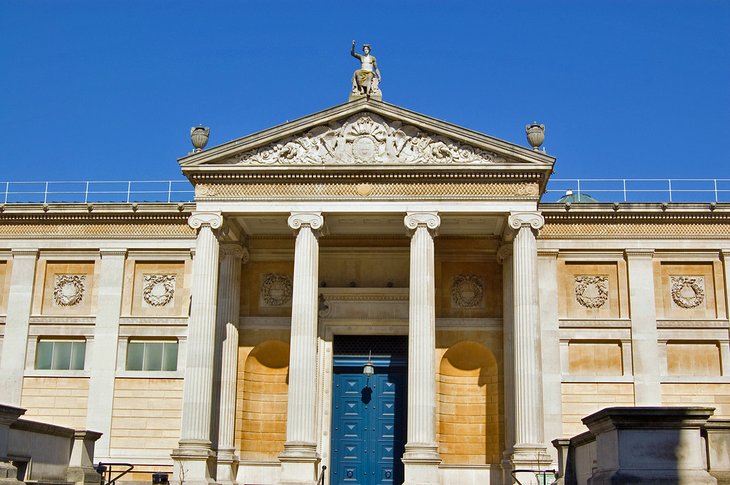
The Ashmolean Museum – formerly known as the Ashmolean Museum of Art and Archaeology – was founded in 1683. Not only is it the oldest museum in the country, it's also the most important of the four university museums. The Neoclassical building houses a magnificent collection of art and antiquities, including classical sculpture, Far Eastern art, Greek and Roman pottery, and a valuable collection of jewelry.
Other Oxford museums that should be added to travel itineraries include the Pitt Rivers Museum, with its fascinating anthropological and archaeological collection, and the Museum of Oxford, a local history museum that deals with both the city and the university's rich pasts.
For something a little different, visit the fun Story Museum. This attraction is especially popular for its literary-themed events, including the popular Alice Days celebrating the first ever telling of Oxford-educated Lewis Carroll's Alice's Adventures in Wonderland.
Address: Beaumont Street, Oxford
Official site: www.ashmolean.org
9. History of Science Museum
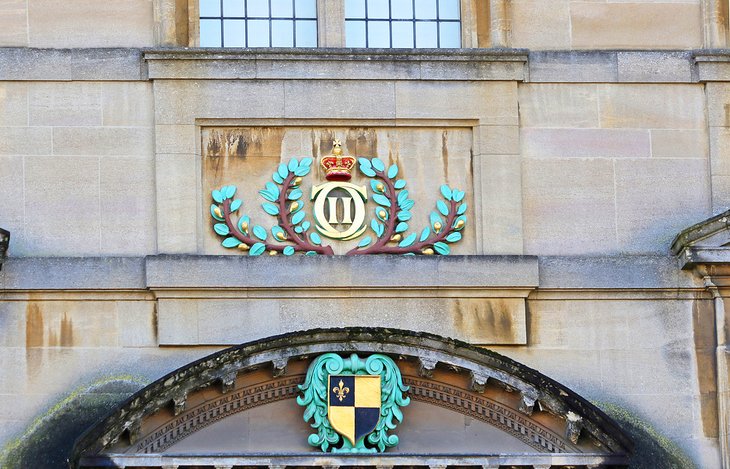
The History of Science Museum – housed in the Old Ashmolean Building, the world's first purpose-built museum building – is a fascinating facility that specializes in the study of the history of science and the development of western culture and collecting.
The museum includes the blackboard that Albert Einstein used during his Oxford lectures of 1931, and a fascinating display showing the development of clocks.
Other nearby attractions include the Holywell Music Room (1748), reputedly the oldest concert hall in the world, and Kettell Hall (1620), with its beautiful chapel and fine woodcarvings.
Address: Broad Street, Oxford
Official site: www.hsm.ox.ac.uk
10. Martyrs' Memorial
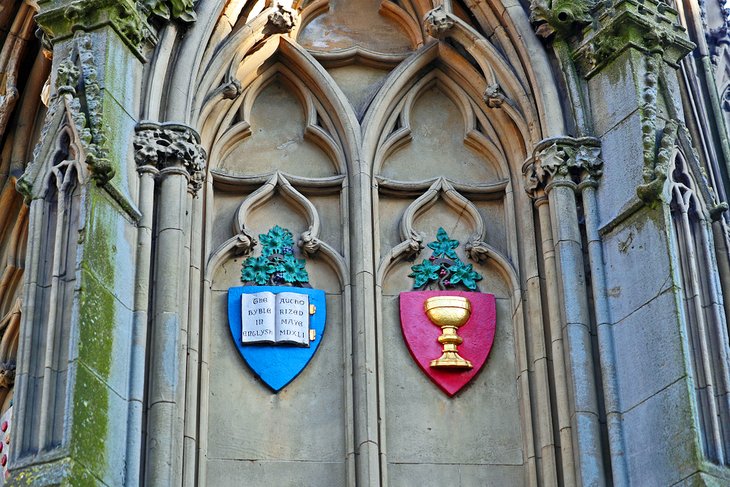
A cross in St. Giles Street marks the spot where the reformers Latimer, Ridley, and Cranmer were burned at the stake between 1555-56, an event commemorated by the Martyrs' Memorial (1841). The nearby Rhodes House, headquarters of the Rhodes Trust founded in honor of South African statesman Cecil Rhodes, is also worth checking out.
Also close by is the Oxford University Museum of Natural History. Built in 1855, it contains a number of interesting collections, including geological, mineralogical, and zoological sections, as well as work by Darwin, Burchell, and Hope.
There's also a pleasant walk along the Cherwell past Parson's Pleasure to a path called Mesopotamia, which leads to Magdalen Bridge.
Location: St. Giles, Oxford
11. Shopping in Cornmarket Street
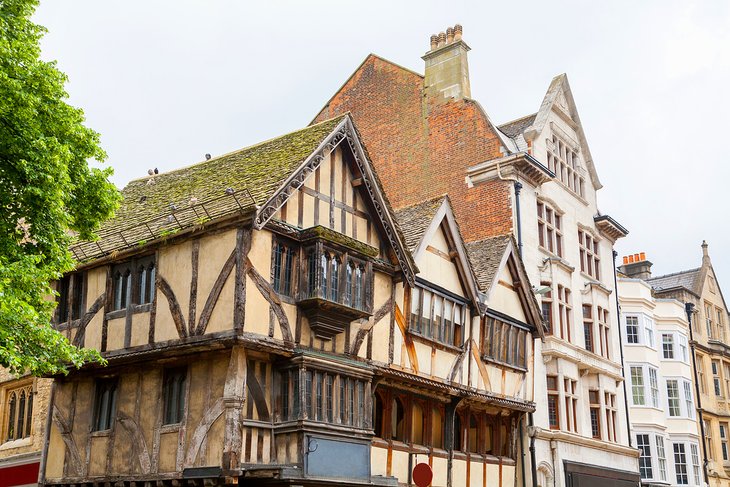
Pedestrian-friendly Cornmarket Street, commonly known as the "Corn," is Oxford's busiest shopping street. Along with its many big-brand shops and department stores, it's also home to the historic Golden Cross arcade, popular for its craft and jewelry shops, and the Covered Market. Dating from 1774, the market houses an eclectic mix of food retailers.
Also of interest is the former Crew Inn. Here, Shakespeare is said to have stayed on his journey between Stratford and London. It's also where you'll find St. Michael's Church, notable for its early Norman tower.
Address: Cornmarket Street, Oxford
12. Oxford Castle & Prison
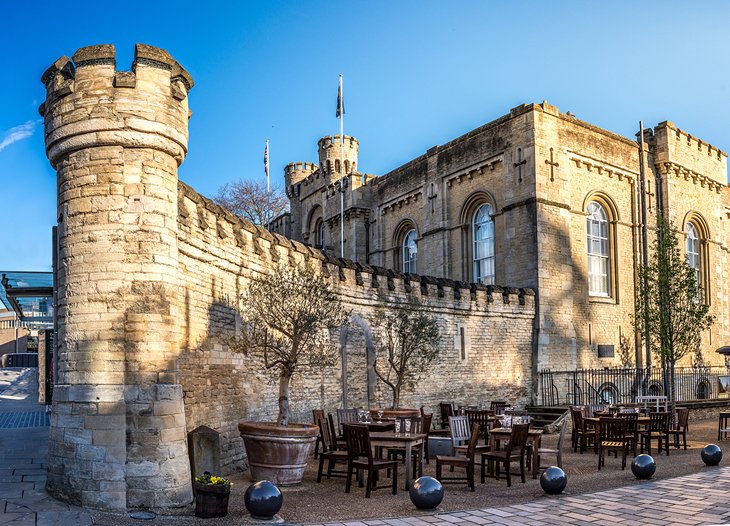
Oxford Castle has been a place of incarceration since 1071, continuing until the closure of Her Majesty's Prison Oxford in 1996. Today, visitors can learn about the real people and events from the site's turbulent past through fascinating displays and re-enactments.
Other highlights include the chance to climb the Saxon St. George's Tower, Oxford's oldest building, and enjoy its stunning 360-degree views. Afterwards, descend deep underground into the 900-year-old crypt.
Other areas to explore include the confines of the 18th-century Debtors' Tower and the 11th-century motte-and-bailey castle. Guided tours and numerous fun themed events are available.
Address: 44-46 Oxford Castle, Oxford
Official site: www.oxfordcastleunlocked.co.uk
13. Oxford University Museum of Natural History
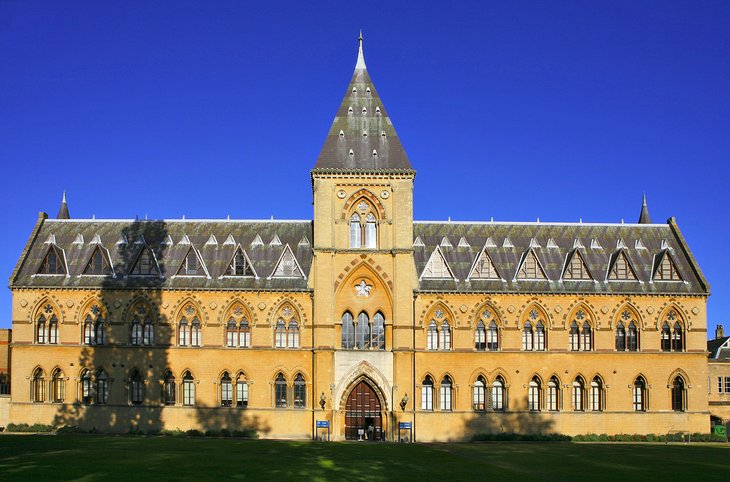
One of the top free things to do in Oxford, a visit to the Oxford University Museum of Natural History (OUMNH) is certainly time well spent. Opened in the mid 1800s to showcase the university's growing natural history collection, it's located on Parks Road adjacent to another must-visit attraction: the Pitt Rivers Museum.
In addition to its displays and exhibits focusing on the university's rich science and learning traditions, you'll see samples collected by university alumni that date back hundreds of years. Also on display are samples from the university's mineralogy, medicine, zoology, and anatomy collections.
Two cafés are located on-site, and a special treat if you're traveling in summer is to enjoy your snacks and beverages outdoors on the museum's lovely lawn. Be sure to keep an eye out for the migrating swallows that have been stopping over on the museum roof since nesting boxes were installed in the 1940s.
Address: Parks Road, Oxford
Official site: www.oumnh.ox.ac.uk
14. Take a Trip to Blenheim Palace
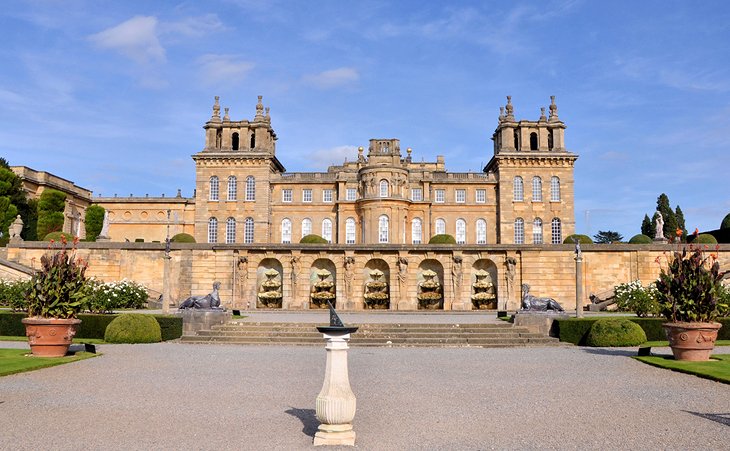
Located in Woodstock, just eight miles northwest of Oxford, is Blenheim Palace. Seat of the dukes of Marlborough and the Spencer-Churchill family, it is also famous as the birthplace of Winston Churchill.
This magnificent 200-roomed palace was built between 1701 and 1724 for John Churchill, first Duke of Marlborough, with the financial support of Queen Anne. It's recorded that the Queen wished to express her thanks to the Duke for his victory in 1704 over the French at the Battle of Blenheim, an event commemorated on the ceiling of the Great Hall.
In addition to visiting the splendid main building with its Neoclassical columned entrance hall and quadrantal annexes with crowned corner-towers and colonnades, be sure to explore the adjoining wings. Here, you'll find a number of large courtyards, as well as the vast main courtyard.
Another highlight is the chance to explore the magnificent gardens, with their French Rococo borders, and the Capability-Brown-designed parklands. Other outdoor attractions include Italian gardens and herb gardens, a butterfly house, and a maze.
Location: Blenheim Palace, Woodstock
Official site: www.blenheimpalace.com
15. Enjoy a Drive to Abingdon-on-Thames
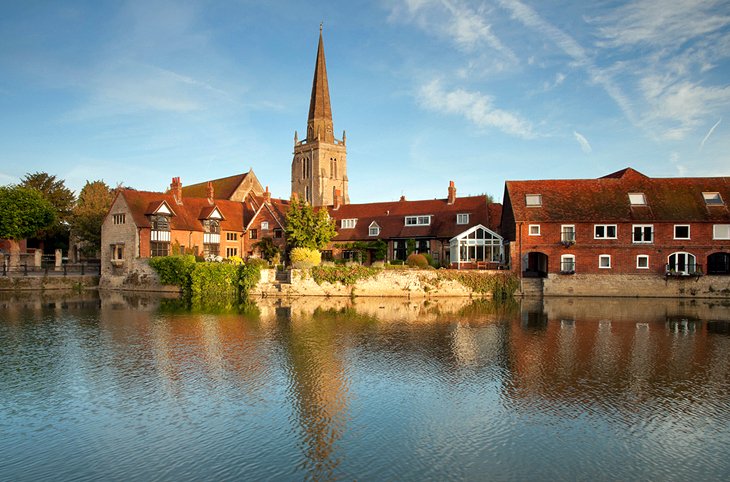
An easy drive just six miles south of Oxford, Abingdon is a charming town on the banks of the River Thames. A large number of interesting houses and churches are found here, including the old two-story county hall, built in 1678 and now home to the Abingdon County Hall Museum.
Also of note is the beautiful St. Helen's Church, with its graceful spire, double aisles, and elaborately painted paneling (1390), as well as Christ's Hospital, founded in 1553.
Parts of the once influential Benedictine abbey (AD 675) can still be explored, including later features such as the Checker Hall (13th century), the Long Gallery (about 1500), and the abbey doorway (1450).
Abingdon has several leisure and recreation facilities, including the White Horse Leisure and Tennis Centre, Tilley Park, and the Southern Town Park. Each year in October, the town center is closed for the Ock Street Michaelmas Fair, the longest street fair in Europe.
Address: Market Place, Abingdon, Oxfordshire
Official site: www.abingdon.gov.uk/partners/abingdon-county-hall-museum
Where to Stay in Oxford for Sightseeing
We recommend these popular hotels in Oxford with easy access to the famous colleges and other top attractions:
- Old Bank Hotel: This luxury boutique hotel is set in a Georgian building in a great central location and features understated elegance and marble bathrooms.
- Vanbrugh House Hotel: A popular mid-range hotel, Vanbrugh House features individually decorated rooms, private gardens, plus complimentary breakfast and snacks.
- Remont Oxford Hotel: Affordable rates, a short bus ride to town, colorful room accents, and a hearty free English breakfast are just a few of the reasons why this hotel is highly rated.
- Premier Inn Oxford Hotel This budget hotel is an easy drive to Oxford city center and features modern decor and family rooms.
Map of Attractions & Things to Do in Oxford
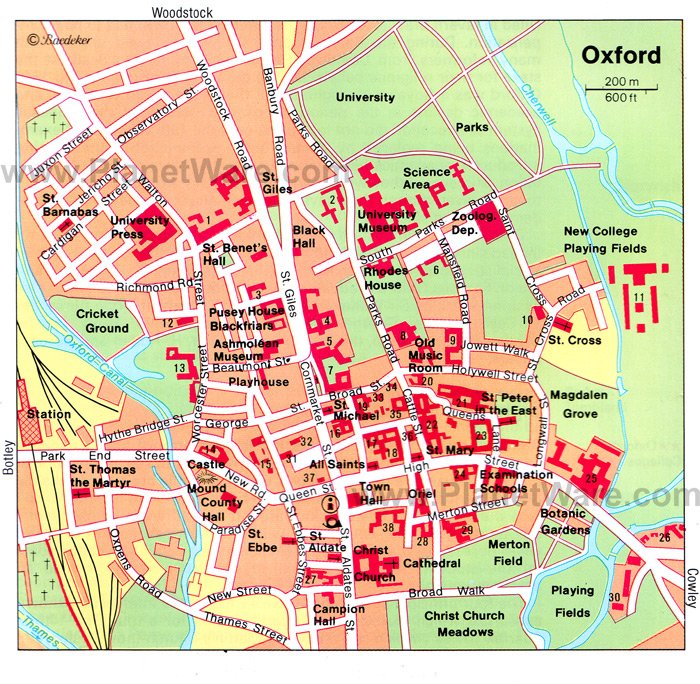
- (1) Somerville
- (2) Keble
- (3) Regents Park
- (4) St John's
- (5) Trinity
- (6) Mansfield
- (7) Balliol
- (8) Waldham
- (9) Manchester
- (10) St Cross
- (11) St Catherine's
- (12) Ruskin
- (13) Worcester
- (14) Nuffield
- (15) St Peter's
- (16) Jesus
- (17) Lincoln
- (18) Brasenose
- (19) Exeter
- (20) Hertford
- (21) New College
- (22) All Souls
- (23) Queen's
- (24) University
- (25) Magdalen
- (26) Wayneflete
- (27) Pembroke
- (28) Corpus Christi
- (29) Merton
- (30) St Hilda's
- (31) Frewin Hall
- (32) Union Soc Rooms
- (33) Sheldonian Theater
- (34) Clarendon Building
- (35) Bodleian Library
- (36) Radcliffe Camera
- (37) Carfax Tower
- (38) Peckwater Quad
- University Museum
- Rhodes House
- Ashmolean Museum
- St Michael's Church
- Christ Church
- Christ Church Cathedral
- Botanic Gardens