17 Top-Rated Attractions & Things to Do in Sardinia
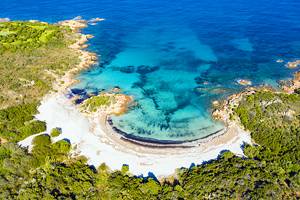
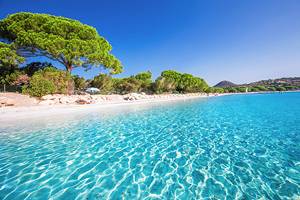
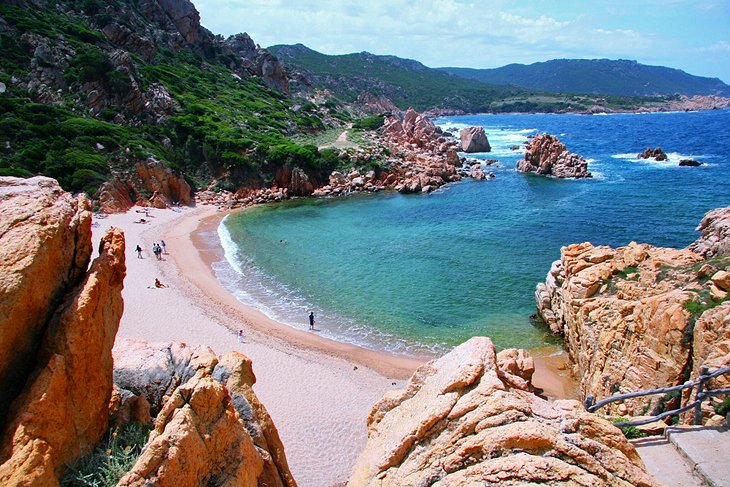
Maybe the only thing you've heard about Sardinia is its fabled Costa Smeralda, Emerald Coast, which takes its name from the color of the water that laps against its white-sand beaches. But there is a lot more to the rugged Mediterranean island than this sybaritic jet set paradise.
Tourists seeing Sardinia for the first time are surprised to discover that an island so well known for its outstanding beaches can be so rugged and mountainous only a few kilometers from the wave-washed sands. That combination of mountains and pristine beaches make it one of the most beautiful islands in the world.
The other thing that may surprise you is the staggering number of prehistoric sites, especially the enigmatic round stone towers known as nuraghi (singular: nuraghe). You'll learn about the mysteries these prehistoric forts/dwellings hide as you climb their dark stone stairs and explore passageways built in the Bronze and Iron ages. You can also walk on original Roman streets and visit the windswept ruins of cities built by the Phoenicians.
Unique local customs and traditional festivals, attractions you'll find no place else, a cuisine that's quite distinct from the rest of Italy, even a different language (although everyone speaks Italian, and many speak English) make Sardinia a one-of-a-kind place to visit. Discover the best things to do on this fascinating island with our list of the top attractions in Sardinia.
- 1. Cagliari and the Costa Sud
- 2. Tour Nuraghe Su Nuraxi
- 3. Visit the Costa Smeralda
- 4. Watch the Sunset from Alghero
- 5. Nuraghe Losa
- 6. Explore Arzachena's Prehistoric Sites
- 7. Santa Cristina Nuraghe and the Holy Well
- 8. Discover Nuoro and the Gennargentu
- 9. Valle dei Nuraghi (Valley of Nuraghi)
- 10. Enjoy the Beaches of Capo Testa
- 11. Arcipelago de la Maddalena (Maddalena Islands)
- 12. Tharros
- 13. Bosa
- 14. Climb to Castelsardo
- 15. Cruise to Grotta di Nettuno
- 16. Costa Verde
- 17. Sassari
- Getting to Sardinia
- Map of Attractions & Things to Do in Sardinia
1. Cagliari and the Costa Sud
Most tourists begin their visit in the island capital of Cagliari, stopping at least to climb from Piazza della Costituzione to Bastione San Remy. Built to defend the Castello quarter, site of the beautiful cathedral and the stronghold of whoever controlled the city at the time, today they provide both historical and visual perspective, with sweeping views over the city and bay.
Not far from the Bastione San Remy is the Museo Archeologico Nazionale, with beautifully displayed Punic, Greek, and Roman artifacts, as well as ancient gold work and other treasures discovered in the enigmatic round stone structures called nuraghi, which you will see all over Sardinia.
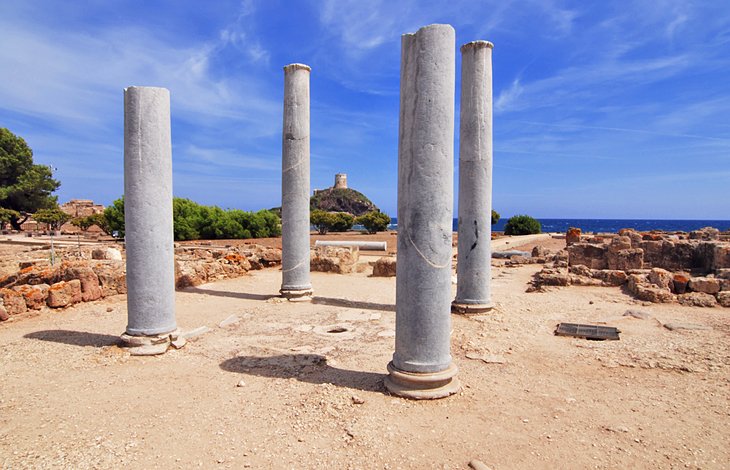
Head east from the city, and in minutes you can be sunning yourself on one of the fabled beaches that makes Sardinia one of Europe's favorite summer playgrounds. South of Cagliari, the Costa Sud offers tourists a glimpse of Sardinia's infinite variety. From the medieval streets and tall bastions of Cagliari, it's only a few kilometers to the ruins of the ancient city of Nora, where Phoenicians, Carthaginians, and Romans had their trading posts.
Between the headlands beyond Nora are white sandy beaches of the Costa Sud. Some, like Porto Campana and Spiaggia Sa Colonia, are long stretches with long shallow drop-offs, perfect for families with children. Others, like Porticciolo Beach, are beautiful and secluded crescents of white sand. Some have refreshment kiosks and facilities for water sports. The Costa Sud has some of the best beaches in Sardinia.
Within easy reach of Cagliari and the airport, and close to the archeological site of Nora, Forte Village Resort is a self-contained group of hotels overlooking the beach, with water sports, swimming pools, playgrounds, and other recreation facilities. Forte Village is one of the top hotels and resorts in Sardinia.
2. Tour Nuraghe Su Nuraxi
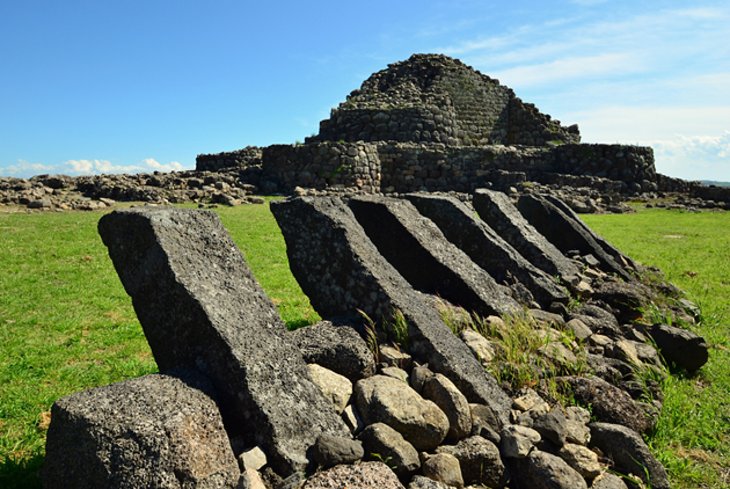
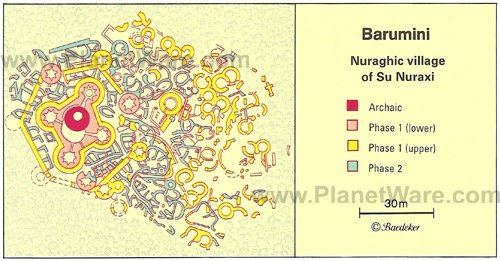
Remains of literally thousands of these stone towers scatter throughout Sardinia, most in complete ruin, but this is the best preserved and most complete. It is also the closest major one to Cagliari, and the best interpreted, with 30-minute tours and English-speaking guides.
If you can see only one, see this one, which UNESCO cited as one of the best restorations anywhere in the Mediterranean. Timber found in the walls of the central tower was carbon dated to 1,500 BC, and the outer towers were built in the 11th or 12th century BC. You can go inside the tower, climbing to its upper reaches for a close-up view of the stacked dome made of dry stones without mortar.
Spiral stairways inside its 1.8-meter walls connect the three stories, and as you climb through the passageways, you can appreciate the finesse of the engineering and workmanship these prehistoric people achieved.
After exploring the towers and the foundations of the ancient village surrounding it, be sure to stop in the Casa Zapata Museum, in the village, where, along with other fascinating exhibits, you can see another nuraghe that has been excavated under the building. Here, you get a bird's-eye view of the construction from a walkway above the walls.
Address: SS 131, Barumini (near Sanluri)
3. Visit the Costa Smeralda
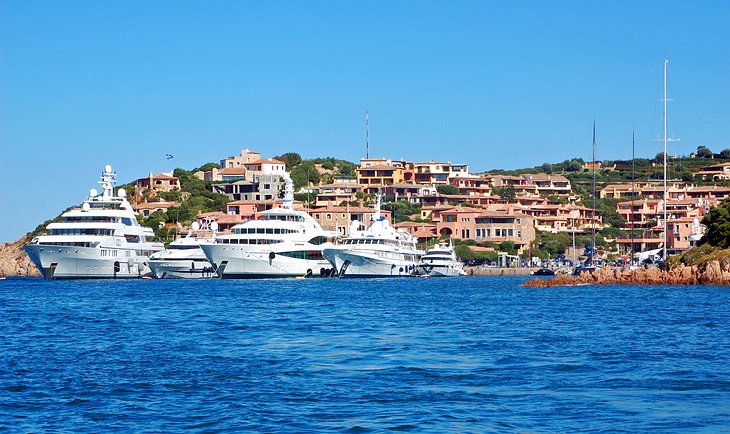
From the port town of Olbia to the tip of Capo de Testa some of the world's most beautiful beaches are set in craggy coves washed by a sea so green and clear that it's known to the world as the Costa Smeralda, the Emerald Coast.
The comparison with one of the most expensive jewels might also apply to the clientele that has frequented the coast since it was developed by the Aga Khan in the 1960s into a series of resorts for the uber-wealthy. Cosseted resort "villages" are built to resemble Greek islands and the Riviera.
The center of all this is Porto Cervo, a resort village and marina for private yachts built in the 1960s. The resorts take guests by boat to the secluded beaches, which are inaccessible by land. People-watching is Porto Cervo's primary attraction for those not booked into a resort. The most modest resort town in the region is lively little Cannigione, on the Gulf of Arzachena.
The five-star L'ea Bianca Luxury Resort, near Porto Cervo, personifies the sybaritic lifestyle that made the Costa Smeralda famous, its smart rooms overlooking the sea from private balconies.
4. Watch the Sunset from Alghero
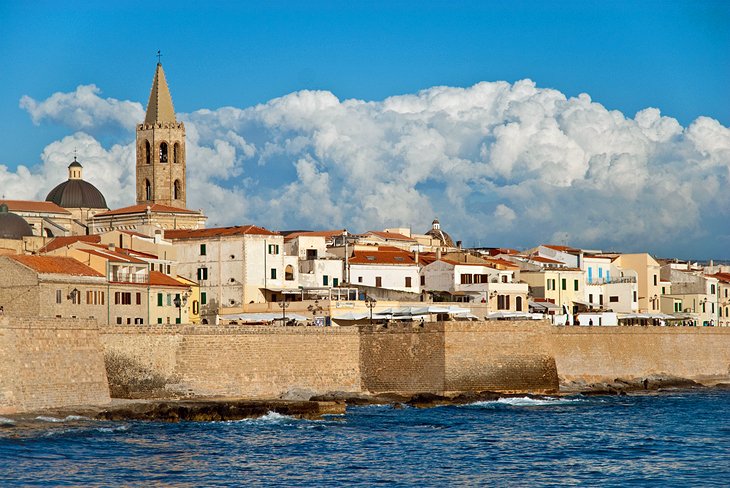
Don't be surprised if the language you hear around you in this lively seaside city sounds a bit different-almost like Spanish. It is, and you may still find some signs and labels in Spanish, too. A 14th-century Pope gave Sardinia to the King of Aragon, hoping to wrest the island from control of Pisa and Genoa.
The king gave fiefdoms to about 400 families from Aragon and Catalonia if they would settle the island with a base in Alghero, displacing the local population. Mass in the church of San Francesco is still said in Catalan, and you should add it to your sightseeing list to see the graceful 13th-century cloister, reached through the sacristy to the left of the altar.
The 14th-century cathedral has a Spanish Gothic doorway. As afternoon fades into evening, one of the popular things to do is climb the walls built by the Spanish to protect against attack by sea, and join locals for an evening promenade along their wide bastions to watch the sunset over the Mediterranean.
Another vantage point for watching the sunset is from a former private palazzo overlooking the sea, the old town bastions and beautiful Capo Caccia, Villa las Tronas Hotel & Spa was a favorite retreat of the Savoy royal family, and the service and accommodations are still fit for a king.
5. Nuraghe Losa
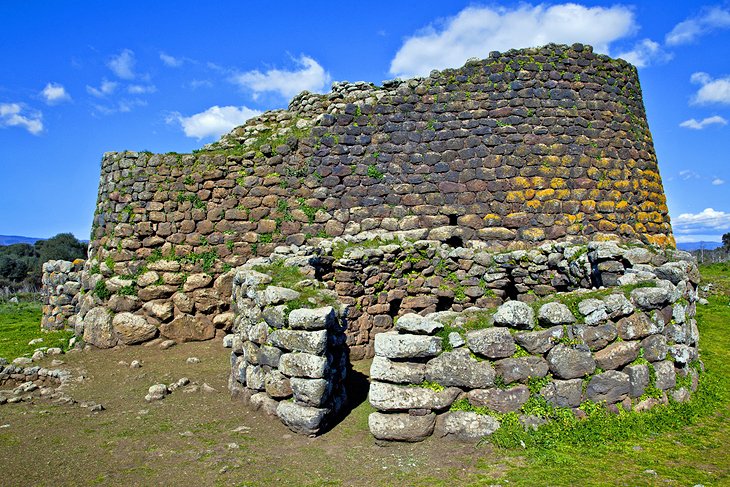
You may wonder if you need to stop at every nuraghe, and if you haven't become fascinated with these mysterious towers by now, perhaps you shouldn't. But most tourists quickly fall under the spell of these towers, of which so much remains unknown, and soon discover that each one is quite different.
Considered one of the three best, Losa has several distinctions. It is lighted inside by recessed lamps, so if you don't carry a flashlight, this is your chance to see the interior details of its stacked stone thalos domes. It is one of the most complex, a large tower with three outer towers forming a triangular bastion, which you can explore through a maze of stone passageways that spiral up inside its massive walls.
The second floor is still intact and the roof complete. Although dating from about the 12th to 14th centuries BC (the Bronze Age), the large central room of the main tower is in excellent condition and more refined in its construction than most others. A tiny museum contains bronze bracelets and other artifacts found here.
Location: Off SS 131, close to Abbasanta
6. Explore Arzachena's Prehistoric Sites
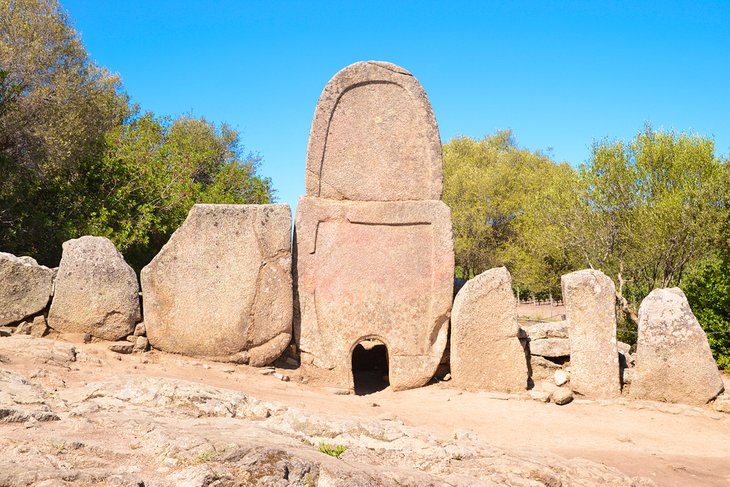
One of the highest concentrations of Stone and Copper Ages attractions is only a few kilometers from the Costa Smeralda resorts, but seems a whole world away. The six notable sites include nuraghi, burial sites, and the curious chambered tombs known locally as tomba gigante (giants' graves).
The principal chambered tomb of Coddu Vecchiu, a tunnel grave from the 18th century BC, had an entry facade of flat stones added several centuries later, and another, Li Lolghi, has a similar entrance, but with a three-and-a-half-meter standing stone.
The nearby necropolis of Li Muri had stone graves built inside circles of flat standing stones once covered by mounds of earth. Nuraghi Albucciu is unusual in that its shape is oval, with one side formed by a large stone outcrop. Nuraghe La Prisgiona is the most recently excavated, a central tower with two side towers and the remains of a village.
This region is known for its rock outcrops, often eroded by the wind into curious shapes; one just east of Arzachena looks like a giant mushroom. A short walk from one of these outcrops, in the hills above Arzachena, the cottages of Tenuta Pilastru are tastefully decorated in locally crafted furnishings and art, and each has its own terrace for savoring the view. Savor, too, the meals at the outstanding restaurant.
7. Santa Cristina Nuraghe and the Holy Well
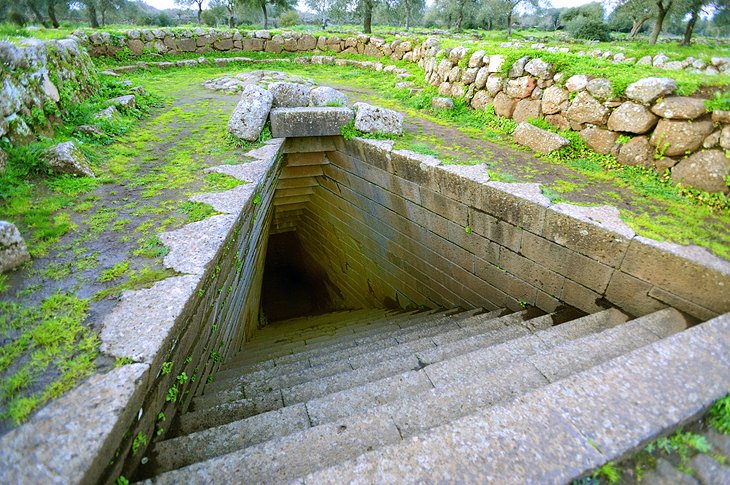
Not far north of Oristano is one of Sardinia's most atmospheric and diverse archaeological attractions, where you can see a remarkably preserved "holy well" -a well temple from 1200-1100 BC-and a nuraghe tower where you can climb to its open wildflower-strewn roof for views down onto the prehistoric stone village that surrounded it.
One of the oblong houses still has its stone roof intact. Take a flashlight, so you can see the interior as you climb to the nuraghe roof. If you want another layer of history, stop between the well and the nuraghe to see the group of tiny stone pilgrim lodgings, former monks' cells surrounding a 12th-century church. Pilgrimages still come here in May and October.
Location: Cabras, 19 kilometers west of Oristano
8. Discover Nuoro and the Gennargentu
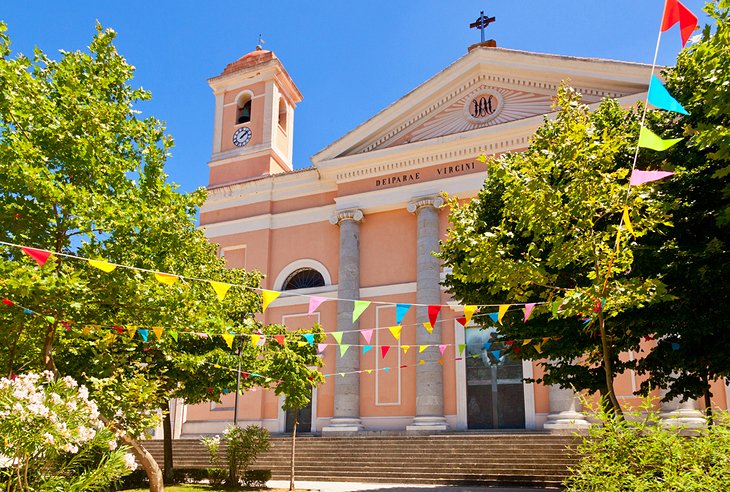
Clinging to the top of a steep mountain ridge, the precipitous streets of Nuoro open to views in every direction. The 19th-century cathedral of Santa Maria della Neve sits above a cliff that drops straight into the valley, and the small plaza in front of the church is almost the only level spot in town.
Nuoro is a good base for exploring the surrounding Gennargentu, Sardinia's most rugged and beautiful interior mountains, and the remote villages (Mamoiada is especially interesting), which seem barely touched by the 20th century, let alone the 21st. It's a fascinating region, with towns clinging to steep mountainsides and local customs that still ring of the ancient past. Trekking through the Gola Su Gorropu, known as Europe's Grand Canyon, is one of the best things to do in Italy for adventure seekers.
Driving here, however, is not for the faint of heart, as roads are narrow and steep with hairpin turns over sheer drops, without railings. You can learn more about these villages and their often strange customs at the outstanding Museo Etnografico Sardo (Museum of Sardinian Traditions), which alone is worth a stopover in Nuoro.
This is the island's best collection (and brilliantly displayed) of Sardinian costume and decorative art; clothing is shown on models with jewelry and accessories worn at weddings and festivals. An entire gallery displays traditional masks. While you're there, the National Archeological Museum has collections excavated from the Neolithic sites, as well as fossils.
9. Valle dei Nuraghi (Valley of Nuraghi)
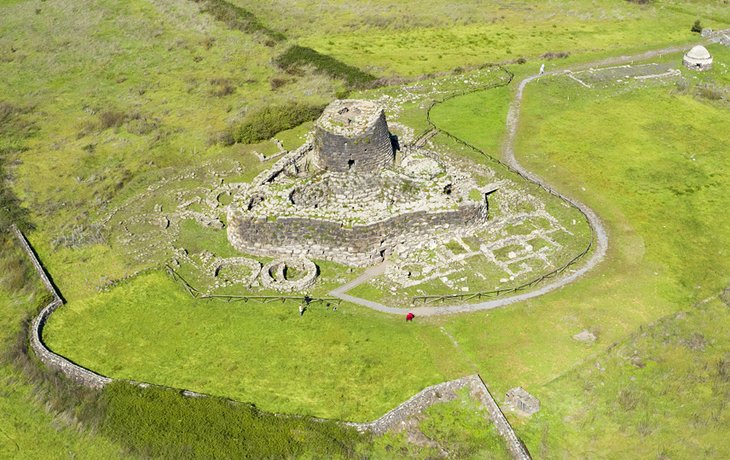
Ringed by the cones of ancient volcanoes, this broad, flat valley, scattered with eroded rock formations, is also sprinkled with prehistoric sites, foremost of them, the 16-meter-tall Nuraghe Santu Antine.
One of the island's three largest and most complex, with three towers connected by a defensive wall, Santu Antine was built in the 16th century BC. This is one of the most interesting to explore, because you can climb the stairs inside the thick walls of the central tower to the second and third floors, which are intact, and follow an upper corridor from the west to the north towers.
From the top, you can see several other nuraghi, and a short drive away is Sant'Andrea Priu, tombs carved into a rock somewhere between 4000 and 3000 BC. They were used in medieval times as hermitages, and you can see frescoes painted inside some. This site is open irregularly, but you can see it from the entrance and climb a trail to see those on the top.
Location: Off SS 131, Torralba, Sardegna
10. Enjoy the Beaches of Capo Testa
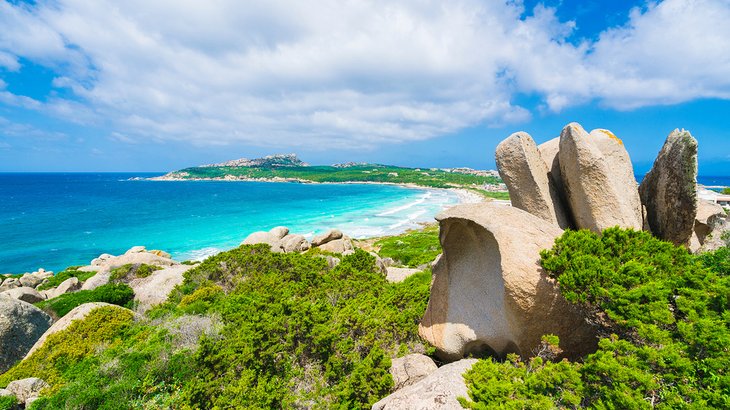
In Northern Sardinia, between the Costa Smeralda and the Maddalena Islands, Capo Testa shares the same luminous turquoise waters and pristine sandy beaches. Many of these are backed by cliffs and rock formations that are carved into fantastic shapes by the wind, making them among the island's most scenic beaches.
Best of all, unlike those of the Costa Smeralda, these beaches are free, and you don't need to take a boat to get to them. Near the pleasant town of Santa Teresa Gallura, where there are hotels and restaurants, you'll find three of the area's seven Blue Flag beaches: Rena di Ponente, Rena Levante, and Rena Bianca. The latter is the largest, with a gentle slope and shallow waters. Those looking for windsurfing and snorkeling waters should head to Santa Reparata.
11. Arcipelago de la Maddalena (Maddalena Islands)
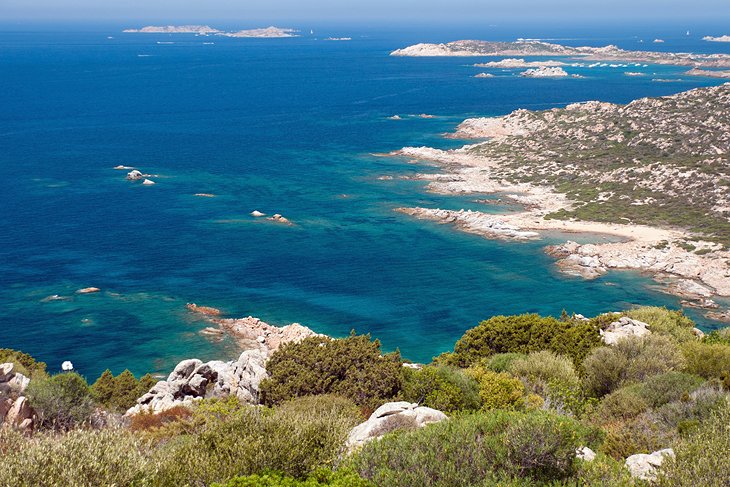
Ferries leave the little port of Palau regularly for the half-hour trip to La Maddalena, the only town in the archipelago in the Strait of Bonifacio, between Sardinia and Corsica. Apart from the beaches, the most remote of which are reached only by boat, tourists come here to cross over the causeway and bridge to the neighboring island of Caprera.
The home here of Giuseppe Garibaldi, revered as the father of the Italian state for his leadership in the fight for Italian unity and independence, is a national monument that attracts visitors from all over Italy and beyond. The other end of the island has several beaches, easy to find by paths leading from the single road.
The sea around the islands is popular with sailors. The combination of white- and pink-sand beaches, crystal waters, and a myriad of secluded beaches on tiny islands put the Maddalenas among the best European beach destinations.
12. Tharros
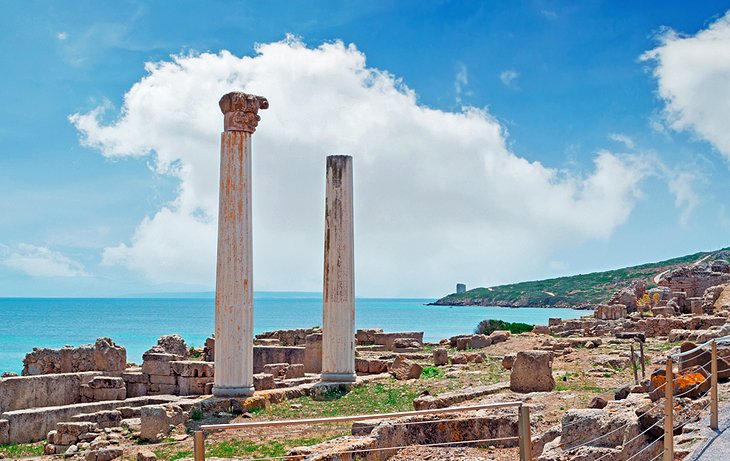
Walk amid the stone remains of Phoenician, Carthaginian, and Roman cultures on this rocky point and try to picture what it looked like when the Roman streets beneath your feet were lined by shops where you now see only foundations and doorsteps. Columns from the baths still stand, along with parts of the aqueduct and temples; the amphitheater overlooks the sea.
On the hilltop above is a Phoenician necropolis (they left about 650 BC). For a sense of what archaeologists have found here, visit the excellent Museo Civico Giovanni Marongiu in the town of Cabras where carved stone stele, funerary urns, and other finds are displayed, positioned as they were originally found.
You can see more of the treasures unearthed here in the Antiquarium Arborense museum, in the small city of Oristano, also nearby. The Duomo of Santa Maria in Oristano dates from medieval times, but was renovated during the Spanish rule of this part of Sardinia in the 18th and 19th centuries, which accounts for the colorful tiles covering its domes.
A former private palazzo, Residenza d'Epoca Regina d'Arborea has elegant rooms furnished with antiques and Murano chandeliers. Although it's one minute from the Duomo of Santa Maria in the center of Oristano, the hotel provides free parking. The sumptuous breakfast is served on fine china.
Location: Cabras, 19 kilometers west of Oristano
13. Bosa
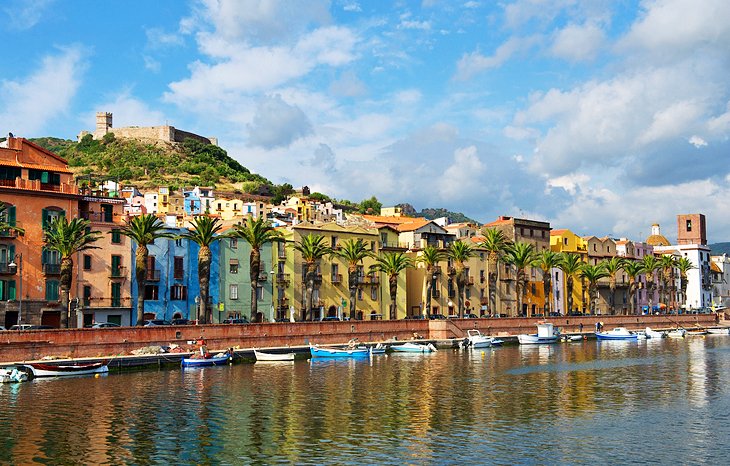
Since the 9th century BCE, Bosa has overlooked the mouth of Sardinia's only navigable river, in a valley that is today green with farms. A tangle of medieval streets winds from the old stone bridge and pastel buildings lining the riverfront to the hilltop Malaspina Castle. The palm-lined riverfront, colorful houses, and castle rising above them make Bosa one of the most charming towns in Europe.
Although you can drive straight to the castle, take some time to walk in the old streets, where modest little houses mix comfortably with grand noble homes; the restored manor house of Casa Deriu is open as a museum with furnished rooms and an art gallery. Inside the castle is a 13th-century chapel, where you should see the unusual 14th-century fresco cycle.
The coastal road north from Bosa to Alghero is spectacular, and not at all hair-raising, despite its height above the sea in places.
14. Climb to Castelsardo
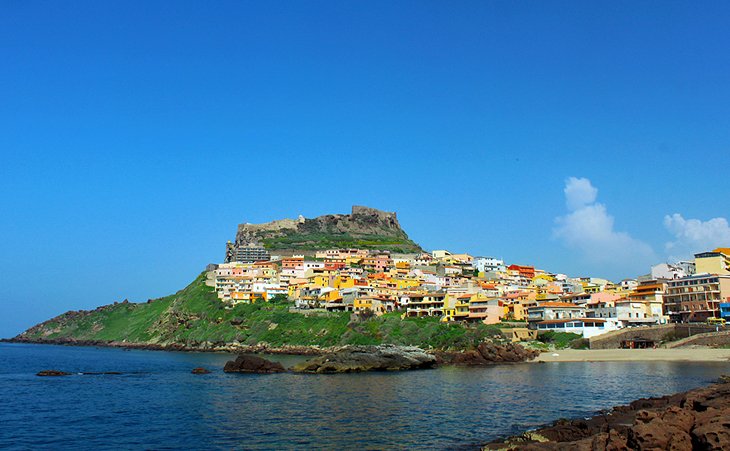
As attractive as the busy little fishing harbor town is, with its pastel houses climbing up the hill, it pales compared to the medieval village inside the walls above. At the very top is a 12th-century castle with a good museum that explores the local craft specialty of basket making.
The narrow streets around the castle wind steeply down the hill, breaking into steps at the steepest points, and in doorways, you may see women weaving baskets with intricate designs. Views from the top extend in both directions along the coast and as far as Corsica.
The Duomo, in the little plaza below, has one of Sardinia's finest altarpieces, dating from the 15th century, along with fine woodcarvings in the choir and a crypt. Its bell tower began life as a lighthouse.
15. Cruise to Grotta di Nettuno
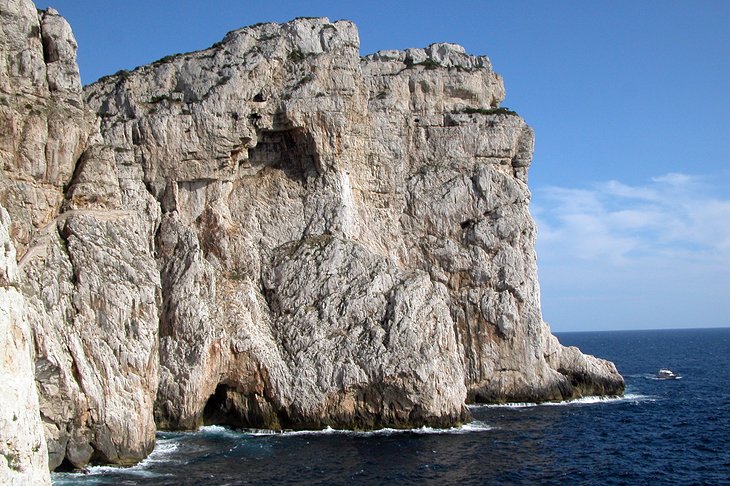
Take a cruise from the Banchina Dogana (harbor) in Alghero to the tip of Capo Caccia, the long headland that you saw from Alghero's walls, to visit this beautiful cave, bristling with stalagmites and stalactites that reflect in an underground lake.
The Grotta di Nettuno was carved by the sea, in cliffs that tower almost 304 meters above. The mouth of the cave is at sea level, and arriving by water is the most dramatic way to approach, not to mention the easiest. But you can also drive here, about 14 kilometers from Alghero, passing an interesting nuraghi alongside the road. Once here, you'll need to walk down (and, remember, also climb back up) on the 656 steps of the Escala del Cabirol (goat stairs), carved into the face of the cliff.
Location: Capo Caccia, Alghero, Sardinia
16. Costa Verde
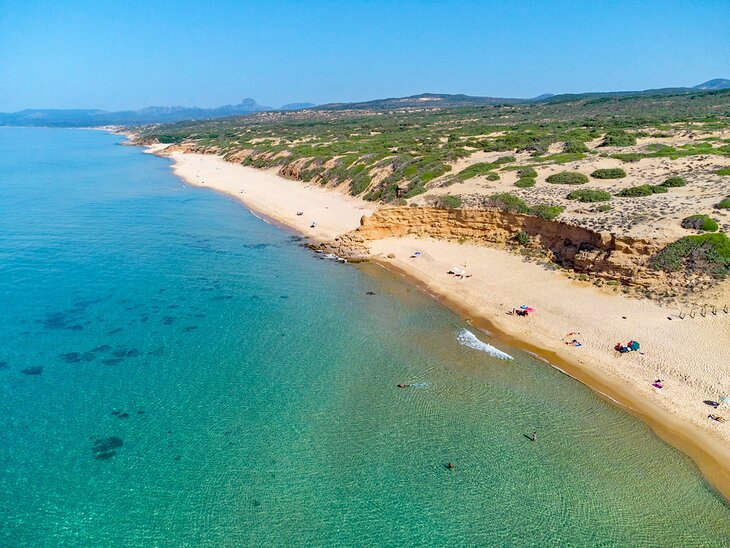
Some of the best beaches in Italy, miles of dune-backed sands along the southwest coast, are among the best-kept secrets of Sardinia. The Costa Verde has few tourist services, hence few tourists, which is one of its chief attractions. You'll find small hotels and comfortable country guesthouses, such as the modest Hotel Corsaro Nero, on a hillside overlooking the beach at Portu Maga.
Be prepared to bring your own loungers and beach umbrellas, and don't expect to find beach-side snack bars. But do expect to find secluded spots without another person in sight, along with wide beaches and dunes as high as 60 meters, among Europe's highest.
The only beach where you're likely to find vendors and kiosks is Scivu Beach, where a three kilometer stretch of white sand still leaves everyone plenty of space. This western shore of Sardinia gets more active surf and more wind than the eastern and southern beaches, so the Costa Verde is not an ideal place to visit for family holidays.
17. Sassari
Sassari, Sardinia's second largest city, is a lively university and cultural center, and boasts some fine buildings in Catalan Gothic, Baroque, and Neoclassical styles. Walk down Corso Vittorio Emanuele II, the main street in medieval times, looking up to see old porticos and windows on homes from the region's Spanish period, five centuries ago.
Museo Nazionale Sanna, one of Sardinia's most important museums, displays archaeological collections that include Nuragic bronze figures and jewelry, as well as Roman artifacts. Don't miss the Duomo, whose façade is a riot (you might say a hodge-podge) of 17th-century ornament styles, created by stone carvers from Milan.
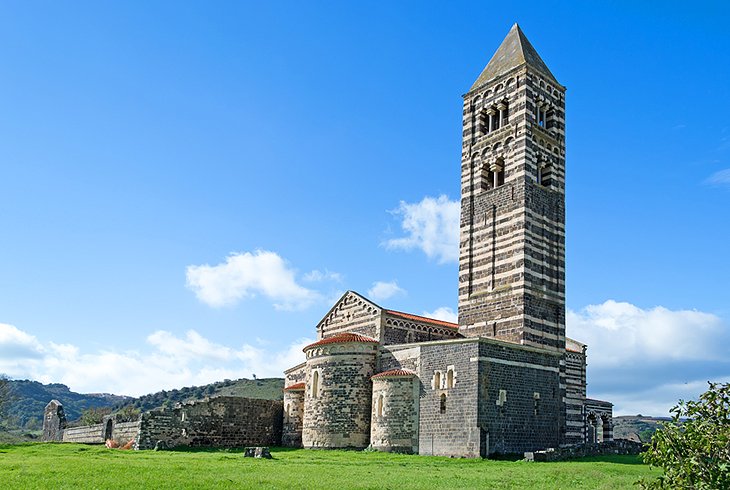
Several other churches are worth looking inside if they are open, but the most memorable of all stands almost alone in a landscape of grazing sheep about 12 kilometers south of Sassari on SS 131. The black-and-white striped tower soars above the church and ruined cloister of Santissima Trinità di Saccargia, the finest example of Pisan architecture in Sardinia. Inside, if you're lucky enough to find it open, are 13th-century frescoes.
Getting to Sardinia
Car ferries connect Sardinia to mainland Italy, 193 kilometers away, and less frequently to Mediterranean ports in both France and Spain. Ferries leave from Savona (on the western Italian Riviera), Genoa, Livorno (near Pisa), and Civitavecchia (Rome), arriving at the Sardinian ports of Cagliari (the capital in the southern part of the island), Arbatax (on the east coast), Olbia (Costa Smeralda), and Porto Torres (north coast).
Lines serving Sardinia are Tirrenia, Grandi Navi Veloci, Moby Lines, Snav, Corsica/Sardinia Ferries, and Grimaldi Lines. Regular flights connect Cagliari International Airport to Rome and other cities, and smaller airports for domestic and other flights are at Olbia and Alghero.
Map of Attractions & Things to Do in Sardinia
More Related Articles on PlanetWare.com
Exploring by Ferry: From Cagliari, you can travel by ferry to Palermo to tour the attractions of Sicily, which also has some of the best beaches in Italy. From Palau, on the north coast, you can take a day trip - or longer-to explore Corsica, the neighboring French island. From here, you can take a ferry to chic Nice, a good base to explore the beautiful Côte d'Azur.
Other Mediterranean Islands to Visit: If sampling Sardinia whets your appetite for more island living, you might explore the Spanish island of Mallorca and the other Balearic Islands, or see the attractions of Malta.