10 Top-Rated Tourist Attractions in Bizerte
If you're looking for things to do and places to visit off the tourist trail, head north along the coast from Tunis to Bizerte.
Although Bizerte is one of Tunisia's industrial centers with a bustling modern port, at its core, rimming the canal, is a small maze of a medina (old town), where you're likely to be the only visitor strolling the alleys.
A Bizerte visit is a good option for travelers looking to catch a peek of Tunisian local life.
The workaday atmosphere within the souk, and squat sugar-cube houses lining the waterfront, provide a good contrast with the more tourist-oriented coastal Tunisian towns to the south.
There's still beach time to be had here, though, if that's your thing.
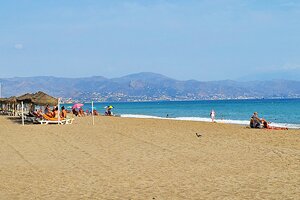
The sandy shoreline lining the coast, both the north and south of town, is popular with domestic tourists and is becoming more well-known with the flocks of European visitors who decamp to Tunisia for beach vacations every year.
To make the most of your time, use our list of the top tourist attractions in Bizerte.
1. Bizerte Medina
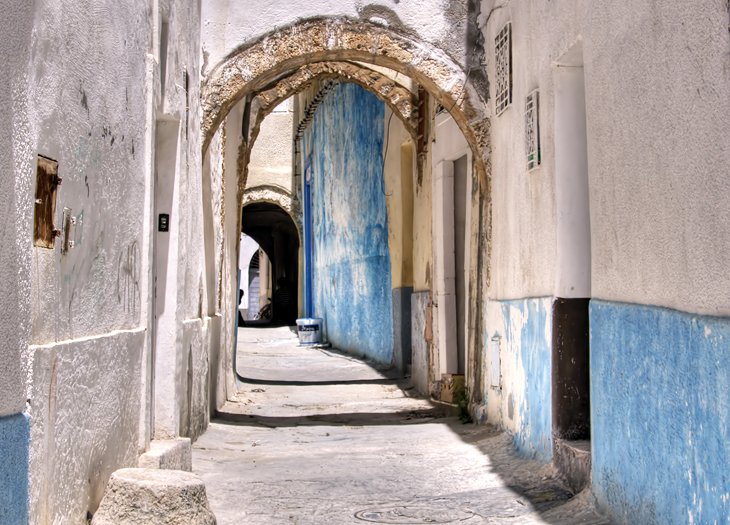
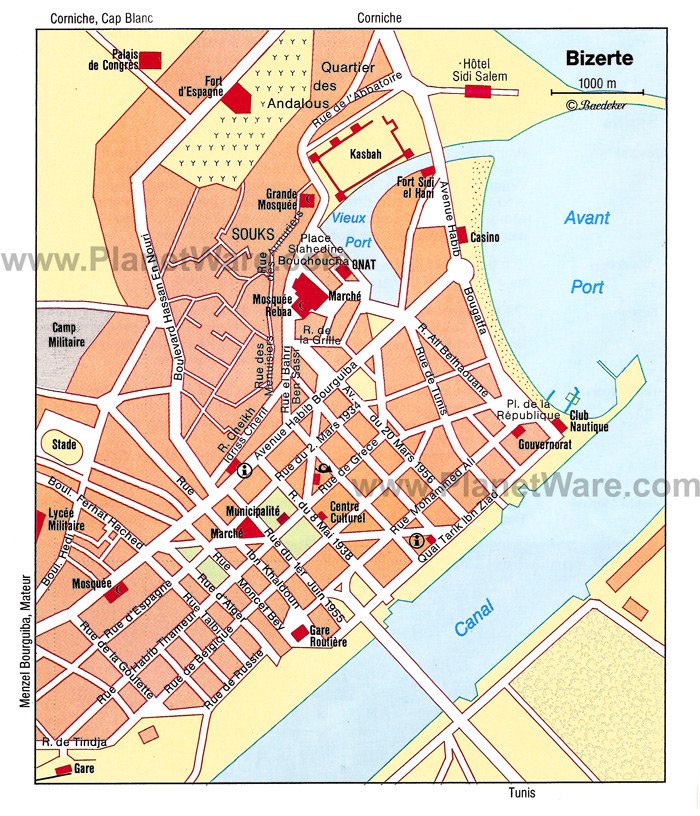
Bizerte's little medina (old town) neighborhood wraps around the picturesque Vieux Port (old harbor) area and is a bustling hub of traditional craftwork.
This is the town's main sightseeing area for visitors, and within its labyrinth of narrow alleyways and covered souks, you can seek out the workshops of metalworkers and carpenters, sitting between the stores of butchers and grocers.
The streets are named after the craftsmen who live and work here: the smiths in the Rue des Forgerons, the armorers in the Rue des Armuriers, the carpenters in the Rue des Menuisiers, and the butchers in the Rue des Bouchers.
A meandering stroll through the highly atmospheric lanes here is top of Bizerte's things to do.
Here, unlike inside the medinas of Hammamet and Monastir, the alleys have not been flashily restored, so it still holds on to its role as a traditional shopping center used by locals.
2. Bizerte Kasbah
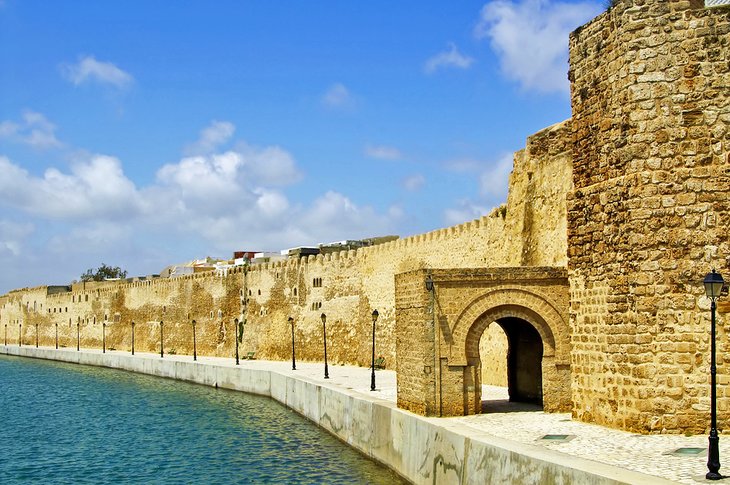
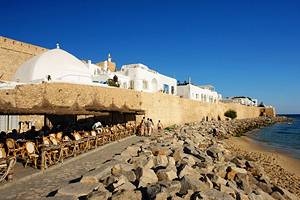
The kasbah district lies just on the north side of the Vieux Port.
Its walls (open to the public) allow you fine views of the old harbor if you climb to the top.
The kasbah's interior is occupied by houses and contains a 17th century Hanafite mosque.
Its fortifications sit on foundations that began life as a 6th century Byzantine fort, but the building works you see today were constructed during the 17th century under Ottoman rule.
Opposite the kasbah walls is the much smaller Fort Sidi el Hani.
Address: Harbor Drive, Vieux Port
3. Bizerte Old Harbor
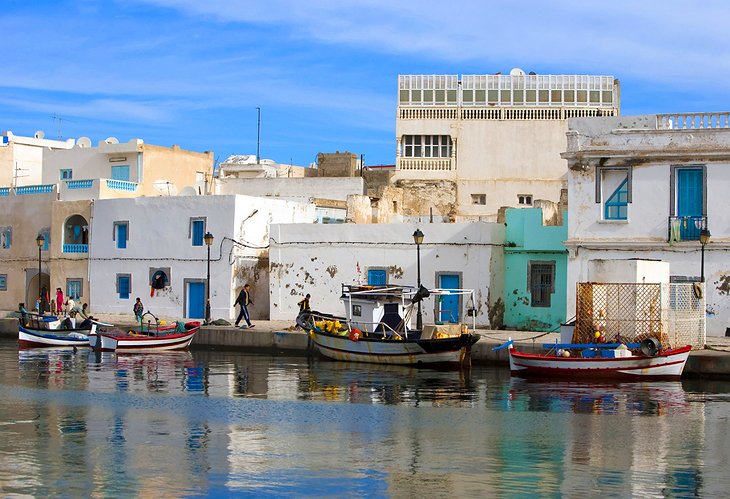
Jam-packed with colorful fishing boats, Bizerte's Vieux Port (old harbor) is linked by a canal to the large outer harbor (avant-port).
The Phoenicians were the first to build the canal here, linking the lake of Lac de Bizerte to the sea.
The harbor here has been an important part of Bizerte's economy for centuries, and the town became a naval base in 1881 under the French Protectorate.
Today, the outer harbor continues to be one of Tunisia's main ports, but the lovely old harbor is a tranquil world apart, only used by local fishermen bringing in their daily catch.
4. Fort Sidi el Hani
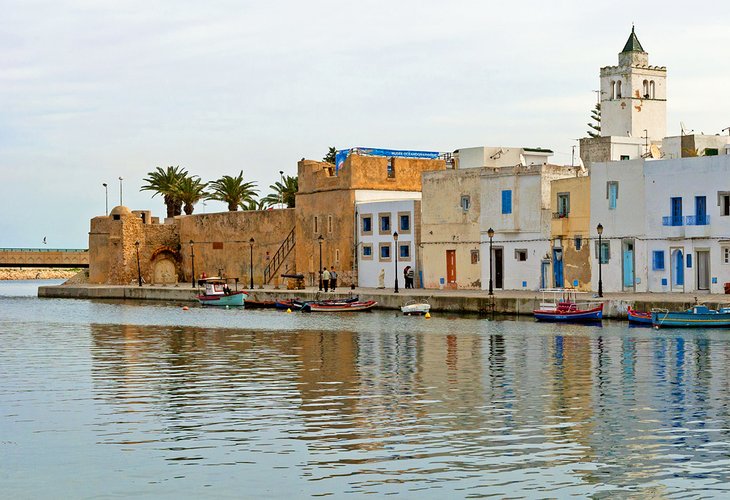
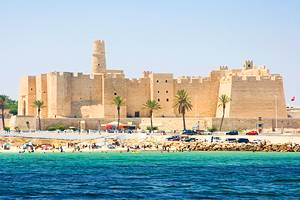
On the south side of the Vieux Port, directly opposite Bizerte's kasbah, is the small, golden-stoned fort of Sidi el Hani.
Like the kasbah, it is an Ottoman construction and dates from the 17th century.
It has been restored to an excellent level and houses a small but interesting oceanographic museum (Musée Océanographique).
If you climb the stairs to the fort terrace there are excellent sightseeing views across town, with the Vieux Port and the kasbah in the foreground.
5. Fort d'Espagne
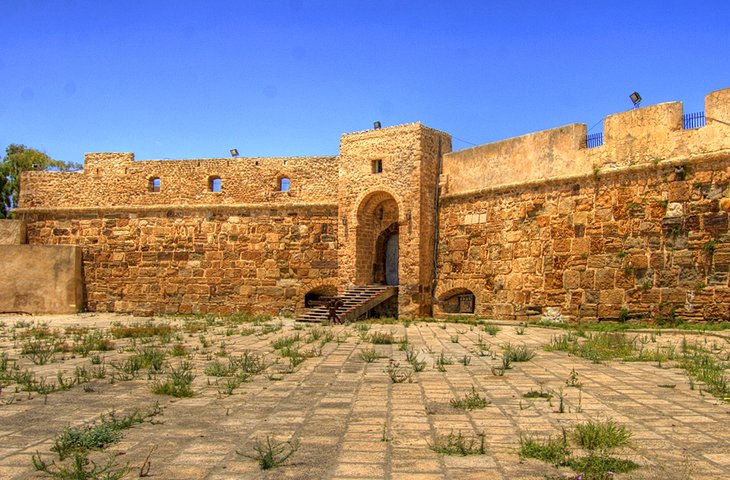
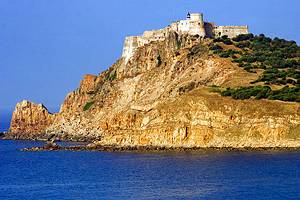
On a hill northeast of the kasbah are the remains of the massive Fort d'Espagne flanked by an old cemetery.
Ottoman pirate Eudj Ali built the fort between 1570 and 1573, during Bizerte's pirate lair days. It was constructed for protection against Spanish attack as the Spanish navy frequently responded to Eudj Ali's raids on their trade ships by attacking Bizerte.
From the terrace, there are panoramic views of the medina and old harbor with the modern industrial harbor beyond.
Address: Boulevard Saadi Carnot
6. Bizerte's Nearby Beaches
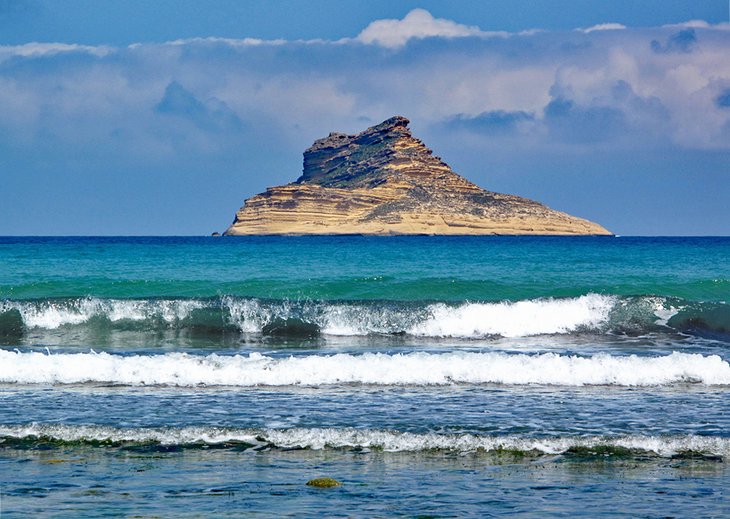
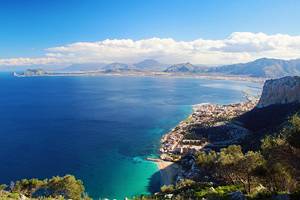
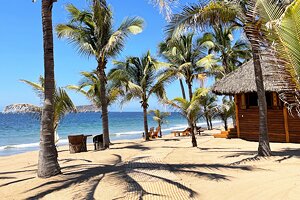
To Bizerte's north, the coastal road (known as the Corniche) skirts a series of long sandy beaches lined by hotels, restaurants, holiday apartments, and elegant villas.
Although Bizerte is lesser known as a seaside resort than Sousse and Djerba, many European operators are beginning to discover the attraction of the town's mile-long white-sand beaches.
If you're looking for a sandy spot that has been less built up, head to the south. The beaches of R'Mel, Ras el Djebel, Raf-Raf, and Sidi Ali el Mekki are among the most beautiful stretches of coast in the area and have yet to see any resorts creep onto their sand.
If you have your own transport, the beaches farther north along the coast – past Cap Angela – are well worth a visit, for their dramatic scenery of hill country and cliffs beyond, rolling down to rocky, wild coves lined with slivers of white sand.
The beaches here are popular with local campers for their wild, more untouched environment.
The quickest and most direct (around 23 kilometers from Bizerte) route to get to them is to use one of the inland roads from Bizerte heading northwest towards the tiny headland of Ong El Jmal.
The beach of Plage Sidi el Bechir is just west of Ong El Jmal promontory but if you carry on heading west, you'll find plenty of other wild beach spots that are all within easy day-tripping distance from Bizerte.
7. Bizerte's Andalusian Quarter
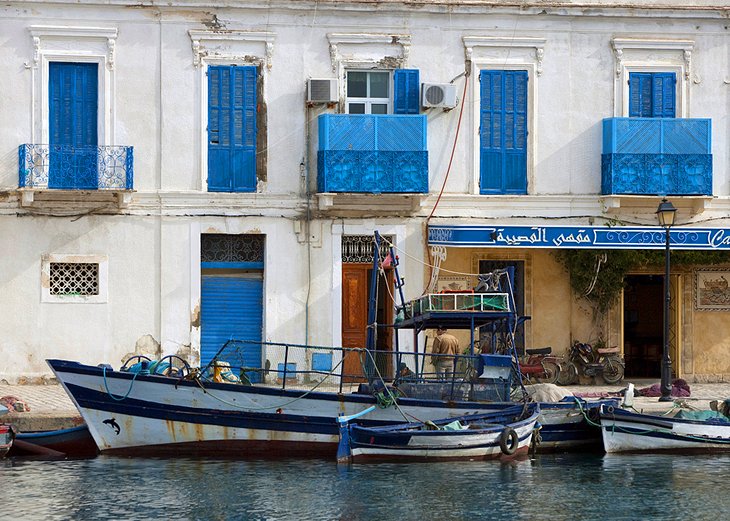
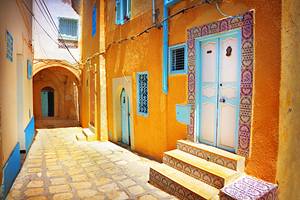
Between Bizerte's kasbah and Fort Sidi el Hani lies the Quartier des Andalous (Andalusian Quarter), established during the 15th and 16th centuries by the Muslims who settled here after being expelled from Spain.
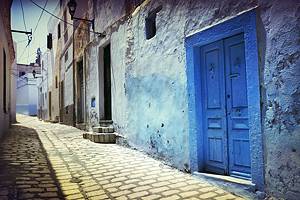
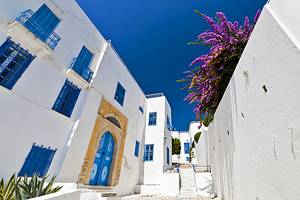
Only a few of the charming and highly photogenic old lanes, boasting characteristic blue wrought-iron window grilles and doors, have been preserved, and the neighborhood can look rather rundown in parts, but the alleys that do hold onto scraps of their former style ooze quaint, old-world atmosphere.
8. Lake Ichkeul
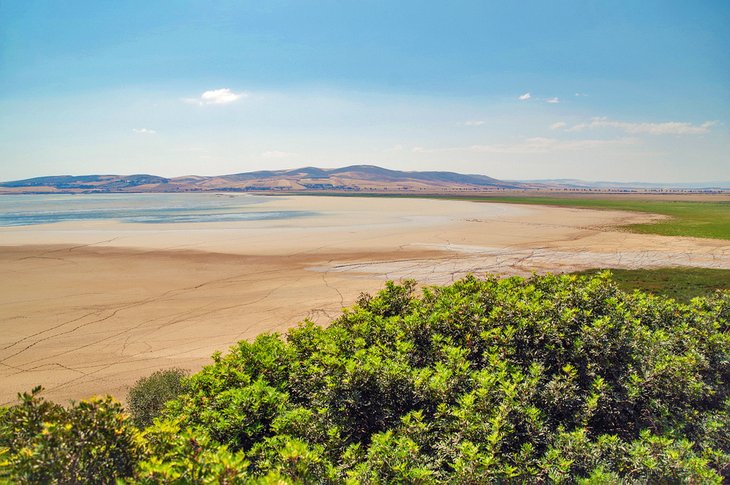
This massive lake is unusual because it has water that is partly fresh and partly salt.
It is one of North Africa's most important bird-watching sites during the winter months, when heavy rainfall makes the lake flood its shores, the marshland flora begins to bloom, and hundreds of thousands of migrant birds from Europe settle here. Outside of this season, don't expect much bird action.
The surrounding lake marshland is a nature reserve, dominated by the bulky hill of Djebel Ichkeul (511 meters). There's an interesting ecology museum on the hill's base.
As well as the many varieties of birds, the lake area is home to small numbers of water buffalo – Tunisia's largest mammal and now an endangered species.
Interesting endemic flora is also in the marshlands, including pink and pale purple garlic; occasional fritillaries with bell-shaped flowers ranging in color from crimson to yellowish-green; various species of rushes, reeds, and irises; and water lilies.
Location: 35 kilometers southwest of Bizerte
9. Cap Blanc & Cap Angela
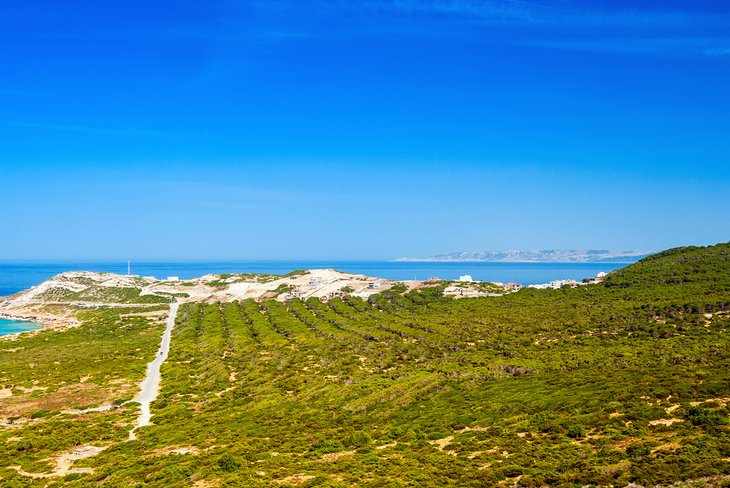
If you have your own wheels, add a Cap Blanc and Cap Angela excursion to your things to do list.
Leave town heading along Boulevard Habib Bougatfa and continue on the Corniche Road, passing the beaches and hotels of the area.
The limestone promontory of Cap Blanc has been important strategically since antiquity, guarding the Roman towns inland. Today a lighthouse stands on its rocks.
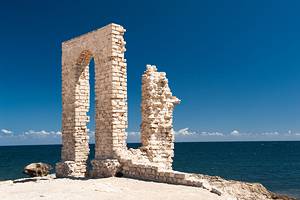
From here, it's a farther 12 kilometers west to Cap Angela (also spelt Cap Engela), the most northerly point in Africa. If you don't have a 4WD, you'll have to walk the last stretch to the promontory, where a small monument, and some flag poles, mark the geographic spot.
Here, the cliffs tumble steeply down to the sea, and the crystal-clear water is a top diving spot.
10. Rebaa Mosque
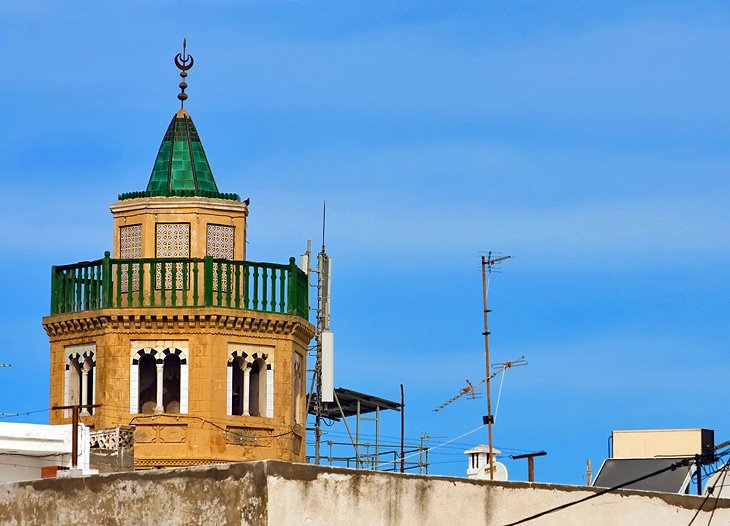
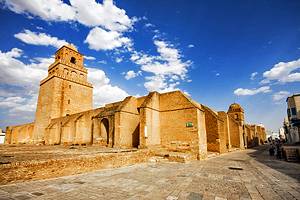
Sitting between the medina's souks and the old harbor in Bizerte, is the 17th century Rebaa Mosque.
This distinctive Bizerte landmark has an octagonal minaret that has obvious Ottoman design influence on its gallery facade.
If you're seeking out some local color, don't miss a morning trip to the fish market adjoining the mosque.
This vibrant bartering hub is the perfect opportunity for keen photographers to capture some shots of daily life. Be aware that you'll have to get up early to catch most of the bustling action, and be prepared for quite the malodorous overload.
Location: Place Slaheddine Bouchoucha