Loading...
Loading

Monastir, Tunisia Attractions

Chief town of the governorate of Monastir

Monastir, capital of its governorate and a university town, lies at the tip of a small rocky peninsula at the south end of the Gulf of Hammamet. It has a small walled Medina and an imposing old Ribat, which stood within sight of the one in Sousse.

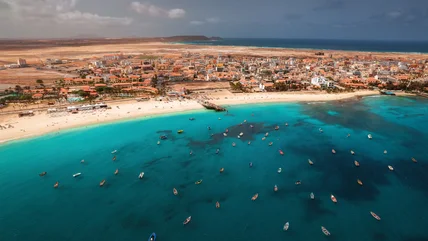
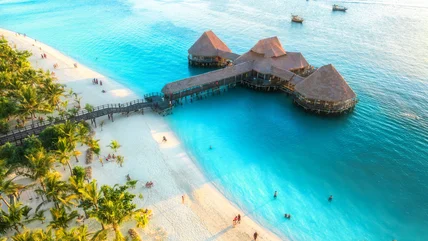
Monastir, the birthplace in 1903 of ex-President Bourguiba, has developed within the last twenty years into one of the most popular seaside resorts in Tunisia. Around the town, particularly to the north at Dkhila and Skanès, are extensive hotel complexes within miles of broad beaches of fine sand.

In addition to the tourist trade the processing of olive oil and the extraction of salt make important contributions to the town's economy. There is a small fishing Harbor, but the fisheries are of little economic importance. During the summer there are son et lumière shows in the Ribat.

History

The Phoenicians established a trading station named Rous Penna on this strategic site, and under the Romans this became the town of Ruspina. During the civil war with Pompey (49-46 B.C.) Caesar made this his headquarters in North Africa and surrounded it with a triple ring of walls. When the Arabs established a chain of fortified monasteries along the North African coast in the eighth century they recognized the strategic value of this site at the tip of the peninsula and built the Ribat from which the town takes its name (Greek monasterion). From here the soldier-monks launched a series of campaigns against the Christian island of Sicily. After the decline of Kairouan Monastir for a time took over its role as the holiest Islamic town in Tunisia. The Ribat retained its military importance into the Turkish period, when the Beys made it a powerful stronghold. During the French protectorate, however, Monastir degenerated into an unimportant fishing and market town, which began to revive only after Tunisia achieved independence. It owes its present prosperity mainly to the development of mass tourism over the last twenty years. It now has some 20 hotels with a total of 9,000 beds.

Access

Monastir lies 22km/14mi southeast of Sousse (MC 82) and 165km/ 103mi from Tunis (motorway from Tunis to Hammamet, then GP 1 to Sousse and from there MC 82 to Hammamet).

The international airport of Monastir-Skanès is 7km/4.5mi from the town center on the road to Sousse. There are scheduled services to and from Tunis and Djerba and all European capitals, and daily charter flights during the summer.

On the west side of the Medina is the station of the Métro du Sahel, from which there are regular services to the airport, Sousse (hourly), Tunis and Gabès. From the bus station (Gare Routière) at Bab el Gharbi, on the southwest side of the Medina, there are regular services to Tunis, Sousse, Mahdia, Sfax and other places in the Sahel.
Picture of Ribat
Read More Ribat
+1 attraction
Among the oldest Arab fortresses in the North, Ribat was established in 796. Located in the old prayer hall is an Islamic Museum with collections of coins, textiles, jewelry, and glassware.
Bourguiba Mausoleum
Conspicuously situated at the north end of the cemetery in Monastir, on the axis of the two modern octagonal pavilions at its entrance, is the golden-domed Bourguiba Mausoleum, built in 1963 as the burial mosque of ex-President Habib Bourguiba and his family. The two slender minarets, 25m/82ft high, are of Italian marble. To the right is the little marabout of Sidi Bou Zid.
Bourguiba Mosque
Notable features in the old town of Monastir are the birthplace of Habib Bourguiba in Rue Trabelsia, with the Musée du Mouvement National (devoted to the history of Tunisia's struggle for independence), and the Bourguiba Mosque in the Rue de l'Indépendance, with an octagonal minaret, 41m/135ft high, which is a prominent landmark. The mosque, modeled on the Hammouda Pacha Mosque in Tunis, was built in 1963 by Taieb Bouzguenda. The prayer hall can accommodate a congregation of a thousand.
Cemetery
Immediately northwest of the Ribat in Monastir lies a large cemetery with a number of beautiful old marabouts, some of them decorated with bands of Kufic inscriptions and faience tiles. Particularly notable is the 12th century tomb of Sidi el Mazeri. The large size of the cemetery reflects the desire of many Muslims to be buried close to the Ribat, regarded as a sacred shrine.
Great Mosque
To the south of the Ribat in Monastir is the Great Mosque, built in the ninth century and enlarged by the Zirids in the 11th.
Harbor
The seafront promenade (Corniche) in Monastir leads to the yachting harbor (Port de plaisance), with a new holiday complex (Village touristique).
Islands
Off the coast, linked with the mainland by a causeway, are the two little islands of Sidi el Gadamsi and El Oustania. Between the coast road (Avenue Habib Bourguiba), lined by hotels, and the sea is a small sandy beach, with two tiny islets, the Ilots des Pigeons lying just offshore. At the southeast end of the beach is the modern fishing harbor.
Ksar Hellal, Tunisia
(Near Monastir)
This little industrial town (textiles) has now almost joined up with Moknine. The founding congress of the Neo-Destour party was held here in 1934.
Medina
The Medina in Monastir is surrounded by a battlemented wall built in the 18th century. Recently restored in the interests of the tourist trade, it now looks very smart and well cared for - perhaps, indeed, a little too much so. As in other tourist centers, the wares offered in the souk are designed to appeal to visitors, and the prices are correspondingly high.
Moknine, Tunisia
(Near Monastir)
15km/9mi south of Monastir, on the shores of a salt lake, is Moknine, a little town noted for its craft products (jewelry, pottery).
Moknine - Folk Museum
The former mosque of Sidi Babana in Moknine is now occupied by a small Folk Museum. This offers an interesting example of the type of "tube vaulting" found at Bulla Regia.
Hours
April 1 to September 15
MonTueWedThuFriSatSun
OpenClosed9:009:009:009:009:009:00
Close 13:0013:0013:0013:0013:0013:00
Open 16:0016:0016:0016:0016:0016:00
Close 19:0019:0019:0019:0019:0019:00
September 16 to March 31
MonTueWedThuFriSatSun
OpenClosed9:309:309:309:309:309:30
Close 16:3016:3016:3016:3016:3016:30
Cost
Adult 4.00
All values are in local currency
Facilities
Gift shop
Restaurant or food service
Museum of Costume
In the ONTT (tourist office) building in Rue de l'Indépendance (Quartier Chraga) in Monastir is a small Museum of Costume (Musée du Costume Traditionnel), with a display of wedding costumes from all over Tunisia.
Hours
April 1 to September 15
MonTueWedThuFriSatSun
OpenClosed9:009:009:009:009:009:00
Close 13:0013:0013:0013:0013:0013:00
Open 16:0016:0016:0016:0016:0016:00
Close 19:0019:0019:0019:0019:0019:00
September 16 to March 31
MonTueWedThuFriSatSun
OpenClosed9:009:009:009:009:009:00
Close 16:0016:0016:0016:0016:0016:00
Cost
Adult 4.00
All values are in local currency
Facilities
Gift shop
Restaurant or food service
Other Sights
Southeast of the Medina in Monastir is the business and shopping district of the new town, with the modern Congress Center, Theater and Library.
Saida Mosque
Opposite the Esplanade Hotel in Monastir can be seen the remains of the Saida Mosque, a burial mosque which originally stood within another ribat.
Sidi Dhouib Ribat
Between the Great Mosque and the Medina in Monastir is a third, rather smaller ribat, the Sidi Dhouib Ribat, the ground floor of which has been rebuilt.
Skanès
On the north side of Monastir is the Route de la Falaise, which leads to the suburb of Skanès with its villas and hotels. The road passes the former Presidential Palace, enclosed by high walls with a large wrought-iron gate. From Skanès the Route Touristique de la Dkhila continues along the coast, edged by salt-pans, to shortly before Sousse.
Suggest Correction  Suggest an Attraction
©Copyright 1995-2012 PlanetWare Inc. All rights reserved.
Unauthorized duplication in part or whole without prior written consent prohibited by international laws.