Exploring the Grand Canal in Venice: 20 Top Attractions
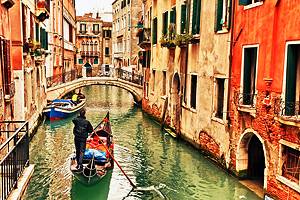
The Grand Canal not only connects most of Venice's top tourist attractions, it is one of its top attractions. Curving in a reverse S through the heart of the city, it is also Venice's Main Street, always busy with traffic that includes everything from gondolas to barges carrying produce to market.
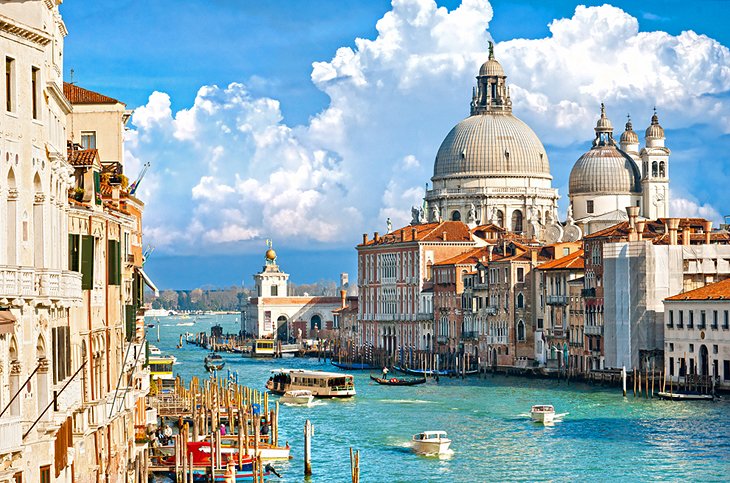
In Venice's heyday, anyone of note - or who wanted to be of note - had to have a palace facing the Grand Canal, and their palazzi represent every style of architecture, from the 12th to the early 18th century.
The best way to see and appreciate all these grand palaces is from the canal itself, as their facades face the water. Viewing these palaces after the lights go on in their glittering interiors is one of the favorite things to do in Venice at night. The attractions below are shown in the order you will see them as you travel from San Marco to Ponte della Costituzione, at the other end of the Grand Canal. You won't miss any of the highlights with this handy guide to exploring the Grand Canal.
- 1. Touring the Grand Canal by Boat
- 2. Santa Maria della Salute
- 3. Peggy Guggenheim Collection
- 4. Palazzo Corner della Ca' Grande
- 5. Ponte dell'Accademia and the Academy of Fine Arts
- 6. Palazzo Grassi
- 7. Ca' Rezzonico and the Museum of 18th-Century Venice
- 8. Traghetti
- 9. Ca' Foscari
- 10. Ponte di Rialto (Rialto Bridge)
- 11. Fondaco dei Tedeschi (German Commodity Exchange)
- 12. Ca' da Mosto
- 13. Fish Market
- 14. Ca' d'Oro
- 15. Ca' Pesaro
- 16. San Stae
- 17. Palazzo Vendramin-Calergi
- 18. Fondamenta Turchi and the Natural History Museum
- 19. Santa Maria di Nazareth
- 20. Ponte della Costituzione (Constitution Bridge)
- Tips: How to Make the Most of Your Tour of the Grand Canal
1. Touring the Grand Canal by Boat
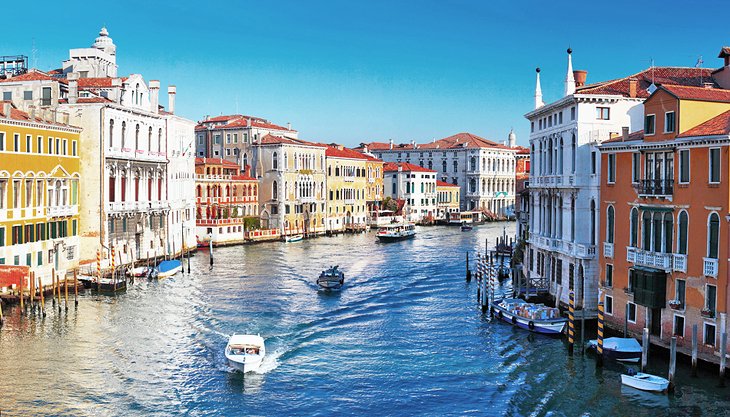
You can ride the entire length of the Grand Canal on the vaporetto, Venice's floating public transport system, from San Marco to Porta Roma. Be sure to take Line 1, not the express Line 2, which moves too quickly past the palaces and skips several stops. You can also do it on a motor boat tour, with a guide who can not only point out the palaces you'll pass, but pass slowly and pull closer for better views.
There are several options. On the Venice Grand Canal Small Group 1-Hour Boat Tour, you'll not only see and learn about the highlights of the Grand Canal, but also cruise through smaller ones to see churches such as Santa Maria Formosa and San Giovanni e Paolo from the water. The longer Venice Canal Cruise: 2-Hour Grand Canal and Secret Canals Small Group Tour by Boat also travels by luxury motor launch into less-visited parts of Venice.
The longer tour includes, along with an informative tour of the Grand Canal, the charming neighborhood of Dorsoduro and a stop to visit the sights of Venice's former Jewish Ghetto in Cannaregio.
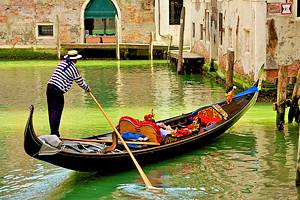
Perhaps you've always dreamed of gliding along the Grand Canal in a gondola, and that is certainly an option. But it is not the best way to see the palaces along its banks. With so many larger vessels speeding past and blocking your view, you'll actually get a better - if quicker - view from the vaporetto; better to save your gondola ride for the romantic little "back street" canals.
2. Santa Maria della Salute
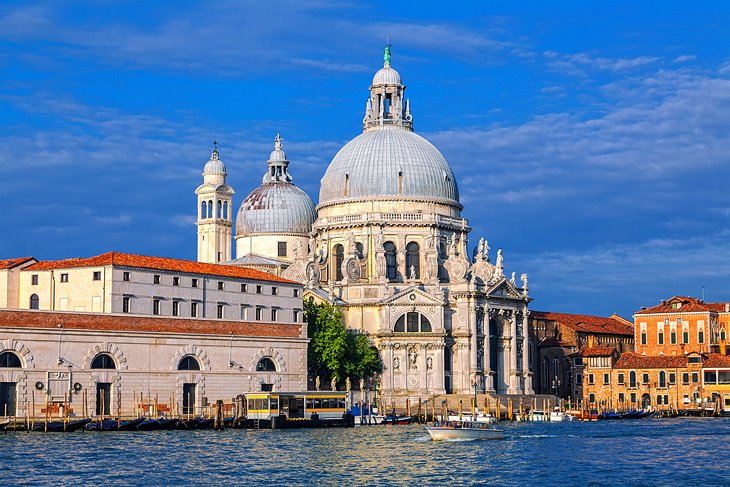
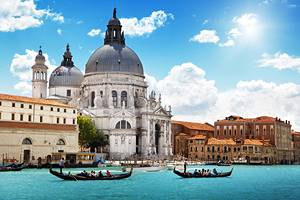
As your vaporetto leaves the San Marco stop, it heads across the mouth of the Grand Canal, aiming almost directly at the monumental Baroque church of Santa Maria della Salute, built as thanks for the end of the plague of 1630. In order to support its immense weight, architect Baldassare Longhena had to have more than a million timbers driven into the floor of the lagoon.
The church is an impressive landmark, visible across the Grand Canal from San Marco, and this grandeur continues as you step inside with your attention immediately drawn to its massive dome. Be sure to see the Sacristy, where the best paintings are, especially Tintoretto's Marriage at Cana. The vaporetto landing is right in front of the church.
3. Peggy Guggenheim Collection
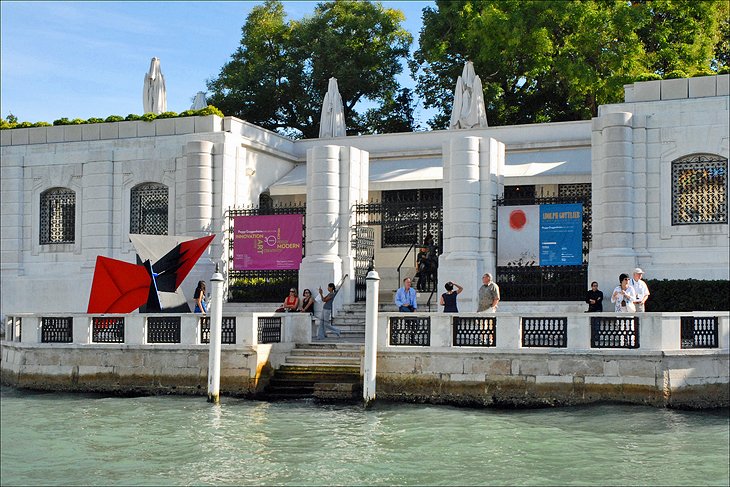
Just past Santa Maria della Salute is the low white Ca' Venier dei Leoni, a contemporary building on earlier foundations. The 1749 Vernier palace was never completed, and in 1949, its single floor became the site of American art collector Peggy Guggenheim's Venice museum of cubist, abstract, and surrealist paintings and sculpture.
The collection includes works by Max Ernst, to whom Peggy Guggenheim was married, as well as Pablo Picasso, Georges Braque, Fernand Léger, Joan Miro, Salvador Dali, Paul Klee, Rene Magritte, Piet Mondrian, Marc Chagall, and Jackson Pollock.
As your vaporetto passes, you may catch sight of Marino Marini's equestrian statue Angel of the City on the terrace. To visit the museum, use either the Santa Maria della Salute or Accademia vaporetto stop; the Guggenheim is about midway between them.
Address: Palazzo Venier dei Leoni, 701 Dorsoduro, Venice
Official site: www.guggenheim-venice.it
4. Palazzo Corner della Ca' Grande
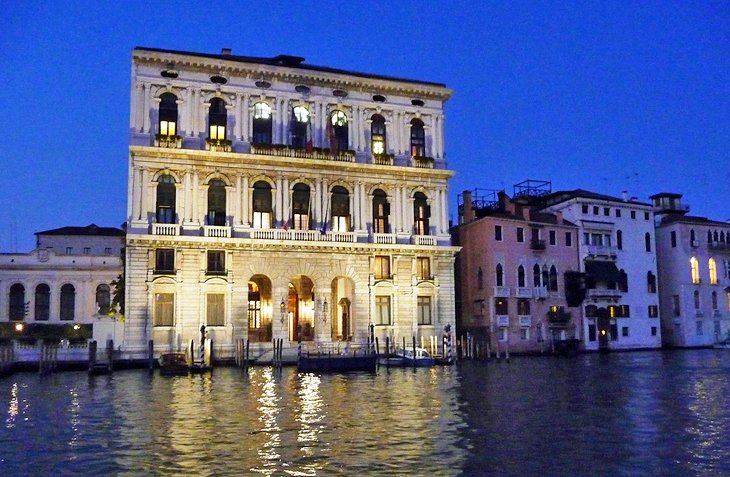
Directly opposite the Guggenheim, Palazzo Corner della Ca' Grande is one of the finest examples of High Renaissance architecture in Venice. This huge palace - its name "Ca' Grande" means big house in the Venetian dialect - was built in 1545 by Italian master-builder and sculptor Jacopo Sansovino, for the powerful Cornaro family. It was one of Sansivino's first commissions in Venice.
Like all these palazzi, Ca' Grande was meant to impress, with stately Ionic columns on the first floor and Corinthian columns on the second.
5. Ponte dell'Accademia and the Academy of Fine Arts
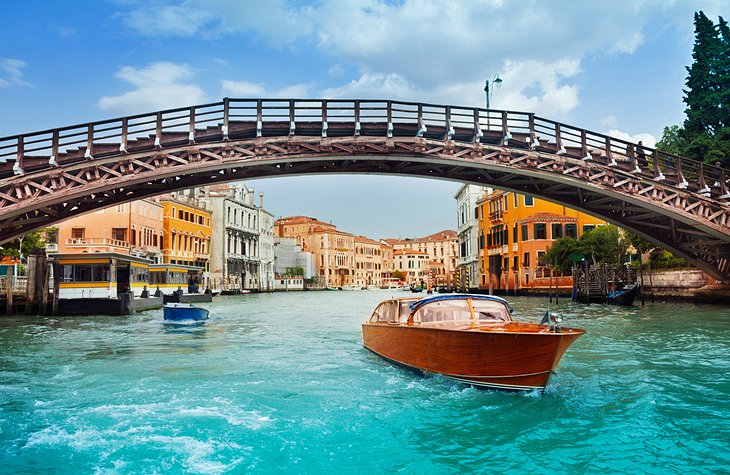
For centuries, Ponte di Rialto was the only bridge over the Grand Canal, until in 1854, the Austrians who had occupied Venice since 1815 erected a small iron bridge connecting San Marco to Dorsoduro. It was replaced by a "temporary" wooden bridge in 1932, but proved so popular with Venetians that it was never replaced by a stone one as intended.
At its Dorsoduro end is Venice's finest collection of art, the Accademia, in the former 16th-century Monastery of Santa Maria della Carità. The collections of Venetian art from between the 14th and 18th centuries are to Venice what the Uffizi is to Florentine art, but its highlights are not limited to works of Venetians. The museum holds notable works by Titian, Tintoretto, Paolo Veronese, the Bellinis, Canaletto, Carpaccio, and Tiepolo.
For art lovers, the Accademia vaporetto stop offers a double treat, accessing two of the most important places to visit in Venice.
Address: Dorsoduro, Venice
6. Palazzo Grassi
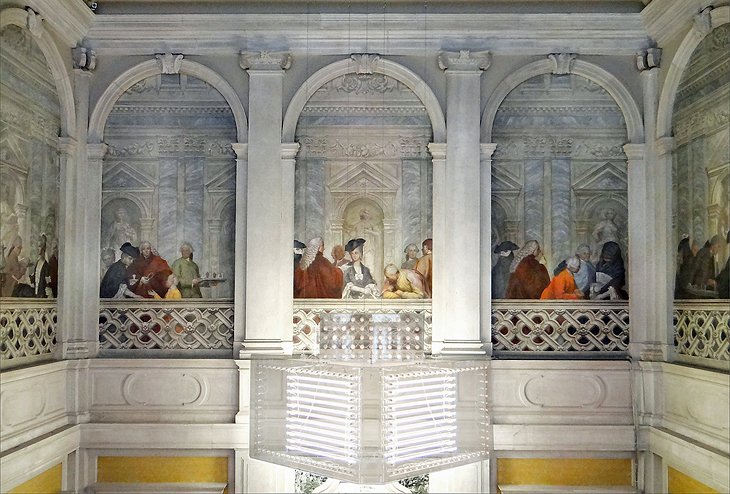
On the opposite bank, the three-storied Palazzo Grassi's facade shows both Baroque and Classical features. The last palace built on the Grand Canal before the Venetian Republic's collapse in 1797, it was constructed from plans by Giorgio Massari that used a ground plan unusual in Venice, with four wings around a rectangular courtyard.
When the Fiat Motor Company acquired the palace, extensive restorations and renovations included covering the courtyard, which, along with the rest of the palace, is used for exhibitions. The building is interesting for its harmonious blend of the original Neoclassical and modern architectural styles.
Address: Campo San Samuele, San Marco, Venice
7. Ca' Rezzonico and the Museum of 18th-Century Venice
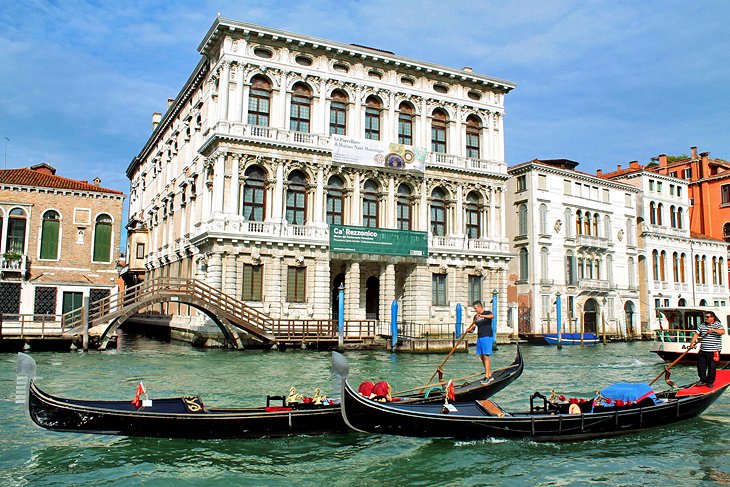
On the left, as the canal begins its long curve to the right, the massive Ca' Rezzonico is the work of two famous architects. Begun in 1660 by Baldassare Longhena, the greatest Baroque architect in Venice, it was completed nearly a century later by Giorgio Massari.
Today, it houses the Museum of 18th-century Venice, where you can get a fascinating glimpse of Venetian life in the Rococo period. Its 40 rooms show the sumptuous decorative styles and furniture, which includes the Chinoiserie and lacquered furniture, so popular at that time. There are Venetian porcelain and pottery, bronzes, puppets, and original 18th-century Venetian costumes. An 18th-century pharmacy has been meticulously reconstructed, and a theater is on the third floor.
The vaporetto stop labeled Ca' Rezzonico is not right at the palace. You'll need to walk up the Calle Traghetto to Campo San Barnaba and cross the bridge to the Fondamenta Rezzonico.
Address: Fondamenta Rezzonico 3136, Venice
8. Traghetti
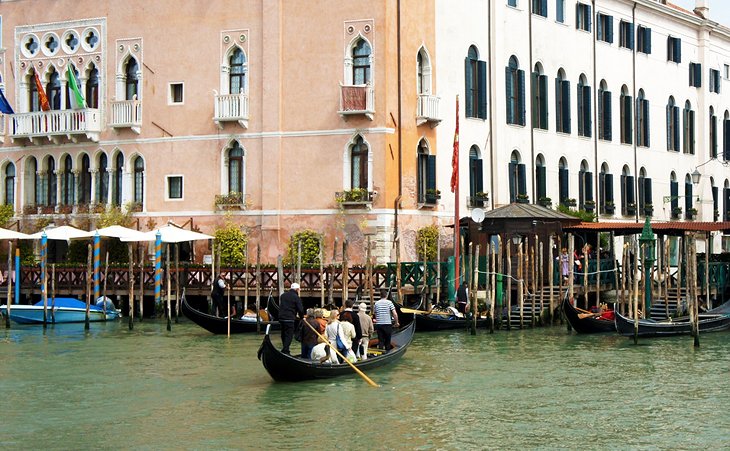
The Ca' Rezzonico stop and the San Samuel landing across the canal from it are connected by another sort of boat transport, the traghetti. A traghetto is a type of gondola, stripped of its fancy trappings and seating to provide standing room and narrow benches (which Venetians scorn, preferring to stand) to cross the Grand Canal at several points between bridges.
Traghetti are inexpensive (2 euros) and a good way to avoid long walks to the nearest bridge. There is another between the San Angelo and San Toma stops, one at the Fish Market beyond Rialto, one at the San Marcuola stop and a fourth at the other end of the canal not far from Piazza San Marco.
9. Ca' Foscari
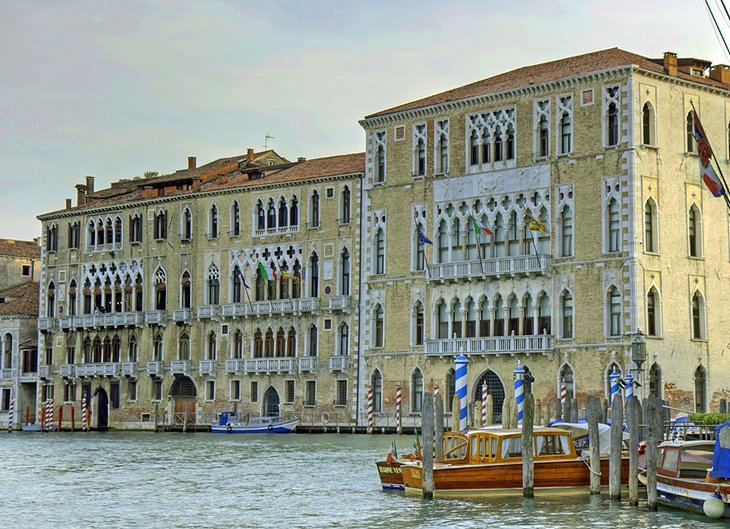
When Doge Francesco Foscari ordered its building in the 15th century, Ca' Foscari, just past Ca' Rezzonico, had an unheard-of innovation: it had four floors. Today, the palace remains one of the most important Late Gothic buildings in Venice.
The Foscaris' fortunes reversed after the Doge was forced to surrender the Eastern Mediterranean to the Turks in 1454, and his son Jacopo was banished from Venice. In 1574, King Henry III of France used the palace as a residence.
10. Ponte di Rialto (Rialto Bridge)
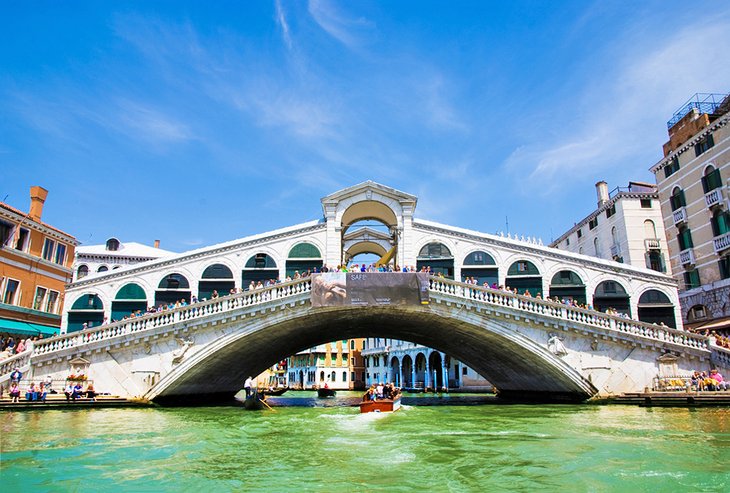
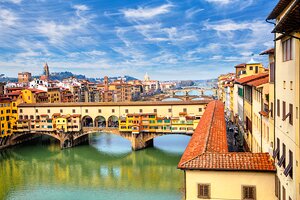
As the Grand Canal begins to straighten again, the familiar form of Rialto Bridge comes into view ahead, although it's hard to take your eyes off the palaces that continue to line either side. The first wooden bridge was built here as early as 1180, later replaced by a drawbridge, which collapsed in 1444 when a large crowd gathered on it to watch a boat procession.
Almost 150 years later, in 1588, the Venetians built this stone bridge, designed by Antonio de Ponte. The 22-meter bridge is supported by 6,000 timber piles under each side. Rialto is the best stop for exploring the San Polo neighborhood, and of course, for the famous bridge itself.
11. Fondaco dei Tedeschi (German Commodity Exchange)
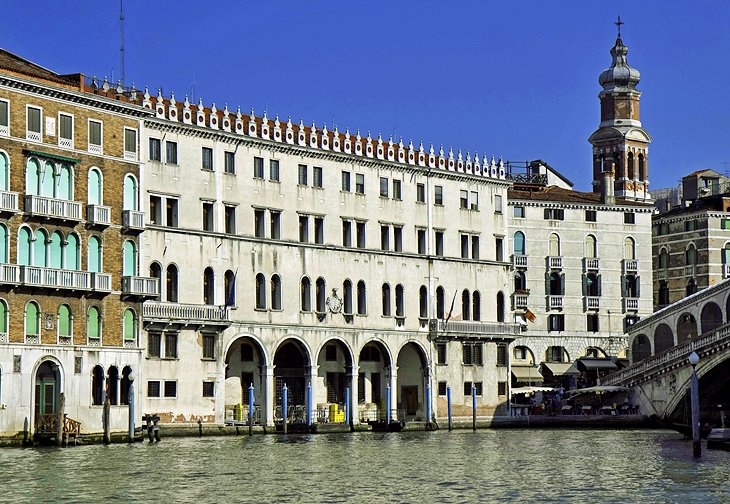
From at least 1228 the "German" merchants (a term that also included Poles, Czechs, and Hungarians) who did business in Venice lived and worked in this prime location at the San Marco end of Rialto Bridge. The fact that Venice paid for rebuilding it after a fire and employed the likes of Titian to decorate its interior, shows how advantageous their business was to the Republic - a high commission had to be paid to Venice for every purchase and sale.
This is why in the 16th and 17th centuries, the Fondaco was called "the golden ark of the Senate." The exchange was both a place of business and a refuge for the merchants, who were not permitted to appear alone or to conduct any business outside the Fondaco.
The façade you'll see on the right, facing the Canal Grande, is in the Venetian tradition of three stories. In the middle is a five-arched Portico. The shops and storage were on the ground floor, while the upper floors were living quarters and offices.
Today, the building houses a shopping mall, with a rooftop platform where you can get far-reaching views of the city. To avoid lines for the terrace you can make a free advance booking.
12. Ca' da Mosto
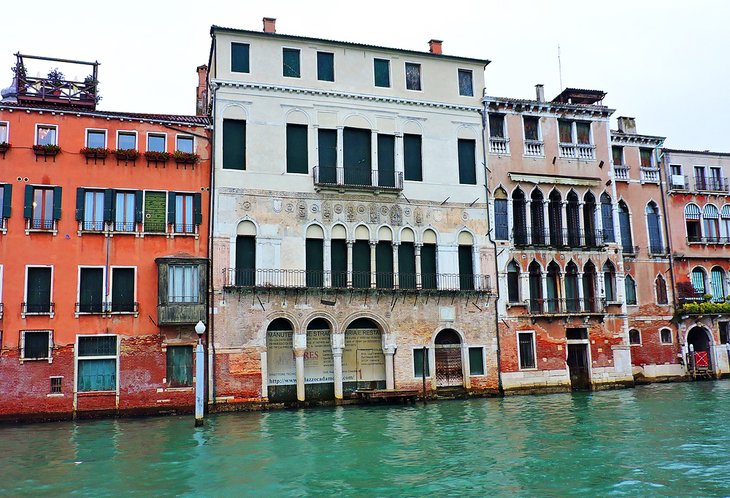
Not one of the most imposing palazzi overlooking the Grand Canal, Ca' da Mosto is both the oldest and one of the most architecturally significant. Dating from the 13th century, it was originally a fondaco, the home and workplace of a Venetian merchant.
Unlike most of the later palaces, its canal-side façade is asymmetrical, with three arches (one wider than the others) set to one side of its water-level story and a smaller door to the other. Above, the windows on the piano nobile - the main floor above - are topped by high, narrow arches, a style that was to later develop into the characteristic Venetian pointed arches. It is Venice's most important example of a 13th-century palace, others of its age having been completely transformed by later renovations.
It was the birthplace of Alvise da Mosto, a 15th-century navigator employed by Portugal's Prince Henry the Navigator, and the first European to sight the Cape Verde islands. The house is in a dilapidated state, but there has been talk of restoring it as a luxury hotel.
13. Fish Market
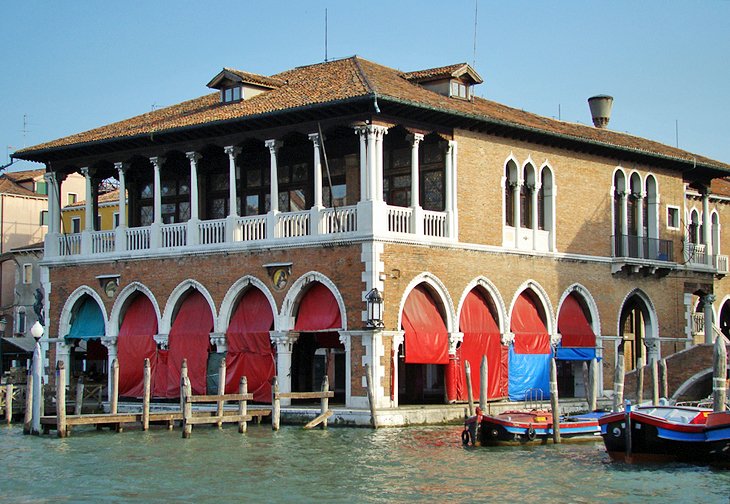
Dating only from 1907, the market hall for fish sellers (Pescheria), on the left past Rialto Bridge, was built in Gothic style with delightful carved capitals supporting its arches. Stone fish and other sea creatures look down on the morning hubbub as chefs and housewives vie for fresh-caught seafood.
Although it's a comparatively modern building, it was constructed according to the centuries-old method on more than 18,000 larchwood piles. Between the Pescheria and Rialto is the colorful food and produce market; browsing through this busy, colorful place is one of the favorite free things to do in Venice. The nearest stop is Rialto.
14. Ca' d'Oro
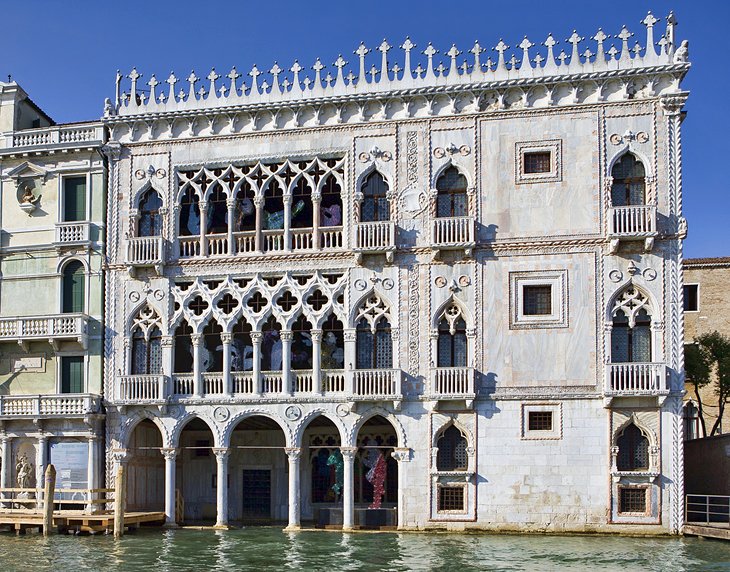
On the right bank, one of the most beautiful sights on the canal, Ca' d'Oro, is Venetian Gothic at its most perfect. Although it has lost its original rich paint and gilding that gave rise to its name - House of Gold - the marble filigree work of Bartolomeo Bon, who also built the Porta della Carta in the Doge's palace, is perhaps even more beautiful without it.
The interior, now a museum, illustrates vividly how Venetian nobles lived in the late Middle Ages. The mosaic on the ground floor copies one in St. Mark's Basilica, and there is a beautiful red marble well in the courtyard. Artworks of the Galleria Franchetti art collection complement the historical setting of the palace.
Along with Titian's Venus before the Mirror, Portrait of a Nobleman by van Dyck, and Mantegna's unfinished St. Sebastian, you'll see marble sculptures, bronzes, and terracottas by Bernini, Giambologna, Tullio Lombardo, Ricci, and others, as well as fragments of the frescoes by Giorgione and Titian that once adorned the façade of the Fondaco dei Tedeschi. This is one of the easiest places to visit from the vaporetto, as it has its own stop.
Address: Calle Ca 'd'Oro, Venice
Official site: www.cadoro.org
15. Ca' Pesaro
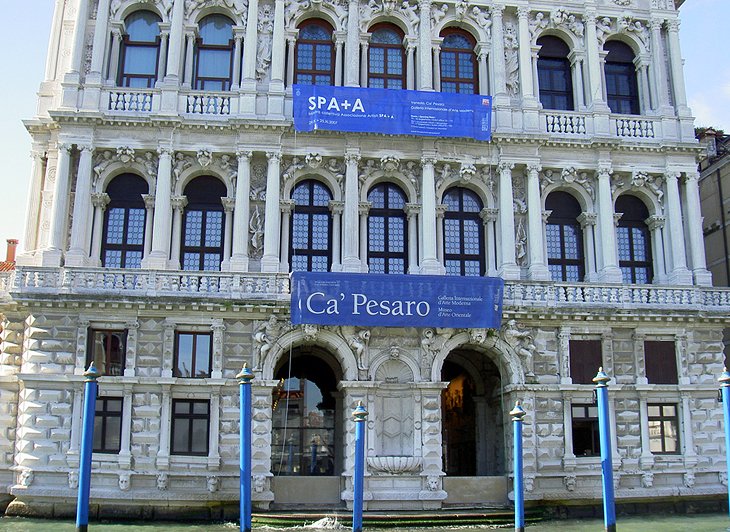
Farther along, on the left, Ca' Pesaro was built between 1652 and 1710 by the masters of Venetian Late Baroque, Baldassare Longhena and Antonio Gaspari. The splendid façade was inspired by Sansovino's Library in the Piazzetta.
The lavishly designed interior may seem an unusual home for the Galleria d'Arte Moderna, one of the most important collections of modern art in Italy. But the palace makes an interesting contrast to works by Franz von Lenbach, Auguste Rodin, and Marc Chagall. On the third floor, the Museo d'Arte Orientale has an equally outstanding collection of Far Eastern art featuring Chinese vases, Japanese paintings, and Indian sculpture. To reach Ca'Pesaro, get off at San Stae vaporetto stop and walk to the left.
Location: Santa Croce, Venice
16. San Stae
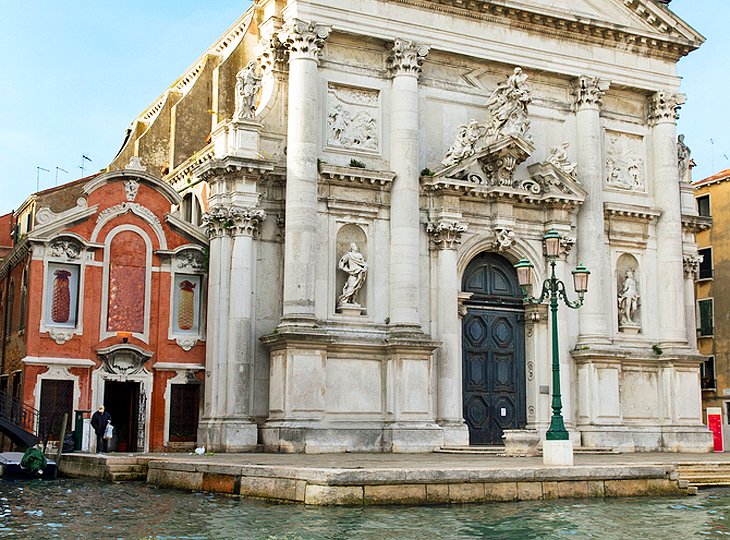
The official name of the church at the left landing stage of San Stae is Sant'Eustachio, but hardly anyone calls it that. It was built in 1678 by Giovanni Grassi, in the shape of a Greek cross, and its facade on the Grand Canal was added thirty years later by master-builder Domenico Rossi.
It was paid for by Doge Alvise Mocenigo II, who is buried in the church. Also inside are paintings by early 18th-century artists, including Tiepolo and Pellegrini. San Stae has its own stop.
17. Palazzo Vendramin-Calergi
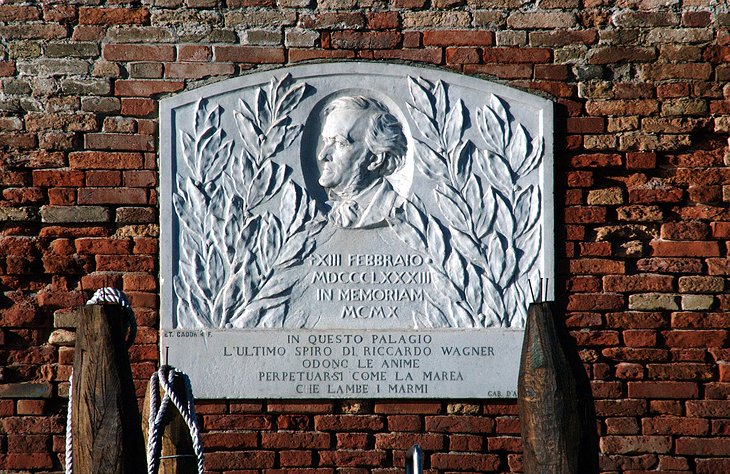
This palace on the right, shortly past San Stae, is such a perfect example of Venetian Renaissance architecture that many other Venetian palaces were modeled after it, and in the revival era towards the end of the 19th century, many of its elements were copied throughout Europe. It was built between 1480 and 1504 by Mauro Codussi.
The German opera composer Richard Wagner and his family stayed here several times, and he died here in 1883. He is commemorated by a small Wagner museum inside the palazzo.
18. Fondamenta Turchi and the Natural History Museum
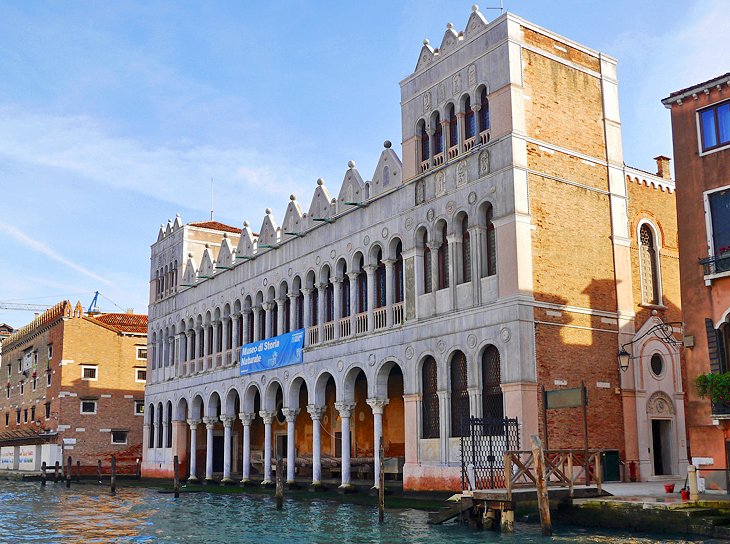
This oddly restored building almost opposite Palazzo Vendramin-Calergi was originally a palace dating from the ninth century and one of the oldest in Venice, but its present form dates to the mid-13th century. In the 14th and 15th centuries, before it became the offices and living quarters of Turkish merchants, it was the residence of the Dukes of Ferrara, who hosted Emperor Friedrich III here as their guest in 1452 and 1469. By the early 19th century, it was totally in ruins, so the city took it over and attempted to rebuild it in its original 13th-century style.
Whatever the results, it is still considered a good example of the Byzantine-Venetian mixture of styles common in the Middle Ages. It houses the Natural History Museum, where you can learn about the animal life in the Adriatic and see geological and zoological collections. The ground floor also has an excellent exhibition of Venetian well-heads. Use the San Marcuola landing point and take a traghetto across the Grand Canal to the museum.
Address: Santa Croce, Venice
Official site: http://msn.visitmuve.it/
19. Santa Maria di Nazareth
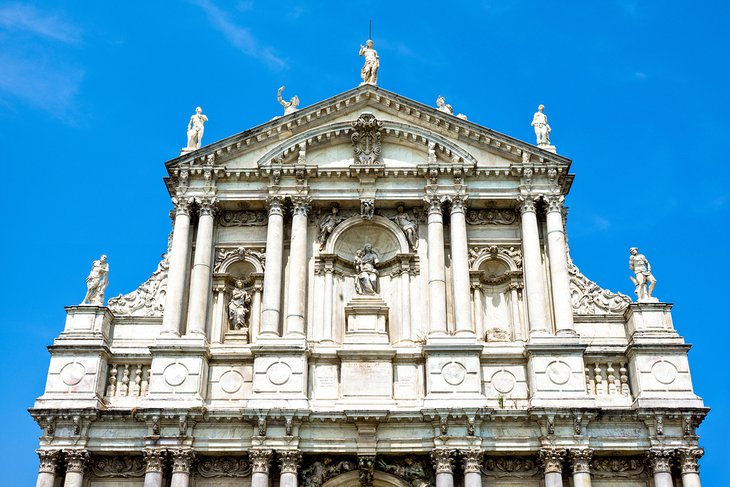
The fine Baroque church on the right, next to the Santa Lucia rail station, was built in the 1670s by Baldassare Longhena, and its majestic façade of columns and statues was added by Giuseppe Sardi. Built for the order of Discalced Carmelites, the church is popularly known as Gli Scalzi.
The Baroque interior is equally ornate, full of spiral-colored marble columns, sculptures, frescoes, and gold flourishes. In the second chapel on the right is Tiepolo's fresco The Glory of St. Teresa, and the third chapel on the left contains his fresco Christ Praying in the Garden of Gethsemane.
The smallest of the Grand Canal's bridges, Ponte degli Scalzi, crosses in front of the church, which is often overlooked in the rush of tourists and commuters bound to and from the station.
Address: Fondamenta Scalzi, Venice
20. Ponte della Costituzione (Constitution Bridge)
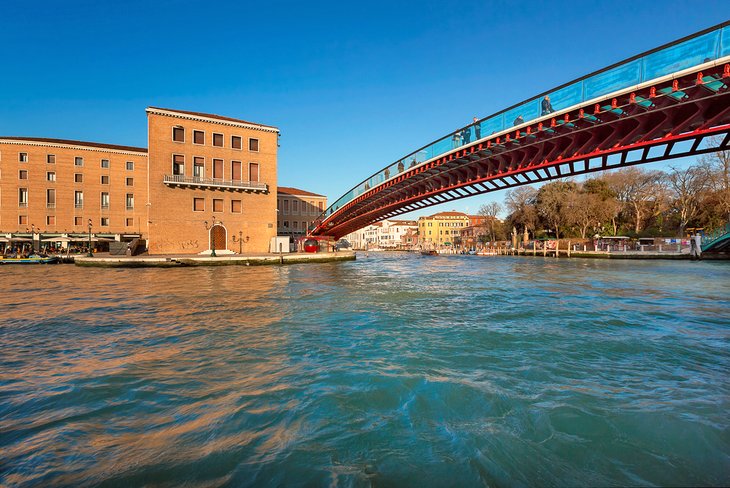
Not all Venetians agree on Spanish architect Santiago Calatrava's bridge, built in 2007. But they do agree that it's handy to have a bridge at the end of the Grand Canal, where the vaporetto line concludes at the bus station and parking garage.
The design makes no pretense of mirroring traditional Venetian styles, reflecting the earlier bridges only in its graceful sweeping curve. The steel and concrete structure is faced in a combination of Istrian marble and glass, and like Calatrava's work elsewhere, it has become an attraction of its own.
Tips: How to Make the Most of Your Tour of the Grand Canal
- Vaporetto Tickets: The ride along the Grand Canal is the most expensive in Venice, but it's included in any of the day or longer transit passes. Whether you buy a pass or a single ticket, be sure to validate it at the machine as you board.
- Timing: You'll find crowds on the vaporetto at almost any hour, but it's best to avoid morning and evening commuting hours, as well as the lunch rush between noon and 2pm.
- At night: Although you won't be able to see all the palaces, many are fully lit at night, a magical sight with their facades bathed in spotlights and Murano glass chandeliers gleaming from the large windows.
- Best views: To see the palaces on both sides of the canal, try to get a spot to stand outside, where you can move more easily from one side to the other.
- Direction: While this tour lists the attractions beginning from San Marco, you can ride it in either direction. To get the best views of all, ride in both directions and see one side at a time.