Tourist Attractions in Nord-Pas-de-Calais
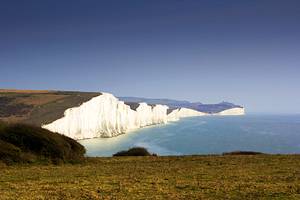
On a map of France, the Nord-Pas-de-Calais region forms the northernmost tip of the country's Hexagon. At the border of Belgium and facing the English Channel, Nord-Pas-de-Calais boasts beautiful sandy beaches, as well as serene expanses of marshland, rolling hills, and pristine forests. The region corresponds with the historic provinces of Artois and French Flanders and overlaps with parts of Picardy.
Despite being one of France's most important industrial areas, there are still pastoral farms, historic towns, and quaint villages untouched by modernity. A charming ambience and top-notch cultural attractions are also found in several cities such as Lille, Arras, and Boulogne-sur-Mer.
Plan a fabulous travel itinerary and discover the best places to visit with our list of the top attractions in Nord-Pas-de-Calais.
Lille
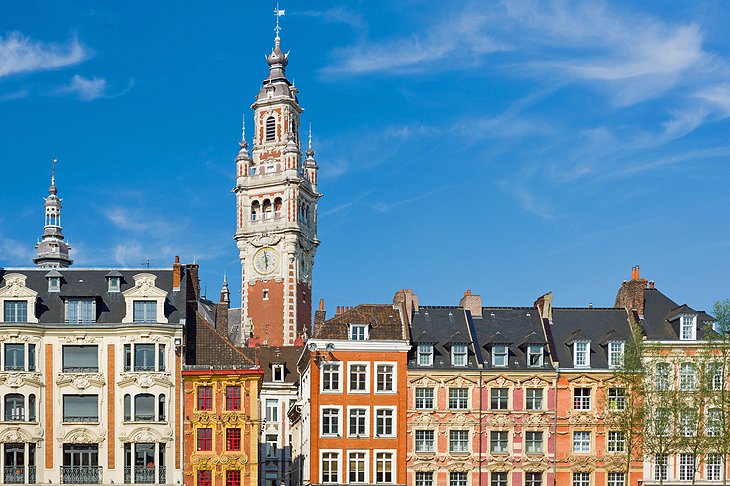
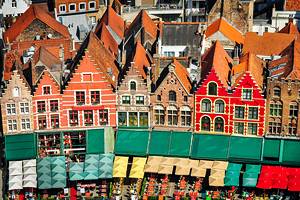
Lille is the largest city of French Flanders and has a distinctive Flemish character, seen in its lovely architecture and hearty cuisine. The local cooking includes typical Belgian dishes like moules-frites (mussels and French fries) and gaufres (Belgian-style waffles).
At the heart of Lille, the Place du Général de Gaulle, is lined with elegant Flemish Baroque monuments such as the Vieille Bourse (Old Stock Exchange). The nearby Rang du Beauregard buildings exemplify an ornate Lilloise Neoclassical style.
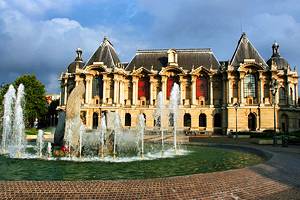
Art museums are among the top attractions in Lille and in nearby towns. Not to be missed are the Palais des Beaux-Arts (Museum of Fine Arts); the Musée du Louvre-Lens, which shares its collection with the Louvre Museum in Paris; the LaM museum of modern and contemporary art in Villeneuve d'Ascq; and the collection of fine arts and decorative arts in the town of Roubaix.
The first weekend of September, the Braderie de Lille (Flea Market) brings together hundreds of stalls selling vintage items and antiques. Bargain hunting at the Lille Flea Market is one of the most popular things to do in the city.
Arras
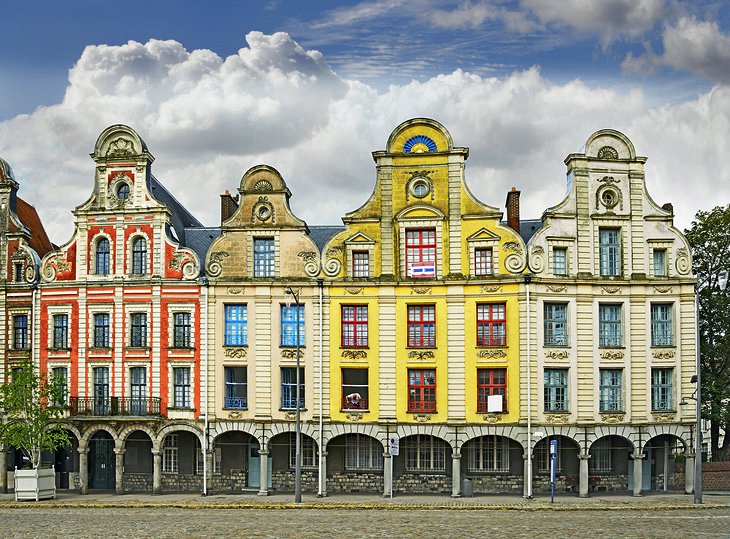
The historic capital of the Artois province, Arras has the architectural heritage to prove it. Arcaded squares, high-gabled burghers' houses, and exquisite old churches reveal the authentic character of this Flemish town.
The Cathédrale d'Arras, originally the abbey church of Saint-Vaast, was rebuilt in the 18th century in awe-inspiring Neoclassical style.
Another building of the former Benedictive monastery of Saint-Vaast is now home to the Musée des Beaux-Arts. This museum has a diverse art collection, from medieval sculptures to Dutch and French paintings. Highlights are the masterpieces by Jean-Baptiste-Camille, Corot, Charles Le Brun, Delacroix, and Rubens.
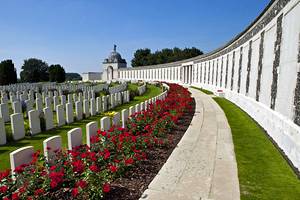
During World War One, the area around Arras was the scene of heavy fighting, which is now commemorated by several military cemeteries and memorials. On the site where the pivotal Battle of Vimy Ridge took place (12 kilometers north of Arras) in April of 1917, the Vimy Memorial pays homage to Canadian soldiers who fought and died in France during the First World War.
Calais
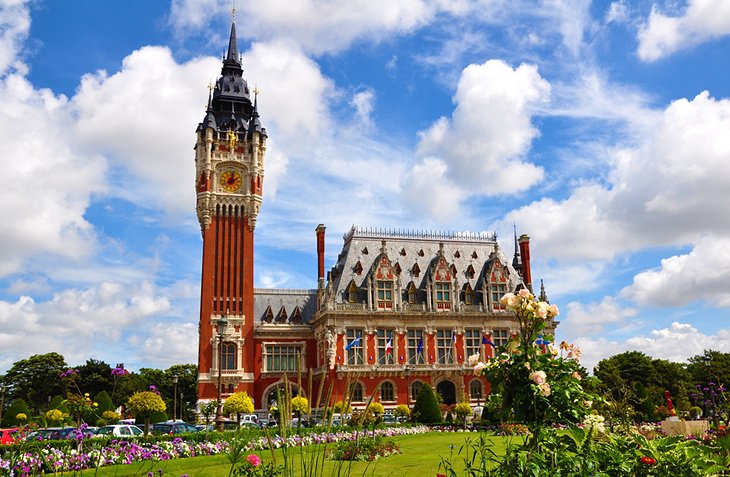
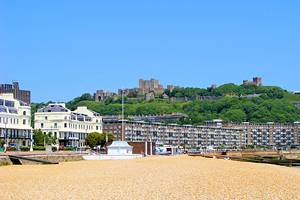
Calais provides a gateway to England as a port on the English Channel and the starting point for train or ferry rides to England. The high-speed Eurostar train crosses the English Channel's Strait of Dover in a 50-kilometer undersea tunnel, and takes under one hour to arrive in London. The English Channel crossing by ferry takes one hour and 30 minutes from Calais to Dover, England.
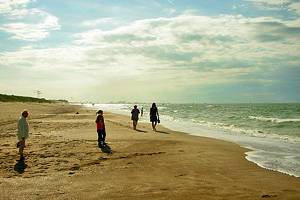
In this spectacular seaside location along the Côte d'Opale (Opal Coast), the area around Calais features expansive sandy beaches, which are popular for surfing and sailing, as well as other outdoor activities like hiking and cycling.
For those spending time in Calais (rather than simply traveling through), must-see attractions are the UNESCO-listed Flemish Renaissance-style Hôtel de Ville (Town Hall) and the nearby group of Auguste Rodin's sculptures, Les Bourgeois de Calais, which commemorate the siege of Calais in 1347 by the English, and occupation until 1558.
Next to the leafy Parc Richelieu, the Musée des Beaux Arts displays paintings and sculptures from the 16th century to the 21st century. Among the masterpieces are works by Auguste Rodin, Théodore Géricault and William Turner.
The Cité de la Dentelle et de la Mode (on the Quai du Commerce) has a superb collection of antique lace, as well as an assortment of vintage fashion pieces that feature lace adornments. The collections focus on the history of handmade lace from the Renaissance era to the 19th century. However, there is also an exhibit of modern lace and contemporary fashion.
Boulogne-sur-Mer
As France's largest fishing port, it's fitting that Boulogne-sur-Mer has a superb aquarium and sea museum. The Nausicaá aquarium is the largest in Europe, home to 58,000 sea creatures, including 1,600 different species. Nausicaá especially appeals to families with kids, who are sure to enjoy the touch pool and entertaining sea lion performances.
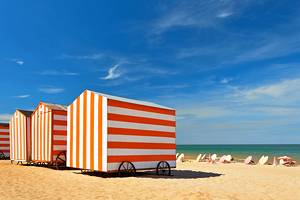
Near the Nausicaá aquarium is access to a sandy beach along the Boulevard Sainte-Beuve. The beach has a yacht club and a promenade, which is ideal for taking a seaside stroll. During summertime, beach tents, lounge chairs, and parasols are available for rent; in July and August, lifeguards are on duty.
In keeping with its maritime heritage, the town hosts the Fête de la Mer (Festival of the Sea) every year in July. The festival includes nautical parades, sailing excursions, maritime music concerts, performances of traditional seafaring songs, and visits to the fish auction and fishermen's quays. Gourmands enjoy the seafood cooking workshops taught by local chefs, and samplings of specialties prepared from fresh catches.
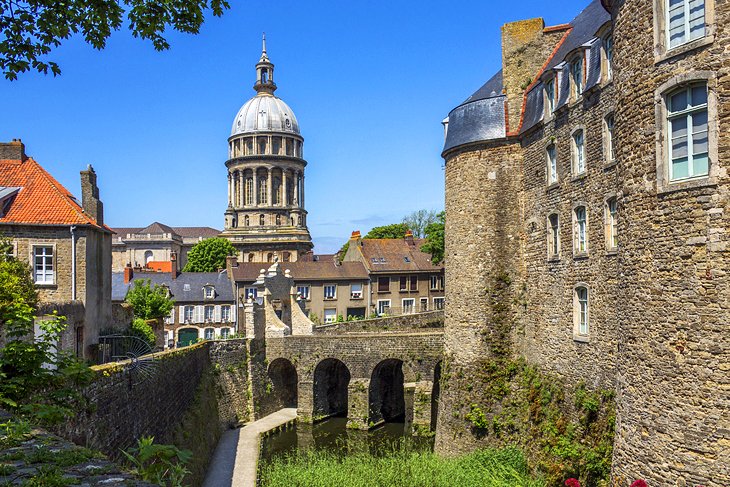
Tourists should also take some time to explore the Old Town of Boulogne-sur-Mer, a walled medieval city known as the Haute Ville because it's perched on a hilltop. This charming historic area is full of atmospheric cobblestone streets and picturesque squares.
Highlights of the Haute Ville include the UNESCO-listed belfry, dating to the 12th century; the Notre-Dame Basilica, which incorporates a Romanesque crypt; and the 13th-century fortifications (Les Remparts), which feature four gated entrances to the Haute Ville.
The ramparts that surround the Haute Ville of Boulogne-sur-Mer are the best preserved medieval fortifications in northern France. It's an invigorating experience to walk along the Promenade des Remparts, a path through landscaped gardens at the foot of the ramparts. This path also offers a chance to admire panoramas of the city.
Another interesting spot to explore is the Rue de Lille, a pedestrian street lined with restaurants, antique shops, and small boutiques.
Gerberoy
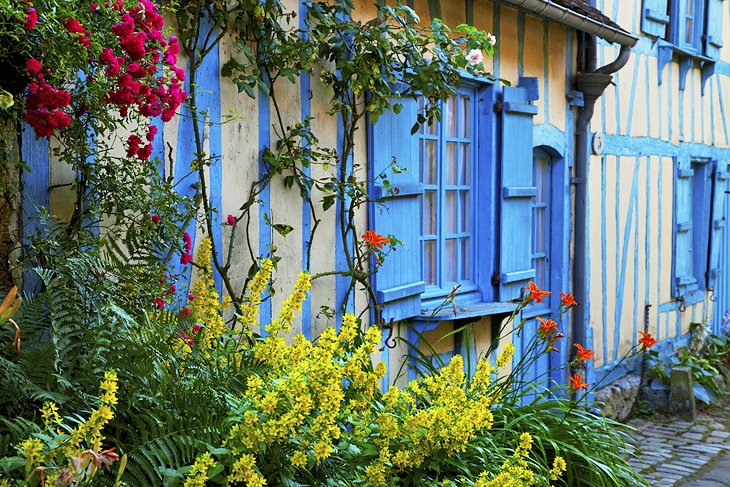
With its tranquil bucolic setting, cobblestone pedestrian alleyways, and quaint half-timbered houses, this medieval village is a delightful place to explore. Thanks to its beauty and charm, Gerberoy is listed as one of the Plus Beaux Villages de France (Most Beautiful Villages of France). The Touring Club of France titled Gerberoy as "le plus coquet" ("the most alluring") village.
Many buildings throughout the town are adorned with rose vines. Gerberoy is also famous for its Fête des Roses (Festival of Roses), which has been held in the village every year since 1928.
In keeping with the village's love of flowers, the post-Impressionist painter Henri Le Sidaner (who settled in Gerberoy) created magnificent Italian terraced gardens that he used as an outdoor art studio. Classified as a Jardin Remarquable (Remarkable Garden), the Jardins Le Sidaner are open every day from May 1st through September 30th.
Near the garden is another must-see landmark, the Collégiale Saint-Pierre, which is adorned with 17th-century Aubusson tapestries. The church dates to the 11th-century but was renovated in later centuries.
Bergues
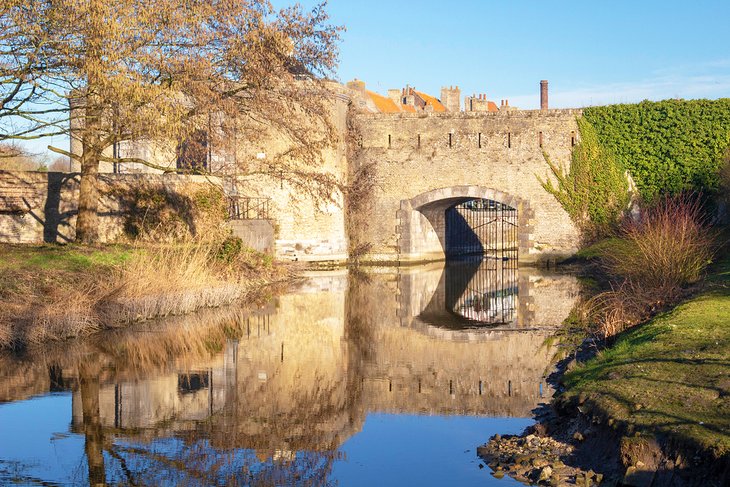
Surrounded by remnants of medieval walls, the picturesque town of Bergues is traversed by winding canals, which lend a typical Flemish ambience.
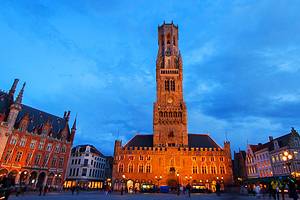
Bergues is most famous for its belfry, considered one of the finest in France. The UNESCO-listed Beffroi de Bergues features an unusual open design, with 50 bells that chime to mark the hours. As the town's top tourist attraction, the Beffroi de Bergues also has an exhibition space and music room.
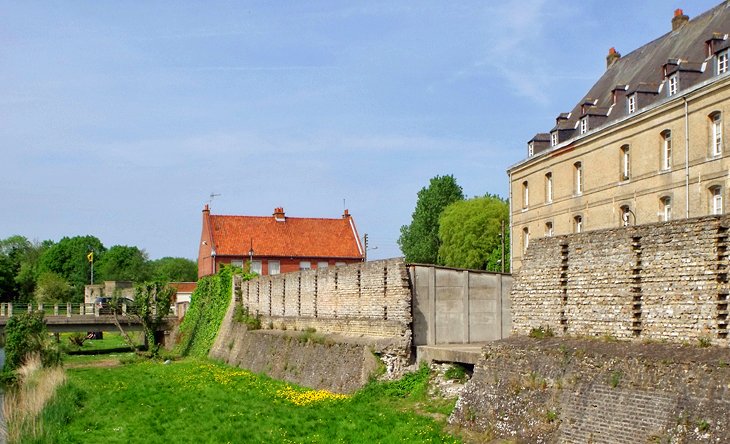
An exceptional fine arts museum, the Musée du Mont de Piété occupies the 17th-century Mont-de-Piété (municipal pawnshop), which is a gem of Flemish Baroque architecture. The museum displays paintings and drawings by Flemish and French masters, including George de la Tour, Charles Le Brun, Nicolas Poussin, Anthony van Dyck, and Maerten van Heemskerck.
Musée Louvre-Lens
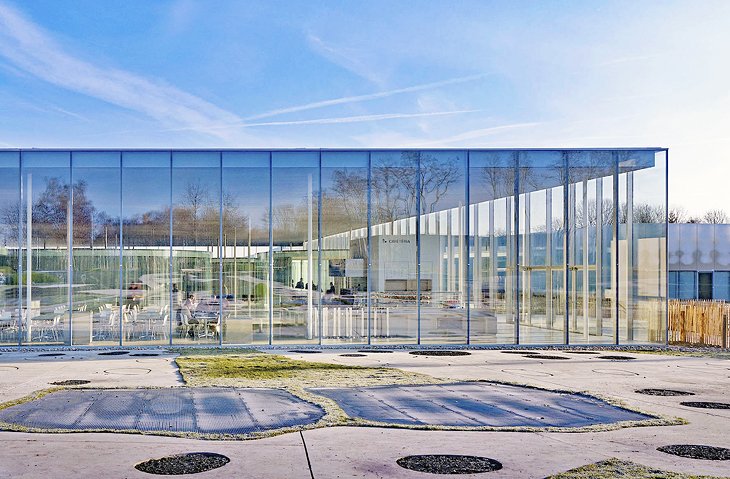
The Musée Louvre-Lens is an ultramodern museum space in a tranquil park. The Musée Louvre-Lens does not have its own collections, instead the museum presents rotating exhibits of artworks loaned from the Louvre Museum in Paris.
The museum's 3,000-square-meter Galerie du Temps (gallery space) features natural lighting and an innovative presentation. On display are over 200 masterpieces from the Louvre. Many exhibits focus on specific themes of artworks compiled from various time periods or representing different artistic styles.
It's easy to get to the museum from Lille (a 30-minute drive) or Paris (90 minutes by train). The train station in Lens offers free shuttle bus rides to the museum.
Address: 99 Rue Paul Bert, 62300 Lens
Official site: http://www.louvrelens.fr/en/home
Cambrai
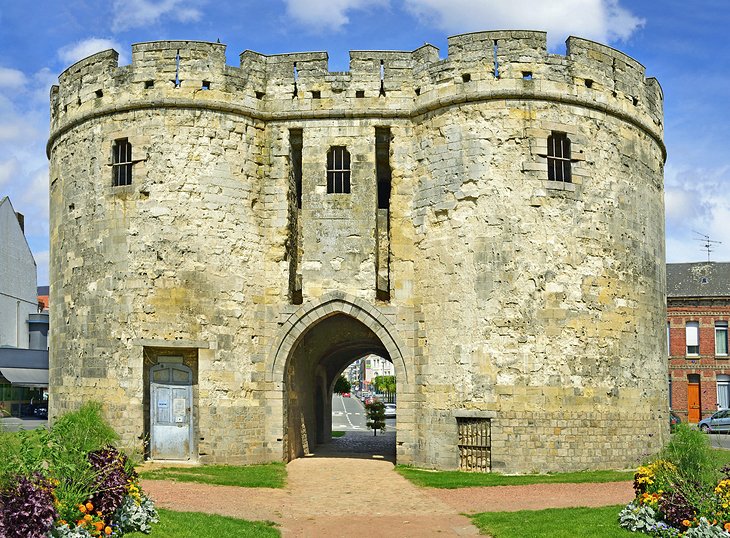
Cambrai is a quiet historic town with remnants of medieval fortifications and an impressive cultural heritage. A relic of the old ramparts, the 14th-century Porte de Paris once provided an entrance into the previously walled town.
The Eglise Saint-Géry is noteworthy for its blend of French classical and Dutch Baroque architectural styles, as well as the famous Entombment painting by Rubens.
Not-to-be-missed are Chapelle du Grand Séminaire, renowned for its Baroque facade, and the Cathédrale Notre-Dame, which contains exceptional works of art, including trompe-l'oeil paintings by Martin Gheeraerts and marvelous stained-glass windows.
Art lovers will appreciate the Musée des Beaux-Arts, which has an excellent assortment of 16th- to 19th-century Dutch and French paintings. The museum's archaeology and contemporary art collections are also interesting.
Many cultural attractions are found just outside of Cambrai, including the Musée des Dentelles et Broderies de Caudry (Museum of Lace and Embroidery), housed in a 19th-century lace factory in Caudry (15 kilometers from Cambrai). This museum presents the local history of lace fabrication and embroidery arts along with craft demonstrations and fashion exhibits.
The Musée Matisse in Le Cateau-Cambrésis (25 kilometers from Cambrai) is a must-see attraction for those who admire the works of Matisse. The museum was created by Henri Matisse, who hailed from this region, and is considered one of the most important collections of Matisse paintings in the world. On displays are 82 paintings that Matisse himself donated to the museum.
Saint-Omer and the Marais Audomarois
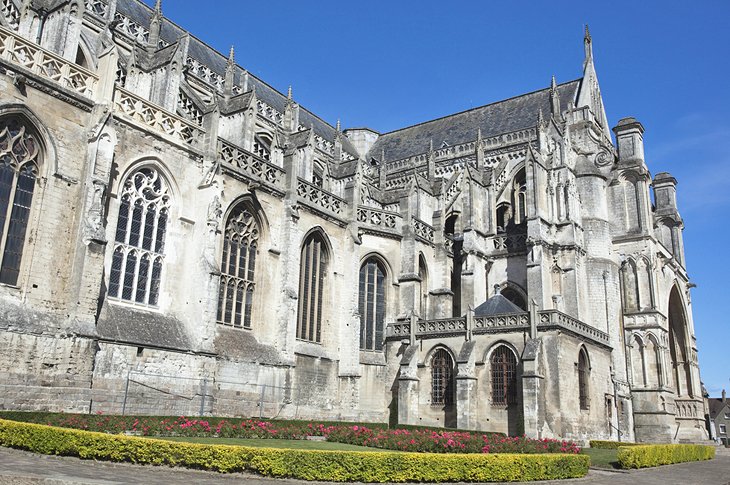
Cobblestone streets and stately old townhouses reveal the traditional character of this historic market town. One of Saint-Omer's most elegant 18th-century townhouses, the Hôtel Sandelin, is now a museum with an excellent collection of European paintings, as well as decorative arts.
Other must-see landmarks are the 13th-century Eglise Saint-Denis, which has a majestic Gothic tower, and the Cathédrale Notre Dame, a splendid Gothic monument built between the 13th and 16th centuries.
In the surroundings, the Marais Audomarois (marshland) is among the best places to visit in northern France for fishing (allowed with a local fishing association card) in the gentle rivers.
Taking a boat ride through the marshland's waterways is another way to discover the wetland scenery, with its lush plant life and market gardens. There are several options for tourists: traditional artisan-crafted wooden boats led by a local boatman, row boats and canoes for rent, and guided boat tours.
For those who'd like to explore the terra firma aspects of the area, the Audomarois Forest has scenic trails for hiking and cycling.
Dunkerque
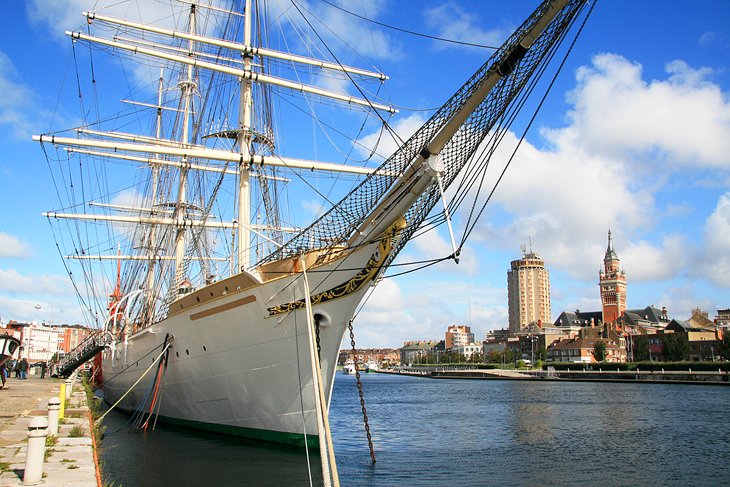
Just 14 kilometers from the Belgian border, Dunkerque (Dunkirk) is France's northernmost town, on the North Sea near the Strait of Dover. Dunkerque has an important commercial port, as well as ferry boat access to Dover, England.
During the Second World War, Dunkerque was the scene of a dramatic military rescue as boats of Allied troops were brought to safety.
Every year before Ash Wednesday, the Dunkirk Carnival transforms the town into a wild and crazy scene of unbridled celebration. Thousands of revelers show their festive spirit, wearing colorful costumes; some carry whimsical umbrellas on long handles. The three-day carnival includes gregarious processions, musical entertainment, and joyful balls.
Douai
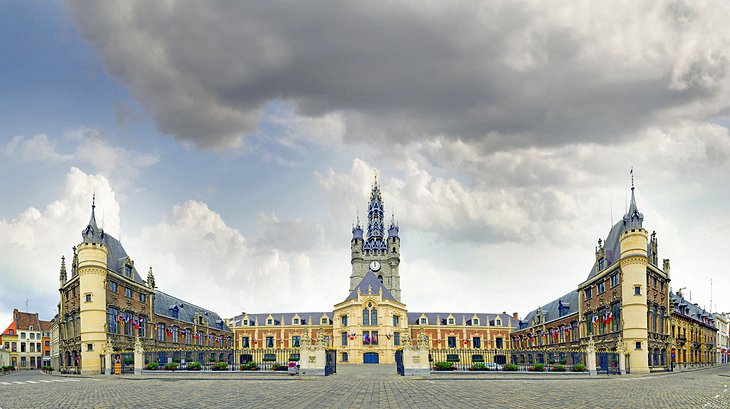
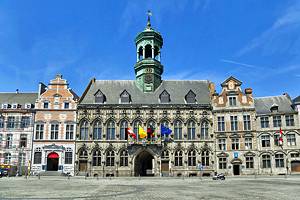
Douai is an old university town, originally founded by the Spaniards. The central features of the town are the UNESCO-listed Belfry, a masterpiece of Gothic architecture that dates to the 14th and 15th centuries, and the Place d'Armes, also called the Grand Place.
The Musée de la Chartreuse, housed in a 17th-century convent, contains a renowned fine-arts collection including masterpieces of Flemish, Dutch, Italian, and French painting. Highlights are the works by Véronèse, Rubens, Courbet, Renoir, Sisley, Corot, and Pisarro, as well as the precious Polyptyque d'Anchin by Jean Bellegambe (created between 1509 and 1513).
Abbaye de Vaucelles
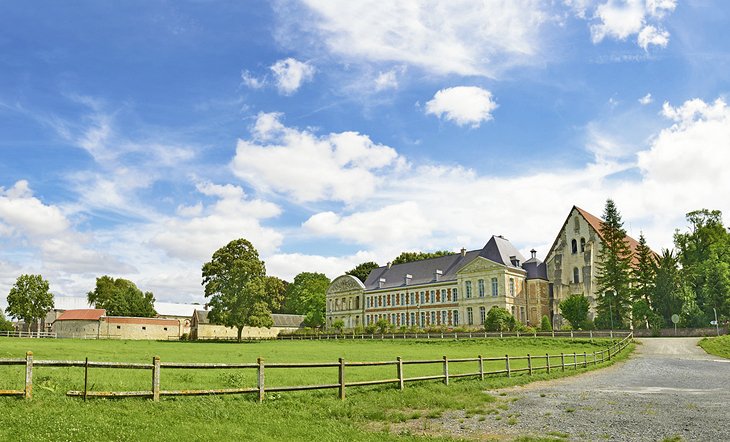
The Abbaye de Vaucelles is a remarkable 12th-century abbey founded by Saint Bernard, which was one of the largest Cistercian monasteries in the world. The abbey is classified as a Historical Monument and is considered one of the most important historic buildings in northern France.
Visitors can see the former Monks' Quarters, including a chapter house, scriptorium, sacred passage, oratory, and chapel, and explore the luxuriant seven-hectare grounds, which feature various sections, including an orchard and a rose garden.
The Abbaye de Vaucelles is open to the public for visits (for an admission fee) every day except Mondays from March through October. Art expositions and cultural events are held here throughout the year.
The abbey is located 12 kilometers from Cambrai.
Nearby Attractions in the Picardy Region
Amiens
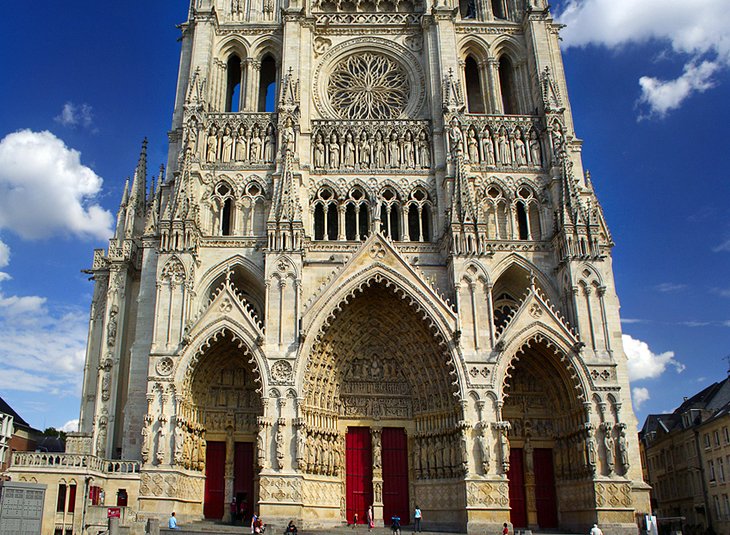
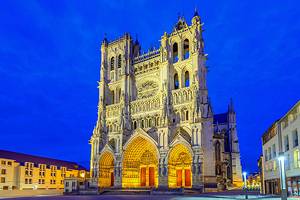
Amiens is the historic capital of Picardy and was long famous as a center of linen, wool, and cotton industries. The Second World War took its toll on the city. Fortunately, the magnificent Cathédrale Notre Dame d'Amiens was spared any damage.
The most impressive of Amiens' tourist attractions, this 13th-century cathedral is designated as a UNESCO World Heritage Site and is one of the largest Gothic cathedrals in the world. This superb example of classic French Gothic architecture is distinguished by its harmony and overall stylistic coherence. Visitors marvel at the intricacy of the facade with its exquisite details.
Beauvais
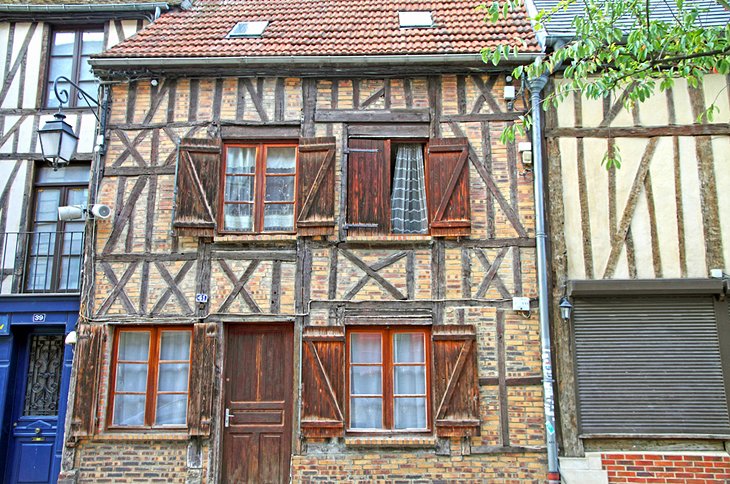
Beauvais has a distinctive old-world character and noteworthy historic churches. Soaring towards the heavens, the Flamboyant Gothic Cathédrale Saint-Pierre boasts the highest roof vaulting in the world. Among the oldest churches in Beauvais is the Eglise Saint-Etienne, built in the 12th century with some later additions.
It's worth taking time to admire the church's stained-glass windows, especially the 13th-century Arbre de Jessé (The Tree of Jesse). Behind the cathedral is the Galerie Nationale de la Tapisserie, a center of tapestry, which displays exceptional pieces dating from the 16th century and presents workshops on tapestry weaving.
About a 30-minute drive north in the village of Folleville is the UNESCO-listed Eglise Paroissiale Saint-Jean-Baptiste. This historic church was on the medieval "Way of Saint James" pilgrimage route to Santiago de Compostela, Spain.
Château de Chantilly
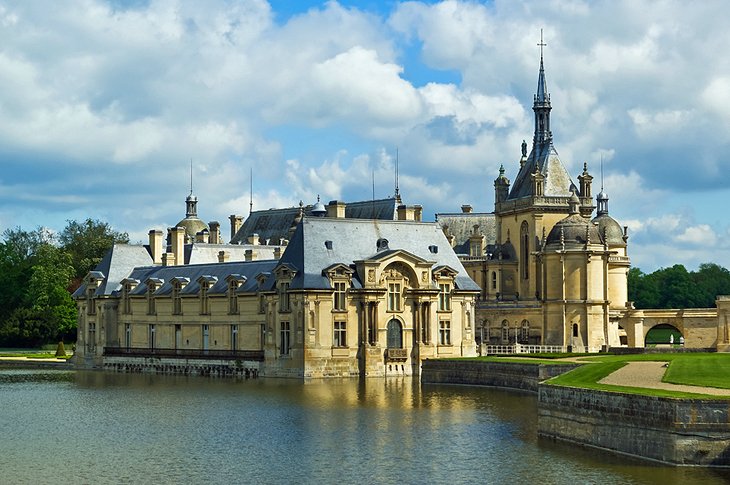
In the small village of Chantilly, the Château de Chantilly is one of the few castles in France that is still completely furnished with its original decor and precious antiques.
The château was the residence of the Duke of Aumale (Henri d'Orléans), whose father was Louis-Philippe, the last king of France. The Duke of Aumale inherited the Château de Chantilly from Louis-Henri-Joseph de Bourbon, the Prince of Condé.
The lavish reception rooms of the Princes of Bourbon-Condé are adorned in sumptuous 18th-century French style. The château's Cabinet des Livres (Reading Room) contains 19,000 volumes, including rare books like the Duc de Berry's illuminated manuscript from the 15th century.
In the old kitchen of the château, the famous chef, François Vatel, invented whipped cream called "crème Chantilly." The château's restaurant, La Capitainerie, serves a simple menu for lunch and afternoon tea featuring desserts made with the famous Chantilly whipped cream.
A highlight of the château is the Musée Condé, which houses France's second-largest collection (after the Louvre) of works by the Old Masters, from the Renaissance to the 19th century. Some of the finest pieces include the Portrait de Madame Duvaucey by Ingres, the Massacre des Innocents by Poussin, and Concert Champêtre by Jean-Baptiste-Camille Corot, as well as paintings by Raphaël, Delacroix, Véronèse, Botticelli, Filippino Lippi, and Philippe de Champaigne.
Surrounding the château is an enchanting 115-hectare parkland with a French Formal Garden designed by André Le Nôtre (landscape architect of Versailles) and a romantic English Garden created in the 19th century. The property also includes the Grandes Écuries horse stables that present entertaining equestrian shows.
Official site: http://www.domainedechantilly.com/en
Compiègne
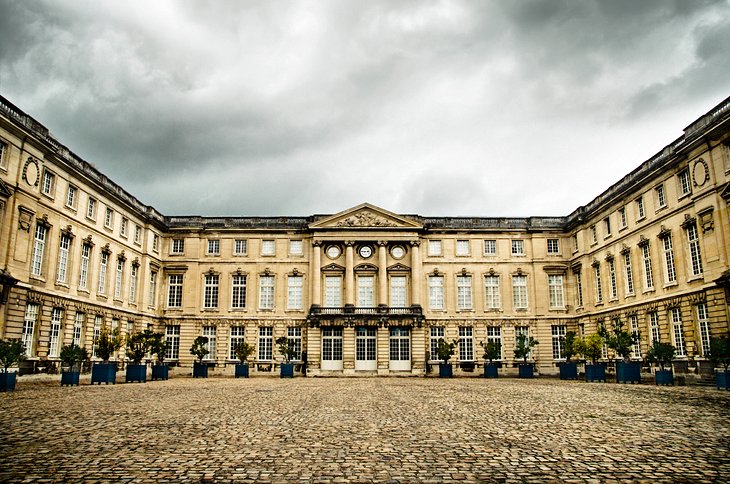
Surrounded by majestic forests, Compiègne defines itself as a "royal village" because of its regal past. Here, French Kings and the Emperor Napoleon I have left their mark.
Evidence of the town's rich heritage are several prestigious monuments, such as the Hôtel de Ville (Town Hall), a unique example of secular Gothic architecture, and the Château de Compiègne, the palace of Louis XV and Louis XVI, as well as Napoleon I and Napoleon III.
The Château de Compiègne is open to the public year-round for self-guided or guided tours. Visitors will be dazzled by the palace's Neoclassical architecture and opulent Imperial apartments of the First (Napoleon I) and Second (Napoleon III) French Empires. The palace also has three museum collections and a tea salon in the rose garden, the Salon de Thé du Jardin des Roses.
About 10 kilometers from Compiègne in a clearing of dense woodland, the Mémorial de l'Armistice (memorial site and museum) is found in the railway carriage where the Armistice of 1918 was signed. The museum displays stereoscopic (three-dimensional) photographs that bring scenes of World War I to life.
Outside the museum are numerous monuments dedicated to the fallen soldiers of France. The surrounding area has hiking trails that wind through the tranquil forest.
Noyons
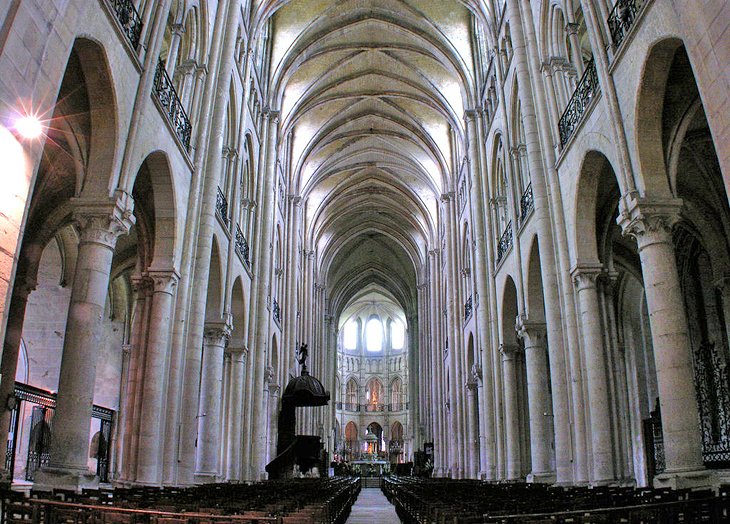
In the heart of Picardy, Noyon is an interesting tourist destination with a glorious Romanesque-Gothic cathedral built in the 12th century. With its purity of lines, the Cathédrale Notre-Dame reveals a solemnity and, at the same time, a brightness that inspires spiritual worship. Protestant reformer John Calvin was born in Noyons, and the house of his birthplace is now the John Calvin Museum, dedicated to the history of Protestantism.
About 10 kilometers from Noyons, the 12th-century Abbaye d'Ourscamp was a Cistercian abbey on the medieval pilgrimage route to Santiago de Compostela. Today, the abbey is the property of the Serviteurs de Jésus et de Marie religious community and is open to the public for visits, as well as spiritual retreats.
Somme Battlefields
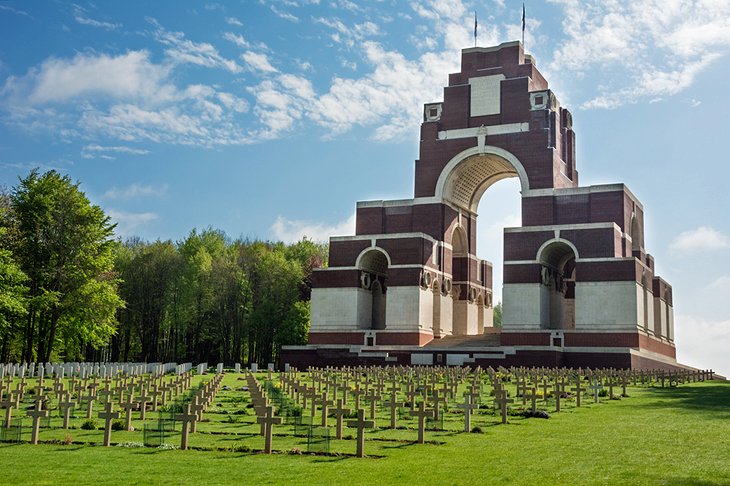
The landscape of Somme is the site of a significant WWI battle that took place from July to November in 1916. Visitors can learn about the Battle of the Somme and discover the history of the war through the Remembrance Circuit, a 92-kilometer-long trail, which includes battlefield sites, cemeteries, and memorials.
In the town of Albert at the site of the Battle of the Somme, the Musée Somme 1916 (Somme Trench Museum) documents the history of the First World War and gives visitors a realistic insight of the trench battle experience, with recreations of scenes showing soldiers in the trenches.