

Greece's 13 Best Tourist Attractions To Visit On Your First Trip
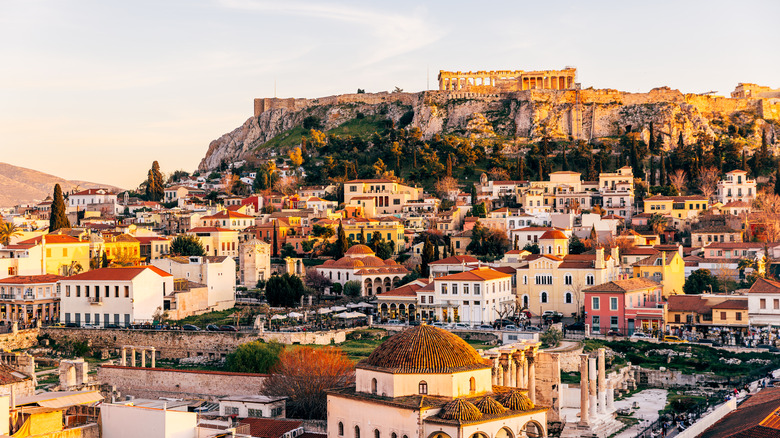
Once a cultural center of the ancient world — so much so that the Romans built a thousand-year empire on rebranding their intellectual property — Greece remains a Mediterranean gem full of must-see tourist destinations. From medieval towns and ancient ruins frozen in time to whitewashed villages overlooking gleaming turquoise waters, and legendary forested mountain ranges featured in Greek mythology, there are endless opportunities for exploration In fact, there's something wondrous lurking around pretty much every corner of the vibrant peninsula and the thousands of islands comprising the timeless Grecian landscape.
Whether you dream of immersing yourself in local culture with music, art, baklava, and ouzo, or standing in the shadow of stately columns that have welcomed travelers to the birthplace of democracy for millennia, there's so much to do here that someone could truly spend weeks (or even months) touring this jewel of the Aegean. To narrow it down, though, we combed through sites like Reddit and TripAdvisor, and consulted travel blogs and specialized websites, in search of the best tourist attractions you won't want to miss on your first visit to Greece.
The Acropolis in Athens
With a history dating back more than 5,000 years, Athens is one of the world's oldest cities. Once the urban and intellectual center of Ancient Greece — and home to the likes of Socrates, Plato, and Aristotle — today's Athenian countryside is covered in monuments to the cultural seat that once stood there. One of the most significant sites is Athens' Acropolis, the once-great citadel overlooking the city from a rocky outcrop high above.
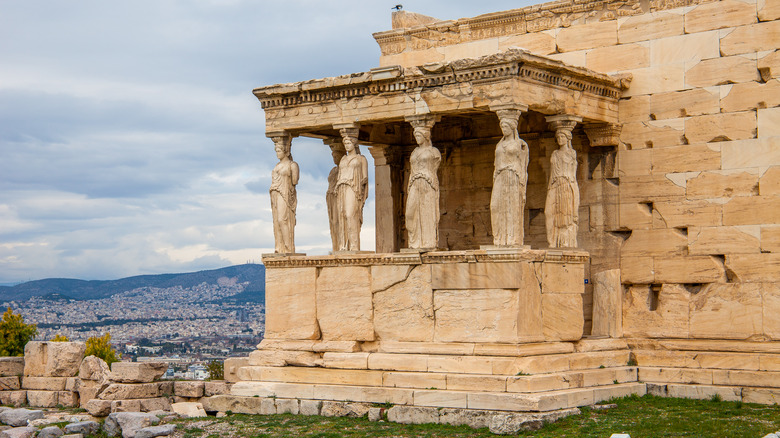
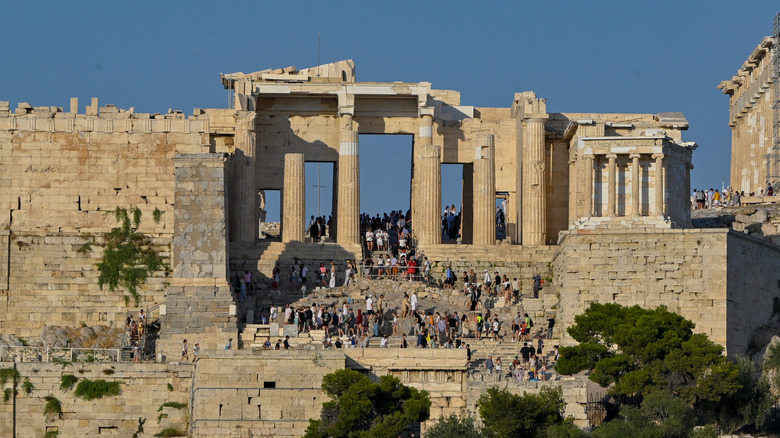
Situated majestically atop the limestone outcrop, the sprawling ancient complex is made up of dozens of sights including temples, sanctuaries, and colonnades. The main focal point is the Parthenon, the iconic Doric temple built in tribute to the city's namesake goddess, Athena, around the fifth century B.C.E. With its "Porch of the Maidens," or Caryatids Porch, the Erechtheion Temple devoted to Poseidon and Athena is another of the Acropolis' high points. Finally, the 5,000-seat open-air amphitheater, the Odeon of Herodes Atticus, is also a marvel of the ancient world. Consider touring the grounds with a group, or downloading an audio guide and going solo. While you're there, make some time to visit the Acropolis Museum, which houses many of the artifacts found on the site over the years and is considered one of Greece's best museums by travel pro Rick Steves.
Santorini's caldera
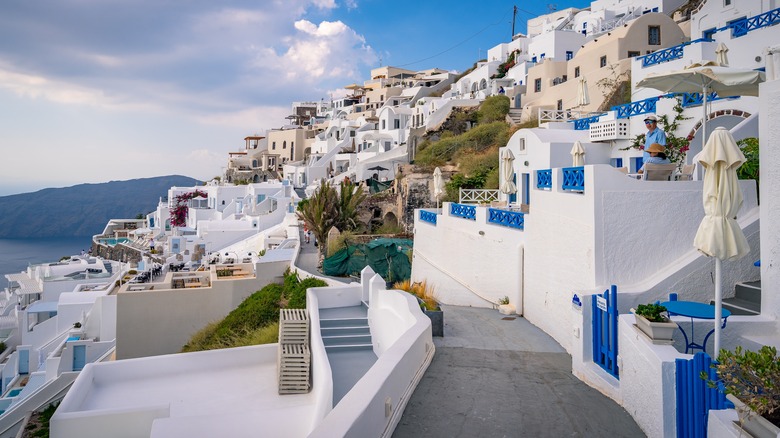
The otherworldly white and cerulean dreamscape of Santorini is a tourist attraction in and of itself. A crescent-shaped island in the middle of the Aegean, Santorini is still considered an active volcano to this day — even if it's been a while since it saw a major eruption. While there's plenty to see and experience here between the island's stunning beaches and charming clifftop villages, by far the most popular tourist experience is traveling to the caldera. Most tourists prefer to cover the distance by foot, either along the famous trail between the island's capital, Fira, and the nearby village of Oia, or by walking from Fira to Imerovigli if the former is too long or difficult. Breaking a sweat is worth it for the outstanding scenery, though, and the view near Imerovigli is said to be particularly outstanding around sunset.
Traveling by donkey is another popular alternative. These sure-footed animals have been helping visitors and locals navigate the steep, winding caldera paths of Santorini for generations, making the journey far less strenuous than hiking on foot. However, keep in mind that the ride might still leave you a little sore. Fortunately, those who want to see the caldera on easy mode can also get there via cable car.
The beaches of Mykonos
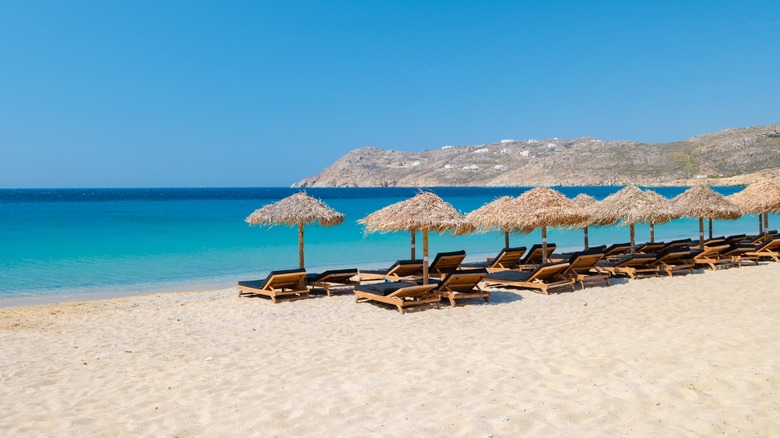
If you're dreaming of whiling away the long summer days on one of Greece's glamorous beaches, Mykonos is the island you're looking for. Part of the Cyclades, a cluster of islands southeast of the mainland, Mykonos is known for its calm, clear blue waters and endless sunshine, which make it the perfect spot for beachcombing by day. In fact, Mykonos has plenty of beaches to go around for everyone. From the secluded Panormos to the more family-friendly Kalo Livadi, you're sure to find something to satisfy your taste. That said, make sure to research the vibe carefully and look into whether or not you'll need a reservation before setting out for the day. It's also best to ask for a menu before ordering anywhere on this island, as Mykonos is famous for its price gouging scams.
Once the sun sets, Mykonos' beach friendly atmosphere transforms into something a little more electrifying, with some serious parties running well into the night. A few of the most popular spots for dancing 'til the sun comes back up include Nammos, Alemagou, Sant Anna, and Tropicana Beach Club. However, according to previous visitors, Scorpios stands out as the crown jewel — especially during its legendary Sunday afternoon meet-ups.
The monasteries of Crete
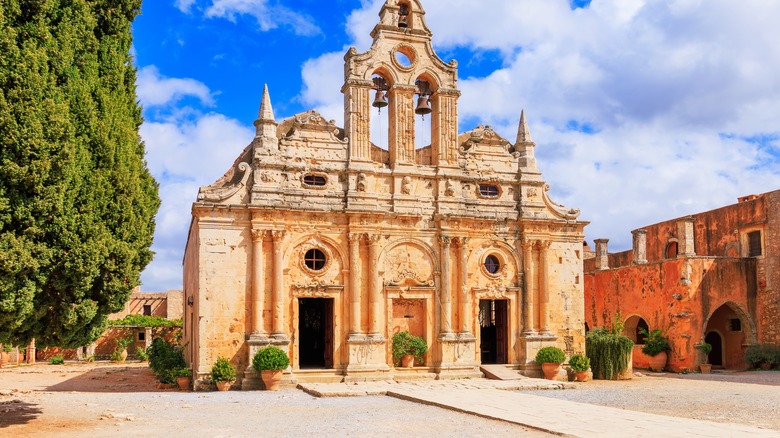
The largest of Greece's islands, Crete is home to over 600 miles of coastline, along with many impressive beaches worthy of a visit. However, away from the bustling coastline, the island is also home to dozens of famous monasteries representing centuries of Greek Orthodox religious tradition — some of which are among the prettiest in the world. Rich in artisanship, Crete's monastic tradition stands to this day as a historical record of the Byzantine, Venetian, and Ottoman periods.
Many of Crete's monasteries have been occupied continuously for hundreds of years, serving as both a religious refuge for pilgrims and monks, as well as a sanctuary for the arts and letters. Some, like the castle-like Arkadi Monastery, which dates back to the 16th century, are also open to the public for daytime visits and for solo travelers looking to score some cheap lodging while traveling through Europe. As you explore these sacred sites, you'll notice that each monastery typically features its own distinctive architecture and frescoes — a stunning reflection of the era it was built in.
The Minoan Palace of Knossos
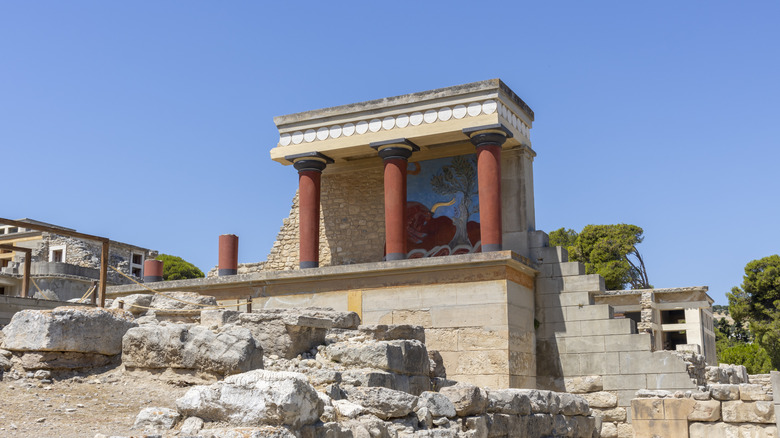
The Bronze Age ruins of a major Minoan political and religious site, the Palace of Knossos is associated with the famous Greek myth of King Minos and the minotaur. According to the story, King Minos directed legendary inventor Daedalus to construct a labyrinth in which to trap his stepson — the half-man, half-bull creature. Today, the restored and partially reconstructed palace complex — which features a central court, storage, and waste water systems — provides a window into a civilization long gone.
One of the palace's most striking features is the generous use of vibrant color, particularly the vivid reds made with volcanic ash and other natural pigments, seen throughout its pottery, frescoes, and columns. Additionally, clever innovations used to create natural lighting and ventilation lend an odd sense of modernity to the ancient palace. Spending time among these ancient ruins, particularly the impressive frescoes and throne room, can feel a bit like time traveling to visitors who find themselves awestruck by the wealth of history at Knossos.
Samaria Gorge
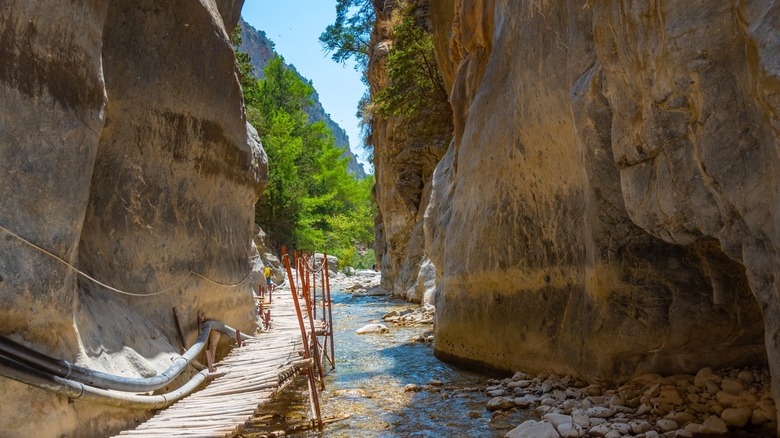
While you're in Crete, you don't want to miss the Samaria Gorge. Not only is it one of Greece's most beautiful tourist sites, but it's considered by many to be one of Europe's finest hikes. A ten-mile trek through the gorge offers stunning vistas and up-close looks at Crete's vibrant local flora and fauna — just keep in mind that pros like Rick Steves recommend starting early to avoid throngs of tourist crowds.
The hike through Samaria Gorge National Park can take anywhere from five to eight hours depending on the hiker. It can also be quite challenging, particularly for less experienced adventurers. Thankfully, the route features rest stops along the way with plenty of spots to refill your water bottle. Just remember to bring good hiking shoes, a reusable water bottle, snacks, and plenty of sunscreen for the journey.
It's also worth noting that there's a small entry fee to get into the park (just under $6), and you can pay a trail guide if you want a little extra help. Once you've finished your hike, you'll find plenty of great local spots nearby to grab a bite to eat by the seaside, which is just a ten-minute walk from the park.
The oracle of Delphi
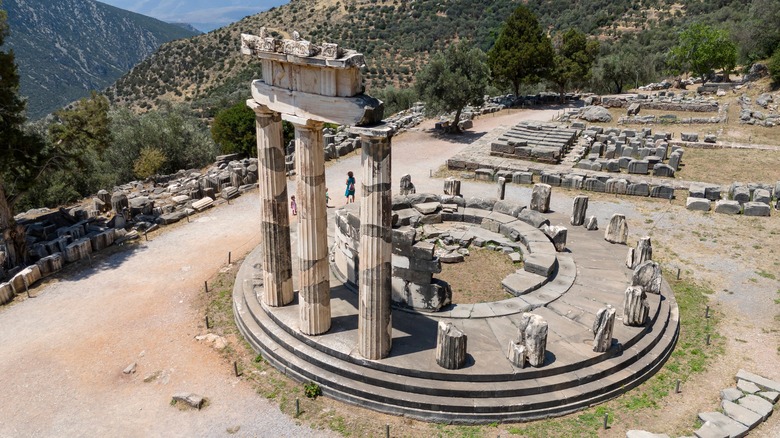
Long ago in the time of ancient gods, a legendary priestess resided at Delphi, on the slopes of Mount Parnassus, overlooking the Corinthian Gulf. Each new priestess would give up her name, taking on the role of the Pythia — the prophetess whose wisdom was sought out by kings. It was here King Croesus of Lydia sought the oracle's insight into a pending war with Persia, one he would ultimately lose. Centuries later, the oracle's cryptic prophecies and dramatic tales of those who sought her counsel have cemented Delphi's place as one of the most significant sites in ancient Greek history.
Today, the town of Delphi is a UNESCO World Heritage Site and is also considered one of Greece's best and most underrated ancient sites. Better yet, it only takes about a half-day to experience. Just a short drive from the modern village of Delphi, the archaeological site and museum features a number of monuments and structures. This includes the second century B.C.E. 4,500-seat theater of Delphi where Nero once played, the marble Treasury of the Athenians, and Greece's best preserved ancient stadium. Although guided tours of the site are available, many tourists say it's better to go it alone, as the silence can be positively awe-inspiring.
The medieval town of Corfu
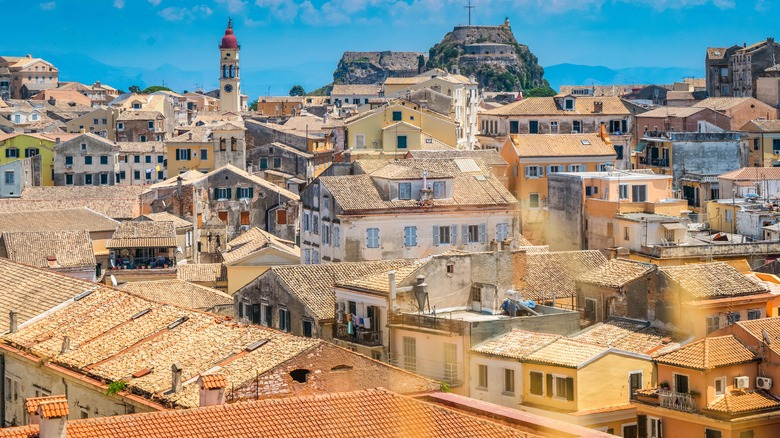
Greece has no shortage of ancient history, but if you're in the market for something a lot more "Game of Thrones" meets "Pirates of the Caribbean," Corfu Town (on the island of Corfu) has you covered. With an absolutely magical medieval village straight out of a romantic fantasy, it boasts three Venetian forts strategically located off the Adriatic Sea. Plus, with a heritage dating back to the eighth century B.C.E., the Old Town of Corfu is an architectural mashup of Venetian and Ottoman Empire construction. Here, you'll find old Venetian towers sandwiched next to neoclassical housing, creating an almost otherworldly beauty and charm.
Tourists praise Corfu's sense of authenticity and vibrant cultural scene, and we suggest you spend a day getting lost in the maze of narrow, cobblestone streets lined with buskers and cafes. Ultimately, though, whether you're sipping a Greek espresso at an open air cafe, exploring one of Corfu's beautiful Byzantine churches, or admiring the fortresses guarding this medieval community from above, there's something new to be uncovered around every little corner of this village.
The ancient citadel of Mycenae
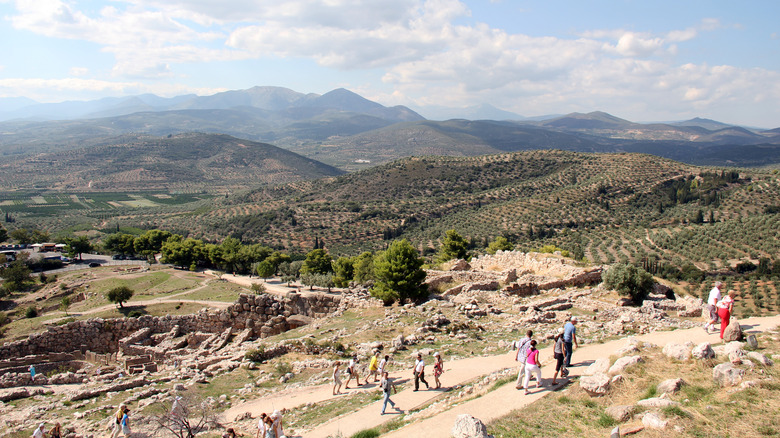
One of the two great cities of the pre-Classical Mycenaean kingdom, Mycenae was integral to the rise of Classical Greek culture and the creation of the Greek Homeric myths. Founded strategically between two hills on the plateau of the Argive Plain at the end of the Neolithic period, Mycenae was expanded and fortified into a powerful acropolis throughout the Bronze Age.
One of Rick Steves' recommended destinations for exploring Greece's ancient ruins, tourists can explore the town's extensive archaeological remains, including the Cyclopean Walls with their large, limestone boulders, and the stunning fortified citadel entrance known as the Lion Gate of Mycenae. Visitors can also stop by the remains of the Royal Palace, commonly known as the Palace of Agamemnon, which served as the central administrative building and royal residence. Finally, a five-building complex known as the Cult Centre, a cistern, and the Tomb of Clytemnestra (Agamemnon's wife in Greek mythology) can also be found here.
Old Rhodes Town
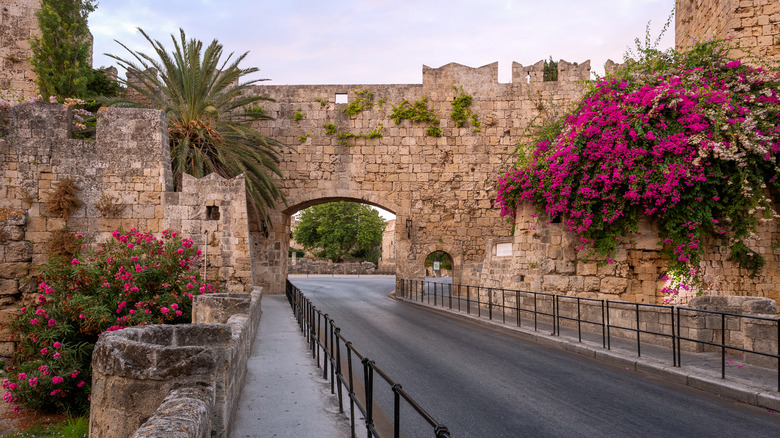
One of the most extensive and best-preserved medieval towns in Europe, Rhodes was once the site of one of the Seven Wonders of the World: a 100-foot statue, named the Colossus of Rhodes, which once welcomed visitors to the island. Beginning in the 14th century, a religious order called the Knights of Saint John of Jerusalem, or the Knights Hospitaller, took over Rhodes and built a citadel there — ruling for around 200 years. The old town of Rhodes still stands there today.
Inside Rhodes' 2.4 miles of medieval walls, visitors will find many narrow cobblestone roads, Byzantine churches, and medieval buildings. You can purchase a ticket to walk along the city walls, but you'll get a much better view by walking along the moat area. If you're a fan of history, guided tours are available for visitors looking for the inside scoop. Alternatively, you can wander through the charming streets to really soak up the feeling that you've traveled back through time — especially since cars aren't allowed in the medieval citadel. A treasure trove of architectural history under the shadow of ancient castles, you'll almost get the sense that a knight could come bounding down the road on his noble steed at any moment.
Mount Olympus
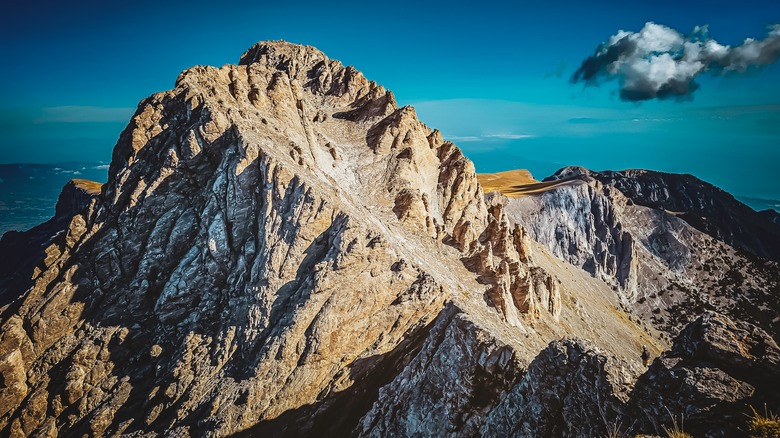
To the ancient Greeks, the gods were real beings with a habit of walking among them when they came down to visit from Mount Olympus, Greece's tallest mountain. At 9,570 feet tall, the formidable peak — which is snow-capped for most of the year — still stands as a monument to the power of the Greek gods today, and is also a definite must-visit for anyone who has the opportunity to explore Greece.
While it is only possible to reach the summit of Mount Olympus if you're an advanced climber, there are tours that explore important sites around it. One popular option includes a guided visit to the Macedonian sanctuary at Dion, the Platamon crusader castle, the Bathtub of Zeus waterfall, and the village of Litochoro. There's nothing quite like getting immersed in the world of Greek mythology in the shadow of the legendary mountain itself, and a good tour guide is the perfect complement to your Olympus excursion. Make a point of tasting the cool spring water as the mountain breeze washes over you, amid a picturesque backdrop of waterfalls and nature so lush that ancient gods made it their homestead. When you're ready to depart the home of the gods, you'll find local vendors selling their wares around the base of the mountain.
The archaeological site of Corinth
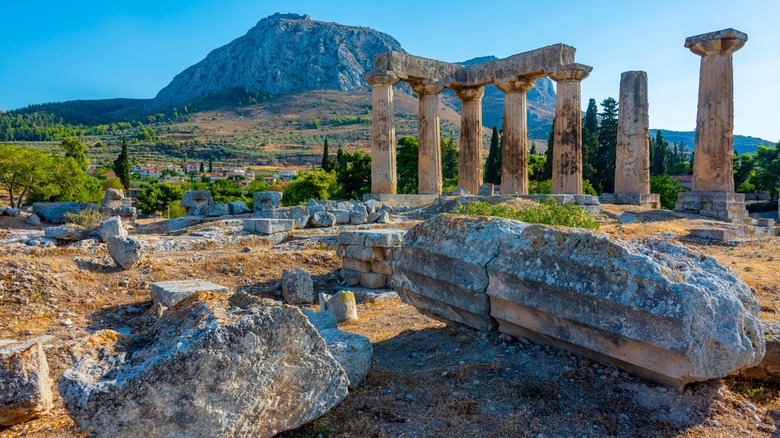
Folks who paid attention in Sunday School will appreciate a chance to get up close and personal with the Corinthians of early Christian theology. The ruins of Corinth provide an excellent backdrop for contextualizing those stories, which is why Bible tours of the region that let tourists walk through the Apostle Paul's footsteps are a popular destination for the faithful. Beyond its religious significance, the city was also an important player in the Peloponnesian War.
Located about halfway between Sparta and Athens, the Corinthian ruins are completely free to visit and include the Temple of Apollo, an ancient spring called the Fountain of Peirene, the ancient Corinthian gates, and the Bema of St. Paul — the Roman rostrum where Paul was said to be placed on trial. Tourists interested in the religious history of the area will find that downloading an audio guide or joining a professional tour are both especially rewarding. Many fans of history also appreciate the sheer scale of the ruins, which are much larger than some of Greece's more touristy archaeological sites.
The cliff monasteries of Meteora
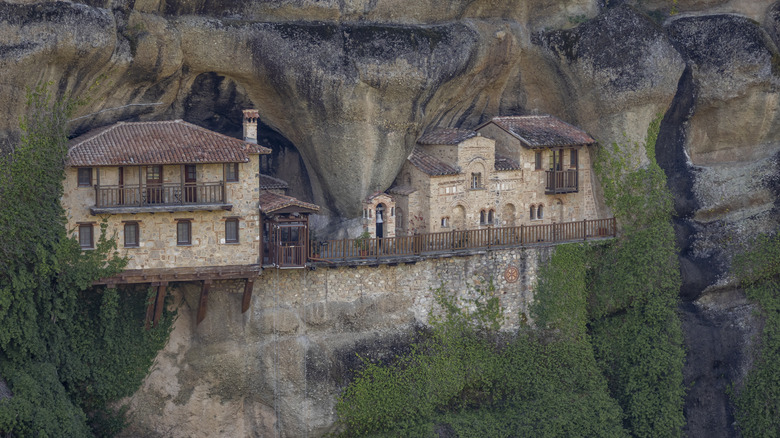
If you want to experience something truly stunning that defies the imagination on your trip to Greece, you'll want to pencil-in a bucket list trip to Meteora to check out the monasteries built right into the cliff face. Starting around the 11th century, ascetic monks began retreating to the region in search of a refuge for solitude. During their quest for spiritual isolation, they found in the dark rock face of the Pindus Mountains — a sacred place where they could worship far from the trappings of secular life.
Once home to an estimated 25 monasteries during the Byzantine era, only six Meteora monasteries remain today. While the Monastery of Saint Stephen can be reached without much effort, the other five are difficult to reach by design, particularly the Monastery of Holy Trinity. All are generally open to the public, but it's a good idea to check ahead of time and make sure they'll be open when you plan to stop by.
Methodology
With literally thousands of islands dotted across the Aegean and a seemingly endless array of ruins, museums, beaches, resorts, and other tourist destinations, it's hard to know where to begin when planning a Greek vacation. That said, we wanted to focus on the can't-miss bucket list type of destinations. The kind of places you'll definitely want to check out if your very long travel wishlist likely won't bring you back to Greece again anytime soon.
To get to the good stuff, we looked over the biggest tourist spots on sites like TripAdvisor, compiling a list of reviewers' top recommendations. Next, we cross-checked this list with what folks were saying on Reddit, YouTube, and popular Greek travel blogs to cut through the overhyped hot spots and narrow it down to the best tourist destinations in Greece for first-time visitors.