14 Top-Rated Tourist Attractions in Kas
Fronted by a small harbor, Kaş is a favored yacht mooring destination in the Antalya Province of Turkey and one of the best places to visit if you want to head out onto the sea for some laid-back sightseeing of the many secret coves and islands along the coastline.
The town itself is crammed with cute boutiques and lovely cafés, where landlubber tourists can chill out and shop 'til they drop.
There are small beaches nearby for those who want to relax and soak up the sun, but for many visitors, Kaş is all about outdoor activities.
The nearby Kekova area, with its sunken city ruins off Kekova Island and the tiny coastal village of Kaleköy, are the main focus for things to do, with kayaking and boat trips the major activities offered, while the Greek island of Kastellorizo (called Meis in Turkey) is another favorite day-trip option.
While so much of Kaş' tourist attractions are water-based, it's also a well-positioned base for exploring the ancient ruins scattered in the surrounding hills.
Plan your sightseeing with our list of the top attractions and things to do in Kaş.
- 1. Kayak or Boat around the Kekova Ruins
- 2. Day Trip to the Greek Island of Kastellorizo (Meis)
- 3. Relax on the Nearby Beaches
- 4. Explore the Ruins of Kaleköy
- 5. Stroll the Harbor Front Neighborhood of Kaş
- 6. Visit the Yachtie Haven of Üçagız
- 7. See the Basilica of Saint Nicholas
- 8. Day Trip to Kalkan
- 9. Explore the Ruins of Myra
- 10. Boat Trip along the Coast
- 11. Explore the Ruins of Arykanda
- 12. Add Limyra to a Coastal Road Trip
- 13. Get Off the Beaten Track Visiting the Kyaneai Ruins
- 14. Check Out the Andriake Ruins
- Where to Stay in Kas for Sightseeing
- Map of Tourist Attractions & Things to Do in Kas
1. Kayak or Boat around the Kekova Ruins
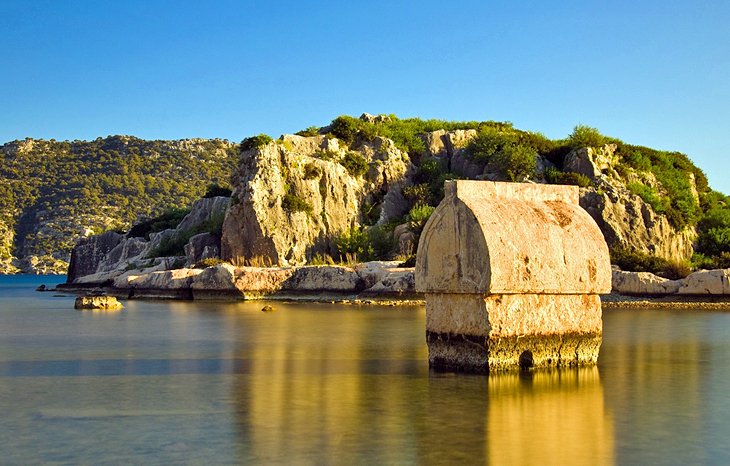
The island of Kekova, and the surrounding coastal area, is one of the most popular destinations for tour activities in Kaş. The island is famous for the underwater ruins just offshore known as the sunken city.
The best way to explore is by kayak because it allows you to get the closest look of the ruins below the sea surface. Several operators in Kaş offer kayaking tours to the ruins. Alternatively, there are also plenty of boat cruise tours (by yacht or smaller boat) that head to Kekova.
2. Day Trip to the Greek Island of Kastellorizo (Meis)
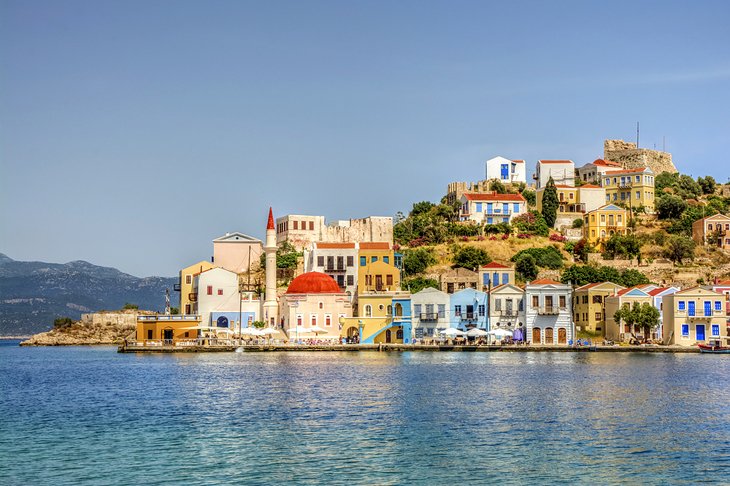
Dominating the view from Kaş harbor, the Greek island of Kastellorizo (called Meis in Turkey) is a geopolitical oddity.
You'll need your passport for a day trip here (the ferry operator usually asks for you to book the day before you plan to visit, so they can process your passport details for immigration) but once you're on the ferry, the trip from Kaş harbor to the island is only a 20-minute hop.
Kastellorizo has plenty to keep you occupied for the day. The most popular things to do include boat trips to the island's coastal caves (usually including plenty of swim breaks) and some interesting hill hikes that lead to abandoned church ruins. Kastellorizo's harborside village, with its pastel-hued buildings and waterfront cafés is also hugely photogenic.
Two ferries run daily from Kas, and if you're heading to Greece, you can also continue on to Rhodes from here on weekly ferries.
3. Relax on the Nearby Beaches
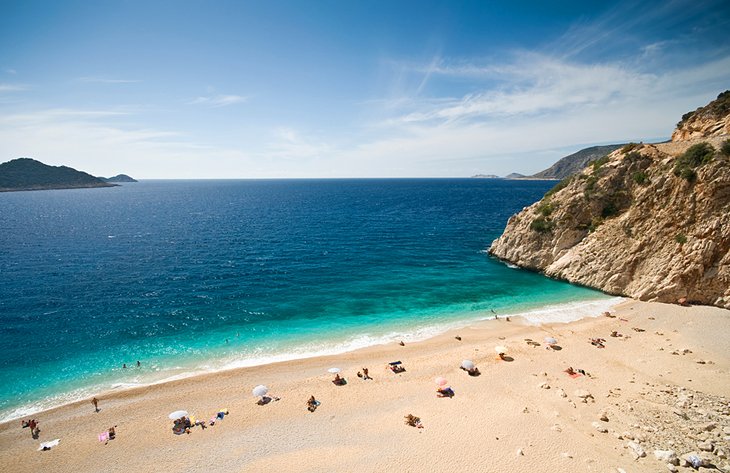
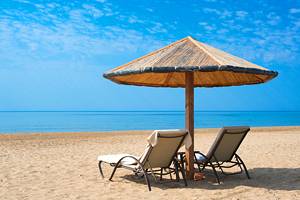
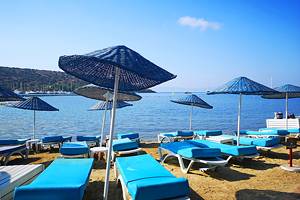
Kas is all about outdoor activities but if you want a simple day of sun, sea, and sand, the surrounding coastline has plenty of small beaches for you to lay down your towel.
The most famous beach in the area is Kaputaş Beach, which is 21 kilometers west of town, along the main coast road to Kalkan. You access the beach, which is hugged by high cliffs, either by boat trip or by taking the long staircase down to the shore from the road.
Be aware that the beach is hugely popular during summer and can get crammed with fellow sun-seekers.
Nearer to Kaş, the beaches of Liman Ağzı are five kilometers southeast of town. During summer, there are regular water taxis starting from the harbor that hop to and from the beach. It's also a pleasant walk if it's not too hot.
4. Explore the Ruins of Kaleköy
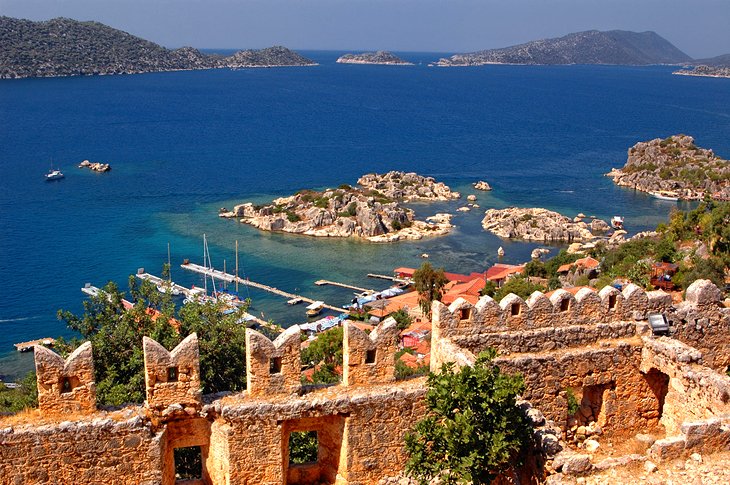
The medieval Kaleköy Castle has a stunning location on a peninsula hilltop, three kilometers east from Uçağız (and 36 kilometers east from Kaş).
Kaleköy is the site of Ancient Simena which dates from the 4th century BC. The castle was built upon the foundations of the earlier Simena citadel and today, below the fortifications, you can still visit a seven-tiered 300-seat theater from this earlier settlement period.
There's also a necropolis just to the west, which contains mostly Roman sarcophagi in Lycian style.
Under the castle, upon the shoreline, is the itsy-bitsy hamlet of Kaleköy, with its boat jetty and café, while just offshore are the sunken ruins of the Titus Baths (AD 79-81).
Most people visit Kaleköy as part of the Kekova Island sunken city boat sightseeing trips from Kaş.
5. Stroll the Harbor Front Neighborhood of Kaş
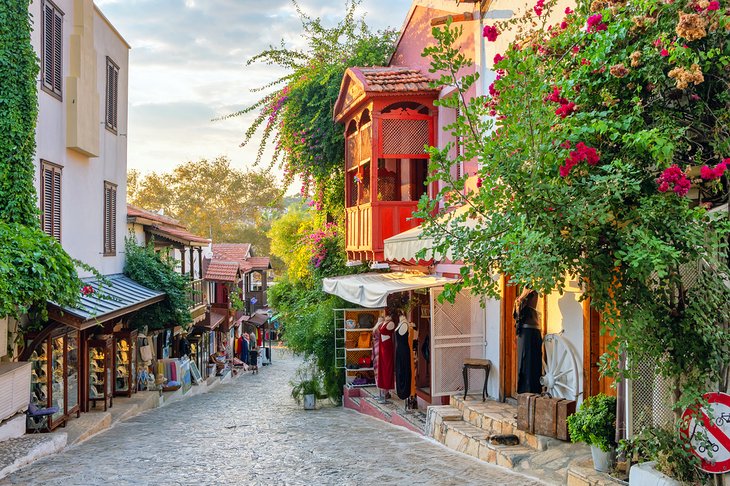
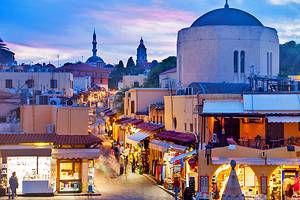
The modern town of Kas occupies the site of ancient Antiphellos. The center of town is the harbor front district which is a wriggle of cobblestone lanes rimmed by old fishermen's cottages that have now been converted into boutiques, hotels, cafés, restaurants, and tour operator offices.
Throughout the town, you can spy a scatter of ruins from the classical era. The most prominent is a Lycian sarcophagus right in the center.
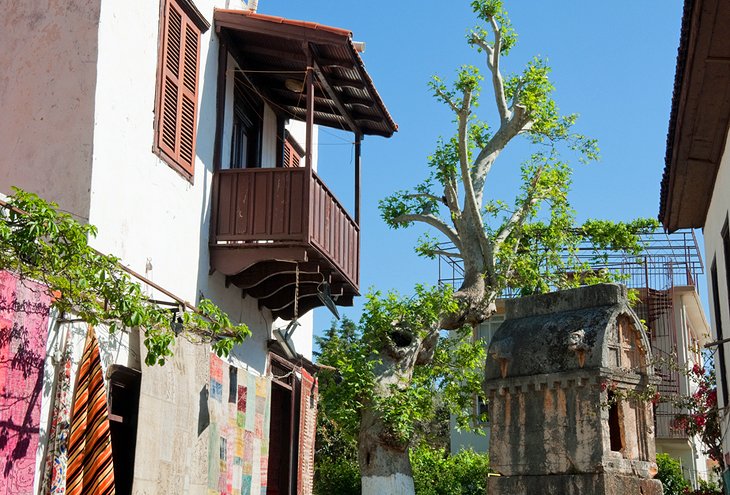
There's a small but well-preserved Roman theater on the west side of town with fine views over the bay; some scant remains of the ancient town walls near the harbor and the cliffs to the northeast of town are pockmarked with Lycian rock tombs.
6. Visit the Yachtie Haven of Üçagız
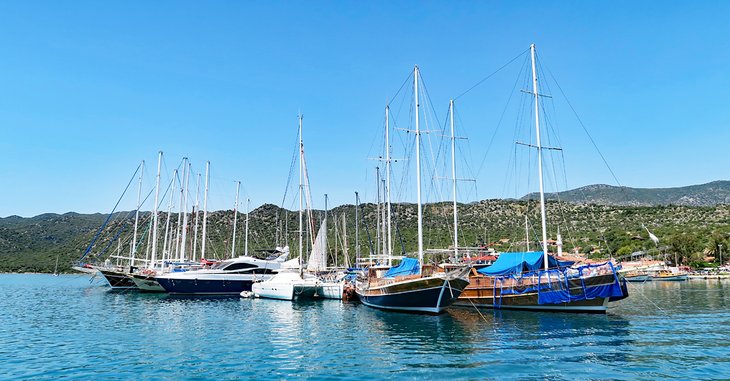
The charming harbor front village of Üçağız is a yachtie haven. As well as private charters, most of the multiple-night group yacht cruise tours from Fethiye (and some longer yacht trips from Bodrum) overnight here for an evening.
If you're booked on a tour only exploring the Kekova area from Kaş, most operators first travel overland to Üçağız (33 kilometers east from Kaş) and head out on a boat or kayak from the harbor here.
The village sits on the site of ancient Teimiussa, which was under the command of the Lycian ruler Pericles Limyra as early as the 4th century BC.
Ruins are scattered about the village and surrounding area, including a few relics on the acropolis, two burial grounds with family tombs and sarcophagi belonging to citizens of Myra and Kyaneai, and a sunken section of the ancient walls just offshore.
The real pleasure here, though, is sitting back in the sun at one of the harbor cafés and simply watching the world go by.
7. See the Basilica of Saint Nicholas
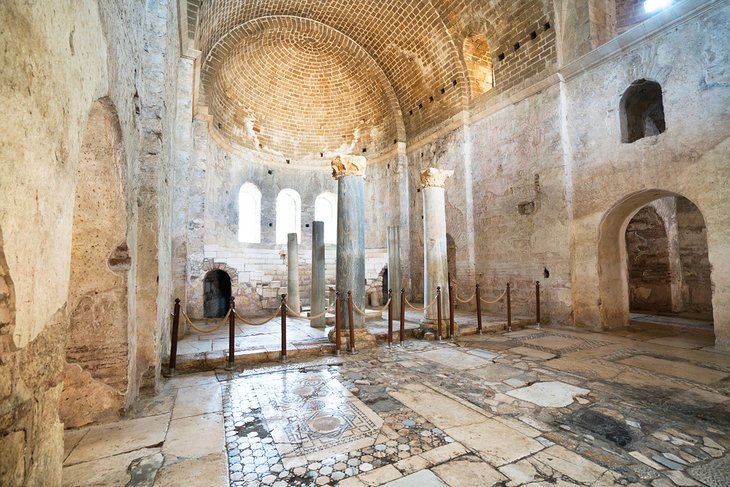
Santa Claus comes from what is today, the modern state of Turkey. Born in Patara, Saint Nicholas (who would later enter Christmas-lore as the Jolly Saint Nick of presents and reindeer) in reality became the bishop of Myra (today's modern town of Demre) during the 4th century.
This medieval-built domed basilica sits atop an earlier church that originally contained Saint Nicholas' tomb (the saint's remains were later stolen by Italian traders).
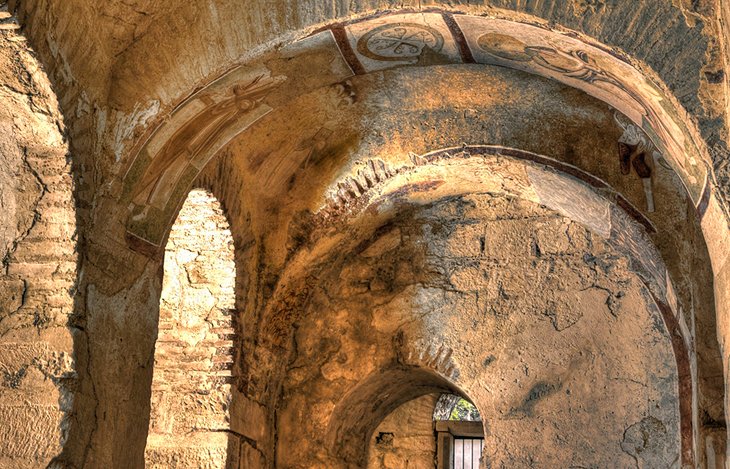
The church is a major pilgrimage destination for Orthodox Christians, but for those not of that faith, it's also a well-preserved example of 11th-century church architecture, and the interior also incorporates some Byzantine-era frescoes and mosaics from the original church structure.
Demre is 46 kilometers east from Kaş and is easily visited on a day trip from town.
8. Day Trip to Kalkan
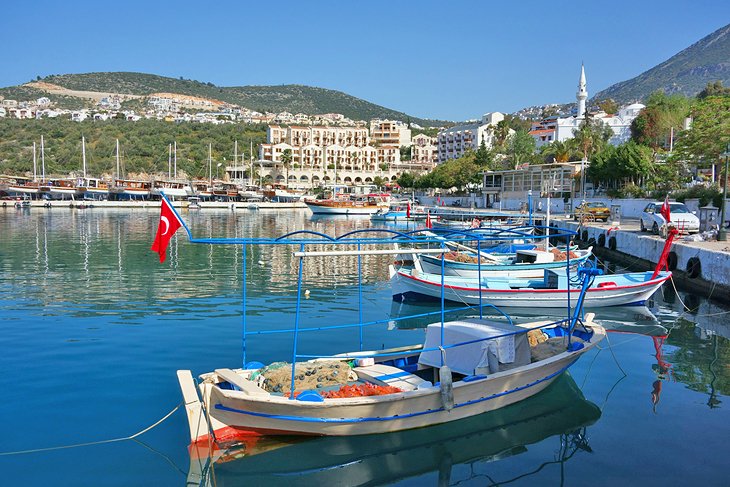
Just 25 kilometers west up the coast from Kas is the harbor town of Kalkan, which is thoroughly devoted to summer beach and boating holidays.
The cobblestone alleys of the tiny old town here are crammed with restored wooden houses that have been converted into boutique hotels, atmospheric cafés, craft shops, and high-class restaurants that have become renowned for their modern Mediterranean cuisine and seafood dishes.
Like Kas, this is a major departure point for yacht day trips and multi-day boating up or down the coast, and the tiny beaches just out of town (particularly Kaputaş Beach, which is four kilometers south of Kalkan) are the town's other main attraction.
9. Explore the Ruins of Myra
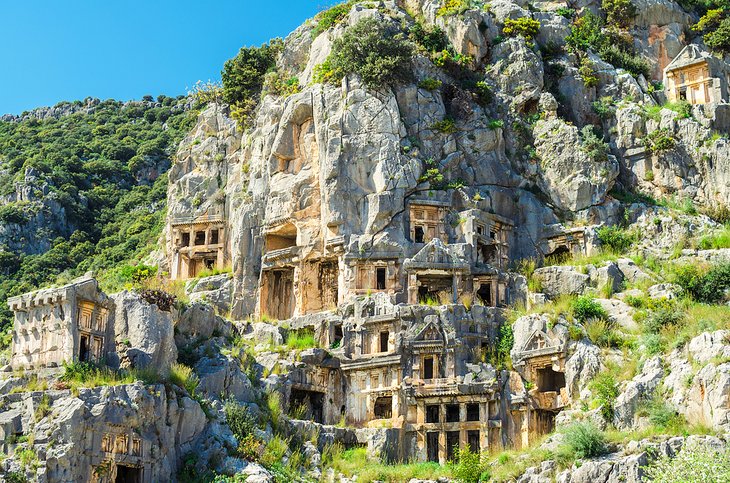
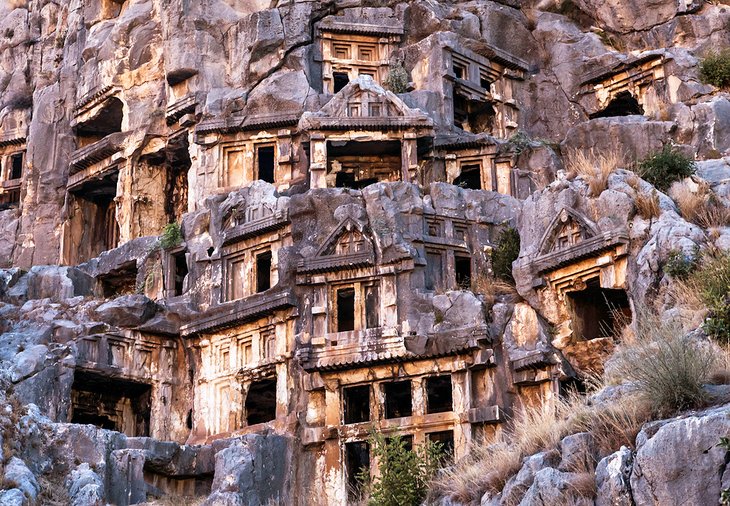
Just inland from the center of Demre town are the remains of Ancient Myra. Some well-preserved Lycian rock tombs are hewn into the cliff face, and there's also a large Roman theater that has been wonderfully restored.
It's an atmospheric site, with sculpted masks chiseled into rock leading up to the theater and the rock tombs looming above.
Combining the Basilica of St. Nicholas and the ruins of Ancient Myra together in a trip is an excellent day out from Kaş.
If it's not too hot, you can easily walk the two kilometers to the Ancient Myra archaeological site from the church. Just remember to buy water before you set out from Demre center, and slap on some sunscreen and a hat.
10. Boat Trip along the Coast
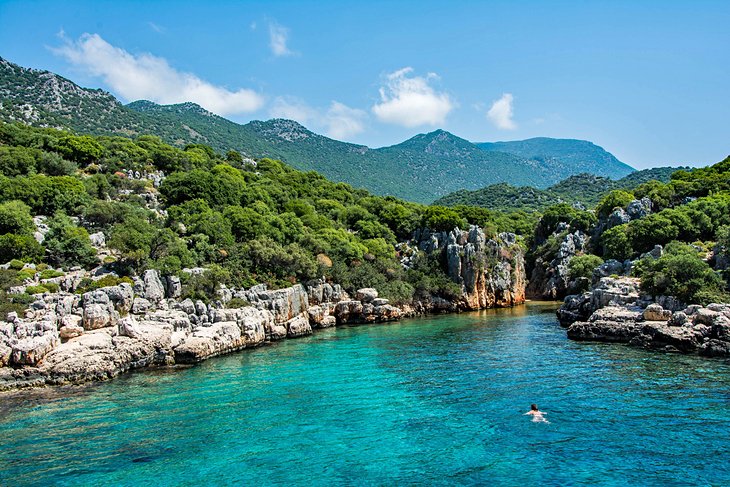
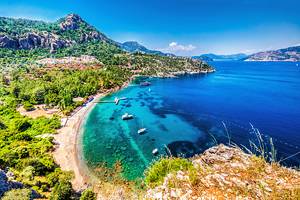
Boat trips are one of the main things to do in Kas. The rocky coastal scenery here, with pine forests tumbling down to the shore is great for a lazy day of relaxing on board, just soaking up the views while you sunbathe with some swimming stops thrown in to cool off.
11. Explore the Ruins of Arykanda
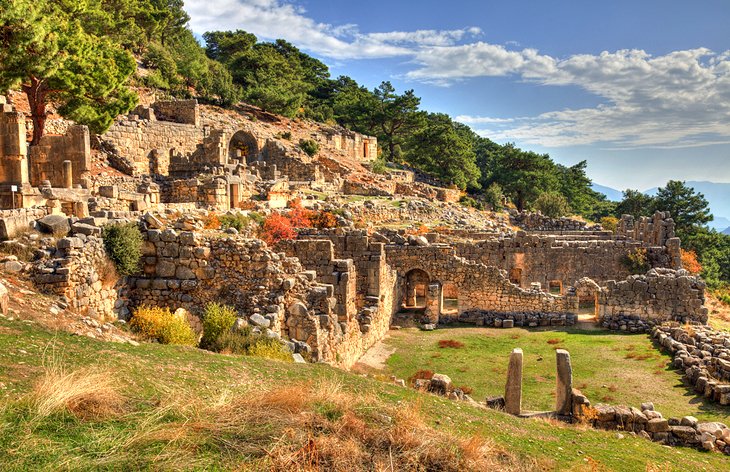
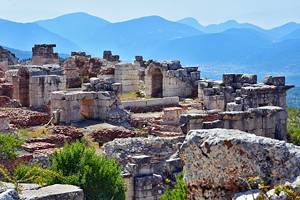
A day trip to the Greco-Roman ruin of Arykanda, 72 kilometers northeast of Kas, is well worth it. The site terraces dramatically down a slope of the Akdağ Mountain, with many well-preserved monuments to explore.
The stadium on the highest terrace is comparatively small, dating from the Greek era but restored by the Romans.
Below the stadium is a near-intact Greek theater with 20 rows of seating and some inscriptions still visible on the top row.
The odeon, on the lowest terrace, is 75 meters long with a mosaic floor. Stretching out in front is the galleried marketplace while to the west lies the bouleuterion.
Arykanda's Roman baths are situated to the south and are among the site's best-preserved buildings, with the frigidarium and caldarium still in fine condition. A semi-circular viewing room here provides a wonderful view over the Arykandos Valley.
12. Add Limyra to a Coastal Road Trip
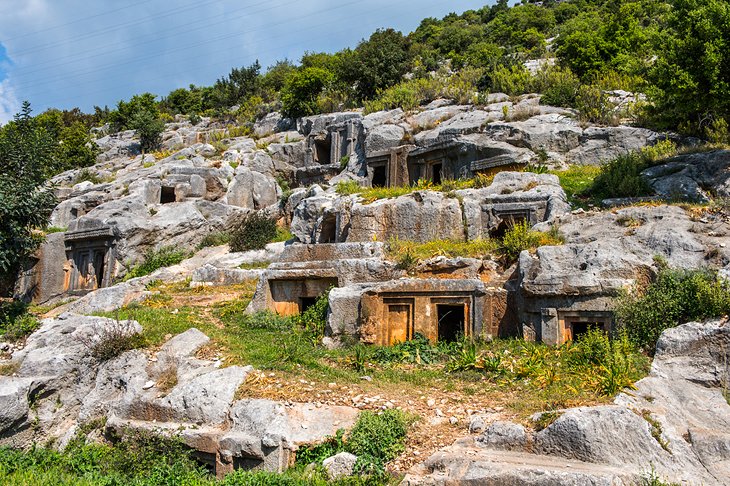
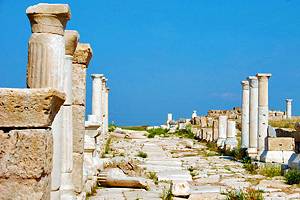
The ancient town of Limyra, about 81 kilometers east of Kas, dates from the 5th century BC and is one of the oldest settlements in Lycia.
On the hill to the north of the site, an upper and lower acropolis can be seen with remains of a Byzantine church and Roman theater.
On the crag to the south stands the Heroon of Perikles (370 BC), hewn out of the rock in the form of a temple. There are also three large Lycian rock tombs.
All the ruins are severely weathered and not well preserved, but the lost-in-time atmosphere is hard to beat.
Limyra is a good stop on a road trip heading east of Kaş, also taking in the Basilica of Saint Nicholas and Ancient Myra in Demre, and the ruins of Arykanda.
13. Get Off the Beaten Track Visiting the Kyaneai Ruins
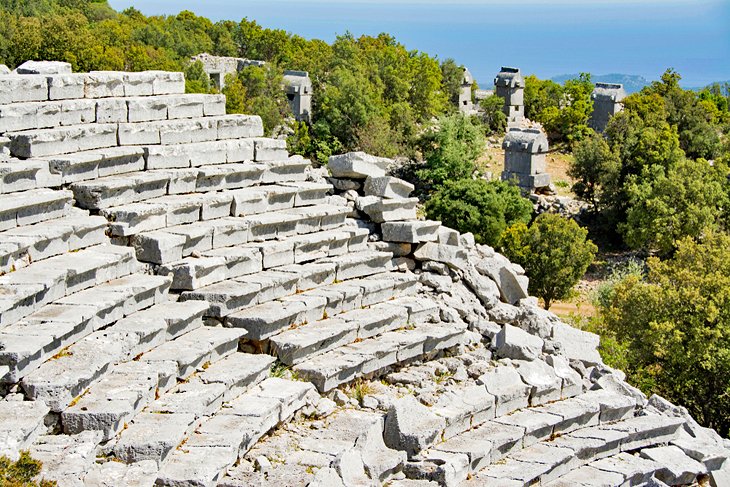
The Ancient Lycian town of Kyaneai, 24 kilometers northeast from Kaş, near the little village of Yavu, was a prosperous, thriving commercial center right up to the 4th century. The site contains a large number of sarcophagi and rock tombs that visitors can scramble around, as well as the remains of a marketplace and the once enormous town walls.
The highlight of the archaeological site, though, is the large and well-preserved Roman theater with its 25 tiers of seating and views over olive groves and mountains beyond. Climb right up to the top seating tier for the best vistas of the surrounding countryside.
Kyaneai only gets a smattering of tourists daily, which imbues the entire site with a lost-world feeling.
14. Check Out the Andriake Ruins
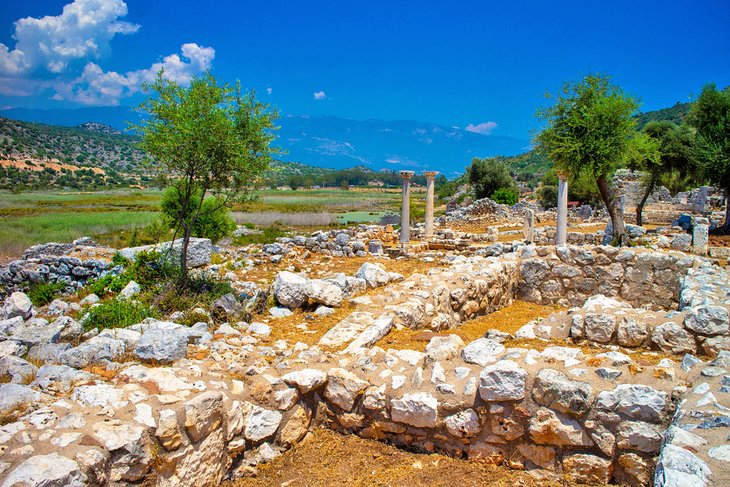
This ancient, silted-up harbor sits in the marshlands area, six kilometers west of the town of Demre. The name of Antiochus III was linked to the town as early as 197 BCE, and it was an important Mediterranean port during the Roman era.
The site includes the ruins of an impressive granary, as well as a temple, marketplace, remnants of the harbor walls, and a number of decently preserved chapels.
Outside the walls, an extensive necropolis area lies across the northern slopes behind a nymphaeum (public water fountain), while in the site's southeast corner, two watchtowers stand on either side of a protective wall.
Where to Stay in Kas for Sightseeing
Luxury Hotels:
- Many of Kas' more luxurious hotels are just out of town on the peninsula, providing unimpeded coastal views. In this area, you'll find the Lukka Exclusive Hotel. Its rooms all have balconies overlooking the sea. It also has a pool and ample terraces, both with more Mediterranean vistas; a restaurant; and included breakfast.
Mid-Range Hotels:
- If you prefer to stay in town, 8 Pension is a hip and intimate boutique hotel right in the harborside old town district, with plenty of arty, creative flair. There's a rooftop terrace, with great views across the Mediterranean to Meis, and breakfast is included.
- Nur Hotel is just to the south of the town center (still within easy walking distance) and has a pool area with cabanas, a rocky seafront with steps straight down into the water, and big minimalist-style rooms with balconies facing the sea. Breakfast is included.
Budget Hotels:
- Much of Kas' more budget accommodation is located up the hill from the harbor in the newer part of town. Kas Artimis Hotel is a friendly option with modern rooms and an included breakfast. All the rooms have balconies with panoramic views over town and out to the sea, and the hotel has a rooftop terrace and small pool.
Map of Tourist Attractions & Things to Do in Kas
More Related Articles on PlanetWare.com
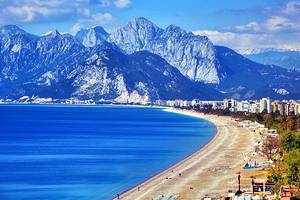
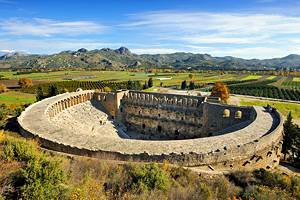
South from Kas: If you're traveling south down the coast, your next stop should be the crumbled ruins of Olympos, which sit beside a strip of lovely sand. Farther south is the busy city of Antalya, known for its beaches and its tiny, preserved old town district full of restored Ottoman mansions now home to boutique hotels, craft shops, and top restaurants. Just out of town is the famous Aspendos ruins, with the huge Roman theater, the biggest ever built in Turkey.
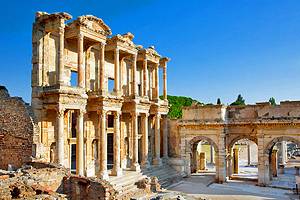
North from Kas: Fethiye, with its harbor crammed full of yachts waiting to whisk you away on a boat trip, is one of the Turkish Mediterranean region's most popular holiday stops with both great beaches and ruins within day-tripping distance. From here, carry on up the coast to Bodrum for more sand and sea holiday time, or farther north to Ephesus for Turkey's best preserved Roman city ruins.