

Turkey's 10 Most Popular Tourist Attractions To Add To Your Itinerary
Turkey is a nation where continents, cultures, and centuries collide. For thousands of years, it has been home to empires that shaped the world. Today, Roman ruins, Byzantine domes, Ottoman palaces, and bustling bazaars still serve as the backdrop to the memories you'll make in this mystical country. Centuries ago, Constantinople was known as the place "where the world meets," and modern-day Istanbul still embodies that sentiment — all while simultaneously serving as an unlikely beach vacation destination. Sitting at breakfast at my hotel in Istanbul just this year, I met people from nearly every corner of the world, all of whom had descended on Turkey to discover wonders, and maybe even find themselves.
Turkey's magnetism isn't limited to its capital city, however — although Istanbul does offer one of the world's best airport layovers. Cappadocia's dreamlike valleys, Ephesus's incredibly preserved ruins, and Pamukkale's glittering travertine all draw travelers from around the globe. In this guide, we'll take a journey through Turkey, exploring 10 of the nation's most iconic destinations that offer a glimpse into the country's rich cultural heritage and stunning natural landscapes. Whether you're drawn to history, architecture, or the great outdoors, there's something on this list that will make you fall in love with Turkey whether you're a first-time visitor or someone rediscovering the nation's magic for the dozenth time.
Hagia Sophia, Istanbul
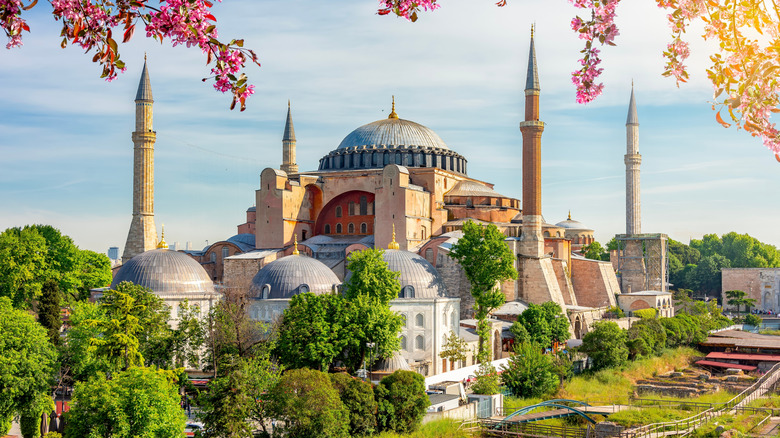
Few places on Earth capture the breadth of human history like Hagia Sophia. The gem of Istanbul's skyline, this incredible structure — known for its Grand Central Dome and intricate mosaics — has stood at the crossroads of faith, empires, and art for nearly 1,500 years. Originally built in 537 CE under Emperor Justinian I, the Hagia Sophia — literally translated to "Holy Wisdom" — was the crown jewel of the Byzantine Empire. When the Ottomans conquered Constantinople in 1453, it was transformed into a mosque. In 1934, the building was converted into a museum, and did not serve as a place of worship again until 2020. Today, the Hagia Sophia serves as both a functioning mosque and a museum. Surprisingly, under Ottoman rule, much of the building's original Christian iconography was left intact, and nowadays, Christian mosaics and Islamic calligraphy are mixed in a way you'll find nowhere else.
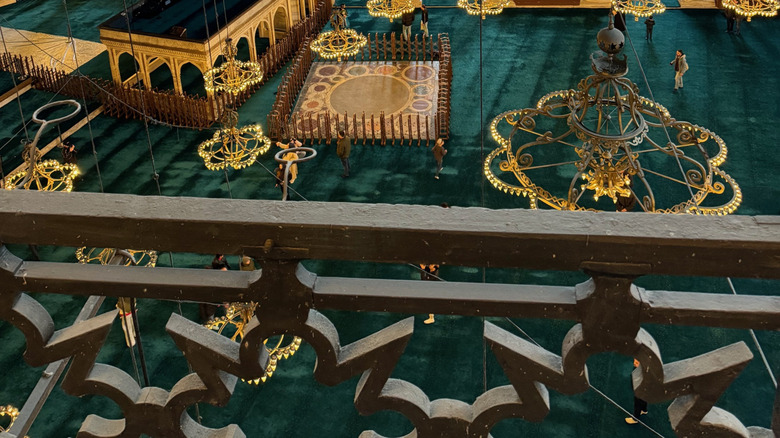
When I first stepped inside the Hagia Sophia, the shimmering gold mosaics and marble pillars literally took my breath away. No matter your faith tradition, there is no doubt you're on hallowed ground. Although you can easily purchase tickets online, hiring a local guide makes the experience even better, in my experience. One of my favorite features of the mosque — which I think I might have missed without our exceptional guide, Ozge — is the Imperial Door and the absolutely stunning gold mosaic above it. This well-preserved art depicts Emperor Leo VI bowing by Christ Pantocrator. Even better, with a local at the helm, you might even garner an introduction to Hagia Sophia's most famous resident, its friendly cat, who even has her own Instagram following. Visiting Hagia Sophia isn't just a stop on an itinerary; it's a moment that will stay with you forever.
Basilica Cistern, Istanbul
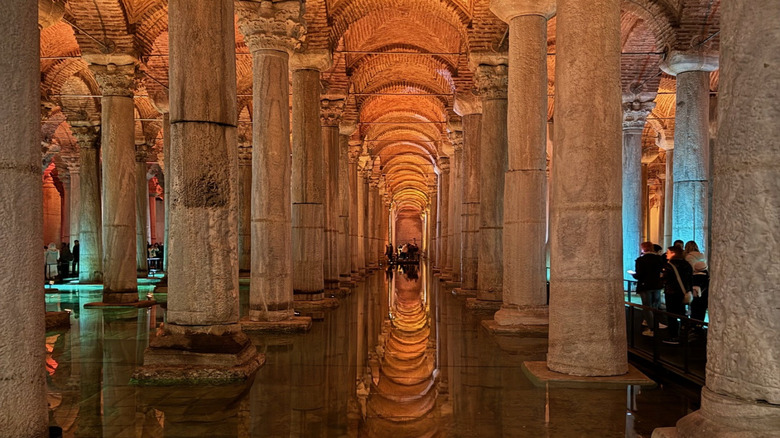
Hidden beneath the bustling streets of one of Rick Steves's favorite places to visit in Europe lies a hauntingly beautiful landmark: the Basilica Cistern. Built in the sixth century under Emperor Justinian I, this subterranean reservoir once supplied water to the Great Palace of Constantinople. Modern day visitors to Istanbul are greeted by a veritable underground palace, comprised of marble columns and rippling reflections. Stretching nearly 500 feet long and supported by 336 columns, many of which were repurposed from Greek and Roman temples in conquered lands, the cistern is an architectural marvel. It's also as mysterious as it is beautiful. While historians know this cistern's initial water sources came from aqueducts in the Belgrade Forest, the exact machinations of how water gets to this structure remain unsolved.
As you wander along the raised walkways, pay careful attention to the designs on the various columns. You'll notice that some have ornate carvings, and two are very special: a duo of Medusa heads were repurposed as column bases. These are believed to have been taken from a Roman building or a temple. One of the heads is upside down, while the other is tilted on its side, presumably to repel evil spirits. In Byzantine times, officials were said to test the water here by checking whether the fish were alive or dead, a quick way to detect if the city's supply had been poisoned. If you think the Basilica Cistern looks familiar, you're probably not wrong. It's featured in several major films, including the James Bond favorite "From Russia with Love" and Dan Brown's "Inferno." However, no movie can ever capture the magic of standing in this place for yourself.
Topkapı Palace, Istanbul
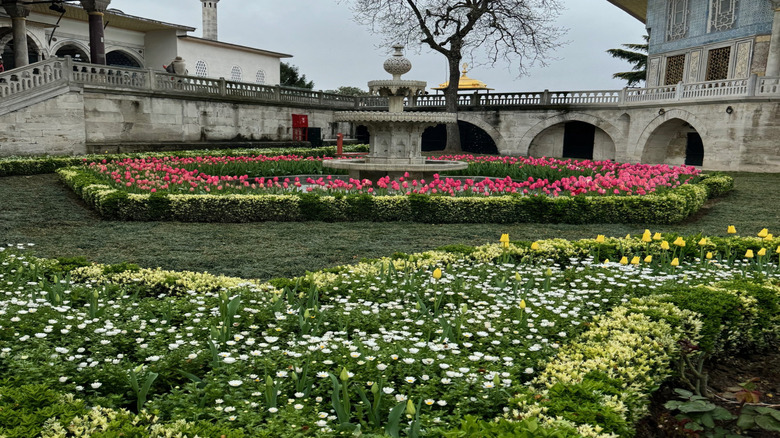
High above the Bosphorus River with unrivaled views of the Golden Horn, the Ottoman Empire ruled the world from Topkapı Palace for almost 400 years. Built shortly after the conquest of Constantinople in 1453, it served as both royal residence and the Empire's administrative nerve center. Topkapı was a veritable city in and of itself, comprised of a series of courtyards, gardens, and gilded buildings that once housed sultans, viziers, and the rest of the royal retinue. Walking through this palace complex is like walking through time; each courtyard and set of residential structures were built during different eras, and the architecture reflects changing influences — from rooms near the first courtyard that have deeply Arabic roots to Neoclassical French spaces surrounding the third courtyard.
The Treasury is a highlight of any visit to Topkapı Palace. This space sparkles with everything from Sultans' thrones to gilded swords to gold, emeralds, and diamond jewelry. We spent nearly an hour perusing the Treasury museum during our visit, so plan accordingly. Perhaps its most famous artifact is the Spoonmaker's Diamond, an 86-carat gem surrounded by 49 additional old-mine cut diamonds. Lore says it was once mistaken for glass before being recognized as one of the world's largest diamonds.
You'll also want to take a moment to admire the Topkapı Dagger, which features in the 1964 Jules Dassin film "Topkapı." Equally captivating is the Harem, the famously private chambers where the sultan's family and concubines lived in seclusion. Its 300 rooms, nine bathrooms, and school were forbidden to everyone but the Sultan, his mother, his wives and children, the Qadi, the Chief Consort, concubines, and the eunuch harem guards. Topkapı Palace allows travelers to enter a world of intrigue and unimaginable wealth.
The Blue Mosque, Istanbul
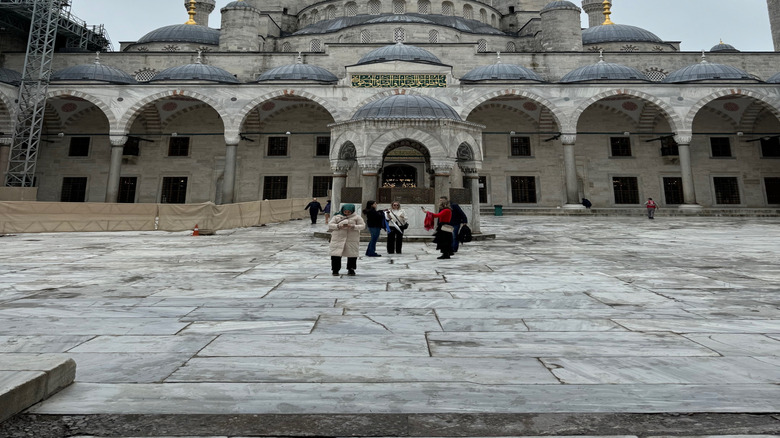
Officially known as the Sultan Ahmed Mosque, Istanbul's Blue Mosque is a 17th-century masterpiece commissioned by Sultan Ahmed I. It was meant to serve simultaneously as a statement of imperial might and an act of devotion to Allah. At just 19-years-old, the young Sultan knew his empire was at a crossroads, and he wanted to create something that would compete with the beauty and architectural precision of the Hagia Sofia. His architects certainly succeeded. The moment you step inside, it's easy to see how the Blue Mosque got its nickname. Over 20,000 hand-painted İznik tiles, in every shade of blue imaginable, line the walls and ceilings. Many depict tulips, carnations, and lilies that seem to glow when sunlight streams through the building's 260 windows.
Despite its global fame, the Blue Mosque remains an active place of worship where Muslim worshippers gather daily, and visitors are gently reminded to enter with respect. Shoes must be removed (there are convenient cubbies near the door), voices kept low, and women are required to cover their hair. The fact that this religious facility gets everyday use makes it all the more fascinating. It's not just a monument to the past, but part of Istanbul's faith tradition well into the 21st century. In my opinion, the best time to visit is early in the day, when the sky is just turning light over the Blue Mosque's six minarets. The experience of standing in this mosque's stunning courtyard just after sunrise will linger with me for many decades.
Cappadocia, Central Turkey
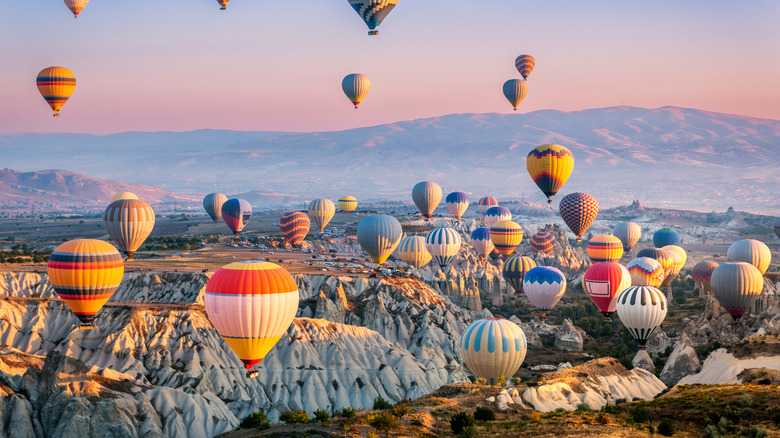
Few places in the world look or feel like Cappadocia in Central Turkey. This UNESCO World Heritage region offers a surreal landscape, where rock formations known as "fairy chimneys" rise from the earth like something out of a mystical realm, sculpted by centuries of wind and volcanic activity. Although there is evidence of civilization in this area as far back as the Paleolithic era, it had special significance to early Christians, who found refuge in this region, transforming cave dwellings into churches where remnants of frescoes are still visible. These days, many of Cappadocia's visitors find that its otherworldly landscape is best experienced from the air. At dawn nearly every day, hundreds of hot air balloons lift into the sky, giving travelers a bird's eye view of the valleys below.
Back on the ground, there are plenty of other incredible sites to see throughout the Cappadocia region. Travelers can wander through the underground city of Derinkuyu, which was once home to as many as 20,000 people and was first mentioned in writing by Xenophon of Athens around 370 BCE. It's also worth exploring the rock-carved monasteries in Göreme, or booking an overnight stay in one of the region's many boutique cave hotels. Argos and the astounding Mithra Cave Hotel are among the most highly-rated hotels in Cappadocia. Every corner of this surreal part of Central Turkey tells a story, and it is sure to be somewhere you want to return to time and time again.
Pamukkale Thermal Pools, Denizli Province
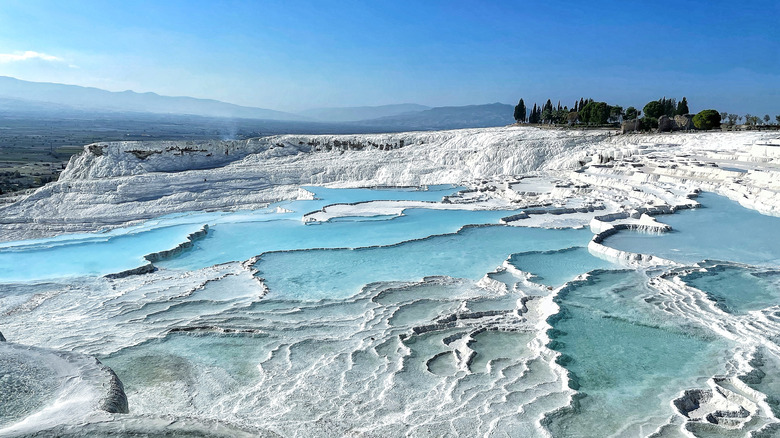
Visitors who venture to southwestern Turkey will be rewarded with the striking landscape of Pamukkale in the Denizli Province. Meaning "Cotton Castle," Pamukkale takes its name from the glistening white terraces that cascade down its hillsides. Formed over millennia by solidified calcium deposits — the product of water heated by volcanic lava far beneath the ancient Roman city of Hierapolis — the result is widely considered one of the most breathtaking destinations in the world. Walking barefoot along the travertines is a truly unique travel experience that has become popular with visitors. The local tourism council allows people to walk, splash, and soak among the steps, and numerous businesses now dot the area, offering places to dine and shop with a view.
Those who find themselves at the Pamukkale thermal pools can also visit the ruins of the aforementioned spa city, Hierapolis. It's here you'll find the famous Cleopatra's Pool, a natural thermal bath said to have been a gift from Marc Antony to the Egyptian queen — though it is unknown if she ever actually visited this location. Once upon a time, the hot spring was surrounded by an ornate Temple to Apollo. The structure, unfortunately, was knocked down by an earthquake in the seventh century, and its Doric columns remain in the pool to this day. If you add this spot to your itinerary, the five-star Richmond Pamukkale Thermal is one of the most highly-rated hotels in the region.
Ephesus, Selçuk
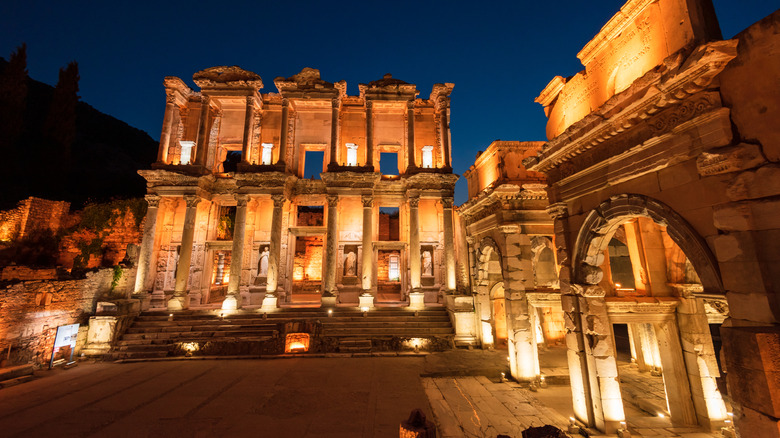
Step into Ephesus, and you'll step back thousands of years. Once a busy Roman port city and one of the largest in the ancient world, Ephesus remains astonishingly well-preserved. A UNESCO World Heritage Site, travelers can walk through streets lined with marble colonnades, visit the grand amphitheater, and wander through intricately carved temples. Ephesus was a sophisticated city where art, architecture, and intellect were prized. This is evidenced by its crown jewel, the Library of Celsus. One of the largest ancient libraries in the world, it was built in the second century to honor Roman senator Gaius Julius Celsus Polemaeanus, who had served as governor in the province of Asia. Much of the library's ornate facade can still be enjoyed today.
Nearby, the Great Theatre, which could seat up 25,000 spectators, still echoes with dramatic performances. It is also said that St. Paul himself once preached there, according to Christian tradition. Just beyond the city center of Ephesus are the remnants of the Temple of Artemis, one of the Seven Wonders of the Ancient World. Though only one solitary column remains today, the Temple once had 120 columns total. It served as a statement of Ephesus's riches and his loyalty to its patron goddess. From the terrace houses where the cultured city's elite once lived to the House of the Virgin Mary — which has been officially recognized by the Vatican as Mary's final residence — the streets of Ephesus continue to captivate every traveler who walks them, even thousands of years after their pinnacle.
Mount Nemrut, Adıyaman
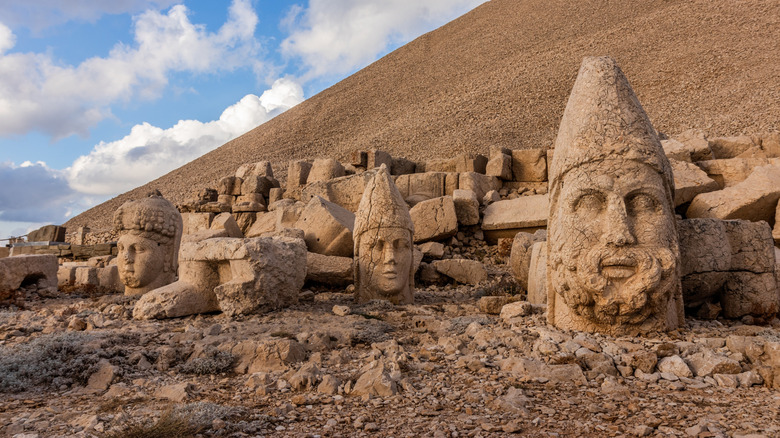
High in the mountains of southeastern Turkey, far from the tourist crowds in Istanbul and Cappadocia, rises Mount Nemrut. At 7,053 feet above sea level, its summit is completely one-of-a-kind, featuring a stony plateau crowned with 10 massive statues. Originally seated on thrones, earthquakes and other natural phenomena have unseated the stone heads over the centuries. In the first century, King Antiochus I of Commagene built this extraordinary funerary complex to honor both himself and the deities he worshipped. The giant statues are believed to represent, among others, Zeus, Apollo, Hermes, and Antiochus himself. They are an awe-inspiring sight that provides deep insight for archaeologists and sociologists studying how ancient civilizations viewed death.
For adventurous travelers, a sunrise trek to the summit of Mount Nemrut is a bucket list item. The walk requires hikers to climb several stone steps, but the effort is worth it. One TripAdvisor reviewer explained how the walk to the summit is laid out: "When you reach the base of the mountain, you can take the path on the right or on the left to get to the top ... Take the one on the left. The steps are finished all the way to the top." Arriving early is key because, as dawn breaks, the statues appear to ignite with morning light — almost seeming to awaken. It's no wonder many call Nemrut the "Eighth Wonder of the World."
Antalya's Old Town, Kaleiçi
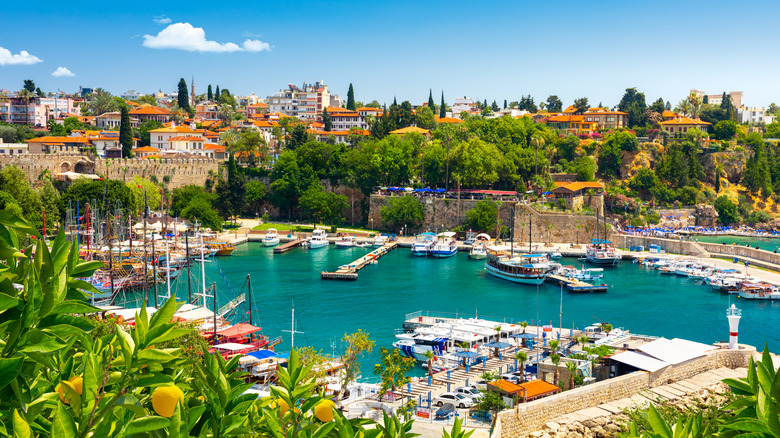
Located between the turquoise Mediterranean Sea and the rugged Taurus Mountains, Antalya is a tourist-friendly coastal town where ancient history meets resort-level relaxation. Its old town district, Kaleiçi, is made up of labyrinthine cobblestone streets lined with mansions from the Ottoman period, Roman ruins, and blooming bougainvillea flowers. Many of the palatial Ottoman mansions have been transformed into everything from boutique hotels to restaurants and art galleries that invite travelers to dive right into Turkish culture. One such hotel, the Hotel 1207 Special Class, has travelers smitten. One recent TripAdvisor reviewer wrote: "Simply great, immaculately clean, gracious, authentic..the rooms are very nice, helpful, immaculately clean and very comfortable...We will be back."
Once a major Roman port, Antalya still offers a number of well-preserved historic sites. To enter Old Town, you'll pass through Hadrian's Gate, an extensively restored marble triumphal arch built in honor of the emperor's visit to the city in 130 AD. You'll also want to stroll to the Old Harbor below. Although this harbor has been in use since about 150 BC when King Attalus II of Pergamon established the city as a naval base, its modern form as a leisure area with shops and restaurants has existed since about 1920. There's also Karaalioğlu Park, a public space with sweeping views of the Taurus mountain range. Since 1940, the 34-acre park has been a gathering place for locals and travelers alike. Antalya is a place where you can sip Turkish coffee in a centuries-old courtyard one minute and decide to go scuba diving in the Mediterranean the next. It truly offers something for everyone.
Göbekli Tepe, Şanlıurfa Province
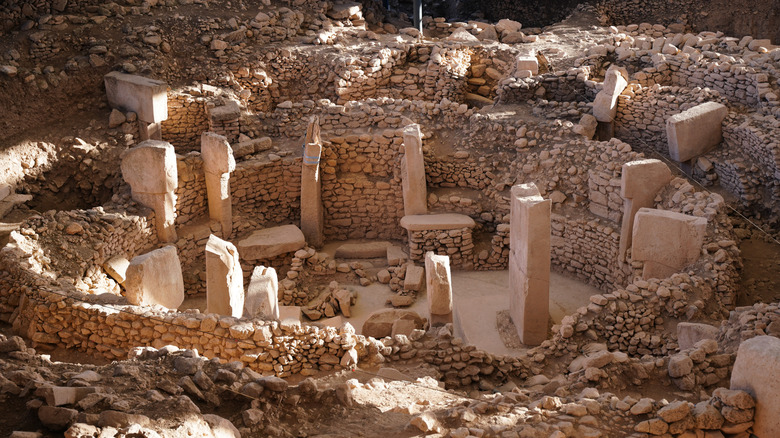
Long before the pyramids rose in Egypt or Neolithic people constructed Stonehenge, humans built Göbekli Tepe. Dating back more than 11,000 years, this temple complex is the world's oldest known monumental structure, built when humanity was still transitioning from hunting and gathering to farming. The site consists of massive T-shaped limestone pillars arranged in circles, some standing over 18 feet tall and weighing up to 50 tons. Many are intricately carved with foxes, birds, gazelles, and lions. Perhaps the most remarkable thing about Göbekli Tepe is that it predates the development of the written word and even permanent settlements, suggesting that ancient spirituality, not agricultural necessity, may have been what brought nomads together here.
Located near Şanlıurfa Province, in the Germuş mountains of Anatolia, Göbekli Tepe is currently an active archaeological site legally protected by a variety of laws. However, if you do choose to visit, there is still plenty to see — even though you can't legally interfere with ongoing excavation. Travelers can walk along wooden walkways above previously excavated enclosures, peering down into humanity's first known sanctuary. For history lovers, it's nothing short of astounding. And to think that the entirety of Göbekli Tepe lay buried just below the surface for many millennia.
Methodology
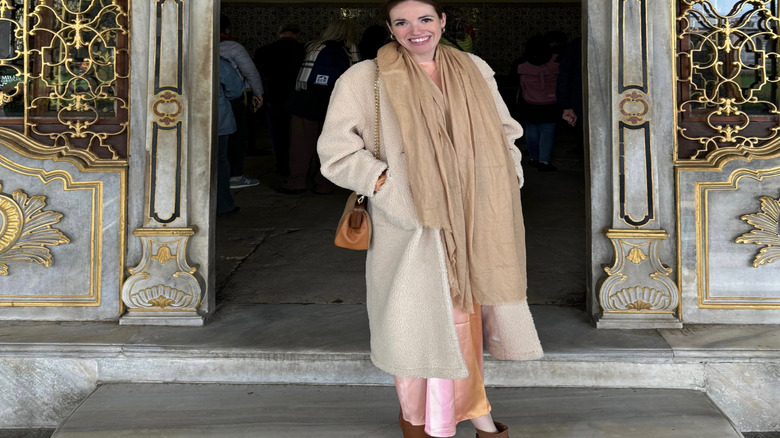
For this guide, I chose sites based on personal experiences from two trips to Istanbul, coupled with historical research and consensus from sources like UNESCO, TripAdvisor, and Turkey's official tourism websites. This process involved cross-referencing multiple perspectives and data in order to land on a series of top picks that I was then able to whittle down.
The final curated list is designed to help readers craft a Turkish travel itinerary that combines globally recognized locations — such as the Hagia Sophia and Cappadocia — with slightly lesser-known spots like Old Town in Antalya. Ultimately, each destination was evaluated not just for its visual appeal, but also for its historical significance, accessibility, and potential to offer travelers a deeper understanding on Turkish culture and history.