Tourist Attractions in Denmark
Denmark's many charms have become apparent to a global audience, particularly in recent years. Scandinavia's "European" wing boasts glorious beaches, beautiful fairy-tale castles, lush forests, a temperate climate, friendly citizens, and an infectious joie de vivre among its many attractions.
Smash TV series Borgen made a star of Copenhagen's attractions — in particular, the magnificent parliament buildings at Christiansborg. Similarly, Danish/Swedish collaboration Bronen (The Bridge) showed the world the Oresund Bridge, a stunning feat of engineering, which links the two countries by road and rail. For lovers of literature, a visit to Odense, the hometown of master storyteller Hans Christian Andersen, is a must.
Denmark's eco-credentials are obvious throughout the land. In Copenhagen, the bicycle takes precedence over the car and is arguably the best way to go sightseeing in this compact, picturesque city. On top of all this, the food is legendary — Danish fine dining paves the way for the best of Scandinavian cuisine.
Tivoli Gardens, Copenhagen
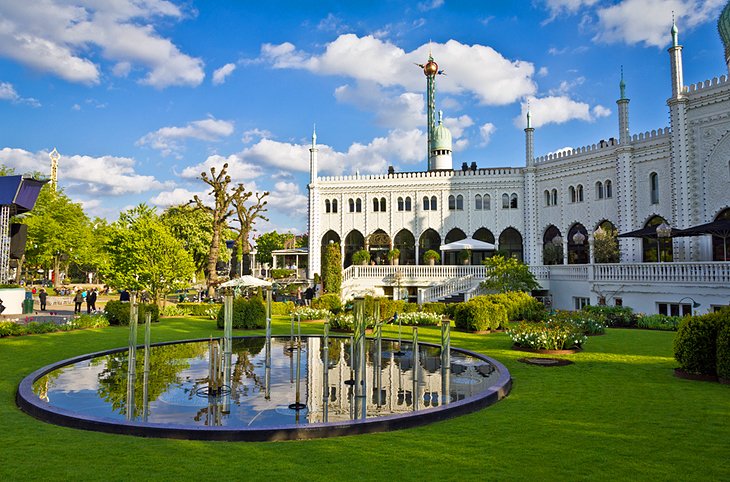
When visiting Copenhagen, many visitors make a beeline for the iconic recreation space at Tivoli Gardens.
Dating from 1843, Tivoli is the inspiration behind the world-famous Disney theme parks, and here, you'll find a huge range of attractions including a roller coaster, roundabouts, puppet theaters, restaurants, cafés, gardens, food pavilions, and even a Moorish-styled concert hall.
It's also one of the world's oldest amusement parks, and some of its charm lies in the blend of classic rides and gardens, along with high-end dining and cultural offerings, like concerts and ballet.
Known across the world, Tivoli has appeared in numerous movies and is a true symbol of the city. At night, firework displays illuminate the sky, and in winter, the gardens are adorned with lights for the Christmas season. During the summer, you can catch free rock concerts on Friday nights.
Address: Vesterbrogade 3, 1630 Copenhagen
Christiansborg Palace, Copenhagen
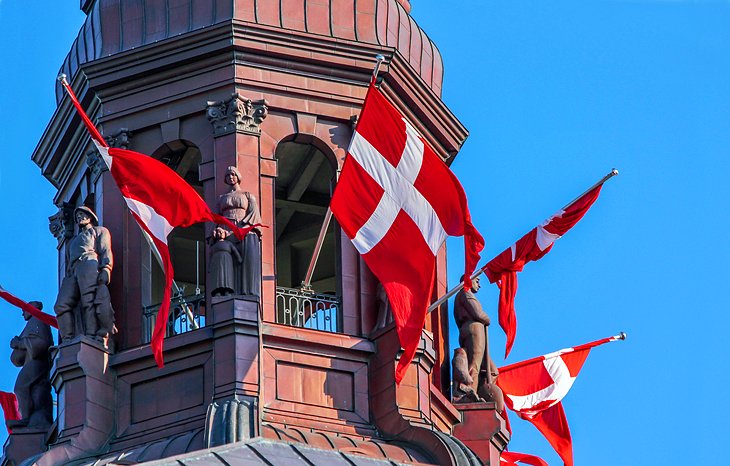
On the tiny island of Slotsholmen in the center of Copenhagen, you'll find the Danish seat of government, Christiansborg Palace. It's home to the Parliament, the Prime Minister's Office, and the Supreme Court, and several wings are still used by the Royal household.
Among the most spectacular of the viewable areas are the Royal Reception Rooms, decadently ornate spaces that are still used today for royal receptions and galas. If you like seeing what goes on behind the scenes to keep things running smoothly, head to the Royal Kitchen to get a glimpse of what it was like to prepare a banquet for hundreds of guests nearly a century ago.
Equine enthusiasts will want to take a tour of the Royal Stables, including original buildings that survived the massive fires that destroyed both Christian VI's 1740 palace and its 1828 successor. Along with getting a peek at some of the world's most pampered horses, you will see historic horse-drawn vehicles, including the 1778 Queen Dowager Juliane Marie's state coach and the Golden State Coach, which was built in 1840 and is adorned with 24-carat gold.
Long before the site was home to royal residences, Bishop Absalon built fortifications on this spot in 1167. If you want to plunge deeper into history, you can explore the excavated ruins of the original castle, which are located beneath the palace.
If you appreciate ecclesiastical architecture, be sure to see the Palace Chapel, which draws inspiration from the Pantheon in Rome.
Since the palace is still in active use by the royal family, it's wise to check the opening hours to ensure you can visit the areas you're most interested in.
Address: Prins Jørgens Gård 1, 1218, Copenhagen
National Museum of Denmark (Nationalmuseet), Copenhagen

A 10-minute stroll from Tivoli Gardens leads to the National Museum (Nationalmuseet), which delves into Danish history and culture. This museum displays an impressive collection of Danish artifacts, including a 2,000-year-old sun chariot, Danish porcelain and silver, and Romanesque and Gothic church trimmings. Other collections highlight clothing from the 18th and 19th centuries, as well as antique furniture.
Supplementing this journey back through Danish history is an excellent ethnographic exhibition with items from Greenland, Asia, and Africa, among others. At the Children's Museum, kids will find plenty of things to do. They can dress up in period costumes, climb aboard a Viking ship, and visit a 1920s-style classroom.
Address: Prince's Mansion, Ny Vestergade 10, 1471, Copenhagen
The Open-Air Museum (Frilandsmuseet), Lyngby
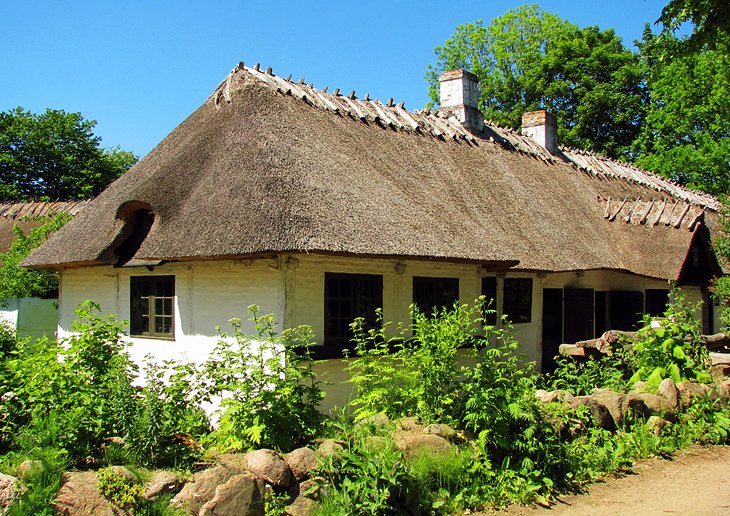
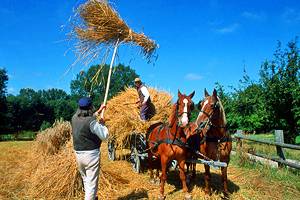
Just over 15 kilometers from the city, the Open-Air Museum is a popular day trip from Copenhagen. Part of the Danish National Museum, it's a must-see for many visitors to Denmark. Occupying 35 hectares are authentic farmhouses, agricultural buildings, homes, and mills from across the country in this living history museum.
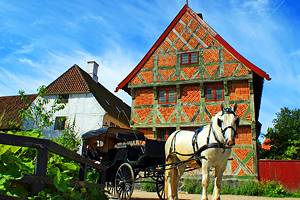
There are also ancient breeds of domestic animals, magnificent historic gardens to wander through, atmospheric old houses from Schleswig-Holstein and Sweden, as well as numerous picnic sites. You can even take a horse-drawn carriage around the grounds.
Address: Kongevejen 100, 2800 Kongens, Lyngby
The National Gallery of Denmark (Statens Museum for Kunst), Copenhagen
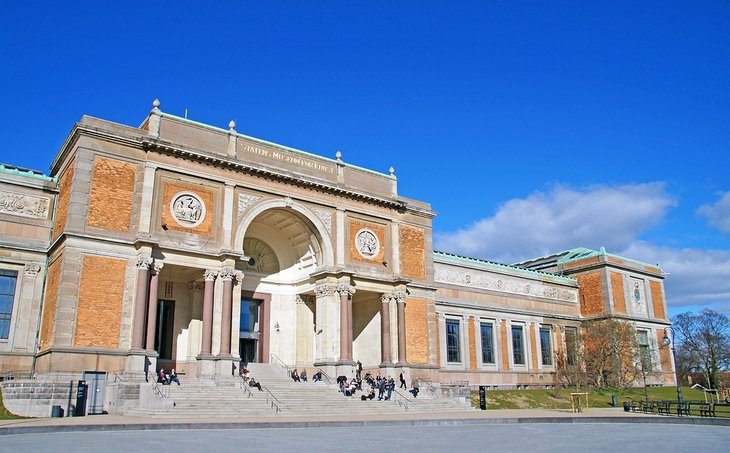
The National Gallery of Denmark houses the country's largest collection of Danish art. The original exhibits were once housed at Christiansborg but moved to the current location in the late 19th century. A gigantic extension has not only significantly extended the space but allows natural light to flood into the interior of the museum.
Covering more than 700 years of European and Scandinavian art, the museum displays paintings by the Dutch Masters, Picasso, and Edvard Munch, among others. The collections originated from the Royal Collections, built up by Danish kings from the 16th century onwards.
Not surprisingly, fine collections of Danish art are also on display. The café is particularly pleasant and a great place to unwind and soak up the surroundings.
Address: Sølvgade 48-50, 1307 Copenhagen
LEGO House, Billund
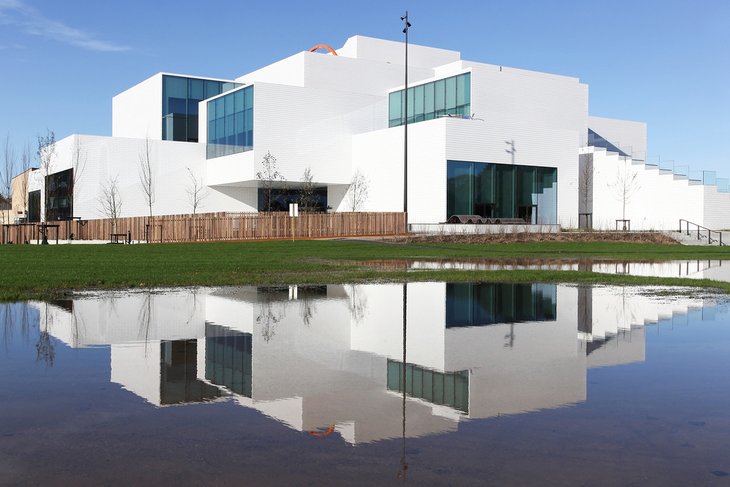
The LEGO House in Billund, the birthplace of the iconic LEGO brick, is a family attraction that all ages will enjoy. If you're on a budget or just quickly passing through, you will appreciate the admission-free areas, which include nine themed playgrounds, three outdoor squares, and the Tree of Life, a 15-meter LEGO tree filled with details.
You can also choose to buy admission to explore the Experience Zones, each representing the classic brick's colors: red for creativity, green for role-playing, blue for cognitive challenges, and yellow for emotions. Visitors also have a chance to learn all about the history of LEGO and its founders.
The MINI CHEF restaurant is an interesting and interactive place to eat. You build your meal orders with LEGO bricks and then pick your order up from LEGO robots.
Address: Ole Kirks Plads 1, 7190 Billund
Nyhavn, Copenhagen
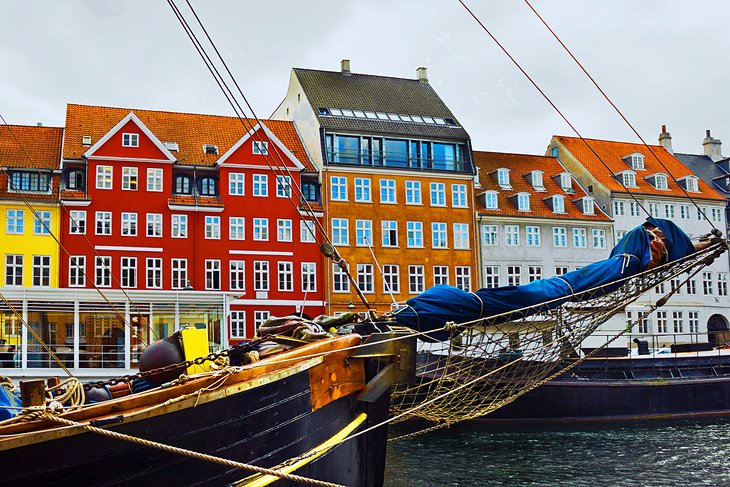
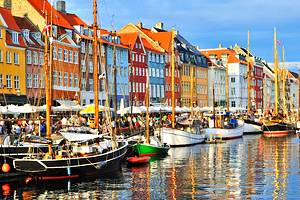
The star of countless images and postcards of the city, Nyhavn (New Harbor), is a great place to stroll or grab a slice of Copenhagen café culture. Located to the rear of Amalienborg Palace, this was once a disreputable stretch of dockland but has been given a new lease of life with its multi-colored houses, restaurants, and tall ships (some of which are museums) dotting the quayside.
Hans Christian Andersen lived at multiple addresses in Nyhavn, making it a real literary landmark beyond its picturesque appearance.
Nyhavn is now a particularly charming quarter and, consequently, a major Copenhagen attraction for tourists and locals alike.
If you're feeling adventurous, you can catch a hydrofoil to Sweden from here or grab a pleasant harbor cruise to see the sights.
Kronborg Slot (Kronborg Castle), Helsingør
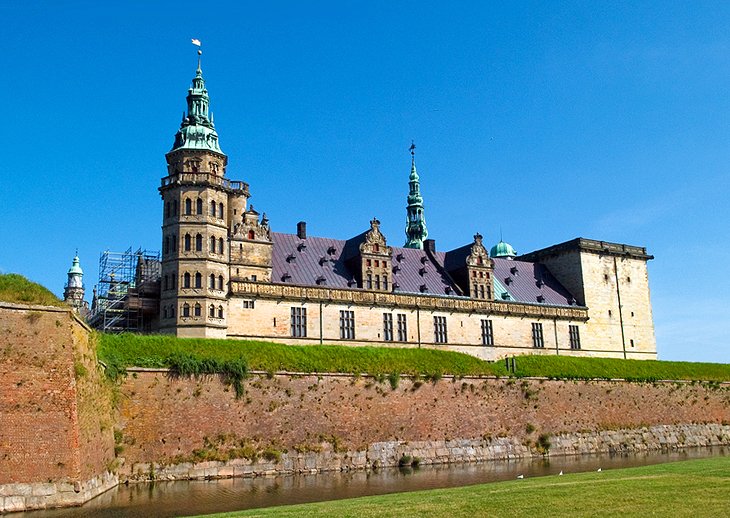
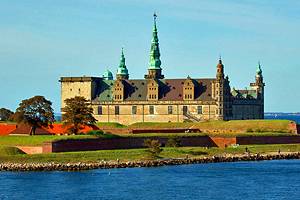
Kronborg Castle is not only the setting of Shakespeare's Hamlet but also a UNESCO World Heritage Site. Consequently, it scores top billing on Helsingor's list of must-see sights. Even those with just a passing interest in the bard will surely want to visit. This imposing structure is clearly visible as you approach it, so you can't really miss it.
The present incarnation dates from 1640, although several other fortresses preceded it. Serving as a garrison for a century or more, the castle was renovated in 1924.
In the South Wing, you'll find the Castle Chapel, which survived a fire in 1629 and has a magnificent Renaissance interior with German wood carvings. The North Wing contains the great Ballroom or Knights' Hall, while exquisite tapestries are displayed in the West Wing.
According to folklore, Holger the Dane (Holger Danske), a mythical Danish hero, is said to sleep deep in the castle's casemates, ready to awaken and defend Denmark should the need arise.
Address: Kronborg 2 C, 3000 Helsingør
Egeskov Castle, Kvarnstrup
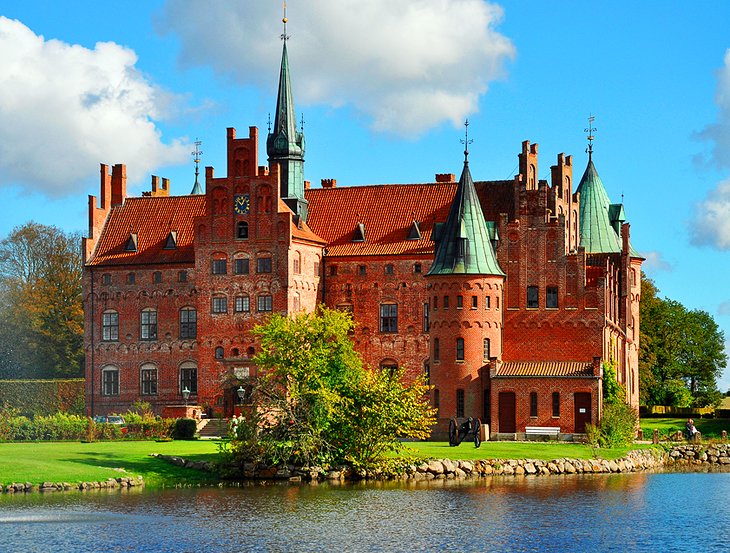
Fairy-tale Egeskov Castle lies in a beautiful setting less than 30 minutes' drive from Odense and is the best-preserved moat castle in Europe. This superb Renaissance structure, as seen toda,y was completed in 1554 and originally built for defense.
Over the centuries, the castle has changed hands many times, and later became a model farm. In 1959, the grounds opened to the public, and much renovation and development have taken place since. The grounds are also home to specialty collections, including the Vintage Car Museum and the Camping Outdoor Museum.
Also on display at the castle is Titania's Palace, a stunning dollhouse with over 3,000 pieces, created in the 1920s for a "queen of the fairies.
Other things to do here include a treetop walk and Segway tours. The Banqueting Hall is simply magnificent.
A visit to Egeskov is a wonderful day trip from Copenhagen, particularly for families.
Address: Egeskov Gade 18, DK-5772 Kværndrup
Viking Ship Museum (Vikingeskibsmuseet), Roskilde
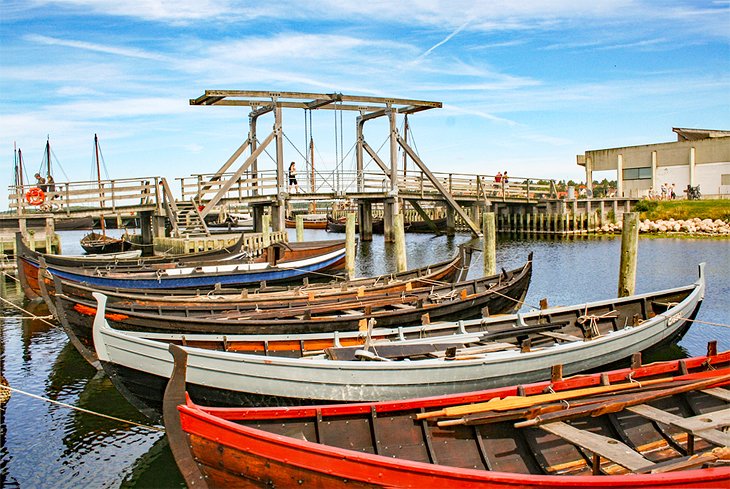
The Viking Ship Museum in Roskilde gives tourists the unique opportunity to see firsthand how the Vikings constructed their boats, as well as observe how modern shipbuilders are restoring and repairing the vessels that have been unearthed.
The boatyard, which is located next to the museum, uses traditional methods to create reproductions and bring old boats back to life. Inside the museum, you will learn about the Viking Age and the central role that maritime life played in the culture and survival of the people.
The central exhibit, Viking Ship Hall, features five ships once used by the Vikings to form a barrier on Roskilde Fjord. After extensive and painstaking underwater excavations, the ships were restored and are now on display.
One of the museum's newest additions is the high-tech "Climb Aboard" experience, where tourists are fully immersed in life aboard a Viking ship. This interactive experience is complete with costumes for those who want to really dive in, as well as the opportunity to explore the ship's rooms and supplies and even experience sensory changes as the journey takes you through day and night, rough seas and calm, and all sorts of weather.
Address: Vindeboder 12, DK-4000 Roskilde
Read More: Tourist Attractions in Roskilde
Den Gamle By, Aarhus
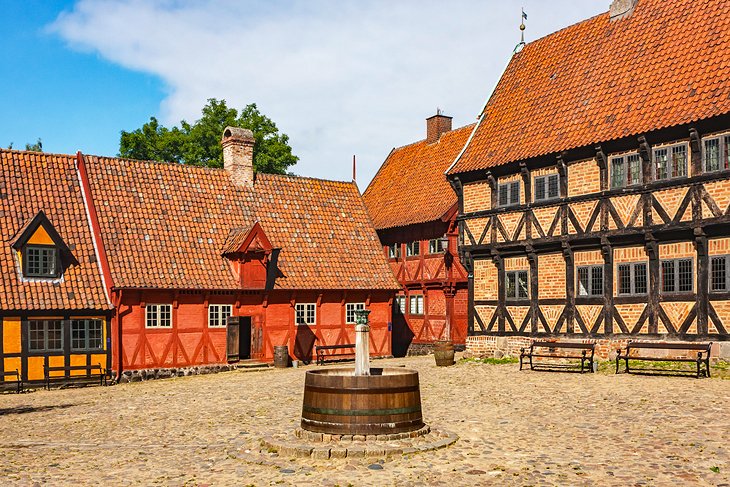
Aarhus' living history museum, Den Gamle By, provides visitors with an authentic re-creation of not just one era in Danish history, but three distinct decades. Founded in 1909, this is one of the oldest open-air museums in the world.
Divided into three neighborhoods, you will find representations of life in Denmark during the mid-19th century, the 1020s, and 1974. Each detail, from the architecture and roads to businesses and domestic lives of the costumed interpreters, illustrates how life has changed over time and the ways that some traditions have remained sacred.
In addition to the living history neighborhoods, Den Gamle By is home to several individual museums, including Musaeum, the Danish Poster Museum, Toy Museum, the Jewellery Box, Aarhus Story, and the Gallery of Decorative Arts.
Nearby, in the suburb of Højbjerg, the Moesgaard Museum delves even further back in time with in-depth exhibits on the progression of cultures in Denmark through the Stone Age, Bronze Age, Iron Age, and Viking Ages, plus an exhibit about medieval Denmark.
Address: Viborgvej 2, 8000 Aarhus, Denmark
Hans Christian Andersen Museum, Odense
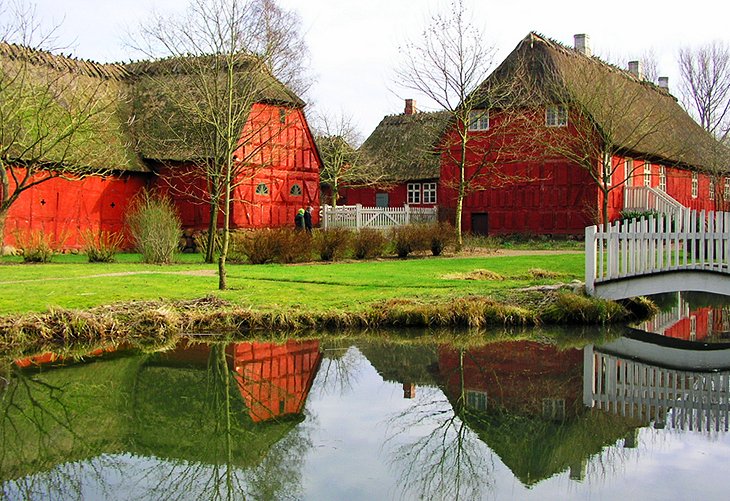
You can't visit Denmark without being aware of Hans Christian Andersen. His fairy tales and stories are woven into the fabric of Danish society. The Hans Christian Andersen Museum dates from 1908 and is dedicated to the writer's life and work, with displays of artifacts, mementos, and Andersen's own sketches and artwork.
Listening posts and interactive installations bring the writer's words to life, and the domed hall is decorated with scenes from Andersen's autobiography Story of My Life.
Ville Vau is a dedicated area for children at the Hans Christian Andersen Museum, offering a sensory and imaginative play experience inspired by aspects of Andersen's life and fairy tales. Children can enjoy themed play areas with props and costumes and engage in creative activities.
To the southwest of Odense Cathedral, in Munkemøllestræde, you'll find Hans Christian Andersen's childhood home (Andersen's Barndomshjem), which is also part of the museum.
Address: Hans Jensens Stræde 45, 5000 Odense
- Read More: Things to Do in Odense
Amalienborg Palace Museum, Copenhagen
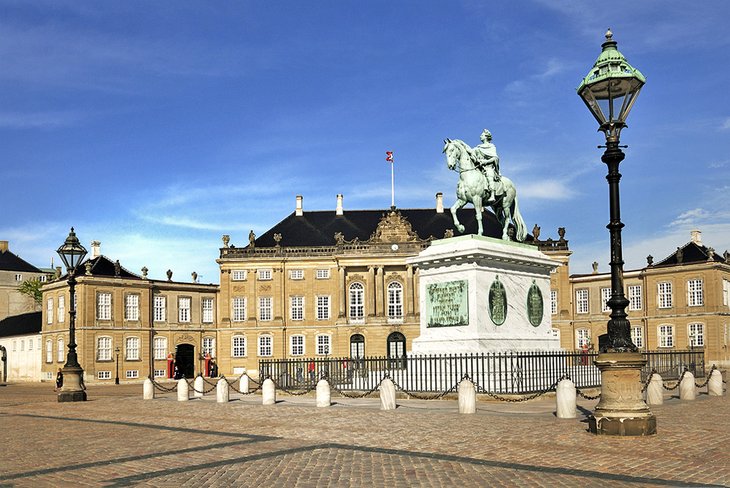
In the Frederiksstaden quarter of Copenhagen, you'll find Amalienborg Palace Museum and its tranquil gardens by the water. Originally built as residences for the nobility, the four palaces face the square. The Danish Royal Family took occupancy after a fire at Christiansborg in 1794, and the palace remains their winter home.
The identical palaces form an octagon, and it's claimed that the design is based on plans for a square in Paris that later became the Place de la Concorde. Built in a light Rococo style, the buildings combine both German and French stylistic elements. The Soldiers of the Royal Guard, in their bearskins and blue uniforms, are a particular draw for visitors.
Address: Amalienborg Slotsplads 5, 1257, Copenhagen
The Island of Bornholm
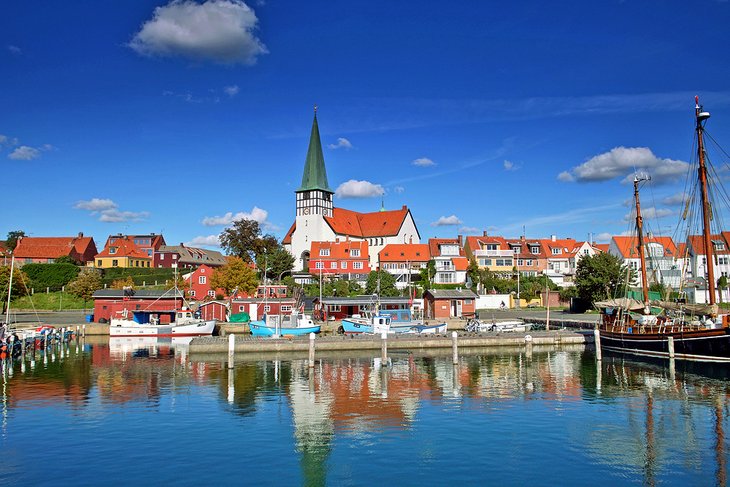
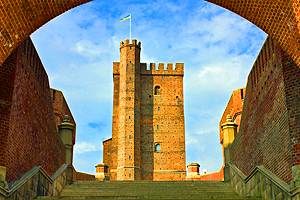
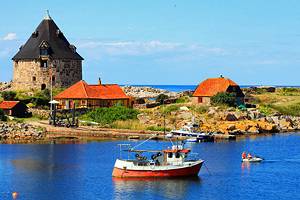
This lovely island in the Baltic Sea is a top place to visit for both foreign and domestic visitors, popular for its mild weather, lovely beaches, and extensive walking and cycling trails. One of Bornholm's top tourist attractions is the site of the Hammershus Castle Ruins, a fortress built in the mid-13th century to defend the island.
The island is also home to several museums, including the Museum of Art (Kunstmuseum) in Gudhjem. The building is a stunning piece in its own right, set overlooking the water towards Christiansoe. This museum has a collection of fine art, as well as sculptures, including several that are positioned outdoors on the grounds.
Also unique here are four medieval round churches, found almost nowhere else in Denmark.
Just outside Gudhjem, tourists can visit the Melstedgård Agricultural Museum. The Bornholm Museum in Rønne features a varied collection that encompasses both cultural and natural history. Exhibits include artifacts related to the island's seafaring history and a selection of art spanning from Viking times to the present.
Frederiksborg Palace and the Museum of National History, Copenhagen
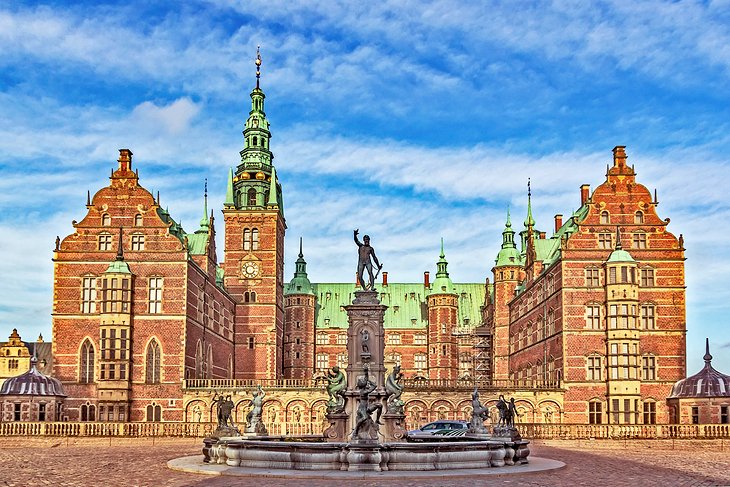
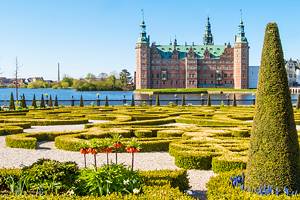
The stunning Frederiksborg Palace was built by King Christian IV in the early 17th century and has hosted Denmark's Museum of National History since 1878. The museum's collections focus on artwork that illustrates the country's history and include a robust assortment of painted portraits, photography, and prints.
The museum also includes a tour of the castle's interior, where you can explore the rooms that once hosted royalty and nobles. The palace's exterior and grounds include highlights like the Neptune Fountain, a pair of round towers once occupied by the court scribe and sheriff, and a beautiful relief depicting the deities Mars and Venus, which is located on the façade of the Audience House.
Tourists can also freely explore the various paths and gardens surrounding this Renaissance palace.
Address: DK - Frederiksborg Slot 10, 3400 Hillerød, Denmark
Oresund Bridge, Copenhagen
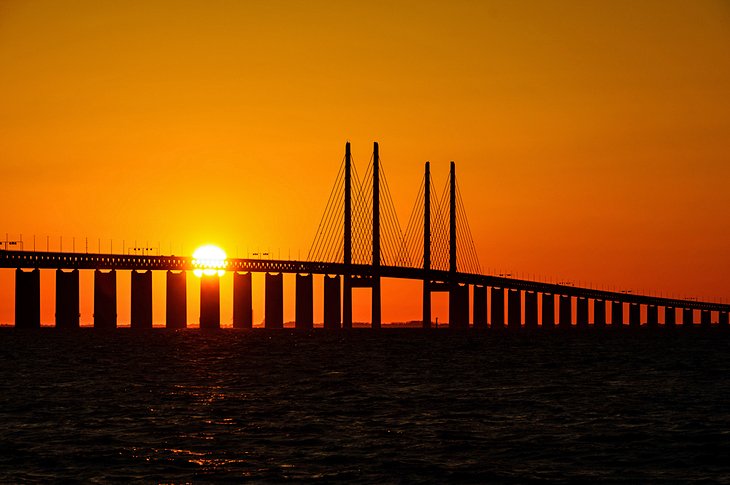
Decades in the planning and often controversial, the Oresund Bridge has quickly become a Scandinavian icon. The bridge is around 10 kilometers from Copenhagen, and you can either drive across or take the train. On the Danish side, it starts out as a tunnel so as not to interfere with flights to and from the adjacent Copenhagen Airport.
This eight-kilometer structure opened in 1999 and now links the island of Zealand, Denmark's largest island and home to Copenhagen, to the southwest coast of Sweden, specifically to the port of Malmo, Sweden's third largest city. Fans of Scandi-noir will know that the Oresund Bridge has recently gained much global infamy as the central focus of the smash hit Danish/Swedish TV drama The Bridge.
The Funen Village (Den Fynske Landsby)
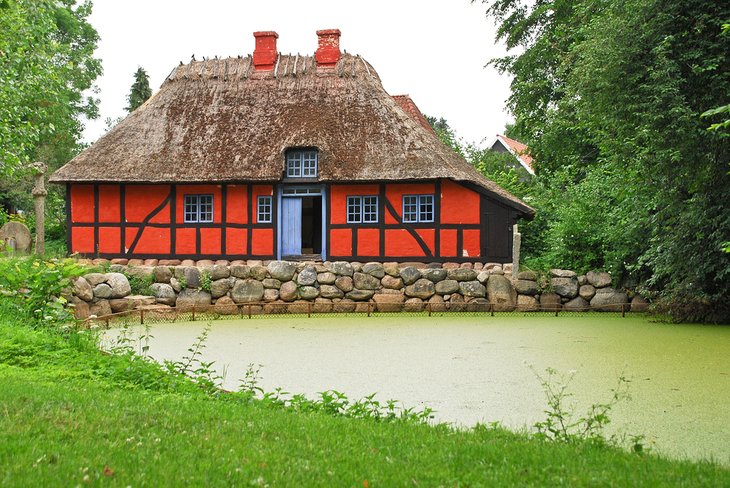
Funen Village is an open-air living history museum that brings 19th-century Denmark to life, recreating the world that surrounded writer Hans Christian Andersen as he penned his iconic fairy tales. Complete with authentic half-timbered farmhouses with thatched roofs constructed using authentic materials and methods, the museum offers visitors a glimpse into the past.
Within the village, you can explore the farms, homes, and workshops, and interact with the living history interpreters to learn about every aspect of life. Fully working farms grow the crops that would have been grown at the time, using methods like horse-drawn plows to cultivate the land. There is a variety of livestock, including working horses, dairy cows and goats, sheep, pigs, and chickens, and in the Children's Village, youngsters are encouraged to interact with the animals.
In addition to learning about farm life, visitors can watch cooking demonstrations and household activities like turning wool into yarn and clothing. There is also a working blacksmith shop and other craftspeople who help the village remain entirely self-reliant.
Seasonal events and festivals are held throughout the year, offering a glimpse into traditional Danish celebrations and customs.
Address: Sejerskovvej 20, 5260 Odense
Wadden Sea National Park, Esbjerg
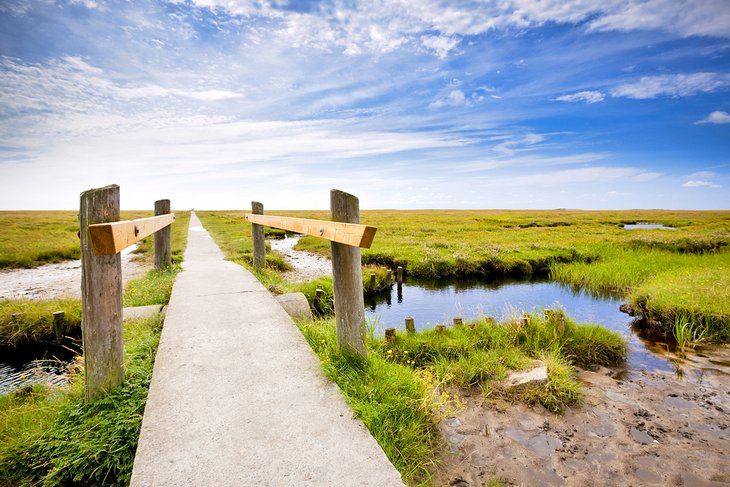
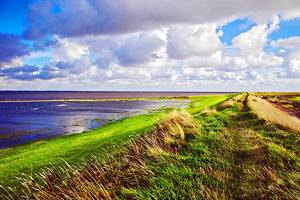
Denmark's largest national park is also the world's largest continuous system of mud flats and intertidal sand, containing both salt and freshwater environments, as well as beaches and wetlands. This beautiful natural area is a UNESCO World Heritage Site, and among the top tourist attractions in Esbjerg.
The Wadden Sea National Park sits at the midway point of the Eastern Atlantic migratory routes and is a critical staging, moulting, and wintering area for 10-12 million migratory birds annually. Needless to say, it's an ideal place for bird-watching.
The "Black Sun" phenomenon is a natural spectacle you can see in the park, particularly in spring and autumn. During this time, hundreds of thousands, sometimes even a million, migratory starlings gather at dusk to create mesmerizing, changing formations in the sky.
The waters just off Esbjerg Harbour are also home to the country's largest population of spotted seals, making this a popular place for nature lovers.
While in the area, history buffs will want to check out the Ribe Viking Museum (VikingeCenter) to see its collections of authentic artifacts and reconstructed settlements. Visitors can explore the living history museum to see what daily life was like for these fascinating peoples, with opportunities to participate in hands-on activities.
The Round Tower (Rundetårn), Copenhagen
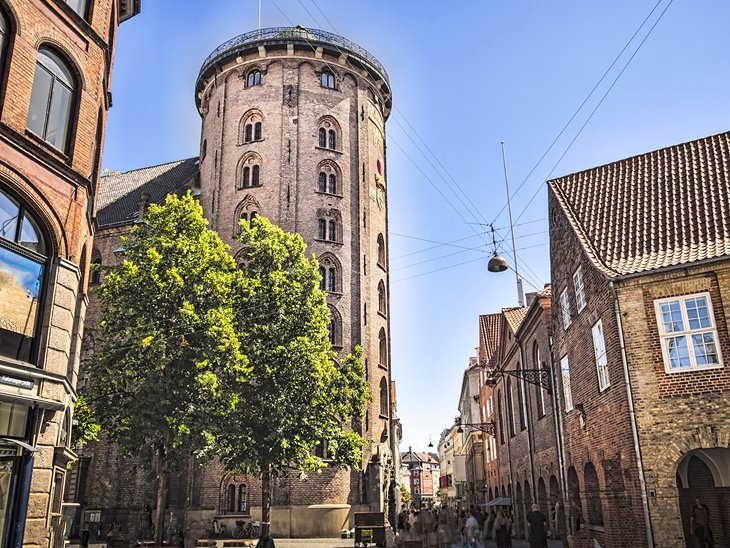
Well worth scaling for the excellent panoramic views, the Round Tower (Rundetårn) is 36 meters high and was built as an observatory in 1642.
Here, you'll find a small collection connected with the famous Danish astronomer Tycho Brahe; however, the highlight for most is the viewing platform reached by a spiral ramp. A glass floor hovers 25 meters above the ground, and not only can you gaze out over the rooftops of Copenhagen city, but also peer down into the castle's core.
A short walk through the surrounding old town takes you to Gråbrødretorv, one of the city's most picturesque squares.
Address: Købmagergade 52A, 1150 Copenhagen
Off the Beaten Path in Denmark: The Farøe Islands
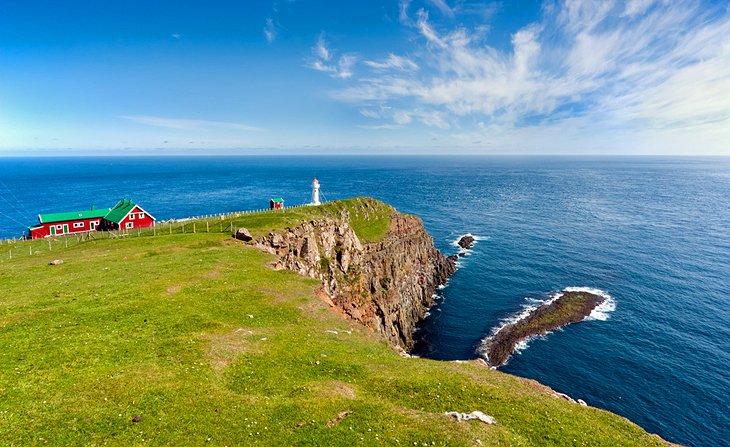
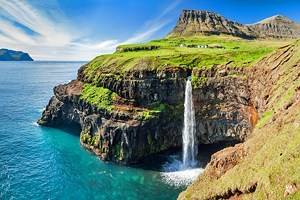
The Kingdom of Denmark also encompasses two autonomous countries: the far-flung Farøe Islands and Greenland. Lying some 600 kilometers west of the Norwegian coast, the Farøe Islands (Sheep Islands) are an archipelago of 18 remote islands. If you are looking for something different, this is the place to come.
Landscapes range from steep rocky coasts, meadows, and mist-cloaked hills to fjords that bite deep inland. Sheep outnumber humans, and you can still see homes with turf roofs.
The Gulf Stream moderates the temperatures on land and at sea and attracts a diversity of marine life, including seals, whales, and many species of fish. Anglers come here to cast their lines in the crisp, clear waters, and birders can admire some of the 300-plus species, including puffins and guillemots.
A boat trip to the Vestmanna bird cliffs is a highlight. The Farøe Islands also boast a lively music scene with many festivals in the summer. Watch for the Faroese Chain Dance, a medieval dance central to local festivals, where participants hold hands in a circle and move to sung or chanted stories and legends.
To the north and northeast of Eysturoy, one of the archipelago's largest islands, lie many sizable and smallish islands. Blessed with a natural harbor surrounded by emerald hills, Klaksvik on Bordoy is the second-largest town in the Farøes. Tourist attractions include the history museum and the Christian's Church (Christians-kirkjan) with a boat hanging from its ceiling, the only one of four to return safely on a stormy winter's night in 1923.
To access the Farøes, you can fly to the airport on the island of Vågar year-round from Copenhagen or hop aboard a ferry from several Danish ports to Torshavn, the capital, on the island of Streymoy.
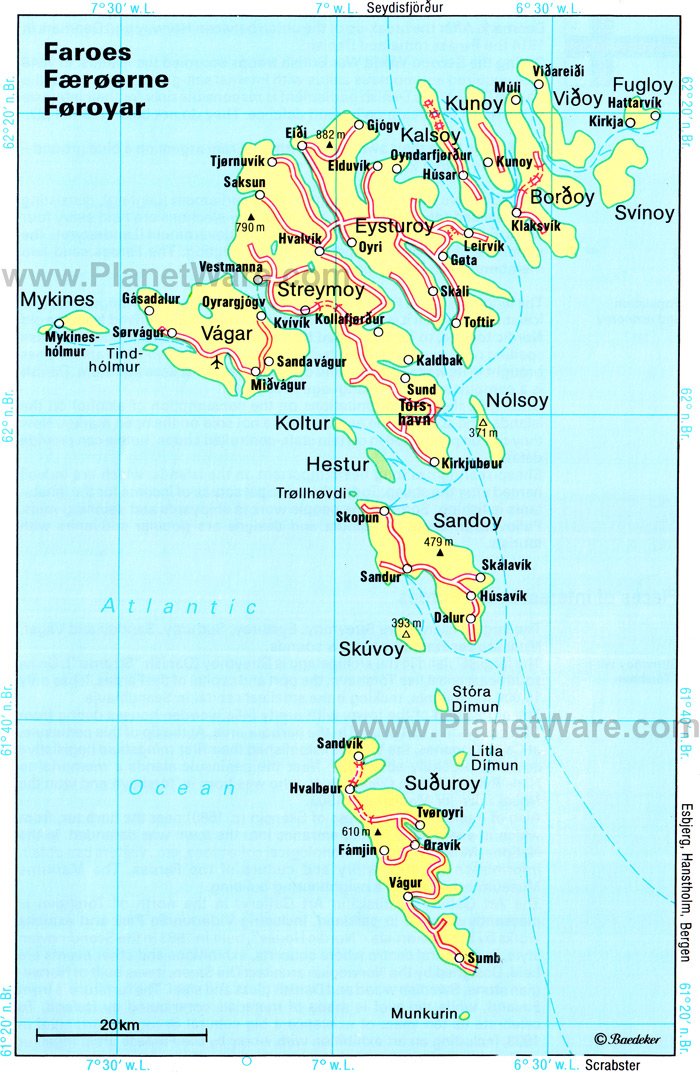
Map of Tourist Attractions in Denmark
More Related Articles on PlanetWare.com
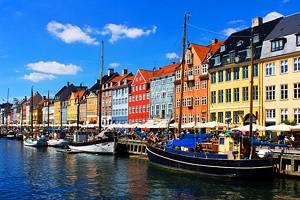
In and Around Copenhagen: It's no secret that a large number of Denmark's top tourist attractions are in its largest city, Copenhagen. Despite its position on the eastern coast, Copenhagen is a great starting point for many day trips, including visits to traditional fishing villages or a hop across Oresund Bridge to Sweden to see the highlights of Malmö.
A Land of Fairy Tales: Best known as the birthplace of Hans Christian Andersen, perhaps the most famous of all fairy-tale writers, Odense is a magical place with a rich history. Nearby, Egeskov Castle could easily have been the setting of some of his tales, and there are plenty more attractions to be found in Helsingor, where you will find Hamlet's Kronborg and the stunning Frederiksborg Castle.